



Academic All-American awards represent the pinnacle of student-athlete achievement, honoring individuals who excel at the highest levels both in the classroom and in competitive athletics. These prestigious recognitions celebrate the rare combination of academic rigor and athletic excellence, proving that dedication to scholarly pursuits and competitive sports aren’t mutually exclusive but can instead reinforce one another in remarkable ways.
Yet confusion about Academic All-American criteria remains widespread among students, families, and even some educators. Different organizations administer various Academic All-American programs with distinct eligibility requirements, GPA thresholds vary across programs, and nomination processes differ significantly between high school and collegiate levels. Meanwhile, schools often struggle to appropriately celebrate these exceptional achievements in ways that inspire future student-athletes while honoring the remarkable dedication these awards represent.
This comprehensive guide explores Academic All-American award criteria across different programs, traces the rich history of this prestigious recognition, explains the selection process, and provides practical strategies for schools and universities to meaningfully celebrate Academic All-American honorees through modern recognition programs that make excellence visible.
Academic All-American recognition goes beyond typical honor roll achievements or athletic awards by demanding sustained excellence across both domains simultaneously. Understanding these programs helps students set meaningful goals, guides schools in supporting dual-excellence pursuits, and ensures these remarkable achievements receive the celebration and visibility they deserve.

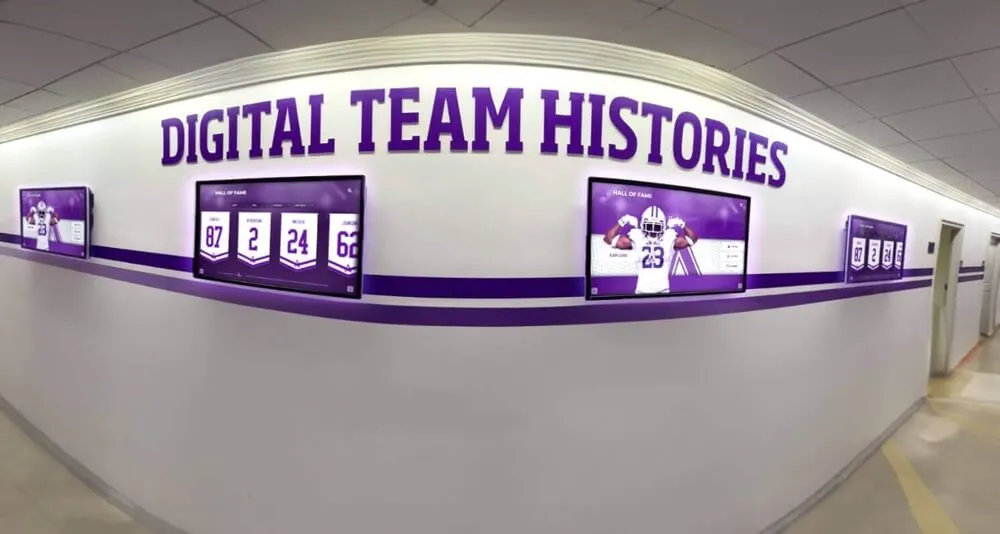
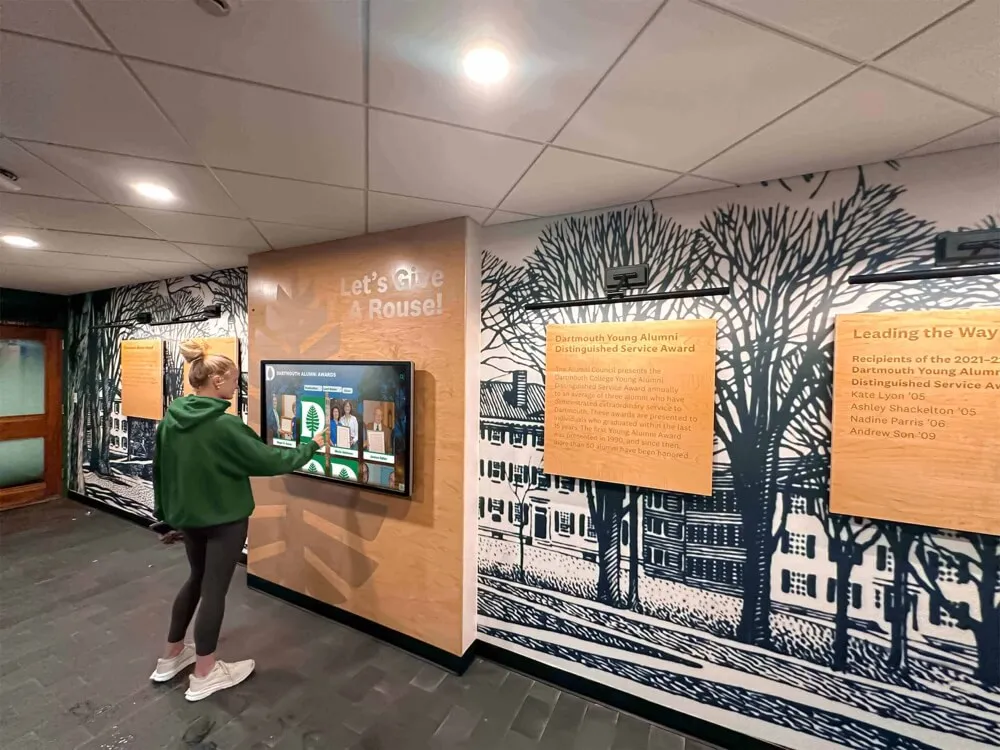
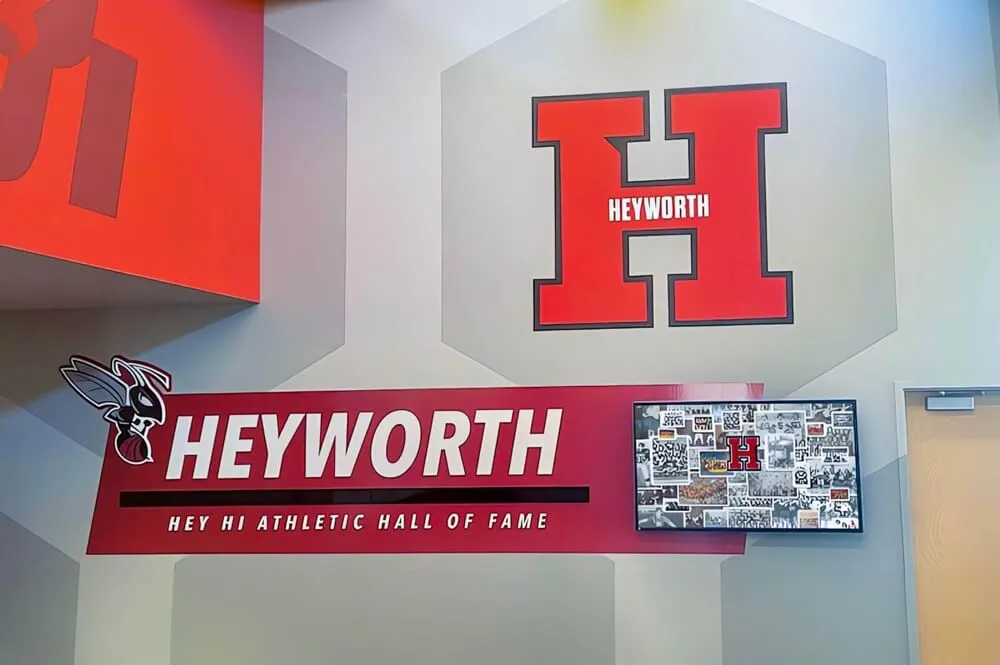
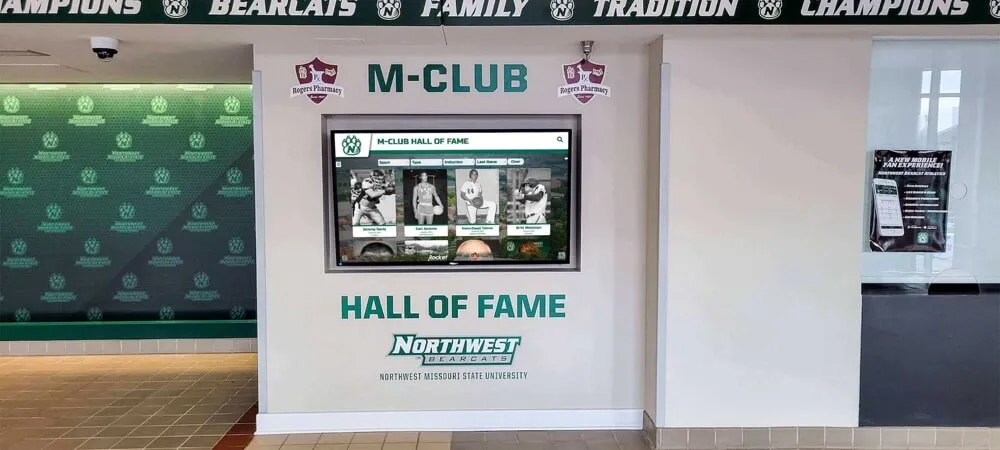
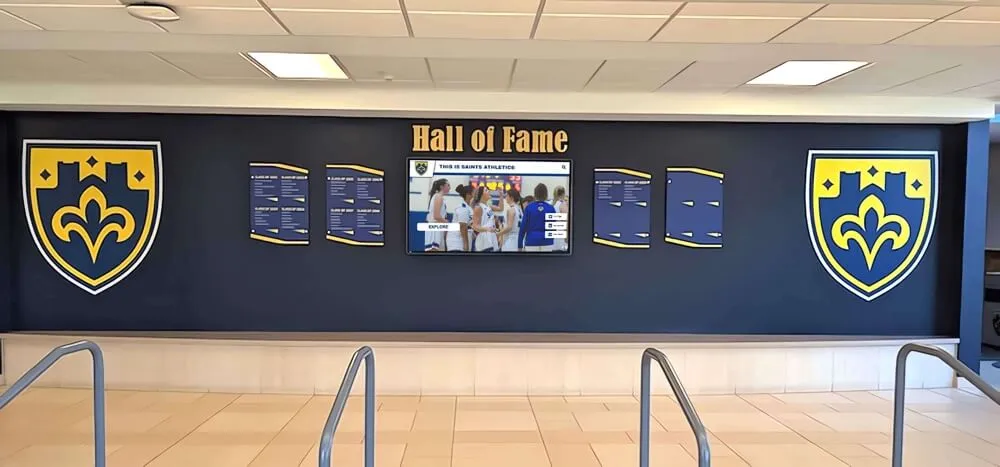
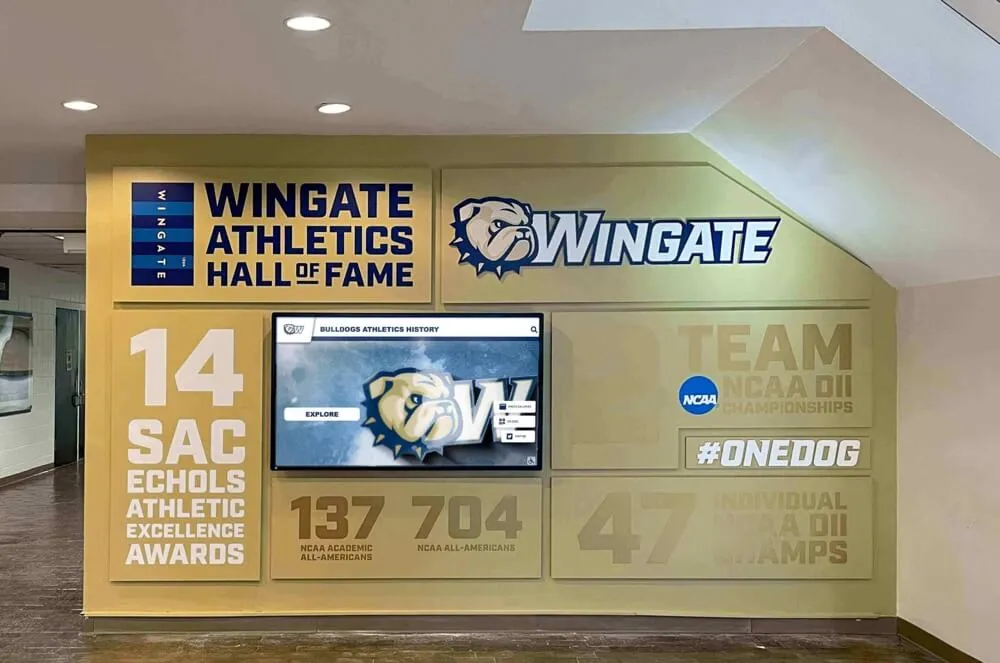
Modern recognition displays celebrate the dual excellence of Academic All-American honorees, showcasing achievements that inspire future student-athletes
Understanding Academic All-American Programs
Multiple organizations administer Academic All-American programs, each with specific criteria, selection processes, and recognition traditions.
Major Academic All-American Organizations
College Sports Communicators (CSC) Academic All-America Program
Formerly administered by CoSIDA (College Sports Information Directors of America), the CSC Academic All-America program represents the most prestigious collegiate recognition:
- Eligibility: Varsity letter-winner in an NCAA-sponsored sport
- Academic requirement: Minimum 3.50 cumulative GPA (on 4.0 scale)
- Class standing: Must be sophomore or above with one full academic year at current institution
- Nomination: Submitted by institution’s sports information director
- Selection: Expert voting panels evaluate academic achievement, athletic performance, and community involvement
CSC Academic All-America teams are announced in three divisions (Division I, II, and III) across all NCAA sports, with first team, second team, and third team honors designating achievement levels.
National High School Academic All-American Programs
Several organizations recognize high school student-athlete academic excellence:
- National High School Coaches Association: Multi-sport academic recognition
- Sport-specific organizations: Individual sports often maintain Academic All-American programs
- State athletic associations: Many states administer academic all-state programs
- Independent academic services: Various companies and organizations offer recognition programs
Criteria vary significantly across high school programs, making it essential to understand specific requirements for programs available to your student-athletes.
Academic All-American Criteria Breakdown
Academic Requirements
The foundation of Academic All-American selection rests on demonstrated scholarly excellence:
- GPA thresholds: Most collegiate programs require minimum 3.30-3.50 cumulative GPA
- Class standing: Must have completed minimum academic year requirements
- Course rigor: Challenging academic schedules strengthen nominations
- Academic major: All majors eligible; STEM fields sometimes highlighted
- Academic honors: Additional scholarly achievements enhance candidacy

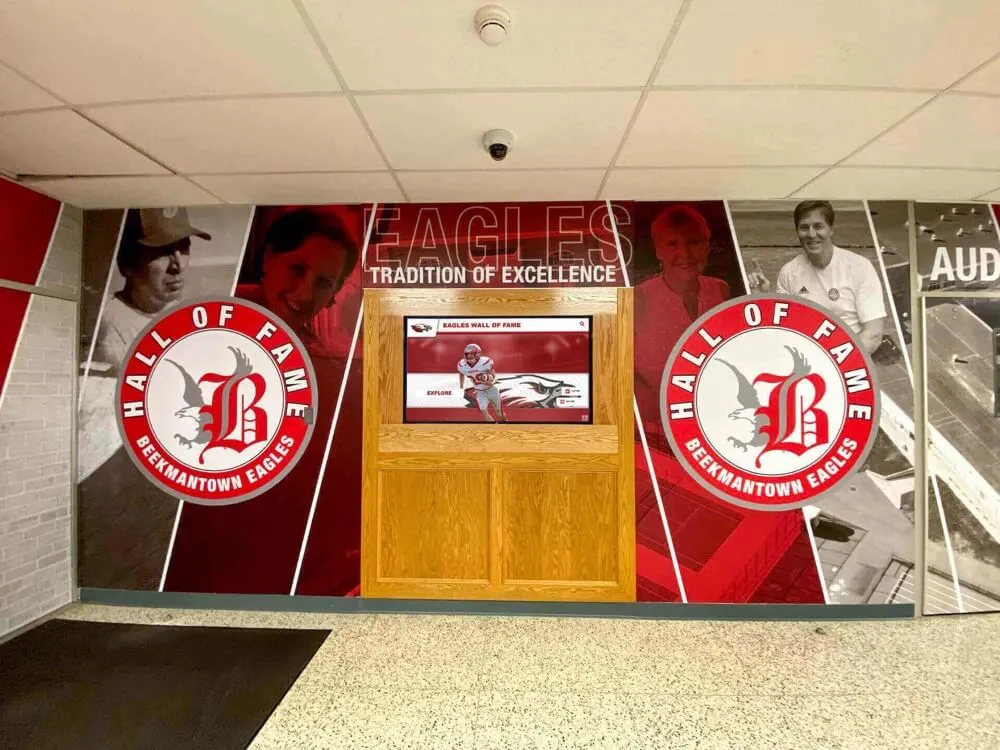
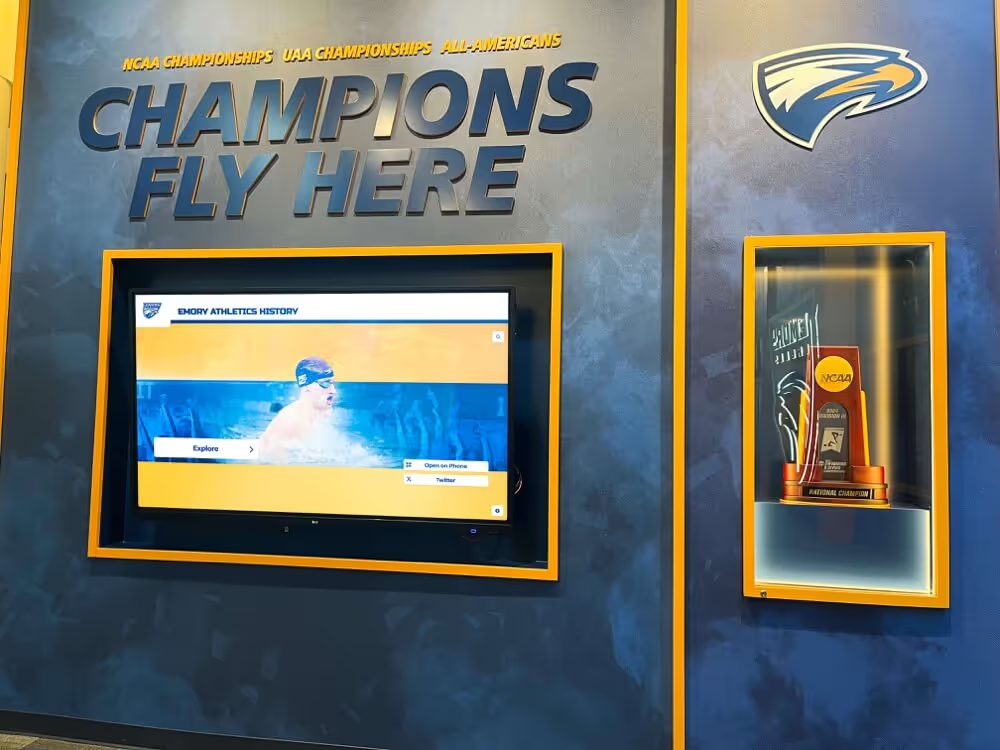
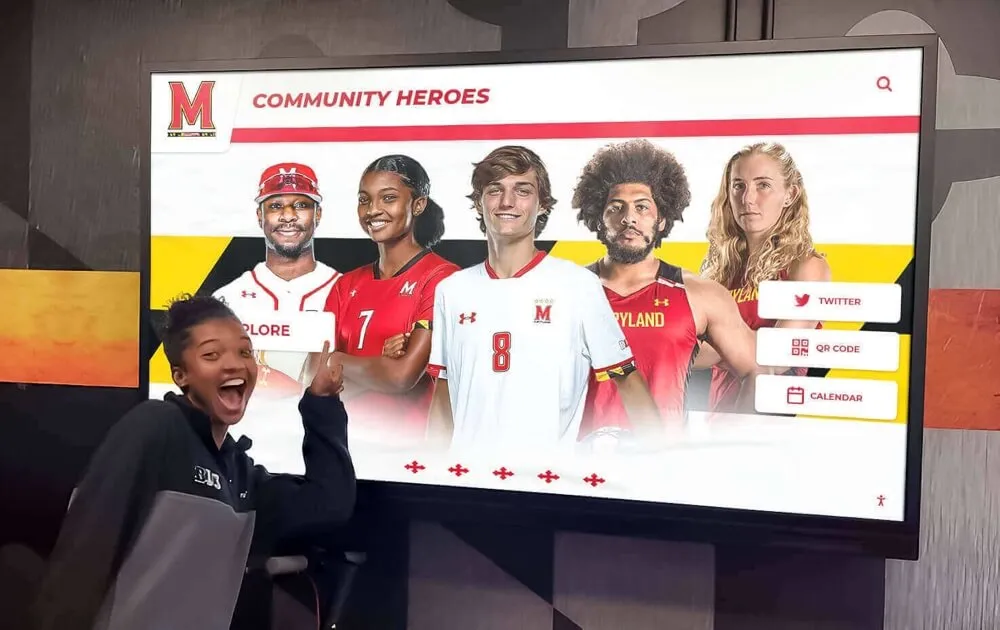
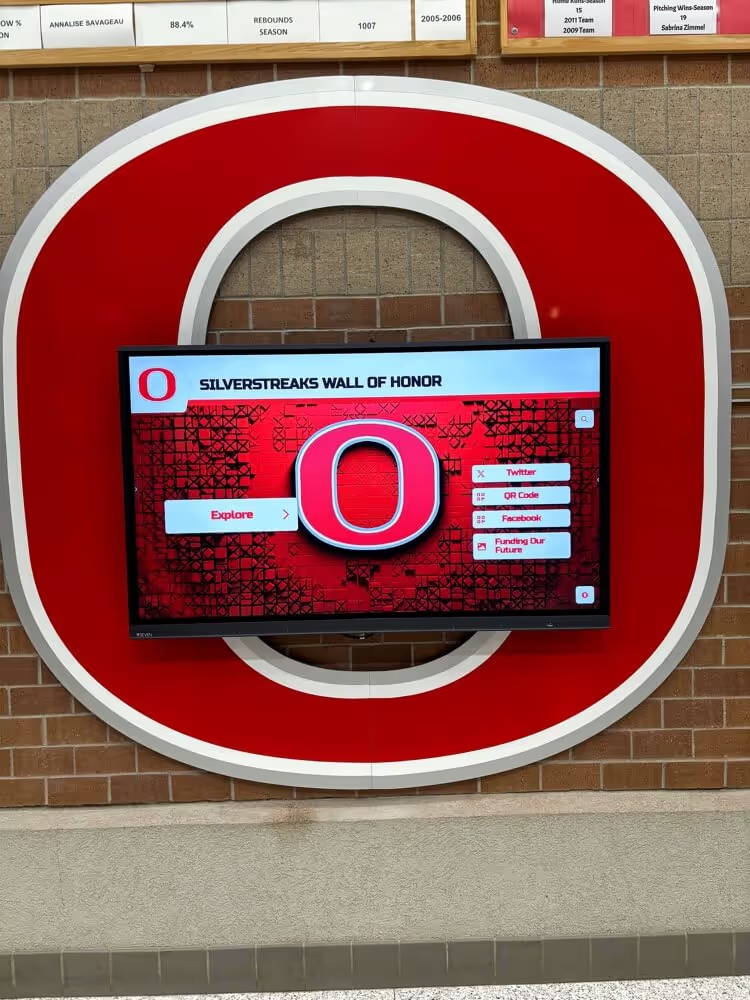
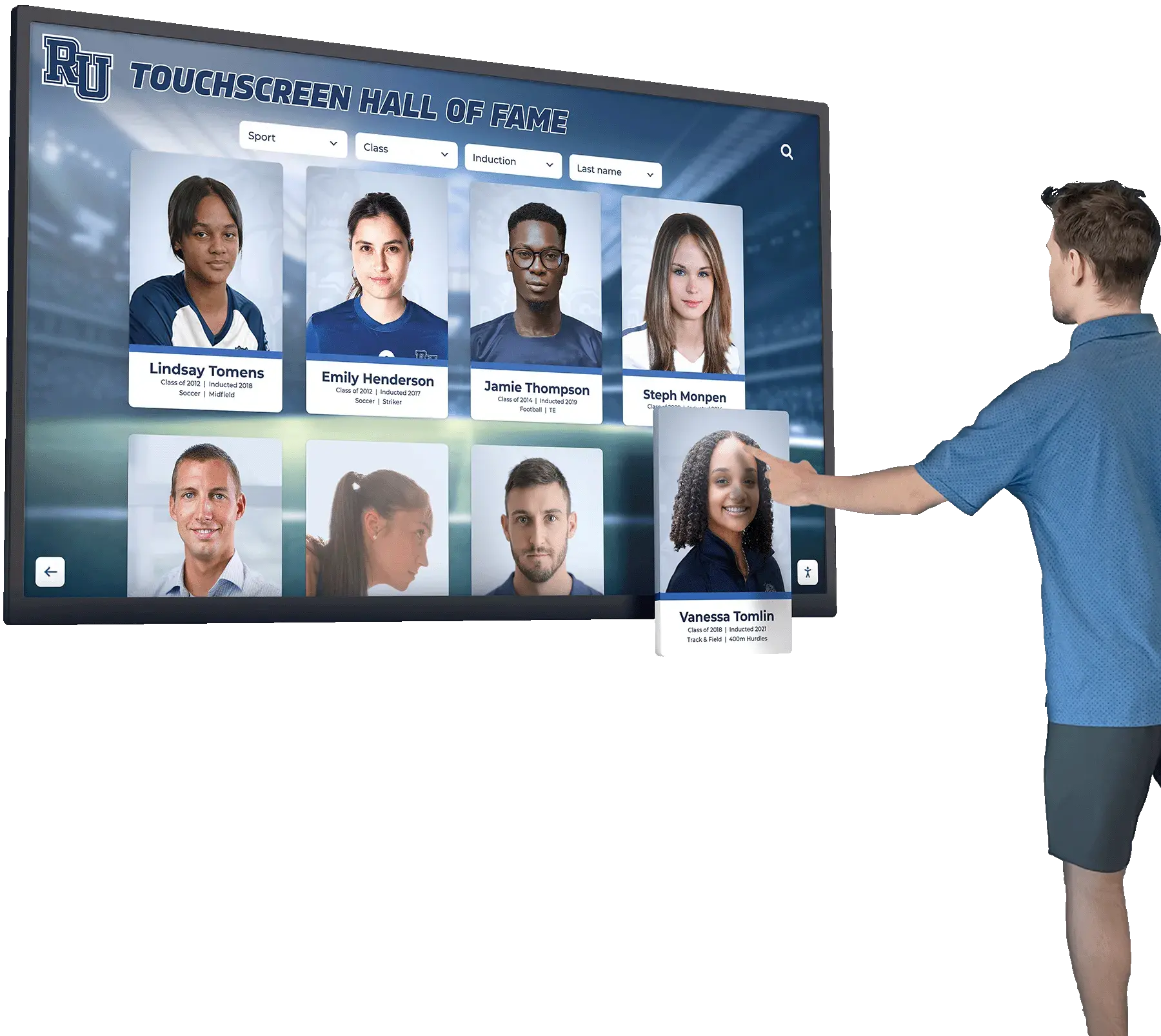
Interactive displays allow student-athletes to explore Academic All-American achievements and understand the path to dual excellence
Athletic Performance Standards
Academic All-American candidates must demonstrate significant athletic achievement:
- Varsity participation: Must be letter-winner or significant contributor
- Playing time: Regular competition participation expected
- Athletic accomplishments: Conference honors, statistical achievements, team leadership
- Team success: Contributions to team performance considered
- Athletic commitment: Full-season participation demonstrates dedication
Learn more about comprehensive student recognition in athletic banquet planning that honors academic-athletic achievement.
Citizenship and Character Components
Beyond academics and athletics, Academic All-American programs often evaluate:
- Community service: Volunteer work and civic engagement
- Campus leadership: Student government, club participation, peer mentoring
- Character demonstration: Conduct both on and off the field
- Institutional citizenship: Positive representation of school values
- Social responsibility: Engagement with broader community issues
This holistic evaluation ensures Academic All-Americans embody comprehensive excellence rather than narrow achievement in isolated domains.
The History and Evolution of Academic All-American Recognition
Understanding Academic All-American history provides context for why these awards carry such prestige in educational and athletic communities.
Origins of Academic All-American Programs
Collegiate Recognition Beginnings
The College Sports Information Directors of America (CoSIDA) established the Academic All-America program in 1952 to recognize the student-athlete ideal—individuals excelling in both classroom and competition. The program initially focused on football before expanding to encompass all NCAA sports.
Early Academic All-America teams received limited publicity compared to athletic all-America selections. Over subsequent decades, the program’s prestige grew as educational institutions increasingly emphasized the student component of “student-athlete” and sought to celebrate comprehensive excellence.
Expansion Across Athletic Divisions
By the 1970s, Academic All-America recognition expanded across all three NCAA divisions, acknowledging that academic-athletic excellence exists at every competitive level. This expansion recognized that Division III student-athletes often face even greater time management challenges balancing rigorous academics with athletics in the absence of athletic scholarships.
High School Program Development
High school Academic All-American programs emerged later, often modeled after collegiate programs but adapted for secondary education contexts. Sport-specific organizations began recognizing high school academic excellence in the 1980s and 1990s, creating pathways for younger student-athletes to pursue comprehensive achievement.
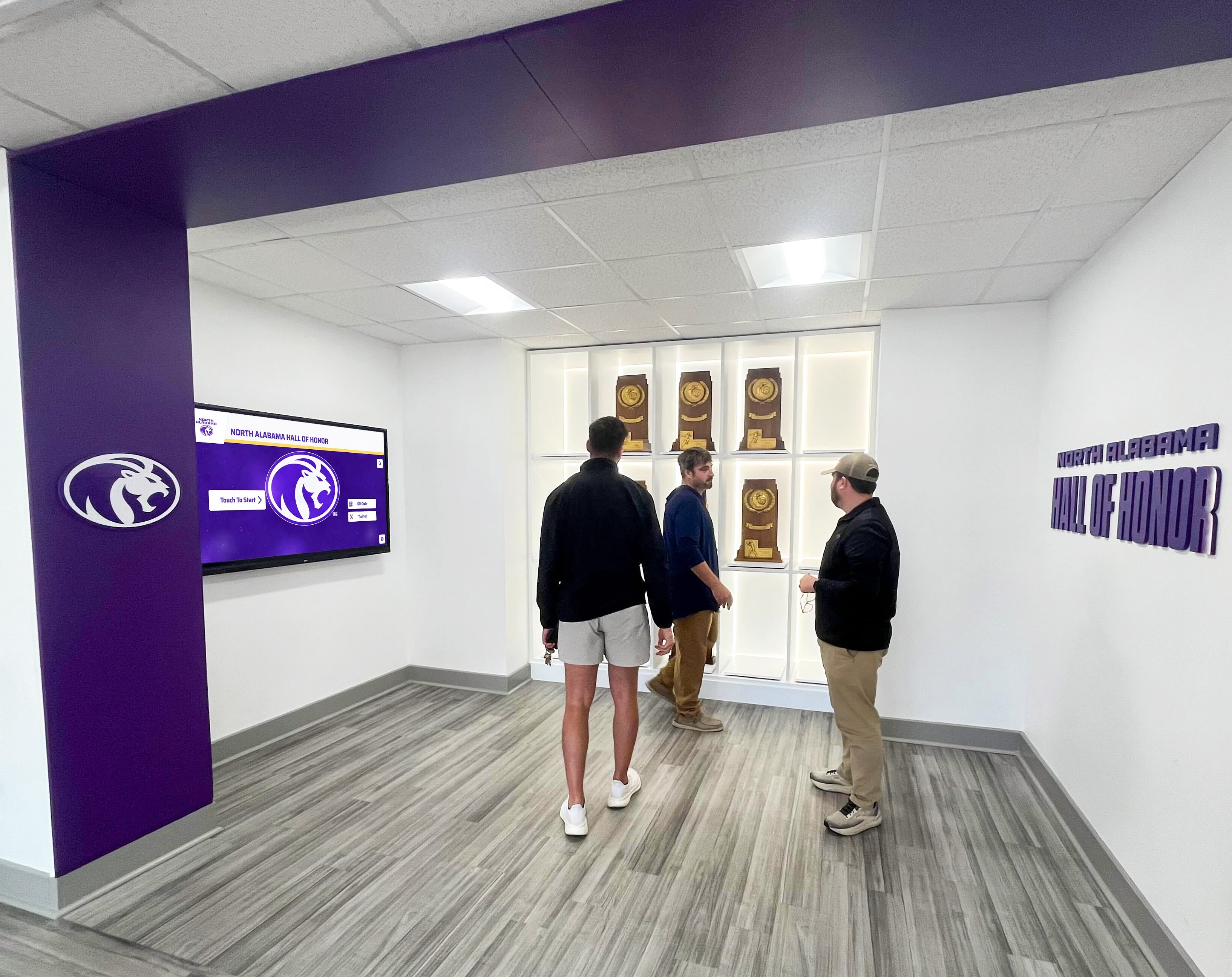
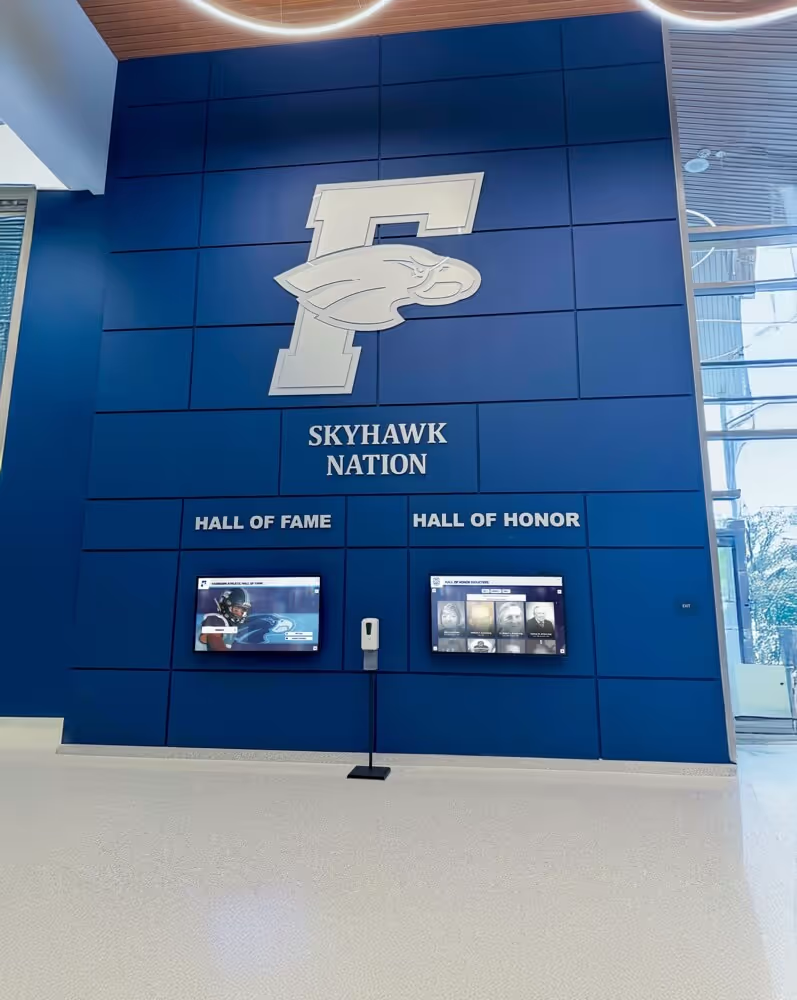
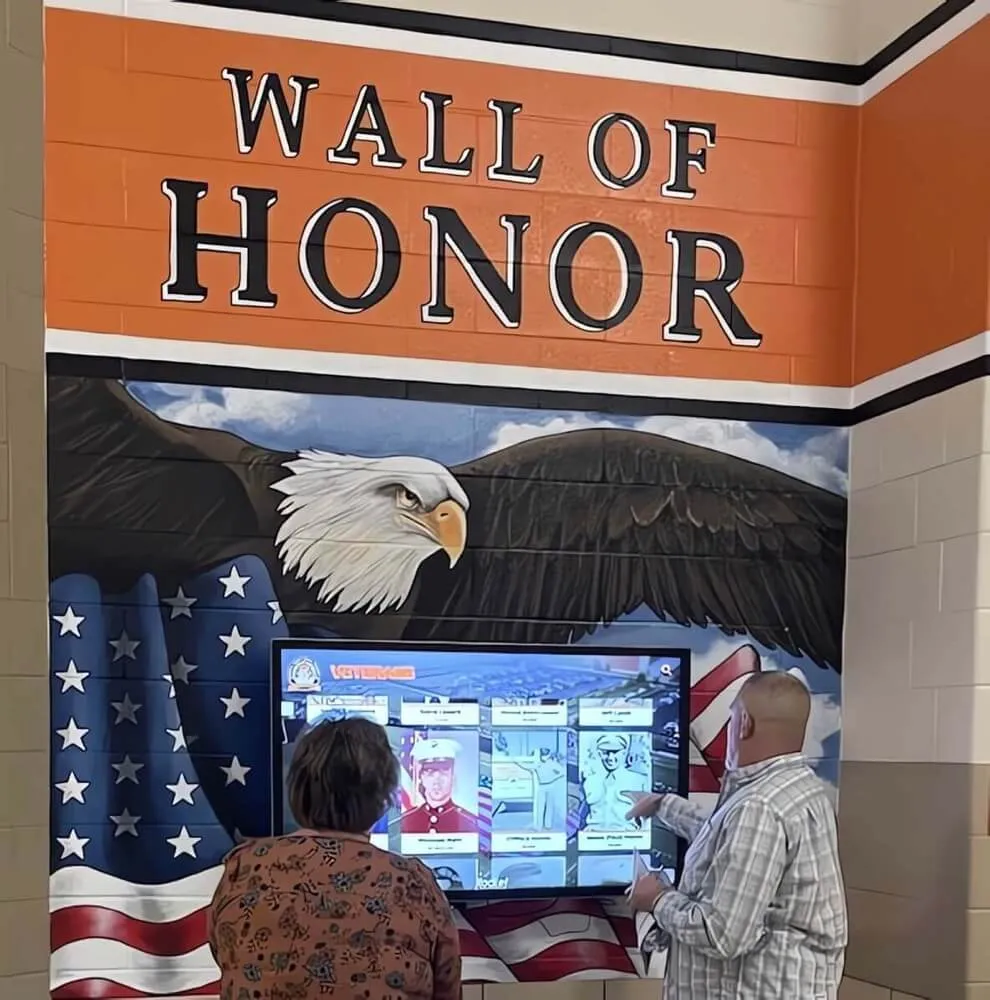
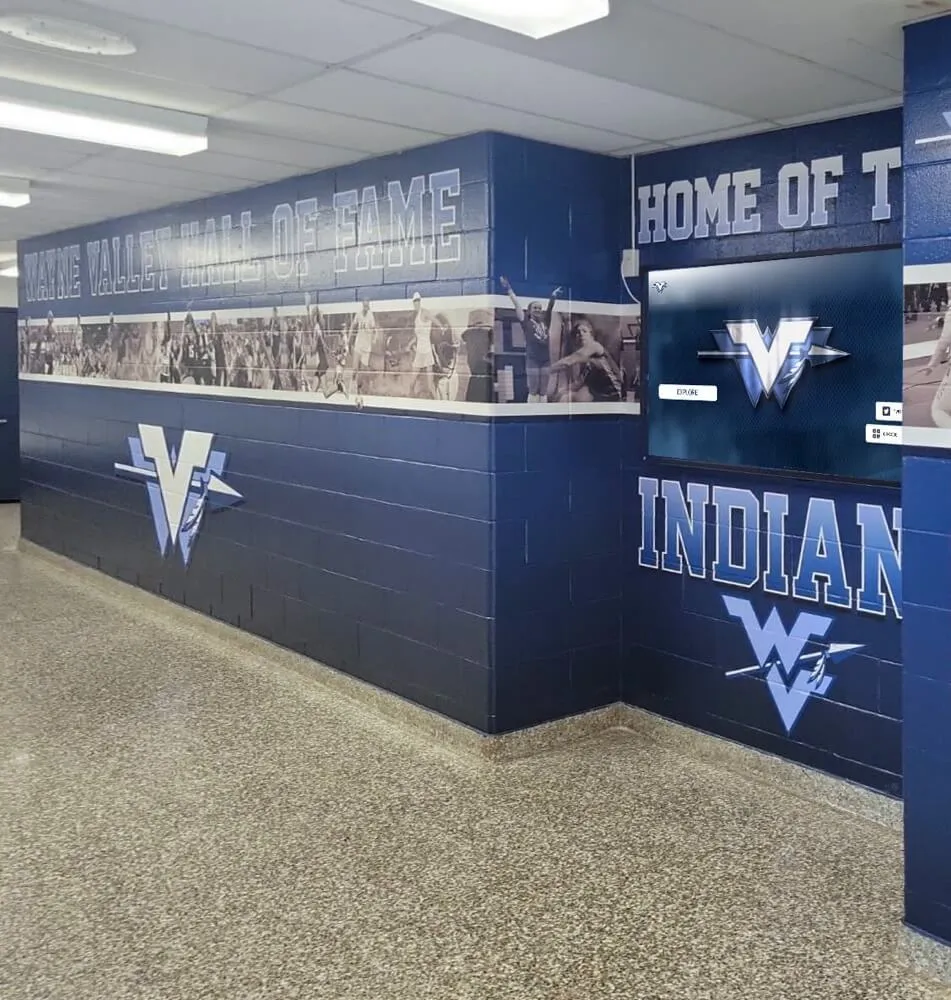
Permanent recognition displays honor Academic All-American traditions and inspire continued pursuit of dual excellence
Modern Academic All-American Impact
Recruitment and Scholarship Considerations
Academic All-American recognition significantly impacts college recruitment and scholarship opportunities:
- Academic scholarships: Demonstrates ability to maintain GPA while competing
- Athletic recruitment: Shows time management and dedication
- Combined programs: Honors colleges and special programs seek dual-excellence students
- Graduate school applications: Distinguished academic-athletic achievement strengthens applications
- Career opportunities: Employers recognize comprehensive achievement and work ethic
Explore recognition approaches in digital signage content that showcases student achievements.
Cultural Shift Toward Student-Athlete Balance
Academic All-American programs have influenced broader cultural conversations about student-athlete well-being:
- Time management education: Schools develop programs supporting academic-athletic balance
- Mental health awareness: Recognition that excellence in both domains requires support systems
- Resource allocation: Academic support services for student-athletes expanded
- Cultural messaging: “Student” receives equal emphasis with “athlete” in institutional communications
- Success metrics: Graduation rates and academic achievement metrics gain prominence alongside athletic success
This cultural evolution reflects growing understanding that sustainable athletic programs must support comprehensive student development.
The Academic All-American Selection Process
Understanding how candidates are evaluated helps students position themselves competitively and schools support potential nominees effectively.
Nomination and Application Procedures
Institutional Nomination Requirements
Most Academic All-American programs require institutional nomination rather than direct student application:
College Level Process
- Sports information director (SID) or athletics communications office submits nominations
- Limited number of nominees allowed per institution in most programs
- Internal selection determines which eligible student-athletes receive nominations
- Nomination materials include academic transcripts, athletic statistics, and achievement summaries
- Supporting documentation may include essays, recommendation letters, or service records
High School Nomination Variations
- Athletic directors typically manage nomination processes
- Some programs allow coach nominations with administrative approval
- Academic counselors may verify GPA and academic standing
- Nomination deadlines often align with sport season conclusions
- Multiple student-athletes from single school may receive nominations in different sports

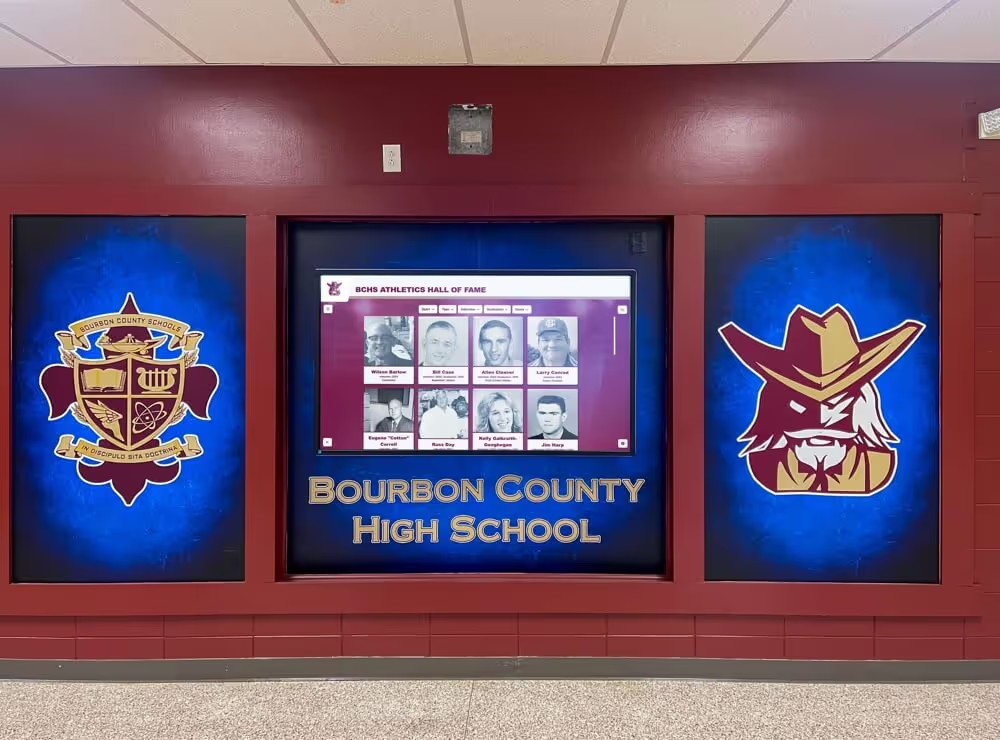
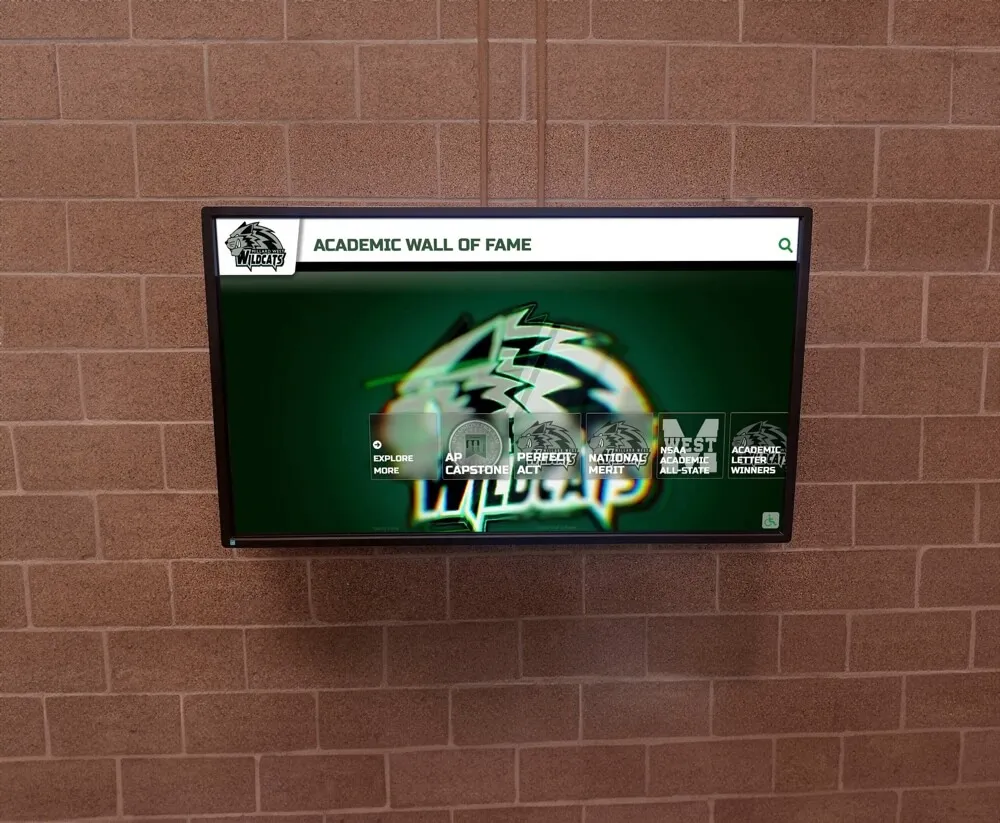
Individual recognition profiles celebrate the specific academic and athletic achievements of Academic All-American honorees
Evaluation Criteria Weighting
Selection committees evaluate multiple achievement dimensions:
Academic Performance (Primary Weight)
- Cumulative GPA receives primary consideration
- Consistency across multiple semesters
- Academic major difficulty considered in context
- Upward grade trends strengthen candidacy
- Additional academic honors provide supporting evidence
Athletic Achievement (Secondary Weight)
- Statistical performance relative to position
- Team contribution and leadership roles
- Conference and regional recognition
- Consistency of performance across seasons
- Improvement trajectory demonstrates dedication
Comprehensive Achievement (Tertiary Weight)
- Community service engagement and impact
- Campus leadership roles and responsibilities
- Character and citizenship demonstration
- Unique accomplishments or circumstances
- Institutional contribution beyond athletics
This weighting ensures academic excellence remains central while acknowledging the comprehensive achievement Academic All-American recognition represents.
Timeline and Announcement Schedules
Collegiate Academic All-America Calendar
Most sport-specific Academic All-America teams follow predictable announcement schedules:
- Fall sports (football, soccer, volleyball, cross country): December-January announcements
- Winter sports (basketball, wrestling, swimming, gymnastics): March-April announcements
- Spring sports (baseball, softball, track, tennis, lacrosse): May-June announcements
- Year-round sports (golf): June-July announcements
Nomination deadlines typically occur 4-8 weeks before announcement dates, allowing time for evaluation and voting processes.
High School Recognition Timelines
High school programs vary more significantly in timing:
- Some programs align with specific sport seasons
- Year-end academic all-American programs collect nominations in spring
- Multi-sport programs may have rolling recognition throughout the year
- State programs often announce during state championship events
Understanding these timelines helps schools plan celebration events and recognition programs that coincide with announcement dates.
How Schools Can Celebrate Academic All-Americans
Creating meaningful recognition for Academic All-American honorees requires thoughtful planning that balances individual celebration with institutional pride.
Immediate Recognition Strategies
Announcement and Initial Celebration
When student-athletes receive Academic All-American recognition, timely acknowledgment creates impact:
School Communications
- Press releases distributed to local media and school publications
- Social media announcements across institutional accounts
- Website features highlighting achievement details
- Email announcements to school community
- Student newspaper and yearbook recognition
Athletic Department Recognition
- Announcement at athletic events and competitions
- Recognition during halftime or pre-game ceremonies
- Inclusion in game program honors and achievements section
- Coach and administrator congratulatory statements
- Team celebration and acknowledgment
Explore comprehensive recognition approaches in touchscreen displays for school lobbies.
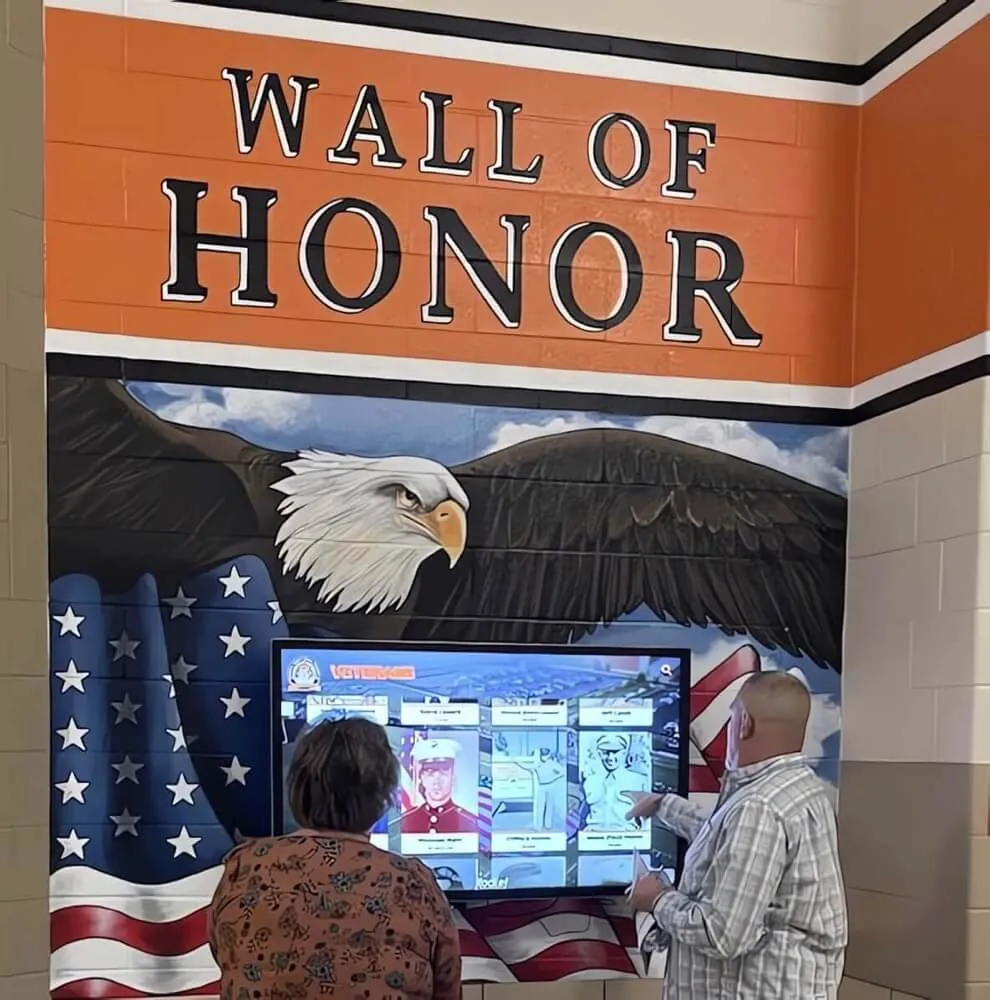
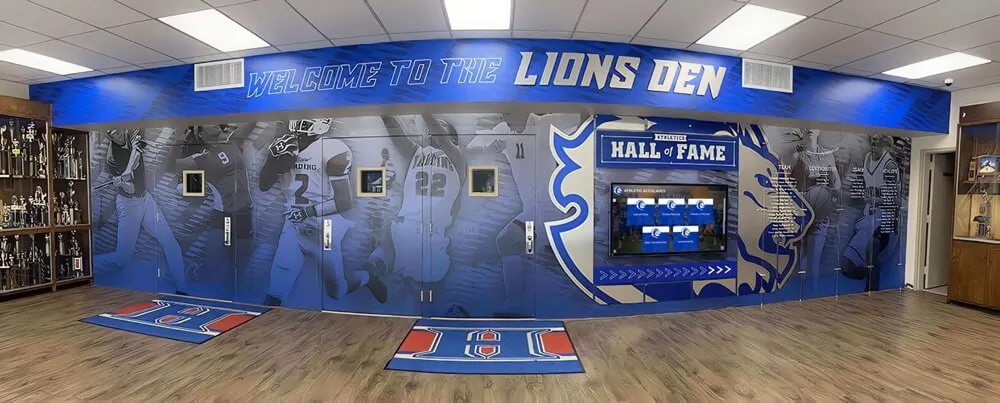
Interactive recognition walls create engaging spaces where Academic All-American achievements become part of institutional culture and tradition
Academic Recognition Integration
Academic departments should celebrate these achievements alongside athletic recognition:
- Faculty announcements in relevant courses
- Academic honors ceremonies inclusion
- Departmental newsletters and communications
- Classroom recognition by professors
- Academic advisor acknowledgment
This dual recognition reinforces the comprehensive nature of Academic All-American achievement.
Permanent Recognition and Display
Physical Recognition Elements
Creating lasting recognition ensures Academic All-American achievements inspire future students:
Traditional Recognition Methods
- Plaques in athletics facilities and academic buildings
- Trophy case displays with academic all-American honors
- Banner recognition in gymnasiums and athletic venues
- Honor roll boards listing all-time academic all-Americans
- Dedicated sections in halls of fame
Modern Digital Recognition Solutions
Contemporary schools increasingly utilize digital recognition displays that offer dynamic advantages over static plaques:
- Touchscreen walls of fame: Interactive displays allowing visitors to explore Academic All-American achievements in detail
- Digital signage: Rotating recognition screens in lobbies, athletic facilities, and academic buildings
- Comprehensive profiles: Individual pages featuring academic achievements, athletic statistics, photos, and personal narratives
- Searchable databases: Filtering all-time Academic All-Americans by sport, year, academic major, or achievement level
- Automatic updates: Seamless addition of new honorees without physical renovation
- Multi-media integration: Video highlights, interview clips, and ceremonial moments preserved digitally
These modern solutions create living recognition that evolves with your institution while making Academic All-American achievements continuously visible to current students, prospective athletes, families, and visitors.
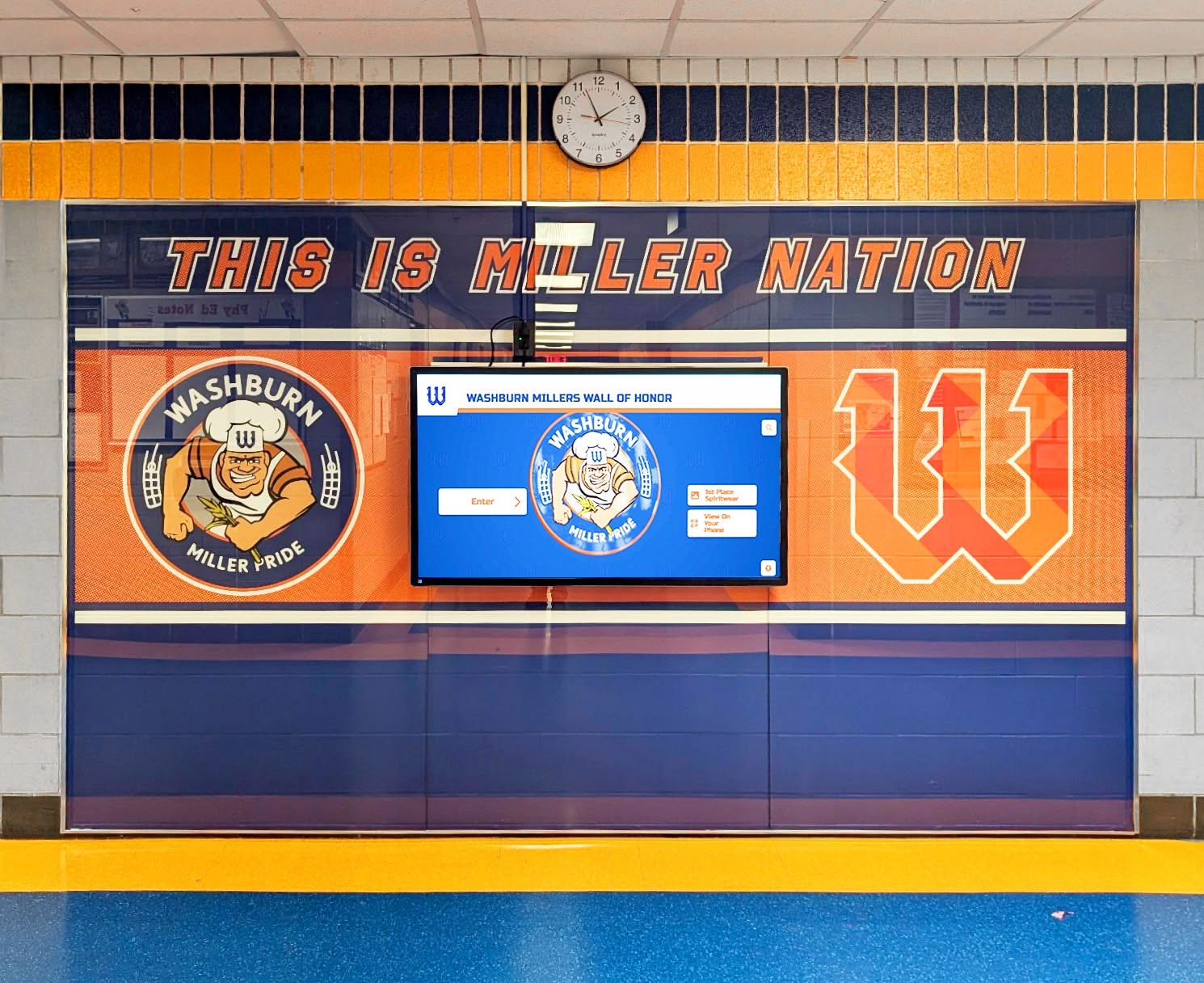
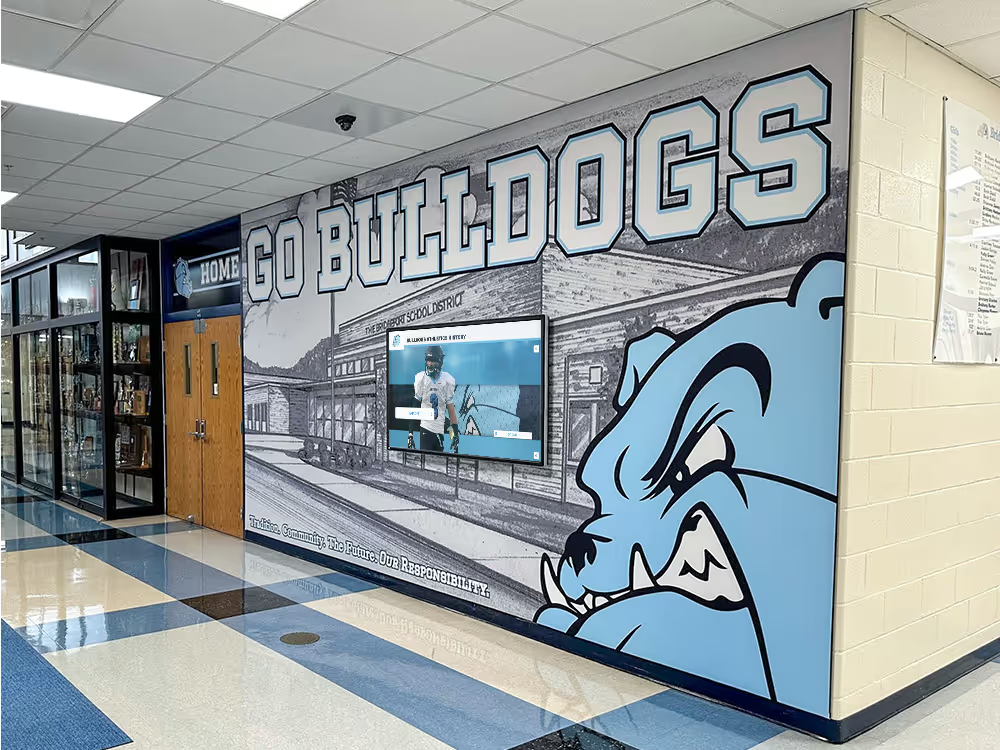
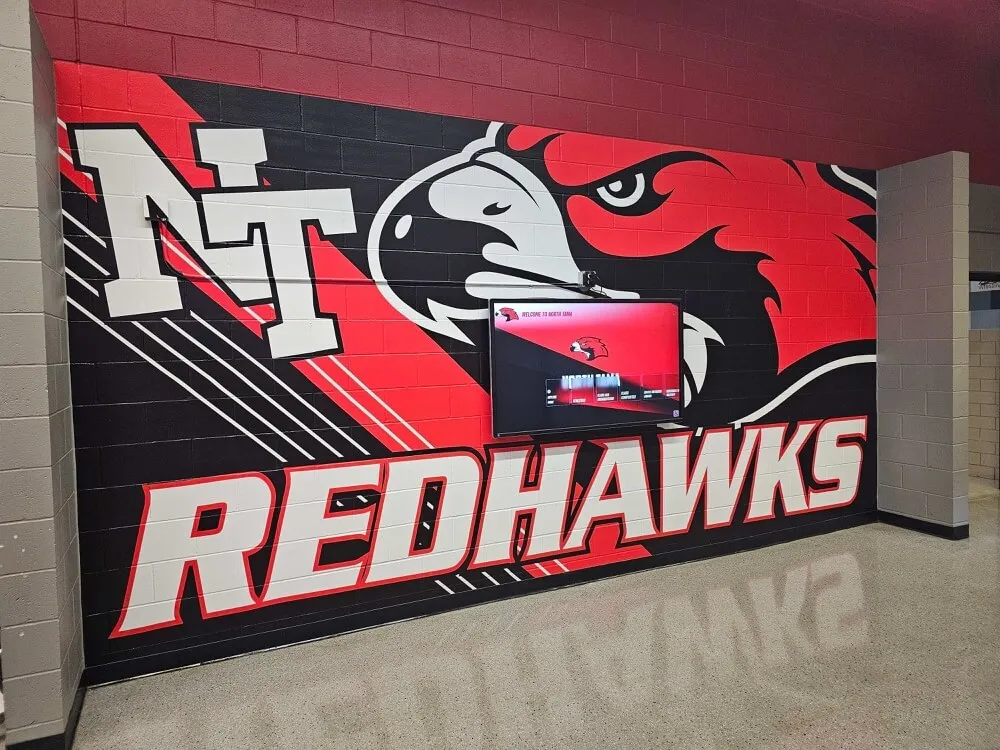
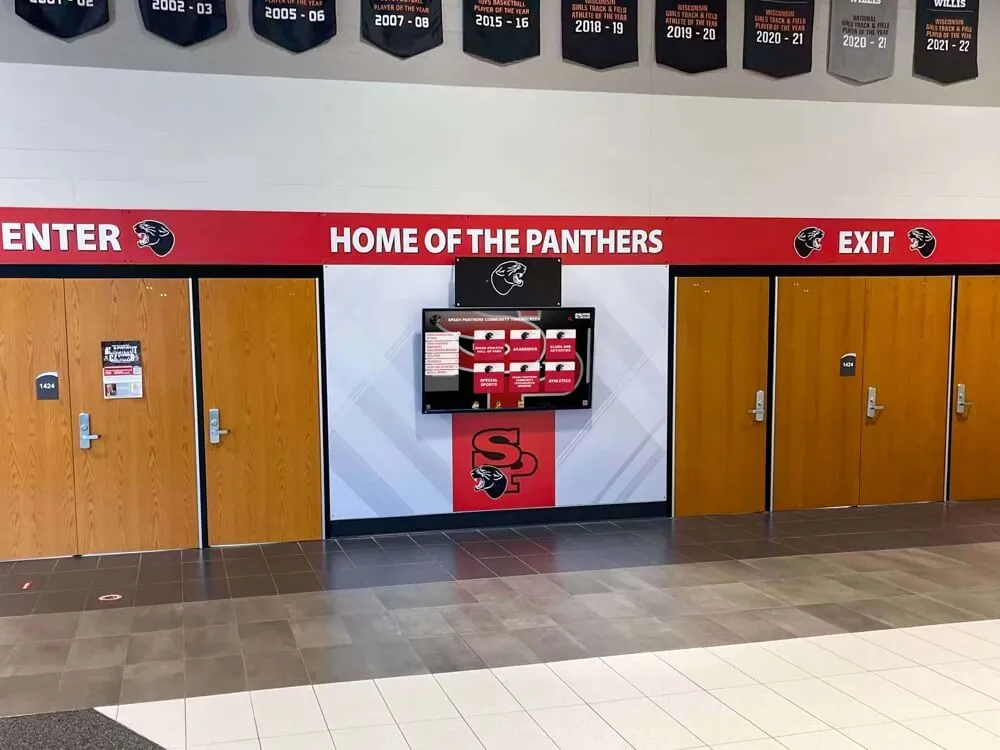
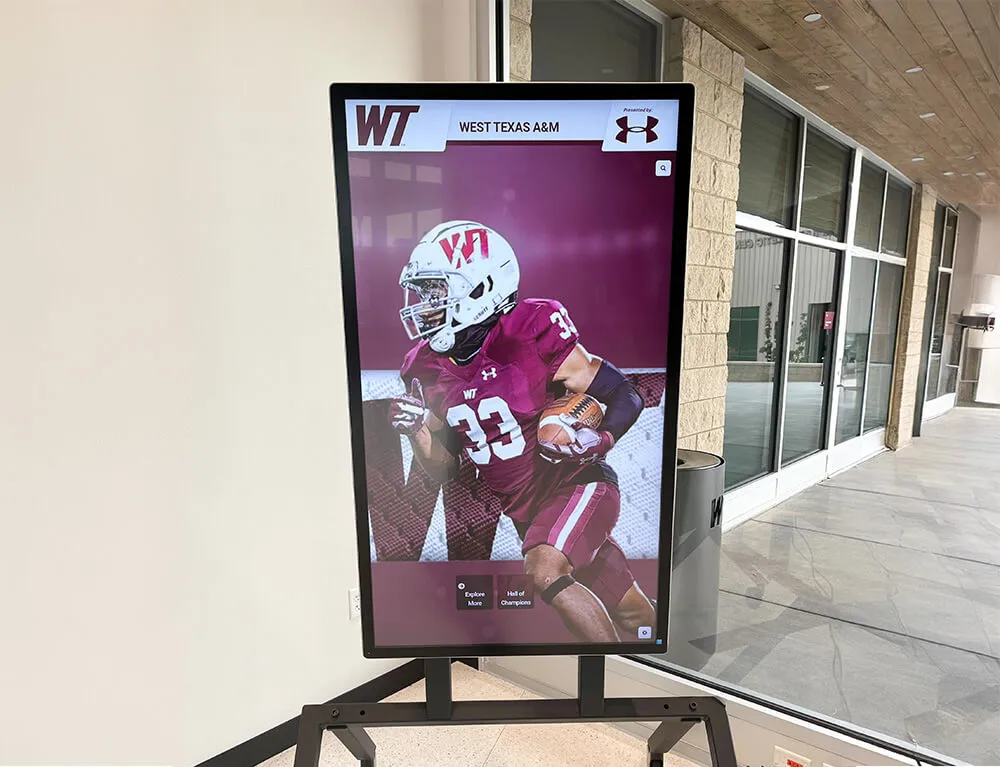
Hallway digital displays ensure Academic All-American recognition remains prominent in daily school life, inspiring students as they move through campus
Ceremonial Recognition Events
Annual Academic Athletic Awards Ceremonies
Dedicated events celebrating academic-athletic excellence create meaningful recognition moments:
Event Structure and Components
- Keynote speakers who embodied student-athlete success
- Individual Academic All-American presentations with achievement summaries
- Faculty and coach reflections on student accomplishments
- Family recognition and appreciation
- Peer acknowledgment from teammates and classmates
- Award presentations including plaques, certificates, and commemorative items
Timing Considerations
- End-of-year ceremonies capture full academic year achievements
- Separate events from purely athletic banquets emphasize academic component
- Spring ceremonies allow senior recognition before graduation
- Post-season timing accommodates all sport seasons
Discover planning resources in sports banquet awards categories and recognition ideas.
Graduation Recognition
Academic All-Americans deserve special acknowledgment during commencement:
- Special cords, stoles, or medallions designating Academic All-American status
- Program listings with special designation
- Recognition during ceremony proceedings
- Separate reception for Academic All-Americans and families
- Special seating sections or processional positions
This graduation recognition ensures Academic All-American achievement receives visibility alongside traditional academic honors.
Supporting Future Academic All-American Candidates
Schools committed to Academic All-American recognition should develop comprehensive support systems helping student-athletes achieve this distinction.
Academic Support Programs for Student-Athletes
Structured Academic Services
Creating infrastructure that supports dual excellence:
Time Management Resources
- Academic calendars coordinating practice schedules with study time
- Priority registration ensuring manageable course scheduling
- Study hall requirements with academic monitoring
- Tutorial services targeting student-athlete needs
- Time management workshops and coaching
Academic Advising
- Dedicated academic advisors for student-athletes
- Major selection guidance balancing interests with athletic demands
- Course load planning across seasons
- Progress monitoring toward graduation requirements
- Academic goal-setting aligned with Athletic All-American criteria
Learn about comprehensive recognition in National Honor Society essays and academic achievement documentation.
Creating a Culture of Academic-Athletic Excellence
Messaging and Expectations
Institutional culture profoundly impacts student-athlete academic priorities:
Coach Leadership
- Academic achievement emphasized in recruiting
- GPA expectations communicated clearly
- Academic performance included in team standards
- Study requirements enforced consistently
- Academic success celebrated equally with athletic achievement
Peer Culture Development
- Academic All-Americans serve as mentors
- Team academic recognition programs
- Study groups organized by sport teams
- Academic competition between teams or positions
- Senior student-athlete leadership modeling priorities
Recognition Pipeline Creation
Developing pathways from entry through Academic All-American candidacy:
- Freshman academic achievement awards
- Semester honor roll recognition
- Academic improvement awards
- Milestone GPA recognition (3.5, 3.75, 4.0)
- Conference academic all-conference as stepping stone
- Academic All-American as pinnacle achievement
This graduated recognition system maintains motivation while building toward Academic All-American criteria.
Practical Implementation Checklist
Schools seeking to enhance Academic All-American recognition and support should:
Administrative Actions
- Identify all Academic All-American programs available to your student-athletes
- Document specific criteria for each program
- Establish internal nomination procedures and timelines
- Assign responsibility for nomination management (SID, athletic director, etc.)
- Create tracking systems monitoring eligible student-athletes
Support Infrastructure
- Develop academic support services specifically for student-athletes
- Implement academic monitoring systems tracking GPA trends
- Create study resources and tutoring availability
- Establish time management programming
- Build faculty-athletics collaboration supporting dual excellence
Recognition Systems
- Plan physical and digital recognition displays
- Schedule annual academic-athletic awards ceremonies
- Develop communications protocols for new Academic All-Americans
- Create permanent records and historical archives
- Integrate recognition across athletics and academics
Cultural Development
- Train coaches on Academic All-American programs and criteria
- Communicate Academic All-American goals to prospective student-athletes
- Celebrate academic achievement alongside athletic success
- Feature Academic All-Americans in recruitment materials
- Share Academic All-American stories through media
Celebrating Excellence That Matters Most
Academic All-American recognition represents achievement that extends far beyond athletic fields and classrooms—it demonstrates dedication, time management, persistence, and comprehensive excellence that prepares student-athletes for successful lives beyond school. When institutions systematically support students pursuing this distinction and meaningfully celebrate those who achieve it, they send powerful messages about what truly matters in education.
The investment in Academic All-American recognition—from support programs through celebration and permanent display—yields returns that compound over time. Current students gain inspiration from seeing Academic All-American achievements prominently featured. Prospective families recognize institutional commitment to comprehensive student development. Alumni feel pride in traditions that celebrated well-rounded excellence rather than narrow achievement.
Whether your school already produces Academic All-Americans regularly or aspires to develop this tradition, the strategies outlined in this guide provide actionable pathways. From understanding program criteria and supporting student-athlete candidates to creating meaningful recognition that inspires future generations, schools can build cultures where academic and athletic excellence reinforce rather than compete with one another.
As you consider how to celebrate Academic All-American honorees at your institution, remember that recognition serves dual purposes—honoring individual achievement while creating cultural touchstones that elevate expectations and aspirations institution-wide. Modern recognition solutions like digital walls of fame and interactive touchscreen displays make this dual excellence continuously visible, ensuring Academic All-American achievements inspire every student who walks your halls.
The student-athletes who earn Academic All-American recognition deserve celebration that matches their exceptional dedication. By implementing comprehensive recognition programs that make these achievements visible, meaningful, and inspiring, schools honor not just individual accomplishments but the values of excellence, balance, and comprehensive development that define truly outstanding education.