



An all-state athlete is a high school student selected by coaches, media panels, or a state athletic association as one of the best performers in their sport across an entire state. It is among the highest honors a scholastic athlete can earn—confirmation that a student’s performance stood out not just within a conference or district, but statewide.
Most schools mark the moment with a certificate, a brief announcement at an awards banquet, and perhaps a line in the local paper. Then the certificate goes home in a folder, the banquet ends, and the recognition effectively disappears from campus. That is a missed opportunity. All-state designations represent exactly the kind of elite scholastic achievement that deserves permanent, visible display—for the athlete who earned it, the teammates who witnessed it, and the future athletes who can aspire to follow.
This guide covers every practical method schools use to display all-state athlete recognition beyond the certificate, from dedicated plaque sections to interactive digital walls of fame.
An all-state selection validates years of training, competition, and athletic development within a school program. According to the National Federation of State High School Associations (NFHS), more than 7.8 million students participate in high school sports each year—and only a fraction earn statewide recognition in their sport. Making that distinction visible on campus is a strategic investment in program culture, not just a courtesy.

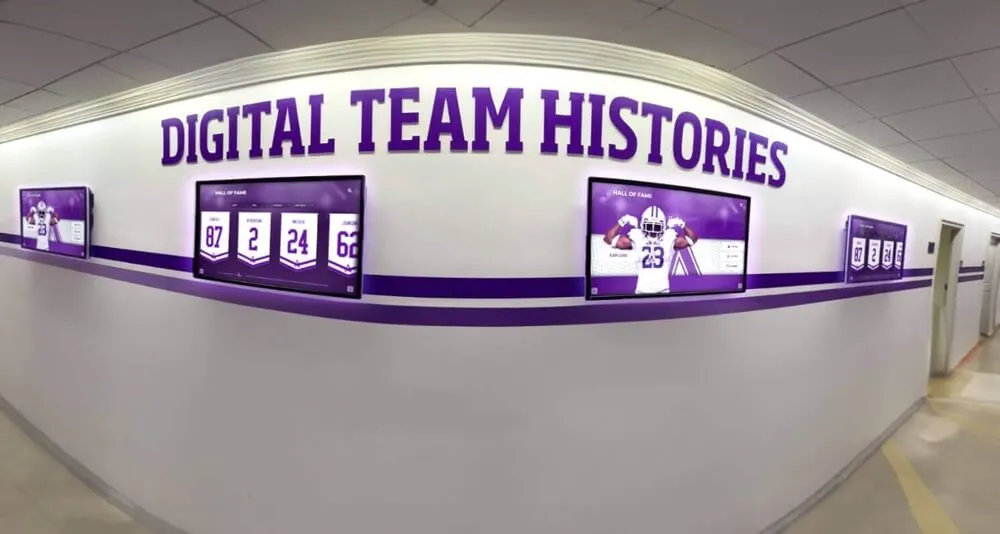
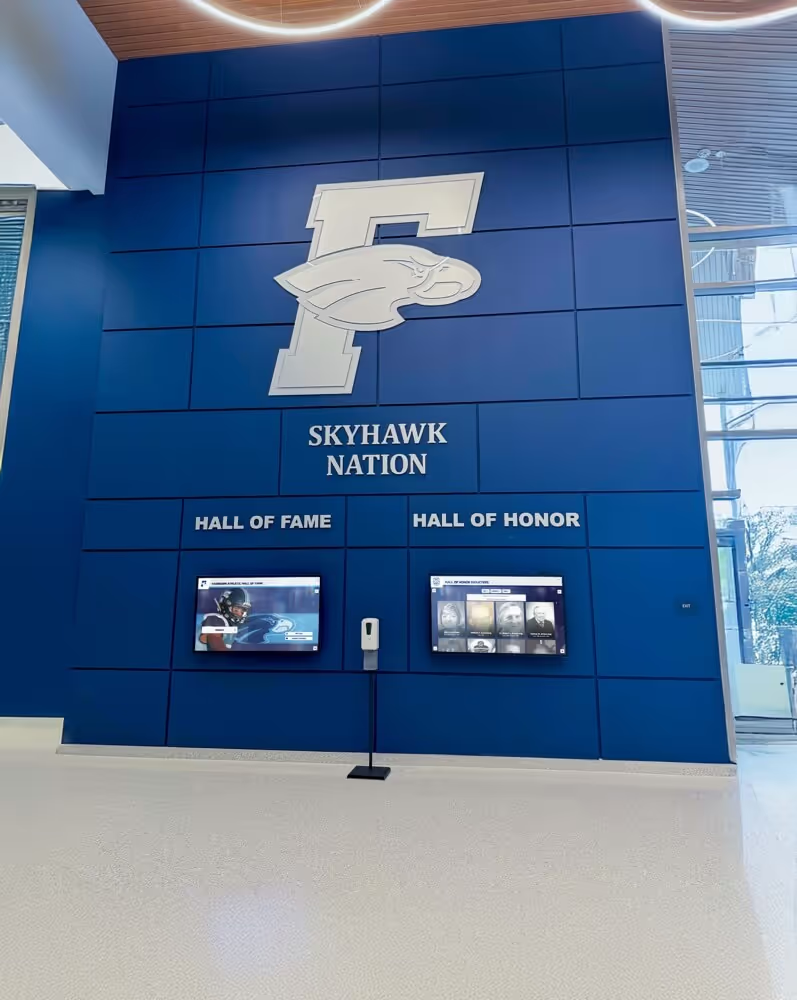
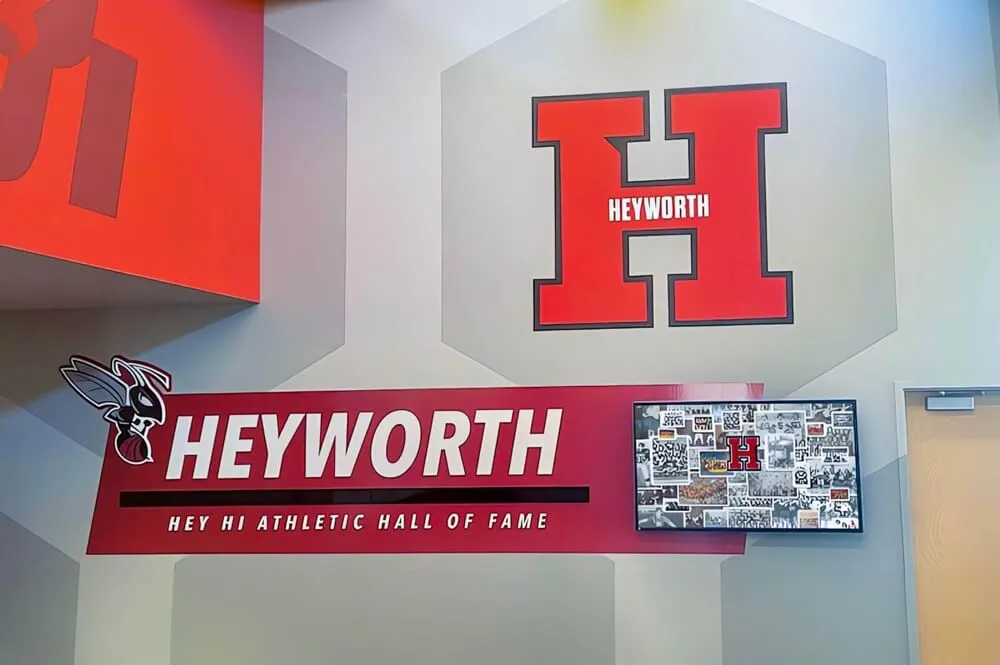
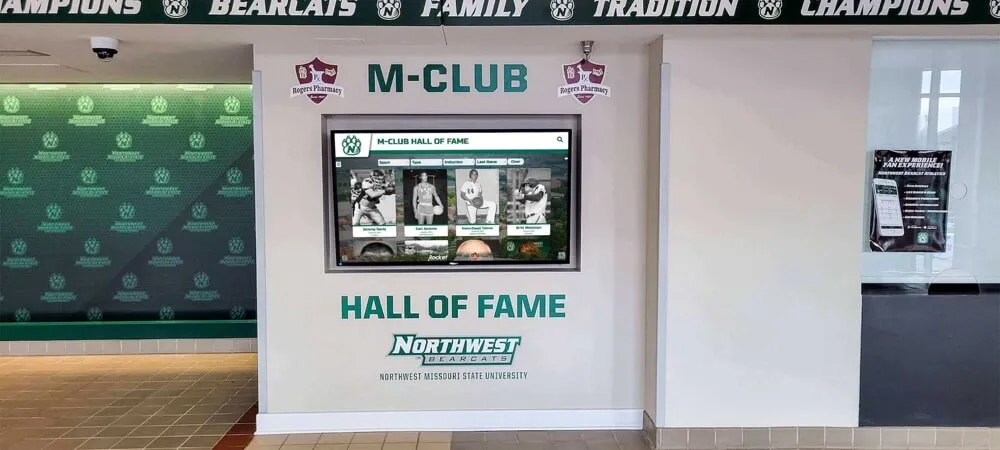
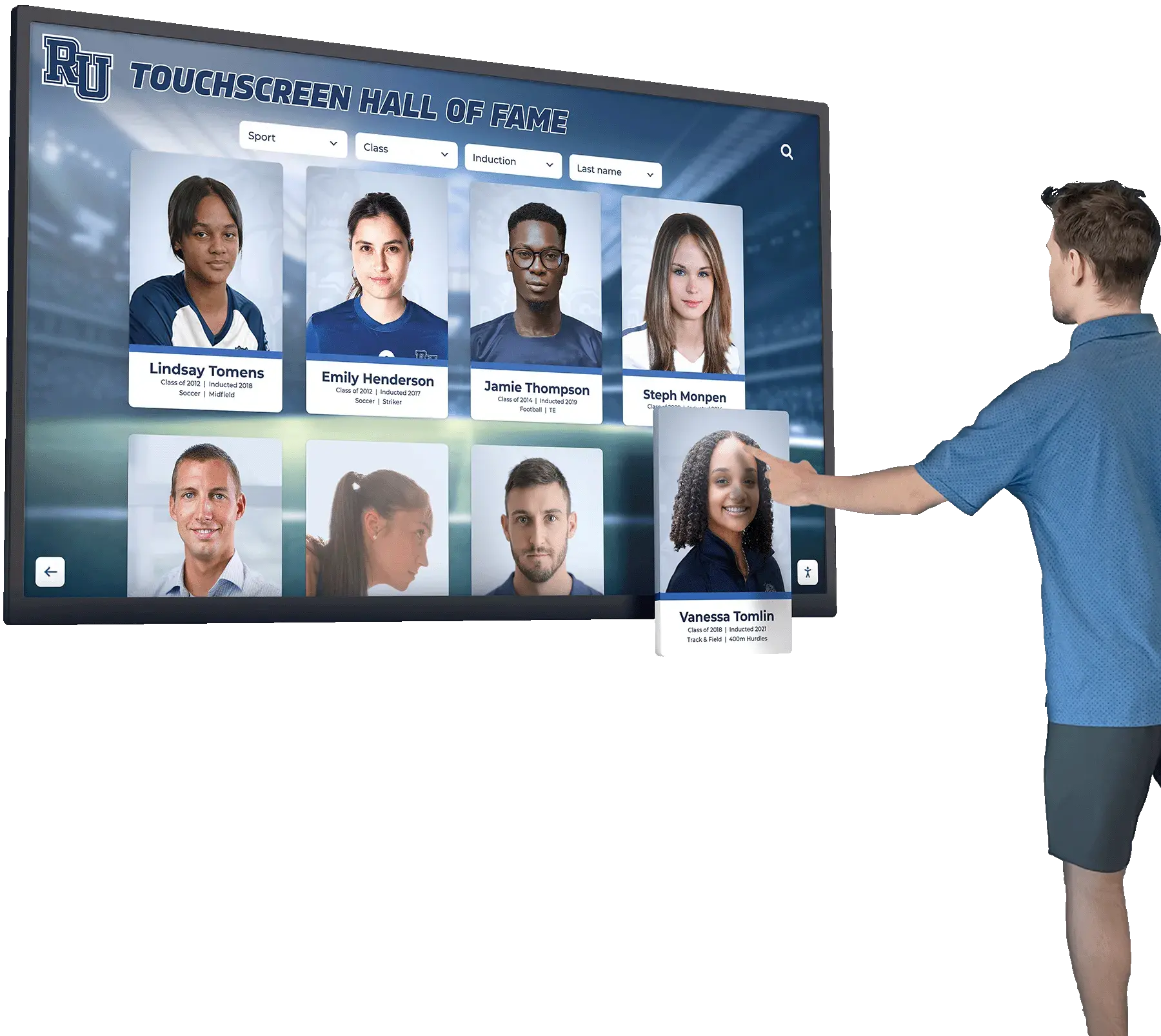
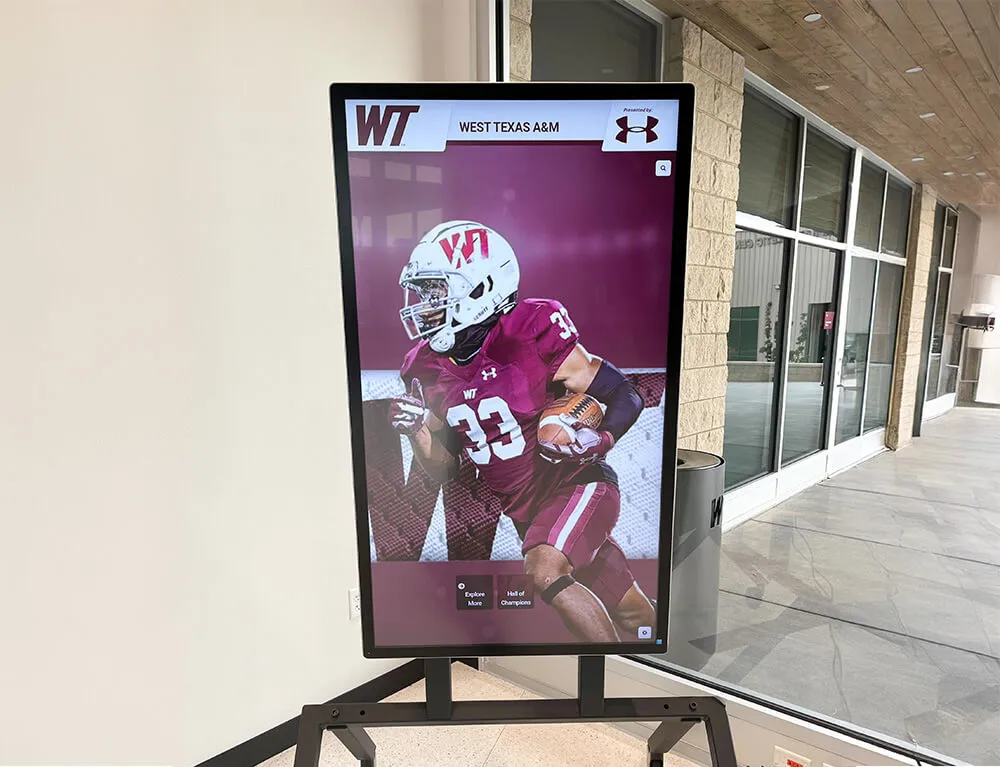
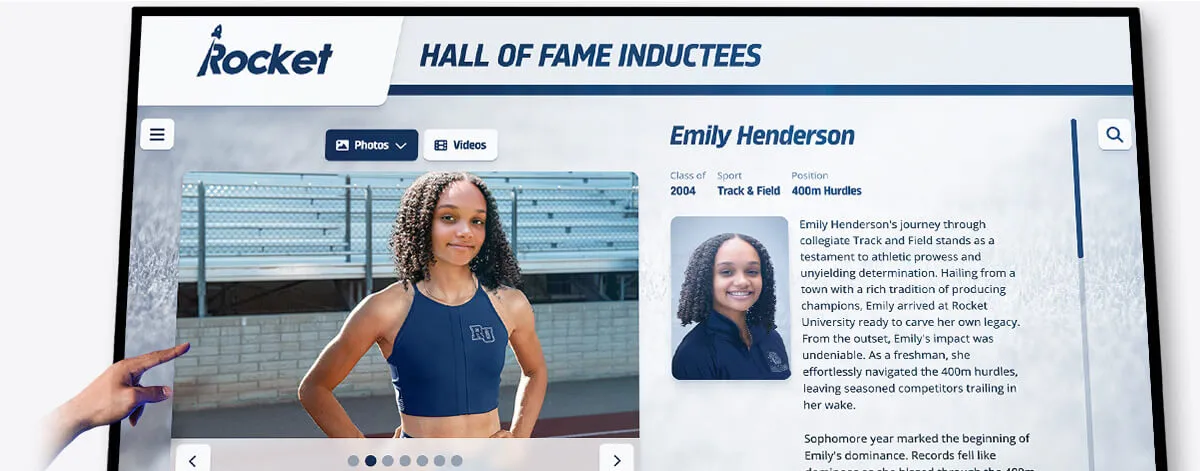
Digital recognition profiles allow schools to display all-state athlete information with photos, statistics, sport, and season detail that a traditional certificate cannot contain
What Does All-State Mean in High School Sports?
All-state in high school sports means a student-athlete has been officially selected—by a state athletic association, a coaches’ association, or a recognized media panel—as one of the top performers at their position or event across the entire state for that season. Selection criteria and the number of honorees vary by state and sport.
For team sports like football, basketball, and soccer, all-state panels typically select a limited number of players per position from across all classifications and divisions. For individual sports like track and field, swimming, or wrestling, all-state status is often earned by finishing within the top tier at a state championship meet or tournament.
All-state is distinct from—and typically more prestigious than—the following:
- All-conference or all-league: Selected within a single athletic conference
- All-district or all-regional: Selected within a geographic bracket below the state level
- Team MVP or most valuable player: An internal team-level honor determined within a single program
Because the selection process involves cross-school and often cross-classification comparison, an all-state designation carries institutional credibility that internal awards cannot replicate. It is an external validation, and that distinction matters both for the athlete and for how the achievement should be displayed.
Why All-State Recognition Deserves Permanent Display
A certificate handed out at a banquet accomplishes one thing well: it marks the moment. What it cannot do is continue to communicate the significance of that achievement to every athlete, student, coach, and visitor who walks through the school’s doors in the years that follow.
Permanently visible all-state recognition serves several purposes that certificate presentation alone cannot fulfill.
Motivational value for current athletes. When a freshman point guard sees the names of previous all-state basketball players displayed in the gym lobby, she has a concrete, school-specific target. The aspiration stops being abstract and becomes tied to real people who stood on the same court.
Program identity and recruiting. Coaches recruiting student-athletes often take prospective players through facilities before or after official visits. A clearly maintained all-state display communicates program history and competitive excellence without a single word from the coach.
Alumni connection. Former all-state athletes who return to campus decades after graduation look for some trace of their recognition. When they find it, it strengthens their connection to the institution. When they don’t, it signals indifference to achievements the school once celebrated.
Institutional memory. Records of all-state selections from 25 years ago do not survive reliably in coaches’ memories or paper files. A permanent display is the only reliable way to ensure recognition endures across staff transitions and facility changes.
Physical Display Options for All-State Athlete Recognition
Dedicated All-State Plaque Sections
The most traditional approach is a dedicated wall section—often in a gymnasium lobby, athletic wing, or trophy corridor—listing all-state honorees by sport and year. Schools that have maintained these sections for decades can create impressive displays communicating program depth and competitive history at a glance.
Effective all-state plaque sections follow consistent formatting conventions:
- Sport headers that organize recognition into clear sport-by-sport sections
- Year-by-year chronological arrangement within each sport
- Athlete name, class year, and the specific all-state tier (first team, second team, honorable mention)
- The selecting body (state athletic association, media panel, coaches’ association)
- Coach names when space allows, connecting athletes to the programs they represented
Material considerations for all-state plaque walls:
- Brushed aluminum or brass plates work well for sports that add honorees annually—the consistent aesthetic scales across many years without visual fragmentation
- Cast or engraved wooden plaques suit programs wanting a warmer aesthetic appropriate for trophy rooms and athletic lounges
- Backlit acrylic panels are increasingly popular in recently renovated facilities where contemporary design calls for materials that integrate with modern lighting systems
The central challenge with any physical plaque approach is space. A program producing all-state athletes across 15 sports for 30 years will eventually exhaust available wall space, forcing decisions about archiving older recognition.
Championship and Recognition Banners
For marquee all-state honors—first-team designations, multi-year honorees, athlete-of-the-year selections—printed banners hung from gymnasium rafters or athletic corridor ceilings provide high-visibility recognition that standard plaque installations cannot match.
Banners are most effective when reserved for the highest tier of recognition. Hanging a banner for every honorable mention selection dilutes the visual impact of those reserved for first-team or player-of-the-year honors. Establishing a clear policy for which all-state designations warrant banner recognition—and applying it consistently across all sports—keeps the display meaningful.
For schools planning formal end-of-season recognition events where all-state certificates are presented alongside other awards, the fundraising gala planning guide provides useful event structure frameworks that adapt naturally to athletic awards ceremonies.
All-State Record Boards
Many schools maintain athletic record boards tracking statistical milestones in key sports. All-state designations integrate naturally into these boards by noting the achievement alongside the season performance data that earned it—connecting the recognition to the results rather than treating it as a separate acknowledgment.
Record boards tracking all-state honors across multiple sports benefit from consistent formatting and a designated staff member responsible for updates. For schools interested in how other programs have approached athletic record display across different sports, the ice hockey record boards guide demonstrates how record-keeping frameworks translate across different sport contexts and display formats.
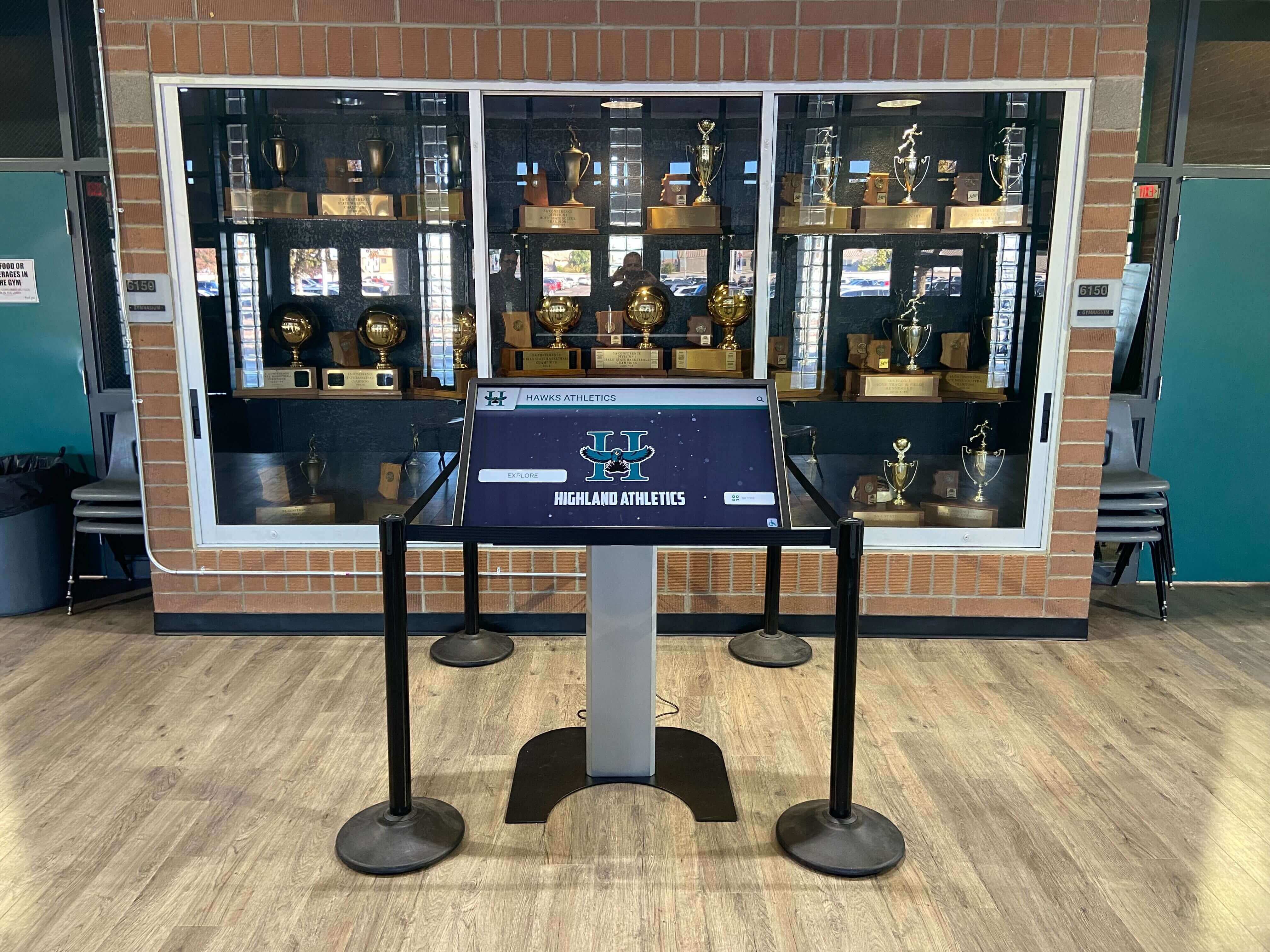
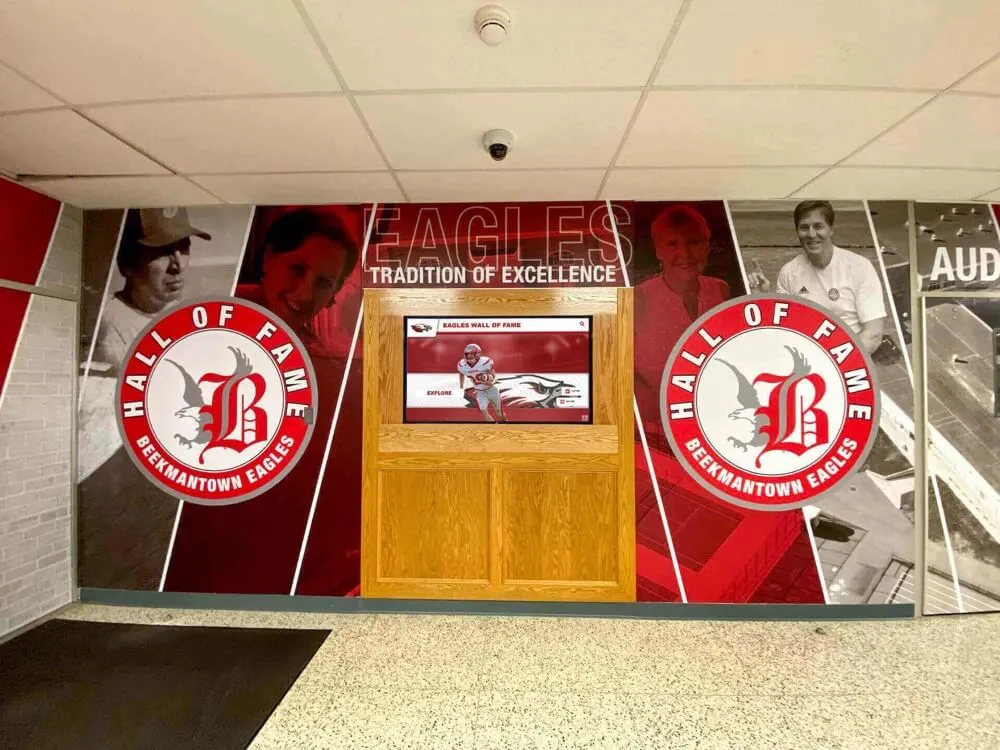
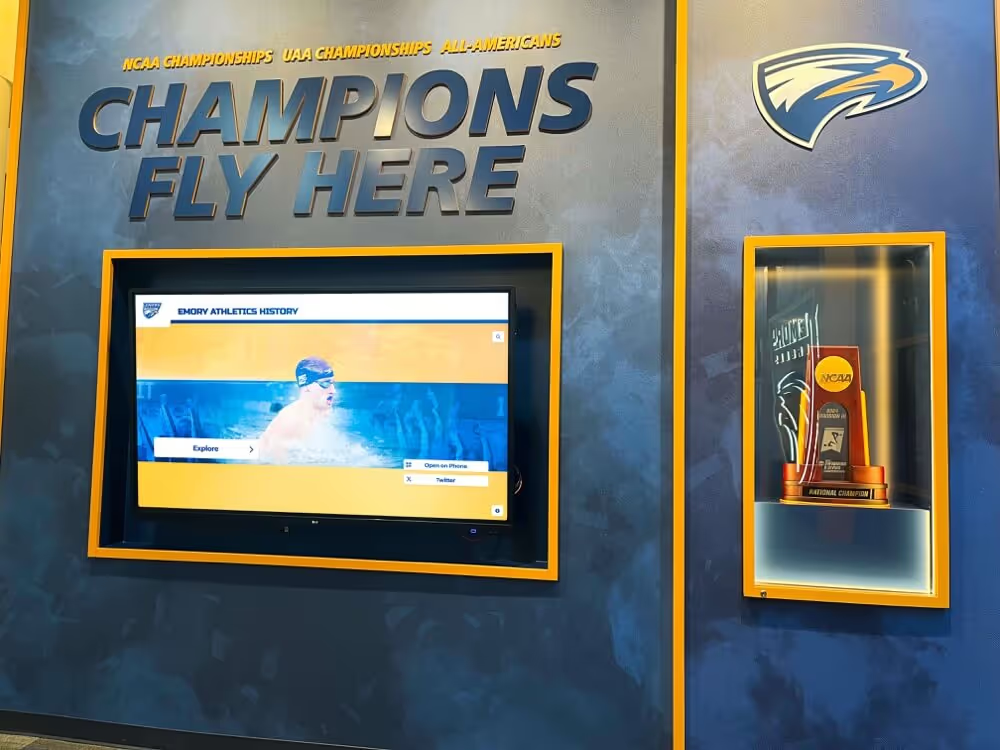
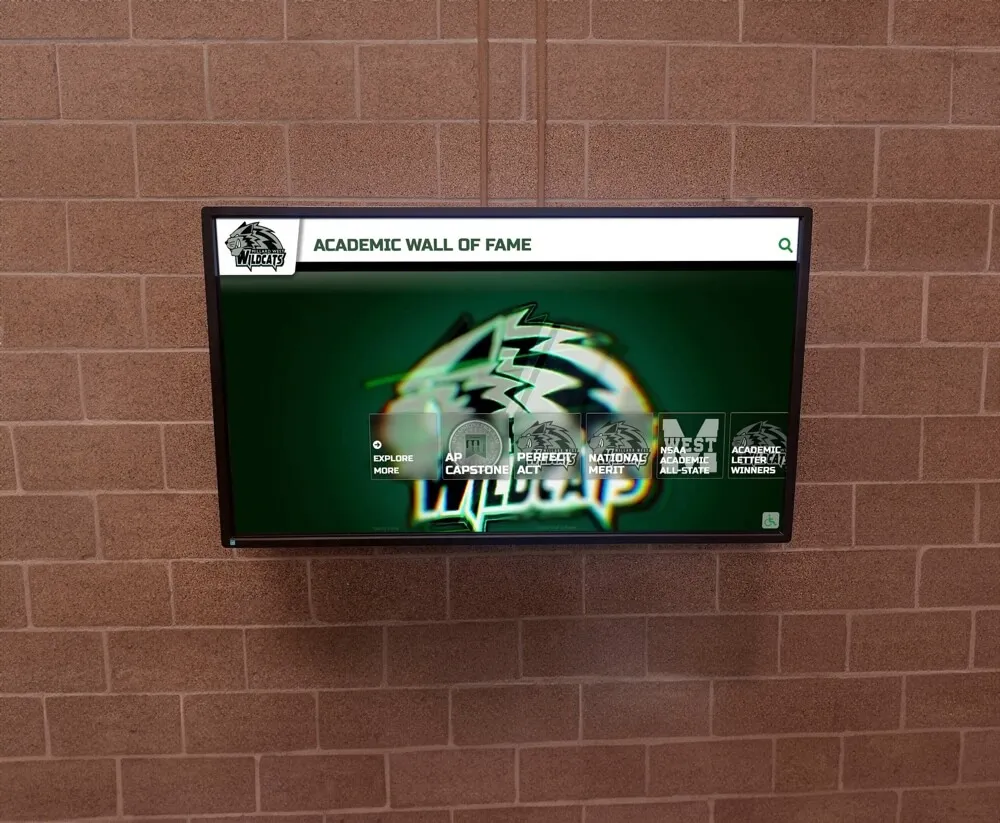
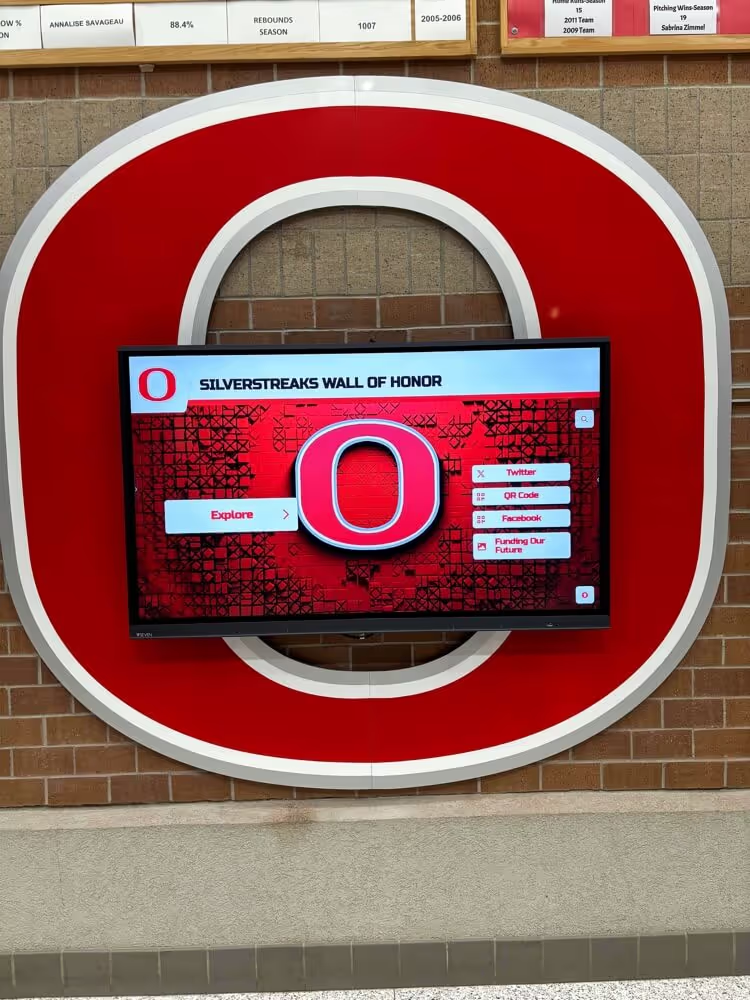
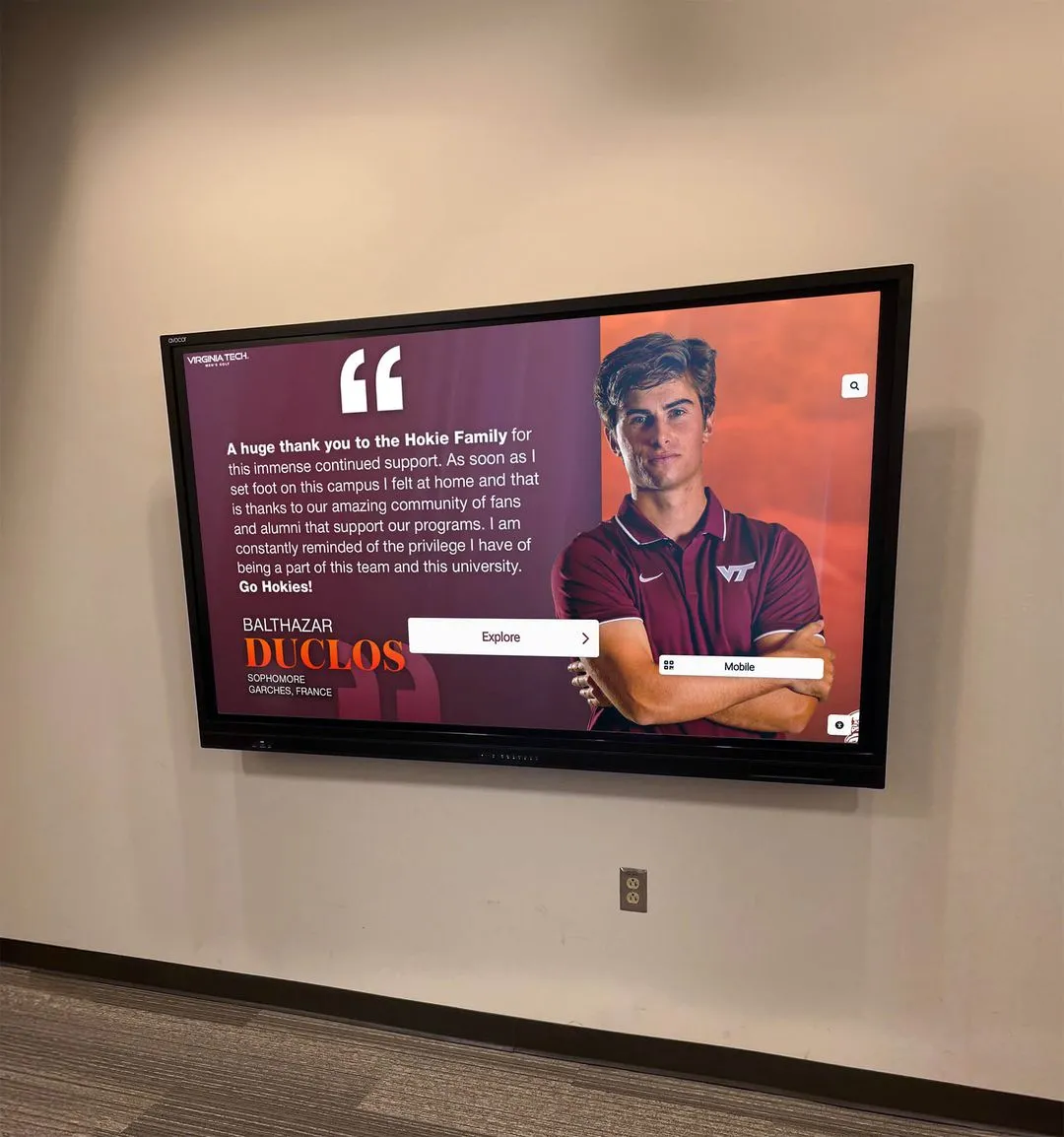
Touchscreen kiosks integrated into existing trophy case spaces give schools unlimited digital recognition capacity without requiring complete facility renovation
Digital Display Options for All-State Recognition
Interactive Touchscreen Athlete Profiles
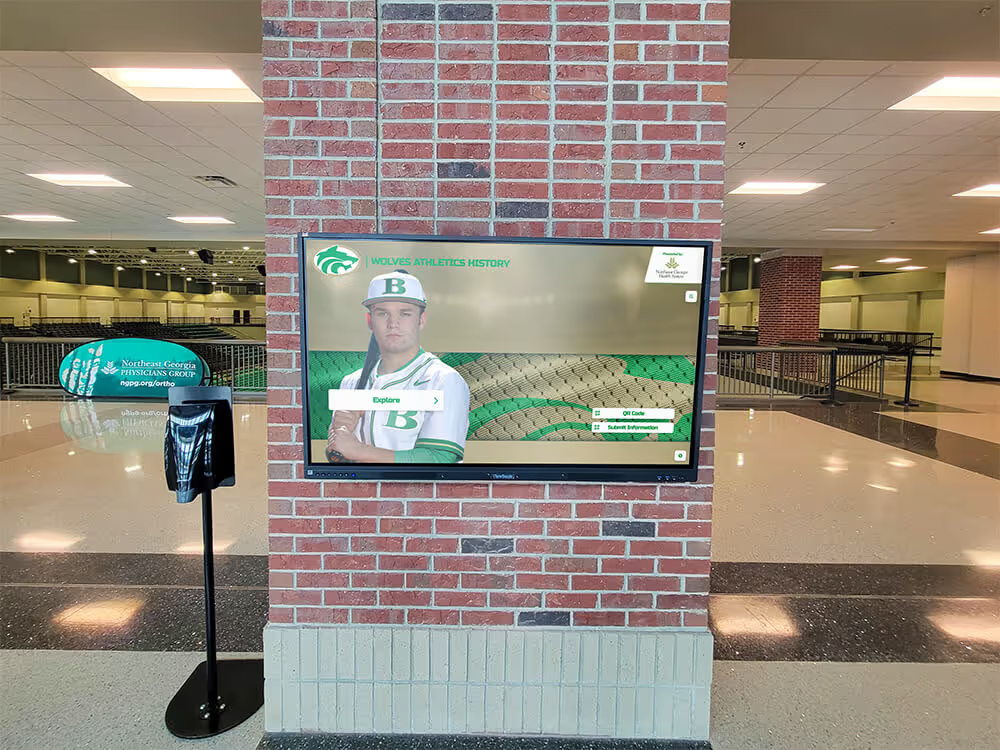
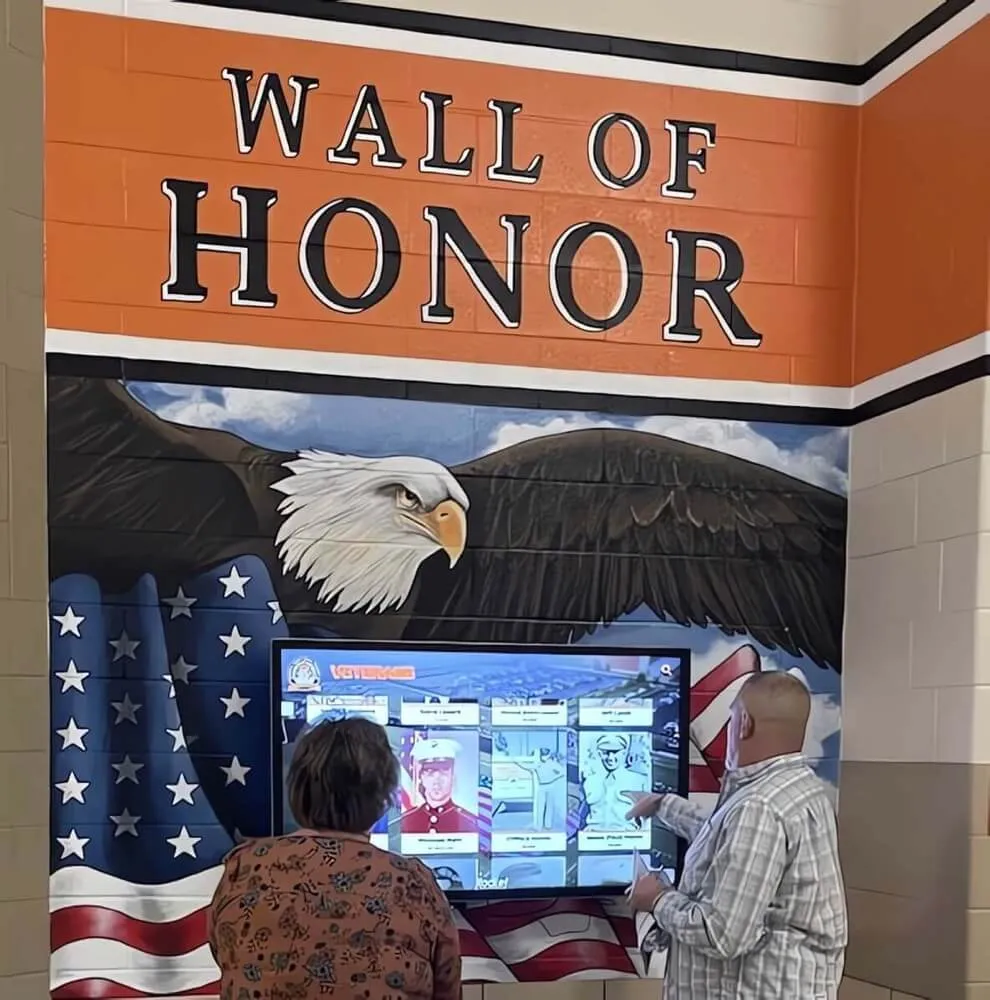
Digital recognition systems allow schools to create individual profile pages for every all-state athlete—going far beyond what any physical plaque can accommodate. A digital profile for an all-state track athlete might include:
- Name, graduation year, sport, and event
- All-state designation, classification, and selecting body
- Season statistics: personal records, state championship placement, regional results
- Action photos and team photos from the recognition season
- Brief biographical information including post-graduation path
- Video highlights embedded from YouTube, Vimeo, or Hudl when available
This depth of information is simply not possible on a plaque. A 6×8 inch brass plate can list a name, a sport, and a year. A digital profile tells the story behind the achievement—the content that actually engages visitors and creates lasting connection to program history.
Accessible digital displays built to WCAG 2.2 AA standards ensure that all-state recognition remains available to every visitor, including those with visual or motor impairments—an important consideration as schools build recognition environments that serve the full range of community members.
Digital Walls of Fame for Athletic Programs
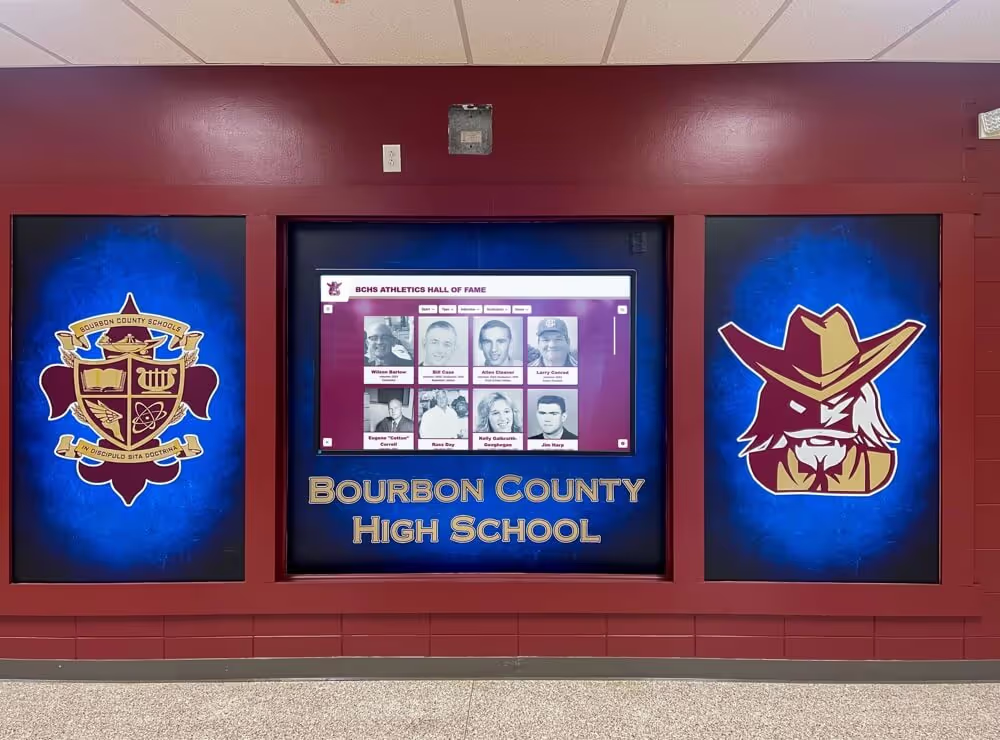
A digital wall of fame consolidates recognition across all sports and all-state honorees into a single interactive system searchable by sport, year, or athlete name. For schools with decades of all-state history across multiple sports, this searchability transforms an accumulated archive into an engaging discovery experience rather than a static list too long for any visitor to absorb at a glance.
Touchscreen-based systems designed for school athletic programs are built around the recognition categories athletic departments actually use—all-state designations, hall of fame inductees, record holders, and championship rosters—making content organization intuitive for both staff updating the system and visitors exploring it.
QR Code Integration for Extended Recognition
Schools with existing plaque walls can extend their physical recognition into the digital realm without replacing existing installations. QR codes mounted adjacent to all-state plaque sections allow visitors to scan and access a mobile-optimized profile page for each honoree—connecting the permanence of the physical plaque to the depth of a digital profile.
This approach works particularly well in athletic corridors where available wall space for plaques is limited but where extended information about each honoree would add meaningful context. The QR code bridges physical and digital recognition without requiring a facility renovation or a choice between the two formats.

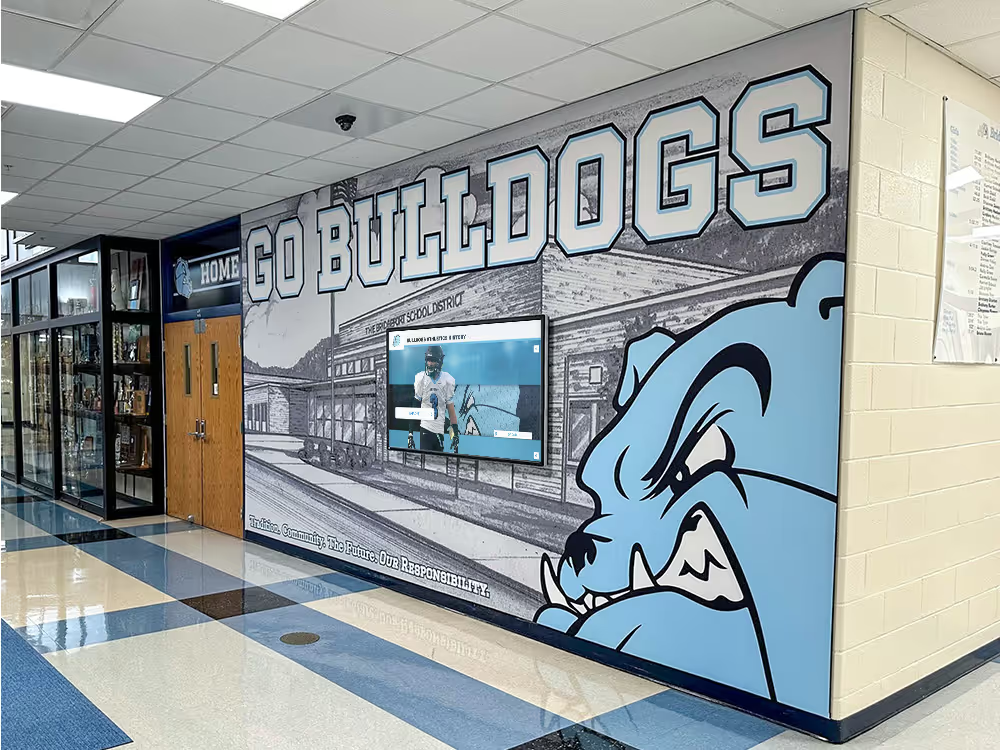
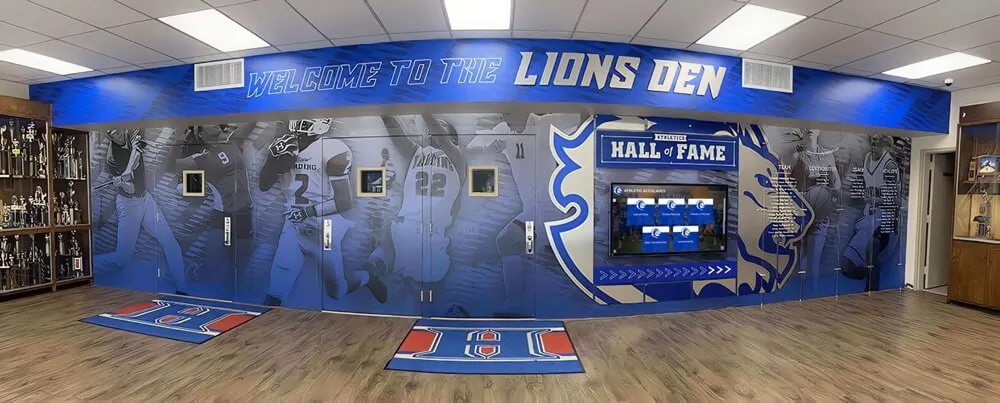
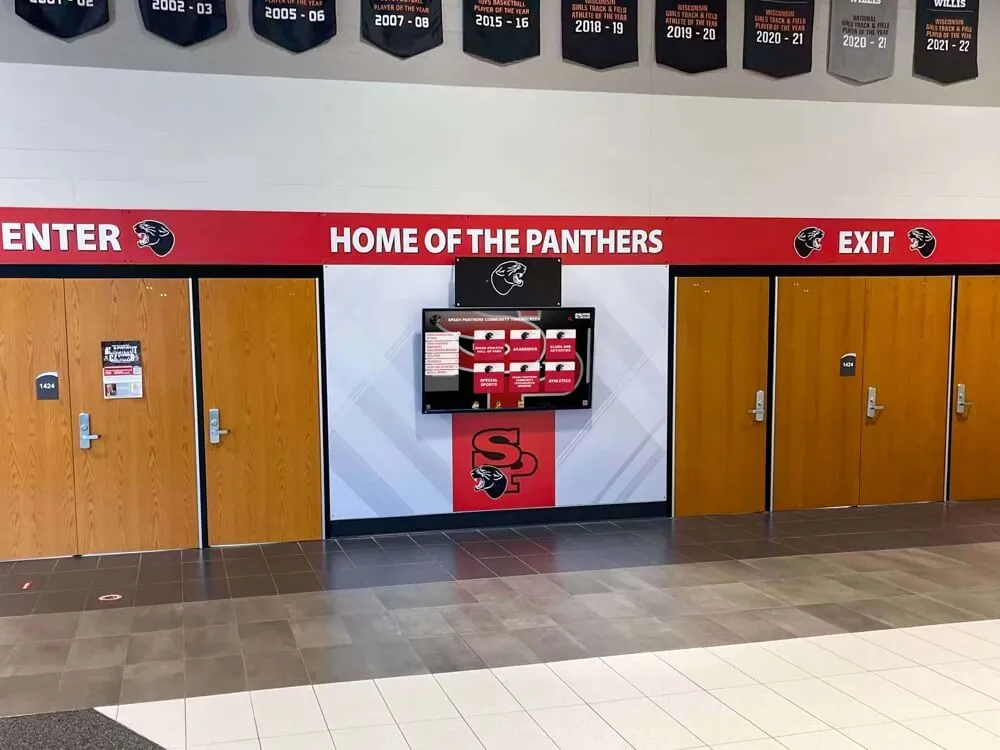
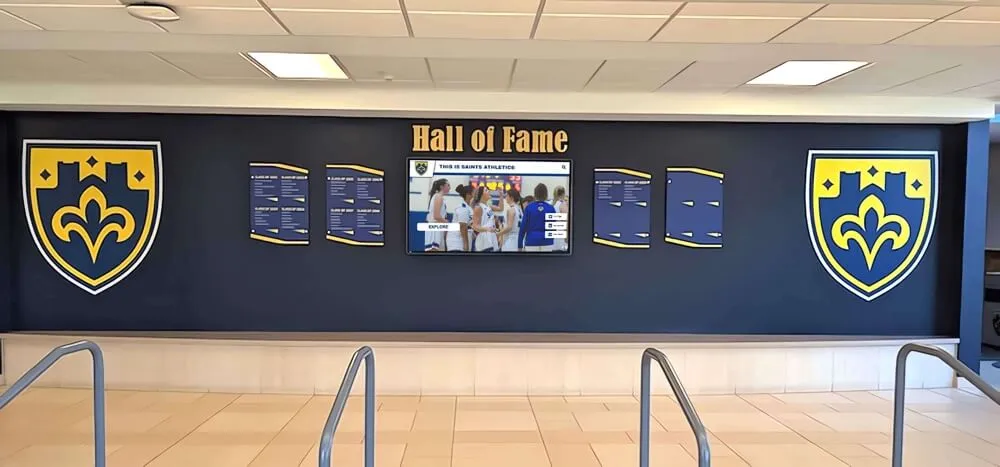
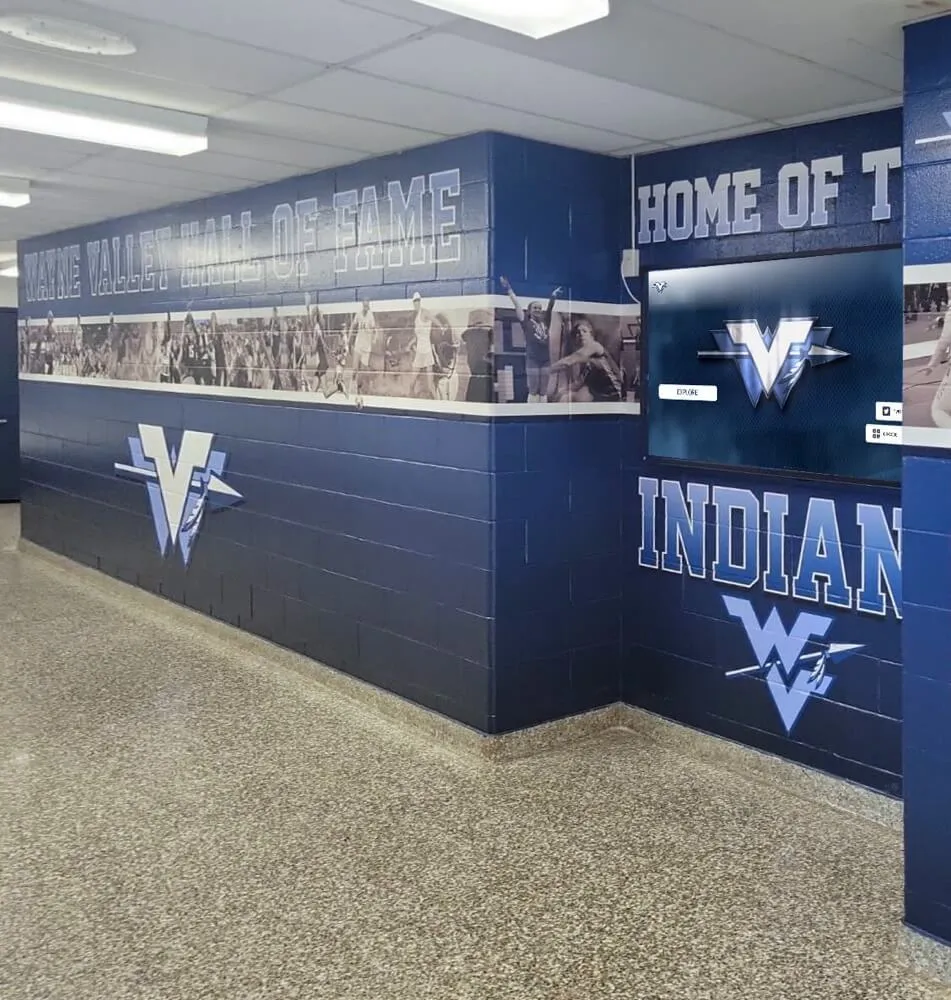
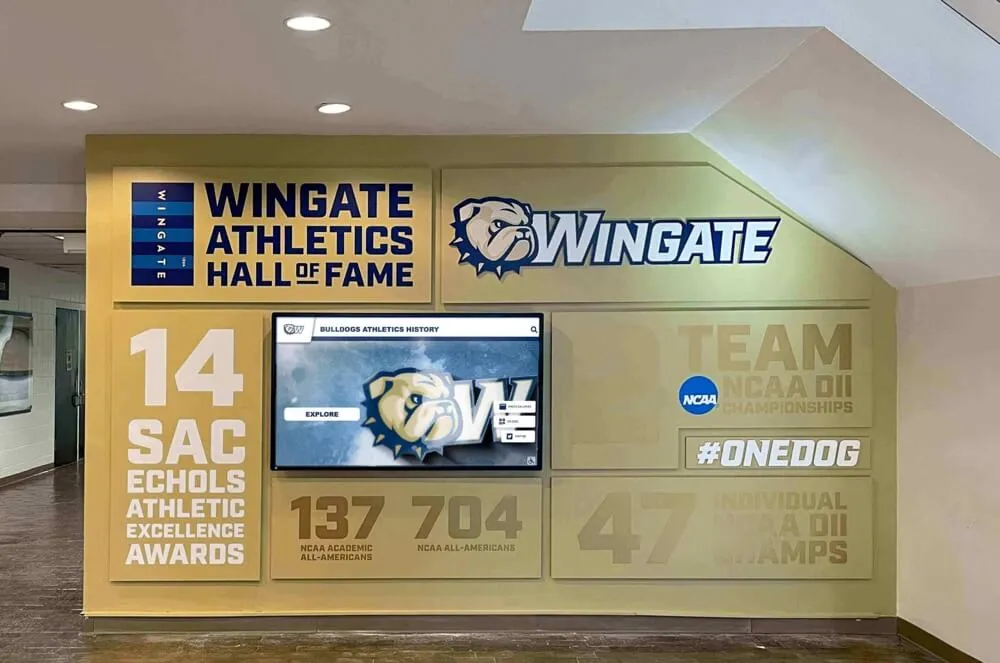
Dedicated athletic honor walls in high-traffic hallways ensure all-state recognition remains visible throughout the school day rather than stored in folders
All-State Recognition Within Hall of Fame Programs
All-state selection is a natural qualification pathway for athletic hall of fame induction programs at schools that maintain formal alumni recognition systems. Schools that connect all-state recognition to hall of fame programming create a recognition continuum—where the all-state certificate is not the end of the story, but a documented step in an athlete’s full relationship with the program.
Hall of fame programs that incorporate all-state recognition typically follow one of three models:
Documentation within inductee profiles. All-state selections appear as part of each inductee’s achievement record, establishing the external validation that distinguishes hall of fame athletes from those recognized only through internal awards.
Formal eligibility pathways. Any athlete who earned first-team all-state recognition becomes eligible for hall of fame consideration after a waiting period following graduation—usually five to ten years. This creates a structured pipeline from current achievement to eventual induction.
Separate but linked archives. Schools maintain distinct all-state archives and hall of fame inductee profiles within the same digital system, allowing visitors to explore both categories of recognition without confusing the prestige levels. All-state status is recognized; hall of fame status requires the additional selection process.
For schools building or expanding athletic hall of fame programs and evaluating digital display options, the digital touchscreen display guide for school recognition programs illustrates how touchscreen systems have expanded recognition capacity beyond athletics into comprehensive institutional achievement archives.
What Information to Include in All-State Recognition Displays
Creating consistent, informative all-state recognition displays requires agreement on what information to include. The following framework applies whether the display is a physical plaque section or a digital profile:
| Display Element | Physical Plaque | Digital Profile |
|---|---|---|
| Athlete name | Required | Required |
| Sport and position or event | Required | Required |
| Year and season | Required | Required |
| All-state tier (1st team, 2nd team, HM) | If space allows | Required |
| State classification or division | If space allows | Required |
| Selecting body | Rarely feasible | Recommended |
| Season statistics | Rarely feasible | Recommended |
| Photo | Rarely feasible | Recommended |
| Post-graduation information | Not feasible | Optional |
| Video highlights | Not feasible | Optional |
The table illustrates the core structural advantage of digital recognition: information that is “rarely feasible” on a physical plaque becomes standard practice in a digital profile. Schools implementing digital systems can include the full context behind all-state recognition—making each honoree’s achievement legible to visitors who were not present for the original season.
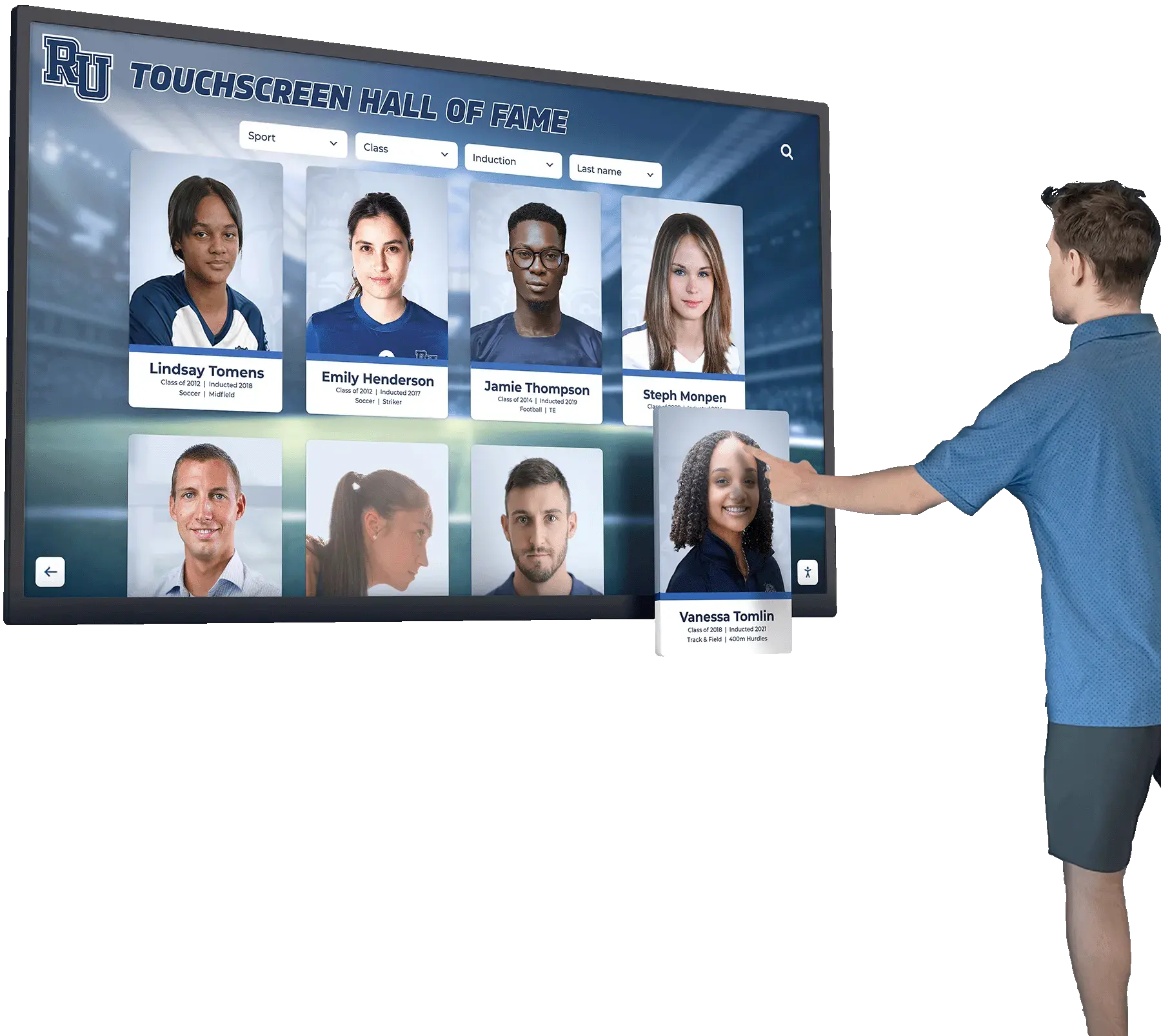
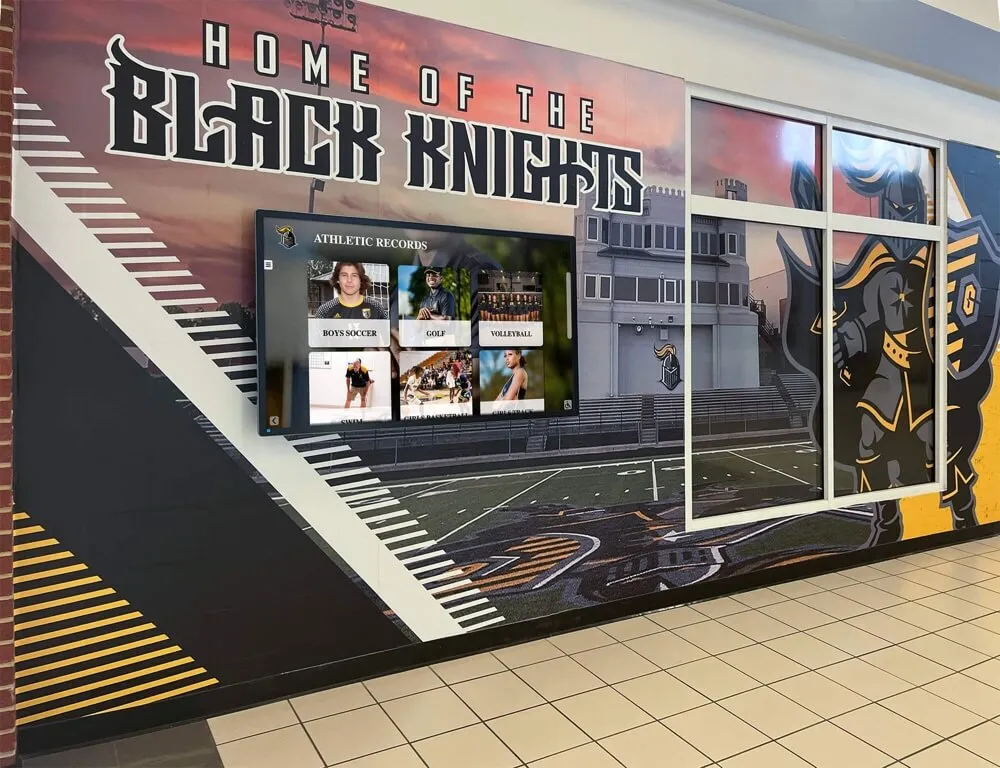
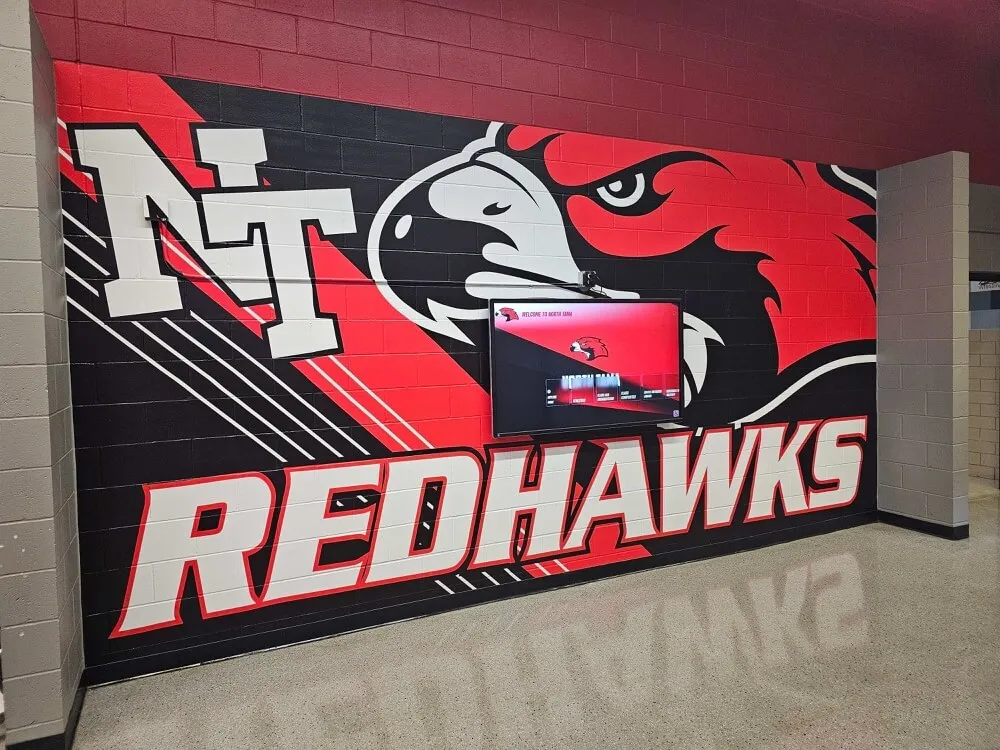
Interactive touchscreens allow visitors to explore all-state athlete profiles in depth—including statistics, photos, and post-graduation information unavailable on traditional plaques
Building an All-State Recognition Program That Lasts
Sustainable all-state recognition programs share several operational characteristics that distinguish them from ad-hoc approaches where certificates are distributed and recognition is not pursued further.
Designated staff responsibility. Someone must own the process of documenting all-state selections as they are announced, updating the display, and maintaining records. This responsibility should be defined in writing—not left to whoever happens to notice when a new all-state list is published each season.
Consistent sourcing. All-state designations come from multiple bodies—state athletic associations, coaches’ associations, newspaper all-state teams, national recognition programs. Deciding in advance which sources the school will officially recognize and display prevents inconsistency and disputes about whose selections count.
Digital backup of physical records. Physical plaque walls should be photographed annually and the information documented in a digital file. When plaques become damaged, archiving decisions are made, or facilities are renovated, that digital record preserves the recognition even when physical displays do not survive.
Budget allocation for annual additions. All-state recognition programs require annual maintenance—engraving or printing new plaques, updating digital systems, adding new honorees. Building this cost into the athletics budget as a fixed line item prevents outstanding seasons from going unrecognized because recognition budgets were exhausted earlier in the year.
Schools building recognition programs that connect athletic achievement to broader institutional goals—including donor engagement and facility investment—will find useful frameworks in the school naming rights and major donor recognition guide, which addresses how athletic recognition environments connect to fundraising strategy and facility development.
Rocket Alumni Solutions: Digital Recognition for All-State Athletes
Rocket Alumni Solutions provides touchscreen wall of fame systems designed specifically for school athletic programs. The platform allows athletic departments to build and maintain comprehensive digital recognition including all-state athlete profiles, hall of fame inductees, record boards, and championship histories—all managed through a cloud-based content system that requires no on-site technical expertise.
Key capabilities relevant to all-state recognition programs:
- Unlimited athlete profiles: Every all-state honoree from every sport and every year in program history can have a dedicated profile page without physical space constraints
- Rich media support: Photos, video highlights, and statistical documentation integrated into each profile
- Instant updates: When a new all-state list is published, recognition goes live immediately—no engraving delays, no fabrication lead times
- Searchable archives: Visitors can filter recognition by sport, year, or athlete name to find specific individuals or explore program history across decades
- WCAG 2.1 AA accessibility: Displays meet established accessibility standards ensuring recognition is available to all visitors; details on what that compliance delivers in practice are covered in the accessible touchscreen recognition display guide
The platform is trusted by more than 600 institutions—from large university programs to small single-sport high schools—demonstrating flexibility to serve recognition programs at any scale.
FAQ: All-State Athlete Recognition and Display
What does all-state mean in high school sports?
All-state in high school sports means a student-athlete has been officially selected—by a state athletic association, coaches’ association, or recognized media panel—as one of the top performers in their sport at the statewide level for that season. It is typically more prestigious than all-conference or all-district recognition because it involves comparison across an entire state’s competitive landscape rather than a single conference or regional bracket. Selection criteria, the number of honorees per sport, and the selecting body vary by state.
What is all-state in sports?
All-state is a designation given to high school athletes recognized as among the best in their sport across an entire state. For team sports, all-state panels select a limited number of players per position. For individual sports like track or swimming, all-state status is often earned by finishing within the top tier at a state championship event. Selections are made by state athletic associations, coaches’ associations, and media organizations, with criteria varying by state and sport.
How should schools display all-state athlete recognition permanently?
Schools have several options: dedicated plaque sections in gymnasium lobbies or athletic corridors organized by sport and year; championship banners for top-tier designations; digital profile pages on interactive touchscreen displays including photos, statistics, and career information; and QR codes alongside physical plaques linking to extended digital profiles. Digital systems offer unlimited capacity and greater information depth, while physical plaques provide the permanence many stakeholders associate with institutional prestige.
What information should be included in an all-state athlete display?
A complete all-state display should include the athlete’s name, sport and position or event, year and season, and the specific all-state tier and selecting body. Digital profiles can include season statistics, action photos, post-graduation information, and video highlights that physical plaques cannot accommodate. Consistent formatting across all honorees ensures the display reads as intentional rather than accumulated over time without a plan.
Can all-state recognition be integrated into a school’s hall of fame program?
Yes. Many schools use all-state selection as a formal eligibility pathway or qualification criterion for athletic hall of fame consideration. Digital recognition systems allow schools to maintain both all-state archives and hall of fame inductee profiles within a single searchable display, making both categories accessible to visitors without requiring separate physical installations.
Transforming All-State Honors Into Lasting Campus Recognition
An all-state athlete earns one of the most meaningful external validations available in scholastic sports. That validation should live on campus—visible to every athlete who walks through the gym, every family attending a game, and every alumni returning decades after their own playing days. A certificate in a folder honors the moment. A maintained, permanent display honors the achievement.
The most effective all-state recognition programs combine the permanence of physical plaques for high-prestige designations with the depth and unlimited capacity of digital recognition systems for comprehensive archiving, searchability, and rich profile content. Together, they create recognition environments that motivate current athletes, connect alumni, and communicate program quality to every visitor who encounters them.
Ready to Display Your All-State Athletes the Right Way?
Discover how Rocket Alumni Solutions touchscreen wall of fame systems help schools create permanent, searchable digital profiles for every all-state honoree—with photos, statistics, and program history that no physical plaque can match.
See Your All-State Recognition Display Demo