



An athletic award data reconciliation report is a structured comparison of game results, roster records, award nomination lists, and published recognition displays—run before any permanent update so errors are caught before they reach public-facing school spaces. Whether you are refreshing a hallway honor board, updating a digital wall of fame, or preparing season awards for an end-of-year ceremony, this workflow helps athletic directors, archives teams, and school IT staff confirm that every name, date, and achievement in the display record matches an authoritative source document.
This guide provides a complete reconciliation process: which data sources to compare, how to log exceptions, how to resolve each discrepancy type, and a reusable report template your team can run every season.
Running an athletic award data reconciliation report before posting seasonal results or updating permanent displays is one of the most efficient quality controls an athletic department can build into its calendar. A single transposed name on a championship plaque, a missing letter award on a record board, or a roster entry that does not match the official roster on file can undermine the credibility of an entire recognition program. Correcting permanent displays after fabrication or publication is far more costly—in time, expense, and institutional reputation—than verifying accuracy upstream.
The same principle applies to academic honor rolls, arts program recognition, and STEM awards: any recognition category where multiple source records must agree before a name appears on a permanent display benefits from a documented reconciliation run.

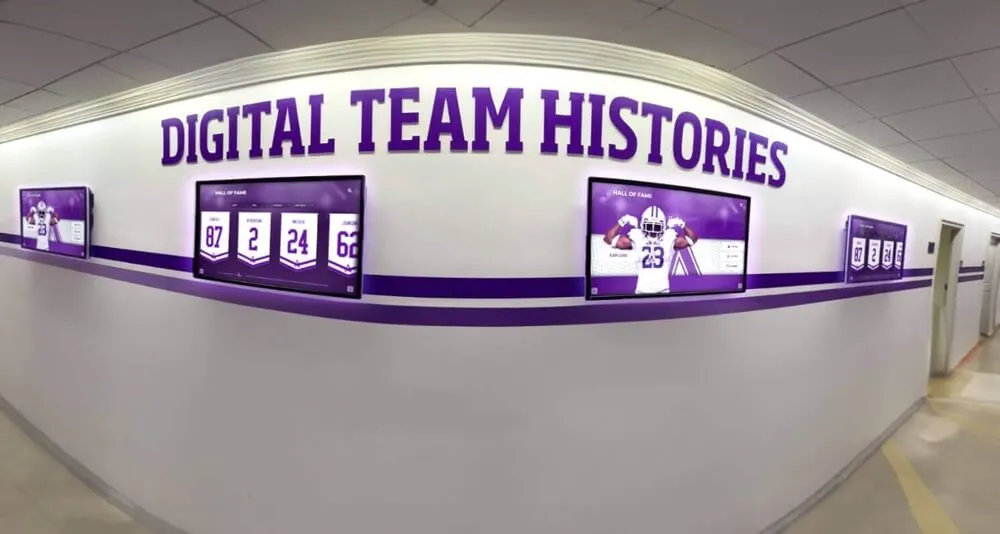
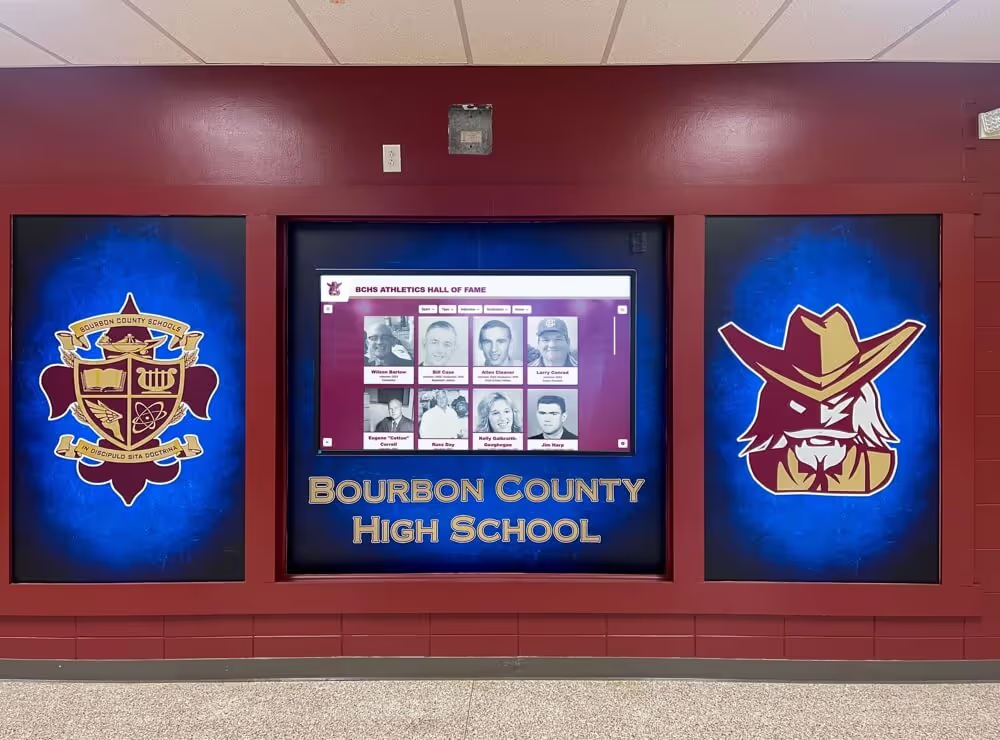
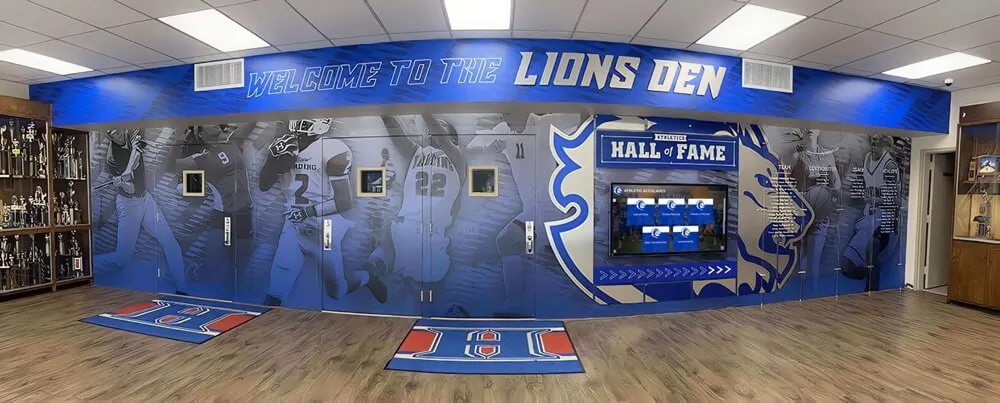
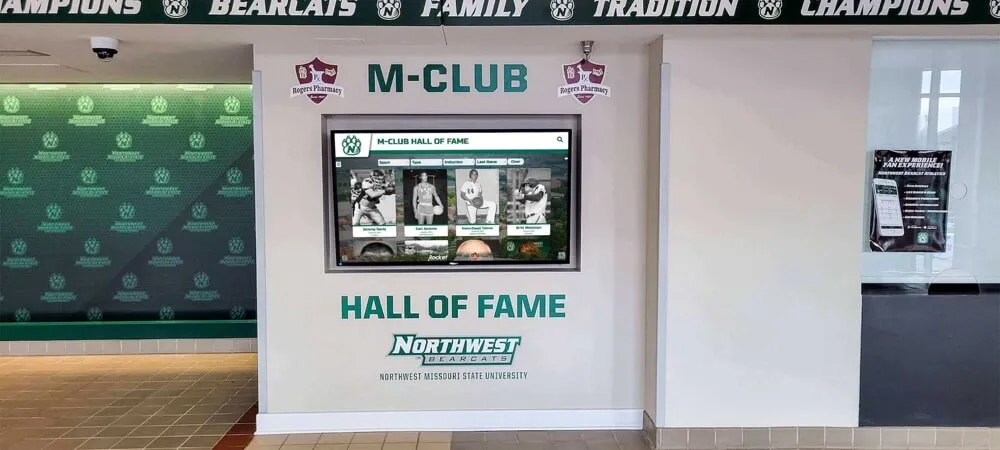
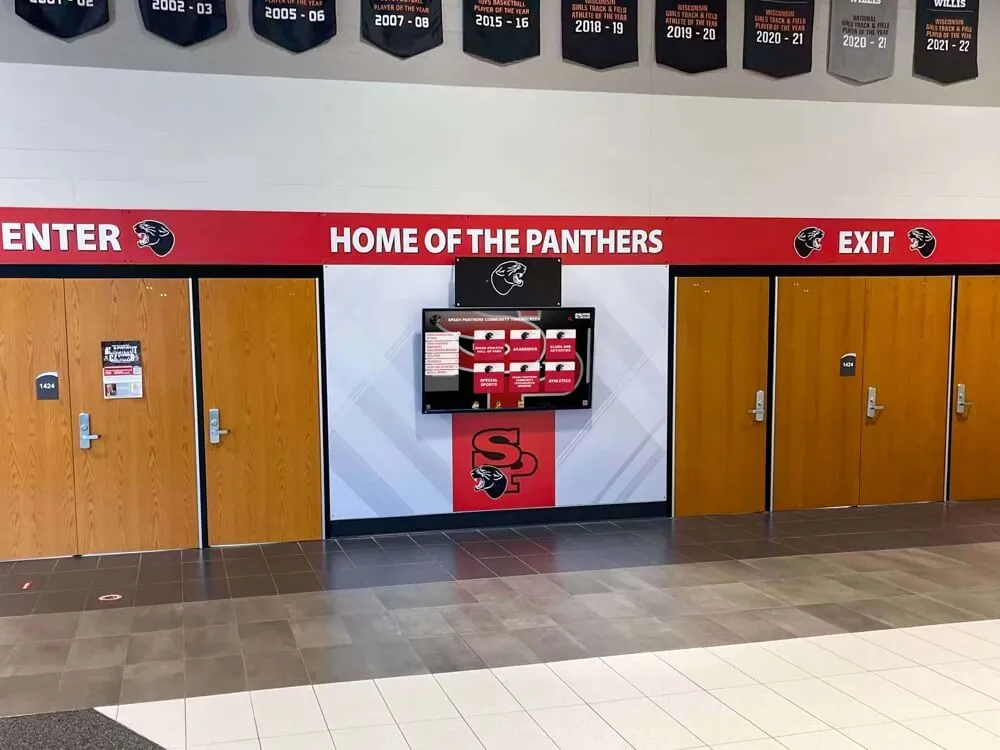
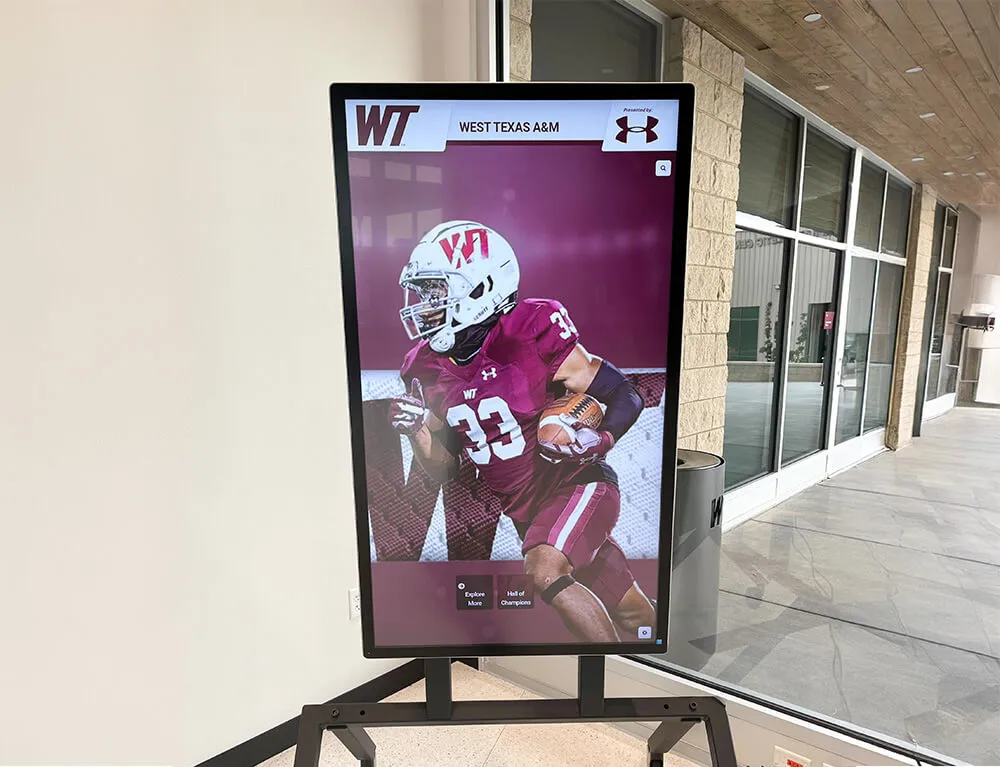
Digital athletic record displays in school hallways require reconciled, authoritative data before publication—errors on permanent displays are significantly harder to correct than catching them upstream during the verification step
What Is an Athletic Award Data Reconciliation Report?
An athletic award data reconciliation report is a systematic comparison of every data source that contributes to a school’s recognition record—official rosters, game results logs, award nomination forms, prior display records, and any published recognition lists—conducted before new data is entered into a permanent or public-facing format.
The concept draws from broader data reconciliation practice used in accounting, records management, and database administration, where two or more data sets are compared to identify and resolve discrepancies. Applied to athletic awards, the process answers five questions before a name, record, or achievement is published:
- Does the athlete’s name match the official enrollment record?
- Does the result match the official game or meet record?
- Does the award match the nomination criteria currently on file?
- Does the roster reflect who actually participated that season?
- Does the new record align with or supersede the existing display record?
When all five questions resolve to “yes,” the record is clear to publish. When any question surfaces a discrepancy, that discrepancy becomes a documented exception requiring resolution before the display updates.
Why Reconciliation Matters Before Updating Athletic Displays
Recognition records that contain errors create two distinct problems: credibility damage with current students, families, and alumni, and administrative burden when corrections are required after fabrication or publication.
Championship plaques, digital walls of fame, and hallway record boards are often the first things visiting recruits, donors, and families see when they enter an athletic facility. An error on a record board visible to hundreds of daily visitors costs more in institutional trust than the ten to fifteen minutes it takes to run a reconciliation check before the record goes up.
Athletic directors managing the full scope of program operations—coaching oversight, facilities scheduling, compliance reporting, and recognition administration—benefit from a structured reconciliation workflow that delegates verification systematically rather than relying on memory or ad-hoc spot checks. The athletic director job description guide at touchwall.us details how recognition program management fits alongside the broader operational responsibilities that most athletic directors navigate throughout the school year, and why process documentation in this area reduces administrative exposure over time.
A clean reconciliation record also supports long-term program credibility. Alumni who return for reunions and recruits evaluating a program both encounter the physical and digital recognition displays an athletic department maintains. Records that have been consistently reconciled and properly attributed hold up to scrutiny in ways that ad-hoc or unchecked records do not.
Five Data Sources to Align Before Updating Athletic Displays
Before starting a reconciliation run, identify every authoritative data source that feeds into the recognition record. Most school athletic programs draw from five distinct sources:
| Data Source | What It Provides | Common Format |
|---|---|---|
| Official game / meet results | Scores, outcomes, statistics, records broken | Paper score sheets, scheduling or results management system |
| Season roster | Names, jersey numbers, grade level, sport | Athletic office spreadsheet, state registration system |
| Award nomination records | Award type, recipient, presenting coach | Paper nomination forms, email submissions |
| Prior display records | Names and records currently on public display | Physical board, digital display CMS, archival spreadsheet |
| Honor program criteria | Eligibility requirements for each award category | Athletic handbook, awards program policy document |
When any two of these sources disagree, that disagreement is an exception requiring resolution before the display updates. Running a reconciliation without consulting all five sources means some category of error will systematically escape review.
Step-by-Step Athletic Award Data Reconciliation Process
This eight-step process applies to end-of-season record updates, award ceremony preparation, hall of fame nominations, and any time a new name or achievement is added to a permanent athletic display.
Step 1: Export or compile each data source in a consistent format
Pull every data source into a comparable format—typically a spreadsheet with consistent column headers. For game results, each row represents one event with columns for date, opponent, result, and any records set. For the roster, each row is one athlete with name, sport, and participation dates. Standardizing format before comparison prevents one of the most common reconciliation errors: matching on different fields across sources that use different naming or date conventions.
Step 2: Run the primary athlete name match
Compare the athlete’s name as it appears in the award nomination against the official enrollment record. Name discrepancies—middle names included or excluded, nicknames used in nominations, hyphenated surnames split differently—are among the most frequent sources of display errors. The enrollment record is the authoritative source. Every other source should match it exactly before a name is cleared for display.
Step 3: Verify results against the official record
For any award tied to performance—record-breaking achievements, statistical milestones, championship titles—verify the cited result against the official game or meet record. If the athletic department uses a scheduling or results management system, that system’s record is authoritative. Paper score sheets should be cross-referenced against any submitted reports before the result is entered as a display record.
The guide to how schools track and display all-time athletic records at digitalrecordboard.com covers how structured results documentation supports long-term reconciliation—programs that maintain rolling season result logs reconcile far more efficiently than those reconstructing records from memory after the season closes.
Step 4: Confirm roster participation
Verify that the athlete named in an award was on the official roster for the season in question. Awards presented to athletes who transferred mid-season, were administratively removed from the roster, or participated in a different sport than the one listed represent a category of exception that roster reconciliation catches before display. For multi-sport athletes, confirm not only that the athlete was on a roster, but on the roster for the specific sport and season cited in the nomination.
Step 5: Compare against the existing display record
Before adding a new record or award to a display, compare it against what is currently displayed. If the new record supersedes an existing one, document the prior record with a reason code before updating. If the award is additive—a new category, a new season’s entries—confirm there is no duplicate entry already on display from a prior reconciliation run.
Step 6: Log all exceptions before attempting resolution
Every discrepancy between any two sources becomes an exception entry in the reconciliation log. Do not attempt to resolve exceptions during the initial comparison pass—log them first, then route for resolution in a separate step. This separation keeps the reconciliation audit trail clean and ensures no exception is resolved without documentation.
Step 7: Route exceptions to the appropriate resolver
Each exception type has a designated resolution path. Name discrepancies route to the registrar or athletic office. Result discrepancies route to the head coach or official record keeper. Participation disputes route to the athletic director for administrative review. Assign a resolution deadline for each open exception before updating any display record.
Step 8: Confirm all exceptions are closed before updating displays
No display record should be updated until every exception identified in the reconciliation run is formally closed—either resolved with a correction, or escalated with a documented rationale for the decision made. A display update made with open exceptions creates a compounding reconciliation problem in future seasons.
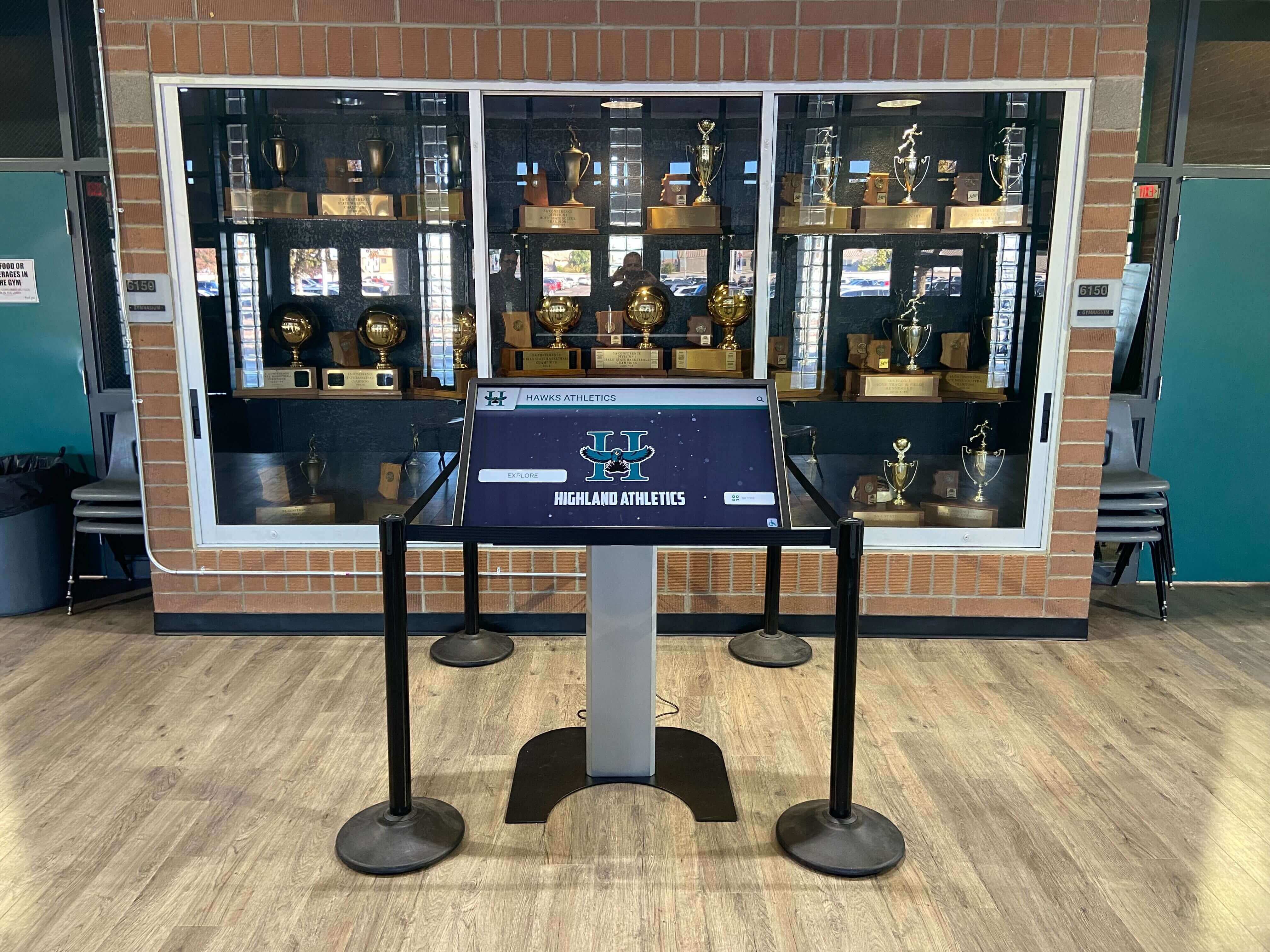
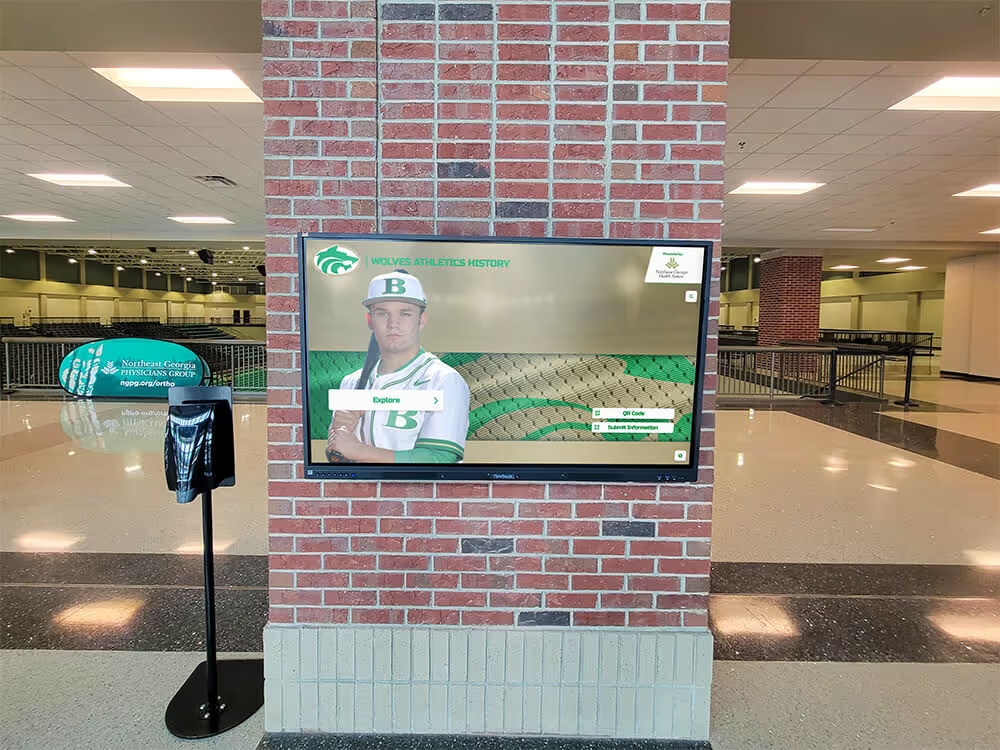
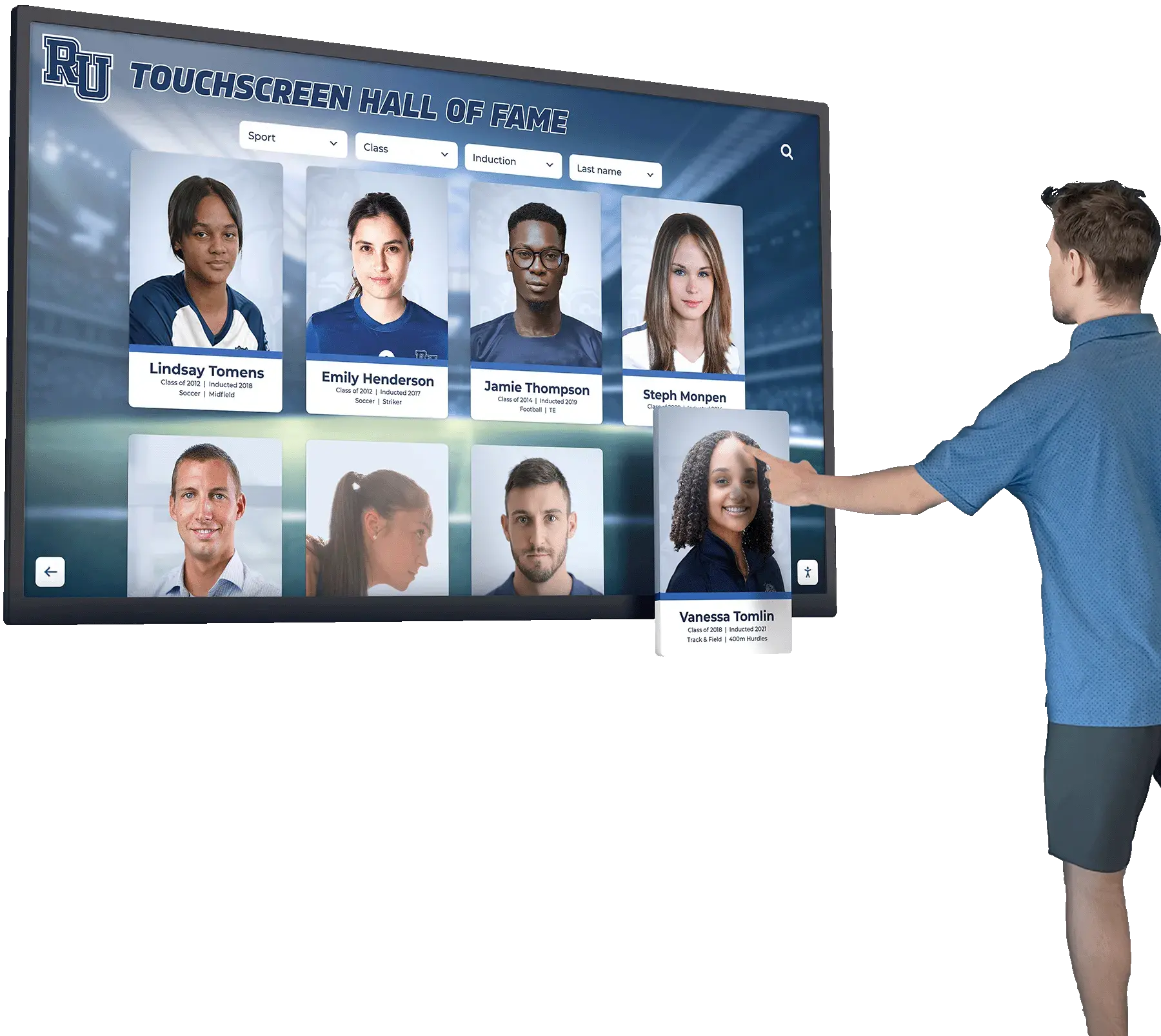
Touchscreen kiosks in trophy cases make athletic records accessible to families and recruits year-round—but only when the underlying data has completed a full reconciliation process before publication
Exception Log and Resolution Workflow
Use this table to document every discrepancy identified during the reconciliation run. Assign ownership and a resolution deadline before proceeding to any display update.
| Exception ID | Source A | Source B | Discrepancy Type | Resolution Owner | Status | Notes |
|---|---|---|---|---|---|---|
| EX-001 | Nomination form | Enrollment record | Name spelling mismatch | Athletic Office | Open | Nominee listed as “Jon”; enrollment shows “John” |
| EX-002 | Results log | Coach submission | Stat discrepancy | Head Coach | Open | Nomination cites 248 points; game log shows 241 |
| EX-003 | Display record | Season roster | Athlete not on roster | Athletic Director | Escalated | Subject transferred mid-season; eligibility under administrative review |
| EX-004 | Award criteria | Nomination | Criteria not met | Award Committee | Closed | Confirmed criteria met per corrected version of handbook on file |
| EX-005 | Prior display | New submission | Duplicate entry | Archives Team | Closed | Record already displayed for 2023 season; new entry is for 2025 |
Resolution path by exception type:
- Name mismatch → Registrar or Athletic Office → Correct to enrollment record spelling
- Result discrepancy → Head Coach and official record → Correct to verified official result
- Roster participation dispute → Athletic Director → Administrative review with documented decision
- Criteria interpretation dispute → Award Committee → Written clarification added to criteria file
- Duplicate detection → Archives Team → Verify prior entry and suppress confirmed duplicate
Athletic Award Data Reconciliation Report Template
Use this template at the start of each reconciliation run to document scope, sources consulted, and final clearance decision.
ATHLETIC AWARD DATA RECONCILIATION REPORT
School / Program: ________________________
Season / Award Period: ________________________
Report Prepared By: ________________________
Date Completed: ________________________
Review Type: ☐ End-of-Season Records ☐ Award Ceremony ☐ Hall of Fame Nomination ☐ Display Update ☐ Annual Audit
| Field | Value |
|---|---|
| Total athletes reviewed | |
| Total awards verified | |
| Total results verified | |
| Exceptions identified | |
| Exceptions resolved | |
| Exceptions escalated | |
| Display updates cleared | |
| Display updates deferred |
Data Sources Consulted (check all reviewed):
☐ Official enrollment record ☐ Season roster — athletic office ☐ Official game / meet results log ☐ Award nomination forms ☐ Current display record (physical or digital) ☐ Athletic handbook / award criteria document ☐ State athletic association records (where applicable)
Final Clearance:
☐ All exceptions closed — Display update approved
☐ Open exceptions remain — Display update deferred pending resolution
Authorized By: ________________________ Date: ________________________
Common Discrepancy Types and Standard Resolutions
Schools that run reconciliation processes regularly encounter the same exception categories across seasons. Documenting standard resolution approaches prevents the same dispute from requiring a fresh administrative decision each time it arises.
Name format variations. Athletes whose legal names differ from their commonly used names generate consistent discrepancies between nomination forms—where coaches use the athlete’s known name—and enrollment records, which carry the legal name. The resolution: all display records use the enrollment record’s legal name unless a legal name change document is on file. Establish this standard in writing before the first reconciliation run so the policy is applied consistently across every sport.
Statistics submitted before final verification. Coaches submitting award nominations early in the season close-out process sometimes cite statistics from game recaps rather than official box scores. Official box scores or results management system exports take precedence. Schools with online results systems linked to their state athletic association can resolve this category quickly with a direct export comparison.
Retrospective record corrections. Occasionally a record that has been displayed for multiple seasons is later found to contain an error—a stat recorded incorrectly in the original season, a name misspelled on the original plaque. Document the discovered correction, note the date of the original error, and update the display record with a corrected entry flagged in the reconciliation log. Retroactive corrections do not void the original recognition; they correct the institutional record.
Hall of fame eligibility disputes. Hall of fame programs often have multi-year eligibility windows, waiting periods after graduation, and criteria that evolve over time. When a nomination is submitted for an inductee whose eligibility is unclear, the exception routes to the hall of fame committee rather than the athletic director for standard administrative review. The basketball hall of fame recognition programs guide at touchhalloffame.us details how structured eligibility criteria reduce nomination disputes before they become reconciliation exceptions—the same framework applies to multi-sport school hall of fame programs.
Roster discrepancies for multi-sport athletes. Athletes who participate in multiple sports during the same academic year create edge cases when award nominations do not specify the season or sport. A reconciliation run should confirm not only that the athlete was on a roster, but on the roster for the specific sport and season cited in the nomination.
Who Should Own the Athletic Award Reconciliation Process
Reconciliation workflows are most effective when ownership is clearly assigned before the process begins. Three roles typically share responsibility across the full workflow:
Athletic Director: Owns the process overall, approves the final clearance decision, resolves escalated exceptions that require administrative judgment, and holds accountability for display accuracy.
Archives / Recognition Team: Runs the data comparison, maintains the exception log, routes exceptions to the appropriate resolver, and updates the display record once clearance is confirmed.
School IT / CMS Administrator: For digitally managed displays, owns the technical update step after reconciliation clearance, manages access permissions for the display system, and maintains the audit log.
At smaller schools where these roles overlap or are handled by a single staff member, the same steps apply—the difference is that one person moves sequentially through each role rather than routing between individuals. For programs building multi-year archival records that alumni and future administrators can rely on, the digital time capsule and records preservation guide at touchwall.tv covers how schools build archival systems that serve future generations—a direct downstream benefit of running clean, consistently reconciled recognition records today.
For programs coordinating booster and institutional funding when upgrading recognition displays, the booster club procurement policy guide at donorswall.com covers how schools align booster and institutional purchasing with school procurement guidelines, including when recognition infrastructure falls within booster fund scope versus institutional budget.
The reconciliation approach extends naturally beyond varsity athletics. The college intramural sports digital recognition display guide at halloffame-online.com shows how broader student recognition programs—including intramural, club sport, and non-varsity programs—adopt similar reconciliation approaches for participation and award records that sit alongside varsity displays.
How Digital Recognition Platforms Simplify Reconciliation
Schools that maintain award and recognition data in a centralized digital system reconcile faster and with fewer exceptions than those managing records across disconnected spreadsheets, paper files, and physical displays. The efficiency gap compounds over time: a school that builds a clean, reconciled digital record in year one has a reliable baseline for every future season. A school managing records in disconnected formats rebuilds its baseline from scratch each cycle.
A digital recognition platform with remote content management capabilities allows the athletic director, archives team, and IT staff to access and edit the same master record without requiring physical access to the display. When a reconciliation exception is resolved, the authorized team member makes the correction in the content management system, and the update propagates to every display—physical touchscreen, web version, and QR-code accessible mobile view—without requiring separate edits across multiple locations.
Platforms designed for athletic and school recognition include features that directly reduce reconciliation burden:
- Auto-ranking for record boards — When new season results are entered, the system automatically ranks them against historical records and flags any new record without requiring a manual comparison pass
- Duplicate detection — Entries that match an existing athlete profile by name and sport prompt a confirmation step, preventing the most common form of display entry error
- Scheduled publishing — Season results and award announcements can be staged and reviewed before going live, keeping draft records separate from live displays during the reconciliation window
- Audit history — Every change to a display record is logged with the user, timestamp, and prior value, providing a built-in audit trail that supports future reconciliation runs and administrative review
- WCAG 2.1 AA compliance — Public-facing displays that meet accessibility standards ensure all students, families, and community members can access recognition records through any device or assistive technology
Trusted by 600+ institutions—from small high schools to large universities—Rocket Alumni Solutions’ cloud-based platform gives recognition teams a single source of truth for every award update, accessible from anywhere via a remote CMS without requiring IT support for routine updates.
The digital archives guide for schools, colleges, and universities at touchscreenwebsite.com covers how centralized digital systems support long-term records management alongside current-season reconciliation workflows—a framework that works for both varsity athletic recognition and the broader range of academic, arts, and community service awards a school maintains.
The goal of any reconciliation system—paper-based or digital—is consistent: every name that appears on a public display should have an unbroken chain of documentation back to an authoritative source. Digital systems make that chain shorter, more visible, and easier to audit.
Ready to move your athletic records to a platform that simplifies reconciliation? Rocket Alumni Solutions gives your team auto-ranking record boards, audit history, and a remote CMS accessible from anywhere. Request a demo to see how 600+ schools manage recognition data without spreadsheet headaches.

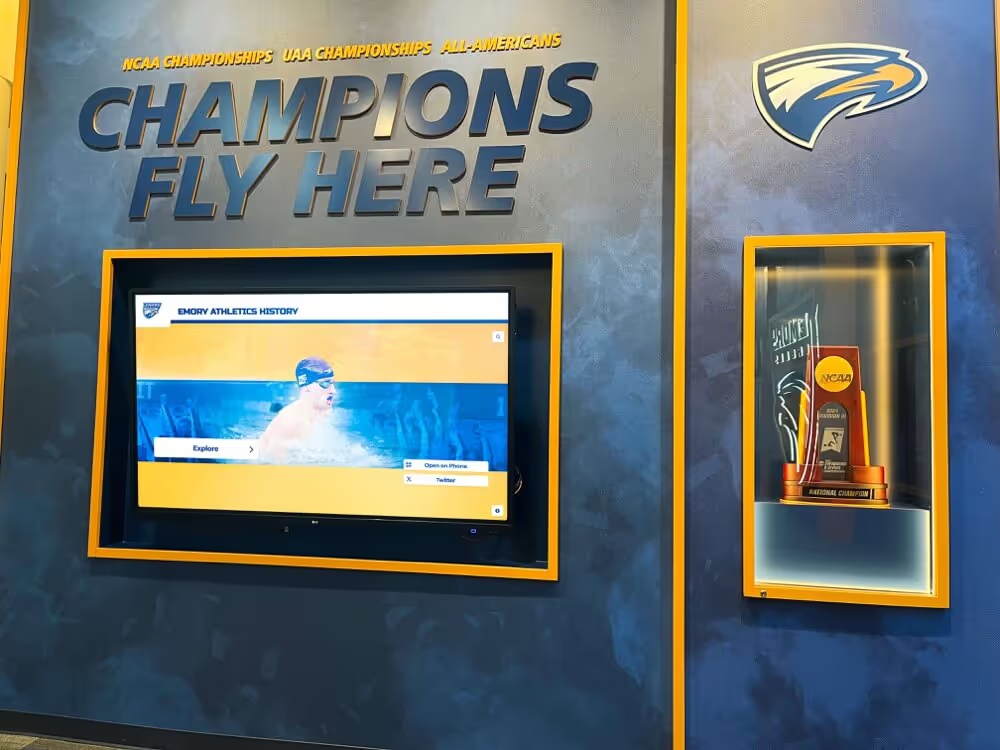
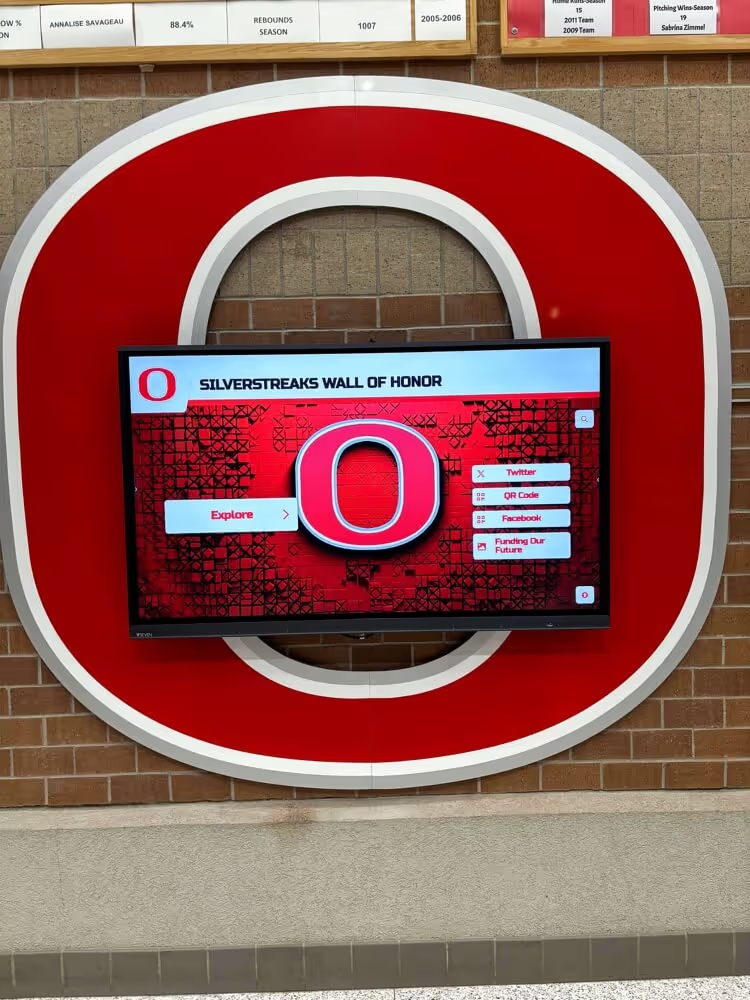
Athletic honor walls represent cumulative program achievement across seasons—accurate displays depend on a consistent reconciliation process carried out every season before records are added or updated
FAQ: Athletic Award Data Reconciliation
What is an athletic award data reconciliation report?
An athletic award data reconciliation report is a structured comparison of all data sources that contribute to a school’s athletic recognition record—including game results, official rosters, award nominations, and existing display records. The report identifies discrepancies between sources and documents how each exception was resolved before new information is added to a permanent or public-facing display.
How often should schools run an athletic award reconciliation report?
Schools should run a reconciliation report at the end of each sport season before updating any display records, and again before any hall of fame induction cycle or major recognition event. Annual audits of all existing display records are recommended to catch historical errors that surface when new season records are compared against prior entries.
What data sources should be included in an athletic award reconciliation?
A complete reconciliation should compare the official enrollment record, the season roster from the athletic office, official game or meet results, award nomination forms, and the current display record. Award criteria documentation should also be consulted to confirm each nomination meets established eligibility requirements before a name is cleared for display.
What is the most common exception type in athletic award reconciliation?
Name format discrepancies are the most frequent exception—athletes’ commonly used names on award nominations often differ from legal names in enrollment records. Other common exceptions include result discrepancies between coach-submitted statistics and official box scores, and roster participation questions for athletes who transferred mid-season.
Can digital recognition platforms replace the reconciliation process?
Digital platforms reduce reconciliation burden through auto-ranking, duplicate detection, and audit logs, but they do not replace the judgment required to resolve exceptions. Schools still need a documented reconciliation process to confirm that every new entry has an authoritative source, particularly for historical records, hall of fame nominations, and awards where eligibility criteria require administrative review.
Building a Recognition Program That Stays Accurate Over Time
An athletic award data reconciliation report is not a one-time fix—it is a repeatable process that keeps recognition records credible across every season, every display update, and every hall of fame induction cycle. Schools that run consistent reconciliation workflows build institutional records that alumni trust, recruits can rely on, and future administrators can audit without reconstructing history from scratch.
The eight-step process, exception log table, and report clearance template in this guide are designed to be adopted as-is or adapted to fit your specific combination of sports, award categories, and display formats. The same core process applies whether your school maintains a single hallway honor board or a multi-display digital recognition system spanning athletic facilities, a library, and a web-accessible alumni portal.
Every name that appears on a public athletic display should have an unbroken chain of documentation back to an authoritative source. A documented reconciliation process is how that chain stays intact across staff turnover, system migrations, and the passage of seasons.
See How 600+ Schools Manage Recognition Records Without the Spreadsheet Headaches
Rocket Alumni Solutions builds cloud-based digital recognition platforms with auto-ranking record boards, audit history, remote CMS access, and WCAG 2.1 AA compliant displays—giving your reconciliation team a single source of truth for every athletic award update.
Request a Custom Demo