



Few governance situations in athletic program administration require more care than posthumous recognition. Intent: define. An athletic award posthumous recognition policy is a formal, written framework that governs how a school or athletic program evaluates, approves, and presents awards to athletes or coaches who have died before a recognition decision was finalized or before the award was formally presented.
A well-designed policy answers three essential questions before grief is in the room: Is this person eligible? Who speaks for the family? And how does this recognition endure? Without a written framework, athletic directors and administrators face the hardest conversations in program governance without any scaffolding—making decisions under emotional pressure that will later need to be explained and defended. A consistent, documented policy protects the program’s integrity, honors the family with clarity rather than confusion, and ensures that the recognition itself is handled with the institutional seriousness the moment demands.
This guide provides eligibility criteria, a family consent and communication framework, a six-step workflow, ceremony protocols, and display integration guidance that school administrators, athletic directors, and recognition committee chairs can adapt for their programs.
Note: This article provides general governance guidance for school athletic recognition programs. It does not constitute legal advice. Questions involving estate matters, family communications, or district obligations should be reviewed with qualified legal counsel and aligned with your school and district policy.
According to the National Interscholastic Athletic Administrators Association (NIAAA), transparent recognition governance extends to every award category a program administers—including those presented after a recipient’s death. The programs that navigate posthumous recognition most effectively are the ones that wrote their policy before they ever needed it.

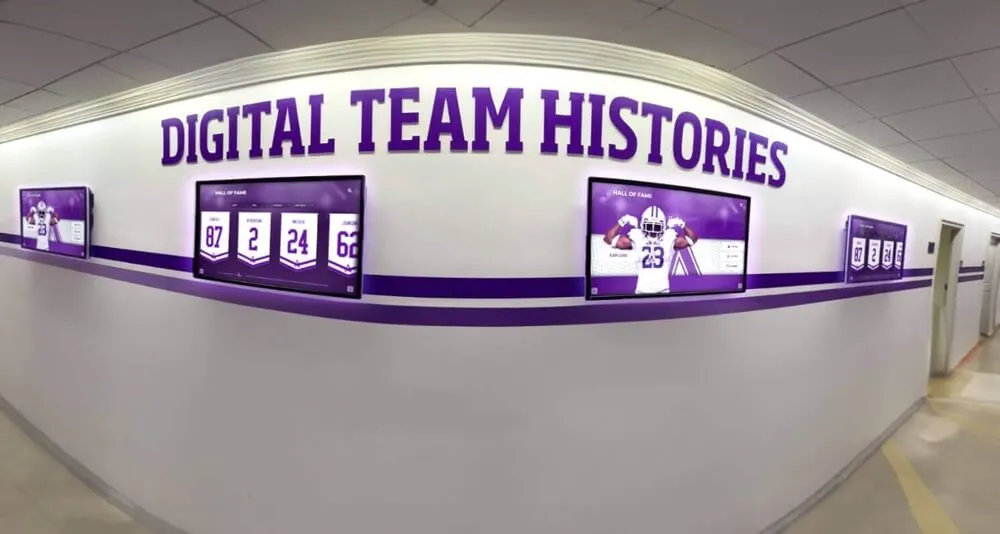
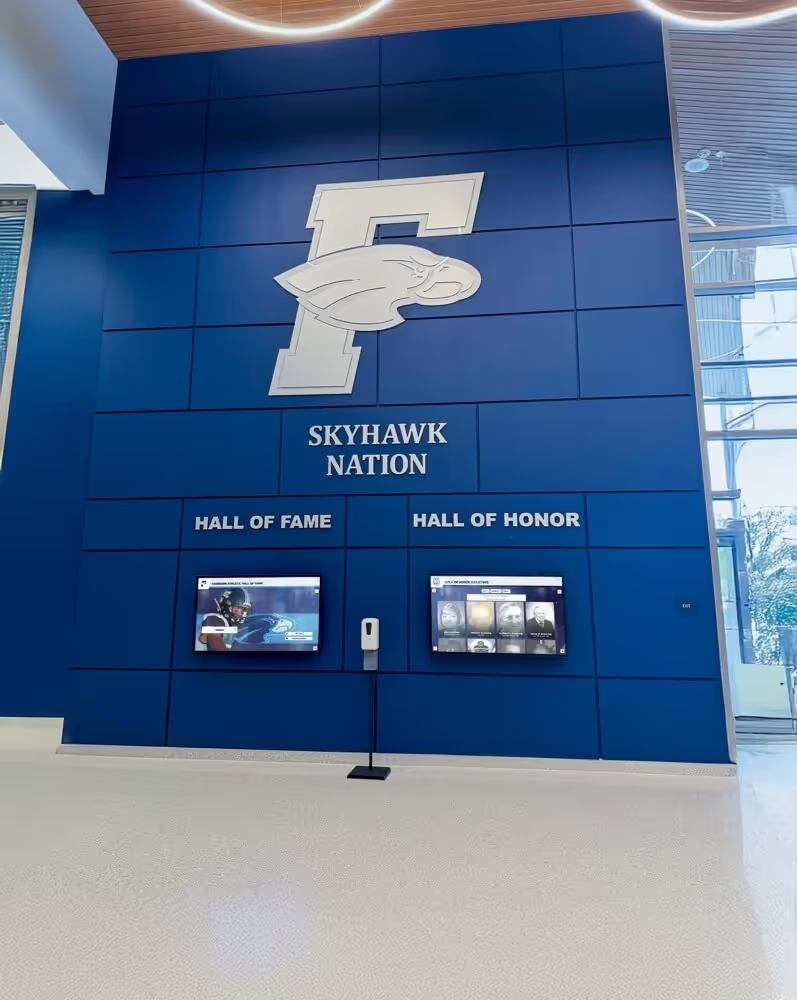
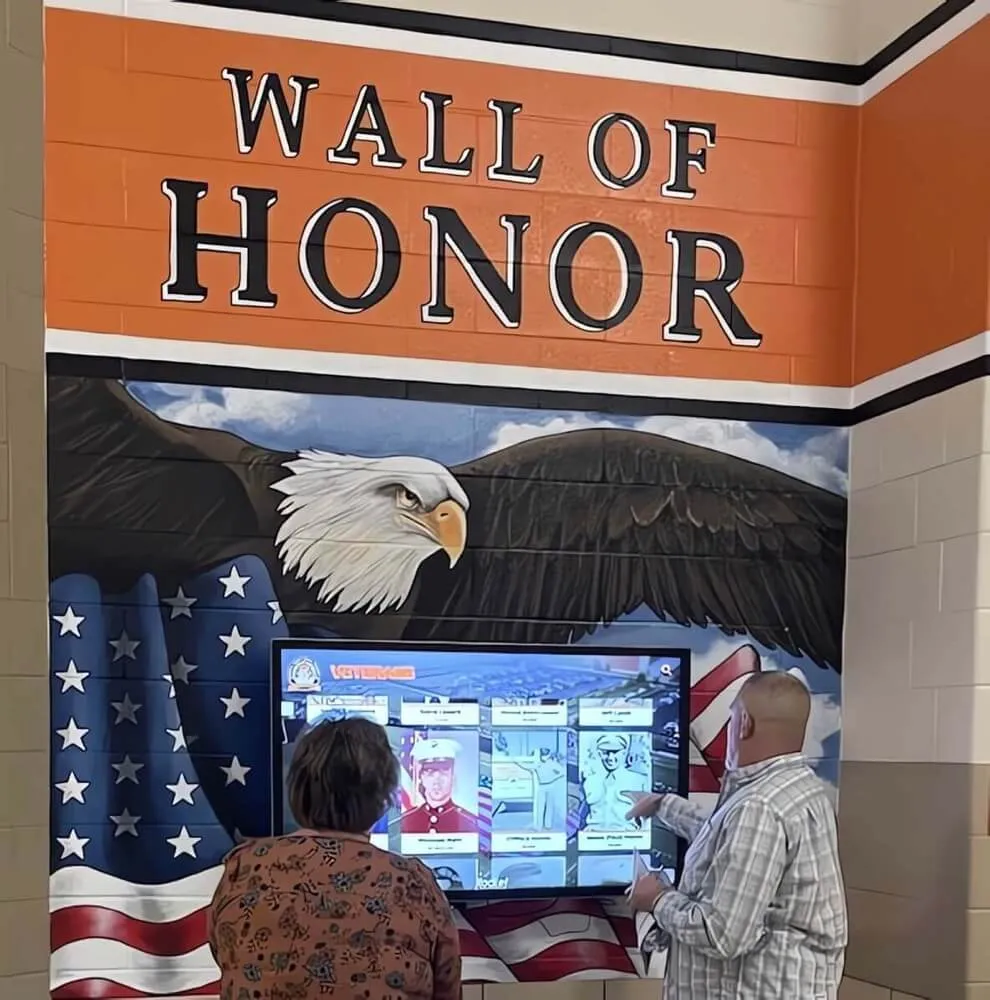
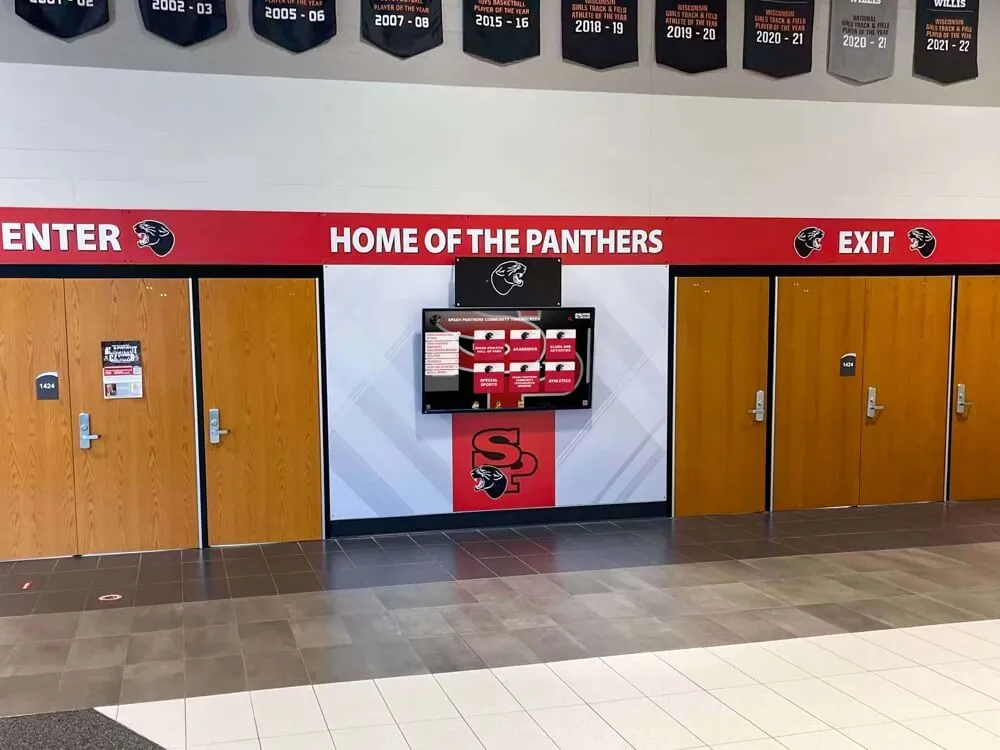
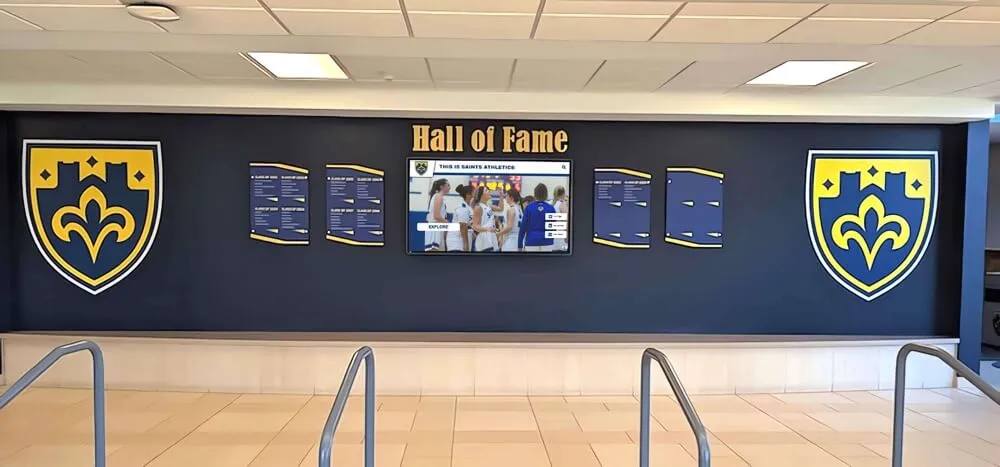
Posthumous honorees whose names appear on permanent recognition walls deserve the same documented governance process as every other inductee—a written policy ensures that recognition is handled with consistency and care regardless of the circumstances
Why Schools Need a Written Athletic Award Posthumous Recognition Policy
A posthumous recognition policy accomplishes three things that an ad hoc response cannot.
It establishes eligibility before emotion drives the decision. The impulse to honor a deceased athlete or coach is natural and often appropriate—but impulse-driven recognition can create inconsistencies that are difficult to defend later. A policy that defines eligibility criteria, minimum recognition thresholds, and review procedures ensures that posthumous recognition reflects the same institutional standards applied to living honorees.
It protects the family. Families navigating grief do not need to also navigate ambiguous institutional processes. A clear policy tells the family what to expect, who will contact them, what decisions they are being asked to make, and what the final recognition will look like—before any of those conversations begin.
It creates lasting governance documentation. Posthumous recognition decisions can be revisited years later—by new administrators, during accreditation reviews, or when alumni engage with a school’s recognition history. Documented decisions, based on written criteria, are defensible. Ad hoc decisions made under emotional pressure are not.
Establishing eligibility policies for awards and display recognition that explicitly address posthumous consideration is an essential element of comprehensive athletic program governance, particularly for programs that maintain permanent display walls and hall of fame inductee lists spanning multiple decades.
Eligibility: The Three Core Questions
A posthumous athletic award eligibility framework must answer three questions in writing, before any specific case requires a decision.
1. What Was the Individual’s Status at Time of Death?
The most common eligibility question is where the recognition process stood when the individual died. Three distinct statuses require different treatment:
- Nominated and under active review: The review process should continue, applying the same rubric and criteria used for all nominees in that cycle. The death does not pause or bypass the evaluation—it continues to a conclusion.
- Selected but not yet presented: The individual had been selected to receive an award and had not yet received it at the time of death. Presentation should proceed posthumously unless the family declines.
- Not yet nominated: This is the most judgment-intensive category. Some programs extend posthumous consideration to individuals who had not been nominated but whose contributions warrant recognition in retrospect. The policy should define whether this retroactive consideration is permitted, and if so, under what conditions and timeline.
2. Do the Eligibility Criteria Change?
No. Posthumous eligibility does not lower the bar. The same rubric, the same scoring criteria, and the same selection standards that apply to living honorees apply to posthumous nominees. This protects the integrity of the recognition program and prevents the situation in which an individual’s death creates recognition that their living record would not have supported.
The policy should state this explicitly: Posthumous eligibility does not modify the criteria for any award category. The full rubric and selection standards apply in all posthumous cases.
3. How Long After Death May Recognition Be Initiated?
A reasonable standard:
- Active-season or recent-graduate status: Posthumous recognition may be initiated within the same recognition cycle in which the individual would have been eligible.
- Retroactive recognition: For athletes or coaches who died before a hall of fame program existed, or who were not considered at the time, programs may establish a separate retroactive review window—typically an annual legacy review cycle.
A policy that does not define a timeline risks creating an open-ended obligation that is difficult to administer fairly across cases.
The 6-Step Posthumous Recognition Workflow
The following workflow applies to posthumous athletic award consideration for recently deceased athletes, coaches, or program contributors. Adapt timelines and authority levels to your program’s governance structure and institutional policies.
Step 1: Receive or Initiate the Nomination
Posthumous nominations may originate from multiple sources: coaching staff, the recognition committee, school administration, or community members. The policy should define who may submit a posthumous nomination and through what channel.
Who may nominate:
- Head coaches or athletic directors (for athletes and assistant coaches)
- Program administrators (for coaches or program contributors)
- Alumni association representatives (for retroactive cases, if the policy permits)
- Family members (in consultation with the athletic director)
All nominations must be submitted in writing. A verbal request—even from a family member—does not constitute a formal nomination.
Step 2: Conduct an Initial Eligibility Review
Within five business days of a nomination, the athletic director or recognition committee chair completes an initial eligibility review. This review confirms:
- The individual’s eligibility status at the time of death (nominated, selected, or not yet nominated)
- Whether the award category being considered includes posthumous recognition under the program’s written policy
- Whether any disqualifying conduct violations or eligibility exceptions apply
The initial review does not make a final recognition decision—it confirms whether the case should proceed to substantive evaluation under the full rubric.
Step 3: Apply the Full Selection Rubric
If the initial eligibility review confirms that the case should proceed, the complete selection rubric is applied—identical to the rubric used for living nominees. For athletic awards, this typically covers athletic performance, leadership, sportsmanship, academic standing, and contribution to program culture.
For posthumous cases, some rubric categories may require alternative documentation:
- Attendance records may need to be sourced from historical athletic department files
- Character and leadership assessments may draw on coach testimony, written documentation from prior seasons, or archived program records
- Academic standing can typically be verified through registrar records
The rubric is not compressed or simplified for posthumous cases. Every category receives the same evaluation depth applied to living nominees.
Step 4: Make a Preliminary Selection Determination
The recognition committee or appropriate review authority makes a preliminary determination—award, defer, or decline—documented in writing with specific reference to rubric scores and criteria.
Do not communicate a preliminary determination to the family. The family should receive one communication: the final, confirmed decision. Preliminary determinations communicated prematurely risk a reversal after family expectations are set, a governance failure that causes significant additional harm during an already difficult time.
Step 5: Initiate Family Consent and Communication
This is the most sensitive step in the workflow, and the one that most distinguishes posthumous recognition from standard award administration.
Who contacts the family: The athletic director or principal—not a coach, a committee member, or a booster representative—should be the first institutional contact with the family. This signals the appropriate level of institutional seriousness and keeps the communication structured and consistent.
What the initial communication covers:
- The program is considering presenting an award in the individual’s name, posthumously
- A brief explanation of the award category and what it represents to the program
- A request for the family’s participation in the recognition process—or the family’s preference not to participate
- Confirmation of whether the family consents to the recognition proceeding
Family consent is required for recognition to proceed. If a family declines posthumous recognition—for any reason, without explanation—that decision is final and documented, and no award is presented. The program should not re-approach the family in a subsequent cycle without a specific indication of changed circumstances.
What the family may be asked about:
- Preferred name or spelling for permanent display records
- Whether a family representative will accept the award at a ceremony
- Whether the family wishes to contribute a photo, brief biography, or memorial item for inclusion in display materials
- Whether the family prefers a private presentation rather than a public ceremony
What the family is not asked:
- To justify or explain the recognition decision (that is the program’s responsibility)
- To interact with media or external communications without explicit written consent
- To participate in any recognition element they have not affirmatively agreed to
Step 6: Present the Award and Update Permanent Records
Once family consent is confirmed and the final determination is documented in writing, the award presentation and permanent record update may proceed.
Ceremony considerations:
- If the family prefers a public ceremony, coordinate with the existing recognition event calendar—for example, presenting a posthumous award at the annual athletic banquet
- If the family prefers a private presentation, arrange a separate meeting with school leadership and designate a ceremony contact
- In either case, the program should designate in writing who accepts the physical award on behalf of the family
Permanent record updates:
- Digital and physical recognition displays should be updated within 10 business days of the ceremony
- Whether the “posthumous” designation appears on permanent display records is a documented family consent decision—not a default label
- Governance files—rubric scores, nomination records, committee minutes, consent documentation—should be retained for a minimum of seven years, consistent with standard school records policy
Eligibility and Consent at a Glance
| Situation | Eligible? | Family Consent Required? | Notes |
|---|---|---|---|
| Selected before death, not yet presented | Yes | Yes | Award proceeds unless family declines |
| Nominated and under review at time of death | Yes, review continues | Yes, before announcement | Apply full rubric; inform family before finalizing |
| Not nominated; died during active eligibility period | Policy-dependent | Yes | Policy must explicitly permit this category |
| Retroactive nomination (died before program existed) | Policy-dependent | Yes | Annual legacy review cycle recommended |
| Disqualifying conduct violation on record | No | N/A | Same eligibility standards apply posthumously as during life |

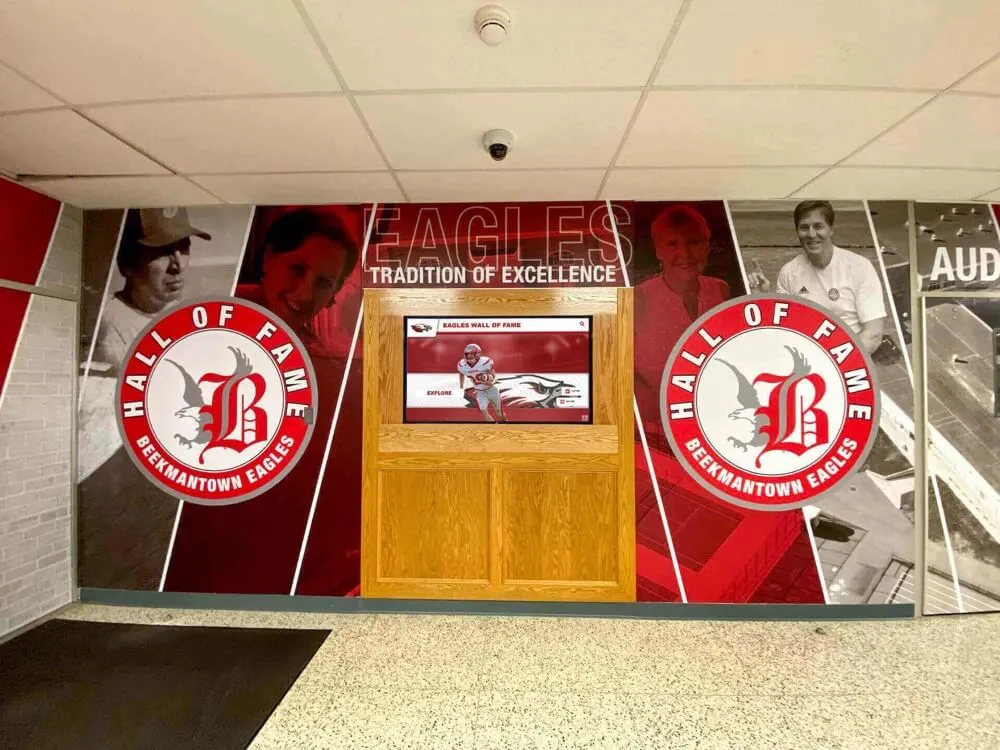
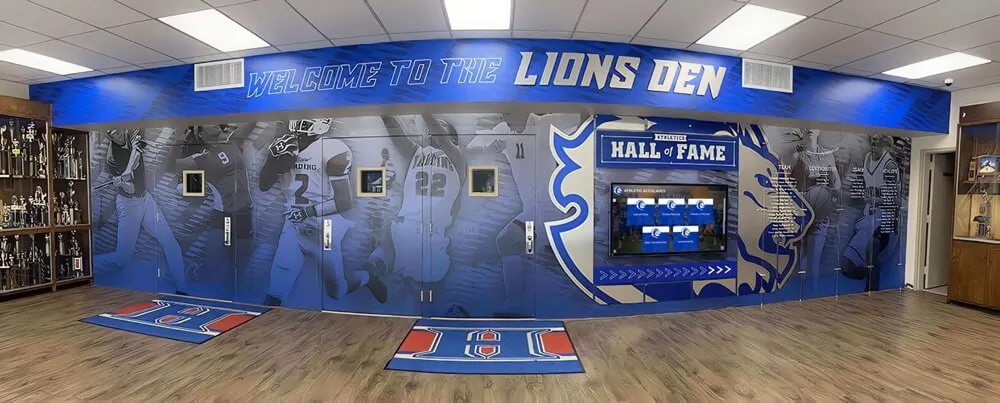
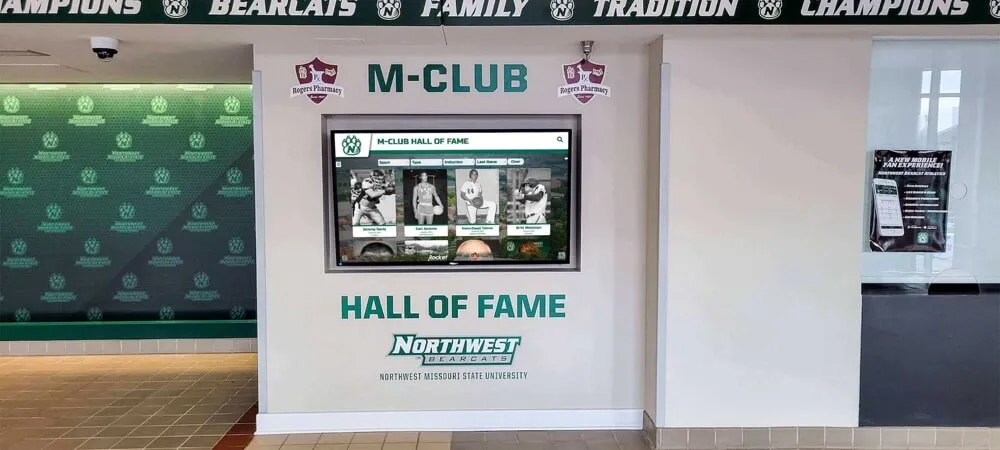
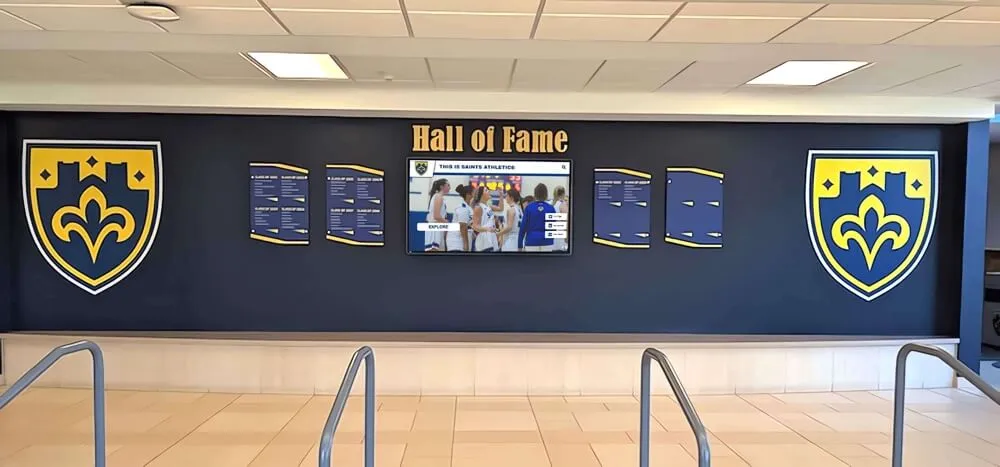
Hall of fame displays that include posthumous inductees benefit from a consistent policy that documents the selection process and family engagement for every honoree—so the decisions behind every name on the wall are traceable to written criteria
Connecting Posthumous Recognition to Lasting Displays
Posthumous recognition carries particular weight when it is visible—when the athlete’s name, photograph, and achievement are part of the environment that current students and community members encounter daily. That visibility is what transforms an award ceremony moment into lasting institutional memory.
For physical display systems—trophy cases, honor boards, and name plaques—posthumous inductees require the same physical preparation as any other honoree, typically involving fabrication of a name plate or engraved panel. The practical logistics of updating physical display configurations are worth considering early in the consent and planning process, particularly when fabrication lead times are measured in weeks.
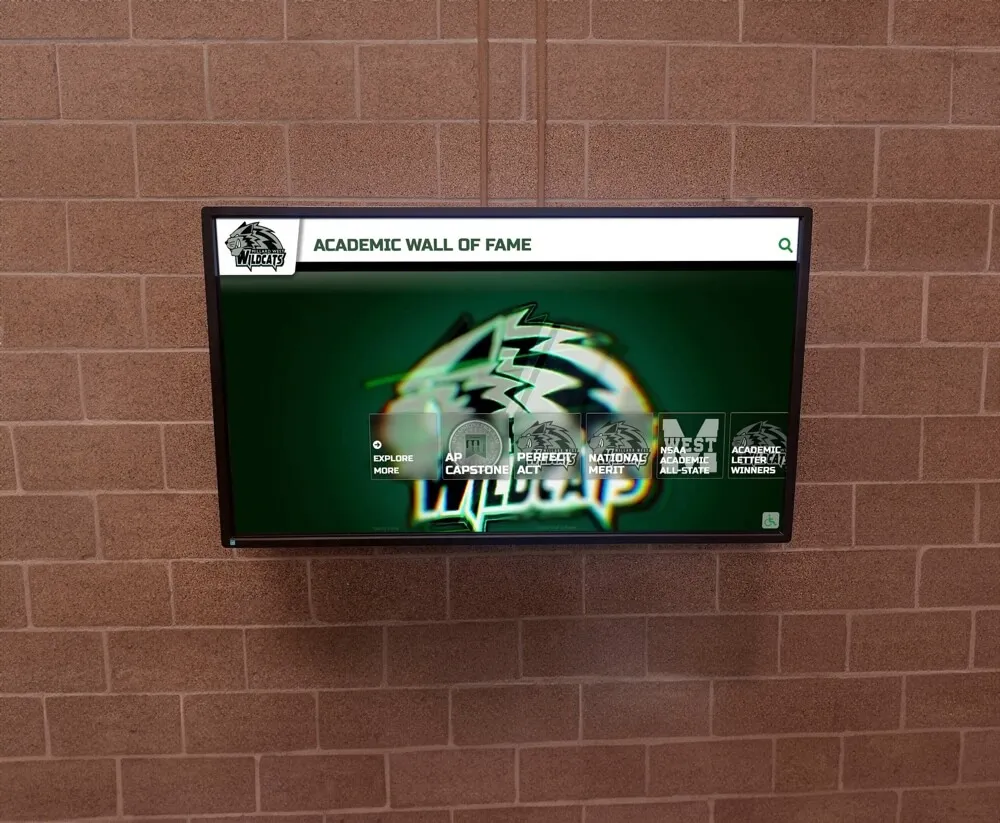
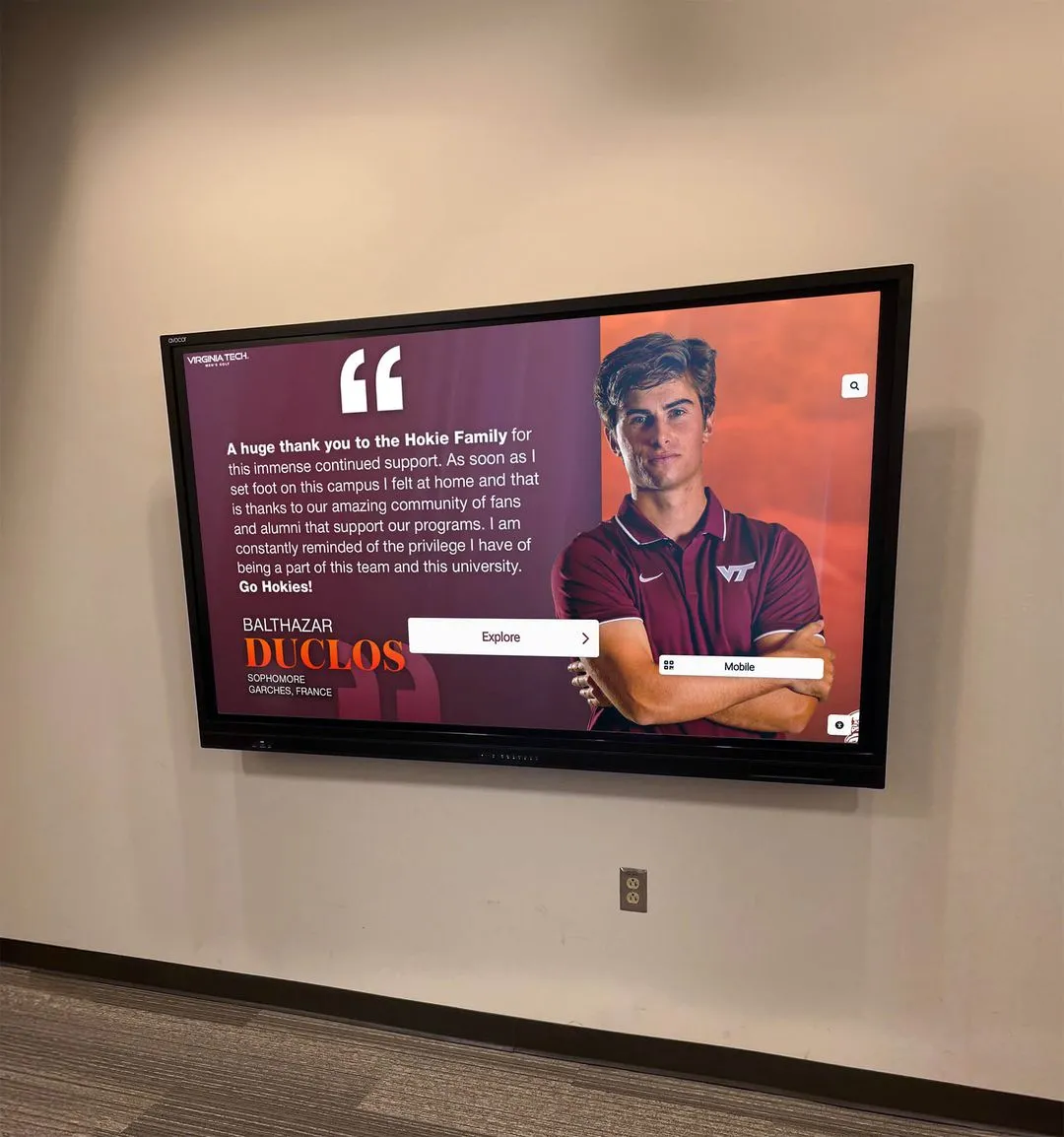
For schools using digital recognition platforms, the operational steps are significantly more flexible. Alumni engagement through digital athletic recognition programs demonstrates how digital systems support ongoing record maintenance and community connection in ways that static physical displays cannot—including the ability to add a posthumous inductee immediately following a final decision, or to include a memorial video or family-contributed tribute that a standard name plate cannot accommodate.
The question of how to sustain recognition across time is particularly relevant for posthumous honorees. Athletic program newsletters and lasting recognition strategies illustrate how schools maintain ongoing connection between current program activities and the historical record—including how the contributions of deceased athletes and coaches remain part of an active program narrative rather than becoming archived and invisible.
Donor, Sponsor, and Booster Considerations
Posthumous recognition intersects with the donor and sponsorship environment in ways that merit explicit policy attention.
Named scholarships, endowed awards, and sponsorship-funded recognition categories are sometimes established in response to a death. When a donor or booster proposes creating a posthumous award in an individual’s name, the program’s existing posthumous recognition policy provides the governance framework within which that proposal should be evaluated—not outside it. Programs that allow external donors to define award criteria for posthumous recognition without aligning those criteria to existing policy governance risk creating inconsistencies that undermine the integrity of the broader recognition program.
Athletic sponsorship and recognition program governance provides guidance on how to structure donor-affiliated recognition so that external contributions enhance a program’s recognition capacity without compromising the criteria standards that protect its credibility. Sponsors and donors who contribute to recognition programs in good faith deserve assurance that the institutional framework surrounding the recognition is as serious as their contribution.
For programs that have established named awards or recognition in memory of former athletes or coaches, ensuring that the underlying governance policy is documented and publicly available supports donor trust across the full program lifecycle.
Integrating Posthumous Policy Into the Broader Recognition Framework
A posthumous athletic award policy is most effective when it is not a standalone document but an integrated component of the program’s overall recognition governance structure—alongside the standard eligibility rubric, the appeals policy, and the display eligibility standards.
Eligibility policies for recognition and display standards that address the full range of special eligibility circumstances—including conduct violations, retroactive nominations, and posthumous consideration—create a unified governance environment where every recognition decision is traceable to written policy, regardless of what category the decision falls into.
For programs that recognize excellence across athletic, academic, and character-based categories, academic and fitness recognition frameworks for school administrators offer a model for how structured eligibility standards can govern diverse recognition types under a unified policy approach. The same rigor that governs academic honor selection should apply to posthumous athletic recognition.
For programs that honor athletic achievement alongside scholarship, understanding how athletic scholarship recognition connects to school recognition programs creates continuity between the short-term recognition an athlete received during their career and the long-term legacy that posthumous recognition sustains for their family and for the program.
Posthumous Recognition Policy Components: A Reference Table
| Policy Component | What It Should Cover |
|---|---|
| Eligibility scope | Which award categories permit posthumous consideration |
| Eligibility threshold | Criteria are identical to living-nominee standards—state this explicitly |
| Nomination sources | Who may initiate a posthumous nomination and through what channel |
| Review authority | Who conducts eligibility review, rubric evaluation, and final determination |
| Family consent | Consent required before any announcement; family may decline without explanation |
| Communication protocol | Who contacts the family, what is communicated, and in what sequence |
| Display designation | Whether “posthumous” appears on permanent displays—family consent required |
| Ceremony options | Public ceremony vs. private presentation; who accepts the award |
| Record retention | Governance files retained for a minimum of seven years |
| Retroactive nominations | Whether and how legacy recognition outside normal cycles is permitted |

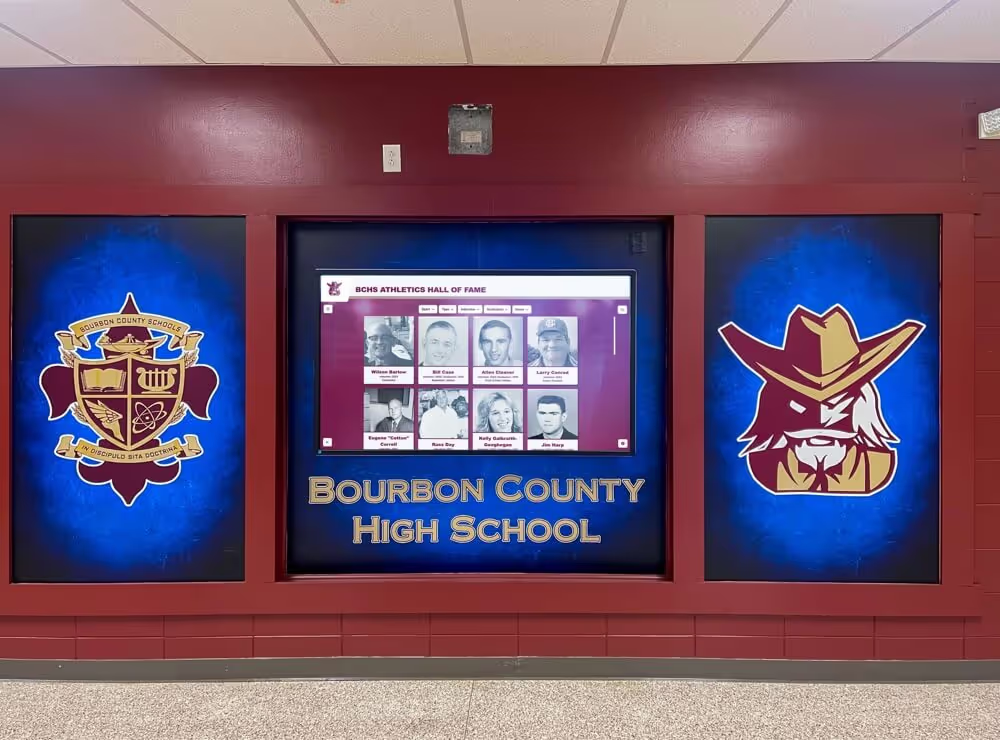
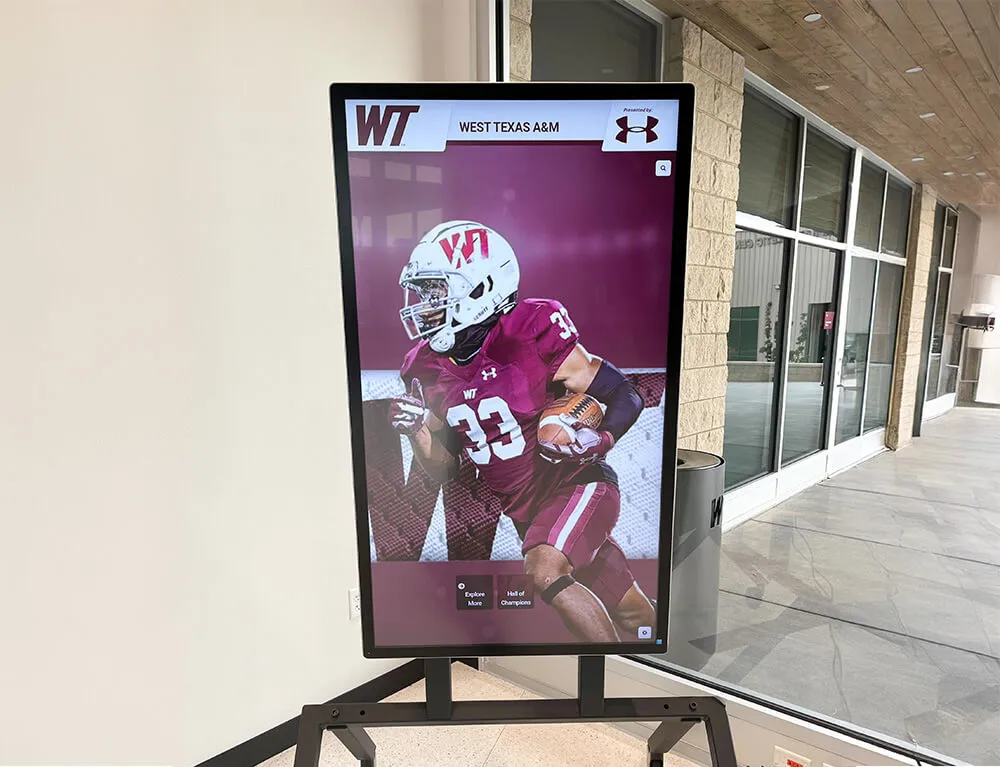
Recognition walls that include posthumous honorees should reflect documented decisions, confirmed family consent, and consistent eligibility standards—so every name carries the same institutional authority
FAQ: Athletic Award Posthumous Recognition Policy
What is an athletic award posthumous recognition policy?
An athletic award posthumous recognition policy is a written framework that governs how a school or athletic program evaluates, approves, and presents awards to athletes or coaches who have died before recognition was finalized or presented. It defines eligibility criteria, the family consent process, ceremony options, and how posthumous recognition is reflected in permanent displays. A written policy ensures consistent, documented decisions rather than ad hoc responses during a period of institutional grief.
Is family consent required for posthumous athletic recognition?
Yes. Family consent should be required before any posthumous recognition is announced or presented. A family has the right to decline recognition for any reason, without explanation, and that decision should be respected as final. The program should also obtain consent for specific elements—public versus private ceremony, use of photographs or biographical information in displays, and whether the word “posthumous” appears on permanent records. Consent should be obtained through a direct conversation with the athletic director or principal, not through intermediaries.
Does posthumous consideration change the eligibility criteria for an athletic award?
No. Posthumous eligibility does not lower the bar for any award category. The same rubric, scoring criteria, and selection standards that apply to living nominees must apply to posthumous cases. This protects the integrity of the recognition program and ensures that posthumous recognition reflects genuine achievement. The policy should state this standard explicitly so that it cannot be set aside regardless of the emotional circumstances.
What should a posthumous athletic recognition ceremony look like?
The ceremony format should be determined primarily by the family’s preference. Options include a public presentation at the annual athletic awards banquet, a private presentation with school leadership, or a dedicated memorial recognition event. In all cases, the program should designate in writing who accepts the physical award on behalf of the family. If the family prefers no public ceremony, the recognition can still be reflected in permanent display records without a presentation event.
How should posthumous honorees be included in digital recognition displays?
Posthumous honorees should be included in digital recognition displays using the same entry format as all other inductees, with additions determined by family consent—such as a memorial tribute, a photo, or a brief biographical statement. Digital platforms allow for richer posthumous recognition than physical plaques: video tributes, archived content, and family-contributed materials can all be included within a single profile.
Preserving the Record, Honoring the Legacy
An athletic award posthumous recognition policy is not a checklist for rare circumstances—it is part of the institutional foundation that determines how a program handles its most serious obligations. When the policy is written before it is needed, it becomes something that protects everyone: the program, the recognition committee, and above all, the family.
Programs that connect posthumous recognition to their broader athletic history preservation goals—including ongoing alumni engagement and digital record-keeping—ensure that posthumous honorees remain part of an active, living institutional narrative rather than becoming footnotes in a file cabinet. A name on a digital recognition wall, a profile that can carry new tributes as years pass, and a ceremony the family remembers as dignified and clear: these are what a well-written policy makes possible.
Build Recognition That Honors Every Athlete's Legacy
Rocket Alumni Solutions provides digital walls of fame used by 600+ institutions—built for recognition that lasts, updates in real time, and accommodates every honoree, including posthumous inductees with tribute media, family-contributed content, and full display flexibility. See how schools are preserving athletic history with a platform designed for the long term.
Request a Custom Demo