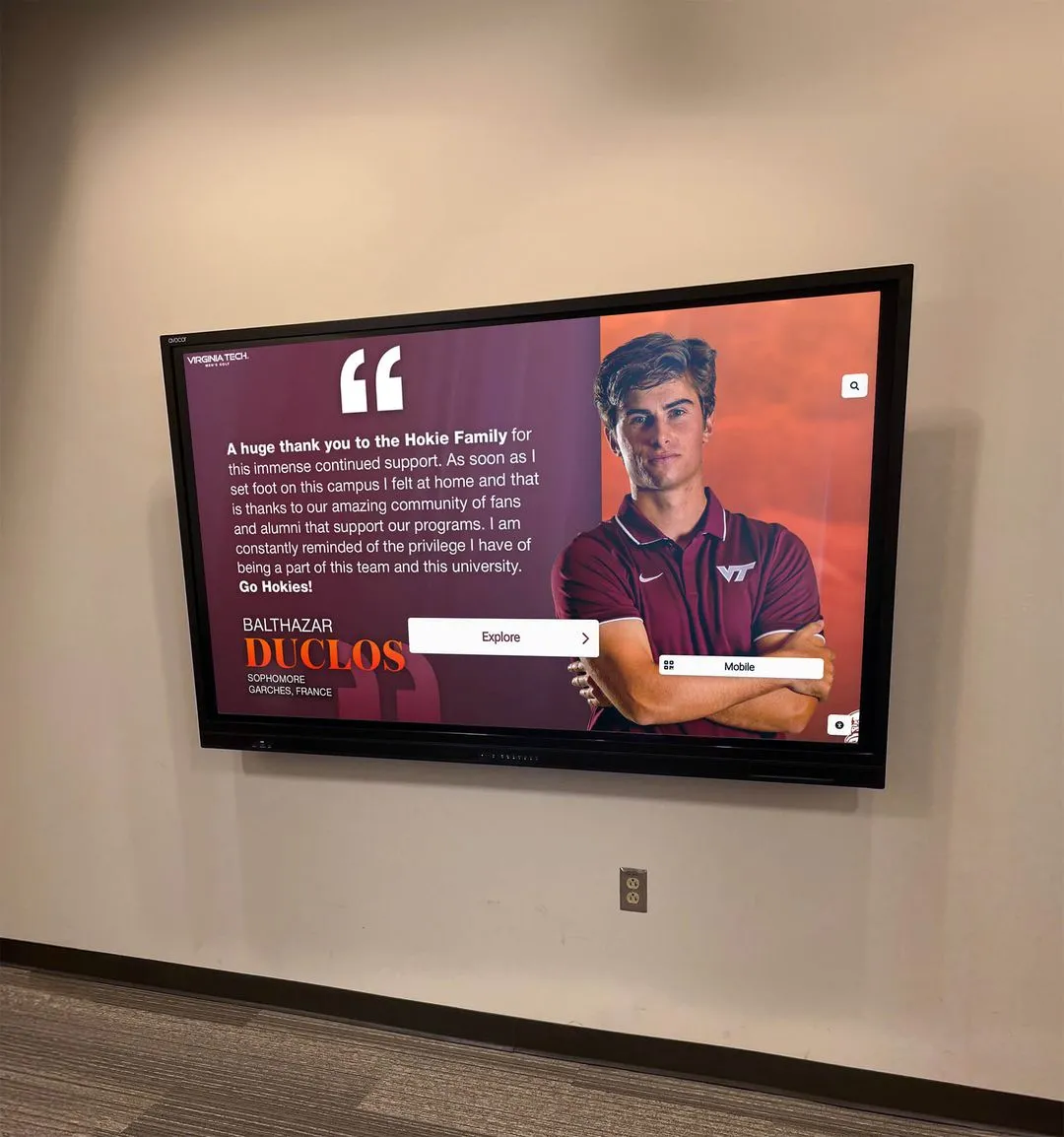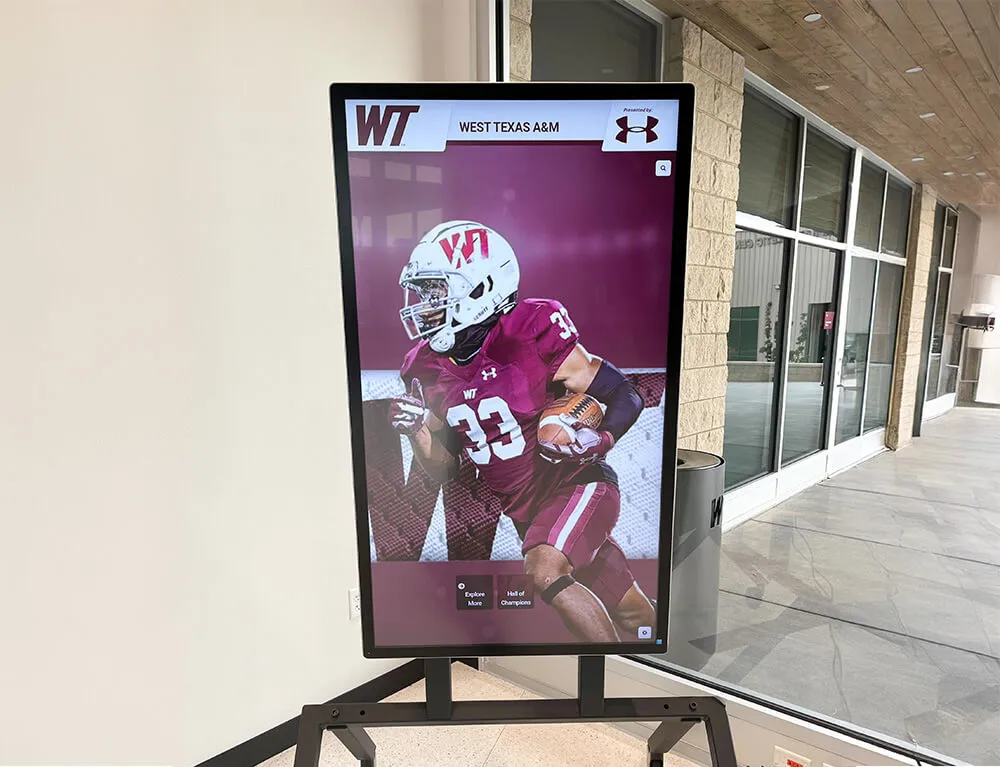




Intent: define. An athletic award preferred name policy is a formal, written framework that governs how a school athletic department captures, validates, applies, and updates the name a recipient wishes to appear on physical award certificates, plaques, display panels, digital archives, and public recognition screens—whenever that preferred name differs from the legal or enrollment name on file.
The short answer: put the name the honoree chooses on the award, document the decision, and establish a consistent process so every staff member who touches recognition materials—from the athletic director to the engraver to the IT administrator managing a touchscreen display—applies the same rule. Without a written policy, preferred name requests are handled ad hoc, creating inconsistencies across certificates, trophies, hall of fame wall listings, and digital records that can be difficult and expensive to correct years later.
This guide provides a clear policy rule, a five-step request and approval workflow, an audit checklist, a field-by-field reference table, and a FAQ covering the questions school administrators and athletic directors most frequently raise about preferred name recognition.
Note: This article provides general guidance for athletic program recognition governance. Name preferences that intersect with legal or medical considerations—including gender-affirming name changes—may carry additional obligations under FERPA, Title IX, or state law. Consult your district’s legal counsel and student services office for jurisdiction-specific requirements.
Schools invest significant effort in recognition: selecting honorees, designing plaques, engraving trophies, printing certificates, building wall displays, and publishing digital rosters. All of that effort is undermined if the name on the award is not the name the honoree uses—or if a name change made years later is never reflected in the school’s archives.

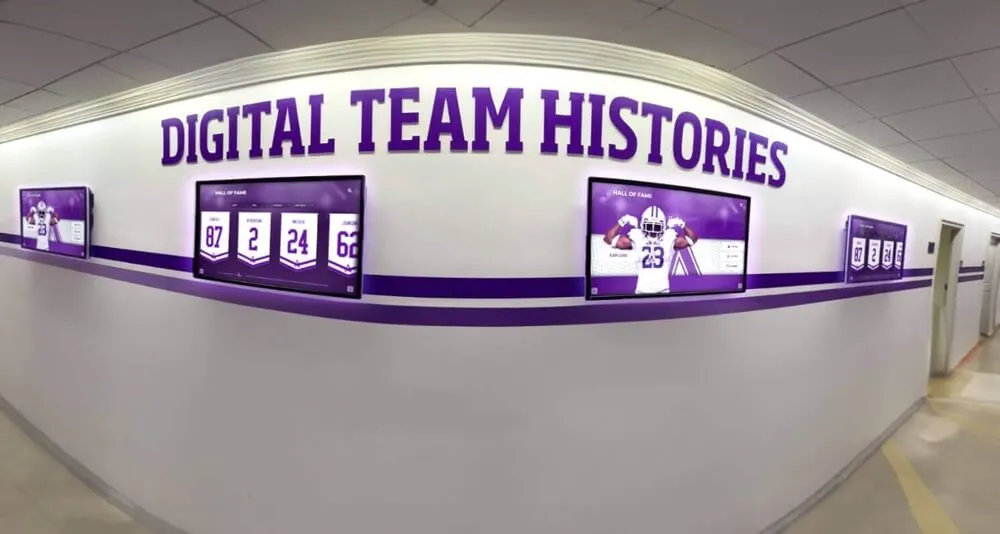
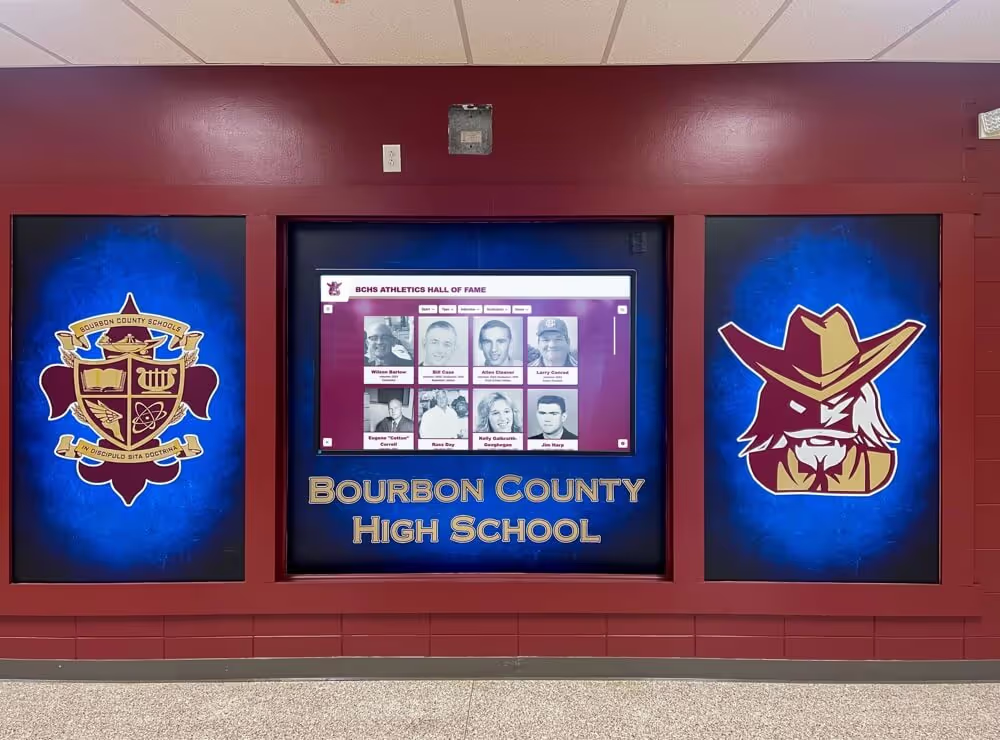
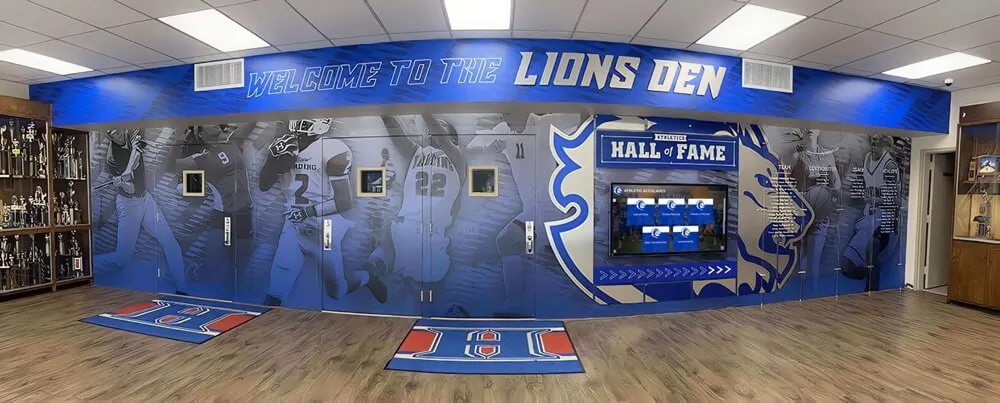
Recognition walls that span decades of inductees depend on accurate, auditable name records—a preferred name policy ensures that every honoree's name reflects their own choice, consistently applied across all display formats
Why a Preferred Name Policy Belongs in Athletic Recognition Governance
Athletic recognition materials are among the most durable artifacts a school produces. A plaque mounted in 2019 may still be visible in 2035. A hall of fame digital roster updated today will be reviewed by alumni, recruits, and community members for years. The name that appears on those materials matters—both to the honoree and to the institution’s long-term credibility.
Three problems surface repeatedly in programs without a preferred name policy.
Inconsistency across materials. Without a documented preference on file, one staff member may engrave a trophy using the enrollment name while another prints the certificate using the name the coach knows the athlete by. The result is two official recognition artifacts with two different names for the same person—a discrepancy that creates confusion in archives and embarrassment for the honoree.
No clear update path. When an honoree contacts the athletic department years after graduation to request a name correction—because of a legal name change, a marriage, or a previously unaddressed preference—staff with no policy to reference often cannot determine what records exist, who owns them, or what changes are permissible.
Display systems that drift out of sync. Physical plaques, printed programs, digital hall of fame rosters, and award certificates are often maintained by different staff members using different systems. A name update requested verbally may reach one format and never reach others.
For programs maintaining comprehensive athletic hall of fame records, a preferred name policy provides the governance layer that ensures honoree identity is captured correctly at the source and propagated consistently to every downstream record and display.
Scope: What “Preferred Name” Covers
A preferred name policy should define precisely which name fields it governs. The following scope definition covers the most common recognition contexts:
| Name Field | Where It Appears | Covered by Policy |
|---|---|---|
| Display name on physical award | Trophy, plaque, certificate, ribbon | Yes |
| Display name on wall panel | Mounted hall of fame shield or nameplate | Yes |
| Digital roster name | Touchscreen hall of fame, website listing | Yes |
| Printed program name | Ceremony programs, banquet materials | Yes |
| Archive record name | Internal selection files, historical rosters | Yes (as an alias or update) |
| Legal/enrollment name | Student information system, HR records | No — governed by separate district policy |
The policy governs how the honoree’s name appears in recognition contexts—not in legal, financial, or administrative systems, which are subject to separate district and state requirements.
The Core Policy Rule
An honoree’s preferred name—the name they wish to appear on all athletic recognition materials and displays—is the default display name for that person across all award formats, provided the preference is documented in writing before materials are finalized.
This rule has three operative components:
- Preference is authoritative. The honoree’s stated preference takes precedence over the enrollment name for display purposes. Staff are not required to verify or justify the preference; they are required to document and apply it.
- Documentation is required. A verbal request does not constitute a documented preference. The preference must be captured in writing—via the program’s preferred name request form—and retained in the recognition record.
- Timing matters. A preference documented before materials are finalized is applied at no cost. A preference submitted after materials are produced may require reprinting, re-engraving, or display updates at the program’s or honoree’s expense, depending on circumstances defined in the policy.
The Five-Step Preferred Name Request and Approval Workflow
The following workflow applies to all new award recipients and to retroactive name update requests from former honorees.
Step 1: Collect the Preferred Name at Nomination
When a nomination is submitted, the nomination form includes a mandatory “preferred display name” field. The form text should read: Enter the name as you would like it to appear on all athletic recognition materials, displays, and published rosters. If left blank, we will use your legal name on file.
Who is responsible: The athletic director or recognition committee chair ensures the field is present on all nomination forms—digital and paper—before each recognition cycle opens.
What to do if the field is blank: Contact the nominee directly to confirm name preference before materials enter production. Do not assume the legal name is correct.
Step 2: Validate the Submitted Preference
Within three business days of receiving a completed nomination, the athletic director or designated recognition coordinator reviews the preferred name submission for:
- Completeness (first name, last name, any middle initial or suffix the honoree wishes to include)
- Legibility and correct spelling (confirm via email reply if any element is unclear)
- Consistency with prior recognition materials if the honoree has been recognized before
Validation does not involve judgment about whether the name is appropriate. The program’s role is to confirm that the submitted preference is complete and clearly understood—not to evaluate it.
Step 3: Enter the Preferred Name into the Recognition Record
Once validated, the preferred name is entered into the program’s central recognition record—the authoritative source of truth for all downstream materials. This record should include:
- Legal name (from enrollment or HR records, for identity verification only)
- Preferred display name (to appear on all recognition outputs)
- Date preference was submitted
- Date preference was validated and entered
- Name of the staff member who completed the entry
If the program uses a digital recognition platform, this entry is made in the platform’s CMS at the time of record creation, not at the time of display publication.
Step 4: Apply the Preferred Name Across All Formats
Before any recognition material is produced or published, the coordinator confirms that the preferred name—not the legal name—is the version being sent to each production format:
- Physical awards (trophies, plaques, certificates): confirm with vendor or engraver before production
- Wall display panels: confirm with display vendor or facilities staff before fabrication
- Digital recognition platform: confirm in the CMS record before the profile goes live
- Printed ceremony programs: confirm in the print layout before final approval
- Website and archived rosters: confirm before publication
This step should follow a format-by-format checklist, signed off before any material proceeds to production or publication.
Step 5: Retain Documentation and Confirm with the Honoree
After all materials are produced and the recognition event is complete, the program retains:
- The original preferred name request (signed or timestamped digital submission)
- The validation record
- Confirmation that the preferred name was applied across all formats
Send a confirmation to the honoree—by email or letter—listing the name as it appears on each recognition format. This gives the honoree an opportunity to identify any discrepancy before materials are publicly displayed or distributed.
Preferred Name Request Checklist for Athletic Directors
Use this checklist at the start of each recognition cycle to confirm preferred name governance is in place.
- Nomination form includes a dedicated “preferred display name” field
- Nomination instructions explain what the field governs and what happens if left blank
- Recognition record template includes both legal name and preferred display name fields
- Vendor order forms are reviewed before submission to confirm preferred name appears, not legal name
- Display platform CMS records are reviewed before profiles are published
- Program template for printed materials uses the preferred name field from the central record
- Retroactive update request process is documented and accessible to former honorees
- Completed preferred name documentation is retained in the recognition archive
Retroactive Preferred Name Updates
Former honorees sometimes contact a school’s athletic department years or decades after their recognition to request a name update—most commonly following a legal name change after marriage, divorce, or gender transition. A preferred name policy should define how these requests are handled.
Step 1: Receive the request in writing, using a designated retroactive update request form or by directing the honoree to submit the request by email to the athletic director. Verbal requests are acknowledged but not acted upon until written documentation is received.
Step 2: Verify identity. For retroactive requests, confirm the requester’s identity by cross-referencing the program’s recognition record (year of award, sport, award category) and, if necessary, requesting documentation such as a prior award certificate or government-issued ID.
Step 3: Update the central recognition record. Add the updated name as the new preferred display name and retain the prior name as a historical alias for archive integrity. Do not delete the prior name; record the update date and the staff member who made it. This approach—maintaining both names with a clear audit trail—aligns with best practices for athletic award data lineage in long-running recognition programs.
Step 4: Apply the update across all manageable formats. Practical limits apply: a name engraved on a trophy that the honoree possesses cannot be changed remotely. Focus updates on the formats the school controls directly—digital rosters, wall display panels, website listings, and any future printing of historical materials.
Step 5: Confirm the update in writing. Send the honoree a written confirmation listing which formats have been updated, which cannot be changed (physical items in the honoree’s possession), and who to contact if additional formats are identified later.
Tracking which records have been updated—and which are pending—is a core function of athletic award data quality management, particularly for programs with long award histories spanning multiple staff generations.
Display Integration: Applying the Preferred Name Across Recognition Formats
A preferred name policy only functions if it is operationalized at the format level. The following section addresses the most common recognition display formats and the specific steps required to apply preferred name governance to each.
Physical Trophies and Plaques
Physical awards are the highest-stakes format because errors are expensive and sometimes irreversible. Before any order is submitted to a vendor:
- Pull the preferred name from the central recognition record—not from memory, email, or a prior year’s program
- Review the vendor’s proof against the central record before approving production
- Retain a copy of the approved proof in the recognition file
For guidance on maintaining chain of custody for physical recognition materials from nomination through presentation, the athletic memorabilia chain of custody framework provides a useful parallel process that can be adapted to include a preferred name verification checkpoint.
Digital Recognition Displays
Digital platforms—whether touchscreen hall of fame displays, wall-mounted recognition screens, or web-based rosters—offer the significant advantage of editability. A name that needs to be updated on a digital display can be corrected in minutes rather than requiring a physical replacement.
Effective digital display management for preferred names requires:
- A single authoritative CMS record per honoree, from which all display outputs are generated
- A defined field in the CMS record for “display name” that is separate from any internal identification fields
- A permission structure that limits who can edit display names, with an audit log of changes
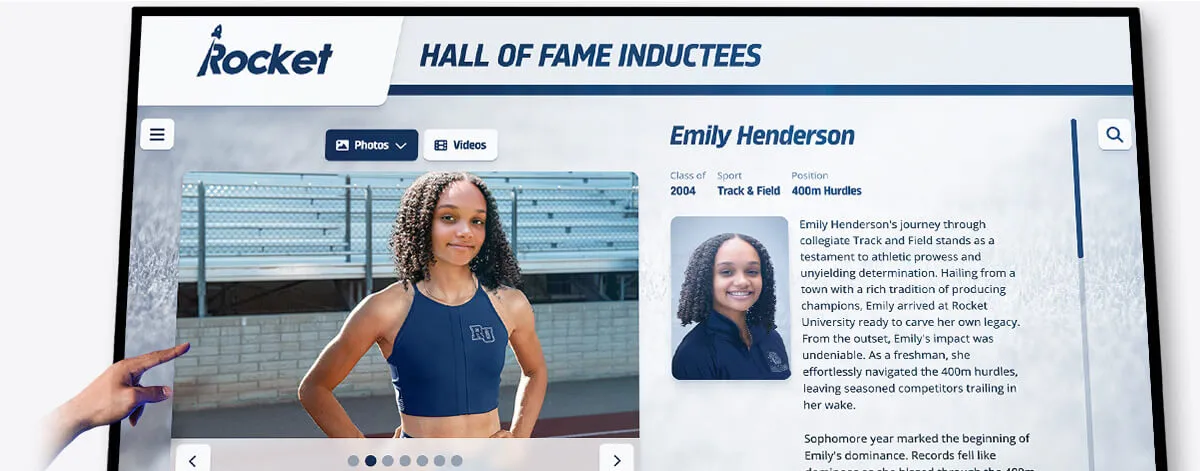
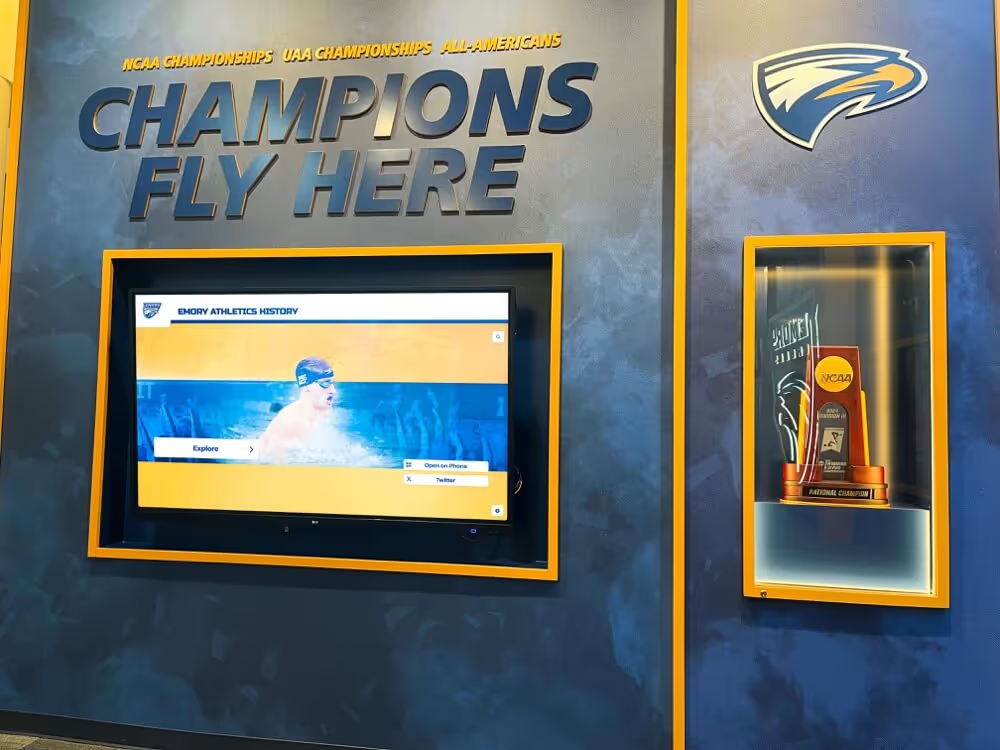
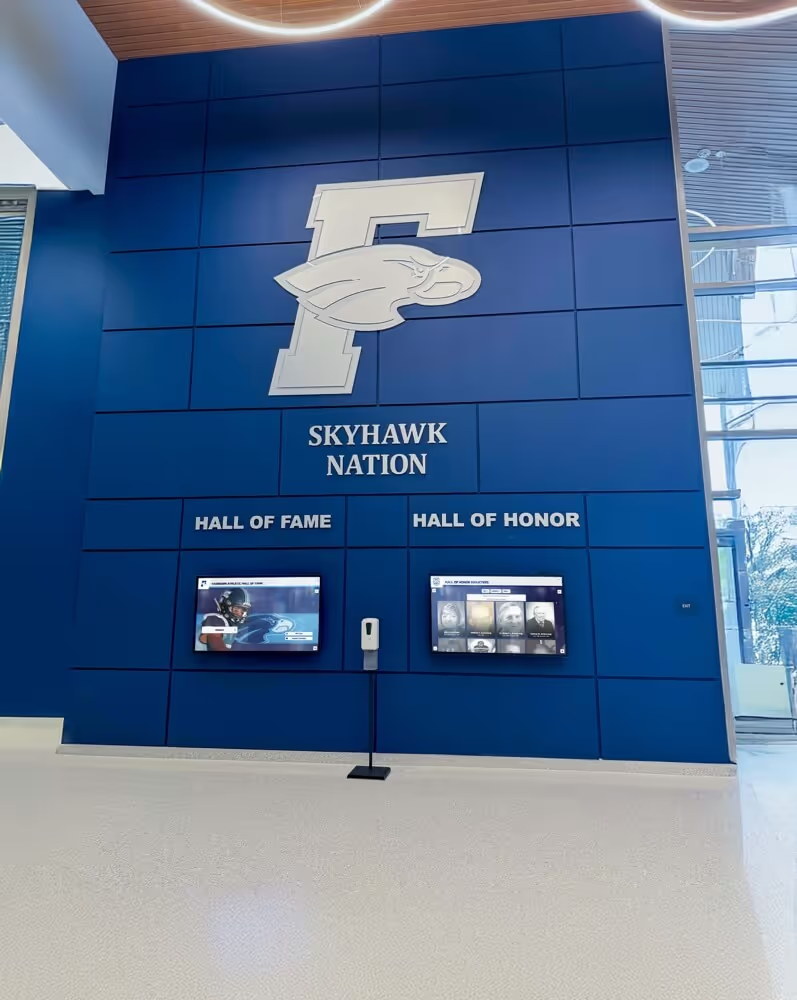
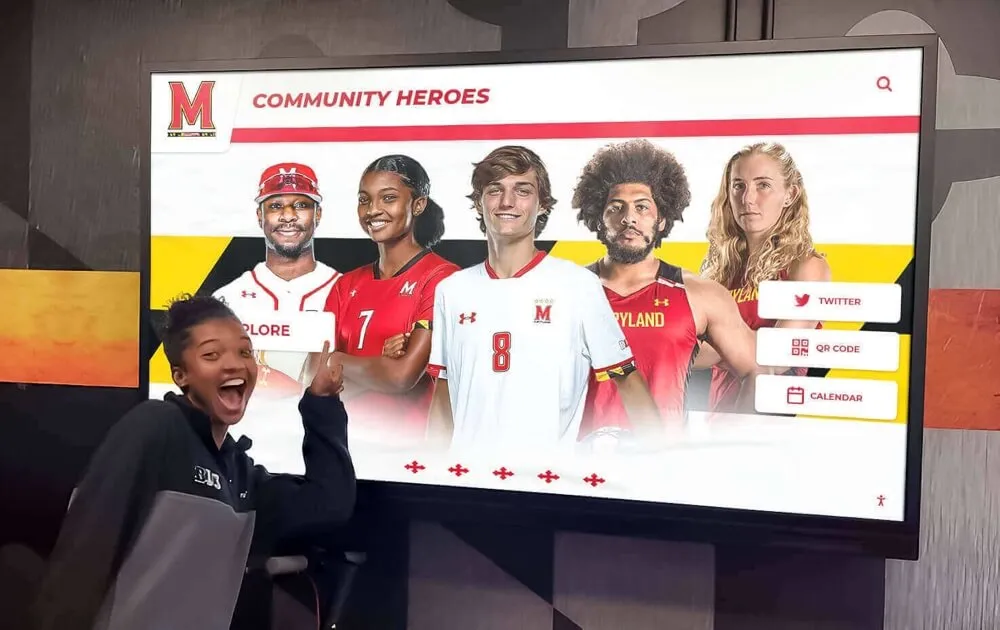
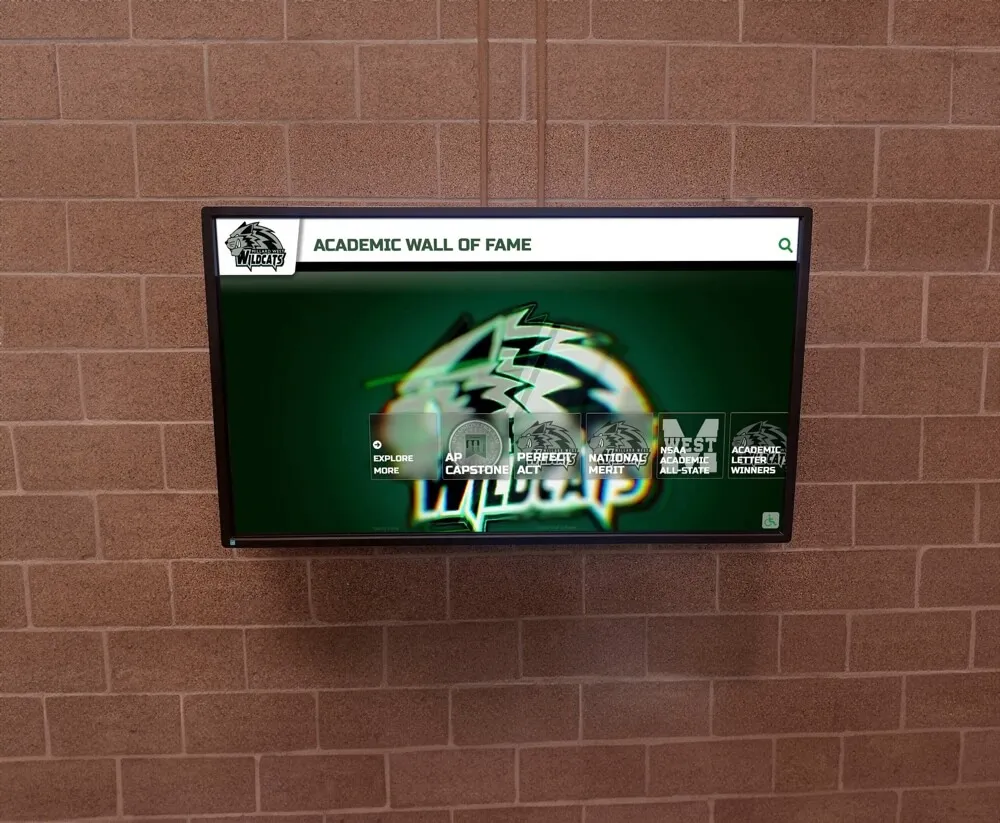
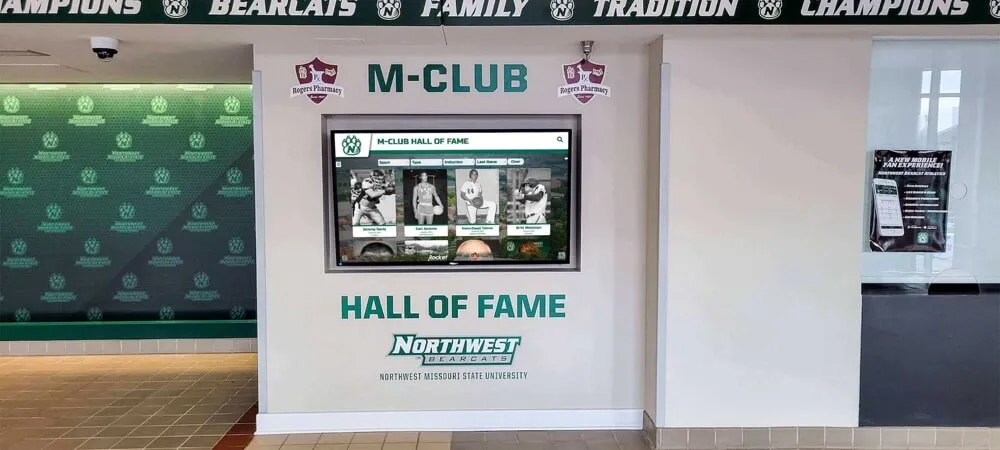
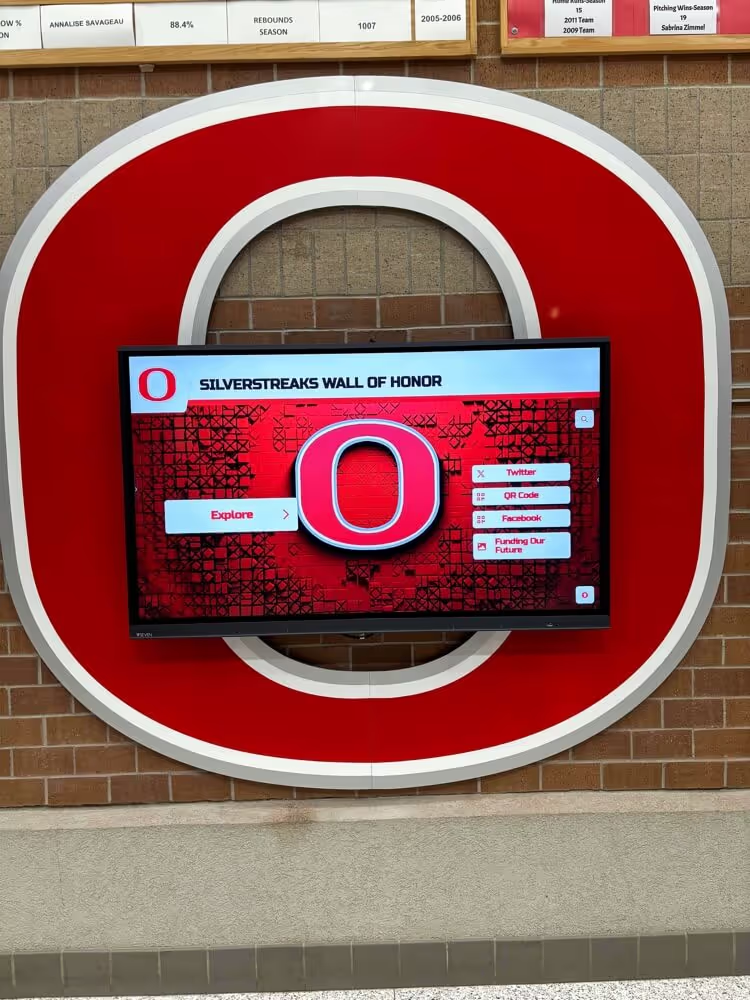
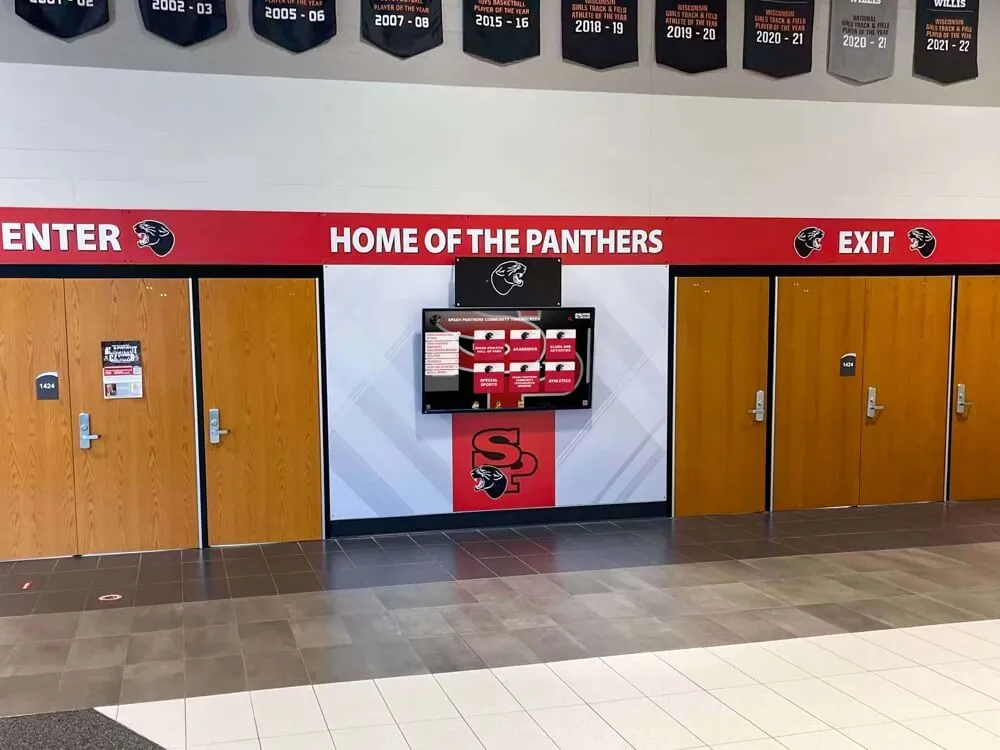
Digital recognition platforms allow preferred name updates to propagate instantly across all on-screen displays—a clear advantage over static physical formats when name corrections are needed
Well-designed recognition walls organize athlete and award records in ways that make individual profile updates fast and reliable. The key is ensuring that display name fields are treated as distinct from internal record identifiers from the moment a record is created. See how award walls organize plaques, photos, and winners in digital systems for a practical overview of how modern platforms structure individual records within larger recognition databases.
Championship Banners and Permanent Signage
Championship banners typically display team names or mascot identifiers rather than individual athlete names, so preferred name governance applies less directly. However, when individual names appear on banners—coach of the year banners, senior recognition panels, or record-board displays—the same preferred name workflow applies.
For banners that include typeset individual names, a name error discovered after fabrication is particularly costly because banner replacement involves both design and physical production. Reviewing final artwork against the central preferred name record before a banner goes to production is a mandatory checkpoint. Banner-specific production checklists that cover typography and layout review—including font embedding for championship banners—can be adapted to include a preferred name field verification step.
Athletic Team Rooms and Hallway Recognition Displays
Athletic team rooms and hallway displays that feature individual athlete recognition—most commonly all-conference panels, record boards, or senior farewell displays—present a display format that falls between physical permanence and digital flexibility. Vinyl-applied name panels can often be replaced at lower cost than engraved plaques, but still require physical production time.
For programs building or updating team room recognition spaces, the preferred name review should happen during the design phase, before any artwork is approved. Athletic team room design for recognition and recruiting spaces describes the design considerations for these spaces; add a preferred name sign-off step before any artwork containing individual names proceeds to vendor production.
Exception Workflow: When the Preferred Name Cannot Be Applied
In a small number of cases, the standard preferred name workflow will produce a result that requires additional review. Common exception scenarios include:
| Exception Scenario | Recommended Resolution |
|---|---|
| Preferred name submitted after physical award has been engraved | Discuss with honoree: accept the material as produced, or arrange replacement at cost (define cost responsibility in policy) |
| Preferred name conflicts with another honoree’s name in the same category | Add a middle initial or graduation year suffix to distinguish records; confirm disambiguation with both honorees |
| Former honoree is deceased and family submits a name correction | Apply to digital records and future reprints; document family member’s authority to act on behalf of the honoree’s record |
| Preferred name submitted after digital profile was published | Update digital record immediately; note in audit log that the initial publication used a prior version |
| No preferred name submitted and honoree cannot be reached | Use legal name on file; flag the record for follow-up; do not delay production beyond the defined window |
Each exception should be documented using the program’s exception review process—capturing what the standard procedure was, why it could not be followed in this case, what decision was made, and who approved it.
FAQ: Athletic Award Preferred Name Policy
What is the difference between a preferred name and a legal name change?
A preferred name is what a person chooses to go by and wishes to appear on recognition materials. It does not require legal documentation—the honoree’s written request is sufficient. A legal name change is a formal process that alters records in government and institutional systems, governed by separate district and state requirements. The preferred name policy covers recognition display formats; it does not alter legal or enrollment records.
Can an honoree request a different preferred name for different formats?
The policy should define whether format-specific preferences are supported. Most programs benefit from a single preferred name applied consistently across all formats to avoid confusion in archives and on displays. If an honoree has a specific reason for different names across formats—for example, using initials on a public display but a full name on a physical certificate—document the preference explicitly and apply it consistently each time those formats are produced.
How long should preferred name documentation be retained?
Retain preferred name documentation for as long as the recognition record itself is retained. For most athletic recognition programs, that means permanent retention for hall of fame and all-time record categories. Documentation for annual awards (certificates, letter awards, seasonal honors) should follow the program’s general award records retention schedule—typically 7–10 years for supporting documents. Do not dispose of preferred name documentation separately from the record it governs.
What if a current student’s preferred name differs from their enrollment name—can we apply it to their athletic awards?
Yes, subject to the same written documentation requirement that applies to all honorees. Many students go by a name that differs from their enrollment name, and recognition programs should accommodate this without requiring legal documentation. The policy should note that the school’s student services office may have a separate preferred name process for the student information system; the athletic department’s preferred name policy governs recognition materials only, and the two records are maintained independently.
How do we handle preferred name corrections discovered during an archive review or data quality audit?
Treat discovered discrepancies as retroactive update requests. If the honoree can be contacted, request written confirmation of the correct preferred name before making any changes. If the honoree cannot be reached, document the discrepancy in the record without making an unconfirmed change, and flag the record for follow-up during the next recognition cycle. Never silently overwrite a display name without documentation of who made the change and on what authority.
Building a Durable Preferred Name Record
The operational challenge in preferred name governance is not the policy—it is the record. A policy that lives in a handbook but is not embedded in nomination forms, vendor workflows, CMS fields, and audit logs will be followed inconsistently.
The programs that manage preferred name recognition most reliably are those that treat the preferred name as a first-class field in their recognition data infrastructure: captured at nomination, validated before production, applied consistently across formats, and retained in the archive with the same care as the selection decision itself.
Digital recognition platforms that maintain structured per-honoree records—with named fields, edit histories, and multi-format display output—provide the most reliable foundation for preferred name governance. When a name needs to be updated, a well-structured platform propagates the correction to every display that references that record, rather than requiring manual updates across disconnected files and formats.
For a full picture of how to build recognition systems where every field—name, sport, year, award category—meets a defined quality standard, athletic award data quality audit practices provide a systematic approach to identifying and correcting field-level discrepancies across an award history.
If your school or district is ready to build a recognition platform where every honoree’s preferred name is captured once, applied consistently, and updatable on demand—across digital displays, published rosters, and archived records—request a custom demo of Rocket Alumni Solutions to see how the platform handles preferred name fields, profile editing, and multi-format publishing for athletic recognition programs of any size.