



Intent: research. An athletic award records retention schedule defines how long each category of award documentation must be kept, who is responsible for maintaining it, and when records can be disposed of or transferred to permanent archives. A well-built schedule answers three questions that arise every time a storage decision must be made: Is this record still operationally useful? Does policy, law, or accreditation require us to retain it? And if we dispose of it, will we regret that decision ten years from now when a student requests a replacement letter or a donor inquires about a named scholarship?
The short answer for most athletic recognition records: keep recipient lists and selection criteria permanently, retain supporting documentation for 7–10 years, and dispose of working files on a structured schedule once decisions are finalized. The sections below build a complete category-by-category retention schedule, a five-step implementation framework, and a FAQ covering the questions school administrators most commonly ask about managing athletic award records.
Note: This article provides general guidance for school recognition program records management. Specific retention obligations vary by state, school district policy, and applicable federal requirements. Consult your district’s records management officer or legal counsel for jurisdiction-specific guidance.
Athletic award records form part of a school’s permanent institutional memory. A varsity letter issued in 2003, an all-conference certificate earned in 2011, a donor-named scholarship awarded in 2018—these documents connect specific individuals to specific achievements at specific moments in the institution’s history. When schools build and follow a formal retention schedule, those connections survive staff transitions, building renovations, system migrations, and the inevitable pressure to clear storage space.

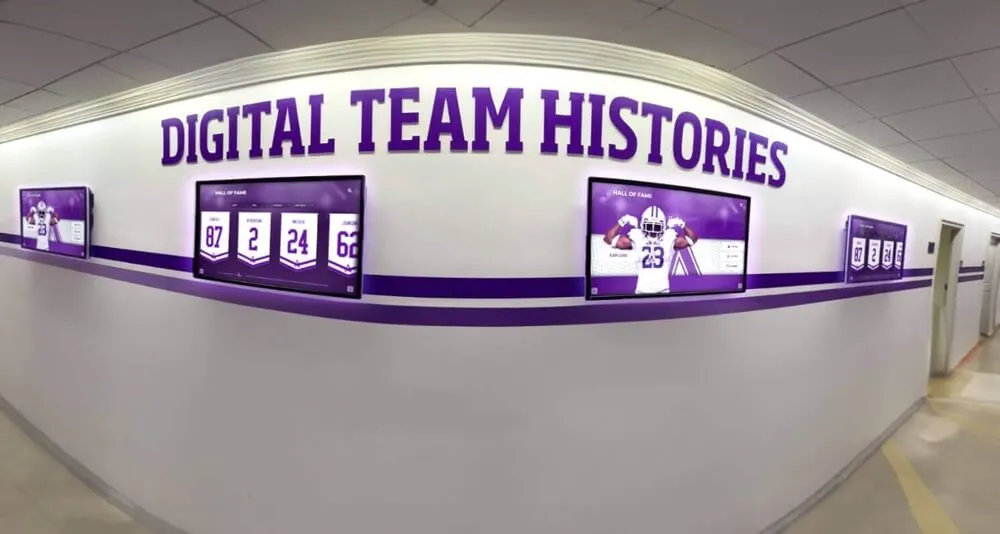
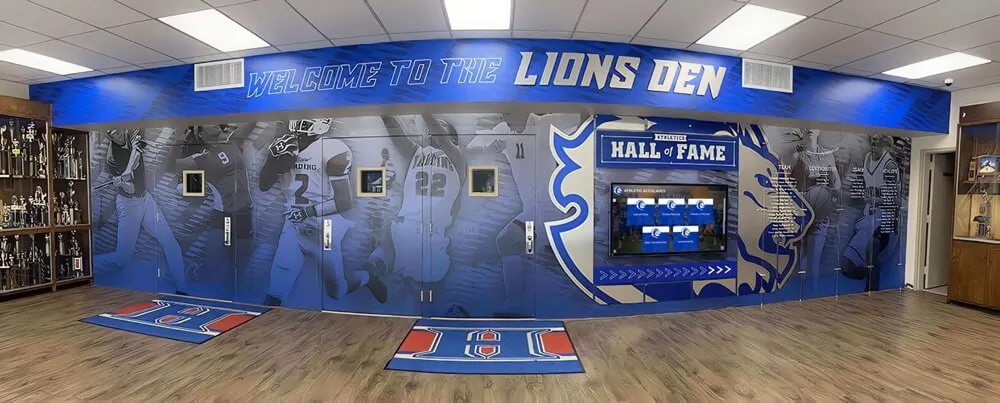
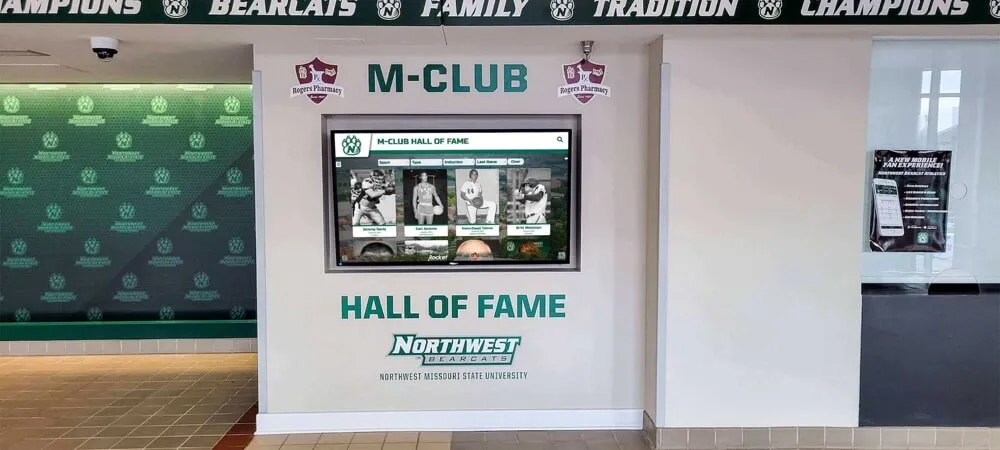
Athletic recognition walls capture institutional history that depends on underlying documentation—recipient lists, selection criteria, and award issuance records—all of which require a formal retention schedule to survive over decades
Why Athletic Programs Need a Formal Retention Schedule
Most athletic departments accumulate records informally. A filing cabinet in the athletic director’s office holds years of banquet programs. A shared drive contains season folders from the past several years. A storage room somewhere holds trophies waiting for display. When a record is needed—for a replacement request, a scholarship verification, a hall of fame nomination review, or a governance inquiry—the question is not “do we have this?” but “where is it, and does it still exist?”
A formal athletic award records retention schedule transforms that uncertainty into a predictable system by addressing three distinct needs:
Operational continuity. Athletic departments experience staff turnover. An athletic director who spent 20 years building institutional knowledge will not transfer that knowledge automatically to a successor. Written retention schedules ensure the next person knows what records exist, where they are stored, what format they are in, and when each category can be disposed of or transferred to archives.
Legal and compliance grounding. State public records laws, FERPA student privacy requirements, and district-level records retention policies all establish minimum retention periods for certain types of student and institutional records. Athletic award records that include student names and eligibility information are subject to these requirements. A retention schedule that aligns athletic program practice with legal minimums protects the school from both premature disposal and unnecessary long-term storage burden.
Recognition program credibility. Programs that can document their selection history—who received what award, in what year, selected by what criteria—build credibility that programs without documentation cannot match. When a scholarship recipient from fifteen years ago contacts the school, when a community member challenges a hall of fame selection, or when an accreditation body reviews recognition governance, documented records are the difference between a confident institutional response and an uncomfortable gap.
Programs that present athletic history publicly through record boards and school athletic displays create a public expectation of accuracy that only systematic records management can reliably support.
The Core Retention Schedule: Athletic Award Records by Category
The table below provides recommended retention periods for common categories of athletic award records. These recommendations reflect common practice in school records management and the informational value of each record type. Review with your district’s records management officer to align with any local minimums that may exceed these recommendations.
| Record Category | Retention Period | Storage Format | Disposal Method |
|---|---|---|---|
| Award recipient lists (annual, by sport and category) | Permanent | Digital archive + backup | Do not dispose |
| Selection criteria and eligibility rubrics | Permanent | Digital archive + backup | Do not dispose |
| Award ceremony programs and banquet documentation | Permanent | Scanned digital + physical backup | Do not dispose |
| Hall of fame nomination and selection files | Permanent | Digital archive | Do not dispose |
| Scholarship award documentation (named or recurring) | Permanent | Digital archive + district records | Do not dispose |
| Athletic letter award issuance register | Permanent | Digital + administrative archive | Do not dispose |
| Display record (trophy case, honor board, digital wall) | Permanent | Digital archive | Do not dispose |
| Selection committee meeting minutes | 10 years minimum | Digital + printed | Secure disposal after period |
| Athlete eligibility verification documentation | 7 years minimum | Digital + printed | Secure disposal after period |
| Appeal records and resolution documentation | 7 years minimum | Digital + printed | Secure disposal after period |
| Score sheets and rubric evaluation forms | 7 years minimum | Digital + printed | Secure disposal after period |
| Supporting evidence submitted by athletes or families | 5 years minimum | Digital | Secure disposal after period |
| Correspondence related to award decisions | 5 years minimum | Digital | Secure disposal after period |
| Vendor orders and production invoices | 5 years minimum | Digital | Secure disposal after period |
| Working drafts and preliminary candidate lists | 1 year after decision finalized | Digital | Routine disposal |
| Internal coordination emails (no decision content) | 1 year after season close | Digital | Routine disposal |
Three distinctions drive the logic of this schedule:
Permanent records document outcomes. The final list of award recipients, the criteria used to select them, and the official recognition program record are permanent because they represent the institution’s authoritative account of what was awarded and why. These records cannot be recreated from memory if lost, and their value increases with time as institutional memory fades.
Long-term records support verification and appeals. Eligibility documentation, rubric scores, and appeal records need to survive long enough to support replacement requests, scholarship verifications, and governance reviews. Seven years covers most realistic lookback windows for current students and recent graduates.
Short-term records document process, not outcome. Working drafts, preliminary candidate lists, and routine coordination emails serve their purpose in the moment. Retaining them past a defined disposal date creates storage burden and potential confusion between draft and final versions without providing proportional long-term value.
Step 1: Audit What Records Currently Exist
Before building a retention schedule you can actually follow, you need an honest inventory of what your athletic program currently holds and where it lives.
A records audit for athletic award documentation should cover:
- Physical records — Filing cabinets, storage rooms, archived boxes. Note the record type, approximate date range, current condition, and responsible custodian.
- Digital records on local drives — Folders on staff computers or department-shared drives. Note the folder structure, file naming conventions, and whether records are backed up regularly.
- Records in institutional systems — Student information systems, district document management platforms, any cloud-based recognition software. Note what record types are stored in which systems and who has administrative access.
- Distributed records — Award-related documentation held by individual coaches rather than the athletic department centrally. Identify which coaches maintain independent files and what those files contain.
The audit does not need to be exhaustive down to individual files. Its purpose is to establish a category-level picture: “We have physical banquet programs from 2001–2018, digital recipient lists from 2012–present, and no documented record of letter award issuances prior to 2015.” That inventory defines both the retention work that needs to be done and the gaps that need to be addressed.
For athletic departments that also maintain scholarship documentation or donor-named recognition programs, the audit should extend to those record categories—scholarship recipient lists and named award criteria have permanent retention value that parallels athletic award records.
Step 2: Classify Records and Assign Retention Periods
With the audit complete, classify each record category against the retention schedule table. Apply the following principles when assigning periods:
When in doubt about the correct category, retain longer. The cost of keeping a record one extra year is low; the cost of disposing of a record that later turns out to be needed is high.
FERPA applies to records that contain identifiable student information. Athletic award recipient lists, eligibility verification documentation, and rubric evaluation forms that identify students by name are subject to FERPA student records protections. This affects both retention period and disposal method. Your district’s FERPA compliance officer can confirm which specific record types in your program fall under these protections.
All-conference, all-state, and external awards have a second documentation source. Records for awards conferred by external bodies—conference offices, state athletic associations, regional recognition programs—exist in two places: the school’s internal records and the external body’s records. Award criteria and recognition context for all-conference designations often need to be preserved alongside recipient lists to document the full selection context.
Presidential and academic fitness awards carry federal documentation expectations. Programs that administer Presidential Academic Fitness Award programs are subject to documentation standards that reflect the federal sponsorship of those programs. These records warrant permanent retention as a default.
Step 3: Standardize Storage and File Naming
A retention schedule is only as useful as the filing system that supports it. Records stored without consistent naming conventions, in ad hoc folder structures, or across multiple systems with no index create effective disposal even when records technically still exist—because no one can find them.

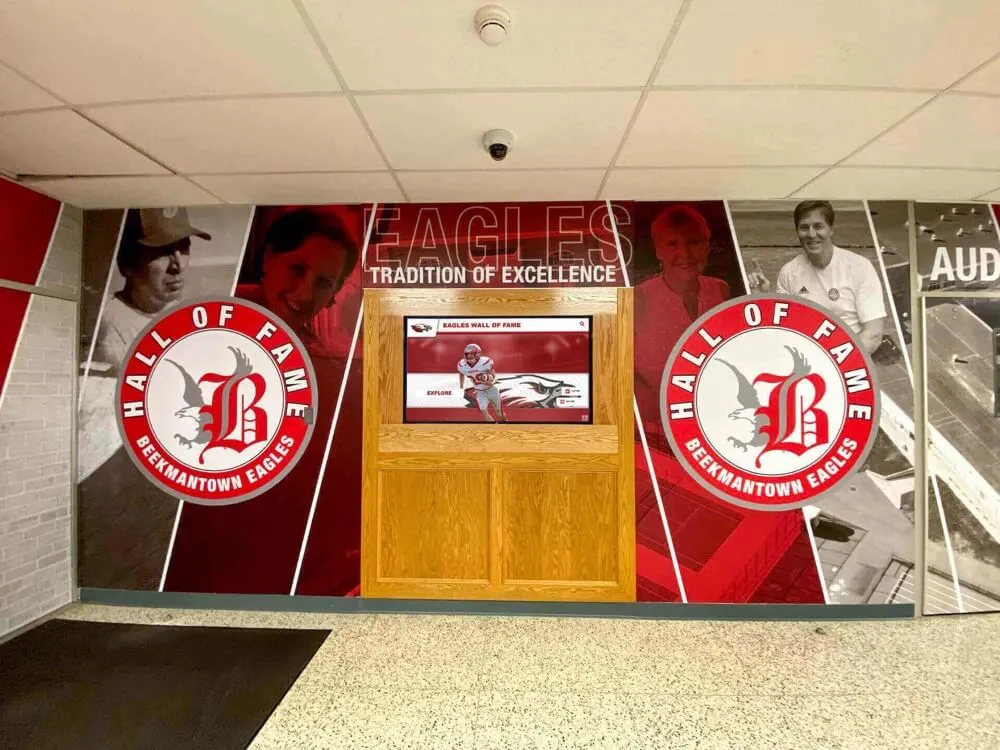
Recognition boards represent the public face of decades of award documentation—permanent display records require an equally permanent and well-organized underlying archive to remain accurate over time
A minimal effective file naming convention for athletic award records uses three elements:
[Year]-[Sport or Program]-[RecordType]
Examples:
2025-Soccer-RecipientList.pdf2025-AllConference-SelectionCriteria.pdf2019-LetterAwards-IssuanceRegister.xlsx2022-HallOfFame-NominationFiles.zip
This convention ensures that records are sortable by year, retrievable by program, and identifiable by type—without requiring anyone to know the institutional history behind the files.
Folder structure should mirror the retention schedule categories:
Athletic Awards Records/
├── Permanent/
│   ├── Recipient Lists/
│   ├── Selection Criteria/
│   ├── Ceremony Programs/
│   ├── Hall of Fame Files/
│   └── Letter Award Register/
├── Long-Term (7-10 years)/
│   ├── Eligibility Documentation/
│   ├── Appeal Records/
│   └── Rubric Score Sheets/
└── Short-Term (1-5 years)/
    ├── Supporting Evidence/
    ├── Correspondence/
    └── Vendor Records/
For digital records, ensure that the Permanent folder is backed up to at least two locations—a local institutional server and a cloud-based backup—with backup integrity verified at least annually. Records with permanent retention value that exist only on a single local drive are one hardware failure away from permanent loss.
Step 4: Build a Disposal Calendar
The disposal calendar is the operational complement to the retention schedule—it converts retention periods into a predictable annual workflow rather than leaving disposal decisions to accumulate indefinitely.
A disposal calendar for athletic award records operates on a rolling annual review cycle:
| Month | Disposal Calendar Action |
|---|---|
| August (before season) | Review Short-Term folder; identify records from 5+ years ago for disposal review |
| October (mid-season) | Pull prior year eligibility documentation for 7-year retention countdown check |
| March (post-season) | Archive finalized recipient lists and selection criteria to Permanent folder |
| May (end of school year) | Dispose of working drafts and internal coordination emails from prior year |
| June | Conduct annual backup integrity check for all Permanent folder contents |
| July | Review Long-Term folder; confirm 7-year retention period is met before any disposal |
Disposal of records containing student information must follow district protocols for secure disposal—shredding for physical records, certified deletion or overwrite for digital records. “Deleting” a digital file to the Recycle Bin does not constitute secure disposal. Your district IT office can confirm the approved secure deletion method for institutional systems.
A disposal action should never occur without a log entry documenting: what was disposed, the date of disposal, who authorized the disposal, the retention period that was met, and the disposal method used. This log becomes part of the program’s governance documentation and should itself be retained permanently.
Step 5: Connect the Retention Schedule to Recognition Displays
Record retention and recognition display management are closely connected. Every trophy case, honor board, digital wall, and record board is a public-facing representation of underlying documentation. When documentation exists, displays can be audited, corrected, and updated with confidence. When documentation is missing, displays become fixed artifacts that cannot be reliably verified.
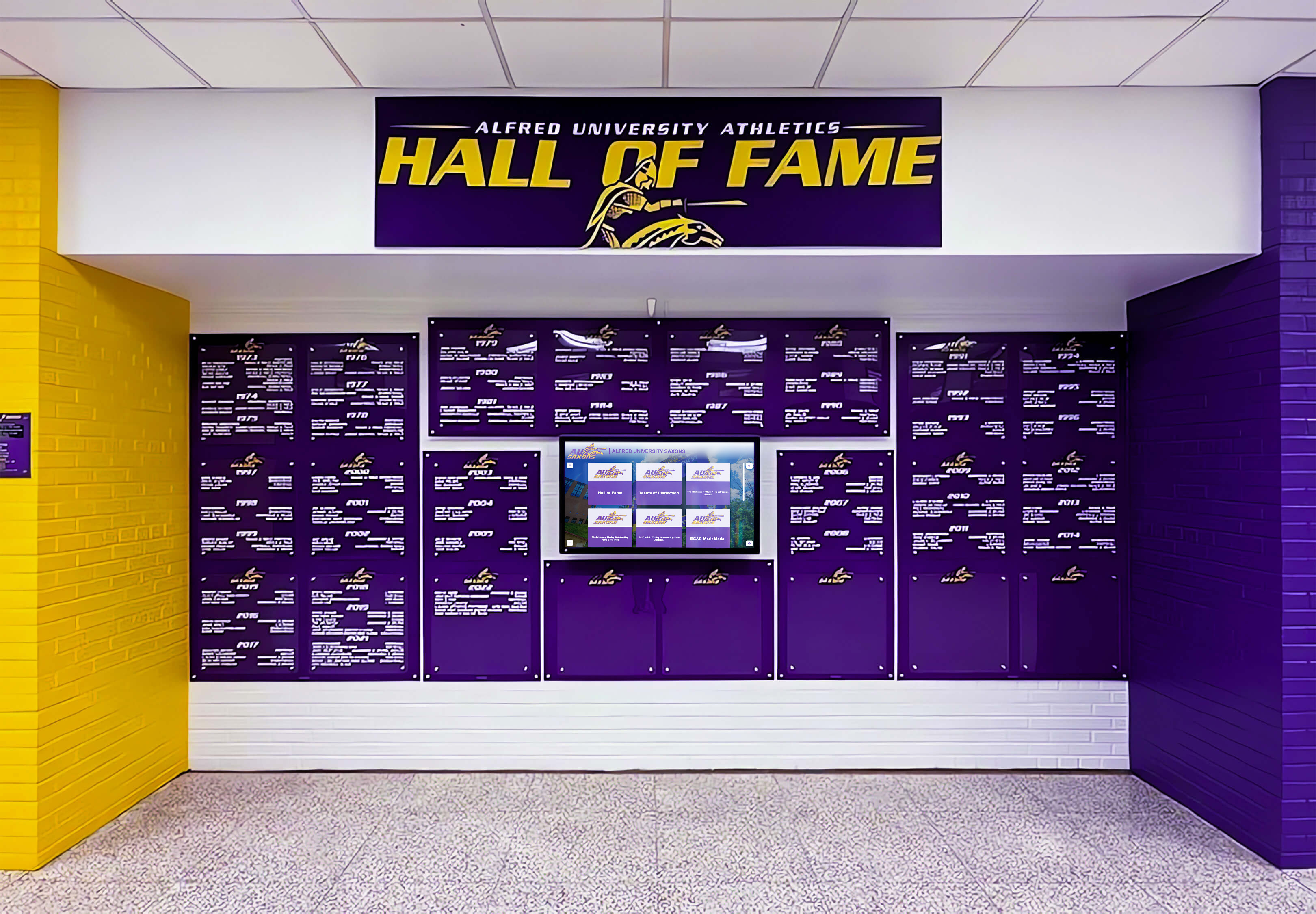
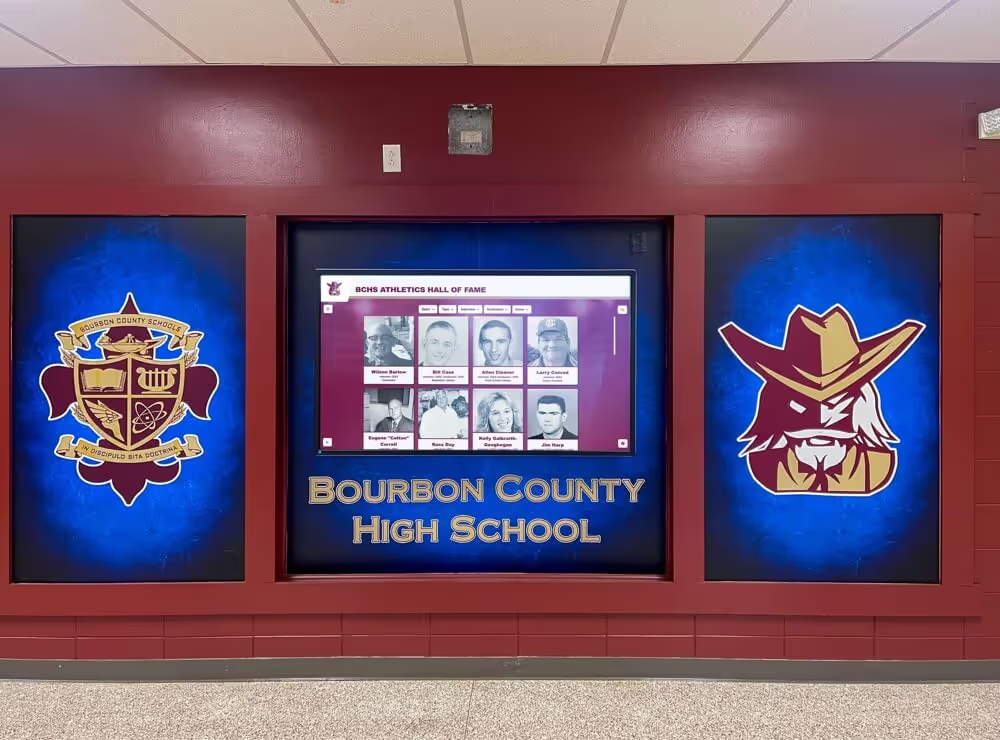
Hall of fame displays represent the most permanent publicly visible form of athletic recognition—nomination and selection files that support each entry belong in the Permanent tier of any retention schedule
Three practical connections between retention and display management:
Display records are permanent records. The current state of a school’s trophy case, honor board, or digital recognition wall—who is listed, in what category, and for what year—is part of the institution’s official recognition record. Schools should maintain a “display record” document (a printable list or database export) that captures the full contents of each display at the end of each academic year. This annual snapshot, retained permanently, creates an auditable history of display changes over time.
Replacement and correction requests depend on retention. When an athlete requests a replacement award or a correction to their display entry, the verification step depends entirely on whether the program’s records support the request. Programs with complete, organized documentation can handle verification in days; programs with no systematic records may face weeks of investigation or an inability to verify a legitimate request at all.
Scholarship documentation supports multi-year eligibility tracking. Scholarship programs—whether internal, donor-funded, or connected to external high school scholarship recognition pathways—require long-term documentation of award criteria, recipient selection, and disbursement history. Retain scholarship documentation for at least seven years after the scholarship’s final payment to an individual recipient, or permanently if the scholarship is part of an ongoing endowment program.
Digital Records Retention: Additional Considerations
Digital records introduce both advantages and risks compared to physical records. The advantages are familiar: no physical storage space, easier duplication and backup, searchable content, and rapid retrieval. The risks are less often planned for: format obsolescence, system migrations that fail to carry over historical records, and the silent corruption or loss of files that no one notices until a record is needed.

Digital recognition systems generate audit trail records—entry timestamps, update histories, user attribution—that traditional physical archives cannot produce, and those records require their own retention and backup policies
For athletic programs using digital recognition platforms, the retention schedule must address three digital-specific record categories:
Platform-generated records. Modern digital recognition systems generate records that physical systems cannot: entry creation timestamps, user attribution for each update, revision histories for athlete entries, and access logs. These audit trail records have significant value for governance and dispute resolution. Retain platform audit logs for a minimum of 7 years, or permanently if your digital platform’s export format makes permanent storage practical.
Digital archive integrity. Physical records decay in predictable, visible ways. Digital records can fail silently—a corrupted file that still carries a timestamp, a backup that restores empty directories, or a database export that omits certain fields without an error message. Athletic departments that maintain digital archives for permanent records should implement annual checksum verification to detect silent corruption. The athletic archive checksum verification guide provides a practical framework for implementing this integrity verification without requiring specialized IT resources.
Format migration planning. A recipient list saved in 2005 as an early spreadsheet format or proprietary database may not be readable on current systems without conversion. Permanent records that will be accessed decades from now need to be stored in formats with long-term viability—PDF/A for documents, CSV or SQLite for structured data, standard image formats (TIFF, PNG) for scanned records. Plan a format review as part of each five-year retention schedule audit to convert records in aging formats before they become inaccessible.
Team and Senior Recognition Records
Athletic award records do not cover only individual achievement. Team-level recognition—team spirit awards, sportsmanship honors, and cooperative achievement designations—generates documentation that belongs in the retention schedule. Apply permanent retention to team recipient lists and the criteria used that year; apply the 7-year minimum to selection scoring documentation and supporting records.
Senior recognition programs generate a distinct retention profile. Senior night programs—which often include individual athlete recognition, photo archives, and public presentations—produce both the official record of who was recognized and the materials created for the ceremony. Apply permanent retention to the senior recognition list (names, sports, season year). Retain ceremony materials—photos, presentation files, programs—permanently as part of the institution’s annual historical record. Working files and draft slideshows can be disposed of after one year.
Rocket Alumni Solutions gives athletic departments a cloud-based recognition platform where permanent records, display records, and audit trails are organized and exportable—protecting the underlying documentation that every public-facing recognition display depends on.
FAQ: Athletic Award Records Retention Schedule
How long should schools keep athletic award recipient lists?
Athletic award recipient lists should be retained permanently. Recipient lists are the institution’s authoritative record of who received each award, in what year, and for what achievement. They cannot be recreated from memory after staff transitions, and their value increases over time. Permanent retention applies across all award categories: individual athletic awards, team recognition, letter awards, all-conference designations, and hall of fame selections.
What athletic award documents fall under FERPA student privacy protections?
Athletic award records that include individually identifiable student information—eligibility verification documents, rubric score sheets, and appeal records—are subject to FERPA protections. These records must meet applicable minimum retention periods and must be disposed of using secure methods. Official recipient lists that form part of public recognition programs typically fall outside FERPA’s privacy protections as public directory information—verify with your district’s FERPA compliance officer for your specific program.
Do digital recognition platform records need to be retained separately from the platform?
Yes. Records stored exclusively within a vendor’s platform are only as permanent as the school’s relationship with that vendor. Export and archive permanent records—recipient lists, selection criteria, and display records—to institution-controlled storage at least annually. This ensures the school retains possession of its permanent records if the vendor relationship ends or the system experiences a failure.
How should schools handle athletic award records from before digital systems?
Pre-digital athletic award records—paper recipient lists, physical banquet programs, handwritten letter award registers—should be scanned and digitized for long-term accessibility. Permanent records from before digital systems are often the hardest to replace. Prioritize scanning records from the oldest years first, and verify digital copies before disposing of physical originals.
Who is responsible for maintaining athletic award records?
Primary responsibility typically rests with the athletic director or athletic administrative coordinator, not with individual coaches. A single designated custodian ensures records are centrally maintained, consistently organized, and accessible to successors after staff transitions. The school’s records management officer may serve as a secondary custodian for permanent records transferred out of active athletic department management.
What is a disposal log and why is it required?
A disposal log is a permanent record of records disposed of under the retention schedule. It documents what was destroyed, when, who authorized the disposal, and what retention period was met. The disposal log itself should be retained permanently. Its purpose is to provide evidence that disposals were authorized and policy-compliant—protecting the institution if a disposed record is later requested.
Building a Retention Schedule That Supports Recognition for Decades
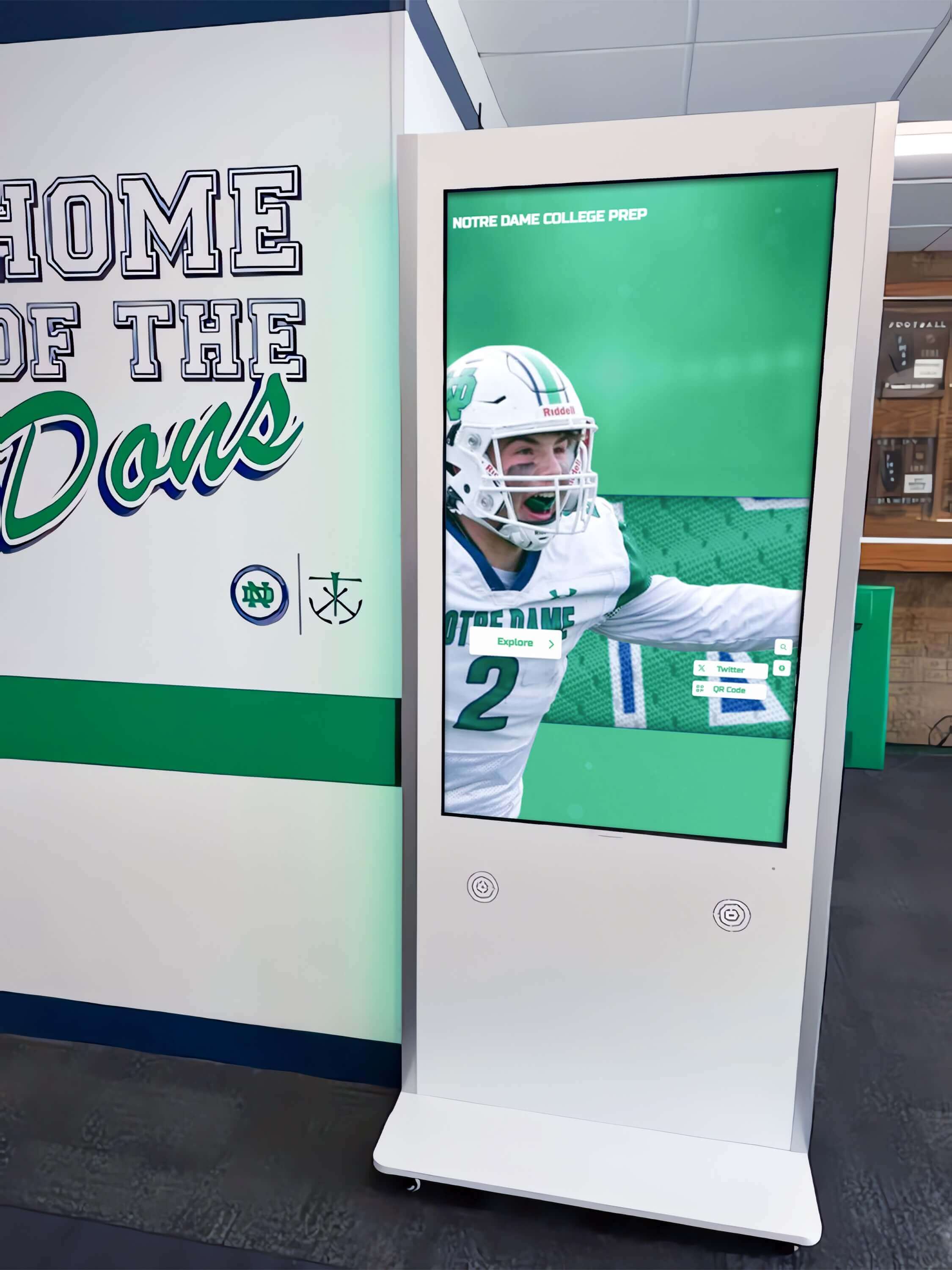
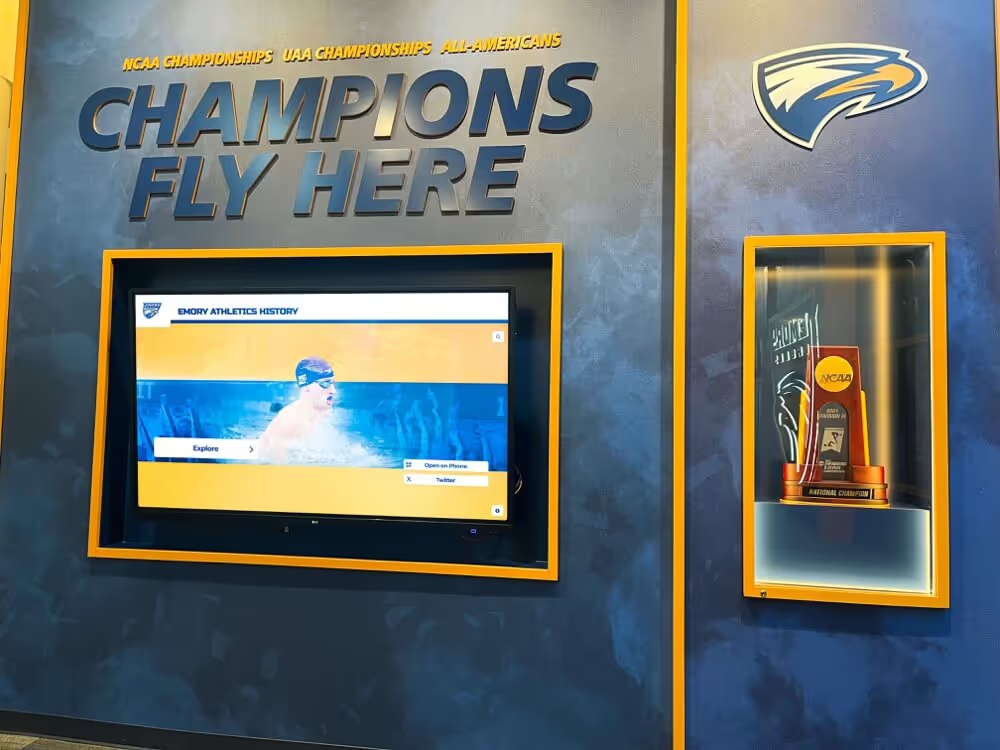
Interactive recognition kiosks represent the public endpoint of an entire record-keeping system—every athlete displayed depends on underlying documentation that a formal retention schedule protects from loss
A well-built athletic award records retention schedule does more than prevent storage rooms from overflowing. It protects the institution’s ability to answer the question that will eventually be asked: “Did this athlete earn this award?” The answer—whether it comes from an athlete requesting a replacement, a scholarship committee verifying a recipient, a community member challenging a hall of fame induction, or an accreditation body reviewing recognition governance—depends entirely on whether the underlying documentation still exists.
Programs that build retention schedules before they need them—before a crisis, a litigation hold, a staff transition that leaves records orphaned, or a system migration that fails to carry over historical data—are the programs that can answer those questions confidently and quickly.
Formal retention infrastructure is also the foundation on which recognition display improvements rest. When a school upgrades from physical trophy cases to digital recognition systems, the quality of the migration depends on the quality of the underlying records. Complete, accurate, well-organized historical documentation produces rich, trustworthy digital displays. Fragmented, inconsistent, partially lost records produce incomplete ones.
Modernize Your Athletic Records With a Digital Recognition Platform
Rocket Alumni Solutions helps schools build recognition archives that are organized, searchable, and display-ready—supporting unlimited award categories with automatic audit trails, remote CMS access, and annual export capabilities that protect your permanent records. Trusted by 600+ institutions. Fully WCAG 2.1 AA compliant. Accessible on any device via QR code.
Request a Custom Demo