



Intent: define. An athletic award retroactive recognition policy is a written framework that gives schools a structured, fair, and documented process for identifying athletes or teams who were omitted from historical award records and adding them—correctly and permanently—to the official recognition record.
The short answer: a sound retroactive recognition policy requires four elements before any individual case is opened—written eligibility criteria defining what constitutes a correctable omission, a documented evidence standard specifying what proof is needed to support retroactive recognition, a defined review authority with no conflicts of interest, and a clear workflow for updating physical and digital displays once a determination is made. Without all four, retroactive claims become judgment calls made under social or administrative pressure rather than decisions traceable to institutional standards. The sections below provide a complete policy framework, a seven-step decision workflow, evidence and evidence-gap tables, and display integration guidance that athletic directors, archivists, booster leaders, and recognition committee chairs can adapt for programs at any level.
Historical omissions in athletic award records happen for many reasons—incomplete documentation from a program’s early years, administrative transitions that left records undigitized, awards presented informally without official entry into the system, or recognition programs that simply did not exist when a now-prominent athlete or team competed. The passage of time creates a gap between what was accomplished and what the institutional record reflects.
An athletic award retroactive recognition policy exists to close that gap responsibly. It does not lower the bar for recognition. It does not open a program to indefinite revision based on community pressure. What it does is give administrators a consistent, defensible framework for the limited and legitimate category of cases where historical record-keeping failures—rather than merit failures—explain the omission.

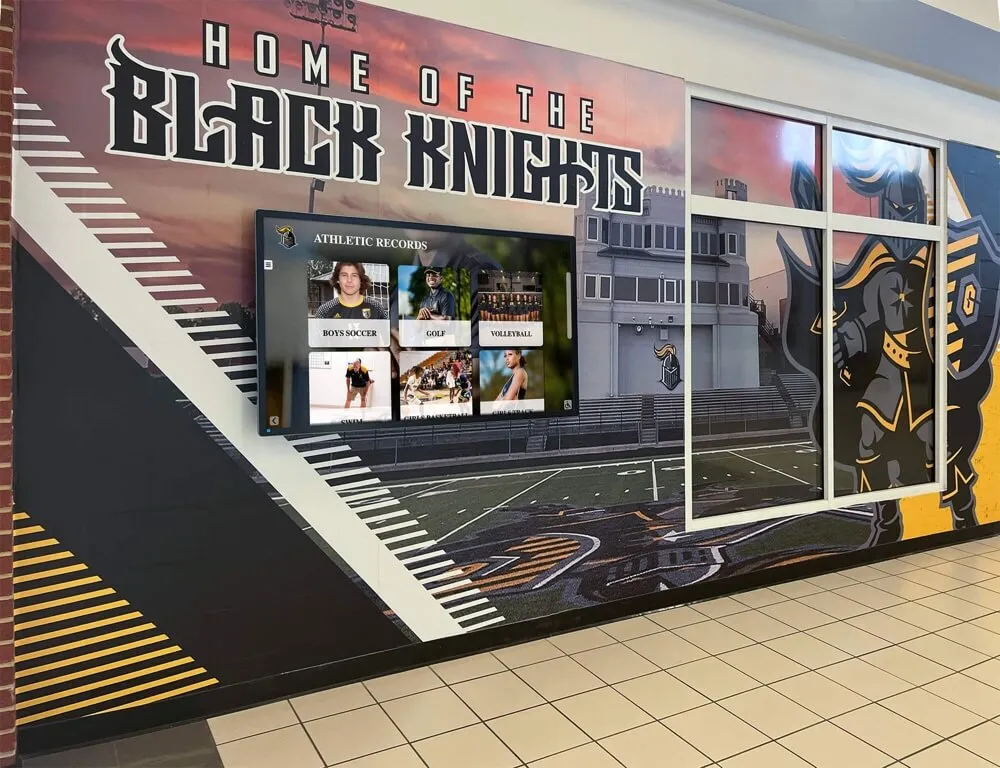
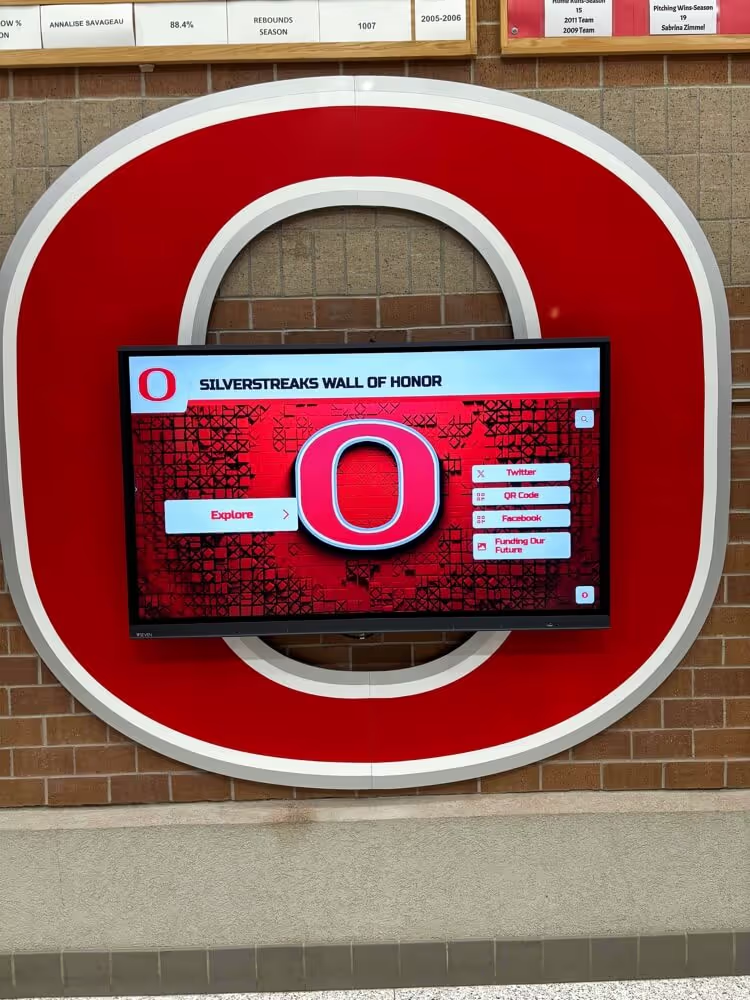
Recognition walls carry institutional authority—every name on that wall reflects a decision that should be traceable to written criteria, whether the award was given in the current year or decades ago
Why Schools Need a Written Retroactive Recognition Policy
Athletic programs without a written retroactive policy do not avoid retroactive recognition requests—they handle them inconsistently. One athletic director approves a claim because a persistent alumni group applied sustained pressure. A successor declines an identical claim because no one advocated loudly enough. Neither decision reflects institutional standards because no institutional standards exist.
A written policy accomplishes three things that ad hoc decisions cannot.
It establishes the standard before the claim arrives. When a policy defines what constitutes a correctable omission, the program already knows how to categorize a new claim before emotion, community pressure, or administrative convenience shapes the answer. The criteria are on paper. The decision-maker applies them.
It protects the program’s credibility. Programs that retroactively add names to recognition displays without documented criteria open themselves to challenges from every direction—from individuals who were also omitted, from honorees who earned recognition through a competitive process, and from community members who believe the institution is simply accommodating whoever complains most effectively. A written policy answers all of those challenges with the same document.
It defines what retroactive recognition is not. A retroactive recognition policy is not a general appeals mechanism, a sympathy channel, or an instrument for correcting merit-based selection decisions that someone now regrets. The policy should state explicitly: retroactive recognition addresses documented record-keeping or administrative failures, not re-evaluation of selection judgments made under the criteria in effect at the time.
Programs managing long-term athletic recognition histories are increasingly aware that data integrity issues in recognition systems have real institutional consequences. Questions about data integrity in digital hall of fame platforms illustrate why schools need a formal governance framework before they migrate historical records into digital systems—a retroactive recognition policy is part of that governance foundation.
Step 1: Define What Counts as a Correctable Omission
The most important element of the entire policy is a precise definition of what the program will and will not consider a correctable historical omission. Broad definitions invite unlimited claims. Narrow definitions may exclude legitimate cases. The goal is a definition specific enough to screen out re-evaluation requests while broad enough to capture genuine record-keeping failures.
Categories of Correctable Omissions
A well-scoped retroactive policy should explicitly identify the categories it covers. Common categories include:
| Omission Category | Description | Example |
|---|---|---|
| Award selected but never entered into official records | Selection occurred under criteria in effect at the time; administrative failure prevented entry | Coach selected MVP; school records show no entry for that year |
| Award presented but not documented | Physical award was given; no written record was created or retained | Plaque presented at 1987 banquet; no corresponding database entry exists |
| Record-keeping system transition loss | Migration from one records system to another resulted in data loss for a specific time period | Transition from paper files to database in 2003 omitted records from 1995–2001 |
| Recognition program established after athletic career | Program did not exist when the athlete competed; no contemporaneous mechanism existed | Hall of fame established in 2010; athletes from the 1980s have no recognition pathway |
| Administrative error in entry | Award was entered under wrong name, wrong year, or wrong sport and the error went uncorrected | Entry reads “Boys Basketball MVP 1998” for an athlete who received the Girls Soccer award |
| Conference or state recognition not recorded locally | External body recognized the athlete; school never transcribed that recognition into internal records | State all-conference selection in 2001; local athletic records show no entry |
Categories Explicitly Outside the Policy
The policy must be equally precise about what it does not cover. Clearly stating these exclusions prevents the policy from being used as an appeals mechanism for merit-based decisions.
| Excluded Category | Why It Is Outside Policy Scope |
|---|---|
| Disagreement with a selection committee’s merit decision | Selection judgments made under criteria in effect at the time are not correctable as “omissions”—the record reflects the decision made |
| Recognition that was considered and declined | If a program reviewed and declined to select an individual, that outcome is a decision, not an omission |
| Awards the individual did not meet the criteria for at the time | Retroactive eligibility does not lower the bar; criteria in effect when the athlete competed govern the determination |
| Community or alumni preference without supporting documentation | Social consensus that someone “deserved” recognition is not an evidentiary basis for retroactive entry |
| Recognition from a category that did not exist when the athlete competed | Programs cannot retroactively create award categories and apply them to past athletes |
Step 2: Establish the Evidence Standard
Every retroactive recognition claim must be evaluated against an evidence standard—a defined threshold of documentation that must be met before the program considers the claim substantive. The evidence standard does two things: it tells claimants what they need to provide, and it gives reviewers a consistent benchmark for evaluating competing claims.
Primary Evidence
Primary evidence directly documents the original recognition decision or the athlete’s eligibility for it.
- Official selection committee minutes or coach nomination records from the award period
- Ceremony programs, banquet invitations, or printed schedules that list the individual as a recipient
- Physical awards (trophies, plaques, certificates) bearing the individual’s name and the award title
- Contemporary newspaper coverage that specifically identifies the individual as a recipient
- State athletic association or conference records confirming external recognition
- School yearbooks from the award period that list the individual as a recipient
Secondary Evidence
When primary evidence is unavailable due to the age of the record or the nature of the administrative failure, secondary evidence may support the claim in combination with other sources.
- Sworn statements from contemporaneous witnesses (coaches, teammates, administrators) who have personal knowledge of the recognition decision
- Correspondence from the period referencing the recognition
- Academic records that confirm the individual’s athletic eligibility for the relevant sport and year
- Other awards or recognition from the same period that establish the individual’s competitive participation record
Evidence Gaps
The policy should address the scenario where records were lost through circumstances outside the claimant’s control—fire, flood, system failures, or a transition between administrative systems. In evidence-gap situations, the program may permit a lower evidence threshold while still requiring some primary documentation or multiple secondary sources that corroborate the same conclusion. The evidence-gap threshold should be explicitly written into the policy—not left to reviewer discretion—so the same standard applies across all claims that cite evidence loss.

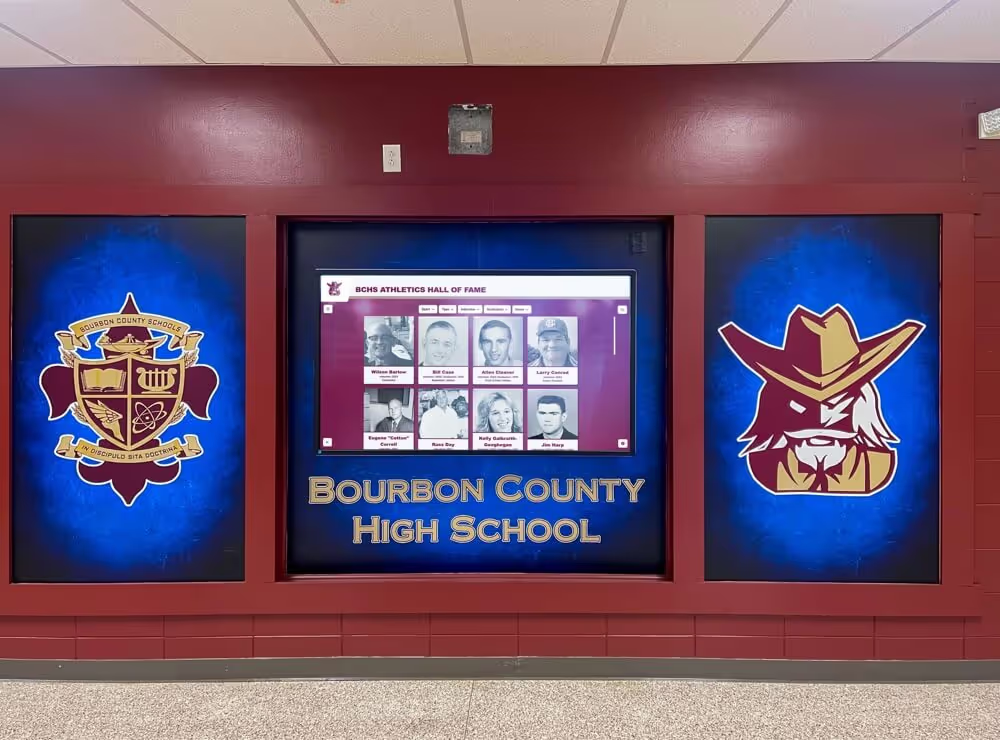
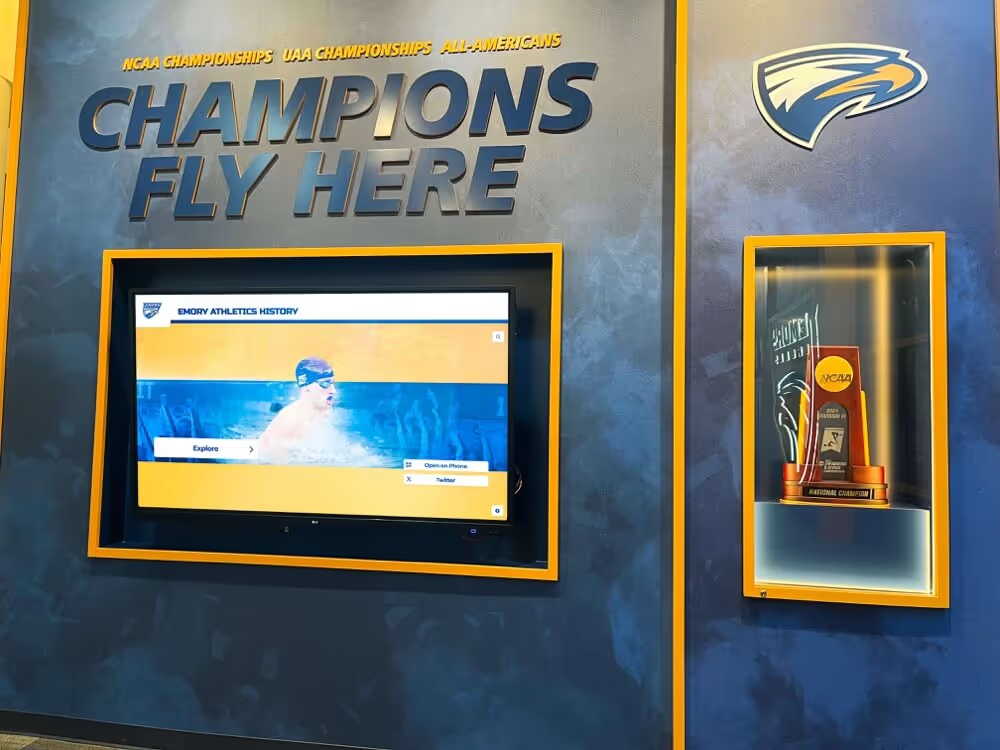
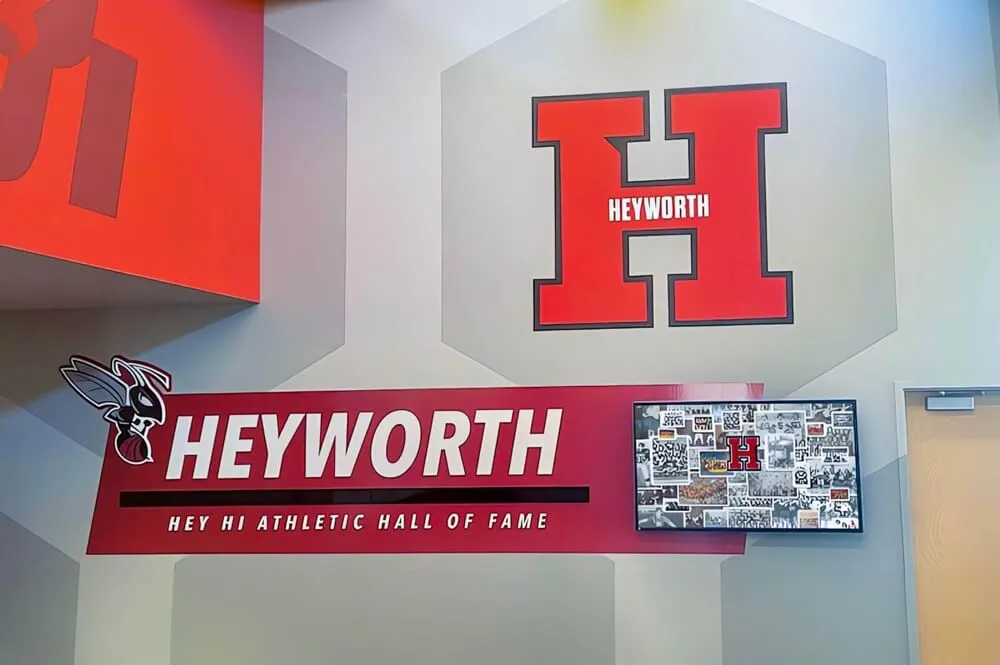
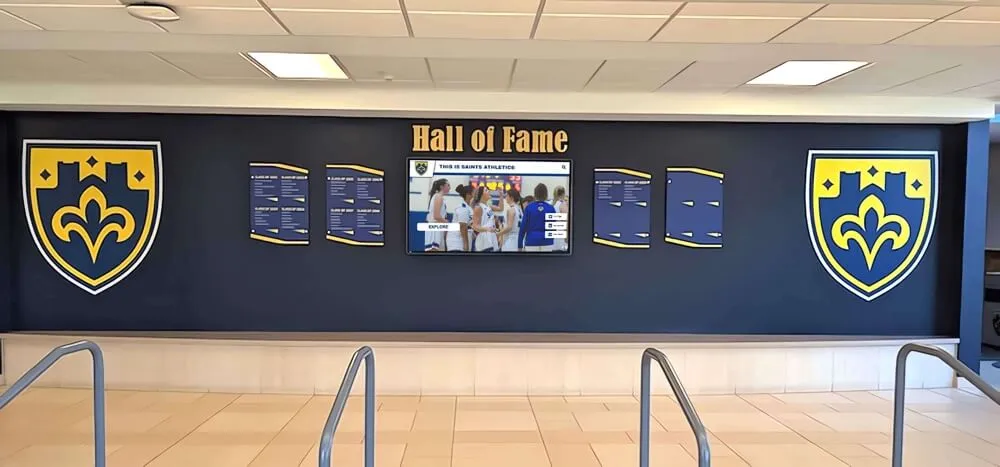
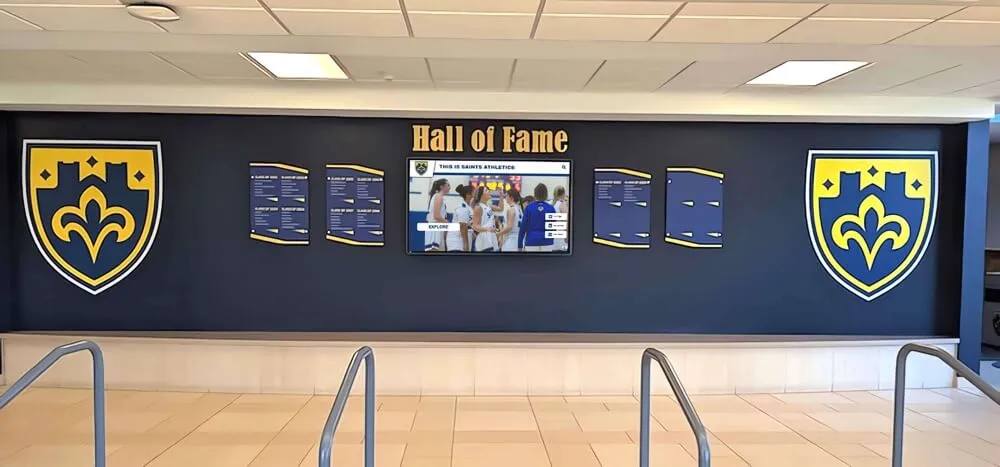
Hall of fame displays reflect decades of selection decisions—a retroactive recognition policy determines how the program handles cases where the underlying documentation does not match the record on the wall
Step 3: Establish the Review Authority and Conflict-of-Interest Standards
Retroactive recognition claims are more susceptible to conflicts of interest than standard award cycles, because they often arise from advocacy by alumni, booster groups, or community members who have personal connections to the claimant. The policy must define a review authority that is insulated from those relationships.
Recommended Review Committee Composition
| Role | Function | Conflict-of-Interest Standard |
|---|---|---|
| Athletic Director (or designee) | Chairs the committee; manages the process; makes final determination | Must recuse if personally acquainted with claimant or claimant’s family |
| School Archivist or Records Officer | Evaluates evidence quality and authenticity | No conflict standard beyond standard professional objectivity |
| Former Recognition Committee Chair (non-current) | Provides institutional memory of historical selection practices | Must recuse if involved in any prior decision related to the specific claim |
| Principal or Academic Dean | Confirms institutional authority for any display updates | Standard conflict-of-interest disclosure |
| Independent Community Representative (optional) | Provides outside perspective for high-visibility or contested claims | Must have no prior personal or professional relationship with the claimant |
Any committee member who has a direct relationship with the claimant—personal friendship, family connection, prior coaching relationship, or participation in any recognition decision involving the claimant—must recuse themselves before review begins. The policy should require written disclosure of potential conflicts before any case is assigned to a reviewer.
What the Review Authority Does Not Do
The review authority evaluates whether a correctable administrative omission occurred. It does not re-evaluate the original selection decision on the merits. If evidence shows that an athlete was selected under the criteria in effect at the time but the record was never created, the committee addresses the record-keeping failure. If the evidence shows that selection was never made, the committee declines the claim—regardless of the athlete’s career accomplishments.
Step 4: The Seven-Step Retroactive Recognition Workflow
Once the policy defines what qualifies, what evidence is required, and who reviews claims, the workflow operationalizes those decisions into a repeatable process.
Step 1 — Receive the Claim in Writing
All retroactive recognition claims must be submitted in writing to the athletic director using a standard claim form. Verbal claims, social media posts, and informal requests do not initiate the formal process. The claim form should require: claimant name and contact information, the award category and approximate year in question, the basis for the claim (which omission category applies), and a list of evidence the claimant is submitting or can make available.
A written submission requirement does several things simultaneously: it screens out low-commitment requests, creates a paper record of how the claim was received, and establishes the starting date for any response timeline the policy sets.
Step 2 — Conduct an Initial Intake Review
Within 10 business days of receiving a claim, the athletic director or designee completes an initial intake review. This review answers two questions only: Does the claim fall within a defined omission category? Is the claimant providing or referencing at least some evidence?
If the claim fails at intake—it falls into an excluded category, or it presents no evidence and references no available sources—the athletic director notifies the claimant in writing, explaining which policy provision the claim does not meet. This response closes the claim without convening the full committee.
If the claim passes intake, it proceeds to the evidence review stage.
Step 3 — Compile and Authenticate Evidence
The committee’s records officer, in coordination with the claimant, compiles all submitted evidence and any institutional records that can be located independently. For claims involving older athletic records, this step may require outreach to:
- District records storage for archived paper files
- State athletic association archives for conference and state recognition records
- School yearbook archives (physical or digitized)
- Local newspaper archives for contemporary coverage
- Former coaches or administrators who may have personal records from the period
The evidence compilation phase has a defined duration—typically 30–45 days—after which the committee proceeds with whatever evidence has been assembled. Open-ended evidence gathering creates indefinite delays; a fixed window respects both the claimant’s interest in timely resolution and the committee’s administrative capacity.
Step 4 — Convene the Review Committee
With evidence in hand, the full review committee meets to evaluate the claim. The evaluation addresses one question: Does the evidence demonstrate that an administrative omission—rather than a merit-based non-selection—explains the gap in the record?
The committee should document its findings in writing, with specific reference to each piece of evidence submitted and the committee’s assessment of its authenticity and relevance. The documentation should state clearly which omission category applies (or why none applies) and whether the evidence meets the standard defined in the policy.
Step 5 — Make and Document the Determination
The committee produces a written determination: approve, defer, or decline. Each determination is documented with the specific evidence findings that support it.
Approve — the evidence demonstrates an administrative omission, the individual met the relevant criteria at the time, and retroactive entry into official records is warranted.
Defer — the claim may be meritorious but additional evidence is needed from a specific source that has not yet been contacted. Deferred claims have a defined follow-up date; they do not remain open indefinitely.
Decline — the evidence does not demonstrate an administrative omission, the claim falls into an excluded category, or the individual did not meet the criteria in effect at the time.
All three outcomes are documented with equal rigor. A declined claim that is documented clearly is as defensible as an approved one.
Step 6 — Notify the Claimant and, Where Applicable, the Individual
The athletic director notifies the claimant in writing within five business days of the committee’s determination. The notification explains the outcome and the specific policy basis for it.
If the retroactive recognition is approved and the individual being recognized is living, the notification and any ceremony or presentation planning should involve that individual directly—not only the original claimant. If the individual is deceased, family members identified in the claim process should be the primary point of contact for any ceremony coordination and display consent.
Step 7 — Update Official Records and Recognition Displays
Approved retroactive recognition entries must be added to every system that currently shows the omission: the athletic records database, physical recognition displays, digital recognition walls, and any published program histories or honor rolls. Updates should be consistent across all platforms—a retroactive entry that appears on a digital display but not in the underlying records database creates a new inconsistency rather than resolving an old one.
Update Recognition Displays the Moment a Retroactive Entry Is Approved
Rocket Alumni Solutions gives athletic programs a cloud-based platform that lets administrators add retroactive entries, correct historical records, and publish updates to digital recognition walls from anywhere—without waiting for a vendor, a technician, or a scheduled maintenance window. Trusted by 600+ institutions.
See Your Awards Display Demo
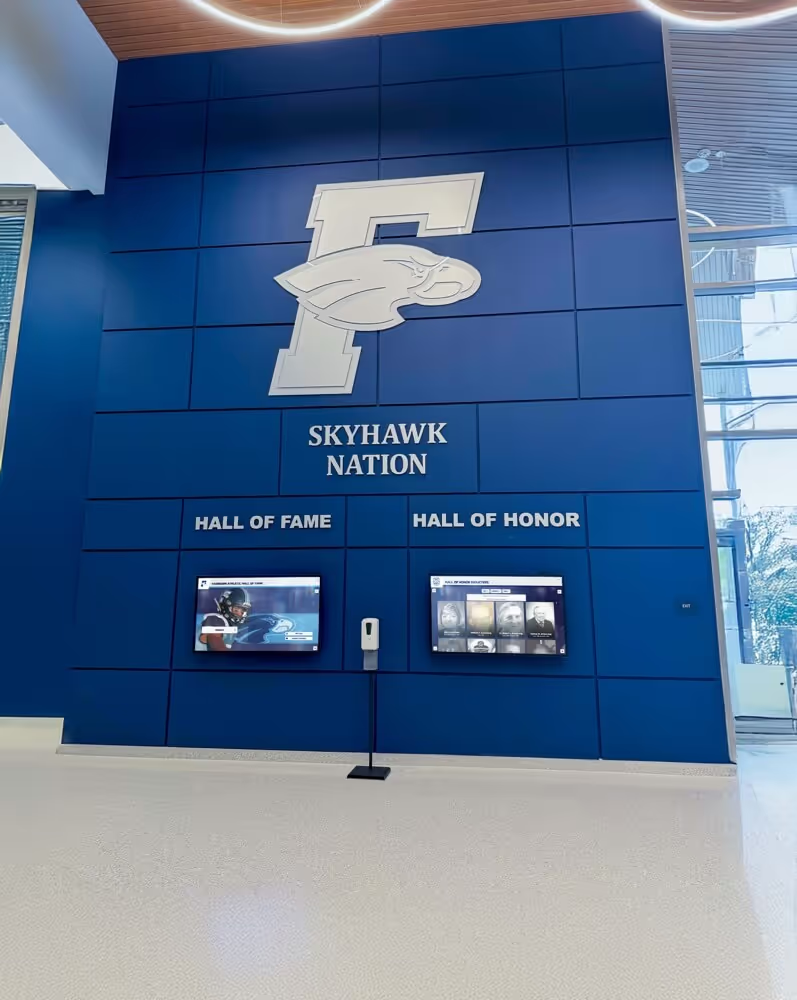
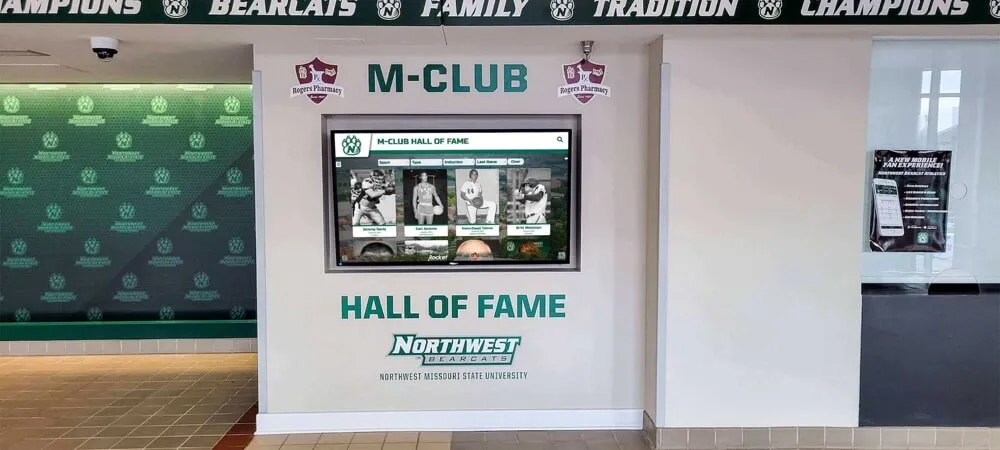
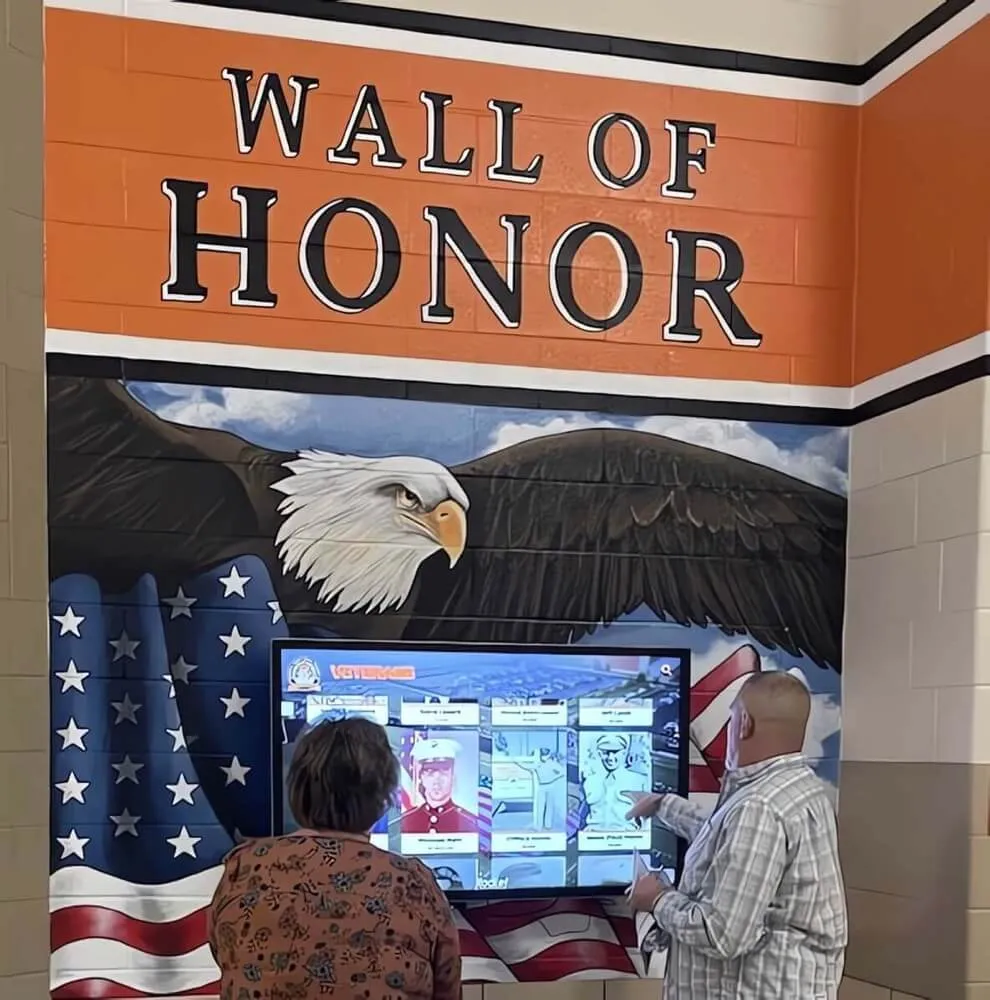
Athletic honor walls that span decades of program history carry the implicit promise that the record is complete—a retroactive recognition policy ensures that promise is kept through a documented, consistent process
Connecting Retroactive Recognition to Archives and Institutional Records
Retroactive recognition is not only a display update—it is a records correction that must propagate through every system that reflects the program’s historical record.
The Records Update Checklist
When a retroactive recognition is approved, the following records should be updated or annotated before the case is closed:
| System | Update Action | Responsible Party |
|---|---|---|
| Athletic records database | Add entry with retroactive year, award category, and notation of retroactive status | Athletic Director or Records Officer |
| Physical recognition display | Add plaque, nameplate, or display panel consistent with original award era format | Facilities or Athletic Department |
| Digital recognition platform | Add inductee entry with award year, category, and any approved supplemental content | Platform Administrator |
| School yearbook archives | Annotate relevant year’s archived copy with reference to retroactive entry | School Archivist |
| Award recipient index (public or internal) | Add entry to any published or posted recipient lists | Athletic Director |
| Governance file | File complete claim record, evidence inventory, committee minutes, and determination letter | Athletic Director |
Annotating Retroactive Entries
Programs differ on whether retroactive entries should be labeled as such in public-facing displays. There is no universal standard—some programs annotate entries with a notation such as “Recognition added [year]” to preserve transparency about the institutional process; others add retroactive entries without annotation, treating the correction as simply making the record accurate. The policy should specify the program’s approach and apply it consistently. Whatever convention is chosen, the underlying governance file should always include complete documentation regardless of what appears on the public-facing record.
Handling Retroactive Recognition in Hall of Fame Programs
Hall of fame programs present a specific version of the retroactive recognition challenge, because the hall of fame format creates a clear, public record of who has and has not been recognized. When an athlete or coach who competed before the hall was established seeks retroactive induction, the program must decide whether the hall of fame’s founding criteria apply retroactively, whether a legacy pathway is available, and how to document and present any historical inductees alongside those selected through the standard contemporary process.
Programs that recognize long-term athletic achievement through hall of fame structures often maintain comprehensive records of youth sports awards and recognition categories that can inform what historical evidence for retroactive claims should look like—what records typically existed for a given era and what evidence absence means for a claim’s credibility.
For programs transitioning historical records to digital platforms, the integrity of the underlying data matters significantly. Algorithmic representation and data integrity concerns in digital hall of fame platforms are increasingly important as schools move archival recognition records into cloud-based systems—a retroactive recognition policy defines which historical entries belong in the system before those entries are loaded.
Academic hall of fame programs face analogous questions about historical completeness. The governance approach to Academic All-American awards in digital displays illustrates how external recognition records can be used as a secondary evidence source when internal records are incomplete—a model athletic programs can apply to cases where conference or state association records survive even when local documentation does not.
Retroactive Recognition and Digital Display Integration
The operational case for digital recognition platforms becomes particularly clear in the context of retroactive recognition. A physical display—a wall of plaques, an engraved trophy case, an honor board with name plates—requires physical modification to add a retroactive entry. That modification may involve fabrication lead times, contractor scheduling, and permanent alteration of a physical surface. It is a logistics problem as well as a records problem.
Digital recognition platforms eliminate the logistics problem entirely. Once a retroactive determination is documented and approved, the entry can be added to the display immediately—the same day the decision is made—without any physical intervention. The entry appears with the same visual treatment as all other entries. If the program chooses to include supplemental content—a historical photograph, a biographical note, or a family-contributed tribute—that content can be added to the digital profile in the same update workflow.
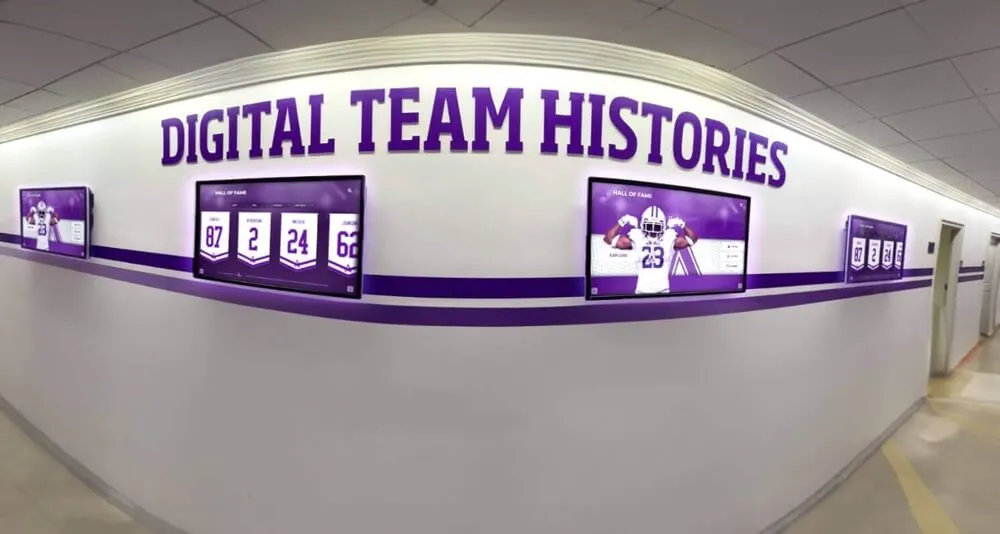
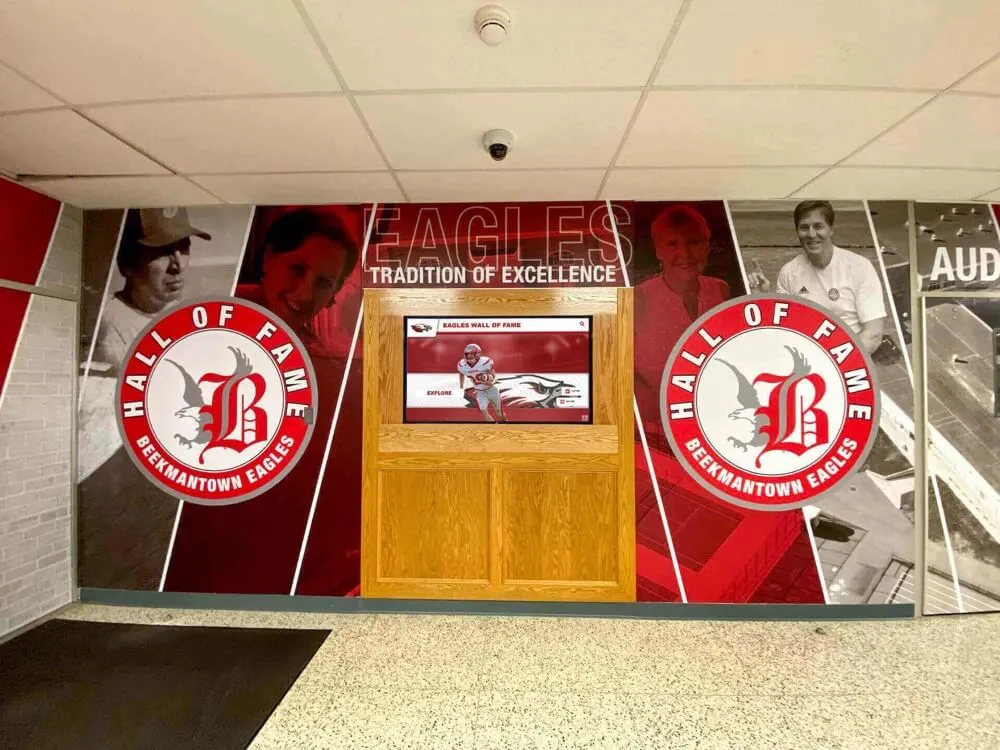
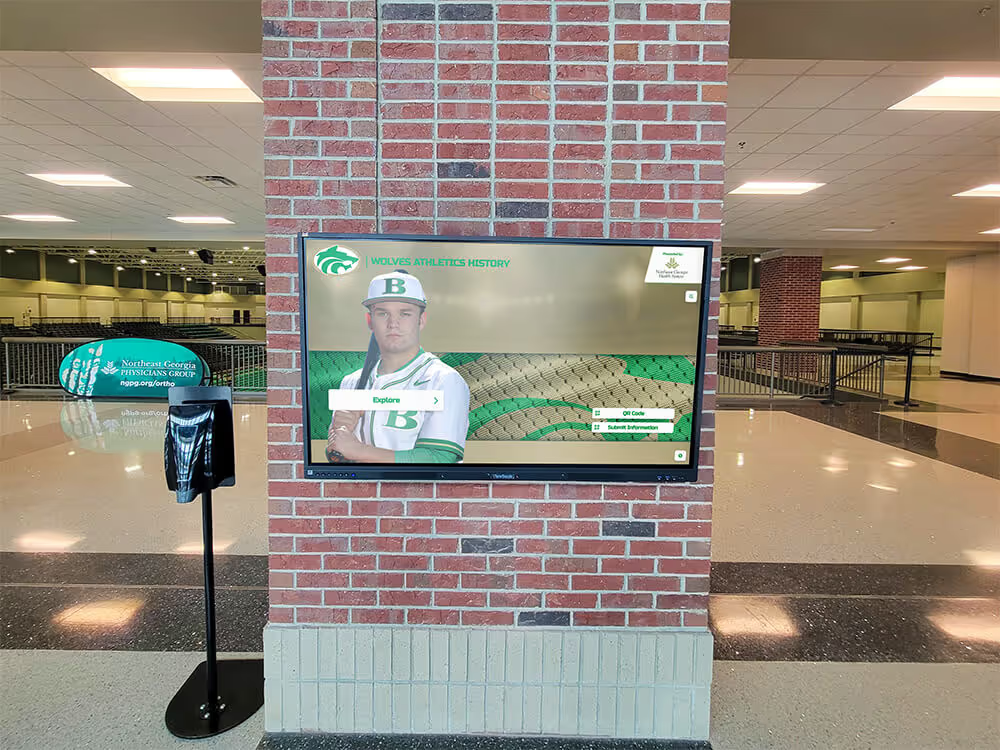
Digital signage and display systems for schools and institutions increasingly serve as the primary public-facing recognition interface for athletic programs, which means that the gap between a retroactive decision and its public visibility is as short as the time it takes an administrator to log into a CMS.
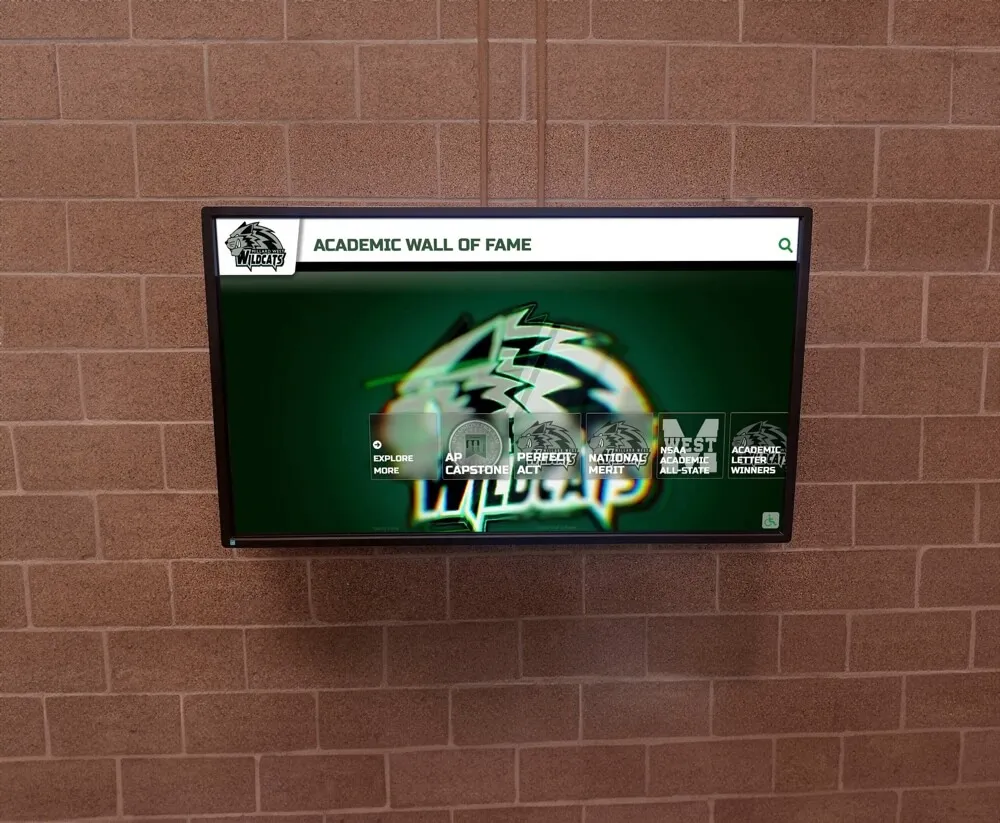
For programs that recognize academic achievement alongside athletic accomplishment, honor roll and academic recognition display strategies demonstrate how consistent entry workflows—the same process applied to current entries and historical corrections—keep combined recognition displays coherent across all recognition categories.
The practical question for programs evaluating their display infrastructure is whether their current system supports retroactive entries with the same ease and consistency as current-year entries. If correcting a historical omission requires a different workflow, different approval chain, or different display treatment than a current-year entry, the display system is adding friction to a process that the retroactive recognition policy should already make straightforward.

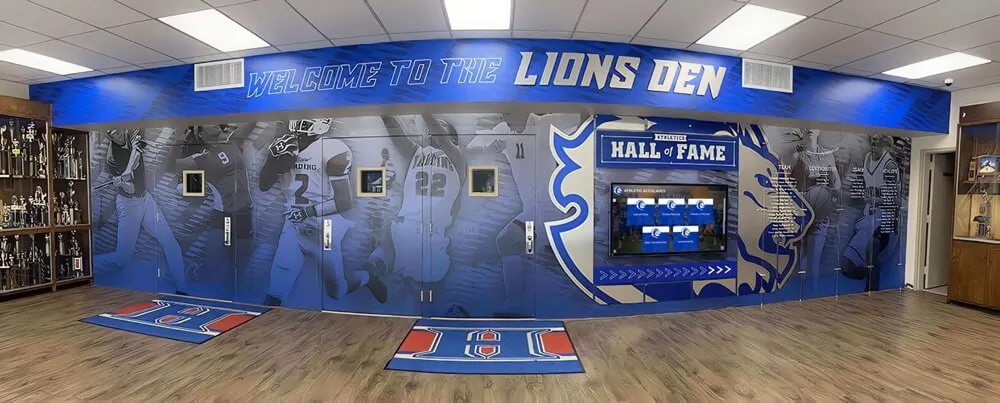
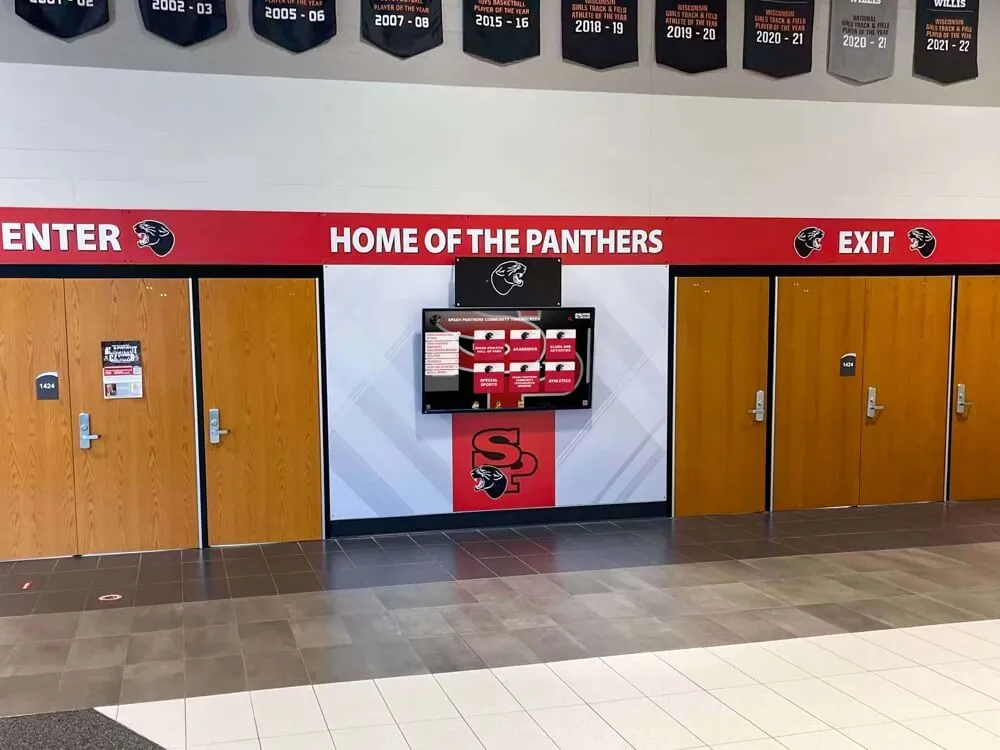
Athletic hallways that display decades of recognition history depend on governance documentation that can justify every entry—retroactive or otherwise—to anyone who asks
Managing the Annual Retroactive Review Cycle
For most programs, retroactive recognition claims are infrequent enough that a standing committee is not necessary—claims can be handled as they arise using the seven-step workflow. For programs with significant historical depth, a known documentation gap from a specific period, or a new hall of fame program being established after many years of informal recognition, a structured annual legacy review cycle may be more appropriate.
An annual retroactive review cycle works as follows:
- Each spring, the athletic director or archivist reviews the program’s recognition history for a defined lookback period—typically five-year blocks, reviewed on a rolling basis.
- Any apparent gaps—sports with no award entries for a specific year, years with incomplete documentation, or recognition categories that don’t appear in the records for a period when they should—are flagged for investigation.
- Flagged gaps are researched using the evidence standards in the policy before any claim is solicited. If internal evidence resolves the gap, the entry is corrected through the normal records update process. If the gap cannot be resolved internally, outreach to former coaches, state association archives, or other sources may be warranted.
- Gaps that cannot be resolved through internal research are documented as unresolved—noted in the records as a known documentation gap rather than left as an apparent omission.
The annual review cycle distinguishes programs that proactively manage their recognition history from those that only respond to external pressure. Digital platforms that support academic recognition displays with comprehensive archival depth illustrate what an accurate, continuously maintained institutional record looks like when proactive record-keeping is the standard rather than the exception.

A wall of honor communicates institutional memory—when that memory has known gaps, a proactive retroactive review cycle fills them before external claims force the issue
Retroactive Recognition Policy Reference Table
| Policy Component | What It Must Cover |
|---|---|
| Omission definition | Explicit categories of correctable omissions; explicit list of excluded categories |
| Evidence standard | Primary and secondary evidence types; evidence-gap threshold for records lost through circumstances outside claimant control |
| Review authority | Committee composition; conflict-of-interest standards; recusal procedures |
| Claim intake | Written submission requirement; intake review criteria; timelines |
| Evidence compilation | Sources to contact; maximum duration before committee convenes |
| Determination types | Approve / defer / decline with written documentation requirement for each |
| Notification | Claimant notification timeline; individual or family notification procedures |
| Record update | All systems to be updated; retroactive annotation convention; governance file retention |
| Annual review cycle | Lookback period; gap-flagging process; internal research procedure |
| Appeals | Whether declined claims may be resubmitted and under what conditions |
FAQ: Athletic Award Retroactive Recognition Policy
What is an athletic award retroactive recognition policy?
An athletic award retroactive recognition policy is a written framework that defines when and how a school or athletic program can add recognition to its official records for athletes or teams who were omitted due to administrative errors, record-keeping failures, or the absence of a recognition program during their competitive years. It establishes eligibility criteria for correctable omissions, evidence standards for evaluating claims, a review committee structure, and a workflow for updating records and displays when retroactive recognition is approved.
What counts as a correctable historical omission for retroactive athletic recognition?
A correctable historical omission is one caused by an administrative or record-keeping failure rather than a merit-based selection decision. Common examples include awards that were selected and presented but never entered into official records, entries lost during a records system migration, recognition from external bodies that was never transcribed locally, and athletes who competed before a recognition program existed. Retroactive policies explicitly exclude disagreements with past selection decisions, recognition that was considered and declined, and cases where the individual did not meet the criteria in effect at the time.
What evidence is needed to support a retroactive athletic recognition claim?
Primary evidence directly documents the original recognition decision or eligibility: committee minutes, ceremony programs, physical awards, contemporary newspaper coverage, state association records, or yearbook listings. When primary evidence is unavailable due to record age or administrative failure, secondary evidence—sworn statements from contemporaneous coaches or administrators, period correspondence, or academic eligibility records—may support the claim in combination with other sources. The policy should define a minimum evidence threshold and a specific standard for cases where records were lost through circumstances outside the claimant’s control.
How long should a school retain governance documentation for retroactive recognition decisions?
Governance files for retroactive recognition decisions—including the original claim, all submitted evidence, committee meeting minutes, and the written determination—should be retained for a minimum of seven years following the decision, consistent with standard school records policy. If the retroactive recognition involves a named scholarship, endowed award, or permanent display entry, the governance file should be retained permanently alongside the recognition record it supports. Both approved and declined claims require the same documentation and retention standards.
Should retroactive entries on recognition displays be labeled as retroactive?
Programs differ on this question, and the policy should specify one approach and apply it consistently. Some programs annotate retroactive entries with a notation such as “Recognition added [year]” to preserve transparency about the institutional process. Others add retroactive entries without annotation, treating the correction as simply making the record accurate. Either convention is defensible if applied uniformly. Whatever appears on the public-facing display, the underlying governance file must always include complete documentation of the retroactive determination.
Can a declined retroactive recognition claim be resubmitted?
A declined claim may be resubmitted only if the claimant presents new evidence that was not available and could not reasonably have been obtained during the original review. A resubmission based solely on disagreement with the committee’s interpretation of previously reviewed evidence should not be accepted—otherwise the process has no finality and becomes a persistence contest rather than an evidence-based determination.
A Record Worth Getting Right
Every name on a recognition wall carries institutional weight. When a name that belongs there is missing—not because the athlete failed to earn it, but because an administrative process failed to record it—that gap is a governance problem with a governance solution. An athletic award retroactive recognition policy is that solution: a fair, documented, consistent framework that corrects the record without opening the program to indefinite revision.
Programs that invest in the policy infrastructure to handle retroactive claims correctly are the same programs that approach recognition broadly—honoring athletic achievement, academic excellence, and every category of student contribution through systems designed to last. Getting the historical record right is part of building a recognition environment that current athletes, alumni, and community members can trust.
Build a Recognition Display That Can Grow Backward as Well as Forward
When a retroactive recognition is approved, your display should be updated the same day—not after a fabrication order, not after a vendor visit. Rocket Alumni Solutions’ cloud-based platform lets administrators add entries, correct records, and publish updates to digital recognition walls from any device, for any award year. Trusted by 600+ institutions from small high schools to collegiate programs. WCAG 2.1 AA compliant. Remote CMS accessible from anywhere.
Request a Custom Demo to see how a digital recognition platform makes retroactive entries as simple as any other update.