



Intent: define. Athletic award schema drift monitoring is the practice of detecting when the structure of your school’s award data has quietly changed—field names renamed, required columns removed, value formats altered—before those silent structural changes corrupt public recognition displays, break database imports, or publish blank athlete profiles to a permanent honor board.
This data-quality guide is written for athletic directors, school IT staff, archives teams, and recognition-program administrators. It explains what schema drift is in plain terms, catalogs the three most damaging field-change types with before-and-after examples, and provides a practical monitoring checklist that any program can run each time award data moves from a source spreadsheet to a live display or database.
When award data travels from the source—a coach’s end-of-season spreadsheet, a scheduling system, or a nominations form—to a public recognition display, every handoff is an opportunity for structural changes to go undetected. A column renamed “Athlete_Name” in one file and “AthlName” in another does not generate an error message. It simply maps to nothing, leaving the field blank on every record that flows through the broken mapping.
That silent failure is schema drift: a change in the structure of your data that downstream systems were never notified about and cannot automatically compensate for. Athletic award schema drift monitoring is the discipline of catching those structural changes before they surface as errors on a hallway display, a digital wall of fame, or a championship record board visible to hundreds of daily visitors.

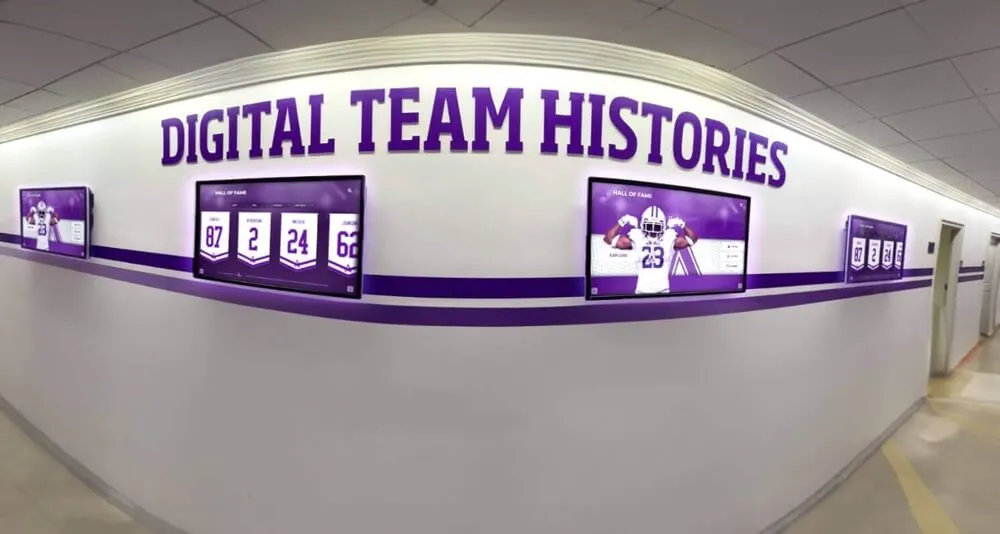
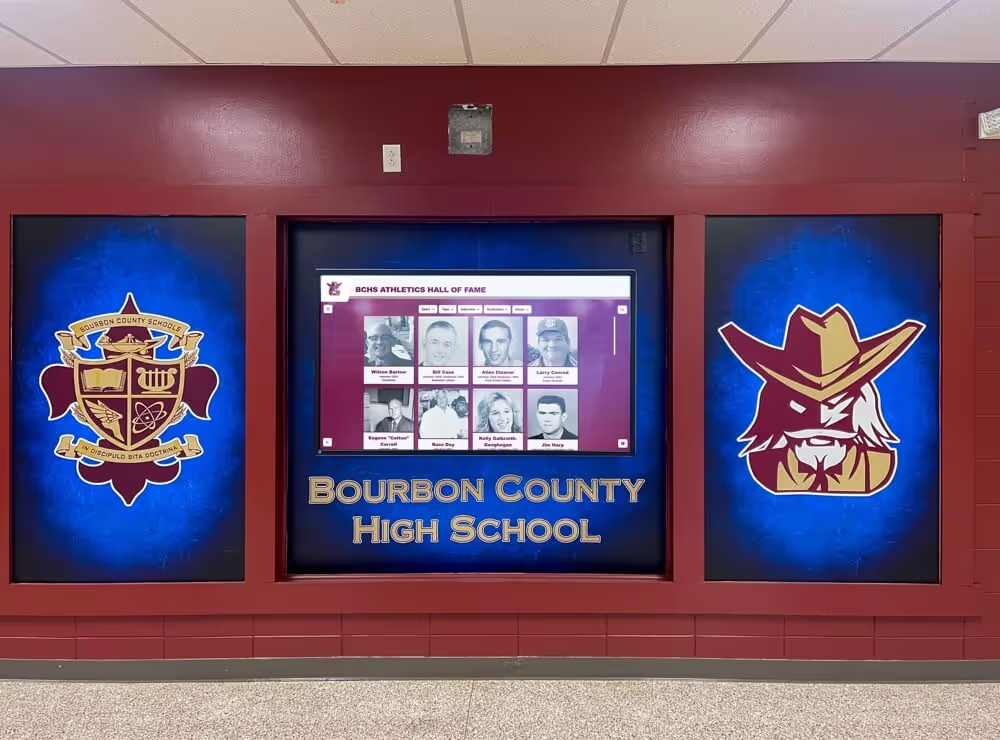
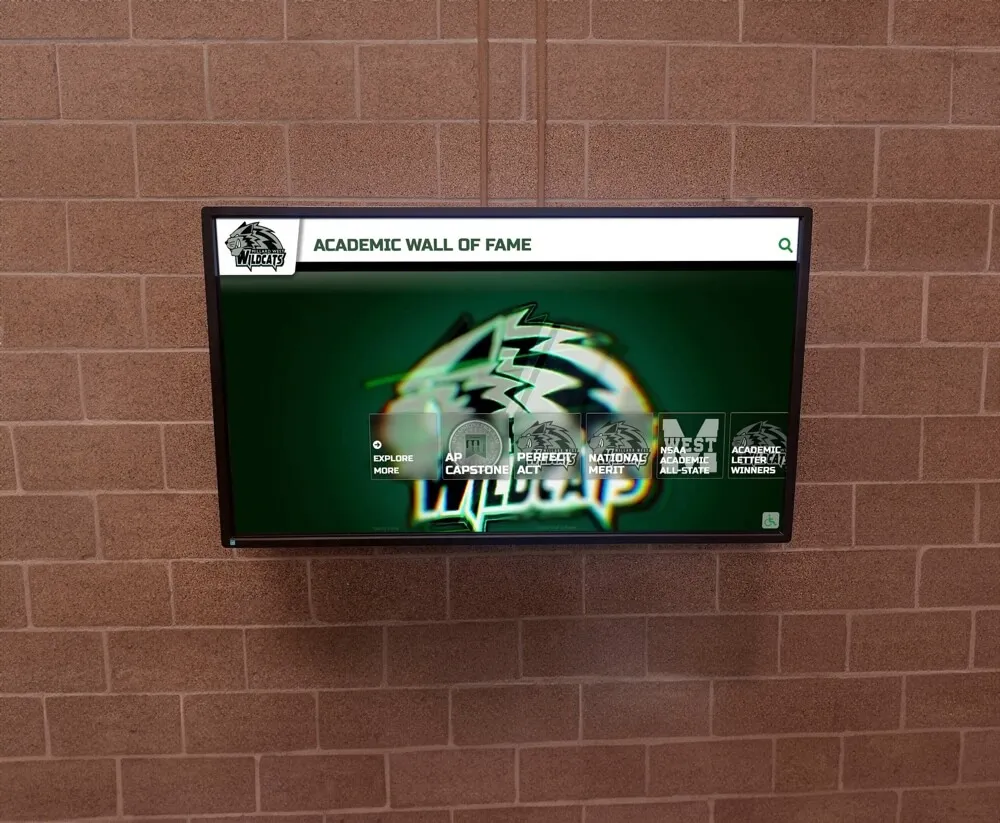
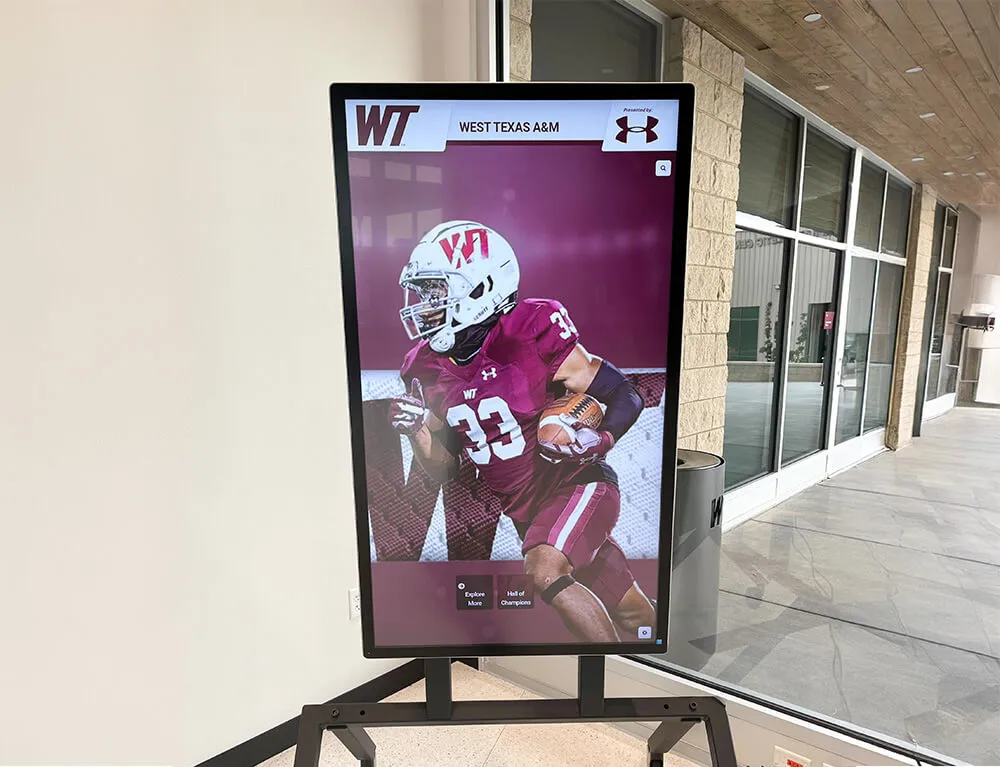
Athletic record displays that pull from multiple upstream sources are vulnerable to schema drift—a renamed or removed field in any one source can blank records across a display without triggering a visible error
What Is Schema Drift in Athletic Award Data?
In database and data-engineering practice, a schema is the formal definition of a data structure: the names of fields, the type each field expects, and whether each field is required or optional. Schema drift occurs when that definition changes in one part of a data pipeline without the change being communicated to every downstream consumer.
For school athletic programs, the “pipeline” is often informal: a Google Sheet from the coach flows to a CSV upload into a CMS, which populates a recognition kiosk, which surfaces records on a hallway display. When the sheet gains a new column, loses an old one, or renames a field to match a new naming convention, every step downstream that relied on the prior structure is now operating on a broken assumption.
The term comes from software engineering, but the problem is universal. Any school program that moves award data between spreadsheets, databases, and public recognition displays—without a documented agreement about what each field is called and what format its values take—is exposed to drift. Schools are particularly vulnerable because award data changes ownership across seasons: new coach, new registrar, new athletic director—and sometimes format and tool simultaneously.
Three Types of Field Changes That Break Award Records
Not all schema drift is equally destructive. Understanding the three most common change types helps you build a monitoring checklist targeted at the failures most likely to affect your specific data flow.
1. Field Rename: The Most Common and Least Obvious
A field rename occurs when a column your downstream system expects under one name is exported from the source under a different name. The underlying data is still there—the value has not changed—but the field mapping fails because the expected label no longer exists.
Before (working mapping):
| Athlete_Name | Sport | Award_Year | Result |
|---|---|---|---|
| Rivera, Marcus | Track | 2025 | State Qualifier |
After (broken by rename):
| Athlete | Sport | Year | Outcome |
|---|---|---|---|
| Rivera, Marcus | Track | 2025 | State Qualifier |
If your CMS import template maps “Athlete_Name” to the Athlete Name field in your recognition platform, the renamed “Athlete” column in the new export produces blank Athlete Name fields across every imported record. No error. No warning. Empty athlete profiles on the display.
Field renames are especially common when:
- A new staff member inherits and “standardizes” an existing spreadsheet to their preferred format
- A software upgrade changes how a scheduling or registration system labels export columns
- A template is converted between tools (Excel to Google Sheets, for example) and headers are reformatted in the process
2. Field Removal: The Change That Drops Required Data
A field removal occurs when a column that previously existed in a source export is no longer included. Unlike a rename, the data may genuinely be absent—or it may exist elsewhere in the source system under a consolidated field.
Field removals that break award records include:
- Elimination of a “Letter_Award_Earned” column when a coach simplifies the seasonal tracking sheet
- Removal of a separate “Team_Affiliation” column when affiliation is merged into a single “Team / Sport” composite field
- Deletion of a “Photo_URL” column when a new system handles photos separately from the main data export
When a downstream display system expects a field that does not appear in the import, the result depends on how the system handles missing fields. Some leave the field blank. Some throw an import error that halts the process. Some silently skip affected records entirely. All three outcomes are destructive to a recognition program that depends on accurate, visible data.
3. Data Type Change: The Change That Corrupts Values
A data type change occurs when the underlying format of a field value changes even though the field name stays the same. The field is present and correctly labeled, but the value is now structured differently than the downstream system expects.
Before (working format):
| Award_Date |
|---|
| 2025-06-10 |
After (broken by type change):
| Award_Date |
|---|
| June 10, 2025 |
A display system that expects date values in ISO format (YYYY-MM-DD) and receives plain English will either fail to parse the date, display the raw string as-is, or sort records incorrectly when displayed chronologically.
Other data type changes that create silent errors:
- A “Season” field changes from a four-digit year (2025) to a range string (“2024–2025”)
- A “Result” field changes from a number (4.32) to a string (“4.32 seconds”)
- A “Photo” field changes from a local file path to a full URL
- A “Varsity_JV” field changes from TRUE/FALSE to the text values “Varsity” and “JV”

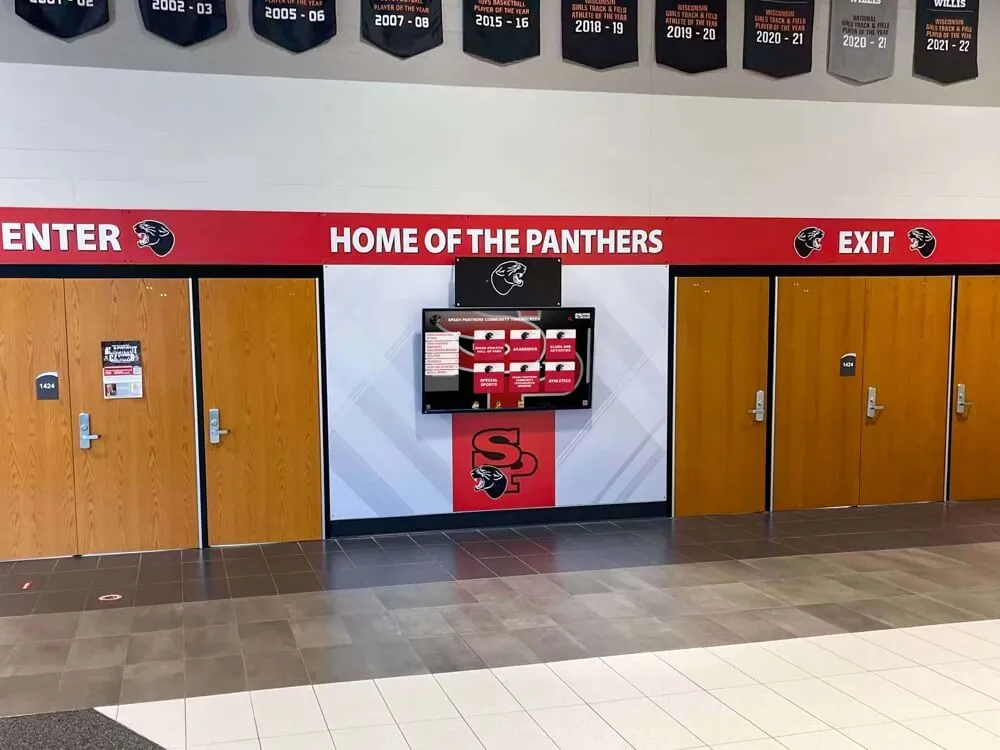
Recognition displays that surface data from multiple seasonal imports are vulnerable to data type drift—a format change in a single field can produce blank dates, broken sort orders, or import failures that only surface after publication
Why Athletic Award Schema Drift Is Hard to Catch Without a Monitoring Process
The difficulty of catching schema drift without a deliberate monitoring process comes from a structural feature of how award data moves through most school programs: the people who produce the data and the people who consume it are different staff members, operating on different timelines, with different tools.
A coach who updates the end-of-season tracking spreadsheet is not thinking about how the athletic director’s CMS import will interpret new column headers. A new athletic director who inherits a template and cleans it up is not aware that the recognition platform’s import script depends on the exact column names in the prior version. IT staff configuring a digital display system cannot anticipate that the export format from a third-party registration system changed in a recent software update.
None of these individuals has done anything wrong. Schema drift happens because data contracts—shared agreements about what a data source will contain, how fields will be named, and what format values will take—are informal or undocumented in most school athletic programs. An athletic director evaluation framework that includes data quality checkpoints helps formalize this accountability, ensuring that recognition data integrity is part of the program review cycle rather than left entirely to ad-hoc troubleshooting after something breaks.
The answer is not to make every staff member a data engineer. The answer is a repeatable monitoring checklist run at the one point where structural changes are easiest to detect: when a new data file arrives and before it is imported into any downstream system.
The Athletic Award Schema Drift Monitoring Checklist
Run this checklist every time award data moves from one system to another—at end of season, during a display migration, or when a new staff member takes over a data source.
Before Import: Structural Check
Field inventory comparison
- List all field names in the incoming file
- Compare against the field names expected by the destination system
- Flag any expected field that is absent from the incoming file (potential field removal)
- Flag any field in the incoming file not in the expected list (potential rename or new field)
Data type spot-check
- Select five records from the incoming file
- Verify that date fields follow the expected format (e.g., YYYY-MM-DD)
- Verify that numeric fields contain numbers, not strings with units or ranges
- Verify that categorical fields use the expected vocabulary (e.g., TRUE/FALSE, not Yes/No)
- Verify that URL or file-path fields follow the expected pattern
Required field coverage
- Confirm the Athlete Name field is populated in at least 95% of records
- Confirm the Award Date field is populated in at least 95% of records
- Confirm the Team or Sport field is populated in at least 95% of records
- Confirm the Result or Achievement field is populated in at least 95% of records
After Import: Visual Spot-Check
Populated fields check
- Open five randomly selected records in the destination system
- Confirm that no required field is blank on any of the five records
- Confirm that date fields display in the correct format
- Confirm that athlete names appear in the expected order (Last, First or First Last—consistent with your program convention)
Record count check
- Confirm that the number of records in the destination system after import matches the number in the source file
- Investigate any discrepancy greater than 1% before proceeding
Sort and search check
- Sort imported records by Award Date and confirm correct chronological order
- Search for two or three known athlete names and confirm they surface with complete data
| Check Type | When to Run | Who Runs It | Pass Criteria |
|---|---|---|---|
| Field inventory comparison | Every import | IT staff or athletic director | Zero unexpected or missing fields |
| Data type spot-check | Every import | IT staff | All five sampled records conform to expected formats |
| Required field coverage | Every import | IT staff or archives team | ≥95% population on all four required fields |
| Visual spot-check | After every import | Athletic director or recognition coordinator | Zero blank required fields in the five sampled records |
| Record count check | After every import | IT staff | Source count matches destination count within 1% |
Structured academic recognition programs face identical monitoring challenges when award data migrates across systems. The academic recognition programs guide at touchscreenrecognition.com documents how schools apply the same field-level quality discipline to honor rolls, scholarship records, and academic achievement data—principles that transfer directly to athletic award pipelines.
Documenting a Schema Contract for Your Award Data Sources
A schema contract is a brief document—one page is sufficient for most school programs—that records the agreed structure of a specific data source. It names each field, defines what a complete value looks like for that field, specifies the expected data type, and identifies who is responsible for notifying downstream systems if any of those elements change.
A schema contract does not require technical expertise to create. It is a plain-language agreement between the person who produces a data file and the person or system that consumes it.
Schema contract template (one row per field):
| Field Name | Description | Data Type | Example Value | Required? | Owner |
|---|---|---|---|---|---|
| Athlete_Name | Full name, Last First | Text | Rivera, Marcus | Yes | Registrar |
| Award_Date | Date of ceremony or season close | Date (YYYY-MM-DD) | 2025-06-10 | Yes | Athletic Office |
| Team_Affiliation | Sport name + school team designation + season | Text | Boys Track – Varsity 2025 | Yes | Athletic Director |
| Result | Specific achievement with source noted | Text | State Qualifier, IHSA 2025 | Yes | Head Coach |
| Photo_URL | Full URL to approved athlete photo | URL | https://school.edu/photos/… | No | Communications |
When a field owner needs to change a field—renaming it, changing its format, or removing it—the contract makes the downstream impact visible before the change is made. The downstream consumer is notified in advance, the import template is updated, and the monitoring checklist catches any residual discrepancy at the next import cycle.
The same schema-contract discipline applies wherever institutional data moves between producers and consumers. Donor wall records that flow from a development office’s CRM to a public recognition display face identical drift risks when staff change, CRM versions update, or display systems migrate. The donor wall design principles guide at donorswall.com covers how institutions structure donor data for durable, accurate recognition displays—principles that apply equally to athletic award data pipelines.

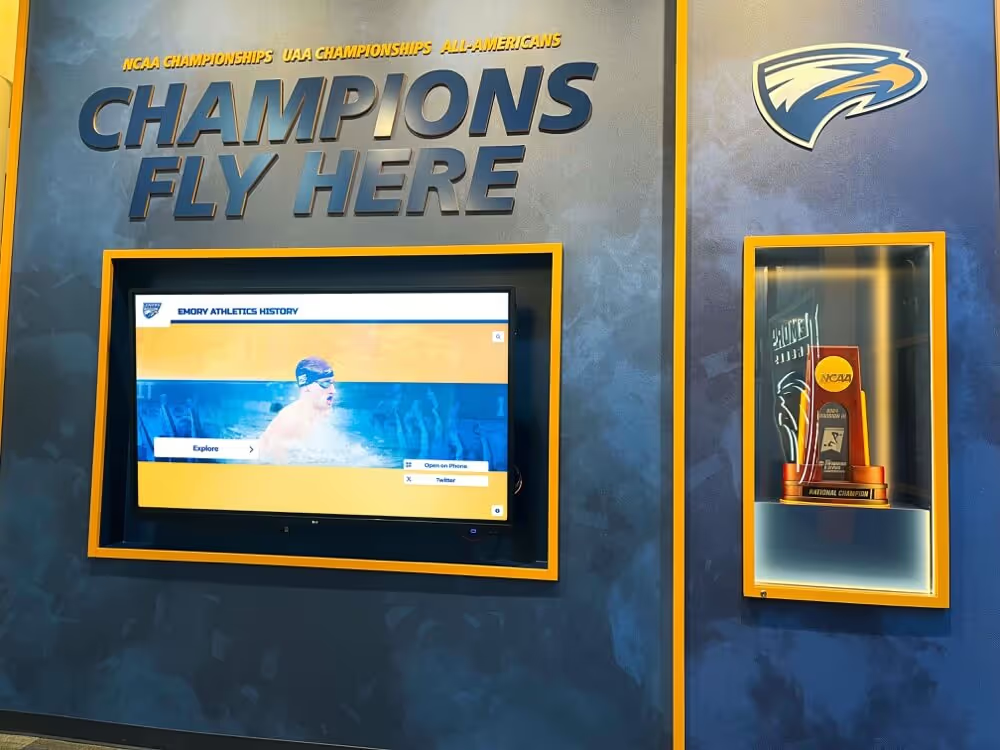
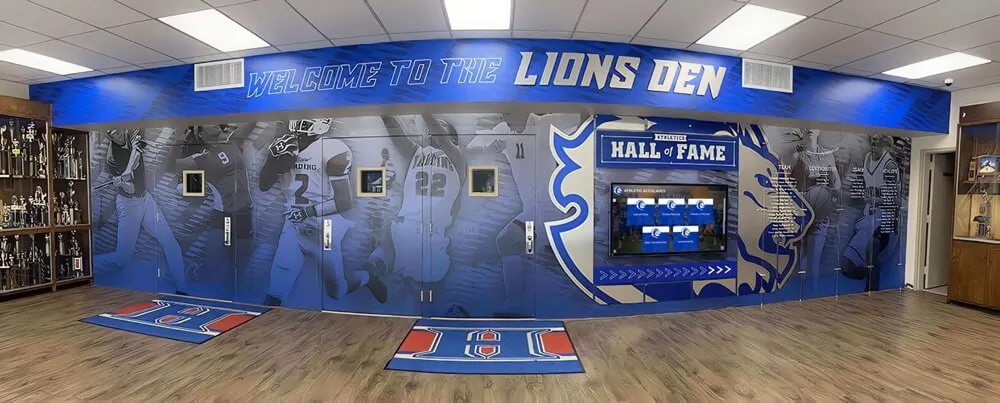
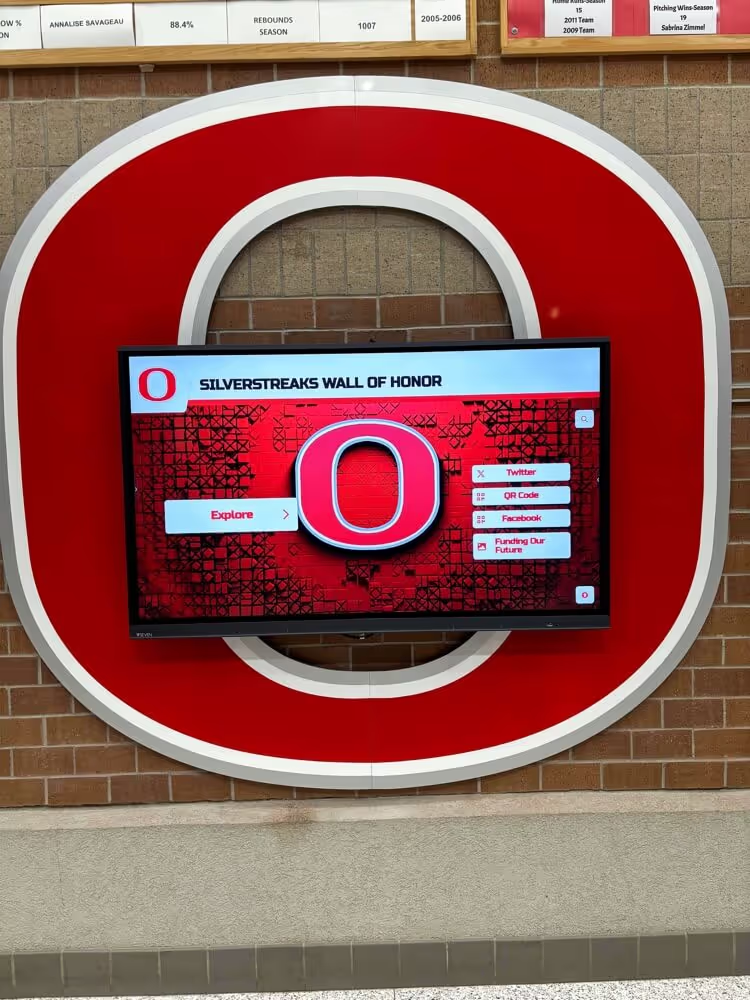
Athletic honor boards that display accurate, complete data depend on documented schema contracts between data sources and destination systems—a field rename caught before import is a blank profile avoided on the display
How Digital Recognition Platforms Reduce Schema Drift Exposure
Schools that manage award data in a platform purpose-built for recognition management—rather than moving records between disconnected spreadsheets and CMS imports—reduce schema drift exposure structurally. Purpose-built platforms define the schema internally and enforce it at data entry, eliminating the import-mapping step where most drift surfaces.
The structural advantages of a dedicated recognition platform for schema drift prevention include:
Required-field enforcement at entry. Staff cannot save an award record without populating required fields. The schema constraint is applied at the point of data creation, before any movement between systems occurs.
Consistent field naming across all users. Every staff member entering data uses the same field labels because the platform defines and displays them. There is no spreadsheet column that one staff member names “Athlete_Name” and another names “Athlete.”
Audit logs for structural changes. When a field definition changes in a platform—because an administrator modifies a category structure or adds a required field—the change is logged with a timestamp and the user who made it. Downstream display templates can be updated with full visibility into what changed and when.
Bulk import validation before commit. When legacy records are uploaded from spreadsheets, field-mapping tools show which source columns correspond to which platform fields before the import commits. Unmapped required fields are flagged for resolution, not silently dropped.
Auto-ranking and data type consistency. Platforms that compare incoming result values against historical records to flag potential record-breaking achievements depend on consistent data types across seasons. A system that has maintained a “Result” field as a numeric value since the program launched will surface a type mismatch immediately when a string value appears in an incoming import.

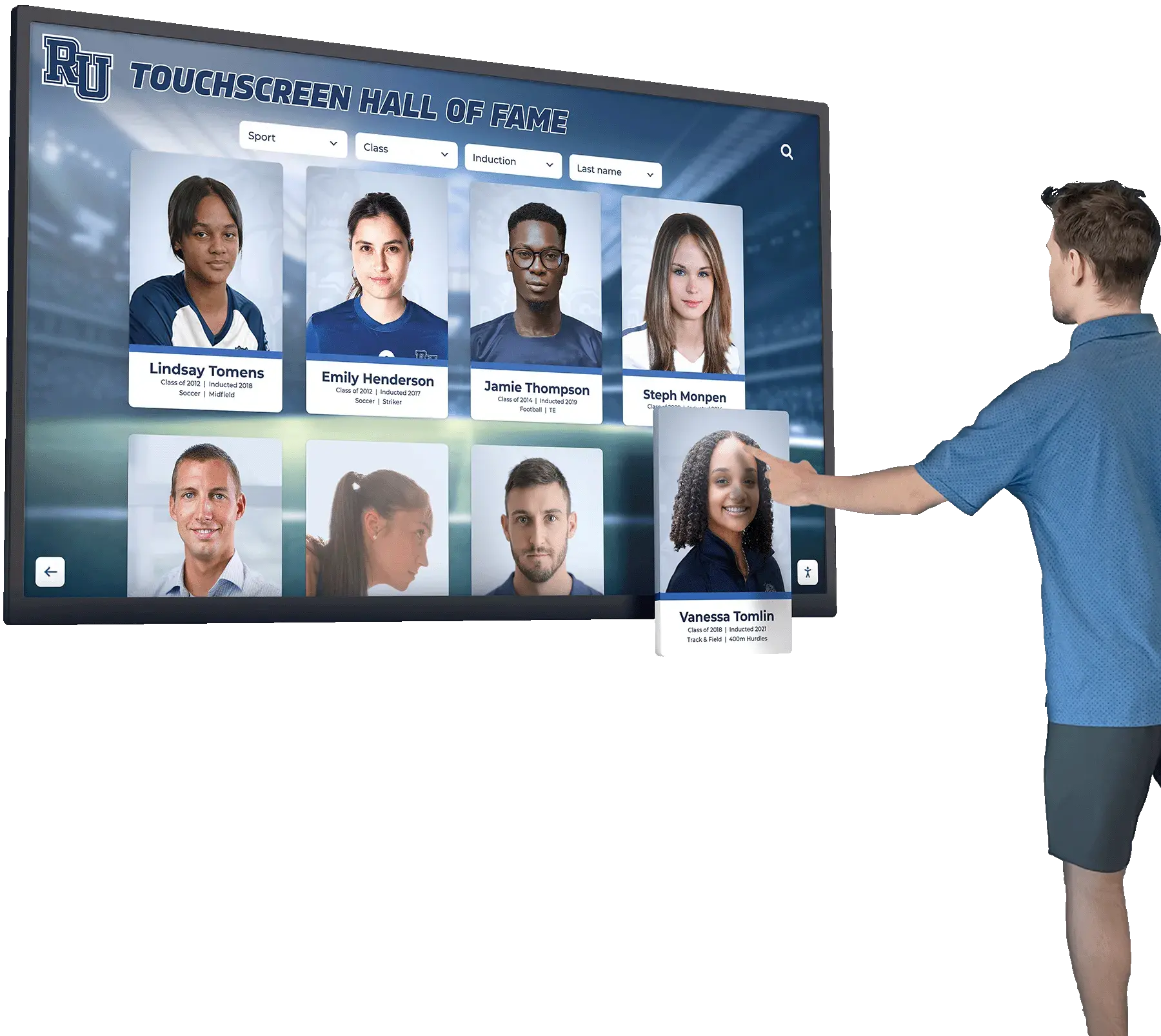
Digital recognition platforms that enforce schema consistency at data entry protect the display layer across every device—mobile, desktop, and kiosk—by preventing structural drift before it enters the archive
Hall of fame recognition programs that display inductees across multiple decades face compounded drift risk—data entered in different eras under different conventions must coexist accurately in a single searchable display. The academic recognition programs guide at halloffametouchscreen.com addresses how structured recognition programs manage multi-era data consistency, a challenge directly analogous to schema drift management in long-running athletic award archives.
Schools managing diverse recognition categories—including cheer programs, arts awards, and community service recognition alongside varsity athletics—benefit from platform-level schema enforcement across every category. Cheer award programs, for example, introduce their own field conventions that must align with the broader recognition platform schema. The unique cheer awards guide at best-touchscreen.com illustrates the range of recognition categories that a comprehensive school program might include—each representing a distinct data source that must conform to the same schema contract.
Trusted by 600+ institutions, Rocket Alumni Solutions’ cloud-based digital recognition platform gives athletic departments, IT staff, and archives teams a centralized system with required-field enforcement, bulk import mapping tools, audit history, and remote CMS access from any device—eliminating the import-mapping step where schema drift typically surfaces.
Stop Schema Drift Before It Reaches Your Displays
Rocket Alumni Solutions' recognition platform enforces required fields at entry, validates bulk imports before they commit, and logs every structural change—so field renames, removals, and type changes are caught before they produce blank profiles on your public honor boards.
See It in ActionFAQ: Athletic Award Schema Drift Monitoring
What is athletic award schema drift?
Athletic award schema drift is a change in the structure of your school’s award data—a field renamed, a required column removed, or a value format altered—that downstream systems such as recognition displays or CMS platforms were not notified about. Because the change happens silently, affected fields appear blank, records fail to import, or data displays incorrectly without generating an obvious error.
What are the three most common types of schema drift in athletic award data?
The three most common types are: field rename (a column exported under a different name than the destination system expects), field removal (a column the downstream system requires is no longer present in the source export), and data type change (a field’s values change format—for example, a date field switching from ISO format to plain English—while the field name stays the same). All three produce silent errors that surface only when records appear blank or malformed on a public display.
How can a school detect schema drift before importing award data?
Run a field inventory comparison before every import: list the field names in the incoming file, compare them against the field names your destination system expects, and flag any discrepancy. Also spot-check data types on five sampled records to verify that date, numeric, and categorical fields follow expected formats. This pre-import check catches structural changes before they affect published records.
What is a schema contract and how does it prevent award data drift?
A schema contract is a one-page document that records the agreed structure of a data source—each field’s name, data type, an example value, whether it is required, and who owns it. When a field owner needs to rename, reformat, or remove a field, the contract makes the downstream impact visible before the change is made. The downstream consumer updates their import template in advance, and the monitoring checklist catches any residual discrepancy at the next import cycle.
Do digital recognition platforms eliminate schema drift risk entirely?
Purpose-built digital recognition platforms significantly reduce schema drift exposure by enforcing required fields at data entry, maintaining consistent field names across all users, and providing bulk import mapping tools that flag unmapped required fields before an import commits. They do not eliminate drift entirely—legacy data from external spreadsheets or third-party systems can still carry structural inconsistencies—but they contain drift to the external import boundary rather than allowing it to propagate through the entire archive.
Keeping Your Award Records Structurally Sound
Athletic award schema drift monitoring is not a one-time cleanup project. It is a lightweight, repeatable discipline applied every time award data crosses a boundary between systems—at the end of each season, during any display migration, and whenever a new staff member takes over a data source.
The checklist and schema contract template in this guide are designed to be adopted directly for any school athletic program, regardless of scale. The same field inventory comparison, data type spot-check, and required field coverage review that works for a single-sport program with fifty seasonal records also works for a multi-sport program managing thousands of historical entries across decades.
The cost of running the checklist is fifteen to thirty minutes per import cycle. The cost of discovering schema drift after publication—on a hallway honor board, a digital kiosk visible to hundreds of daily visitors, or a permanent athletics wall of fame—is considerably higher.
Visual identity elements that accompany recognition records—including cheer team logos and graphics at rocketgraphics.ai displayed alongside award data in a unified recognition system—are only as effective as the underlying data they accompany. Structurally sound award records make every part of the recognition display more credible, and every field check you complete upstream is a record error you do not have to correct in public.
See How 600+ Schools Keep Award Data Structurally Sound
Rocket Alumni Solutions builds cloud-based digital recognition platforms with required-field enforcement, bulk import validation, audit history, and remote CMS access—giving your team the tools to catch schema drift at the import boundary, not after it reaches a public display. WCAG 2.1 AA compliant. Works on any touchscreen from 32" to 100"+.
Request a Custom Demo