



Intent: define. An athletic awards composite key policy is a data-governance rule that prevents duplicate recognition records by requiring each award entry to be uniquely identified by a combination of fields—typically athlete identifier, sport, season, award category, and division level—so that no two entries can share the same position in the recognition database. Athletic directors, IT administrators, and recognition-program coordinators should establish this policy before uploading historical archives or expanding into multi-sport, multi-season recognition platforms.
This guide defines the composite key concept in plain language, compares candidate-key options in a side-by-side table, walks through a six-step implementation workflow, addresses edge cases that most programs encounter (same-surname athletes, transfers, retroactive awards), and explains how modern digital recognition platforms enforce these rules automatically.
Every spring banquet season, athletic departments across the country print their programs and discover the same problem: Jordan Williams shows up twice in the basketball category—once for the 2023–24 season and once for 2024–25—but the entries are formatted differently. “Williams, Jordan” in one row, “Jordan Williams” in another. A staff member imported last year’s spreadsheet without checking for overlaps. Now the award wall has two plaques for the same recognition, and no one is sure which record is canonical.
That problem has a name in data governance: a duplicate key violation. The solution is an athletic awards composite key policy—a documented, enforced rule that defines which field combinations must be unique across your recognition records.

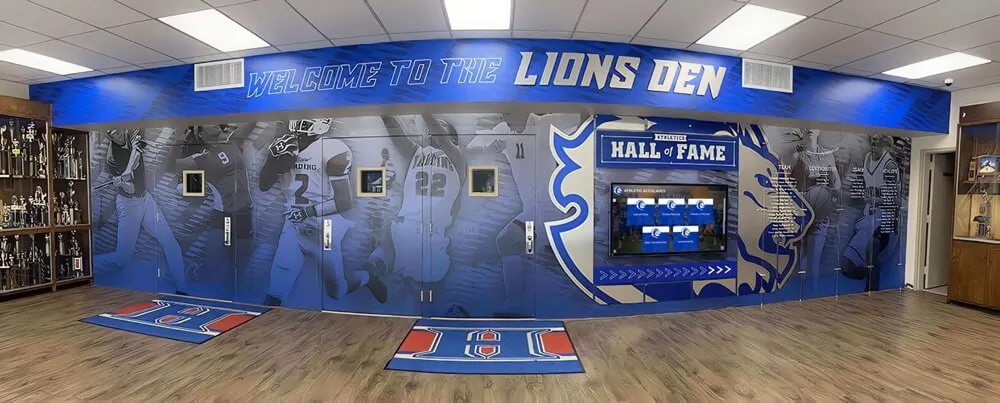
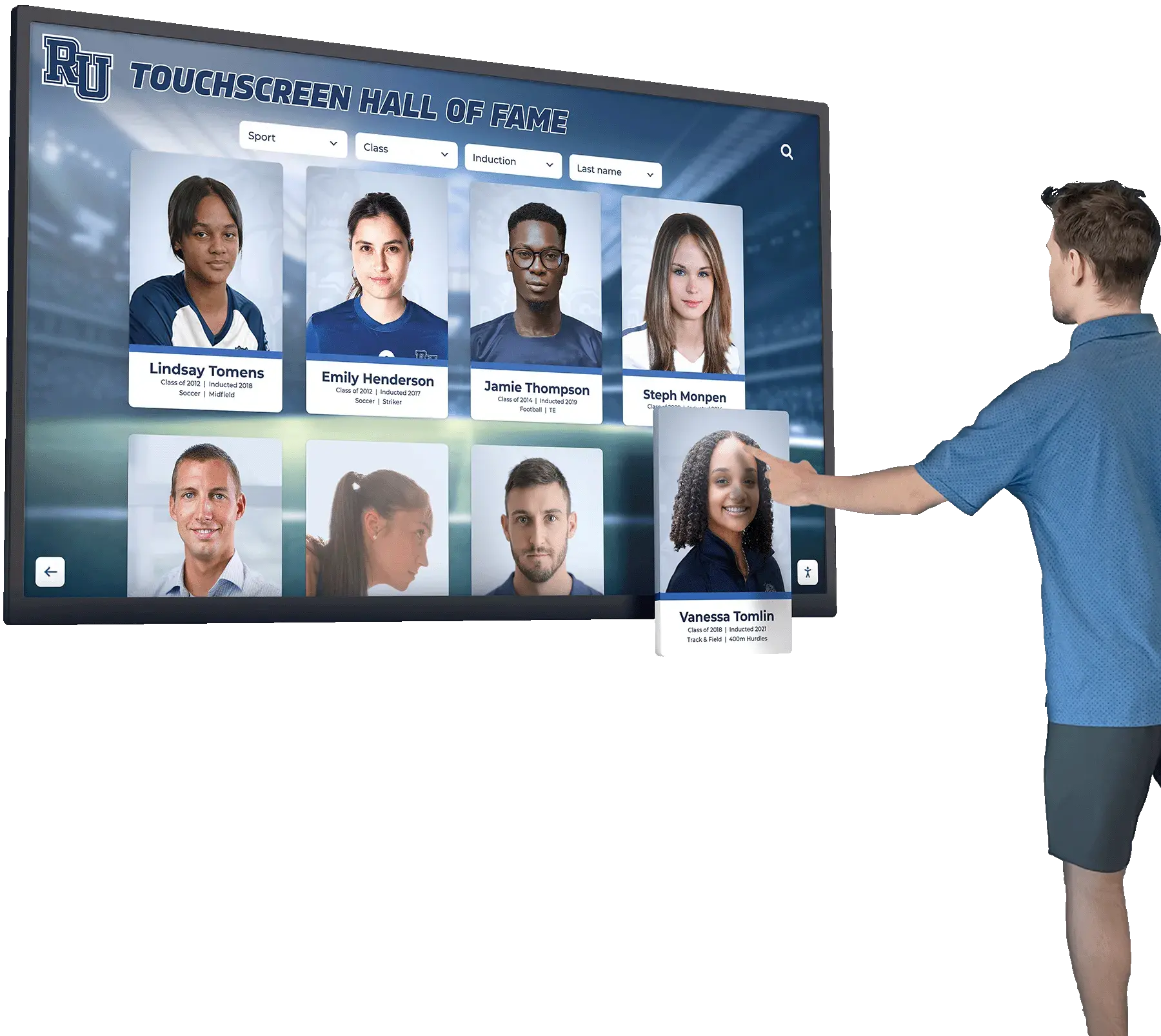
Athletic honor walls represent years of carefully maintained recognition records—a composite key policy prevents the duplicate entries that undermine the credibility of those displays
What Is an Athletic Awards Composite Key? (Plain-Language Definition)
A composite key is a uniqueness rule built from two or more data fields working together. No single field alone guarantees uniqueness in an athletic award database—but the right combination of fields can.
Consider why a single field fails on its own:
- Athlete name alone fails because two athletes on different teams, in different sports, or across different decades can share identical names.
- Sport alone fails because the same sport produces multiple winners across multiple seasons and award categories.
- Season alone fails because a single season contains dozens of recognized athletes across every sport a program runs.
A composite key solves this by combining fields. The combination of athlete ID + sport + season + award category + division is almost always unique. If an athletic department has ever given the same award in the same category to the same athlete in the same sport in the same season at the same division level, that is almost certainly a data entry error—not a legitimate second record.
An athletic awards composite key policy is the written, enforced version of this rule: the document that defines which fields constitute the key, who enforces it, and what happens when a proposed entry would violate it. The concept descends from E.F. Codd’s relational database model (1970), where a composite key is formally defined as a candidate key composed of more than one attribute. For athletic program administrators, the implementation is procedural rather than technical—it is primarily a documentation and workflow question, not a coding project.
Why Duplicate Athletic Award Records Happen
Understanding the failure modes makes policy design easier. Duplicates in athletic award databases typically originate from one of five sources:
Multiple import sources with no deduplication step. A program migrates from paper records to a spreadsheet, then imports that spreadsheet into a recognition platform. The spreadsheet already contained duplicates from the paper era, and the import carried them forward.
Inconsistent name formatting. “Smith, Alex” and “Alex Smith” look different to a computer performing exact-match comparisons but represent the same person. Without a normalized identifier such as a student ID or database-assigned record number, name variants create phantom duplicates.
Season or year field ambiguity. Some programs label seasons by end year (“2024”), others by academic year (“2023–24”), others by sport season (“Fall 2023”). When staff mix formats across imports, the system treats “2024” and “2023–24” as different seasons and allows two entries for the same athlete-sport-award combination.
Category label drift. An award called “Most Valuable Player” in one database becomes “MVP” in a spreadsheet import. The records link to the same honor but appear as different categories, allowing both to persist.
Retroactive entry without a uniqueness check. A school discovers old photographs and adds historical award winners years after the fact. Without a uniqueness check at the point of entry, staff can accidentally create a second record for an athlete already in the system.

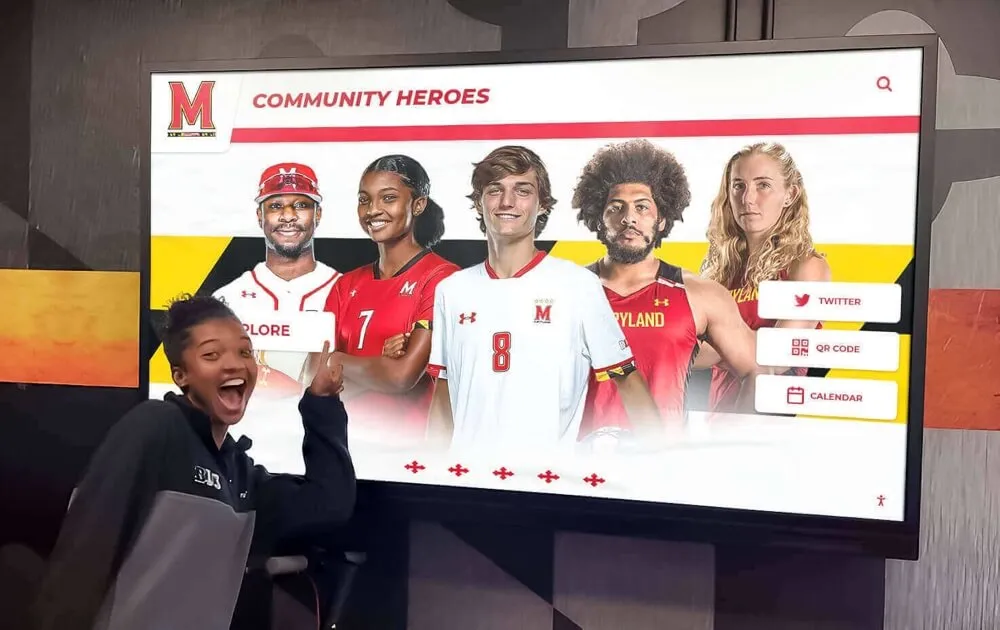
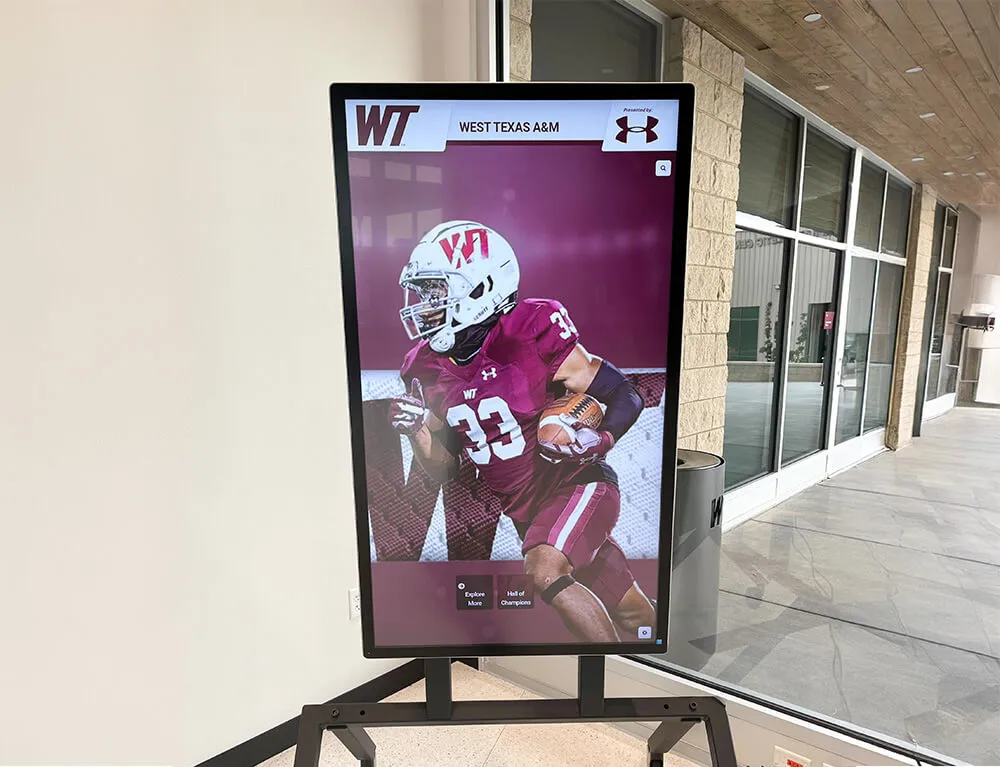
Digital recognition displays depend on clean, deduplicated source records—composite key policies ensure the data behind the display is as accurate as what visitors see on screen
Candidate Key Comparison: Which Fields to Include
Before finalizing your composite key, evaluate the candidate keys available in your record set. A candidate key is any field or combination of fields that could serve as a unique identifier. The table below compares the most common options for athletic award databases at the K–12 and collegiate level.
| Candidate Key | Fields Included | Uniqueness Guarantee | Common Failure Mode |
|---|---|---|---|
| Name + Sport | Athlete name, sport | Weak | Same-name athletes across seasons; name format inconsistency |
| Name + Sport + Season | Athlete name, sport, academic year | Moderate | Name variants (“Alex Smith” vs. “Smith, Alex”); season label inconsistency |
| Student ID + Sport + Season + Category | School-assigned ID, sport, season, award category | Strong | Transferred students who received a new ID mid-career; alumni without current IDs |
| Name + Sport + Season + Category + Division | Name, sport, season, category, Varsity/JV | Strong (with normalization) | Requires standardized name format and consistent division labels |
| Record ID + Sport + Season + Category | Database-assigned unique record number, sport, season, category | Very Strong | Requires a managed ID system; harder to apply retroactively to historical records |
| Name + DOB + Sport + Season + Category | Name, date of birth, sport, season, category | Very Strong | DOB not always available for historical records; privacy considerations for minors |
Recommended starting point for most programs: Student ID (or a school-assigned athlete ID) combined with sport, academic year, award category, and division. This combination is deterministic, survives name changes or corrections, and can accommodate the full history of a program if historical student IDs are available.
For programs without reliable ID data for historical records, a normalized name-plus-five-field composite (name in standard “Last, First” format + sport + academic year + award category + division) provides strong duplicate prevention when name formatting is enforced consistently at the point of entry.
Six Steps to Implement an Athletic Awards Composite Key Policy
Step 1: Audit Your Existing Records for Duplicates
Before defining a policy, establish how many duplicates your current records already contain. Export your full awards dataset to a spreadsheet and run a duplicate check on the candidate-key fields you plan to use. In Excel or Google Sheets, the COUNTIFS function counts how many times each combination appears; any count above one is a candidate duplicate requiring investigation.
Document every potential duplicate with its record identifiers before proceeding. You need this list to clean historical records in Step 3.
Step 2: Define the Composite Key in Writing
Produce a one-page policy document that specifies:
- Which fields constitute the composite key (e.g., athlete ID + sport + academic year + award category + division)
- Standardized value formats for each field (e.g., academic year in YYYY–YY format; division as “Varsity” or “JV” only; award categories from a controlled vocabulary list)
- What constitutes a violation (any attempted record that shares all key values with an existing record)
- Who has authority to resolve violations (typically the athletic director or a designated records administrator)
- What happens to duplicate records discovered after the fact (merge, archive, or delete, with a defined workflow for each scenario)
Keep this document in the same location as your awards platform access credentials or data management documentation. A policy that exists only in someone’s memory disappears the moment that person leaves the school.
Step 3: Clean Historical Records Before Enforcing the Policy
Enforce the composite key prospectively only after historical records are clean. Working from the duplicate list generated in Step 1, resolve each pair as one of three cases:
- True duplicate (identical person, identical award): Retain one record, archive or delete the other. Document the decision and the record identifiers.
- Apparent duplicate that is actually distinct (same name, different person): Differentiate using a tiebreaker field such as graduation year, jersey number, or a note field. Update both records to make them distinguishable within the composite key structure.
- Formatting variant (same person, inconsistent field values): Normalize all fields to the standard format defined in Step 2 and merge into a single canonical record.
For programs with large historical archives—multiple decades of award records across twenty or more sports—this step may take several weeks of part-time staff time. The same data-discipline principles that govern athletic awards records apply across all recognition categories: the donor recognition record-keeping practices in the booster club guide at digitalwarming.net illustrate how consistent field formatting and controlled vocabularies prevent the same types of entry-drift duplicates that accumulate in athletic award archives.
Step 4: Configure Uniqueness Constraints in Your Recognition Platform
Most modern digital recognition platforms include administrator-level data governance settings. After cleaning historical records, enable the platform’s duplicate-prevention features, typically found under record management, data integrity, or import settings. Specific capabilities to configure:
- Duplicate check on manual entry: The system warns or blocks when a new entry matches the composite key of an existing record.
- Duplicate check on bulk import: The system flags or rejects rows in an uploaded CSV that match existing composite keys.
- Controlled vocabulary enforcement: Award category fields use a dropdown or validated list rather than free-text entry, preventing category label drift.
- Normalized name formatting: New entries are automatically formatted to “Last, First Middle” (or your defined standard) regardless of how the entering user types the name.
If your current platform does not support these settings natively, document the composite key policy and enforce it manually via a dedicated review step before any records are published.

Well-organized athletic recognition platforms enforce data governance at the point of entry—preventing duplicates before they reach the public-facing display
Step 5: Establish a Review Workflow for New Entries
A composite key policy is only as good as the review process that enforces it. Define:
- Who enters new award records (centralized entry by one administrator, or distributed entry by sport-level coaches)
- Who reviews entries before they are published (a records administrator with full database access who can run a uniqueness check)
- What documentation is required for each new entry (award certificate or official program as source verification)
- A seasonal entry deadline (e.g., all season-end awards must be entered within 30 days of the final competition) to prevent retroactive pileups
Centralizing entry to one or two trained administrators dramatically reduces formatting inconsistency. Distributed entry by coaches or volunteers tends to produce exactly the variant-format duplicates the composite key is designed to prevent.
Step 6: Audit Annually
Build a one-time annual audit into your calendar—ideally in June or July, after spring sports conclude and before fall sports begin. The audit runs the same COUNTIFS duplicate check from Step 1 on the full current database and reviews any composite key collisions that slipped through during the year. Duplicates found are resolved using the Step 3 workflow.
Annual audits also catch a category of issue the entry-time duplicate check misses: records that were individually valid when entered but became duplicates after a retroactive correction elsewhere in the database (for example, a season-year field corrected from “2024” to “2023–24” that now matches a previously separate existing record).

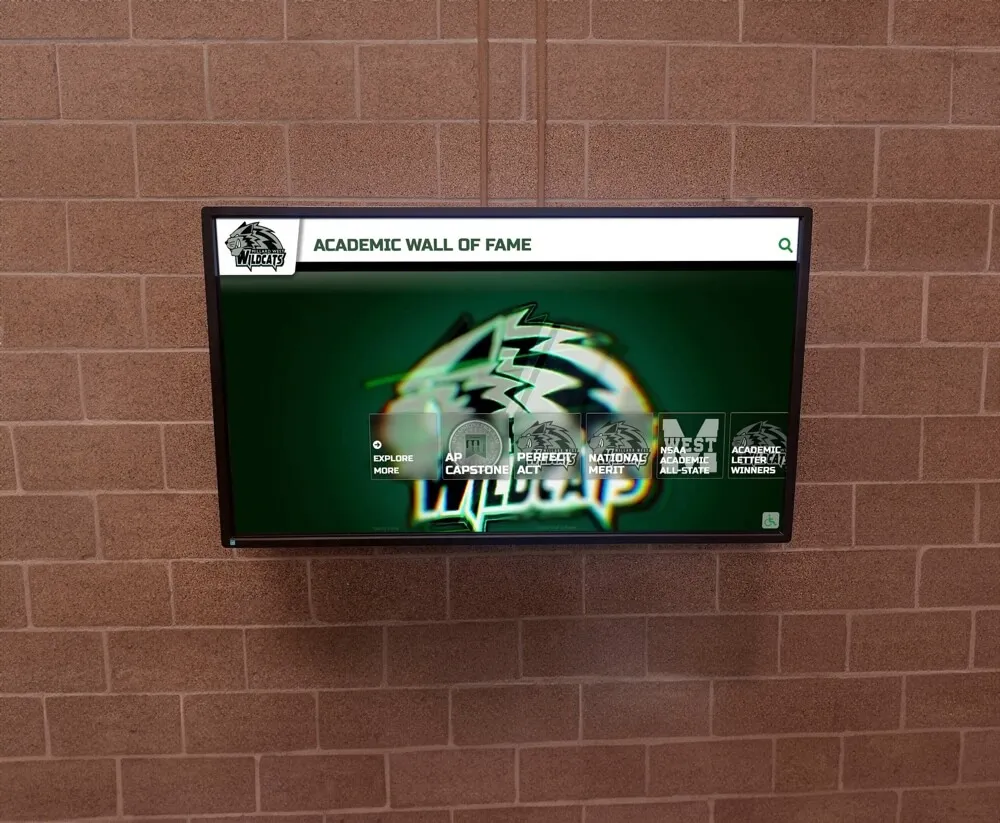
Public-facing touchscreen recognition displays surface individual athlete records—composite key governance ensures visitors find accurate, duplicate-free entries every time
Handling Edge Cases Your Policy Must Address
Same-Surname Athletes in the Same Sport and Season
When two athletes with identical names compete in the same sport during the same season, a composite key built on name + sport + season + category would falsely identify them as the same person. The preferred resolution is to include a disambiguating field in the key: graduation year, student ID number, jersey number, or a program-assigned sequence number created at the time of record entry. Update the policy document to specify exactly how disambiguation is handled so any staff member can resolve the situation without escalating each case to the athletic director.
For programs tracking multi-sport athletes—common in smaller schools where a single student earns recognition in basketball, baseball, and track during the same academic year—the disambiguation field must remain consistent across sports. Student ID is the most reliable choice because it is assigned at enrollment, does not change with sport or season, and is typically available for both current and recent historical records. Well-run multi-sport recognition programs use the same organizational discipline for individual-athlete data that team-level programs use for roster management; how athletic programs structure multi-athlete recognition for individual contributors within a team context informs how your composite key should handle mixed individual-and-team award categories.
Transferred Athletes
An athlete who transfers between schools mid-career may appear in your database under records from the previous institution with a different student ID or no ID at all. The composite key policy must specify whether transferred athletes are assigned the current school’s ID retroactively or maintained under a separate historical identifier. Either approach works; the policy must document which one your program uses so historical and current records link correctly under the same athlete profile rather than creating two separate entries for the same person.
Retroactive Awards and Historical Inductions
Programs that retroactively recognize historical athletes—adding alumni who were overlooked during their playing years, or formally inducting decades-old achievement records—face the risk of creating duplicates against records that may already exist under a different format from an earlier data migration. The annual audit is the primary defense, but retroactive entries should also include a mandatory lookback query before publishing: search the database for any existing record within the same sport, approximate season range, and category before confirming the retroactive entry is new.
Sourcing accurate data for historical athlete records is itself a challenge. Yearbooks, printed programs, and archived newspapers are often the only records of award winners from earlier decades. The guide to locating historical high school yearbooks at digitalyearbook.org is directly applicable to athletic directors building retroactive recognition archives: yearbooks frequently contain the original roster or program data that serves as source-of-truth for historical award entries, and locating multiple yearbook sources for the same period helps verify names and seasons before importing.
Award Category Renaming
Athletic programs regularly rename awards—“Most Improved” becomes “Growth Award,” or “Scholar-Athlete” is renamed to “Academic Excellence Award.” When categories are renamed without updating historical records, the composite key effectively splits one award category into two different keys, allowing new entries to violate what should have been a uniqueness constraint across the renamed category’s full history. The policy should specify that category renames require a bulk update of all historical records in that category to the new standardized label before the renamed category is activated for new entries.
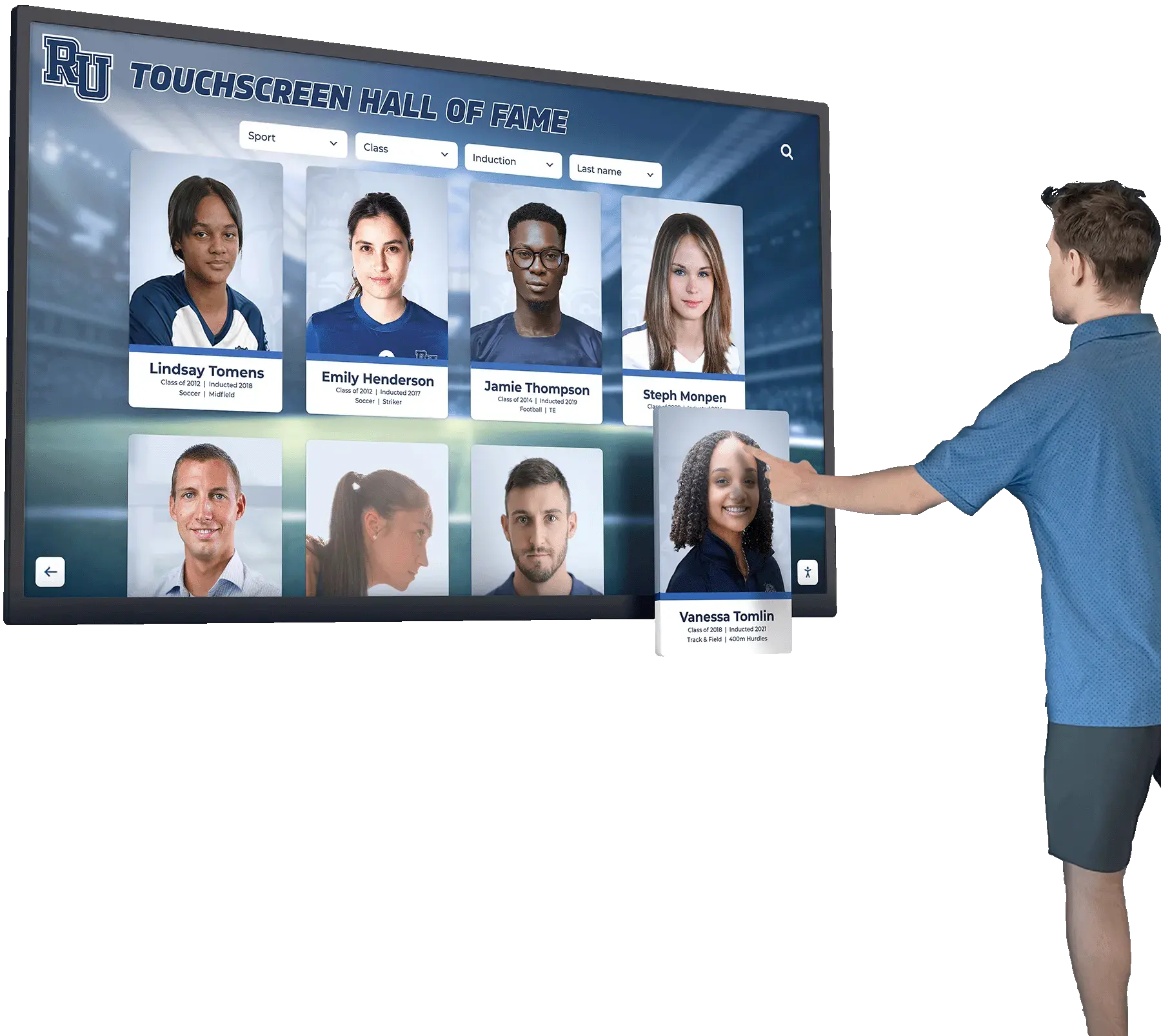
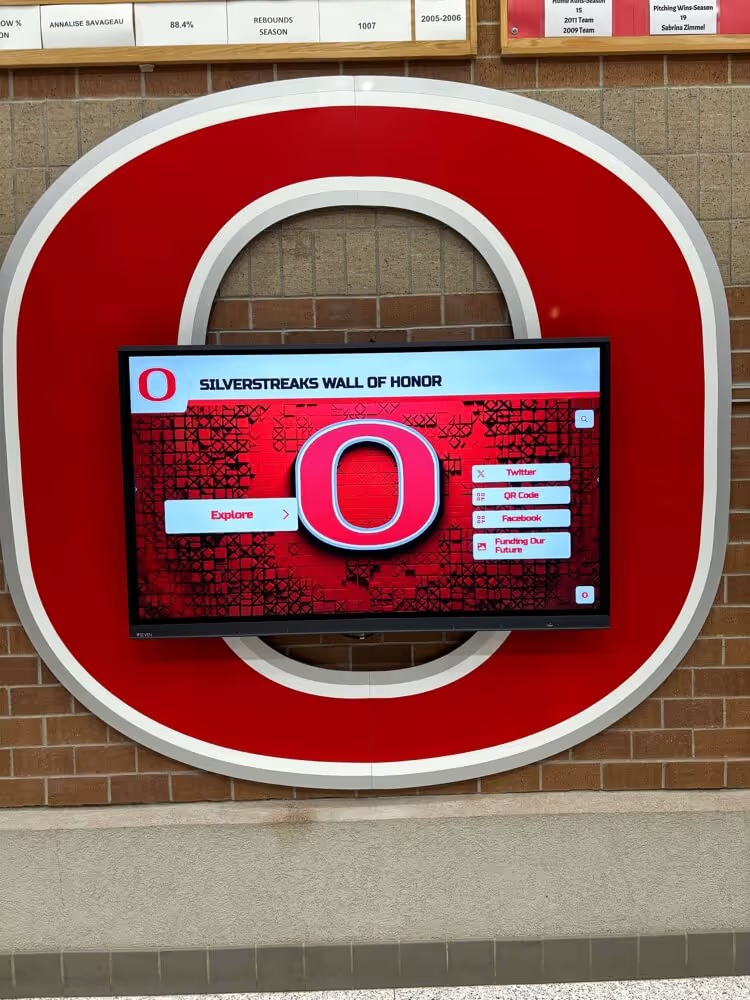
Interactive recognition platforms that surface individual athlete profiles depend on clean, non-duplicated source data to give visitors an accurate picture of program history
How Digital Recognition Platforms Automate Composite Key Enforcement
Manual composite key enforcement is functional but fragile. It depends on staff discipline, consistent follow-through, and institutional memory that leaves the building when key personnel change. Modern digital recognition platforms built for schools and athletic departments move much of this governance burden into the software layer.
Platforms designed for athletic and academic recognition can enforce uniqueness at the point of entry rather than relying on periodic audits. When an administrator attempts to add an award record that would create a duplicate under the configured composite key fields, the platform flags the collision before the record is saved—eliminating the category of duplicate that survives because no one thought to check.
The same platform handles the multi-category recognition that makes athletic awards data complex: academic honors, athletic achievement, community service recognition, and arts accomplishments can all be tracked under a unified schema with distinct composite keys per category type. That unified schema eliminates the siloing problem—separate spreadsheets for each sport, each season, each award type—that is the underlying cause of most athletic award duplicate records in the first place.
For programs evaluating display technology as part of their recognition modernization, display-side accuracy depends on the same data governance discipline as record-side accuracy: the touchscreen recognition display calibration and quality-control workflow at rocketgraphics.ai illustrates how the display layer and the data layer each require their own documented governance process—clean records and a well-calibrated display are complementary, not interchangeable.
For programs building out recognition across athletic, donor, and academic categories simultaneously, the record-keeping discipline that prevents duplicate athletic award entries also applies to financial and donor recognition records. The booster club prepaid expense schedule and record-keeping practices at touchscreenrecognition.com and the giving and donor recognition framework at touchscreenwebsite.com both demonstrate how the same controlled-vocabulary and uniqueness-constraint disciplines that govern athletic award entries carry over into adjacent recognition categories.
For award display programs beginning to evaluate how digital platforms integrate with public-facing recognition walls, the award wall ideas for schools at digitalawardsdisplay.com illustrates the full scope of what a clean, well-governed data backend enables on the display side—athletic achievement, academic honors, team championships, and individual milestones organized in a single searchable system without the duplicate-entry risk of multi-spreadsheet management.
Connecting Composite Key Governance to Your Recognition Display
The case for investing time in composite key policy implementation is ultimately a display case. Athletic awards data governance is not an IT project—it is a recognition quality project. The hallway display, the touchscreen kiosk, the printed banquet program, and the digital hall of fame that families interact with at graduation night all depend on the same underlying record. A duplicate in the database becomes a duplicate on the display. A record that was never normalized never appears under the correct athlete profile when a family searches for it.
Schools that maintain clean, composite-key-governed recognition databases report that their transition to digital display platforms is significantly faster and smoother than peers who arrive with disorganized spreadsheets. The data cleanup is the bottleneck in most digital recognition platform implementations, not the display configuration or the software setup.
If your athletic department has ever faced the problem of a former athlete who cannot find their recognition record online, or a banquet printout that listed the same name twice, the composite key policy is the systemic fix. It costs planning time upfront—typically five to fifteen hours for the audit, policy document, and historical cleanup in a program with ten or more sports—and saves ongoing correction time every season afterward.

Recognition platforms that deliver athlete records across desktop, tablet, and mobile devices require clean, composite-key-governed data to ensure consistent, accurate results at every access point
Frequently Asked Questions
What is an athletic awards composite key policy in simple terms? An athletic awards composite key policy is a written rule that defines which combination of data fields—such as athlete ID, sport, season, and award category—must be unique for every record in your recognition database. The policy prevents the same award from being entered twice for the same athlete in the same season, and it prevents records for two different athletes from being accidentally merged into one profile. It is the data governance foundation that makes a recognition database trustworthy enough to display publicly.
How do I choose which fields to include in my composite key? Start with the field that most reliably distinguishes individual athletes: a school-assigned student ID is the strongest choice because it does not change with name corrections and is unique per enrollment. Combine that with sport, academic year in a consistent format, award category from a controlled vocabulary list, and division level (Varsity or JV). If student IDs are not available for historical records, use a normalized name format (Last, First) combined with those same four fields. The candidate key comparison table in this article provides a side-by-side evaluation of each option and its common failure mode.
Can a spreadsheet-based system enforce a composite key?
A spreadsheet can approximate composite key enforcement using COUNTIFS formulas that flag any combination of key fields appearing more than once. This approach requires a deliberate audit step at the time of each import or entry batch. It is functional for smaller programs but becomes error-prone as record counts grow beyond a few hundred entries or as multiple staff members enter data independently. Dedicated recognition platform software enforces composite key constraints automatically at the point of entry, eliminating the need for manual audit steps.
What should a school do when it discovers existing duplicate records? Treat each duplicate pair as one of three cases: a true duplicate (identical person, identical award—retain one record and archive the other with a note), an apparent duplicate that is actually a distinct person (add a disambiguating field such as graduation year), or a formatting variant (normalize both records to the standard format and merge into a single canonical entry). Document every resolution with the original record identifiers and the action taken. That documentation supports future audits and protects against re-introducing the same duplicates in a subsequent import.
Do digital recognition platforms automatically prevent duplicate athletic award records? Modern platforms built for school and athletic department recognition enforce uniqueness constraints on award records through configurable composite key settings and controlled-vocabulary fields for sport, season, and award category. The specific implementation varies by platform: some enforce uniqueness at the record level and block the entry on save; others provide pre-import duplicate-detection reports that administrators review before records go live. When evaluating platforms, ask specifically whether the system can be configured to enforce a composite key across the fields your recognition program uses, and whether it flags violations at the point of entry rather than only after records are already published.
Build a Recognition Database Worthy of Your Athletes
An athletic awards composite key policy is not a technical burden—it is an investment in the credibility of every recognition your program has ever issued. When a student athlete’s family searches the hall of fame and finds one clear, accurate record of everything that athlete accomplished, the recognition system has done its job. When they find two entries with slightly different names, or they search and find nothing because the record was filed under a variant that does not match, the system has failed—regardless of how impressive the display hardware is.
Rocket Alumni Solutions builds recognition platforms for schools that take their award records seriously. The platform includes data governance tools—controlled vocabularies, duplicate detection, bulk normalization, and configurable uniqueness constraints—designed specifically for athletic and academic recognition programs managing multiple sports, multiple seasons, and multiple decades of history. It is fully WCAG 2.1 AA accessible, operates on any screen from 32 to 100 inches, and is managed remotely so every record update reaches every display automatically.
If your athletic department is ready to move from spreadsheet-based record management to a governed, display-ready recognition platform, request a custom demo to see how clean data governance translates into a recognition display your entire community can trust.