



Intent: define. An athletic awards database collation policy is a data-governance document that specifies which character-comparison and sort-order rules your recognition system applies when storing, searching, and displaying athlete names, award categories, and season labels—so that “O’Brien” and “Obrien” resolve to the same record, rosters sort alphabetically on every display, and award imports do not silently create duplicate honoree records under variant name spellings.
The short answer: choose a case-insensitive, accent-aware Unicode collation for all name fields in your recognition database, document that choice, and enforce it consistently across every table, import pipeline, and connected display platform. Without a written policy, collation defaults vary across database engines, spreadsheet tools, and CMS platforms—and those gaps accumulate invisibly until a search returns no results for a name the database definitely contains.
This guide explains database collation in plain language, maps the specific failure modes that collation mismatches create in athletic recognition records, presents a policy framework with an authority matrix, and provides an eight-step migration checklist athletic directors and IT administrators can use to audit and correct collation settings in existing award databases.
When an athletic department prepares for its spring hall of fame ceremony, the recognition coordinator searches for an inductee’s name—and the platform returns zero results. The record exists. It has existed for three years. The problem is invisible: the record was entered under “Garcia” while the search term is “García,” and the database treats those as distinct strings rather than variants of the same name. That failure is a collation problem.
Database collation is among the least discussed topics in school recognition governance—and among the most consequential for programs that import records from multiple sources, use non-ASCII characters in athlete names, or maintain decades of historical data entered by different staff members under different conventions.

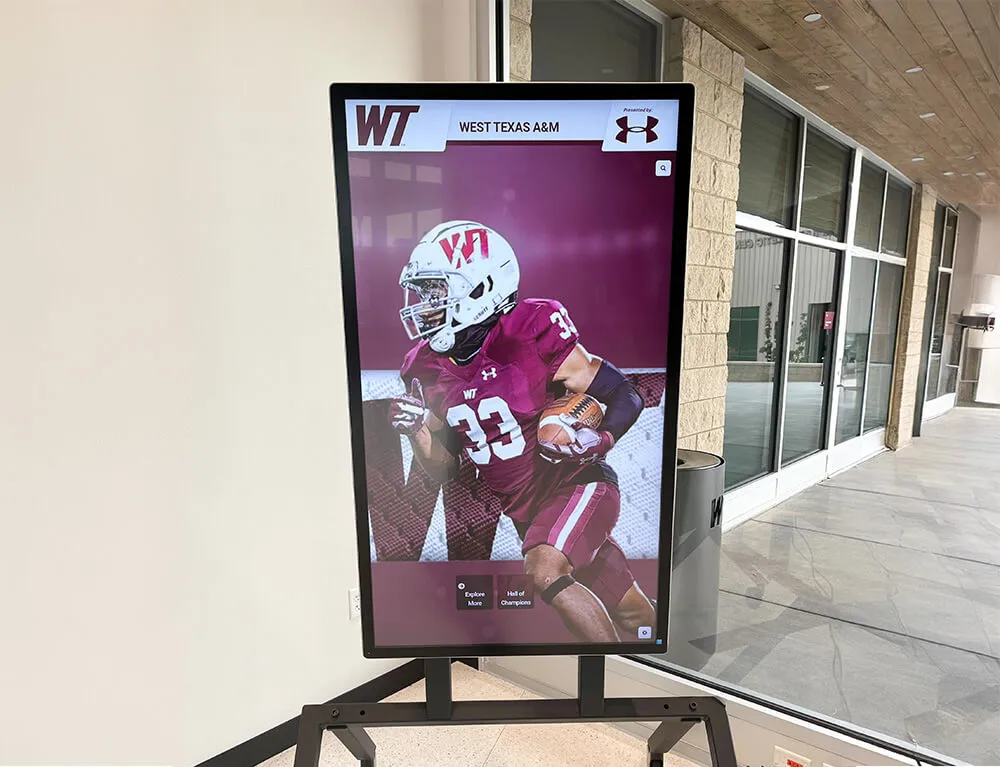
Athletic records displayed in school hallways represent data that must sort correctly, search reliably, and display accurate names—collation policy governs whether the underlying database makes that possible
What Is Database Collation? A Definition for Athletic Program Administrators
Database collation is the rule set a database engine uses to compare and order character strings. Every database engine—whether a full relational database server, a spreadsheet-backed recognition system, or a CMS platform—has a default collation that determines three behaviors:
1. Case sensitivity. Does the system treat “Smith” and “smith” as the same string or as two different strings? A case-insensitive collation (typically marked “CI” in database documentation) matches them. A case-sensitive collation (marked “CS”) treats them as distinct.
2. Accent sensitivity. Does the system treat “Garcia” and “García” as the same string? An accent-insensitive collation matches them; an accent-sensitive collation does not. For programs serving student-athletes whose names include accented characters—common across Spanish, French, Portuguese, Vietnamese, and many other languages—this distinction determines whether a search will find the record at all.
3. Sort order. How does the system alphabetize strings that contain non-alphabetic characters? Does “O’Brien” sort as if the apostrophe is not present, or does the apostrophe shift it out of expected alphabetical position? Does “MacDonald” file the same way as “Macdonald”? Sort order rules vary significantly between collations and between database engines that use nominally similar settings.
The Unicode Collation Algorithm (Unicode Technical Standard #10), published by the Unicode Consortium, is the authoritative reference for how Unicode-aware collation systems should handle multilingual character comparison. Conforming database collations labeled “unicode_ci” or “unicode_520_ci” implement versions of this standard—a practical benchmark when an IT administrator is evaluating a vendor’s collation support claims.
How Collation Mismatches Surface in Athletic Award Records
A collation mismatch occurs when two parts of a recognition system apply different comparison rules to the same string. The four most common failure patterns:
Duplicate records on import. An athletic department imports award recipients from a spreadsheet into its recognition platform. The spreadsheet was created by a different staff member and contains “De La Cruz, Maria” where the platform’s existing record holds “de la Cruz, Maria.” A case-sensitive collation treats these as different individuals and creates a second record for the same person. The program now has two partial records where it needs one complete one.
Search failures. A parent visits the digital hall of fame display and searches for their child’s name. They type “O’Brien.” The record was entered as “O’Brien” using a right-single-quotation-mark (Unicode U+2019) rather than a straight apostrophe (U+0027). A byte-sensitive collation treats these as different characters. The search returns no result for a name the database holds.
Incorrect sort order. A recognition screen displays a sport roster in alphabetical order. Names beginning with lowercase letters sort to the end of the list. Names with accented first characters appear at the bottom of an otherwise correct alphabetical list because the collation places extended characters outside the basic ASCII sort range.
Cross-system record mismatches. An athletic director attempts to reconcile an award database against the school’s student information system. The two systems use different collations. Name fields that should match across systems produce false non-matches because one system is case-sensitive and the other is not—generating a reconciliation report that dramatically overstates the number of discrepancies requiring manual review.
Each of these failures is invisible at the moment data is entered—it surfaces only when a specific query or display exposes the mismatch. Programs without a written athletic awards database collation policy discover these problems reactively, often at the worst possible moment: during a live ceremony, in front of a visiting recruit’s family, or during a governance review.
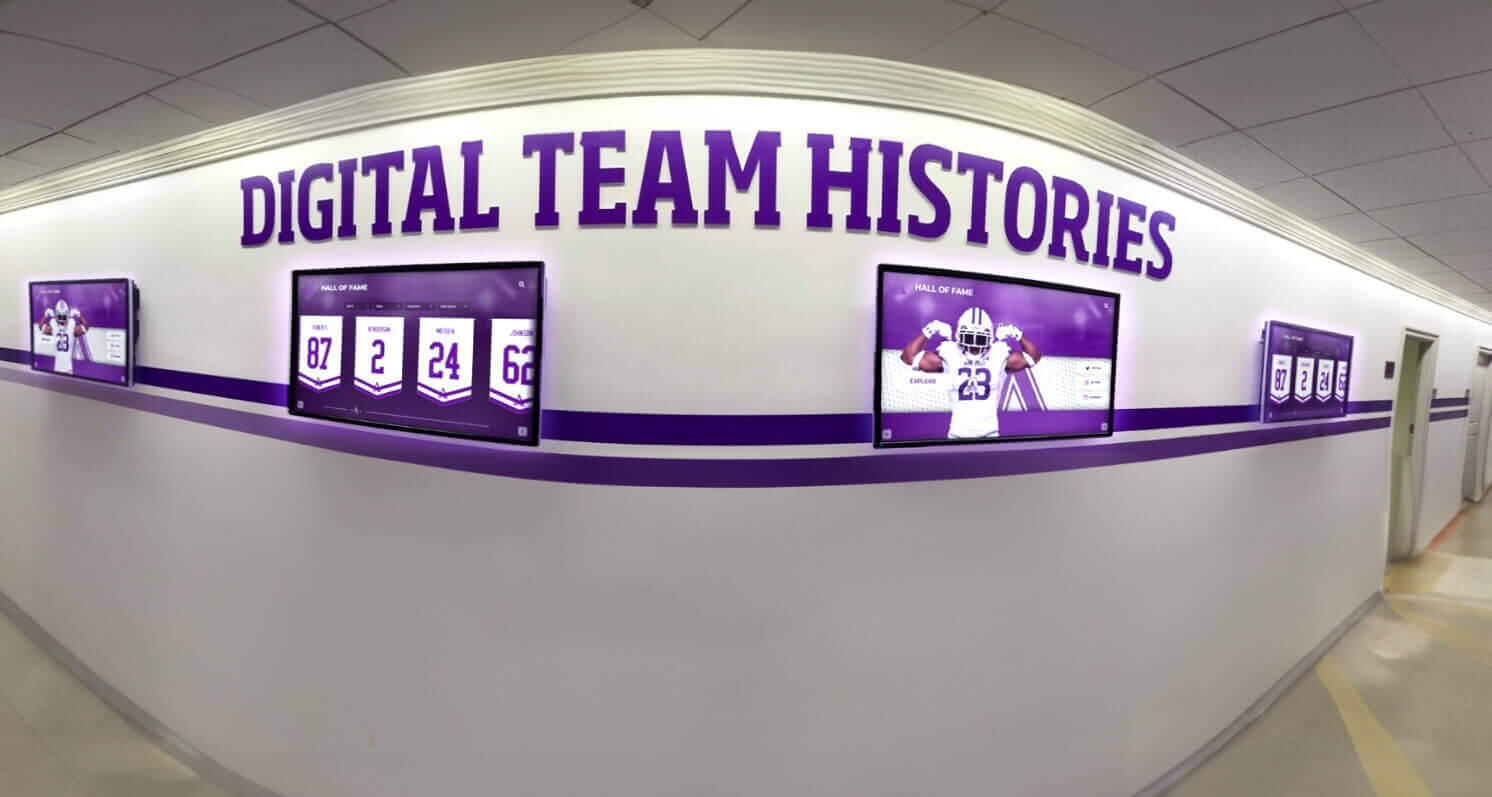
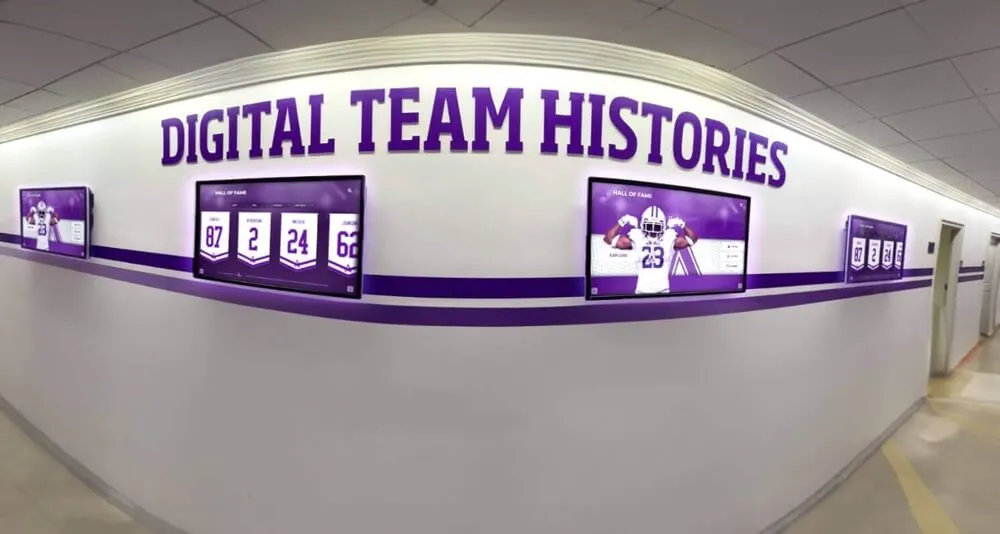
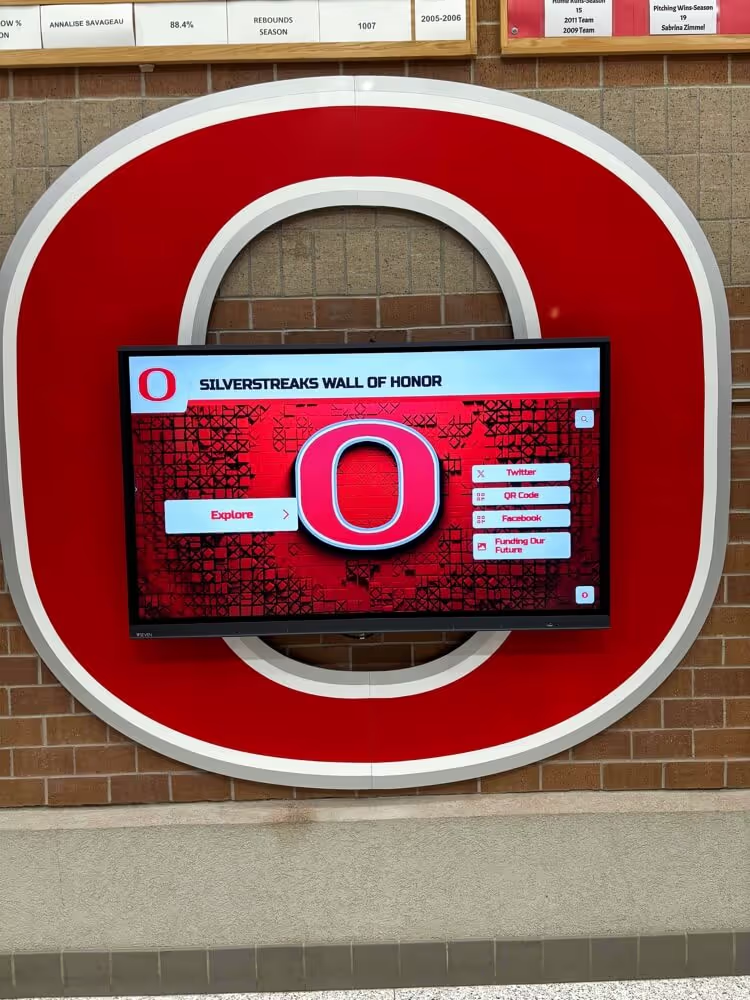
Digital displays showing season-by-season records depend on consistent collation to sort team histories correctly and surface the right season when a visitor searches by year or sport
Choosing a Collation for Athletic Recognition Records
The collation choice for an athletic recognition system should be made once, documented in writing, and enforced consistently across all fields that store names, categories, or season labels. The following table compares the most common options:
| Collation Setting | Case Sensitive | Accent Sensitive | Unicode Support | Recommended Use |
|---|---|---|---|---|
utf8mb4_unicode_ci (MySQL/MariaDB) | No | No | Yes | Name search and matching fields |
utf8mb4_unicode_520_ci (MySQL/MariaDB) | No | No | Yes (updated algorithm) | Name fields with broader multilingual support |
utf8mb4_bin (MySQL/MariaDB) | Yes | Yes | Yes | Internal system IDs; not recommended for display names |
en-US-x-icu (PostgreSQL) | No | Yes | Yes | English-primary programs requiring consistent US-locale sort |
Latin1_General_CI_AS (SQL Server) | No | Yes | Partial | Legacy systems; avoid for new implementations |
| Spreadsheet default (no explicit setting) | Varies | Varies | Varies | Not recommended for canonical recognition records |
Recommendation for athletic recognition programs: Use utf8mb4_unicode_ci (or its platform equivalent) for all name display fields, category labels, and season identifiers. This collation is case-insensitive and accent-insensitive for comparison purposes while preserving the stored string exactly as entered—so a record entered as “García” displays as “García” on the recognition screen while also being findable via a search for “garcia.”
The stored value versus the comparison value distinction is critical. A well-designed collation setting preserves the canonical spelling in storage—a name entered with its correct accent marks is stored and displayed with those accent marks—while using accent-insensitive comparison for search and deduplication. The collation governs how strings are compared, not how they are stored. This allows programs to honor the precise spelling of an athlete’s name on a recognition display while still finding that record when a visitor types a simplified version.
For programs building award category taxonomy alongside name records, the hall of fame taxonomy guide at digitalwalloffame.com covers how controlled vocabularies for sport names, award categories, and era labels prevent the category drift that collation mismatch compounds—category names stored inconsistently across systems create the same phantom-duplicate problems that name-field collation issues produce.
Core Components of an Athletic Awards Database Collation Policy
An effective athletic awards database collation policy addresses five governance areas.
1. Collation Specification by Field Type
The policy must specify which collation applies to which field categories. A single recognition database may legitimately use different collations for different purposes:
| Field Type | Recommended Collation | Rationale |
|---|---|---|
| Athlete display name | Case-insensitive, accent-preserving Unicode | Stored precisely; searched broadly |
| Athlete search/match key | Case-insensitive, accent-insensitive Unicode | Normalized for deduplication |
| Award category label | Case-insensitive Unicode (controlled vocabulary) | Prevents case-variant category drift |
| Season identifier | Case-insensitive Unicode (controlled vocabulary) | Ensures consistent sort order |
| Internal system ID | Binary or exact-match | Uniqueness enforcement, not display |
Note that the athlete display name and athlete search/match key may be two separate fields: one storing the canonical spelling for display, and one storing a normalized version for matching. This two-field pattern is the most robust approach for programs that must honor multilingual name accuracy while also preventing duplicate records.
2. Import Validation Rules
The policy must specify how incoming data is validated before it is committed to the database. Import validation rules should require:
- All imported name strings are checked against existing records using case-insensitive, accent-insensitive comparison before a new record is created
- Potential matches above a defined similarity threshold are flagged for human review before committing
- Import sources are documented, and source collation settings are noted so that mismatches can be detected before import
For programs evaluating the reliability of historical source documents used in award database construction, the athletic archive source reliability rubric at digitalyearbook.org provides a structured framework for assessing whether a source document’s name formatting is consistent enough to trust for direct import—a prerequisite for determining whether pre-import normalization is needed.
3. Controlled Vocabulary for Category and Season Fields
Category labels and season identifiers must be drawn from a controlled vocabulary rather than entered as free text. This prevents variants—“Boys Varsity Basketball” versus “Basketball Varsity Boys” versus “BV Basketball”—from functioning as different keys even in a case-insensitive collation that correctly identifies them as distinct strings despite identical underlying intent.
Maintaining separate human-readable labels and controlled-vocabulary keys for award categories—a display label “Most Valuable Player (Boys Basketball)” paired with a system key “BBALL-M-MVP”—prevents label drift from affecting record chains while still allowing the display name to evolve as the program renames awards.
The same discipline applies to academic recognition records. Schools maintaining honor roll and academic award databases alongside athletic records face identical collation challenges. The academic recognition and honor roll guide at digitalwalloffame.com describes how school-wide recognition programs maintain multi-year records with consistent naming conventions—the collation policy that governs athletic award records should extend to academic recognition records maintained in the same or adjacent systems.
4. Authority Matrix
| Decision | Who Defines | Who Approves |
|---|---|---|
| Database collation setting | IT administrator or platform vendor | Athletic director (with IT sign-off) |
| Controlled vocabulary for categories | Recognition coordinator | Athletic director |
| Import validation threshold | IT administrator | Athletic director |
| Exception for non-standard name characters | Recognition coordinator | Athletic director |
| Collation change on existing database | IT administrator | Athletic director + district IT |
5. Policy Review Cadence
Collation settings in an existing database are difficult to change retroactively—changing the collation of a populated table requires a migration that can affect sort order, existing indexes, and search behavior across all records. For this reason, the collation policy should be reviewed at two triggers: annually as part of the recognition program’s data governance cycle, and whenever a new data import source, display platform, or database engine is introduced. Changes to collation settings in a production recognition database require formal change-control review, not ad hoc adjustment.
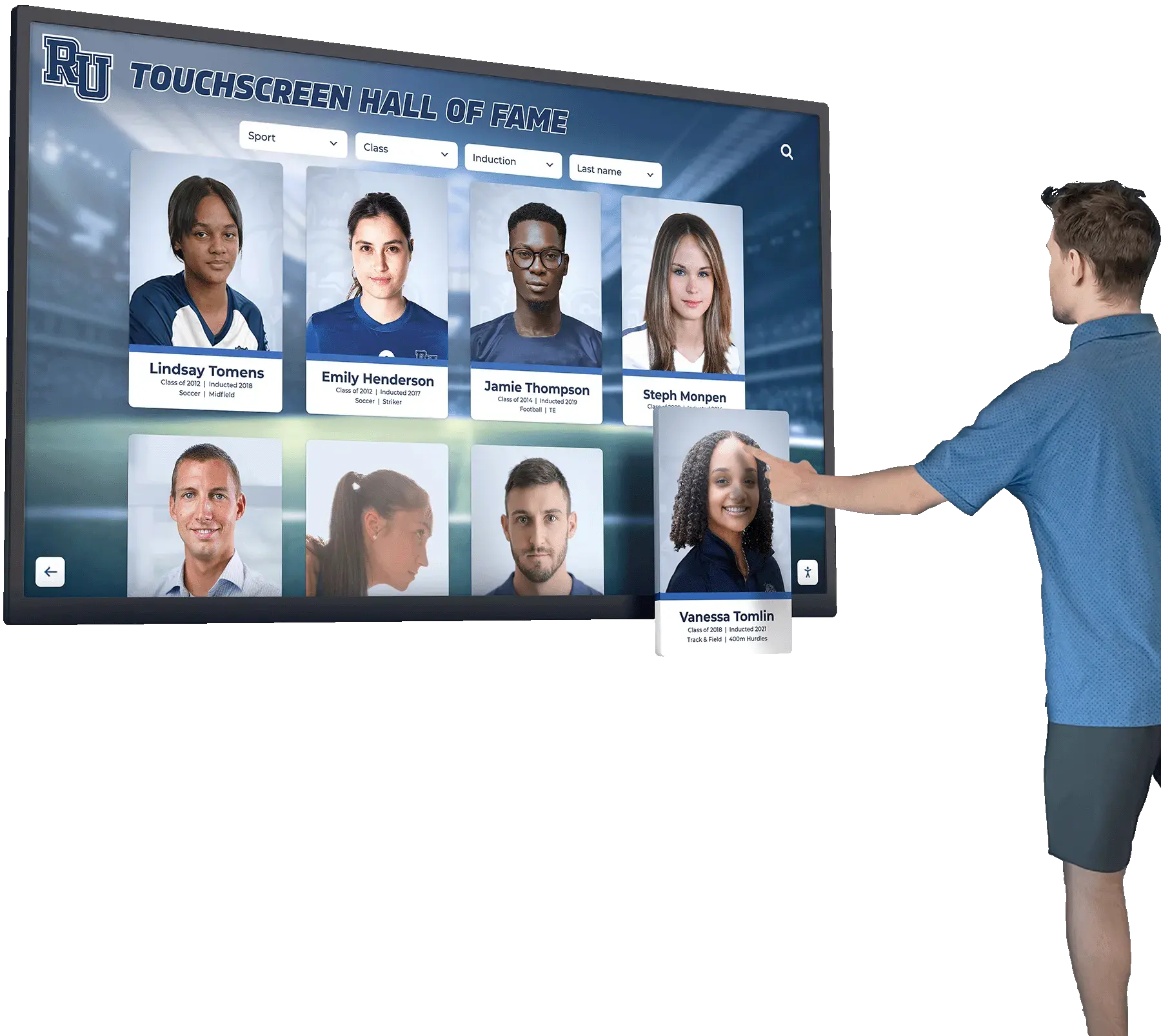
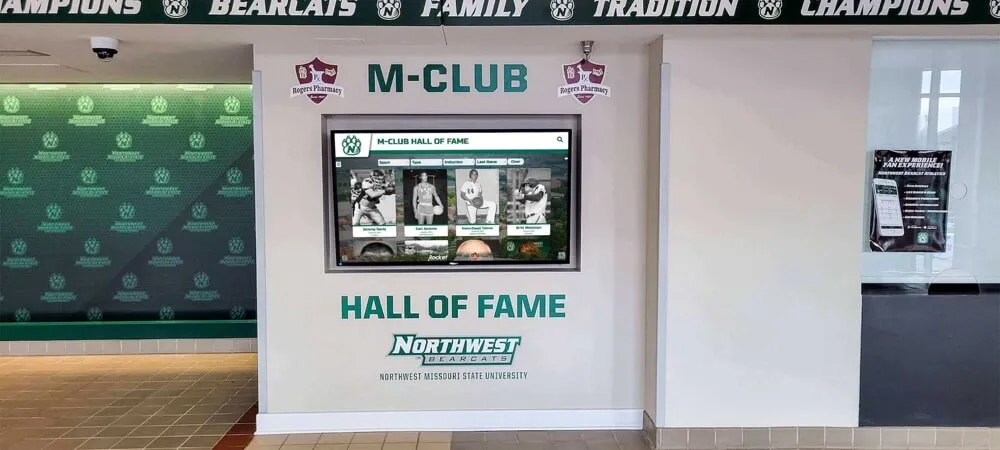
Visitors searching for athletes by name on recognition touchscreens depend on consistent collation rules to find records regardless of how they type the name
Eight-Step Migration Checklist: Auditing and Correcting Collation in an Existing Athletic Awards Database
For programs that have been operating recognition databases without a formal collation policy, the following checklist provides a structured approach to auditing current state and correcting high-priority issues.
Step 1: Document the Current Collation Setting for Each Data Store
For each system that holds recognition records—the primary award database, any spreadsheet-based supplements, the CMS powering digital displays, and any archived datasets—document the current collation setting. For SQL databases, this information is available via system catalog queries (SHOW CREATE TABLE in MySQL; pg_database system catalog in PostgreSQL). For spreadsheets and CMS tools, document the locale and language settings in place at the time of last data entry.
Step 2: Identify All Fields That Store Names or Labels
Within each data store, list every field that holds a name, category label, or season identifier. Fields that appear to be internal identifiers but actually contain label text—a “sport” field stored as free text, for example—are common in programs that grew their recognition database organically without formal schema design. Treat these as label fields subject to collation policy, not as opaque identifiers.
Step 3: Run a Duplicate Detection Query Using the Target Collation
Before making any changes to the database, run a duplicate detection query that compares all records using the collation settings defined in your policy. This identifies records the current system treats as distinct but that would match under the target collation—and flags them for human review before any merging or collation change is applied. Do not commit any changes at this step.
Step 4: Review Flagged Potential Duplicates
A human reviewer—the recognition coordinator or athletic director—must examine each flagged pair before any automated merge or normalization is applied. Collation-based matching identifies strings that are similar under the comparison rules; it cannot determine whether two similar names belong to the same person. “J. Davis” and “James Davis” may be the same athlete or two different athletes. Human judgment is required.
The source document evaluation framework in the athletic archive source reliability rubric at digitalyearbook.org describes how to assess whether a historical source provides enough context to resolve identity questions—the same evaluation applies when a potential duplicate cannot be resolved from the database alone.
Step 5: Normalize Search Key Fields
For each name field, create or populate a normalized search key: a lowercase, accent-stripped version of the display name stored alongside the canonical version. This key is used for matching and deduplication; the display name field retains the canonical spelling. Use a documented normalization function—Unicode NFKD decomposition followed by ASCII folding and lowercasing is the standard approach—so that the normalization process can be reproduced consistently across future imports and audits.
Step 6: Validate Category and Season Fields Against the Controlled Vocabulary
Export all distinct values from category and season fields. Compare them against the defined controlled vocabulary. Any value not in the vocabulary is either a valid addition requiring vocabulary update, or a variant requiring normalization to the canonical form. Document all decisions in writing before applying any changes.
Step 7: Apply the Target Collation to Database Tables
With duplicates resolved, search keys populated, and controlled vocabularies validated, apply the target collation to all relevant tables and fields. In a production database, this step requires a maintenance window and a full backup before execution. For programs using a recognition platform rather than a self-managed database, this step may involve working with the platform vendor to confirm that the platform’s underlying database uses the target collation—and requesting a configuration change if it does not.
Step 8: Test and Validate Search Behavior
After the collation change is applied, run a structured set of test queries covering:
- Name searches with and without accent marks for the same underlying record
- Name searches with mixed case
- Category and season searches using variant label formats
- Sort order verification across a range of names including hyphenated names, names with apostrophes, and names beginning with accented characters
Document the results. Any search failure after the target collation is applied requires investigation—it indicates either a data quality issue the collation change did not resolve, or an edge case the collation policy must address.

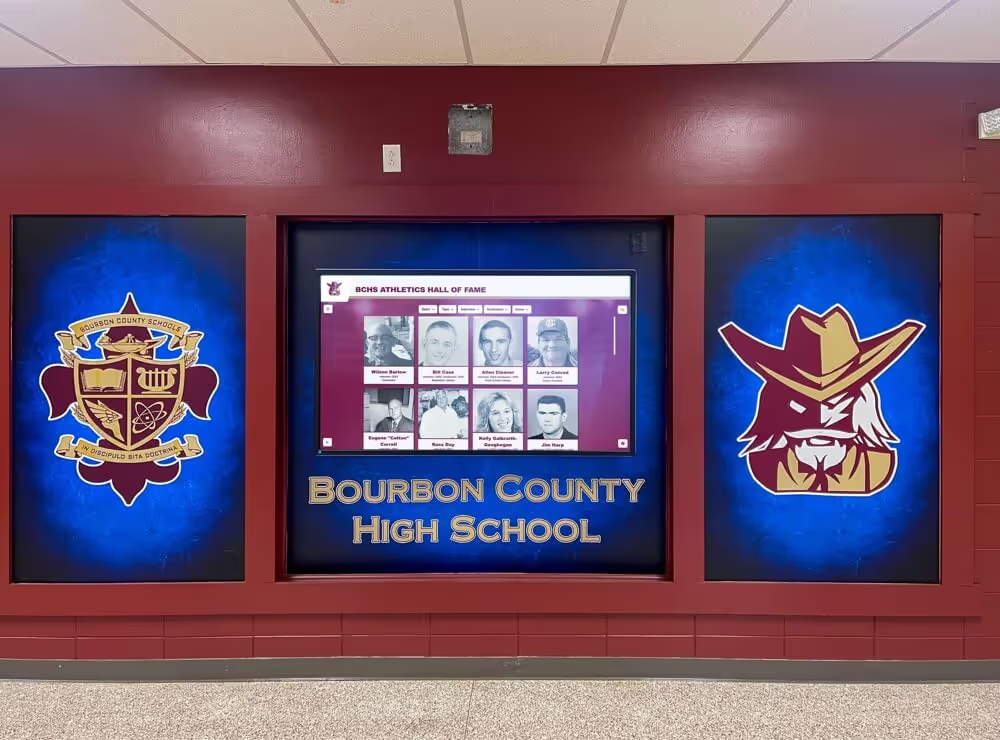
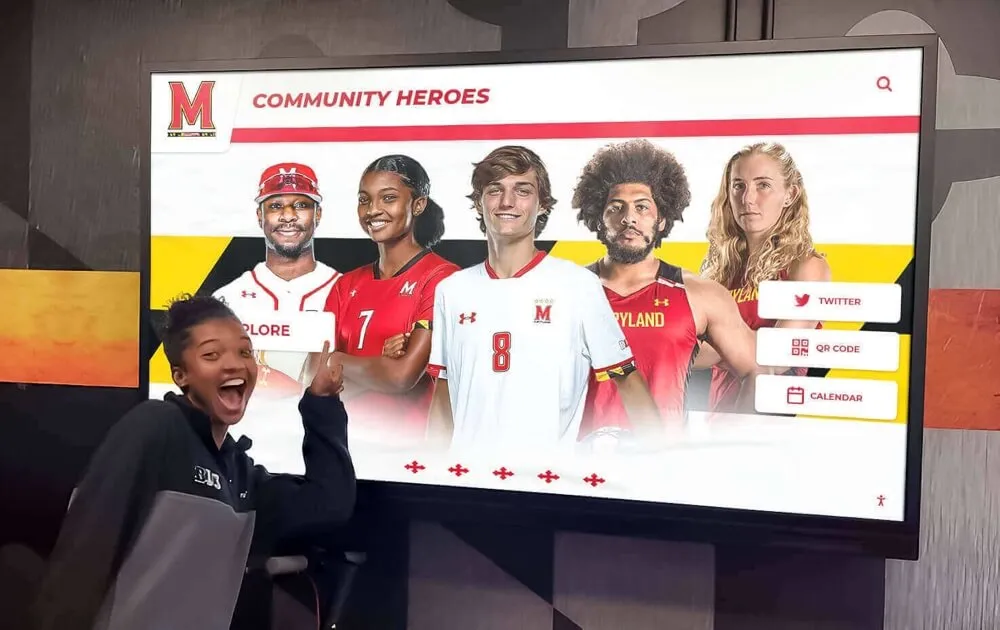
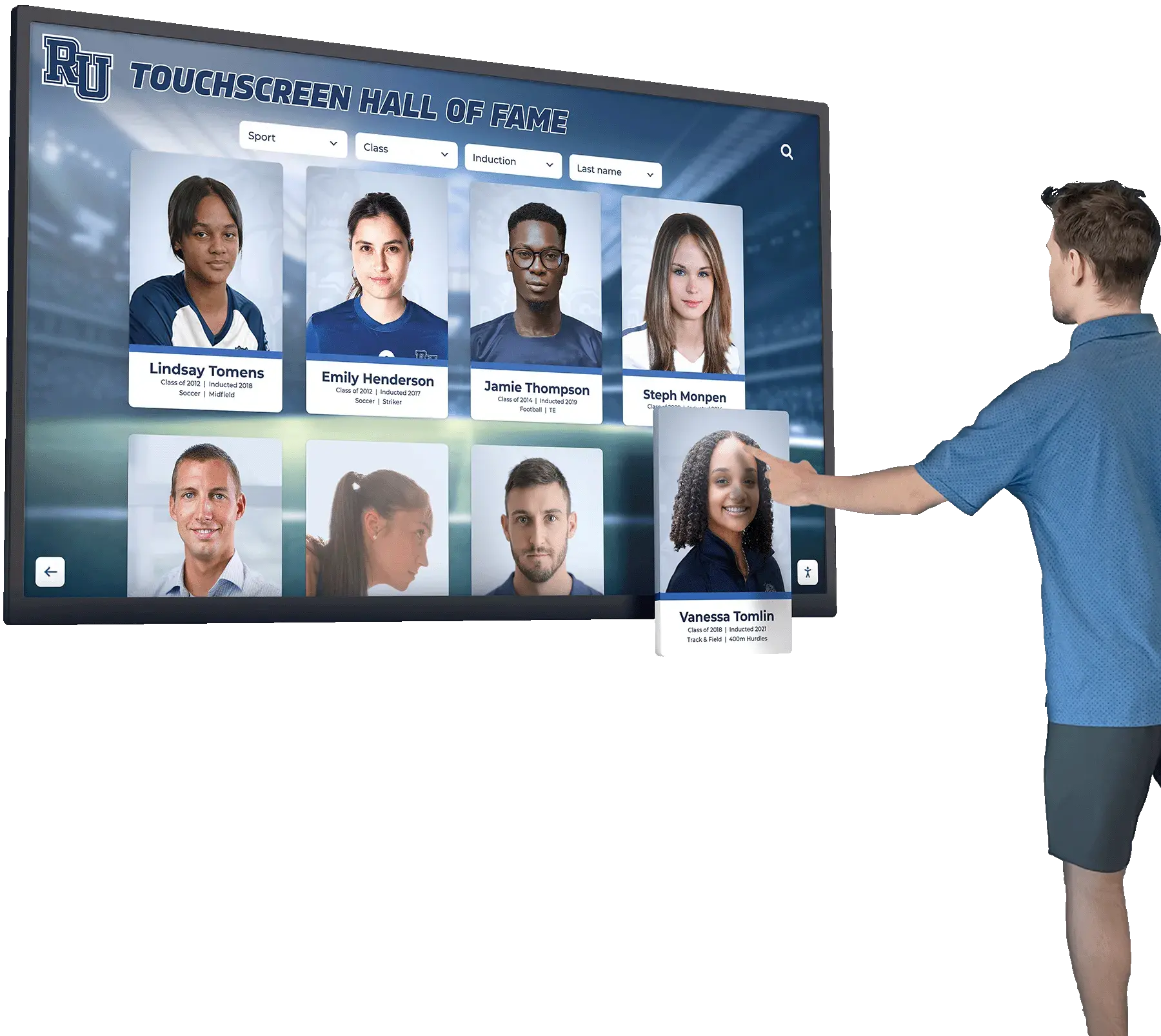
Individual athlete portrait cards on recognition touchscreens surface data from specific records—collation policy ensures that searches and sort operations connect to the right profile every time
Display Integration: Collation and Public Recognition Outputs
The display layer is where collation failures become visible to visitors, athletes, and families. Three principles govern how collation policy affects public-facing recognition outputs.
Principle 1: Display names are stored exactly; search is normalized. The canonical spelling of an athlete’s name—including accent marks, preferred capitalization, and any characters outside the basic ASCII range—is the value that appears on the recognition display. The collation policy governs how that value is searched and compared, not how it is rendered. A well-configured system displays “María José Rodríguez” precisely while also finding that record when a visitor types “maria jose rodriguez.”
Principle 2: Sort order is locale-aware and explicitly specified. Recognition displays that list athletes alphabetically should sort using a locale appropriate to the primary language of the recognition program. For most US school athletic programs, a US English locale that follows standard dictionary sort order is appropriate. The locale should be explicitly specified in the display configuration—not left to the server’s default—so that sort behavior is predictable and consistent across software updates.
Digital hall of fame platforms that generate public-facing canonical URLs for honoree profiles depend on the same collation discipline at the web layer. The digital hall of fame canonical tag audit guide at halloffametouchscreen.com describes how URL and metadata consistency for recognition profiles depends on consistent underlying data—when the same athlete’s name is stored inconsistently across records, web-layer canonical management problems become unavoidable.
Principle 3: Import pipelines validate before committing. Every data pathway that brings new records into the recognition system—award recipient imports from spreadsheets, historical data migrations, governing body award lists—must validate against existing records using the target collation before creating new entries. Unvalidated imports bypass the collation policy and reintroduce the duplicate and mismatch problems the policy is designed to prevent.
For programs with recognition walls spanning physical displays alongside digital screens, display consistency extends to both formats. The high contrast mode and accessibility test guide at halloffametouchscreen.com covers how recognition interfaces are validated for visual consistency—the same validation discipline applies to name rendering, ensuring names with non-ASCII characters display correctly at all contrast and zoom levels on the recognition screen.
When a recognition ceremony is approaching and the display must show correct athlete names without search failures or sort anomalies visible in front of honorees and their families, the collation policy is the underlying governance that makes reliability possible. The stakes at recognition events are significant: an award recipient’s name displayed incorrectly at their own ceremony is a lasting impression. Resources like the award acceptance ceremony guide at halloffame-online.com underscore that recognition moments carry real meaning for athletes, coaches, and communities—the data infrastructure behind those moments must be reliable.
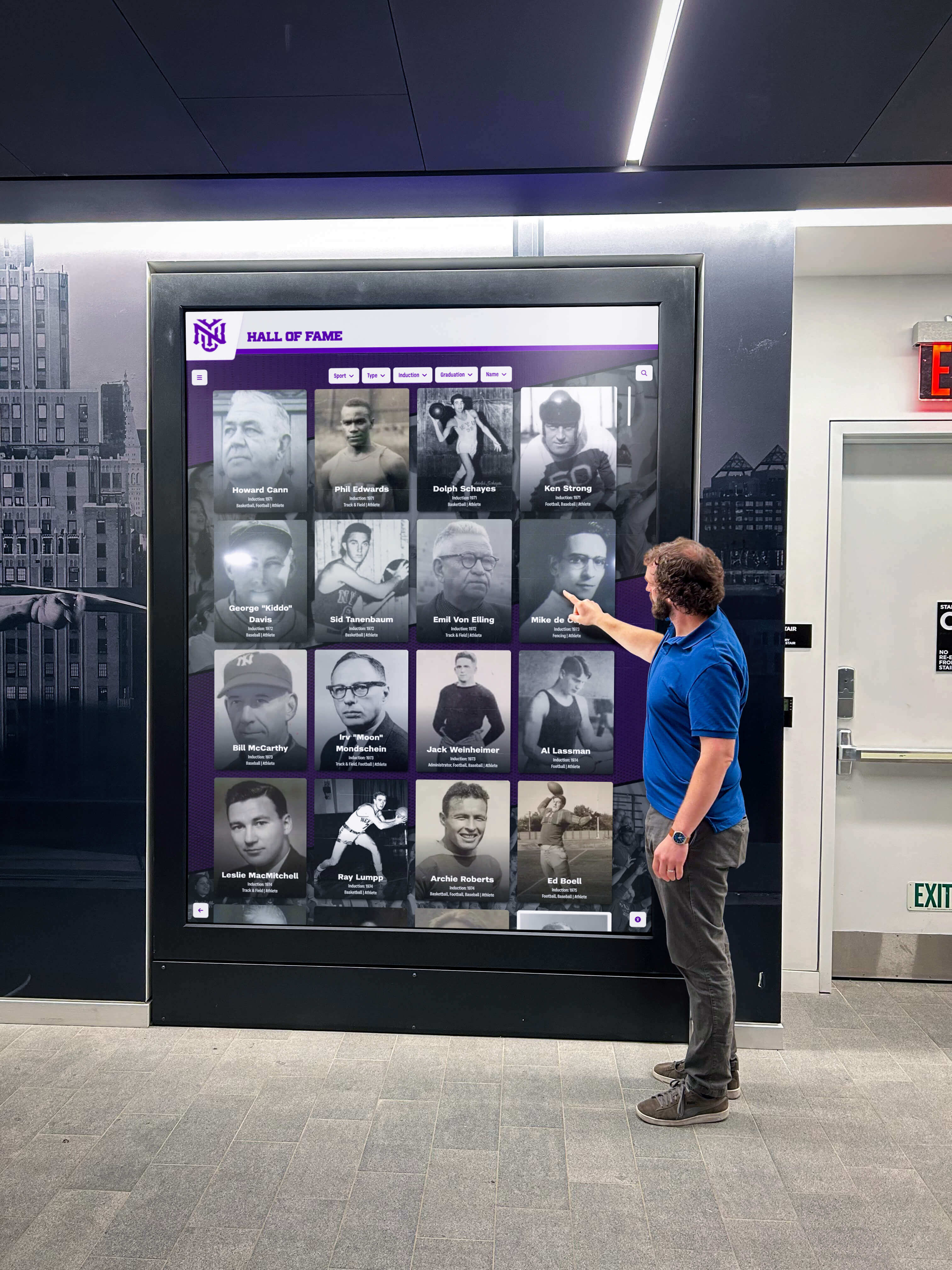
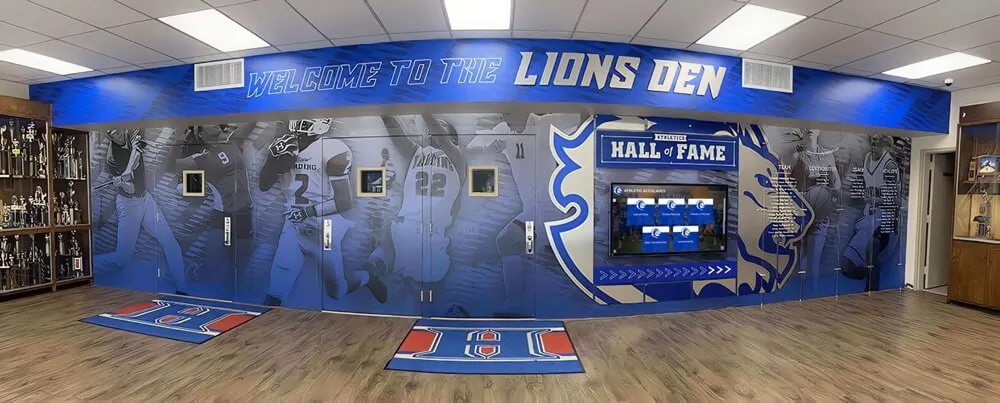
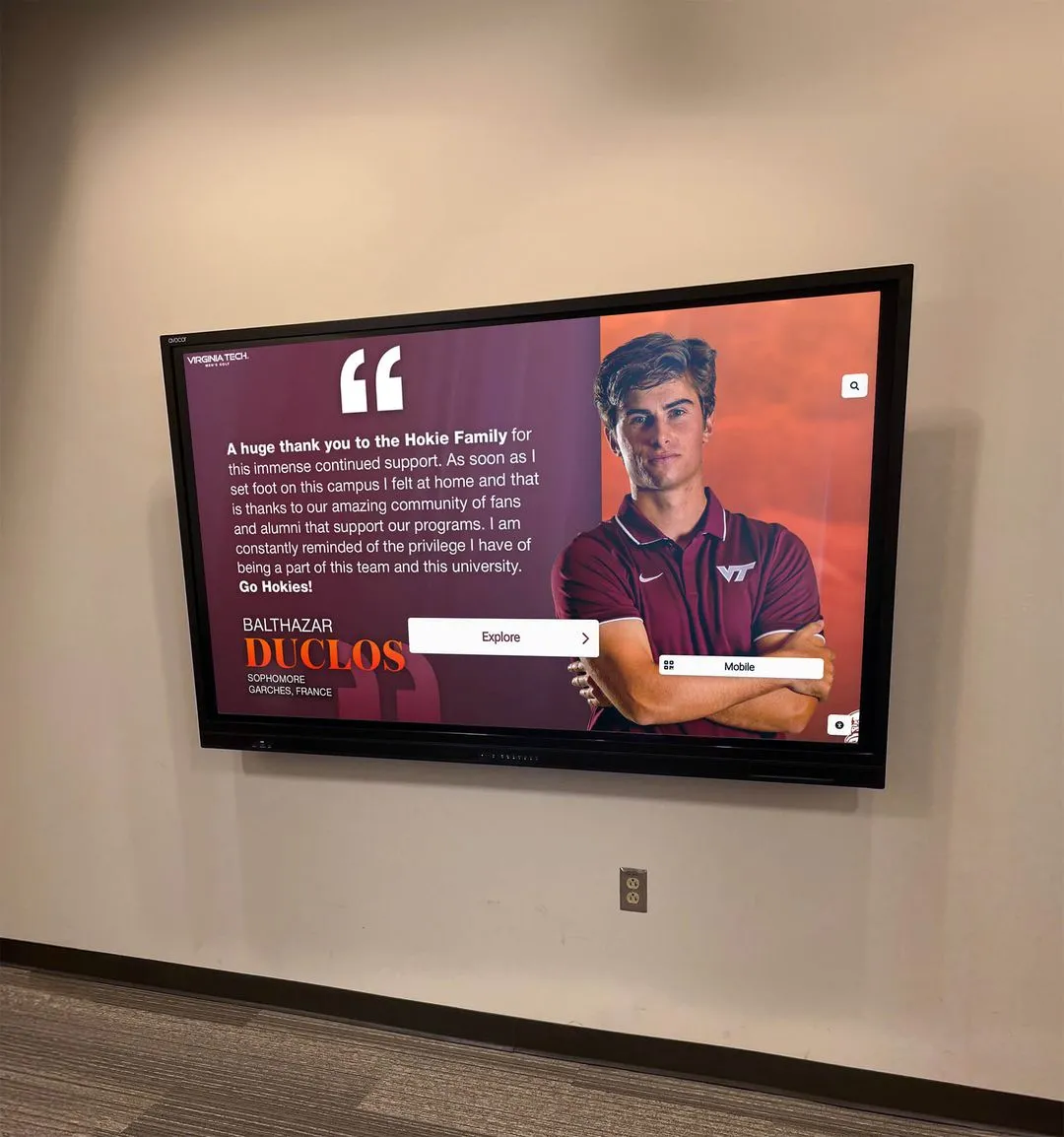
Recognition platform interfaces depend on consistent collation policy to return correct search results and sort athlete rosters reliably for every visitor interaction
FAQ: Athletic Awards Database Collation Policy
What is collation in the context of an athletic awards database?
Collation is the set of rules a database uses to compare and sort text strings. It determines whether “Smith” and “smith” match, how names with accent marks are sorted alongside unaccented names, and whether a search for “garcia” finds a record stored as “García.” An athletic awards database collation policy specifies which collation setting is used for name fields, category labels, and season identifiers so that search, deduplication, and sort order behave consistently and predictably across all parts of the recognition system.
Why does the same athlete name appear as two separate records in our recognition platform?
This typically indicates a collation or normalization mismatch on import. When an award database receives a name from an external source—a spreadsheet, a governing body list, or a historical document—and the comparison logic does not recognize the incoming string as equivalent to an existing record, the system creates a new entry rather than updating the existing one. The solution is to run a duplicate detection audit using a case-insensitive, accent-insensitive comparison, review the flagged pairs, merge confirmed duplicates, and add import validation that prevents the same mismatch in future imports.
Does changing our database collation require rebuilding all our award records?
Changing the collation of an existing database table requires a database migration—a process that applies the new collation rules to all existing data—but does not delete or rebuild the records themselves. Displayed values are preserved exactly; only the comparison and sort rules change. The practical risk is that records the previous collation treated as distinct may now match under the new collation, surfacing previously undetected duplicates. Running a duplicate detection audit before applying the collation change—Step 3 in the migration checklist above—identifies those cases in advance so they can be resolved before the change is applied to the live system.
Should the same collation be used for academic and athletic award records?
Yes. If an institution maintains academic and athletic recognition records in the same database or on the same platform, a consistent collation across both record types ensures that the same student’s records in both categories can be linked reliably. An athletic record for “María García” and an academic honor roll entry for “Maria Garcia” stored in systems with different collation settings may not be recognized as belonging to the same student—creating fragmentation in a student’s complete recognition history that is difficult to reconcile years later.
Can our recognition platform enforce collation policy automatically?
Modern recognition platforms designed for school athletic programs provide configurable collation settings, duplicate detection at the point of import, and controlled-vocabulary fields for categories and seasons—features that operationalize a collation policy in day-to-day record management rather than relying entirely on staff discipline. When evaluating or configuring a platform, confirm that name matching for deduplication uses case-insensitive comparison, that import pipelines validate against existing records before creating new entries, and that the underlying database collation is documented and matches the policy’s specification.
Building a Recognition Database That Never Loses a Name
An athletic awards database collation policy is, at its core, a commitment to reliability: every athlete’s name will be found when searched, every roster will sort correctly when displayed, and every import will match against existing records before creating a new entry.
Programs that establish this governance before building out a recognition database spend significantly less time resolving search failures, merging duplicate records, and explaining sort anomalies to families and alumni than programs that discover the need for a collation policy reactively. The eight-step migration checklist in this guide works for programs at any stage: those starting fresh, those migrating from spreadsheets to a platform, and those cleaning up an existing database that has accumulated years of inconsistent data.
For a practical look at how recognition data governance connects to the broader challenge of managing programs across multiple sports, seasons, and facilities, the athletic facility management complete guide at digitalyearbook.org addresses the administrative complexity that recognition programs operate within—consistent collation policy is one data governance pillar in a broader recognition infrastructure that spans physical and digital formats alike.
Rocket Alumni Solutions’ recognition platform uses a Unicode-aware, case-insensitive collation for all name fields by default, includes duplicate detection at the point of import, and provides administrative tools for normalizing existing records. The platform is fully WCAG 2.1 AA compliant, manages unlimited inductees and award categories, operates on any touchscreen from 32 to 100 inches, and is updated remotely so every change propagates automatically to every connected display.
Request a custom demo of Rocket Alumni Solutions to see how the platform supports athletic recognition programs that take name accuracy, search reliability, and data governance seriously—from the first record entered to the hundredth season of honorees displayed.