



Intent: define. An athletic awards database deferrable constraint policy is a data-governance document that specifies which referential and uniqueness constraints in your recognition database may be checked at the end of a multi-record import transaction rather than after each individual row insert—so that batches of interdependent athletic recognition records can be loaded completely and then validated together, rather than failing mid-import because a child record arrives before its parent.
The short answer: identify every import workflow that introduces more than one interdependent record type in a single batch, mark the constraints governing those relationships as deferrable in your database schema, and define a written policy that specifies which transactions may defer which constraints—and which constraints must remain immediate regardless of import mode. Without a written policy, IT administrators either disable constraint checking entirely (creating silent data integrity gaps) or import records in a fragile dependency-ordered sequence that breaks whenever source data arrives out of order.
This guide defines deferrable constraints in plain language, maps the specific multi-step import failures they prevent in athletic recognition programs, presents a policy framework with an authority matrix, and provides a seven-step implementation checklist for IT administrators configuring recognition databases to handle batch award imports safely.
A high school athletic department prepares to migrate twelve years of award records from three separate spreadsheets into a new recognition platform. The import runs for eleven minutes, processes four thousand rows—and then fails on row 4,001 with a foreign key violation: an award recipient record references an athlete profile that the import script has not yet created. The entire transaction rolls back. The database is empty again.
This failure is not a data quality problem. The athlete profile exists in the source data. The import script simply attempted to create the award record before creating the athlete record it references. The database rejected the insert because, at that precise moment, the referenced parent record did not yet exist.
Deferrable constraints are the database mechanism designed to solve exactly this problem. An athletic awards database deferrable constraint policy defines when your recognition system is permitted to use them—and how to do so without trading import convenience for data integrity.

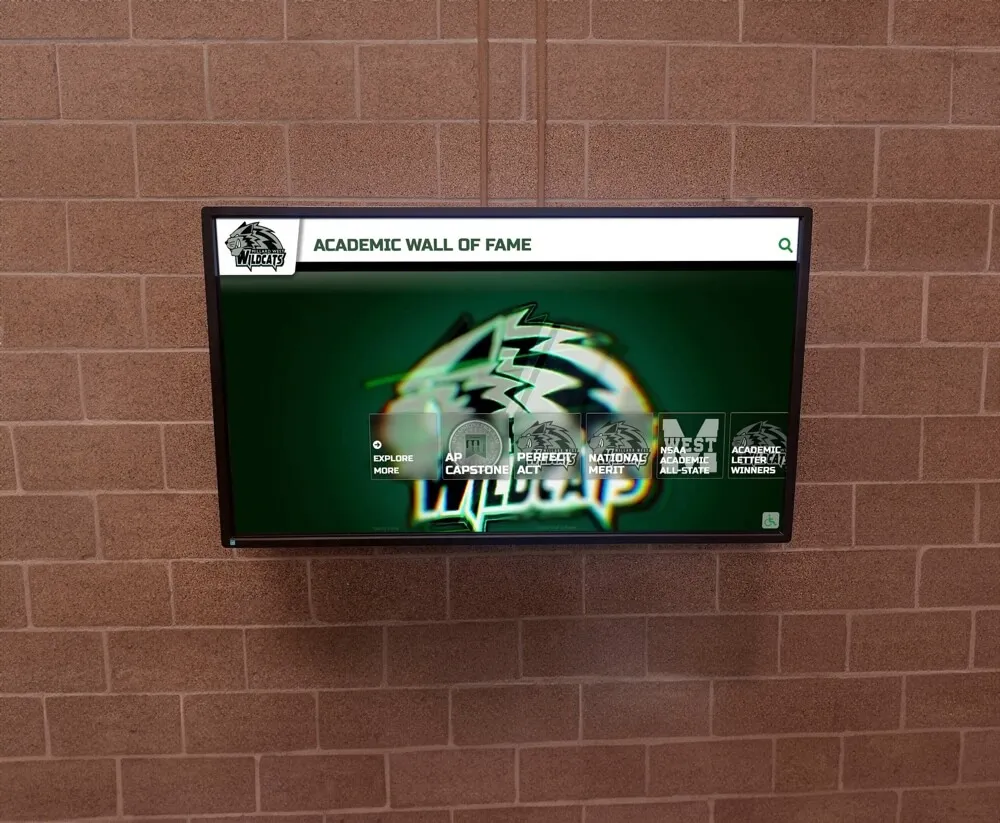
Recognition kiosks that display years of accumulated athletic data depend on import workflows that bring records in safely—deferrable constraint policy governs when the database may delay validation until a full batch is complete
What Is a Deferrable Constraint? A Definition for Athletic Program Administrators
A deferrable constraint is a database integrity rule that can be switched from immediate mode—checked after each individual row operation—to deferred mode, in which checking is postponed until the current transaction is committed as a whole.
Every relational database uses constraints to enforce data integrity rules: a foreign key constraint ensures that an award recipient record references a valid athlete record; a uniqueness constraint ensures that the same athlete cannot be entered twice under identical identifying information; a not-null constraint ensures that required fields are populated before a record is saved. By default, most constraints are checked immediately after each insert or update statement executes.
The ISO/IEC SQL standard (formally SQL:99 and carried forward in SQL:2003 and later revisions) introduced the concept of deferrable constraints through two clauses:
INITIALLY IMMEDIATE: The constraint behaves as a standard immediate constraint by default, but a specific transaction may switch it to deferred mode usingSET CONSTRAINTS DEFERRED.INITIALLY DEFERRED: The constraint begins every transaction in deferred mode—it is checked only at commit unless the transaction explicitly switches it to immediate mode.
The practical effect for athletic recognition administrators: when a transaction is operating under deferred constraint mode, the database allows records to exist temporarily in a state that would normally violate an integrity rule—as long as the full set of records satisfies all constraints by the time the transaction commits. If any constraint is still violated at commit time, the entire transaction rolls back and no partial data is persisted.
This is fundamentally different from disabling a constraint entirely. A disabled constraint is not checked at all—it can be violated permanently, and the violation persists in the database. A deferred constraint is checked—just at commit time rather than row-by-row. The integrity guarantee remains intact; only the timing of enforcement changes.
PostgreSQL natively supports deferrable constraints as defined in the SQL standard. MySQL and MariaDB do not implement deferrable constraints; programs running recognition databases on those engines must use alternative sequencing strategies or application-layer transaction management. Microsoft SQL Server does not support the SQL standard DEFERRABLE clause but provides WITH NOCHECK for specific constraint bypass scenarios—a distinct mechanism that does not provide the deferred-until-commit behavior of true deferrable constraints.
How Import Failures Surface in Athletic Recognition Programs
Deferrable constraint violations appear in three recognizable patterns in athletic recognition databases.
Circular parent-child dependencies on batch import. A recognition program imports a season’s complete award dataset in a single file. The file contains athlete records, award category records, and award-recipient junction records—all in mixed order because the source spreadsheet was sorted alphabetically by athlete name rather than by record type. A standard immediate-constraint database rejects every award-recipient row whose referenced athlete record has not yet been inserted, even though all the athlete records are present in the same file.
Historical migration from flat-file sources. Programs migrating from spreadsheet-based recognition to a relational database encounter the circular dependency problem at scale. Decades of flat-file records do not arrive pre-ordered by entity type. Sorting them programmatically before import requires knowing the exact dependency graph—which requires understanding the destination schema in full detail. A deferrable constraint policy allows the migration tool to insert records in the order they appear in the source file and let the database validate the complete set at commit time.
Governing body award list imports. An athletic department receives an official list of conference award recipients from its governing body each season. The list contains athlete names and school designations, but not the internal database IDs the recognition system uses as primary keys. The import process must match each incoming record to an existing athlete record—and when a name fails to match an existing record (due to a spelling variant or a new transfer athlete), the import script must create a provisional athlete record and an award record in the same transaction. Without deferrable constraints, the award record cannot reference the athlete record until that record is committed—forcing a two-pass import that creates provisional records, commits them, then adds awards in a second transaction.
For programs managing recognition data alongside broader school information assets, the DAM for schools complete guide at digitalwarming.net describes how data management infrastructure for school programs handles asset ingestion across multiple interdependent record types—the same import sequencing challenges apply when recognition records reference shared athlete identity data maintained in a school’s central systems.

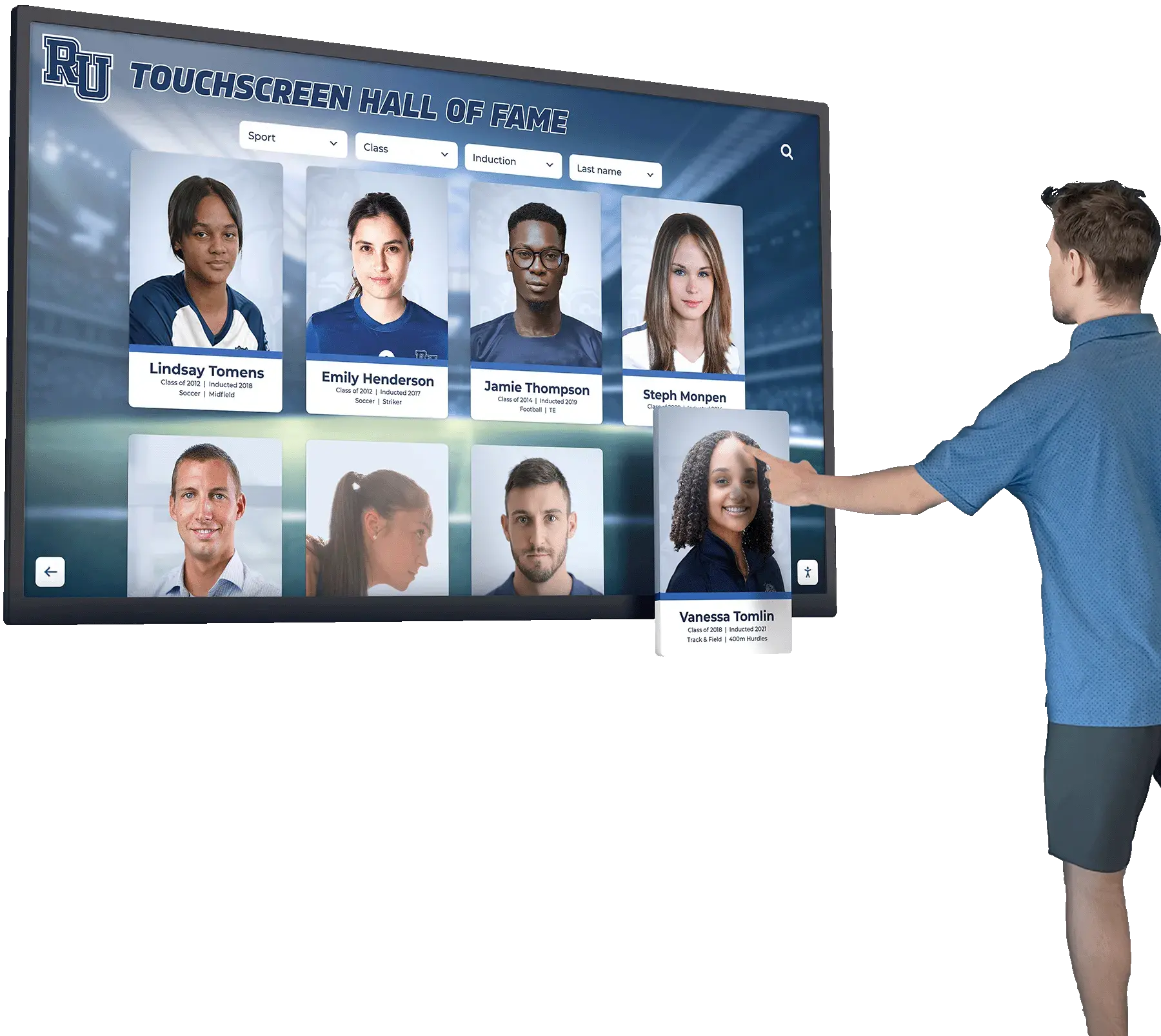
Athletic recognition displays draw from databases where import integrity directly determines what visitors see—a constraint policy that allows safe batch loading prevents partial-import gaps from reaching the display layer
Core Components of an Athletic Awards Database Deferrable Constraint Policy
An effective deferrable constraint policy for athletic recognition programs addresses five governance areas.
1. Constraint Classification by Deferability
The policy must classify every integrity constraint in the recognition database as either deferrable or not deferrable, with written justification for each classification.
| Constraint Type | Recommended Deferability | Rationale |
|---|---|---|
| Athlete-to-award foreign key | Deferrable (INITIALLY IMMEDIATE) | Batch imports may insert awards before their athlete records |
| Season-to-team foreign key | Deferrable (INITIALLY IMMEDIATE) | Season records and team records may arrive in mixed order |
| Award category foreign key | Deferrable (INITIALLY IMMEDIATE) | New category records may be created in the same batch as first recipients |
| Athlete uniqueness constraint | Not deferrable | Duplicate athlete detection must fire immediately, not at commit |
| Not-null on display name | Not deferrable | Required fields must be validated immediately at row creation |
| Primary key uniqueness | Not deferrable | System identifiers must be unique from the moment of creation |
The distinction between deferrable and not-deferrable in this table is not arbitrary. Constraints governing referential integrity between entity types—the relationships that connect athletes to awards, seasons to teams, and awards to categories—are the ones that batch imports routinely violate mid-transaction. Those are the candidates for deferred checking. Constraints that prevent two records from representing the same real-world entity (uniqueness on athlete identifiers) or that ensure records are minimally valid when created (not-null on required fields) must remain immediate: deferring them would allow duplicates and invalid records to propagate through the transaction and complicate rollback.
2. Transaction Boundary Definition by Import Type
The policy must define what constitutes a transaction boundary for each recognized import scenario. A transaction boundary is the point at which the database checks all deferred constraints and either commits the full batch or rolls back entirely.
Recommended transaction boundaries for athletic recognition imports:
| Import Type | Transaction Boundary | Deferred Constraints in Scope |
|---|---|---|
| Season award batch | All records for one sport, one season | Athlete-to-award, category-to-award |
| Historical migration file | All records in one source file (capped at defined row limit) | Athlete-to-award, season-to-team, category-to-award |
| Governing body import | All records from one official list | Athlete-to-award |
| Single-record manual entry | Individual record | None (no deferral needed for single-record entry) |
Capping migration file transaction size—rather than treating an entire multi-decade migration as one transaction—limits rollback scope when a validation failure occurs. A migration that processes records in annual batches rolls back at most one year of data on failure; a migration that treats the entire archive as one transaction rolls back everything on any single validation error.
3. Validation Sequence Within Deferred Transactions
The policy must specify which pre-commit validations are applied within the transaction, before the database executes its own deferred constraint check at commit time.
Application-layer pre-commit validation should include:
- Referential closure check: Confirm that every referenced entity ID in the import batch either already exists in the database or is being created within the same transaction. This catches the class of errors the deferred constraint would catch at commit, but earlier—allowing the import process to report specific missing references before attempting to commit.
- Uniqueness pre-check: Before inserting any record, run a lookup against existing records and against records already staged in the current transaction to identify prospective duplicates. Do not rely on the database’s immediate uniqueness constraint alone; pre-check at the application layer so that duplicates are reported with actionable context (which incoming record collides with which existing record) rather than as a raw constraint violation error.
- Required field completeness: Verify that all required display fields—athlete name, award category, season identifier—are populated before the transaction opens. Missing required fields in source data should cause a pre-import validation failure, not a mid-transaction abort.
The digital hall of fame complete guide at digitalyearbook.org describes the data completeness requirements that drive recognition display quality—the pre-commit validations in this list are the import-layer enforcement of those same requirements.
4. Authorization Authority
| Decision | Who Defines | Who Approves |
|---|---|---|
| Which constraints are deferrable | IT administrator or database architect | Athletic director (with IT sign-off) |
| Transaction boundary for each import type | IT administrator | Recognition coordinator |
| Row cap per migration transaction | IT administrator | Athletic director |
| Application-layer pre-commit validation rules | IT administrator | Recognition coordinator |
| Exception to use deferred mode for a non-listed import type | IT administrator | Athletic director + district IT |
| Constraint re-classification from not-deferrable to deferrable | IT administrator | Athletic director + district IT |
Changes to constraint deferability classification—particularly reclassifying a not-deferrable constraint as deferrable—require formal change-control review. This is because such changes expand the window during which the database can hold records that would otherwise fail validation, and that expansion introduces risk if an import process fails between constraint deferral and commit.
5. Failure Response Protocol
The policy must specify what happens when a deferred transaction fails at commit time. A deferred constraint failure at commit rolls back the entire transaction—no partial data is persisted. The failure response protocol should include:
- Error reporting: The database error identifying which constraint failed and which records triggered the violation is logged in a structured format that the import process can surface to the recognition coordinator without requiring database-level access.
- Source data annotation: The source import file or dataset is annotated with the records identified as problematic, so the recognition coordinator can correct them without re-examining the full dataset.
- Retry boundary: The policy defines whether the corrected subset is retried as a standalone transaction or whether the full batch is re-attempted after correction. For large migration batches, re-attempting the full batch after correcting a single error is typically unnecessary; a smaller retry transaction containing only the corrected records is more efficient.
For programs planning recognition events around imported award data—like the end-of-year recognition ceremonies described in the homecoming festivities guide at halloffame-online.com—import failure response speed matters. A policy that includes clear retry guidance prevents a failed import from blocking ceremony preparation when the recognition coordinator does not have IT access.
Seven-Step Implementation Checklist
For programs building deferrable constraint support into an existing recognition database, the following checklist provides a structured path from audit to production deployment.
Step 1: Map the Database Schema and Identify All Foreign Key Constraints
Document every foreign key constraint in the recognition database, including the referencing table, the referenced table, the column(s) involved, and the current constraint mode (immediate or deferrable). For programs using a recognition platform rather than a self-managed database, request this information from the platform vendor. If the vendor cannot provide constraint-level schema documentation, request confirmation of how the platform handles batch imports of interdependent record types.
Step 2: Identify Multi-Step Import Workflows That Cross Entity Boundaries
For each import workflow the recognition program uses—seasonal award imports, historical migrations, governing body list integrations, manual bulk entry—document which entity types each workflow creates or updates, and whether records of different entity types within a single import can reference each other. Any workflow that creates both a parent record type and a child record type in the same import operation is a candidate for deferrable constraint use.
Step 3: Classify Each Foreign Key Constraint as Deferrable or Not Deferrable
Apply the classification framework from Section 1 of the policy to each constraint identified in Step 1. Document the justification for each classification. Constraints that govern relationships between entity types created in the same import workflow are candidates for deferrable classification. Constraints that enforce uniqueness of athlete identity or that ensure minimal record validity remain not deferrable.
Step 4: Implement Deferrable Constraint Declarations in the Database Schema
For each constraint classified as deferrable, update the schema to include the DEFERRABLE INITIALLY IMMEDIATE clause (or INITIALLY DEFERRED if the constraint should default to deferred mode). In PostgreSQL, this is accomplished by dropping and recreating the constraint with the new declaration or by using ALTER TABLE ... ALTER CONSTRAINT ... DEFERRABLE. Confirm that the platform or database version supports deferrable constraints before this step; on MySQL or MariaDB, implement alternative application-layer sequencing as documented in Step 5.
Step 5: Update Import Processes to Use Deferred Mode Appropriately
For each multi-step import workflow identified in Step 2, update the import process to open an explicit transaction, issue SET CONSTRAINTS DEFERRED (or the platform-equivalent) for the specific deferrable constraints involved, execute all record inserts, run application-layer pre-commit validation, and then commit. Ensure that error handling covers both mid-import failures (which abort and roll back automatically) and deferred constraint failures at commit time (which also roll back automatically but produce constraint-specific error messages that must be surfaced to the operator).
For programs using a recognition platform that manages imports through a user interface rather than direct database access, this step involves configuring or requesting the platform’s batch import feature to use transaction-scoped validation rather than row-by-row validation. The donor recognition signage and interactive display guide at touchwall.tv discusses how recognition platforms manage data updates across connected display outputs—the same platform architecture that manages display updates also governs how import transactions propagate to live recognition screens.
Step 6: Test Each Import Workflow Against Intentionally Invalid Batches
Before deploying the updated import process against production data, run structured tests using batches designed to trigger deferred constraint failures:
- A batch with a missing parent record (an award recipient that references an athlete not in the batch and not in the database)
- A batch with a circular dependency (a season record that references a team record that is also new, imported in mixed order)
- A batch where the parent record is included but appears after its child records in the source file
- A batch where all records are valid, confirming that a correctly formed batch commits successfully
Document the outcome of each test. Confirm that failed batches roll back completely (no partial data in the database after a failure) and that error messages identify the specific constraint and records involved.
Step 7: Document and Train
Update the recognition program’s import documentation to reflect the updated transaction model, including which imports use deferred mode, what pre-import validation must be completed before initiating a deferred transaction, and what steps the recognition coordinator takes when an import fails. Train staff who perform imports on what a deferred constraint failure message indicates and how to use the failure protocol to correct and retry without re-attempting the full dataset.

Recognition content displayed in school lobbies is only as accurate as the import pipeline that loaded it—deferrable constraint policy ensures that batch imports either complete fully or fail cleanly, with no partial data reaching the display
When to Use Immediate Constraints Instead
A deferrable constraint policy must be equally clear about when not to defer. The following scenarios require immediate constraint checking regardless of import mode.
Athlete identity uniqueness. The constraint that prevents two records from representing the same athlete—enforced on enrollment ID, on the combination of name and graduation year, or on whatever candidate key the program’s candidate key policy designates—must never be deferred. A deferred uniqueness constraint allows a transaction to contain two records with the same identity key through the entire import process; if one is a duplicate of an existing record and the other is genuine, a deferred uniqueness failure at commit does not distinguish between them. Catching this immediately, row by row, provides the specific duplicate match context needed to resolve it.
Display name not-null. An award recipient record with no display name will reach a recognition display as a blank entry if the not-null constraint on that field is deferred and the record commits as part of a larger valid batch. The not-null constraint on required display fields should fire immediately, before the record is staged, so that the import process rejects nameless records at the source.
System-generated primary keys. Primary keys generated by the database (auto-increment or UUID) are assigned at row creation. Deferring uniqueness checking on primary keys would allow the import session to stage records with colliding primary keys, producing a commit-time failure that is difficult to diagnose. In practice, system-generated keys rarely collide; the policy should confirm they are not deferrable as a procedural safeguard.
Recognition programs that maintain spirit and tradition alongside data governance—like those described in the high school spirit week ideas guide at touchscreenwebsite.com—understand that institutional identity depends on records that are both complete and accurate. Immediate constraints protect the accuracy dimension; deferrable constraints enable the completeness dimension when multi-step imports require it.
Display Integration: How Constraint Policy Affects Recognition Output Quality
The display layer is the visible consequence of import policy decisions. Three principles connect deferrable constraint governance to the quality of public-facing recognition outputs.
Principle 1: An import that rolls back leaves the display unchanged. When a deferred transaction fails at commit and rolls back, no records from that import appear on the recognition display. This is the correct behavior. It is preferable to a partial import that populates the display with half of a season’s award recipients, requiring staff to manually identify and remove the incomplete records from a live screen.
Principle 2: A successful deferred transaction produces a complete, validated dataset. When a multi-step import completes successfully under deferred constraint mode, every record in that batch has passed both application-layer pre-commit validation and database-layer constraint enforcement. The recognition display receives records that satisfy all integrity rules—not records that were assumed to be valid because constraint checking was skipped.
Principle 3: Pre-commit validation errors are more actionable than constraint violation errors. A deferred constraint failure at commit identifies which constraint failed but may not identify which specific record in the batch caused it, depending on the database engine and error reporting configuration. Application-layer pre-commit validation—run before the commit is attempted—can identify specific rows, column values, and the nature of the conflict in terms the recognition coordinator understands without database-level access. The policy should require application-layer pre-commit validation so that the database’s own deferred constraint check functions as a backstop, not as the primary error-reporting mechanism.
For programs integrating recognition data with alumni and school history systems, the digital hall of fame vendor procurement guide at rocketgraphics.ai discusses how platform architecture choices—including how a vendor handles data imports—affect long-term recognition program scalability. Import transaction handling is a technical procurement criterion worth verifying before selecting a recognition platform.
When a recognition program plans to display award records at a significant event—a hall of fame ceremony, a banquet, or an end-of-season celebration—the integrity of imported data determines whether every honoree’s name appears correctly on the night it matters. For programs considering how digital displays enhance event-season recognition, the donor recognition wall design and signage walkthrough at touchwall.tv illustrates how recognition display systems handle multi-source data for live event use.

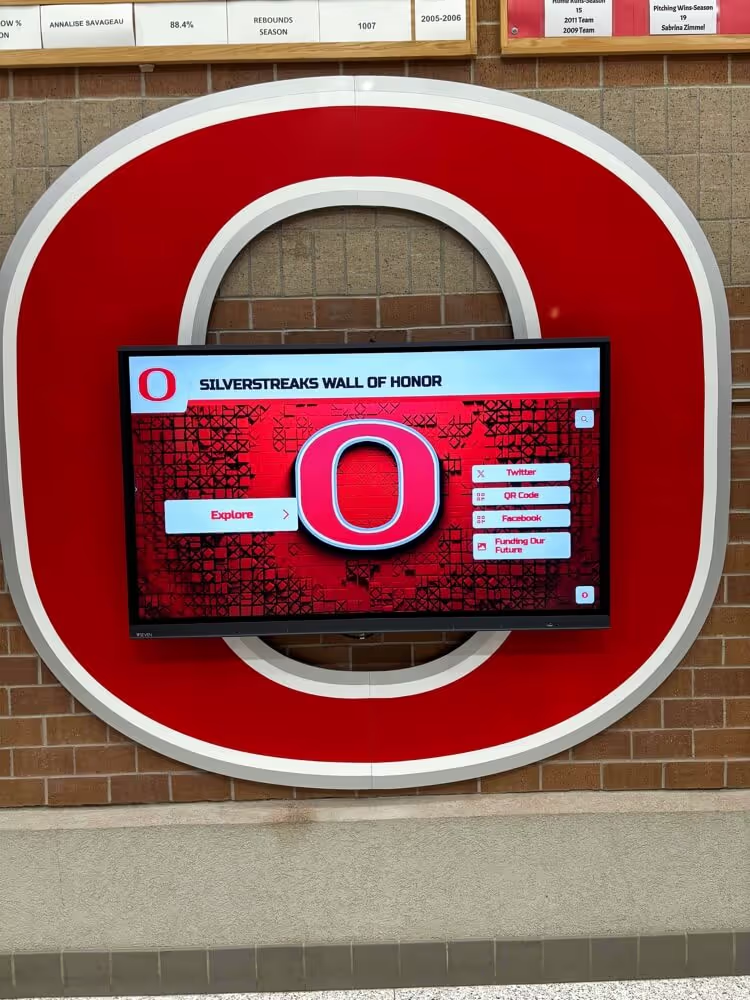
School recognition walls that combine physical shields with digital displays depend on import pipelines governed by clear constraint policies to ensure every honoree name displayed matches a complete, validated record
FAQ: Athletic Awards Database Deferrable Constraint Policy
What is a deferrable constraint in the context of an athletic awards database?
A deferrable constraint is a database integrity rule that can be configured to check compliance at the end of a transaction rather than after each individual row insertion. In athletic recognition databases, deferrable constraints allow batch imports of interdependent records—such as athlete profiles and their associated award records—to proceed in any order within a transaction, with all referential integrity rules validated together when the transaction commits. If any rule is violated at commit time, the entire batch rolls back with no partial data persisted.
Why would a school’s athletic recognition database need deferrable constraints?
Athletic recognition programs routinely import records that reference each other: award recipients reference athlete profiles, season award summaries reference team records, and championship entries reference both seasons and athletes. When source data arrives from spreadsheets, governing body lists, or historical archives, it is rarely sorted in the precise dependency order that an immediate-constraint database requires. Deferrable constraints allow the database to accept records in the order they arrive and validate the full set at commit time, eliminating the need for complex pre-sort operations or multi-pass import scripts that are fragile and difficult to maintain.
Does using deferrable constraints reduce data integrity in a recognition database?
No—when implemented correctly, deferrable constraints preserve data integrity while removing artificial sequencing requirements. The integrity rule is still enforced; only the timing of enforcement changes. Every record in a deferred transaction must satisfy all constraints before the transaction can commit. The practical difference is that a deferred constraint checks the full set of records at once rather than checking each row in isolation. The integrity guarantee is the same; the flexibility for import workflows is greater.
Which database platforms support deferrable constraints for recognition systems?
PostgreSQL supports deferrable constraints as specified in the SQL standard, with both INITIALLY IMMEDIATE and INITIALLY DEFERRED options and the ability to switch modes within a transaction using SET CONSTRAINTS. MySQL and MariaDB do not support deferrable constraints; programs running recognition databases on those engines must use application-layer transaction sequencing to achieve similar outcomes. Microsoft SQL Server does not implement the SQL standard DEFERRABLE clause; it provides WITH NOCHECK for constraint bypass, which is a distinct mechanism without the deferred-until-commit behavior described in this guide.
How should a recognition program handle a deferred constraint failure during a multi-year archive migration?
A migration that processes records in bounded annual batches—rather than as one large transaction—limits rollback scope to a single year when a constraint failure occurs. When a batch fails at commit, the import process should log the specific constraint that failed and the records involved, annotate the source data to identify the problematic entries, and present a corrected subset for retry as a standalone transaction. The program does not need to re-attempt the entire multi-year migration after correcting a single year’s errors; only the corrected records for the failed batch need to be retried.
Building a Recognition Import Pipeline That Either Succeeds Completely or Fails Cleanly
An athletic awards database deferrable constraint policy is, at its core, a commitment to transactional integrity: every batch import either completes fully with all records validated, or it fails entirely with no partial data persisted. There is no middle state in which some records load and others do not, leaving the recognition display to show an incomplete picture of a season’s honorees.
Programs that define this policy before building out import workflows—rather than discovering the need for it mid-migration when a four-thousand-row import fails at row 4,001—spend significantly less time debugging partial imports, manually removing orphaned records from live displays, and reconciling what the database holds against what the source file contains.
For programs considering how their import architecture should align with the platform they use for recognition display, the digital hall of fame complete guide at digitalyearbook.org covers the data management requirements that drive recognition display quality from data entry through public presentation.
Rocket Alumni Solutions’ recognition platform manages award record imports through a CMS architecture that validates referential integrity across all record types before publishing to connected displays, propagates updates automatically to every screen in the installation, and maintains an edit history for every change applied. The platform is fully WCAG 2.1 AA compliant, supports unlimited inductees and award categories, and operates on any touchscreen from 32 to 100 inches.
Request a custom demo of Rocket Alumni Solutions to see how the platform supports recognition programs that require reliable multi-step data imports—from a single season’s awards to decades of historical records loaded in sequence.