



Intent: decide. An athletic awards database on delete cascade policy is a data-governance document that tells every table in a recognition database what should happen to linked child records when a parent record is removed. The three realistic options—ON DELETE CASCADE, ON DELETE RESTRICT, and ON DELETE SET NULL—produce very different outcomes for athletic honor records, and the wrong default has quietly destroyed years of award history in programs that never set an explicit policy.
This guide defines each referential action in plain language for athletics data owners, presents a decision table for the record relationships most common in school recognition programs, walks through six numbered implementation steps, and answers the questions school IT teams most frequently raise.
When a parent record is deleted from an athletic recognition database—an athlete profile, a team season record, or an award category—every child record linked to it faces an immediate question: what happens to me? If no explicit policy exists, the database’s default behavior decides the answer. In PostgreSQL and most relational databases, the default is NO ACTION, which means the delete is rejected if any linked child records exist. That sounds protective, but it often means a database administrator must manually delete or reassign dozens of linked records before removing a single outdated parent—and it creates the temptation to add CASCADE everywhere just to make the operation easier, even where cascading would permanently destroy historical recognition data.
An athletic awards database on delete cascade policy takes that decision out of the moment and puts it in writing, per record type, decided in advance by the people who understand what each linked record represents.

Every shield on a recognition wall represents linked records in a database—a cascade policy determines whether removing a parent record removes those linked records with it, or preserves them as permanent institutional history
What ON DELETE CASCADE Means in an Athletic Awards Database
ON DELETE CASCADE is a referential integrity rule applied to a foreign key constraint. When a parent record is deleted, the database automatically deletes every child record that references it through that foreign key. The deletion propagates through the constraint without requiring manual intervention or additional application logic.
In an athletic recognition database, a typical cascade relationship looks like this:
CREATE TABLE award_recipients (
    id            SERIAL PRIMARY KEY,
    athlete_id    INTEGER NOT NULL
        REFERENCES athletes(id) ON DELETE CASCADE,
    award_type    VARCHAR(100) NOT NULL,
    season_year   INTEGER NOT NULL,
    created_at    TIMESTAMP NOT NULL DEFAULT NOW()
);
In this schema, deleting a row from the athletes table automatically deletes every row in award_recipients that references that athlete’s id. No additional code is required, and no orphaned child records remain.
For athletic recognition programs, this mechanism is powerful and potentially dangerous in equal measure. Applied to the right relationship, it keeps the database clean when working data is removed. Applied to the wrong relationship, it silently erases years of award history the moment a staff member removes an athlete profile they believe is a duplicate.
The PostgreSQL documentation describes ON DELETE CASCADE as appropriate for “child rows that make no sense without the parent,” and that framing is the correct starting point for any policy decision. The question for each foreign key in a recognition database is: does this child record make sense without its parent? If yes, cascade is wrong. If no, cascade may be appropriate.
The Five Referential Actions: A Plain-Language Comparison
PostgreSQL provides four referential actions for foreign keys beyond the built-in default:
| Referential Action | What Happens When the Parent Is Deleted | Effect on Award History |
|---|---|---|
NO ACTION (default) | Delete is rejected if child records exist; transaction fails at commit | History preserved; error must be handled in application code |
RESTRICT | Delete is rejected immediately when child records exist | History preserved; cleaner signal than NO ACTION for governance |
CASCADE | Child records are automatically deleted with the parent | History removed; clean but irreversible without backup restore |
SET NULL | Child records’ foreign key column is set to NULL; parent is deleted | History preserved in detached form; requires nullable FK column |
SET DEFAULT | Child records’ FK column is set to its defined default value | Rarely useful for recognition data without a meaningful default parent |
For most athletic award record types, the choice collapses to three practical options: cascade (use when child data is working data with no independent historical value), restrict (use when child data is historical and must not be silently removed), or set null (use when child data should survive the parent’s removal in a preserved but detached state).
Decision Table: Which Action Belongs on Which Relationship
The following table covers the foreign key relationships found in most school athletic recognition databases.
| Relationship | Recommended Action | Rationale |
|---|---|---|
athletes → award_recipients | RESTRICT | Award records document completed honors; silent removal when a profile is deleted is almost never correct |
athletes → athlete_profile_imports | CASCADE | Import staging records are working data with no independent value once the profile is created |
award_categories → award_recipients | RESTRICT | Removing a category must not silently remove every recipient who ever received it |
teams → season_records | RESTRICT | Season records are historical; team restructuring should not destroy them |
import_batches → import_batch_rows | CASCADE | Batch staging rows exist only to support the import operation; they have no value after processing |
coaches → coaching_awards | SET NULL | Coaching award records have historical value; a coach profile deletion should preserve the award with a null coach reference |
athletes → athlete_session_logs | CASCADE | Session and activity logs are operational data with no recognition history value |
hall_of_fame_classes → inductee_records | RESTRICT | Inductee records are permanent institutional decisions; cascade here is a governance failure |
sport_types → award_recipients | RESTRICT | Historical award records must not be deleted because a sport category is reorganized |
users → administrative_audit_log | SET NULL | Audit log entries must survive user account deletion; set user_id to NULL but preserve the log entry |
The pattern across this table is consistent: records that document completed recognition events belong under RESTRICT. Working data and staging records that serve a process rather than preserve history belong under CASCADE. Records with historical value whose link to a parent is administrative rather than substantive belong under SET NULL.
For programs that also manage fill factor tuning and storage optimization for frequently updated award records, the cascade policy also affects table maintenance footprint. Tables subject to frequent cascade deletions benefit from lower fill factors to reduce heap bloat from the delete operations; tables protected by RESTRICT constraints maintain higher density because their rows are rarely removed.

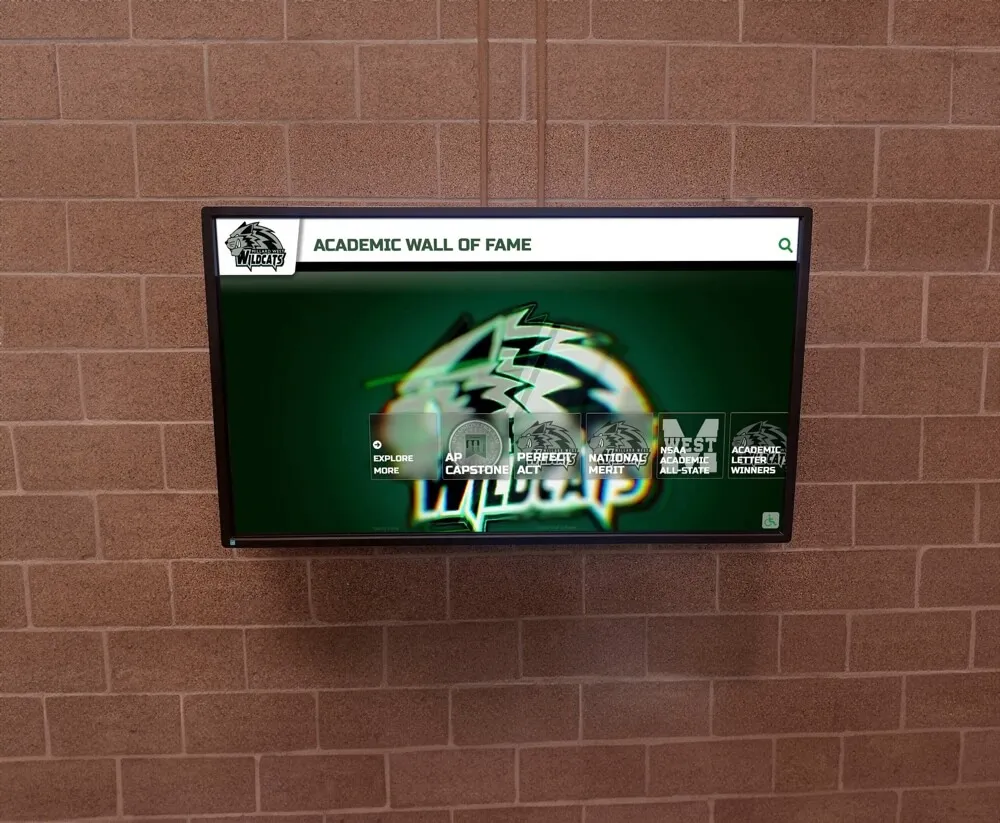
Digital recognition screens draw from database records linked by foreign key relationships—cascade policy determines whether those records survive administrative parent deletions or disappear with them
Six Steps to Implementing an ON DELETE CASCADE Policy
Step 1: Audit Every Foreign Key in the Recognition Database
Produce a complete list of every foreign key constraint in the database, including the current referential action set on each. In PostgreSQL, the following query returns every foreign key and its current delete rule:
SELECT
    tc.table_name          AS child_table,
    kcu.column_name        AS child_column,
    ccu.table_name         AS parent_table,
    ccu.column_name        AS parent_column,
    rc.delete_rule         AS current_delete_action
FROM
    information_schema.table_constraints tc
    JOIN information_schema.key_column_usage kcu
        ON tc.constraint_name = kcu.constraint_name
    JOIN information_schema.constraint_column_usage ccu
        ON ccu.constraint_name = tc.constraint_name
    JOIN information_schema.referential_constraints rc
        ON rc.constraint_name = tc.constraint_name
WHERE
    tc.constraint_type = 'FOREIGN KEY'
ORDER BY
    tc.table_name, kcu.column_name;
Save the output as the starting inventory for the policy review. Note every constraint where the delete_rule column returns NO ACTION—those are the relationships that have received no explicit governance decision and need one.
Step 2: Classify Each Child Record Type
For each foreign key in the inventory, classify the child table’s record type using three categories:
- History records: Documents a completed recognition event. Examples: award recipients, hall of fame inductee entries, season records, coaching award records. → Assign RESTRICT.
- Working data: Supports a process or operation but has no independent historical value once the process completes. Examples: import batch staging rows, session logs, queue records. → Assign CASCADE.
- Administrative records: Has historical or operational value, but whose link to the parent is administrative rather than substantive. Examples: audit log entries, correction history records. → Assign SET NULL.
Do not resolve ambiguous cases by defaulting to CASCADE. The cost of a RESTRICT constraint is occasional manual effort when a parent deletion requires addressing children first. The cost of an incorrectly applied CASCADE is the permanent, silent deletion of recognition history.
Step 3: Draft the Recommended Action for Each Relationship
Using the classifications from Step 2, assign the recommended referential action to each foreign key. Where classification is uncertain—for example, a table that serves both as process support and as a historical log—document the ambiguity and escalate the decision to the athletics director and district IT. This is a policy decision, not a technical default.
Step 4: Alter Existing Constraints to Match the Policy
For each constraint whose current action differs from the recommended action, drop and recreate the constraint with the correct referential action. In PostgreSQL:
-- Example: change an existing NO ACTION constraint to RESTRICT
ALTER TABLE award_recipients
    DROP CONSTRAINT award_recipients_athlete_id_fkey;

ALTER TABLE award_recipients
    ADD CONSTRAINT award_recipients_athlete_id_fkey
    FOREIGN KEY (athlete_id)
    REFERENCES athletes(id)
    ON DELETE RESTRICT;
Apply every change in a migration file tracked in the database’s migration history—not as ad-hoc SQL run directly against production. Every constraint change is a schema change that must be versioned, reviewed, and deployed through the standard migration process.
Step 5: Test Every Deletion Path Against the Updated Constraints
After deploying the constraint changes to a staging environment, test every deletion path that application code, import tools, and administrative interfaces exercise:
- Deleting an athlete profile that has award recipient records (should be rejected by RESTRICT)
- Deleting an import batch record (should cascade to batch staging rows)
- Deleting a user account that has audit log entries (should set user_id to NULL in the log)
- Deleting an award category that has historical recipient records (should be rejected by RESTRICT)
Test both the database-level behavior—confirm the constraint fires as expected—and the application-level behavior: confirm that the application presents a meaningful, actionable error rather than an unhandled exception when a RESTRICT constraint blocks a deletion.
Programs managing athletic website content—including award records, team histories, and sponsor pages covered in the athletic website content checklist at touchscreenwebsite.com—should include cascade policy validation in any content management system audit, confirming that CMS-initiated parent record deletions respect the database constraints rather than bypassing them through direct table operations.
Step 6: Document the Policy and Include It in Schema Review
Publish the completed policy as a written governance document attached to the database schema documentation. Each entry should specify:
- The child table and foreign key column
- The parent table and referenced column
- The assigned referential action and the classification that determined it
- The date the constraint was last reviewed and who approved the current setting
Include cascade policy review as a required checkpoint in the database schema review process. Any new foreign key introduced by a migration must have an explicitly assigned referential action documented in the migration file and approved through the policy process before deployment.
Practical School Recognition Examples
Example 1: Hall of fame class restructuring. A school consolidates two annual induction classes into a single combined induction year. A staff member attempts to delete the original hall_of_fame_classes row for one of the consolidated years. With CASCADE configured on inductee_records → hall_of_fame_classes, the database silently removes every inductee record from that year. With RESTRICT configured, the deletion is blocked; the administrator must first reassign all inductee records to the combined class year before the parent row can be removed. RESTRICT is the correct outcome: no inductee’s recognition is silently erased during an administrative restructuring.
Example 2: Import staging cleanup. At the end of each import cycle, the recognition platform marks completed import batches for removal. The import_batch_rows table contains tens of thousands of staging rows from the completed batch. With CASCADE configured on import_batch_rows → import_batches, removing the batch record automatically removes all staging rows. No manual cleanup is required, and no staging data persists after the import is complete. CASCADE is correct here because staging rows have no historical value once the import operation is finalized.
Example 3: Duplicate athlete profile merge. Two athlete profiles represent the same person, entered twice during separate import operations. A staff member merges the duplicate by transferring all award recipient records to the canonical profile. With RESTRICT on award_recipients → athletes, deleting the duplicate profile is blocked until every award record is transferred—which is the correct behavior. The constraint forces the administrator to complete the merge before removing the source record. Once all award records are reassigned, the RESTRICT constraint no longer blocks the deletion, and the duplicate profile is safely removed.
For programs planning recognition infrastructure and award budgets together, the high school athletic department budget planning guide at best-touchscreen.com addresses the operational costs of managing recognition data—including the database administration time that a well-defined cascade policy reduces by eliminating ambiguous deletion scenarios at the moment they arise.
Rocket Alumni Solutions vs. Self-Managed Recognition Databases
For schools managing their own PostgreSQL recognition databases, setting and enforcing cascade policies is a direct responsibility of the database administrator or IT team. The policy decisions in this guide apply whether the database is hosted on-premise, in a cloud instance, or through a third-party provider.
Schools using a managed recognition platform shift part of that responsibility to the vendor. When evaluating platforms, athletics directors and IT administrators should ask:
- Does the platform use CASCADE, RESTRICT, or SET NULL on award recipient and inductee foreign keys?
- Is it possible to delete a parent record—such as an athlete profile or award category—in a way that silently removes historical award records?
- Does the platform log cascaded deletions in its audit trail, or only direct deletion events?
- If a cascade deletion was initiated in error, what is the recovery path?
Rocket Alumni Solutions manages recognition data under a record-preservation architecture. Award records and inductee entries are not removed through automatic cascade operations triggered by profile or category changes. Administrative deletions require explicit confirmation through the platform’s governance interface, and every deletion event—including any associated linked records affected—is written to an immutable audit log. Platforms that do not provide these protections leave athletic programs exposed to exactly the cascade deletion risk that an explicit policy is designed to prevent.
The best ways to showcase athletic achievement awards digitally guide at touchhalloffame.us describes the display-layer implications of well-governed recognition data: the quality of what visitors see on interactive kiosks and hall of fame walls is a direct reflection of the governance applied to the underlying database. A cascade policy that preserves historical records is the upstream condition that makes accurate, comprehensive recognition displays possible.

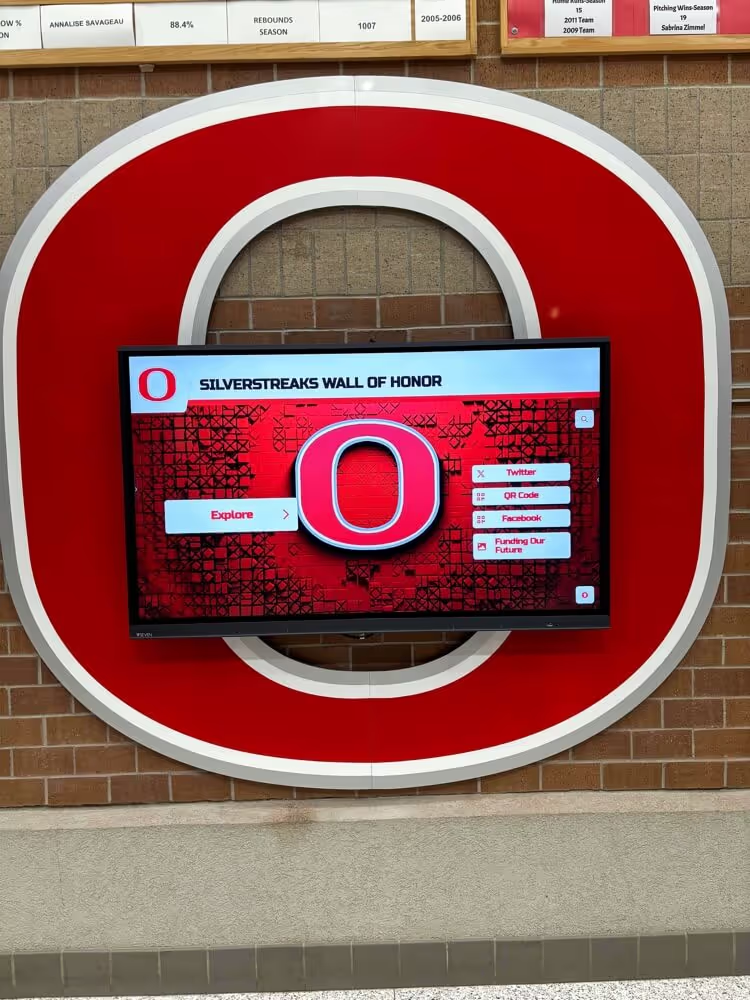
Recognition walls that combine physical and digital formats depend on database records preserved by the right referential actions—RESTRICT constraints on inductee relationships are the policy mechanism that keeps those records intact
Display Systems and Cascade Policy: The Connection to What Visitors See
The visible consequence of a cascade policy failure is not a database error—it is a blank space on a recognition display where an inductee or award recipient used to appear. For programs managing recognition content on interactive touchscreens in athletic lobbies and hallways, a cascade deletion that removes a season’s worth of award records is immediately visible to families, alumni, and community members who interact with those displays.
Programs that have invested in athletic recognition display systems—covering the record categories described in the athletic stats display ideas guide at halloffame-online.com—should verify that their cascade policy protects every record type that feeds into public display outputs. The display layer cannot restore recognition history that the database has already removed.
The best ways to showcase athletic achievement awards digitally at touchwall.tv covers how digital recognition platforms surface award data across multiple display formats—honor roll boards, hall of fame inductee galleries, seasonal award summaries. Each of those formats is only as complete as the database records that back it. A cascade policy that applies RESTRICT to every historical record type is the foundational protection that makes those display investments worthwhile over the long term.

Every athlete portrait card on a recognition touchscreen is backed by a linked record in the awards database—cascade policies determine whether administrative parent deletions silently remove those cards or preserve them as permanent recognition history
FAQ: Athletic Awards Database ON DELETE CASCADE Policy
What is the difference between ON DELETE CASCADE and ON DELETE RESTRICT in an athletic awards database?
ON DELETE CASCADE automatically deletes child records when their parent is removed. ON DELETE RESTRICT blocks the parent deletion if any child records reference it, requiring the administrator to remove or reassign children first. For athletic award recipient records and inductee entries, RESTRICT is almost always correct because it prevents accidental deletion of recognition history. CASCADE is appropriate for working data—such as import staging rows—that have no historical value after the process they support is complete.
Should I use CASCADE on the athlete profile to award recipients relationship?
No. Configuring CASCADE on award_recipients → athletes would silently remove every award record that athlete ever received whenever their profile is deleted. The correct action is RESTRICT, which blocks the profile deletion until award records are manually transferred, archived, or reviewed. The exception is a confirmed duplicate profile being merged: all award records must be reassigned to the canonical profile before the duplicate row is removed, at which point RESTRICT no longer blocks the deletion.
What happens to child records if I use SET NULL instead of CASCADE?
When a parent is deleted under SET NULL, the foreign key column in the child record is set to NULL and the row remains in the database. This preserves the child record’s data but severs its link to the parent. For audit logs and administrative records, this is often correct—the log entry survives but its author reference becomes null. For award recipient records, SET NULL is generally incorrect because a recipient record without an athlete reference loses its primary meaning and becomes difficult to surface or manage through normal queries.
How do I find what referential actions are currently configured on my recognition database?
Query the information_schema.referential_constraints view in PostgreSQL, joined to information_schema.table_constraints and information_schema.key_column_usage. The delete_rule column returns the current action: NO ACTION, RESTRICT, CASCADE, SET NULL, or SET DEFAULT. The Step 1 query in this guide provides a complete template for this audit and can be run without write permissions on any PostgreSQL database where you have SELECT access to the information schema.
Can ON DELETE CASCADE cause silent data loss in a recognition platform I don’t manage directly?
Yes. If a recognition platform uses CASCADE on award or inductee relationships and a staff member deletes a parent record—an athlete profile, an award category, a hall of fame class—without knowing that cascade is configured, the associated award records are removed automatically with no visible warning. When evaluating or auditing a managed recognition platform, ask the vendor explicitly what referential actions are applied to award and inductee foreign keys and whether the platform’s audit trail captures cascaded deletions as distinct events from direct deletion operations.
Building a Recognition Database That Preserves What Programs Have Earned
An athletic awards database on delete cascade policy is a governance decision that most recognition programs never document explicitly—and discover they needed only after a cascade deletion has already run. The record types most vulnerable to this failure are the same ones that carry the most institutional weight: hall of fame inductee entries, all-state recognition records, and seasonal award summaries that represent decisions made years or decades ago.
Setting RESTRICT on every historical record relationship and CASCADE only on process-support data costs nothing in storage and very little in administrative effort. The occasional friction of a blocked parent deletion—when a staff member must address children before removing a parent—is the correct signal that a governance review is happening before a deletion, not after it.
Rocket Alumni Solutions’ platform preserves award records and inductee entries under a record-governance architecture that prevents cascade deletions from silently removing recognition history. Every deletion event is logged to an immutable audit trail, and the platform’s administrative interface requires explicit confirmation before any parent record affecting linked recognition entries can be removed.