



An athletic awards database pg_amcheck checklist is a structured set of pre-run decisions covering PostgreSQL version compatibility, amcheck extension installation, privilege assignment, check scope selection, locking cost assessment, and output interpretation—giving the school IT administrator or data custodian a clear path for running corruption checks against the heap tables and B-tree indexes that store athlete names, award histories, and decades of recognition records.
This guide is written for school IT staff, database administrators, and athletic records custodians who are already running PostgreSQL as the back end for a recognition archive and want to verify its physical and logical integrity. It covers what pg_amcheck and the amcheck extension detect, what they do not do (they do not establish factual accuracy of athlete records, and they cannot repair corruption), how to meet the prerequisites, how to choose between check intensities based on locking behavior, and what to do when a check returns a finding.
A school’s athletic recognition archive is a long-lived record. It stores the names of letter winners from decades past, championship rosters compiled before digital photography, and hall-of-fame inductees whose profiles are viewed by families on every campus visit. The PostgreSQL database holding that data accumulates operational wear over time: seasonal imports, retroactive corrections, schema migrations, and the occasional storage hardware event. Physical or logical corruption in a recognition database does not always surface immediately as a visible error. A corrupted B-tree index might return incomplete results on an athlete name search. A structurally invalid heap page might cause an export job to fail partway through a historical pull covering forty years of letter-winner records.
Planning and running periodic corruption checks before silent failures surface is the purpose of the tools this guide covers.
pg_amcheck is PostgreSQL’s command-line utility for running the amcheck extension’s verification functions across one or more databases. It is not a repair tool. It is a detection and reporting tool. A pg_amcheck run tells you whether corruption was detected in the objects it checked during that run—it does not correct any records, rewrite any indexes, or change any data. Decisions about remediation belong in your incident response process, not in the pg_amcheck command itself.

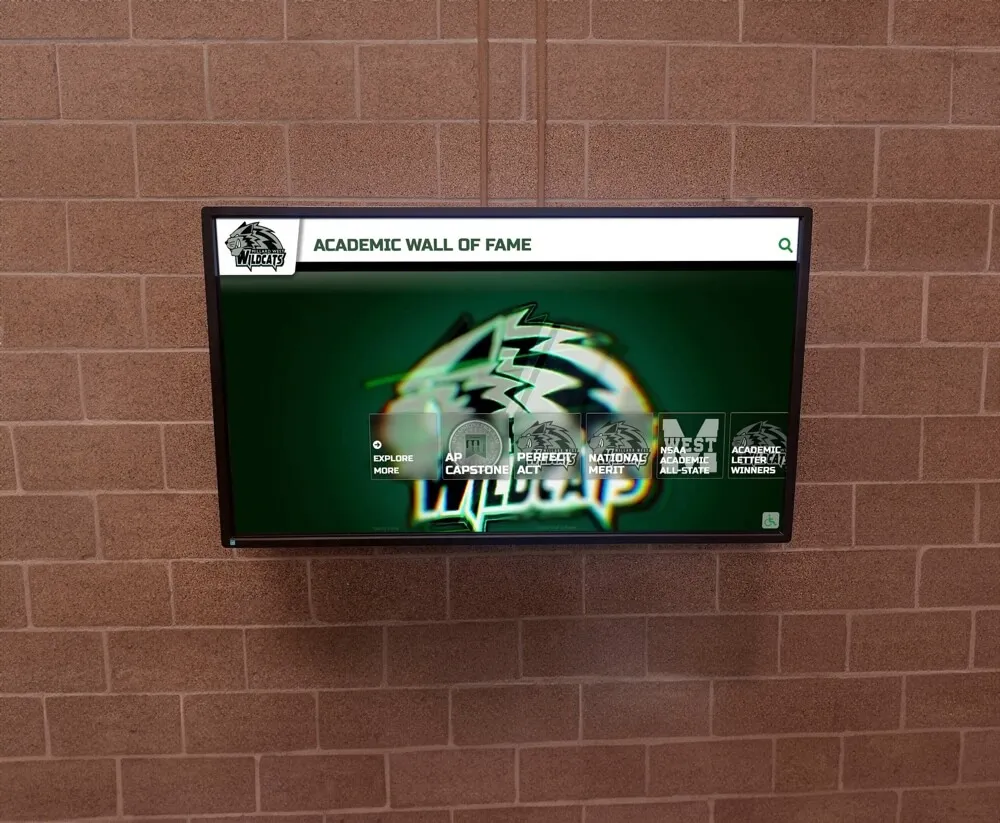
Championship recognition archives spanning multiple decades are precisely where periodic corruption checks pay off — silent index or heap damage can distort search results without triggering an obvious error message
What pg_amcheck and amcheck Detect in Athletic Recognition Databases
pg_amcheck detects two broad categories of problems in a PostgreSQL-based athletic recognition database.
Heap corruption — problems in the physical table files that store award records, athlete profiles, and season data — is checked via the verify_heapam function. The amcheck extension documentation describes this as checking for both structural corruption (pages that are invalidly formatted) and logical corruption (pages that are structurally valid but inconsistent with the rest of the database cluster). Specific examples the documentation identifies include heap tuples whose transaction ID is older than the oldest valid transaction ID in the cluster, and toast pointer references in a main table that have no matching entry in the associated toast table. Toast tables are PostgreSQL’s mechanism for storing large column values — such as lengthy biography fields or award citation text — that do not fit within a standard 8 KB page.
B-tree index corruption — problems in the index structures that support fast athlete name lookups, sport-filtered queries, and season-range filters — is checked via the bt_index_check and bt_index_parent_check functions. These functions verify the logical ordering of items on each B-tree page, check parent-to-child pointer relationships within the index tree, and optionally verify that every tuple in the heap is represented by a corresponding index entry.
The pg_amcheck documentation also notes that only ordinary tables, toast tables, materialized views, sequences, and B-tree indexes are currently supported. Other relation types — GIN indexes used for full-text search, GiST indexes, hash indexes — are silently skipped. If your recognition schema uses non-B-tree indexes for text search or other purposes, those are not covered by pg_amcheck.
What pg_amcheck does not check: it does not validate whether data values in athlete name fields are spelled correctly, whether award years are chronologically plausible, or whether a hall of fame inductee’s record matches the paper certificate on file. Those are data-quality concerns — addressed through schema constraints, field-level validation checklists, and reconciliation workflows — not storage-level corruption concerns. The athletic archive bit rot detection checklist at digitalyearbook.org covers the adjacent problem of file-level integrity for scanned documents and media assets stored outside the relational database.
One critical limitation stated in the amcheck documentation: “amcheck can only prove the presence of corruption; it cannot prove its absence.” A clean pg_amcheck run with no findings means no corruption was detected in the objects checked during that run — not that no corruption exists anywhere in the database.
Before You Run: Version, Extension, and Privilege Requirements
Meeting three prerequisites before the first pg_amcheck run prevents the most common setup failures.
PostgreSQL version 14 or later. The pg_amcheck documentation states that pg_amcheck “is designed to work with PostgreSQL 14.0 and later.” Confirm your version with:
SELECT version();
Record the output in your maintenance log. If the recognition database is running PostgreSQL 13 or earlier, the amcheck extension functions can still be called directly via SQL — but the pg_amcheck command-line wrapper is not available in those versions.
The amcheck extension must be installed in the target database. amcheck is bundled with the PostgreSQL distribution but not installed in any database by default. Check whether it is already present:
SELECT extname, extversion FROM pg_extension WHERE extname = 'amcheck';
If the query returns no rows, install the extension before running any checks:
CREATE EXTENSION amcheck;
The --install-missing flag in pg_amcheck can install a missing amcheck extension automatically into pg_catalog (or a schema you specify) as part of the check run. This is convenient for scripted maintenance jobs, but it requires that the connecting user have superuser or extension-installation privileges.
Privilege assignment. Running bt_index_check, bt_index_parent_check, and verify_heapam requires either superuser access or explicit GRANT EXECUTE on those functions. The amcheck documentation notes that permission can be granted to non-superusers, but recommends careful consideration of data security before doing so — corruption error messages can sometimes expose information about the values in checked objects. For a recognition database holding athlete names and award histories, apply least-privilege principles: create a dedicated maintenance role that receives only the specific function grants needed, and revoke or suspend that role between scheduled maintenance windows.
-- Create a dedicated maintenance role
CREATE ROLE awards_integrity_checker;

-- Grant only the functions needed for the planned check intensity
GRANT EXECUTE ON FUNCTION bt_index_check(regclass, boolean, boolean)
  TO awards_integrity_checker;
GRANT EXECUTE ON FUNCTION verify_heapam(regclass, boolean, boolean, text, bigint, bigint)
  TO awards_integrity_checker;
The exact function signatures depend on your PostgreSQL version. Confirm the available signatures with \df amcheck.* in psql before writing the GRANT statements.
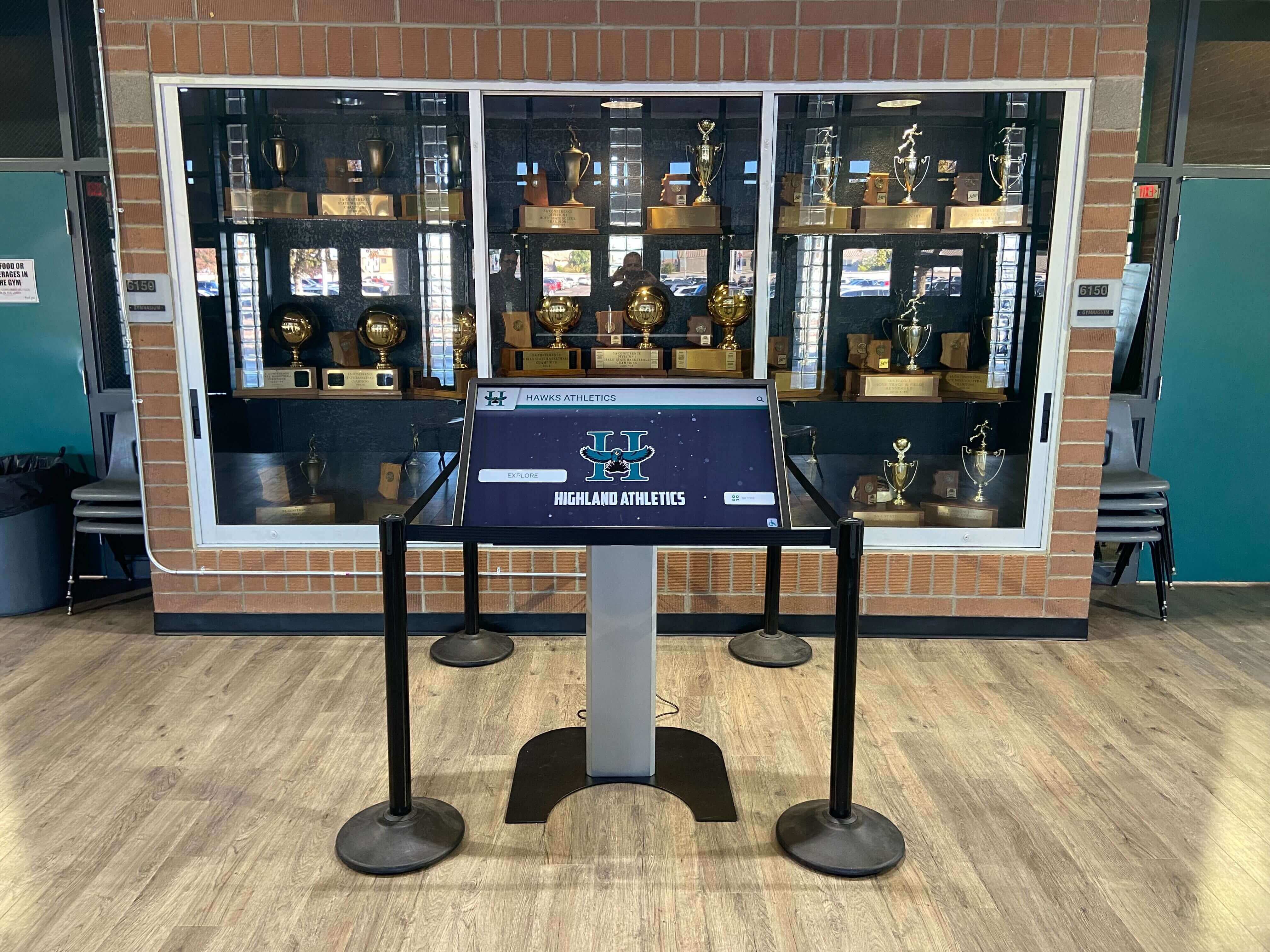
Touchscreen recognition kiosks that pull from a PostgreSQL database depend on correctly functioning B-tree indexes to answer name and year queries instantly — a corrupted index may return incomplete results without surfacing a visible error to the visitor
Understanding Check Intensities and Their Locking Costs
The most consequential planning decision for a pg_amcheck run against a live athletic recognition database is choosing between the default check and the stronger check. The difference is locking behavior — and locking behavior determines whether the check can safely run while recognition displays are actively serving queries.
Default B-tree Check: AccessShareLock (Non-Blocking)
When pg_amcheck runs without --parent-check, it calls bt_index_check for each B-tree index. This function acquires an AccessShareLock on the index and its associated heap relation — the same lock that a plain SELECT statement acquires. The amcheck documentation confirms this lock mode does not block concurrent INSERT, UPDATE, or DELETE operations on the table. A default pg_amcheck run can complete while the live recognition display continues to serve queries and while data entry staff add or correct records.
The tradeoff is coverage depth. bt_index_check verifies logical ordering and page-level invariants within each index page, but does not check the parent-to-child relationships that span multiple levels of the B-tree. A missing downlink — where a parent page references a child page that no longer holds the expected data — would not be detected by the default check.
Stronger B-tree Check: ShareLock (Blocks DML)
The --parent-check flag causes pg_amcheck to call bt_index_parent_check instead. This function acquires a ShareLock on both the index and its heap relation. The pg_amcheck documentation states explicitly: “These checks are the only checks that will block concurrent data modification from INSERT, UPDATE, and DELETE commands.” A ShareLock also blocks VACUUM on the locked relation for the duration of the check.
For a recognition database that powers a live hallway kiosk or a display used during an open house, scheduling --parent-check runs during off-hours or a confirmed maintenance window is the appropriate approach. Running it during the school day risks blocking the record operations that power new inductee announcements or award updates in progress.
The --rootdescend flag goes further still, re-finding each leaf tuple via a new search from the root page. The pg_amcheck documentation describes this as having been originally written to help in the development of B-tree index features and notes it “may be of limited use or even of no use in helping detect the kinds of corruption that occur in practice” while potentially causing “considerably longer” checking times and higher resource consumption on the server. This flag is not recommended for routine operational checks on athletic recognition databases.
heapallindexed: Cross-Verifying Heap and Index Membership
The --heapallindexed flag instructs pg_amcheck to verify that every heap tuple has a corresponding entry in the checked index. This cross-check runs under AccessShareLock (non-blocking for DML), but uses additional server memory — the documentation specifies approximately two bytes per tuple, bounded by the maintenance_work_mem setting. For a recognition archive with 50,000 award records, the additional memory requirement at two bytes per tuple is roughly 100 KB. Confirm available maintenance_work_mem before enabling this flag in a parallel run (-j 4 or higher) against a large database.
The Athletic Awards Database pg_amcheck Planning Checklist
Work through the following eight steps in order before running any corruption check against a production recognition database. Document each decision in a maintenance log so that future check runs can be compared against the same baseline.
Step 1: Confirm PostgreSQL version.
Run SELECT version(); and record the result. Confirm version 14.0 or later for pg_amcheck CLI access. If the version is earlier, plan direct amcheck function calls via SQL instead.
Step 2: Verify amcheck is installed and current.
Run SELECT extname, extversion FROM pg_extension WHERE extname = 'amcheck';. Confirm the extension is present. If absent, install it with CREATE EXTENSION amcheck; or use the --install-missing pg_amcheck flag.
Step 3: Assign and confirm privileges.
Create or confirm a dedicated maintenance role. Grant only the function-level EXECUTE permissions needed for the planned check intensity. Verify the role can connect to the database with \conninfo before the check window.
Step 4: Inventory the objects to check.
List the schemas, tables, and indexes in scope. Use pg_stat_user_tables to identify which tables have received the most write activity and which have the highest n_dead_tup counts. Prioritize:
- The central award and athlete tables receiving seasonal import bursts
- Indexes that power live display queries (name lookups, year and sport filters)
- Tables whose last
last_autovacuumorlast_autoanalyzetimestamp is furthest in the past
Step 5: Select check intensity based on maintenance window availability.
If a confirmed maintenance window is available (off-hours or weekend), plan --parent-check for deeper cross-level B-tree verification. If checks must run during live operation, use the default mode and consider adding --heapallindexed for the highest-priority tables.
Step 6: Set parallelism appropriately for the server load.
The -j num flag controls concurrent connections. For a database server also serving live kiosk queries, avoid aggressive parallelism during business hours. A -j 2 run during a low-traffic window is a reasonable starting point. Confirm the server’s connection pool capacity before increasing beyond -j 4.
Step 7: Capture output to a timestamped log file.
Run pg_amcheck with -v (verbose) to produce a line per relation checked, and redirect standard output and standard error together. A representative command for checking the public schema of the recognition database:
pg_amcheck \
  --host=localhost \
  --username=awards_integrity_checker \
  --schema=public \
  --heapallindexed \
  --verbose \
  awards_db 2>&1 | tee /var/log/pg_amcheck_$(date +%Y%m%d).log
This produces a timestamped log of every relation checked and every finding. Review the log rather than relying on terminal output alone.
Step 8: Record exit code and run metadata. After the run, note whether pg_amcheck exited with code zero (no findings) or non-zero (findings detected, or a connectivity or permission error). Record the total number of relations checked, the run duration, and the timestamp. A non-zero exit code requires investigation before the next check is scheduled.

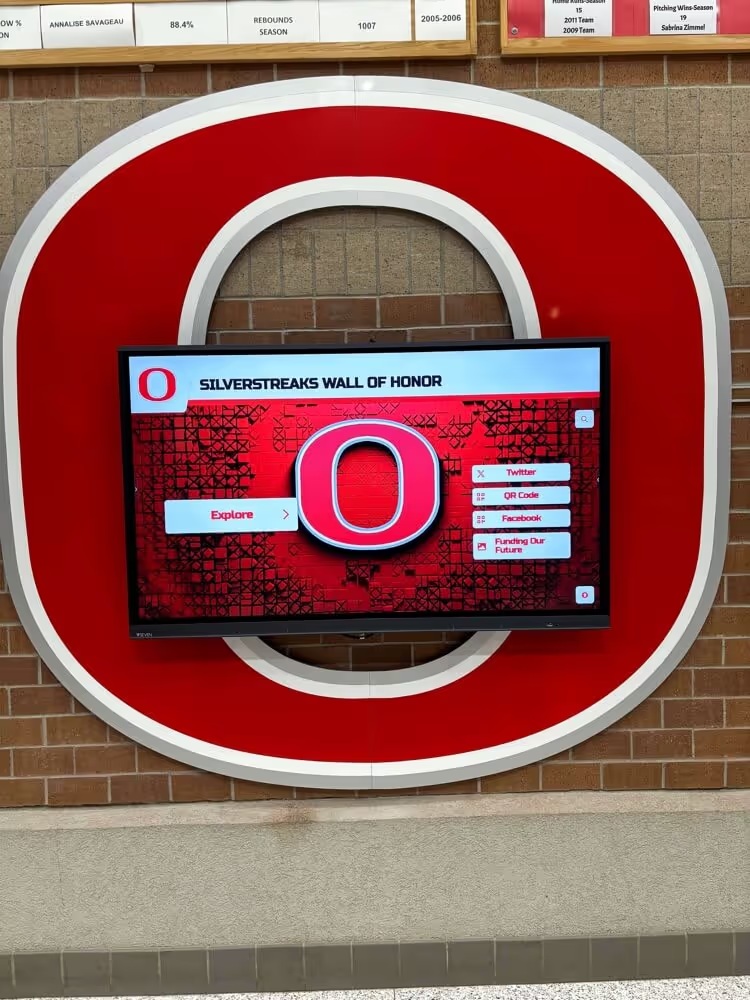
Athletic honor boards visible to daily visitors in school hallways depend on structurally intact database tables and indexes — a pg_amcheck planning checklist ensures verification runs are scoped, scheduled, and documented before problems surface as visible display errors
Decision Table: Matching Configuration to Scenario
Use the table below to match your check scenario to the appropriate pg_amcheck options. “Blocks DML” indicates that the check acquires a lock preventing concurrent INSERT, UPDATE, and DELETE on checked relations while the check runs.
| Check Configuration | Lock Acquired | Blocks DML | Recommended For |
|---|---|---|---|
| Default (bt_index_check only) | AccessShareLock | No | Routine weekly or monthly B-tree checks during live operation |
--parent-check | ShareLock | Yes | Deeper cross-level B-tree verification; schedule in maintenance window |
--heapallindexed (with default) | AccessShareLock | No | Confirming heap-index membership; safe during live hours |
| Heap check (verify_heapam directly) | AccessShareLock | No | Table-level structural and logical corruption verification |
--parent-check + --heapallindexed | ShareLock | Yes | Comprehensive combined check; schedule off-hours |
--rootdescend | ShareLock | Yes | Development or deep investigation; not for routine operational checks |
Reading and Interpreting pg_amcheck Output
A pg_amcheck run that finds no corruption exits with return code zero and produces no error lines — only the per-relation progress lines emitted when -v is active. A clean run is a meaningful data point: no corruption was detected in the checked objects during that run. It does not certify the full database as corruption-free, because pg_amcheck examines in-memory buffer representations of pages at the time of verification rather than reading fresh from disk on every access.
When pg_amcheck finds a problem, it prints a description and exits with a non-zero return code. For heap table checks using verify_heapam, the amcheck documentation specifies that findings are returned as rows containing four fields: the block number (blkno), the offset within the block (offnum), the attribute (column) number (attnum), and a message (msg) describing the specific violation detected. A finding that reads “tuple (blkno 4712, offnum 8) has a transaction ID that is older than the oldest valid transaction ID in the database” tells you the exact block and slot where the problem exists — enough to scope the investigation to a specific area of the table.
For B-tree index findings, pg_amcheck reports the index name and a description of the violated invariant, such as a page ordering inconsistency or a missing downlink. Index checking stops after the first corrupt page detected in a given index — the pg_amcheck documentation notes this explicitly, meaning a single finding on an index does not imply the remainder of that index has been verified beyond that point.
The -v flag prints a message for each relation as checking begins. The --progress (-P) flag adds a progress display showing relations completed and total size checked. For a long run against a large archive, enabling both gives a real-time picture of how far the check has progressed without waiting for the final output.
Escalation: What to Do When pg_amcheck Reports Corruption
A corruption finding in an athletic awards database is an incident requiring a deliberate response — not a result that warrants immediately re-running pg_amcheck or attempting ad-hoc index rebuilds. The appropriate steps are as follows.
Stop writes to the affected object where feasible. A corrupted table or index that continues receiving writes may extend the scope of damage or complicate diagnosis. If the recognition database has a read-only streaming replica, route live display queries there while the primary is investigated.
Identify the scope. Use the block and offset information from the pg_amcheck output to determine which table, index, and approximate row range is affected. Inspect related objects: if one index on the athletes table is corrupt, check the other indexes on that table and the table’s associated toast relation.
Engage your backup and recovery process. The amcheck documentation is explicit: “There is no general method of repairing problems that amcheck detects.” Logical backup restoration (from pg_dump) or physical backup restoration (from a base backup and WAL replay) are the documented recovery paths for confirmed storage corruption. No automatic re-index operation is warranted based solely on a pg_amcheck finding — consult a qualified PostgreSQL professional before taking remediation steps against a confirmed corrupt object.
Preserve the findings log. The pg_amcheck output from the run that detected corruption is evidence. Preserve it before any recovery operations alter the database state.
Accurate preservation of athletic recognition records carries real meaning beyond the technical layer. When a hall-of-fame inductee’s profile is affected by a corrupt page, the recovery is not merely a database restoration — it is the restoration of a recognized athlete’s permanent history. Hall of fame press release templates at halloffame-online.com illustrate how much public-facing weight attaches to inductee profiles: a corrupted or missing record can affect a ceremony program, a public announcement, or a family’s permanent connection to their athlete’s recognition.
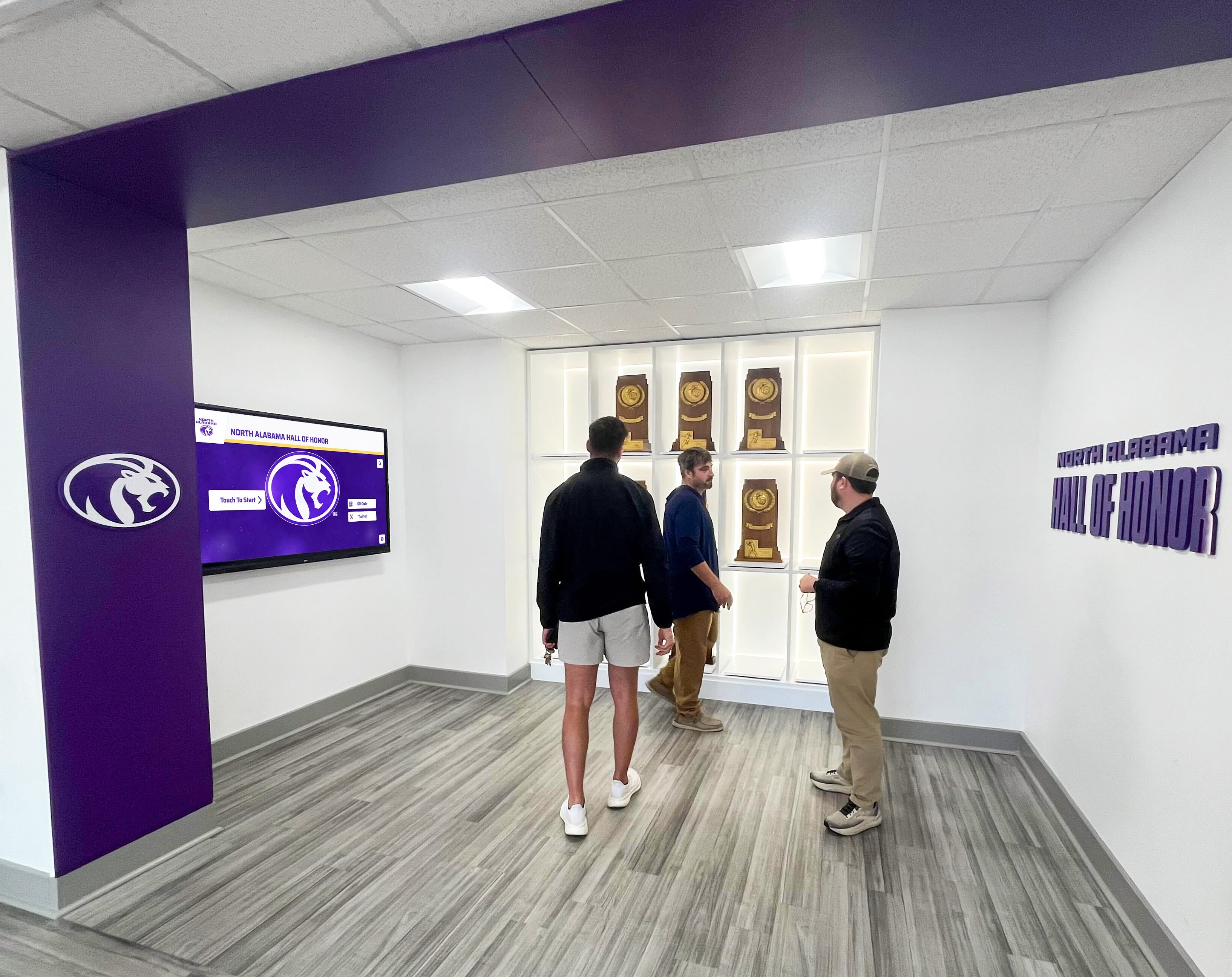
Hall of honor displays viewed by athletes, families, and prospective students represent years of accumulated recognition data — a pg_amcheck planning routine ensures the underlying storage remains structurally sound between major maintenance cycles
How Recognition Platform Architecture Shapes Data Integrity Responsibilities
Schools managing athletic award records face structurally different data integrity obligations depending on how their recognition infrastructure is built. The comparison here is between self-hosted and managed approaches — not between competing platform vendors.
Self-hosted and locally managed systems — including locally administered PostgreSQL databases, spreadsheet-based records, and on-premises recognition applications — place the full burden of data integrity on the institution’s own IT team. Backup scheduling, integrity checking, hardware monitoring, and recovery planning are institutional responsibilities. A pg_amcheck checklist like the one in this guide is an essential component of that responsibility. When something goes wrong, the IT team investigates, remediates, and restores. The trophy case humidity control guide at digital-trophy-case.com addresses the parallel physical integrity challenge for traditional display materials — the same category of institution-managed preservation risk that applies to locally administered databases.
Managed cloud-based recognition platforms handle infrastructure durability, backup, and replication at the platform layer. A school using a managed platform does not run pg_amcheck on that platform’s database — the platform vendor is responsible for its own data integrity, backup verification, and disaster recovery. The school’s responsibility shifts from database administration to content management: ensuring that athlete names, award details, and recognition histories are entered accurately into the managed system, and that the platform is used to its full capability for displaying and updating records. The survey of hall of fame tools at digitalwarming.net covers the range of platform options available — from fully self-hosted to fully managed — for schools evaluating where to invest.
Rocket Alumni Solutions operates as a managed platform. Schools that use it for digital recognition do not manage the underlying database infrastructure, and this pg_amcheck guide does not apply to their Rocket-hosted data. For institutions evaluating whether to maintain a self-hosted PostgreSQL recognition archive or transition to a managed platform, the distinction is relevant to how their IT team’s maintenance effort is allocated. What the transition from static to digital recognition involves at touchhalloffame.us provides context for schools considering that shift.

Institutions moving from locally managed PostgreSQL databases to managed recognition platforms shift corruption monitoring and backup verification responsibilities from school IT to the platform provider — the pg_amcheck checklist in this guide applies to the self-hosted path
Frequently Asked Questions
How often should a school run pg_amcheck on an athletic awards database?
There is no universally correct frequency — it depends on write volume, hardware age, and institutional risk tolerance. A practical starting point is a monthly default (non---parent-check) check during a low-traffic window, with a quarterly --parent-check run scheduled during a confirmed maintenance window. Programs that have recently completed a large data migration, run major schema changes, or experienced a storage hardware event should run a check immediately after those events rather than waiting for the next scheduled interval.
Can pg_amcheck run on a PostgreSQL replica instead of the primary?
The default bt_index_check function can run on a hot standby (read-only physical replica), making it possible to offload routine B-tree checks to the replica without any lock impact on the primary. However, bt_index_parent_check cannot run on a hot standby — it requires write access that read-only replicas do not permit. If the recognition database has a streaming replica, use it for default-mode index checks and reserve --parent-check runs for scheduled maintenance windows on the primary.
Does pg_amcheck check GIN or other non-B-tree indexes?
Only ordinary tables, toast tables, materialized views, sequences, and B-tree indexes are currently supported by pg_amcheck. GIN indexes, GiST indexes, hash indexes, and other relation types are silently skipped during a pg_amcheck run. If the recognition schema uses GIN indexes for full-text athlete name search or other purposes, those indexes are not verified by the tool described in this guide.
Will pg_amcheck detect incorrect data entered into athlete records?
No. pg_amcheck detects physical and logical storage corruption — invalidly formatted pages, broken B-tree structure, missing toast entries, and similar storage-layer problems. It does not detect data-quality issues such as misspelled athlete names, incorrect award years, duplicate records, or missing required fields. Those problems are addressed through schema constraint enforcement, field-level validation workflows, and data reconciliation audits — separate from the storage integrity checks covered in this guide.
What should a school do if pg_amcheck finds corruption and no recent backup is available?
If no recoverable backup is available, do not attempt to patch corruption through speculative DDL or index operations. Contact a qualified PostgreSQL professional and halt writes to the affected objects while assessing options. The first priority is preventing additional damage; the second is determining what recovery is possible from the most recent backup or WAL archive. A corrupted recognition database with no recoverable backup is a data loss situation — the case for maintaining and regularly testing a backup cadence is strongest precisely before this scenario occurs, not after.
Protecting Every Name in the Archive
An athletic awards database pg_amcheck checklist is a low-cost, repeatable administrative control for schools and vendors running PostgreSQL-backed recognition systems. The eight planning steps in this guide — from confirming the PostgreSQL version and installing the amcheck extension through interpreting output and escalating findings — give any school IT team a documented process for running corruption checks consistently, at the right intensity, with a clear understanding of the locking costs involved at each stage.
Athletic recognition records preserve something of genuine institutional value: the name of every student who earned a letter, made an all-conference team, received a hall-of-fame induction, or won a season award. The database maintenance policies that govern how those records are protected and verified are the administrative layer that keeps that legacy intact across staff transitions, hardware generations, and system upgrades.
See How Schools Keep Award Records Accurate and Display-Ready
Rocket Alumni Solutions' cloud-based digital recognition platform manages award records, display publishing, and data access in a fully maintained environment — so your athletic department focuses on honoring students, not managing database infrastructure. WCAG 2.1 AA compliant displays work on any screen from 32" to 100"+, with unlimited inductees, categories, and multimedia content. Remote CMS access lets staff update and publish recognition records from anywhere.
Request a Custom Demo