



Intent: define. An athletic awards database pg_repack policy is a documented set of procedures, scheduling rules, and safety checks that tells a school IT administrator exactly when and how to run the pg_repack PostgreSQL extension—reclaiming table and index bloat online, without the exclusive locks that VACUUM FULL requires, so hall-of-fame kiosks, award search displays, and live recognition screens stay available to visitors throughout the compaction process.
This guide defines what pg_repack does, explains when it is the right choice over VACUUM FULL, walks through a policy your team can implement in seven steps, and provides a maintenance checklist calibrated for the burst-write patterns that athletic award archives generate at the end of every season.
Table bloat in an athletic recognition database does not arrive gradually. It arrives in waves: an end-of-season import pushes hundreds of corrected athlete records into the awards table, a bulk duplicate-removal pass deletes several hundred rows from athletes, a historical digitization project inserts thousands of entries from archived yearbooks in a single afternoon. Each wave leaves dead row versions behind—physical storage that standard autovacuum reclaims for reuse but does not return to the operating system, and which VACUUM FULL reclaims completely only by locking the table for the full duration of the compaction run.
For a school whose hallway kiosk, lobby display wall, or online recognition portal serves queries against those same tables, a VACUUM FULL on a large awards archive is not always an option during normal business hours. An athletic awards database pg_repack policy solves this by establishing the conditions under which pg_repack is invoked instead—so the database reclaims bloat without taking displays offline.

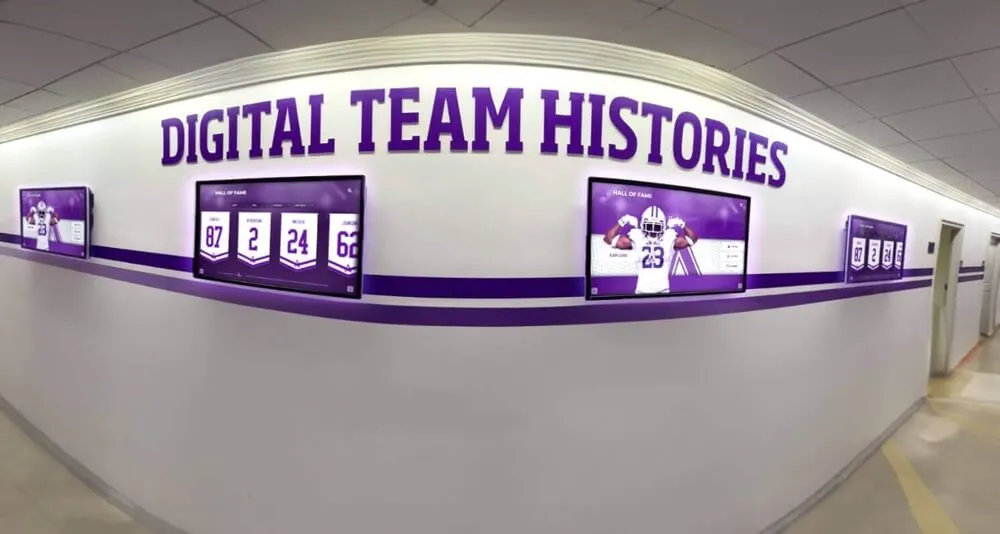
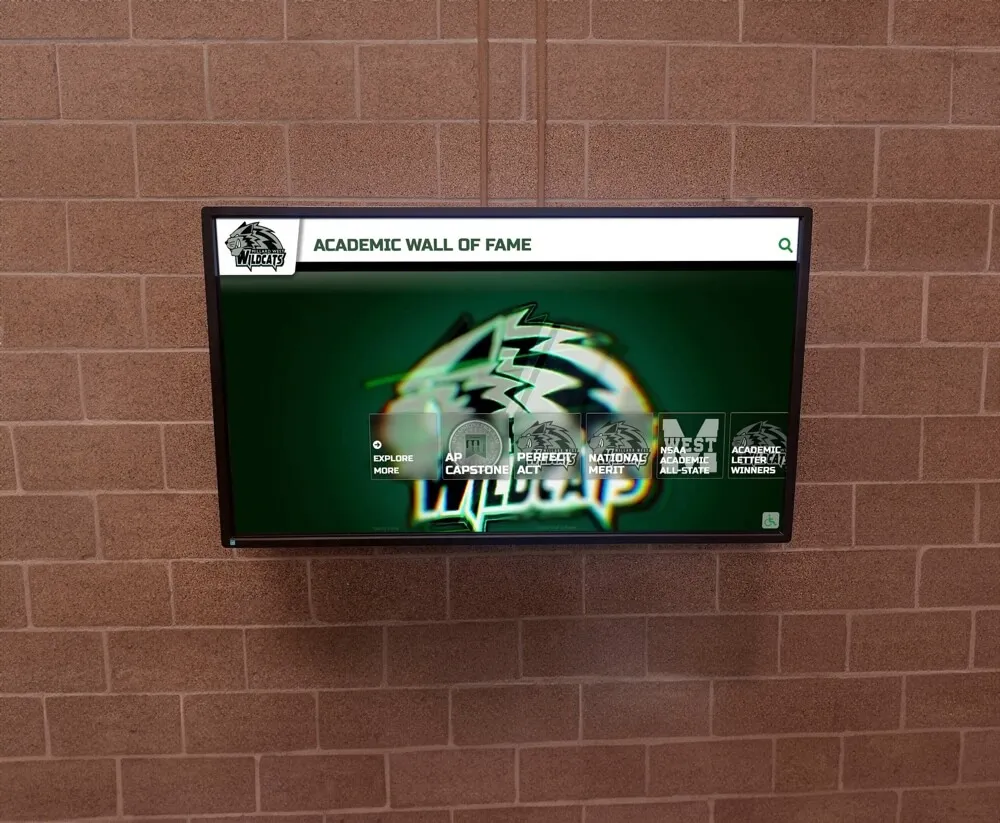
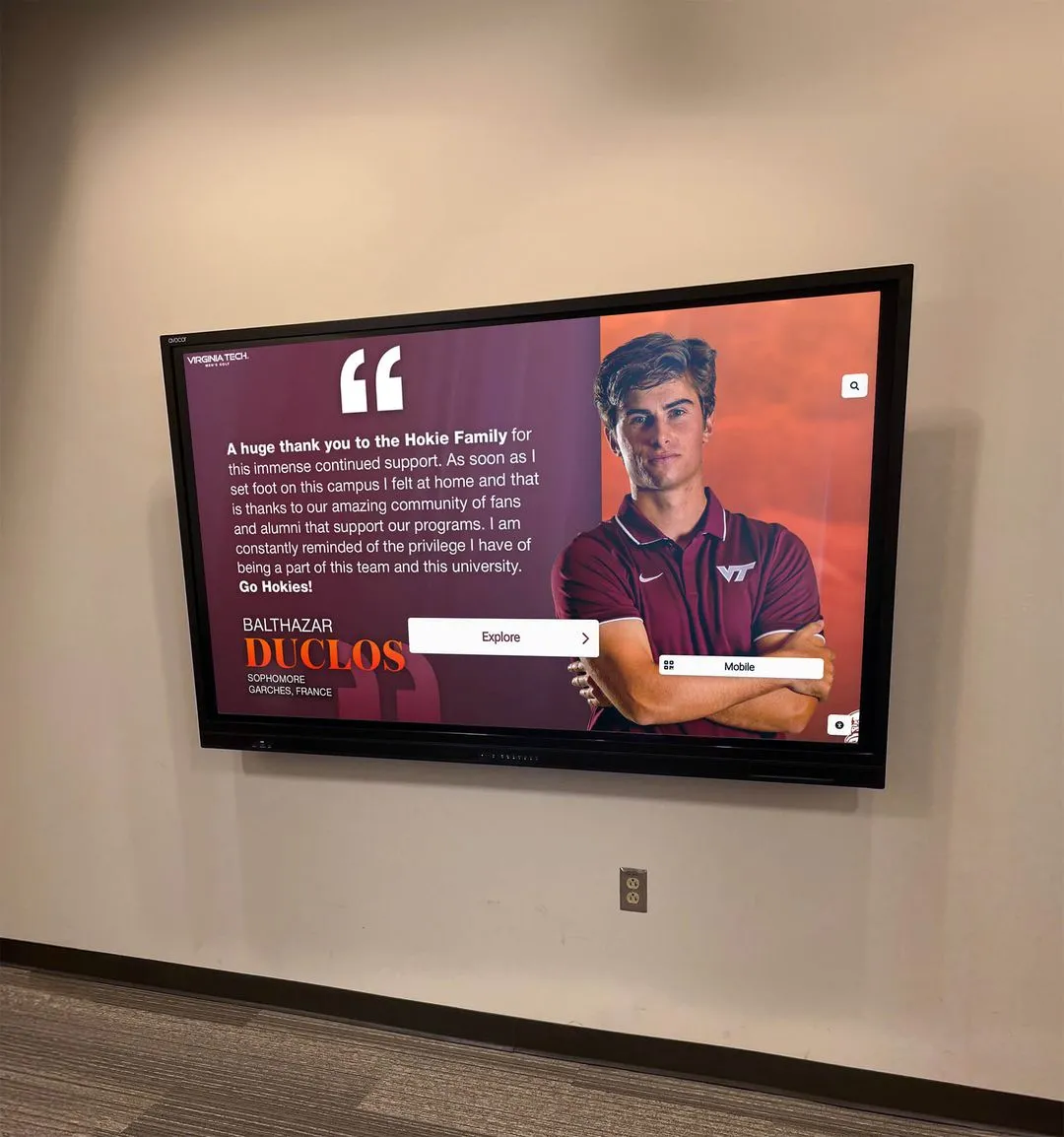
School hallway athletic recognition panels deliver athlete records and award histories in real time — table and index bloat in the underlying database slows those queries gradually until the displays feel sluggish at exactly the moments when visitor traffic peaks
What Is pg_repack and How Does It Work in an Athletic Awards Database?
pg_repack is a PostgreSQL extension that rebuilds bloated tables and indexes online, while the database is fully accessible and accepting live reads and writes. Unlike VACUUM FULL, which acquires an AccessExclusiveLock that blocks all other access to the table for the duration of the operation, pg_repack works by:
- Creating a new, compacted copy of the target table in the background
- Logging all changes made to the original table during the copy phase into a change-log table
- Applying the logged changes to the new copy once the initial copy is complete
- Swapping the new compacted table into place with a brief exclusive lock—typically measured in milliseconds rather than minutes or hours
The result is a table with the same data, the same indexes, and the same constraints as the original, but with all dead tuple space compacted out and index pages defragmented. Queries against the table resume hitting the compacted version immediately after the swap, with no application changes and no service interruption visible to kiosk or display users.
For athletic recognition databases, the key practical difference between pg_repack and VACUUM FULL is availability. A large awards archive that has grown over decades of seasonal imports may take 20–90 minutes to compact under VACUUM FULL—a window during which every query the display layer executes against that table waits for the lock to be released. pg_repack runs the same compaction work online, keeping query response times normal throughout.
According to the PostgreSQL documentation for pg_repack (version 1.5.x), the extension requires a primary key or unique constraint on each table it processes. Tables without a primary key cannot be repacked online; for those tables, VACUUM FULL remains the only compaction option.
When Is pg_repack the Right Choice? Comparing pg_repack and VACUUM FULL
The decision between pg_repack and VACUUM FULL depends on four factors: table size, available downtime, query volume during the planned maintenance window, and whether the table has a primary key. The comparison below covers the scenarios that arise most often in school athletic award databases.
| Scenario | pg_repack | VACUUM FULL |
|---|---|---|
| Large awards table (>500 MB) with no planned downtime window | Preferred — runs online, no lock | Not recommended — long exclusive lock |
| Small reference table (<10 MB) during a confirmed overnight window | Either works | Acceptable — lock duration is seconds |
| Table without primary key | Cannot be used | Only option for online compaction |
| Index-only rebuild (no table compaction needed) | pg_repack --only-indexes or REINDEX CONCURRENTLY | REINDEX (takes lock) |
| Emergency compaction after autovacuum failure during peak visitor period | Preferred — maintains availability | Only if display downtime is acceptable |
| Pre-import compaction to minimize seasonal bloat carryover | Preferred — can run night before import while kiosk stays live | Requires confirmed downtime window |
The core policy decision is straightforward: use pg_repack whenever display availability matters during the maintenance window, and use VACUUM FULL only when a confirmed downtime window is available and the table is small enough to complete compaction within it.
Athletic directors planning recognition events—end-of-year awards ceremonies, alumni weekends, or senior night celebrations where recognition displays receive peak visitor traffic—will find that pg_repack allows the IT team to compact the database on the day before an event without taking kiosks offline or coordinating a downtime window with building facilities.
The best athletic facility additions guide at touchhalloffame.us describes how schools evaluate permanent recognition installations alongside the technology and database infrastructure that keeps those installations current—the maintenance policy that governs compaction operations is as much a facilities planning consideration as a database one.
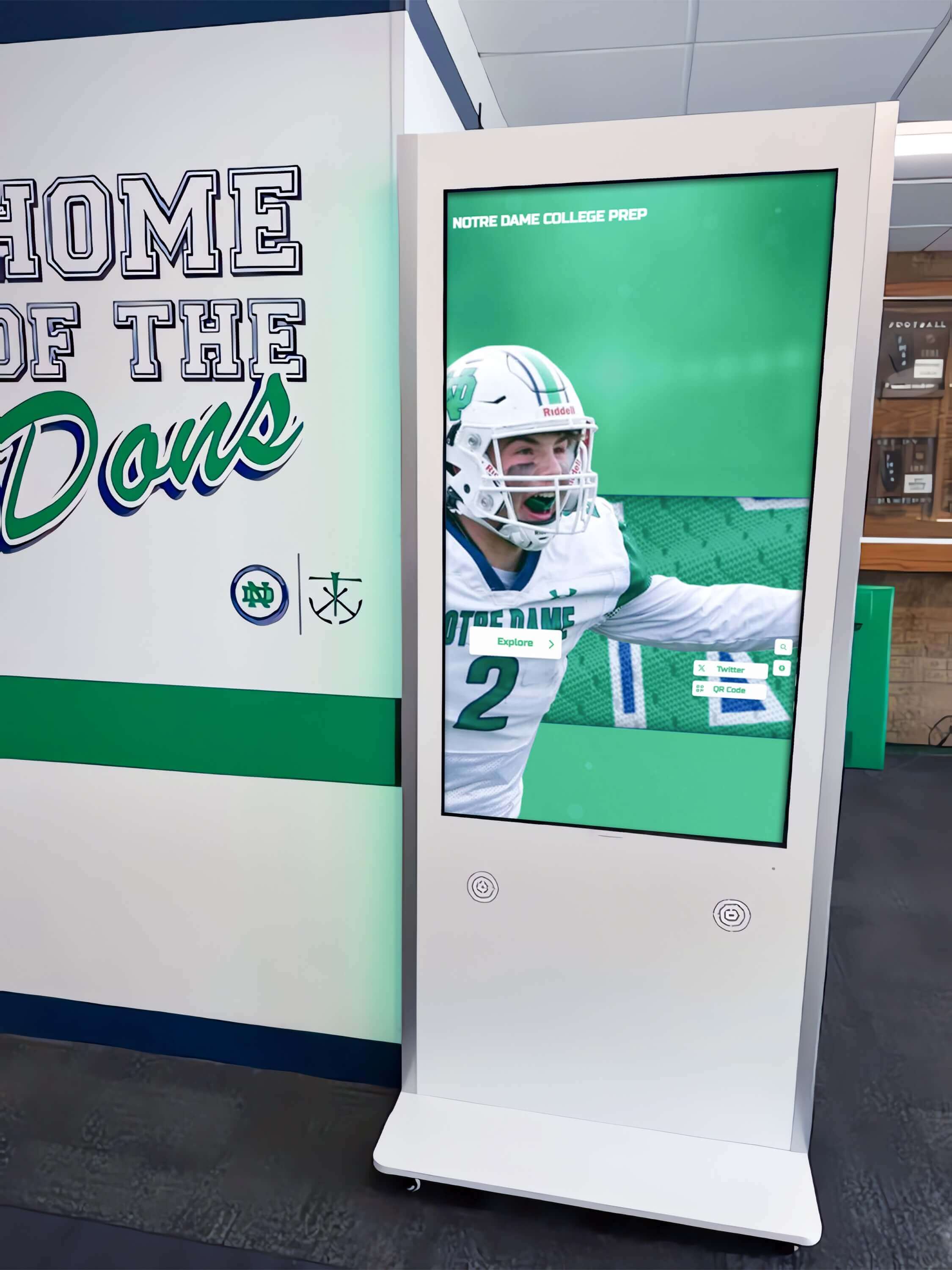
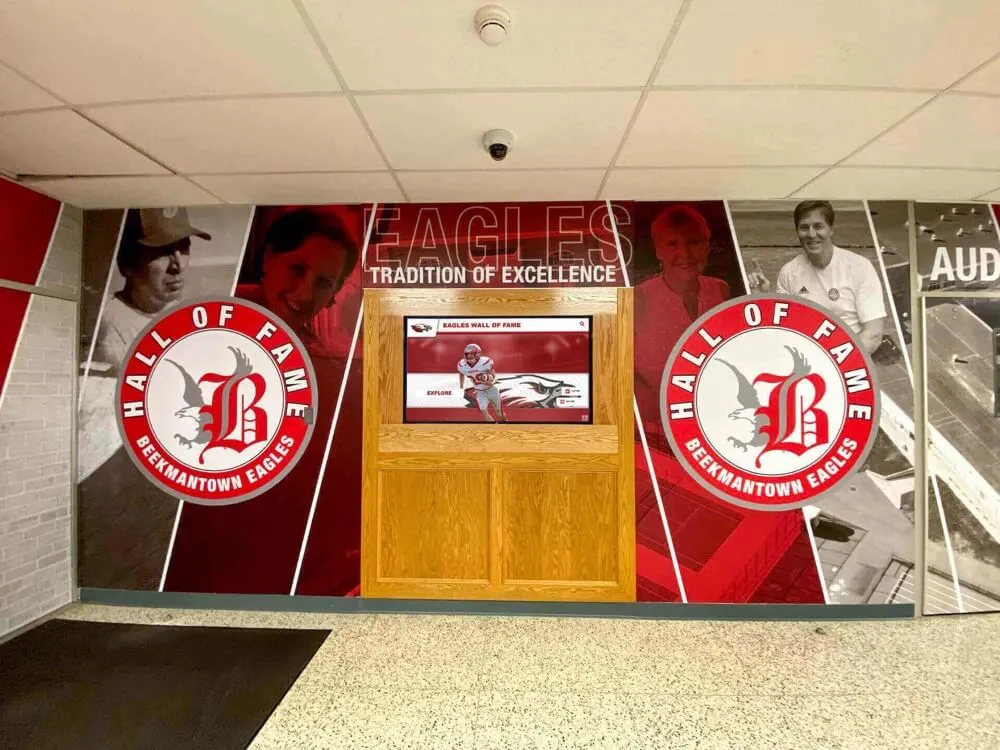
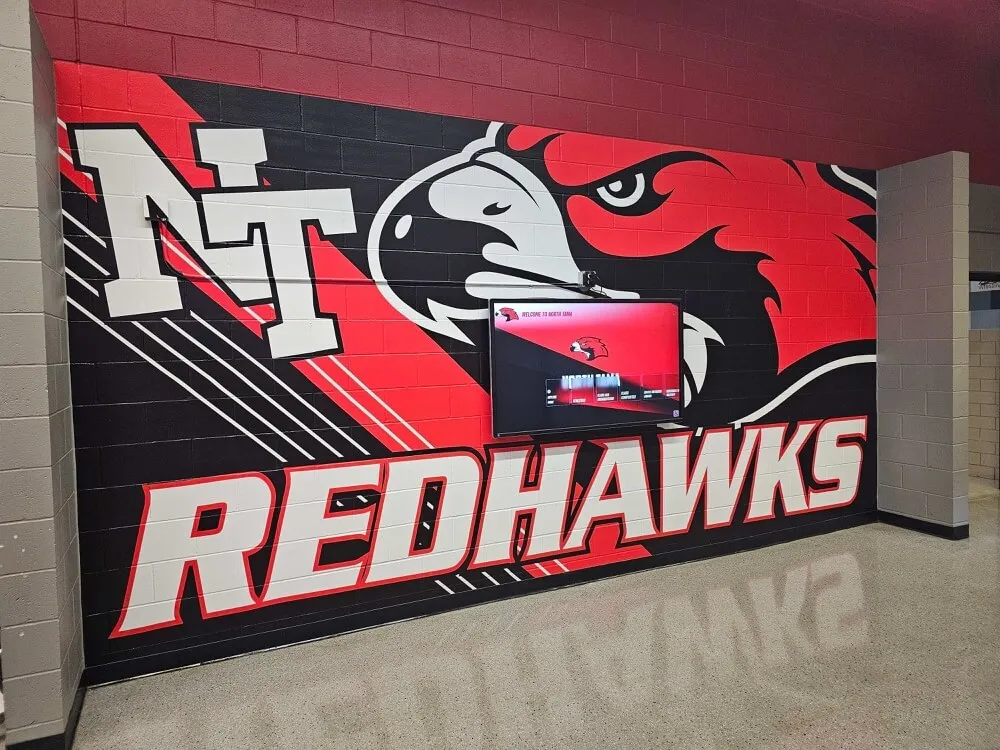
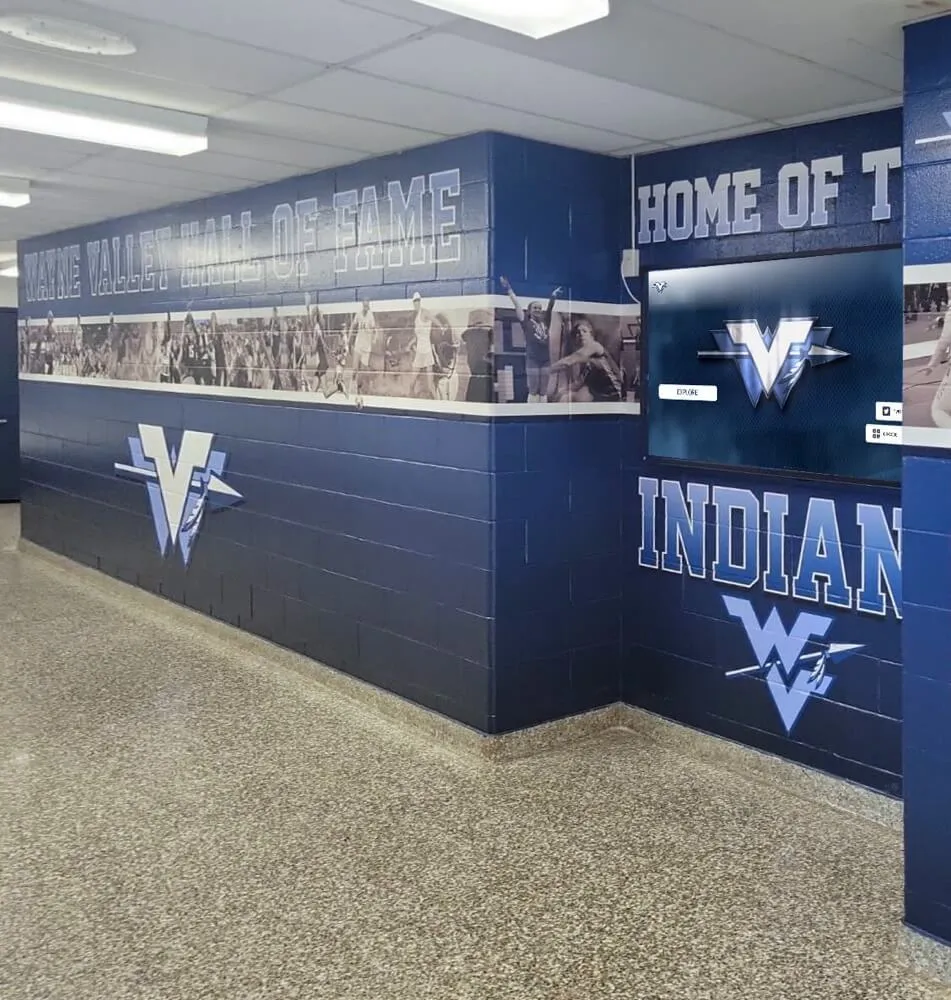
Interactive hallway recognition kiosks serve live queries while the school day is in session — a pg_repack policy allows database compaction to run in the background without interrupting visitor access to athlete records and award histories
Building an Athletic Awards Database pg_repack Policy: Seven Steps
Step 1: Confirm pg_repack Is Installed and Compatible
Before writing a policy, confirm that pg_repack is available in your PostgreSQL environment and matches your database version. The extension must be installed both as an OS package and loaded into the database:
-- Check if pg_repack is installed in the database
SELECT * FROM pg_extension WHERE extname = 'pg_repack';

-- If not installed, load it (requires superuser)
CREATE EXTENSION pg_repack;
Verify the installed version matches your PostgreSQL major version. A pg_repack binary compiled for PostgreSQL 14 cannot be used against a PostgreSQL 15 cluster. Most school IT environments running PostgreSQL 12 through 16 have pg_repack available through their distribution’s standard package repository.
Step 2: Identify Tables That Are Candidates for pg_repack
Not every table in an athletic award database accumulates bloat at a rate that justifies pg_repack. Target tables that meet at least two of the following criteria:
- The table has a primary key (required for
pg_repackto function) - The table’s dead tuple percentage exceeds 20% after a seasonal import or correction cycle
- The table’s
bytes_per_live_rowratio has risen more than 30% above its post-import baseline across successive monitoring runs - The table is larger than 100 MB and query response times have visibly degraded
- The table is scheduled for a large seasonal import within the next 72 hours and carries residual bloat from the previous season
In a typical athletic recognition schema, the primary candidates are the awards fact table, the athletes or people table, and the award_recipients join table. Index-only candidates—where the table data is compact but the indexes are fragmented—can be addressed with pg_repack --only-indexes or REINDEX CONCURRENTLY without processing the full table.
-- Identify bloated tables with primary keys suitable for pg_repack
SELECT
  t.schemaname,
  t.relname AS table_name,
  ROUND(100.0 * t.n_dead_tup::numeric / NULLIF(t.n_live_tup + t.n_dead_tup, 0), 2) AS dead_pct,
  pg_size_pretty(pg_relation_size(c.oid)) AS heap_size,
  ROUND(pg_relation_size(c.oid)::numeric / NULLIF(t.n_live_tup, 0), 0) AS bytes_per_live_row,
  EXISTS (
    SELECT 1 FROM pg_constraint WHERE conrelid = c.oid AND contype = 'p'
  ) AS has_primary_key
FROM pg_stat_user_tables t
JOIN pg_class c ON c.relname = t.relname AND c.relnamespace = (SELECT oid FROM pg_namespace WHERE nspname = t.schemaname)
WHERE t.schemaname = 'public'
ORDER BY dead_pct DESC NULLS LAST;
Step 3: Define the Triggering Thresholds
A policy must specify the conditions under which pg_repack is invoked rather than left to judgment in the moment. Define numeric thresholds for each monitored table:
| Table | pg_repack Trigger Condition |
|---|---|
awards (fact table) | dead_pct > 20% OR bytes_per_live_row > 1.3× baseline |
athletes / people | dead_pct > 25% OR heap size grown > 40% since last repack |
award_recipients (join) | dead_pct > 25% OR seasonal import scheduled within 48 hours |
nominations | dead_pct > 30% during active nomination window |
These thresholds are calibrated for programs where interactive kiosk availability cannot be interrupted during school hours. Programs with a confirmed late-night downtime window may use VACUUM FULL instead at higher thresholds.
Step 4: Set the Scheduling Rules
The policy must specify when pg_repack runs. Three scheduling contexts apply to athletic recognition databases:
Pre-import compaction. Run pg_repack on the awards and athletes tables 48–72 hours before a major seasonal import. This reduces the dead tuple backlog the import will add to, keeping post-import bloat below the Warning threshold without requiring a post-import maintenance window.
Post-import cleanup. If a post-import dead tuple check shows the awards table above the triggering threshold and no downtime window is available within 24 hours, invoke pg_repack during off-peak hours (typically after 9 PM local time) while the display layer continues serving queries normally.
Periodic quarterly compaction. Schedule a full pg_repack pass across all candidate tables once per academic quarter, regardless of dead tuple percentages. This prevents gradual bloat accumulation from slowly growing bytes_per_live_row values that fall below the per-run triggering threshold but compound across multiple seasons.
Schools building digital recognition environments where visitors regularly access display walls during athletic events will find that scheduling compaction before peak traffic windows—rather than reactively after performance degrades—protects the visitor experience at exactly the moments when recognition displays matter most. The digital signage for schools guide at touchscreenrecognition.com describes how schools plan their recognition display infrastructure for high-traffic events; the database maintenance schedule that supports those displays should follow the same event-aware calendar.
Step 5: Write the Invocation Commands and Log Requirements
Document the exact commands the IT administrator runs for each scenario. Standardizing the invocation prevents errors from flags being applied to the wrong table or in the wrong order.
Standard table repack (most common case):
# Repack awards table online — no display downtime
pg_repack -h localhost -p 5432 -U dbadmin -d awards_db --table awards

# Repack athletes table online
pg_repack -h localhost -p 5432 -U dbadmin -d awards_db --table athletes

# Repack indexes only on award_recipients (table data already compact)
pg_repack -h localhost -p 5432 -U dbadmin -d awards_db --table award_recipients --only-indexes
Pre-import compaction (all candidate tables in sequence):
for TABLE in awards athletes award_recipients; do
  echo "$(date): Starting pg_repack on $TABLE"
  pg_repack -h localhost -p 5432 -U dbadmin -d awards_db --table "$TABLE"
  echo "$(date): Completed pg_repack on $TABLE"
done
After each invocation, the policy requires logging: the date and time, the table processed, the before-and-after dead tuple percentage and heap size, and the name of the administrator who ran the process. Retain logs for at least one academic year.
Step 6: Handle Tables Without Primary Keys
pg_repack requires a primary key or not-null unique index on every table it processes. Tables in older athletic award schemas that predate primary key conventions—such as award archive tables originally migrated from flat-file systems—cannot use pg_repack and must be handled separately.
For these tables, the policy has two options:
Add a primary key before the next compaction cycle. A surrogate
BIGSERIALprimary key can be added to most historical tables with minimal disruption. Once the key exists,pg_repackcan be used for all future compaction cycles.Use
VACUUM FULLduring a confirmed downtime window. If a primary key cannot be added before the next compaction need arises, scheduleVACUUM FULLduring an off-hours window when the display layer can be temporarily suspended. Document the downtime window in the policy and notify the athletic director and recognition program manager in advance.
Step 7: Review and Update the Policy Annually
The thresholds, schedules, and table list defined in the policy should be reviewed at the start of each academic year. Triggering conditions calibrated for a 2,000-row awards table may be too loose for a 20,000-row archive five years later. New tables added during schema updates need to be assessed for bloat risk and added to the monitoring and repack scope. Review the pg_repack version compatibility after any PostgreSQL major version upgrade.
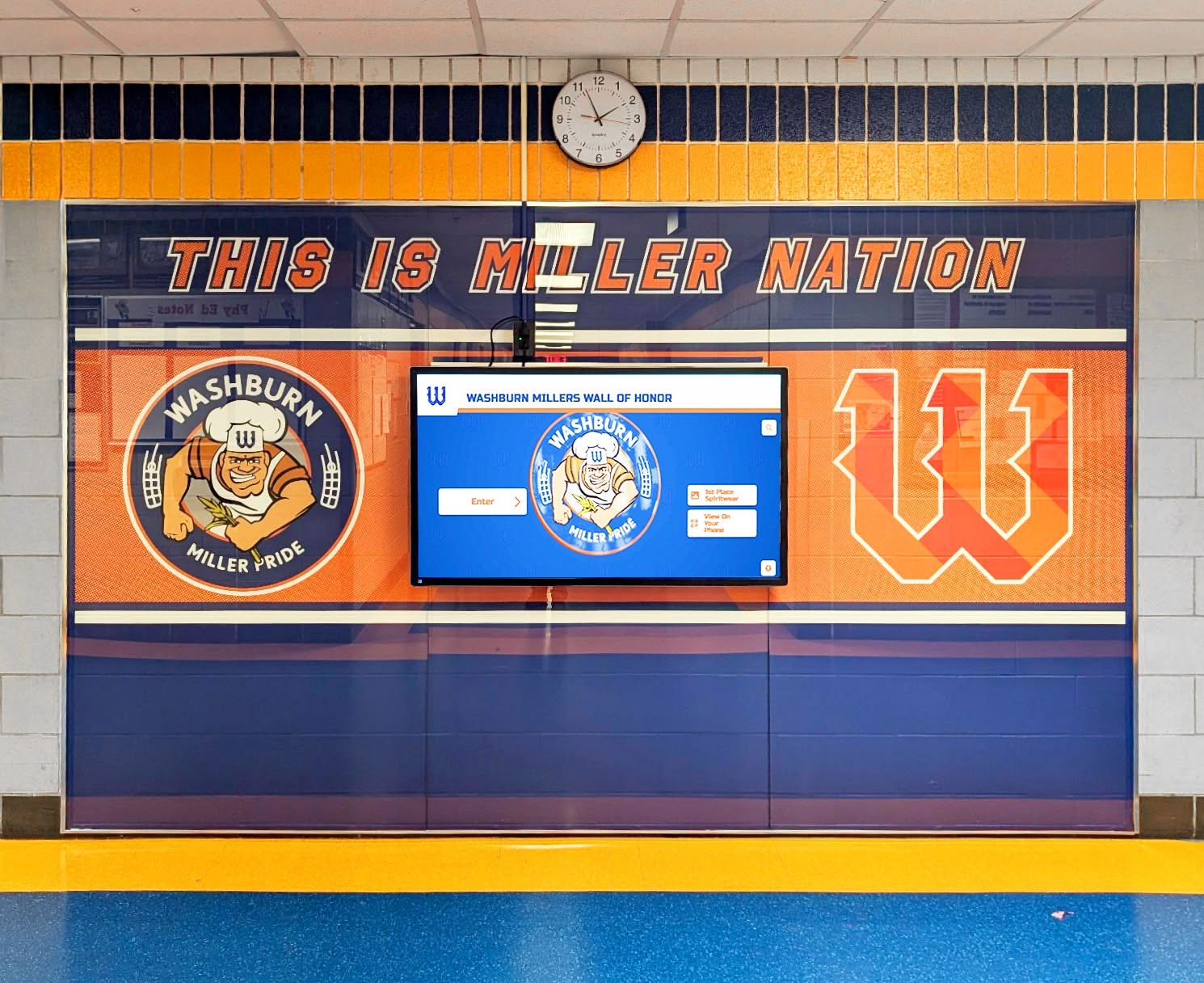
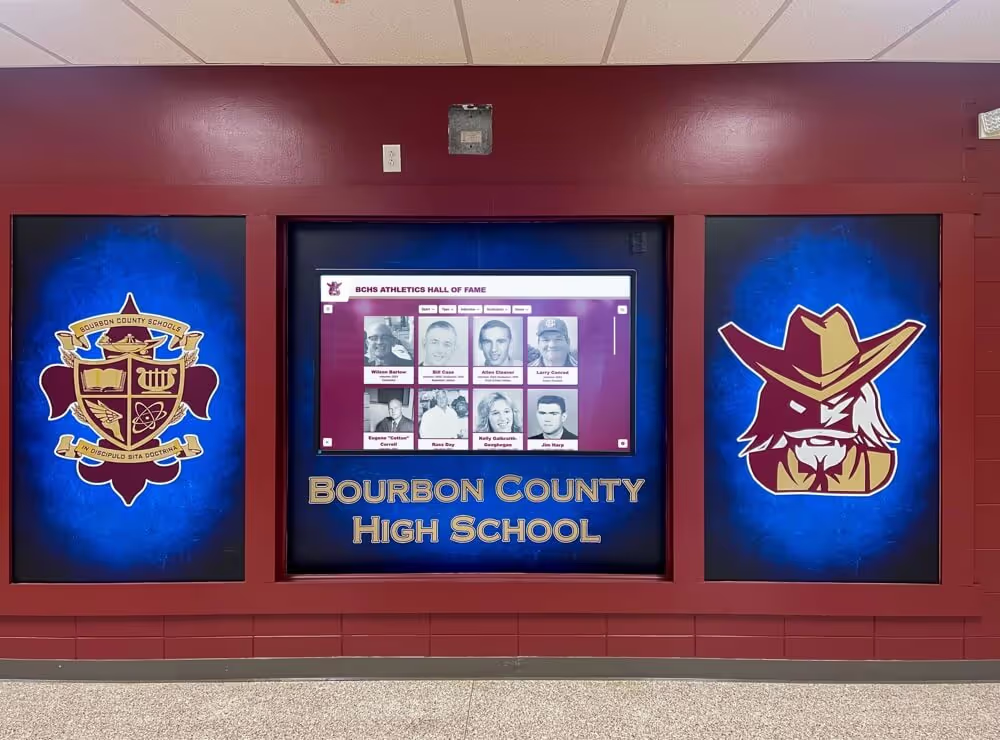
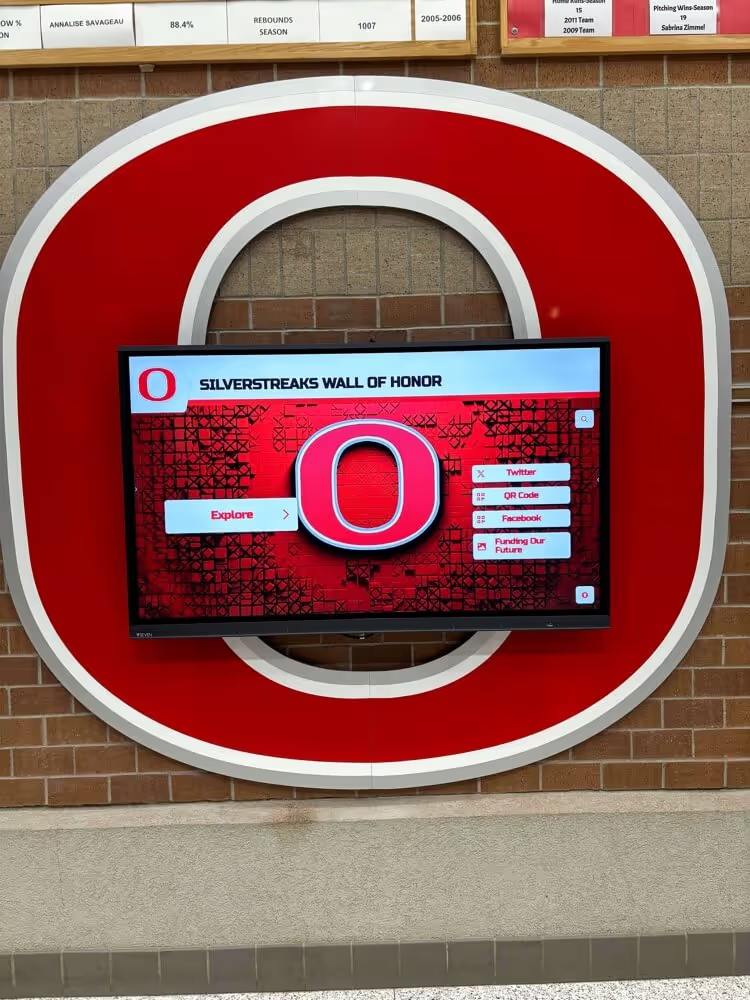
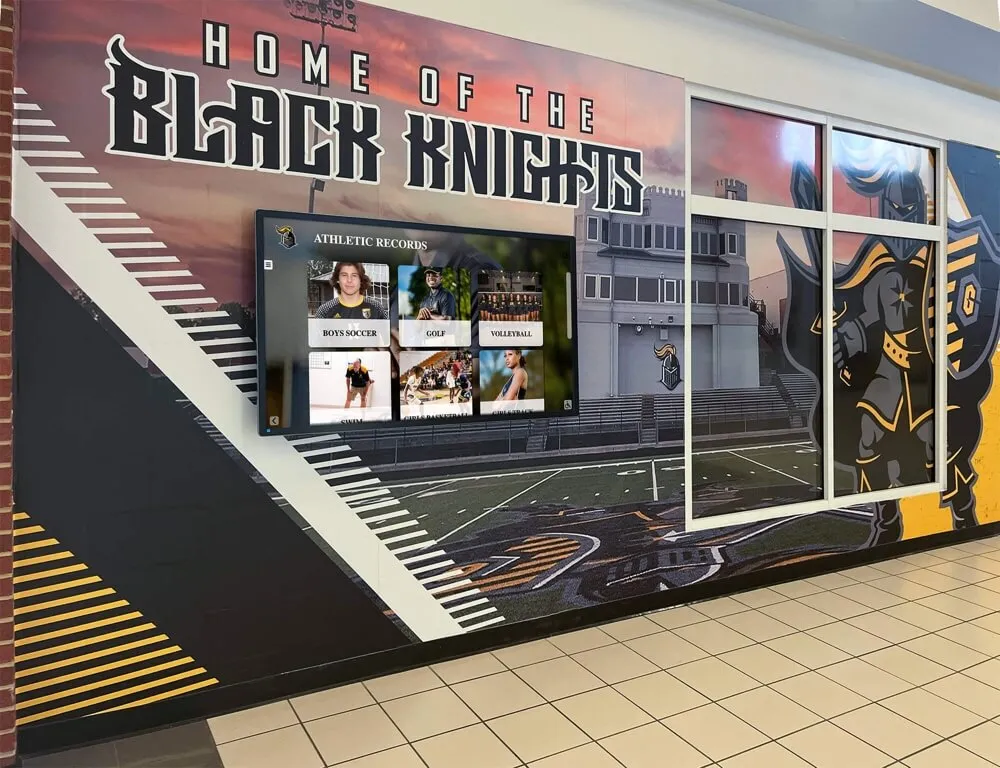
School hallway digital recognition walls that display award histories and athlete records year-round depend on a compaction policy that keeps the underlying tables free of bloat without requiring the display to go offline
pg_repack vs. VACUUM FULL: A Maintenance Checklist for Athletic Award Databases
Use this checklist when evaluating which compaction method to apply. Run through it at the start of each planned maintenance operation.
Before choosing pg_repack:
- Table has a primary key or not-null unique index (confirmed via
\d tablenamein psql) - pg_repack extension is installed and version-matched to the PostgreSQL cluster
- No active autovacuum process is running against the target table (can be verified via
pg_stat_activity) - Sufficient disk space exists for the repack operation—pg_repack needs roughly the same space as the current table plus its indexes (verify:
SELECT pg_size_pretty(pg_total_relation_size('awards'))) - The dead tuple percentage or bytes_per_live_row metric exceeds the threshold defined in Step 3
- Display availability must be maintained during the compaction window
Before choosing VACUUM FULL:
- A confirmed maintenance window exists with display downtime explicitly approved
- The table either lacks a primary key or is small enough that lock duration is under 5 minutes
- All active connections to the recognition database have been quiesced
- Disk space sufficient for VACUUM FULL is confirmed (VACUUM FULL rebuilds the table in place but needs working space)
- The autovacuum daemon is paused or the table’s autovacuum is disabled for the duration to avoid conflicts
After either operation:
- Run
ANALYZE tablenameimmediately after repack or VACUUM FULL completes to refresh query planner statistics - Verify dead tuple percentage has returned below 5% via the pg_stat_user_tables monitoring query
- Check index sizes to confirm indexes were rebuilt compactly
- Log the operation details: timestamp, table, before/after sizes, administrator name
- Confirm first display query response time is within baseline expectations
Schools that manage recognition programs alongside physical award walls and lobby displays will find that the honor roll award recognition categories display ideas at touchscreenwebsite.com describes how institutions organize diverse recognition data across academic, athletic, and community achievement categories—the database tables that store all of those categories require the same bloat management discipline, not just the tables that hold athletic award records.
How pg_repack Fits Into a Broader Athletic Award Database Maintenance Calendar
pg_repack addresses one specific problem: physical table and index bloat that has grown beyond what standard autovacuum and VACUUM ANALYZE can address without a downtime window. It fits alongside, not instead of, the other maintenance disciplines that keep a recognition database healthy across decades of seasonal data.
Autovacuum policy. A well-tuned autovacuum configuration—with scale factors tightened to 0.01–0.02 for the high-write awards and athletes tables—prevents bloat from reaching the triggering thresholds that invoke pg_repack in the first place. pg_repack is a corrective tool for when autovacuum was insufficient; tightened autovacuum is the preventive measure that reduces how often pg_repack is needed.
Heap-bloat monitoring. The dead tuple ratios and bytes_per_live_row metrics that trigger a pg_repack invocation come from the same monitoring queries used in a heap-bloat monitoring policy. The athletic awards database heap-bloat monitoring policy describes how to build and schedule those monitoring queries; the pg_repack policy described here defines what to do when those queries show thresholds have been crossed and no downtime window is available.
Index bloat maintenance. After pg_repack completes a table repack, indexes are rebuilt as part of the same operation. But indexes that have accumulated bloat independently—without corresponding table bloat—can be addressed with pg_repack --only-indexes or REINDEX CONCURRENTLY, both of which operate online. The athletic awards database index bloat maintenance checklist provides the detection queries and remediation procedures for index-specific bloat.
Write amplification monitoring. The burst-write patterns that drive bloat accumulation in athletic award databases also drive write amplification on the underlying storage. A school maintaining its own SSD-backed database server should monitor write amplification alongside bloat metrics—the athletic awards database write amplification monitoring policy covers that discipline in detail.
The alumni welcome area ideas guide at touchwall.tv illustrates how schools design physical spaces around their recognition displays—the database infrastructure powering those displays, including the compaction policies described here, determines whether those spaces deliver a responsive, accurate recognition experience or a slow, error-prone one at the moments when alumni engagement is highest.

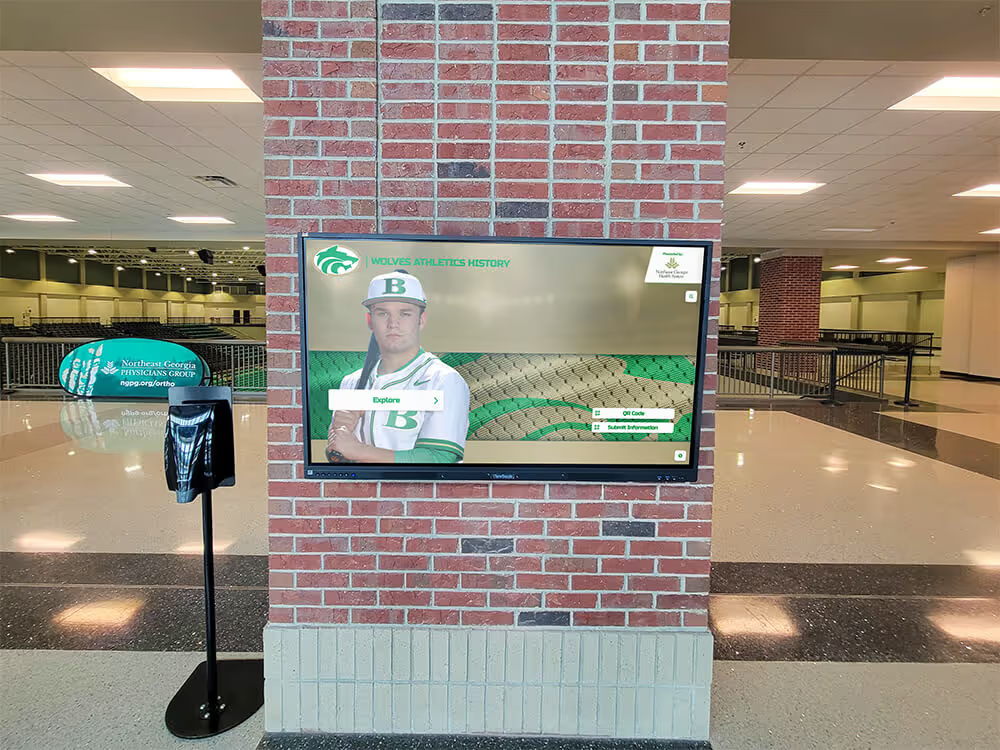
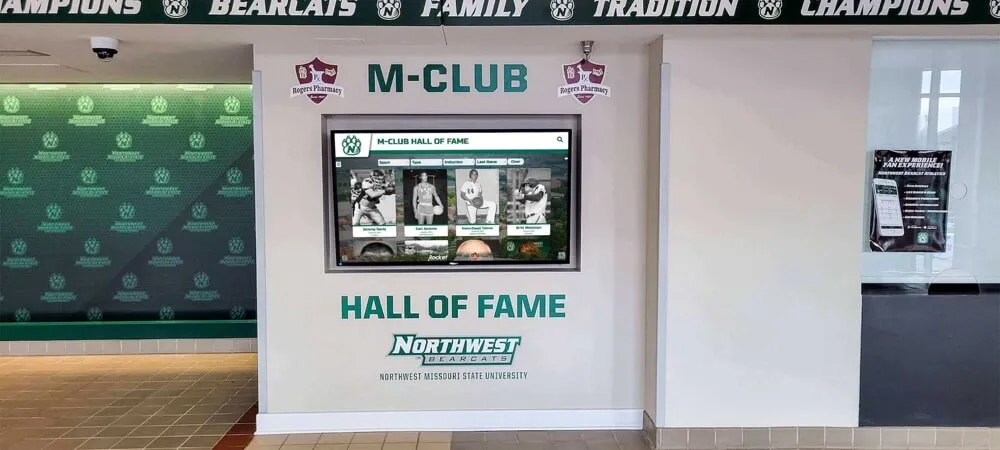
Visitors interacting with athletic hall of fame displays expect instant search responses — a pg_repack policy keeps the underlying tables compact and query-ready without requiring kiosk downtime during compaction
How Managed Recognition Platforms Eliminate the pg_repack Decision
Schools that run their athletic award records on a purpose-built digital recognition platform rather than a self-managed PostgreSQL database shift the bloat management decision entirely to the platform provider. A managed platform monitors table health continuously, runs compaction operations on a schedule aligned with each school’s seasonal import calendar, and handles the pg_repack vs. VACUUM FULL decision without requiring the school’s IT team to evaluate dead tuple ratios, check primary key constraints, or coordinate maintenance windows with the athletic director.
For programs managing their own PostgreSQL instance, the seven-step policy and maintenance checklist in this guide provide the structure needed to maintain table health without a managed service. But many school IT teams find that the cumulative effort of monitoring heap bloat, running pg_repack, tuning autovacuum, and managing index maintenance exceeds what staff can sustain alongside classroom technology support, network administration, and administrative systems maintenance.
Trusted by 600+ institutions, Rocket Alumni Solutions’ cloud-based digital recognition platform manages the full database infrastructure behind athletic award displays—table compaction, autovacuum tuning, index maintenance, and query performance—so your team can focus on recognizing student athletes rather than maintaining database internals. The platform supports unlimited inductees, unlimited award categories, multimedia content including photos and Hudl video, WCAG 2.1 AA compliant displays on screens from 32" to 100"+, and remote CMS access for staff to add new season data from anywhere.
Schools planning recognition spaces—from lobby walls to gymnasium displays—will find the team roster graphic schools touchscreen social recognition content guide at digitalwalloffame.com useful for understanding how managed content and managed database infrastructure work together to keep team rosters, award histories, and recognition displays current across every season. The digital art gallery schools guide at halloffame-online.com extends that principle to academic and arts recognition programs that share the same database infrastructure as athletic award archives.
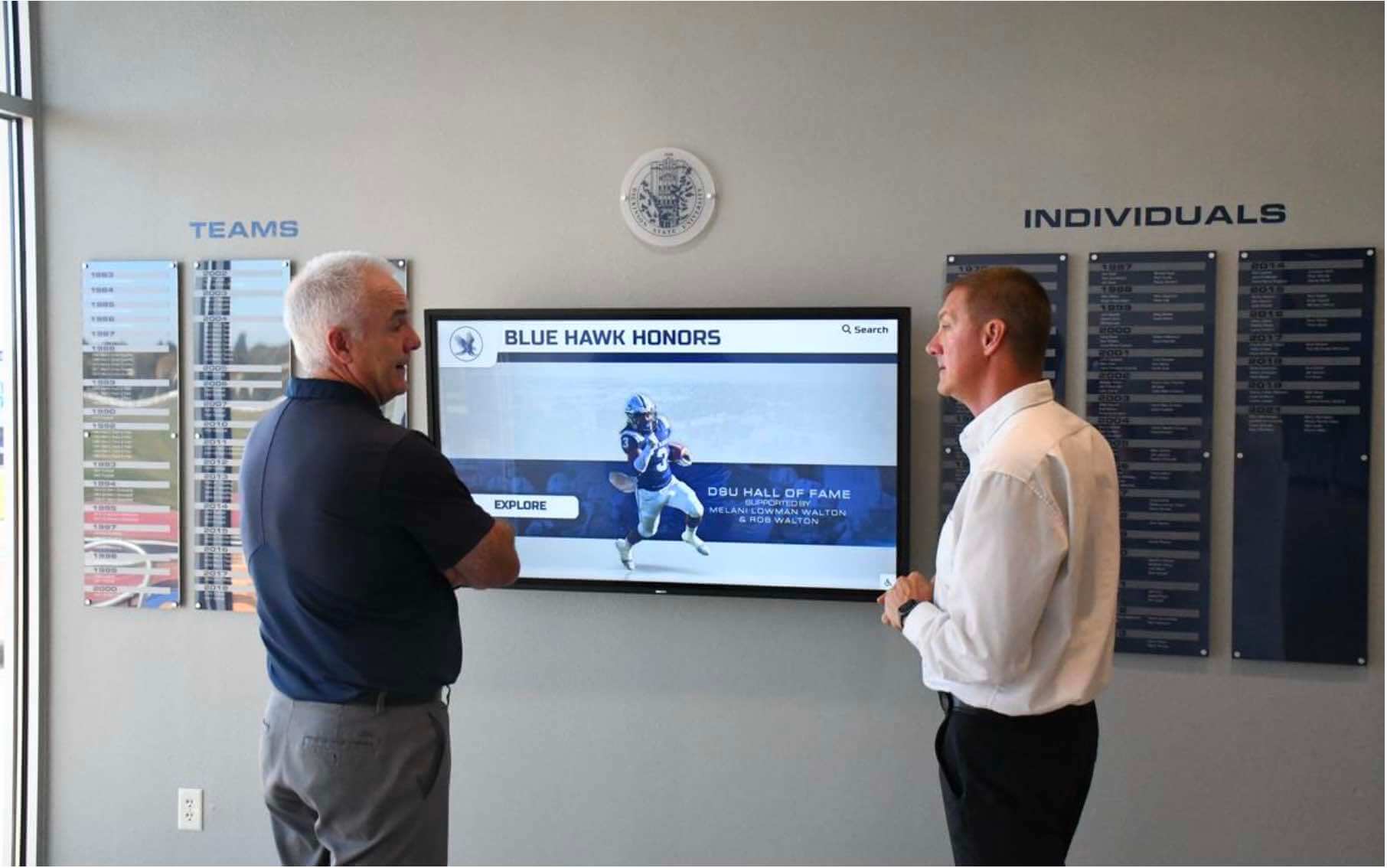
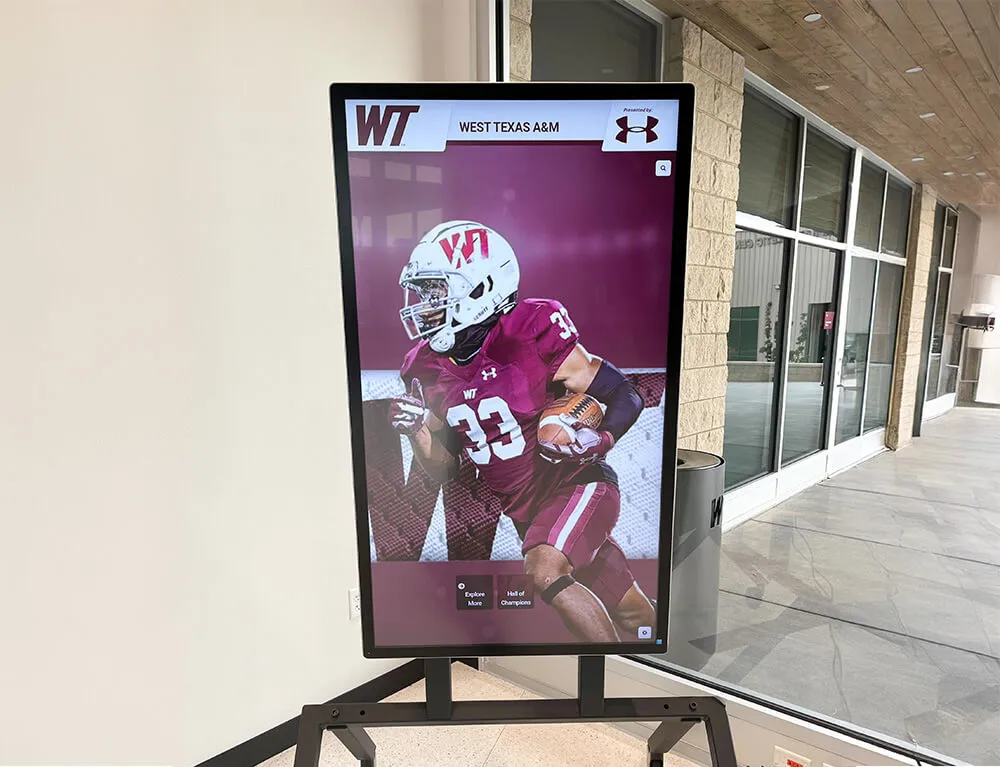
Athletic hall of fame digital displays that serve staff and visitor queries throughout the school day require a maintained database — a pg_repack policy provides online bloat cleanup without interrupting access during active school hours
FAQ: Athletic Awards Database pg_repack Policy
What is pg_repack and why is it used for athletic awards databases?
pg_repack is a PostgreSQL extension that rebuilds bloated tables and indexes online, without the exclusive locks that VACUUM FULL requires. For athletic awards databases, this means compaction can run while hall-of-fame kiosks and recognition display walls continue serving queries. Athletic recognition databases generate concentrated bloat from seasonal imports — pg_repack allows that bloat to be reclaimed without coordinating a downtime window or taking displays offline.
When should a school use pg_repack instead of VACUUM FULL?
Use pg_repack when the table has a primary key, the table is large enough that VACUUM FULL would hold a lock for more than a few minutes, and display availability must be maintained. Use VACUUM FULL when a confirmed downtime window exists, the table is small enough to complete compaction in seconds, or the table lacks a primary key. Most athletic awards tables have primary keys and are large enough that pg_repack is the safer default for schools without late-night windows.
How much disk space does pg_repack require?
pg_repack needs free disk space roughly equal to the total size of the target table plus all its indexes. Use SELECT pg_size_pretty(pg_total_relation_size('awards')) to measure the current total before running. On low-disk servers, run VACUUM ANALYZE first to reclaim autovacuum-marked space, then re-measure before proceeding.
Does pg_repack block queries while it runs?
No. pg_repack keeps the original table accessible for reads and writes throughout the copy phase. At the swap, it acquires a brief exclusive lock—typically milliseconds to a few seconds—before redirecting queries to the compacted version. This makes it safe to run during school hours when recognition displays are active.
How often should schools run pg_repack on athletic award tables?
Run pg_repack pre-import (48–72 hours before each major seasonal import) and quarterly as a baseline compaction pass. For programs with frequent correction cycles, monitor dead tuple percentages weekly and invoke pg_repack whenever a candidate table exceeds 20–25% dead tuples and no downtime window is available within 24 hours.
A Compaction Policy That Keeps Recognition Displays Live
An athletic awards database pg_repack policy solves the practical problem every school IT team faces after a major seasonal import: the awards table is bloated, display response times are trending upward, and there is no confirmed maintenance window before the next day’s visitor traffic peaks. By defining the conditions under which pg_repack is used instead of VACUUM FULL, the policy gives the IT administrator a clear decision path that protects both database health and display availability simultaneously.
The seven steps and maintenance checklist in this guide apply whether your program maintains a few hundred award records across a handful of sports or a multi-decade archive spanning every athletic program in a large school district. The triggering thresholds, scheduling rules, and invocation commands can be adapted to fit any PostgreSQL environment, from a single on-premises server to a cloud virtual machine.
For programs recognizing student athletes who have contributed to the school community through competition, leadership, and academic excellence, the database that stores their records and powers their public recognition deserves consistent, documented maintenance attention. A pg_repack policy is the mechanism that ensures table bloat never becomes the reason a recognition display delivers a slow or degraded experience at the moments that matter most.
See How 600+ Schools Keep Award Records Fast and Display-Ready
Rocket Alumni Solutions' cloud-based digital recognition platform manages the full database infrastructure behind your athletic award displays — including table compaction, autovacuum tuning, and seasonal import performance — so your team can focus on honoring student athletes, not maintaining database internals. WCAG 2.1 AA compliant displays work on any touchscreen from 32" to 100"+, with unlimited inductees, categories, and multimedia content.
Request a Custom Demo