



Intent: define. An athletic awards database pg_stat_archiver review is the practice of querying PostgreSQL’s pg_stat_archiver system view to read the cluster-wide archiver process counters — archived_count, last_archived_wal, last_archived_time, failed_count, last_failed_wal, last_failed_time, and stats_reset — before and after a recognition-season update window, then using the paired snapshots to document archiver activity, flag any increase in failure counts, and route open questions to the responsible administrator or vendor before a scheduled ceremony, induction, or display launch.
In PostgreSQL 18, pg_stat_archiver contains exactly one cluster-wide row reflecting the archiver process for the entire PostgreSQL instance — not a per-database or per-table view. A nonzero failed_count warrants investigation but is not an automatic incident: quiet archiving periods and intentionally disabled archiving configurations are not failures. The PostgreSQL 18 documentation states explicitly that WAL files are normally archived in order but that ordering is not guaranteed under all conditions — so the presence of a last_archived_wal value does not confirm that all earlier segment files were successfully archived. Archive statistics alone do not prove that a restorable backup exists; only a base backup combined with a tested restore drill can confirm that.
Every school athletic recognition program that runs its award records on a self-hosted PostgreSQL cluster inherits a database-layer responsibility that extends beyond managing athlete profiles, award categories, and seasonal imports: maintaining the WAL archiving pipeline that copies completed WAL segment files to an archive destination, preserving the raw material for point-in-time recovery if a database corruption or failed import ever requires it. The pg_stat_archiver view is PostgreSQL’s built-in window into whether that pipeline is functioning, failing, or simply silent.
A pre-season archiver review is the practice of reading that window before a high-stakes recognition window opens — before a hall-of-fame induction ceremony loads new inductee records, before a season-end import commits hundreds of letter-winner updates, or before a new athletic records display goes live with the year’s refreshed leaderboard data. The review does not replace base backups, off-site storage verification, or restore drills. What it provides is a documented snapshot of the archiver’s state at a known moment in time, alongside a framework for deciding when a failed count or a stalled archive timestamp requires owner follow-up before the recognition window opens.

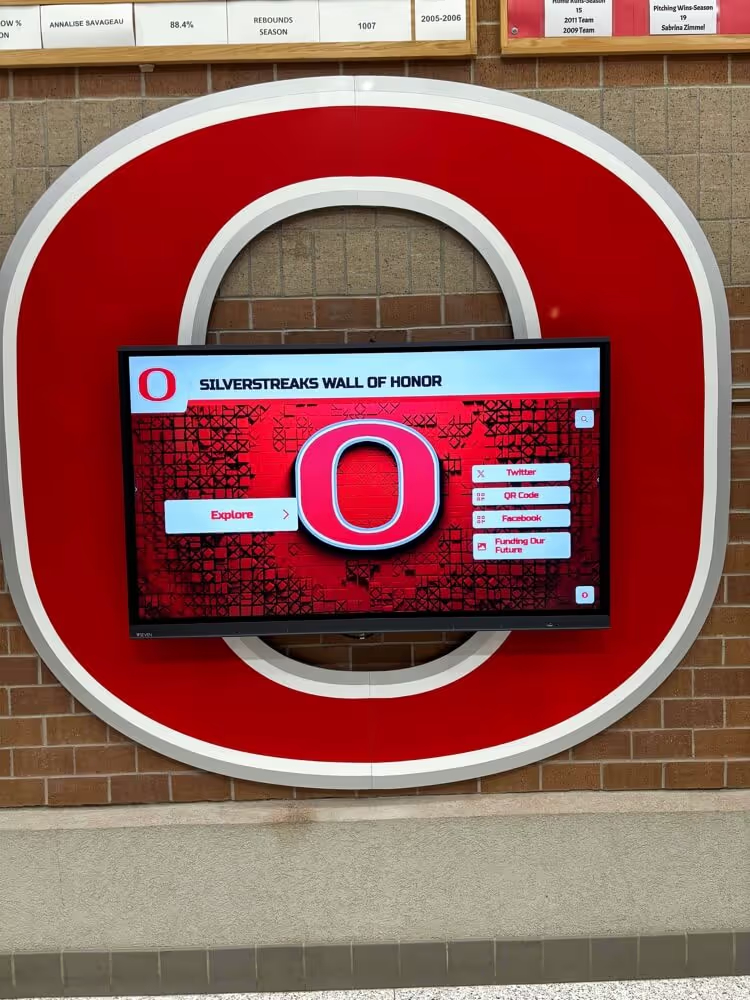
Championship recognition records in a school or university athletic facility represent accumulated seasons of carefully maintained award data — a pre-season pg_stat_archiver review documents the state of the WAL archiving pipeline before a high-stakes recognition window opens
What pg_stat_archiver Reports in PostgreSQL 18
According to the PostgreSQL 18 documentation for the pg_stat_archiver view, the view always contains a single row with data about the archiver process for the PostgreSQL cluster. Every database within the instance shares this single row; there is no per-database breakdown of archive activity.
The seven columns the view exposes are:
| Column | Type | What it records |
|---|---|---|
archived_count | bigint | Number of WAL files that have been successfully archived |
last_archived_wal | text | Name of the WAL file most recently successfully archived |
last_archived_time | timestamptz | Timestamp of the most recent successful archive operation |
failed_count | bigint | Number of failed attempts for archiving WAL files |
last_failed_wal | text | Name of the WAL file of the most recent failed archival operation |
last_failed_time | timestamptz | Timestamp of the most recent failed archival operation |
stats_reset | timestamptz | Time at which these statistics were last reset |
archived_count and failed_count are cumulative counters that accumulate since the last statistics reset — either by a server restart or by an explicit pg_stat_reset_shared('archiver') call. They share the same baseline as the stats_reset timestamp: if a reset occurs between two snapshots, both counters restart from zero and any delta computed against the prior snapshot is meaningless. Verifying that stats_reset is identical in both the pre-window and post-window snapshots is the first validation step before any interpretation.
last_archived_wal and last_failed_wal name specific WAL segment files — for example, 000000010000000000000042 — and their paired timestamps tell a reviewer what file was last processed and when. If last_archived_time is many hours or days before the review timestamp and archived_count has not changed since the prior snapshot, archiving may be idle because no new WAL was generated, or the archiver may be stalled — two very different conditions that require different follow-up paths.
The ordering caveat. The PostgreSQL 18 documentation includes an explicit note: WAL files are archived in order, oldest to newest, under normal circumstances, but this is not guaranteed. The guarantee does not hold under special circumstances such as promoting a standby or after crash recovery. As a result, it is not safe to assume that all files older than last_archived_wal have also been successfully archived. A reviewer who sees archived_count greater than zero and failed_count equal to zero cannot conclude that every WAL segment since the cluster was initialized has been archived — only that the archiver did not record failures for the segment files it attempted during the reviewed window.
How to Read pg_stat_archiver: Before-and-After Snapshots
The before-and-after snapshot approach mirrors the technique appropriate for other cumulative PostgreSQL statistics views. Two snapshots that bracket a recognition-season update window produce deltas for archived_count and failed_count that document what the archiver did — and did not do — during that specific interval.
Step 1: Capture the pre-window snapshot.
Before the recognition-season update window opens, query the view and record the complete row:
SELECT
  archived_count,
  last_archived_wal,
  last_archived_time,
  failed_count,
  last_failed_wal,
  last_failed_time,
  stats_reset
FROM pg_stat_archiver;
Record all seven columns including stats_reset, alongside the query timestamp. This snapshot establishes the baseline for the review period.
Step 2: Record whether archiving is configured.
Check archive_mode and whether an archive_command or archive_library is configured:
SELECT name, setting FROM pg_settings
WHERE name IN ('archive_mode', 'archive_command', 'archive_library');
If archive_mode is off, the archiver process is not running and pg_stat_archiver counters will not change during the window. This is not automatically an incident — some deployments intentionally run without WAL archiving — but it must be documented in the review record. The appropriate follow-up is confirming that the configuration matches the program’s documented backup strategy, not assuming archiving should be enabled.
Step 3: Note concurrent cluster activity before the window opens.
Check pg_stat_activity for active sessions or autovacuum workers:
SELECT pid, application_name, state, wait_event_type, query_start
FROM pg_stat_activity
WHERE state != 'idle'
ORDER BY query_start;
Document any active background workers. Their activity during the import window generates WAL that the archiver must process, contributing to archived_count independent of the import batch.
Step 4: Open the recognition-season update window.
Proceed with the scheduled import, inductee record load, or data correction batch. The pg_stat_archiver review requires no modification to the import process itself.
Step 5: Capture the post-window snapshot immediately after the update completes.
SELECT
  archived_count,
  last_archived_wal,
  last_archived_time,
  failed_count,
  last_failed_wal,
  last_failed_time,
  stats_reset
FROM pg_stat_archiver;
Record the query timestamp and all seven columns.
Step 6: Verify stats_reset and compute deltas.
Compare stats_reset between the two snapshots. If it changed, mark all deltas void and document the reset event. If it is unchanged, compute:
delta_archived_count = post.archived_count - pre.archived_count
delta_failed_count   = post.failed_count   - pre.failed_count
A positive delta_failed_count — any increase in the failure counter during the window — is the primary signal requiring owner follow-up before the review is closed. Record last_failed_wal and last_failed_time from the post-window snapshot alongside the delta.
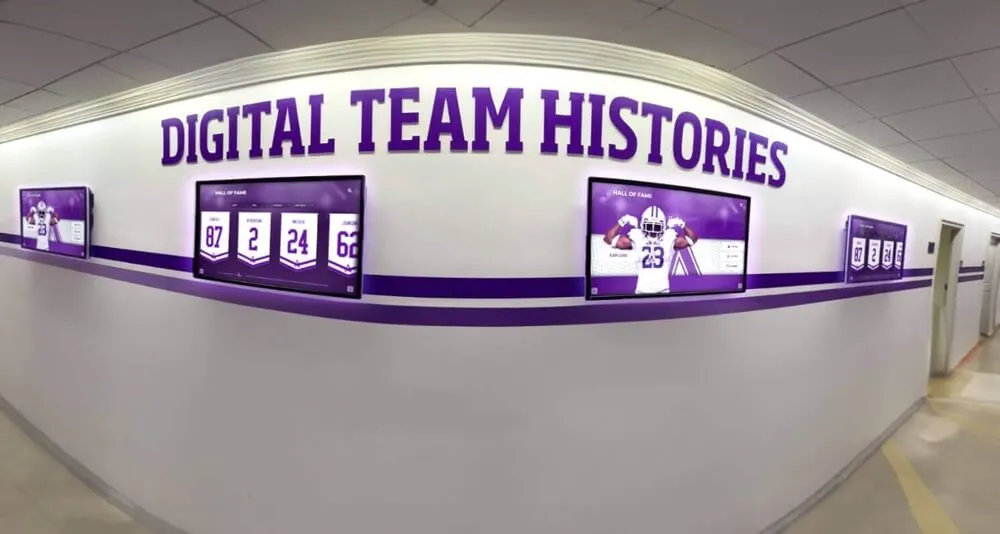
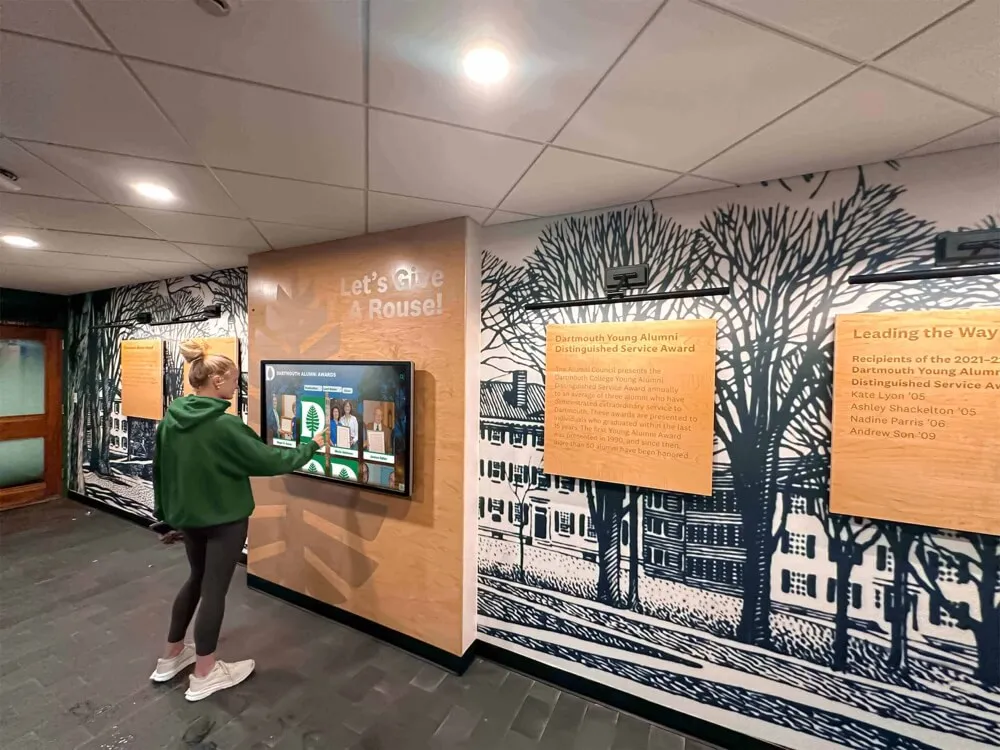
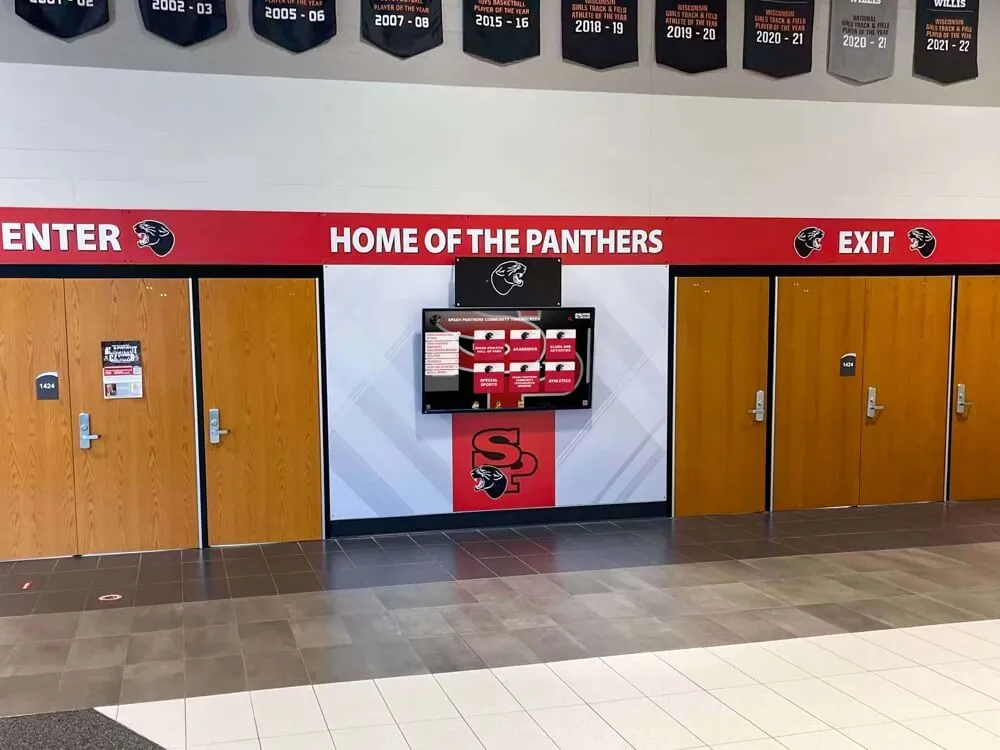
Hallway digital team history displays represent seasonal import data — a before-and-after pg_stat_archiver snapshot documents whether the WAL archiving pipeline kept pace with the cluster activity the import window generated
Decision Table: Interpreting the Snapshot Pair
The table below maps common snapshot-pair observations to the follow-up action each observation supports. Because pg_stat_archiver is a cluster-wide view and counters are cumulative, no cell in this table represents a hard pass/fail gate. All interpretations are provisional until cross-referenced with the configuration state and concurrent activity documented in the review record.
| Observation | Follow-up action |
|---|---|
delta_archived_count > 0, delta_failed_count = 0 | Document as expected archiver activity during the window; record last_archived_wal and last_archived_time in the review log |
delta_archived_count = 0, delta_failed_count = 0, archive_mode = off | Document that archiving is disabled; confirm this matches the program’s backup strategy; no archive-layer incident |
delta_archived_count = 0, delta_failed_count = 0, archive_mode = on | Archive was idle during the window; check whether the import generated WAL and whether last_archived_time advanced recently; route to the DBA for assessment if the gap is unexpectedly long |
delta_failed_count > 0, last_failed_time within the window | Owner follow-up required before the review is closed; record last_failed_wal and last_failed_time; do not interpret the failure count in isolation from the archiver configuration and system context |
stats_reset changed between snapshots | Delta is void; document the reset event; do not interpret any counter delta from this window pair |
last_archived_time is many hours or days before the pre-snapshot | Archiving may have been idle or stalled before the window opened; document the gap; verify archive_mode setting and whether WAL was generated normally in the preceding period |
Quiet periods are not automatically incidents. A school whose athletic award database receives no writes during a mid-semester quiet period generates no new WAL, and the archiver will have no new segment files to process — which is correct behavior, not a failure. A delta_archived_count of zero combined with a delta_failed_count of zero during a period of known low activity is expected. The concern arises when archiving is expected to be active — such as during or after a seasonal import — and last_archived_time does not advance despite the import generating WAL.
Counters may not capture all process errors. The failed_count counter reflects what the archiver process itself records. Certain error conditions — operating-system level failures, network connectivity problems with remote archive storage, or process crashes outside the archiver’s own error recording path — may not increment failed_count. Verify the exact scope of counter coverage against the PostgreSQL 18 documentation for the specific version in use before asserting that a zero failed_count is exhaustive. The counter is a useful signal, but a failed_count of zero should be read as “the archiver did not record failures for the files it attempted,” not as a guarantee that every archiving operation reached its destination without errors.
Before the update window opens, programs that maintain a broader cluster statistics baseline can cross-reference archiver state with per-database transaction activity. The athletic awards database pg_stat_database baseline methodology at digitalawardsdisplay.com covers the parallel per-database baseline snapshot that establishes transaction and block I/O context alongside the single-row archiver view — the two practices together give a more complete picture of cluster state before a seasonal import begins.
Archive Statistics Do Not Prove a Restorable Backup
This is the most important limitation a reviewer must communicate clearly in any pre-season review record: a pg_stat_archiver review — even one that shows a growing archived_count and a zero delta_failed_count — does not prove that a point-in-time restore of the athletic awards database is possible.
Point-in-time recovery requires three components functioning together: a valid base backup, a continuous chain of archived WAL segments without gaps, and a tested restore procedure successfully executed against that specific backup set. pg_stat_archiver reports only on what the archiver process attempted and whether it recorded successes or failures. It does not verify:
- That the archive destination has sufficient storage to hold all required segments
- That the archived segment files are uncorrupted and readable at the destination
- That no segments are missing from the chain between the base backup and the most recently archived WAL
- That the base backup itself is complete and consistent
- That the restore procedure works in the program’s actual recovery environment
Schools whose athletic records programs depend on point-in-time recovery as a component of their data protection strategy must periodically perform restore drills against a non-production environment — verifying that the award database can be brought to a known consistent state from the archived chain and base backup. A pg_stat_archiver review documents the archiver process’s activity and is one input into the overall backup health picture. It is not a substitute for the restore drill.
No reviewer should state that archiving is “working” solely on the basis of a pg_stat_archiver snapshot with nonzero archived_count and zero failed_count. The correct framing is that the archiver process did not record failures during the reviewed window — a meaningfully narrower claim.

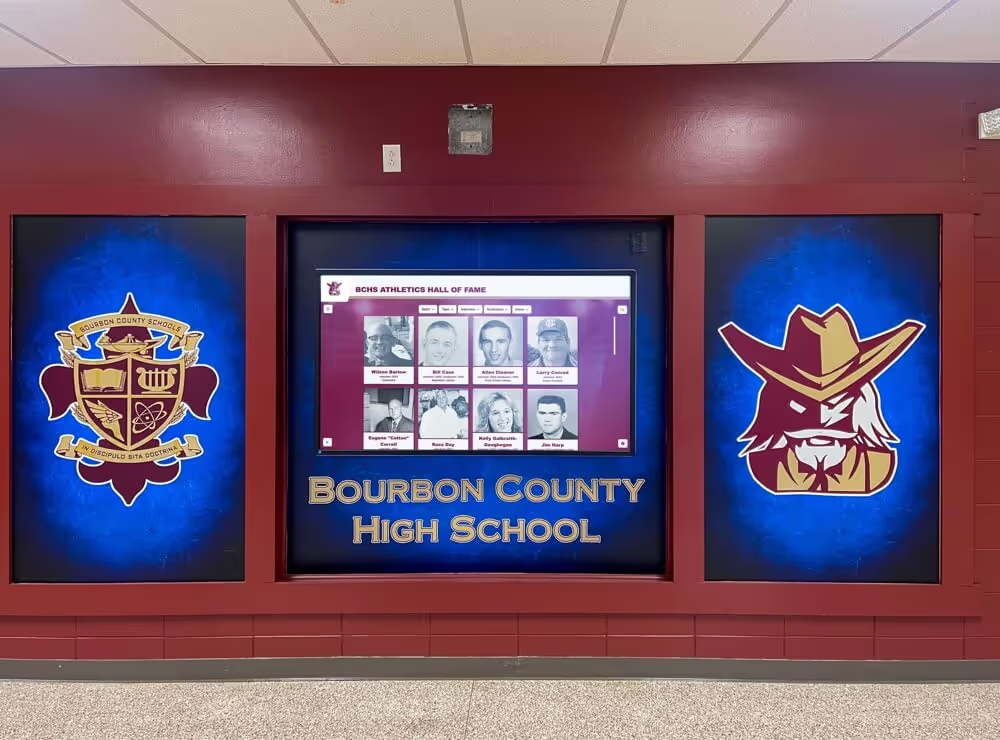
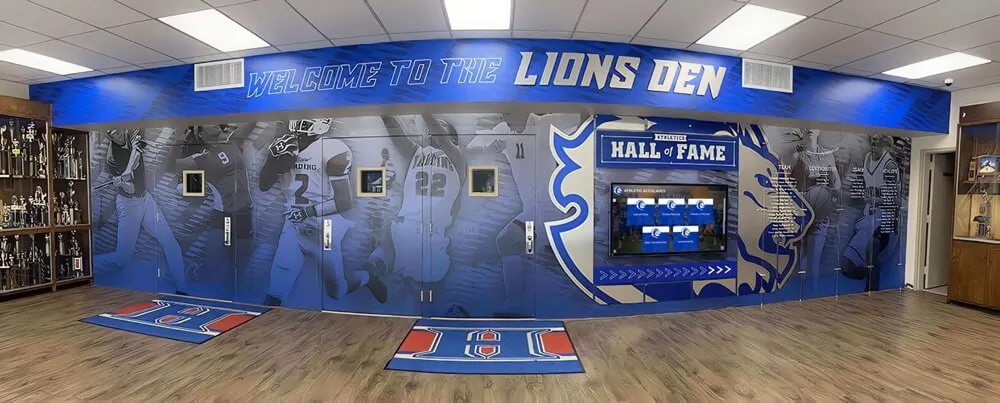
School hall of fame digital displays represent award records that depend on a sound data protection strategy — pg_stat_archiver documents archiver process activity, but restore drills and base backup verification provide the only confirmation that recovery is actually possible
Pre-Season Archiver Review Checklist
Use this checklist in the week before a scheduled recognition-season update window. A completed record creates a documented pre-event baseline that supports investigation if any archiving-related concern surfaces during or after the window.
Configuration verification:
- Confirm
archive_modesetting (on,off, oralways) and document in the review record - Confirm
archive_commandorarchive_libraryis set as expected for the program’s backup strategy - Record the PostgreSQL version in use — the column scope of
pg_stat_archiveris version-specific; verify against the PostgreSQL 18 documentation if the cluster runs a different version
Pre-window snapshot:
- Query
pg_stat_archiverand record all seven columns includingstats_reset - Timestamp the snapshot and enter it in the review record
- Record
last_archived_walandlast_archived_timeas the pre-window baseline - Record
last_failed_walandlast_failed_timeiffailed_countis already nonzero before the window opens
Post-window snapshot:
- Query
pg_stat_archiverimmediately after the update window closes - Verify
stats_resetis unchanged; if changed, mark all deltas void and document the reset event - Compute
delta_archived_countanddelta_failed_count - Record
last_archived_walandlast_archived_timefrom the post-window snapshot - Apply the decision table above to classify each observation
Owner follow-up (required when delta_failed_count > 0):
- Record
last_failed_walandlast_failed_timein the follow-up ticket - Route to the DBA, system administrator, or platform vendor
- Do not close the review record until the follow-up is resolved or formally deferred with documented rationale
- Any changes to archiver configuration on a production cluster belong in a scheduled maintenance window with change control review, not in an improvised response during an active recognition event
When schools run this archiver review in the same pre-season preparation window as physical artifact documentation, the two processes share a common timing anchor. The athletic memorabilia provenance form at halloffame-online.com covers ownership, history, and display rights documentation for physical recognition items entering a school collection — a parallel documentation step that typically runs in the same pre-season preparation period as the database-layer archiver review. Similarly, the athletic hall of fame accession form at touchhalloffame.us provides a structured record for every physical artifact entering a hall of fame display — documentation whose completeness before a ceremony opening mirrors the completeness a database reviewer seeks in the archiver snapshot record before the digital display update window opens.

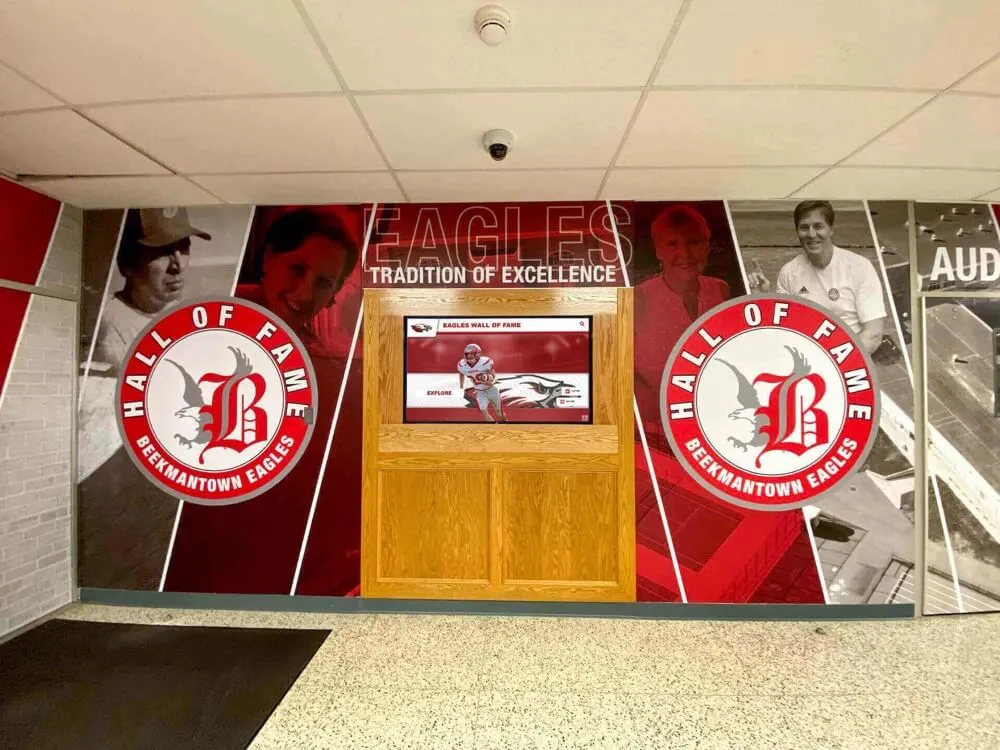
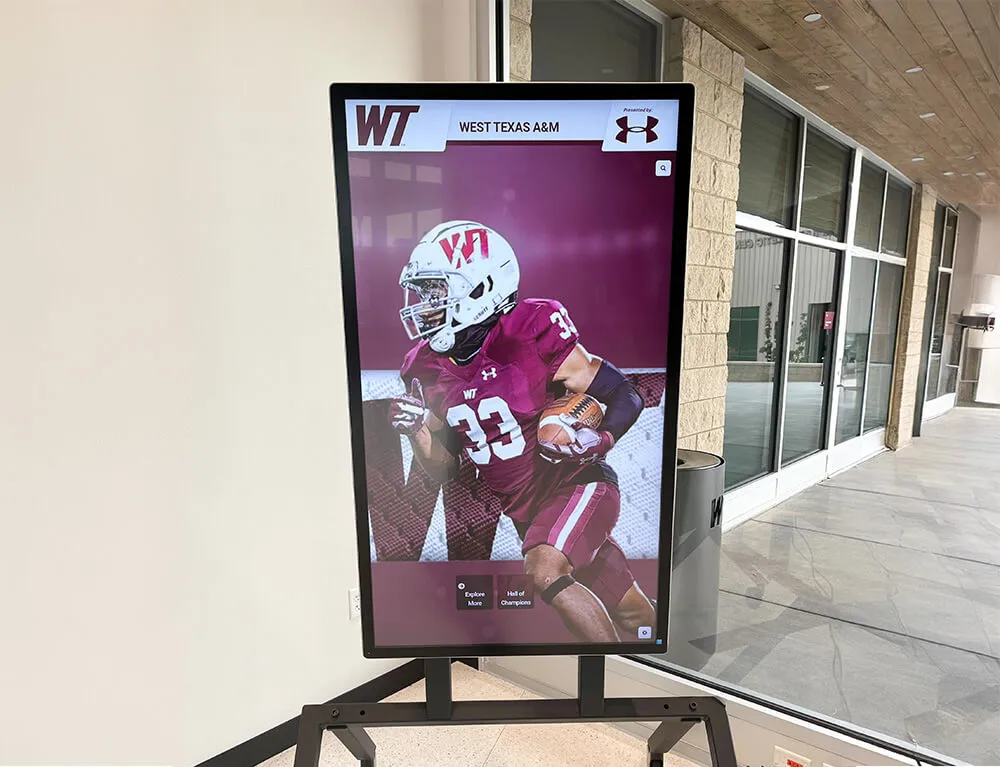
Interactive recognition touchscreens in school athletic facilities surface award records loaded through seasonal imports — a pre-season pg_stat_archiver review documents archiver health before the import window opens, creating a documented record that supports sound data protection practices
What pg_stat_archiver Does Not Cover
A complete pre-season database health review touches several layers that pg_stat_archiver does not address.
Per-database transaction statistics. pg_stat_archiver is a cluster-wide, single-row view. It does not break down WAL archiving activity by database, schema, or table. For per-database transaction counts, block I/O activity, and cache hit rates across the award record collections, the appropriate view is pg_stat_database.
WAL generation volume. pg_stat_archiver records successful and failed archive attempts for completed WAL segment files. It does not report on how many WAL records the cluster produced, how many full-page images contributed to WAL bytes, or whether WAL buffers filled during an import. That information lives in pg_stat_wal.
Relation-level I/O. The archiver view reflects the archiver process’s own accounting. Block-level reads, writes, and extends on the relation files that hold award records, athlete profiles, and induction histories are reported in pg_stat_io.
Display-layer session behavior. After an import commits and WAL is archived, recognition display pages must refresh for visitors. Screen power management, HTTP caching, and browser-layer session behavior operate above the PostgreSQL cluster entirely. Questions such as how a recognition screen handles display timeout and session reacquisition during a long-running awards event — covered in the school athletic recognition display screen wake lock release and reacquisition tests at touchscreenwebsite.com — are display-platform concerns, not database archiver concerns. The two layers require separate review steps.
Historical media archives. School recognition programs often hold photographic and document archives that accompany the award records in the database. For programs digitizing historical prints for display inclusion, fragile originals require dedicated intake assessment before they enter a scanning workflow. The albumen team photograph cracking intake protocol at digitalyearbook.org describes the documentation steps for cracked albumen prints encountered during athletic archive digitization — a physical preservation process entirely separate from the database archiver layer that pg_stat_archiver monitors.
Managed Platforms and Self-Hosted Scope
The pg_stat_archiver review described in this guide applies only to self-hosted or institution-managed PostgreSQL clusters where IT staff or a vendor-contracted DBA holds direct database access. Schools using a fully managed recognition platform do not administer the underlying PostgreSQL instance and cannot query pg_stat_archiver directly. On a managed platform, WAL archiving configuration, archive destination management, and failure alerting belong to the platform provider’s infrastructure team — the school’s operational responsibility is confirming that the service agreement includes data protection commitments appropriate for an athletic recognition archive.
For self-hosted installations, the archiver review checklist fits into the broader pre-season maintenance sequence alongside autovacuum policy verification, index bloat assessment, and schema version confirmation. The archiver layer is not the most frequently reviewed component of a recognition database — for most seasons, delta_failed_count will be zero and last_archived_time will show recent activity — but completing the review takes less than five minutes and produces a documented record that supports any future investigation.
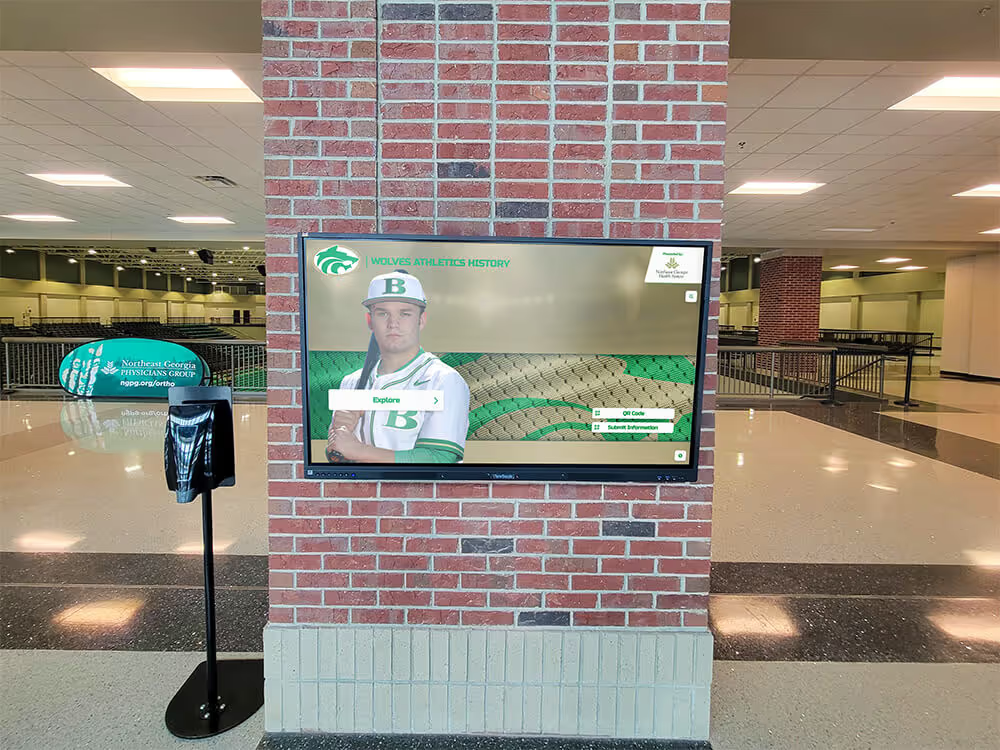
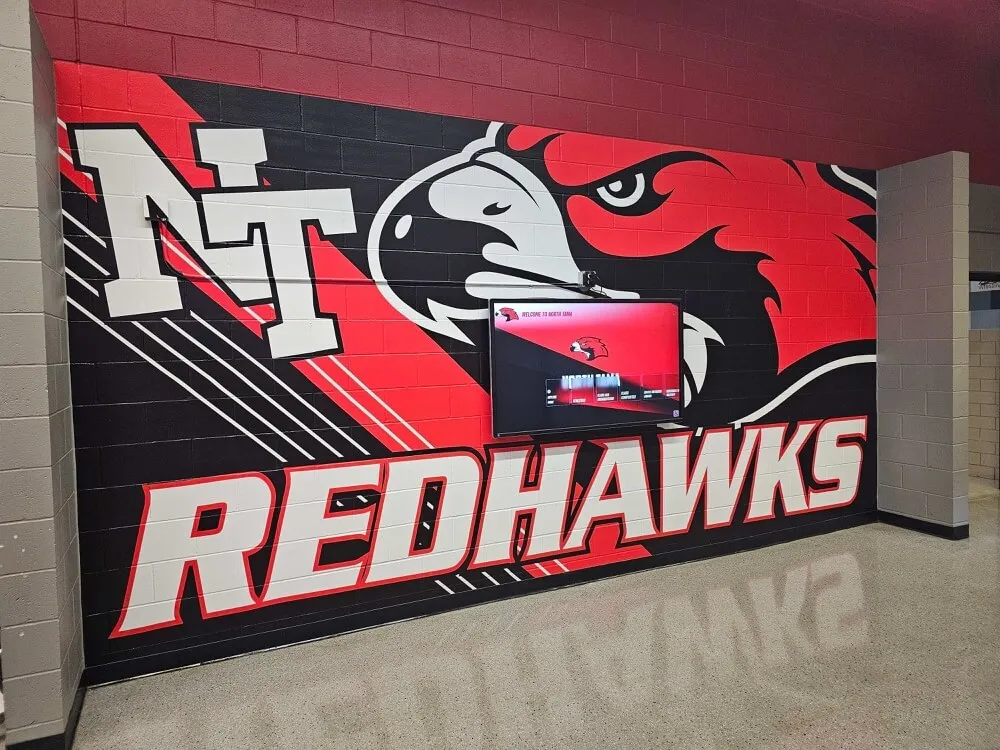
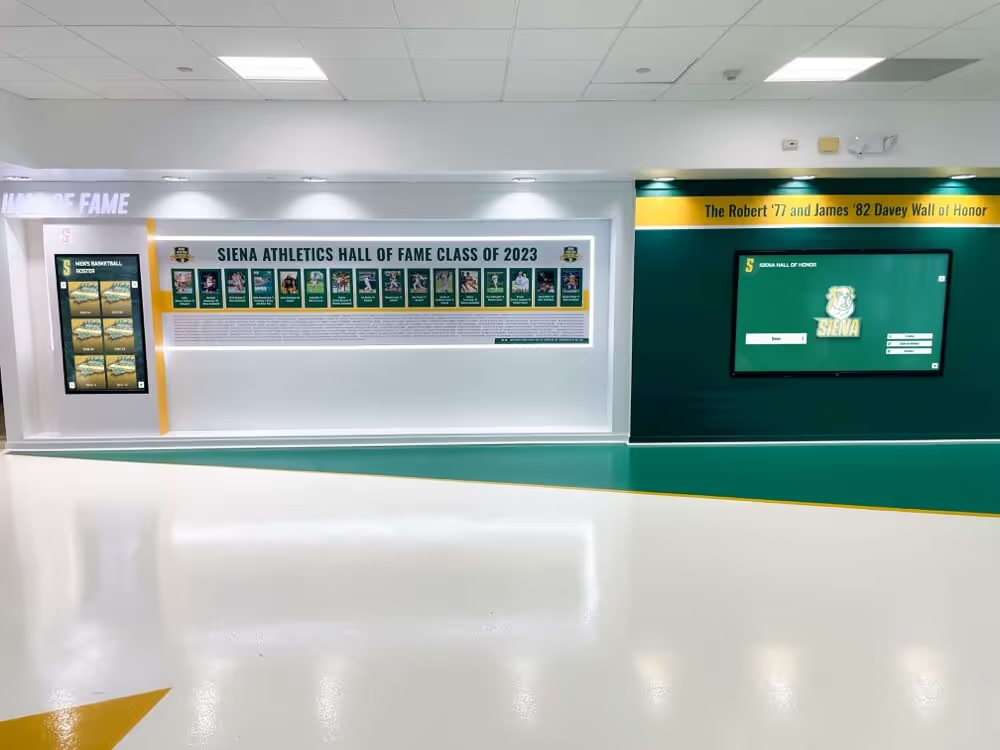
A university athletics hall of fame display represents decades of recognition records — schools that self-host the underlying PostgreSQL database benefit from periodic pg_stat_archiver reviews that document archiver health and flag failures before recognition-season windows open
Frequently Asked Questions
What is an athletic awards database pg_stat_archiver review?
An athletic awards database pg_stat_archiver review is the practice of querying PostgreSQL’s pg_stat_archiver system view before and after a recognition-season update window to document archiver process activity. The view contains a single cluster-wide row with seven columns: archived_count, last_archived_wal, last_archived_time, failed_count, last_failed_wal, last_failed_time, and stats_reset. The review compares paired snapshots to compute delta values for each counter, flags any failure count increase for owner follow-up, and confirms that stats_reset did not change between snapshots before interpreting any delta.
Does a zero failed_count prove that WAL archiving is working correctly?
No. A zero failed_count means the archiver process did not record failures for the WAL segment files it attempted. It does not confirm that all segments were archived, that none are missing from the chain, that the archive destination is reachable, or that archived files are uncorrupted. The PostgreSQL 18 documentation notes that archival order is not guaranteed under all conditions — the presence of last_archived_wal does not confirm that all earlier files were archived. Only a verified base backup combined with a tested restore drill confirms that point-in-time recovery is possible.
Is a quiet period with no archived_count change a problem?
Not automatically. If the database generates little or no WAL during a reviewed period — a mid-semester window with no imports or updates — the archiver will have no new segments to process and archived_count will not change. A zero delta_archived_count combined with a zero delta_failed_count during known low-activity periods is expected behavior. The concern arises when archiving is expected to be active during or after a seasonal import and last_archived_time does not advance despite WAL being generated.
Can pg_stat_archiver counters miss failures?
Yes, in some cases. The failed_count counter reflects what the archiver process itself records. Certain error conditions — operating-system failures, network connectivity problems with remote archive storage, or process crashes outside the archiver’s own error recording path — may not increment failed_count. Verify the exact scope against the PostgreSQL 18 documentation for the version in use. A failed_count of zero should be read as “the archiver did not record failures for the files it attempted,” not as confirmation that every archiving operation completed without errors of any kind.
Should a school reset pg_stat_archiver statistics before a seasonal import?
No. Resetting production statistics discards historical context and provides no analytical advantage over the before-and-after snapshot approach. The correct technique is to capture cumulative totals immediately before the import window, immediately after, verify stats_reset is unchanged, and compute the interval delta. No production statistics reset is necessary or recommended.
Read the Archiver Before the Season Opens
An athletic awards database pg_stat_archiver review takes less than five minutes to complete and produces a documented record that belongs in every pre-season maintenance checklist alongside autovacuum policy verification, schema version confirmation, and backup calendar review. The view’s single cluster-wide row captures the archiver process’s own accounting of successful and failed archive attempts — an accounting that, for most recognition-season windows, will show a growing archived_count, a zero delta_failed_count, and a last_archived_time that advances with each completed WAL segment.
When that picture is not what appears — when failed_count increases during an import window, when last_archived_time goes stale without a corresponding low-activity explanation, or when archive_mode is found to be off and no documented rationale exists — the review creates the record that routes the question to the right owner before the ceremony, the display launch, or the induction event opens.
The review does not answer every data protection question for a self-hosted athletic recognition database. It does not replace a verified base backup, a tested restore procedure, or the operational discipline of monitoring the archive destination itself. What it provides is one documented layer of evidence — the archiver process’s own view of what happened during the covered window — combined with a clear framework for deciding when that evidence warrants further follow-up and when it does not.
See How 600+ Schools Protect and Display Athletic Records Without Managing Database Infrastructure
Rocket Alumni Solutions' cloud-based digital recognition platform handles award record storage, seasonal data updates, and display publishing in a fully maintained environment — so your athletic department focuses on honoring student athletes, not reviewing archiver counters before each recognition season. WCAG 2.1 AA compliant displays work on any screen from 32" to 100"+, with unlimited inductees, categories, and multimedia content. Remote CMS access lets staff update and publish recognition records from anywhere, with scheduled publishing for timed announcements.
Request a Custom Demo