



Intent: define. An athletic awards database replica identity policy is a documented governance decision that assigns one of four PostgreSQL replica identity modes—DEFAULT, INDEX, FULL, or NOTHING—to each table in a school’s recognition database, so that UPDATE and DELETE operations on award records remain fully traceable when those changes flow downstream through logical replication or change data capture pipelines to read replicas, display kiosks, and reporting systems.
This guide defines what each replica identity mode does, explains why choosing the wrong setting silently breaks downstream synchronization for updates and deletes, and walks through an eight-step policy framework your IT team can implement during any scheduled maintenance window. The framework applies to any PostgreSQL-based athletic recognition database that synchronizes data to display systems, analytics platforms, or subscriber instances used by athletic directors, IT administrators, and recognition-program staff.
Every time an award record is updated—a corrected athlete name, a revised result, a status change from pending to approved—the downstream display that surfaces that record must receive an accurate picture of what changed. Without a deliberate athletic awards database replica identity policy, PostgreSQL’s write-ahead log may omit the previous version of the row, leaving change capture pipelines unable to determine what the record looked like before the update. The result is a display kiosk or read replica that applies a partial change, falls into an error state, or surfaces stale data to visitors during a hall of fame induction or end-of-season awards night.
Replica identity is a per-table setting that controls how much information PostgreSQL writes to the WAL for UPDATE and DELETE operations. Getting it right is not a default behavior—the correct mode depends on the table’s primary key structure, the volume of changes expected, and whether downstream consumers need full old-row values or only the changed key. A written policy makes that decision intentional, documented, and recoverable when a pipeline error surfaces at the worst possible time.

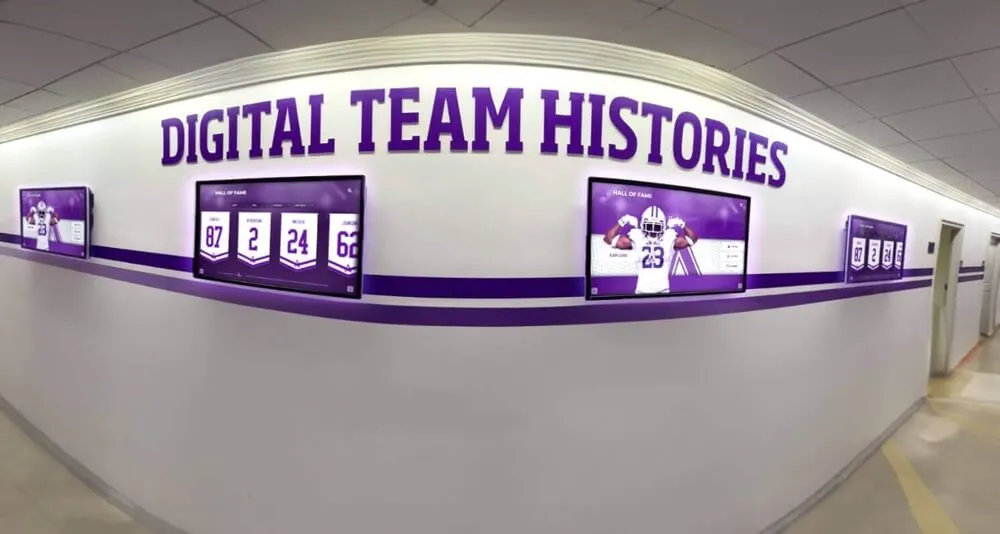
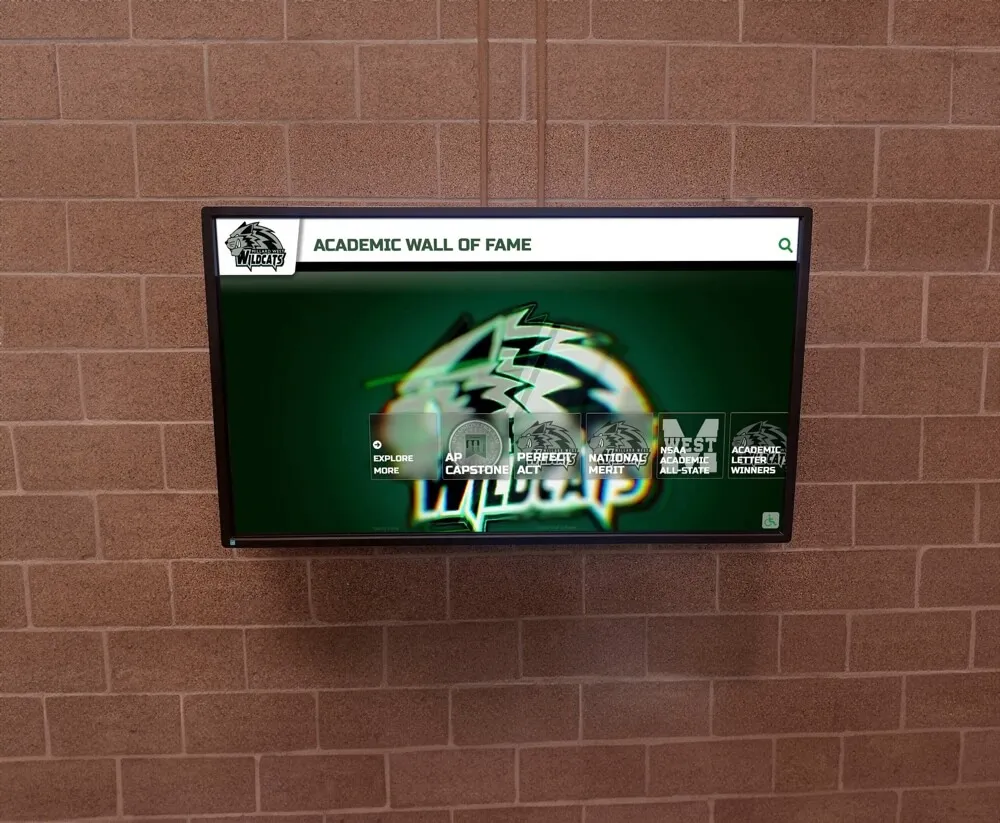
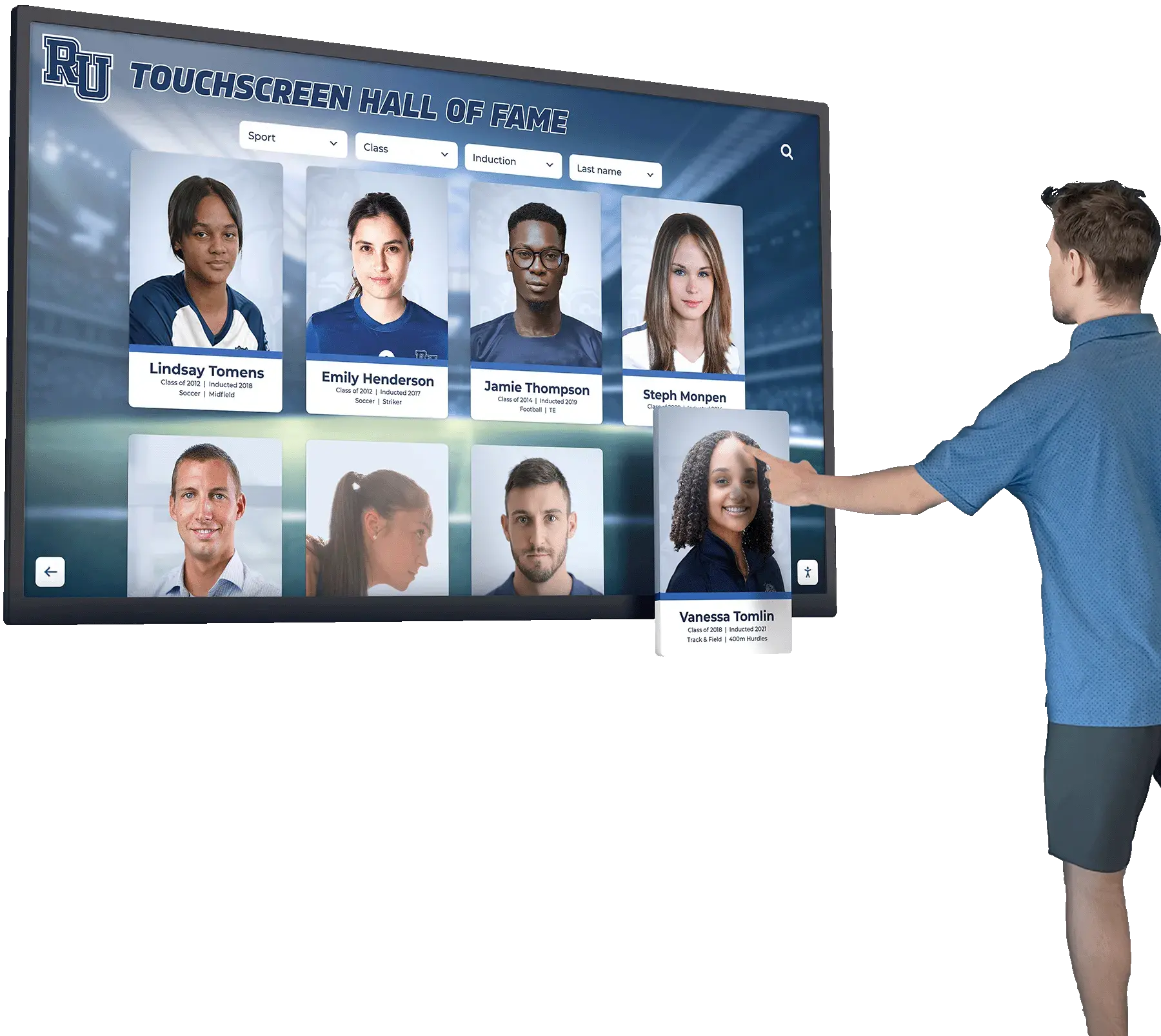
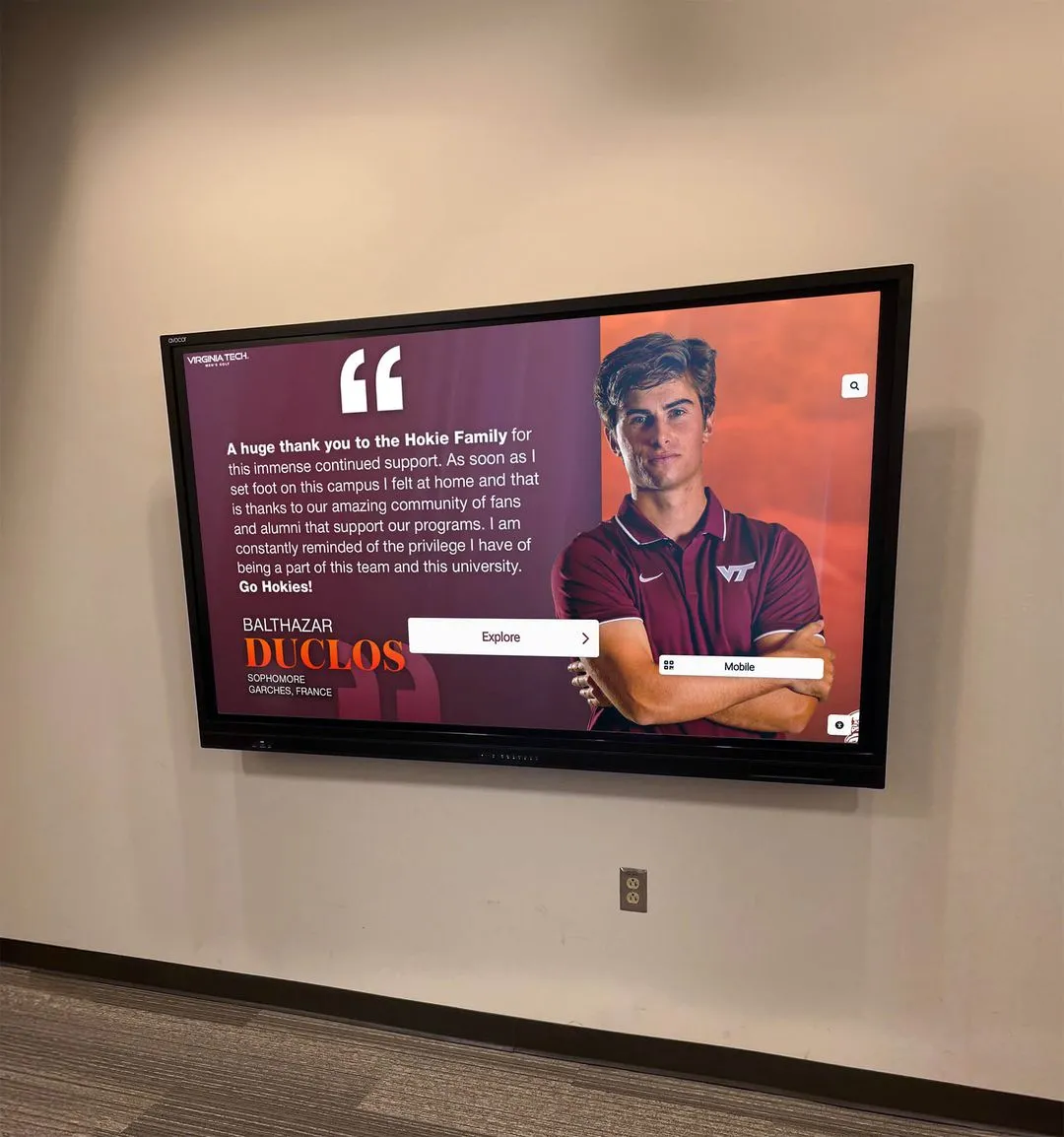
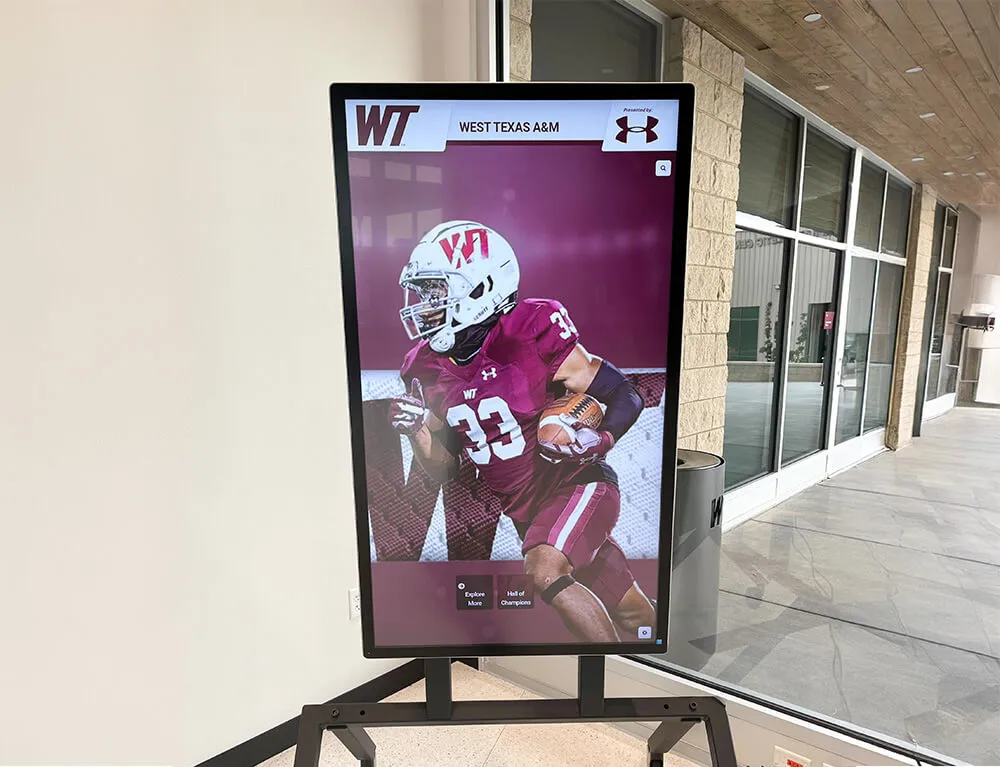
Digital recognition displays that surface live award data depend on downstream change capture pipelines receiving accurate before-and-after row images—replica identity policy determines whether that data is available
The Four Replica Identity Modes: A Decision Table
Before building a policy, use the following decision table to evaluate each table in your recognition schema. This reference maps each mode to its WAL behavior, the conditions where it is appropriate, and the conditions where it will cause downstream problems.
| Mode | WAL Content for UPDATE/DELETE | When to Use | When to Avoid |
|---|---|---|---|
| DEFAULT | Old values of primary key columns only | Tables with a stable, well-indexed primary key; most reference and fact tables | Tables without a primary key; tables consumed by CDC tools that require full before-images |
| INDEX | Old values of the columns included in a specified unique index | Tables where the primary key is a surrogate and a natural key index is more meaningful to CDC consumers | Tables without a suitable unique index; tables where every indexed column changes frequently |
| FULL | Old values of every column | Tables without a primary key; tables requiring full before-and-after comparison by CDC or audit tools | High-write tables where WAL volume amplification is unacceptable |
| NOTHING | No old-row information written | Tables intentionally excluded from all replication pipelines; staging and import buffers | Any table whose updates and deletes must be captured and applied downstream |
Most athletic recognition database tables should use DEFAULT or INDEX. FULL is reserved for tables that lack a primary key or for change capture tools that require complete old-row context. NOTHING should only appear on tables that are intentionally excluded from all downstream pipelines—never on a table whose changes must reach a display screen.
Schools planning their read replica lag policy for athletic awards databases will find that replica identity is a prerequisite decision: a subscriber that receives UPDATE events without sufficient old-key values cannot locate the row to update, causing the apply worker to error or skip the change entirely.
Why Replica Identity Matters for Athletic Award Change Capture
PostgreSQL’s logical replication protocol transmits row changes in two parts: the old row image (before the change) and the new row image (after the change). For INSERT operations, only the new image is needed—there is no previous state. For DELETE operations, only the old image is needed—the new state is absence. For UPDATE operations, both images may be needed depending on whether the primary key or unique index columns changed.
Replica identity controls how much of the old image is written to the WAL. With DEFAULT mode, only primary key columns appear in the old image—sufficient for a subscriber to locate the existing row and apply the change, as long as the primary key columns did not themselves change values. With FULL mode, every column is written—giving CDC tools a complete before-and-after snapshot for any column change, at the cost of increased WAL volume for every row touched by an UPDATE or DELETE.
For athletic award tables, the practical consequences divide clearly by operation type:
- Name corrections: If an athlete’s display name is corrected in the
athletestable, the subscriber must locate the existing row by its primary key and apply the new name. DEFAULT handles this correctly—the primary key value does not change. - Record corrections: If an award result is revised in the
awardstable and the primary key is a surrogate integer, DEFAULT again handles the update correctly. - Status transitions: If a nomination moves from
pendingtoapproved, triggering an UPDATE on a status column, the downstream system needs enough old-row data to locate the record. DEFAULT handles this unless the table lacks a primary key. - Award deletions: If a duplicate entry is deleted, DEFAULT mode writes the primary key to WAL, allowing subscribers to identify and delete the corresponding row. FULL mode writes every column—useful for audit logs that need to record what the deleted row contained.
The gap between what a CDC tool needs and what DEFAULT provides only appears when a table lacks a primary key—a situation that should not exist in a well-structured recognition schema, but which can arise in staging tables, import buffers, and legacy archive exports.
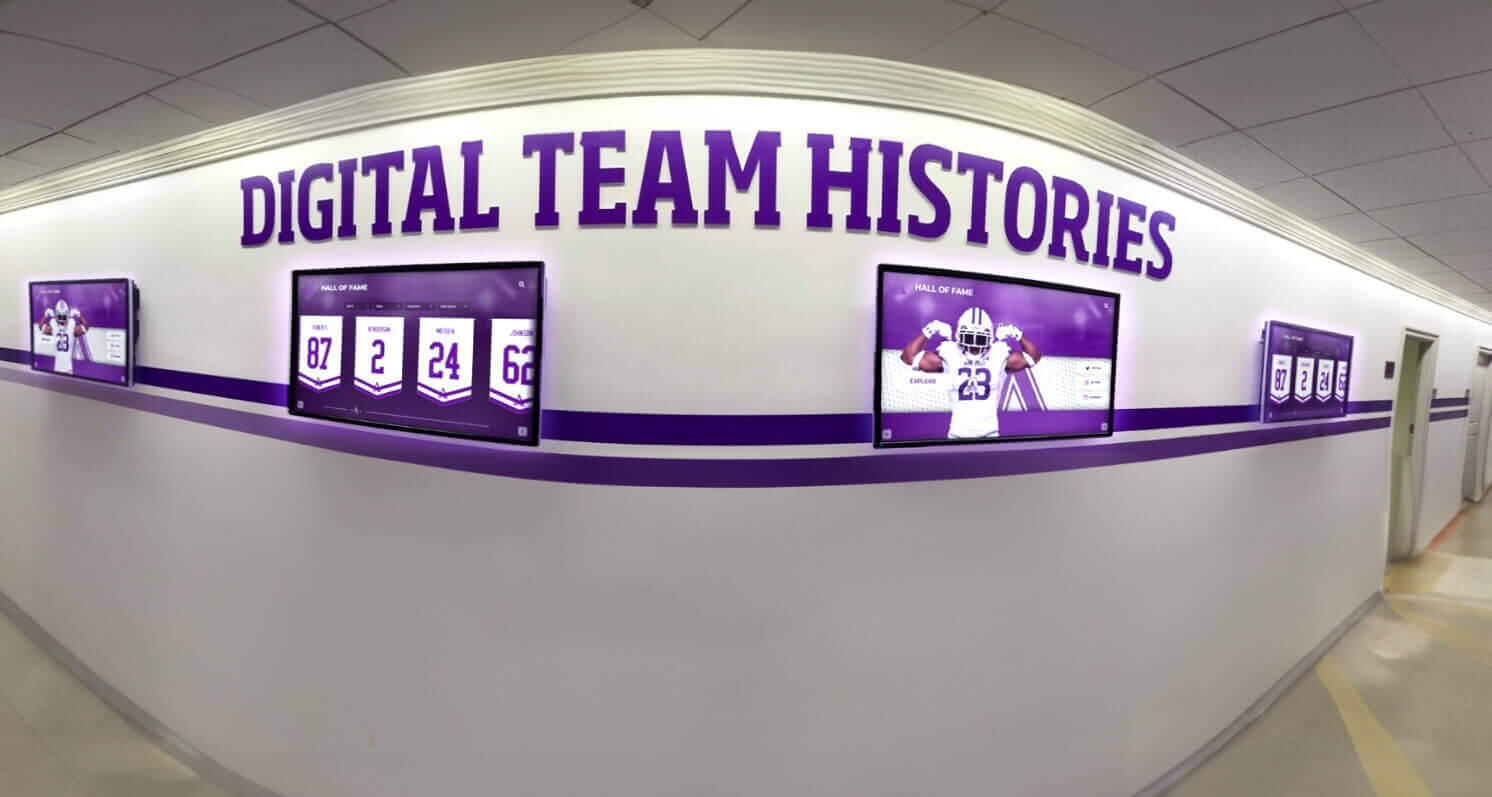
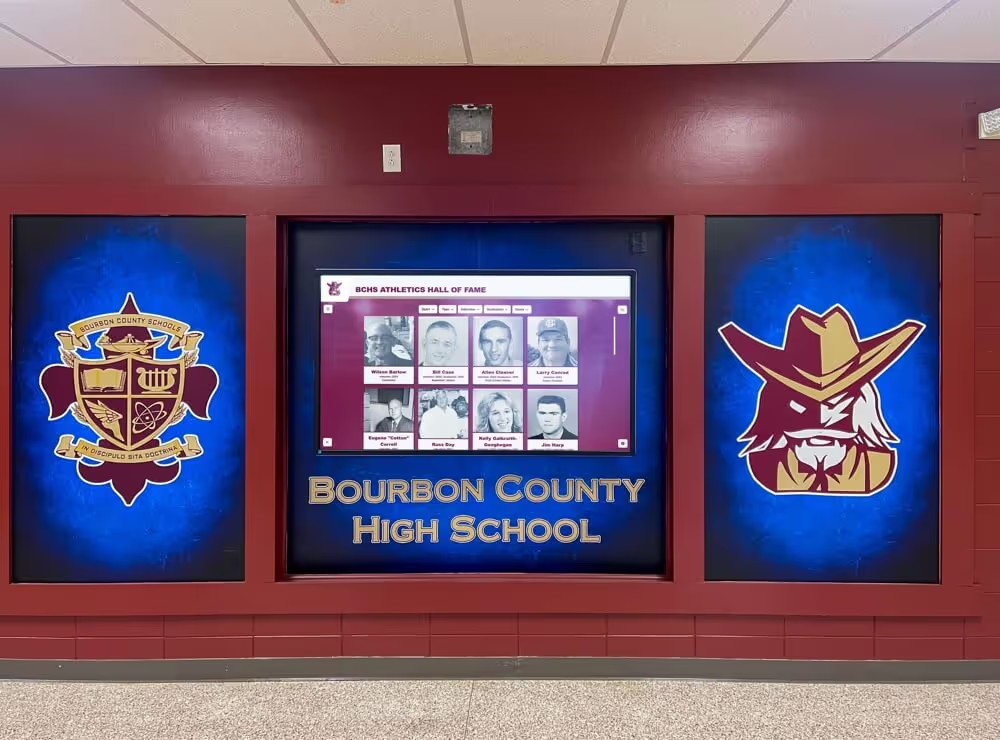
Recognition displays that show current team histories and award records depend on change capture pipelines that receive accurate before images—replica identity mode determines whether that context is available for every UPDATE and DELETE
Athletic Awards Database Replica Identity Policy: Eight-Step Framework
The following steps define a complete replica identity policy for a PostgreSQL-based athletic recognition database. Run steps one through four during an audit phase, steps five and six during a maintenance window, and steps seven and eight as ongoing operational procedures.
Step 1: Inventory every table in the recognition schema
List every table in the recognition database schema. For each table, record whether it has a primary key, whether it has any unique indexes, and whether it is currently included in any logical replication publication or consumed by any CDC tool. A table that is not replicated and not consumed downstream does not require a deliberate replica identity policy, but should be documented as excluded to prevent accidental inclusion later.
SELECT
  t.table_name,
  CASE c.relreplident
    WHEN 'd' THEN 'DEFAULT'
    WHEN 'i' THEN 'INDEX'
    WHEN 'f' THEN 'FULL'
    WHEN 'n' THEN 'NOTHING'
  END AS current_replica_identity,
  CASE WHEN pk.pk_exists THEN 'Yes' ELSE 'No' END AS has_primary_key
FROM information_schema.tables t
JOIN pg_class c ON c.relname = t.table_name
LEFT JOIN (
  SELECT kcu.table_name, TRUE AS pk_exists
  FROM information_schema.table_constraints tc
  JOIN information_schema.key_column_usage kcu
    ON tc.constraint_name = kcu.constraint_name
  WHERE tc.constraint_type = 'PRIMARY KEY'
  GROUP BY kcu.table_name
) pk ON pk.table_name = t.table_name
WHERE t.table_schema = 'public'
  AND t.table_type = 'BASE TABLE'
ORDER BY t.table_name;
Step 2: Classify each table by downstream consumption role
Assign each table to one of three categories based on how downstream systems consume it:
- Display-critical: Tables that feed live kiosk queries or public-facing recognition portals (
awards,athletes,sports,award_types). Every UPDATE and DELETE must be captured and applied to subscribers without error. - Operational: Tables used for internal workflow management (
nominations,approval_logs,import_batches). Updates and deletes must be captured but may tolerate slightly higher pipeline latency. - Excluded: Staging tables, temporary import buffers, and internal audit tables that must not appear on public displays. These should be set to NOTHING or removed from any publication scope.
Step 3: Match each display-critical table to the appropriate mode
For display-critical tables, apply the following decision logic in order:
- Table has a primary key and no CDC tool requires full old-row values → Use DEFAULT. No action required beyond confirming the primary key exists and is stable.
- Table has a primary key but the CDC consumer needs to identify rows by a natural key → Use INDEX, referencing the appropriate unique index.
- Table lacks a primary key → Either add a primary key (preferred) and use DEFAULT, or use FULL if adding a primary key is not immediately feasible.
- Table is excluded from all pipelines → Set to NOTHING explicitly and document the reason.
Step 4: Audit current settings against the policy
Compare the current replica identity value for each table against the mode your policy specifies. Generate a gap list—tables where the current setting does not match the policy requirement. Treat this gap list as the change set for the upcoming maintenance window.
SELECT
  relname AS table_name,
  CASE relreplident
    WHEN 'd' THEN 'DEFAULT'
    WHEN 'i' THEN 'INDEX'
    WHEN 'f' THEN 'FULL'
    WHEN 'n' THEN 'NOTHING'
  END AS current_mode
FROM pg_class
WHERE relnamespace = (SELECT oid FROM pg_namespace WHERE nspname = 'public')
  AND relkind = 'r'
ORDER BY relname;
Step 5: Apply replica identity changes during a maintenance window
For tables that require a mode change, apply the ALTER TABLE command during a low-traffic window. Changing replica identity acquires an ACCESS EXCLUSIVE lock briefly but does not rewrite table data—the lock duration is typically sub-second on athletic recognition tables.
-- Set to DEFAULT (primary key columns in old image)
ALTER TABLE awards REPLICA IDENTITY DEFAULT;

-- Set to FULL (all columns in old image — for tables without a stable primary key)
ALTER TABLE nominations REPLICA IDENTITY FULL;

-- Set to NOTHING (intentionally excluded from change capture)
ALTER TABLE import_staging REPLICA IDENTITY NOTHING;

-- Set to INDEX (specific unique index for old image)
-- First confirm the index exists and is unique:
-- SELECT indexname FROM pg_indexes
--   WHERE tablename = 'athletes' AND indexdef LIKE '%UNIQUE%';
ALTER TABLE athletes REPLICA IDENTITY USING INDEX athletes_external_id_key;
Verify each change immediately after applying:
SELECT
  relname AS table_name,
  CASE relreplident
    WHEN 'd' THEN 'DEFAULT'
    WHEN 'i' THEN 'INDEX'
    WHEN 'f' THEN 'FULL'
    WHEN 'n' THEN 'NOTHING'
  END AS replica_identity
FROM pg_class
WHERE relname IN ('awards', 'athletes', 'nominations', 'import_staging')
ORDER BY relname;
Step 6: Validate downstream pipeline behavior after changes
After applying replica identity changes, run a controlled test for each display-critical table. Insert a test record, update a non-key column, then delete it. Verify that the subscriber database or CDC consumer receives and applies all three events without error.
For a logical replication subscriber, check the apply worker state and error log:
-- On the subscriber, confirm apply workers are running without error:
SELECT pid, status, received_lsn, latest_end_lsn, latest_end_time
FROM pg_stat_subscription;
A could not find row for updating error on the subscriber indicates the apply worker could not locate the row using the old-key values written to WAL. This typically means the replica identity setting does not match the table’s actual key structure, or the indexed column values changed in the same UPDATE that triggered the event. Both conditions require a policy correction, not a pipeline restart.
Step 7: Document the policy assignment for each table
Maintain a policy record listing each table, its assigned replica identity mode, the reason for the assignment, and the date it was last reviewed. This documentation makes the rationale auditable when a pipeline error triggers an investigation and gives new IT staff the context to evaluate whether the current setting still fits as the schema evolves.
| Table | Assigned Mode | Reason | Last Reviewed |
|---|---|---|---|
awards | DEFAULT | Surrogate integer PK is stable; CDC tool uses PK for row location | 2026-09-22 |
athletes | DEFAULT | PK stable; name corrections do not change PK value | 2026-09-22 |
sports | DEFAULT | Reference table; rare updates; PK sufficient | 2026-09-22 |
award_types | DEFAULT | Reference table; rare updates; PK sufficient | 2026-09-22 |
nominations | FULL | Workflow table; audit tools require full before-image for status transitions | 2026-09-22 |
import_staging | NOTHING | Temporary import buffer; excluded from all downstream pipelines | 2026-09-22 |
Step 8: Schedule periodic policy reviews
Review replica identity settings at the start of each season import cycle and whenever the database schema is modified. Schema changes that add new tables to a replication publication, remove a primary key, or alter the column structure of a display-critical table require a corresponding policy update. Tables added to a publication without a deliberate replica identity assignment inherit DEFAULT—which is correct in most cases but should be confirmed explicitly rather than assumed.
The born-digital records policy for athletic archives at digitalyearbook.org frames the broader archival commitment that makes a replica identity policy worthwhile: when award records are intended to persist for decades, the systems that synchronize those records must be governed well enough to survive schema evolution, staff transitions, and platform migrations without losing change fidelity.
Replica Identity and Slowly Changing Dimensions
Athletic recognition databases frequently implement slowly changing dimension patterns to track how award records evolve over time—a corrected athlete name, a revised result, a change in school affiliation, or a status transition from nominee to inductee. Managing slowly changing dimensions in athletic awards data at a downstream analytics or display layer depends on change capture pipelines receiving accurate before-and-after row images. Replica identity is the upstream gate that controls whether those images are available.
With DEFAULT mode, a Type 1 SCD (overwrite in place) works correctly: the CDC tool receives the old primary key and the new column values, locates the existing row in the dimension table, and overwrites it. With FULL mode, a Type 2 SCD (insert new row, close old row) also works correctly: the full old-row image gives the pipeline enough information to insert a new version of the record and mark the previous version as expired—without ambiguity about what the previous state was.
A pipeline that relies on FULL mode for Type 2 SCD tracking on the athletes table but receives DEFAULT-mode WAL events will have incomplete old-row data for the columns that changed, making it impossible to populate the historical version of the athlete record correctly. This failure is silent: the pipeline does not error, it simply writes an incomplete historical row.
WAL Volume Implications of FULL Mode
Setting a high-write table to FULL replica identity amplifies WAL volume. For every UPDATE, PostgreSQL writes the old values of every column in the row to the WAL in addition to the new values—not just the primary key columns. On a table like nominations that receives hundreds of status updates during a season-end processing window, FULL mode can multiply WAL generation significantly compared to DEFAULT.
Practical guidance for managing WAL volume:
- Reserve FULL for tables that genuinely lack a primary key or where CDC consumers require complete before-images for audit or SCD processing.
- For high-write tables that only require a primary key in the old image, use DEFAULT.
- Monitor WAL generation after changing any table to FULL using
pg_stat_bgwriterand WAL archiving metrics before the next seasonal import cycle begins. - If a table must use FULL mode but WAL volume is a concern, evaluate whether the table can be restructured to add a primary key—allowing a downgrade to DEFAULT mode.
Schools building IT infrastructure to support both database performance and recognition program quality benefit from planning budgets and staffing around both concerns. The high school athletic department budget planning guide for awards records and digital displays at best-touchscreen.com covers how IT administrators can allocate resources for the database governance and display infrastructure that recognition programs depend on.
How Replica Identity Connects to Digital Recognition Displays
The operational goal of an athletic awards database replica identity policy is not a configuration exercise in isolation—it is a reliability guarantee for every screen that surfaces recognition data. Display kiosks, hallway touchscreens, public-facing recognition portals, and academic honor boards all depend on downstream subscribers or CDC consumers maintaining accurate, synchronized copies of the primary database.
When replica identity is set incorrectly on a table that feeds display queries, updates and deletes fail silently or generate pipeline errors that accumulate undetected until a visitor, alumnus, or athlete reports seeing stale or incorrect data. A student whose corrected name does not propagate to the lobby kiosk because a WAL event lacked sufficient old-row context has a legitimate grievance—one that a documented replica identity policy prevents.
Showcasing athletic achievement awards digitally at the quality level that athletes and families expect requires an infrastructure layer that reliably delivers changes from the point of entry to the point of display, across every category of recognition—athletic, academic, arts, STEM, and community service alike. Replica identity policy is one of the upstream decisions that make that delivery reliable.
Trusted by 600+ institutions, Rocket Alumni Solutions provides cloud-based digital recognition platforms with remote CMS access, required-field validation, and WCAG 2.1 AA compliant display systems that work on any touchscreen from 32" to 100"+. For IT teams managing the database infrastructure that feeds these displays, understanding how your underlying change capture pipeline is governed ensures that every update made in the CMS reaches every screen where recognition lives—accurately and on time.
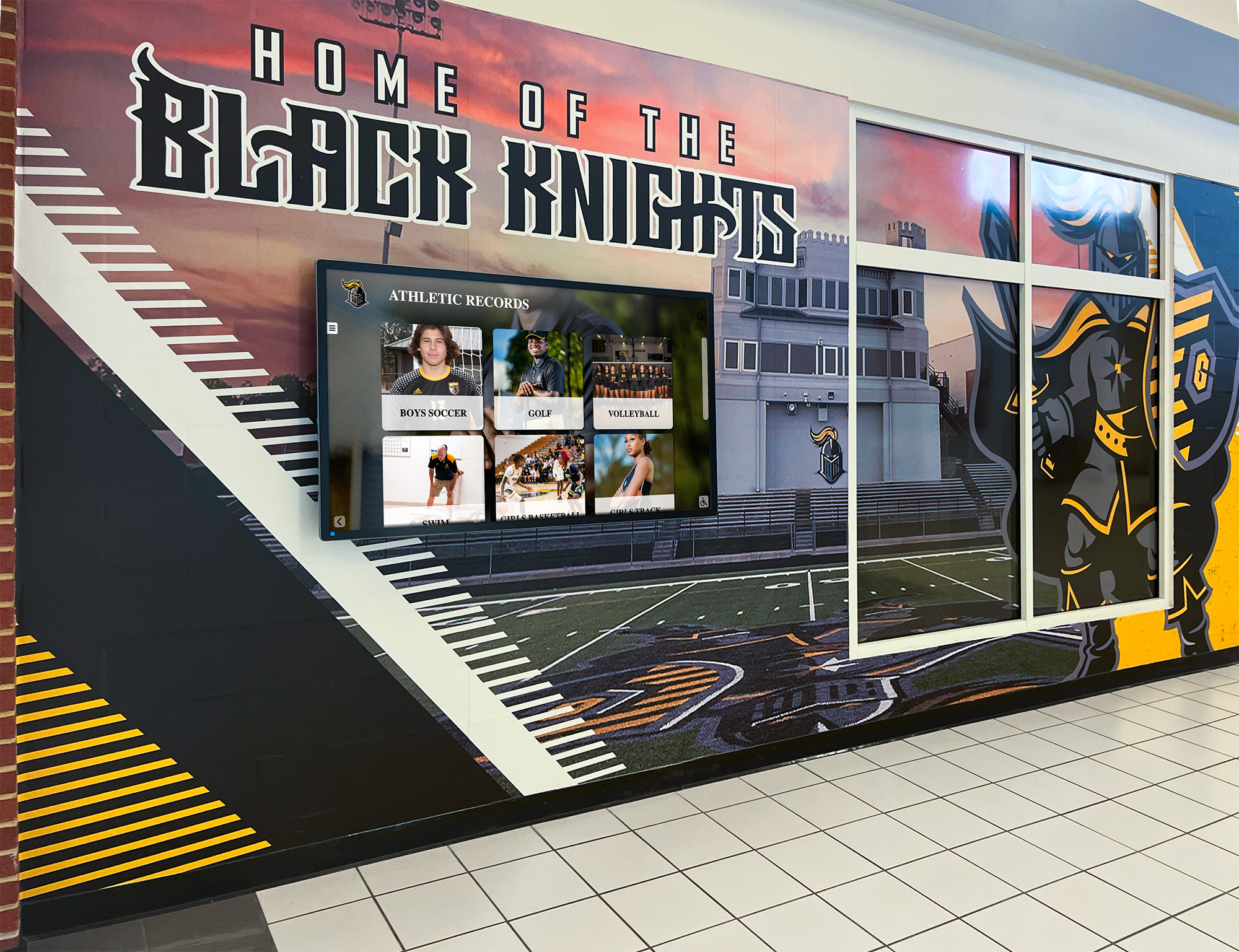
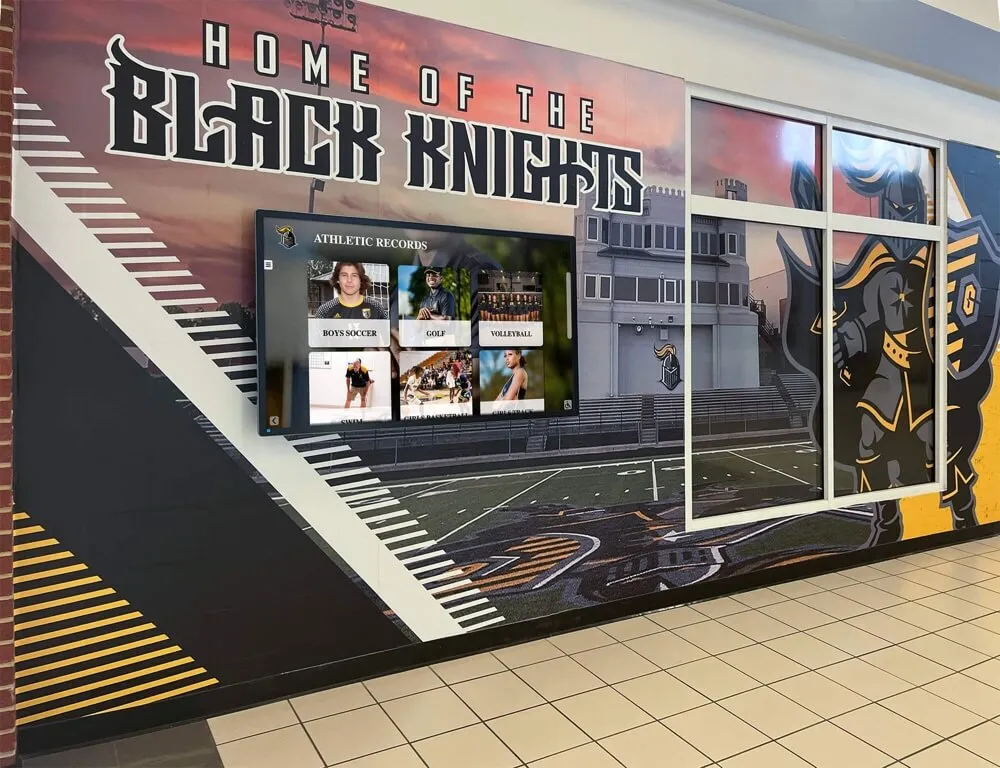
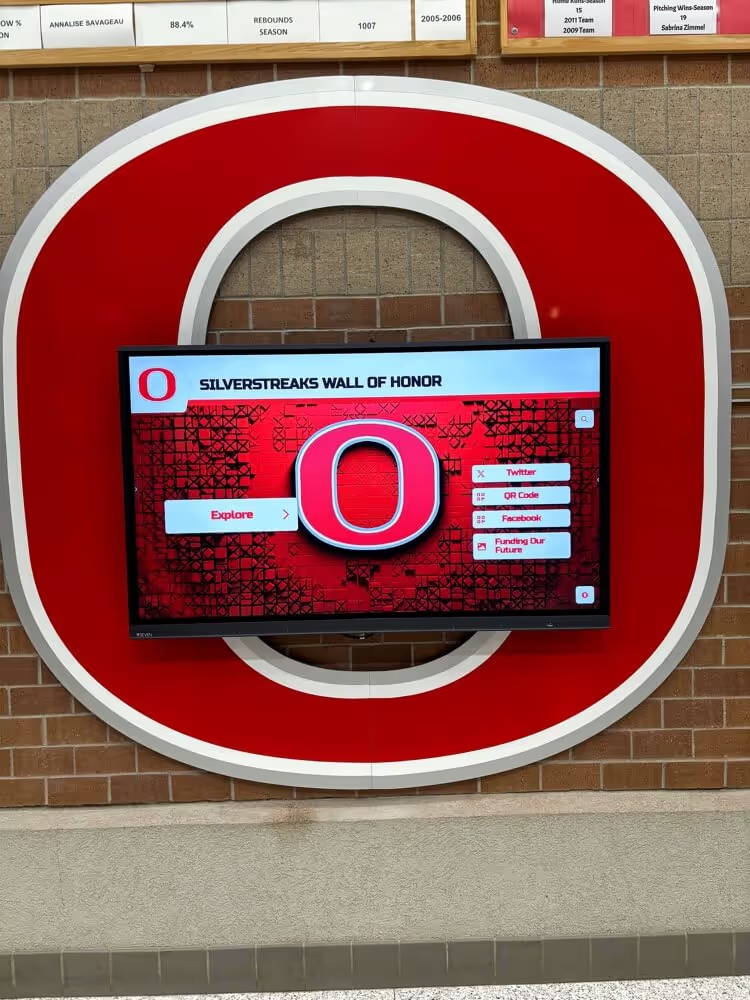
Athletic record displays in school hallways depend on change capture pipelines that correctly synchronize updates and deletes—replica identity policy is the per-table setting that makes that synchronization reliable
FAQ: Athletic Awards Database Replica Identity Policy
What is replica identity in PostgreSQL?
Replica identity is a per-table PostgreSQL setting that controls how much old-row information is written to the WAL for UPDATE and DELETE operations. The four modes are DEFAULT (primary key columns only), INDEX (columns of a specified unique index), FULL (all columns), and NOTHING (no old-row information). The mode determines whether downstream subscribers and change data capture tools can correctly identify and apply row changes.
When should an athletic awards database table use REPLICA IDENTITY FULL?
Use FULL mode when a table lacks a primary key or when a downstream CDC tool requires complete before-images for audit logging or slowly changing dimension tracking. For tables with stable surrogate primary keys, DEFAULT is sufficient. FULL mode amplifies WAL volume and should be reserved for tables where complete old-row context is genuinely required by downstream consumers.
What happens if replica identity is set to NOTHING on a table that feeds a display kiosk?
If a table in a logical replication publication has replica identity NOTHING, UPDATE and DELETE events carry no old-row information in the WAL. Subscribers cannot locate the existing row to apply the change, causing apply errors, skipped changes, or pipeline stalls. Display kiosks fed by the subscriber will show stale or incorrect records until the pipeline is corrected and affected records are resynced.
How does replica identity affect change data capture for athletic award records?
CDC tools read WAL events to build a stream of row-level changes. For UPDATE events, they need the old-row image to locate the corresponding row in downstream systems and determine what changed. DEFAULT provides old primary key values—sufficient for most updates. FULL provides all old column values—required for audit systems that need complete before-images or for updates where primary key columns change.
How often should a school review its athletic awards database replica identity policy?
Review replica identity settings at the start of each season import cycle and whenever the database schema changes. Tables added to a publication without a deliberate assignment inherit DEFAULT—correct in most cases but worth confirming explicitly. Any schema change affecting primary key structure, unique indexes, or publication scope should trigger a policy review before the next seasonal import runs.
Keeping Change Capture Reliable Across Every Award Record
An athletic awards database replica identity policy transforms a silent configuration default into a documented, auditable decision for every table that feeds downstream synchronization. The four modes—DEFAULT, INDEX, FULL, and NOTHING—each serve a specific role in the change capture pipeline, and the cost of choosing the wrong one is stale displays, apply errors, and synchronization gaps that surface publicly rather than in a maintenance log.
The eight-step framework in this guide—inventory, classify, match, audit, apply, validate, document, and review—gives IT teams a repeatable process for assigning the right mode before a pipeline error discovers the gap. Schools that run this process at the start of each season import cycle, and again after any schema migration, maintain change capture pipelines that deliver accurate updates and deletes from the primary database to every recognition screen in the building.
For recognition programs that plan to best showcase athletic achievement awards digitally for athletes, alumni, and visitors, the underlying database infrastructure that delivers those records reliably is as important as the display itself. A hall of fame inductee whose corrected name never propagated downstream because a WAL event lacked old-row context deserves better. A written replica identity policy is how IT teams ensure that every change made to an award record reaches every screen where that recognition lives.
See How 600+ Schools Keep Recognition Data Synchronized and Display-Ready
Rocket Alumni Solutions builds cloud-based digital recognition platforms with remote CMS access, required-field validation, and WCAG 2.1 AA compliant display systems that work on any touchscreen from 32" to 100"+—so every update your team makes reaches every screen where recognition lives, accurately and on time.
Request a Custom Recognition Demo