



Intent: define. Athletic awards database sequence drift correction is the process of re-synchronizing PostgreSQL auto-increment sequences with the maximum primary-key value present in each award table after a bulk import, database migration, or point-in-time restore has added rows that bypassed the sequence counter — so that the next application-level insert does not collide with an existing ID and produce a duplicate-key failure that blocks new award records from reaching a recognition display.
This runbook is written for school IT administrators, athletic directors managing a self-hosted recognition database, and recognition-program technical staff. It defines what sequence drift is and why it occurs in athletic award systems, provides ready-to-run SQL detection queries, explains the setval correction command with table-specific examples, and provides a post-correction verification checklist. The procedure applies to any PostgreSQL-backed recognition database regardless of hosting environment or database version.
A season-end import completes without error. The spreadsheet mapped cleanly, row counts matched, and the athletic director approved the push to refresh the hallway display. Thirty minutes later, the first manual award entry fails with an error like ERROR: duplicate key value violates unique constraint "awards_pkey". The record never reaches the display. The sequence — the internal counter PostgreSQL uses to assign the next primary key — never learned about the rows the bulk import added. It is still offering IDs that already exist in the table.
That failure is sequence drift, and it is one of the most operationally disruptive database errors in athletic recognition systems precisely because it strikes after a successful import, when staff trust that data is live and new entries are flowing normally. Athletic awards database sequence drift correction is the runbook procedure that detects which sequences have drifted, advances each one past the current table maximum, and verifies that subsequent inserts succeed before the display update window closes.

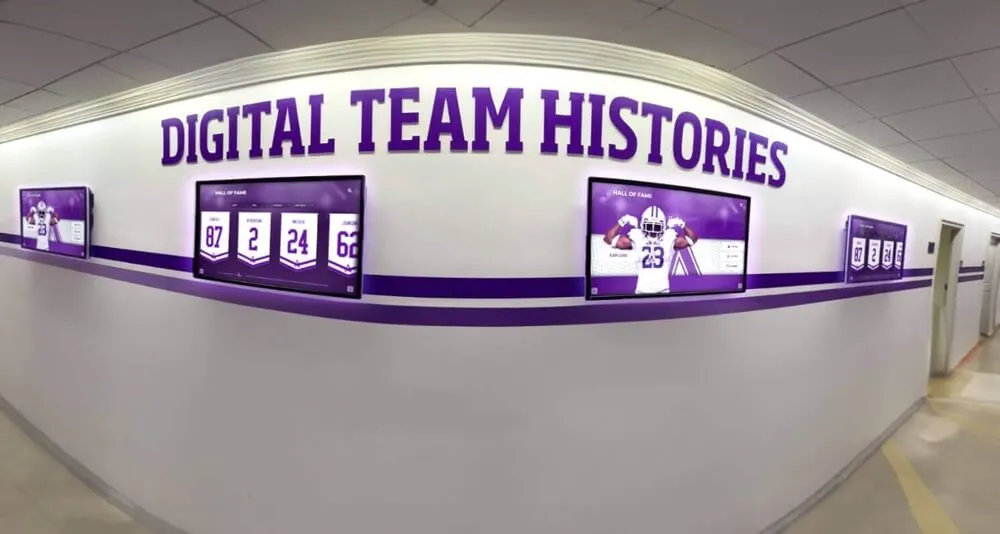
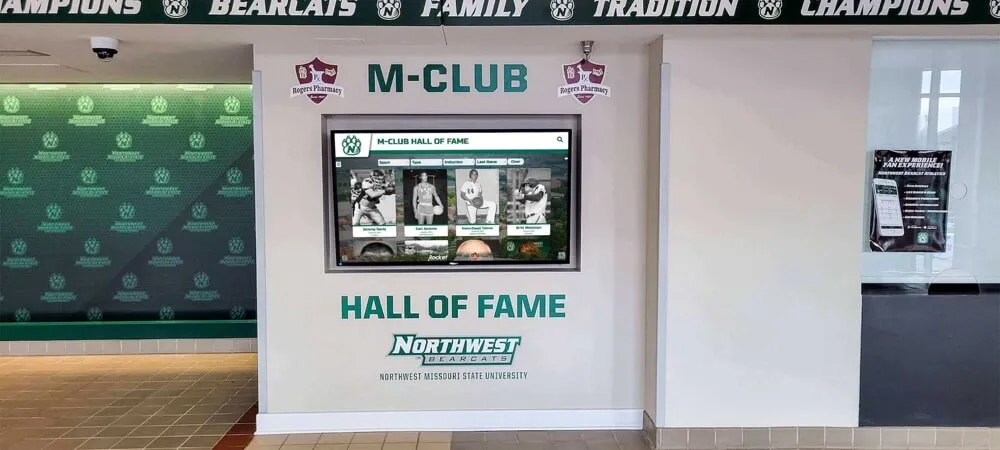
Recognition displays that pull live data from a PostgreSQL database are blocked the moment a sequence drifts below the current table maximum — correction must run before any new award record can reach the display
What Is Sequence Drift in a PostgreSQL Athletic Award Database?
PostgreSQL uses sequences to generate unique primary key values automatically. When a record is inserted without an explicit ID, the sequence advances by one and provides the next available value. This is the normal operating mode for recognition platforms where coaches and coordinators add individual award entries through a web form or administrative interface.
Drift occurs when rows are added to a table through a path that does not use the sequence — most commonly:
COPYandINSERT … VALUESwith explicit IDs — bulk import scripts that include the source record’s original ID in the data file advance the table’s data past the sequence’s last-used value without updating the sequence counterpg_restorewith--disable-triggers— restoring a backup with explicit IDs does not replay the original sequence-advancement events- Cross-database migrations — when a school moves from one recognition platform to another and migrates the historical archive, source IDs typically arrive as explicit values rather than letting the destination sequence assign new ones
- Spreadsheet-to-database import tools — tools that map a spreadsheet column labeled “ID” directly to the primary key column insert whatever integer was in that column, leaving the sequence behind at a lower value
After any of these operations, the sequence still believes the last value it issued is the highest ID in the table. It is not. The next application-level insert requests a new ID from the sequence, receives a value that already exists as a committed row, and fails with a unique constraint violation.
For athletic recognition databases, drift is a silent problem until that first manual insert. The bulk import succeeds. The display refresh shows the new season’s records. Everything appears correct. Only when a coach enters a record through the normal web form does the collision surface — often at the worst possible moment, during the first week after a season-end import when staff are actively adding end-of-year award entries.
Why Athletic Award Databases Are Particularly Vulnerable to Sequence Drift
Most general-purpose PostgreSQL applications grow through normal application inserts, so sequences rarely fall behind. Athletic recognition databases face three structural conditions that make drift significantly more common than in typical transactional systems.
Seasonal import patterns. Award data does not accumulate continuously. It arrives in large batches at season close — a spreadsheet of two hundred end-of-season awards submitted at once, rather than two hundred individual entries entered throughout the season. Bulk import scripts designed to process this data efficiently tend to include source record IDs to preserve referential integrity with related tables such as coaches, sports, and seasons. That design choice, while correct for preserving cross-table relationships, is also the most common trigger for sequence drift.
Platform migrations. Schools that move their recognition archives from one system to another — from a spreadsheet-backed CMS to a purpose-built digital recognition platform, or from an on-premises database to a cloud-hosted instance — execute a one-time migration that moves every historical record with its original ID. A migration for a program that has been running for fifteen years may move tens of thousands of rows, all with explicit primary keys. The destination sequences are left at their default starting value of one.
Incremental archive imports. Programs that digitize paper archives season by season, importing one cohort at a time, often assign IDs from the scanned records to preserve continuity with printed programs and legacy references. Each partial import advances the table’s data range without advancing the sequence.
Recognition records that span multiple decades — including deep searchable archives where typo-tolerant queries help visitors find inductees by approximate spelling, as covered in the digital hall of fame typo-tolerant search guide at halloffame-online.com — accumulate exactly the kind of historical data that is migrated by ID and then used as a live database for new inserts, making post-migration sequence drift correction mandatory for every multi-year recognition program.

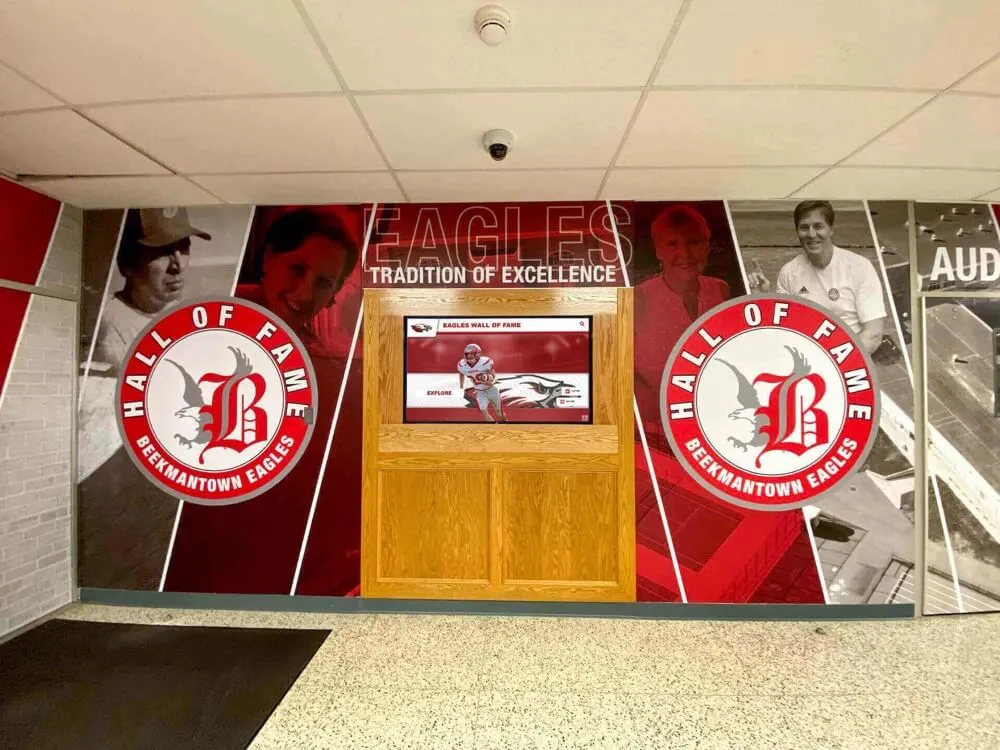
Athletic records displays powered by multi-season archives are among the most common sources of sequence drift — every bulk import added after a migration risks a duplicate-key failure until sequences are corrected
Detecting Sequence Drift: Runbook Step 1
Detection requires comparing each sequence’s current value against the maximum primary key present in its associated table. Run the following query for each core table in a PostgreSQL recognition database:
-- Per-table drift detection: run once per table
-- awards table
SELECT
    last_value                                        AS sequence_last_value,
    (SELECT MAX(id) FROM awards)                      AS table_max_id,
    (SELECT MAX(id) FROM awards) - last_value         AS drift_amount
FROM awards_id_seq;

-- athletes table
SELECT
    last_value,
    (SELECT MAX(id) FROM athletes)                    AS table_max_id,
    (SELECT MAX(id) FROM athletes) - last_value       AS drift_amount
FROM athletes_id_seq;

-- nominations table
SELECT
    last_value,
    (SELECT MAX(id) FROM nominations)                 AS table_max_id,
    (SELECT MAX(id) FROM nominations) - last_value    AS drift_amount
FROM nominations_id_seq;

-- sports table
SELECT
    last_value,
    (SELECT MAX(id) FROM sports)                      AS table_max_id,
    (SELECT MAX(id) FROM sports) - last_value         AS drift_amount
FROM sports_id_seq;

-- award_types table
SELECT
    last_value,
    (SELECT MAX(id) FROM award_types)                 AS table_max_id,
    (SELECT MAX(id) FROM award_types) - last_value    AS drift_amount
FROM award_types_id_seq;
A positive drift_amount confirms that the table contains IDs higher than the sequence’s current position. A zero or negative value means the sequence is at or ahead of the data — no correction needed for that table.
For databases with many tables, use pg_get_serial_sequence and information schema to generate detection queries dynamically:
-- Generates a drift report for all serial columns in the public schema
SELECT
    t.table_name,
    c.column_name,
    pg_get_serial_sequence(t.table_name, c.column_name) AS sequence_name
FROM information_schema.tables t
JOIN information_schema.columns c ON c.table_name = t.table_name
WHERE t.table_schema = 'public'
  AND t.table_type  = 'BASE TABLE'
  AND c.column_default LIKE 'nextval%'
ORDER BY t.table_name, c.column_name;
Copy the resulting sequence names, then run a per-sequence drift check for each. This approach catches tables added during schema migrations that may not follow the standard <table>_id_seq naming convention.
Before correcting: record pre-correction state. Write down each drifted sequence name, its current last_value, and the corresponding table_max_id before running any correction. This record is the rollback reference if a correction produces an unexpected result during verification.
Digital recognition programs that publish ARIA-accessible honor displays — where accurate, complete records must be available to assistive technology as described in the digital hall of fame ARIA details audit at halloffametouchscreen.com — should include the detection query as a mandatory step in every post-import checklist, not only when a duplicate-key error surfaces in production.
Correcting Drifted Sequences: Runbook Step 2
The setval function advances a sequence to a specified value. For sequence drift correction, the target value is the current maximum ID in the table, so the sequence’s next issued value — max + 1 — does not collide with any existing row.
The syntax for a safe correction is:
-- setval(sequence_name, value, is_called)
-- is_called = true  → sequence returns value + 1 on next call (use for drift correction)
-- is_called = false → sequence returns value itself on next call

SELECT setval('awards_id_seq',     (SELECT MAX(id) FROM awards),     true);
SELECT setval('athletes_id_seq',   (SELECT MAX(id) FROM athletes),   true);
SELECT setval('nominations_id_seq',(SELECT MAX(id) FROM nominations), true);
SELECT setval('sports_id_seq',     (SELECT MAX(id) FROM sports),     true);
SELECT setval('award_types_id_seq',(SELECT MAX(id) FROM award_types),true);
SELECT setval('seasons_id_seq',    (SELECT MAX(id) FROM seasons),    true);
SELECT setval('coaches_id_seq',    (SELECT MAX(id) FROM coaches),    true);
Each setval call is non-destructive and non-blocking. It does not lock any table, does not affect active queries, and does not require downtime. Display kiosks reading from the database during a correction continue returning results without interruption.
Resolving non-standard sequence names with pg_get_serial_sequence. If the sequence name does not follow the default <table>_<column>_seq pattern — common after migrations or renames — resolve it from the table and column name:
-- Resolves and corrects the sequence for awards.id in one expression
SELECT setval(
    pg_get_serial_sequence('awards', 'id'),
    (SELECT MAX(id) FROM awards),
    true
);
Handling empty tables. If a table had all rows deleted after an import — possible during archive cleanup workflows — MAX(id) returns NULL and setval with a NULL argument throws an error. Guard with COALESCE:
SELECT setval(
    pg_get_serial_sequence('awards', 'id'),
    COALESCE((SELECT MAX(id) FROM awards), 1),
    true
);
Generating correction statements for all tables at once. For databases with many tables, generate the full correction batch from a values list:
-- Generates ready-to-run setval statements for each named table
SELECT
    'SELECT setval(''' ||
    pg_get_serial_sequence(table_name, column_name) || ''', ' ||
    'COALESCE((SELECT MAX(' || column_name || ') FROM ' || table_name || '), 1), true);'
        AS correction_statement
FROM (
    VALUES
        ('awards',      'id'),
        ('athletes',    'id'),
        ('nominations', 'id'),
        ('sports',      'id'),
        ('award_types', 'id'),
        ('seasons',     'id'),
        ('coaches',     'id')
) AS t(table_name, column_name);
Copy the output, review each statement, then run the batch as a single maintenance operation. The entire batch for a seven-table recognition database completes in under a second.
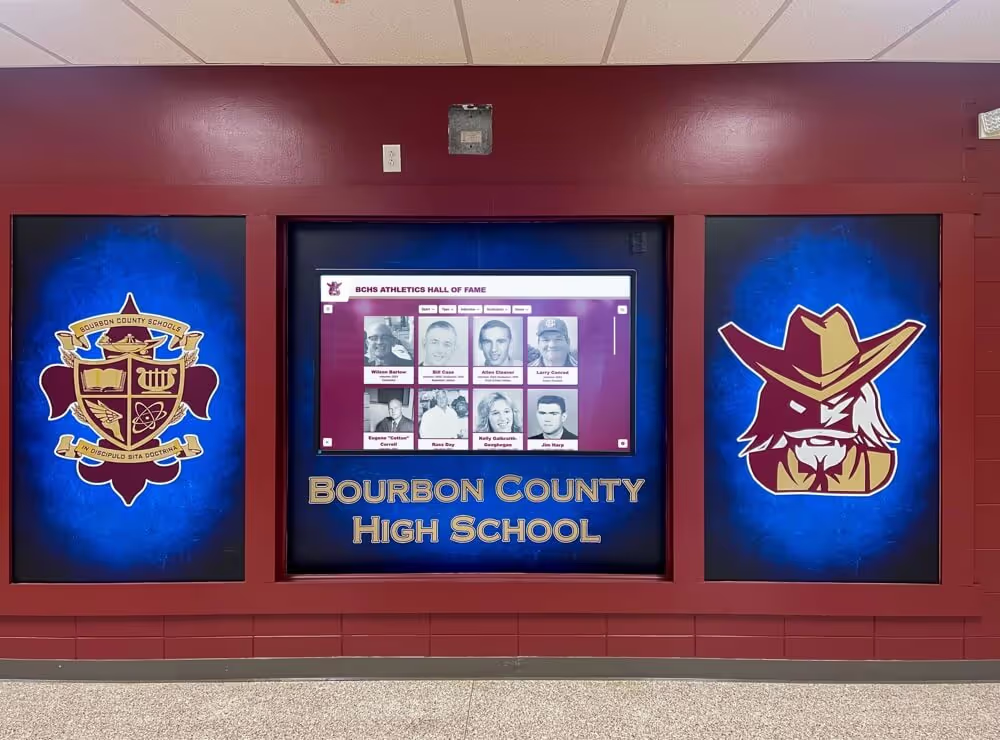
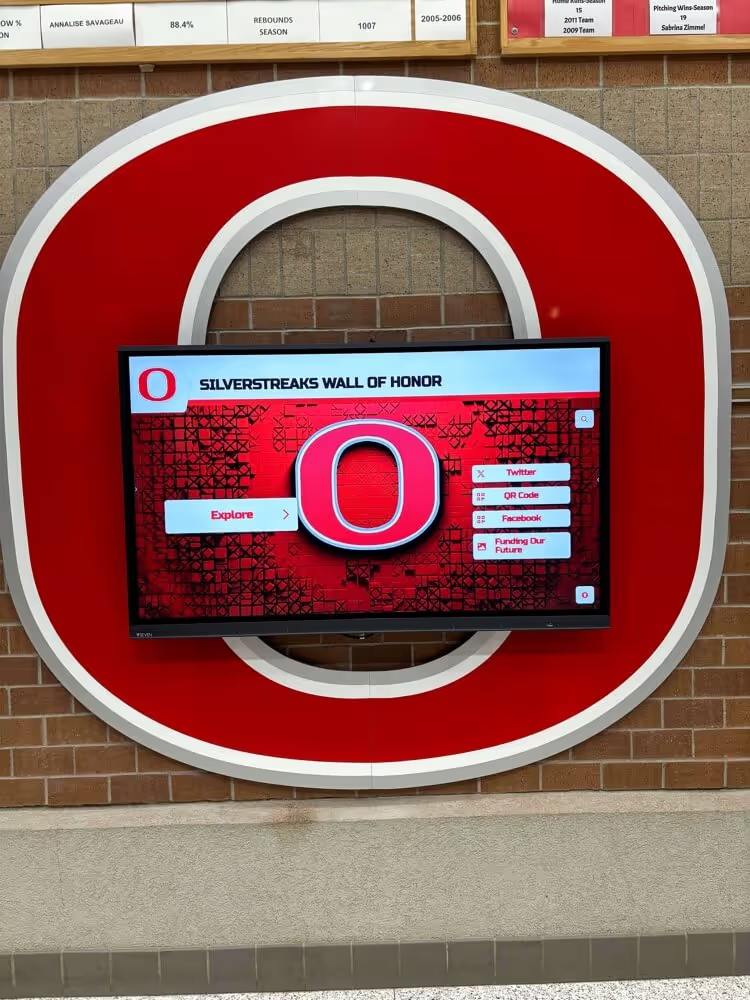
Walls of honor driven by PostgreSQL databases require sequence correction after every explicit-ID import — a single drifted sequence blocks any new record from reaching the display until setval runs
Verifying the Correction: Runbook Step 3
After running the setval corrections, verify that each sequence is positioned correctly and that an application-level insert succeeds before clearing the maintenance window.
Step 3a: Confirm sequence position
-- Verify the sequence is now at or above the table maximum
SELECT
    last_value,
    (SELECT MAX(id) FROM awards)                          AS table_max,
    last_value >= (SELECT MAX(id) FROM awards)            AS correction_applied
FROM awards_id_seq;
The correction_applied column should return true for every corrected sequence. If it returns false, re-run the setval for that table — the correction statement may have referenced the wrong sequence name.
Step 3b: Test a real insert inside a rolled-back transaction
BEGIN;

INSERT INTO awards (
    athlete_id,
    award_type_id,
    sport_id,
    season_id,
    award_name,
    award_date
)
VALUES (
    (SELECT MIN(id) FROM athletes),
    (SELECT MIN(id) FROM award_types),
    (SELECT MIN(id) FROM sports),
    (SELECT MIN(id) FROM seasons),
    'Sequence Correction Verification',
    CURRENT_DATE
)
RETURNING id;

-- If the INSERT succeeds and returns an ID greater than the pre-correction max,
-- the sequence is functioning correctly.

ROLLBACK;
The ROLLBACK discards the test row. If the INSERT succeeds and returns an ID greater than the maximum that existed before correction, the sequence is functioning correctly. If the INSERT still fails with a duplicate-key error, run the detection query again — a second drifted sequence on a foreign-key reference table may be failing at the constraint layer before the corrected sequence is reached.
Step 3c: Run a zero-drift confirmation
-- Confirms no remaining drift after correction
-- Returns zero rows if all sequences are correctly positioned
SELECT
    seq_name,
    table_name,
    seq_current,
    tbl_max,
    tbl_max - seq_current AS remaining_drift
FROM (
    VALUES
        ('awards_id_seq',      'awards',     (SELECT currval('awards_id_seq')),     (SELECT MAX(id) FROM awards)),
        ('athletes_id_seq',    'athletes',   (SELECT currval('athletes_id_seq')),   (SELECT MAX(id) FROM athletes)),
        ('nominations_id_seq', 'nominations',(SELECT currval('nominations_id_seq')),(SELECT MAX(id) FROM nominations))
) AS t(seq_name, table_name, seq_current, tbl_max)
WHERE tbl_max > seq_current;
Zero rows returned means all checked sequences are correctly positioned. Document the result and the UTC timestamp of the correction in the post-import log before releasing the database for normal use.
Academic recognition programs that maintain honor-roll data alongside athletic records — including those that display achievement distinctions visible in the salutatorian recognition and display guide at digitalwalloffame.com — apply the same verification-before-publish standard: no data change reaches a public display until a structured check confirms the underlying database is in a consistent, insert-ready state.

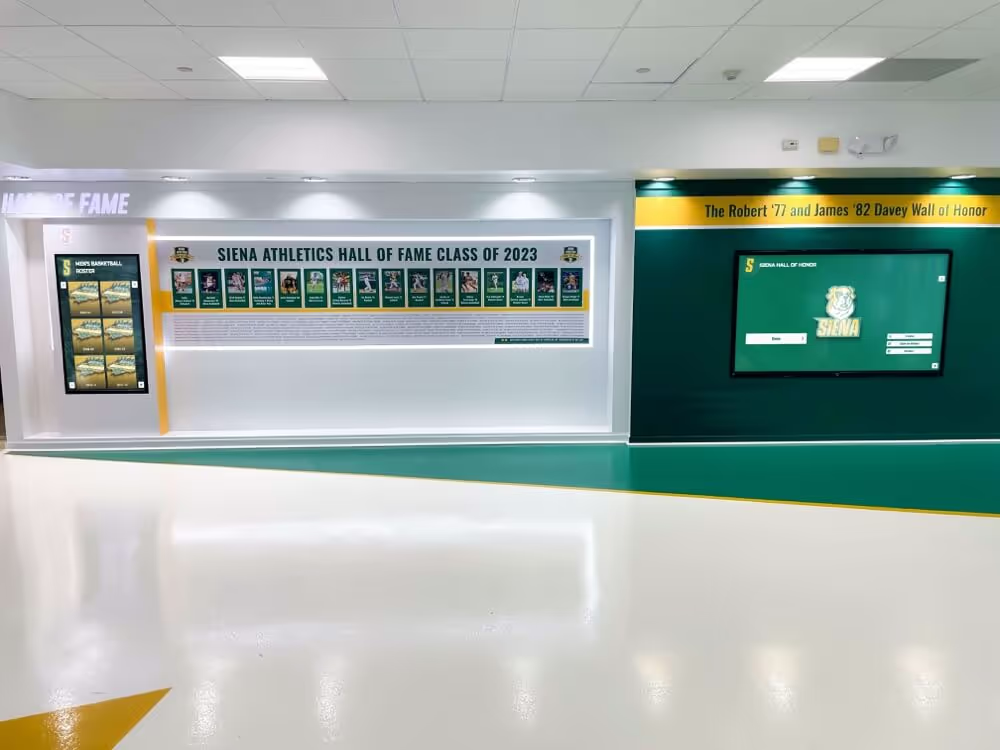
Championship and award records displayed on recognition walls require a database that is ready to accept new entries immediately after each import — post-correction verification confirms this before the display update window opens
Building a Sequence-Drift Prevention Policy
Correction is faster than troubleshooting a live duplicate-key error during a recognition event. Prevention is faster than correction. A written sequence-drift prevention policy codifies when sequences are checked, who runs the correction, and which import workflows are designed to avoid drift in the first place.
Policy Element 1: Import Design Standard
Define which import workflows may include explicit primary keys and which may not.
| Import Type | Explicit ID Allowed? | Required Post-Import Action |
|---|---|---|
| Season-end batch (new records only) | No — let the sequence assign IDs | None; no drift possible |
| Historical archive migration | Yes — preserve referential integrity | Run full setval correction block |
| Incremental archive digitization | Yes — matches scanned record IDs | Run setval correction block |
pg_restore from backup | Yes — replays original IDs | Run setval correction block |
| Single-record manual entry via web form | No — sequence is the only path | None; standard application behavior |
For any workflow where explicit IDs are permitted, add the setval correction block as the final operation in every import script — a mandatory step, not an optional cleanup.
Policy Element 2: Automated Correction at Import Completion
Append this block to the end of every explicit-ID import script so sequences are corrected as part of the import transaction rather than as a separate manual step:
-- Append to the end of every explicit-ID import script
DO $$
DECLARE
    rec RECORD;
BEGIN
    FOR rec IN
        SELECT table_name, column_name
        FROM (
            VALUES
                ('awards',      'id'),
                ('athletes',    'id'),
                ('nominations', 'id'),
                ('sports',      'id'),
                ('award_types', 'id'),
                ('seasons',     'id'),
                ('coaches',     'id')
        ) AS t(table_name, column_name)
    LOOP
        EXECUTE format(
            'SELECT setval(pg_get_serial_sequence(%L, %L), COALESCE((SELECT MAX(%I) FROM %I), 1), true)',
            rec.table_name, rec.column_name, rec.column_name, rec.table_name
        );
    END LOOP;
END $$;
Running this block at the end of every explicit-ID import costs milliseconds and eliminates the drift failure mode entirely for imports that follow the policy.
Policy Element 3: Scheduled Detection Query
Schedule a weekly detection query — via pg_cron, a cron job, or a monitoring script — that alerts when any sequence’s current value is below its table maximum:
-- Intended for a monitoring job; returns rows only when drift exists
-- Schedule with pg_cron: SELECT cron.schedule('weekly-seq-check', '0 6 * * 1', $$...$$);
SELECT
    'awards'                              AS table_name,
    currval('awards_id_seq')              AS seq_current,
    (SELECT MAX(id) FROM awards)          AS tbl_max,
    (SELECT MAX(id) FROM awards)
        - currval('awards_id_seq')        AS drift_amount
WHERE (SELECT MAX(id) FROM awards) > currval('awards_id_seq');
Any row returned indicates a drifted sequence that needs correction before the next insert cycle. A weekly check between import windows provides a safety net that does not depend on a production insert error to surface the problem.
Donor recognition programs that receive bulk alumni gift data from development office CRM systems face identical sequence management challenges when those records are imported by original donor ID. The donor walls complete guide at digital-trophy-case.com outlines how institutions structure long-lived recognition data pipelines — pipelines that require both import integrity and post-import sequence verification as foundational operational steps.
Policy Element 4: Documentation and Access Control
| Policy Item | Owner | Documented In |
|---|---|---|
| Import design standard (explicit ID vs. sequence) | IT administrator | Import runbook |
| Post-import setval correction script | IT administrator | Import runbook |
| Scheduled detection query configuration | IT administrator | Monitoring runbook |
| Correction authority (who may run setval) | Named IT administrator | Access control policy |
| Post-correction verification log | IT administrator | Import log file |
Restricting setval execution to a named IT administrator prevents accidental corrections with wrong values — resetting a sequence below an existing row creates a different failure mode where the sequence correctly issues a value that happens to be lower than the current max and collides on the next insert. Document the authority explicitly and include it in the access control policy alongside other database-level permissions.
Recognition programs that mark milestone events with commemorative physical artifacts — as covered in the commemorative plaque design and ordering guide at best-touchscreen.com — often import archival records during the same operational window as a new installation or display launch. This is precisely the scenario where sequence drift is most likely to surface: a first-time archive import runs, the physical installation opens, and the first staff-entered record triggers a duplicate-key failure. A post-import correction policy eliminates that failure before the display goes live.
Policy Element 5: Runbook Summary Table
Post this table in the database runbook as a quick reference for every import window.
| Step | Action | Query / Command | Pass Condition |
|---|---|---|---|
| 1 | Detect drift | SELECT last_value, MAX(id), MAX(id) - last_value FROM awards, awards_id_seq | drift_amount = 0 for all tables |
| 2 | Correct sequences | SELECT setval(pg_get_serial_sequence('awards','id'), (SELECT MAX(id) FROM awards), true) | No error; one row returned per table |
| 3a | Confirm position | SELECT last_value >= (SELECT MAX(id) FROM awards) FROM awards_id_seq | Returns true |
| 3b | Test insert | BEGIN; INSERT INTO awards (...) RETURNING id; ROLLBACK; | Insert succeeds; returned ID > pre-correction max |
| 3c | Zero-drift check | Re-run detection query | Zero rows returned |
| 4 | Log result | Record sequence names, pre/post values, timestamp | Entry added to import log |
Schools that manage principal and administrator recognition milestones — including formal departure honors described in the principal retirement recognition guide at digitalawardsdisplay.com — frequently import archival records for outgoing administrators as part of a recognition event. These targeted imports are exactly the scenario where a quick five-minute post-import sequence check prevents a duplicate-key failure from surfacing during the ceremony itself.
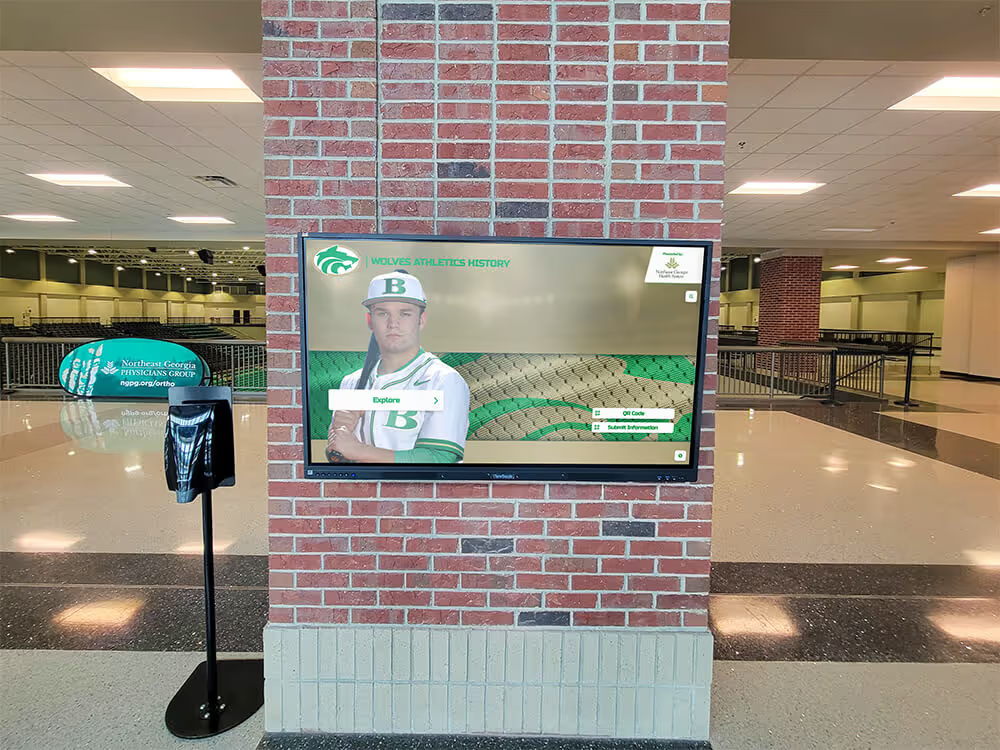
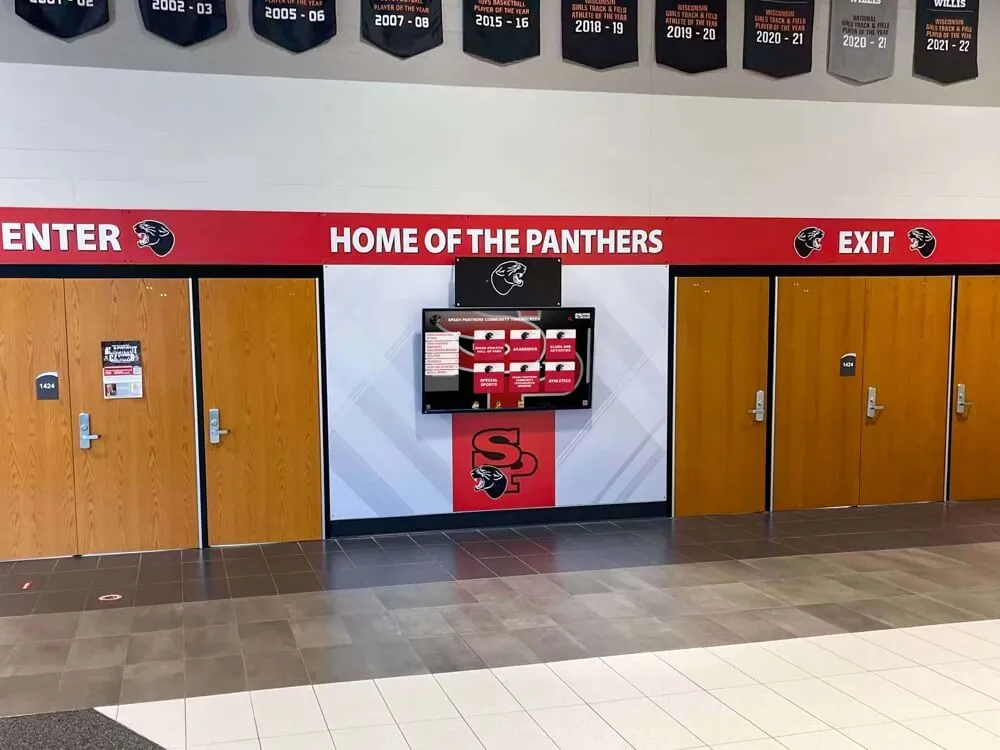
Interactive display kiosks depend on the database accepting new records without errors immediately after an import — a prevention policy that appends sequence correction to every explicit-ID import script keeps kiosk updates flowing without manual intervention
How Purpose-Built Recognition Platforms Eliminate Sequence Drift
Schools that manage award records through a purpose-built digital recognition platform rather than a self-hosted PostgreSQL database avoid sequence drift entirely at the application layer. Purpose-built platforms do not expose primary key assignment to import processes — every record, whether added manually, imported from a spreadsheet, or migrated from a legacy system, receives an ID generated by the platform’s internal sequence, not by the source data file.
The structural advantages that eliminate drift include:
No explicit-ID import paths. Platform import tools map spreadsheet columns to application fields — athlete name, sport, season, award type — never to primary key values. The platform assigns a new ID to every imported row using its internal sequence, regardless of what the source file contained. There is no path for a source ID to enter the primary key column.
Atomic import with pre-commit validation. Imports run inside a transaction that validates referential integrity, required-field coverage, and uniqueness constraints before committing. A validation failure rolls back the entire import rather than committing a partial row set that leaves sequences and data in inconsistent states.
Managed migration tooling. When a school migrates a historical archive into the platform, the migration tool maps source IDs to platform-generated IDs and updates all foreign key references accordingly. Legacy IDs are stored in a separate reference column — useful for cross-referencing printed programs — while primary keys are exclusively platform-generated and structurally cannot drift.
No direct database access required. Athletic directors, IT staff, and archives teams interact with award records through a web-based CMS with role-appropriate permissions. Direct database access — the environment in which setval corrections become necessary — is not part of the standard operating model.
Recognition archives that span multiple academic decades and integrate composite class records — including the yearbook-adjacent display systems described in the digital class composite display guide at digitalyearbook.org — accumulate exactly the kind of large, ID-rich legacy archives that require ongoing sequence management in a self-hosted environment. A platform that manages ID assignment internally removes that maintenance obligation from the IT team entirely.
Trusted by 600+ institutions, Rocket Alumni Solutions’ cloud-based digital recognition platform handles bulk archive imports, season-end batch updates, and individual award entries through managed tooling that never exposes sequence assignment to import data — so duplicate-key failures after imports are structurally impossible rather than a runbook item that requires a named IT administrator to resolve.
Import Award Records Without Sequence Drift Failures
Rocket Alumni Solutions' recognition platform assigns IDs through managed internal tooling — bulk imports, historical archive migrations, and manual entries all flow through the same sequence path, eliminating duplicate-key errors and the post-import correction runbook entirely. WCAG 2.1 AA compliant.
See It in ActionFAQ: Athletic Awards Database Sequence Drift Correction
What causes sequence drift in a PostgreSQL athletic awards database?
Sequence drift occurs when rows enter the database with explicit primary key values rather than through the sequence. Bulk import scripts that include source record IDs, pg_restore operations that replay rows with their original IDs, and migration workflows that preserve legacy identifiers are the three most common causes. After any of these operations, the sequence counter sits below the highest ID in the table. The next application-level insert receives a value that already exists and fails.
How do you detect sequence drift in PostgreSQL?
Compare each sequence’s last_value against the MAX(id) of its associated table. A positive difference confirms drift: SELECT last_value, (SELECT MAX(id) FROM awards) AS table_max, (SELECT MAX(id) FROM awards) - last_value AS drift FROM awards_id_seq. A drift value greater than zero means the sequence must be corrected before the next insert.
What is the correct setval command for fixing sequence drift?
Use setval with is_called = true so the sequence returns max + 1 on the next call: SELECT setval('awards_id_seq', (SELECT MAX(id) FROM awards), true). If the sequence name is non-standard, resolve it with pg_get_serial_sequence('awards', 'id'). Wrap the max subquery in COALESCE(..., 1) to handle an empty table safely.
Is setval safe to run on a live production database?
Yes. setval modifies only the sequence object — it does not lock any table and does not interrupt active queries. Recognition kiosks and display portals continue serving queries uninterrupted during the correction. The change takes effect immediately with no restart or downtime required.
How can schools prevent sequence drift from recurring after future imports?
Append a setval correction block to the end of every import script that uses explicit primary key values, and schedule a weekly detection query to catch any drift before it surfaces as a production error. For imports of genuinely new records with no legacy ID to preserve, configure the import to omit the ID column entirely and let the sequence assign values — a workflow design that makes drift structurally impossible.
Keeping Award Records Insert-Ready After Every Import
Athletic awards database sequence drift correction is a three-step runbook — detect, correct, verify — that belongs at the end of every bulk import, migration, or restore that uses explicit primary keys. The detection query runs in seconds. The setval correction is non-blocking and effective immediately. The verification insert, rolled back after completion, confirms the fix before the display update window opens.
Schools that run recognition programs across multiple decades accumulate exactly the kind of large, ID-rich archives that require ongoing sequence management discipline. A prevention policy — particularly a setval block appended to every explicit-ID import script — converts a reactive troubleshooting procedure into a standing quality control step that never requires staff to diagnose a duplicate-key error after a display refresh goes live.
Every import that completes cleanly, with sequences verified and corrected, is a season’s worth of awards that reaches the hallway display on schedule, without a last-minute call to the IT administrator.
See How 600+ Schools Manage Award Imports Without Database Errors
Rocket Alumni Solutions builds cloud-based digital recognition platforms with managed import tooling that assigns IDs through internal sequences — no explicit-ID import paths, no sequence drift, no duplicate-key failures to troubleshoot after a season-end import. WCAG 2.1 AA compliant displays work on any touchscreen from 32" to 100"+.
Request a Custom Demo