



Intent: define. An athletic awards database soft delete policy is a data-governance document that specifies how award records, athlete profiles, and associated recognition data should be marked as inactive rather than permanently removed when a deletion is requested—so that corrections remain auditable, accidental removals are recoverable, and the institution retains a complete history of every recognition decision.
The short answer: instead of erasing a record when a staff member deletes it, the database sets a deleted_at timestamp and a deleted_by user identifier on the row. The record disappears from public-facing displays and normal queries, but it survives in the underlying table where it can be reviewed, corrected, or restored by authorized personnel. The policy defines which record types qualify for soft deletion, who may initiate and reverse a soft delete, how long soft-deleted records are retained before permanent removal, and what audit information must be captured alongside each deletion event.
This guide defines soft delete in plain language for school recognition administrators, explains why the mechanism is especially valuable for athletic award data, presents a policy framework covering data model requirements and authority levels, and provides a six-step implementation checklist for recognition programs building or upgrading their database governance.
Award records are institutional memory. When a staff member accidentally removes a varsity letter recipient from a database, or when a name correction applied to the wrong row overwrites a real honoree’s record, the loss is not just technical—it erases documented history that may have taken years to accumulate. An athletic awards database soft delete policy ensures that no single deletion action, however accidental, can destroy that history permanently.
Schools and athletic programs that manage recognition data digitally face a specific governance gap: most database systems, and many recognition platforms, permit hard deletes by default—permanent removal with no recovery path and no record that the deletion occurred. A soft delete policy closes that gap by treating deletion as a state change rather than a destructive operation.

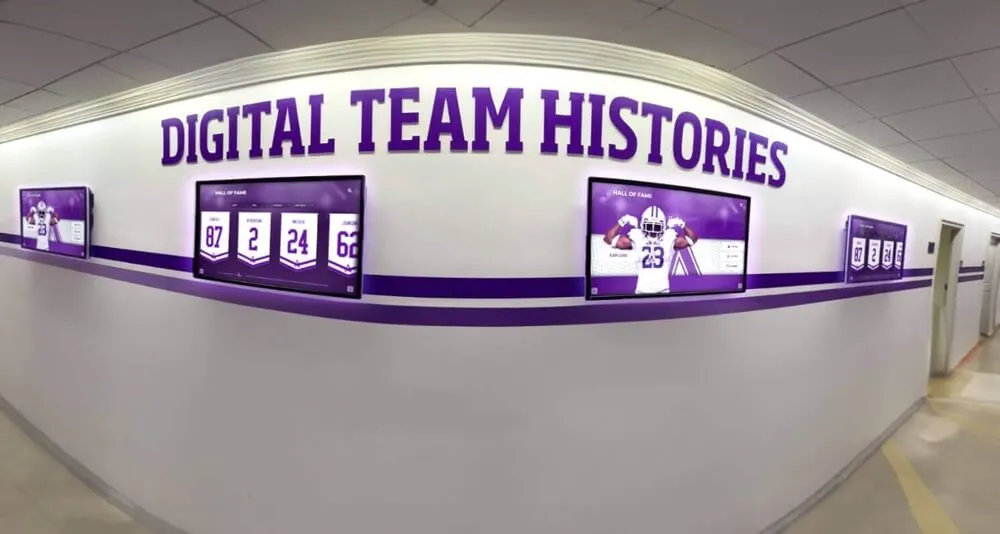
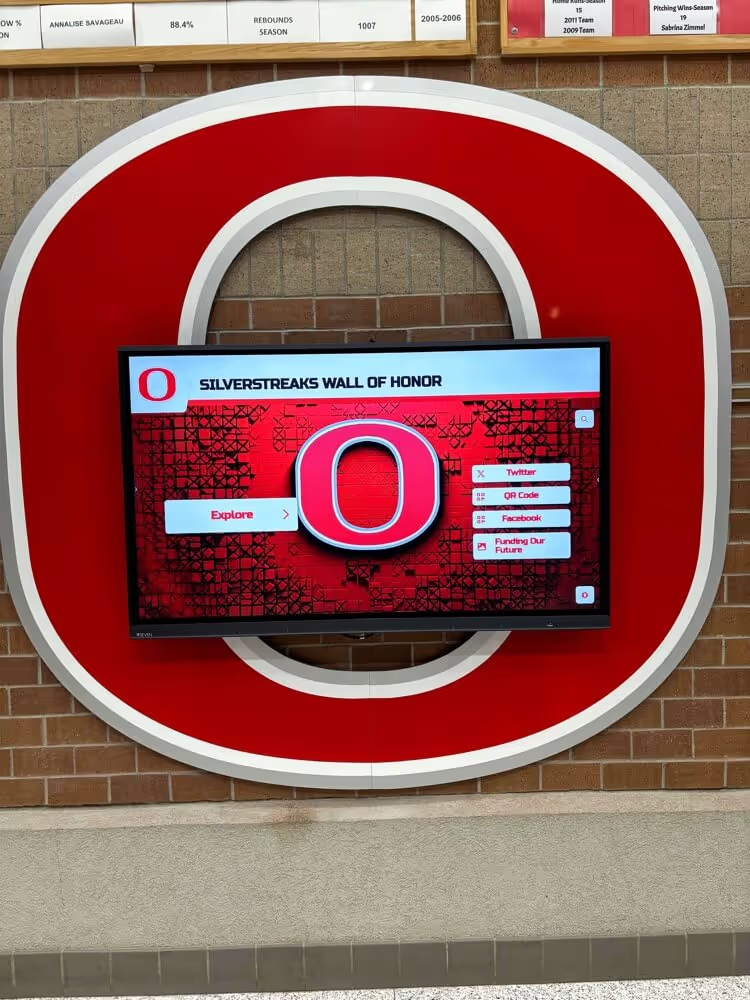
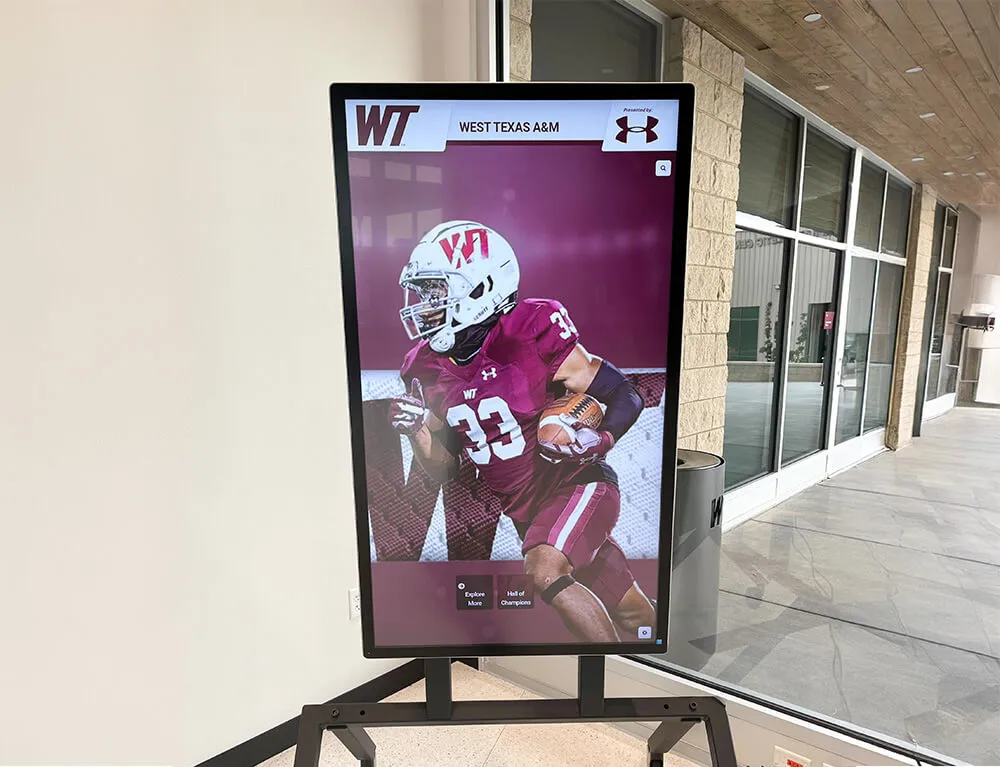
Athletic records displayed in school hallways represent years of accumulated history—a soft delete policy ensures that administrative corrections and deletions never permanently erase the underlying data
What Soft Delete Means for Athletic Award Records
A soft delete is a database operation that marks a record as deleted without removing it from the database table. The record becomes invisible to normal application queries and display surfaces, but the underlying data remains intact and recoverable.
In a recognition database, soft delete is implemented by adding two fields to every record type that qualifies for deletion:
deleted_at: A timestamp recording when the deletion was initiated. ANULLvalue means the record is active; a populated timestamp means the record has been soft-deleted.deleted_by: The identifier of the staff account that initiated the deletion, linking the deletion event to a specific user in the system’s access control log.
Application queries are updated to include a WHERE deleted_at IS NULL filter, so soft-deleted records do not appear in normal operations—award recipient lists, public display feeds, hall of fame rosters, and season award summaries all exclude them automatically. The records remain in the database table, visible only to administrative queries that explicitly include deleted records.
The contrast with hard delete is significant. A hard delete executes a DELETE statement that removes the row entirely. No recovery is possible from the database itself once the operation completes. If the deletion was an error—a wrong row selected, a batch operation that exceeded its intended scope—the only recovery path is a full database backup restore, which typically means rolling back every change made since the last backup, not just the erroneous deletion.
For athletic recognition programs, the practical stakes are clear. A program that has spent twelve years building a comprehensive hall of fame inductee database cannot afford to lose records to accidental deletion. A soft delete policy provides a safety net that costs almost nothing to implement and makes the difference between a recoverable mistake and a permanent loss.
Why Athletic Award Data Requires Explicit Soft Delete Governance
Athletic recognition records have characteristics that make soft delete governance especially important.
Records span decades and involve institutional reputation. A hall of fame inductee selected in 2008 has a reasonable expectation that their recognition endures. So does their family. When a record is removed—even accidentally, even temporarily—the institutional consequence is not just a data integrity issue. It is an honor that has been, however briefly, erased. A policy that prevents that outcome protects both the data and the relationships it represents.
Corrections must be auditable. Athletic award records are corrected for legitimate reasons: a name misspelling, an incorrect graduation year, a season that was miscategorized. Each correction changes the record’s state. Without an audit trail—a log of what changed, who changed it, and when—the program cannot demonstrate that the current record is accurate or explain why it differs from earlier versions. A soft delete policy that pairs each deletion or replacement with an audit entry creates the documentation that governance reviews, appeals processes, and legal inquiries may eventually require.
Multi-season data creates complex dependencies. An athlete profile in a recognition database is typically referenced by many other records: varsity letter entries, all-conference selections, season award records, and championship roster entries, each for a different year. Permanently deleting an athlete profile removes not just one record but the referential anchor for every award that athlete ever received. Soft delete preserves those references intact, allowing the deletion to be reversed without cascading data reconstruction.
Programs that present athletic history on interactive recognition platforms—like the touchscreen displays covered in the best touchscreen software guide at touchhalloffame.us—depend on the integrity of the underlying record set to populate display content accurately. A soft delete policy is the upstream governance that makes those displays reliable.
Records That Qualify for Soft Delete
Not every record type in a recognition database benefits equally from soft delete. A well-written policy specifies which record types use soft delete, which use hard delete, and why.
| Record Type | Recommended Delete Mode | Rationale |
|---|---|---|
| Athlete profiles | Soft delete | Anchor for all award records; deletion cascades to decades of data |
| Award recipient entries | Soft delete | Individual recognition events that must be auditable |
| Hall of fame inductee records | Soft delete | Permanent recognition; deletion should require explicit reversal |
| Season award summaries | Soft delete | Summary records that reference athlete and category data |
| Award category definitions | Soft delete | Removing a category does not remove past recipients of it |
| Import batch metadata | Soft delete | Import history is an audit artifact; should not be hard-deleted |
| Application session logs | Hard delete (after retention period) | Operational logs with no recognition history value |
| Temporary staging records | Hard delete (after validation) | Working data that has no permanent record purpose |
| Duplicate merge artifacts | Hard delete (after merge confirmation) | Verified duplicates no longer needed once resolved |
The key distinction is whether the record has long-term recognition history value. Any record that documents who received a specific award, when, under what criteria, or that serves as the identity anchor for an athlete or coach in the program’s database, qualifies for soft delete. Working data, operational logs, and verified duplicate artifacts do not.

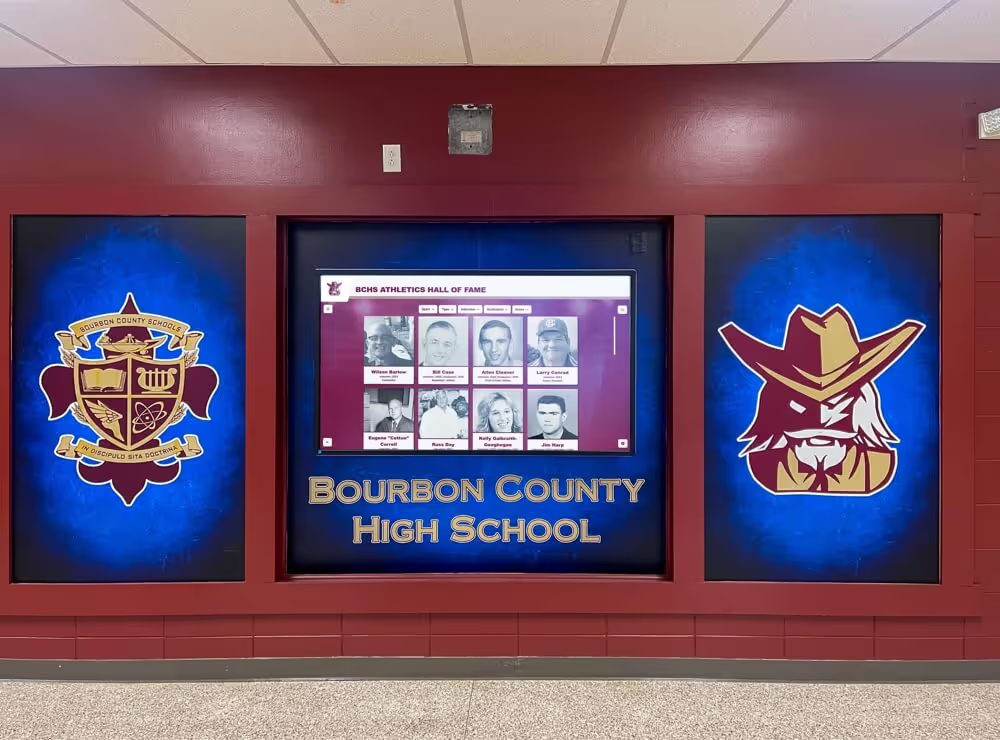
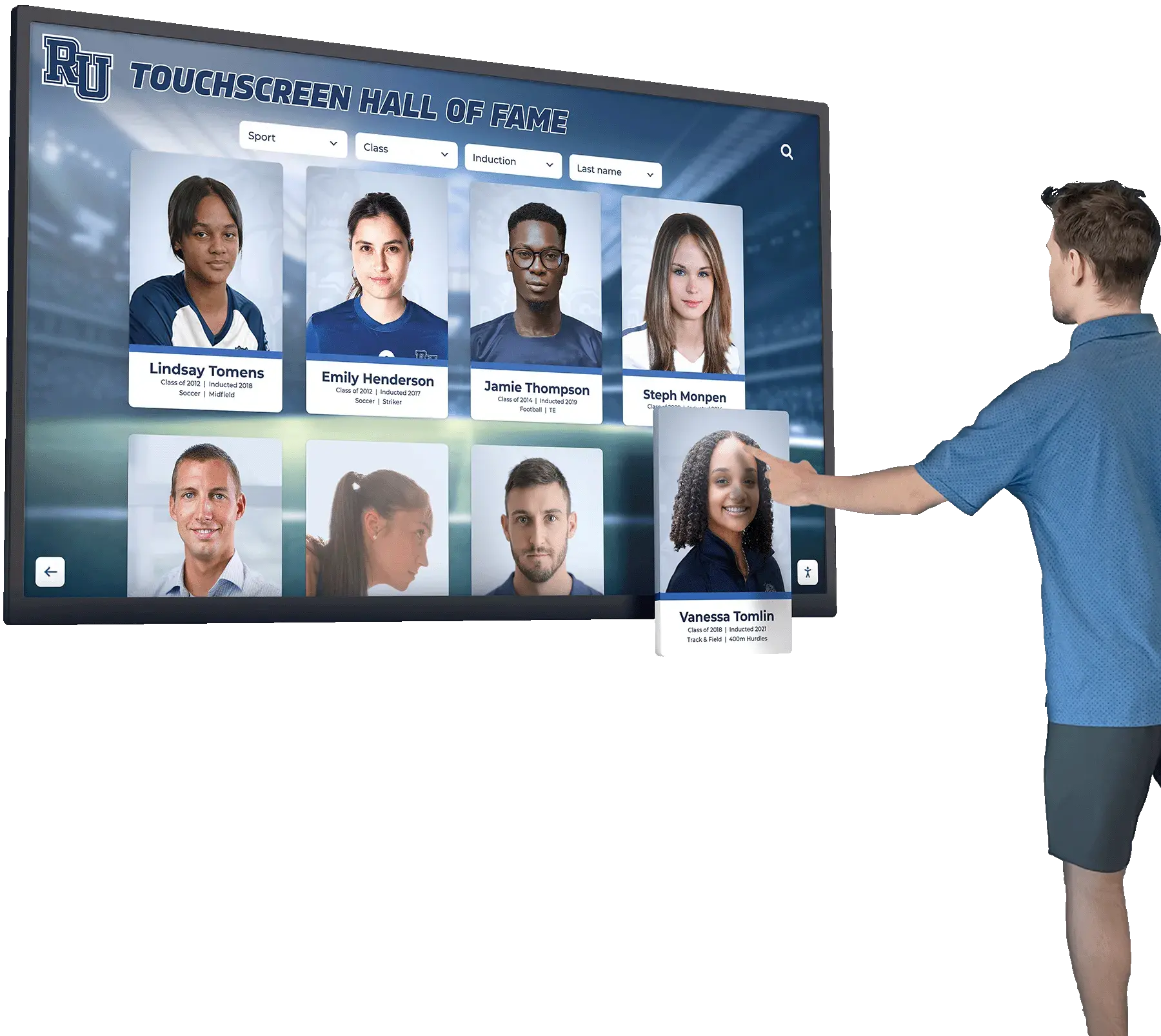
Hall of fame inductee records represent institutional decisions that should never be permanently removed without explicit reversal—soft delete ensures those records remain recoverable even after a deletion is initiated
Data Model Requirements for Soft Delete
An effective soft delete implementation requires consistent data model elements across every qualifying table. The policy should specify the following minimum fields for any table subject to soft delete.
Required soft delete fields:
deleted_at TIMESTAMP NULL DEFAULT NULL— populated when the record is soft-deleted; NULL for active recordsdeleted_by VARCHAR— identifier of the user account that initiated the deletion; NULL for active recordsdeletion_reason VARCHAR NULL— optional free-text field for the administrator to record why the deletion was initiated; valuable for audit reviews
Required audit fields (present on all record types, not just soft-delete candidates):
created_at TIMESTAMP NOT NULL— when the record was first insertedcreated_by VARCHAR NOT NULL— which user account created the recordupdated_at TIMESTAMP NULL— when the record was last modifiedupdated_by VARCHAR NULL— which user account made the last modification
Required restoration fields:
restored_at TIMESTAMP NULL— populated if the record is restored from soft-deleted staterestored_by VARCHAR NULL— which user account initiated the restoration
The restoration fields are often omitted in minimal implementations. The policy should require them because the ability to soft-delete a record implies the ability to restore it—and every restoration is a governance event that must be logged with the same rigor as the deletion.
For programs managing recognition data alongside broader alumni and student records, the Division II athletics digital recognition system guide at touchwall.tv describes how multi-source recognition data is managed across a full athletic program. The same data model discipline that governs soft deletes in a standalone recognition database applies when award records are integrated with institutional alumni systems.
Authority Matrix: Who May Initiate and Reverse Soft Deletes
| Action | Who May Initiate | Who Must Approve | Who May Reverse |
|---|---|---|---|
| Soft delete of an award recipient entry | Recognition coordinator | Athletic director (for hall of fame records) | Athletic director or IT administrator |
| Soft delete of an athlete profile | IT administrator | Athletic director | Athletic director + IT administrator |
| Soft delete of an import batch | IT administrator | Recognition coordinator | IT administrator |
| Bulk soft delete (10+ records) | IT administrator | Athletic director | Athletic director + IT administrator |
| Restoration of a soft-deleted record | IT administrator | Athletic director (for hall of fame records) | N/A — restoration is the reversal |
| Permanent deletion of a soft-deleted record | IT administrator | Athletic director + district IT | Not reversible after this point |
The authority matrix reflects a graduated permission model: single-record deletions require less oversight than bulk operations, and profile deletions require more oversight than award entry deletions because of the downstream referential impact. Hall of fame records receive elevated treatment throughout because they represent formally ratified institutional decisions, not administrative entries.
Programs that display recognition alumni records publicly—like the alumni spotlight displays described in the Delta Gamma alumni spotlight display guide at halloffame-online.com—should apply the same elevated authority requirement to any deletion that would remove a publicly visible inductee record.
Correction Workflow: Using Soft Delete to Preserve History
The most valuable application of soft delete in a recognition database is the correction workflow. When an existing record contains an error—an incorrect name spelling, a wrong sport category, an erroneous season year—the correct approach under a soft delete policy is not to edit the record in place, but to soft-delete the incorrect version and create a corrected replacement.
This two-step approach preserves the complete history of the record:
- The original (incorrect) record is soft-deleted with a
deletion_reasonnoting that it is being replaced due to a data correction. - A new record is created with the corrected data, linked to the soft-deleted predecessor via a
supersedes_record_idreference field.
The result is a complete audit chain. An administrative query can show: the original record as entered, the timestamp and user account that initiated the correction, the reason recorded for the change, and the corrected record that replaced it. This chain is available indefinitely—or until the soft-deleted record is permanently removed at the end of its retention period.
For programs that display award history in formats that visitors can browse, such as the award displays and trophies guides covered at FBLA/FFA award displays at digitalyearbook.org, the correction audit trail provides assurance that what the public sees reflects the most current and accurate institutional record—while the correction history remains available for governance review.

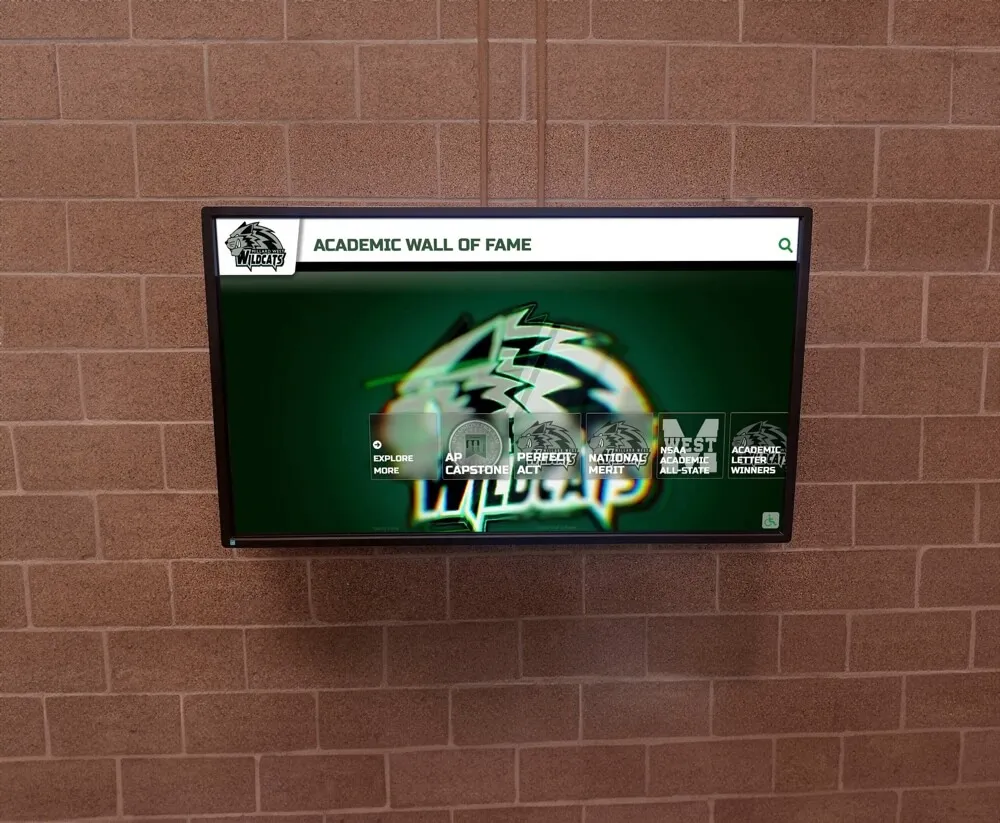
Recognition platform administrators who interact with display systems depend on correction workflows that preserve history—every data change should produce an auditable trail, not an overwrite
Six-Step Implementation Checklist
For programs implementing soft delete governance in an existing recognition database, the following checklist provides a structured path from current state to policy compliance.
Step 1: Audit Current Record Types and Deletion Mechanisms
Document every table in the recognition database, identify whether each currently uses hard delete or soft delete, and note which tables store recognition history data. If the database uses a recognition platform rather than a self-managed schema, contact the vendor to confirm whether the platform implements soft delete for award and athlete records, and request documentation of how deleted records are handled.
Step 2: Add Soft Delete Fields to Qualifying Tables
For each table identified as a soft delete candidate in Step 1, add the required fields: deleted_at, deleted_by, deletion_reason, restored_at, and restored_by. Update all application queries and ORM models to include WHERE deleted_at IS NULL in their default filters so soft-deleted records are excluded from normal operations automatically.
Step 3: Build or Configure the Administrative Recovery Interface
Staff responsible for managing recognition records need a way to view soft-deleted records, review the deletion reason and timestamp, and initiate restoration if appropriate. Build or configure an administrative interface that surfaces soft-deleted records separately from active records, displays the full audit fields, and enforces the authority matrix for restoration actions.
Step 4: Implement the Correction Workflow
Update the record editing process to use the soft-delete-and-replace pattern described in the correction workflow section rather than in-place updates. The edit interface should present the corrector with a deletion_reason field pre-populated with “Data correction” and automatically create the replacement record linked to the soft-deleted predecessor via supersedes_record_id. Train staff on the difference between an in-place edit and a correction that generates an audit trail.
Step 5: Define and Enforce Retention Periods for Soft-Deleted Records
Soft-deleted records are not permanently retained—they are retained for a defined period during which recovery is possible, and then permanently removed on a schedule. Define retention periods by record type:
- Hall of fame inductee records: soft-deleted copies retained permanently (consistent with the permanent retention period for active hall of fame records)
- Award recipient entries: soft-deleted copies retained for 7 years minimum
- Athlete profile records: soft-deleted copies retained for 10 years minimum
- Import batch metadata: soft-deleted copies retained for 3 years minimum
Align these periods with the broader athletic award records retention schedule your program maintains, and review with your district records officer for jurisdiction-specific minimums.
Step 6: Document the Policy and Train Staff
Publish the soft delete policy as a written governance document that specifies record type classifications, the authority matrix, the correction workflow, retention periods for soft-deleted records, and the process for initiating permanent deletion at the end of a retention period. Train all staff who have deletion permissions on the policy requirements, the correction workflow, and what to do when they believe a soft-deleted record should be restored.
Programs that include recognition data in student-facing digital experiences—such as the high school class officer showcase formats described in the digital showcase guide at touchscreenwebsite.com—should ensure that staff managing those displays understand how soft delete affects the records they are presenting and that they know how to identify and escalate data discrepancies through the governance process.
Display Integration: Soft Delete and Recognition Output Quality
Soft delete governance produces three benefits for the display layer of a recognition program.
Benefit 1: Deleted records disappear from displays immediately. When a staff member soft-deletes an award recipient entry, the deleted_at filter removes the record from every display query in real time. No orphaned entries remain on public screens awaiting a separate cleanup step.
Benefit 2: Corrections are reflected accurately. When the correction workflow produces a soft-deleted predecessor and a corrected replacement, the display surfaces the corrected record immediately. The public-facing display always shows the most current validated record. The correction history is available to administrators but not visible to the public.
Benefit 3: Accidental deletions are recoverable without display disruption. When a soft-deleted record is restored—because the deletion was an error—the restoration takes effect in real time, returning the record to display queries. The recovery requires no manual cache flush, no content re-export, and no display reconfiguration. The recognition program returns to its correct state as quickly as the error was made.
For programs managing swim team recognition records and similar sport-specific award histories—described in the swim team awards guide at digital-trophy-case.com—the ability to recover from an accidental deletion without rebuilding display content from scratch is a significant operational benefit that a soft delete policy directly enables.

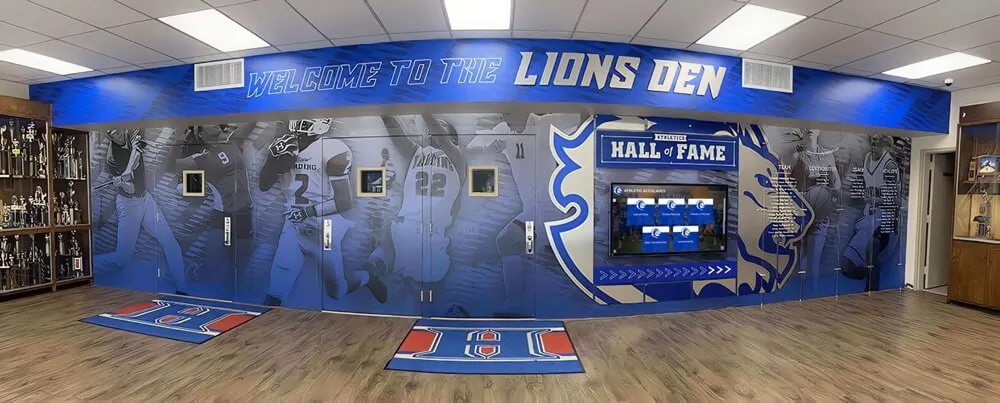
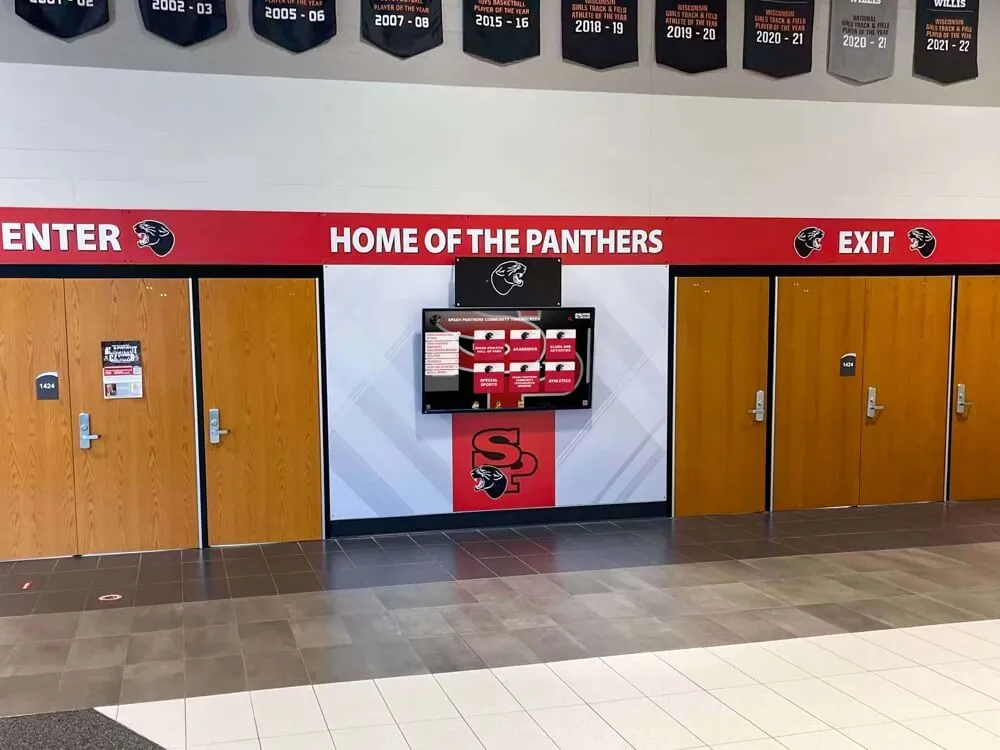
Recognition lobby walls that combine physical shields with digital displays depend on clean, auditable underlying data—soft delete governance ensures that what appears on screen is always recoverable and correction-tracked
FAQ: Athletic Awards Database Soft Delete Policy
What is a soft delete in an athletic awards database?
A soft delete is a database operation that marks a record as deleted—by setting a deleted_at timestamp—without physically removing the row from the database table. The record is excluded from normal application queries and display outputs, but it remains in the database where it can be reviewed, audited, and restored by authorized staff. In an athletic recognition context, soft delete prevents the permanent loss of award history caused by accidental or unauthorized deletions.
Why should schools use soft delete instead of just hard-deleting award records?
Hard deletes permanently remove a record with no recovery path. In a recognition database, this means that a staff member who deletes the wrong athlete profile—or runs a batch operation that exceeds its intended scope—can inadvertently destroy years of accumulated award history with no way to recover it short of a full database restore. Soft delete provides a recovery window during which errors can be corrected without data loss, while still removing the record from public-facing displays immediately.
Does soft delete create privacy or data retention conflicts?
Soft delete can interact with privacy obligations—such as a family’s request to remove a student’s information—if the policy does not account for those obligations. The policy should define a hard delete pathway for records subject to legitimate privacy removal requests, with appropriate authorization requirements. Records that must be permanently removed for legal or privacy reasons should not be held in soft-deleted state. Review your district’s records management policies and applicable state law to align soft delete retention periods with any mandatory deletion requirements.
How long should soft-deleted athletic award records be retained before permanent removal?
Retention periods depend on record type. Hall of fame inductee records should be retained permanently even in soft-deleted state, consistent with the permanent retention standard for active hall of fame records. Award recipient entries and athlete profile records warrant a minimum 7–10 year retention period in soft-deleted state. Working records such as import batch metadata may be permanently removed after 3 years. Align these periods with your program’s formal records retention schedule and verify against local district minimums.
Can a recognition platform vendor implement soft delete on behalf of a school?
Yes, if the vendor’s platform supports soft delete natively. Schools should ask prospective or current vendors whether the platform implements soft delete for award and athlete records, how deletion events are logged, whether soft-deleted records are accessible to administrators for review and restoration, and what the retention period is for soft-deleted data. If the platform does not support soft delete, schools should assess the risk of permanent record loss under the platform’s current deletion model and request a roadmap for implementing soft delete or an alternative recovery mechanism.
Building a Recognition Database That Preserves What It Has Earned
An athletic awards database soft delete policy is, at its core, a commitment to institutional memory. Every award record in a recognition database represents a decision that was made, documented, and presented to a student, a family, and a community. Those decisions deserve a governance framework that treats deletion as a reversible administrative action rather than a permanent data operation.
Programs that implement soft delete before an accidental deletion occurs spend far less time in crisis mode—trying to reconstruct records from spreadsheet backups, banquet programs, and memory—than programs that discover the need for it after the fact. The cost of implementing soft delete is low. The cost of not having it, when a staff member deletes the wrong row in a six-hundred-record hall of fame database, is the entire history that row contained.
Rocket Alumni Solutions’ recognition platform manages award record changes through an edit history architecture that preserves corrections, surfaces them to authorized administrators, and propagates validated updates automatically to every connected display. The platform supports unlimited inductees and award categories, operates on any touchscreen from 32 to 100 inches, and is fully WCAG 2.1 AA compliant.
Request a custom demo of Rocket Alumni Solutions to see how the platform supports recognition programs that require auditable data governance—from a single correction to a decade of imported award records.