



Intent: policy. An athletic awards database synchronous-commit policy defines when the PostgreSQL synchronous_commit parameter must be set to on during award-record imports, when a less-durable setting is acceptable for staging or development loads, and how IT staff and award-data custodians can verify the effective setting before and after a bulk import.
This guide is written for school athletic directors, recognition staff, and the IT administrators who manage the databases behind athletic hall-of-fame kiosks, lobby recognition walls, and awards-management platforms. It explains the synchronous_commit parameter in plain terms, identifies the import scenarios where durability is non-negotiable, provides a numbered verification procedure, and includes a verification table so any staff member can confirm the database is in the correct state before committing award records that will appear on permanent displays.
Set synchronous_commit = on for any athletic award import whose records will be promoted to a public recognition display, permanent hall-of-fame wall, or archived season file. With synchronous_commit = on — PostgreSQL’s default — the server waits for write-ahead log (WAL) records to be flushed to disk before reporting a transaction as committed to the importing application. If the server crashes immediately after that acknowledgment, the records survive and are recoverable. With synchronous_commit = off, the server acknowledges the commit before WAL is flushed, which can improve import throughput but introduces a window — up to wal_writer_delay milliseconds, 200 ms by default — during which a crash silently rolls back rows that the import application believes were saved. For award records that may eventually appear on a physical honor board, a digital kiosk, or a printed ceremony program, that silent-rollback risk is unacceptable.

Award records displayed on hall-of-fame walls and lobby screens must be imported with durable commit guarantees — a crash between acknowledgment and disk flush can silently discard rows that the import application believes were saved
What synchronous_commit Controls in PostgreSQL
synchronous_commit is a PostgreSQL parameter that controls at which point in the write-ahead log pipeline the server sends a success response to the client after COMMIT. The PostgreSQL documentation covers this parameter in the write-ahead logging configuration reference and in the asynchronous commit explainer.
The parameter accepts five values:
| Setting | Durability Guarantee | Relative Import Speed | When to Use for Award Imports |
|---|---|---|---|
on | WAL flushed to local disk before commit reported | Baseline (default) | All imports whose records will reach a public display or permanent archive |
remote_apply | WAL applied on all synchronous standbys before commit reported | Slower than on | High-availability setups where a standby must be readable immediately after import |
remote_write | WAL written (not necessarily flushed) to standby before commit reported | Similar to on | HA setups where OS-level standby durability is sufficient |
local | WAL flushed to local disk only; standby not waited for | Same as on on a single node | Single-server deployments with no standby; functionally equivalent to on |
off | Commit reported before WAL is flushed to any disk | Fastest | Non-critical staging loads, temporary scratch tables, discardable test imports |
The default value in a standard PostgreSQL installation is on. Because the setting can be changed at the server level, the session level, or per-transaction, an import tool or ETL script may be running with a different effective value than the server default without any administrator explicitly intending that change. Verifying the effective value before and after a bulk import is the only way to confirm durability.
Why Athletic Award Imports Need Durable Acknowledgments
Award records occupy a unique position in school data management. Unlike a session log or a click-stream event, an award record — an athlete’s name, achievement, season, and team affiliation — has downstream permanence. It may be printed in a ceremony program this season and engraved on a hall-of-fame plaque five years later. It may be cited in a college recruitment letter, displayed in a school lobby kiosk accessible to thousands of visitors per year, and referenced in a fiftieth-anniversary retrospective.
When synchronous_commit = off and a server crash occurs during a bulk import, PostgreSQL rolls back the unflushed WAL records silently. The import application received success acknowledgments for those rows. The application’s own logs show them as committed. But after crash recovery, they are gone. A subsequent row-count check against the target table reveals a lower total than the source file — and if that check is not run, the gap is invisible until an athlete, a family member, or a selection committee notices that a record is missing from a display that was supposed to include it.
The cost of that gap depends on how far downstream it travels. Caught in the same import window, a rerun closes it cheaply. Caught at the ceremony review stage, a manual correction requires coordinator time. Committed to a fabricated surface — an engraved plaque, a printed program, a painted mural — the correction is costly or impossible.
Schools that display athletic recognition on permanent or long-lifecycle surfaces have a particularly high stake in ensuring every committed import row is genuinely durable. Athletic hall-of-fame selection committees at touchhalloffame.us deliberate over each inductee using records that must be present and accurate in the database at review time — which in turn depends on the import that loaded those records having run with durable commit guarantees.

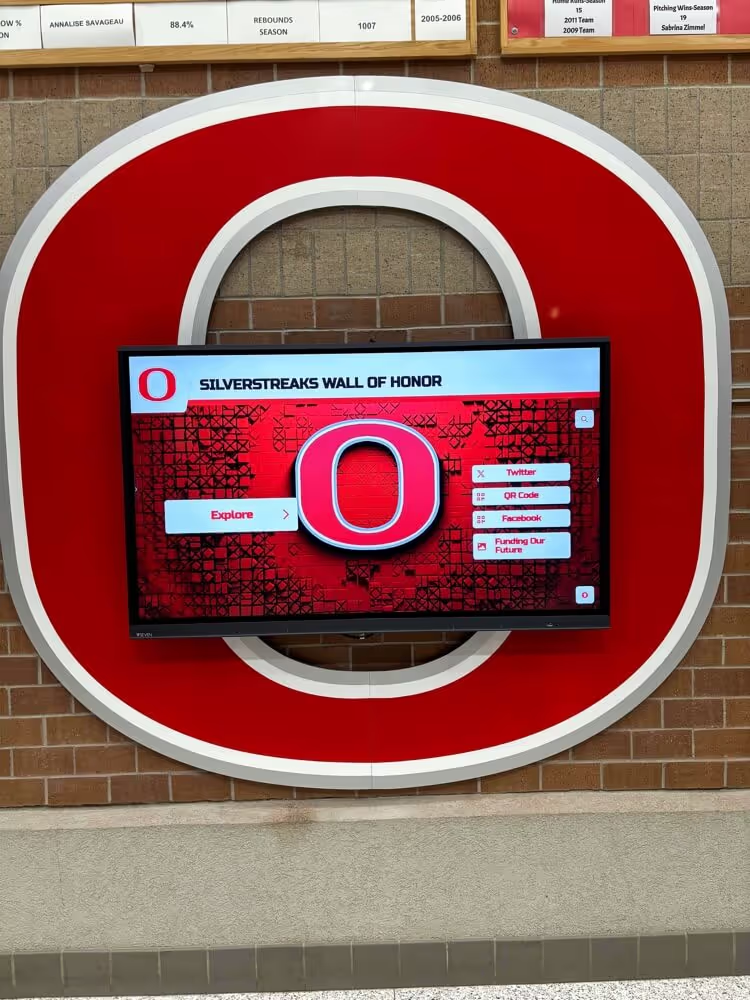
Each athlete portrait and achievement record visible on a recognition kiosk must be backed by a durably written database row — synchronous commit is the PostgreSQL setting that guarantees that write reached disk before the import considered the row saved
Athletic Awards Database Synchronous-Commit Policy: Numbered Procedure
The following seven-step procedure applies before every seasonal bulk import, hall-of-fame nomination batch, historical archive load, or end-of-year recognition data sync. It is designed for a school IT administrator or a technically literate award-data custodian. No PostgreSQL superuser access is required to read the current setting; superuser or pg_settings write access is required to change it at the server level.
Step 1: Classify the import’s durability requirement.
Before touching any database settings, classify the import:
- Production import (records will appear on a live display, ceremony program, or archived season file): requires
synchronous_commit = on. - Staging import (records loaded to a non-public scratch table for validation before promotion to the display layer):
synchronous_commit = offis acceptable if the staging table is discardable and the promotion step runs a separate import withon. - Test or development import (records loaded to a local or development database that does not feed any display): any setting is acceptable.
All production imports require the durable setting regardless of record volume or expected import duration.
Step 2: Check the current effective setting for the database and the import session.
Connect to the database as the import user — not as a superuser — and run:
SHOW synchronous_commit;
This returns the effective synchronous_commit value for the current session. Also check the server-level default and its source:
SELECT name, setting, source, sourcefile, sourceline
FROM pg_settings
WHERE name = 'synchronous_commit';
The source column indicates where the active value originates: default (PostgreSQL built-in), configuration file (set in postgresql.conf or a conf.d include), session (changed within this connection), or transaction (changed within this transaction block). A value of off sourced from session or transaction indicates that the import tool or ETL script is overriding the server default.
Step 3: If the setting is not on for a production import, change it at the session level before beginning.
SET synchronous_commit = on;
This changes the setting for the current session without affecting other sessions or the server configuration file. Verify the change took effect immediately:
SHOW synchronous_commit;
-- Expected: on
If the import is run from an application or ETL script that opens its own connection, add SET synchronous_commit = on; as the first statement in the import script, before any BEGIN or INSERT statements.
Step 4: For import scripts that use per-transaction control, set the parameter within each transaction.
PostgreSQL allows synchronous_commit to be set within a transaction block, overriding the session setting for that transaction only:
BEGIN;
SET LOCAL synchronous_commit = on;
-- INSERT statements here
COMMIT;
SET LOCAL is appropriate when an import script manages multiple transaction types — for example, when it uses off for staging rows and on only for the final promotion step. In this pattern, every production-bound transaction must include an explicit SET LOCAL synchronous_commit = on; before its first data-modifying statement.
Step 5: Do not change synchronous_commit in postgresql.conf or via ALTER SYSTEM without DBA review.
Changing the server-level default affects every connection on the database instance — including background processes, reporting queries, and other applications sharing the PostgreSQL installation. If the server default is already on, do not change it. If the server default has been changed to off for performance reasons by a previous administrator, restore it only after a DBA confirms no other workloads depend on the current setting. Session-level and transaction-level overrides (SET and SET LOCAL) are the appropriate tools for import-scoped changes.
Step 6: After the import completes, verify row counts against the source.
A successful synchronous-commit import still requires a post-import check that the committed row count matches the source record total. Run a count against the target table filtered to the current import batch:
SELECT COUNT(*) AS committed_rows
FROM awards
WHERE import_batch_id = :batch_id;
Compare this against the expected total from the import source file. A mismatch — committed count lower than source total — indicates that some transactions were rolled back, either due to constraint violations, explicit rollbacks by the import script, or an undetected crash during the import window. A matching count confirms that every source record was committed to disk durably. Post-import row-count verification is documented in the athletic awards database pg_stat_activity monitoring guide as the final step after any import intervention.
Step 7: Document the verified setting in the import log.
Record the effective synchronous_commit value, the import start and end times, the source record count, and the post-import committed row count in the import log. This log becomes the audit trail if a display discrepancy is later investigated — it confirms that the import ran with the correct durability setting and completed with a matching row count.

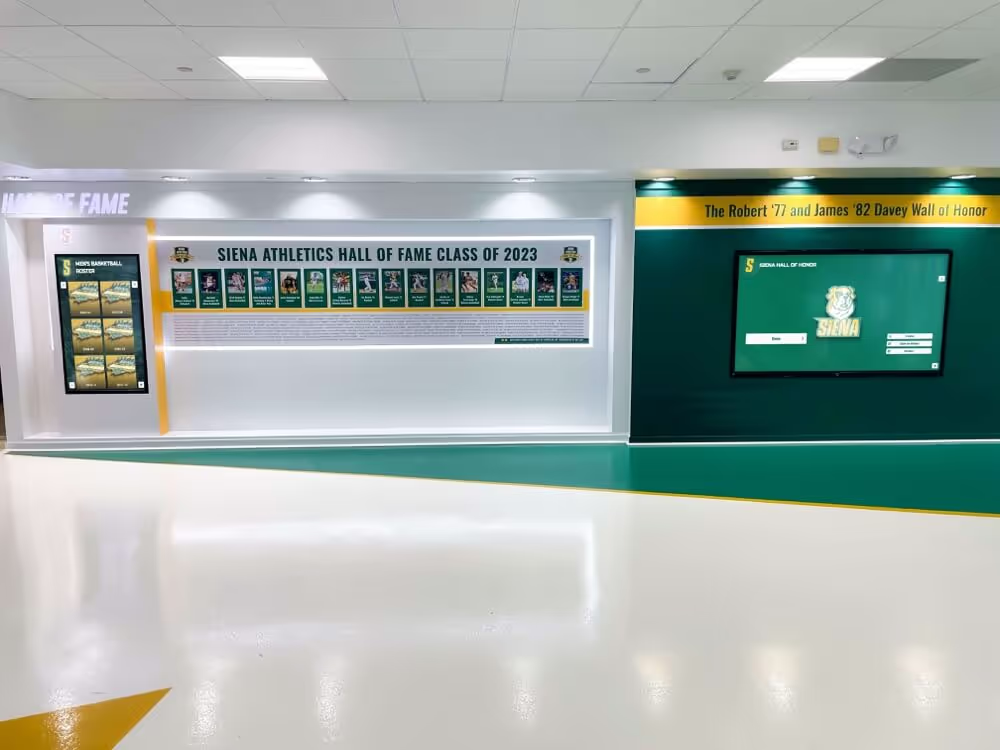
Permanent recognition walls like this make durability non-negotiable — award records that disappear from the database after a soft-commit crash cannot be recovered from WAL and must be re-imported from the original source
Verification Table: Confirming synchronous_commit Before and After Import
Use this table to document verification at each stage of a production import cycle. Retain completed copies in the import log alongside the batch identifier, operator name, and timestamp.
| Checkpoint | Query or Action | Expected Result | Pass / Fail |
|---|---|---|---|
| Pre-import: check effective session setting | SHOW synchronous_commit; | on | |
| Pre-import: check setting source | SELECT setting, source FROM pg_settings WHERE name = 'synchronous_commit'; | setting = on, source = default or configuration file | |
| Pre-import: set session override if needed | SET synchronous_commit = on; SHOW synchronous_commit; | on | |
| During import: verify no session-level reset | Re-run SHOW synchronous_commit; from within the import session | on | |
| Post-import: source-to-target row count | SELECT COUNT(*) FROM awards WHERE import_batch_id = :batch_id; | Matches source file record total | |
| Post-import: no idle-in-transaction sessions | See pg_stat_activity monitoring guide | Zero sessions in idle in transaction state |
A complete pass on all six checkpoints confirms that the import ran with durable commit guarantees and that the committed row count matches the source. Any failing checkpoint requires investigation before the imported records are promoted to a live display.
When Non-Default Settings Are Acceptable
synchronous_commit = off is a legitimate choice for specific non-production use cases. The performance benefit is real: because the server does not wait for the WAL writer flush cycle, per-transaction latency can drop significantly on high-volume loads. For scenarios where the imported records are explicitly temporary or where a complete rerun from source is trivial, the durability trade-off is reasonable.
Acceptable scenarios for synchronous_commit = off in an athletic awards context:
- Staging table loads for validation: Records loaded to a private
awards_stagingtable for duplicate detection, field-level validation, or coach-review workflows before promotion to the live display table. If the staging table is cleared and reloaded at each cycle, a crash that rolls back an unflushed staging load has no permanent consequence — the next scheduled run reloads from the same source. - Development and QA environments: Databases that do not feed any production display and are populated from test fixtures or anonymized exports. Higher import throughput during development iteration is appropriate; durability guarantees are not required.
- Recomputable analytics tables: Tables that aggregate historical counts or derived statistics from the primary award tables, where the underlying source records are themselves durably stored and the aggregates can be rerun on demand.
The athletic awards database write-amplification monitoring guide covers the WAL write volume associated with different insert patterns — relevant context when deciding whether the throughput benefit of off justifies a more complex staging-then-promote workflow.
Skip the Import Pipeline Complexity Entirely
Rocket Alumni Solutions provides a cloud-based recognition platform with guided data entry and required-field validation — so award records are entered and saved through a structured interface, without bulk import pipelines, PostgreSQL configuration management, or crash-recovery scenarios to document.
See the Platform in ActionHow synchronous_commit Connects to Display Reliability
The link between a PostgreSQL configuration parameter and a hallway recognition display runs through the import pipeline: every record that appears on a kiosk screen, a lobby touchscreen, or a publicly accessible award portal was written to a database table at some point. If that write was acknowledged before the corresponding WAL record reached disk — and the server crashed before the flush completed — the display receives a database state that is missing rows the import application believes it saved.
For high-traffic recognition environments — a hall-of-fame dedication event, a college commitment day display, an end-of-year awards ceremony — a missing record on screen is visible to exactly the audience for whom accuracy matters most. The college commitment day digital board guide at touchscreenwebsite.com describes how schools prepare recognition displays for high-visibility events, and the data behind those displays must be durably committed before the event begins. Schools using digital commitment boards for multi-sport recognition face the same requirement: college commitment day digital displays at touchwall.tv serve live audiences where incomplete records are immediately noticeable.
Schools managing recognition programs that span multiple source systems may run imports from different tools in sequence. Each import session introduces its own synchronous_commit state. A session opened by one ETL tool may inherit a server default of on; a session opened by a different script may have off hardcoded. Without session-level verification at each import, the effective durability setting across a multi-source load is unknown. The verification procedure in this guide closes that gap.
Athletic hall-of-fame recognition in particular — where a committee has already deliberated over each inductee, where photographs and historical records have been assembled, and where the induction is a ceremonial event with permanent significance — cannot absorb a missing record caused by an avoidable configuration oversight. The athletic hall-of-fame nomination criteria guide at digitalwalloffame.com covers what committees look for in inductee records — a standard that depends on those records being present and accurate in the database when the committee reviews them, which depends on the import that loaded those records having run with synchronous_commit = on.

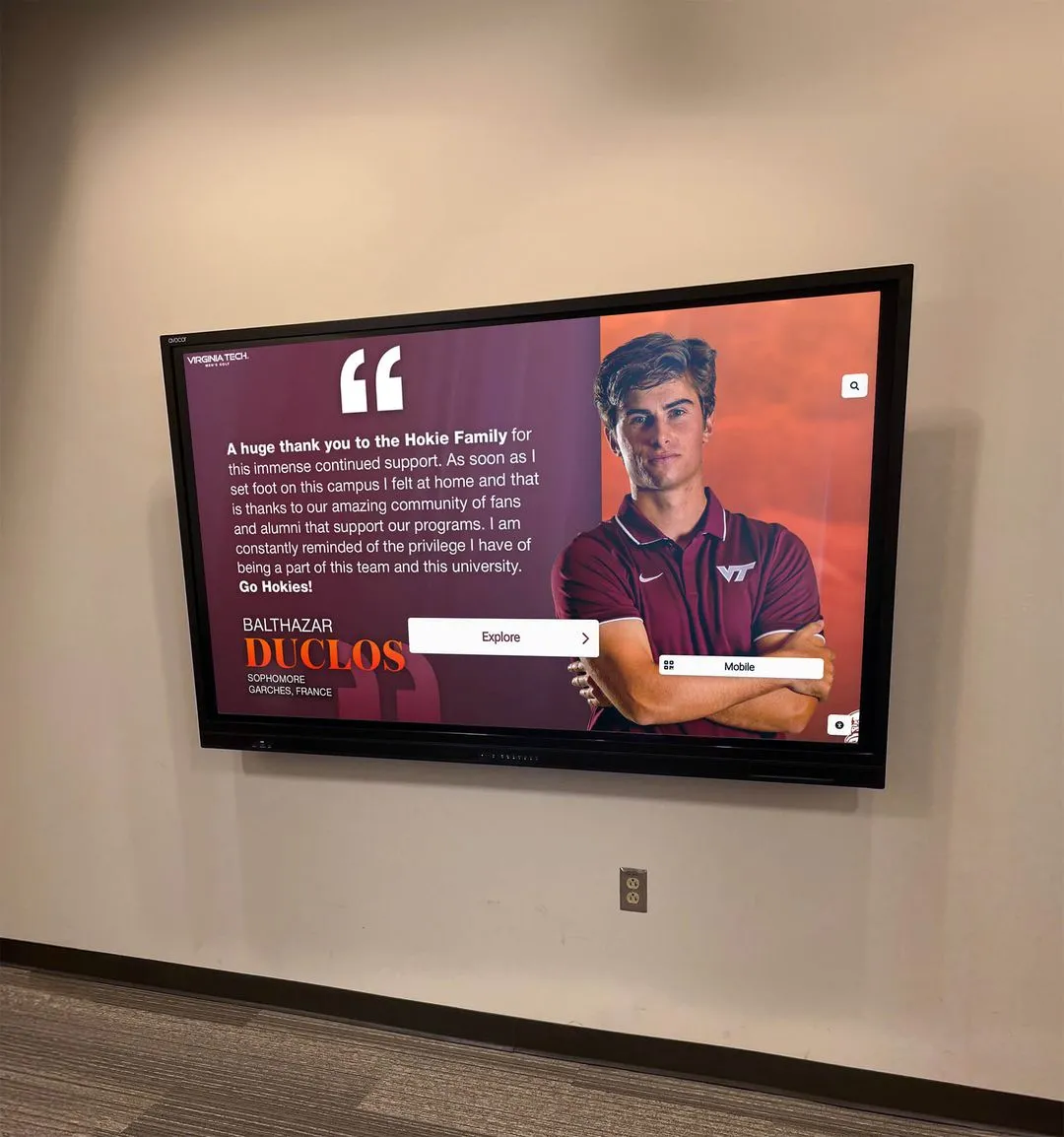
Every athlete profile visible on a recognition touchscreen traces back to a database write — synchronous commit determines whether that write was guaranteed to reach disk before the import application considered the record saved
synchronous_commit and Related Database Policies
synchronous_commit sits at the intersection of several database reliability policies that award-data custodians should understand together rather than in isolation.
Lock timeout: The athletic awards database lock timeout policy defines maximum wait times for lock acquisition during imports. A session set to synchronous_commit = on that also has no lock_timeout configured will wait indefinitely for a table lock, extending the import window and increasing exposure to a crash scenario during a long lock hold.
Statement timeout: The athletic awards database statement timeout policy caps individual query execution times. Long-running batch inserts that exceed the statement timeout are cancelled and the current transaction is rolled back. With synchronous_commit = on, this rollback is clean — the database is consistent and the import can resume from the last checkpoint.
Transaction savepoints: The athletic awards database transaction savepoint policy covers how to checkpoint progress within a large import transaction. Savepoints provide the most meaningful recovery guarantees when synchronous_commit = on — because each checkpoint is durably written to disk, a crash after a savepoint leaves the database at that savepoint rather than at a potentially earlier unflushed state.
Deferrable constraints: The athletic awards database deferrable constraint policy defines when foreign key and uniqueness constraints can be deferred to the end of a transaction. Deferring constraints within a transaction that uses synchronous_commit = on is safe: the constraint check runs at commit time, and the WAL flush that guarantees durability happens after the check passes.

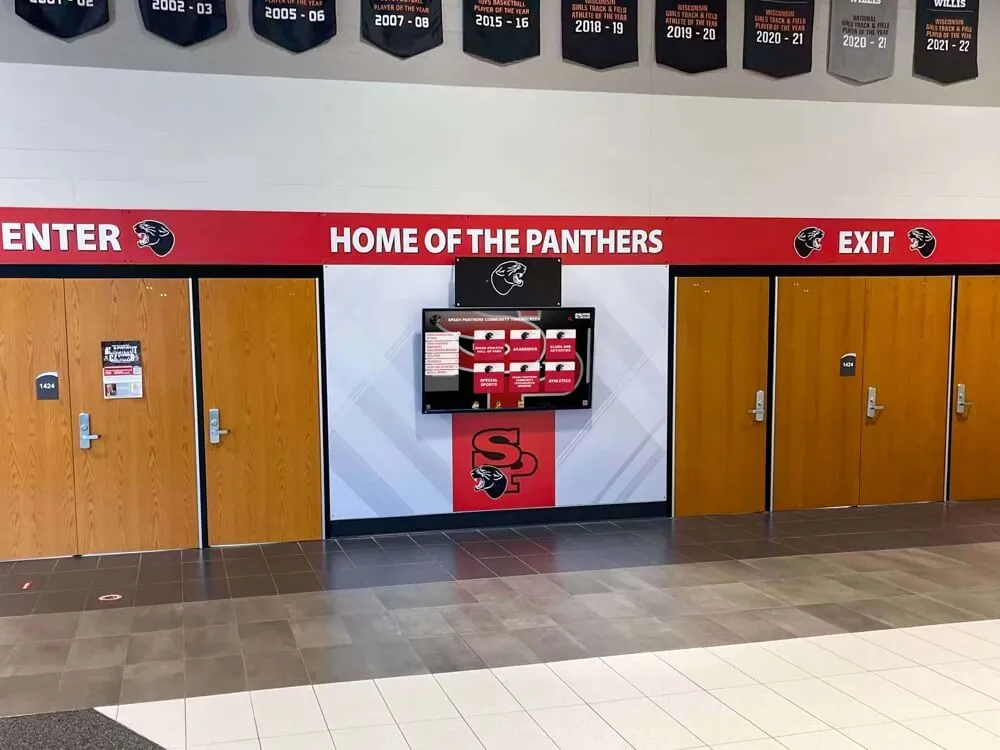
Students, alumni, and families browsing recognition kiosks trust that displayed records are accurate and complete — synchronous commit is the database-layer guarantee that backs that trust at the moment of import
FAQ: Athletic Awards Database Synchronous-Commit Policy
What does synchronous_commit control in a PostgreSQL athletic awards database?
synchronous_commit controls the point in the write-ahead log (WAL) pipeline at which PostgreSQL reports a transaction as committed to the client. With synchronous_commit = on (the default), the server waits for WAL records to be flushed to disk before acknowledging the commit. With synchronous_commit = off, the server acknowledges the commit before the flush completes, introducing a window — up to wal_writer_delay milliseconds — during which a crash can silently roll back rows that the import application believes were saved.
When must synchronous_commit be set to on for athletic award imports?
synchronous_commit must be on for any import whose records will reach a public recognition display, permanent hall-of-fame archive, ceremony program, or any output where a missing record is visible to athletes, families, or administrators. The setting may be off only for staging tables, development databases, and recomputable analytics aggregates.
How do I verify synchronous_commit is on before running an athletic award import?
Run SHOW synchronous_commit; from within the import session. This returns the effective value for that connection. Also run SELECT setting, source FROM pg_settings WHERE name = 'synchronous_commit'; to see where the value comes from. If the effective value is not on, run SET synchronous_commit = on; before beginning the import and verify with SHOW synchronous_commit; that the change took effect.
Can synchronous_commit be set per-transaction in an award import script?
Yes. SET LOCAL synchronous_commit = on; within a transaction block overrides the session setting for that transaction only. This allows an import script to use off for staging transactions and on for production-bound promotion transactions without requiring server-level configuration changes or separate connections.
Does synchronous_commit affect import performance?
Yes. synchronous_commit = off reduces per-transaction latency by removing the WAL flush wait, which can improve throughput on high-volume bulk inserts. For production award imports where records will appear on recognition displays, this benefit does not justify the durability risk. For acceptable scenarios — staging tables, development databases — the throughput gain can be used deliberately.
What happens if synchronous_commit was off during an import and records are now missing?
If a crash occurred during an import that ran with synchronous_commit = off, some rows acknowledged as committed may have been rolled back during crash recovery. Those records are not in the database and cannot be recovered from WAL — they must be re-imported from the original source. Rerun the import with synchronous_commit = on, filtering to only the rows missing from the target table by comparing the committed row count against the source file total.
Keeping Every Award Record Durably Written
An athletic awards database synchronous-commit policy is not complex to implement — the default PostgreSQL setting is already correct for production imports. The policy work is verification: confirming that the default has not been overridden at the session or transaction level by an import tool or ETL script, and building a documented check into every import workflow so that durability is confirmed rather than assumed.
Athletic recognition programs that span decades of school history — hall-of-fame archives, all-time records boards, senior recognition walls — carry a credibility burden that ordinary operational data does not. An athlete whose record was silently rolled back by an asynchronous commit and a server crash has a valid claim that the recognition program failed to preserve their achievement. The verification procedure in this guide — check the setting, set it explicitly if needed, confirm post-import row counts, document the result — takes less than five minutes per import cycle and eliminates that risk.
For programs that celebrate achievements at high-visibility moments — academic signing day and college commitment events at halloffame-online.com depend on complete records being available at the ceremony — every import that feeds those displays should close with a verified row count and a confirmed durable setting. The five minutes spent on verification before each import are the five minutes that ensure no athlete’s record is missing from the display when the audience that cares most is watching.
Manage Award Records Without Import Pipeline Complexity
Rocket Alumni Solutions gives 600+ schools a cloud-based recognition platform with guided data entry, required-field validation, and remote CMS access — so award records are entered, validated, and saved through a structured interface, with no bulk import pipelines, PostgreSQL configuration to audit, or crash-recovery scenarios to document.
Request a Recognition Platform Demo