



Intent: define. Athletic awards database write amplification monitoring is the practice of measuring and controlling how many physical storage writes a recognition database generates for every one logical write requested by an application — tracking that ratio over time to prevent storage wear, bloated backups, and degraded performance that can quietly corrupt decades of championship records, honor-roll archives, and athletic history.
Every time a coach updates a player’s career statistics, an administrator adds a new award category, or an end-of-season bulk import runs, the database engine does far more writing behind the scenes than the application requested. Left unchecked, that hidden write traffic accelerates solid-state drive (SSD) wear, inflates backup windows, and — in the worst case — causes data loss in the very records that document a school’s athletic legacy. This guide explains what write amplification is, why it matters specifically for athletic awards databases, and provides a practical monitoring and policy framework that IT staff, athletic directors, and facilities teams can implement without specialized database expertise.

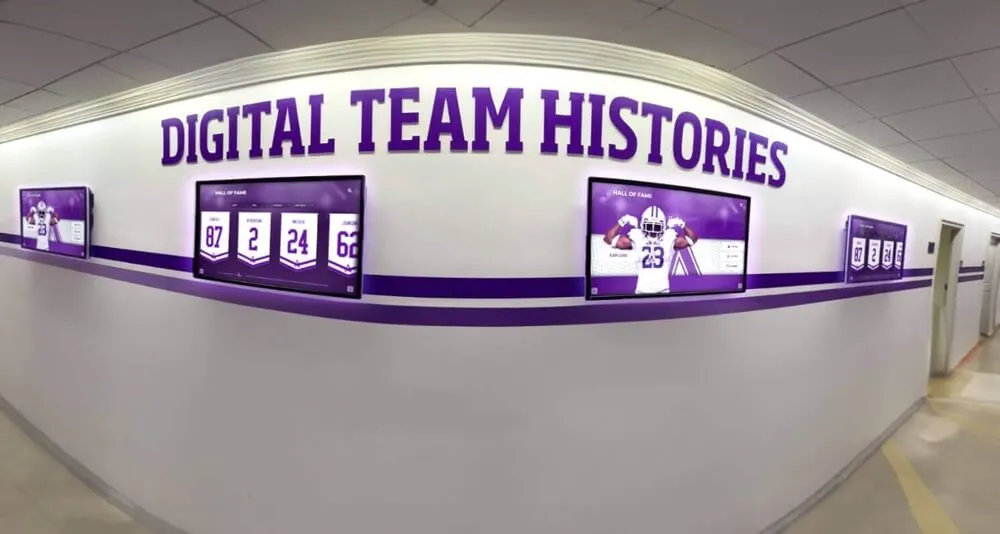
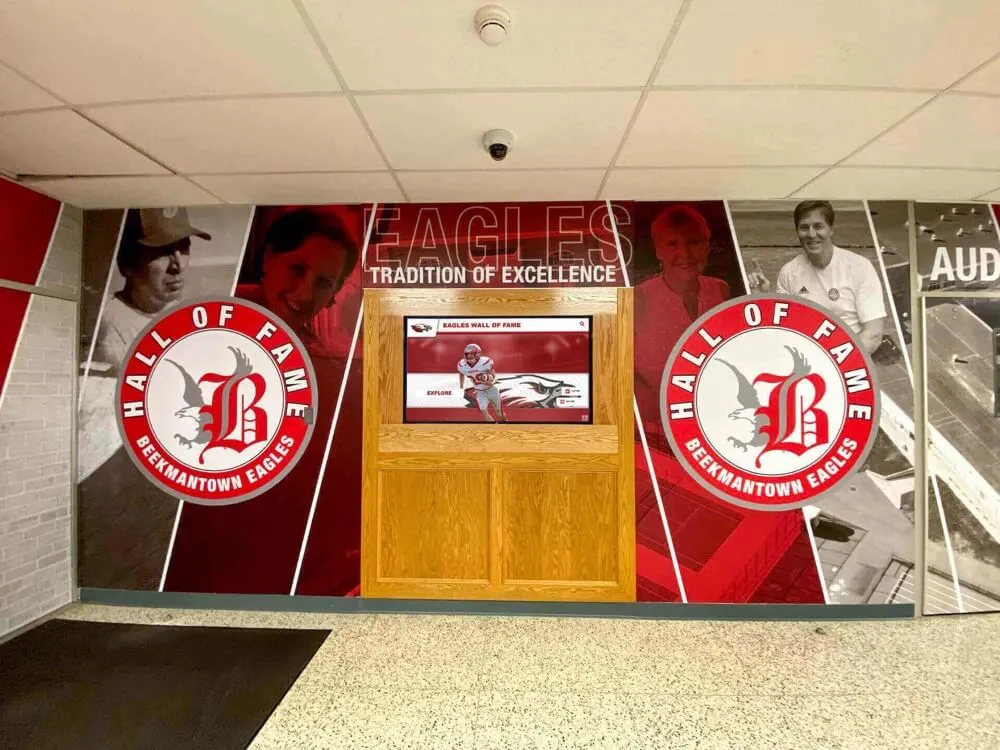
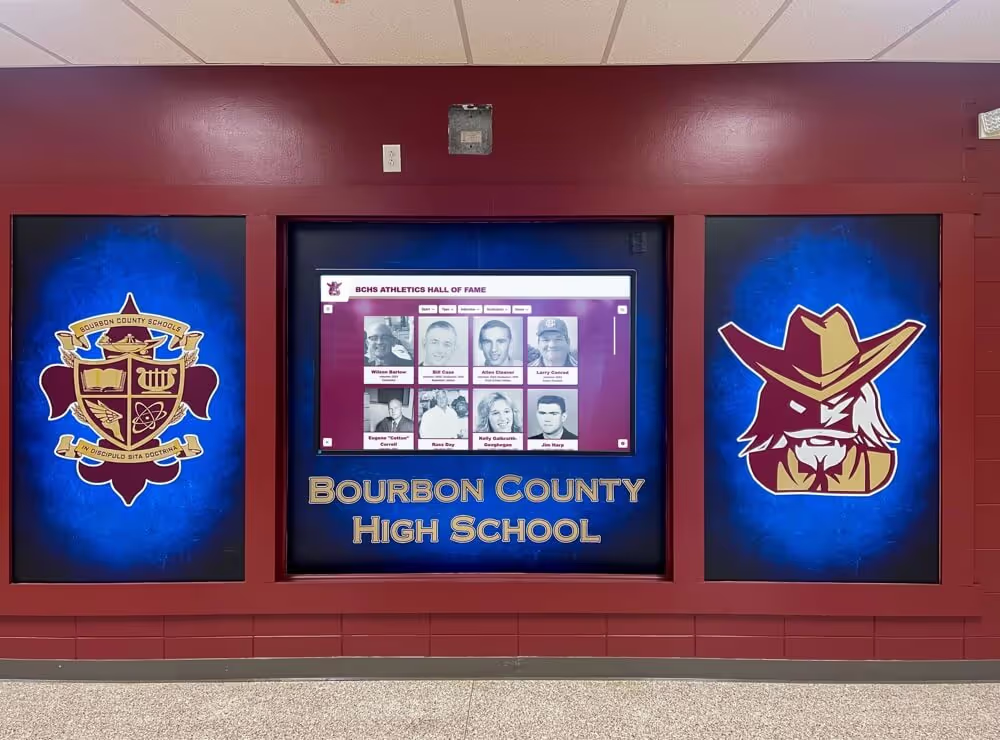
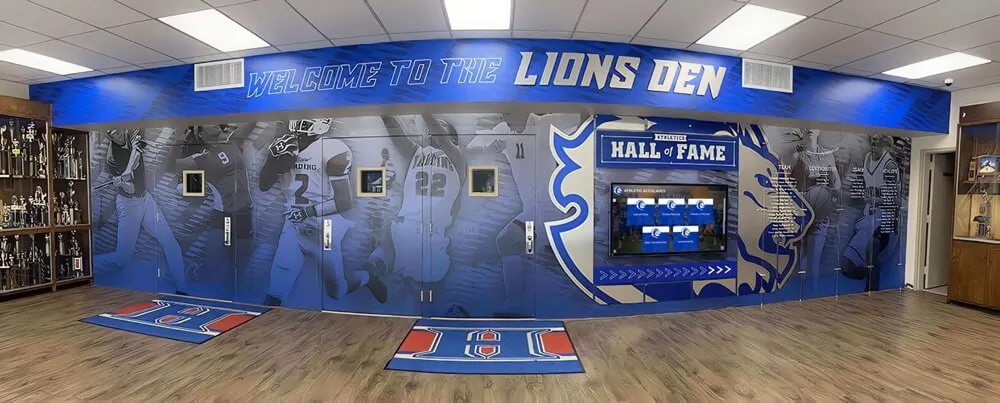
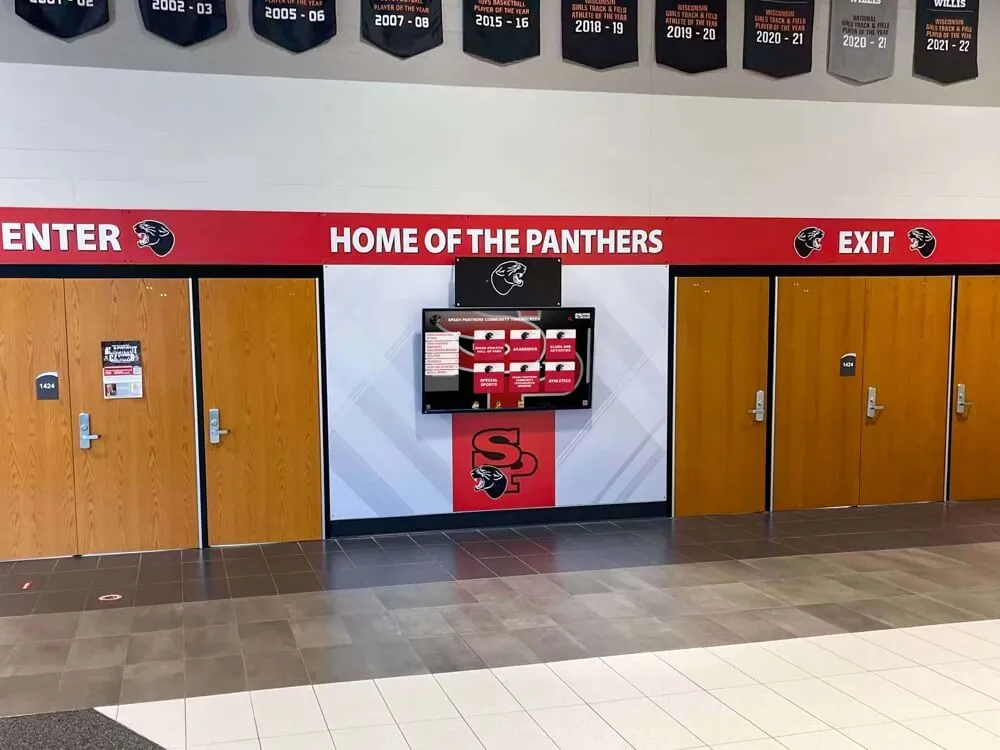
Modern digital recognition displays depend on healthy, well-monitored databases to keep athletic records accurate and accessible for decades.
What Write Amplification Means for Athletic Awards Databases
Write amplification (WA) is the ratio of actual physical bytes written to storage versus logical bytes written by the application. A WA ratio of 1.0 means every logical write translates to exactly one physical write — the theoretical ideal. Real-world database systems routinely reach WA ratios of 3–10×, and poorly configured systems serving write-heavy workloads can exceed 20×.
For a general-purpose web application, high write amplification is an annoyance. For an athletic awards database storing irreplaceable championship records, athlete career statistics, and decades of school history, it is a direct threat to data integrity and long-term storage health.
Why Awards Databases Are Particularly Vulnerable
Athletic recognition databases have a write pattern that differs from most enterprise databases:
- Bursty seasonal writes: Award entries, season statistics, and honor-roll updates arrive in concentrated bursts at the end of each season or semester rather than being spread evenly across the year.
- Small-record updates: Individual athlete profile updates — a corrected graduation year, a newly discovered championship photo caption, a legacy record adjustment — each trigger index updates, journal entries, and page rewrites that multiply the original write many times over.
- Long data retention requirements: Schools keep athletic records for 50–100 years. That longevity means storage devices must survive far more write cycles than a typical business database that archives or purges records regularly.
- Limited IT oversight: Many school districts assign database maintenance as a secondary responsibility to staff whose primary role is something else entirely, meaning write amplification can go unmonitored for years before consequences surface.
According to research published by the USENIX Association on flash storage behavior, write amplification on SSDs can reduce drive lifespan by a factor of 3–5× under workloads with frequent small random writes — exactly the pattern that award-record updates create. (USENIX FAST Conference, flash storage wear studies)
The Hidden Cost: How Unmonitored Writes Damage Athletic Archives
When write amplification goes untracked in an awards database, the consequences compound over time in ways that are difficult to reverse.
Storage Device Premature Failure
SSDs have a finite number of write cycles per cell, measured as Total Bytes Written (TBW). A drive rated for 300 TBW that experiences 10× write amplification effectively exhausts its rated lifespan after only 30 TB of logical application writes. For a small school district running a shared database server, that threshold can be reached in three to five years instead of the expected decade — often without any advance warning.
Backup Window Bloat
Database backup systems copy changed data blocks, not logical records. When write amplification produces large numbers of dirty pages, nightly backup jobs must copy far more data than the actual record changes would suggest. A 200 MB nightly logical delta can translate to a 1–2 GB backup job when WA is high, extending backup windows into early-morning hours when staff begin accessing the system. Extended backup windows increase the risk of backup jobs still running when the school day starts — and most backup systems pause or throttle when they detect active connections, leaving the backup incomplete.
Replication and Sync Delays
Schools using cloud-synchronized or replicated award databases — where the primary database feeds a read replica that powers a hallway touchscreen kiosk or a digital hall of fame display — will see replication lag increase as write volume grows. When replication falls behind, students and families browsing the interactive display see stale records: last year’s records still showing on the current season’s leaderboard, or a newly inducted hall of fame athlete not yet appearing on the screen.
Index Fragmentation Cascades
Every award record update triggers writes to one or more database indexes. Fragmented indexes increase the size of subsequent write operations, which further increases write amplification in a feedback loop. Without routine monitoring, index fragmentation in an awards database can reach levels where a simple query for a single athlete’s career statistics requires reading dozens of scattered disk pages rather than a contiguous block.
Athletic Awards Database Write Amplification Monitoring Policy: Step-by-Step
The following eight-step framework gives IT administrators, athletic directors, and recognition program managers a concrete, actionable path to establishing write amplification monitoring for an athletic awards database.
Step 1 — Establish a Write Amplification Baseline
Before you can set meaningful thresholds, you need to know your current ratio. For common open-source database systems:
PostgreSQL: Query pg_stat_bgwriter to capture buffers_checkpoint, buffers_clean, and buffers_backend over a 24-hour window. Divide total physical page writes by the number of logical tuple inserts and updates from pg_stat_user_tables for the awards schema.
MySQL / MariaDB: Use SHOW GLOBAL STATUS LIKE 'Innodb_data_written' and compare against Innodb_rows_inserted + Innodb_rows_updated over the same window. The InnoDB doublewrite buffer adds a baseline 2× amplification that is expected and acceptable.
SQLite (common for smaller school setups): Enable WAL mode (PRAGMA journal_mode=WAL) and measure .sqlite-wal file growth relative to actual record changes during a known write batch.
Run baseline measurement during three periods: a quiet off-season week, an active season-end data-entry week, and a bulk import week. This captures the full range of your write patterns.
Step 2 — Define Acceptable WA Thresholds by Workload Type
Not all write amplification is equally harmful. Use the following reference table to establish thresholds appropriate for an athletic awards database:
| Workload Type | Acceptable WA Ratio | Warning Threshold | Action Required |
|---|---|---|---|
| Routine daily updates (< 500 records/day) | ≤ 3× | 4–6× | Review index configuration |
| End-of-season bulk imports | ≤ 8× | 9–12× | Batch imports off-peak, disable triggers |
| Historical archive migration | ≤ 10× | 11–15× | Stage in chunks; vacuum after each chunk |
| Nightly backup + checkpoint | ≤ 5× | 6–8× | Adjust checkpoint frequency |
| Replication sync to display kiosk | ≤ 4× | 5–7× | Increase replication slot buffer |
These thresholds are conservative by design. Athletic record databases carry data that cannot be reconstructed from external sources — when a 1985 state championship record exists only in the school’s database, there is no recovery path if the storage device fails prematurely.
Step 3 — Instrument Monitoring at the Database and OS Layers
Monitoring write amplification requires metrics from two layers simultaneously:
Database layer: Enable slow-query logging (queries taking more than 100 ms), track temp_files and temp_bytes (PostgreSQL) or Created_tmp_disk_tables (MySQL), and log checkpoint frequency. These surface write amplification caused by query execution plans rather than hardware.
Operating system / storage layer: Use iostat -x 1 (Linux) to monitor w/s (writes per second) and wkB/s (kilobytes written per second) at the block device level. Compare these against your database’s own write counter to calculate the effective WA ratio in real time.
For schools with managed cloud hosting, most providers expose equivalent metrics through their dashboard: AWS RDS publishes WriteIOPS and WriteThroughput; Google Cloud SQL surfaces disk/write_ops_count.
Step 4 — Implement Scheduled Maintenance Windows Aligned with the Athletic Calendar
The single most effective way to reduce write amplification in an athletic awards database is to schedule write-intensive operations — bulk imports, index rebuilds, vacuums, and backup checkpoints — during predictable low-traffic windows.
Map your maintenance schedule to the school athletic calendar:
- Mid-summer (July): Full index rebuild and VACUUM FULL. No active seasons, minimal staff access.
- Winter break (late December): Incremental index maintenance, backup integrity verification.
- Spring break: Review WA metrics from fall and winter seasons; adjust checkpoint and autovacuum settings.
Avoid scheduling intensive maintenance during the two weeks following each major season’s end — that is when coaches and administrators are actively entering year-end awards data, and competing write loads during maintenance can spike WA ratios to harmful levels.
Step 5 — Configure Autovacuum and Checkpoint Parameters for Awards Workloads
Default database configurations are tuned for general-purpose workloads. Athletic awards databases benefit from adjusted parameters:
PostgreSQL recommended adjustments:
autovacuum_vacuum_scale_factor = 0.05(vacuum sooner, before dead tuples accumulate)checkpoint_completion_target = 0.9(spread checkpoint writes over more time, reducing peak WA)max_wal_size = 512MB(reduce checkpoint frequency during bulk imports)wal_compression = on(reduces WAL write volume, directly lowering WA)
MySQL / InnoDB recommended adjustments:
innodb_io_capacity = 400(appropriate for school-grade SSD hardware)innodb_flush_neighbors = 0(improves behavior on SSDs vs. spinning disks)innodb_log_file_size = 256M(larger log files reduce flush frequency)
Document every configuration change with the date, reason, and the WA baseline reading before and after. This audit trail is essential if storage hardware needs to be replaced under warranty — drive manufacturers sometimes require evidence of normal write workloads.
Step 6 — Set Up Alerting and Escalation Paths
Monitoring without alerting is observation without action. Configure alerts at two levels:
Warning alerts (notify the IT administrator by email): WA ratio exceeds the warning threshold in Step 2 for two consecutive 6-hour measurement windows.
Critical alerts (notify IT administrator + athletic director + principal): WA ratio exceeds the action-required threshold, or storage drive TBW utilization exceeds 70% of rated capacity.
For small school IT teams without dedicated monitoring infrastructure, free tools such as Prometheus with the node_exporter and postgres_exporter plugins provide a complete WA monitoring stack. For Microsoft SQL Server environments common in larger districts, SQL Server Agent jobs can write WA metrics to a simple monitoring table that generates email alerts via Database Mail.
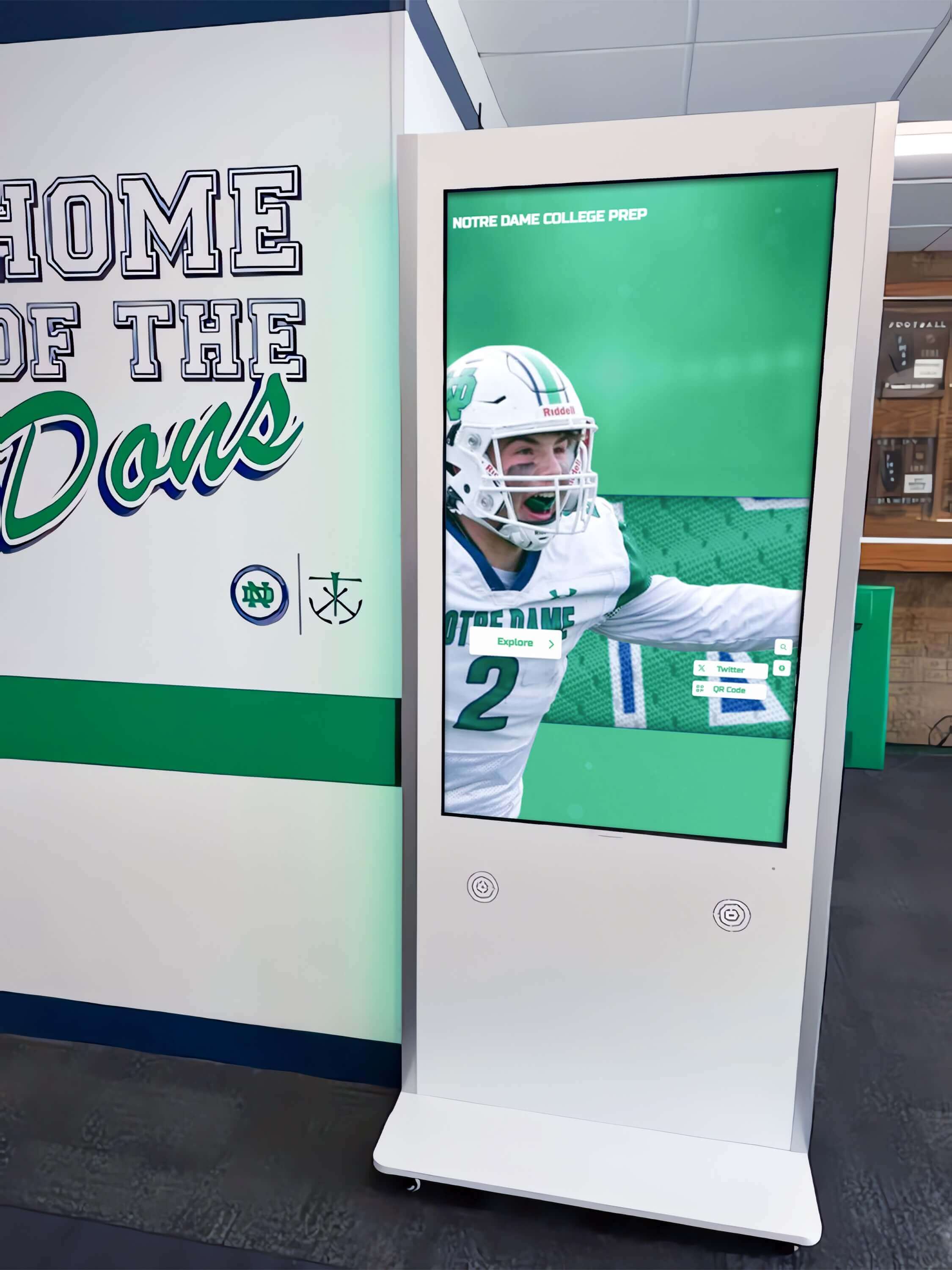
Hallway recognition kiosks depend on low-latency database reads — high write amplification degrades both write performance and the read queries that power public displays.
Step 7 — Establish a Storage Replacement and Backup Verification Policy
Write amplification monitoring is meaningless without a clear policy for acting on what the metrics reveal. Define explicit replacement triggers:
- Replace SSD storage when TBW utilization reaches 80% of manufacturer rating, regardless of drive age.
- Verify backup integrity quarterly: restore a test copy of the awards database to an isolated environment and confirm record counts, referential integrity, and the ability to query historical records across all active award categories.
- Retain at minimum three backup generations (daily, weekly, monthly) with at least one copy stored off-site or in cloud object storage.
The National Institute of Standards and Technology (NIST) Special Publication 800-34 on IT contingency planning recommends that data classified as “irreplaceable organizational records” — which athletic history archives clearly qualify as — be subject to at minimum annual recovery testing. (NIST SP 800-34 Rev. 1)
Step 8 — Document and Publish the Policy Internally
A write amplification monitoring policy only protects your data if the people responsible for the awards database know it exists and understand their role in it. Create a one-page policy document that includes:
- Who is responsible for reviewing WA metrics and on what schedule
- The thresholds from Step 2 and the escalation path from Step 6
- The maintenance window schedule from Step 4
- The storage replacement triggers from Step 7
- Contact information for the database vendor or managed hosting provider
Distribute the policy to IT staff, the athletic director, and the principal. Review it annually at the start of each school year before the fall sports season begins.
How Write Amplification Affects Digital Recognition Displays
The connection between database health and the student recognition experience is direct and visible. Schools that display athletic records, hall of fame inductees, and championship histories on interactive digital displays rely on the database responding quickly to both read and write operations.
When write amplification is high, the I/O subsystem that serves write operations is also the subsystem that serves the read queries powering a public-facing touchscreen kiosk. A display that normally refreshes athlete profiles in under 200 milliseconds can slow to 2–3 seconds per profile load during a period of high write activity — a visible degradation that affects every visitor browsing the display during end-of-season data entry.
Well-configured recognition platforms address this by separating the read path from the write path: a primary database handles writes while a read replica — synchronized at a controlled rate — serves all public-facing display queries. That architecture is only effective, however, if the replication channel is not itself overwhelmed by excessive write amplification on the primary. Monitoring WA on both the primary and replica instances is therefore part of a complete policy.
Platforms like Rocket Alumni Solutions manage this architectural complexity on behalf of schools, handling database configuration, replication, backup verification, and storage health monitoring as part of the hosted recognition platform — removing the burden from school IT teams who are already managing dozens of other systems.
Beyond athletics, the same database health principles apply to any digital recognition program: golf program recognition displays, museum-style interactive exhibits, and accessibility-audited hall of fame interfaces all depend on databases that write efficiently and read quickly.
Write Amplification Monitoring at a Glance
| Monitoring Area | Tool / Metric | Frequency | Owner |
|---|---|---|---|
| Database WA ratio | pg_stat_bgwriter / InnoDB status | Daily (automated) | IT Administrator |
| Storage TBW utilization | Manufacturer dashboard / smartctl | Weekly | IT Administrator |
| Backup window duration | Backup job logs | After each backup | IT Administrator |
| Replication lag to display | Replica lag metric | Real-time alert | IT Administrator |
| Index fragmentation level | VACUUM ANALYZE output | Monthly | IT Administrator |
| End-of-season WA spike | Manual review post-season | Seasonal | IT + Athletic Director |
Connecting Database Health to Recognition Program Longevity
A school’s athletic awards database is not a transient IT asset — it is the institutional memory of decades of student achievement. The 1987 state championship team, the all-time career scoring leader, the first female athlete inducted into the hall of fame: these records exist in the database and, for many schools, nowhere else.
Write amplification monitoring is the operational discipline that ensures those records survive the hardware they live on. A database that writes efficiently stays on healthy storage longer, backs up faster and more completely, replicates to public displays without lag, and gives IT staff time to replace hardware proactively rather than scrambling after an unexpected failure.
Schools investing in social media-connected recognition graphics and color-accurate digital recognition displays should apply the same attention to detail to the database layer that makes all of those displays possible.
For recognition programs covering multiple achievement categories — athletics, academics, arts, STEM, community service — database write amplification compounds across every category’s records simultaneously. The monitoring policy in this guide applies equally to a dedicated athletics database and to a unified recognition platform that houses all student achievement types under one schema.

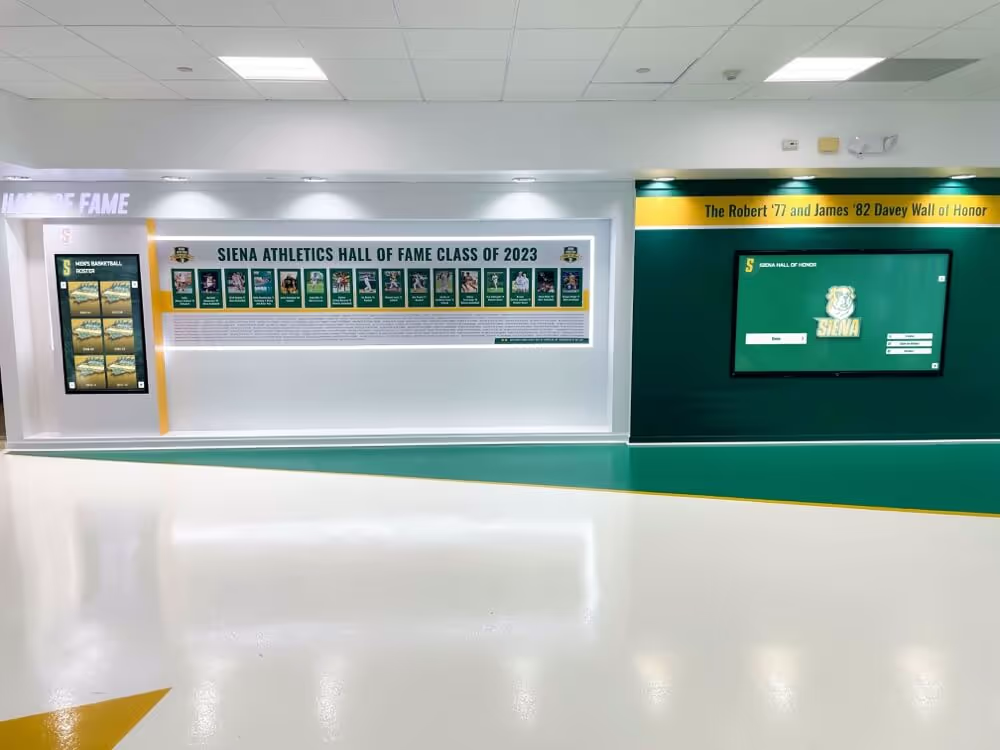
Every athlete profile browsed on a digital hall of fame touchscreen is a database read — write amplification monitoring protects both the writes that add records and the reads that display them.
Frequently Asked Questions
What is a normal write amplification ratio for a school athletic awards database?
A write amplification ratio of 2–4× is normal for a well-configured relational database serving typical athletic awards workloads — routine updates, individual award entries, and moderate-sized queries. Ratios above 6× during normal operations indicate a configuration issue worth investigating, such as excessive index fragmentation, an undersized WAL buffer, or autovacuum settings that are too aggressive. During known high-write events like end-of-season bulk imports, ratios of 8–12× are acceptable provided they return to baseline within 24 hours.
How does write amplification affect the longevity of an athletic records database?
High write amplification directly shortens the useful life of the SSD storage that hosts the database. SSDs have a rated Total Bytes Written (TBW) capacity; write amplification multiplies the effective bytes written against that budget. A drive experiencing 8× write amplification exhausts its rated TBW eight times faster than an application writing the same logical data volume at 1× amplification. For athletic records databases expected to preserve data for 50+ years, this means hardware must be replaced more frequently — and the window of risk between backups is compressed if storage fails unexpectedly before a replacement cycle.
Does write amplification affect the speed of a digital hall of fame display?
Yes, indirectly. Write amplification increases the I/O load on the storage subsystem, which is shared between write operations and read queries. During periods of high write activity — end-of-season data entry, bulk imports, or large backup checkpoints — the elevated I/O can slow the read queries that power real-time display responses. Schools using a read replica for their public-facing kiosk can isolate display performance from write-side load, but only if the replication channel is not itself saturated by amplified write traffic from the primary database.
What free tools can a school use to monitor database write amplification?
For PostgreSQL databases, pg_stat_bgwriter and pg_stat_user_tables provide the raw metrics needed to calculate WA ratios without any additional tooling. Combining these with the Linux iostat command gives a complete picture of database-layer versus storage-layer write volume. For schools wanting a dashboard, Prometheus with the postgres_exporter and node_exporter plugins is free, open-source, and widely documented. For MySQL environments, the built-in Performance Schema tables and SHOW GLOBAL STATUS commands expose equivalent metrics. Most managed cloud hosting providers (AWS, Google Cloud, Azure) surface WA-relevant metrics in their free monitoring dashboards with no additional configuration required.
Should athletic directors be involved in write amplification monitoring?
Athletic directors do not need to understand the technical mechanics of write amplification, but they should be included in the policy’s escalation path and annual review. The athletic director is the institutional owner of the records the database protects, and their awareness of storage replacement timelines and backup verification schedules ensures that IT decisions align with the recognition program’s continuity requirements. When WA monitoring reveals a storage replacement is needed before a major end-of-season data entry period, the athletic director’s buy-in accelerates the procurement and scheduling process.
Take the Next Step: Protect Your Athletic Legacy with a Managed Recognition Platform
Implementing write amplification monitoring in-house requires ongoing IT attention, specialized database knowledge, and consistent execution across every season. For many schools, the more sustainable path is a managed recognition platform that handles database configuration, storage health monitoring, backup verification, and display performance — so athletic directors and IT staff can focus on celebrating student achievement rather than maintaining infrastructure.
Rocket Alumni Solutions provides a fully hosted digital recognition platform used by 600+ institutions, with cloud-based infrastructure designed for the long-term preservation of athletic records, hall of fame archives, and championship histories. See how a modern, managed recognition platform can eliminate database maintenance risk while giving your school a world-class awards display.