



Athletic awards plaques have decorated school hallways, gymnasium lobbies, and trophy rooms for generations—and for good reason. A well-crafted plaque honoring a championship team or standout athlete creates a permanent, tangible record of achievement that motivates current athletes while connecting graduates to the programs that shaped them. But athletic departments at growing schools face a recurring problem: the plaque wall fills up faster than the achievements stop coming.
When a school’s varsity football program has been winning conference titles for thirty years, a single trophy case can only hold so much bronze and walnut. Championship rosters overflow available wall space. Record-breaking athletes share plaques with a dozen predecessors rather than receiving individual recognition. Some programs resort to archiving older plaques in storage rooms where no student will ever see them.
This guide covers every dimension of athletic awards plaque planning—from choosing the right material for your budget and aesthetic to designing layouts that survive program growth—and examines the digital alternatives that give athletic departments unlimited recognition capacity without ever running out of wall space.
Athletic recognition that students, parents, and alumni can see every day accomplishes something that a trophy locked in a principal’s office never can: it builds a visible culture of achievement that current athletes can aspire to join. According to the National Interscholastic Athletic Administrators Association (NIAAA), schools with prominent, maintained recognition environments report significantly higher multi-year athlete retention rates compared to programs with minimal public acknowledgment—evidence that visible recognition is strategic infrastructure, not just decoration.

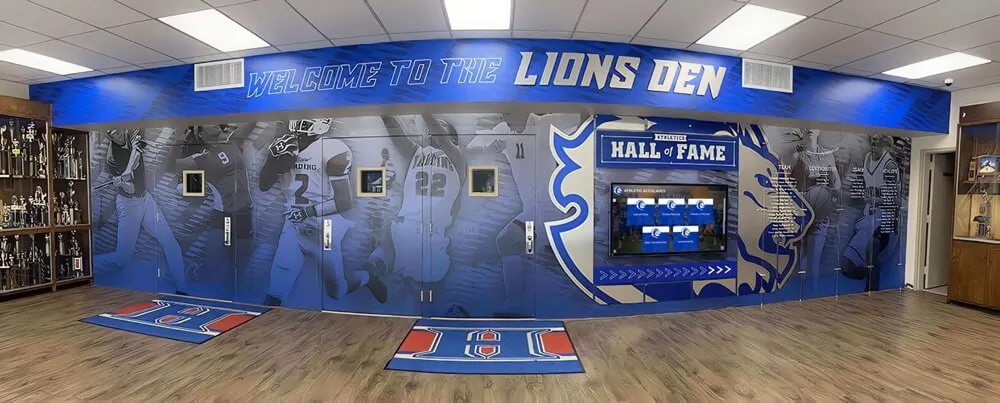
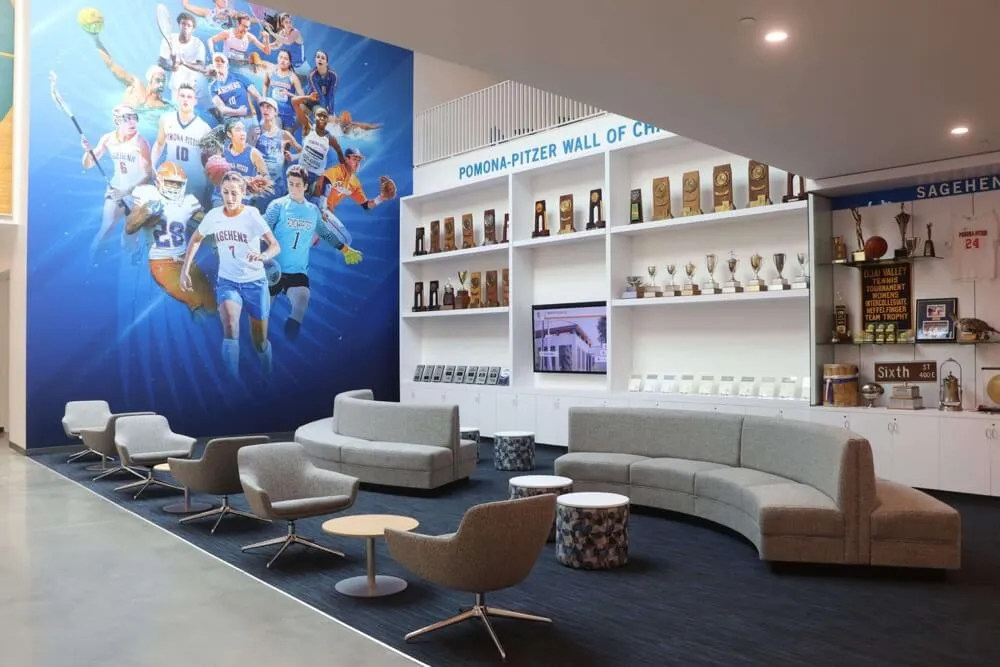
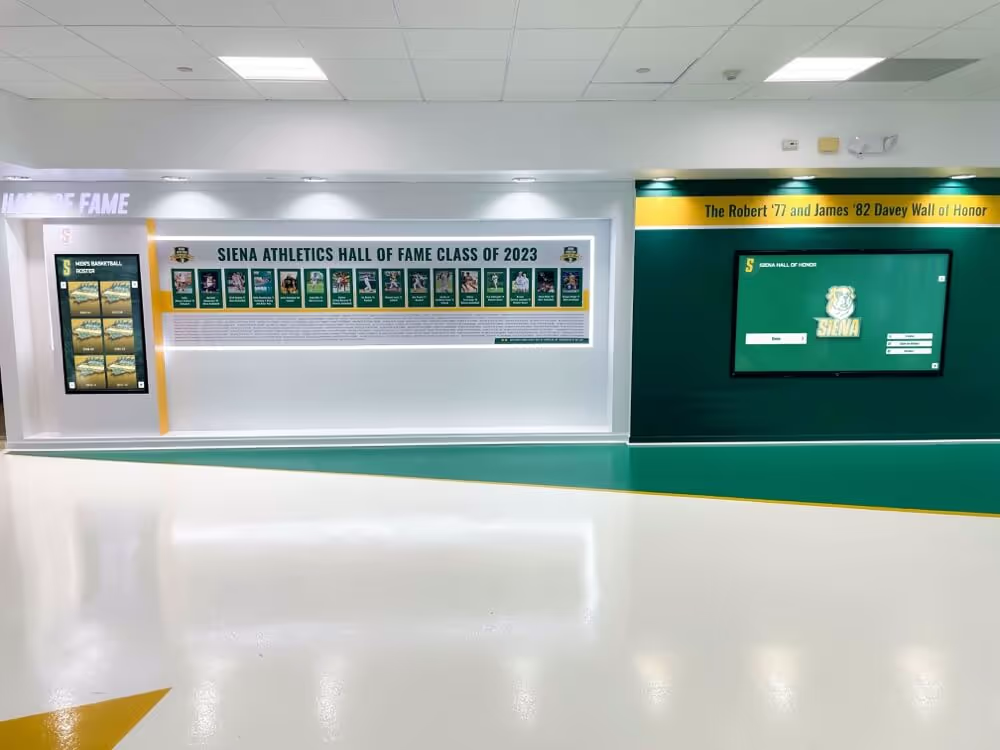
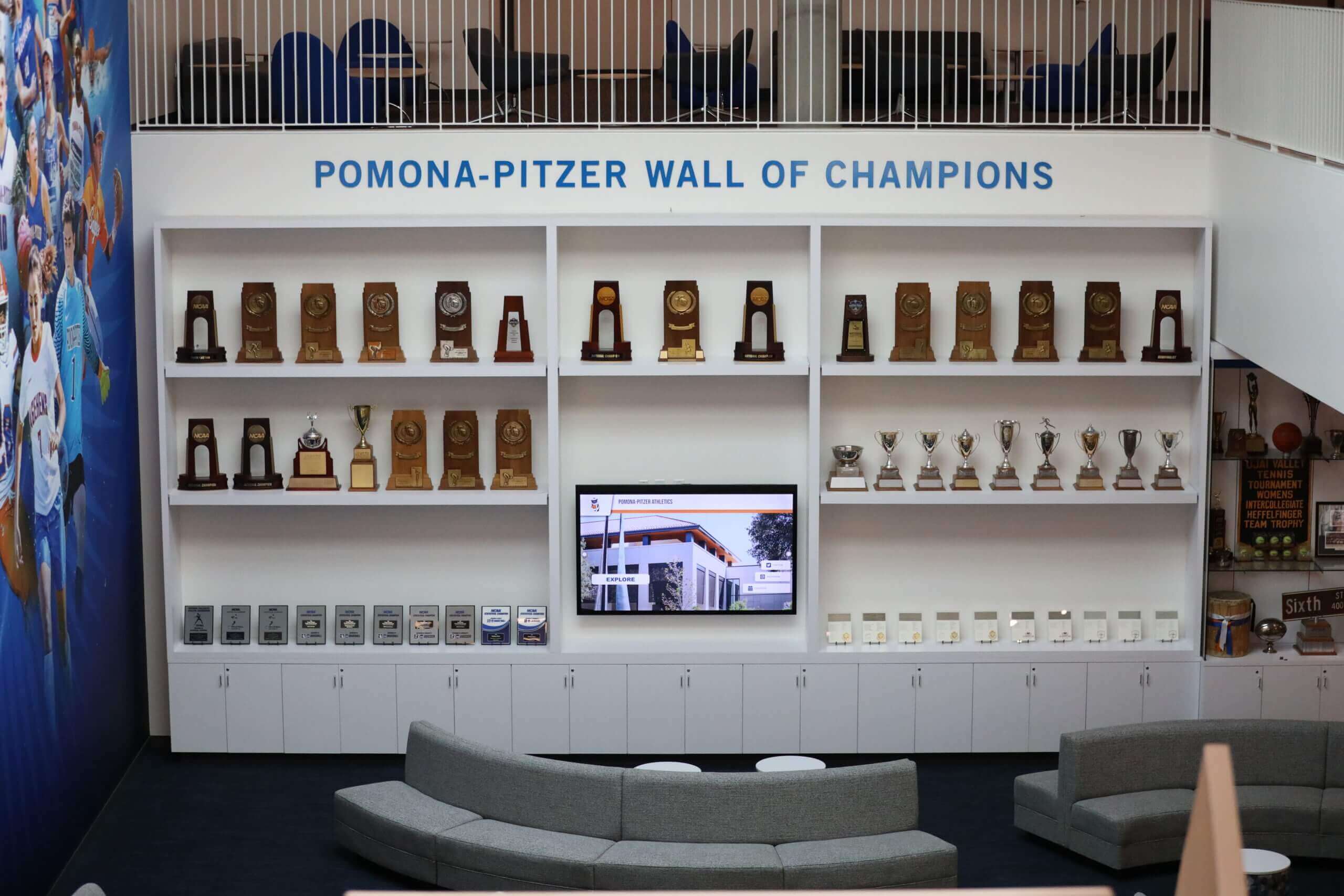
A well-designed trophy display lounge turns athletic achievement into a daily visual motivator for current athletes and a connection point for returning alumni
Athletic Plaque Materials: Bronze, Wood, Acrylic, and Beyond
The right plaque material for your athletic program depends on three factors: longevity requirements, aesthetic goals, and per-unit budget. Each material category has distinct advantages and trade-offs worth understanding before committing to a multi-year recognition program.
Bronze and Cast Metal Plaques
Bronze remains the gold standard for athletic recognition where permanence and prestige are the primary requirements. Cast bronze plaques handle outdoor installations, resist vandalism in high-traffic hallways, and develop a natural patina that signals institutional history and tradition.
Bronze plaque characteristics:
- Exceptional durability—properly maintained bronze plaques last 50 years or more
- Suitable for both interior and outdoor installation without weatherproofing concerns
- Traditional casting allows raised lettering, team seals, mascot imagery, and detailed reliefs
- Develops an oxidized patina that visually communicates institutional age and tradition
- Price range: $150–$600 per plaque depending on size and design complexity
Brass plaques offer a brighter, more polished finish at a lower price point ($75–$300) and engrave cleanly for crisp name lists—making them a practical choice for annual championship recognition where multiple plaques are ordered each season. They require periodic polishing to prevent tarnishing in humid environments.
Aluminum plaques represent the budget-friendly metal option ($40–$150), available in anodized finishes matching school colors. Their lightweight construction simplifies wall mounting, and their weather resistance makes them a practical choice for exterior signage adjacent to athletic facilities.
For programs designing a comprehensive recognition approach covering multiple materials and formats, the commemorative plaque design and materials ordering guide provides detailed specifications across casting, engraving, and finishing options.
Wood Athletic Award Plaques
Natural wood creates warm, traditional recognition well-suited to individual athlete awards, coach milestones, and programs that want a classic handcrafted aesthetic rather than the formality of metal.
Common wood varieties for athletic plaques:
- Walnut: Rich dark grain, premium appearance, excellent for hall of fame inductee plaques
- Cherry: Warm reddish tones that develop deeper color with age
- Oak and maple: More budget-friendly options with prominent grain patterns
- Mahogany: Traditional appearance favored for formal service recognition
Wood plaques work particularly well as individual awards athletes take home—championship MVP plaques, senior tribute gifts, and coach appreciation presentations. For permanent wall installations, wood requires climate-controlled interior spaces to prevent warping. Budget range: $30–$200 depending on wood species and plaque size.
Acrylic and Glass Plaques for Contemporary Athletic Spaces
Schools with modern facility designs often find that traditional bronze and wood plaques look anachronistic against contemporary architecture. Acrylic and glass materials offer sleek alternatives that hold up well in recently renovated athletic facilities.
Acrylic plaque advantages:
- Laser engraving and UV printing enable full-color graphics including photos, team logos, and custom artwork
- LED backlighting creates dramatic display effects for lobby installations
- Lightweight construction allows creative hanging and mounting configurations
- Available in clear, frosted, or colored varieties
- Price range: $35–$175 per plaque
Glass plaques add physical substance that acrylic lacks—beveled edges and etched surfaces create a premium appearance justifying higher budgets ($50–$250 per plaque). Sandblasted treatments, color printing, and shaped designs accommodate complex athletic branding requirements.
The primary limitation of both materials: susceptibility to surface scratching in high-traffic student environments. Glass also requires careful handling during installation and replacement if damaged.
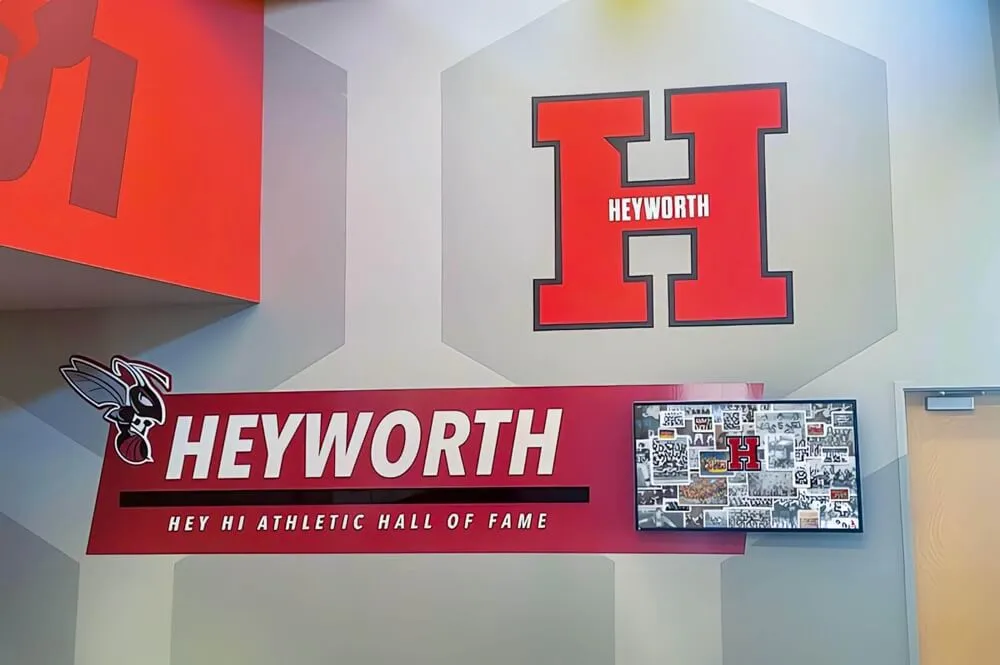
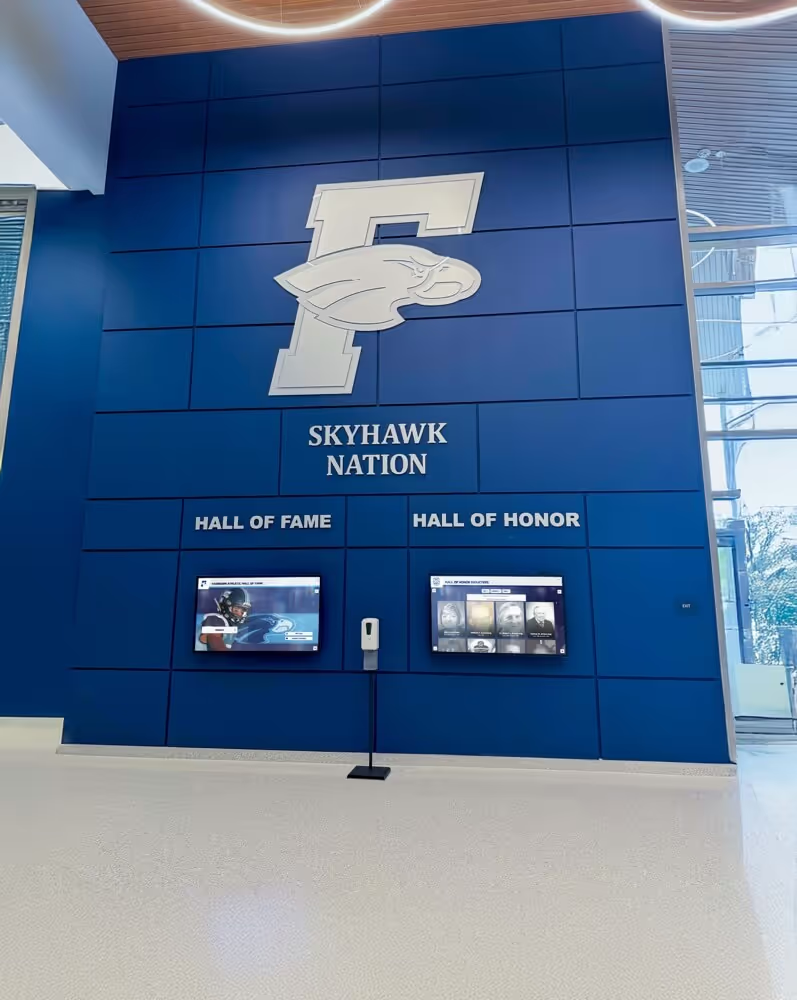
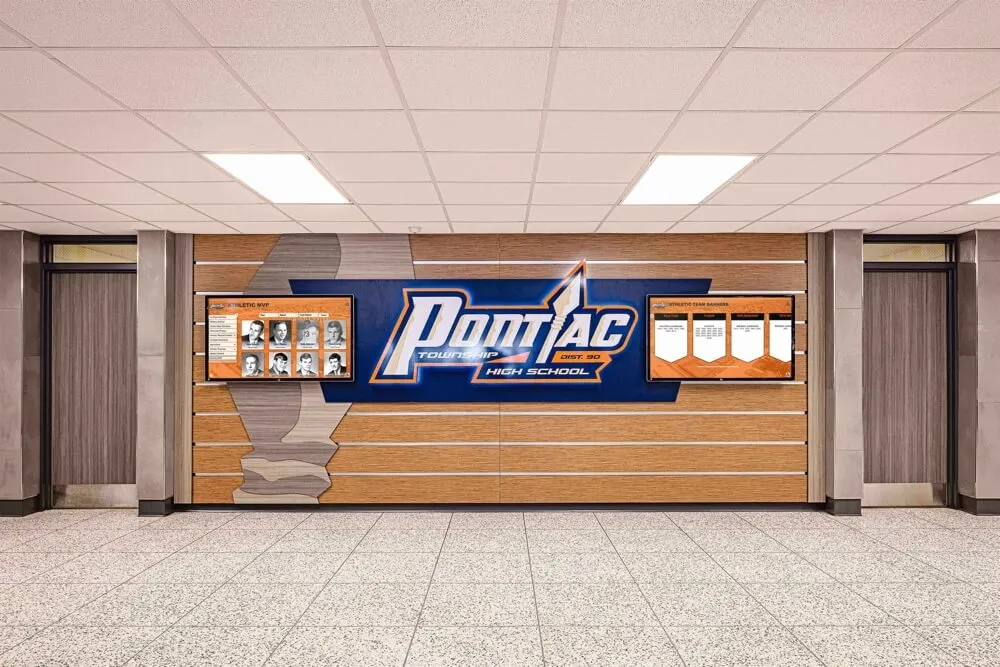
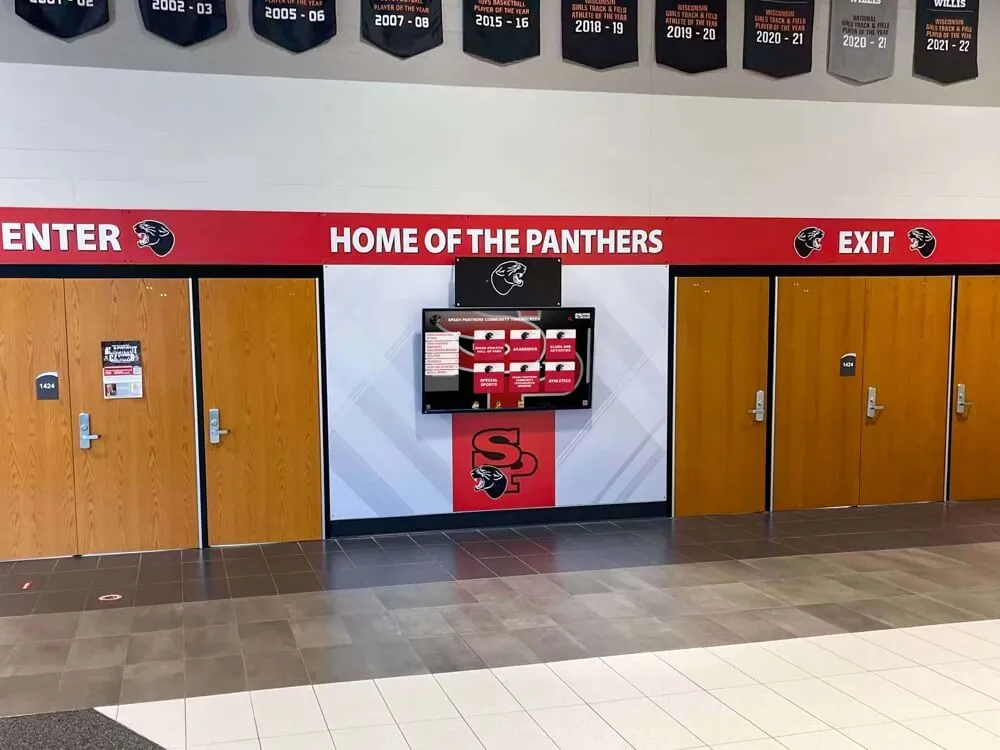
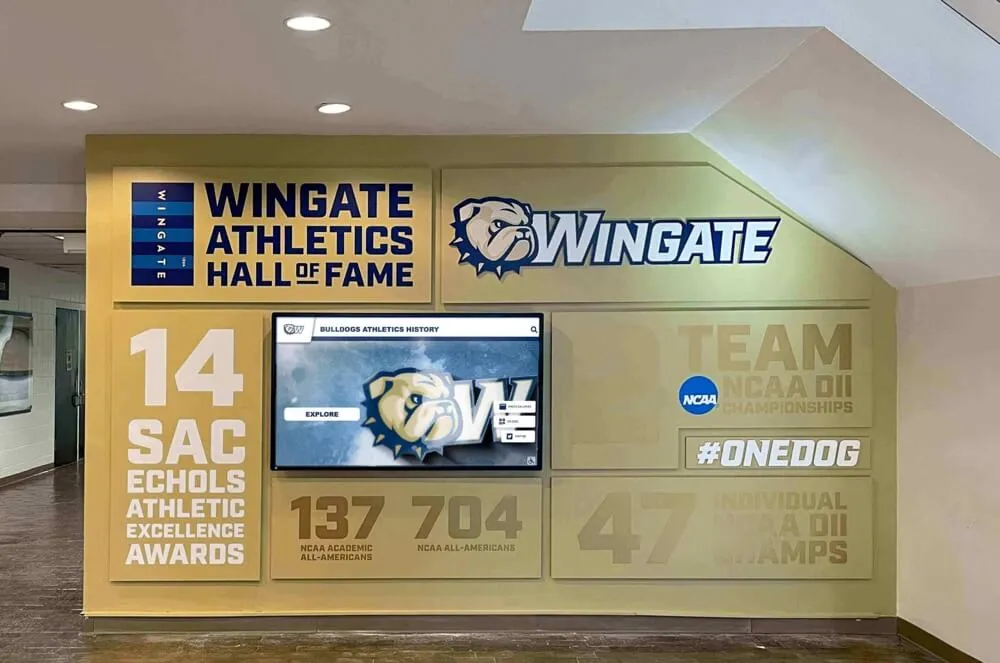
Athletic hall of fame wall signage establishes the identity and purpose of recognition spaces—material and design choices set the tone for everything displayed within
Athletic Awards Plaque Layout Ideas for Every Space
Material selection answers the “what” of plaque recognition; layout planning answers the “how.” Even beautifully fabricated plaques fail to inspire if they’re mounted without strategy—too high to read, crammed into cases without organization, or placed in corridors where students never naturally pause.
Championship Wall Layouts
Championship walls organize program history chronologically, giving athletes an immediate understanding of where current achievements fit in the long arc of program tradition. Effective layouts for championship recognition include:
Horizontal timeline arrangement: Championship plaques mounted in chronological order from left to right. Newer plaques extend the timeline; older championships establish visual legacy. This arrangement communicates program history at a glance and invites comparison across eras.
Season-based vertical columns: Each academic year occupies a vertical column with individual sport championships listed below a year header. This layout accommodates programs with multiple sports competing simultaneously and works well when plaque sizes are standardized.
Sport-separated sections: Dedicated wall sections for each sport, each with its own championship timeline. This approach works for large athletic departments where football, basketball, baseball, and other programs each have enough championship history to merit dedicated display real estate.
For athletic team rooms where recruiting visits happen, plaque layout directly influences how prospects perceive program tradition. The athletic team room design ideas guide for recognition and recruiting spaces addresses how recognition display choices impact the recruiting environment alongside other space design factors.
Individual Athlete Recognition Layouts
Individual recognition walls—honoring all-state selections, hall of fame inductees, record holders, and award winners—require different organizational logic than team championship displays.
Alphabetical arrangements work well for large inductee sets where visitors may be searching for a specific individual. Portrait plaques or medallion-style recognition with name plates make it easy to scan for specific names.
Class year or graduation cohort groupings connect individual athletes to their peers and create natural anniversary reunion touchpoints. Alumni returning for homecoming can quickly locate their own recognition alongside former teammates.
Sport-specific zones allow athletic departments with diverse program portfolios to give each sport its own recognition identity. Football players, swimmers, wrestlers, and cross-country runners each see their program’s legacy represented in a dedicated space rather than mixed into a single undifferentiated wall.
For photo-heavy recognition that complements plaques with visual storytelling, the athletic team photo wall ideas guide addresses how team photography integrates with formal plaque recognition to create more comprehensive display environments.
Perpetual Plaque Designs for Annual Recognition
Perpetual plaques offer an elegant solution for categories recognizing new honorees every year: a master plaque establishes the award’s identity, with small individual name plates added annually below.
Common perpetual plaque applications in athletics:
- Coach of the year recognition
- Team MVP and captain honors
- Scholar-athlete awards
- Senior athlete tributes
- Record-holder updates
Planning perpetual plaques requires forward thinking about capacity. A well-designed perpetual plaque planned for 15–20 years of additions looks organized and intentional. A plaque that ran out of space after five years and has plates extending beyond the frame undermines the recognition it’s meant to convey.
Trophy Case Integration
Traditional trophy cases remain valuable when athletic awards plaques are organized within them systematically rather than accumulated randomly. Effective trophy case layouts:
- Group plaques by category or time period rather than displaying them in arrival order
- Use risers, lighting, and background panels to create visual depth
- Ensure text is readable through glass at typical corridor walking distance (minimum 1/4" letter height for 6-foot viewing)
- Reserve front-and-center positions for most recent and most prestigious recognition
- Update regularly—cases displaying 20-year-old plaques with nothing current signal a program frozen in the past
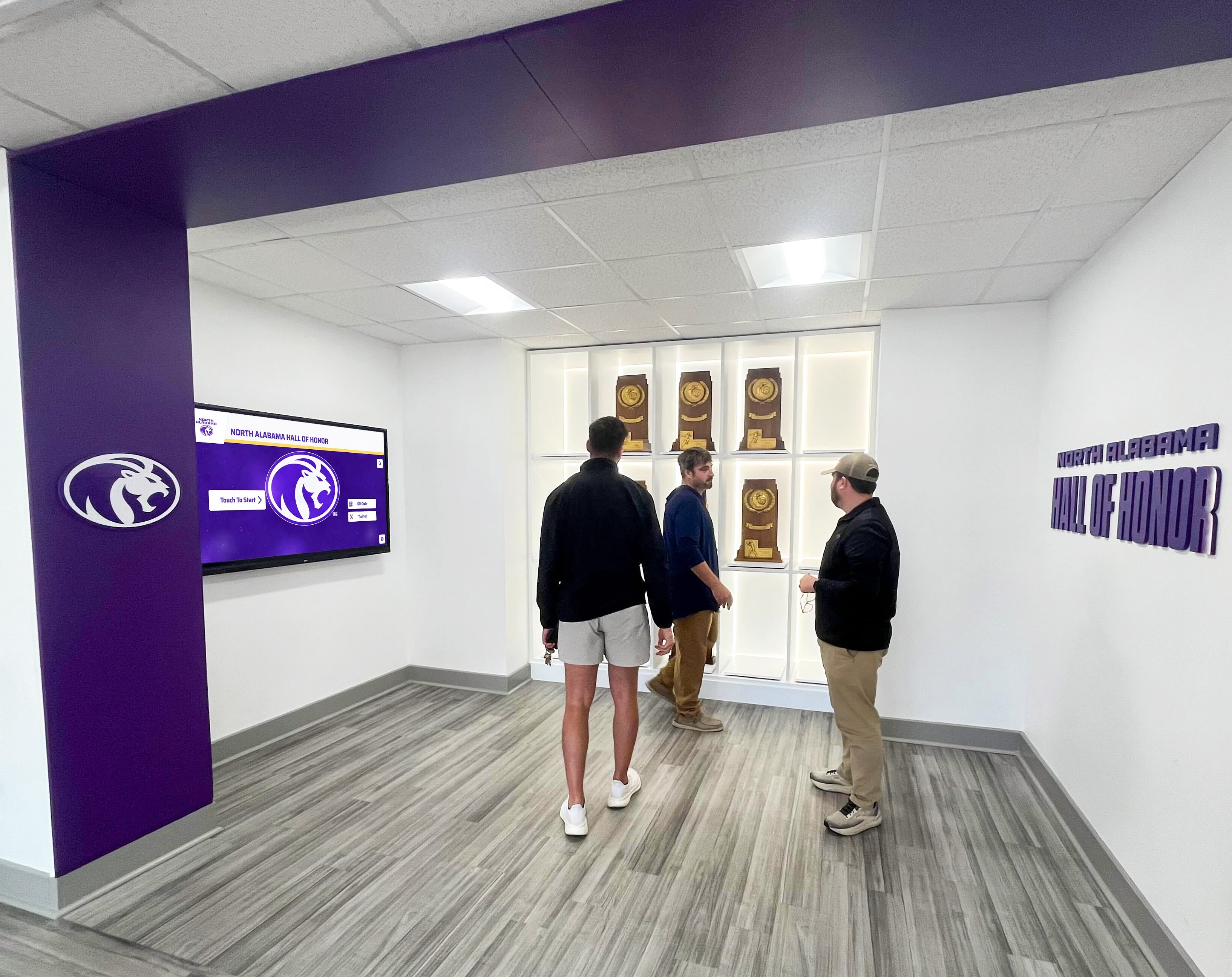
Well-organized trophy displays invite engagement—visitors stop to explore recognition that is clearly labeled, logically arranged, and well-maintained
What Athletic Awards Plaques Should Honor
The most common mistake in athletic recognition program design is recognizing too few categories. Programs that limit plaques to championship teams and league all-stars miss most of their athletes—and the athletes they miss are precisely the ones who most benefit from formal acknowledgment.
Championship Team Rosters
Championship plaques documenting complete team rosters—not just standout individuals—validate every player’s contribution to the title. Effective championship team plaques include:
- Complete roster listing with roster numbers when space permits
- Head coach and assistant coaching staff
- Season record and specific championship context (conference, district, state, national)
- Year and date of championship
- Team photo integration where fabrication method allows
For sport-specific end-of-season recognition across multiple award categories beyond championships, the complete guide to sport end-of-year awards covers recognition structures spanning performance, character, and leadership categories that complement physical plaque displays.
Individual Athlete Achievement Plaques
Individual recognition plaques serve athletes at multiple achievement levels:
All-state and all-conference honorees: External designations from conferences and state athletic associations carry institutional credibility that internal awards cannot replicate. Formally displaying these designations on permanent plaques demonstrates that your program competes at elite levels.
Record holders: Athletes who break program records deserve permanent recognition before those records fade from institutional memory. Position-specific and statistical-category records (single-season points, career assists, fastest race times) give future athletes visible targets to pursue.
Hall of fame inductees: Programs with multi-decade histories build hall of fame programs that honor athletes, coaches, and contributors who shaped program identity. Individual inductee plaques with biographical details and achievement summaries create recognition that endures far beyond the induction ceremony.
Senior athlete tributes: Recognizing every senior who completes their eligibility—regardless of statistical production—honors the multi-year commitment those athletes made to the program. Senior tribute plaques or perpetual recognition panels build loyalty that extends into alumni relationships.
For programs building comprehensive youth and school sports recognition across multiple categories, the 100 youth sports awards ideas guide offers additional recognition frameworks applicable to both traditional plaque programs and digital recognition alternatives.
Record Boards
Athletic record boards occupy a unique position in recognition design: they’re simultaneously historical documents and active motivational tools. Unlike championship plaques commemorating past seasons, record boards change as current athletes surpass previous marks—making them living displays that connect today’s athletes to program history in real time.
Traditional record boards use engraved or printed panels updated manually when records fall. They work well for programs with stable statistical categories and sufficient staff bandwidth to manage updates. The limitation: manual updates often lag months behind actual record-breaking performances, which blunts the motivational impact.
Digital Alternatives to Traditional Athletic Awards Plaques
Traditional plaques have one fundamental constraint: they run out of space. A school with 40 years of championship history, hundreds of all-state athletes, dozens of hall of fame inductees, and an active record board program will eventually exhaust every available square foot of wall space—forcing difficult decisions about what stays visible and what gets archived.
Digital recognition systems address this constraint by replacing finite physical surface area with unlimited digital capacity.
Interactive Touchscreen Recognition Displays
Interactive touchscreen displays represent the most significant evolution in athletic recognition available to school programs. Rather than limiting recognition to what fits on a plaque wall, digital systems enable athletic departments to:
- Display comprehensive profiles for every athlete honored—with photos, stats, video highlights, and biographical details impossible to include on a physical plaque
- Showcase unlimited achievement categories without physical space constraints
- Update recognition instantly when records fall, new hall of fame members are inducted, or championship seasons conclude—no engraving delays, no fabrication lead times
- Allow athletes, families, and alumni to search and filter recognition by sport, year, or category
- Connect every displayed achievement to a broader program story through photos, game footage, and historical context
According to institutional data from schools that have implemented interactive recognition systems, visitor engagement times average 4–6 minutes on interactive displays compared to brief glances at static plaque walls—evidence that digital systems generate meaningfully deeper engagement with athletic history.
The complete guide to choosing the best touchscreen for schools covers hardware selection criteria, installation considerations, and content management requirements for athletic departments evaluating digital recognition systems.
Sport-specific digital recognition implementations demonstrate how interactive displays transform individual sport histories. The tennis hall of fame touchscreen example shows how a historically under-recognized sport can develop comprehensive, searchable recognition without requiring extensive physical wall space.
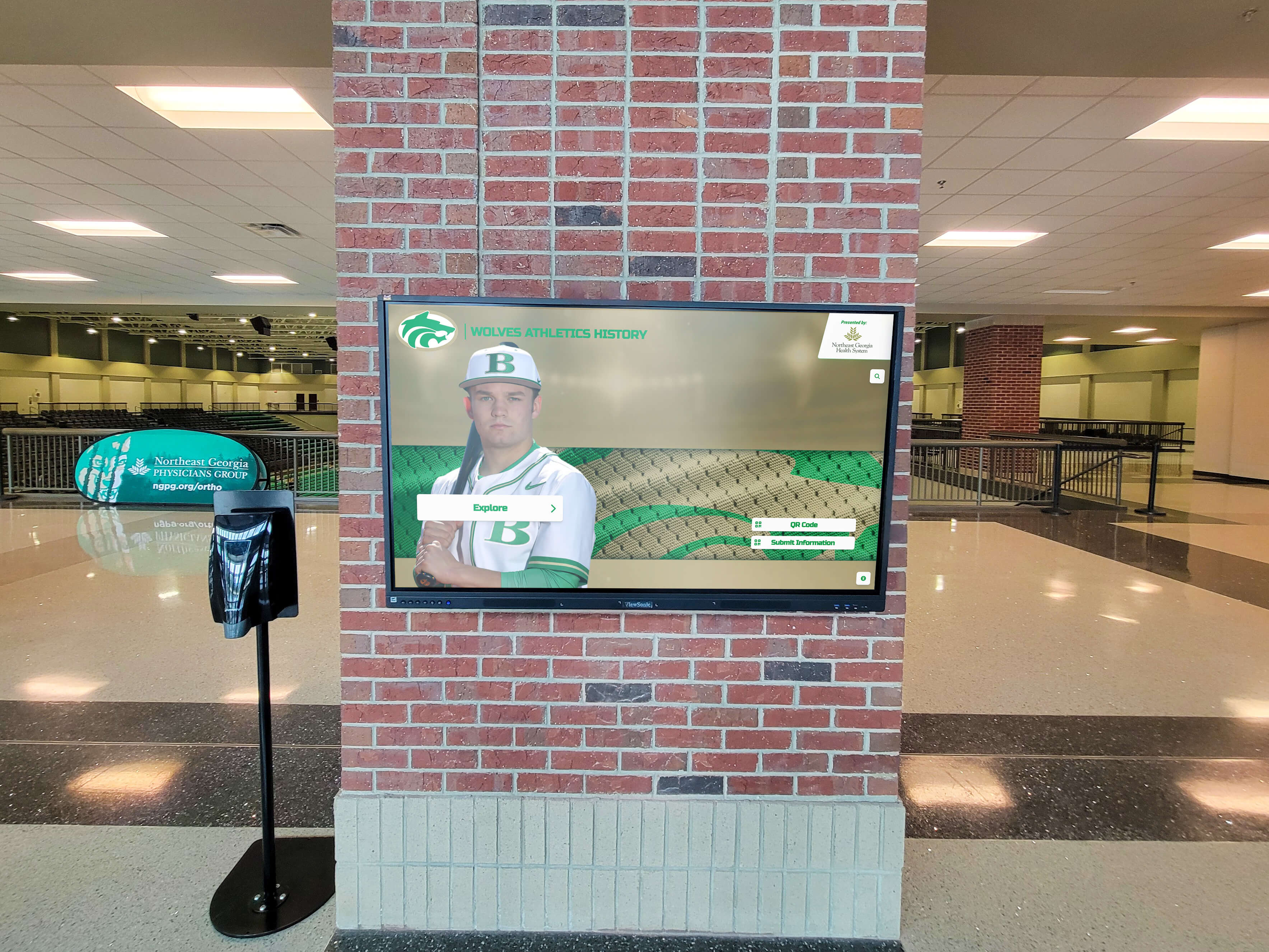
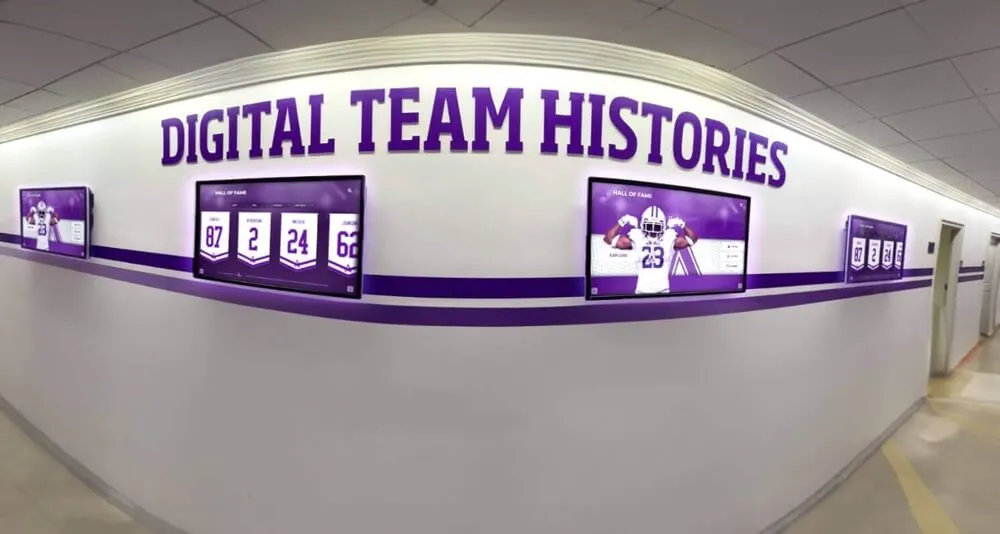
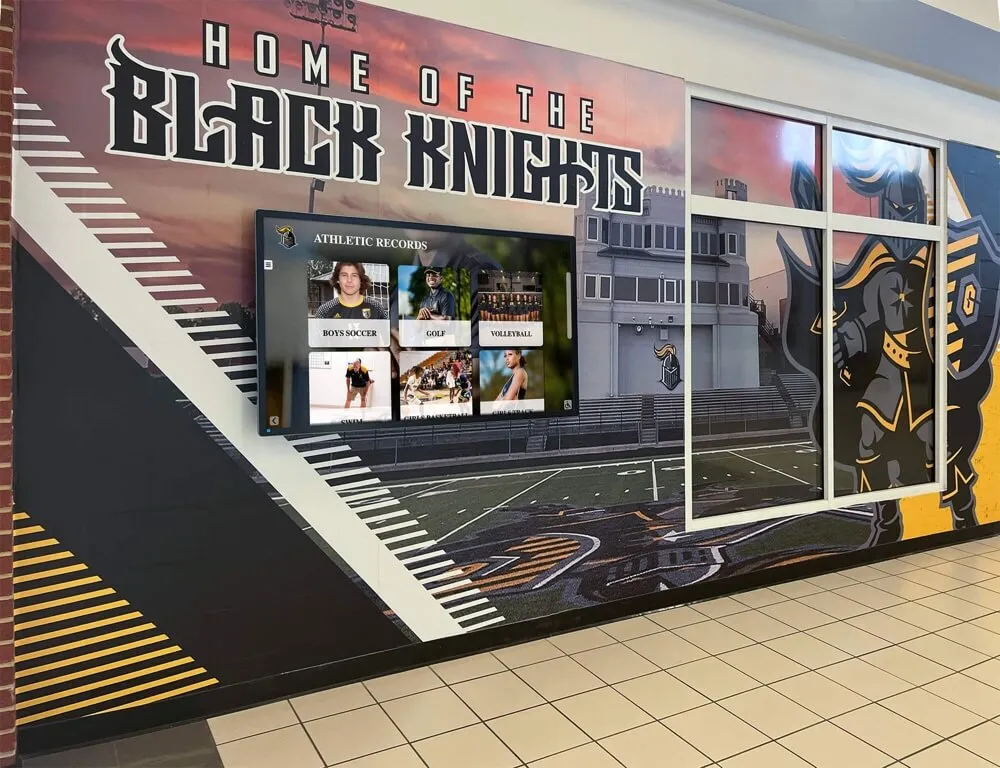
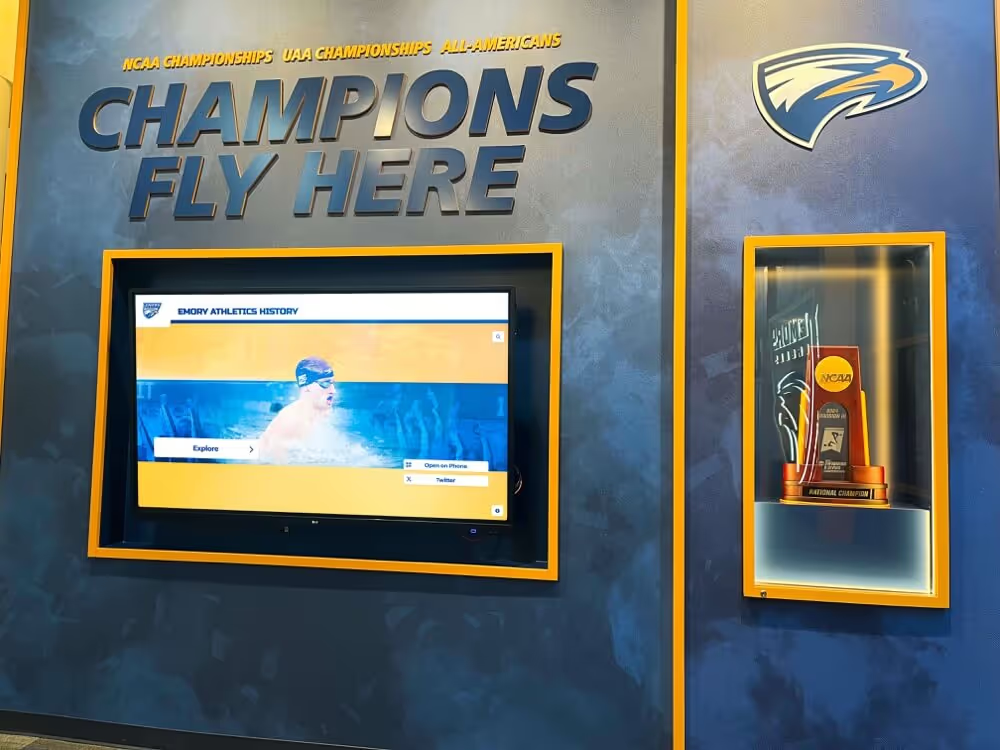
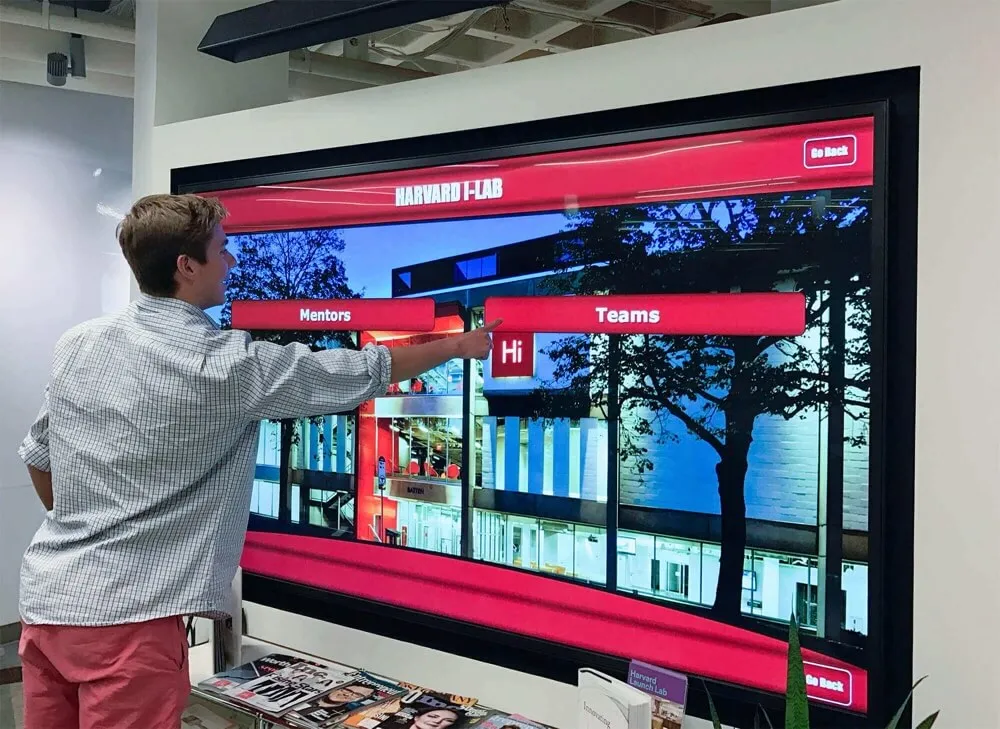
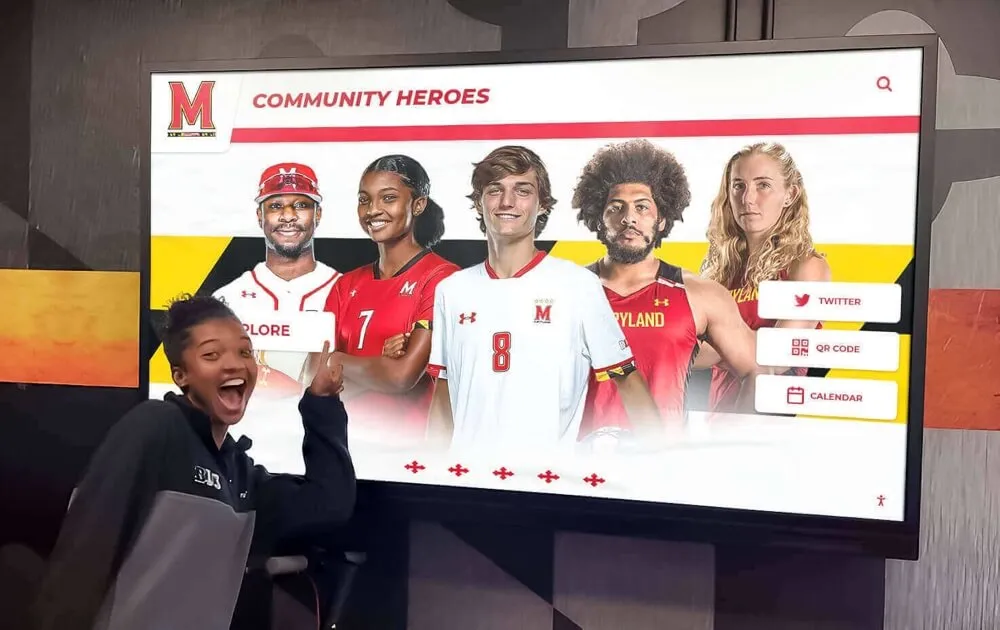
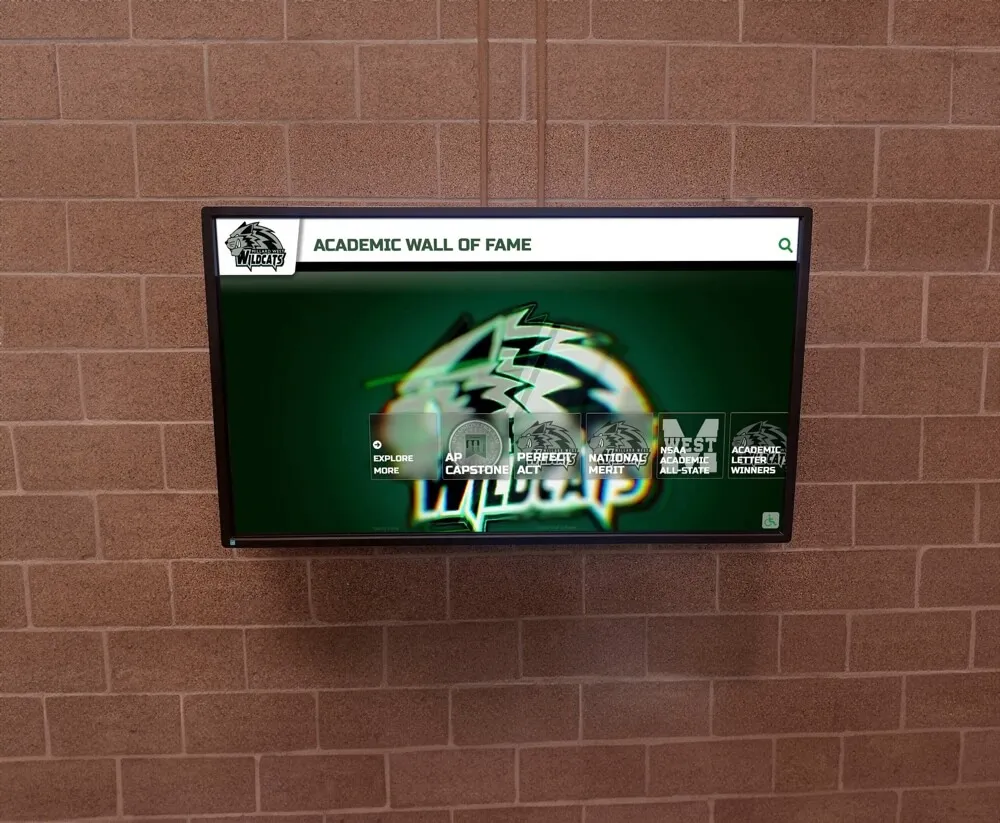
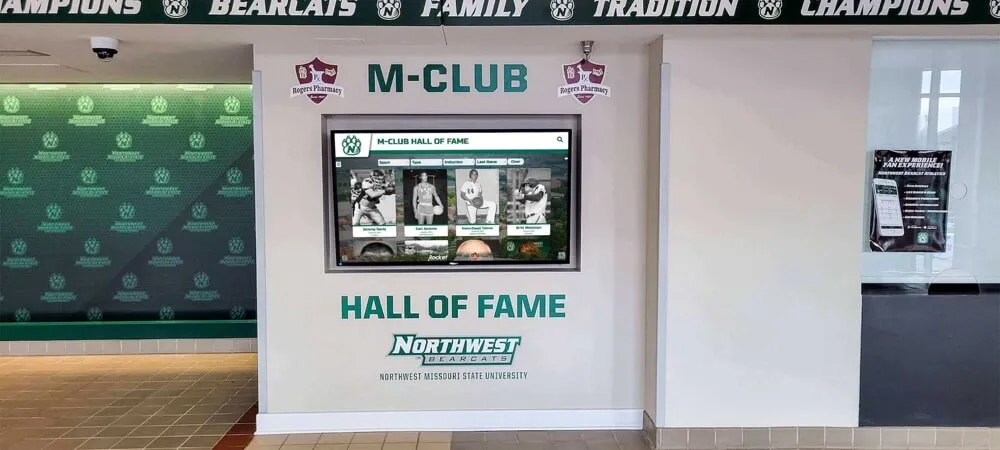
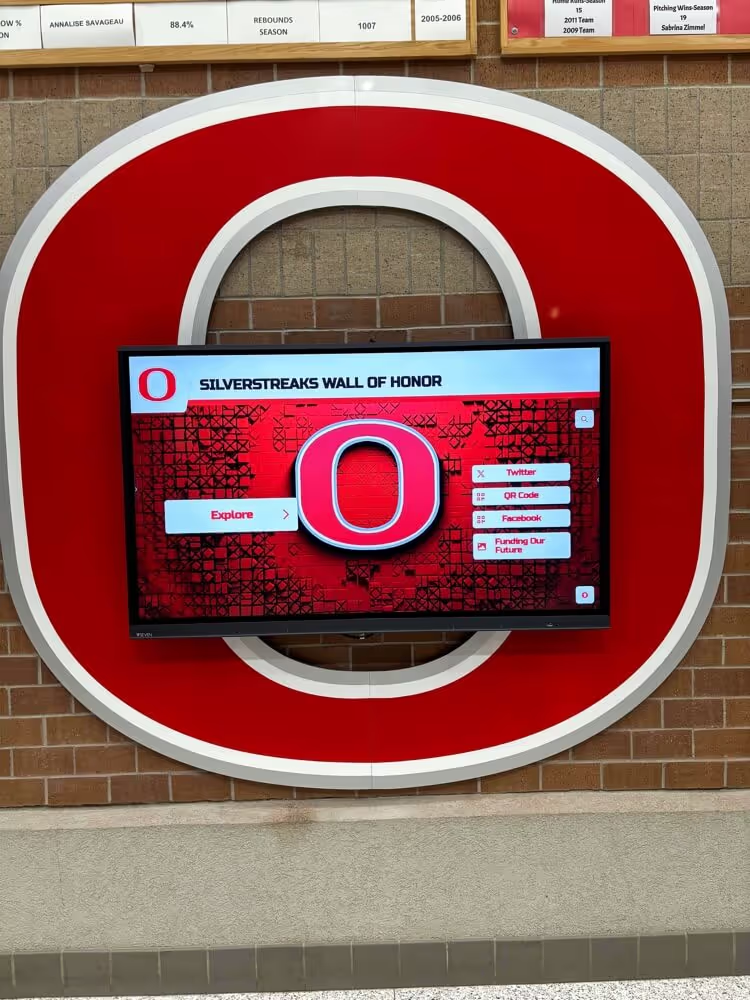
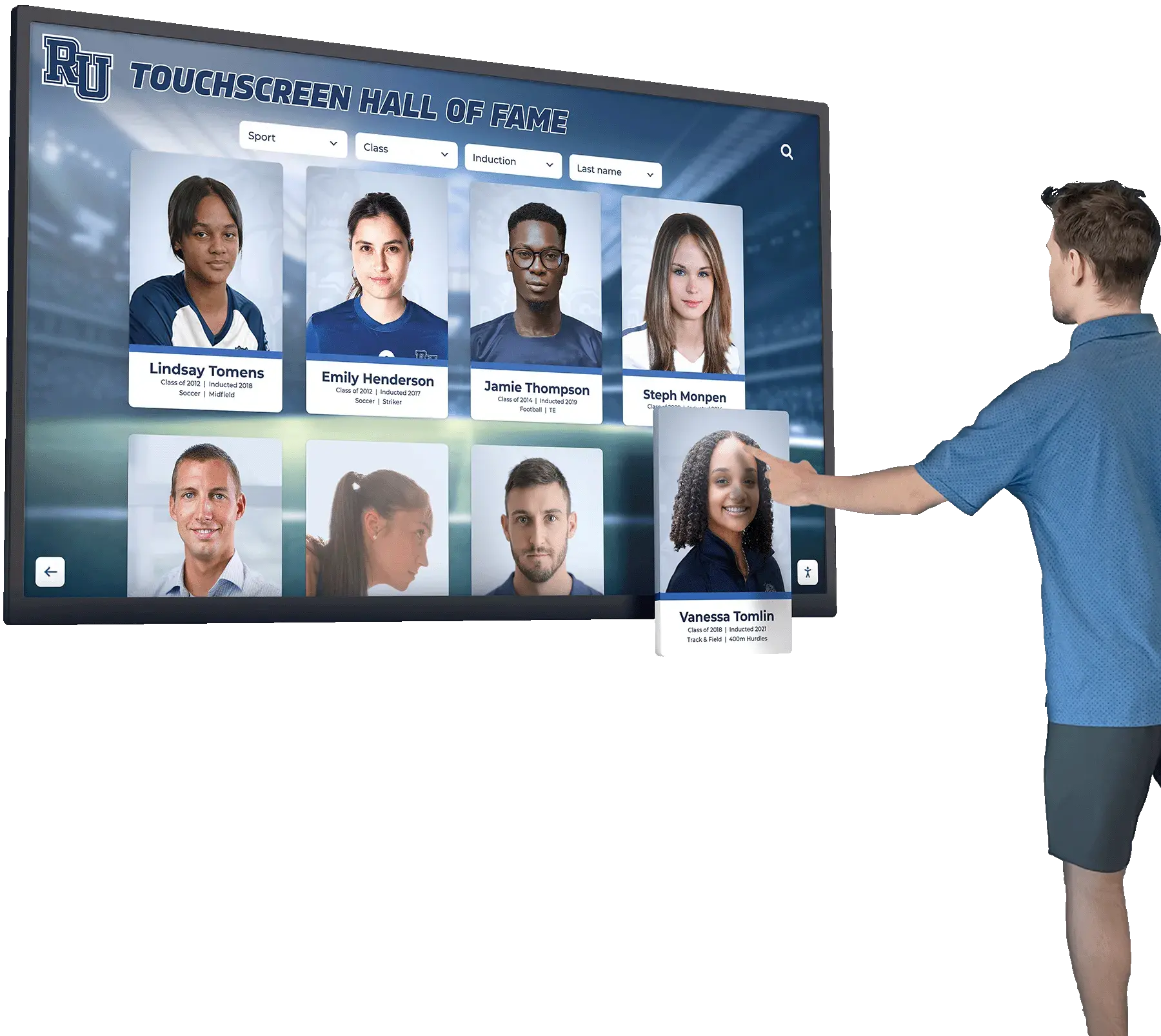
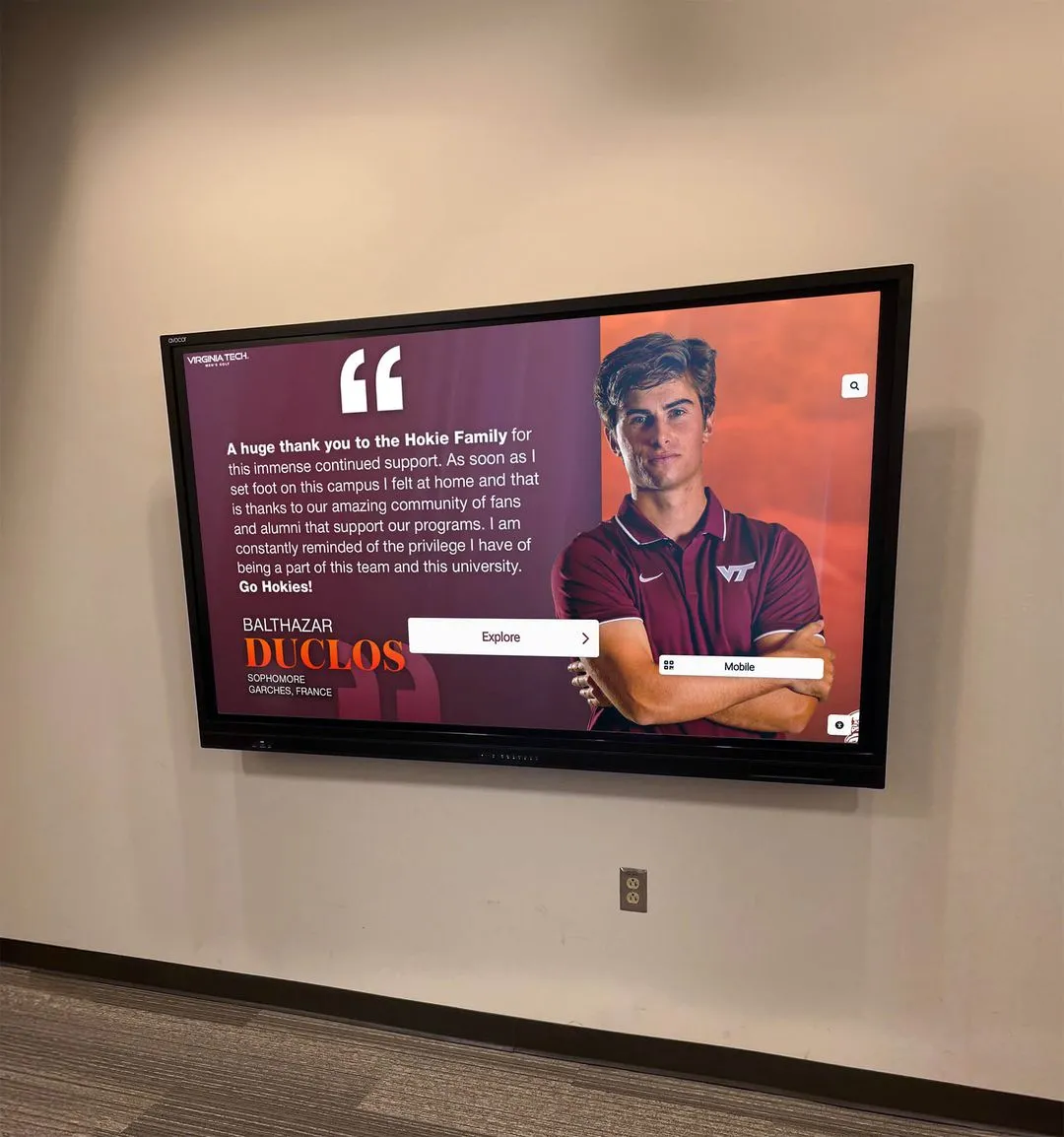
Digital displays integrated into athletic facility lobbies create high-visibility recognition that showcases individual athletes with detail impossible on traditional plaques
Rocket Alumni Solutions: Touchscreen Walls of Fame for Athletic Programs
Rocket Alumni Solutions provides purpose-built touchscreen wall of fame systems designed specifically for school athletic programs. Unlike generic digital signage, these systems are built around the recognition structures athletic departments actually use—championship histories, individual athlete profiles, record boards, hall of fame inductees, and season-by-season archives.
Key capabilities that address traditional plaque limitations:
- Unlimited capacity: No decisions about what gets displayed versus archived—every athlete and achievement receives visibility
- Cloud-based management: Athletic staff update content remotely without on-site technical work; new recognition goes live immediately following achievements
- Rich individual profiles: Each athlete can have a dedicated profile page with photos, stats, video clips, career summary, and post-graduation information—depth impossible in any plaque format
- Multi-sport organization: A single display system manages recognition across all varsity, junior varsity, and club sports without category confusion
- Visitor-friendly navigation: Intuitive touch interfaces allow first-time users—including alumni returning decades after graduation—to find their own recognition within seconds
For championship celebrations that combine physical events with lasting digital documentation, the high school football state championship celebration guide covers how schools integrate recognition across physical events, plaque installations, and digital display updates.
Managing Athletic Photo Archives Digitally
One of the most underutilized opportunities in athletic recognition is team photography. Most programs have decades of team photos—printed portraits, action shots, newspaper clippings—stored in boxes or unsorted digital folders where no athlete will ever encounter them.
Digital recognition systems transform these archives into accessible, searchable collections. Team photos archive and digital access strategies connect digitized historical photography to athlete profiles and championship records, giving depth to recognition that a name-and-year plaque cannot provide.
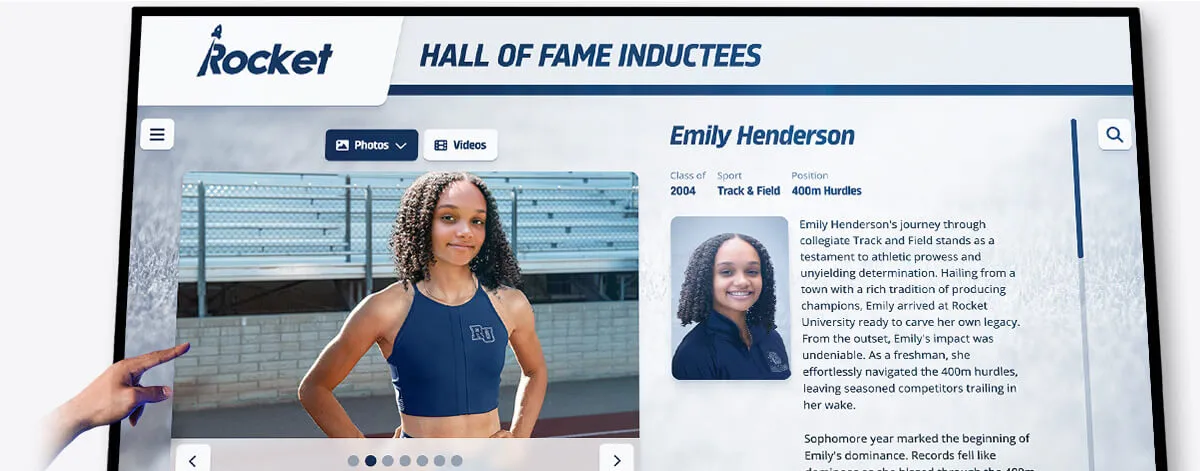
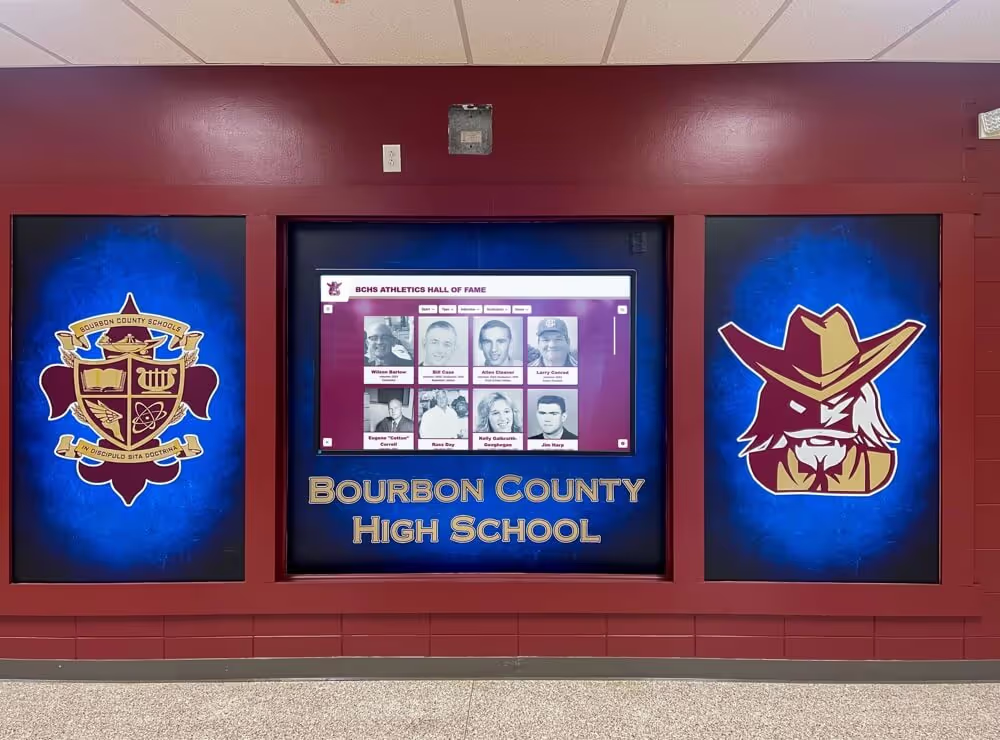
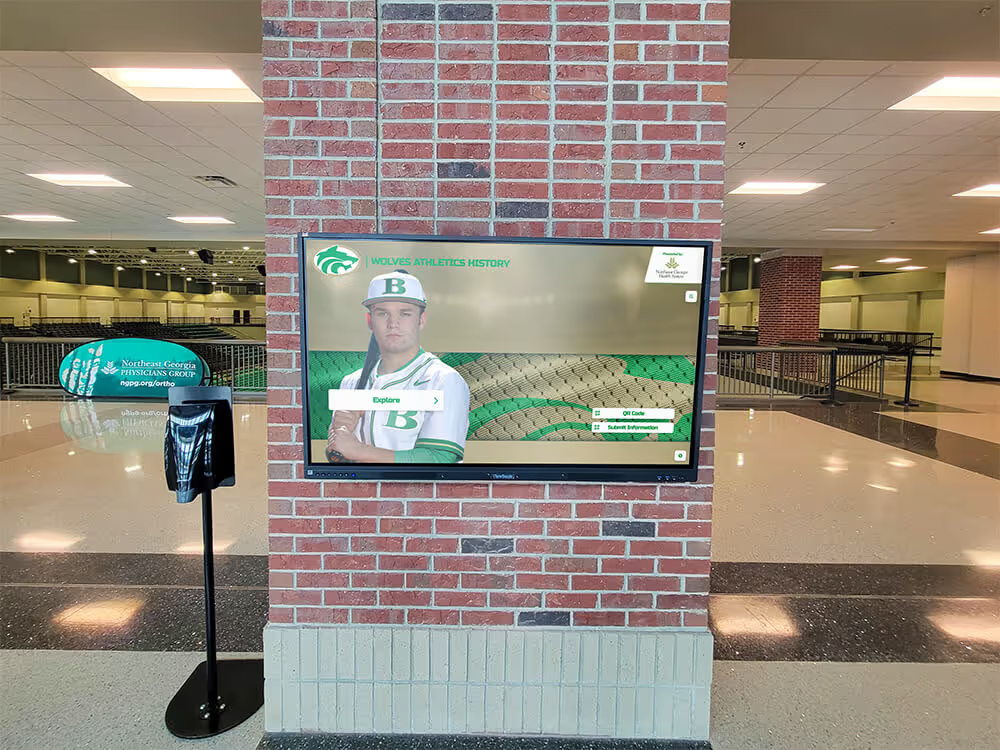
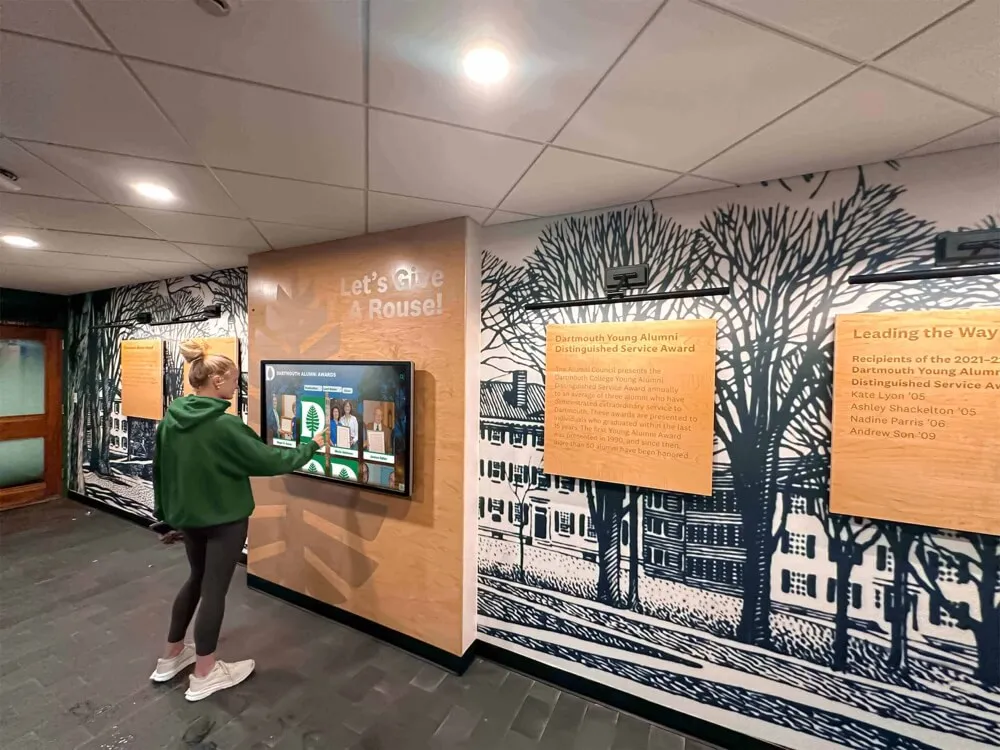
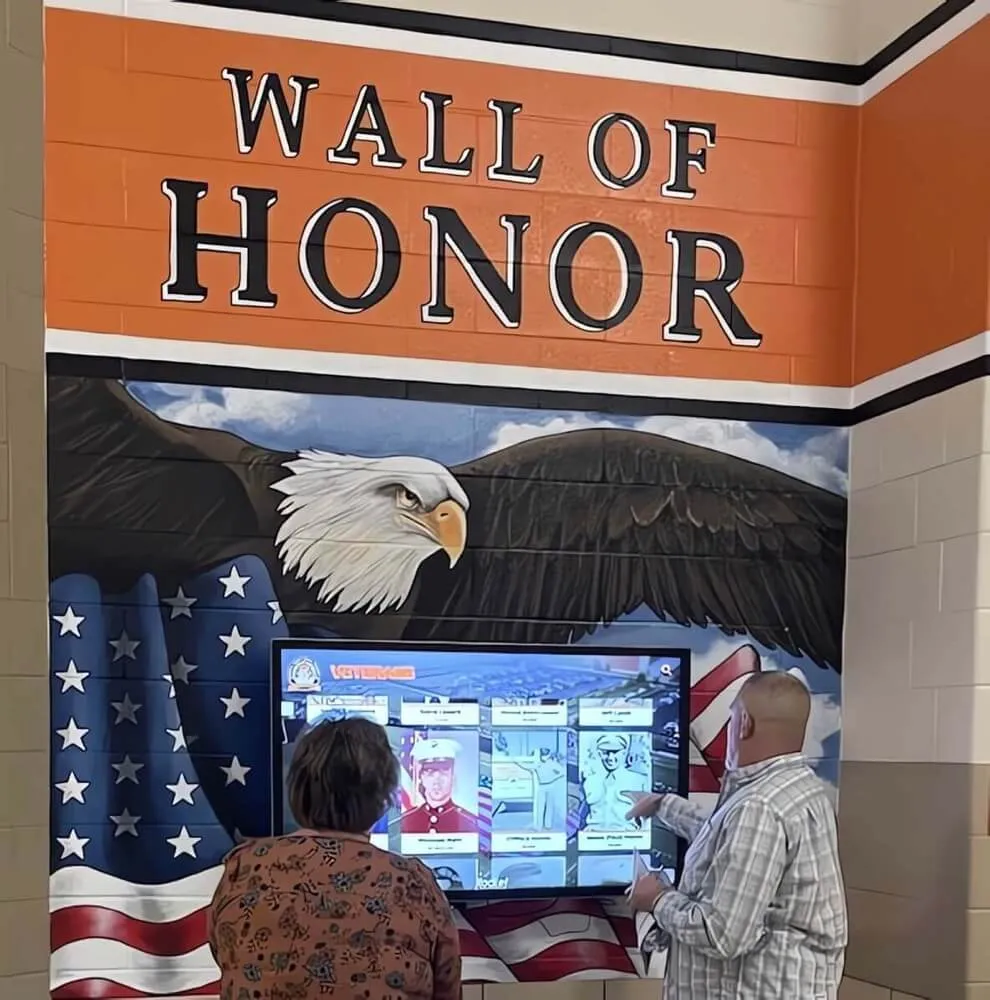
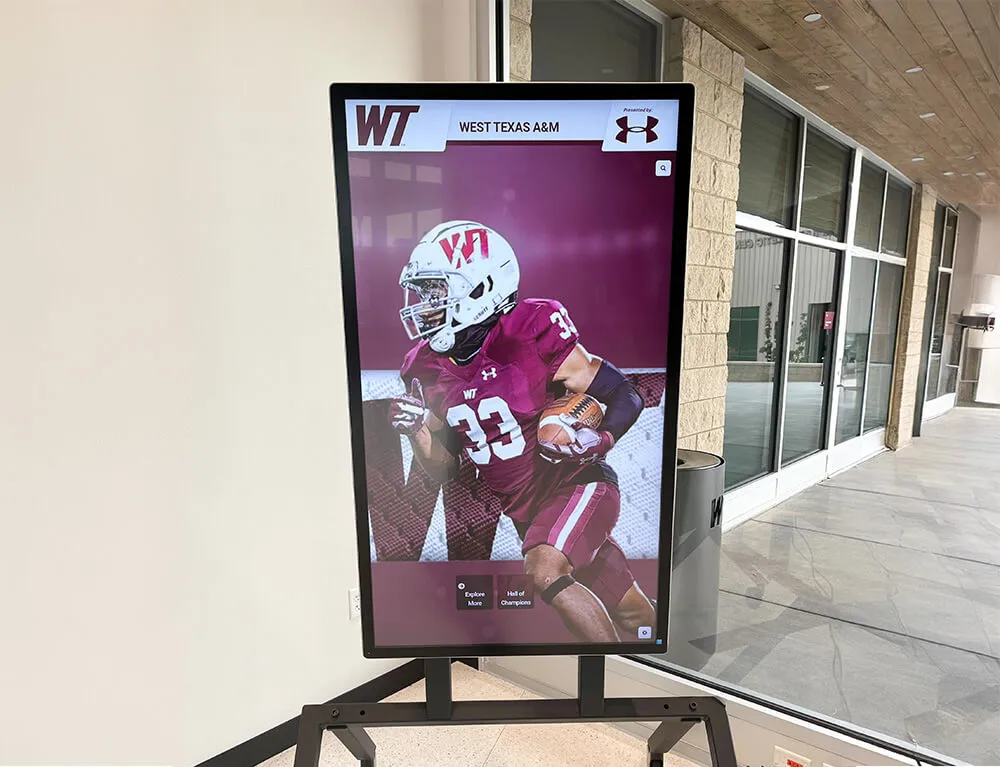
Individual athlete profiles on digital recognition systems deliver the biographical depth and visual storytelling that traditional plaques cannot accommodate within their physical constraints
Hybrid Recognition: Combining Traditional Plaques with Digital Displays
The most effective athletic recognition environments don’t choose between traditional plaques and digital displays—they use both deliberately, matching each format to what it does best.
What Traditional Plaques Do Best
Physical plaques provide permanence that digital displays cannot replicate. A bronze plaque installed in 1985 will still be recognizing its honoree in 2085 regardless of software updates, hardware replacements, or technology changes. This permanence carries genuine emotional weight, particularly for honorees, families, and alumni who want assurance that recognition will endure.
Traditional plaques also carry a cultural familiarity that many stakeholders—particularly donors, longtime community members, and traditionalist alumni—associate with institutional prestige. For recognition requiring maximum formality—hall of fame induction, championship legacy display, named gift acknowledgment—physical plaques signal commitment in ways that digital screens sometimes cannot.
What Digital Displays Do Best
Digital systems handle unlimited volume without space constraints. They accommodate rich storytelling impossible on physical plaques. They can be updated instantly without engraving delays or fabrication costs. They allow visitors to actively search, filter, and explore recognition rather than passively walking past static displays.
They also extend recognition beyond campus walls: web-accessible versions of digital recognition programs allow alumni to explore program history from anywhere in the world, turning a campus display into a connection point for distributed athletic communities.
For institutions building comprehensive historical archives that combine physical and digital preservation, the digital history archive complete guide addresses how schools systematically digitize, organize, and publish historical records including athletic achievement documentation.
A Practical Hybrid Framework
Many schools implement hybrid recognition that allocates each format where it delivers the highest value:
Traditional plaques for:
- Hall of fame inductee recognition (permanent, ceremonial)
- Major championship legacy (especially titles predating digital programs)
- Named facility recognition and significant donor acknowledgment
- Retirement of jersey numbers (permanent physical ceremony)
Digital displays for:
- Season-by-season records and annual achievement tracking
- Individual athlete profiles with photos, stats, and post-graduate information
- Record board updates (immediate publication when records fall)
- Junior varsity, sophomore, and freshman team recognition
- Decade-by-decade program history archives
- Content accessible during recruiting visits
This framework preserves the prestige and permanence traditions expect from physical plaques while eliminating the capacity constraints that force schools to archive older recognition.
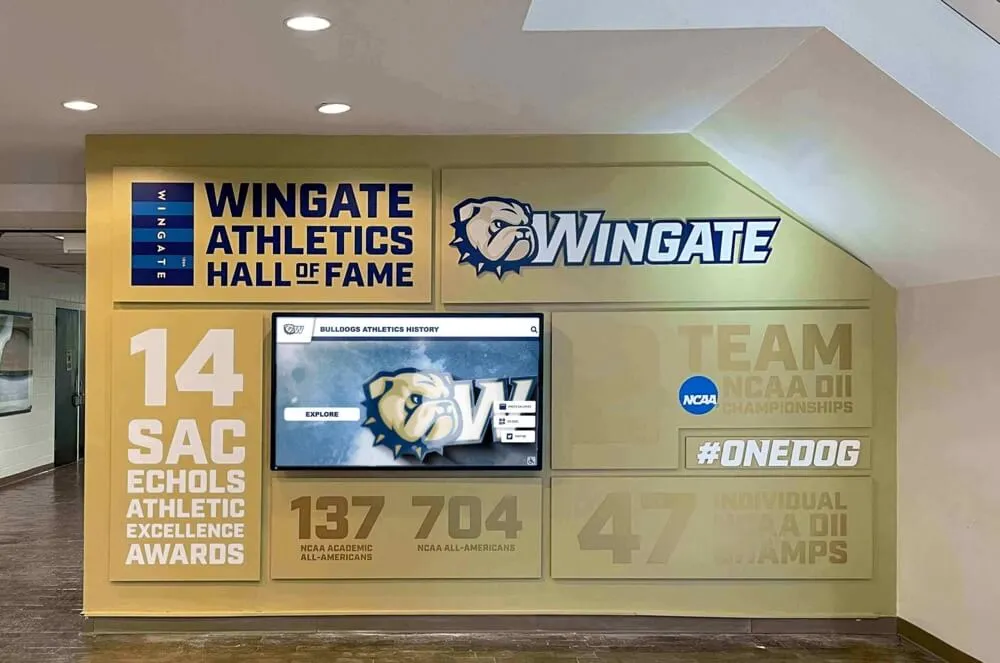
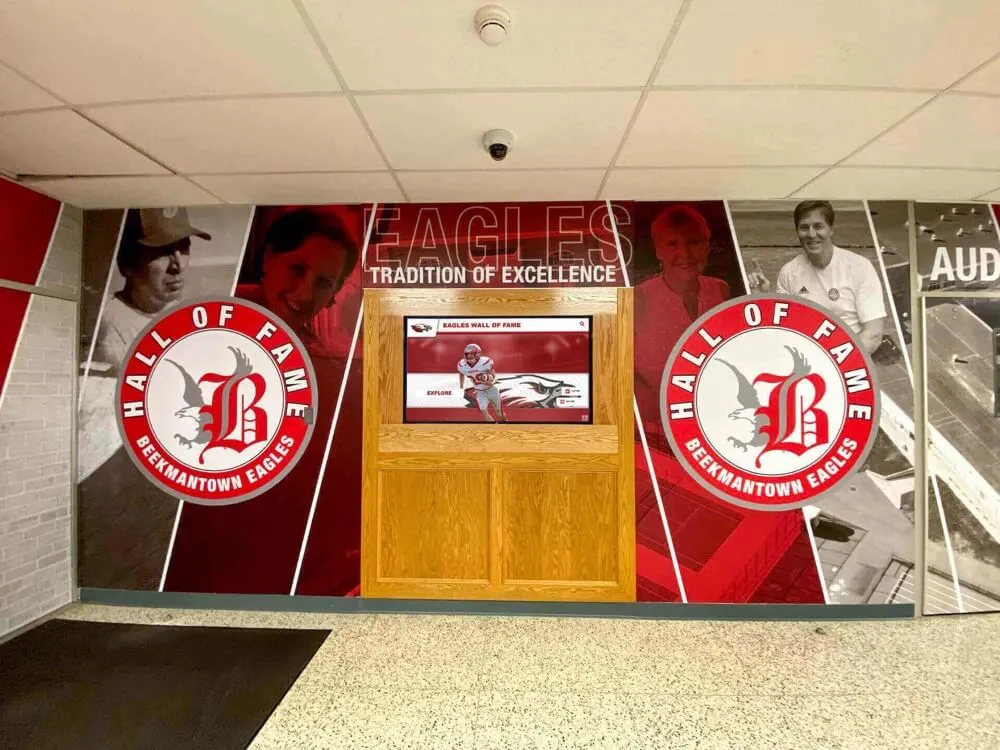
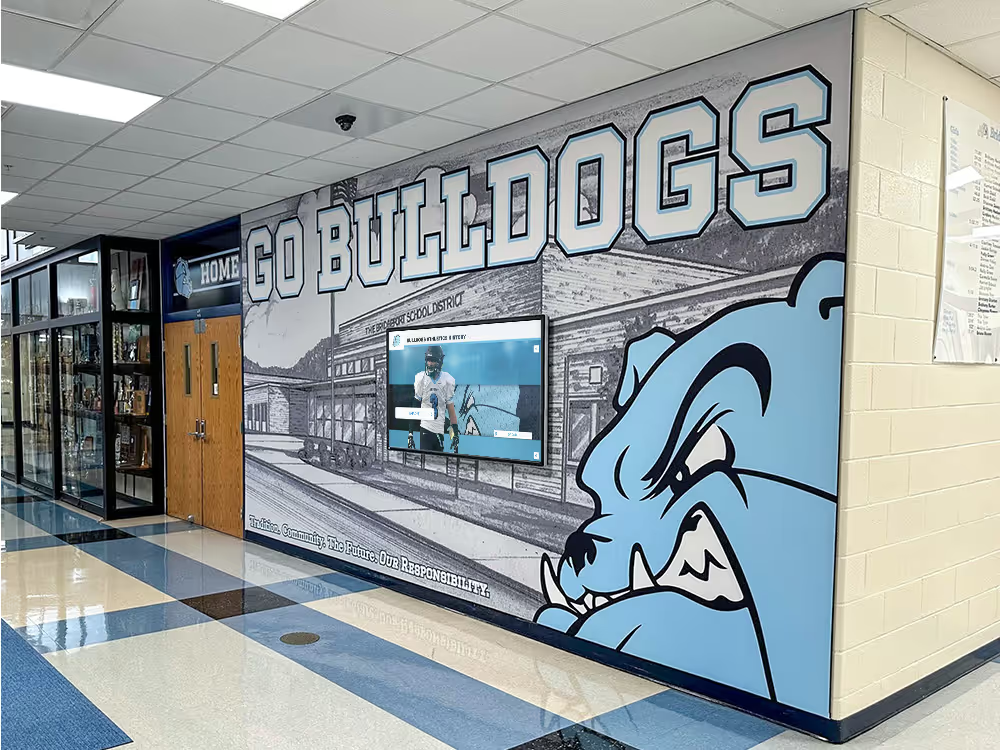
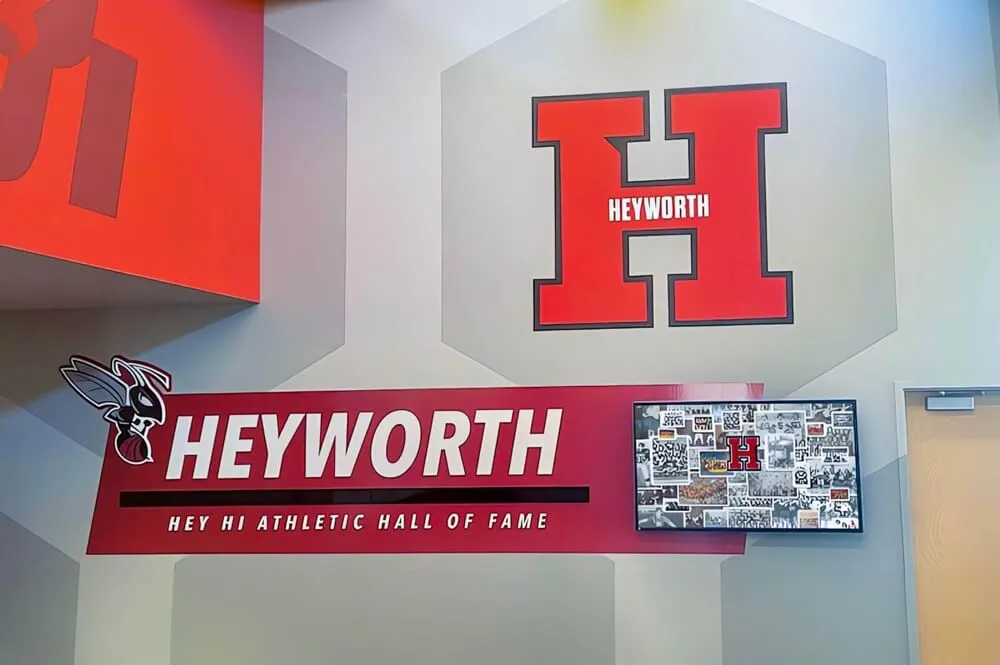
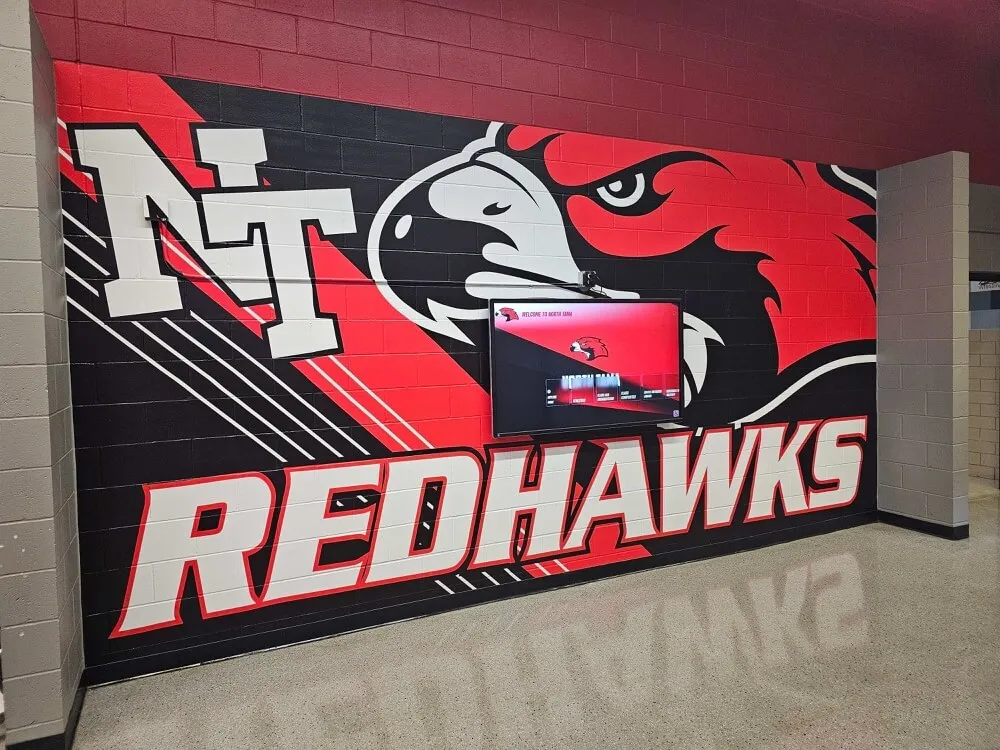
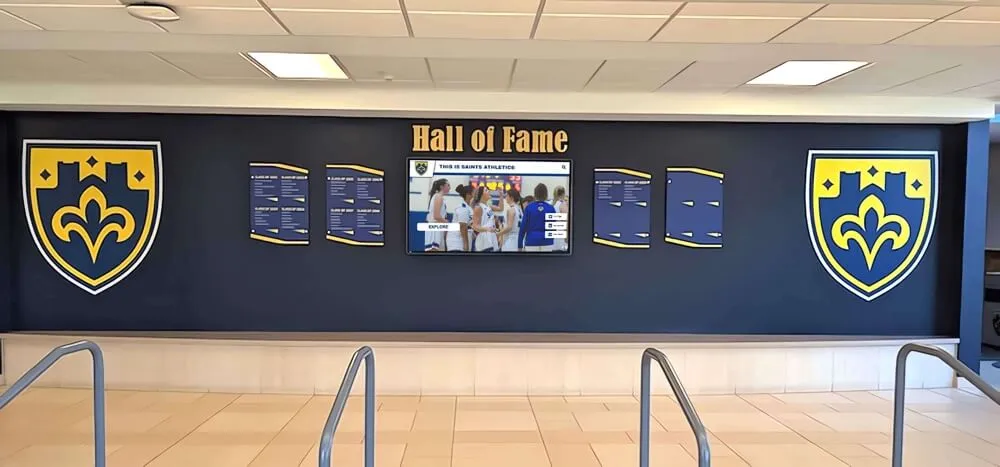
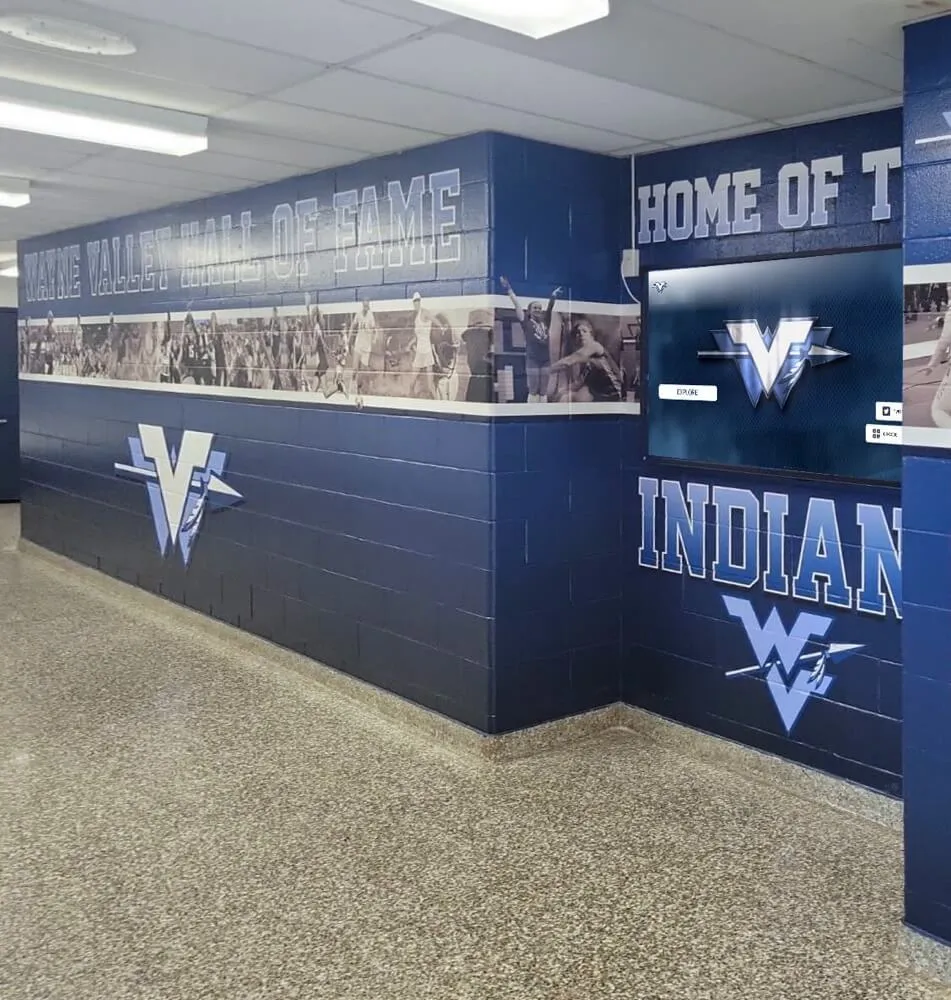
Athletic hall of fame displays incorporating mascot branding and school identity create recognition environments that feel authentically connected to program culture
Planning Your Athletic Awards Plaque Program
A recognition program that works for the next 20 years requires upfront planning that goes beyond choosing plaque materials and mounting hardware.
Space Assessment and Capacity Planning
Before ordering a single plaque, map your available wall space and project how quickly it will fill. An athletic program adding 10 plaques per year in a hallway with space for 60 will exhaust that space in six years. Planning for that constraint before it becomes a crisis means either:
- Designing modular display systems that can expand into adjacent wall space
- Reserving a portion of recognition budget for periodic digital upgrades
- Establishing policies for archiving older plaques before physical capacity is reached
The calculation is straightforward but rarely done: multiply your annual recognition volume by your desired program length (aim for at least 15–20 years of planning horizon) and verify your available space can accommodate it.
Budget Planning for Physical vs. Digital Recognition
Traditional plaque program costs:
- Basic aluminum or acrylic plaques: $40–$100 each
- Standard brass or wood: $75–$200 each
- Premium bronze plaques: $150–$600 each
- Perpetual plaque with annual additions: $200–$500 initial, $15–$40 per name plate annually
- Trophy case installation or renovation: $2,000–$8,000
- Annual recognition budget (10–20 plaques): $1,500–$6,000
Digital recognition system costs:
- Commercial touchscreen display (43–65"): $2,000–$6,000
- Custom kiosk enclosure and mounting: $2,000–$5,000
- Installation and configuration: $1,500–$3,000
- Annual software platform: $1,200–$3,600
- Hardware lifecycle replacement (every 7–10 years): amortized $300–$600 annually
The crossover point where digital systems become cost-competitive with traditional plaque programs typically occurs around year 3–5 for programs adding 15 or more plaques annually—because digital systems eliminate ongoing fabrication and engraving costs for each new recognition addition.
Recognition Policy Development
Sustainable programs document recognition criteria, approval processes, and timelines before awards accumulate inconsistently. Policy elements worth establishing in writing:
- Which achievements qualify for permanent plaque recognition versus digital-only acknowledgment
- Naming conventions and formatting standards ensuring visual consistency
- Approval authority for hall of fame inductions and championship recognition
- Timeline from achievement to installed recognition (for traditional plaques, 90-day lead time for bronze is realistic)
- Archive procedures for plaques removed from primary display
- How records are updated and who is responsible for maintaining accuracy
FAQ: Athletic Awards Plaques
What material is best for outdoor athletic awards plaques?
Cast bronze and powder-coated aluminum are the best materials for outdoor athletic plaques. Bronze develops a natural patina that handles weather exposure without structural degradation and can last 50+ years outdoors. Aluminum with anodized or powder-coated finishes resists corrosion at a lower price point. Wood, acrylic, and glass are not suitable for exterior installations.
How do you organize an athletic hall of fame plaque wall?
The most effective athletic hall of fame plaque walls organize inductees either alphabetically (for easy visitor name searches), by graduation year (connecting athletes to their peer cohorts), or by sport (giving each program its own visual identity). Clear header plaques identifying the hall’s name and criteria, consistent plaque sizing, and adequate lighting ensure the display reads as an intentional installation rather than an accumulated collection.
When should an athletic department choose digital displays over traditional plaques?
Digital displays become the practical choice when programs face physical space constraints, recognize more than 15–20 athletes annually, want to include rich media like photos and video highlights, need immediate recognition updates when records fall, or want recognition accessible beyond the physical campus. Programs adding multiple sports, junior varsity recognition, and multi-decade archives typically find that digital systems deliver better long-term value than trying to expand physical plaque installations indefinitely.
What should be included on a championship team athletic plaque?
Championship team plaques should include: school name and sport, championship title and level (conference, district, state, national), season year, complete team roster, head coach and assistant coaches, and season record. Including a team photo on the plaque where fabrication method allows adds visual identity that name lists alone cannot provide.
How long does it take to receive custom athletic awards plaques?
Lead times vary by material and vendor. Standard brass and aluminum plaques typically ship in 2–4 weeks for straightforward designs. Custom cast bronze plaques require 6–12 weeks depending on complexity and foundry schedule. Acrylic and glass plaques with digital printing often have 2–3 week turnarounds. Planning end-of-season recognition orders immediately after championships ensures plaques arrive in time for presentation ceremonies.
Conclusion: Building Athletic Recognition That Grows With Your Program
Athletic awards plaques serve programs best when they’re chosen for the long term, not just the immediate season. The material you select for a championship plaque installed today will represent your program’s history for decades. The layout system you design for your trophy wall will shape how athletes, families, and alumni experience your program’s identity for years after the individual achievements it honors have faded from recent memory.
For programs in the early stages of building recognition infrastructure, traditional plaques in bronze, wood, or acrylic provide excellent starting points with manageable costs and familiar institutional aesthetics. As programs grow in size, history, and recognition volume, hybrid approaches incorporating digital displays extend recognition capacity without sacrificing the permanence and formality that physical plaques provide.
The most successful athletic recognition environments are those designed not for this season, but for the next twenty—systems flexible enough to accommodate program growth, material choices durable enough to honor achievements with appropriate permanence, and digital tools capable of telling the full story of what makes an athletic program worth celebrating.
Ready to Transform Your Athletic Recognition Program?
Discover how Rocket Alumni Solutions touchscreen wall of fame systems help athletic departments showcase unlimited achievements—championships, hall of fame inductees, record holders, and more—without ever running out of wall space.
Explore Athletic Recognition Solutions