



Athletic awards rubrics give schools a structured, defensible process for selecting award recipients at end-of-season banquets, letter award ceremonies, and long-term hall of fame recognition. When coaches and athletic directors present awards without documented criteria, the selection process depends entirely on perception—and perception gaps lead to parent complaints, athlete frustration, and recognition that fails to reinforce the values a program claims to prioritize.
A well-designed rubric changes that. By defining scoring criteria for leadership, sportsmanship, statistical performance, academic standing, and commitment before the season ends—rather than after—athletic departments create recognition that athletes, families, and administrators can all trust. This guide provides a ready-to-use scoring framework, sample policy language, and guidance on connecting rubric scores to permanent display eligibility for certificates, banquets, and long-term recognition walls.
Across high school and collegiate athletic programs, the question of “who deserves an award?” is asked thousands of times each spring. The programs that answer it most confidently are the ones that documented their answer before anyone asked—not the ones making it up in the coaches’ lounge the night before the banquet.

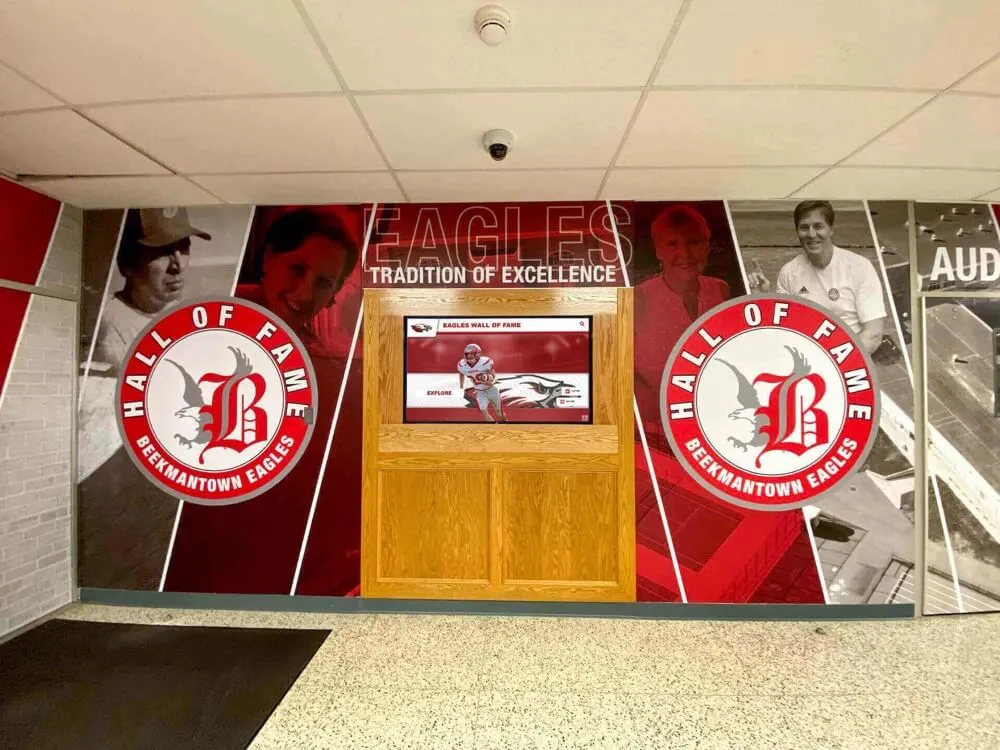
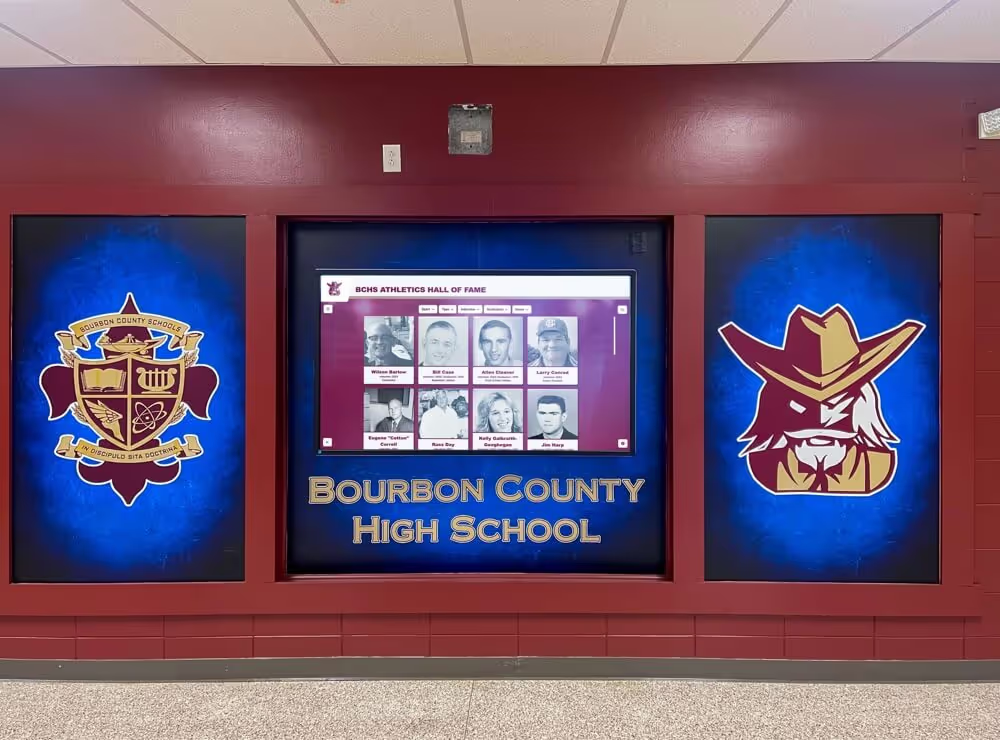
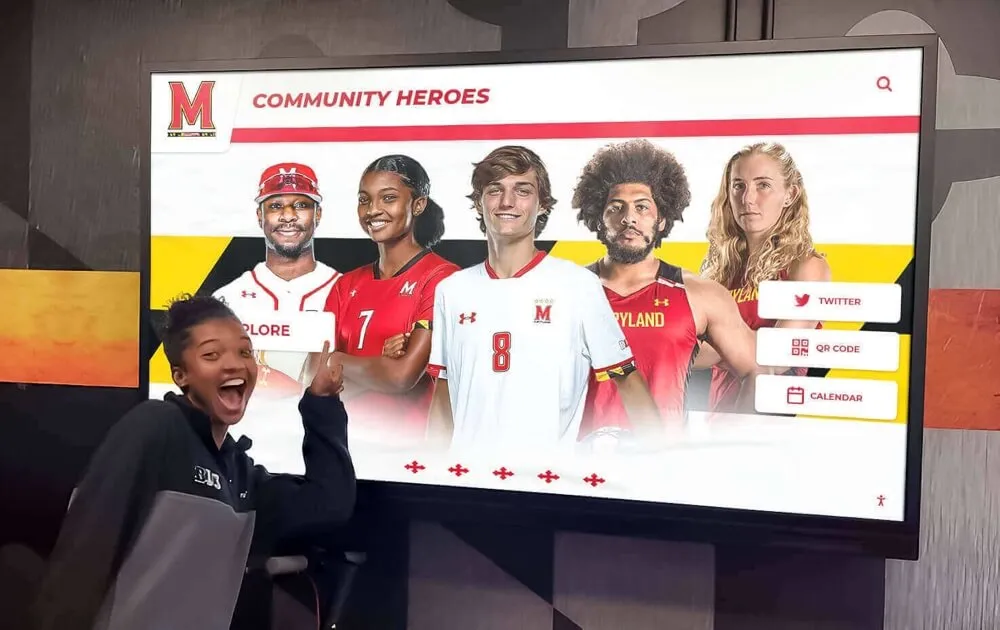
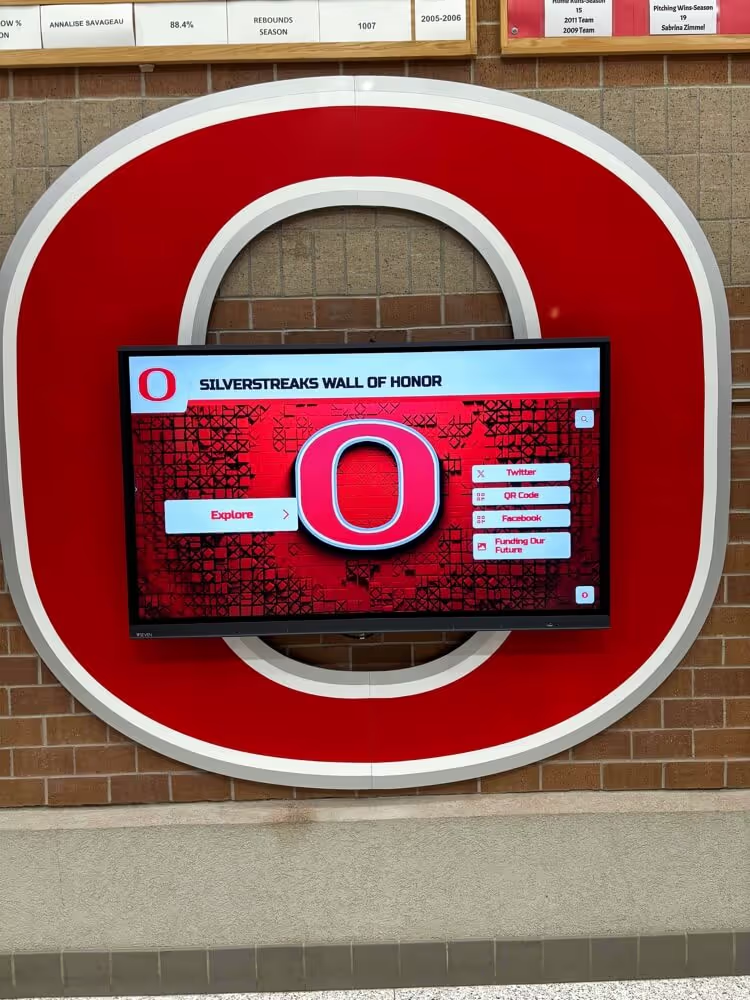
A properly structured athletic awards program—with documented rubric criteria—creates recognition that earns trust and motivates future athletes
Why Athletic Programs Need a Formal Awards Rubric
An athletic awards rubric accomplishes three things that informal selection cannot:
It creates consistency across seasons. When the same criteria apply every year, award decisions don’t shift based on who’s coaching, how the season ended, or which families have been most vocal. Athletes know what they’re working toward from day one.
It makes selection explainable. When a parent asks why their athlete didn’t receive the MVP award or wasn’t included in the display case, a rubric provides an honest, criterion-based answer rather than a subjective one. According to the National Interscholastic Athletic Administrators Association (NIAAA), transparent selection processes are among the most effective practices for building parent and community trust in athletic programs.
It connects awards to eligibility for long-term recognition. A rubric score isn’t just useful for banquet-night decisions—it can define which athletes qualify for permanent recognition on trophy walls, digital displays, and record boards. That link between rubric outcomes and display eligibility gives the scoring process institutional weight beyond the season that produced it.
Establishing formal eligibility policies for awards and display is increasingly common among programs that manage large multi-sport recognition environments where consistency across coaches and seasons is essential.
The Five Scoring Categories
A comprehensive athletic awards rubric should evaluate athletes across five dimensions. No single dimension should dominate: an athlete who scores high on statistics but low on sportsmanship should not receive the same recognition as one who earns high scores across the board. The rubric categories below reflect the full-athlete perspective that most school athletic programs espouse.
1. Leadership
Leadership in athletics isn’t limited to who wears the captain’s armband. It includes the athlete who holds a teammate accountable during a tough practice, the senior who invests time in a younger player’s development, and the competitor who projects composure in high-pressure situations that would rattle less mature players.
Evaluating leadership requires observation over the full season, not a single dramatic moment. Coaches should note specific incidents—practices, travel days, adversity situations—where athletes either demonstrated or failed to demonstrate leadership. These documented observations make leadership scoring defensible.
Leadership scoring factors:
- Peer influence: does this athlete elevate those around them?
- Adversity response: how does the athlete lead when the team is losing or struggling?
- Communication: does the athlete communicate constructively with coaches and teammates?
- Consistency: is leadership demonstrated across the whole season, not just marquee games?
2. Sportsmanship
Sportsmanship criteria should align with your school’s code of conduct and state athletic association eligibility standards. Rather than scoring sportsmanship as a vague “good character” impression, tie it to documented conduct: technical fouls, unsportsmanlike conduct penalties, referee reports, and incidents documented by coaching staff.
Programs that participate in state-level sportsmanship recognition programs—such as those administered by the National Federation of State High School Associations (NFHS)—often already have formal conduct documentation processes that can feed directly into rubric scoring.
Sportsmanship scoring factors:
- Absence of conduct violations during the season
- Respectful behavior toward opponents, officials, and opposing coaches
- Behavior on the bench when not actively competing
- Post-game conduct (win and loss scenarios)
Connecting sportsmanship standards to eligibility for display recognition ensures the athletes whose names and photos appear on permanent walls genuinely reflect the values the program stands for.
3. Statistical Performance
Statistical criteria vary by sport, but the principle is consistent: define what “above average” performance looks like in your program before the season, not after. This avoids the common problem of adjusting statistical thresholds to fit a predetermined winner.
For team sports, use position-relative benchmarks rather than absolute totals. A starting goalkeeper and a starting forward don’t share a meaningful statistical baseline. For individual sports—track, swimming, wrestling—percentile rankings against program historical averages or conference competition provide cleaner thresholds.
Statistical scoring factors:
- Performance relative to program historical average at the position
- Performance relative to conference or regional competition
- Improvement trajectory over the course of the season
- Performance in key competition (playoffs, championship events) vs. regular season
Recognizing individual and team excellence across diverse statistical categories—including those that don’t appear in box scores—helps ensure that complementary athletes, not just scorers, receive fair consideration.
4. Academic Standing
Including academic standing in the athletic awards rubric reinforces that school athletic programs exist inside an educational institution, not parallel to one. The NIAAA’s guidance on student-athlete recognition explicitly notes that programs that honor academic-athletic balance produce stronger long-term alumni engagement than those that focus exclusively on athletic performance.
Use the GPA thresholds your school already maintains for athletic eligibility as a baseline, then build upward:
Academic scoring factors:
- Current GPA relative to eligibility threshold and program average
- Academic improvement from prior season
- Academic honors earned (honor roll, scholar-athlete designation)
- Absence of academic probation during the season
5. Attendance and Commitment
Commitment scores reward what statistics don’t capture: the athlete who never missed a preseason workout, showed up early to film review sessions, or maintained full participation through injury rehabilitation. This category is particularly valuable for recognizing role players and reserve athletes who contribute to program culture without generating significant playing-time statistics.
Commitment scoring factors:
- Practice attendance rate (documented)
- Voluntary participation in skill development or film sessions
- Participation during injury (if cleared for modified activity)
- Off-season commitment (conditioning programs, camps, voluntary team activities)
The Athletic Awards Rubric: Scoring Table
Use the table below as a starting framework. Adjust point values, descriptors, and thresholds to match your program’s specific context and values. This rubric scores each athlete on a 0–5 scale per category, for a maximum total score of 25 points.
| Category | 1 — Developing | 2 — Approaching | 3 — Meets Standard | 4 — Exceeds Standard | 5 — Exemplary |
|---|---|---|---|---|---|
| Leadership | Rarely leads; may undermine team dynamics | Occasionally leads in low-stakes situations | Consistently constructive; respected by peers | Leads in competition and off-field contexts | Identified team leader by coaches and peers; actively mentors others |
| Sportsmanship | Multiple conduct violations documented | 1–2 minor violations; generally respectful | No violations; consistently respectful | Models sportsmanship for teammates; positive reviews from officials | Recognized by opponents, officials, and opposing staff as a program representative |
| Statistical Performance | Significantly below program position average | Below program position average | At or near program position average | Above program average; top-third in team | Top-10% in conference or region; all-league consideration |
| Academic Standing | Below eligibility threshold (< 2.0 GPA) | Eligibility threshold met (2.0–2.49) | Solid academic standing (2.5–2.99) | Honor roll eligible (3.0–3.49) | Scholar-athlete (3.5+ GPA); academic honors earned |
| Commitment | Attendance below 75%; limited extra effort | Attendance 75–84%; minimal additional participation | Attendance 85–94%; meets program expectations | Attendance 95%+; participates in voluntary activities | Perfect attendance; visibly raises commitment expectations for teammates |
Scoring Thresholds by Recognition Level
Once every athlete on the roster has been scored, use the following thresholds to determine recognition eligibility. Adjust point ranges to reflect your program’s competitive level and recognition philosophy.
| Total Score (out of 25) | Recognition Level |
|---|---|
| 8–12 | Participation and completion certificate |
| 13–16 | Standard banquet recognition; sport-specific superlative eligible |
| 17–19 | Letter award eligible; featured banquet recognition |
| 20–22 | All-program team nomination; banquet featured honoree |
| 23–25 | Top individual award eligibility (MVP tier); permanent display eligible |
The “permanent display eligible” designation at the 23–25 range is deliberate: it connects rubric performance to the athletes whose names, photos, and achievements belong on trophy walls, honor boards, and long-term athletic stats displays. When display eligibility is tied to documented rubric scores, athletic directors can answer the question “why is this athlete on the wall?” with evidence, not opinion.

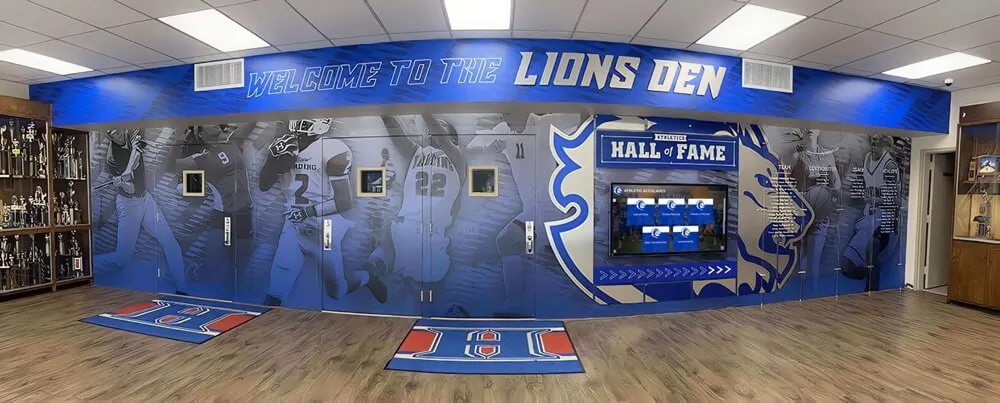
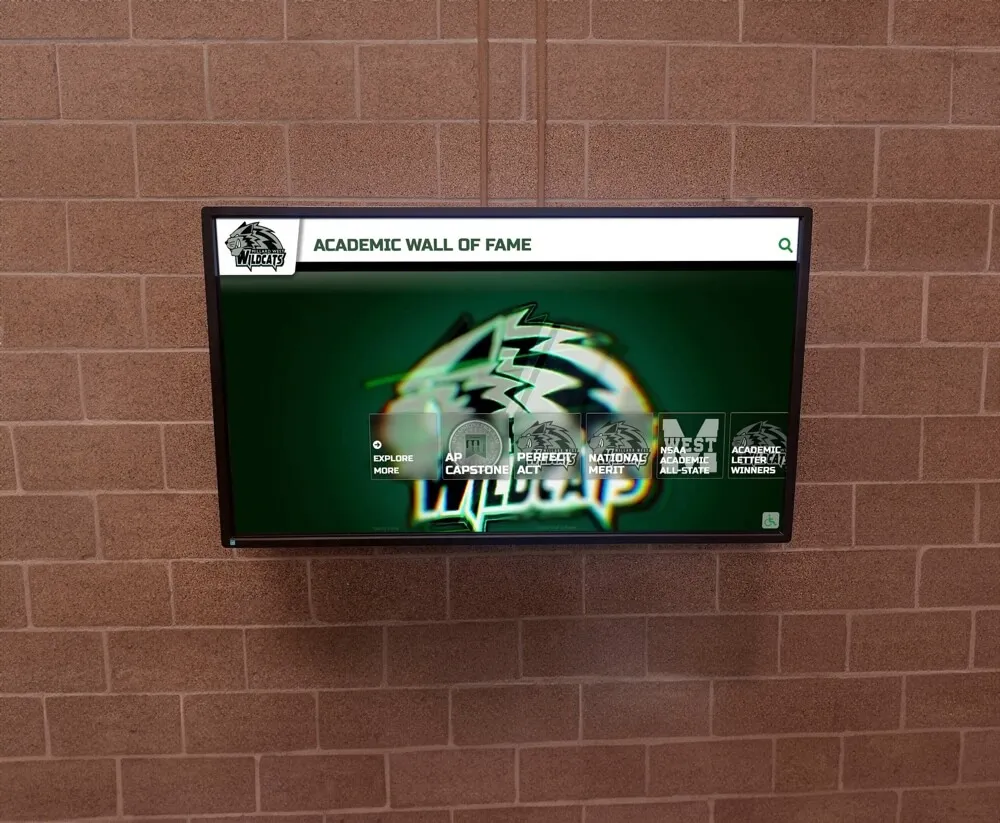
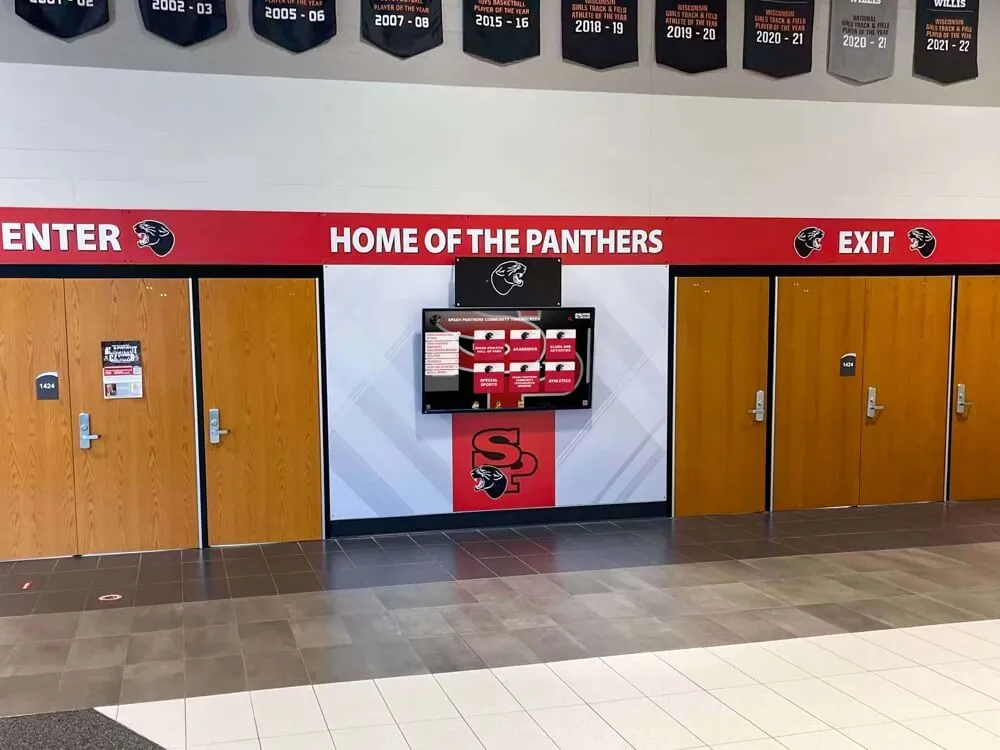
Permanent display recognition carries the most weight when it reflects documented achievement criteria rather than subjective selection
Sample Athletic Awards Policy Wording
The rubric table is most effective when embedded in a short written policy document distributed to athletes, families, and coaches at the start of the season. The following sample language can be adapted for your program’s handbook, website, or banquet materials.
[School Name] Athletic Awards Selection Policy
Purpose: The [School Name] Athletic Department uses a structured rubric to evaluate student-athletes for end-of-season recognition. This process ensures that awards reflect consistent, documented criteria applied equally across all athletes in a given sport.
Scoring Process: At the conclusion of each season, coaching staff complete a rubric evaluation for each rostered athlete. Evaluations cover leadership, sportsmanship, statistical performance, academic standing, and commitment to the program. Scores are documented and retained on file.
Award Eligibility: Recognition levels are determined by total rubric scores as defined in the Athletic Awards Rubric, available from the Athletic Director. Specific award categories—including Most Valuable Player, Defensive Player of the Year, Scholar-Athlete, and Most Improved—may require minimum scores in one or more individual categories in addition to the total score threshold.
Display Eligibility: Athletes achieving a total rubric score of [threshold, e.g., 23 or above] are eligible for inclusion in permanent recognition displays, including trophy cases, digital walls of fame, and honor boards. Display inclusion is reviewed annually and subject to final approval by the Athletic Director.
Appeals: Families wishing to request a review of rubric scoring may submit a written appeal to the Athletic Director within 14 days of the awards ceremony. Appeals will be reviewed with reference to documented evaluation records.
This policy structure satisfies most school administrative requirements for documented recognition governance while remaining short enough to include in a printed banquet program.
Letter Award Criteria and the Rubric
Many programs maintain separate letter award criteria alongside their broader awards rubric. The rubric framework above integrates naturally with letter award decisions when the letter threshold is pegged to a specific score range—for example, requiring a minimum score of 17 to be eligible for a varsity letter.
Letter award criteria have historically been sport-specific and coach-dependent, leading to inconsistency across a multi-sport athletic department. An athletic director managing 15 sports may find that the swimming coach requires 12 varsity-level swims to earn a letter while the lacrosse coach awards letters based entirely on subjective assessment. The rubric creates a shared floor: regardless of sport-specific participation thresholds, no athlete earns a letter without meeting the minimum rubric score.
This doesn’t eliminate sport-specific criteria—it supplements them with a character and commitment baseline that applies consistently across the department.
Rubric Scoring in Practice: Common Scenarios
Scenario 1: The High-Stat, Low-Sportsmanship Athlete
A starting forward leads the team in scoring but accumulated two technical fouls and received a conduct report from an opposing coach. Under the rubric, this athlete’s statistical score is high (4 or 5), but the sportsmanship score drops to 1 or 2. A total score in the 15–17 range makes them a letter award recipient, but not an MVP candidate or display-eligible honoree. The rubric lets the coach have a specific, criterion-based conversation rather than a judgment call.
Scenario 2: The Consistent Role Player
A reserve midfielder starts fewer than half the team’s games but maintains a 3.8 GPA, has perfect practice attendance, and is consistently cited by teammates as a positive presence. Statistical score: 2. Academic score: 5. Commitment score: 5. Leadership score: 4. Sportsmanship score: 5. Total: 21. Under the rubric, this athlete qualifies for all-program team nomination—recognition that might never happen without a scoring system that makes non-statistical contributions visible.
Scenario 3: The Senior Captain
A senior co-captain has average statistics for the position but strong leadership, clean conduct, and 95% practice attendance. The rubric produces a total near 20, which qualifies this athlete for featured banquet recognition and potentially the Scholar-Athlete award if academic standing supports it. The rubric outcome matches the intuitive recognition the coaching staff already wanted to give—but now it’s documented.
Building an Awards Archive
Rubric documentation creates a secondary benefit that most programs overlook at the outset: a structured historical record. When scores are retained year over year, athletic directors can:
- Track which award categories are being distributed to high-scoring athletes versus low-scoring ones—a signal about whether the program’s stated values actually drive its recognition decisions
- Compare rubric averages across sports to identify where recognition is systematically over- or under-weighting specific categories
- Use historical rubric scores as supporting documentation when nominating athletes for district, state, or national recognition programs
Maintaining rubric records also supports long-term hall of fame and display programs. When a school decides to induct athletes from prior decades into a hall of fame, historical rubric scores provide a more defensible basis for retrospective selection than trying to reconstruct performance and character evaluations from memory.
Connecting Rubric Outcomes to Long-Term Displays
The final step in an athletic awards rubric process is connecting scores to physical and digital recognition. Sports banquet awards ideas that work in the short term—trophies, certificates, and on-stage presentations—carry far more long-term impact when they’re paired with visible, durable displays that current athletes encounter daily.
For programs with limited physical wall space, the question of physical display cases versus digital awards display is directly relevant to how rubric-eligible athletes get recognized. A digital display system can accommodate every athlete who scores above the display eligibility threshold every year—not just the top one or two from each season—without ever running out of wall space.
How athletes and their achievements are chosen and displayed matters for long-term program identity. A display that only shows championship teams leaves individual contributors invisible; a rubric-driven display eligibility threshold ensures that high-character athletes who contributed without winning championships receive lasting recognition alongside title-holders.
For programs tracking all-time records alongside individual award recipients, the rubric provides a useful governance framework for determining which record-holders also meet the character and conduct standards the program wants associated with its permanent recognition. An athlete who holds a statistical record but scored below the sportsmanship threshold shouldn’t automatically appear on an honor board without a documented review.
Over time, programs that connect rubric outcomes to athletic achievement displays build recognition environments that tell a complete story—who was great, who was good, and what the program consistently valued in selecting its honorees.
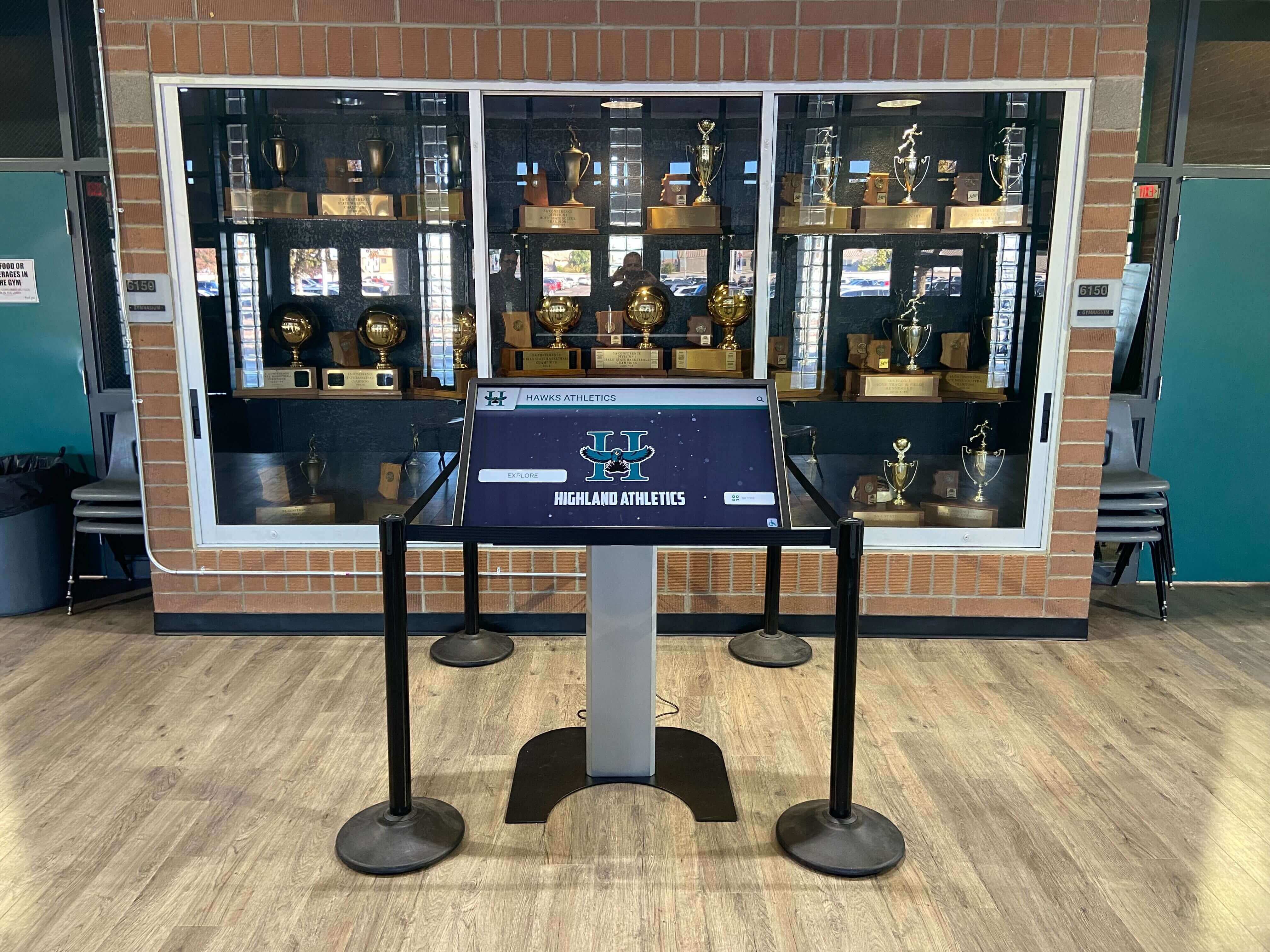
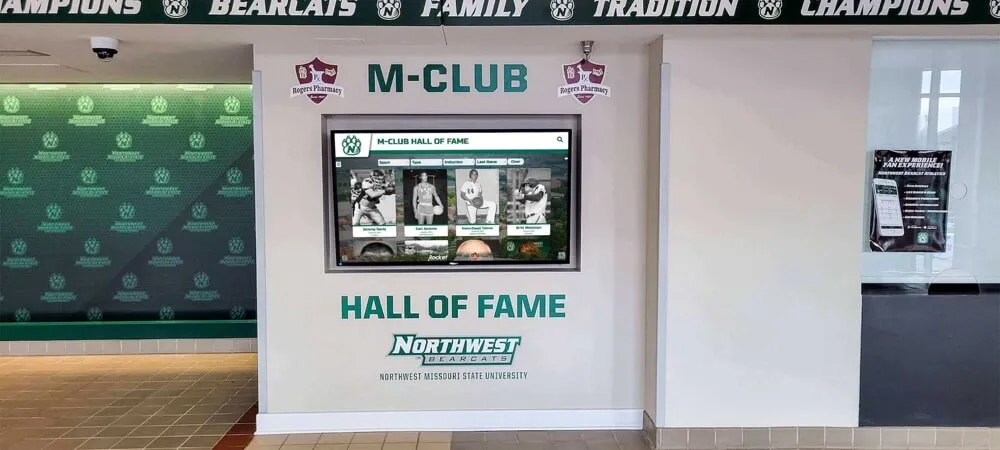
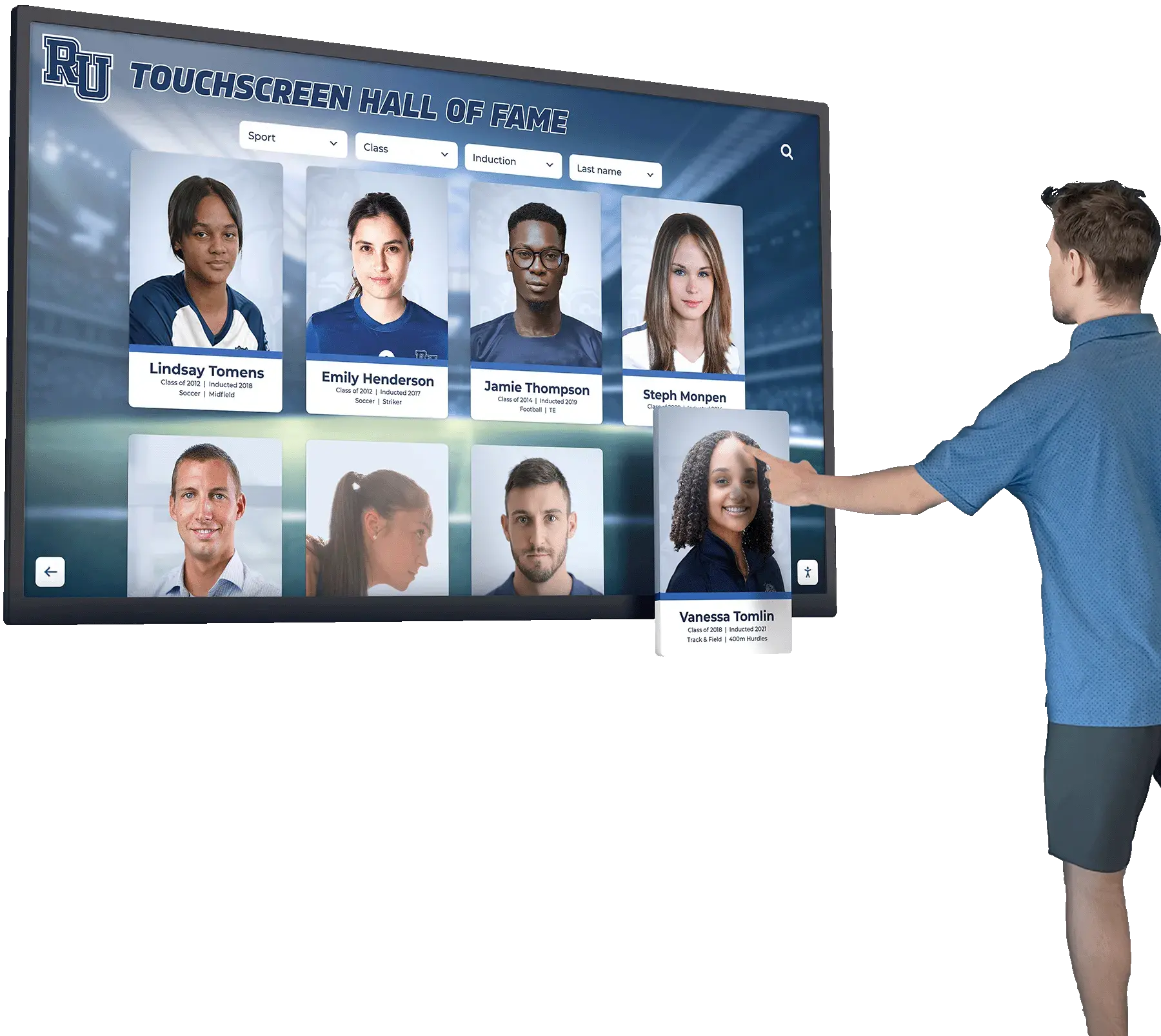
Digital recognition systems let programs connect rubric-eligible athletes to comprehensive profiles—photos, stats, and season summaries—rather than limiting display to static name plates
Rubric Documentation and Storage
The rubric process only creates value if the scores are retained. A scoring spreadsheet that disappears after banquet night accomplishes nothing for future appeals, hall of fame decisions, or cross-year comparisons. Recommended storage practices:
- Centralized athletic director records: All rubric scoresheets should be filed with the athletic director, not retained solely by individual coaches who may leave the program.
- Minimum 7-year retention: Consistent with most school records retention policies, rubric documentation should be maintained for at least seven years. For hall of fame programs, indefinite retention is preferable.
- Shared format: All sports should use the same rubric template, even if sport-specific criteria vary within individual categories. Shared format enables cross-sport comparisons and department-wide reporting.
- Annual calibration: Before each season, coaching staff should review the prior year’s scoring distribution to check for calibration drift—categories where scores are consistently too high or too low compared to actual athlete performance levels.
Schools building comprehensive digital archives of athletic history find that rubric documentation fits naturally into a broader institutional records strategy, where award selections, records, and program milestones are stored together rather than scattered across individual coaches’ files.
For recognition that extends to multi-sport hall of fame displays and commemorative showcase environments, having documented rubric histories dating back multiple seasons allows selection committees to make induction decisions based on verified records rather than reconstructed impressions.
Implementing the Rubric: Practical Steps
Step 1: Adopt or adapt the rubric before the season starts. Distribute criteria to all coaching staff and communicate the scoring framework to athletes and families in preseason meetings or program handbooks.
Step 2: Document throughout the season. Sportsmanship incidents, leadership observations, attendance records, and academic standing updates should be logged as they occur, not reconstructed at season’s end.
Step 3: Complete evaluations within two weeks of the final competition. Time pressure produces less accurate evaluations. Build the banquet calendar so that rubric scoring is complete at least two weeks before the ceremony.
Step 4: Review scores as a coaching staff. For multi-coach programs, independent evaluations from multiple coaches followed by a consensus review produces more accurate scores than a single evaluator working alone.
Step 5: Use scores to drive award assignments. Assign specific rubric thresholds to specific awards before scoring—not after. Adjusting thresholds to fit predetermined outcomes undermines the entire purpose of the rubric.
Step 6: Archive and communicate. File all scoresheets with the athletic director. Send athletes a brief summary of their rubric scores as part of end-of-season feedback—this creates a culture of transparency and gives athletes clear goals for the following season.
FAQ: Athletic Awards Rubrics
What categories should an athletic awards rubric include?
Most effective athletic awards rubrics include five categories: leadership, sportsmanship, statistical performance, academic standing, and commitment or attendance. These dimensions capture the full-athlete values that school athletic programs aim to reinforce—not just on-field production. Each category should be scored independently on a consistent scale (typically 1–5) with specific descriptors at each score level so evaluations are defensible and consistent across coaches.
How do you tie an athletic awards rubric to letter award criteria?
A rubric-based letter award threshold requires a minimum total rubric score—commonly in the 17–20 range on a 25-point rubric—in addition to any sport-specific participation criteria. This creates a consistent character and conduct floor across all sports in an athletic department, so that meeting the statistical or participation threshold alone isn’t sufficient without also demonstrating sportsmanship and commitment.
How should rubric scores connect to display eligibility for trophy cases and honor walls?
Display eligibility thresholds are typically set higher than standard award thresholds—for example, requiring a rubric score of 23 or above out of 25 for inclusion in a permanent trophy case, honor board, or digital wall of fame. This ensures that athletes honored in long-term recognition environments reflect the full-athlete standards the program values, not just statistical production.
Can a rubric be used fairly when comparing athletes across different positions or roles?
Yes, when statistical scoring is position-relative rather than absolute. Evaluating a goalkeeper and a forward against a shared goals-scored metric would be unfair; evaluating each against their position’s historical program average is equitable. Leadership, sportsmanship, academic standing, and commitment categories naturally work across positions because they measure character and behavior rather than sport-specific production.
How long should athletic awards rubric records be retained?
At minimum, rubric records should be retained for the same period as other athletic department records—typically 7 years under standard school records policies. For programs with active hall of fame or honor wall programs, indefinite retention is preferable. Historical rubric documentation allows selection committees to make induction decisions based on verified records rather than reconstructed impressions.
The Rubric as Program Infrastructure
An athletic awards rubric is not a bureaucratic formality—it is program infrastructure. Programs that document selection criteria attract athletes and families who value transparency. Programs that retain rubric records build a foundation for hall of fame governance that outlasts individual coaches. Programs that connect rubric scores to display eligibility create recognition environments where the names on the wall genuinely represent what the program stands for.
The sports banquet awards ideas that make the deepest impression are the ones backed by a process: where athletes knew what they were working toward, where selection was explained rather than asserted, and where the recognition on stage that night belongs to the same framework that governs what goes on the wall for the next fifty years.
Ready to Connect Your Rubric to Lasting Recognition?
Rocket Alumni Solutions builds digital walls of fame that let athletic departments display every rubric-eligible athlete—with photos, stats, and season summaries—without running out of wall space. See how schools are using touchscreen recognition systems to make award selection transparent and display results permanent.
See a Custom Demo