



Athletic trainer appreciation month gives schools a dedicated window to recognize the healthcare professionals who keep student athletes healthy, safe, and competition-ready throughout the year. The National Athletic Trainers’ Association (NATA) designates March as National Athletic Training Month (NATM) to elevate awareness of the profession—but most schools treat the occasion as a one-week social media campaign and nothing more. A few posts, a signed card, and a thank-you announcement at morning meeting, and the moment disappears.
That approach undersells both the contribution and the opportunity. Athletic trainers log thousands of hours per school year managing injury prevention, rehabilitation, sideline coverage, emergency response, and student-athlete health records. Recognition that evaporates after a week doesn’t reflect that reality. This guide covers recognition ideas that go beyond the social post—formats schools can plan, produce, and preserve so athletic trainers see their contributions acknowledged not just in March, but permanently.
Schools that build lasting recognition for athletic training staff report stronger staff retention, improved program culture, and better outcomes in athletic department accreditation reviews. The recognition moment that endures—a framed certificate on a hallway wall, a profile on a digital display, a named award presented annually—does more for morale and culture than any temporary gesture. According to the National Interscholastic Athletic Administrators Association (NIAAA), staff recognition programs are among the most cost-effective tools available to athletic departments seeking to reduce turnover and strengthen program identity.

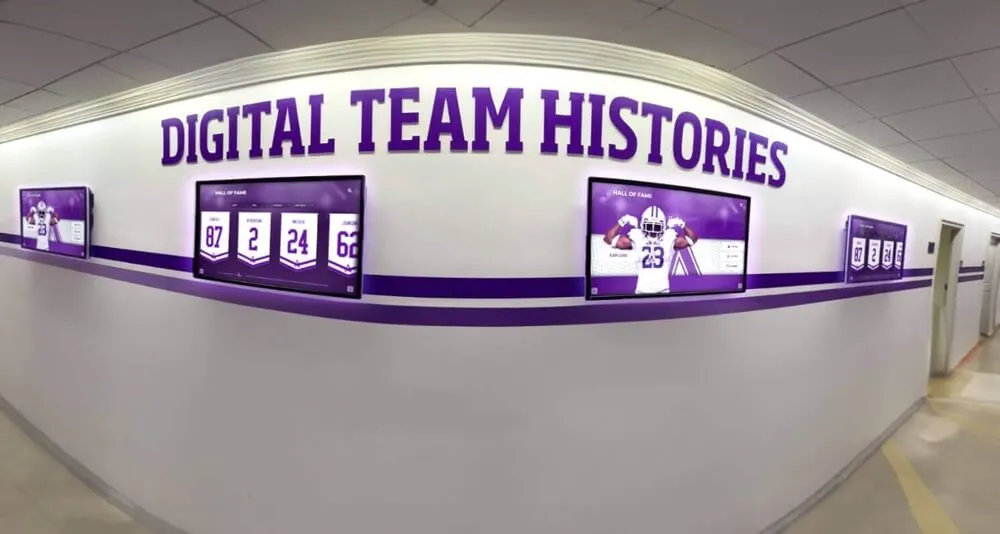
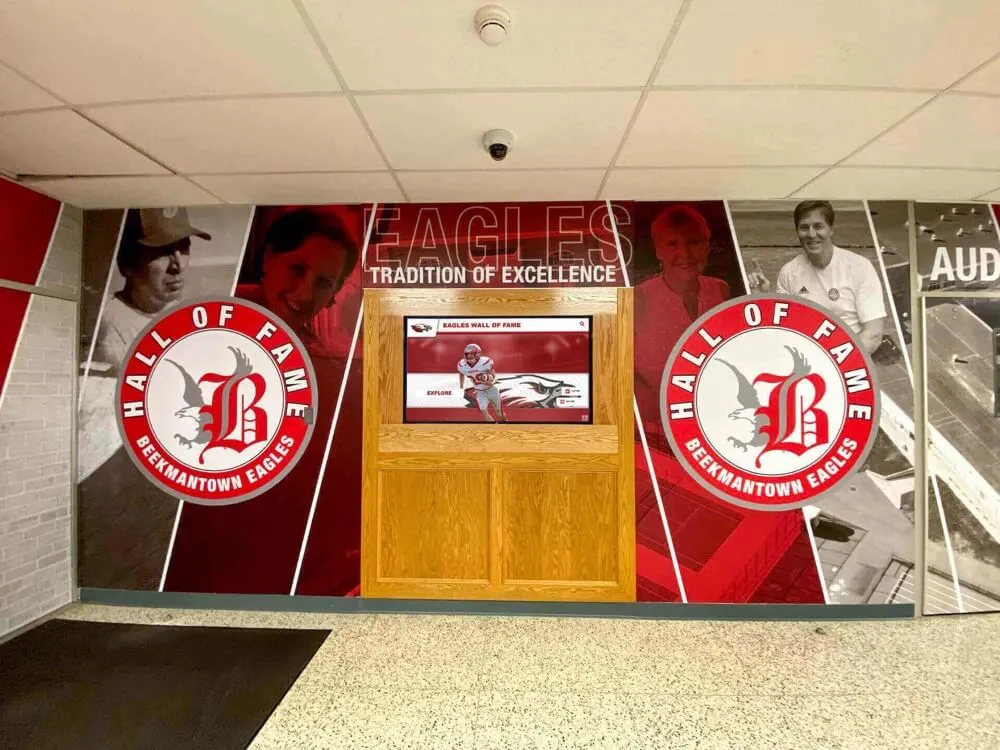
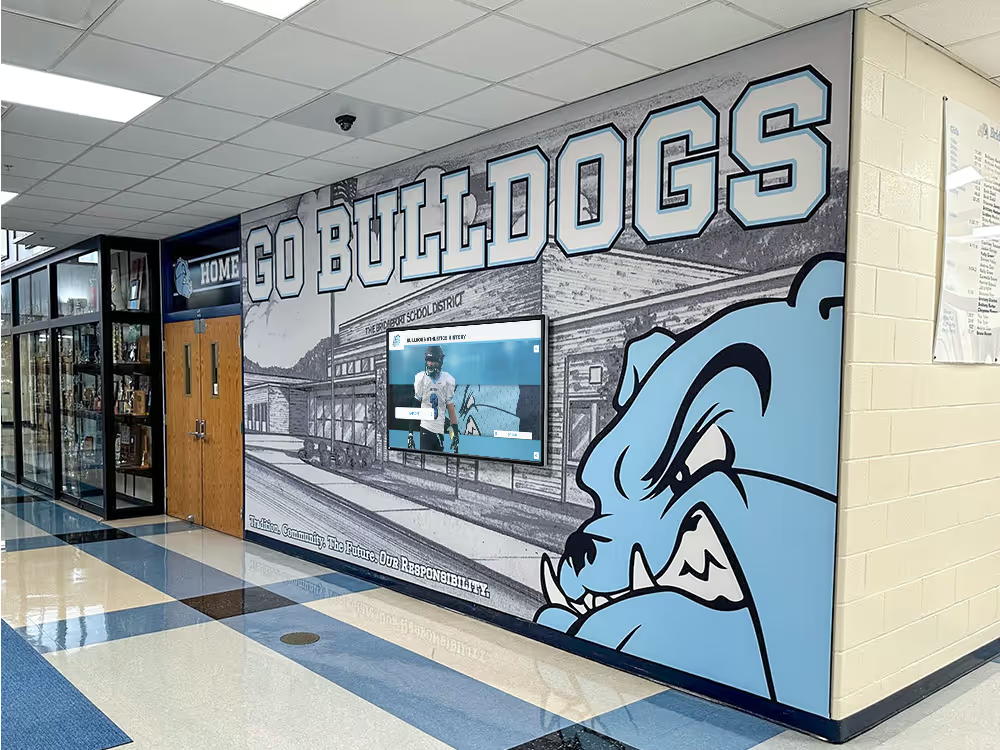
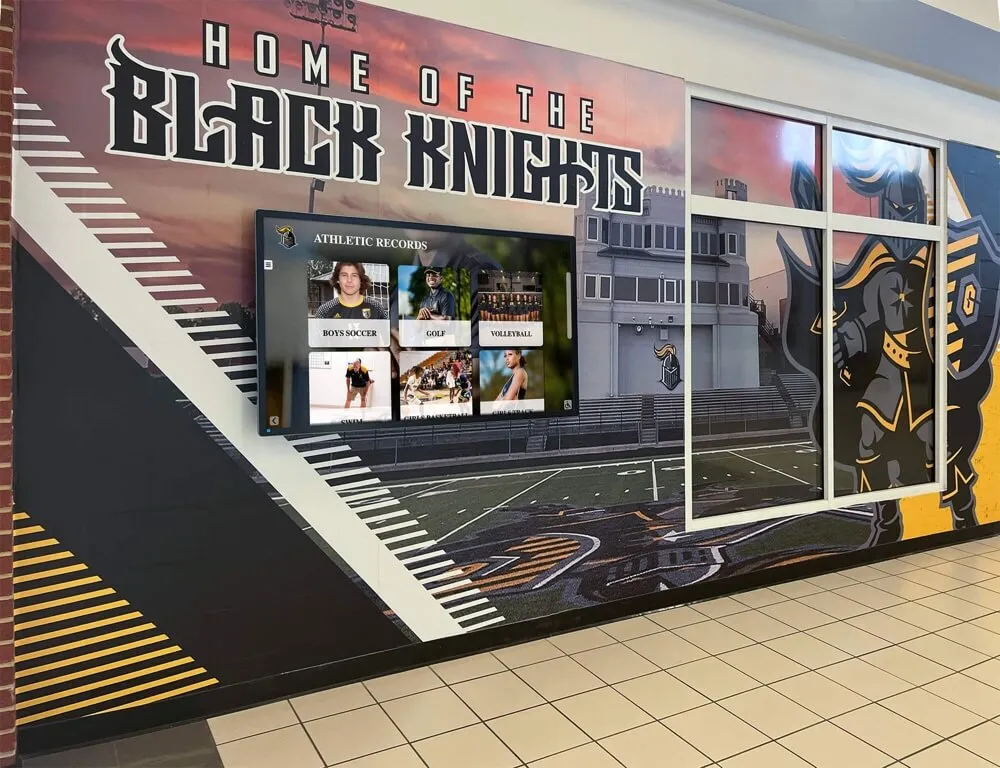
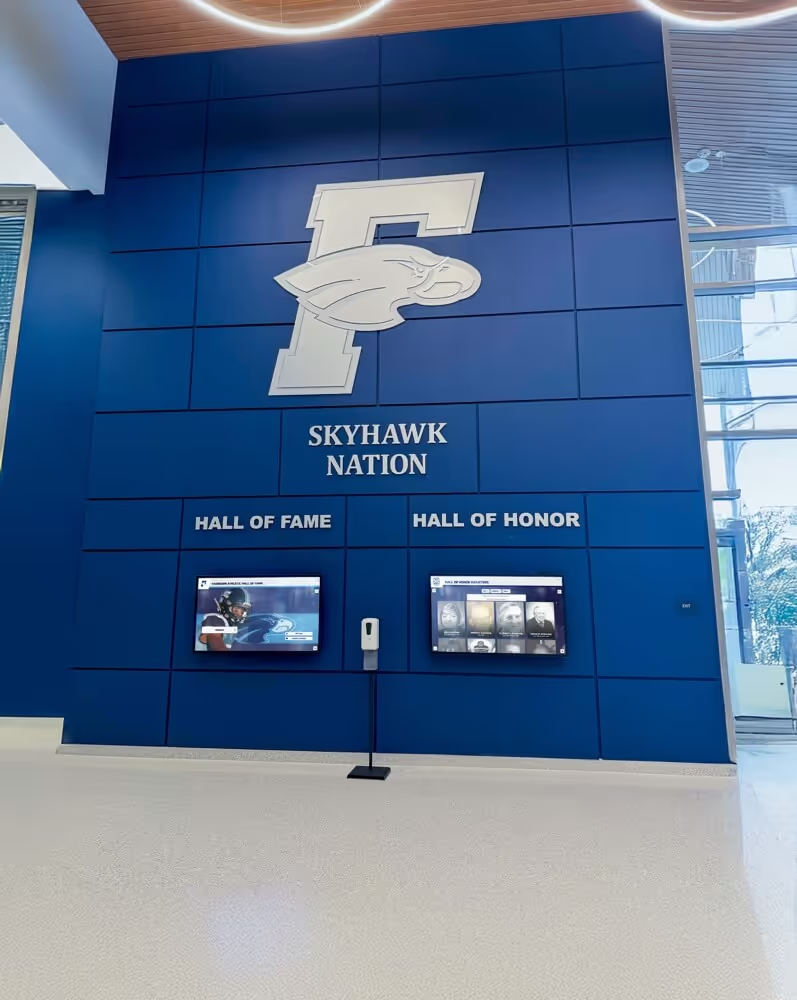
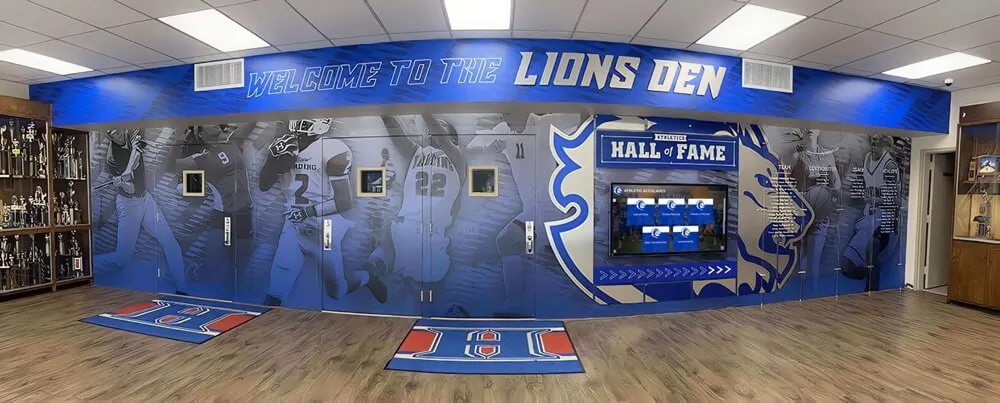
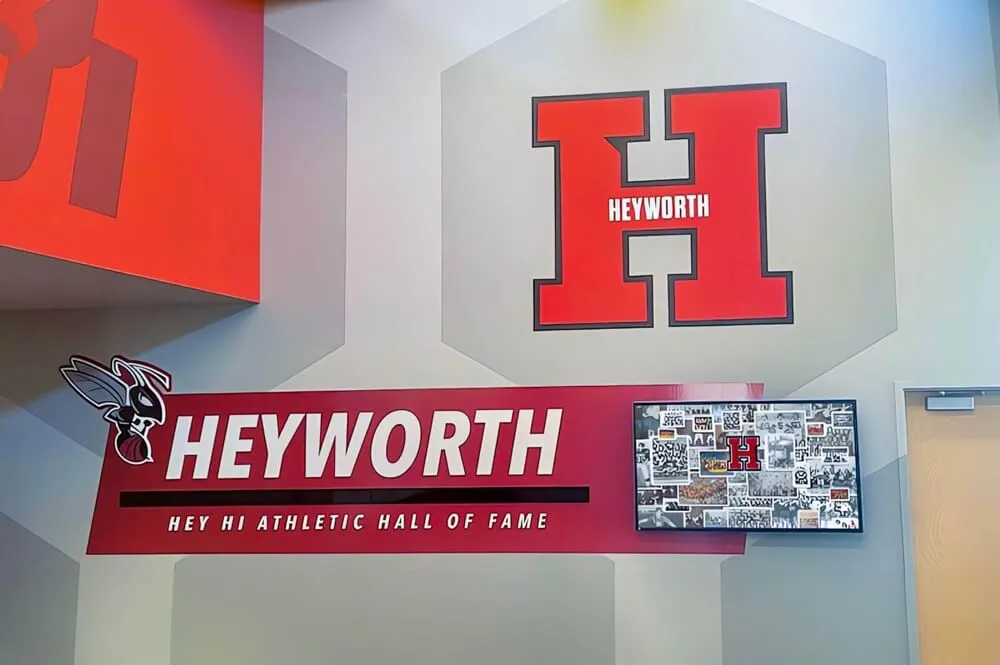
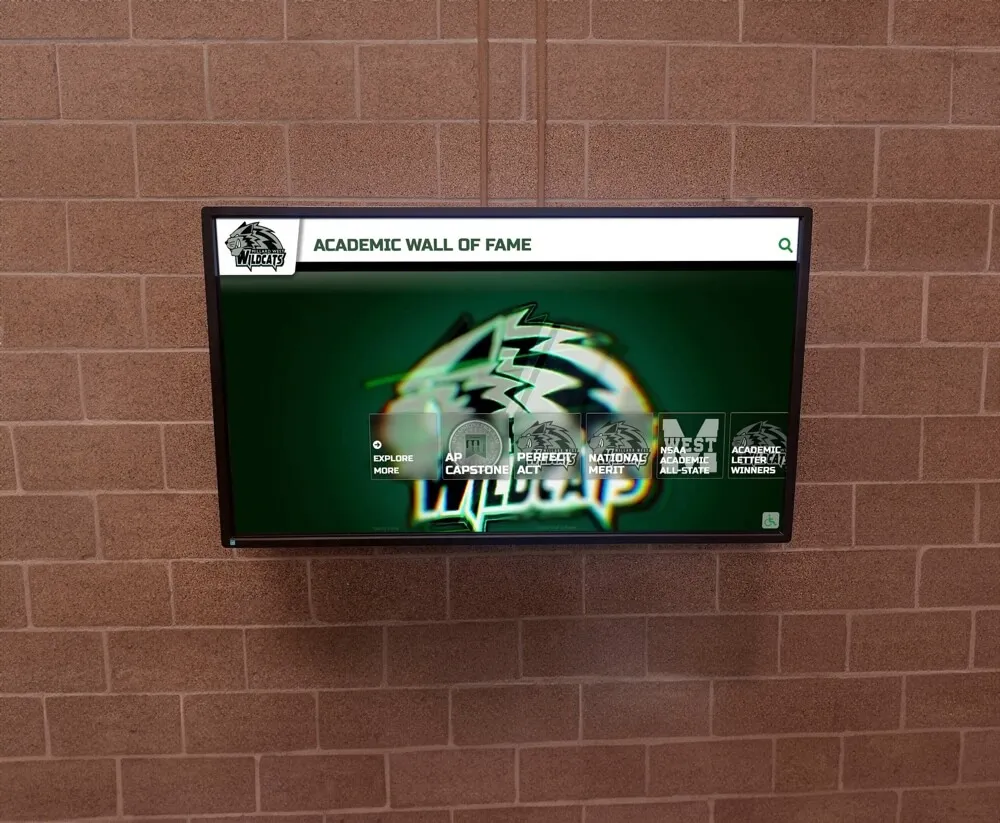
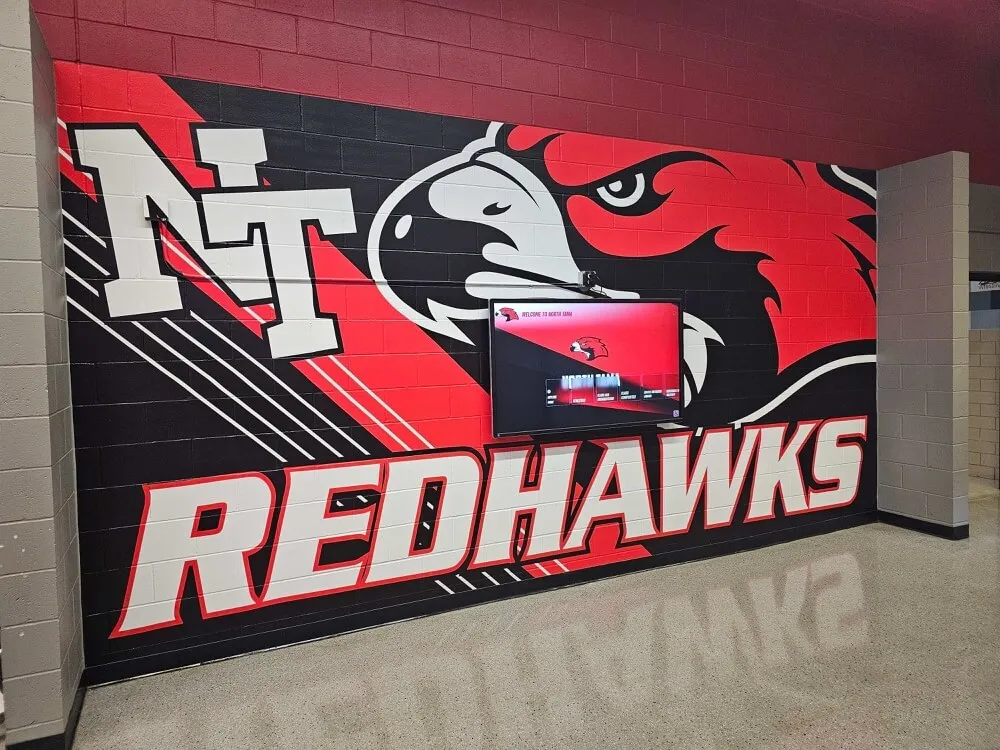
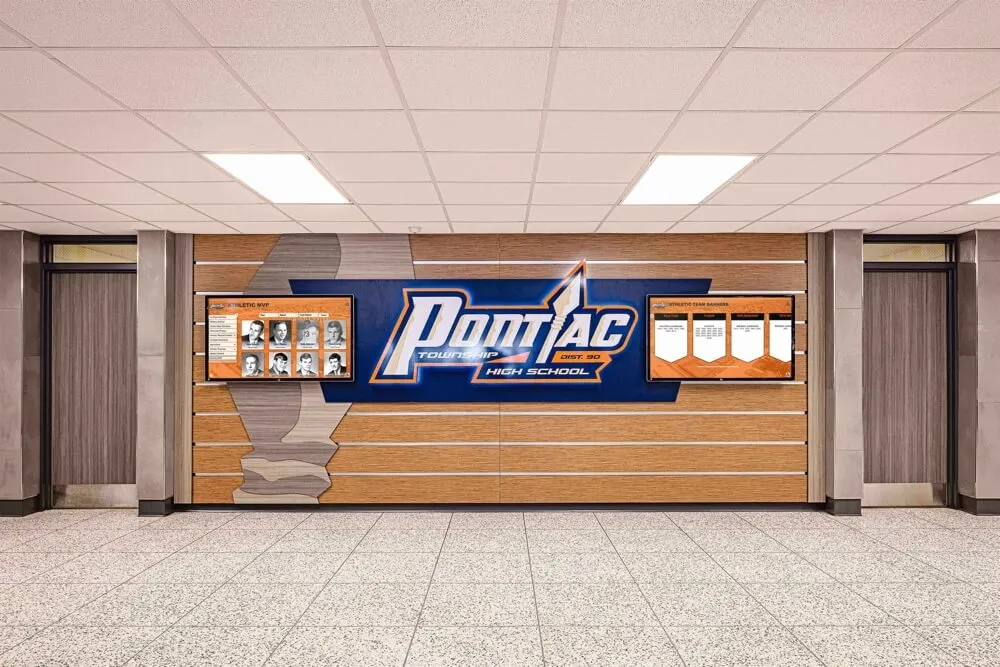
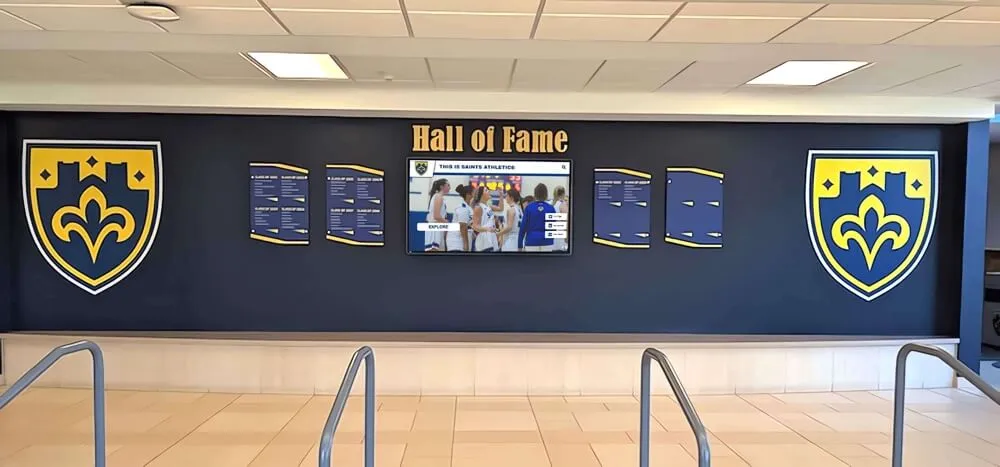
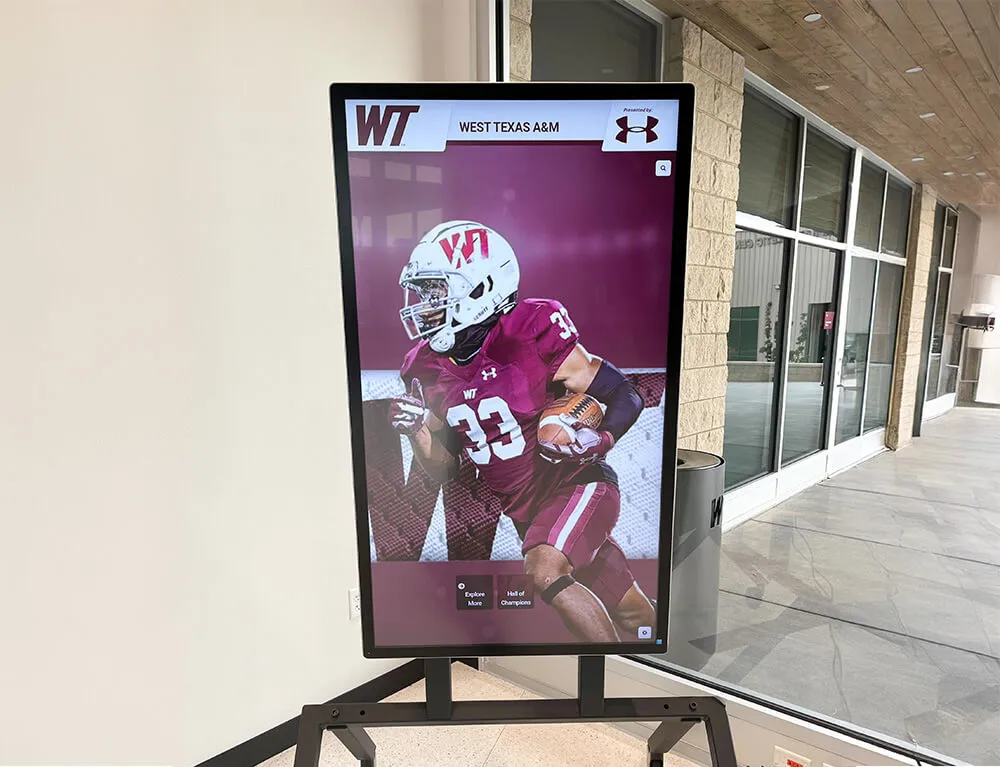
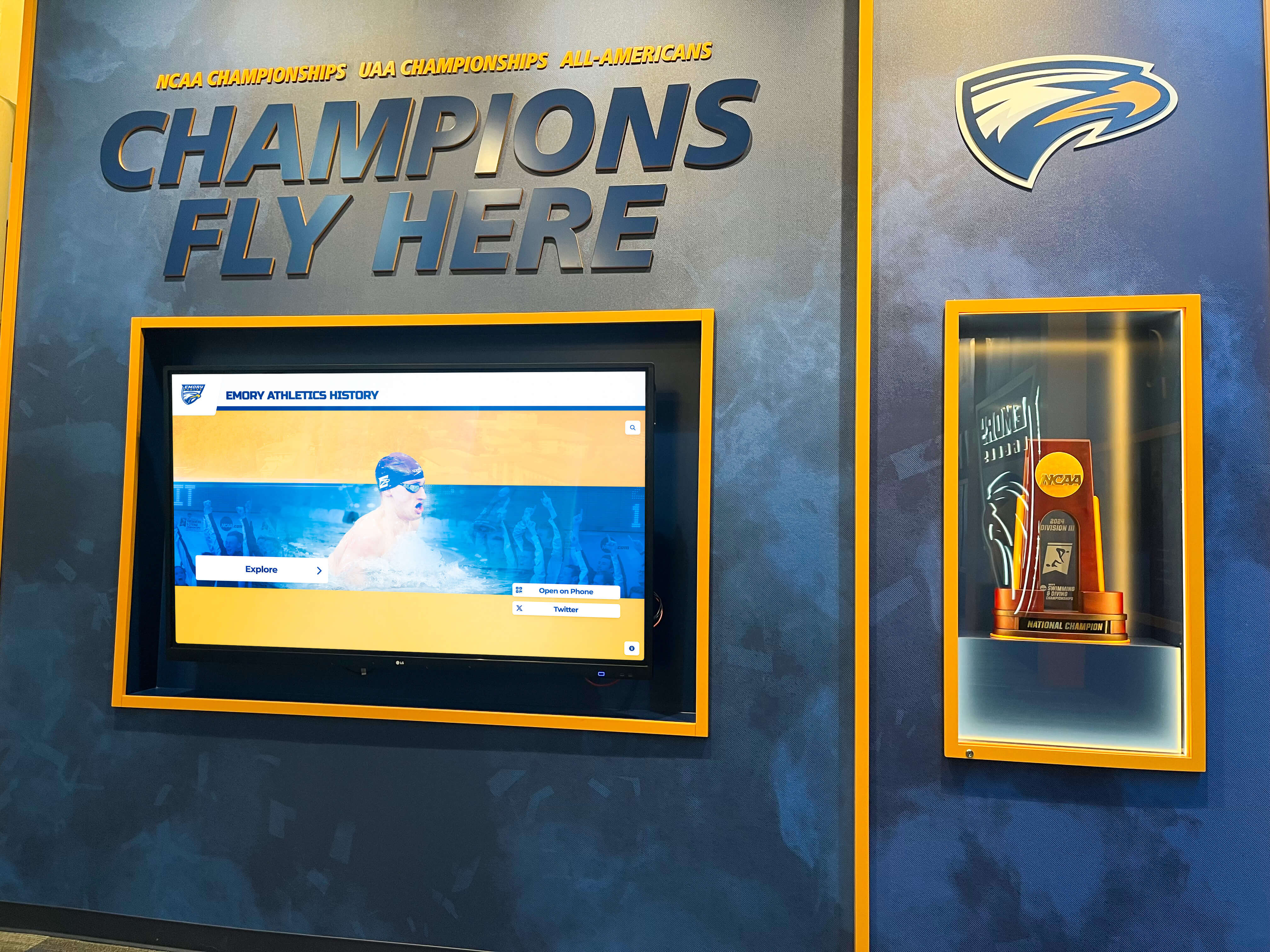
Athletic recognition walls that include staff contributions alongside athlete achievements create a more complete picture of what drives a program's success
What Is Athletic Trainer Appreciation Month?
Athletic trainer appreciation month is March, designated annually by the National Athletic Trainers’ Association as National Athletic Training Month (NATM). The campaign was established to increase public awareness of the athletic training profession—a licensed healthcare specialty requiring at minimum a master’s degree and board certification through the Board of Certification (BOC). Certified Athletic Trainers (ATCs) are the first responders for student-athlete injuries, the prevention specialists managing pre-participation screenings, and the rehabilitation professionals guiding athletes back from injury.
At the school level, athletic trainers are often the only licensed healthcare provider present on campus full-time. They manage taping, bracing, injury evaluation, emergency action plan coordination, heat illness prevention, and concussion management—responsibilities that directly affect student safety under NFHS and state athletic association guidelines. Despite this scope, formal recognition programs for athletic training staff are far less common than those for coaches or athletes.
National Athletic Training Month creates a natural calendar anchor for schools to build something more lasting than a social post. The key is treating March as a launch point for permanent recognition rather than a standalone observance.
Why Social Posts Aren’t Enough
Social media recognition has genuine value—a well-crafted Instagram post or school newsletter feature reaches families, community members, and students who wouldn’t otherwise encounter information about what athletic trainers do. But social content has a measured lifespan. Platform algorithms bury posts within hours. Screenshots shared by the honoree are the only record that persists.
That lifespan problem matters for athletic trainer recognition specifically because the contributions being honored are ongoing. An athletic trainer who has provided sideline coverage for 300 games over ten years hasn’t done something noteworthy once—they’ve built something durable. Transient digital recognition doesn’t match the weight of that contribution.
The school recognition formats that create lasting impact operate across a different timescale:
- Physical plaques and certificates that display in a hallway, training room, or lobby for years after installation
- Digital profiles in an interactive recognition system that future athletes and parents encounter during tours and events
- Named awards presented annually in the athletic trainer’s honor, extending recognition forward in time rather than backward
- Hall of fame inclusions that place athletic training staff alongside the coaches and athletes they supported
Building any of these requires intention and planning that a social media manager can’t accomplish alone. It requires athletic directors and school administrators to treat March as a planning window, not just a posting window.
Recognition Ideas for Athletic Trainer Appreciation Month
1. Framed Certificate of Commendation
The most accessible permanent recognition format is a formal certificate of commendation issued under the athletic director’s or principal’s signature. A professionally printed and framed certificate:
- Documents the recipient’s name, title, and the specific contributions being recognized
- Carries the school’s seal and authorizing signatures
- Lives in the training room or office permanently rather than disappearing from a social feed
Certificates gain weight when they’re specific rather than generic. “In recognition of outstanding service” is less meaningful than documenting years of service, specific programs managed, or milestones achieved. An athletic trainer who implemented a new concussion management protocol, supervised a post-surgical return-to-play program, or coordinated emergency action plan updates for every sport deserves a certificate that says so.
For schools building comprehensive academic and staff recognition programs, staff commendation certificates fit naturally into the broader framework of institutional recognition rather than standing alone as one-off gestures.
2. Athletic Training Staff Plaque Wall
Programs with multi-year athletic training staff can create a dedicated recognition wall that names every trainer who served the program, the years they served, and any specific contributions or certifications. This format works particularly well in:
- The athletic training room itself, where student athletes see the wall daily
- Adjacent to trophy cases in the main athletic lobby
- In the hallway connecting the gymnasium to locker room facilities
A plaque wall communicates to current student athletes—many of whom don’t fully understand the athletic training profession—that this work is considered institutional legacy, not just background support. It also communicates to prospective ATCs interviewing for positions that the school values and preserves the contribution of its training staff.
3. Annual “Athletic Trainer of the Year” Award
Creating a named annual award—presented at the spring athletic banquet or during a dedicated ceremony in March—transforms a single recognition moment into a repeating program. Schools with multiple athletic trainers on staff (head ATC, assistant ATCs, student aides) can design a nomination and selection process involving athletes, coaches, and administrative staff.
Annual award program elements:
| Element | Description |
|---|---|
| Nomination process | Coaches and senior athletes submit nominations with specific examples |
| Selection criteria | Availability, injury prevention outcomes, athlete communication, professional development |
| Award format | Engraved plaque, framed certificate, perpetual trophy with annual name plate |
| Presentation context | Athletic banquet, NATM ceremony in March, or spring awards assembly |
| Permanent record | Annual recipient list maintained in athletic department archives |
Once established, annual awards compound in value. The fifth year that the Athletic Trainer of the Year is presented, the recipients from the prior four years are context. The tenth year, a tradition exists. For schools using digital recognition systems to track all-time athletics records and honors, annual award recipients are easily added to the system each spring, building a searchable archive without requiring physical wall space.
4. Feature Profile in the Athletic Department’s Digital Display
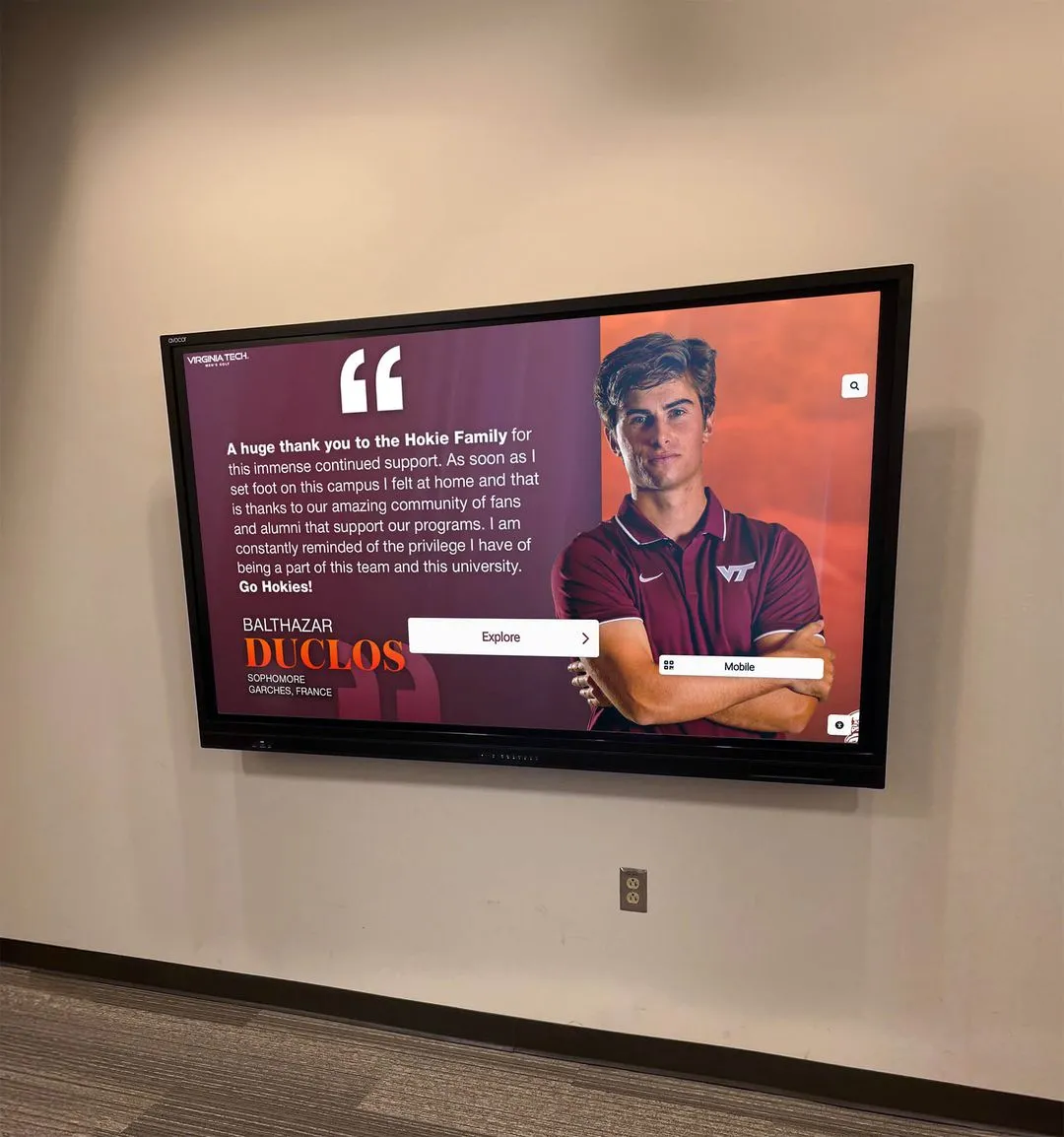
Schools with interactive touchscreen recognition systems in their athletic lobbies, hallways, or trophy case areas can create a dedicated staff section that profiles the athletic training team alongside coaches and athletes. A digital profile for a certified athletic trainer might include:
- Headshot and biographical summary
- Degrees, certifications, and professional credentials (ATC, CSCS, EMT, etc.)
- Years of service to the school’s program
- Notable contributions (programs developed, emergency situations managed, certifications earned)
- Quote from the staff member about what they value in the work
This format is particularly powerful during open houses, recruiting visits, and school tours when prospective families are evaluating program quality. Seeing athletic trainers prominently recognized in the recognition display communicates that the school prioritizes student-athlete safety as a program value, not just an administrative requirement.
For schools exploring how digital recognition systems operate in practice, the day-in-the-life look at school digital displays illustrates how staff content sits alongside athletic and academic recognition in a single unified environment.
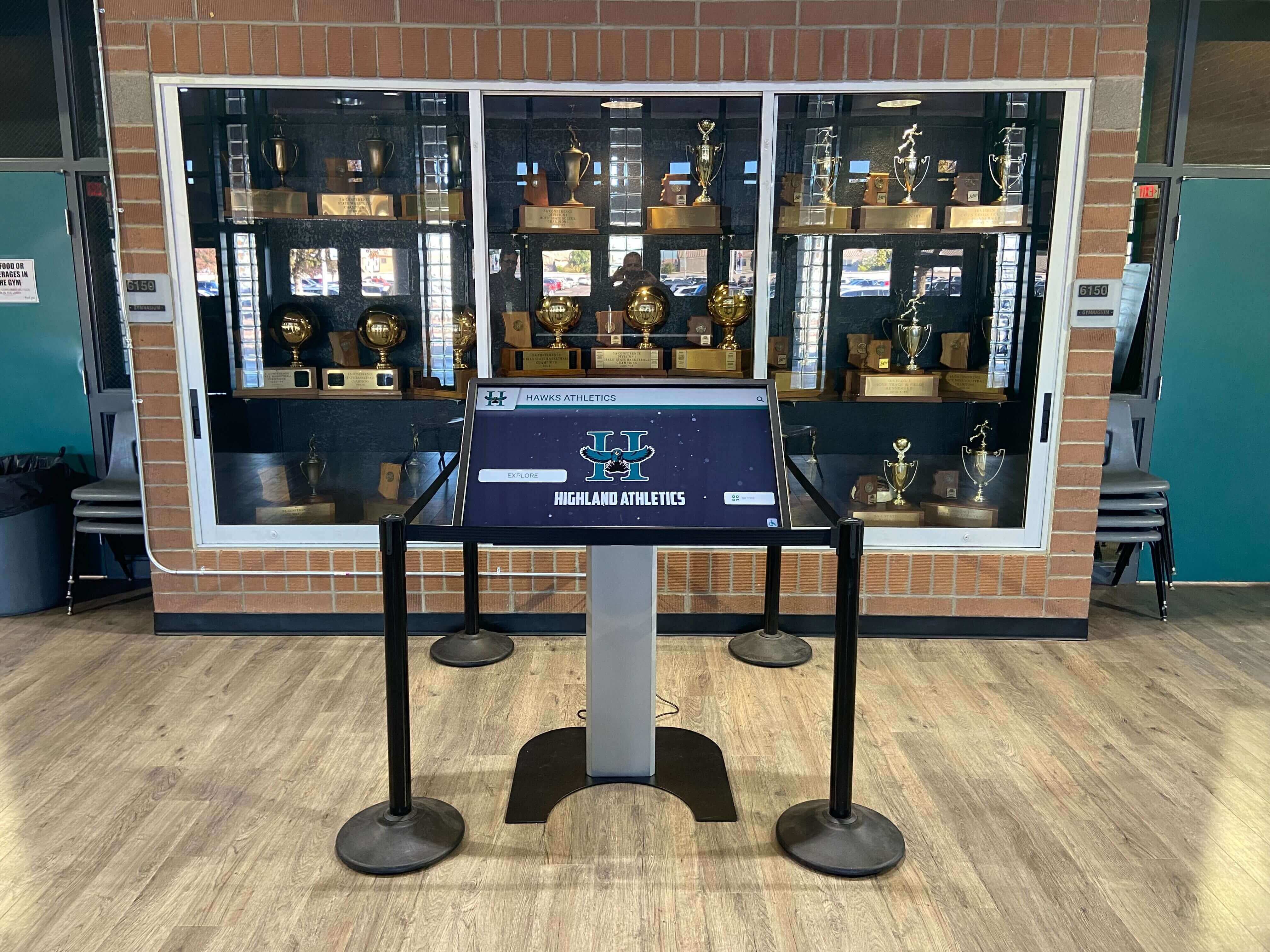
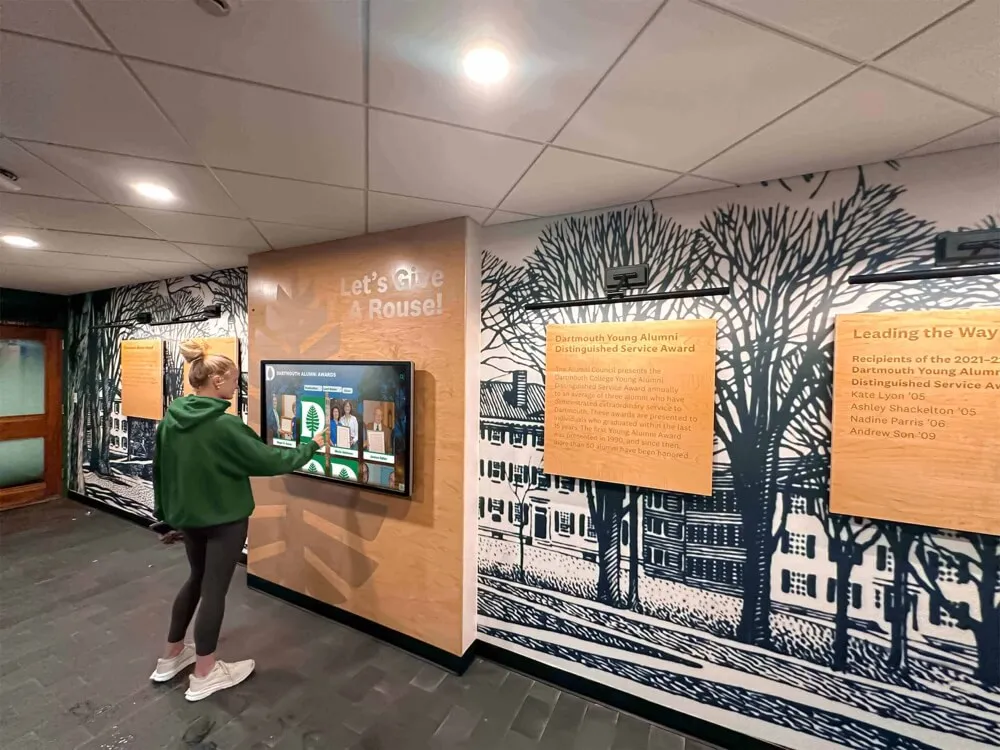
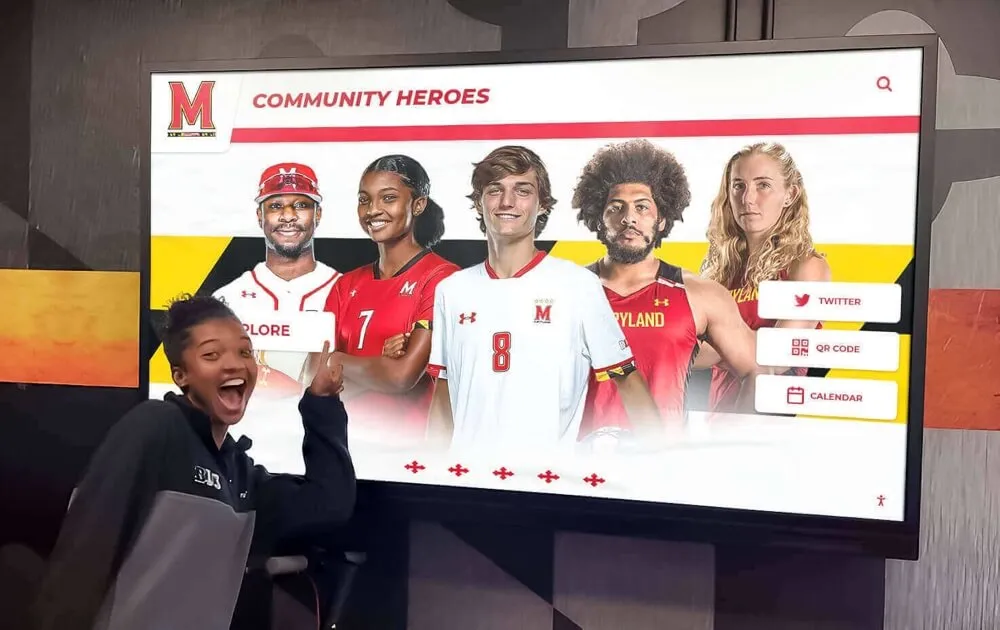
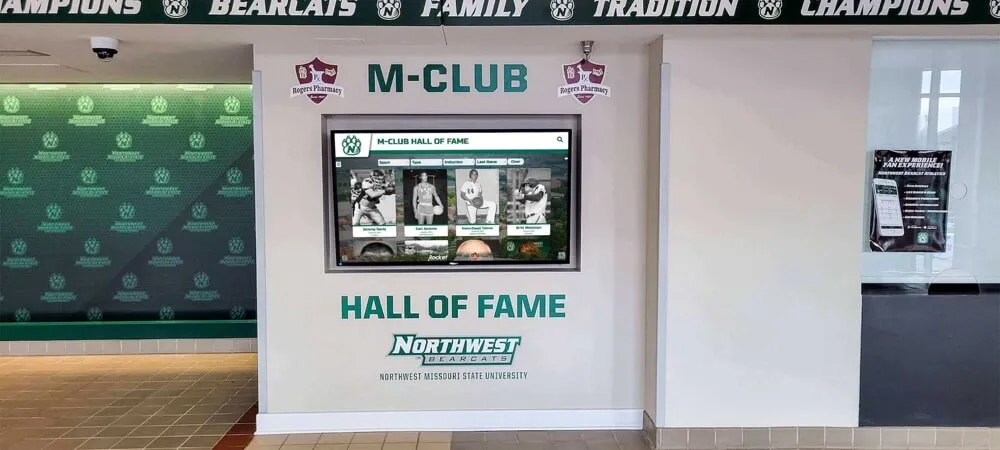
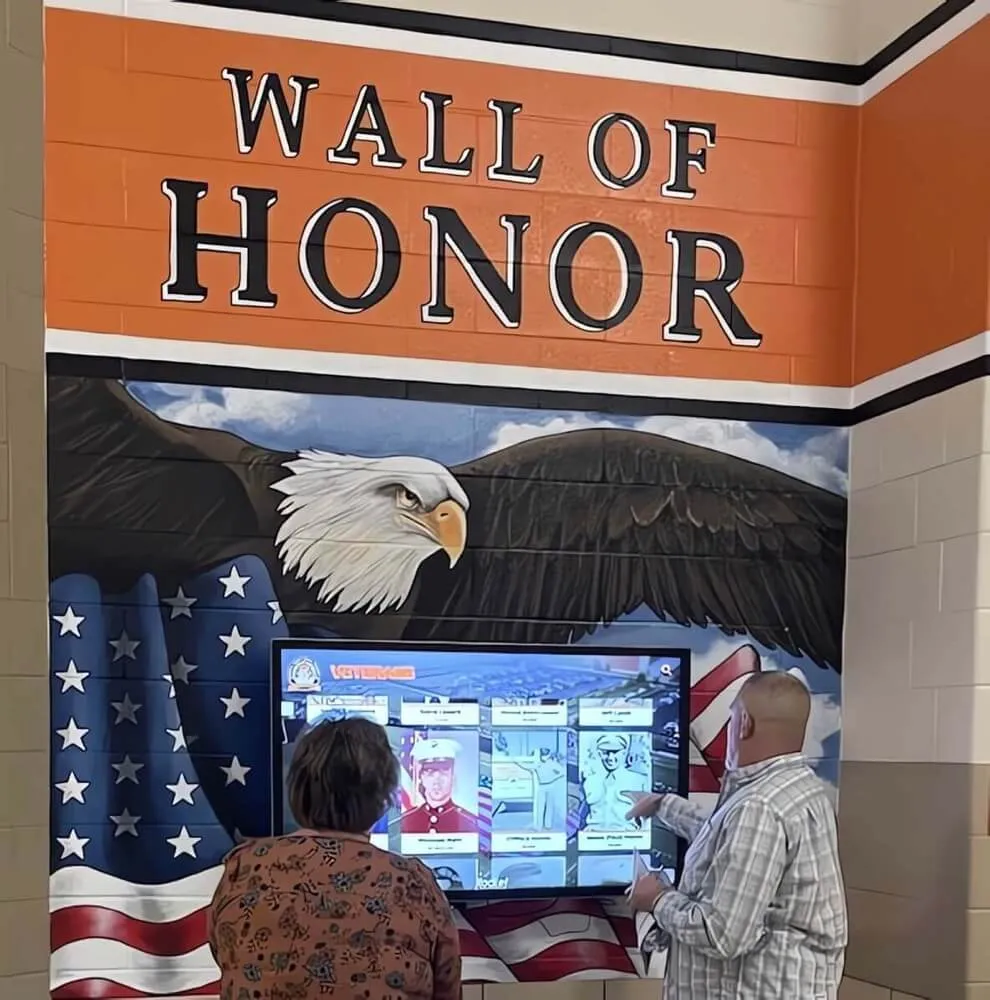
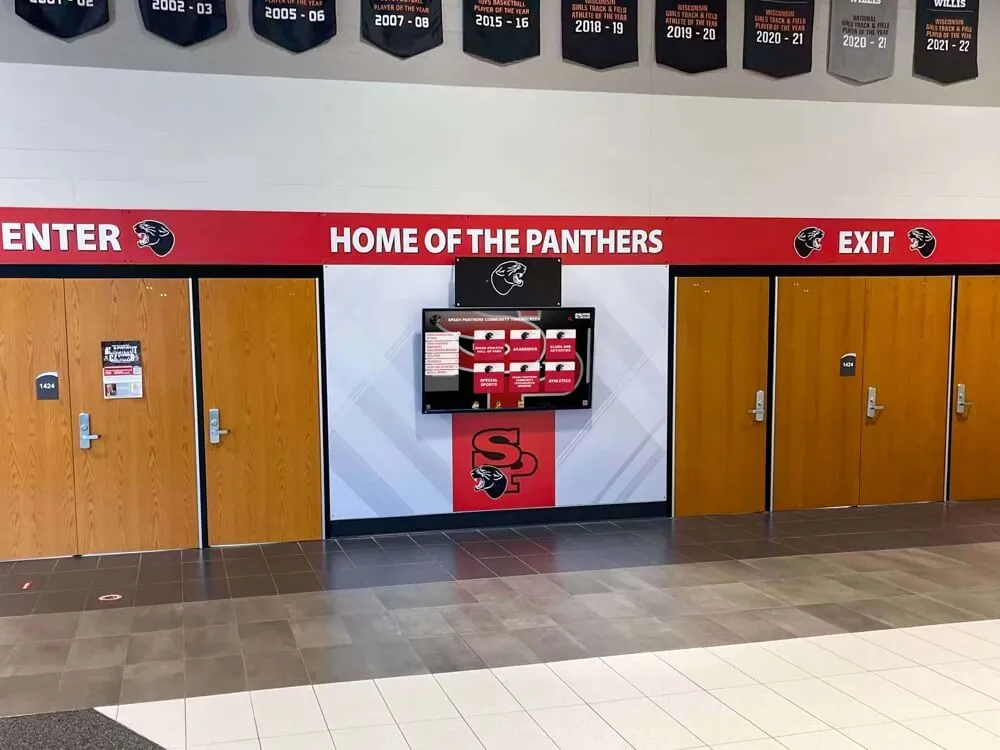
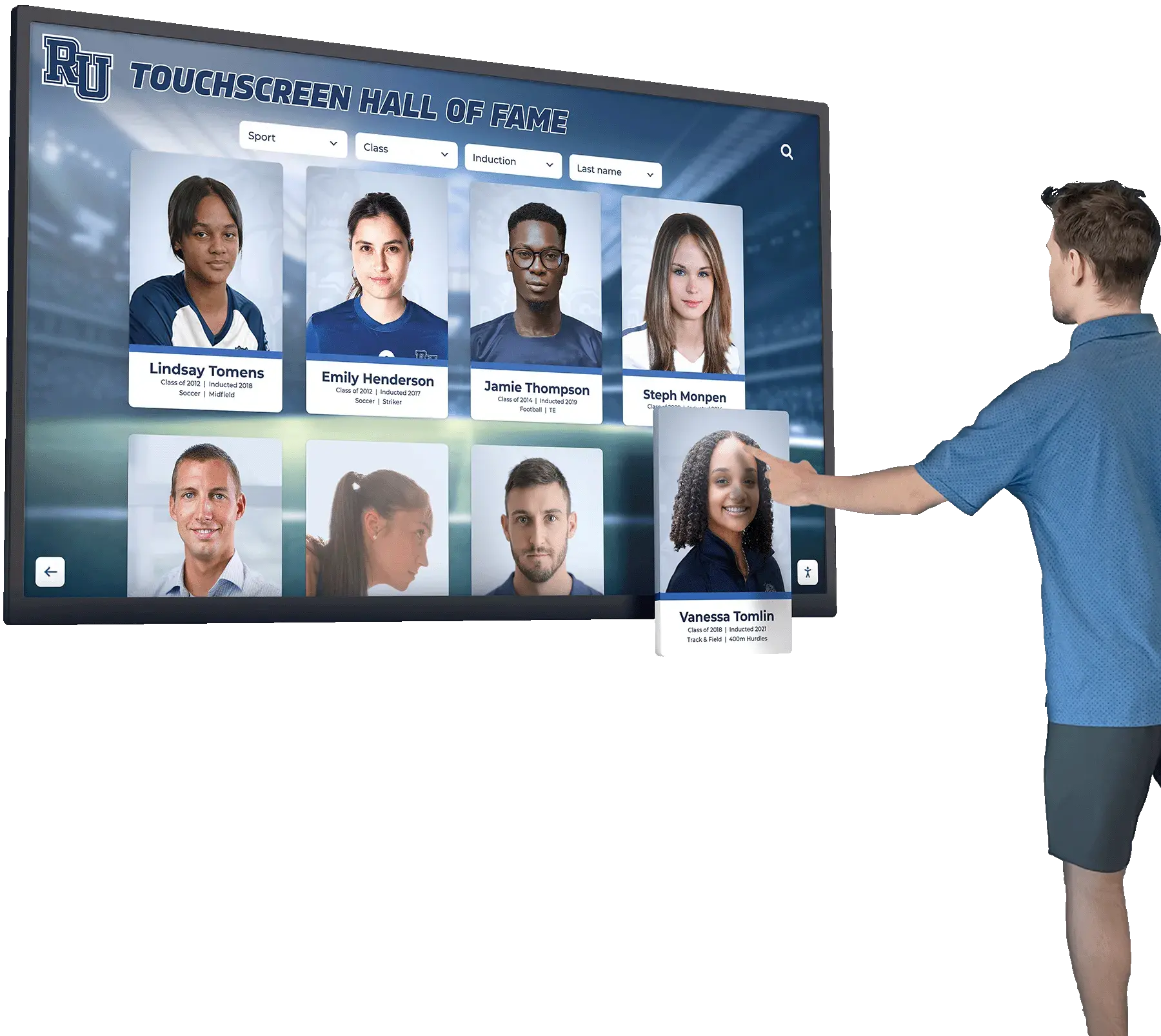
Digital recognition systems can display staff profiles alongside athlete and team honors—creating a complete picture of the people behind a program's success
5. Hall of Fame Inclusion for Long-Tenured Staff
Athletic halls of fame have historically focused on athletes, and occasionally coaches. The broader category of “distinguished contributor”—which can include longtime athletic trainers, team physicians, equipment managers, and athletic boosters—extends hall of fame recognition to the support infrastructure that made athletic excellence possible.
For an athletic trainer to merit hall of fame consideration, the selection criteria should reflect contribution rather than performance metrics:
- Years of service (a common threshold is 10+ years of continuous service)
- Impact on student-athlete safety outcomes
- Leadership in developing or upgrading program safety infrastructure
- Professional achievement (certifications, published research, clinical leadership)
- Mentorship of student athletic trainers or student aides
Including support staff in hall of fame programs requires updating the governing charter to define “contributor” categories explicitly. Schools using interactive hall of fame tools for athletics, donors, and program history can add athletic training contributor profiles within the same system used for athlete inductees, avoiding the need for separate physical wall sections.
6. Naming Opportunities in the Training Room or Facility
For athletic trainers with exceptional tenure or institutional impact, naming a physical space in their honor creates recognition that outlasts any certificate or plaque. Options include:
- “The [Name] Athletic Training Center” — formal renaming of the primary training room
- A dedicated treatment table or equipment station named in recognition of a specific contribution
- The training room entrance hallway with the trainer’s name and photo displayed on entry
- Endowed equipment fund named in the trainer’s honor, funded by booster club or alumni donations
Naming recognition typically requires board or administrative approval, budget planning for signage fabrication, and a public dedication event that amplifies the recognition moment. For programs building lasting donor and staff recognition across physical and digital environments, the approach mirrors how donor recognition wall design balances physical permanence with the visibility and accessibility that only digital systems provide.
7. Student-Athlete Tribute Program
A recognition format that engages student athletes directly is a structured tribute program where senior athletes submit written or video statements about how the athletic training staff affected their experience. These tributes can be:
- Read aloud at the spring athletic banquet
- Compiled into a commemorative booklet or display
- Featured as testimonial content in the school’s digital recognition system
- Archived as part of the athletic department’s historical records
Tribute programs work particularly well for athletic trainers who have served across multiple student-athlete generations. A trainer who worked with the parents of current athletes has a meaningful story that only those families can tell—and collecting that story during NATM creates permanent documentation that would otherwise disappear from institutional memory.
Building a Recognition Calendar Around NATM
Schools that approach athletic trainer appreciation strategically treat March not as a single recognition event but as an annual planning window embedded in a year-round cycle:
| Time of Year | Recognition Activity |
|---|---|
| September | Announce nominations open for Athletic Trainer of the Year |
| October–November | Coaches and athletes submit nominations; athletic director reviews |
| December | Selection finalized; award fabrication ordered |
| January | Digital profile updated; any plaque or facility recognition prepared |
| February | Presentation slot secured at spring banquet or NATM ceremony |
| March (NATM) | Public recognition: social campaign, ceremony, display updated |
| April | Award presented at spring athletic banquet; permanent record updated |
| May | Archive documentation filed; hall of fame review for long-tenured staff |
This calendar converts a single appreciation month into a programmatic cycle with documentation at every stage. The social posts in March become the public face of a recognition process that was actually months in the making.
Making Recognition Visible: Physical vs. Digital Formats
The most effective athletic recognition environments for staff use both physical and digital formats deliberately. Physical plaques carry permanence and formality that digital displays cannot replicate. Digital systems carry depth, searchability, and unlimited capacity that physical walls cannot accommodate.
For athletic training staff recognition specifically:
Physical formats work best for:
- Formal commendation of individual milestones (10 years of service, hall of fame induction)
- Training room or facility naming recognition
- Annual award presentation pieces (engraved plaques, perpetual trophies)
Digital formats work best for:
- Searchable staff profiles accessible to families, recruits, and prospective hires
- Video testimonials from student athletes that can’t be printed on a wall
- Multi-year archive of annual award recipients
- Real-time updates when certifications are earned or new staff members join
Schools building school-wide student achievement and staff recognition systems find that including staff recognition in the same digital environment as student honors creates a more cohesive program narrative—one where the trainer who taped ankles, the teacher who stayed after school, and the athlete who broke the record all occupy the same visible recognition space.
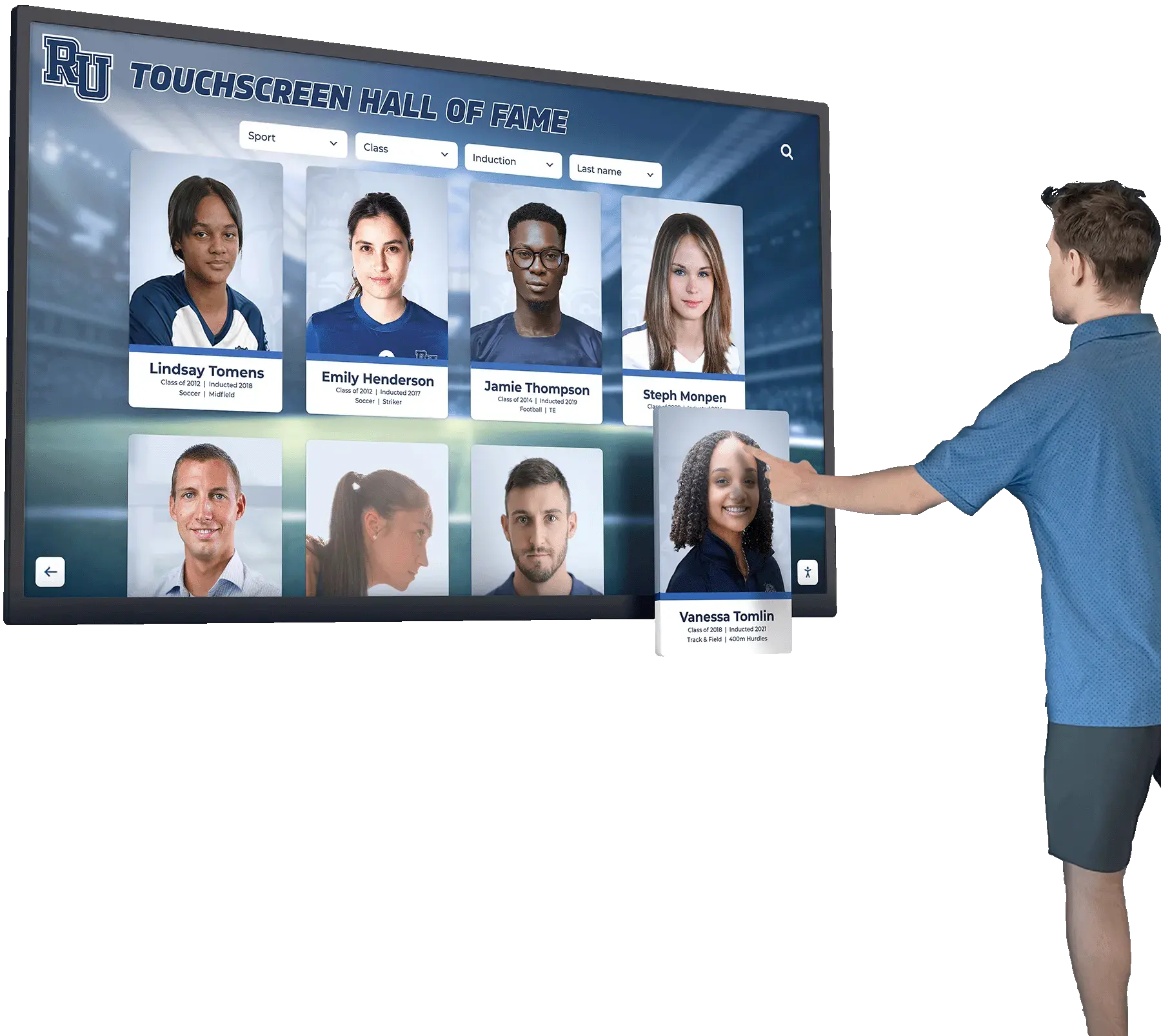
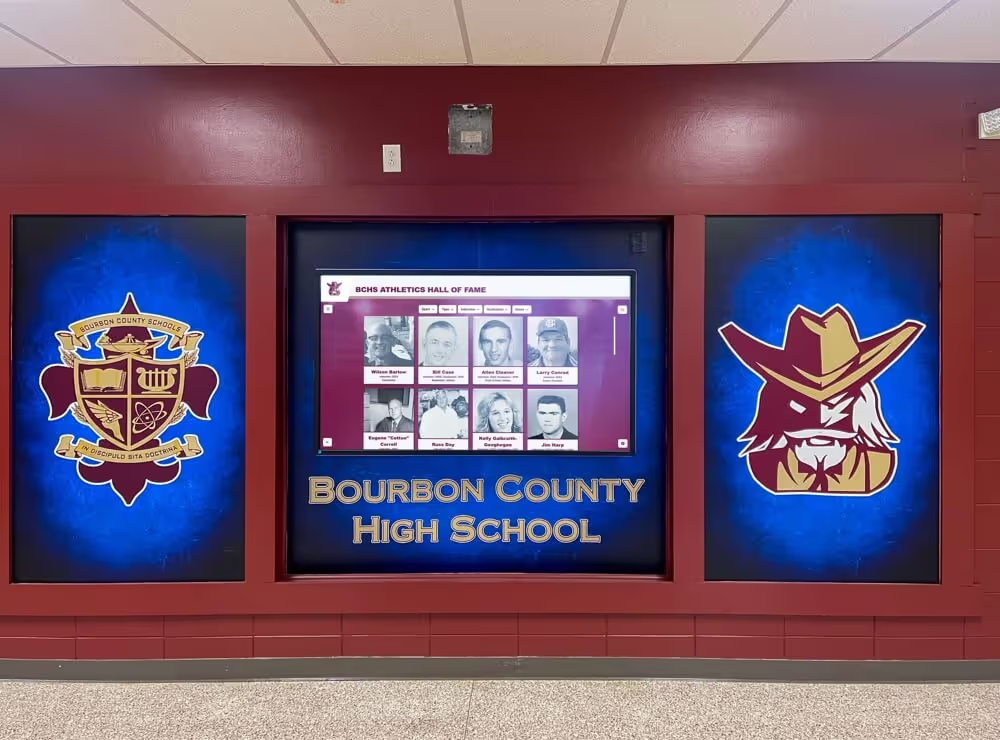
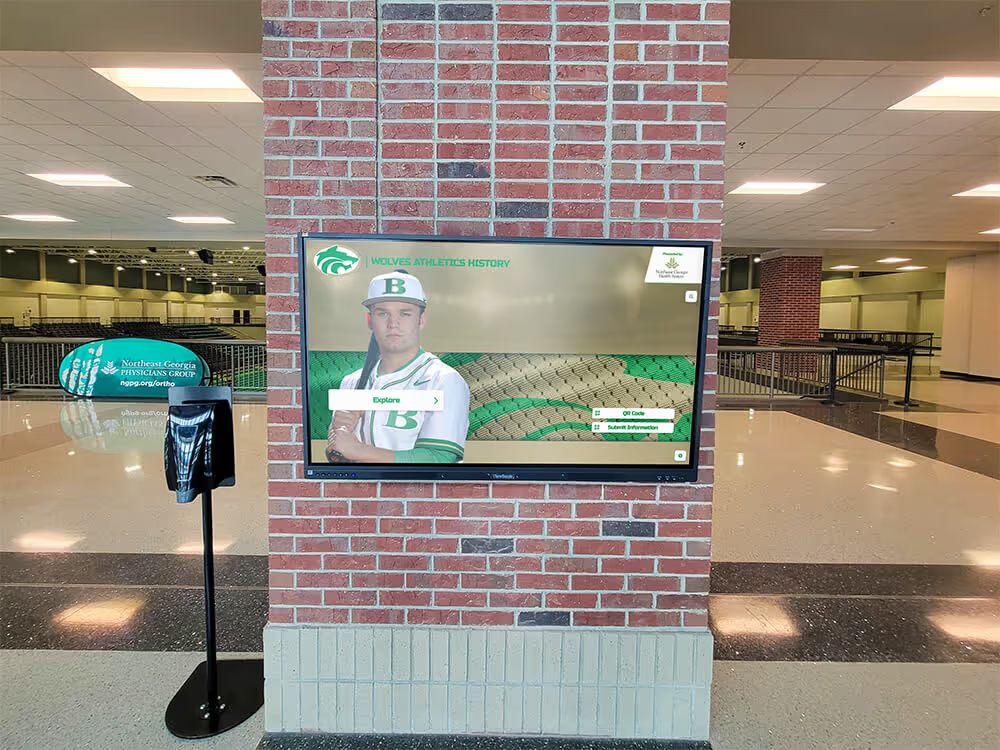
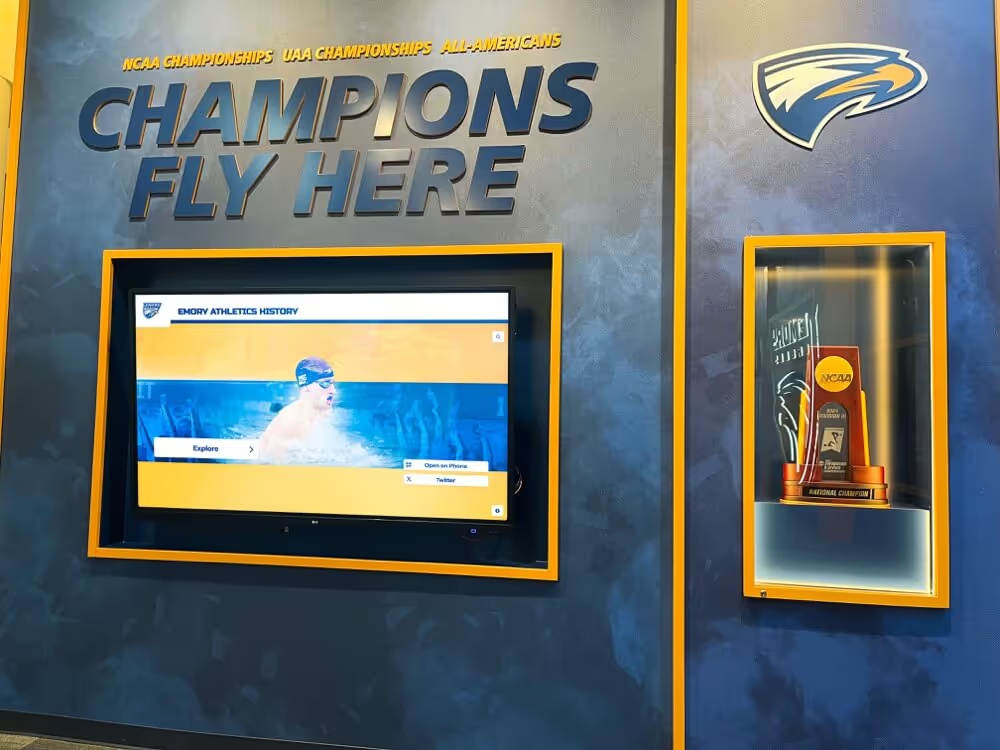
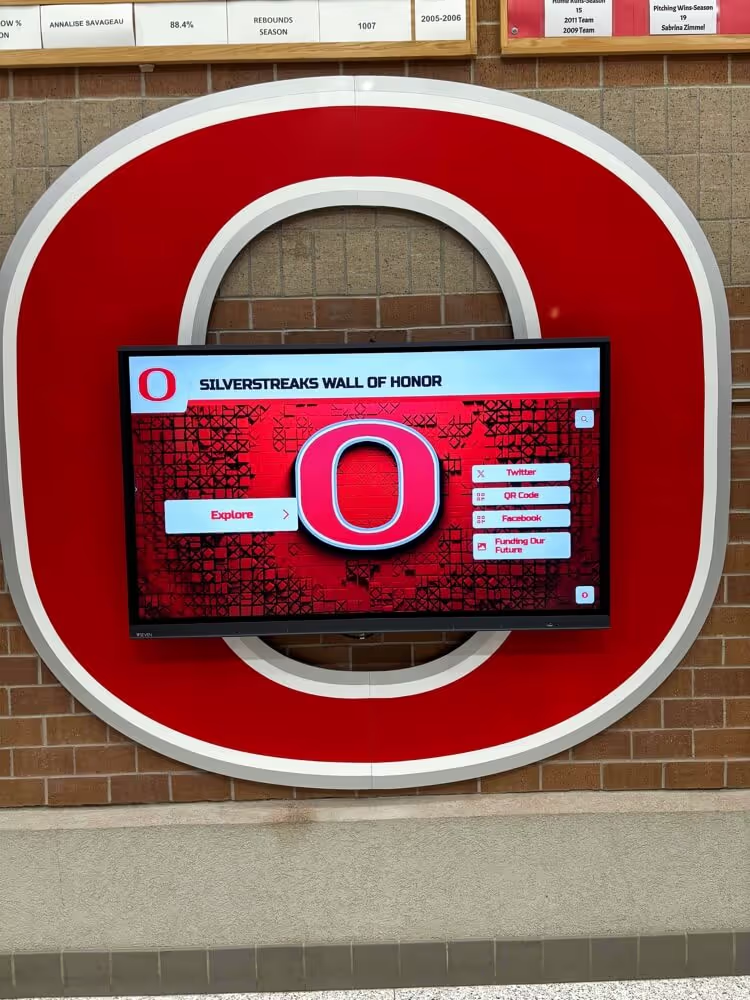
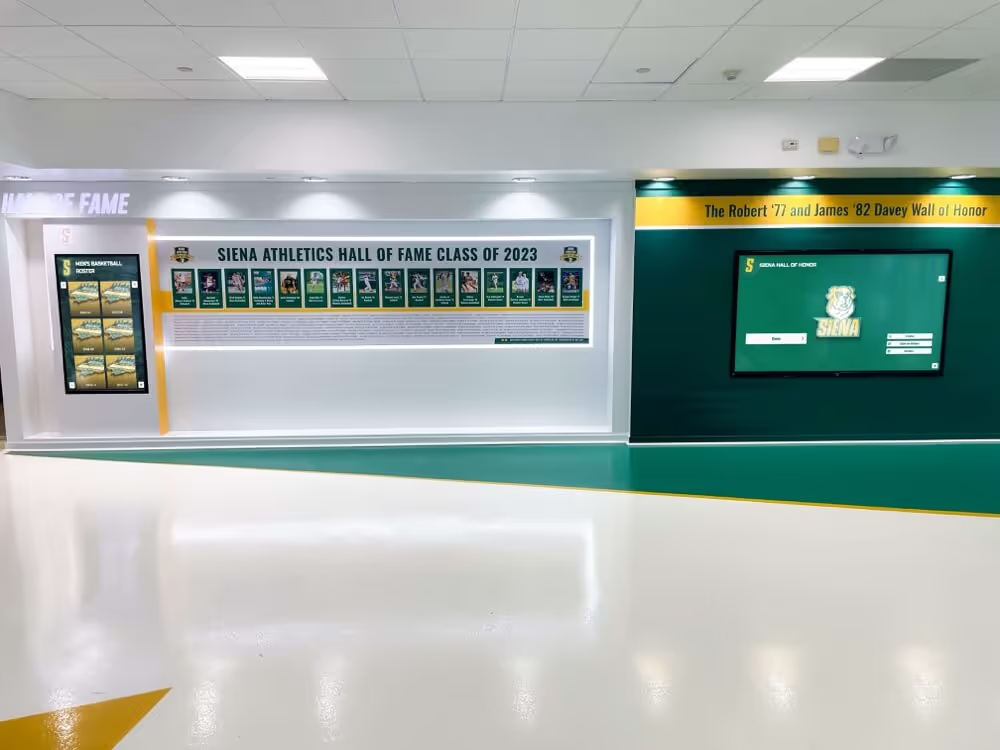
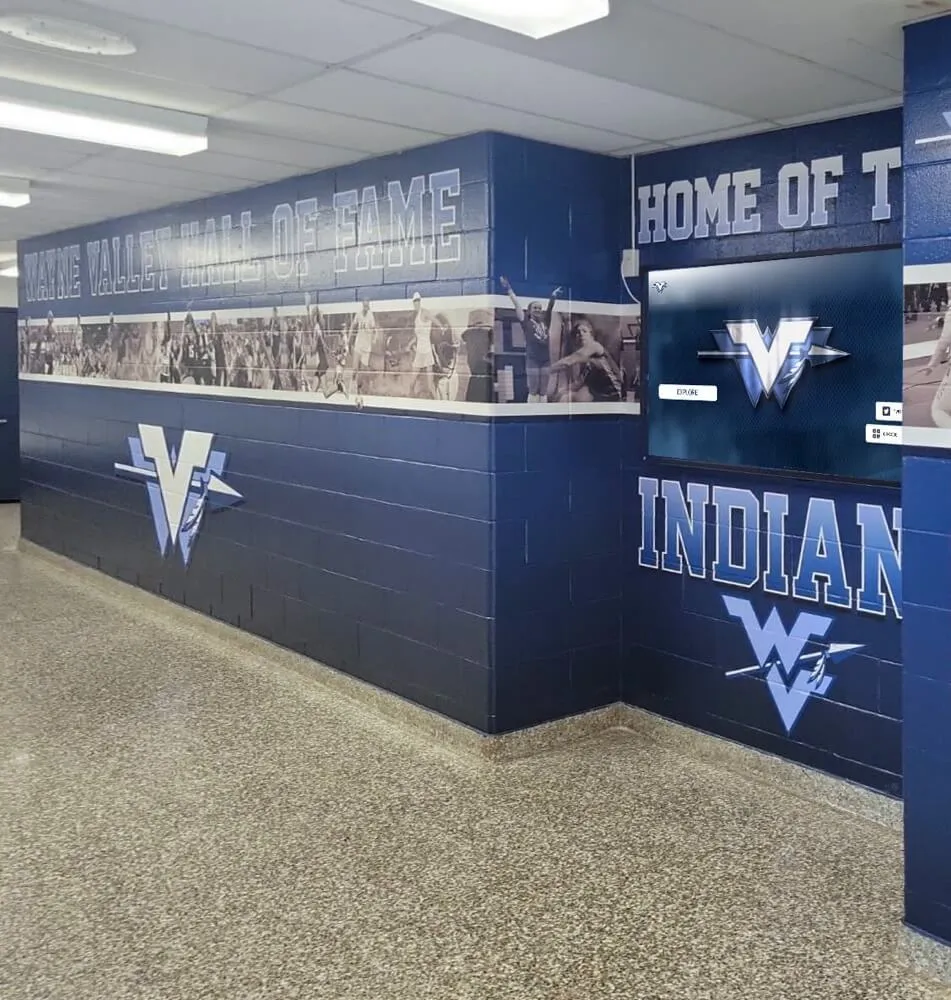
Interactive recognition systems let families, recruits, and community members explore staff and athlete profiles at their own pace—extending appreciation beyond the March calendar window
Rocket Alumni Solutions: Staff Recognition Within a Complete Athletic Program
Schools building comprehensive athletic recognition environments often find that separate systems for athletes, coaches, and staff create fragmented recognition that underserves everyone. Rocket Alumni Solutions builds purpose-built interactive recognition systems that accommodate every recognition category a school needs in a single unified display—athletes, coaches, support staff, donors, and program milestones.
Key capabilities relevant to athletic training staff recognition:
- Unlimited profiles: Add as many staff profiles as needed without physical space constraints
- Rich media support: Include photos, video tributes from athletes, credential documentation, and biographical summaries
- Remote content management: Athletic directors or communications staff update profiles from anywhere—no technical work required when a trainer earns a new certification or retirement recognition is needed
- Visitor-friendly navigation: Families and recruits find staff profiles alongside athlete records in one intuitive interface
- Annual award archives: Every Athletic Trainer of the Year recipient is preserved in a searchable record that builds institutional history
For schools evaluating comprehensive recognition tools that support athletics, academic programs, and staff recognition together, the overview of hall of fame tools spanning athletics, donors, and program history covers how schools are building unified recognition environments rather than managing separate systems for separate categories.
FAQ: Athletic Trainer Appreciation Month
When is Athletic Trainer Appreciation Month?
Athletic Trainer Appreciation Month is March, designated annually by the National Athletic Trainers’ Association (NATA) as National Athletic Training Month (NATM). The campaign raises awareness of the athletic training profession and is observed by schools, universities, professional sports organizations, and healthcare institutions throughout the month.
What are good recognition gifts or awards for athletic trainers at schools?
Meaningful recognition for school athletic trainers includes formal certificates of commendation, engraved plaques for the training room, inclusion in the school’s hall of fame as a contributor category, named annual awards presented at the athletic banquet, and digital profiles in the school’s recognition display system. The most valued recognition is specific and permanent—acknowledging the years, contributions, and professional credentials of the individual rather than offering a generic gift.
How can schools include athletic trainers in their hall of fame programs?
Schools can include athletic trainers in hall of fame programs by creating a “distinguished contributor” category with defined eligibility criteria—typically 10 or more years of service, documented impact on student-athlete safety, and professional achievement. The hall of fame governing charter should be amended to include the contributor category explicitly, and selection criteria should be documented and communicated publicly. Digital recognition systems allow contributor profiles to sit alongside athlete inductees without requiring separate physical wall sections.
How do you make athletic trainer recognition last beyond social media posts?
Lasting recognition requires physical or digital formats with indefinite lifespans: framed certificates displayed in the training room, named plaques on the hallway wall, profiles in an interactive digital recognition system, annual award programs with permanent recipient archives, or naming recognition for training room facilities. Building these formats into an annual recognition calendar anchored to National Athletic Training Month in March ensures the recognition is planned and produced rather than improvised.
What do athletic trainers do at the high school level?
High school athletic trainers are licensed healthcare professionals who provide injury prevention, emergency medical response, injury evaluation, and rehabilitation services for student athletes. Their responsibilities include pre-participation screenings, game and practice sideline coverage, concussion management, heat illness prevention, and emergency action plan coordination. Most high school ATCs hold at minimum a master’s degree and board certification from the Board of Certification (BOC).
Building Recognition That Reflects the Contribution
Athletic trainer appreciation month is most valuable when it triggers permanent action rather than temporary attention. The athletic trainer who has covered every home game for twelve years, managed return-to-play protocols for hundreds of student athletes, and responded to sideline emergencies that most families never knew occurred deserves recognition that lives on after March ends.
Schools that build that recognition—through named awards, permanent display profiles, hall of fame inclusion, and formal certificates—communicate to current athletic training staff that their work is valued, to student athletes that safety is a program priority, and to prospective hires that this is a program worth committing to. Recognition that persists is the only recognition that actually accomplishes those goals.
The planning investment is modest. The return—staff retention, program culture, community trust—is lasting.
Ready to Build Recognition That Lasts Beyond the Month?
Rocket Alumni Solutions builds interactive digital recognition systems that let schools display athletic trainers, coaches, athletes, and contributors in one unified environment—with profiles, photos, and archives that outlast any social post. See how schools are using touchscreen recognition to make every contributor visible, searchable, and permanently honored.
See a Custom Demo