



Award display ideas that go beyond a single trophy case in a dim hallway can transform every corridor, lobby, and gymnasium into an ongoing celebration of what students accomplish. Intent: inspire. Whether you’re an athletic director rethinking your championship wall, a principal planning a new academic honors showcase, or a facilities manager modernizing an aging building, the right recognition display turns institutional pride into something students, parents, and visitors feel every time they walk through the door.
Traditional approaches—glass cases bolted to a wall, a row of dusty plaques near the main office—no longer reflect the full breadth of what today’s students achieve. K-12 schools and universities now recognize hundreds of distinct accomplishments spanning athletics, academics, arts, STEM, community service, and leadership. A recognition system designed only for trophies cannot tell that story. This guide maps the full landscape of award display ideas so you can choose the concepts that fit your building, your budget, and your recognition goals.
Effective award display does more than decorate a hallway. According to research published by the National School Boards Association, students in schools with visible, accessible recognition programs report 23% higher sense of belonging compared to peers in schools with minimal public acknowledgment. That sense of belonging correlates directly with academic engagement, attendance, and long-term program participation. The physical environment of recognition is, in that sense, an educational tool.
The concepts below span traditional and digital approaches, cover every major achievement category, and address common planning challenges including space constraints, budget limitations, ADA accessibility requirements, and the need to keep displays current without consuming staff time.

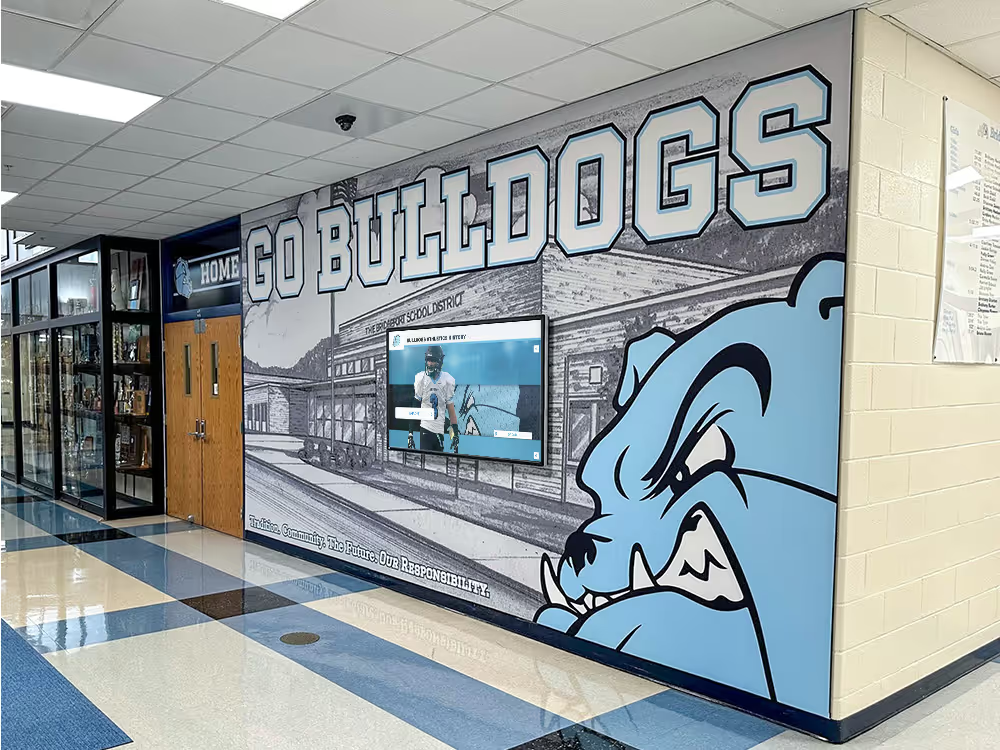
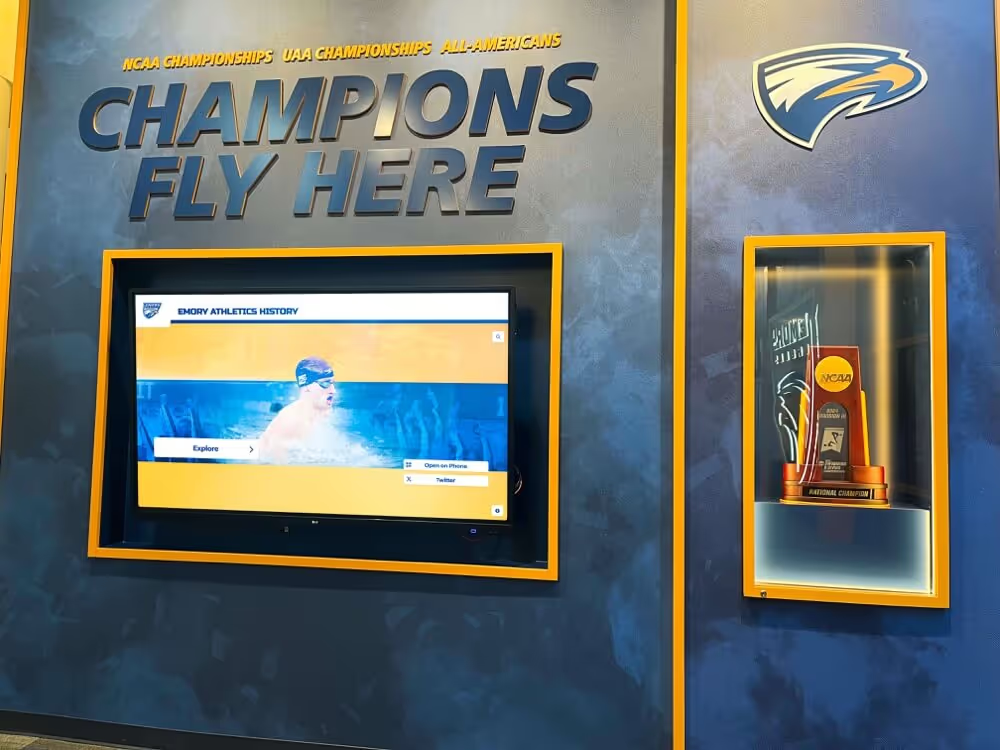
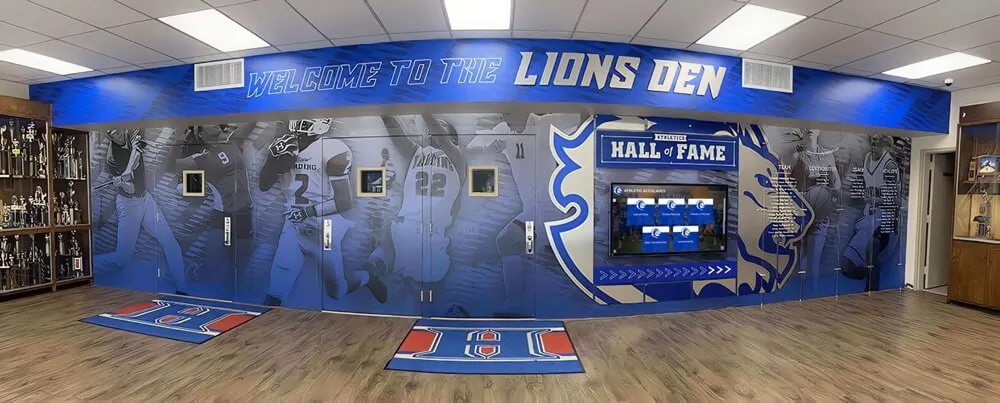
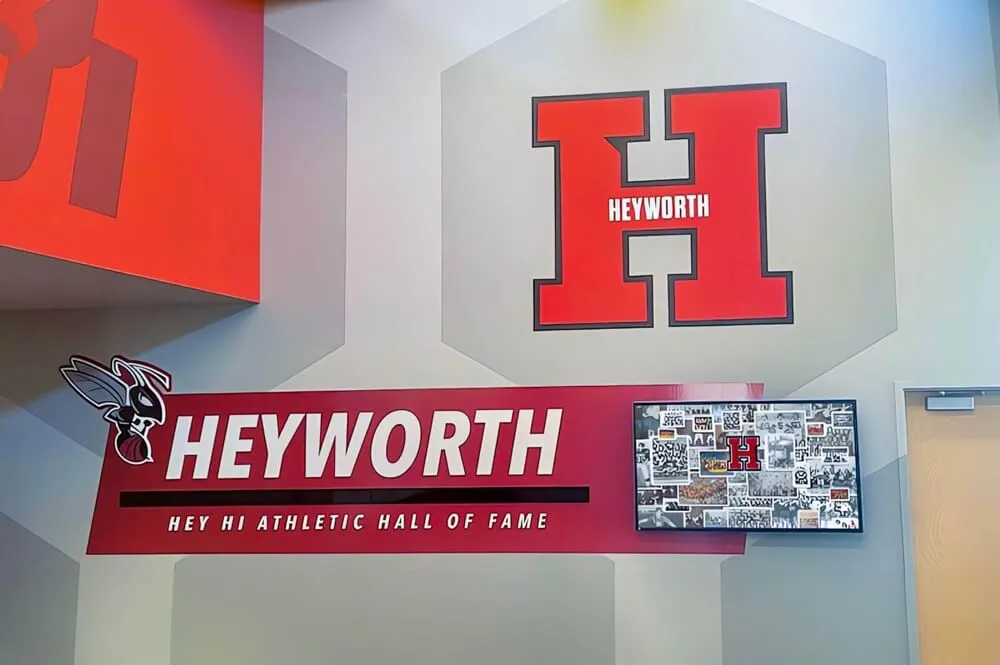
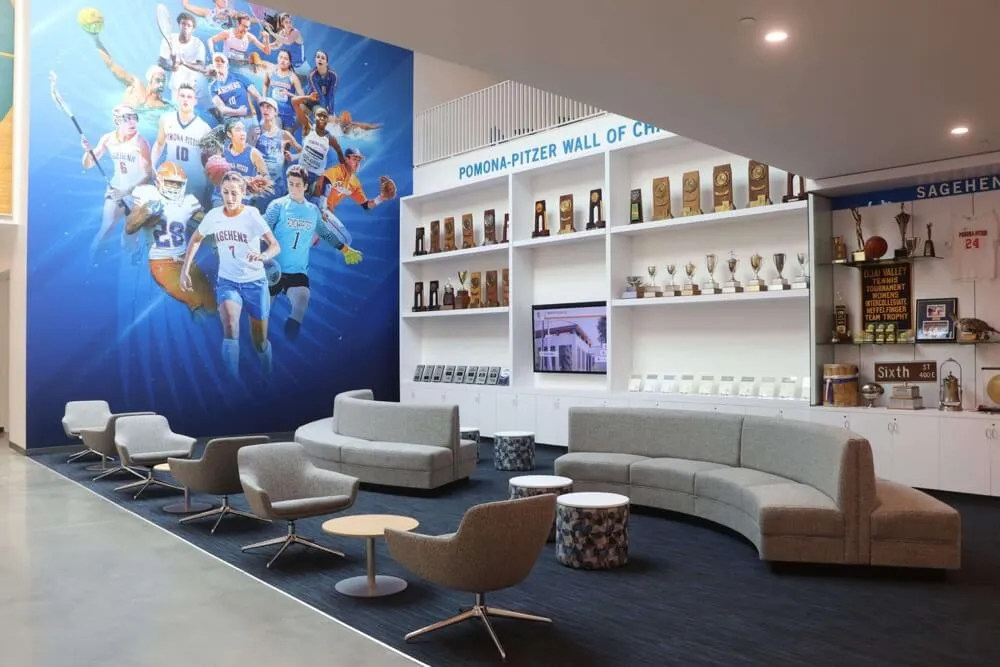
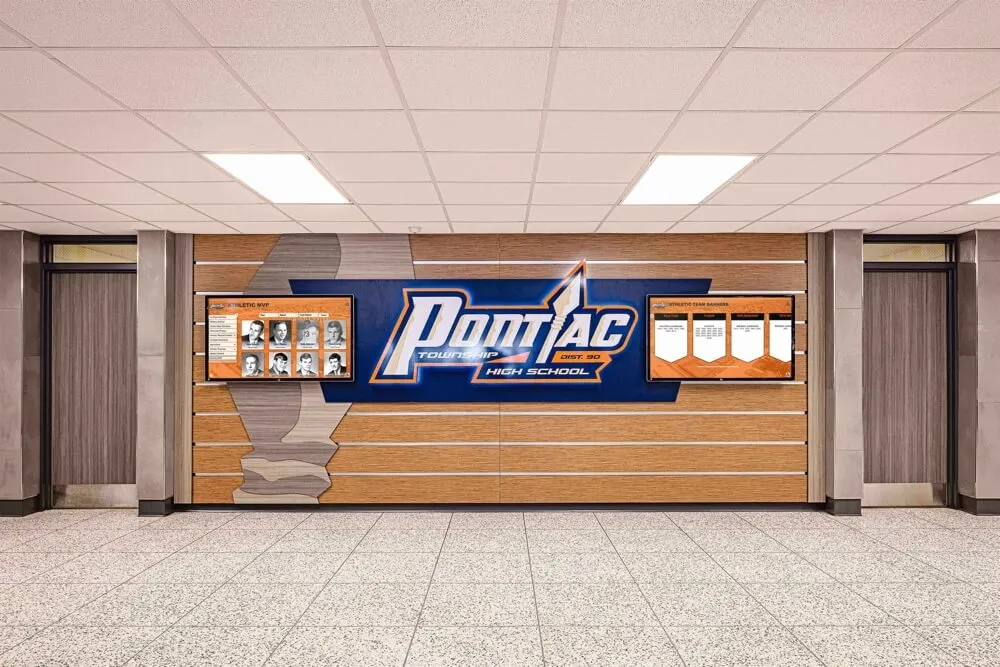
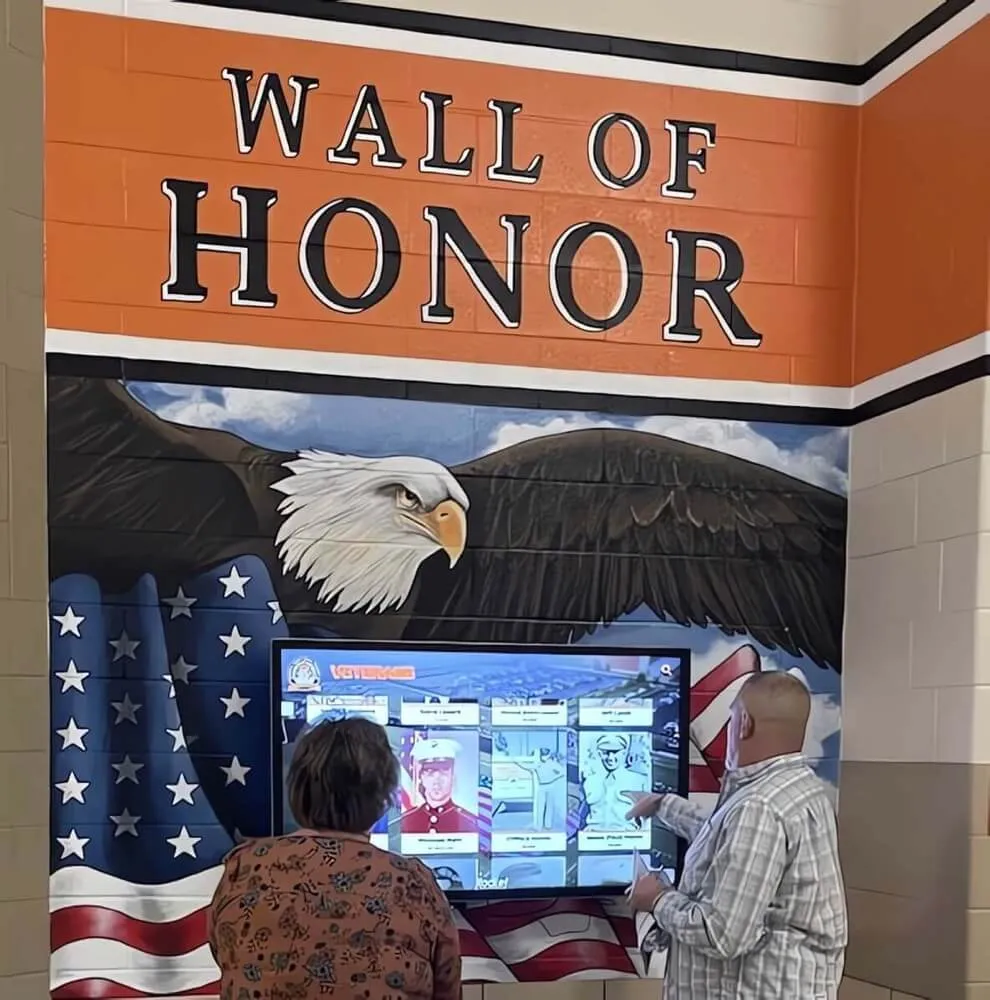
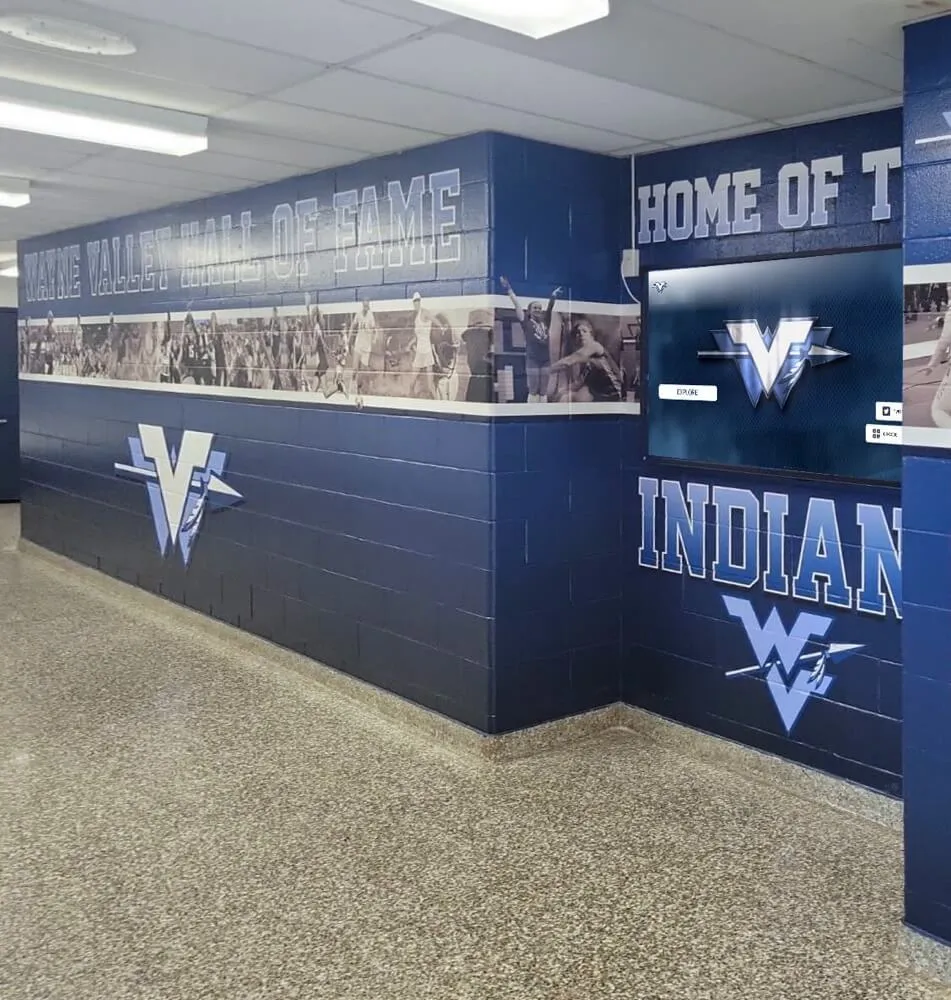
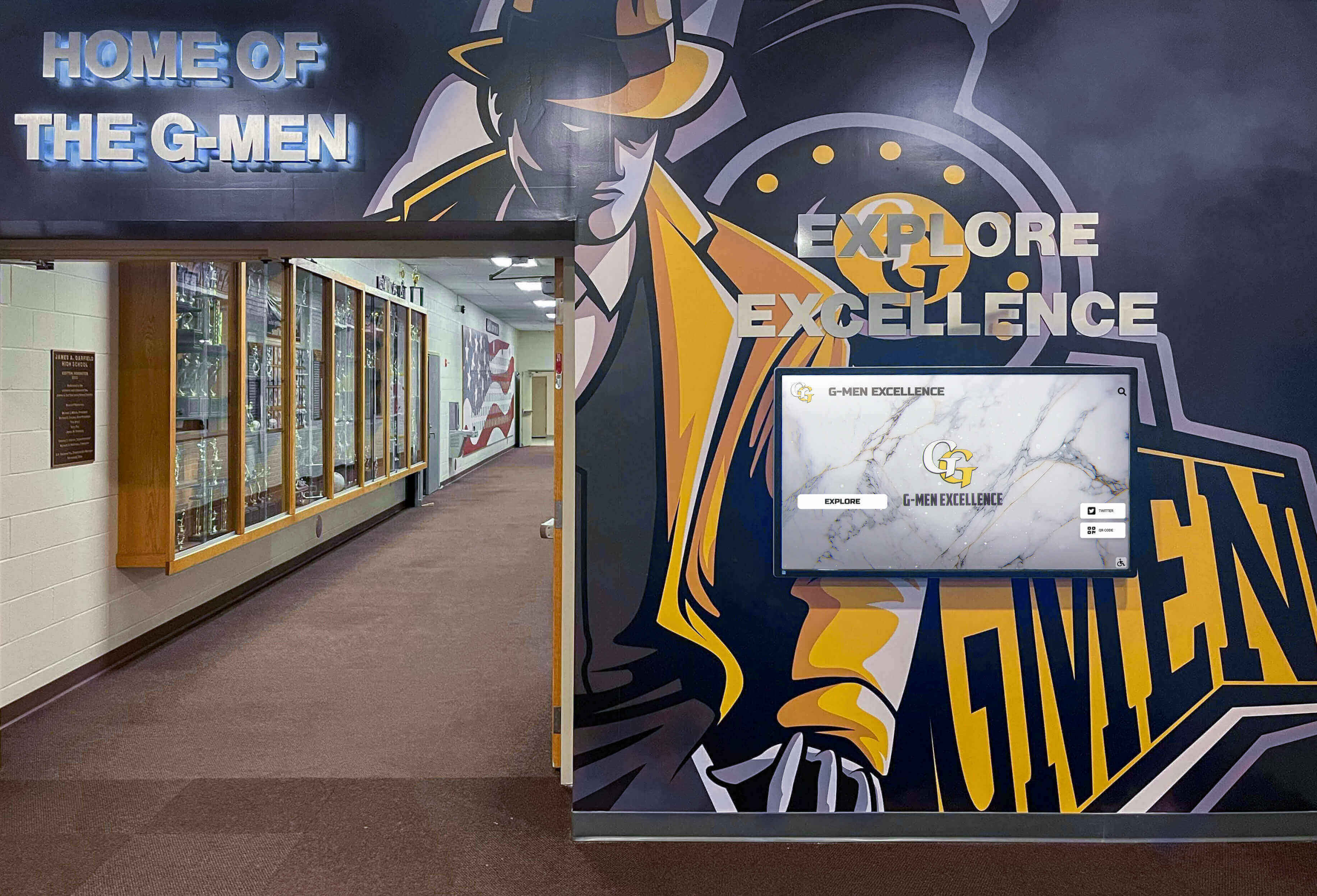
Comprehensive hallway recognition environments combine murals, traditional trophy cases, and digital displays to tell a school's complete achievement story
Why Award Display Strategy Matters for Schools and Universities
Before selecting display hardware or designing layouts, it helps to understand the strategic purposes that recognition environments serve. Displays that accomplish multiple objectives simultaneously justify higher investment and generate broader institutional support.
The Four Jobs of a Recognition Wall
Celebrating achievement is the obvious function—but it is the foundation every other goal builds on. Students who see their names, photos, and accomplishments permanently displayed understand that their institution values what they do. That validation motivates continued excellence and encourages younger students to pursue similar recognition pathways.
Building program identity is the second job. A well-designed athletic trophy wall communicates a century of competitive tradition to a freshman athlete visiting for a recruiting tour. An academic honors display positioned in a prominent hallway signals institutional commitment to scholarly excellence. Every display shapes how students, families, and community members perceive what a school values and who belongs there.
Engaging visitors and alumni represents the third function, one that has direct financial implications. Prospective families making enrollment decisions, donors considering major gifts, and alumni returning for events all experience the institution differently when recognition is visible, current, and professionally presented. Institutions that modernize traditional high school hall of fame displays consistently report higher visitor engagement and positive feedback from alumni touring updated facilities.
Supporting compliance and accessibility is a fourth job many institutions overlook. Award displays installed in public spaces must comply with ADA accessibility requirements, including appropriate mounting heights, adequate circulation clearance, and—for digital systems—WCAG 2.1 AA digital accessibility standards. An ADA-compliant digital recognition display procurement checklist helps administrators ensure recognition investments meet both legal and ethical obligations.
Common Challenges That Recognition Displays Must Solve
Physical space limitations affect virtually every K-12 facility. Hallways designed in the 1970s were not planned to accommodate 50 years of athletic championships, growing academic honor rolls, and expanding arts recognition programs. The most frequent result: overcrowded glass cases, retired trophies in storage rooms, and award categories simply going unrecognized because no physical space exists.
Updating static installations creates ongoing staff burden. Ordering new plaques, scheduling engravers, removing outdated awards, and reinstalling updated panels requires months of lead time and significant budget. Schools that commit to engraved recognition often fall 18-24 months behind on additions, which undermines the timeliness that makes recognition meaningful.
Representing diverse achievement categories is increasingly important as schools broaden recognition beyond traditional athletics. Academic excellence, community service, arts accomplishments, STEM competition results, leadership awards, and service-learning recognition all deserve visibility—but few buildings have wall space for displays representing every category.
Engaging digital-native audiences requires approaches that compete with the media environments students inhabit every day. Static plaques generate minimal attention from students who encounter rich multimedia experiences on every screen in their lives. Recognition environments that incorporate movement, photography, video, and interactivity generate meaningfully longer engagement.
Traditional Award Display Ideas for Schools
Conventional physical displays remain valuable components of recognition environments, particularly for high-prestige achievements where permanence carries symbolic weight.
Trophy Case Configurations
Purpose-built trophy cases anchor most school athletic recognition programs. The key to using them effectively is configuration—and departure from the default single-case approach.
Corner anchor cases position large floor-standing cases at hallway intersections or lobby corners, where converging traffic creates natural viewing opportunity. A pair of 72-inch lighted cases flanking a gymnasium entrance creates immediate visual impact for every home game visitor.
Corridor case runs line entire hallway sections with wall-mounted or floor-standing cases organized by sport or achievement category. Consistent case dimensions, matched lighting, and coordinated signage create a unified recognition environment rather than a collection of individual displays.
Lobby island cases place freestanding cases in the center of entrance lobbies, allowing viewing from multiple directions. These installations work particularly well for championship trophies and state-competition hardware that deserve all-angle visibility.
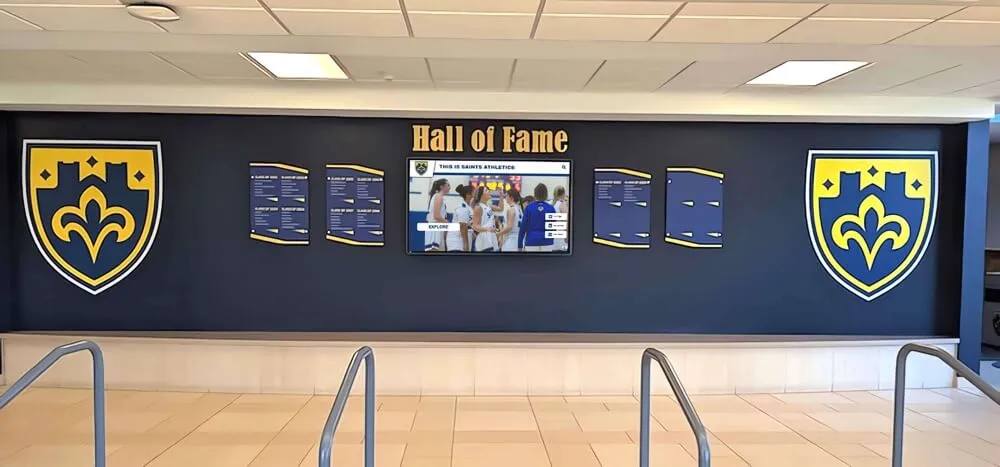
Color-coordinated shield arrangements create unified athletic recognition walls that reflect institutional identity
Specialty display cases address the unique requirements of non-trophy recognition: shadow boxes for signed jerseys and equipment, glass-top cases for championship rings and medals, and open-backed cases allowing championship banners to hang behind trophy groupings. These configurations let different award types coexist in physically coherent arrangements.
Recognition Plaque Walls
Plaque walls communicate academic and organizational achievement in formats that trophy cases do not handle well. Well-designed plaque arrangements establish clear hierarchy and guide viewer attention through intentional composition.
Material selection shapes both aesthetic and longevity. Brushed aluminum plaques offer contemporary appearance and resistance to fingerprinting. Bronze maintains traditional prestige. Acrylic with printed inserts enables full-color recognition including school logos, mascot graphics, and photographs that metal engraving cannot accommodate.
Grid arrangements work well for consistent-format honors like National Honor Society inductee lists, academic letter award recipients, and department award winners. Consistent spacing, matching frames, and aligned typography create visual order that communicates organizational seriousness.
Feature-and-context layouts combine larger feature plaques for major awards with smaller supporting plaques for associated honors. A state championship plaque as the visual anchor, surrounded by season records, coaching staff recognition, and individual award plaques, creates a coherent narrative rather than a disconnected list of names.
Digital plaque alternatives replace physical engraving with printed or screen-based panels that can be updated without fabrication costs. A framed display with replaceable printed inserts costs a fraction of annual engraving while enabling timely updates. Academic record boards using this approach can recognize new honor roll additions within days of grades posting.
Championship Banner Systems
Championship banners remain the most visible form of athletic recognition in gymnasium and arena spaces. Their physical scale—typically 36 to 72 inches tall—creates visual impact that trophy cases and plaques cannot match from across a large space.
Consistent banner programs establish visual identity by standardizing dimensions, color palettes, and typography across all banner years. A gymnasium wall displaying 40 years of basketball championships in mismatched banner formats signals a lack of program continuity. Consistent design standards, even when banners span multiple vendors and decades, create cohesion through color coordination and size uniformity.
Multi-sport banner walls organize championship recognition by sport in dedicated wall sections, with clear signage identifying each program area. This approach works well for athletic lobbies where space is available to represent multiple sports programs simultaneously.
Championship year timeline arrangements sequence banners chronologically, creating visual narratives of program development. Schools with multiple championships in a single decade communicate competitive excellence through sheer banner volume. Programs with longer championship gaps can add context banners noting conference titles, playoff appearances, and graduation of prominent alumni. State championship banner installation and gymnasium wall space solutions require careful planning to accommodate future additions without requiring complete reinstallation.
Shield and Medallion Recognition Walls
Shield-format recognition walls create distinctive visual environments that differentiate athletic hallways from generic institutional spaces. Mounted directly on walls or backing panels, shields offer significant design flexibility while communicating recognition traditions associated with scholastic athletics.
Sport-specific shield programs assign each athletic program a dedicated shield design incorporating sport imagery, program name, and individual honoree information. Shields accumulate across years, creating visual density that communicates program longevity and sustained excellence.
Hall of fame shield walls use oversized shields—12 to 18 inches—to honor inductees into formal recognition programs. Physical shield installations work well for halls of fame where new inductees are added infrequently and permanence carries ceremonial significance.
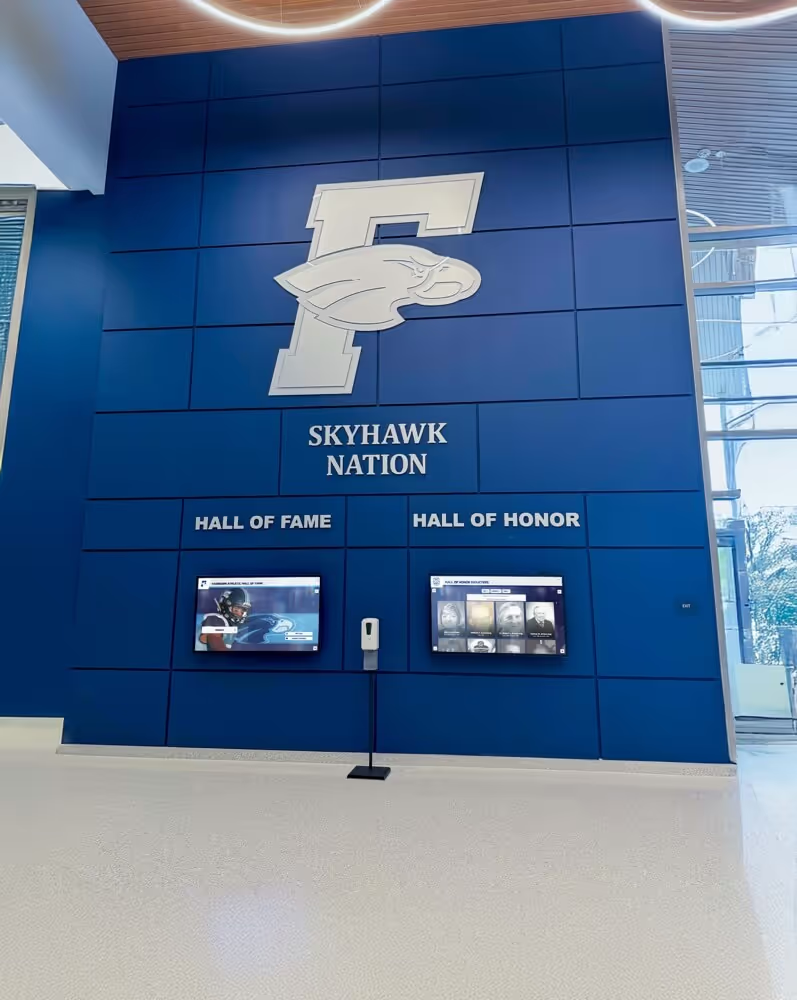
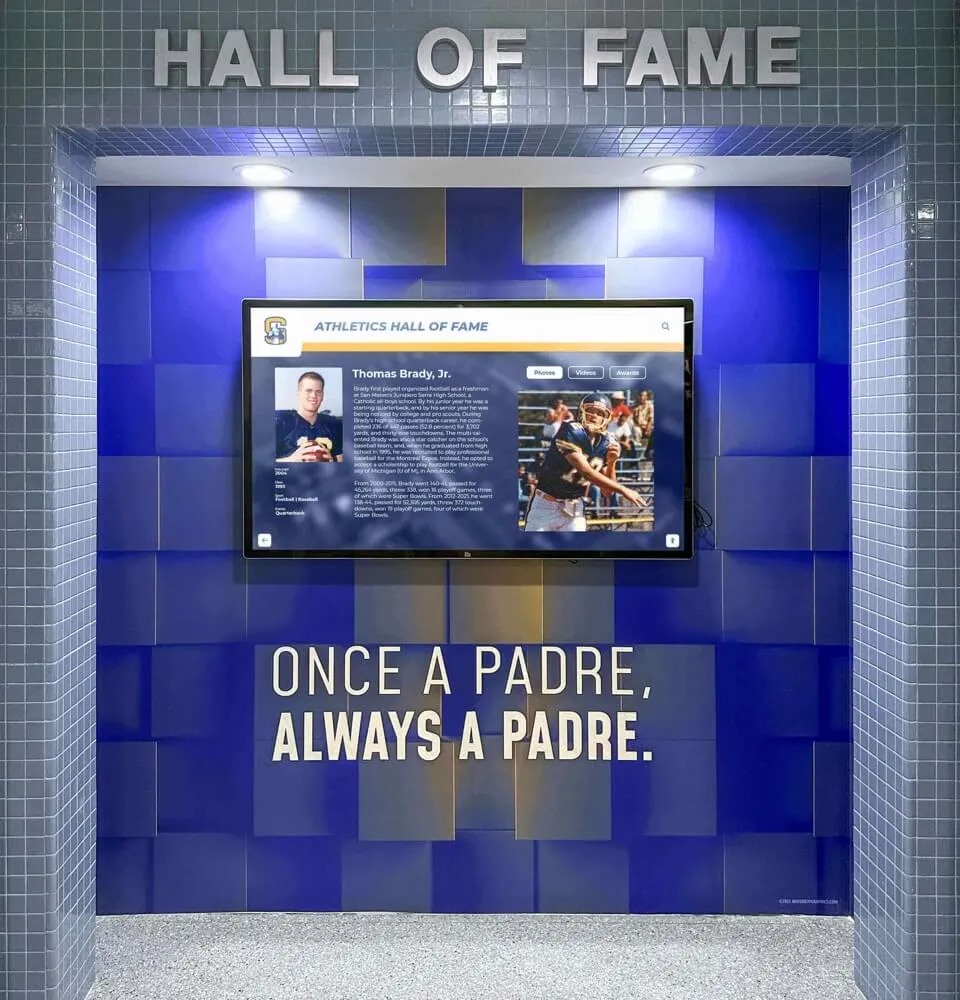
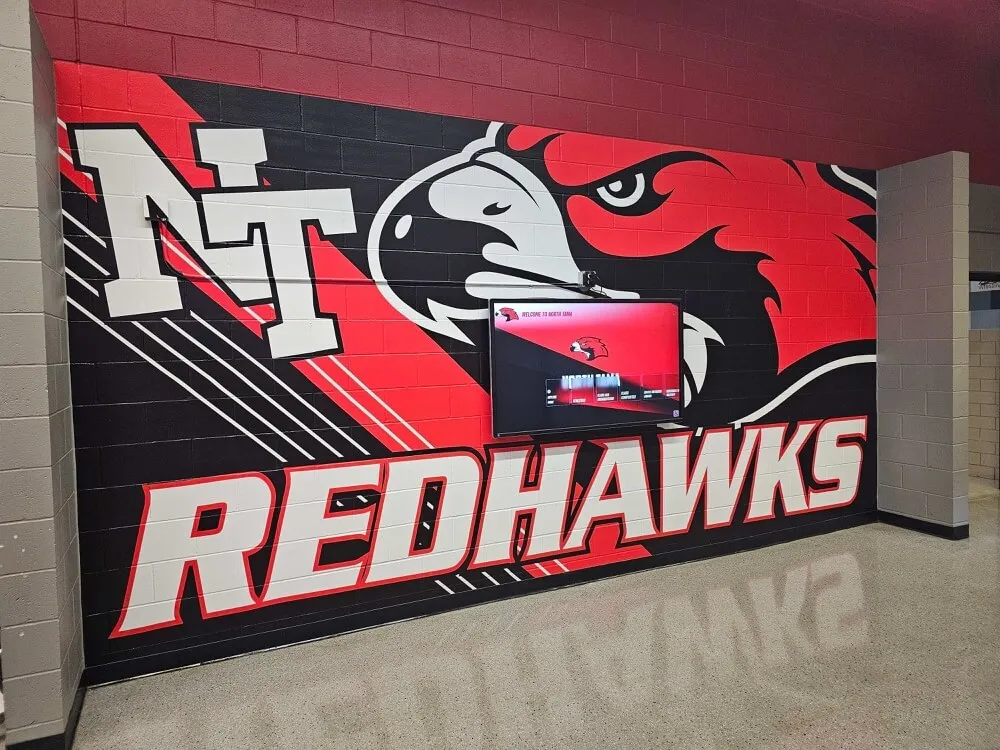
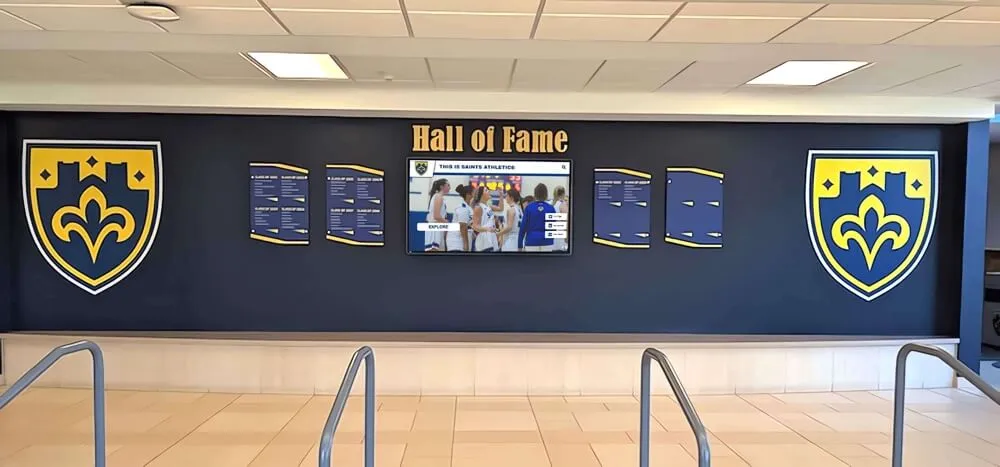
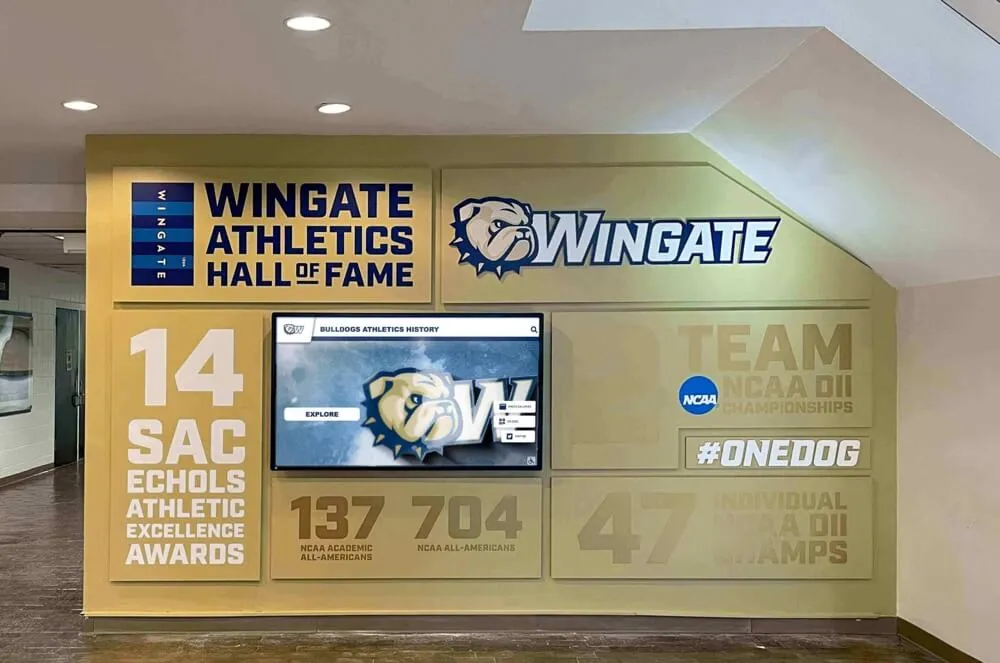
Hybrid shield-and-screen configurations position digital screens within or adjacent to traditional shield arrangements, combining the visual appeal of physical shields with digital storytelling capability. This approach satisfies stakeholders who value traditional aesthetics while adding the depth and flexibility that static materials cannot provide.
Digital Award Display Ideas for Modern Recognition
Digital solutions address the fundamental limitations of physical displays—space constraints, update burden, and engagement limitations—while enabling storytelling that static materials cannot support.
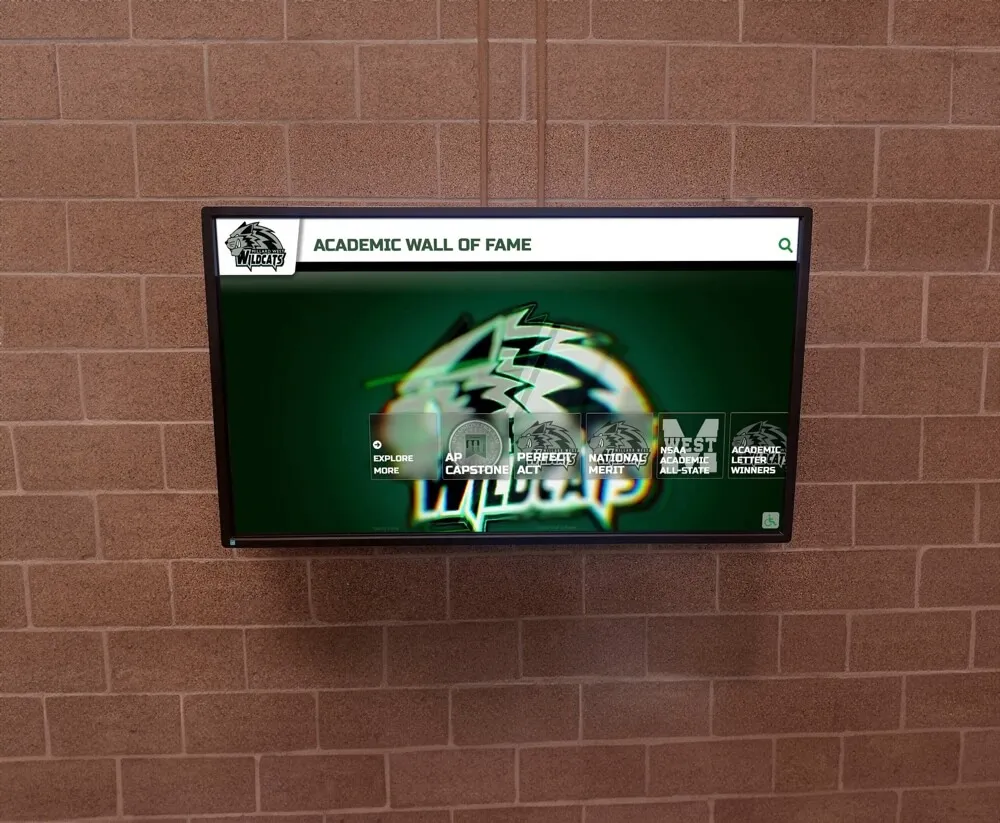
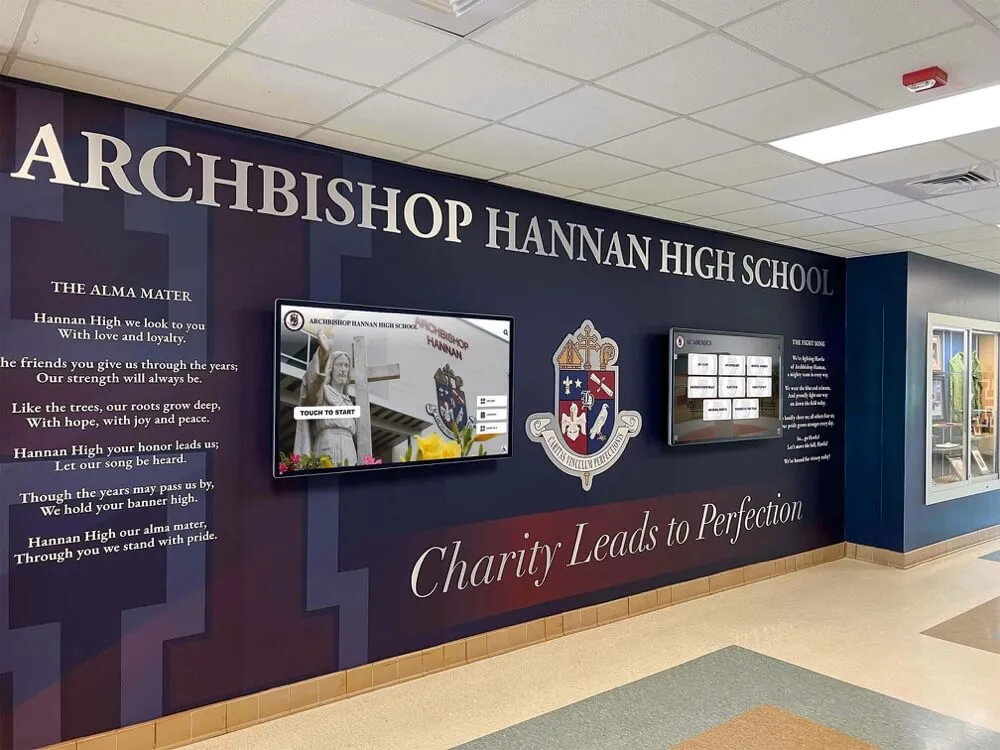
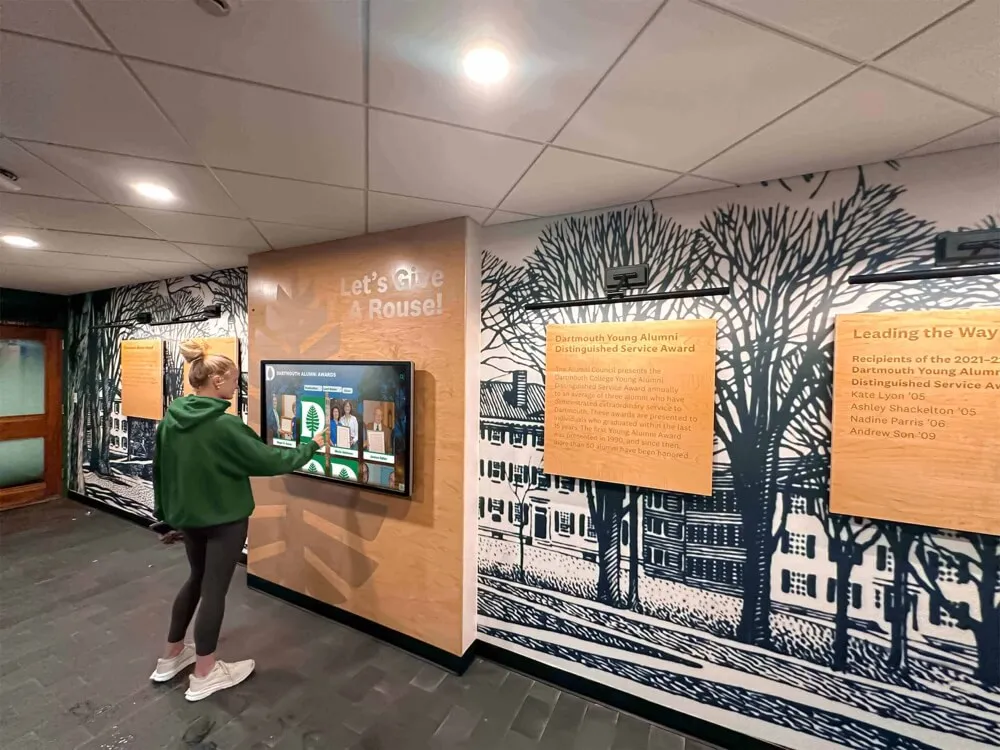
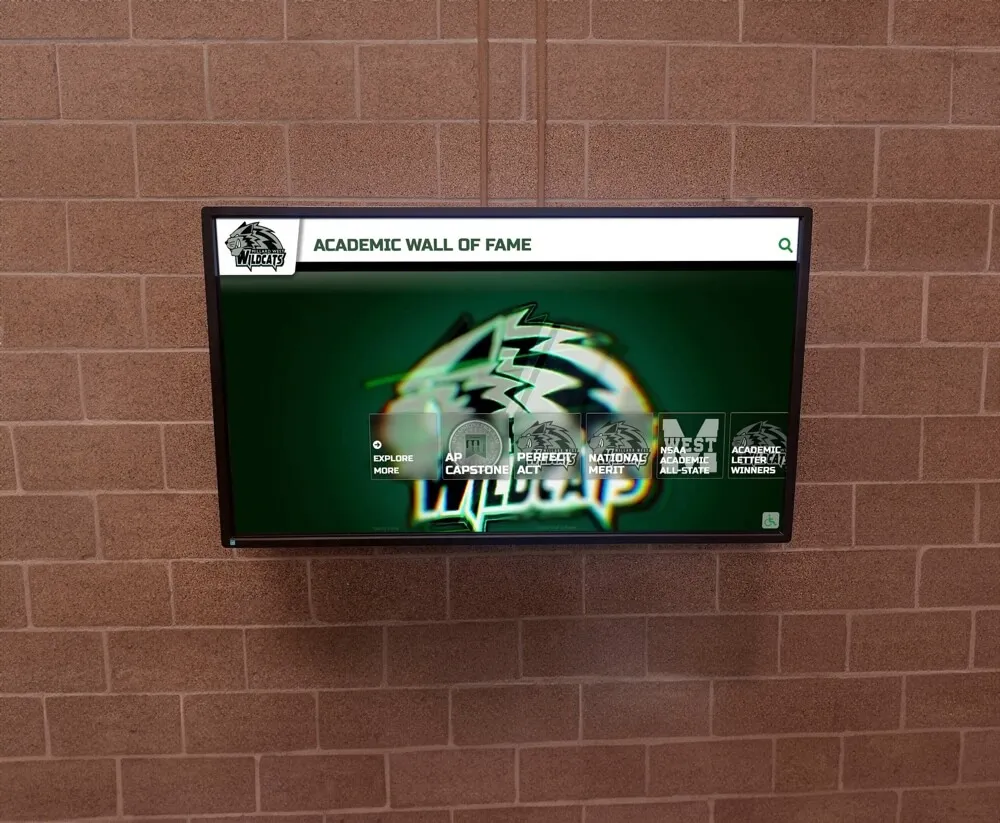
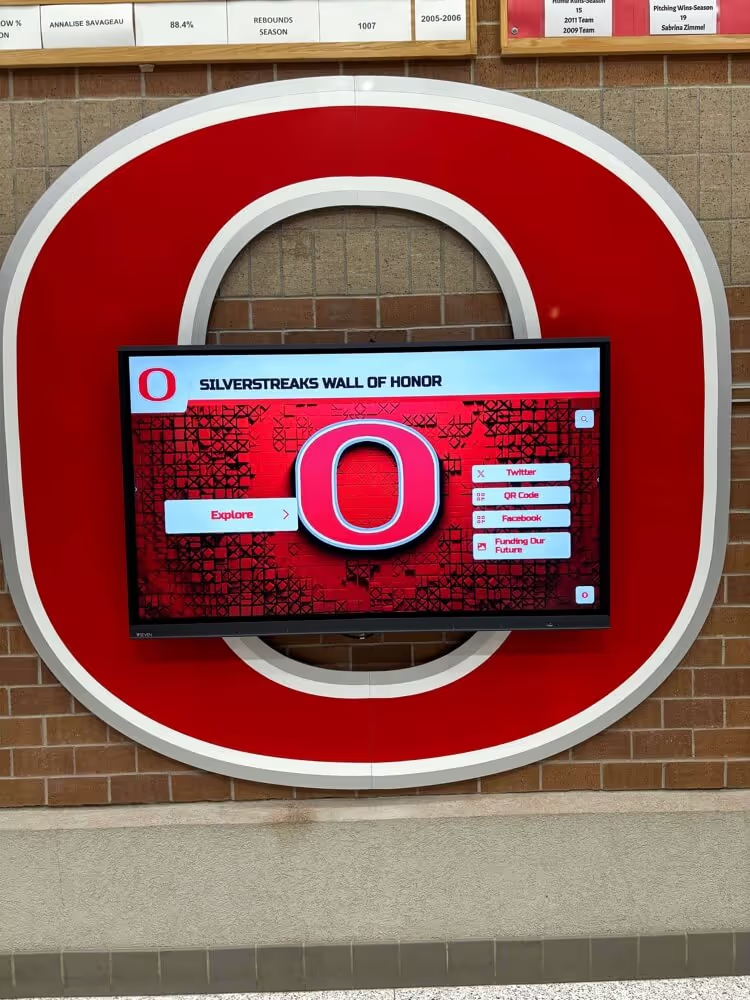
Digital academic recognition displays on school hallway walls make scholarly achievement as visible as athletic honors
Interactive Touchscreen Recognition Walls
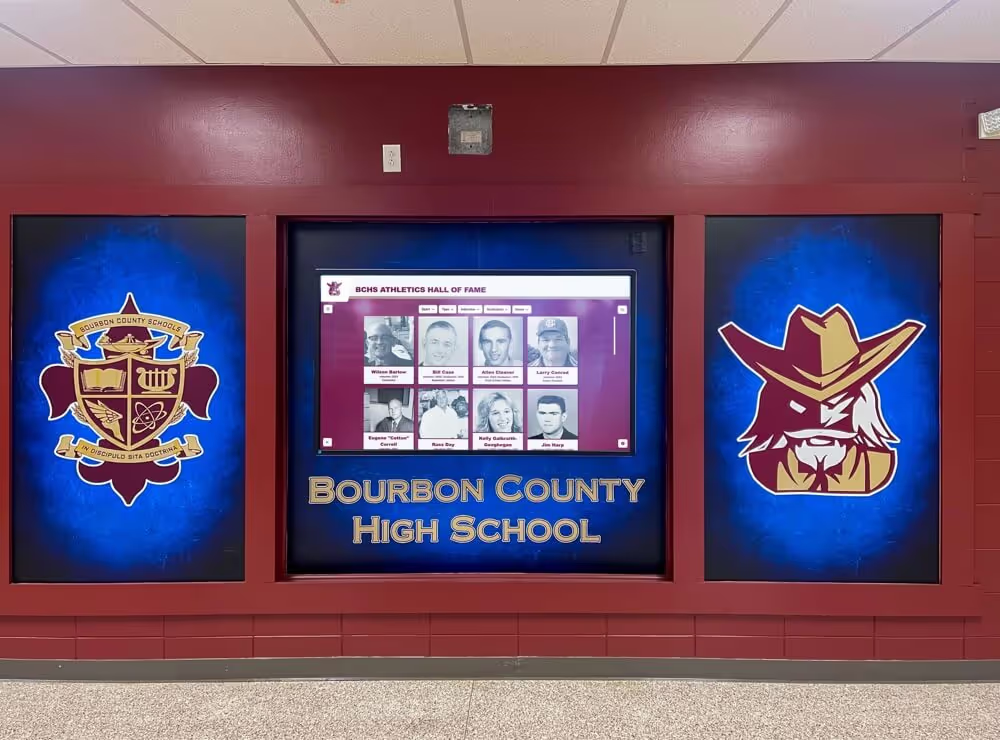
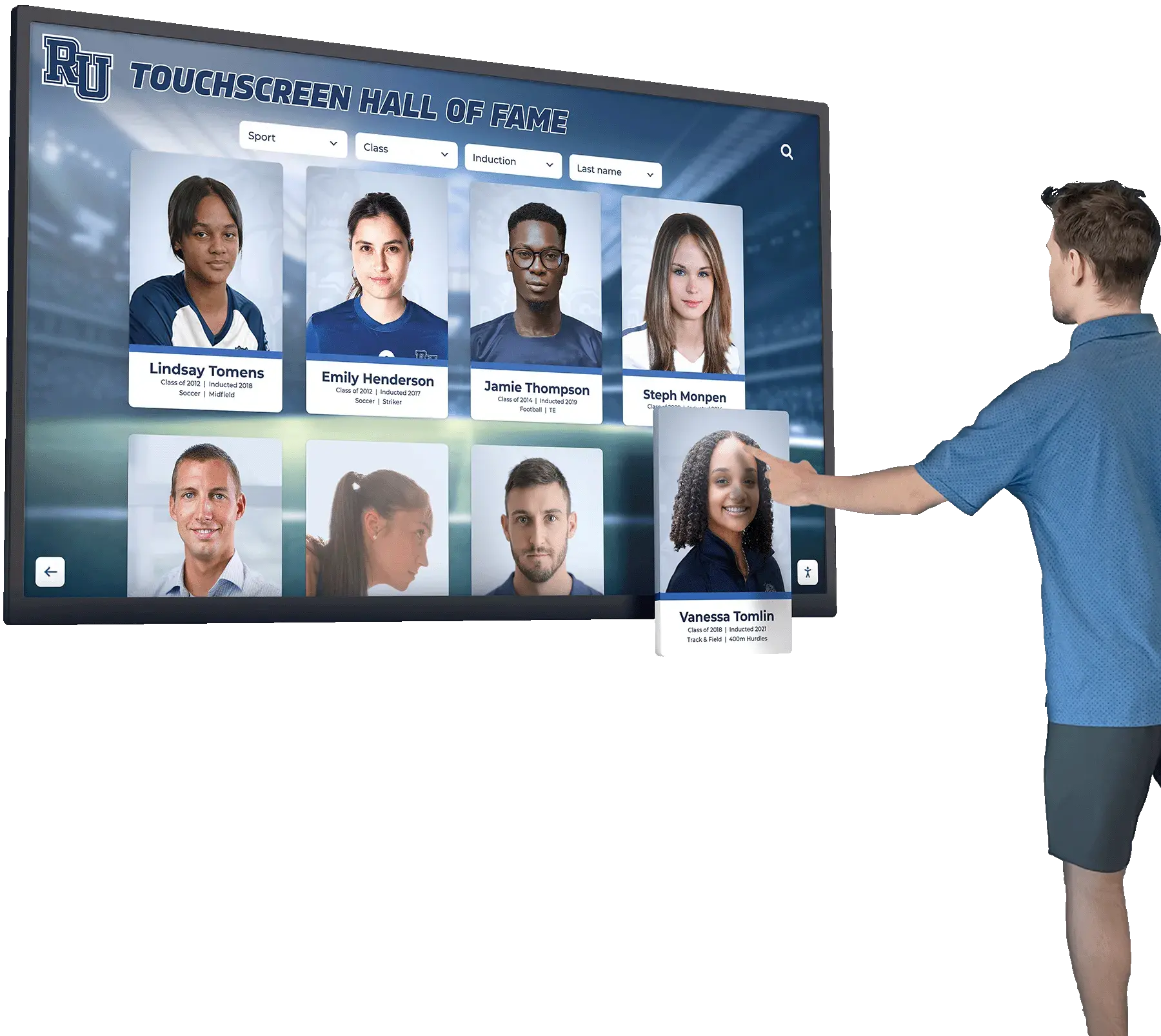
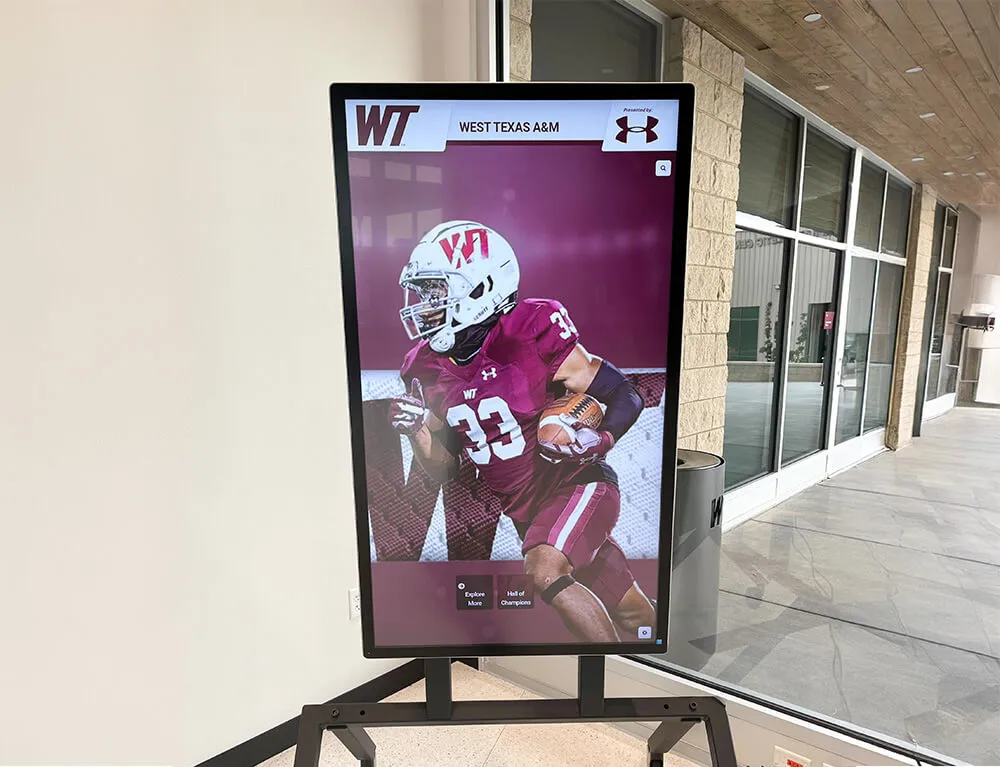
Interactive touchscreen displays represent the most comprehensive digital award display approach, enabling unlimited recognition capacity alongside rich multimedia storytelling in a single installation footprint.
Core capabilities of modern touchscreen recognition platforms include:
- Unlimited award categories and entries: A single 55-inch touchscreen can recognize every athletic champion, academic honor recipient, arts award winner, STEM competition medalist, and community service honoree the school has ever produced—without space constraints
- Rich multimedia profiles: Individual honoree pages can include photos, video highlights, coach or teacher quotes, achievement statistics, and personal milestone information that plaque engraving can never accommodate
- Searchable databases: Students, families, and alumni can search by name, year, sport, academic program, or award category to find specific recognition quickly
- Remote content management: Administrators update recognition from any internet-connected device, adding new honorees within hours of recognition events rather than waiting weeks for physical fabrication
- WCAG 2.1 AA accessibility compliance: Platforms like Rocket Alumni Solutions build to full digital accessibility standards, including screen reader compatibility, appropriate color contrast ratios, and touch target sizing that accommodates users with motor limitations
- QR code mobile access: Visitors scan QR codes to continue exploring recognition on personal devices, extending engagement beyond the physical kiosk location
Institutions interested in how digital wall of fame systems compare to physical displays on cost, maintenance, and visitor impact will find that digital systems typically reach cost parity within three to five years when factoring in elimination of ongoing fabrication, engraving, and installation expenses.
Placement strategies for touchscreen recognition prioritize locations where visitors naturally pause rather than simply transit. Main entrance lobbies, spaces adjacent to gymnasium entrances, alumni center reception areas, and library atriums generate significantly higher touchscreen engagement than pure corridor installations because visitors have context and time for exploration.
For academic recognition specifically, digital National Honor Society recognition displays demonstrate how honor organizations can showcase current and alumni inductees with the depth and visual quality that physical plaque systems cannot match.
Digital Signage Award Displays
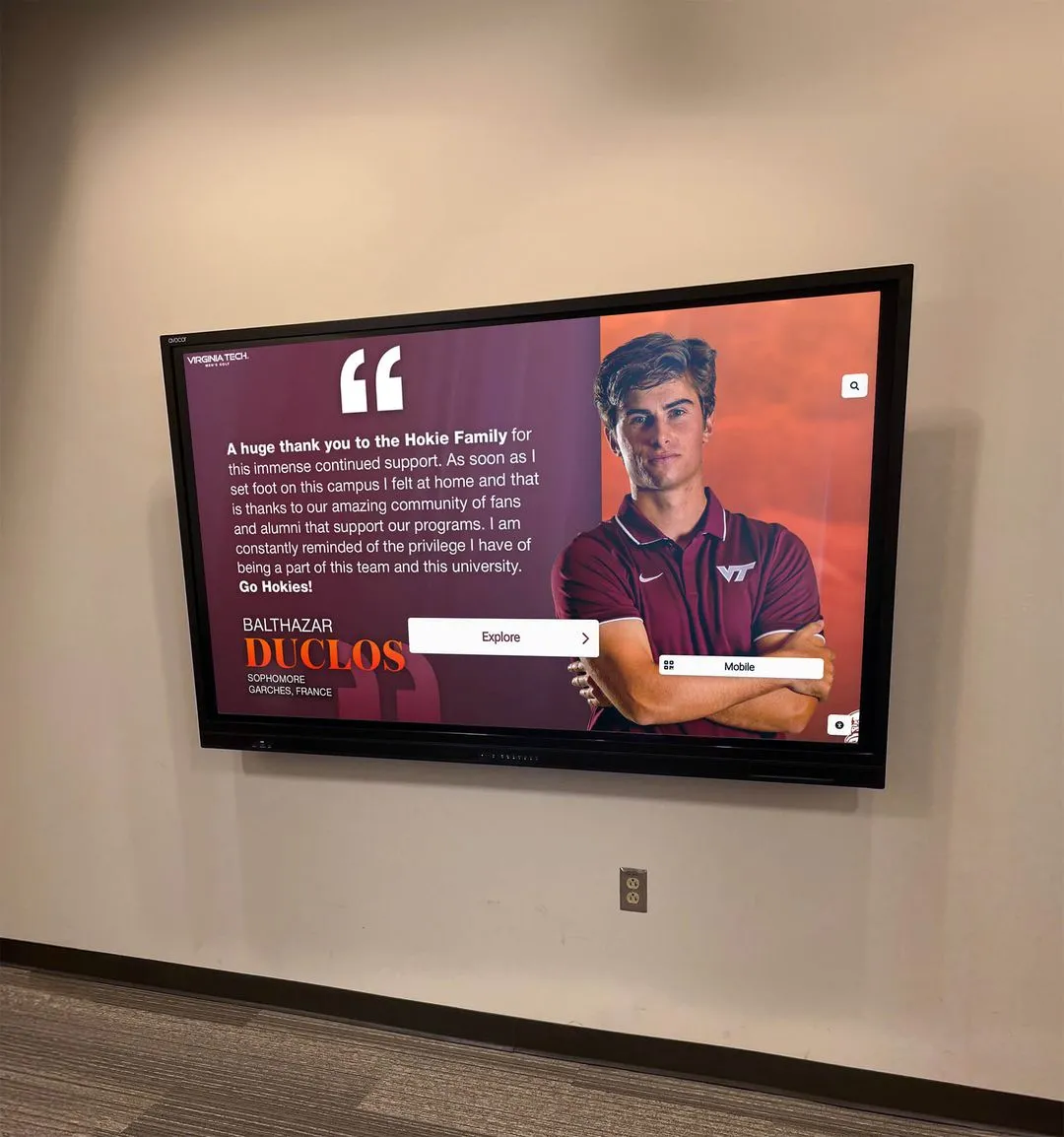
Non-interactive digital signage—commercial displays showing scheduled content rather than responding to touch input—offers a lower-cost entry point for schools adding dynamic recognition content to high-traffic spaces.
Content rotation approaches cycle through athletic achievements, academic recognitions, and student spotlights on programmed schedules. A lobby screen might display state championship highlights during morning arrival, transition to academic honor roll recognition during class changes, and show arts program achievements during afternoon dismissal.
Event-triggered recognition uses digital signage management platforms to automatically display recognition content during relevant events. Athletic competition days can trigger championship history content. Award ceremony periods can display current nominees. Graduation season can showcase the complete senior class recognition summary.
Multi-screen coordination synchronizes content across displays throughout a building, ensuring consistent recognition messaging while allowing location-specific customization. An athletic lobby might emphasize sports achievement while a main entrance display rotates through all recognition categories.
Schools interested in specific implementation details for digital wall mount displays with pricing guidance for educational institutions and nonprofits will find budget planning resources addressing hardware, installation, and ongoing content management costs.
Hybrid Physical-Digital Recognition Systems
Hybrid approaches combine traditional physical display materials with digital components, leveraging the permanence and aesthetic appeal of conventional recognition alongside the flexibility and storytelling depth of digital systems.
Case-and-screen configurations position digital touchscreens adjacent to traditional trophy cases, with the physical cases displaying championship trophies and the screens providing searchable archives of all related recognition—season records, individual award recipients, historical context, and multimedia content unavailable in physical format.
Plaque-and-tablet combinations mount physical plaques for current-year honorees while a nearby tablet or small display provides searchable historical recognition. This approach satisfies stakeholders who value physical presence for contemporary awards while addressing the unlimited-capacity problem that static plaque walls inevitably face.
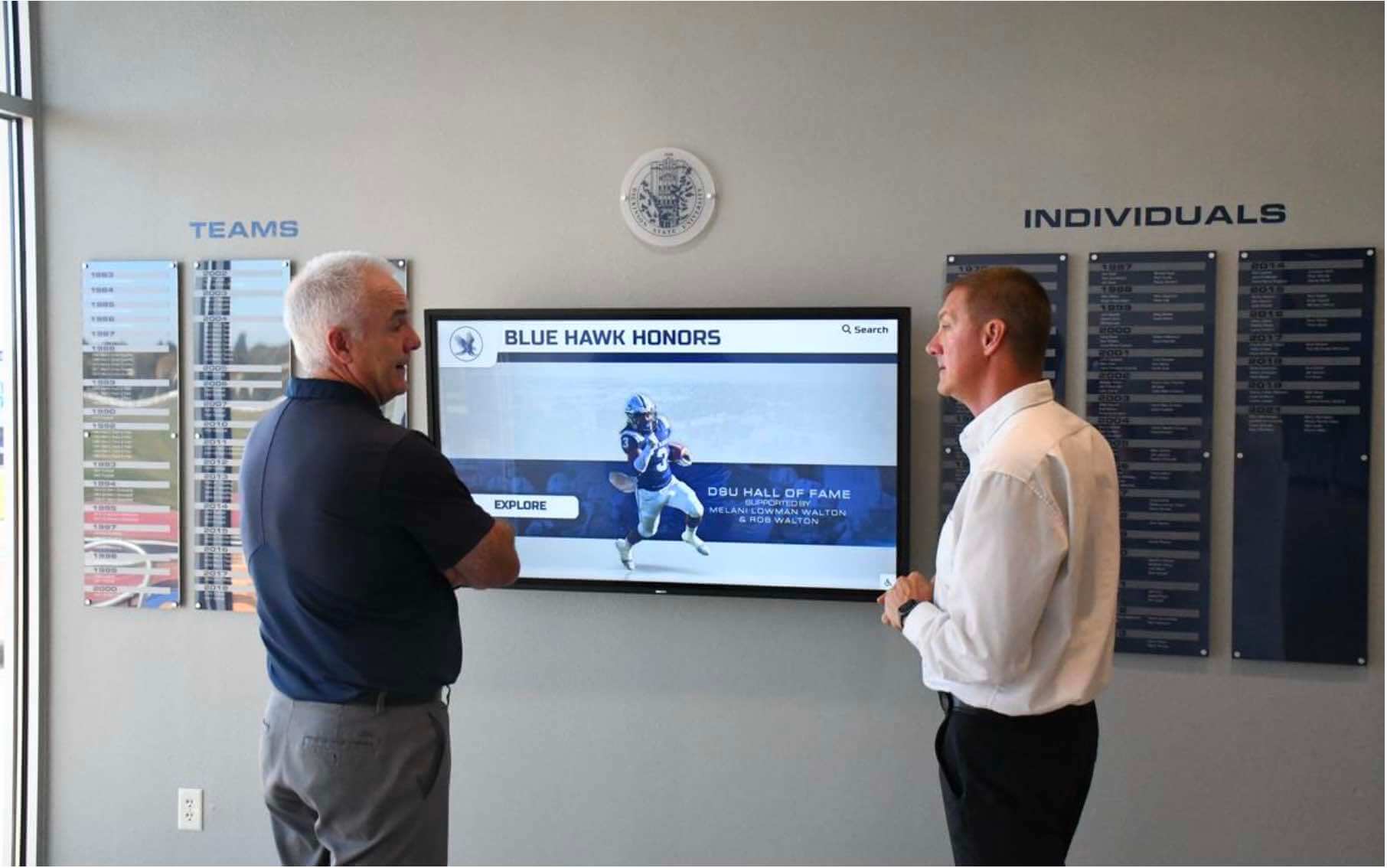
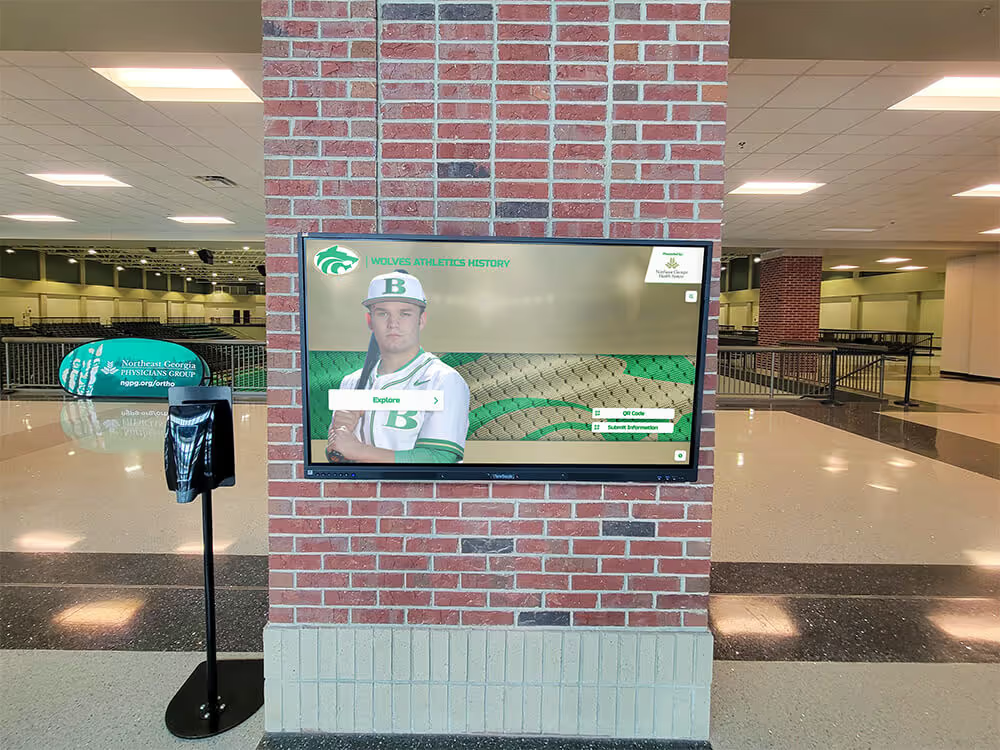
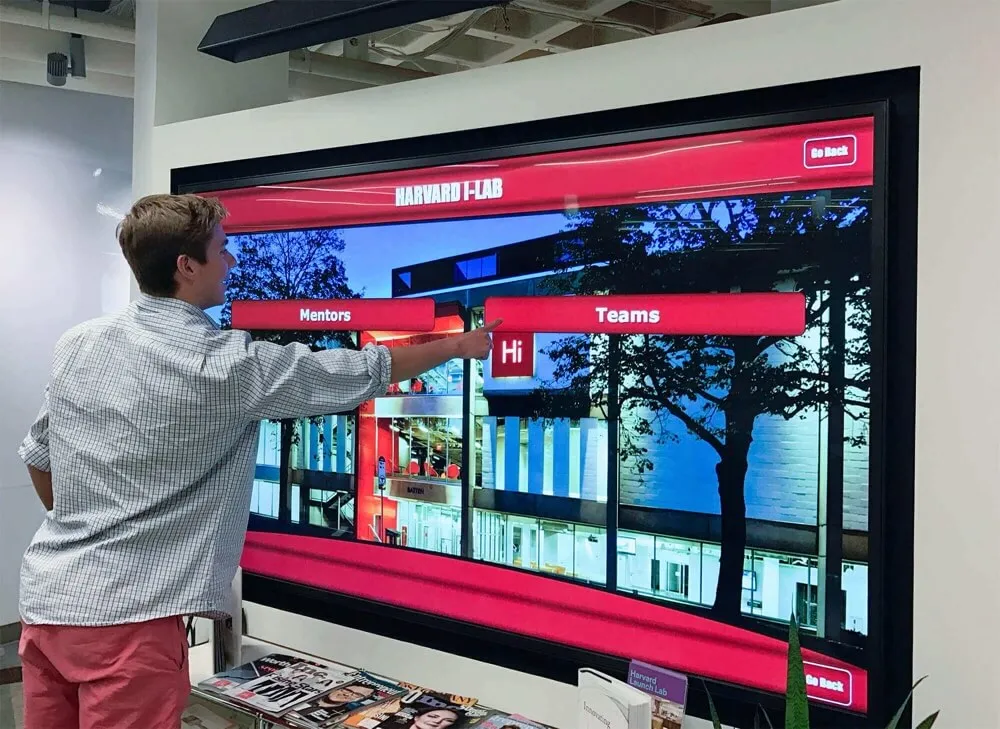
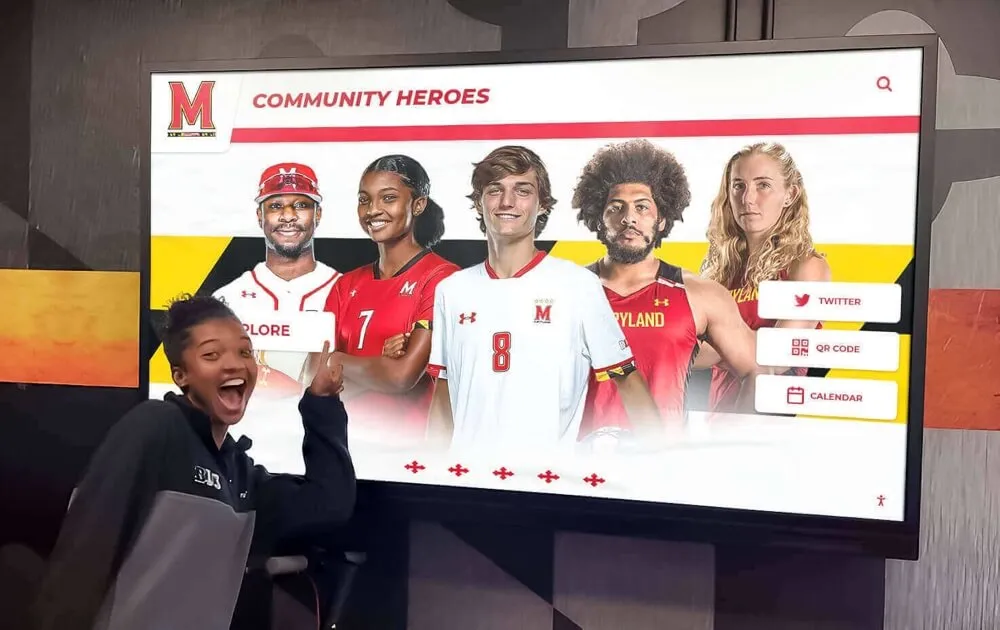
Interactive digital displays generate multi-minute engagement with recognition content that static installations rarely produce
Digital-native architecture integrates screen-based recognition into building design from the outset, with display mounting locations, electrical access, and network connectivity planned into new construction and renovation projects. This approach enables seamless recognition environments where digital displays feel architecturally integrated rather than retrofitted.
Award Display Ideas by Achievement Category
Recognition wall strategies vary meaningfully by achievement type. Different categories require different display formats, update frequencies, and narrative approaches.
Academic Award Display Ideas
Academic recognition covers a broader range of achievement types than most schools visually represent. Honor roll and GPA recognition, academic competition results, standardized test achievement, subject-specific awards, scholarship recipients, and post-secondary recognition all deserve display—but seldom appear in physical installations designed primarily for athletic trophies.
Academic achievement walls dedicated to scholarly recognition signal institutional commitment to academics with the same visual investment typically reserved for athletics. A well-designed academic recognition environment might include:
- Dean’s list and honor roll display updated each grading period
- National Merit Scholarship and academic competition results
- AP Scholar and dual-enrollment achievement recognition
- Subject-area award winners from local, regional, and national competitions
- College matriculation boards showing where graduates enroll
- Graduate recognition displays celebrating the most recent graduating class alongside distinguished alumni profiles
Department-based recognition positions award displays adjacent to relevant academic spaces. Science competition results displayed near the science wing, literary award recognition near the English department, and math competition honors near mathematics classrooms create contextually meaningful displays that reinforce academic identity throughout the building.
Student of the Month and week recognition represents the highest-frequency academic award category for most schools. Digital displays that automatically cycle current honorees, with searchable archives of all past recipients, eliminate the staff time burden of manually updating physical bulletin boards while providing year-round visibility that monthly paper postings rarely achieve.
Athletic Award Display Ideas
Athletic recognition represents the most mature display category at most schools, but many programs still underutilize available concepts for presenting competitive achievement with maximum impact.
Record boards communicate athletic excellence through objective performance data—a form of recognition that complements but differs from trophy displays. Digital record boards with auto-ranking capabilities update automatically when new records are entered, eliminating the manual revision burden that causes many physical record boards to fall months behind current performance.
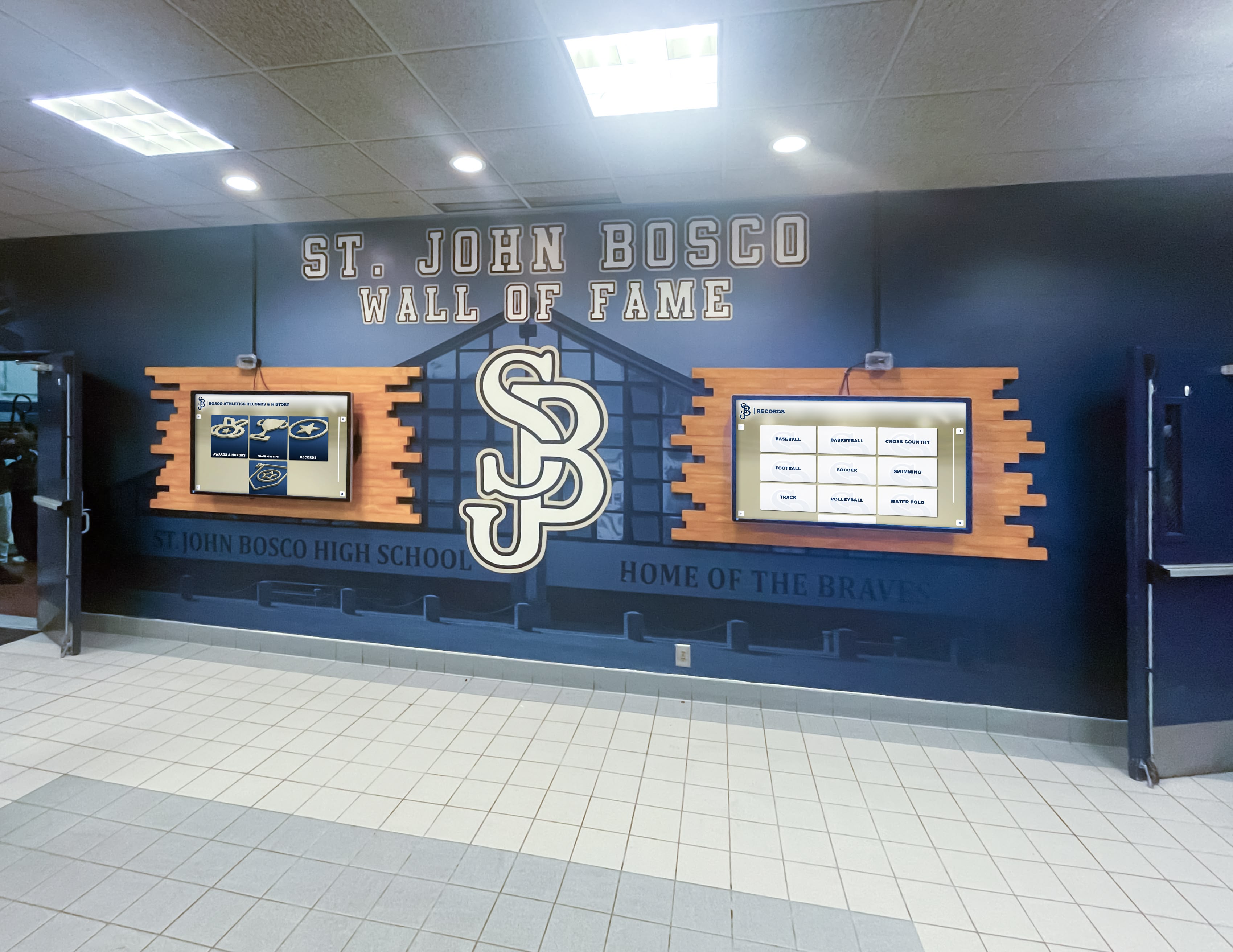
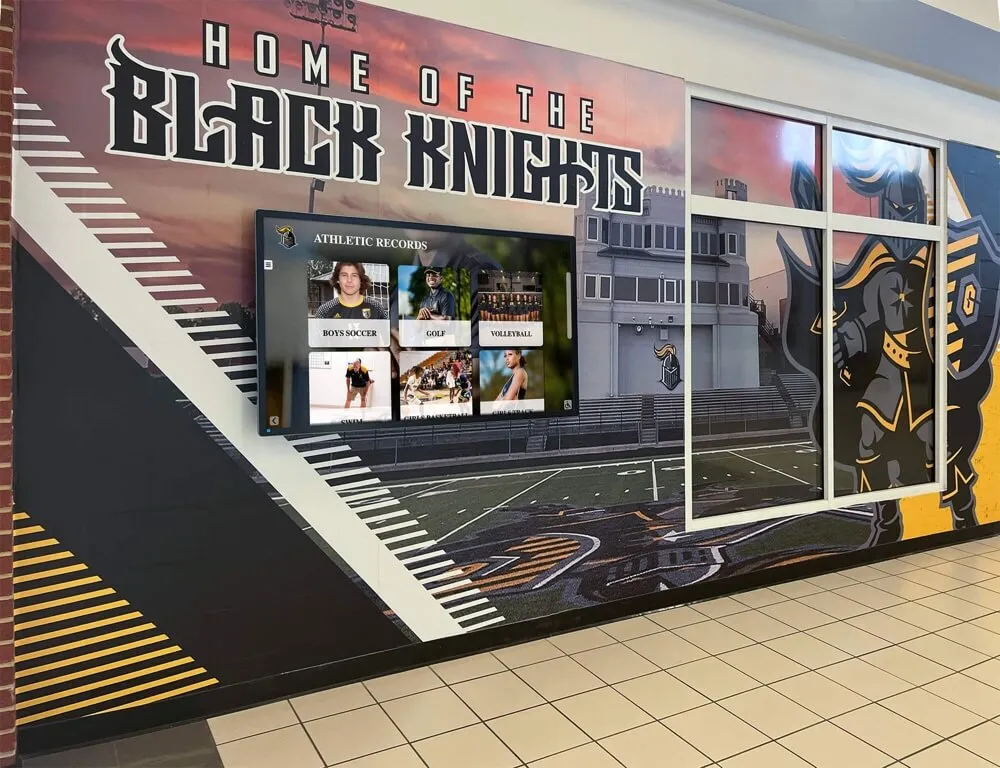
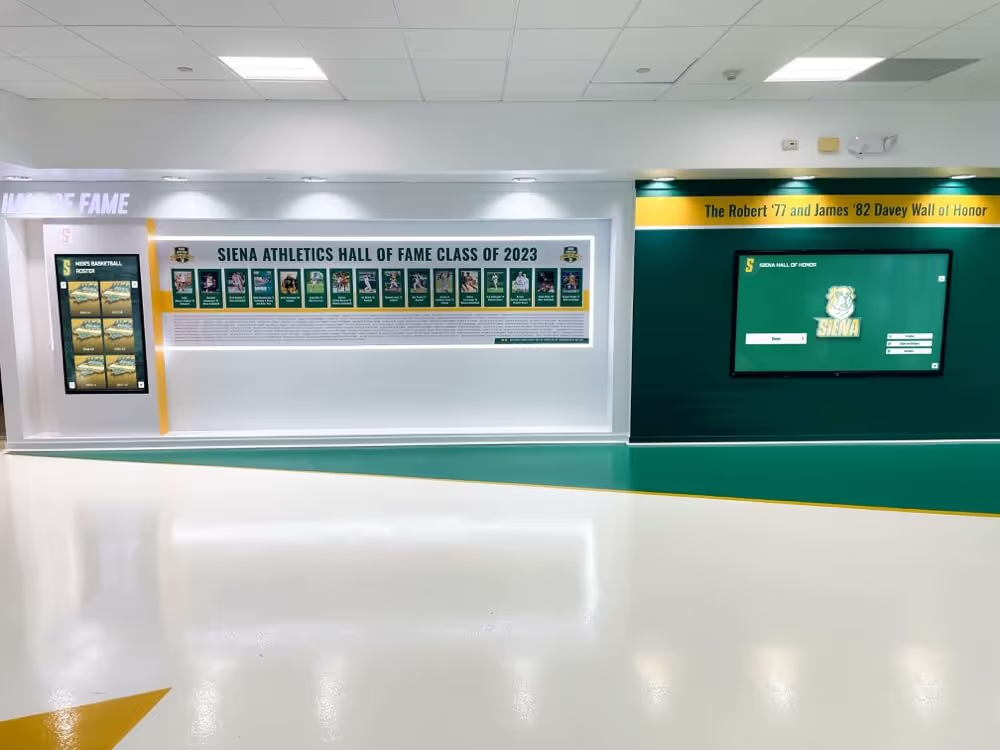
Dual-screen recognition configurations in athletic hallways create immersive achievement environments that engage student athletes year-round
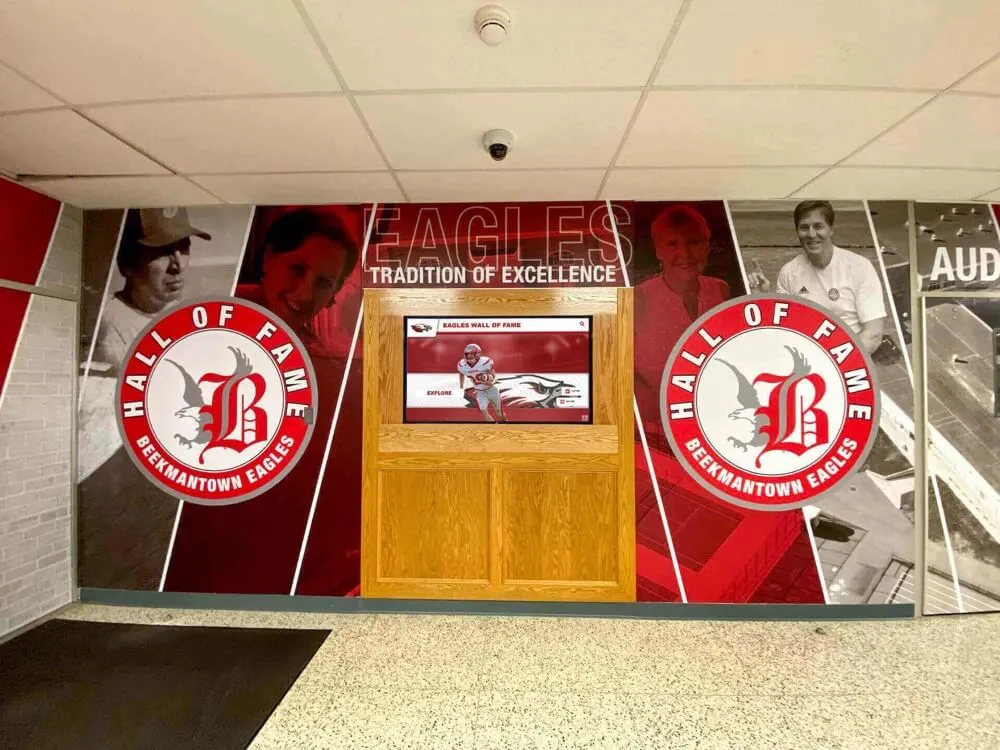
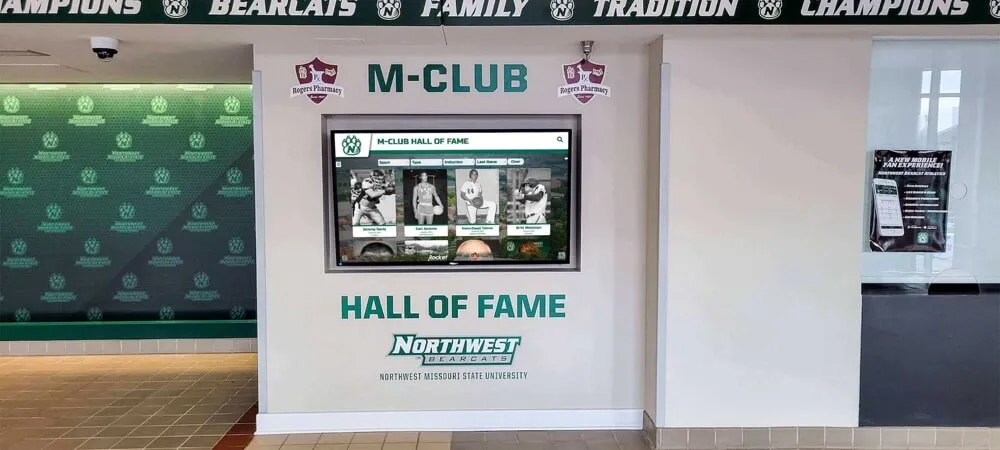
Hall of fame installations provide permanent, prestigious recognition for the athletes, coaches, and contributors whose impact transcends individual seasons. A complete guide to digital wall of fame systems covers format options, selection criteria development, and the practical steps for launching or modernizing formal hall of fame programs.
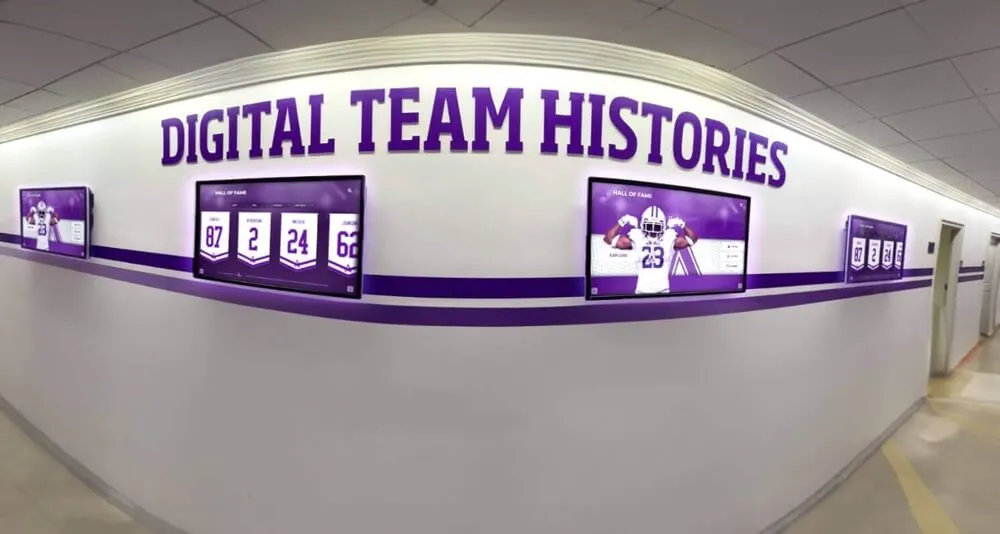
Team history displays present year-by-year season records, roster information, coaching staff history, and notable milestone moments for each athletic program. These displays create context that championship trophies alone cannot provide, helping current athletes understand the tradition they participate in and the standard they represent.
College signing recognition celebrates student athletes earning athletic scholarships or committing to collegiate programs. Dedicated signing displays that accumulate across years demonstrate program quality to recruits while honoring athletes whose commitment represents the fulfillment of years of development.
Arts, STEM, and Community Service Display Ideas
Non-athletic and non-academic recognition categories receive the least display investment at most institutions, despite representing some of students’ most significant individual accomplishments.
Arts recognition walls can display competition awards, gallery selections, performance achievement, and individual artist features in formats that physical trophy cases do not accommodate well. Shadow boxes for competition trophies, framed artwork reproductions alongside artist recognition, and digital displays showing performance recordings and portfolios create visually engaging arts recognition that matches the creative nature of the achievements being honored.
STEM competition displays highlight robotics championship results, science fair achievement, math competition awards, and technology program recognition in dedicated spaces adjacent to maker spaces, labs, and STEM program classrooms. Digital displays in these spaces can show competition documentation, project videos, and team profiles alongside physical award hardware.
Community service recognition is among the least-displayed achievement categories despite representing outcomes that institutions consistently emphasize in their mission statements. Bulletin boards and digital displays highlighting service hours, project summaries, and community impact translate invisible service work into visible institutional achievement. Special student award categories for service, leadership, and character provide frameworks for recognizing the full spectrum of student accomplishment.
Location and Environment Planning for Award Displays
Where you place recognition displays significantly affects their impact. Strategic placement decisions determine whether recognition reaches intended audiences and generates the engagement that makes recognition investment worthwhile.
High-Impact Display Locations
Main building entrances represent the highest-impact single location for award displays because every visitor—students, parents, prospective families, community members, and guests—enters through them. School entrance display environments that combine recognition content with wayfinding and school identity information create immediate, positive impressions that persist through entire visits. School entrance digital signage concepts show how entrance displays can simultaneously welcome visitors and communicate institutional achievement.
Athletic lobbies and gymnasium corridors generate the highest-frequency viewing for athletic recognition content because student athletes pass through them daily. Recognition placed where athletes prepare for competition, cool down after practice, and gather before games becomes part of competitive culture rather than peripheral decoration.
Administrative and counseling areas position academic and achievement recognition where it influences high-stakes conversations—enrollment discussions with prospective families, college planning meetings with students, and goal-setting conversations with administrators.
Library and learning commons areas create ideal environments for academic recognition because they already position students in achievement-oriented mindsets. Honor roll displays, academic competition results, and scholarship recognition in these spaces reinforce academic identity in contexts students associate with learning.
Design and Accessibility Considerations
Mounting heights for physical displays should follow ADA guidelines placing primary content between 15 and 48 inches from floor height, with interactive touchscreens positioned so primary interaction zones fall between 15 and 48 inches. Display elements positioned above 48 inches should contain supplementary content, not primary recognition information.
Lighting design significantly affects how physical displays read. Under-shelf LED lighting at 2700K-3000K color temperature enhances gold trophy finishes while creating warm, inviting environments. Glass case lighting requires attention to glare—diffused LED strip lighting reduces the reflections that make traditional fluorescent-lit cases difficult to view.
Traffic circulation around display installations must maintain ADA-compliant clearance minimums: 36 inches for single-direction corridors and 44 inches where opposing traffic flows. Freestanding display cases positioned in corridors or lobbies require careful placement to avoid creating circulation bottlenecks during peak movement periods.
Design consistency across display environments creates cohesive institutional identity rather than a collection of disconnected installations. Consistent use of school colors, typography, and visual motifs across traditional and digital recognition elements produces recognition environments that feel intentional rather than accumulated. Design consistency principles that reduce fragmented visual environments apply directly to recognition wall planning across large facilities.
Implementing a Comprehensive Award Display Strategy
Moving from individual display concepts to a building-wide recognition strategy requires coordinated planning across budget, content management, stakeholder communication, and long-term maintenance.
Budget Planning Framework
Award display budgets range from under $5,000 for basic physical installations to $50,000 and above for comprehensive digital recognition environments. Planning frameworks that clarify priorities prevent both underspending on visible investments and overspending on single-category solutions that leave major recognition gaps.
Phase-based implementation allows institutions to build comprehensive recognition environments over multiple budget cycles. A typical three-phase approach:
- Phase 1 (Year 1): Address highest-visibility locations with flagship digital display or major traditional installation; establish design standards that all future phases will follow
- Phase 2 (Year 2-3): Extend recognition to secondary locations (academic wings, arts areas, STEM spaces); add digital components complementing Phase 1 installation
- Phase 3 (Year 3-5): Complete building-wide recognition environment; retrofit remaining high-traffic locations; connect all digital displays to unified content management platform
Total cost of ownership analysis should include initial hardware and installation, annual content management platform licensing, staff time for content updates, and hardware refresh cycles (typically 7-10 years for commercial displays). Digital systems that eliminate annual fabrication costs often reach favorable total-cost positions within three to five years compared to traditional installations requiring ongoing engraving and panel replacement.
Content Management and Ongoing Maintenance
The recognition environment that looks compelling at installation and deteriorates to outdated content within two years fails its core purpose. Content management planning is as important as display selection.
Content update workflows should document who updates what, when, and how. Academic recognition tied to grading periods requires quarterly workflows. Athletic recognition benefits from post-season workflows aligned with competition calendars. Hall of fame and permanent recognition requires annual or induction-cycle workflows.
Platform training for content managers reduces ongoing dependence on IT staff or vendor support. Institutions using cloud-based recognition platforms like Rocket Alumni Solutions can train multiple staff members to update content independently, distributing the workload across academic department coordinators, athletic administrative staff, and student leadership programs.
Quality review processes maintain display standards over time. Designated review periods—coinciding with school calendar milestones like fall semester start, winter break, and spring semester end—ensure that recognition remains current, accurate, and professionally presented throughout the academic year.
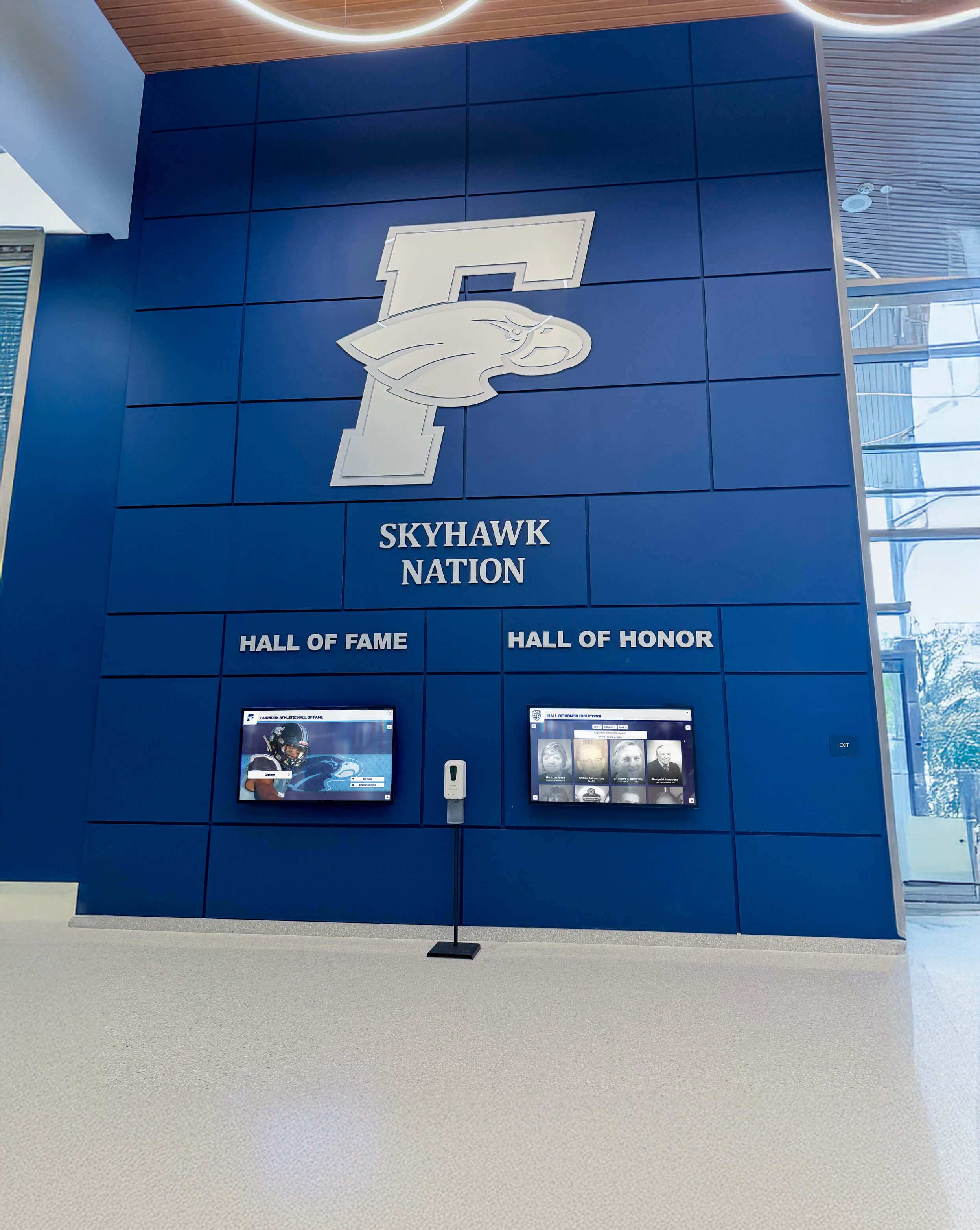
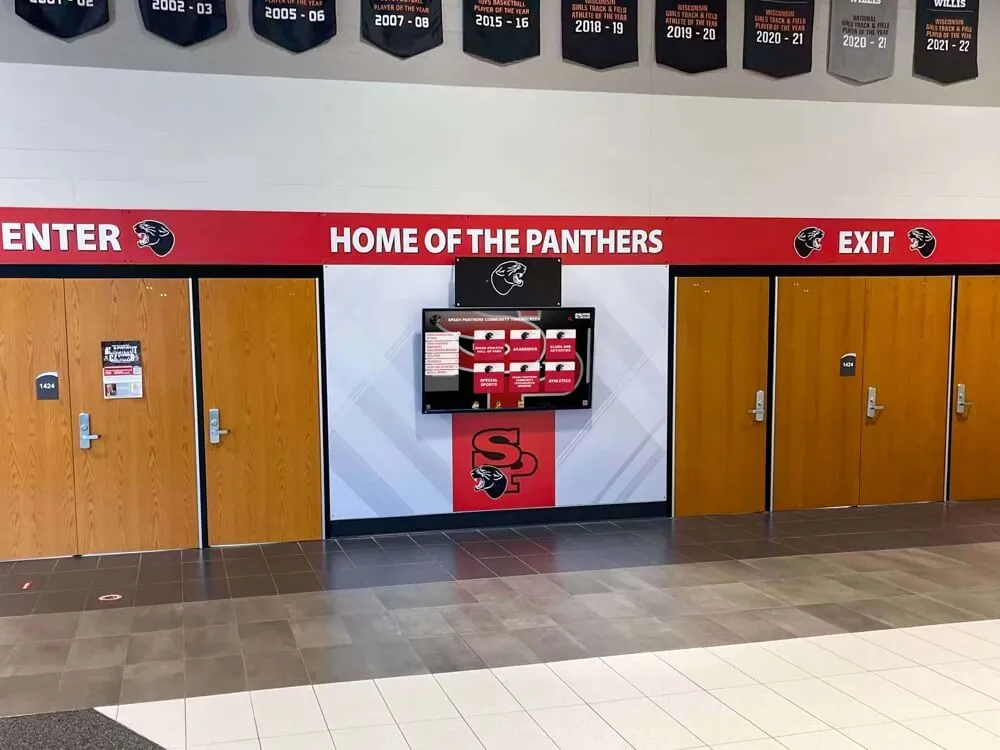
Lobby recognition walls that integrate school identity with achievement display create powerful first impressions for every visitor
Working with Recognition Platform Providers
Selecting a recognition platform partner involves evaluation beyond hardware specifications and software features. Implementation support, content development assistance, and long-term service relationships significantly affect whether recognition investments achieve intended outcomes.
Rocket Alumni Solutions serves more than 600 institutions across K-12 schools, universities, and community organizations—from small rural high schools to major university athletic departments and professional sports venues. The platform supports unlimited recognition categories and entries, full WCAG 2.1 AA accessibility compliance, multimedia integration including photos, videos, and social media content, QR code mobile access, remote cloud-based content management, auto-ranking for record boards and leaderboards, and a sponsorship suite enabling institutions to generate revenue from recognition displays. Average setup time from contract to launch is two to four weeks.
For institutions considering digital recognition investments, a contextual demo showing how the platform would present their specific programs, award categories, and historical recognition content provides far more useful evaluation information than generic product demonstrations.
See Your Award Display Come to Life
Discover how Rocket Alumni Solutions can create a custom recognition environment for your school or university—covering every achievement category with unlimited capacity, full ADA accessibility, and content you can update from anywhere.
Request a Custom DemoFrequently Asked Questions About Award Display Ideas for Schools
How many trophies or awards can a digital display hold compared to a physical trophy case?
A standard floor-standing trophy case with four adjustable shelves typically holds 30 to 50 trophies depending on size. A single touchscreen recognition display running a platform like Rocket Alumni Solutions holds unlimited entries—schools with 50 years of athletic history, complete academic honor rolls, and multiple award categories can display everything in one installation footprint. Physical capacity constraints disappear entirely with digital recognition systems.
What is the most cost-effective award display approach for a school with a limited budget?
For schools with constrained budgets, the highest-value initial investment is typically a single digital display positioned in the highest-traffic location—usually the main entrance lobby or gymnasium corridor. A 55-inch commercial touchscreen with content management platform support costs significantly less than comprehensive physical installation across multiple categories, and a single well-placed digital display reaches more visitors than multiple small physical cases distributed throughout the building.
Do digital recognition displays require IT staff to manage content updates?
Most modern recognition platforms are designed for non-technical administrators, coaches, and department coordinators to update independently. Cloud-based systems accessible through standard web browsers allow authorized users to add honorees, upload photos, embed videos, and publish new recognition content without IT support. Implementation typically includes staff training, and ongoing support from the platform provider covers technical issues.
How should schools handle award displays for non-athletic achievements like academic honors and arts awards?
Academic, arts, STEM, and community service recognition deserves the same visual prominence as athletic achievement—and should be located in spaces those student populations frequent, not just in athletic corridors. Dedicated academic recognition walls near administrative and counseling areas, department-specific displays adjacent to relevant classrooms, and arts recognition in performing arts lobbies distribute recognition appropriately across the full achievement landscape. Digital platforms that support unlimited categories make it practical to include every award type in a unified recognition environment.
What ADA requirements apply to school award displays?
Physical displays should mount primary content between 15 and 48 inches from finished floor height. Interactive touchscreens need primary interaction zones within the same range, with side approach clearance of at least 18 inches. Digital content must meet WCAG 2.1 AA standards including minimum 4.5:1 color contrast ratios, screen reader compatibility, keyboard navigation for interactive elements, and closed captioning for video content. Corridor and lobby installations must maintain minimum 36-inch clearance for pedestrian circulation.
Conclusion: Building a Recognition Environment That Lasts
The most effective school award displays share a common characteristic: they were designed with purpose rather than accumulated by circumstance. A single glass case added when the first championship trophy arrived, followed by a second case for overflow, followed by a plaque wall when the cases filled, followed by retired trophies in the storage room—this pattern describes most school recognition environments. It reflects institutional achievement, but it does not communicate institutional intentionality.
Building a recognition environment that serves students, impresses visitors, engages alumni, and sustains institutional culture over decades requires moving from reactive addition to strategic design. That means selecting display formats aligned with specific achievement categories, placing recognition where target audiences actually encounter it, investing in systems that can be updated efficiently, and committing to design standards that create coherence across every building location where achievement is displayed.
Whether your next step is refreshing a single trophy case, adding digital recognition to a gymnasium corridor, or planning a comprehensive building-wide recognition environment, the concepts in this guide provide frameworks for making decisions that serve your students and your institutional story. Every school has achievements worth celebrating. The question is whether your physical environment communicates that story as compellingly as your students deserve.
For award display ideas specific to your institution’s achievement profile, building layout, and recognition goals, connecting with a recognition specialist who can show you what your specific programs would look like in a modern display environment is the most efficient path forward.