



An award ribbon display is an organized system—physical or digital—that schools use to publicly showcase ribbons earned by students in athletics, academic competitions, arts events, and other extracurricular programs. Unlike trophies, ribbons represent high participation volume: a single track meet or science fair can generate dozens of ribbons across multiple categories and grade levels. A well-planned ribbon display communicates institutional depth of achievement and ensures that broad-based recognition stays visible rather than disappearing into storage drawers at the end of every season.
This guide covers the practical decisions schools face when planning, labeling, organizing, and maintaining award ribbon displays—including when a digital recognition system is the better long-term solution for managing high-volume honors across athletics, arts, and academics.
Award ribbons occupy a distinct niche in school recognition. A state championship trophy is singular and permanent; a ribbon from a regional science fair, a first-place finish at a cross-country invitational, or a blue ribbon from an art exhibition represents achievement that is both meaningful to the individual student and remarkably common across a year of active school programs. Multiply one active program by dozens of competitions and hundreds of participants, and even a small school accumulates ribbons faster than any single display can absorb them.
Understanding that scale—and planning displays that can accommodate it—is the starting point for every effective ribbon recognition strategy.

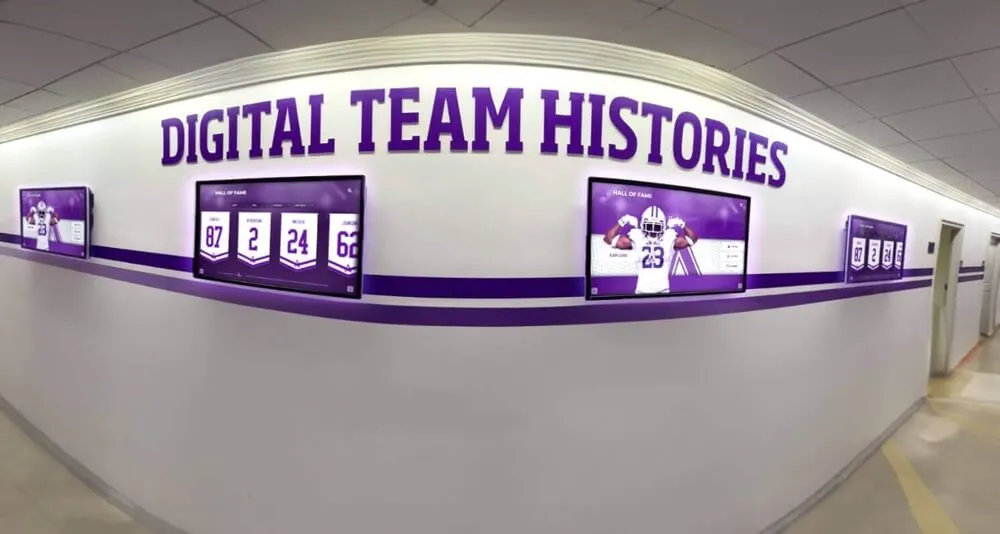
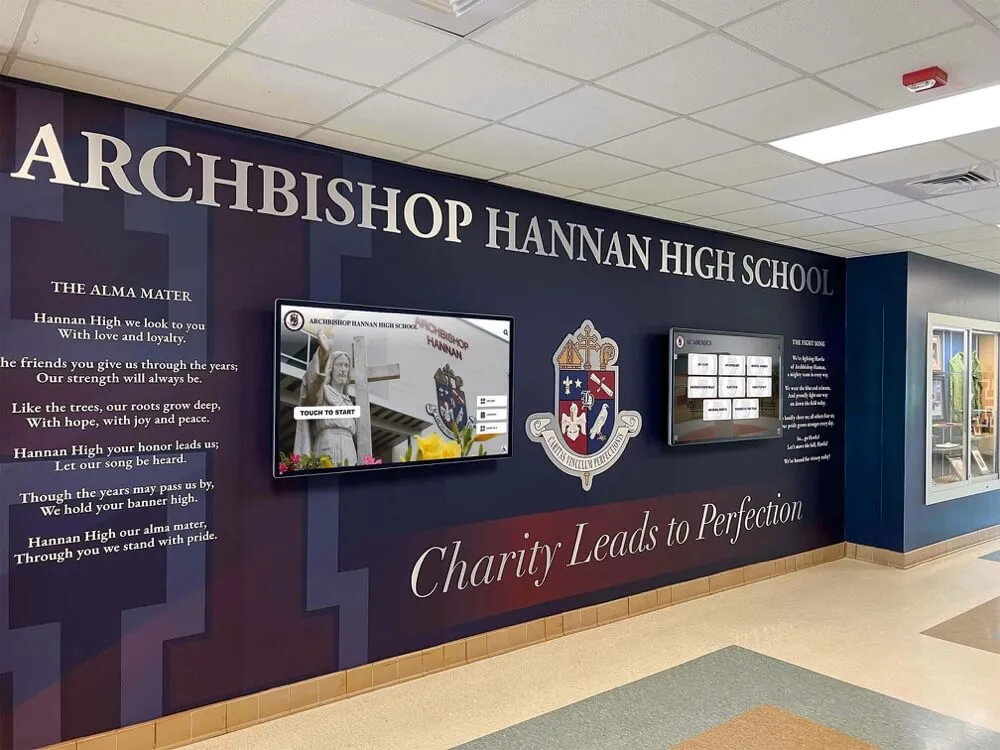
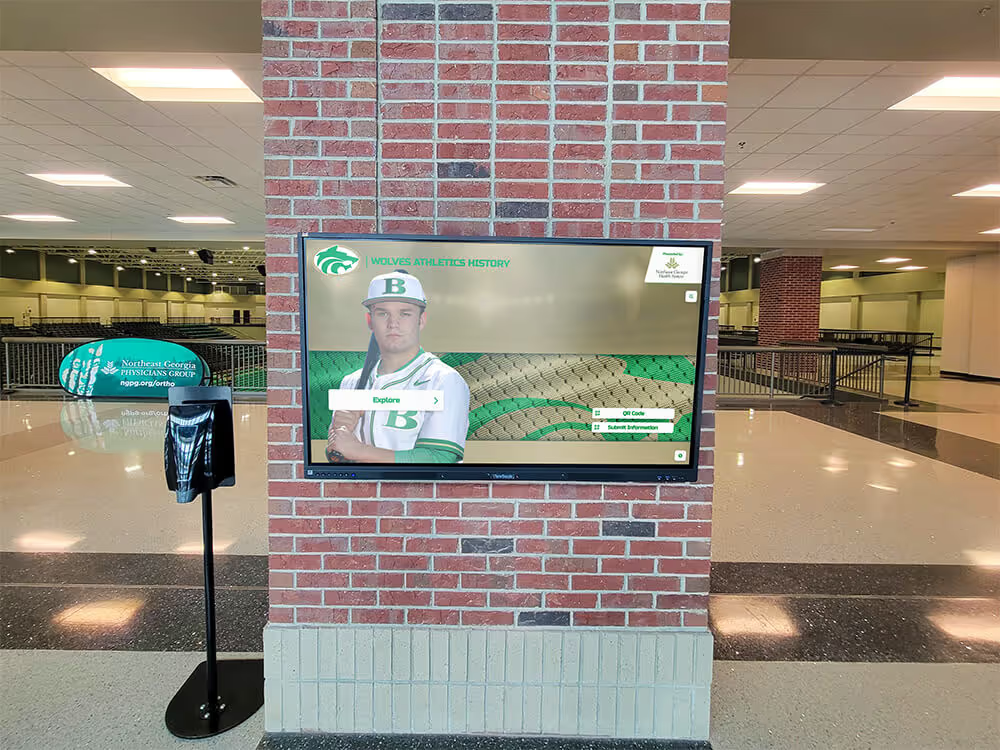
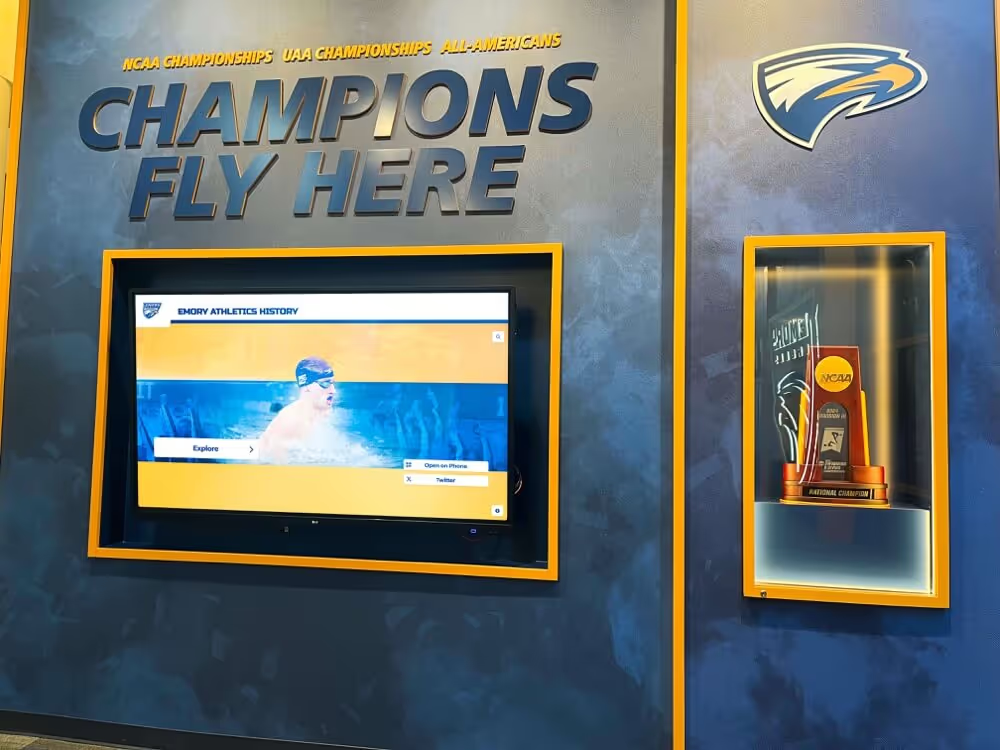
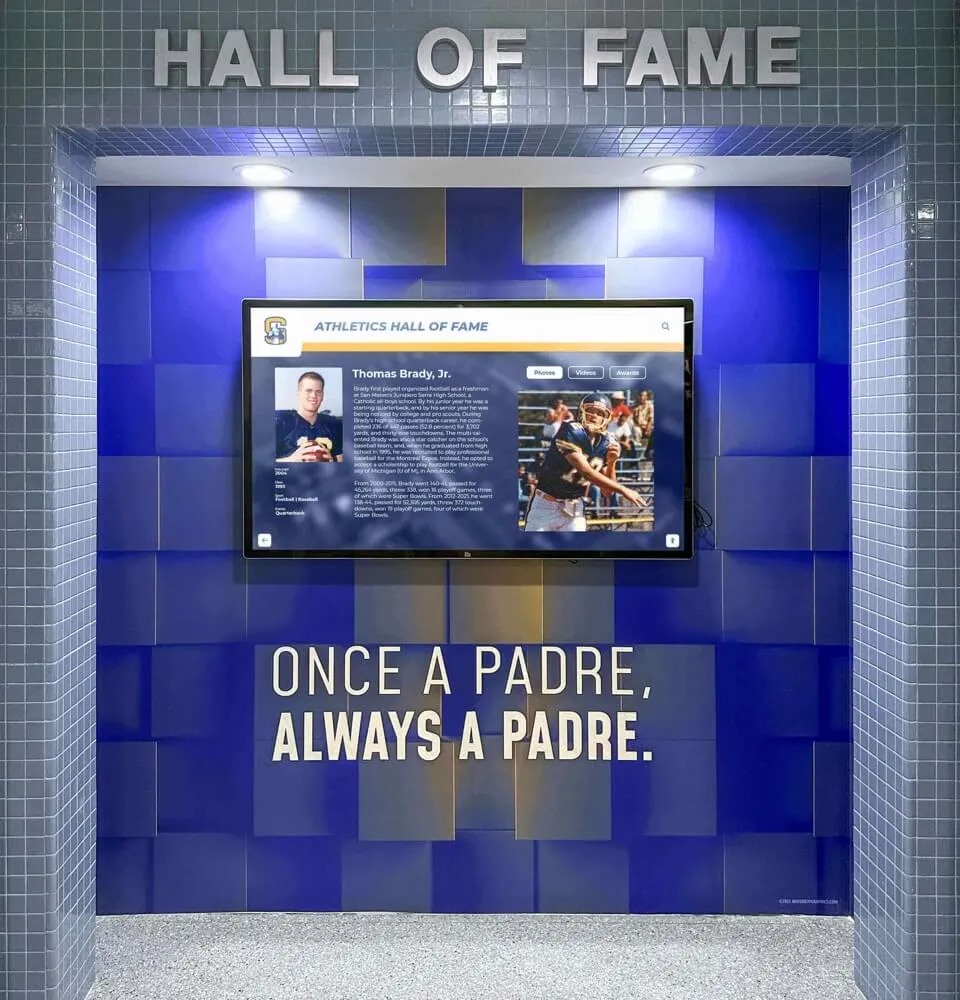
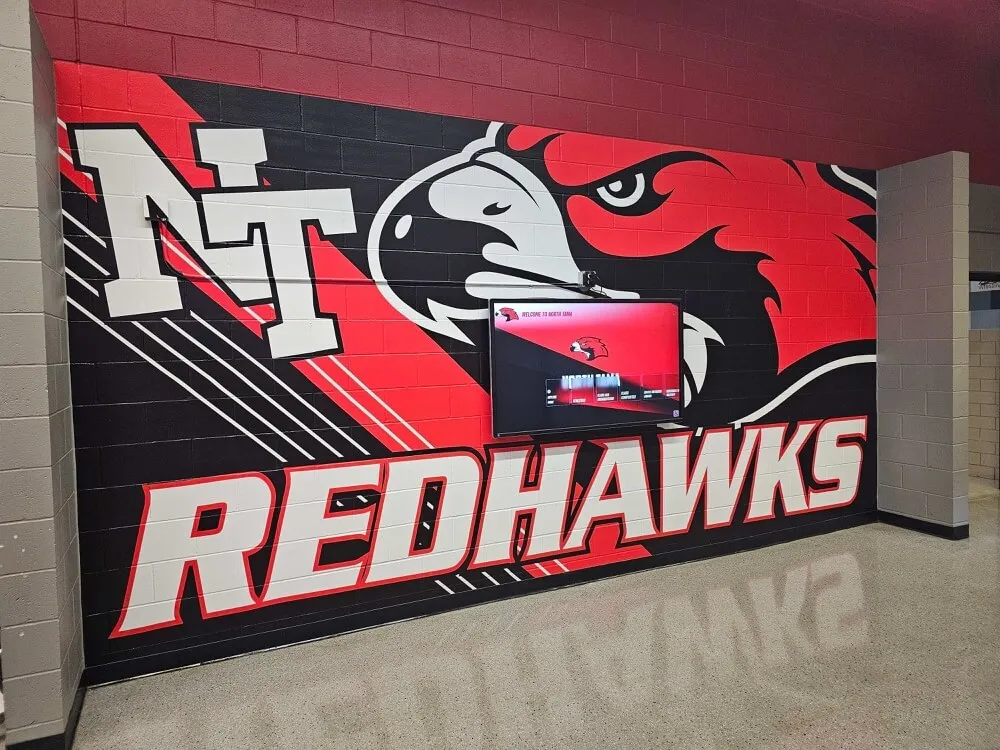
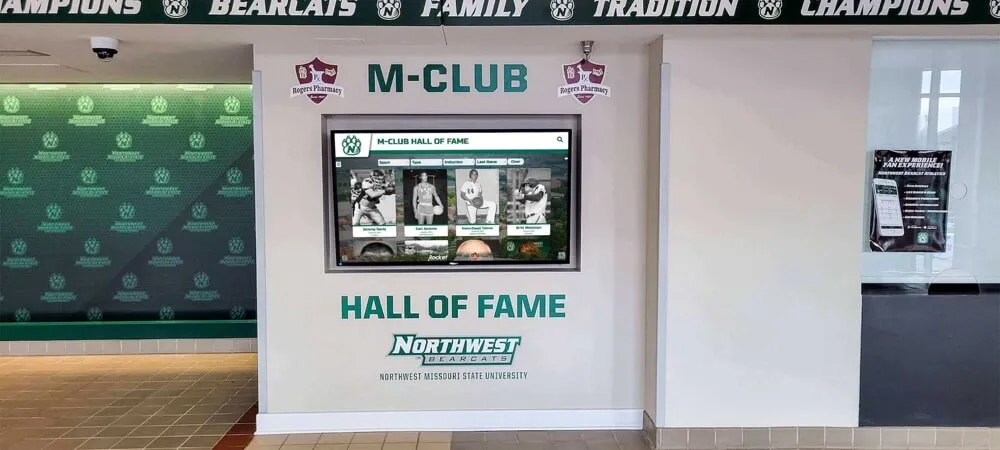
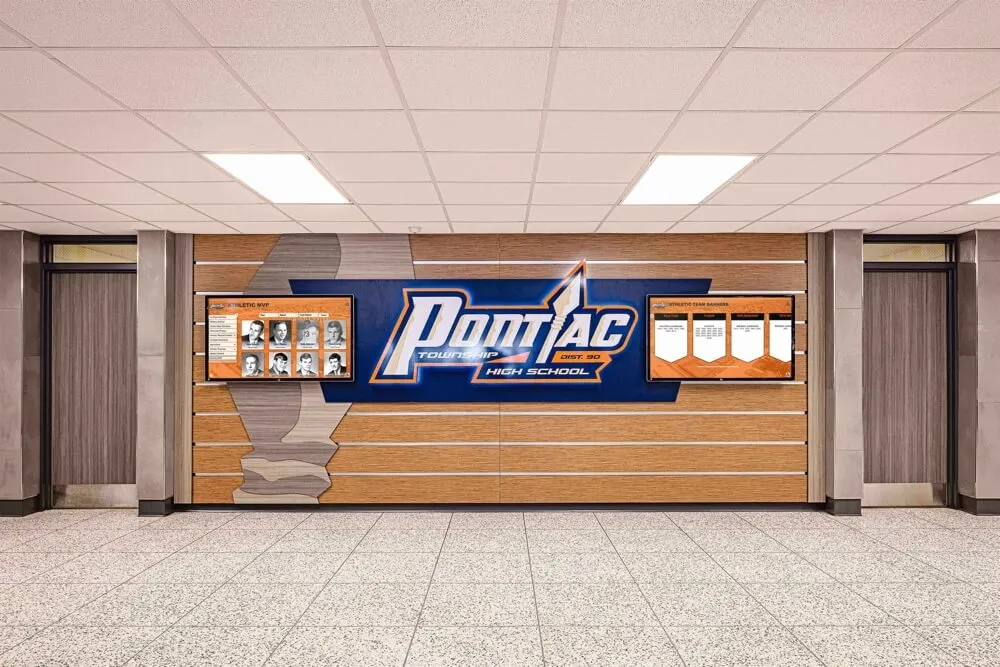
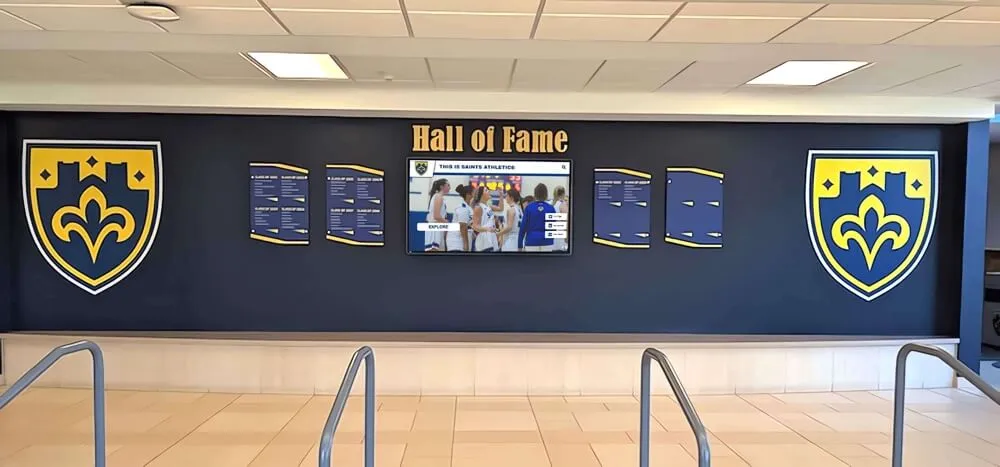
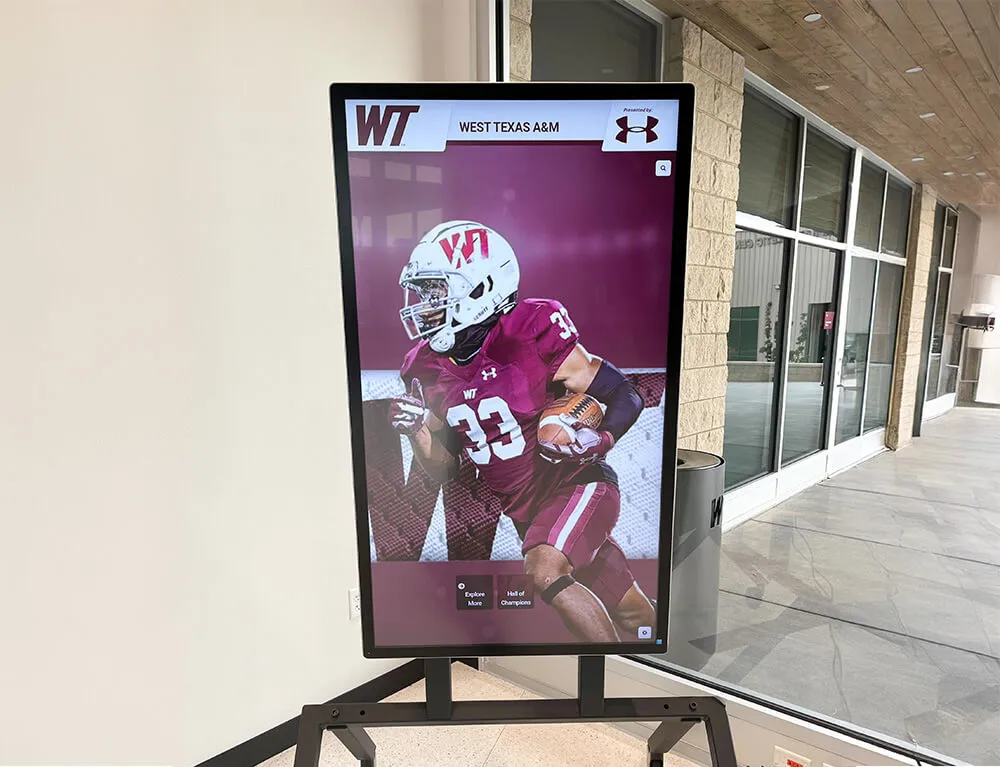
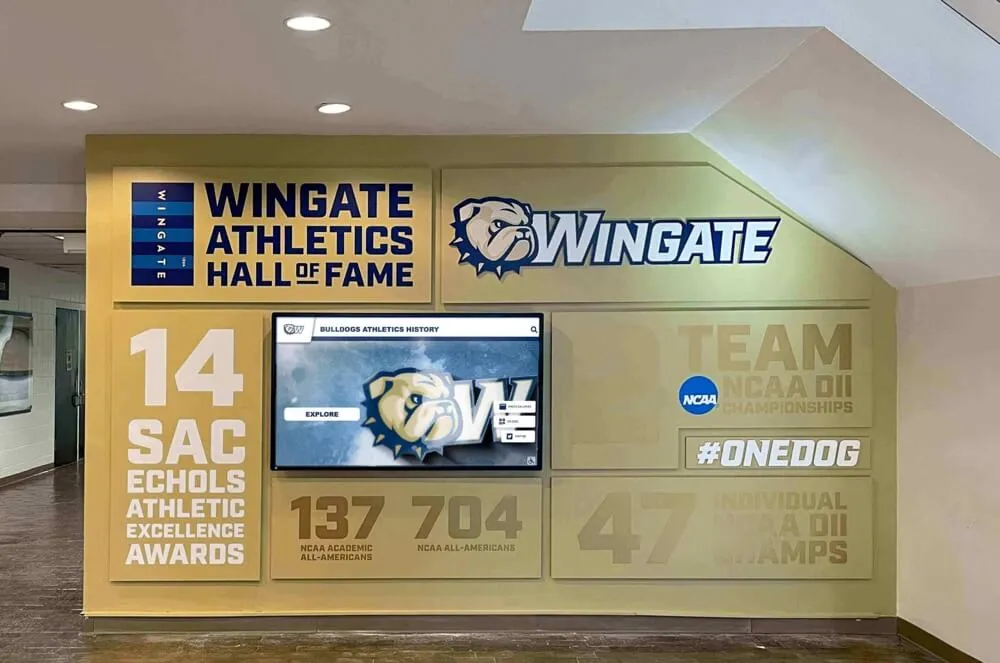
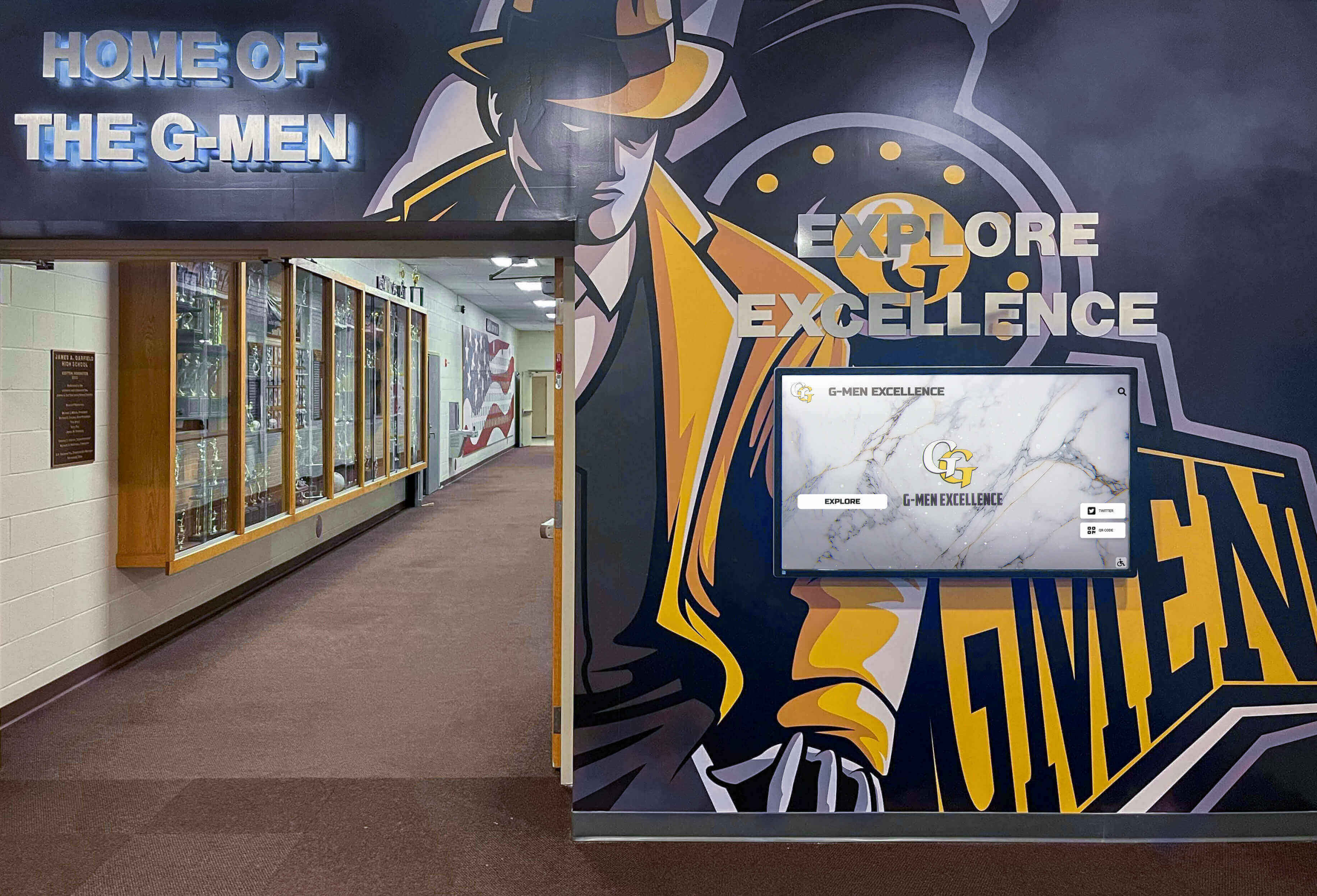
Recognition environments that combine traditional display cases with digital screens can accommodate ribbon collections of any size alongside trophies and plaques
What Makes Award Ribbon Displays Different from Other Recognition Formats
Trophies and plaques represent peak achievement: a championship won, a title defended, a career honored. Ribbons represent a broader participation record—every student who placed in any competition across any program in any year. That difference has significant implications for display planning.
Volume is the defining challenge. A school with active athletic, academic, and arts programs may earn several hundred ribbons in a single academic year. Over a decade, collections grow into the thousands. Physical display systems face inherent capacity limits; a ribbon board designed to hold 200 ribbons does not scale to 2,000 without structural changes.
Categories multiply across departments. Athletic ribbons from track, cross-country, swimming, and field events share display space needs with ribbons from academic competitions like Science Olympiad, math leagues, and speech tournaments, and with arts ribbons from regional exhibitions, choral festivals, and drama competitions. Each program has its own ribbon colors, labeling conventions, and competitive tiers.
Individual recognition is the point. Unlike a single championship trophy that represents an entire team, a ribbon often bears a student’s name and event. Display systems that make individual names readable—not just visible in a heap—deliver meaningfully different recognition experiences. Students who can locate their own ribbon months or years later have a tangible, permanent record of achievement.
Annual turnover creates management burden. Athletic seasons end. Academic competition calendars reset each fall. Schools that do not build annual update workflows into their ribbon display plans quickly accumulate years of mixed vintage content that reads as neglected rather than celebrated.
Types of Award Ribbon Displays for Schools
Dedicated Ribbon Boards and Panels
Purpose-built ribbon display boards position ribbons on individual hangers, hooks, or clips in organized rows. Boards organized by program, competition type, or academic year make it easier for students and visitors to navigate large collections. Cork-backed boards allow ribbons to be pinned flat; pegboard or hook-strip systems let ribbons hang naturally to preserve rosette shapes.
For institutions just beginning to organize existing collections, labeled section boards that separate athletics, academics, and arts by physical region of the display provide the most straightforward baseline structure.
Trophy Case Integration
Many schools house ribbons inside existing trophy cases alongside trophies, plaques, and championship hardware. This approach works well for small collections—particularly for showcasing the most prestigious ribbons from state-level competitions or historically significant events—but runs into space limitations quickly. Ribbons stored behind glass without adequate spacing look cluttered and become difficult to read.
If trophy case integration is the primary strategy, limiting displayed ribbons to a curated selection (top finishes, championship events, milestone competitions) and archiving the balance in labeled storage reduces visual noise while maintaining the most important recognition. Broader award display ideas for schools can help determine how ribbon cases fit within a larger recognition environment.
Category-Organized Wall Arrangements
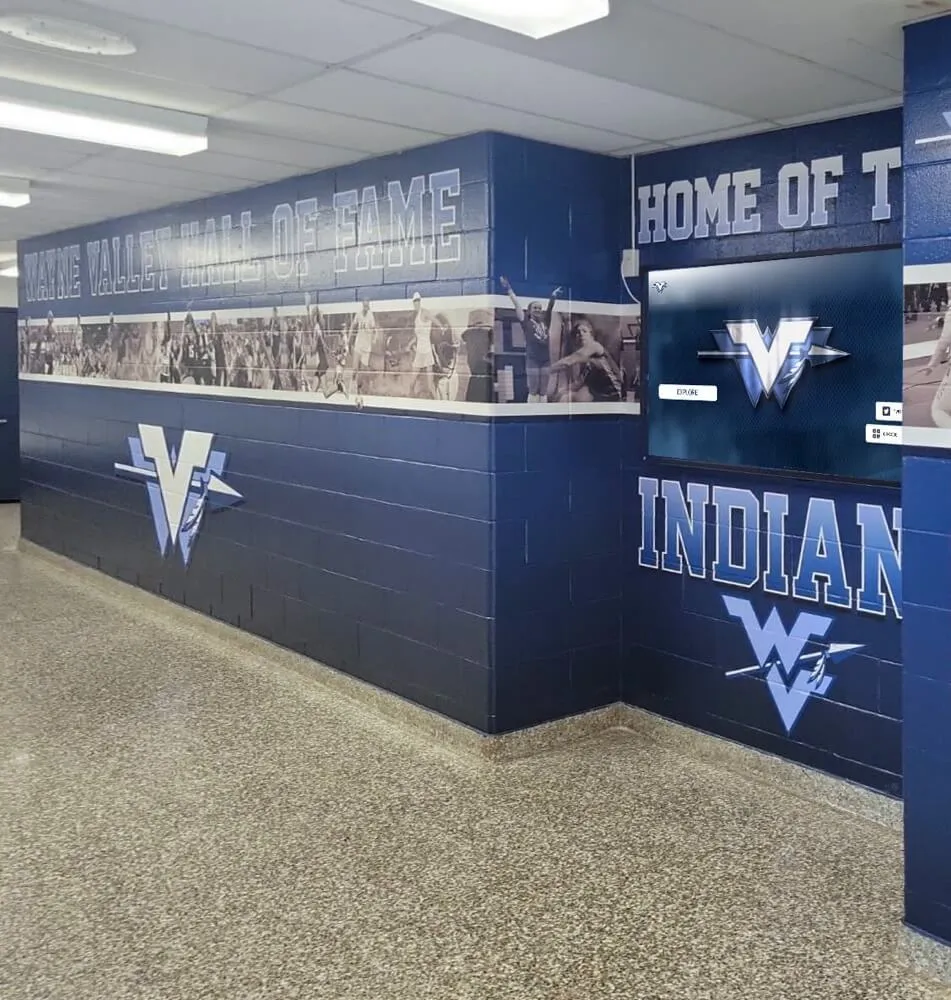
A more architectural approach mounts labeled category sections directly on gymnasium, corridor, or lobby walls. Each section carries a header identifying the program—“Track & Field,” “Academic Decathlon,” “Visual Arts”—with individual ribbons mounted in labeled rows beneath. This approach scales to larger collections and creates recognition environments that are navigable for visitors unfamiliar with a school’s program history.
Ribbon Holders and Hanging Racks
Portable ribbon holders—often wooden or acrylic racks with multiple dowel rows—are common in athletic contexts. Coaches display current-season ribbons on racks in locker rooms, hallways outside gyms, or team meeting spaces before transitioning best-of-season pieces to permanent displays. Portable racks serve short-term recognition well; they become disorganized quickly and are not a permanent archival solution.
Framed Collection Displays
For high-prestige ribbon collections—a long-distance runner’s career ribbons, an art student’s regional and state exhibition results, a science fair competitor’s multi-year record—framed shadow box arrangements present ribbons as archival keepsakes rather than bulk recognition. Schools that maintain academic letter awards programs often pair framed ribbon collections with letter certificates for the same academic competitions, creating layered recognition for high-achieving students.
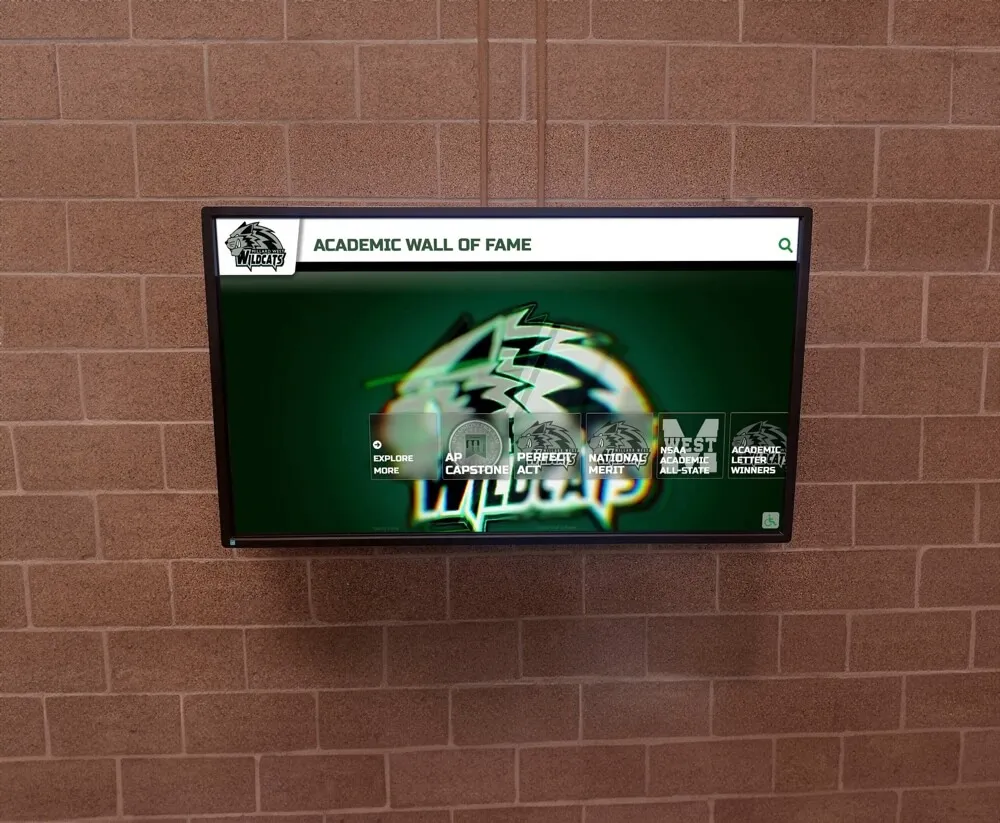
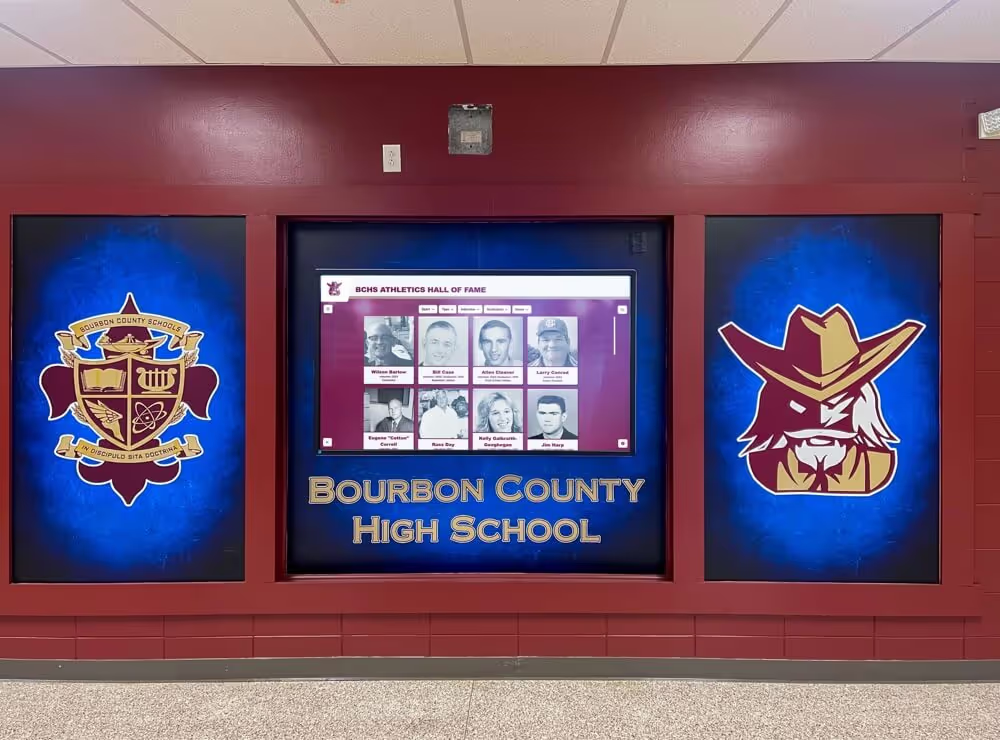
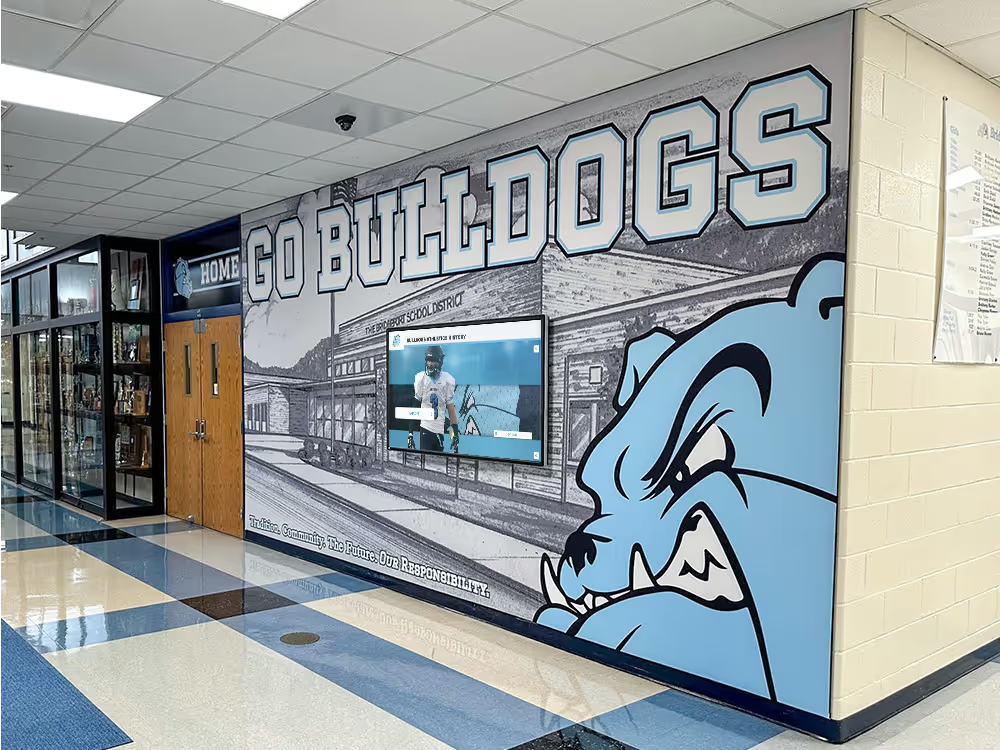
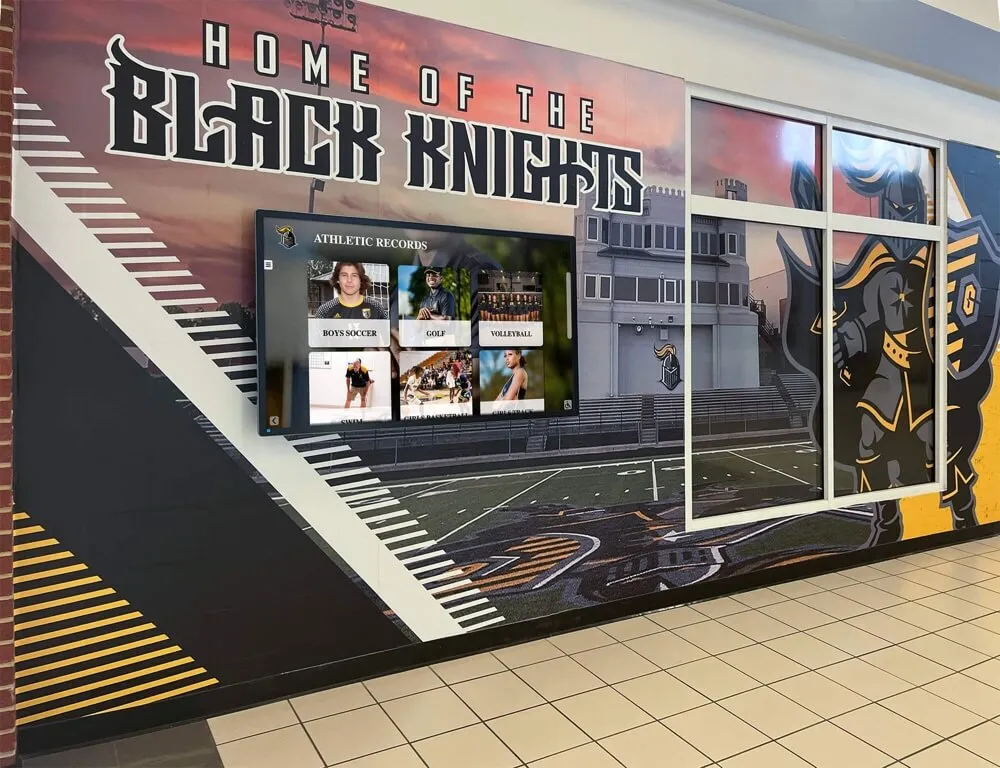
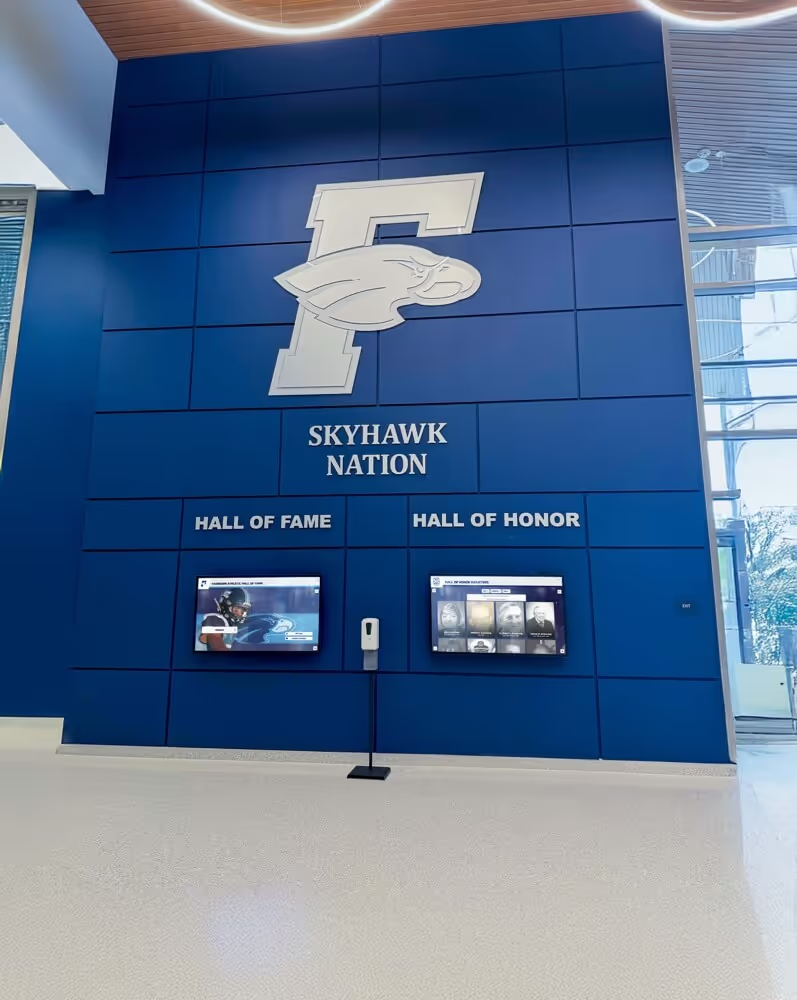
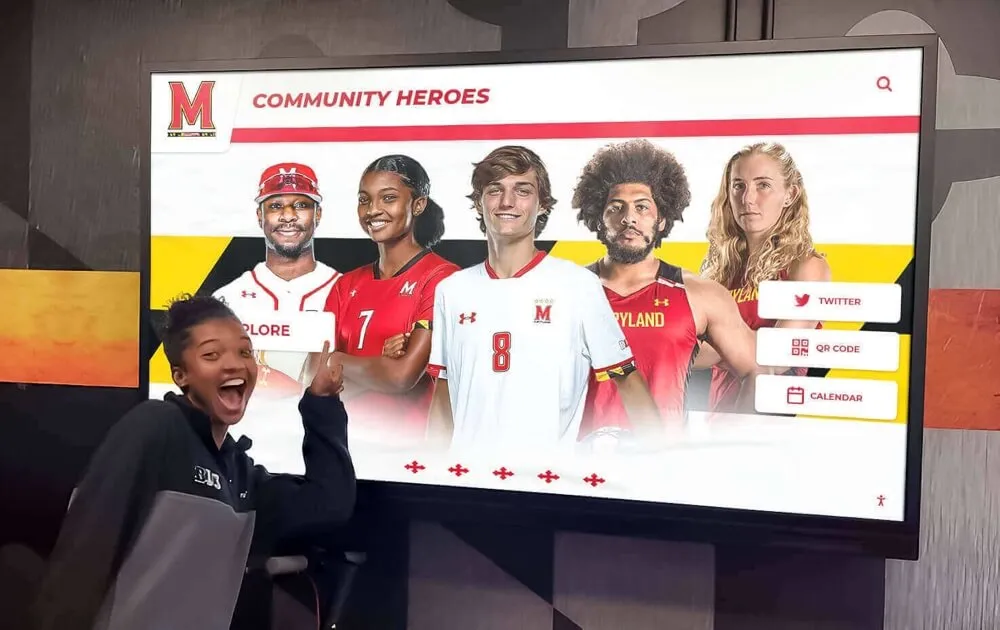
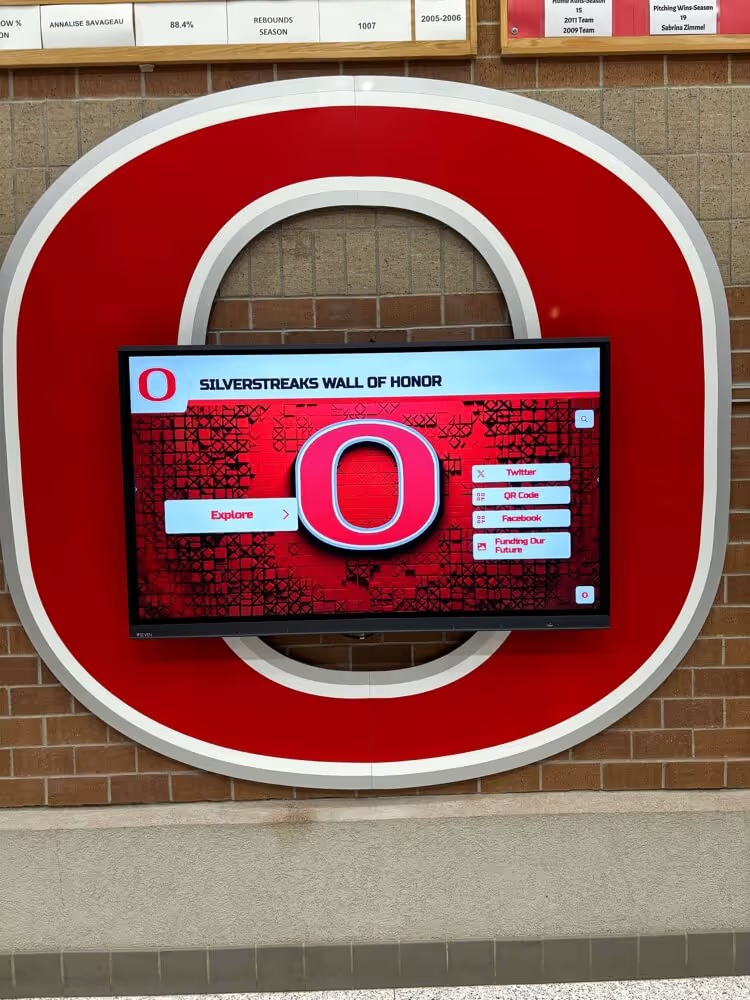
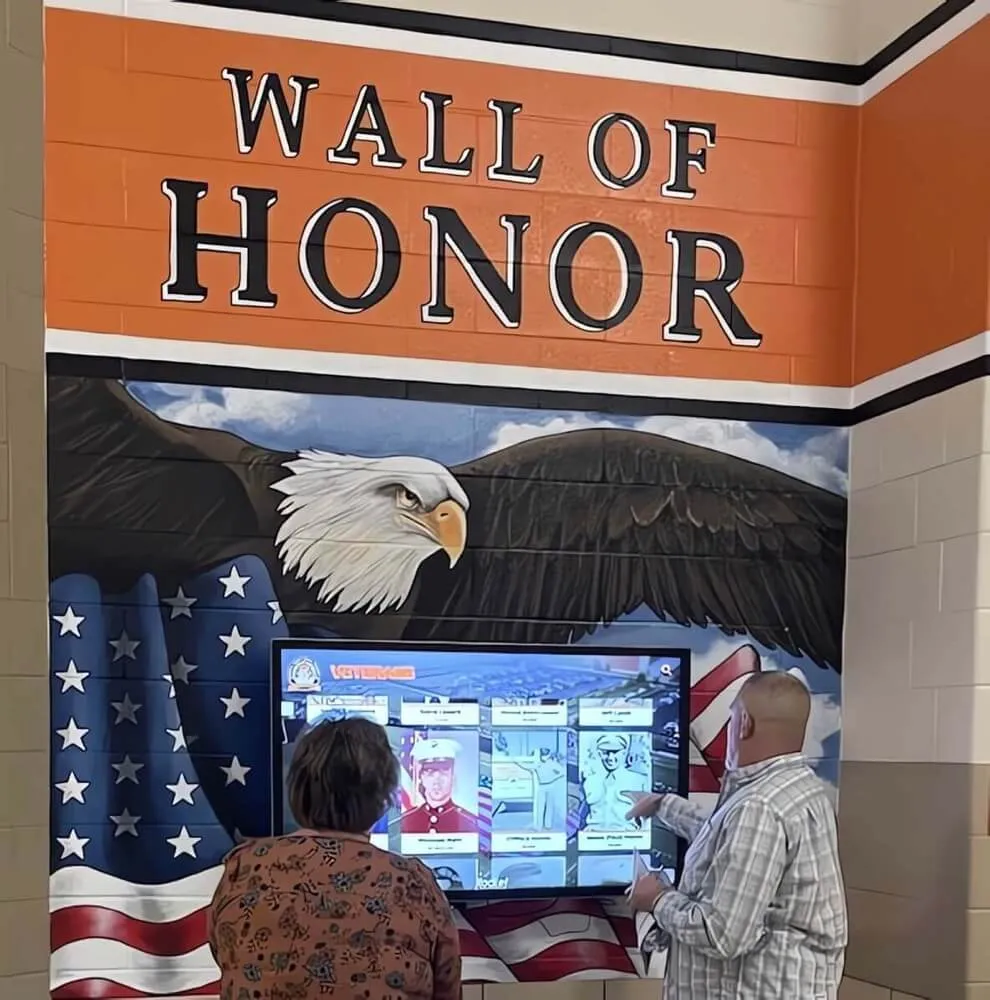
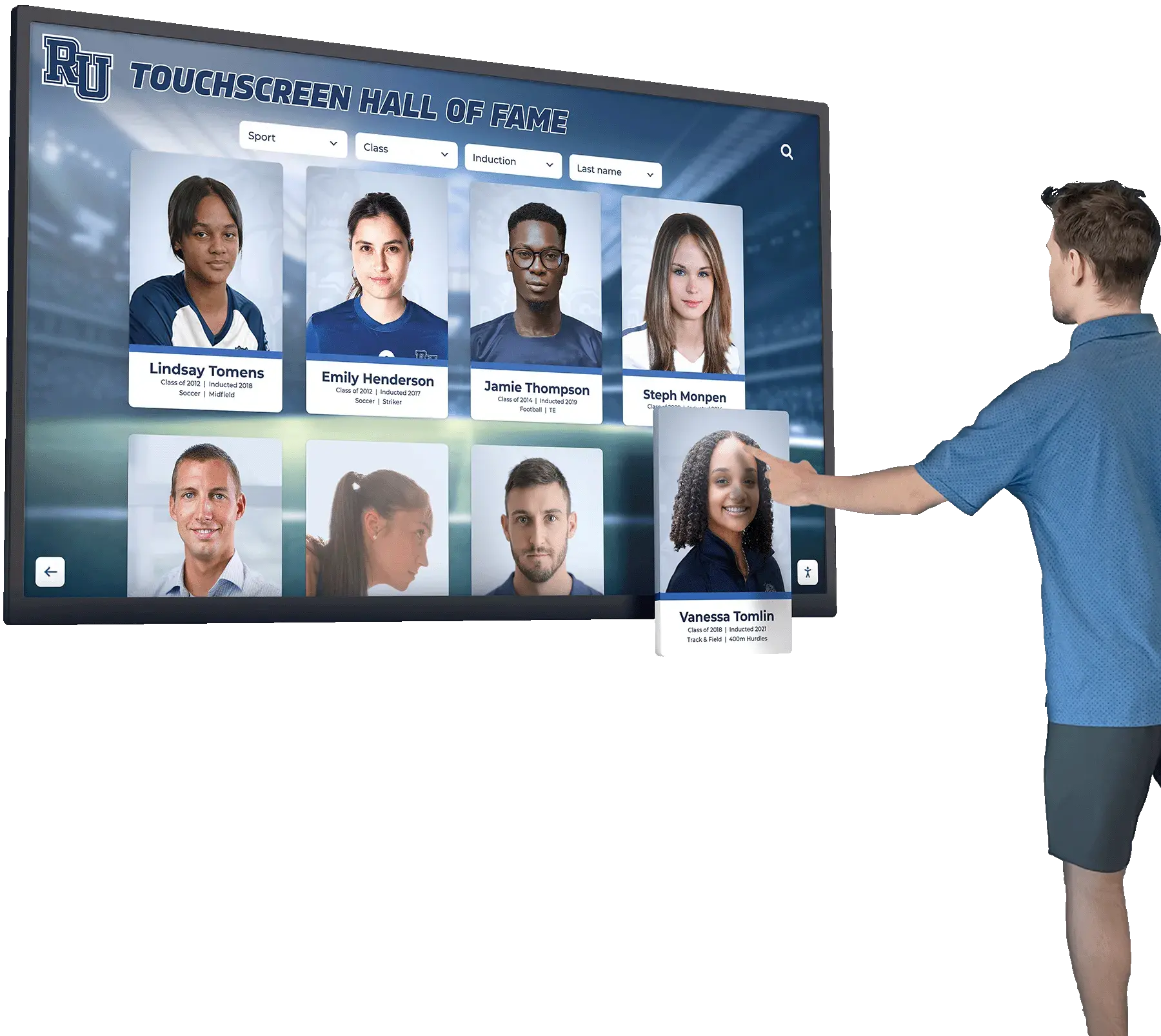
Digital recognition walls can display ribbon-level achievement records for every student without physical space constraints
Organizing Ribbons by Achievement Category
Schools that attempt to display all ribbons in a single undifferentiated collection quickly produce environments that visitors cannot navigate—and that fail to credit individual program achievement. Category-based organization resolves both problems.
The following framework covers the three primary school recognition domains and the organizational logic that works within each:
Athletic Ribbon Organization
Athletic ribbons typically come from invitational meets, regional championships, district competitions, and state events. Organizing by sport first, then by competitive tier within each sport, gives athletes and families clear pathways to find specific records.
Useful secondary labels within each sport section include: competition name, date or academic year, event (for individual sports like track where a single meet generates multiple event ribbons), and finish place. Schools with multi-decade ribbon archives benefit from decade-based tabs within each sport section to prevent visual overload.
Students who pursue multiple sports earn ribbons across multiple sections; the display plan should allow individual student recognition within each sport category rather than collapsing multi-sport athletes into a single listing.
Academic Ribbon Organization
Academic competition ribbons span a wide range of programs: math and science competitions, spelling bees, speech and debate tournaments, academic decathlons, history fairs, science olympiads, and regional or state knowledge bowls. Each produces ribbons in different color conventions and at different competitive levels.
For schools with robust academic competition programs, organizing by competition type first—rather than by academic department—reflects how students and coaches identify achievements. A student who competed in Science Olympiad, Math League, and a regional history competition earned ribbons through three separate programs with different coaching relationships and recognition cultures.
Academic achievement awards at the high school level often include ribbon recognition alongside certificates and medals; display plans that integrate these formats into coherent academic recognition walls avoid the fragmentation that results from treating each recognition format in isolation.
Arts Ribbon Organization
Arts ribbons come from fine arts exhibitions, performing arts competitions, choral and band festivals, drama and speech competitions, and photography or creative writing contests. Arts recognition is frequently under-displayed in school recognition environments that prioritize athletics—a problem with cultural implications for arts program recruitment and student identity.
Organizing arts ribbons by discipline (visual arts, performing arts, literary arts) with consistent labeling formats and prominent positioning equal to athletic displays signals institutional commitment to arts achievement. Schools building arts recognition for the first time should review awards high school students can win across academic and arts categories to identify recognition programs that may already be producing ribbon-level achievement without dedicated display space.
Planning Checklist for a School Ribbon Display
The following checklist covers the core decisions required before committing to physical ribbon display infrastructure:
| Planning Decision | Questions to Answer |
|---|---|
| Inventory scope | How many ribbons exist currently? Which programs generate ongoing ribbon volume? |
| Category structure | Will you organize by program, by year, or by achievement tier? |
| Location | Where will displays be mounted? Who passes that location daily? |
| Labeling convention | What label fields will each ribbon entry include (name, date, event, place)? |
| Annual update workflow | Who adds new ribbons? What is the timeline from competition to display? |
| Archive policy | How many years of ribbons will remain on display before moving to archive storage? |
| Display format | Physical board, case integration, wall arrangement, or digital system? |
| Accessibility | Are primary recognition elements mounted at ADA-accessible viewing heights (15–48 inches)? |
Schools that complete this checklist before purchasing display hardware avoid the most common ribbon display failures: systems sized incorrectly for actual volume, locations that receive no foot traffic, and update workflows that depend on a single person with no backup.
Annual Update Strategies
Recognition displays that go stale within a semester undermine the investment made in creating them. Building annual update cycles into the school calendar prevents the common pattern of first-year recognition followed by years of unchanged content.
Season-end workflows for athletic ribbons should be triggered by the end of each competitive season rather than at year-end. Spring track ribbons added in June are more timely than ribbons added the following September.
Academic calendar alignment works for academic competition ribbons, which tend to cluster in the spring semester. A consistent post-competition-season addition workflow—within four to six weeks of major competitions—maintains currency.
Label standardization reduces the administrative burden of each update cycle. A consistent label template (student name, year, competition, place, event) that does not require custom formatting for each entry makes it realistic for multiple staff members to contribute ribbon additions without creating visual inconsistency.
Rotation and archive policies prevent physical displays from reaching capacity. Schools that define a clear retention period—three years on display before moving to archival storage, for example—can maintain current-looking displays without losing historical records.
Digital Display Alternatives: When Physical Ribbon Boards Are Not Enough
For many schools, the volume of ribbons earned across multiple programs across multiple years simply exceeds what physical display infrastructure can accommodate. Digital recognition systems offer an alternative that eliminates physical capacity limits entirely.
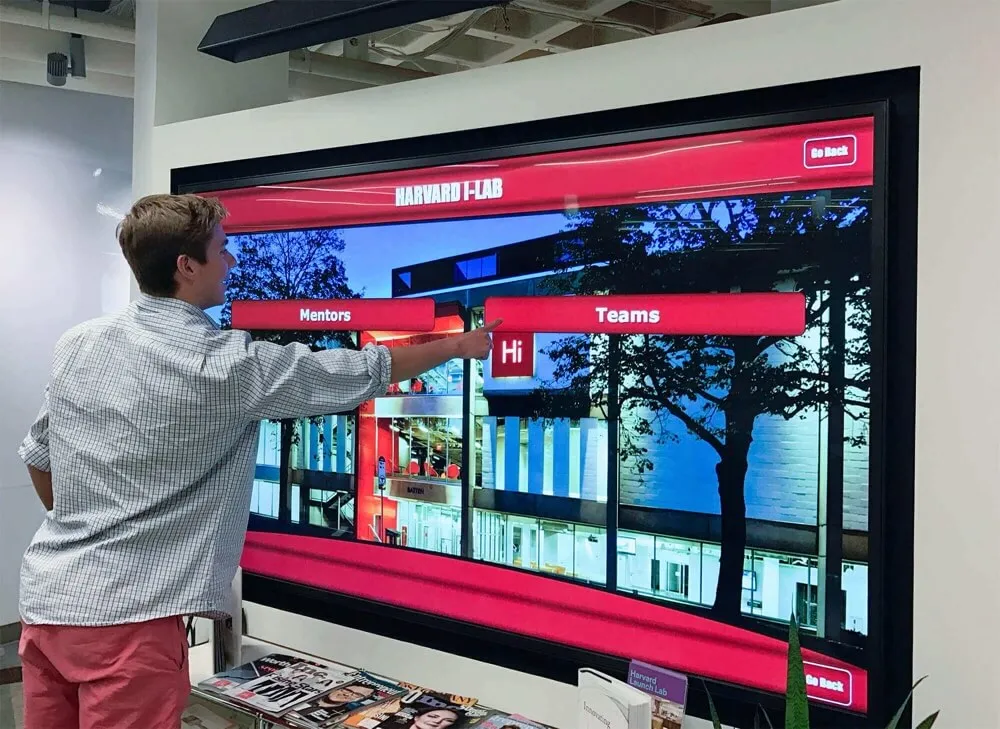
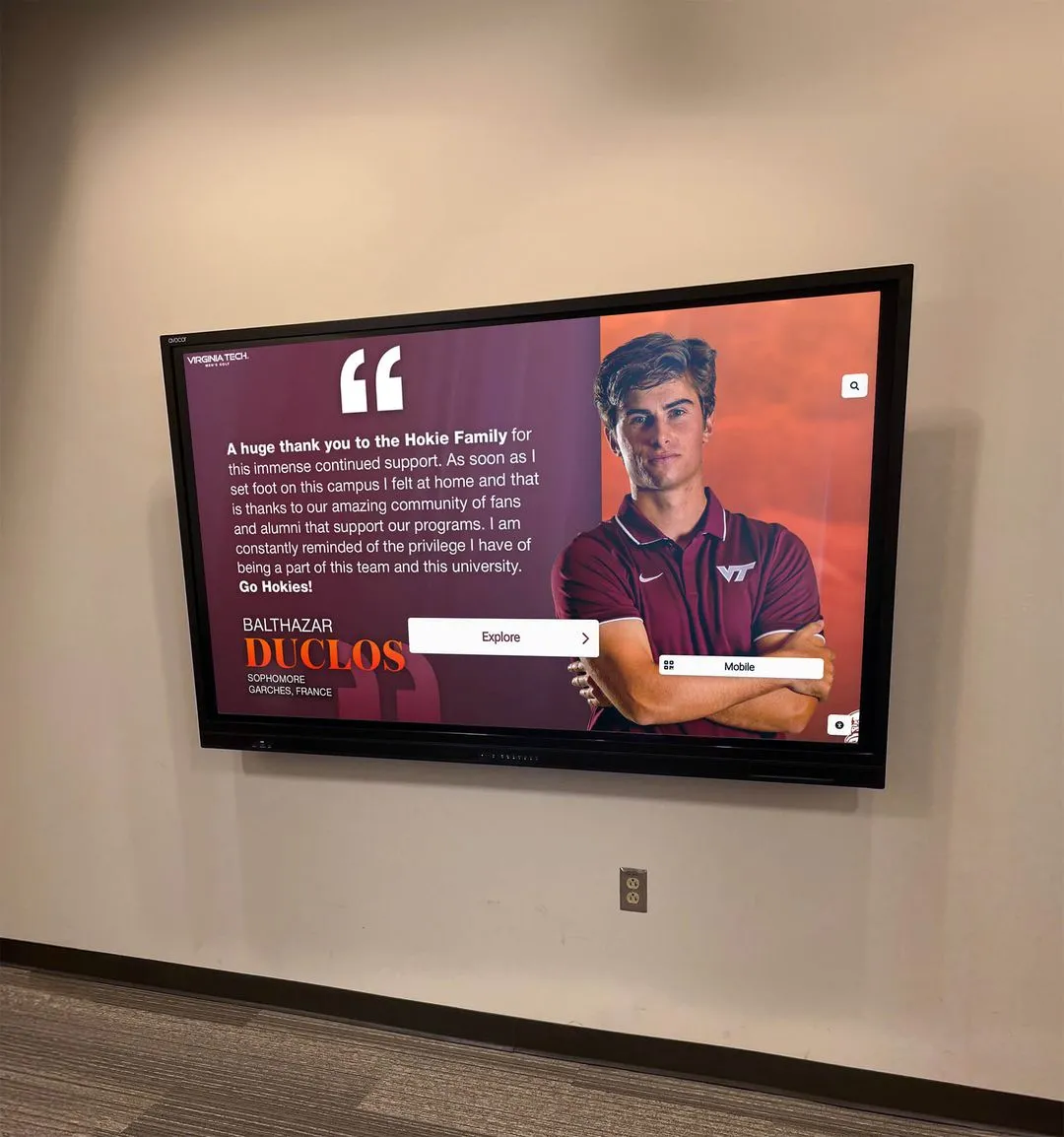
A touchscreen recognition platform can display every ribbon earned across every program in every year—searchable by student name, program, competition, or year—in a single installation footprint smaller than a standard trophy case. Students can search for their own records; visitors can browse program history; coaches can demonstrate competitive depth to prospective student-athletes. The digital award display approach versus traditional static installations resolves the physical capacity problem that ribbon collections eventually create in every active school program.
Static vs. Digital Ribbon Display Comparison
| Feature | Physical Ribbon Board | Digital Recognition Display |
|---|---|---|
| Capacity | Limited by physical space | Unlimited entries |
| Searchability | Visual scan only | Instant name/program/year search |
| Update process | Manual mounting, labeling | Remote content management |
| Individual name visibility | Depends on label size and crowding | Full name, photo, and bio possible |
| Multi-category navigation | Requires physical separation | Filter by sport, academic program, arts discipline |
| ADA accessibility | Mounting height planning required | WCAG 2.1 AA compliant platforms available |
| Historical depth | Limited by current display space | Full multi-decade archive |
| Visitor engagement | Passive viewing | Interactive browsing |
| Annual update burden | Staff time per ribbon | Cloud-based updates from any device |
| Installation cost | Low to moderate | Moderate to high (lower total cost over time) |
For schools with five or more active programs each generating annual ribbon collections, digital systems typically reach favorable total-cost positions within three to five years compared to the ongoing labor and fabrication costs of physical ribbon display maintenance.
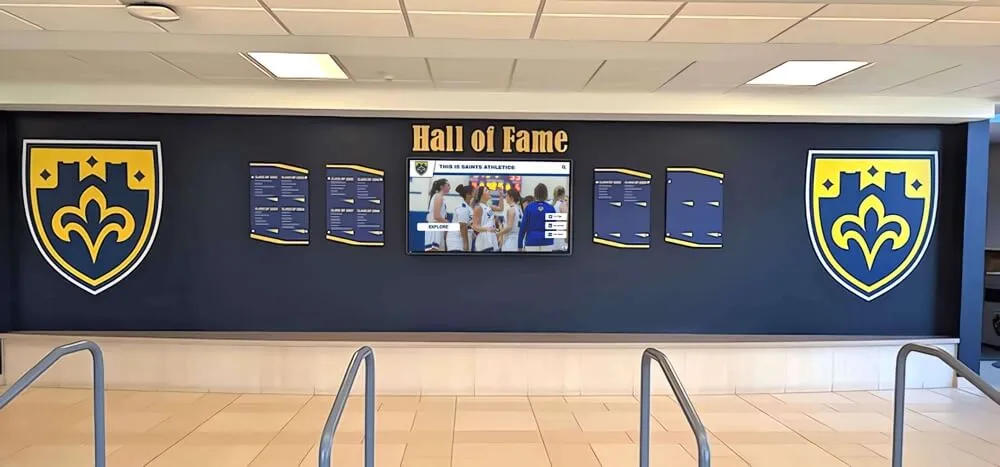
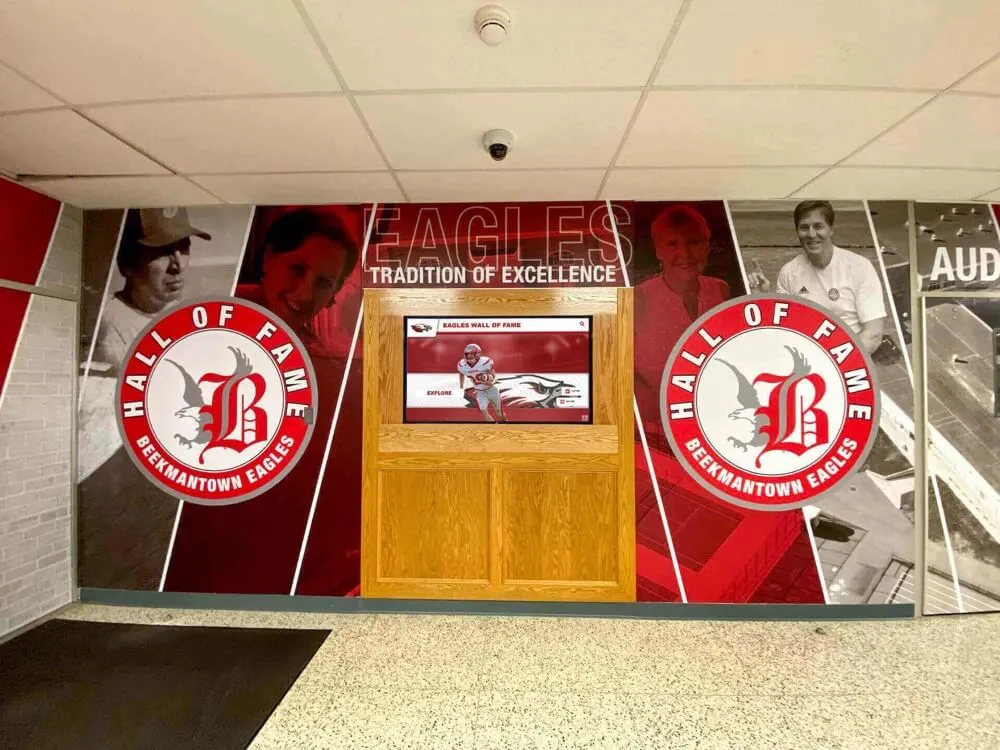
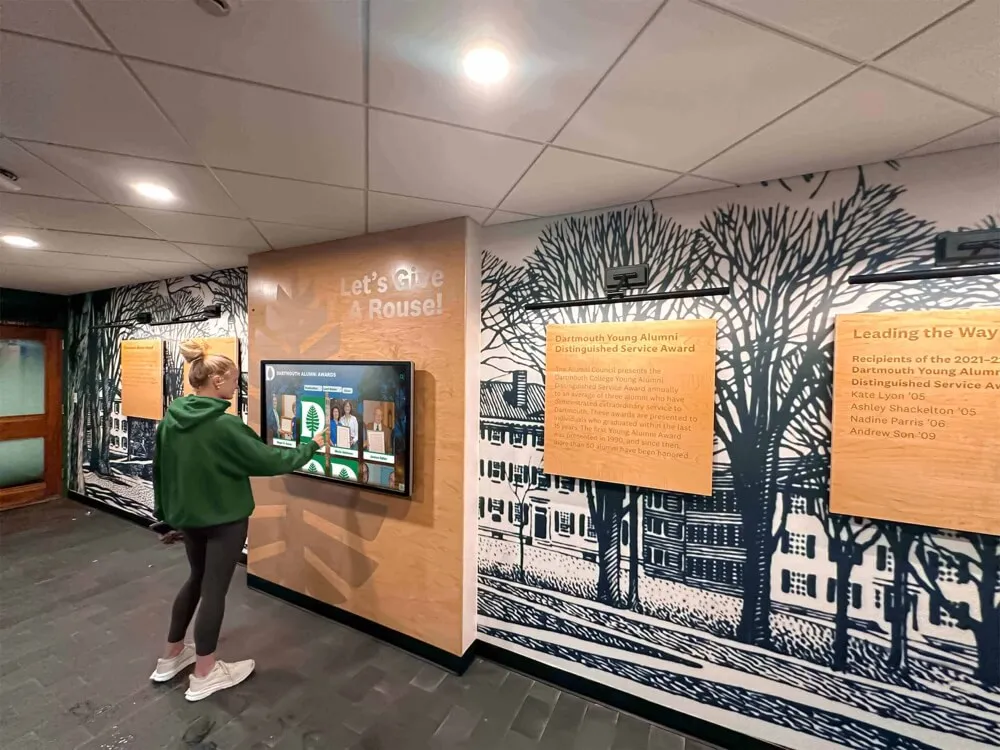
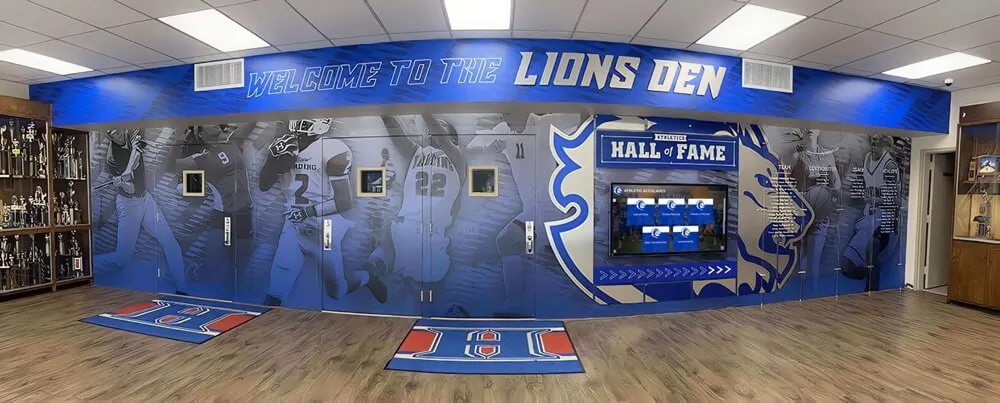
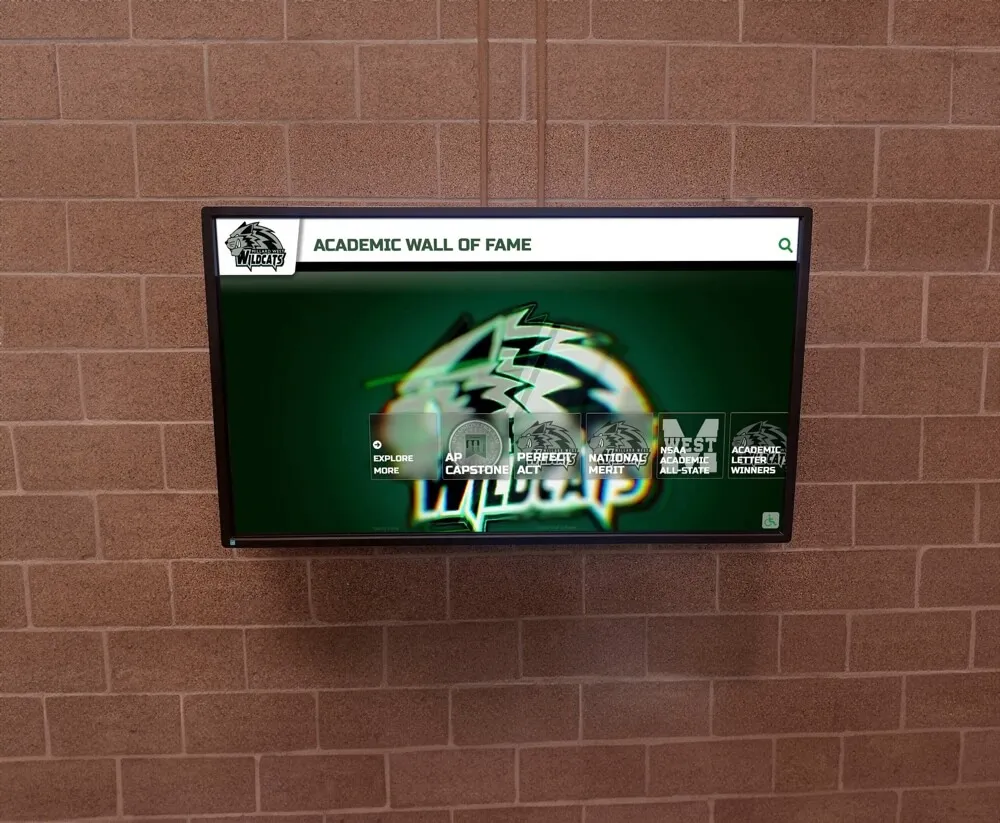
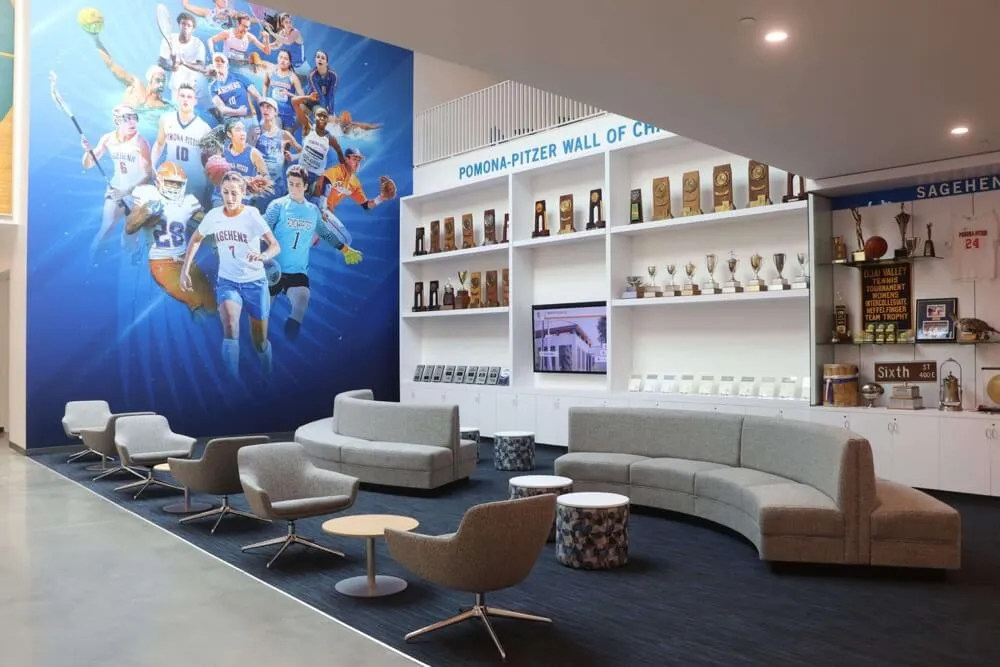
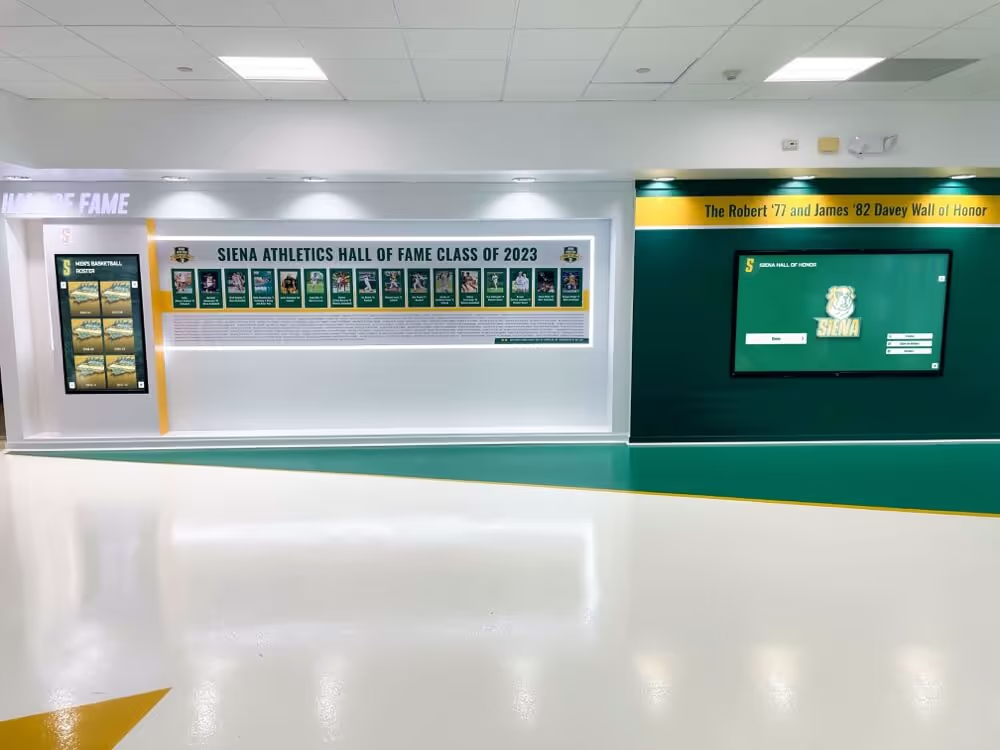
Hybrid recognition walls combine the permanence of physical shields and plaques with the capacity and searchability of digital displays
Integrating Ribbon Displays with Broader Recognition Programs
Award ribbons represent one tier in a typically layered school recognition structure. Students who earn ribbons at regional level may progress to state competition, earning medals, trophies, or plaques. Academic ribbon earners may simultaneously qualify for letter awards, honor roll, or all-academic designations. Building ribbon display plans that connect visually and logistically to these adjacent recognition formats creates coherent recognition environments rather than isolated display silos.
Schools with academic all-American award criteria programs can create dedicated recognition pathways that begin with competition ribbons and progress through letter awards, all-academic nominations, and formal honor designations—each displayed in a visually connected sequence that tells the full student achievement story.
Ribbon displays positioned near but distinct from trophy cases, plaque walls, and honor roll boards create physical recognition environments that students navigate like a record of institutional achievement rather than a collection of hardware. Athletic directors, academic directors, and arts department heads who coordinate display planning across their programs produce this effect; those who plan display investments in departmental silos produce environments that feel fragmented regardless of their individual quality.
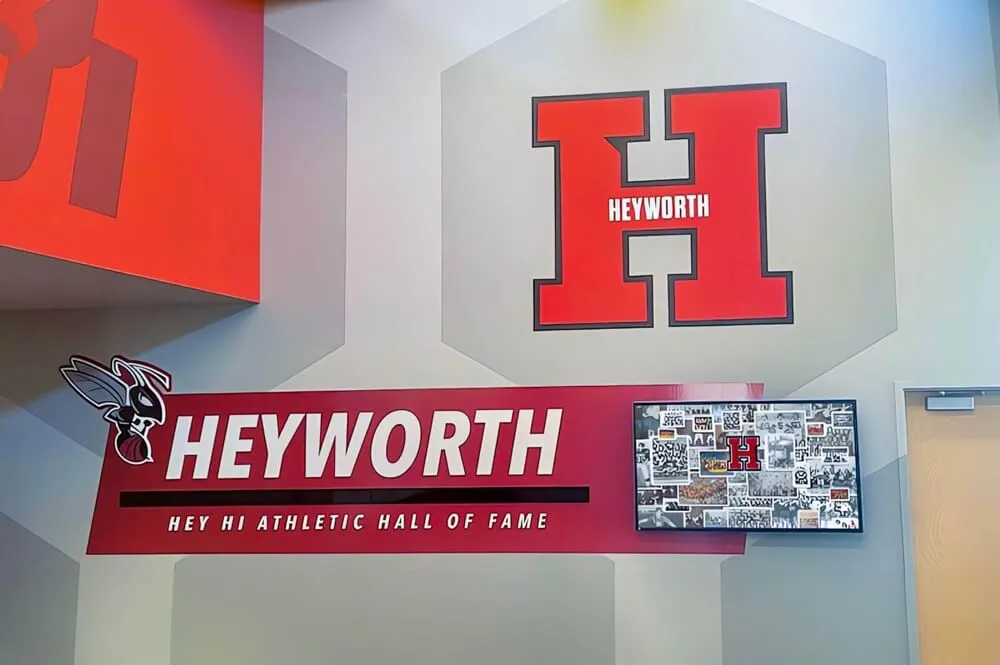
Halloffamewall.com recognition environments show how schools and universities create unified achievement environments that integrate multiple recognition formats—ribbons, trophies, plaques, jerseys, and digital records—into single coherent spaces.
Ready to Modernize Your School's Recognition Program?
Rocket Alumni Solutions helps K-12 schools and universities create recognition environments that display every achievement—ribbons, trophies, academic honors, arts awards—with unlimited capacity and content you can update from anywhere.
Request a Custom DemoFrequently Asked Questions About Award Ribbon Displays
What is an award ribbon display?
An award ribbon display is an organized system—physical or digital—that schools use to publicly showcase ribbons earned by students in athletics, academic competitions, arts events, and other extracurricular programs. Physical displays include dedicated ribbon boards, trophy case sections, and wall-mounted category arrangements. Digital displays use touchscreen platforms or digital signage to show ribbon-level achievement records with searchable entries for individual students, programs, and years.
How should schools organize award ribbons for display?
Schools should organize award ribbons by achievement category first—athletics, academics, and arts separated into distinct display sections—then by program or sport within each category, then by year or competitive tier within each program. Each displayed ribbon should include a label identifying the student name, competition, event, year, and place finish. This structure allows students, families, and visitors to navigate the display without requiring prior knowledge of the school’s program history.
How many ribbons can a physical ribbon display hold?
A standard wall-mounted ribbon board or dedicated display panel typically holds 50 to 200 ribbons depending on construction and spacing. Schools with active multi-program competition calendars can generate several hundred ribbons per academic year, making physical capacity limits a significant constraint within two to three years of implementation. Digital recognition platforms hold unlimited ribbon entries in the same installation footprint as a single display screen.
What is the best way to display academic competition ribbons in schools?
The best approach organizes academic ribbons by competition program—Science Olympiad, Math League, academic decathlon, history fair—rather than by academic department. Within each competition section, ribbons are labeled with student name, year, event or category, and place finish. Academic ribbon displays positioned in high-traffic areas near administrative offices, counseling suites, or academic hallways reach the student populations most likely to recognize the achievements and aspire to similar recognition.
When does a digital display make more sense than a physical ribbon board?
A digital recognition display becomes the better option when: (1) total ribbon volume across programs exceeds physical display capacity; (2) individual name visibility is important and ribbons would be crowded on a physical board; (3) historical records spanning many years need to remain accessible; (4) staff time for annual physical display updates creates unsustainable workload; or (5) searchability across programs and years is a priority for students and families. Schools with five or more active programs generating annual ribbon collections typically find digital systems more sustainable within three to five years.
Building a Ribbon Display Strategy That Lasts
Award ribbon displays work best when they are planned rather than assembled. A single board purchased to hold this year’s track ribbons becomes next year’s storage problem and the following year’s organizational challenge. Schools that define category structure, labeling conventions, update workflows, archive policies, and capacity limits before purchasing any display infrastructure avoid the accumulation patterns that produce cluttered, outdated, under-labeled ribbon collections.
The ribbon display question is ultimately the same question every school recognition program faces: how do you build systems that celebrate every student’s achievement, remain current without consuming unreasonable staff time, and scale across a school’s full range of programs over years and decades? Physical ribbon displays answer part of that question. Digital recognition systems answer more of it. A well-coordinated recognition environment that uses the right format for each category of achievement answers all of it.
For schools ready to assess their current ribbon display situation and identify what a comprehensive recognition environment would look like, connecting with a recognition specialist who can show your specific programs and achievement history in a modern display context is the most direct path from planning to implementation.