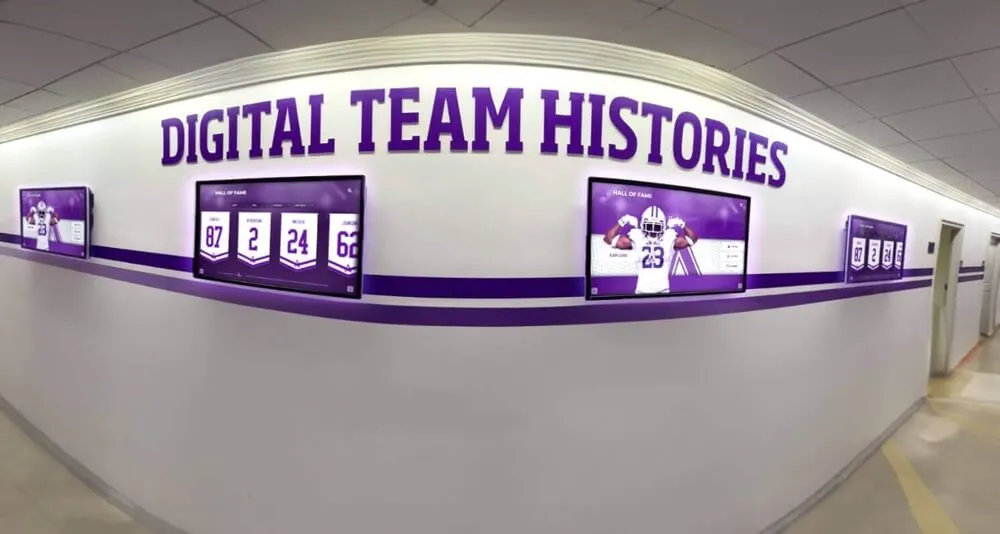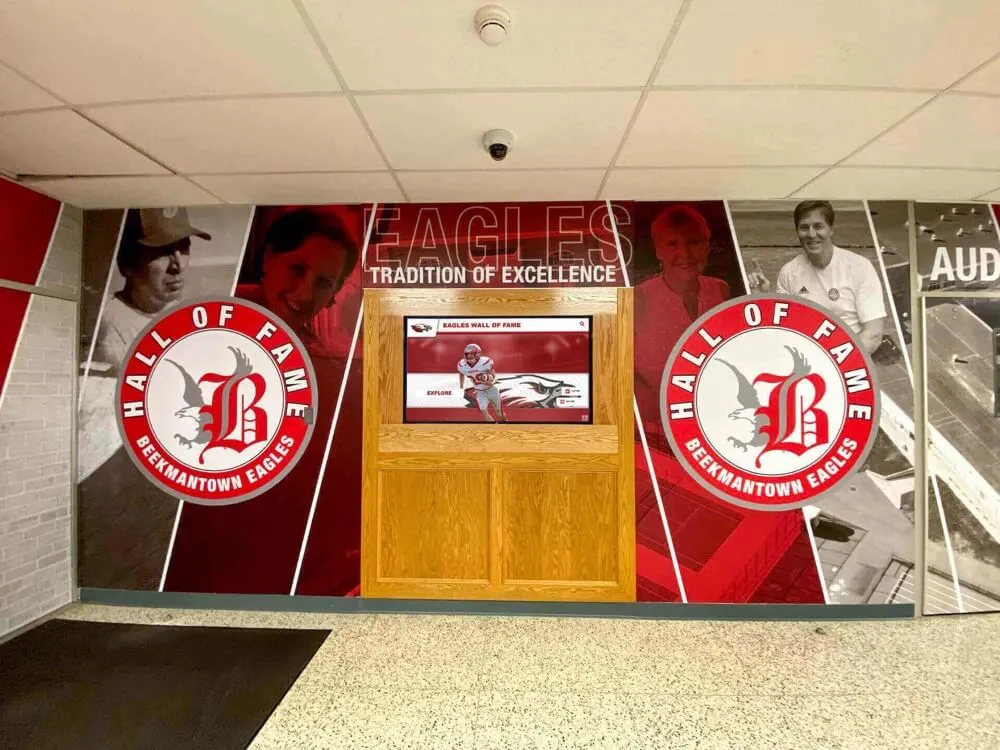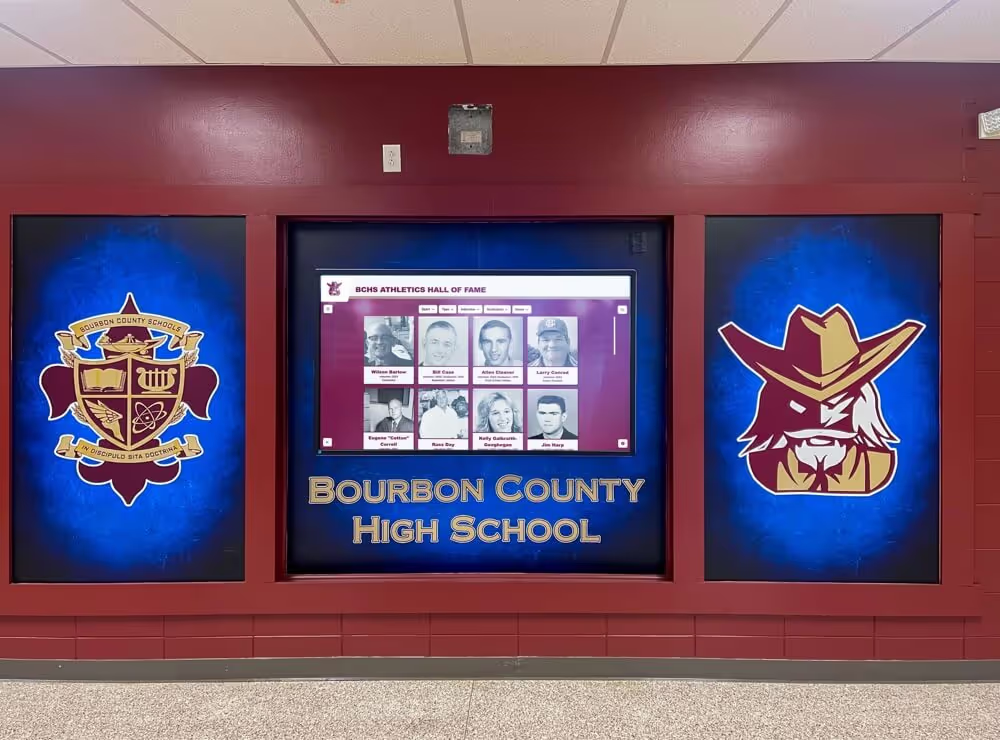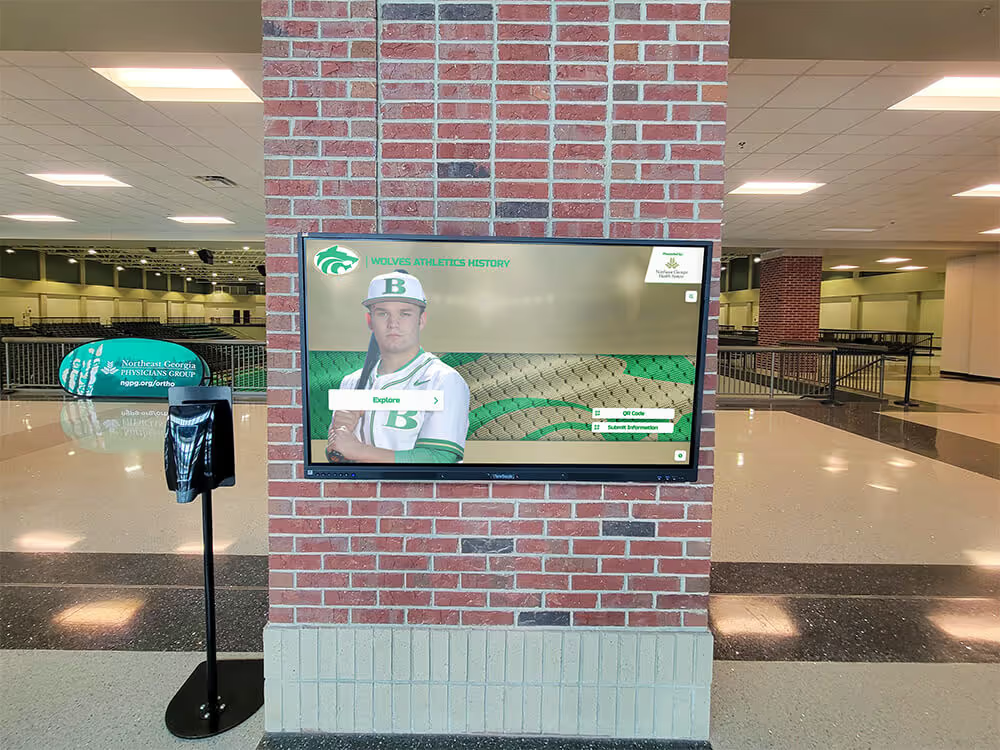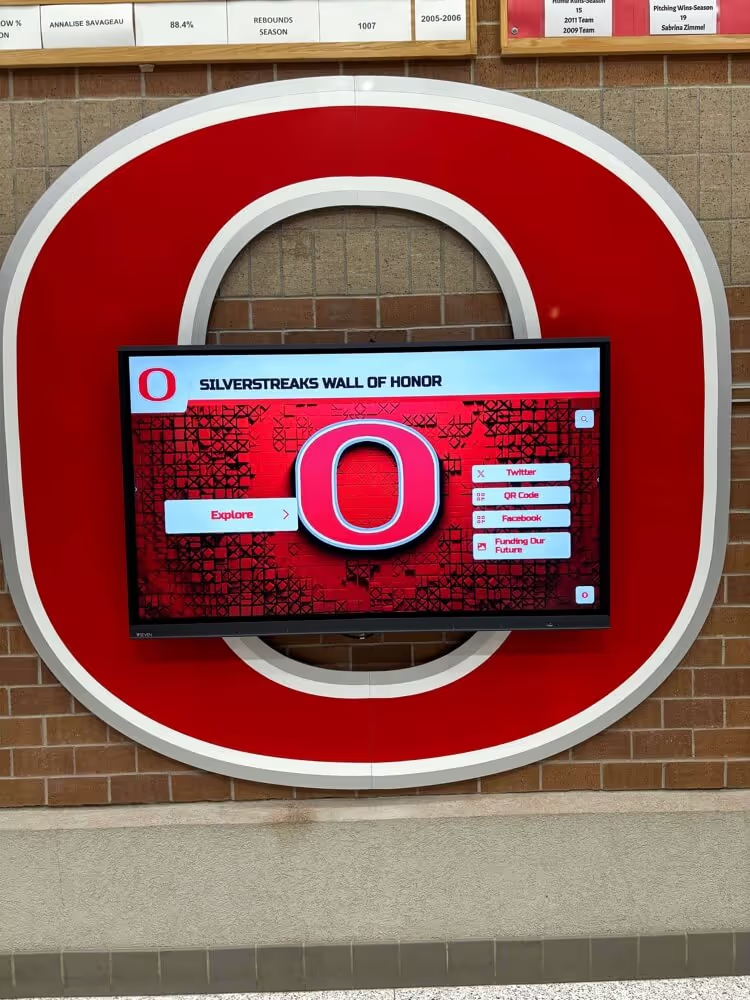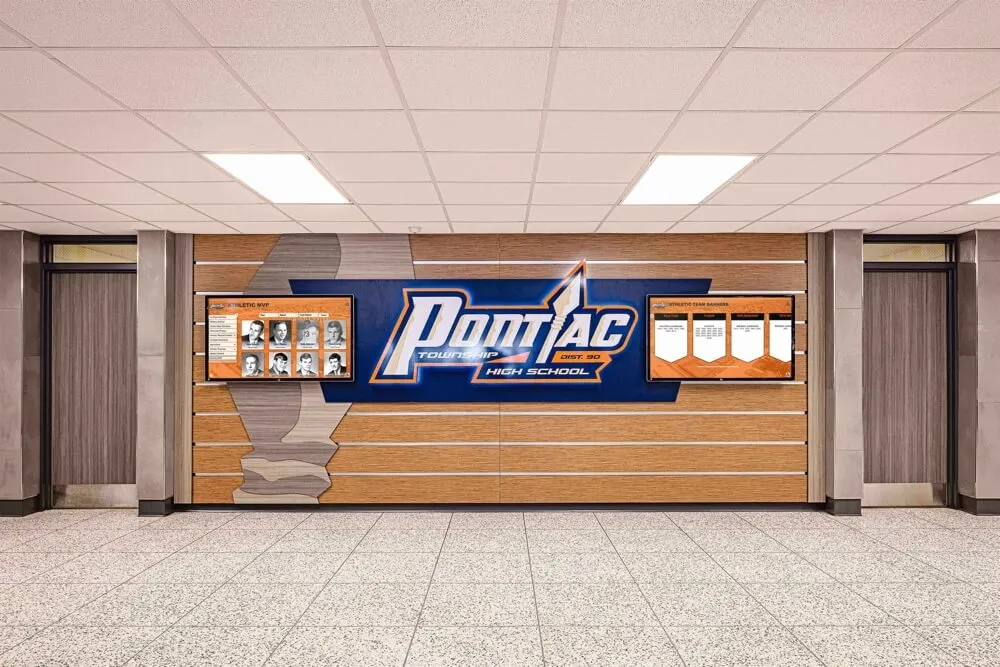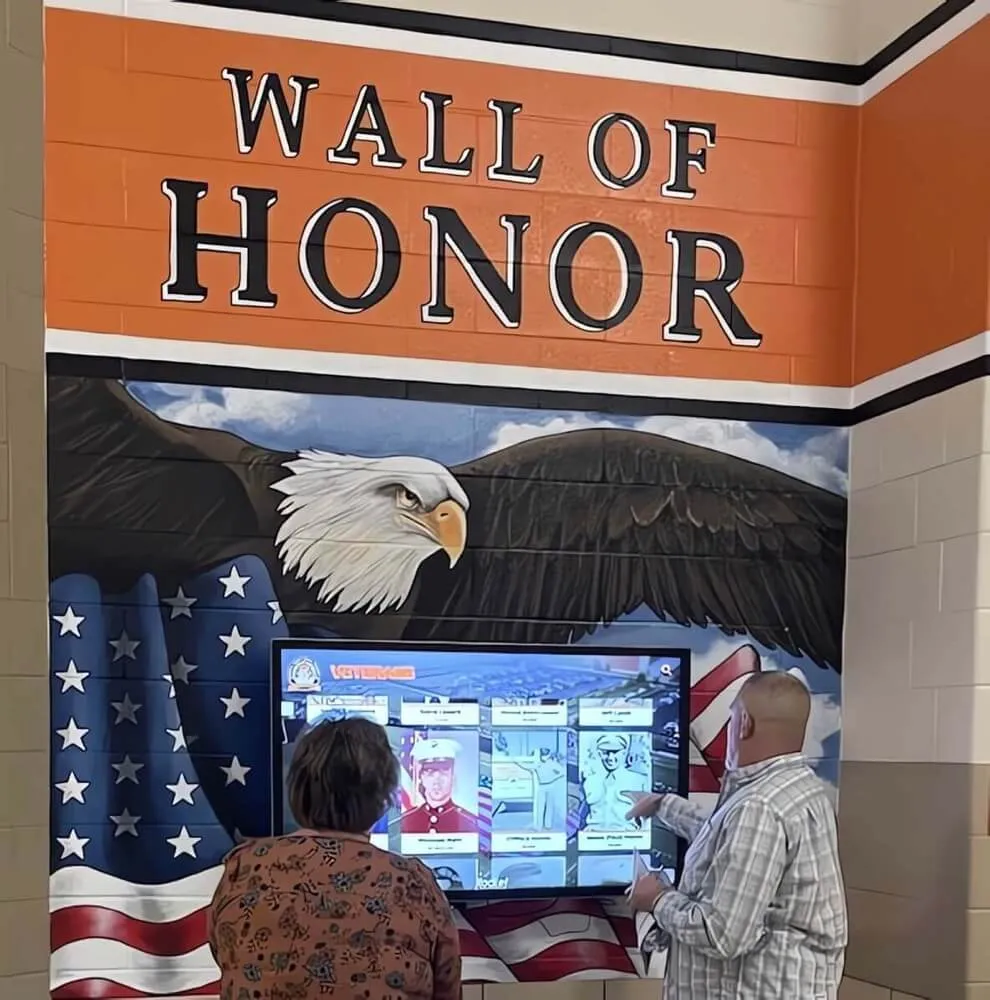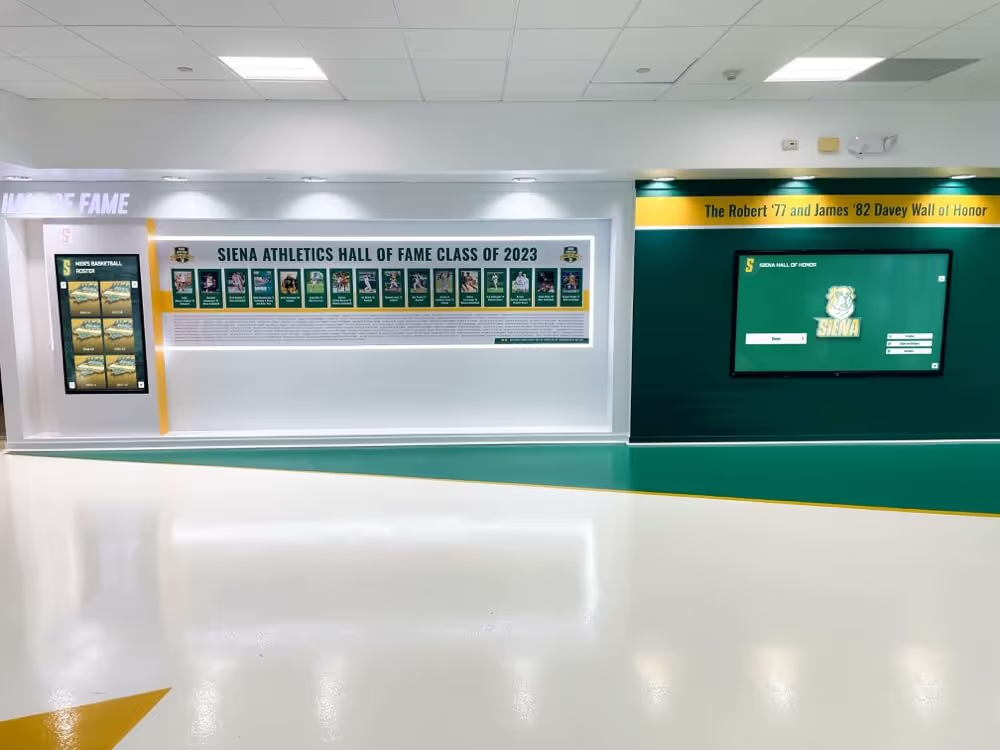




Award wall plaques have anchored school hallways for generations—bronze shields engraved with championship years, walnut boards honoring hall of fame inductees, brass nameplates listing academic all-stars. They carry genuine weight. But as recognition programs grow and physical wall space fills, many schools find themselves choosing between who gets displayed and who gets archived. Digital award walls offer an alternative that removes capacity limits entirely—though not every situation calls for replacing a plaque with a screen.
This guide compares both formats honestly: where traditional award wall plaques deliver unique value, where digital walls outperform them, and how to match each format to the recognition needs your school actually has.
Schools making this decision usually aren’t choosing between “old” and “new.” They’re weighing permanence against flexibility, ceremony against scale, upfront cost against long-term maintenance. Understanding those trade-offs clearly makes the decision straightforward—and often reveals that the right answer involves both formats working together.

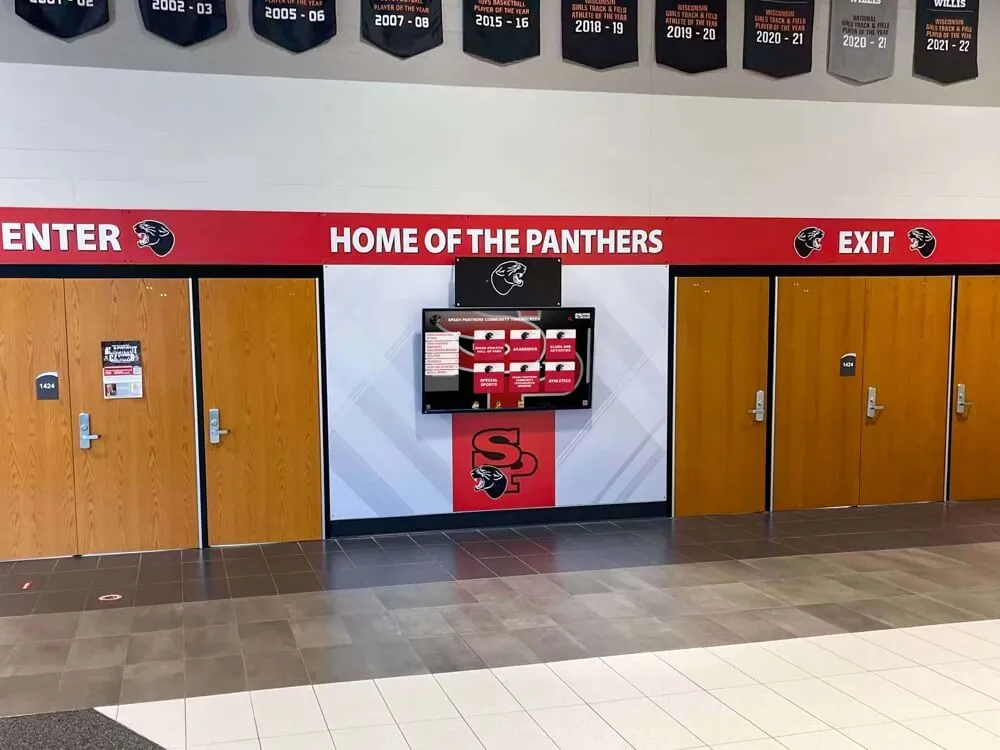
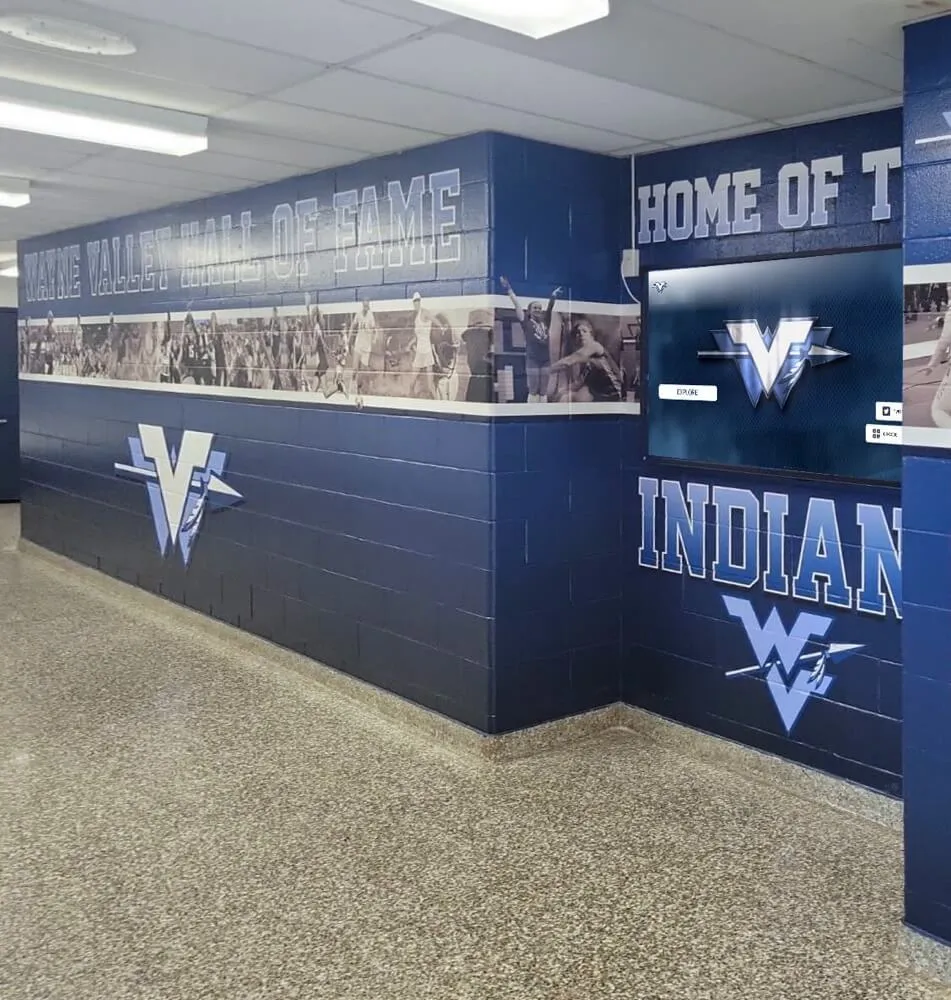
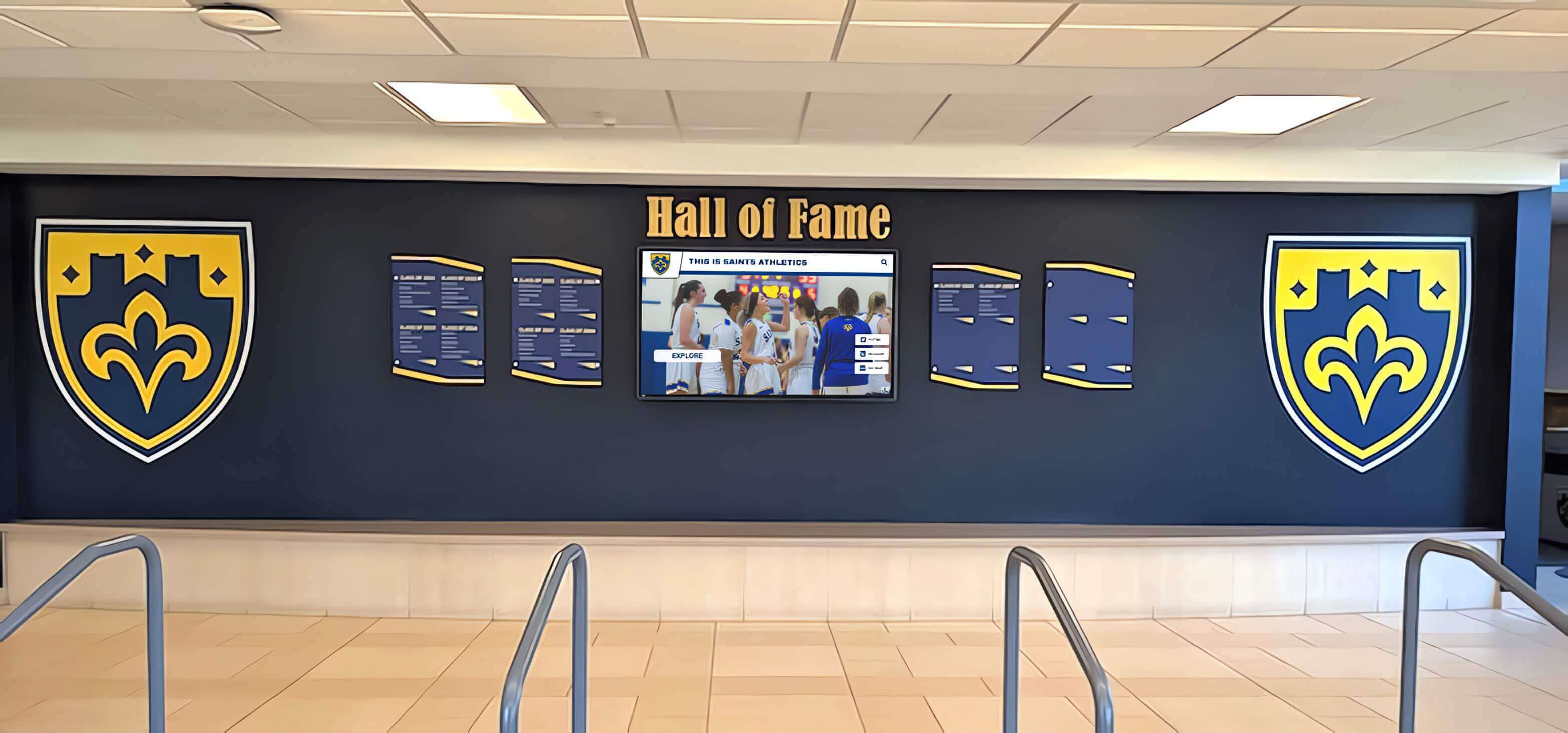
Many schools run both formats: traditional plaque shields alongside digital displays that extend recognition capacity beyond what physical walls can hold
Award Wall Plaques vs. Digital Award Walls: Quick Comparison
| Factor | Traditional Award Wall Plaques | Digital Award Walls |
|---|---|---|
| Capacity | Limited by physical wall space | Unlimited—no space constraints |
| Update speed | 4–12 weeks (fabrication lead time) | Immediate (cloud-based CMS) |
| Update cost | Per-unit engraving or fabrication fee | Included in platform subscription |
| Rich media | Name, date, limited imagery | Photos, video, stats, full profiles |
| Longevity | 50+ years for bronze; varies by material | Hardware lifecycle 7–10 years |
| Prestige signal | High for major recognition | Growing acceptance; varies by audience |
| Searchability | Visual scan only | Full search and filter by name, year, sport |
| Accessibility | Depends on placement and lighting | WCAG 2.1 AA compliance available |
| Annual cost | Fabrication per award (scales with volume) | Flat subscription; no per-award cost |
| Best for | Permanent, high-ceremony recognition | High-volume, frequently updated programs |
The Case for Traditional Award Wall Plaques
Traditional award wall plaques earn their place in school recognition for specific, well-defined reasons.
Permanence no technology can replicate. A cast bronze plaque installed in 1989 is still honoring its recipient in 2026—and will continue doing so without software updates, hardware replacement cycles, or network dependencies. For recognition that must endure regardless of what happens to technology platforms, physical plaques are uniquely reliable. Hall of fame inductees, named facility dedications, major donors, and retired jersey numbers all carry associations of permanence that a physical installation reinforces in ways a digital screen cannot.
Cultural and ceremonial weight. Many school communities—especially longtime alumni, community donors, and traditionalist stakeholders—associate engraved plaques with institutional seriousness. The act of unveiling a bronze plaque at a dedication ceremony carries different emotional weight than pointing to a new screen entry. For the highest-prestige recognition categories, that ceremony matters to the honorees and their families.
No operational dependencies. Physical plaques don’t go offline, don’t require staff training on content management systems, and don’t need annual software subscriptions to remain functional. In school environments where IT staffing and technology budgets are constrained, that simplicity has genuine value.
Where traditional plaques fit best:
- Hall of fame inductee recognition requiring permanent, ceremonial installation
- Major gift donor walls where named donors expect lasting physical acknowledgment
- Championship legacy displays commemorating titles from before digital programs existed
- Retired numbers, memorial tributes, and other recognition with deep ceremonial significance
- Outdoor installations where weather resistance is essential
Schools planning how to organize their existing plaque collections alongside new recognition formats will find useful frameworks in this guide to organizing award wall plaques, photos, and winners for digital recognition.
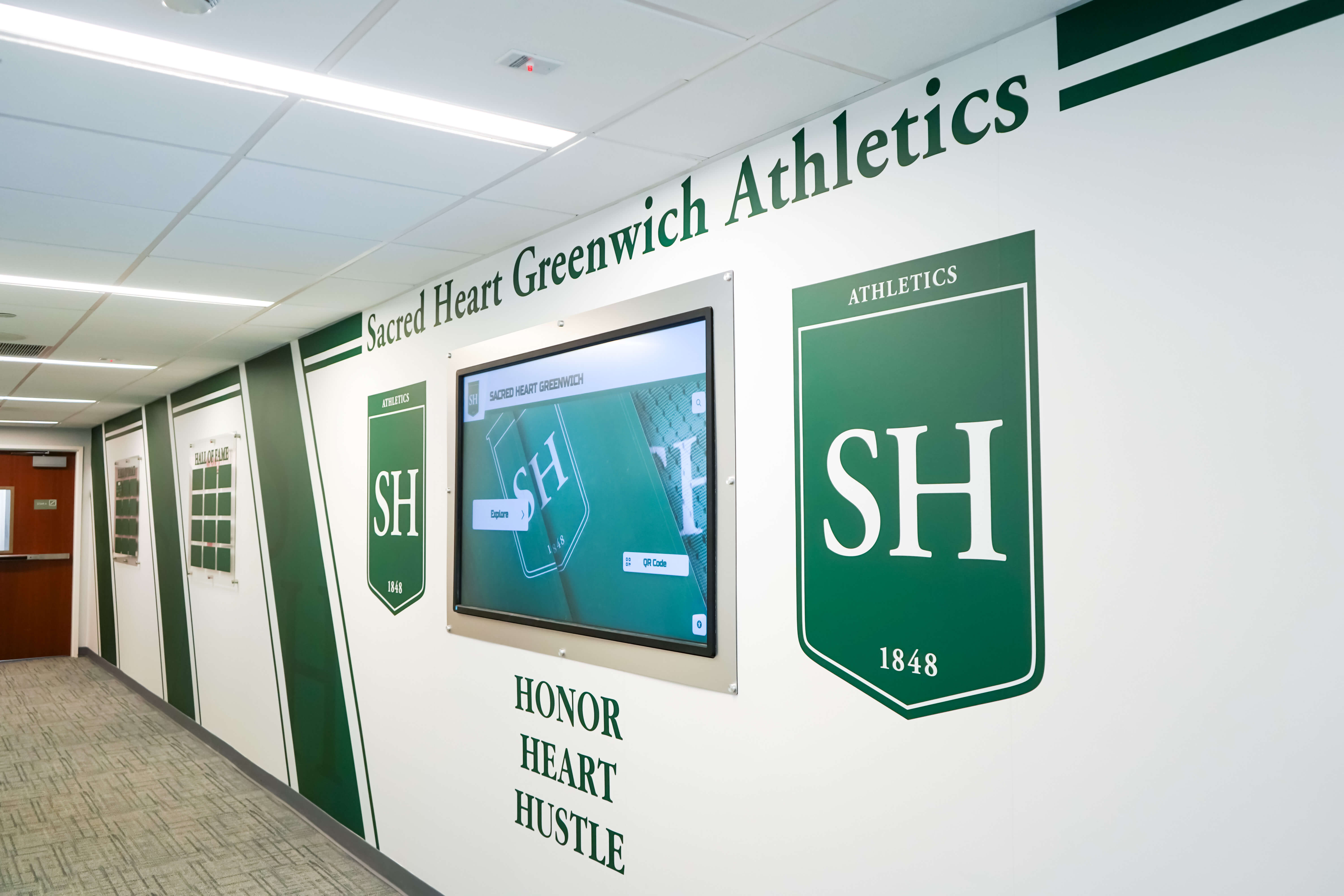
Traditional shield-style plaques create a corridor of achievement that connects generations—but physical walls eventually run out of space
The Limitations of Static Award Wall Plaque Programs
The problems with traditional plaque walls emerge gradually, then all at once.
Physical space is finite. A school that installs championship plaques, hall of fame inductee panels, academic honor boards, and donor recognition in its main corridor will eventually run out of wall. The typical response—archiving older plaques to make room for new ones—defeats the purpose of recognition programs. Stored plaques honor no one.
Updates are slow and expensive. Adding a name to a perpetual plaque requires contacting a vendor, submitting design changes, waiting through fabrication lead times (often 4–12 weeks for engraved or cast pieces), and paying per-addition fees. When a student breaks a record in December, a plaque acknowledging it may not go up until March. That lag blunts the motivational impact recognition is supposed to deliver.
Plaques can’t tell full stories. A championship plaque lists names and a year. It can’t show the game-winning moment, the team photo, the coach who built the program over twenty years, or the student’s post-graduation accomplishments. Recognition that reduces achievements to text on metal leaves significant storytelling value untapped.
Non-athletic achievement rarely gets equal space. Physical award walls tend to favor athletics because athletic achievement accumulates in predictable, high-visibility categories. Academic honor rolls, STEM competition winners, arts awards, community service recognition, and FBLA or FFA achievements often receive minimal permanent display space. This creates imbalanced recognition environments that don’t reflect the full range of student accomplishment. The guide to FBLA and FFA award displays, trophies, and plaques outlines how these programs can secure appropriate permanent recognition alongside traditional athletic displays.
What Digital Award Walls Offer Schools
Digital award walls address the structural limitations of physical plaque programs without requiring schools to abandon traditional recognition entirely.
Unlimited capacity at no marginal cost. Every additional inductee, champion, record holder, donor, or award winner can be added to a digital display without running out of space and without per-unit fabrication costs. A school recognizing 5 athletes per year and a school recognizing 500 face the same display constraints—none—once a digital system is installed.
Immediate updates. Content management systems built for school recognition let staff update records, add new honorees, and publish revised information the same day achievements occur. When a student breaks the school scoring record on a Tuesday night, that recognition can be live on the display by Wednesday morning.
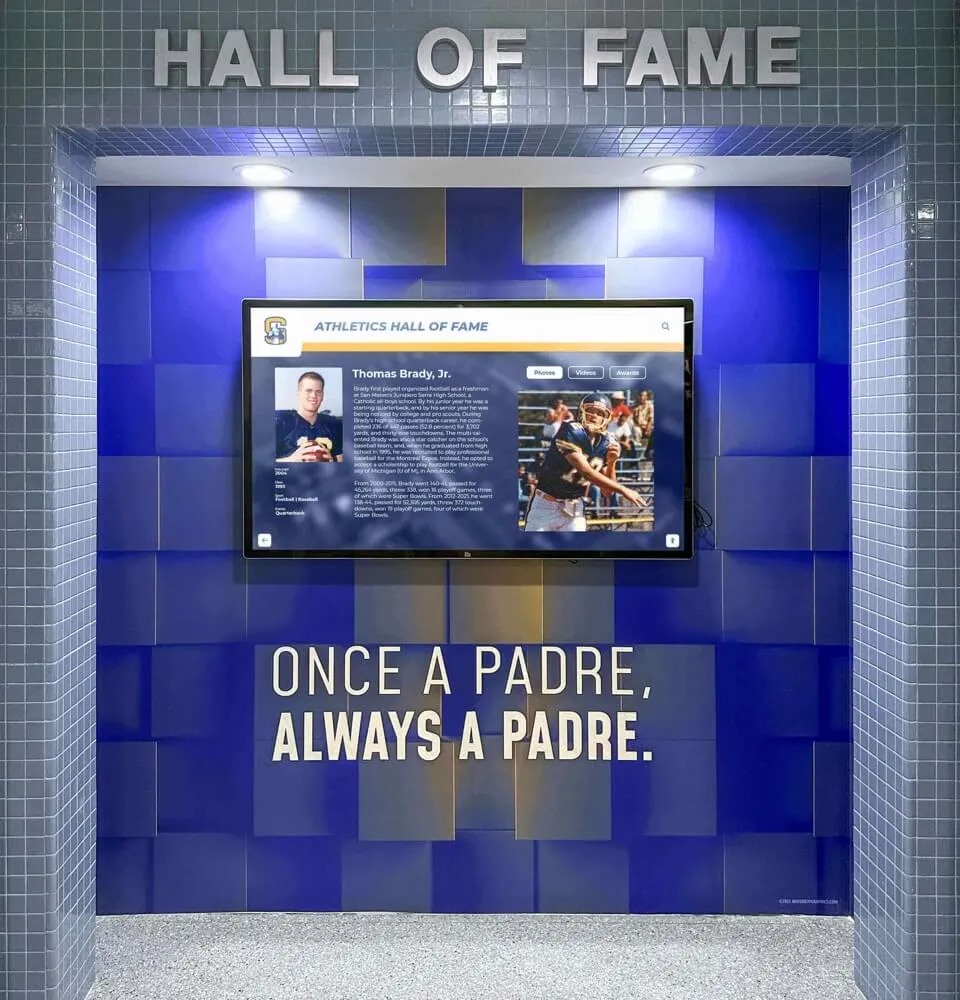
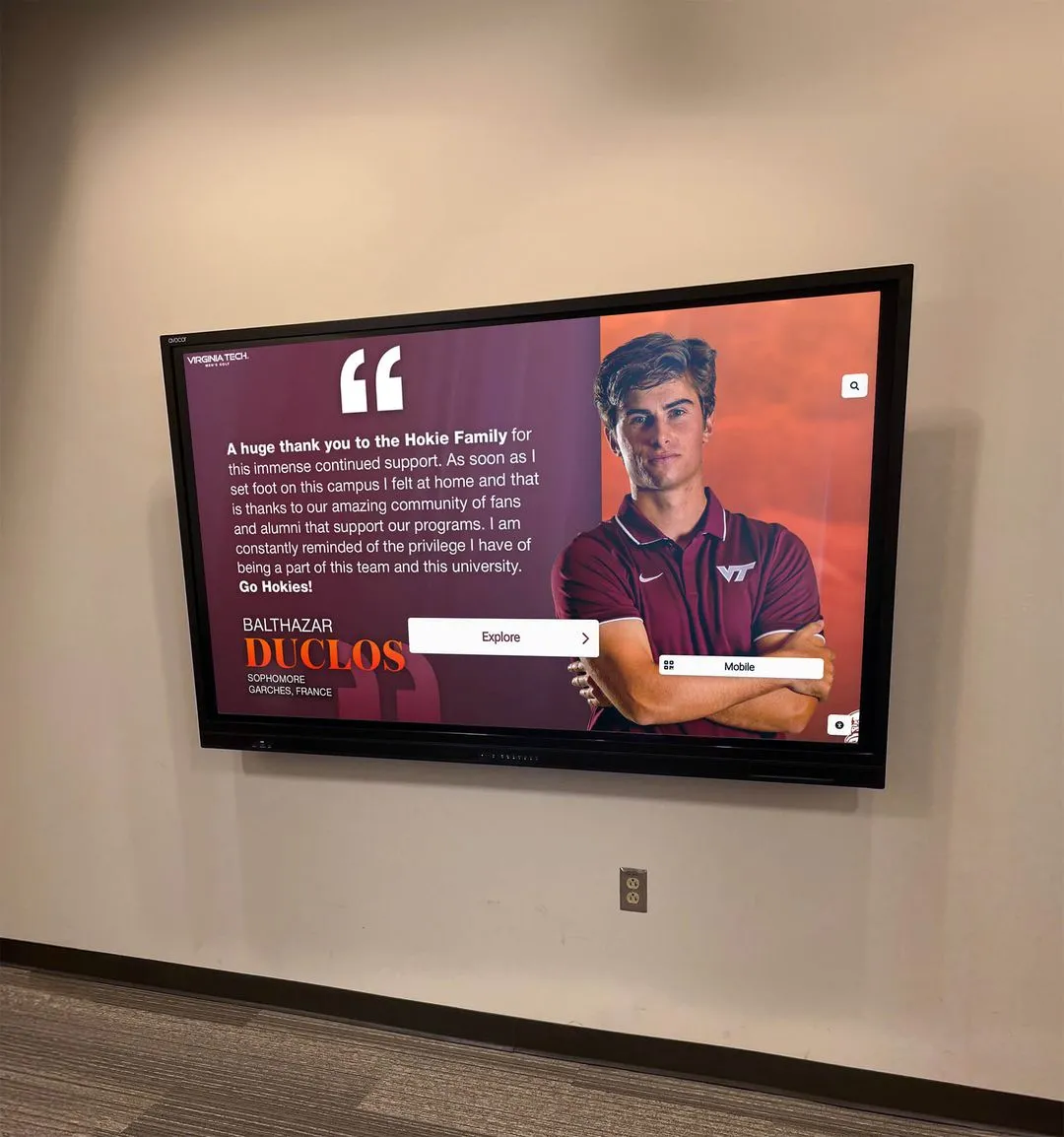
Rich individual profiles. Digital award walls can present each honoree with photos, career statistics, biographical summaries, video highlights, and post-graduation information—the kind of depth that makes recognition genuinely meaningful rather than a simple name listing. An athlete’s profile on a digital display tells a story; their entry on a physical plaque records a fact.
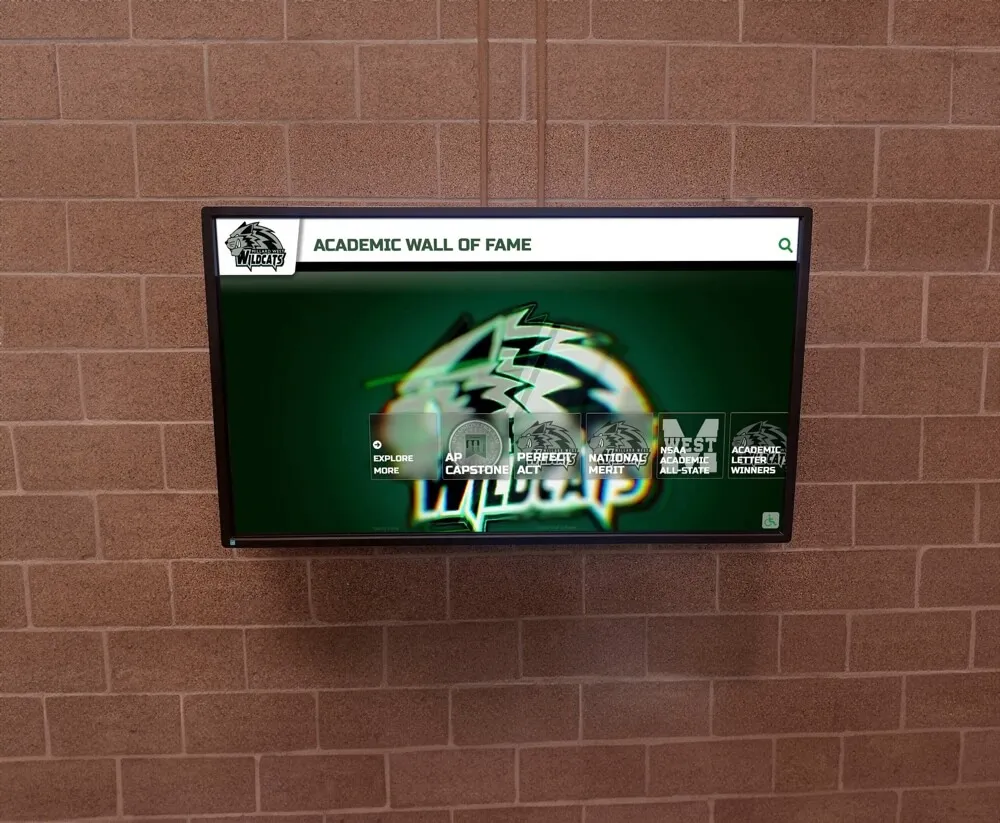
Searchability and accessibility. Visitors can search digital displays by name, year, sport, or category to find specific recognition in seconds. First-time visitors—including alumni returning to campus after decades away—can locate their own recognition without needing to know exactly which hallway to walk down. WCAG 2.1 AA–compliant digital systems ensure students and visitors with disabilities can engage with recognition content on equal footing.
Recognition beyond campus walls. Digital award wall content can extend to school websites and QR-code–linked mobile experiences, allowing alumni, families, and community members to explore recognition from anywhere. Physical plaque walls are visible only to those who walk past them.
The digital wall of honor plaques guide examines how schools are implementing digital recognition across multiple achievement categories while maintaining the visual presence that traditional plaques established.
For donor recognition specifically—where the stakes of getting acknowledgment right are highest—the comparison between physical and digital formats shapes long-term advancement strategy. The traditional vs. digital donor wall plaques analysis explores how schools balance donor expectations for permanence against the flexibility digital systems provide.
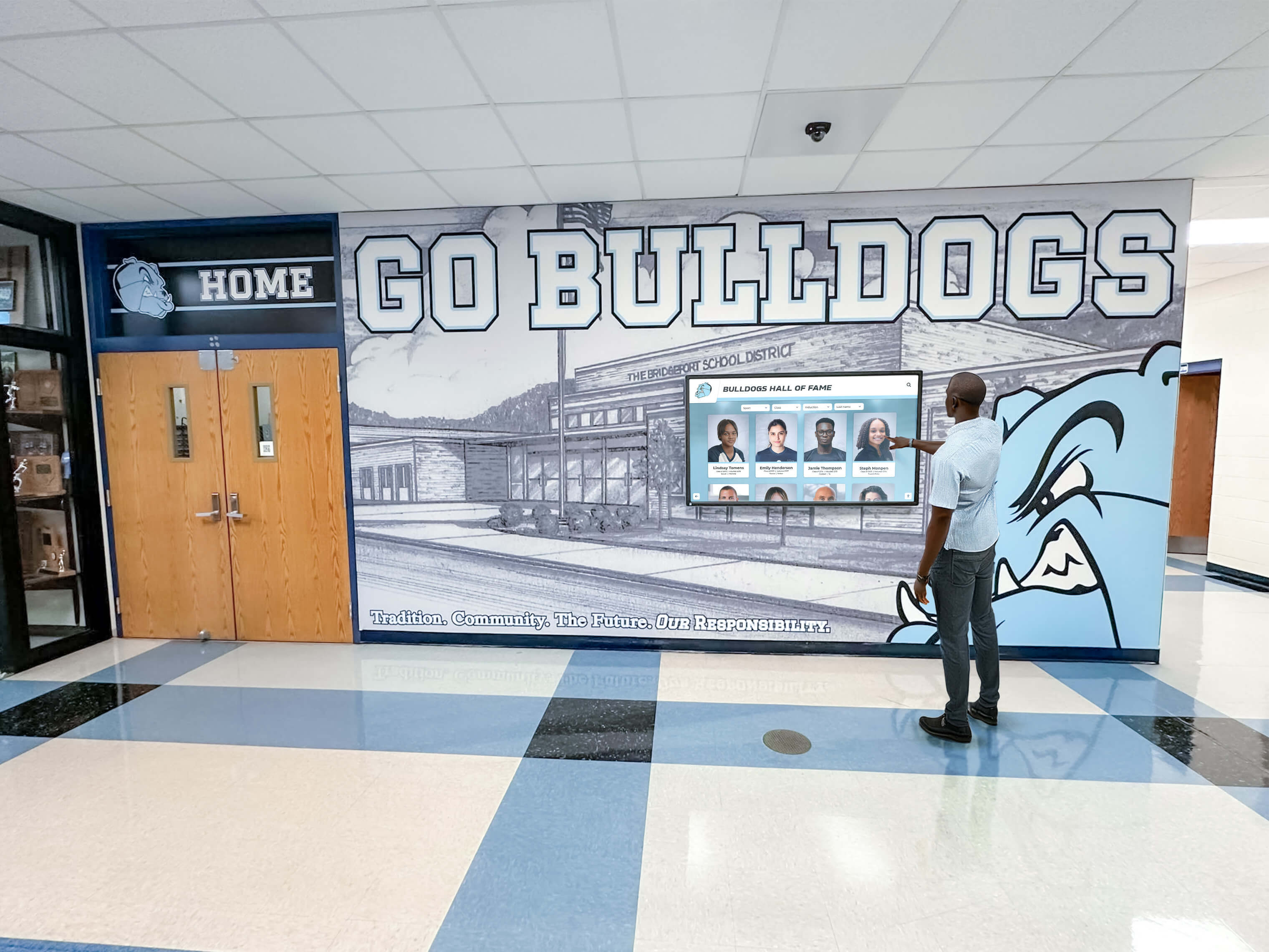
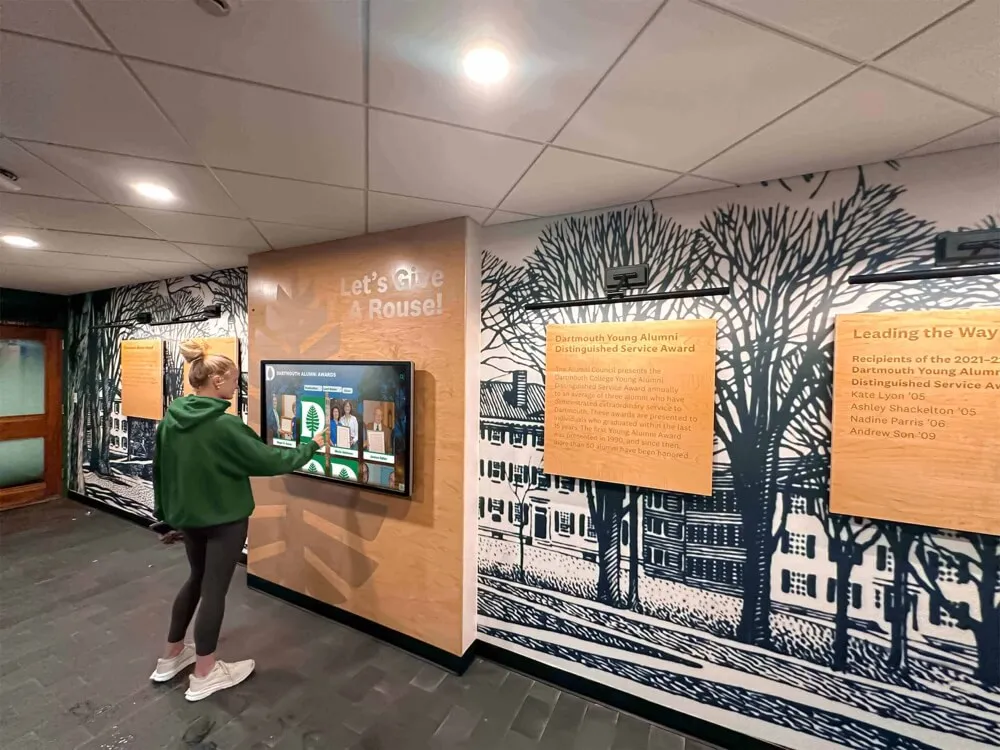
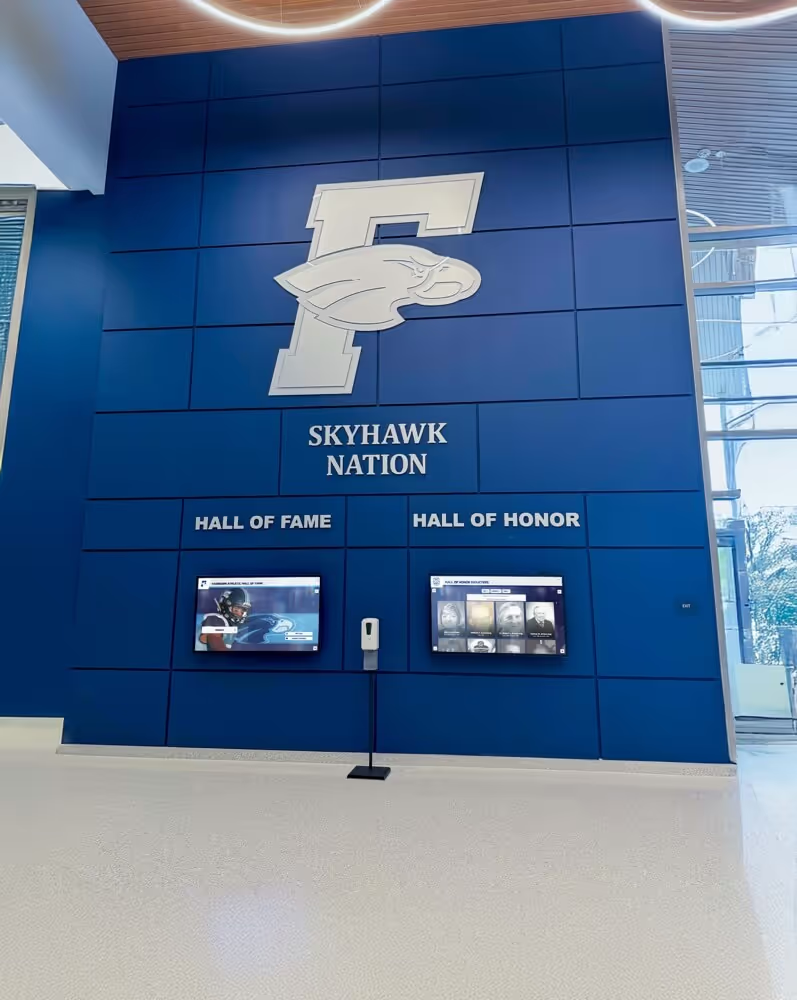
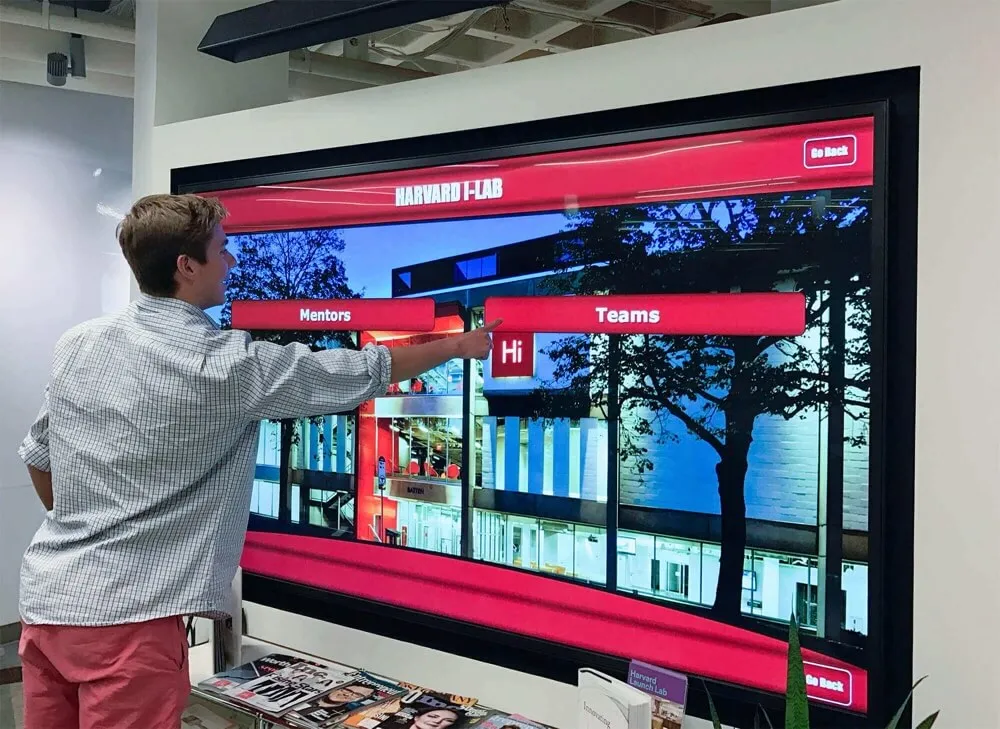
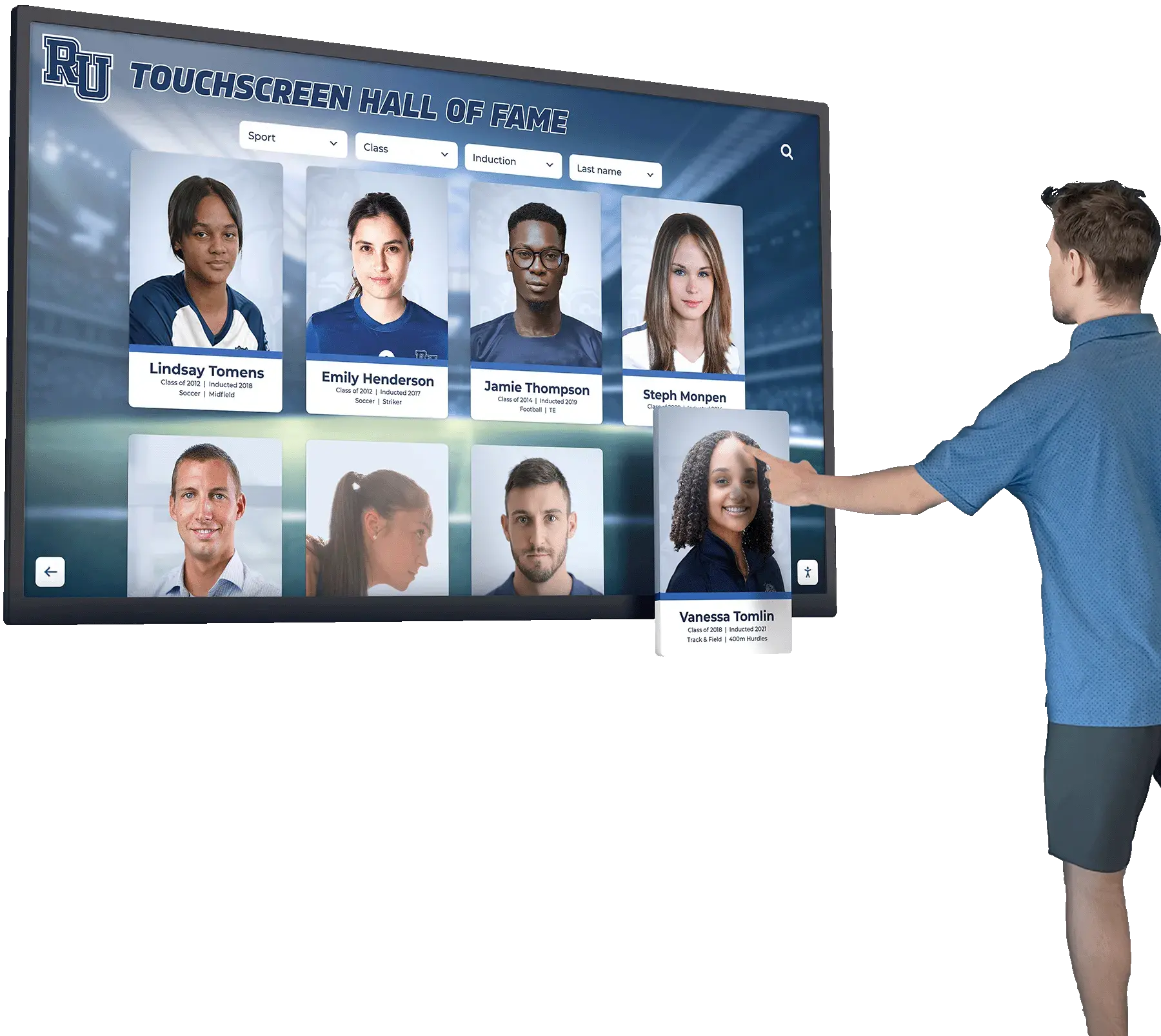
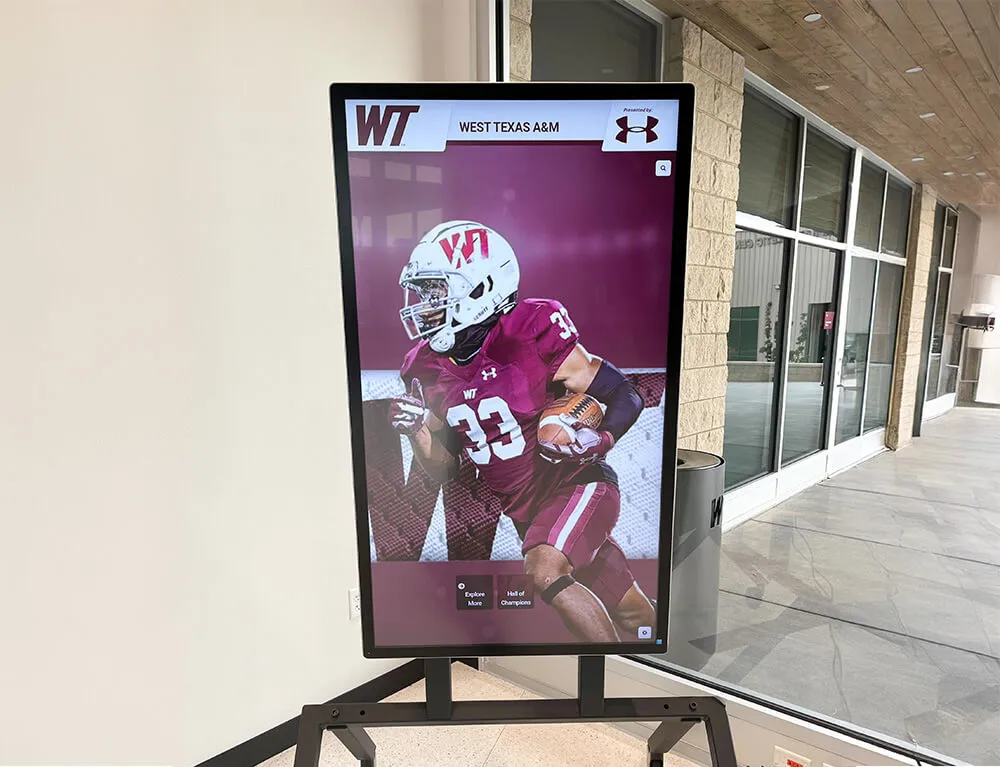
Digital award walls invite active engagement—visitors search, filter, and explore recognition rather than passively scanning a static plaque wall
Rocket Alumni Solutions: Purpose-Built Digital Recognition for Schools
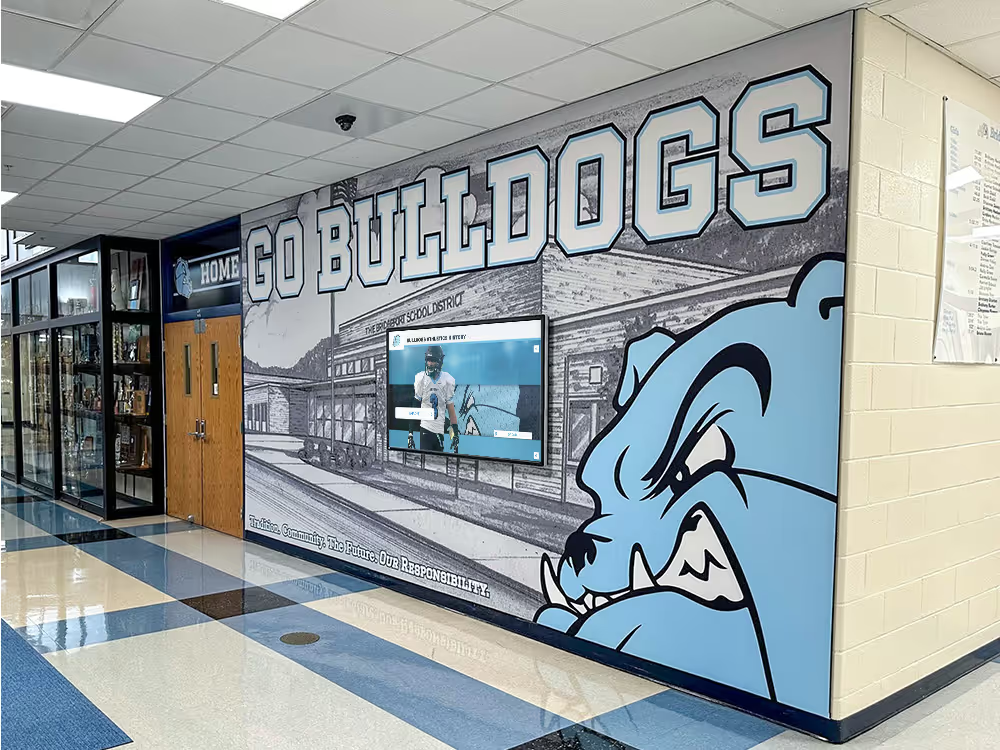
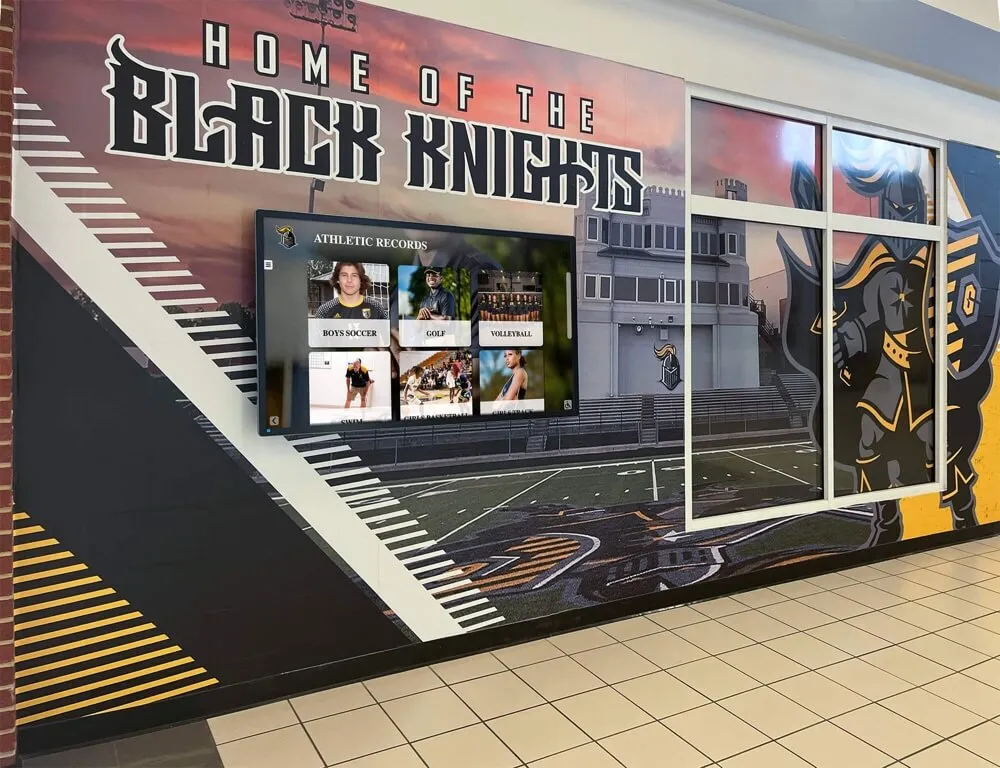
Rocket Alumni Solutions builds interactive touchscreen recognition systems designed specifically for school environments. Unlike general-purpose digital signage, the platform is structured around the recognition categories schools actually use: athletic hall of fame, championship histories, academic honors, record boards, donor walls, and alumni profiles.
Key platform capabilities relevant to this comparison:
- Unlimited inductees and categories: Every student achievement—athletic, academic, artistic, or community-based—can be added without capacity limits or additional per-entry costs
- Cloud-based content management: Staff update recognition remotely from any internet-connected device; changes publish immediately without on-site technical work
- Rich media support: Individual profiles can include photos, video embeds (YouTube, Vimeo, Hudl), career statistics, and biographical details impossible to represent on a physical plaque
- Auto-ranking record boards: Statistical records update automatically when new marks are submitted, keeping achievement timelines accurate without manual reformatting
- WCAG 2.1 AA compliance: Built-in accessibility standards ensure recognition is available to visitors with visual, motor, or cognitive disabilities
- QR code mobile access: Visitors can scan to explore full recognition content on personal devices, extending reach beyond the physical display
- Sponsorship suite: Schools can incorporate sponsor recognition into display content, creating potential revenue streams that offset platform costs
More than 600 institutions—from small high schools to major universities—use the platform. The system scales to any touchscreen size from 32" to 100"+, making it adaptable to hallways, lobbies, athletics complexes, and dedicated recognition centers.
For schools exploring what a comprehensive alumni recognition wall looks like when implemented digitally, the guide to building modern alumni recognition walls offers useful design and content planning frameworks applicable to Rocket-powered installations and others.
Deciding Between Plaque Walls and Digital Displays: Key Questions
Rather than treating this as a binary choice, use these questions to identify which format belongs in each part of your recognition program:
1. How many honorees do you add each year? Programs adding fewer than 10 recognition entries annually may find traditional plaques manageable. Programs recognizing 20 or more honorees per year will exhaust physical wall space within a decade and typically reach cost parity with digital subscriptions within 3–5 years.
2. How quickly do your recognition needs change? If your most important recognition category is championship plaques—added once per year following a fixed season—fabrication lead times are manageable. If you run active record boards, monthly honor roll updates, or quarterly donor acknowledgment, digital systems eliminate the operational friction of recurring vendor orders.
3. Who are your primary honorees? Hall of fame inductees and major donors often expect physical plaques as part of the recognition experience. Current students responding to record boards and seasonal award updates engage more readily with digital content. Many schools use both formats simultaneously for exactly this reason.
4. What is your display location’s foot traffic? High-traffic corridors and lobbies where visitors have seconds of engagement benefit from the visual immediacy of traditional plaque walls. Dedicated recognition spaces where visitors spend several minutes—athletics lobbies, alumni centers, development offices—reward the depth and interactivity of digital displays.
5. Do you need recognition accessible beyond the physical campus? If your institution has a distributed alumni community, a donor base that rarely visits campus, or families who want to share recognition with out-of-state relatives, digital systems with web-accessible components deliver reach no physical installation can match.
Schools evaluating donor recognition formats specifically will find the donor recognition wall plaques comparison useful for understanding how different stakeholder expectations shape the format decision.
The digital wall of honor plaques guide and its companion on modern recognition wall designs that inspire giving offer additional perspective on how schools are navigating these format decisions across different recognition contexts.
The Hybrid Approach: Using Both Formats Deliberately
Most schools that implement digital award walls don’t remove their physical plaques—they redeploy each format where it performs best.
Traditional award wall plaques for:
- Hall of fame inductees receiving permanent, ceremonial installations
- Named major gifts and donor walls where physical permanence is expected
- Legacy championship recognition predating digital programs
- Memorial tributes and retired number ceremonies requiring lasting physical presence
- Outdoor recognition where weather resistance is non-negotiable
Digital award walls for:
- Season-by-season athletic and academic achievement archives
- Record boards requiring immediate updates when records fall
- Annual honor roll recognition across academic departments
- Community service, arts, STEM, and non-athletic achievement categories that rarely receive physical display space
- Junior varsity, freshman, and club sport recognition that physical walls can’t accommodate at scale
- Content accessible during recruiting visits, alumni events, and donor tours
This hybrid framework preserves the prestige and permanence that stakeholders expect from physical plaques while eliminating the capacity and update constraints that force schools to choose between honoring current achievers and maintaining historical recognition.
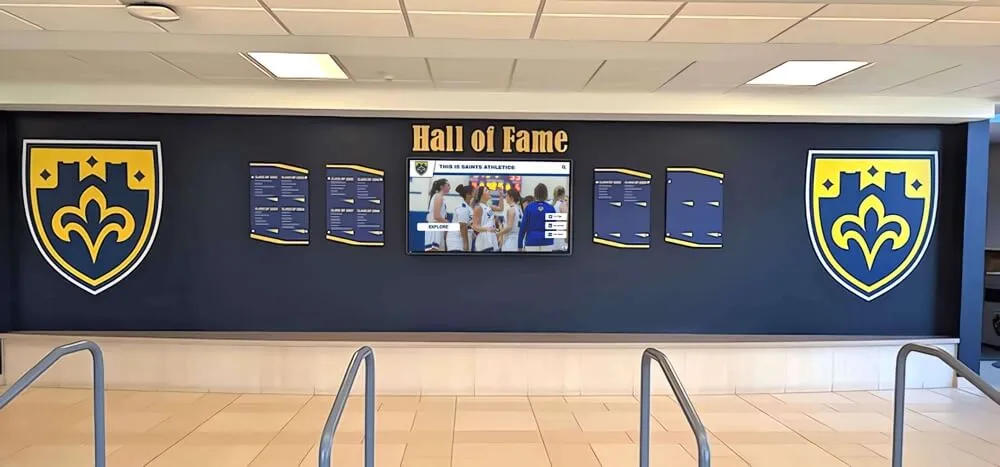
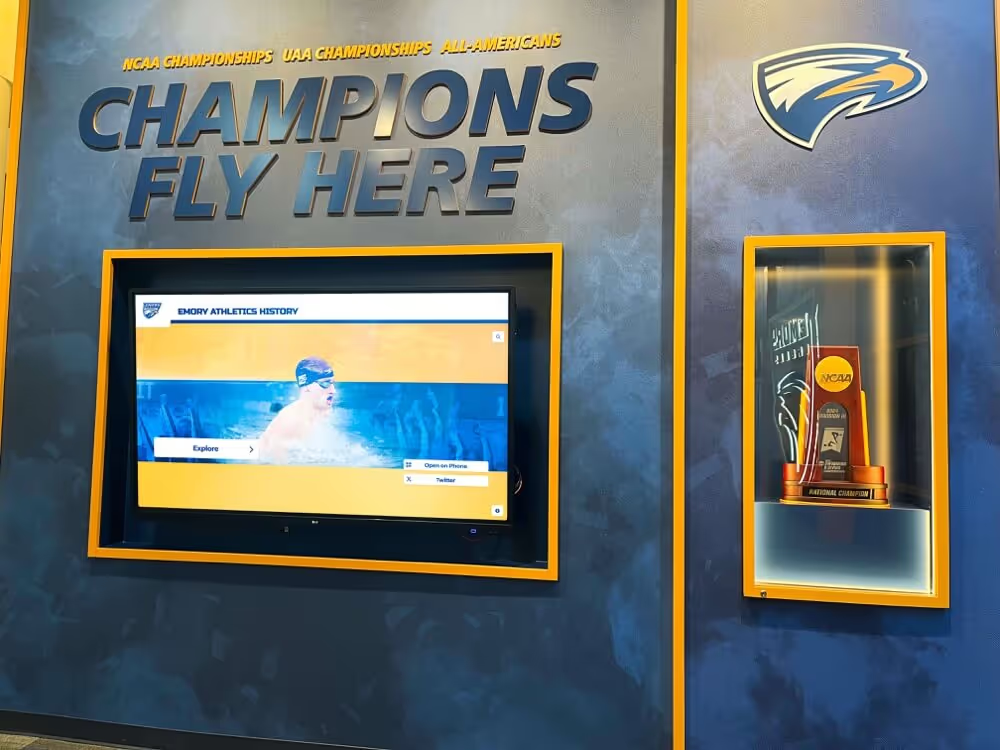
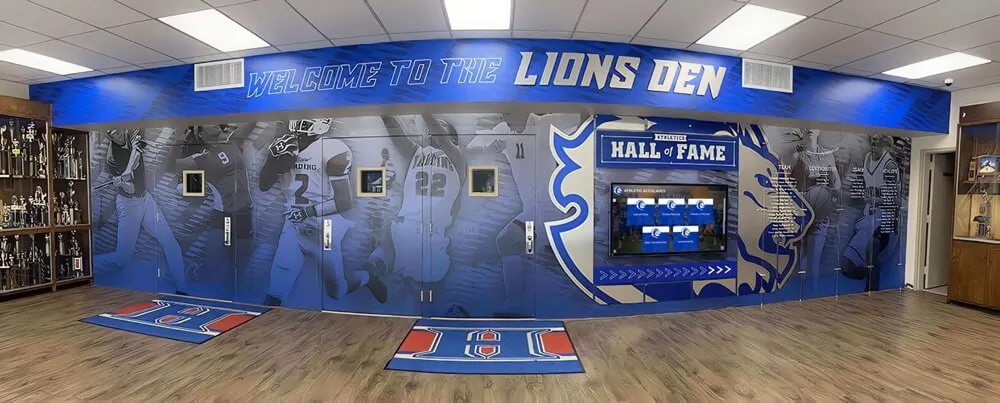
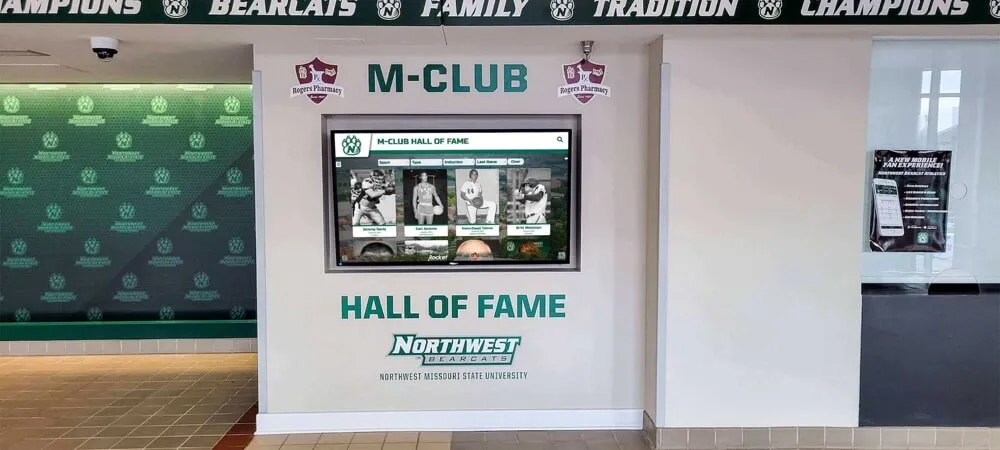
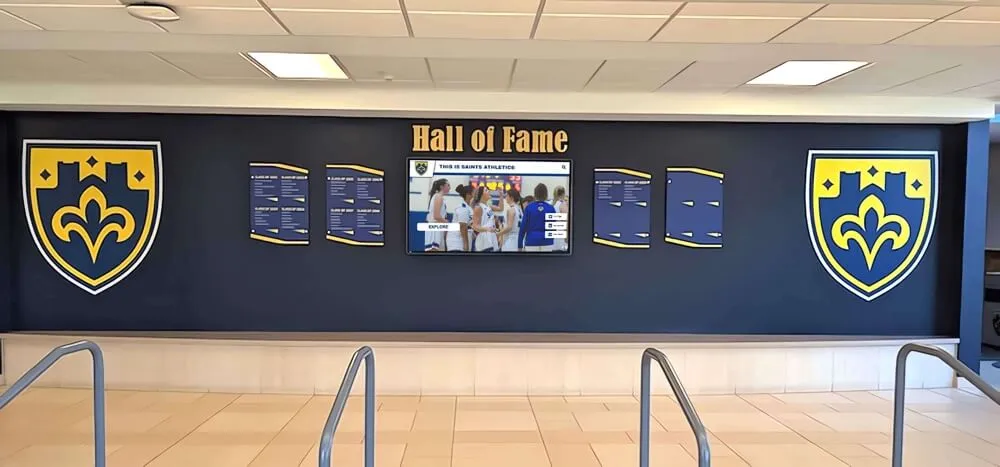
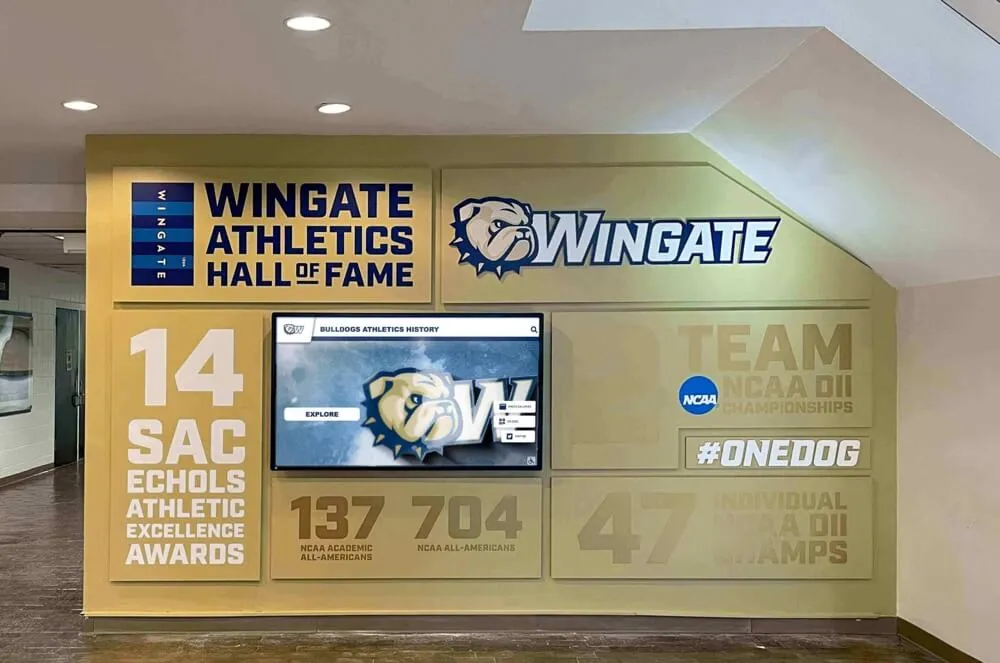
Hybrid installations let schools preserve traditional plaque recognition for high-ceremony inductees while extending capacity through digital displays—no archiving required
For schools that have accumulated significant award plaque collections over the years and want to integrate them into a modern recognition strategy, the digital wall of honor plaques overview covers practical approaches for digitizing historical records and presenting them alongside new digital-native recognition.
FAQ: Award Wall Plaques vs. Digital Award Walls
What is the main difference between award wall plaques and digital award walls?
Award wall plaques are physical installations—engraved bronze, brass, wood, or acrylic panels mounted permanently to walls—while digital award walls are touchscreen or display systems that present recognition content electronically. Plaques offer permanence and ceremonial weight; digital walls offer unlimited capacity, immediate updates, rich media profiles, and searchability. Most schools use both formats, matching each to different recognition categories based on prestige requirements and update frequency.
How much do award wall plaques cost compared to digital award walls?
Traditional plaque costs vary by material: basic aluminum or acrylic plaques run $40–$100 each; brass and wood range from $75–$200; cast bronze plaques cost $150–$600 or more. A digital award wall system—including commercial touchscreen, kiosk enclosure, installation, and first-year software—typically requires an initial investment of $10,000–$25,000, followed by annual software subscriptions of $1,200–$3,600. Programs adding 15 or more plaques annually typically reach digital cost parity within three to five years, after which digital systems eliminate ongoing per-unit fabrication costs.
Can digital award walls replace traditional hall of fame plaques?
Digital award walls can display hall of fame inductee information with significantly more depth than physical plaques—including photos, career statistics, video highlights, and biographical details. However, many schools retain traditional physical plaques for hall of fame recognition because inductees and their families expect a permanent, tangible installation as part of the honor. The most common approach is using digital displays to complement physical plaques by adding depth, searchability, and capacity that physical installations cannot provide.
How do schools update digital award walls?
Cloud-based content management systems allow authorized staff to add, edit, or remove recognition content from any internet-connected device. Changes typically publish to the display immediately or within minutes. Staff training for basic content management generally takes a few hours; no specialized IT skills are required for routine updates. This is a significant advantage over traditional plaques, which require vendor orders and 4–12 week fabrication timelines for any additions or changes.
What types of achievement can digital award walls recognize?
Digital award walls can display any category of school achievement: athletic championships, hall of fame inductees, academic honor rolls, National Merit Scholars, STEM competition winners, arts and music awards, community service recognition, FBLA and FFA achievements, donor acknowledgment, and more. Unlike physical plaque walls that tend to allocate most space to athletic recognition due to volume and visibility, digital systems treat every achievement category equally—limited only by the categories schools choose to create, not by wall space.
Conclusion: Matching Format to Recognition Purpose
Award wall plaques remain the right choice for recognition categories where permanence, ceremony, and tangible physical presence are part of what makes the honor meaningful. A bronze plaque inducting a hall of fame athlete, a carved stone panel naming a major donor, a brass shield commemorating a championship team—these carry emotional and institutional weight that digital screens genuinely cannot replicate.
But physical plaques aren’t scalable recognition infrastructure. They run out of wall space, require long fabrication timelines for updates, can’t tell full stories, and leave many achievement categories without permanent display because there isn’t room. Digital award walls solve exactly those problems—and do it without asking schools to choose between past honorees and present achievers.
The schools getting recognition right aren’t choosing one format over the other. They’re designing programs that use traditional plaques for the recognition categories that demand permanence and ceremony, and digital displays for everything that benefits from capacity, immediacy, and depth.
See What a Modern Award Wall Looks Like for Your School
Rocket Alumni Solutions builds interactive recognition systems that give schools unlimited capacity for every achievement category—athletics, academics, arts, donor recognition, and more. Request a custom demo to see how it would work for your program.
Request a Custom Demo