



An award winner database is the infrastructure that turns a school’s collection of trophies, plaques, and ceremony programs into a living, searchable record of athletic achievement—one that coaches can update at the end of each season, communications staff can query for alumni outreach, and advancement teams can pull for donor recognition. Without it, a program’s recognition history lives in filing cabinets, faded banquet programs, and the memories of coaches who have since retired. With it, every award given in 1987 carries the same institutional weight as every award given last spring.
This guide walks through what an award winner database needs to contain, how to organize records for long-term usability, and how schools connect their historical databases to the physical and digital displays that make recognition visible every day—not just at the annual banquet.
Athletic recognition programs accumulate decades of meaningful history faster than most schools realize. A program that presents five awards per sport across twelve varsity sports each year adds sixty records annually. Over twenty-five years, that’s 1,500 award entries—before accounting for hall of fame inductions, team championships, school records, and individual milestones. Schools that don’t build a deliberate database structure during those early years spend enormous staff time reconstructing history when someone finally asks: “Who won the Leadership Award in 2008?”

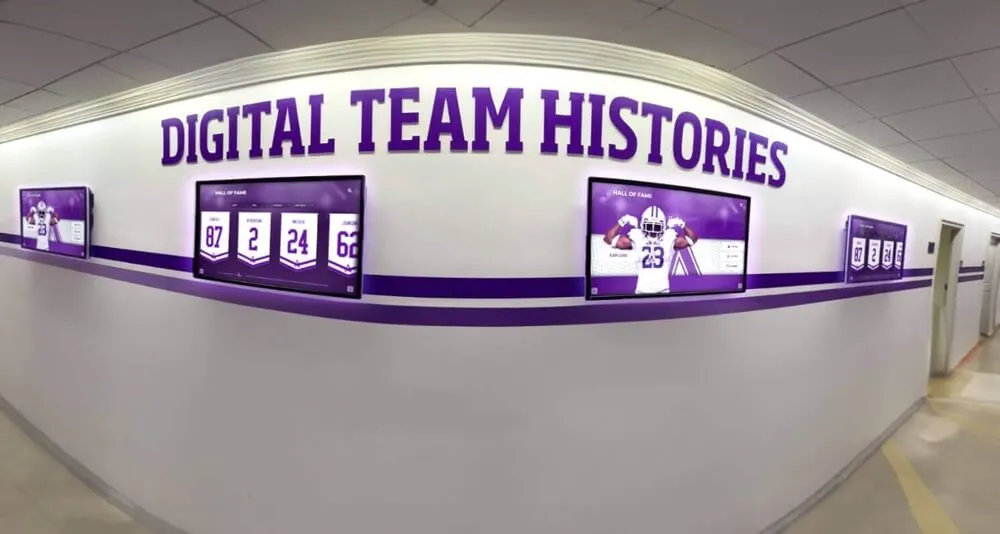
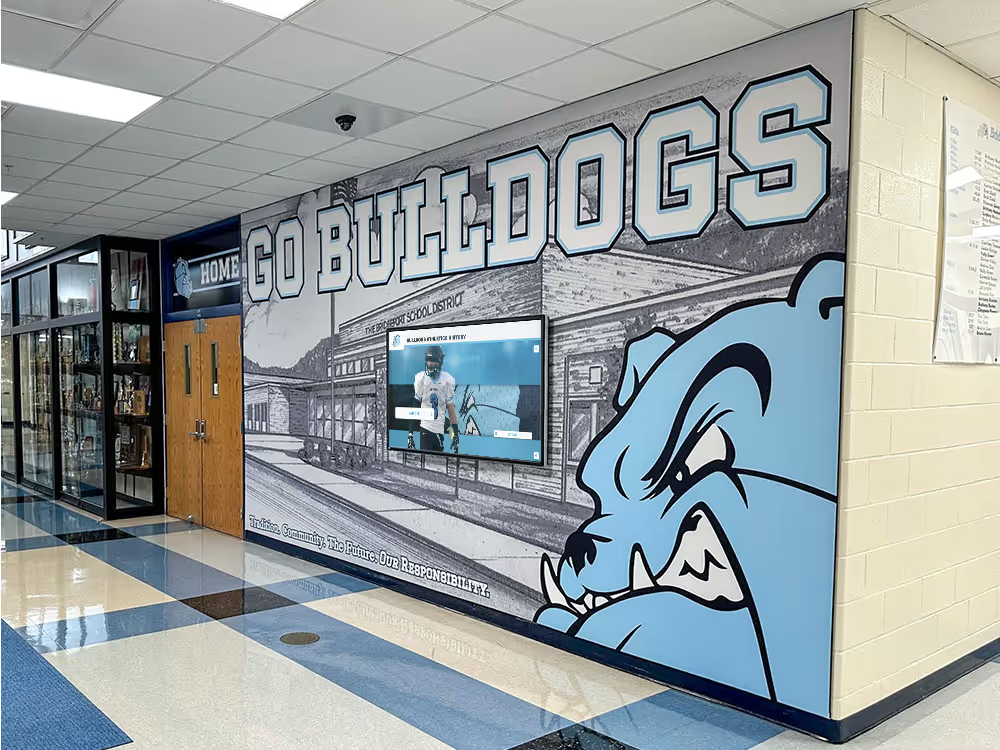
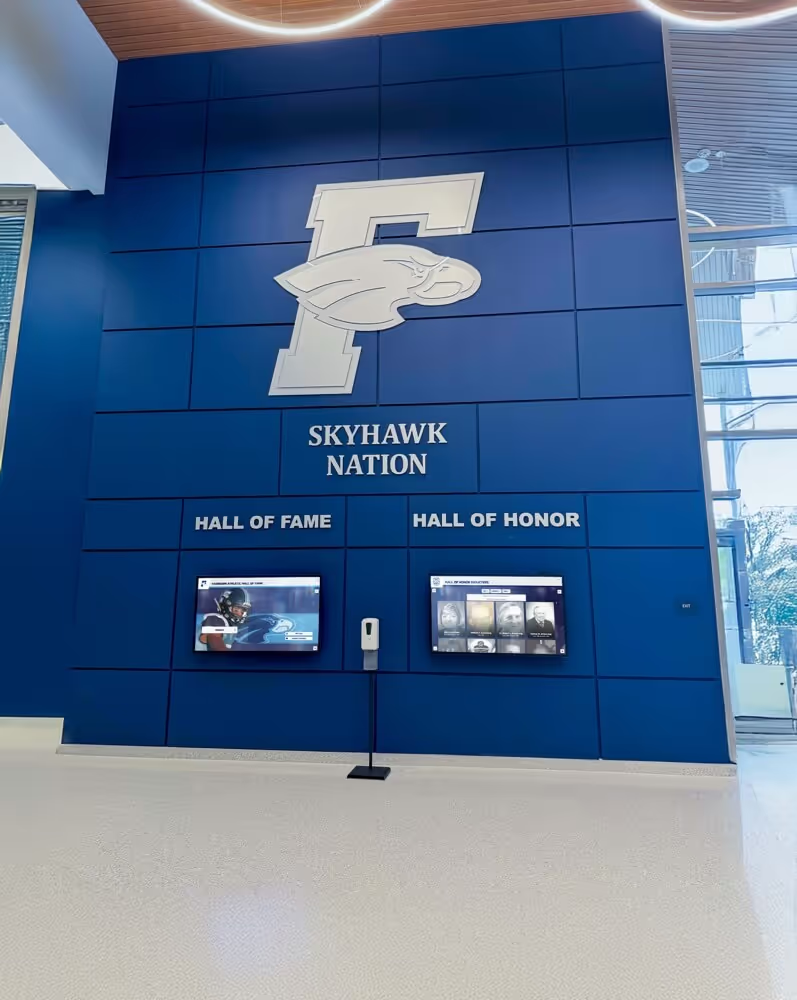
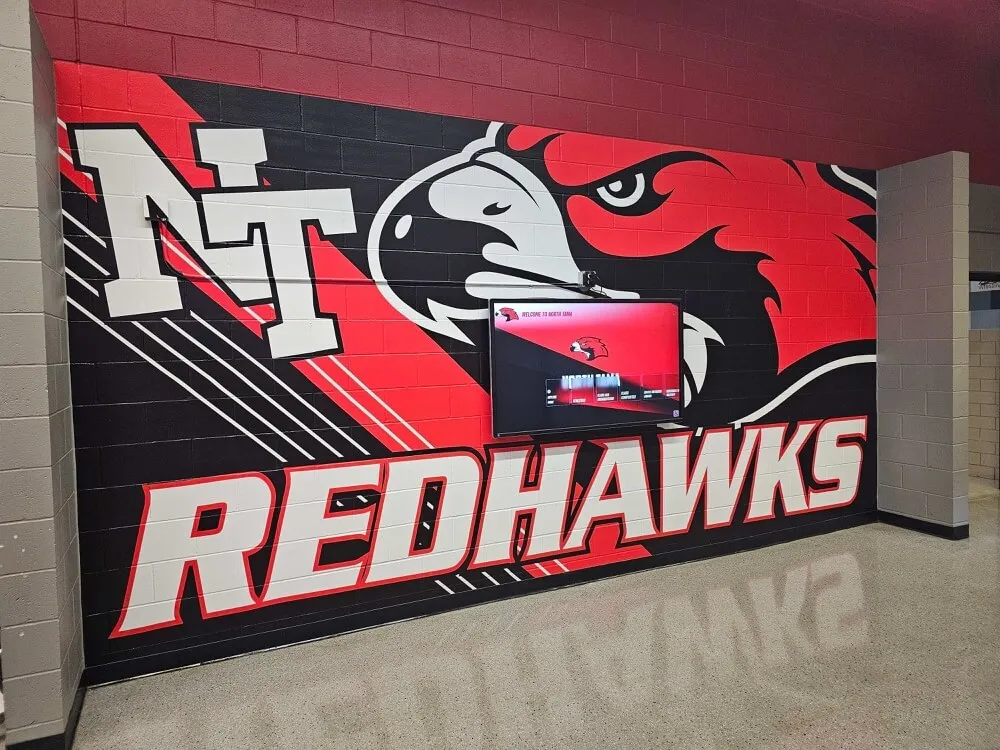
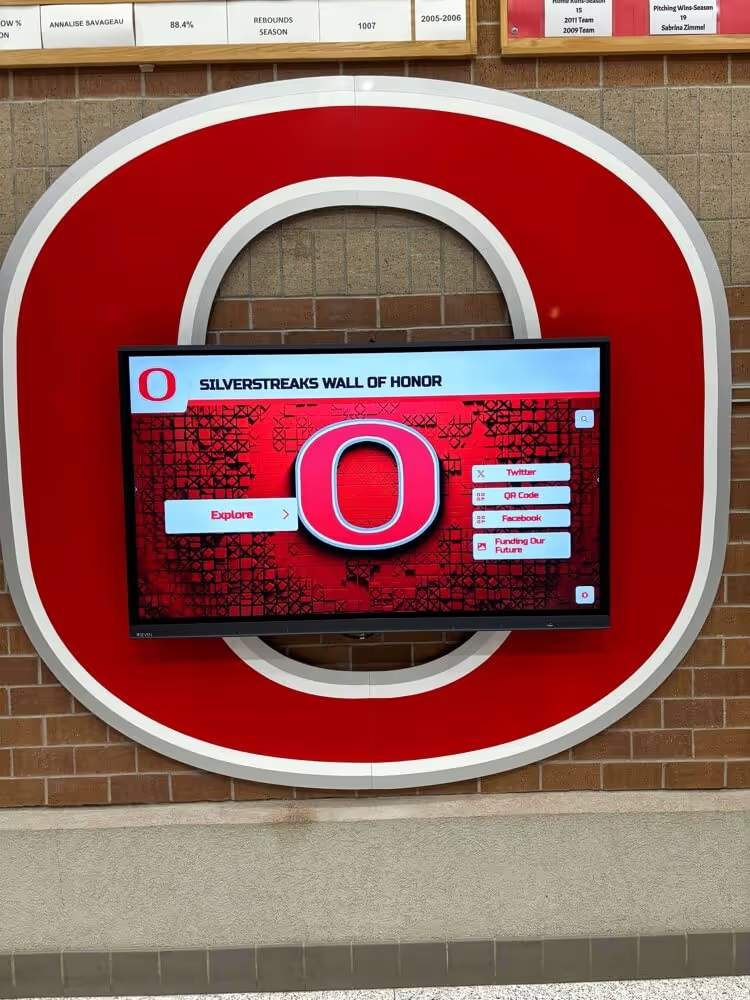
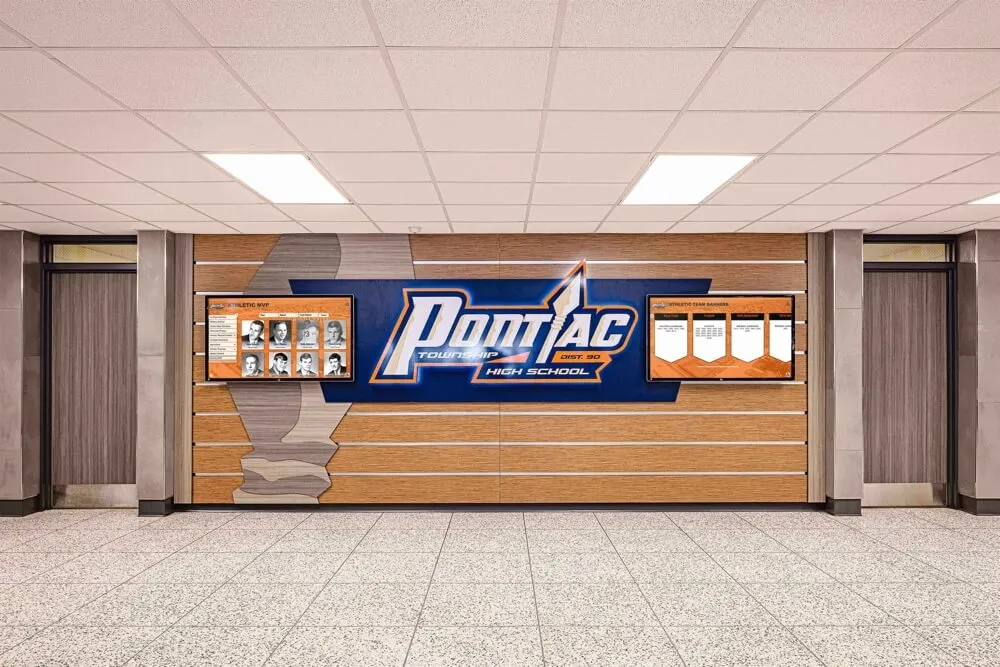
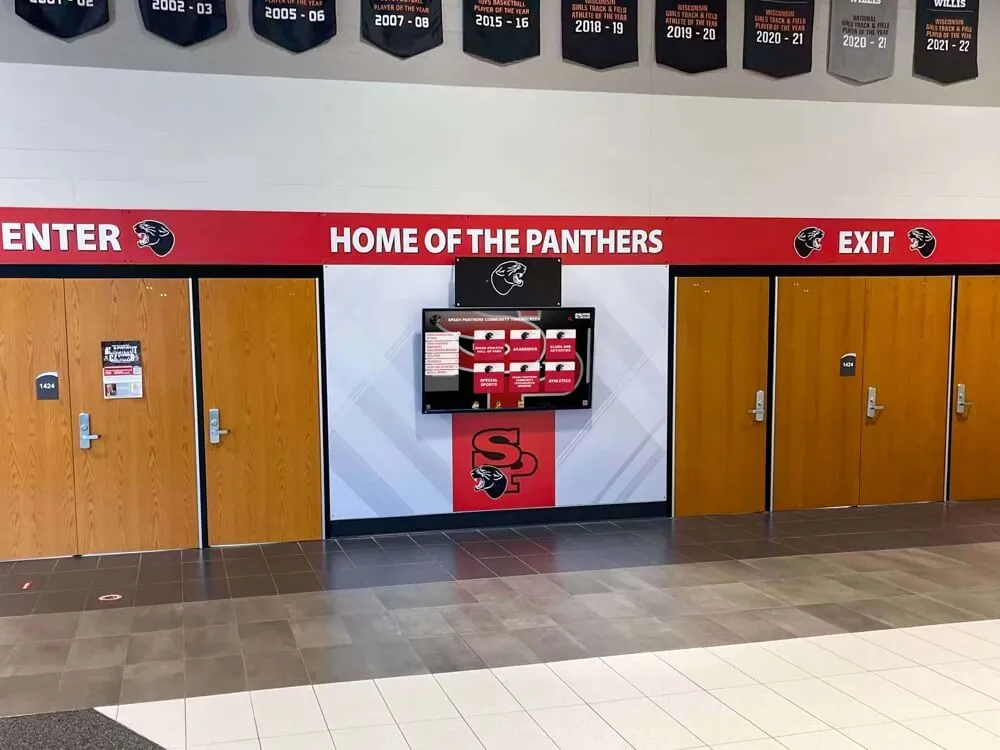
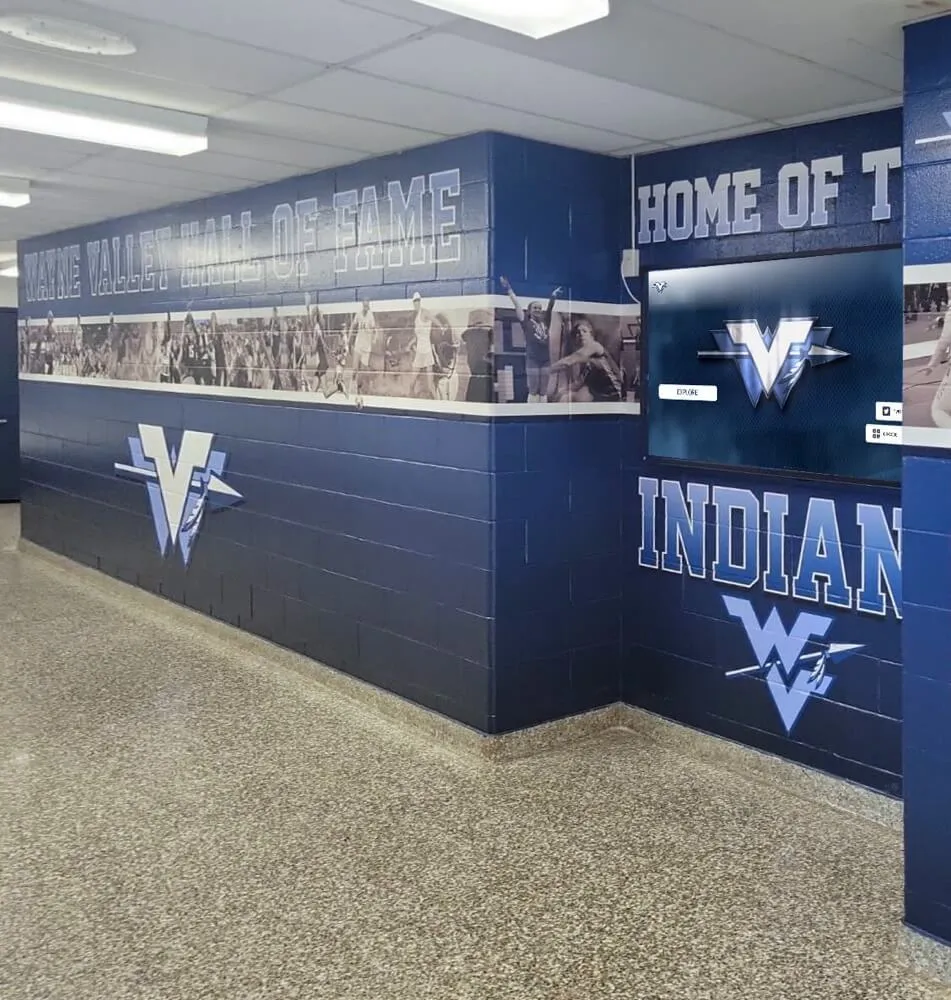
A hallway records display is only as accurate and complete as the database behind it — schools with structured award winner data can update displays instantly when new honorees are added
Why Athletic Recognition Records Go Missing
Most schools don’t lose award records through negligence—they lose them through accumulation of small, reasonable shortcuts. A coach keeps the year’s award list in a spreadsheet on a personal laptop. A retiring athletic director hands over a filing cabinet full of paper programs. A website redesign migrates some records and leaves others behind. Each individual decision makes sense in the moment. The cumulative effect is a recognition history full of gaps.
Common sources of record loss in athletic programs:
- Award decisions communicated verbally at banquets, never documented in writing
- Plaque orders placed by vendors without a corresponding internal record
- Award winner lists stored in email threads that aren’t transferred when staff turns over
- Annual programs printed as the authoritative record, then discarded after the event
- Digital records tied to staff personal accounts rather than institutional systems
The practical consequence isn’t just administrative frustration. When a parent calls to confirm their child’s award for a college application, when an alumni engagement coordinator needs to reach out to every soccer MVP from the past two decades, or when the athletic department wants to build a fiftieth-anniversary display—gaps in the record become visible failures of institutional memory.
For schools evaluating the full scope of their recognition infrastructure, a review of the best hall of fame tools for athletics, donors, arts, and history offers a practical framework for understanding where databases fit alongside physical and digital recognition systems.
What an Award Winner Database Should Contain
A well-structured award winner database requires consistency before it requires complexity. The fields that matter most are the ones entered the same way by every staff member who touches the system, year after year.
Core Fields for Every Award Entry
Recipient information:
- Full legal name (consistent with other institutional records)
- Graduation year
- Grade level at the time of the award
- Athlete ID or student ID number (links to the student information system)
- Gender (relevant for sport categorization and reporting)
Award information:
- Award name (standardized, not informal variations like “the hustle trophy”)
- Award category (MVP, Sportsmanship, Academic Achievement, Hall of Fame, etc.)
- Sport or program
- Season (fall/winter/spring) and academic year
- Award date or ceremony date
- Presenting organization or coach name
Display eligibility flags:
- Approved for public display (yes/no)
- Display format preference (trophy wall, digital screen, yearbook, website)
- Photo on file (yes/no)
- Permission to use photo publicly obtained (yes/no)
- Alumni contact status (confirmed current contact information, opted out, not yet contacted)
Source documentation:
- Entered by (staff name)
- Entry date
- Source document (banquet program, coach approval email, committee vote record)
- Last verified date
Schools that build these fields into their initial database structure rarely need to backfill. Schools that start with “name, award, year” spend years trying to reconstruct the rest.
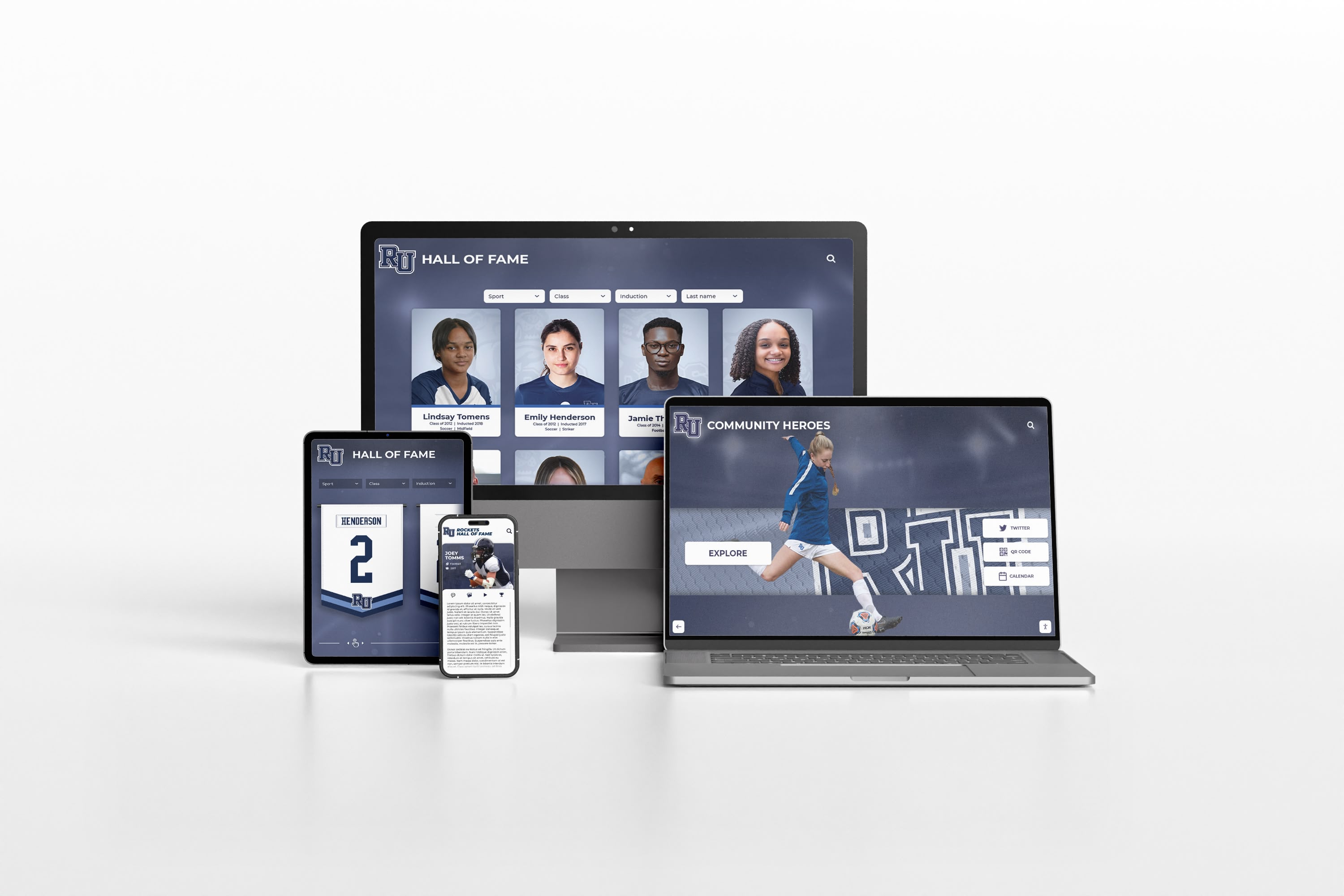
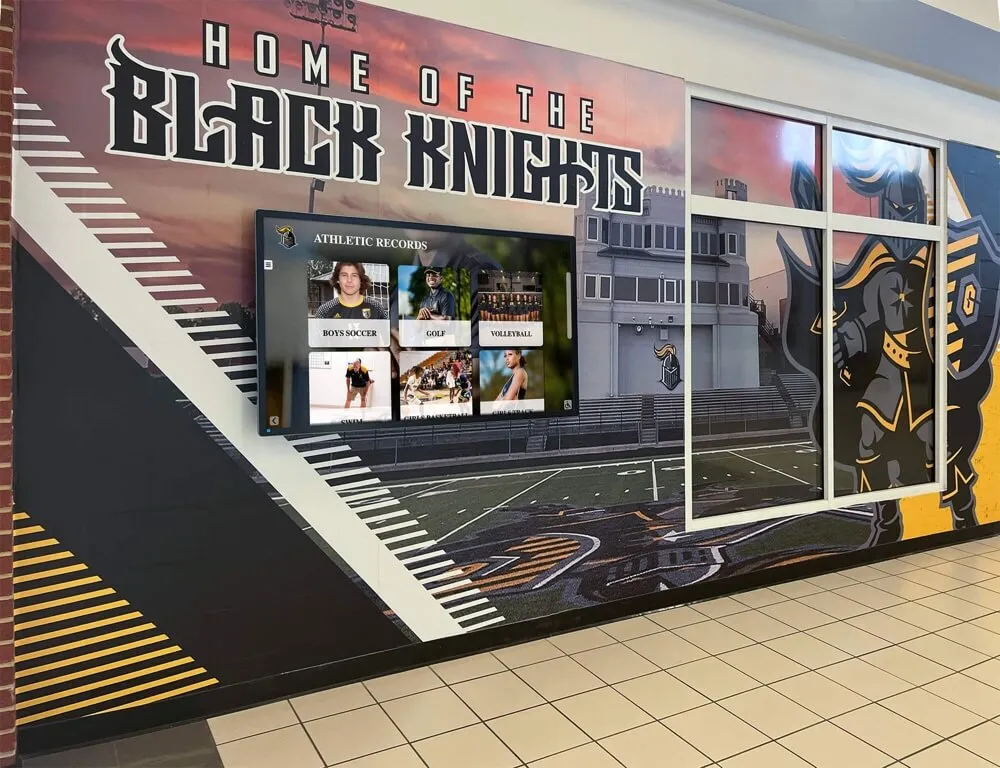
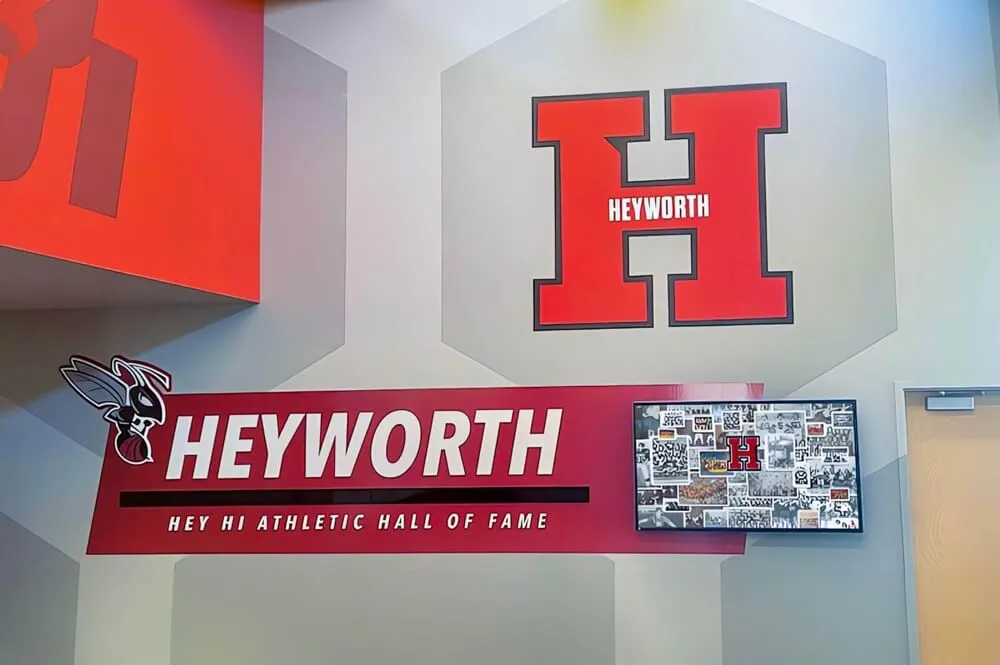
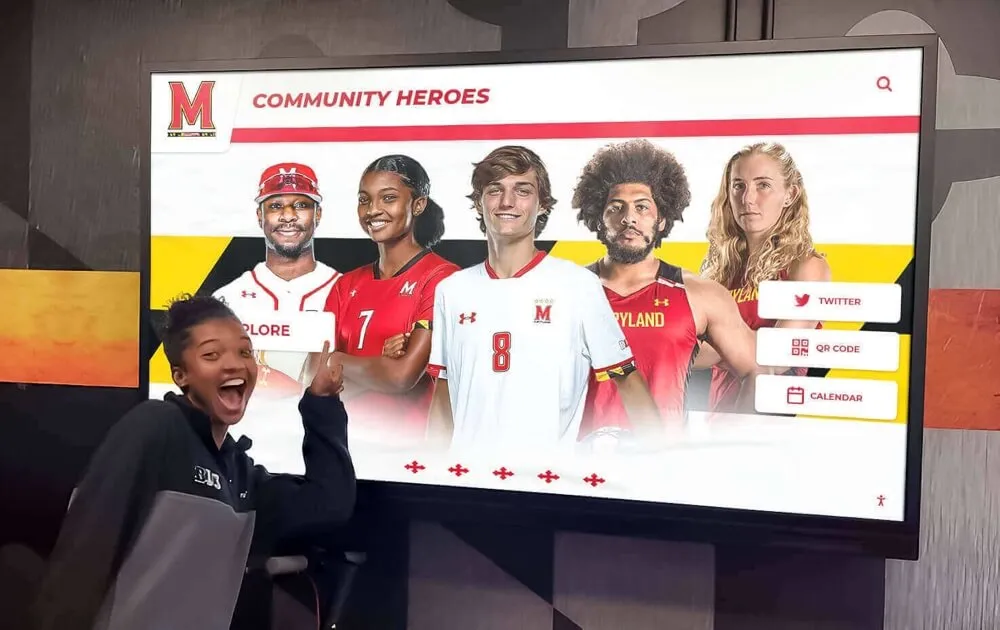
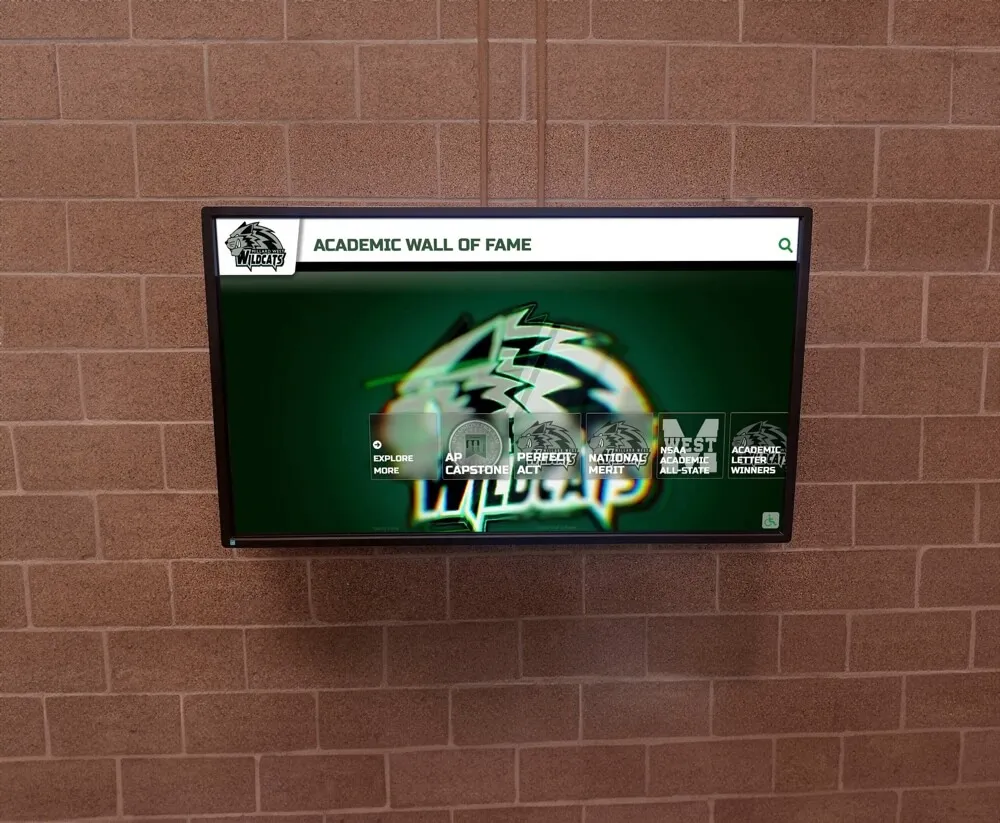
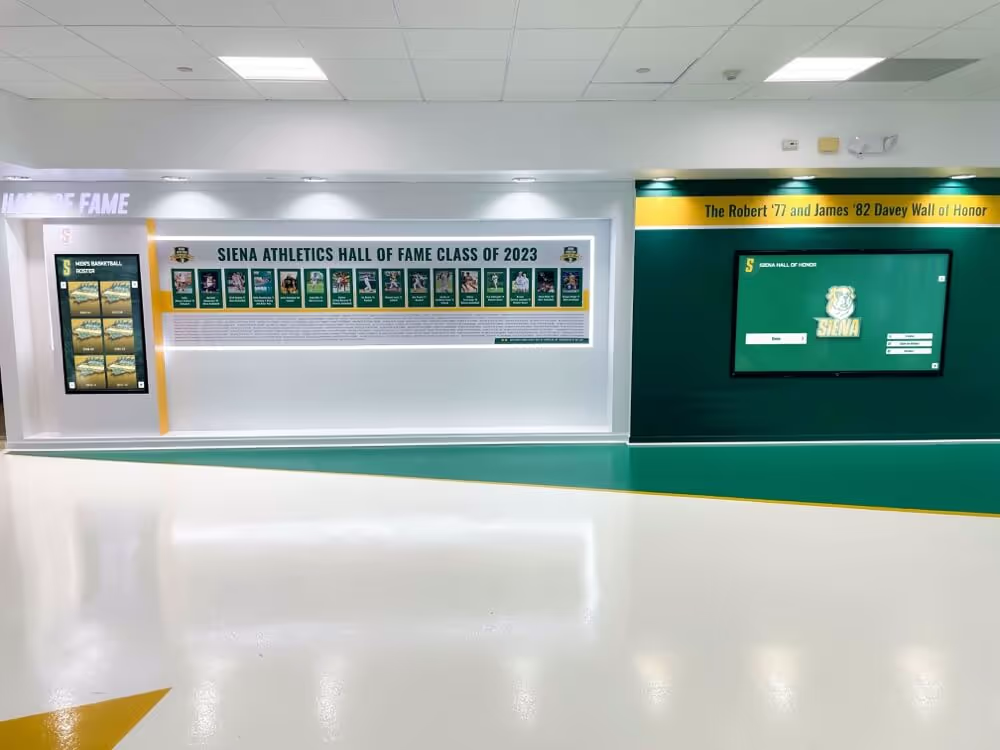
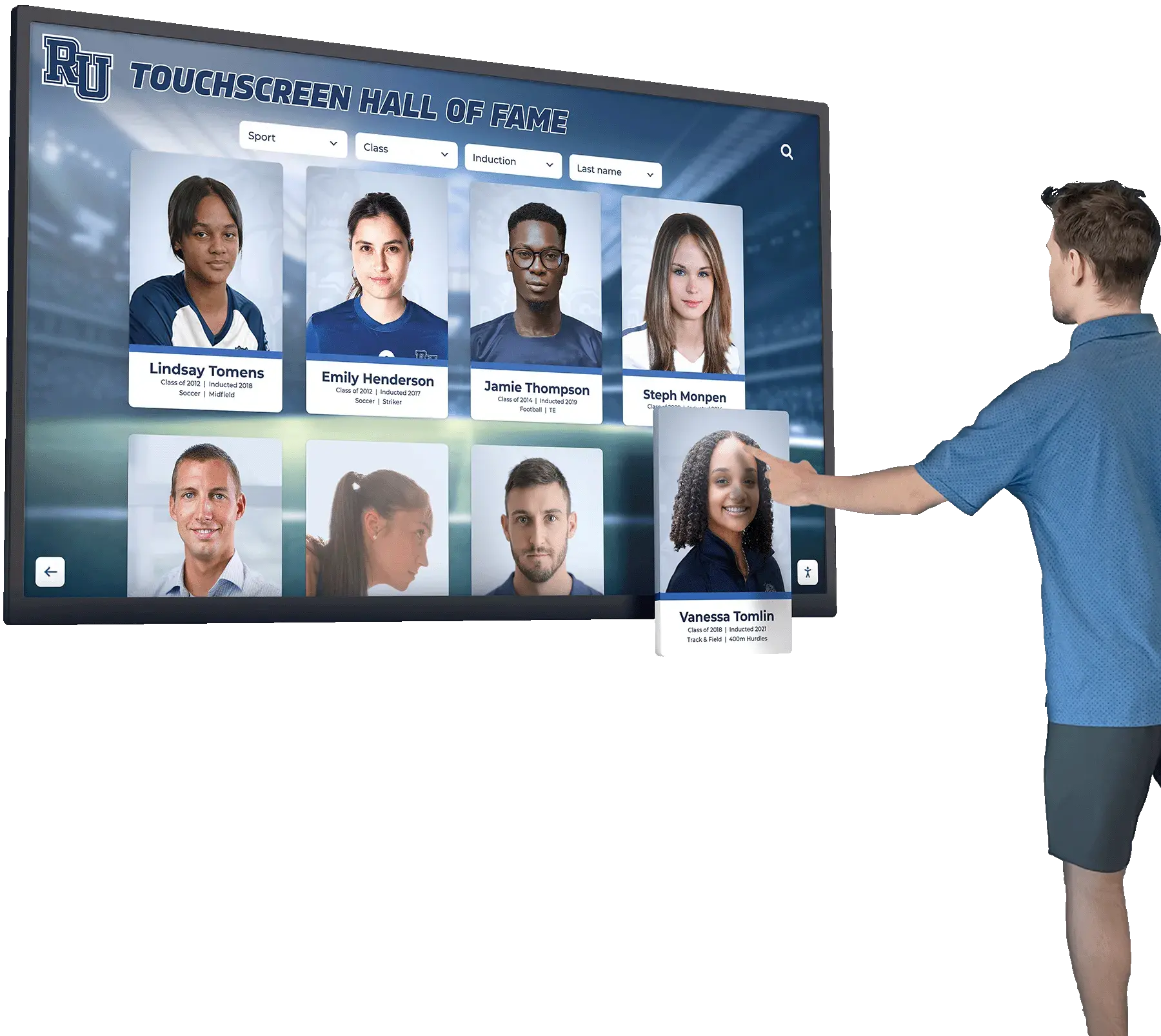
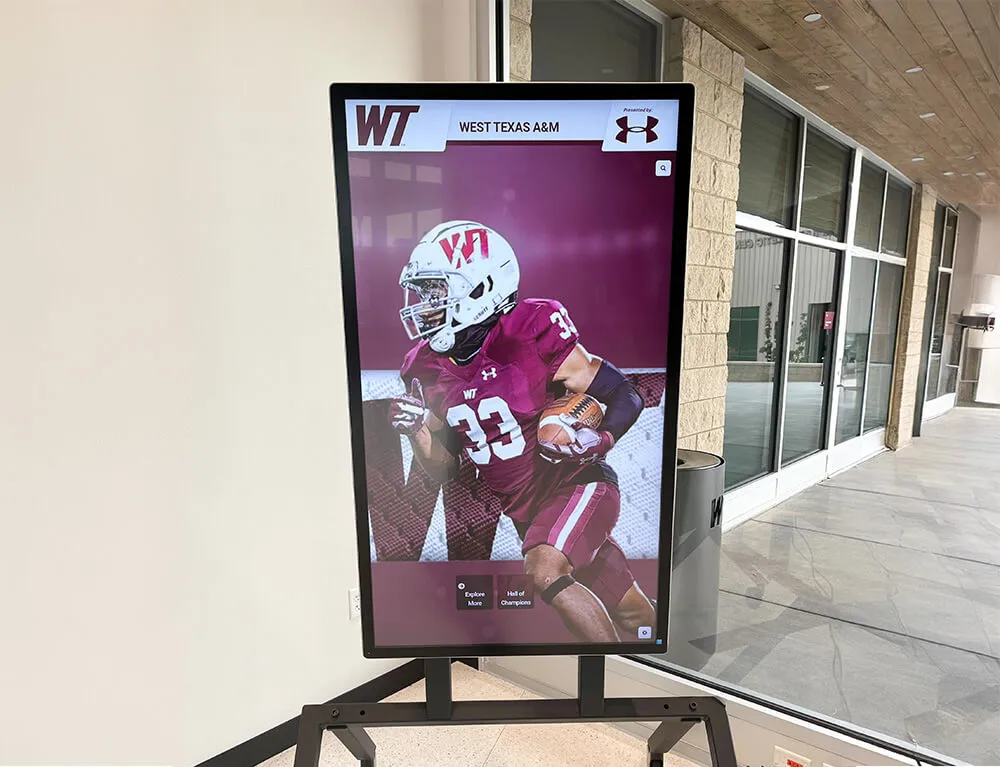
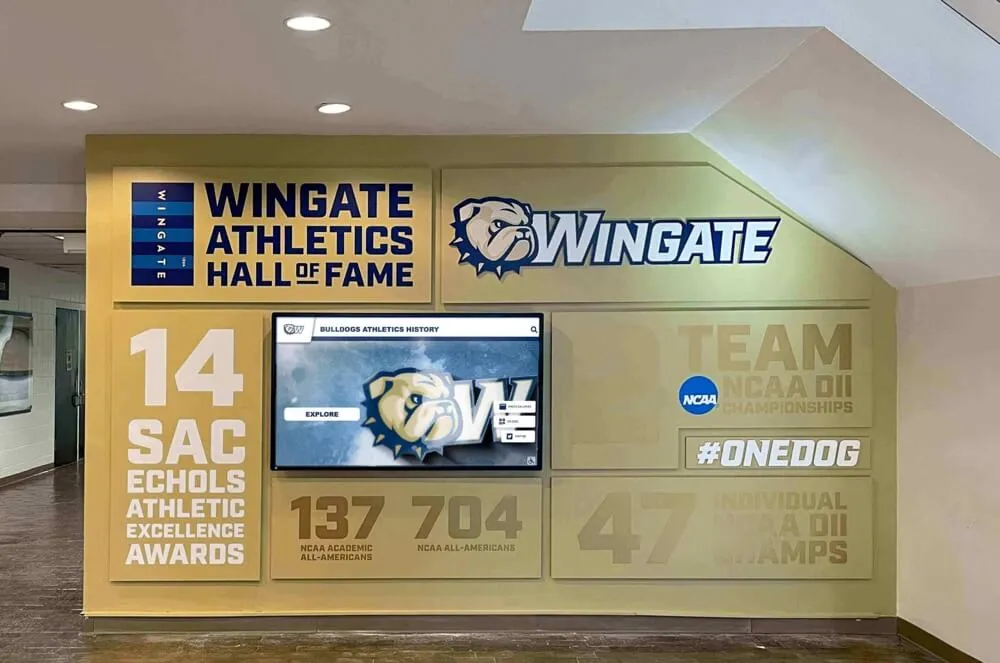
A searchable award winner database powers web, mobile, and touchscreen displays simultaneously — one source of truth, multiple display surfaces
Database Organization Strategies
How a school structures its award winner database determines how useful it is over time. Three primary organizational strategies each have distinct strengths depending on the school’s display goals and staff workflows.
Organization by Sport and Season
The most intuitive structure for athletic directors: records grouped first by sport, then by season within each sport. This structure makes end-of-season updates straightforward—the staff member managing basketball adds this year’s awards to the basketball section without needing to understand the full database architecture.
Works best for: Programs updating records immediately after each season, athletic departments organized by sport coordinator, and displays that surface sport-specific recognition in dedicated spaces (the baseball hallway, the football trophy room).
Limitation: Cross-sport queries—“show all Student-Athlete of the Year recipients across all sports for the past decade”—require more work to assemble.
Organization by Academic Year
Grouping all records by academic year regardless of sport creates a natural archive structure that mirrors how schools think about time. The 2018–2019 folder contains every award given that year across every program.
Works best for: Annual recognition programs, yearbook integration, end-of-year ceremony planning, and schools building retrospective displays for milestones like a program’s twenty-fifth anniversary.
Limitation: Finding a specific athlete’s complete award history requires searching across multiple year folders rather than pulling a single record.
Organization by Award Category
A category-first structure—grouping all MVP awards together, all Hall of Fame inductees together, all academic achievement honorees together—optimizes for the most common alumni recognition and display use case: “who has ever won this specific award?”
Works best for: Perpetual recognition displays (the plaque that lists every MVP since 1976), alumni outreach programs targeting specific achievers, and advancement teams using award history for giving program segmentation.
Limitation: End-of-season updates require distributing one season’s worth of awards across multiple category folders, which introduces more opportunity for incomplete data entry.
Hybrid Approach: Primary Index with Cross-Reference Tags
Most schools with mature recognition programs use a hybrid: a primary organizational structure (often by sport and year) with standardized tags that enable category-based queries. Modern database tools—even a well-structured spreadsheet—handle cross-referencing through consistent naming conventions without requiring a dedicated database administrator.
For schools planning major reunions or milestone events that require pulling comprehensive historical records, guidance on high school reunion planning and recognition traditions covers how award databases support outreach and programming.
Maintaining Database Integrity Year Over Year
A database that’s accurate for the first three years and then drifts into inconsistency is worse than no database at all—it creates confident errors instead of obvious gaps. Maintenance protocols matter as much as initial structure.
The End-of-Season Update Protocol
The most reliable way to maintain an award winner database is to build updates into the existing end-of-season workflow rather than treating database entry as a separate administrative task.
Recommended protocol:
- Award selections finalized by coach or committee → award list submitted on standardized form
- Athletic department reviews form for completeness before banquet
- Awards presented at banquet
- Database entry completed within two weeks of banquet (before institutional memory fades)
- Data verified against banquet program or coach sign-off form
- Display eligibility flags set and forwarded to communications staff
The two-week window is critical. Award decisions made in April are reliably remembered through May. By September, coaches working with a new roster have often lost details about the previous spring’s honorees.
Staff Transition Procedures
Staff turnover is the single greatest threat to award winner database continuity. When an athletic director retires, an assistant coach moves on, or a facilities manager switches schools, the informal knowledge they carry about where records live—and how to interpret them—goes with them.
Schools that protect against this threat treat their award winner database as institutional infrastructure rather than personal workflow. This means:
- Database lives in an institutional account (Google Workspace, Microsoft 365, or dedicated platform), never a personal account
- At least two staff members have edit access at all times
- A written transition document explains the database structure, naming conventions, and update schedule
- Annual review confirms access credentials still work and backup copies exist
Annual Verification Process
Even well-maintained databases develop errors over time—typographical mistakes in names, incorrect graduation years, duplicate entries from different entry conventions. An annual verification pass, scheduled after the spring season concludes, catches accumulating errors before they propagate into permanent displays.
Annual verification checklist:
- New entries from all three seasons entered and complete
- Display eligibility flags current for new entries
- No duplicate entries from dual entry by different staff
- Name formatting consistent with institutional naming conventions
- Source documentation files attached or referenced for all new entries
- Backup copy created and stored separately from primary database
- Access credentials confirmed for all authorized staff
From Database to Display: Making Records Visible
An award winner database that lives in a spreadsheet folder serves administration. A database connected to visible displays serves the community—athletes, families, alumni, and prospective students who walk through a school’s facilities every day.
The connection between database and display determines how quickly recognition reaches the walls where it belongs.
Static Displays: Trophy Cases and Plaque Walls
Traditional trophy cases and physical plaque walls require a manual bridge between the database and the physical installation. The athletic department prints updated award lists from the database, orders new plaques or name plates, coordinates installation, and verifies the installed display matches the database record.
For programs with hundreds of youth sports awards accumulated over decades, maintaining accurate physical displays becomes increasingly difficult as space fills. The database may be accurate while the wall display falls years behind on updates.
Digital Record Boards
Digital record boards—commercial displays showing season-by-season statistics, records, and award winners—accept direct database input and update without physical fabrication. An athletic director with edit access can add this year’s award winners to a digital board on the afternoon of the banquet, and the display reflects the update within hours.
The best hall of fame tools for digital athletics displays provide structured platforms specifically designed for the award winner database-to-display workflow, eliminating the manual transcription step that introduces errors in traditional plaque-based systems.
Touchscreen Kiosk Displays
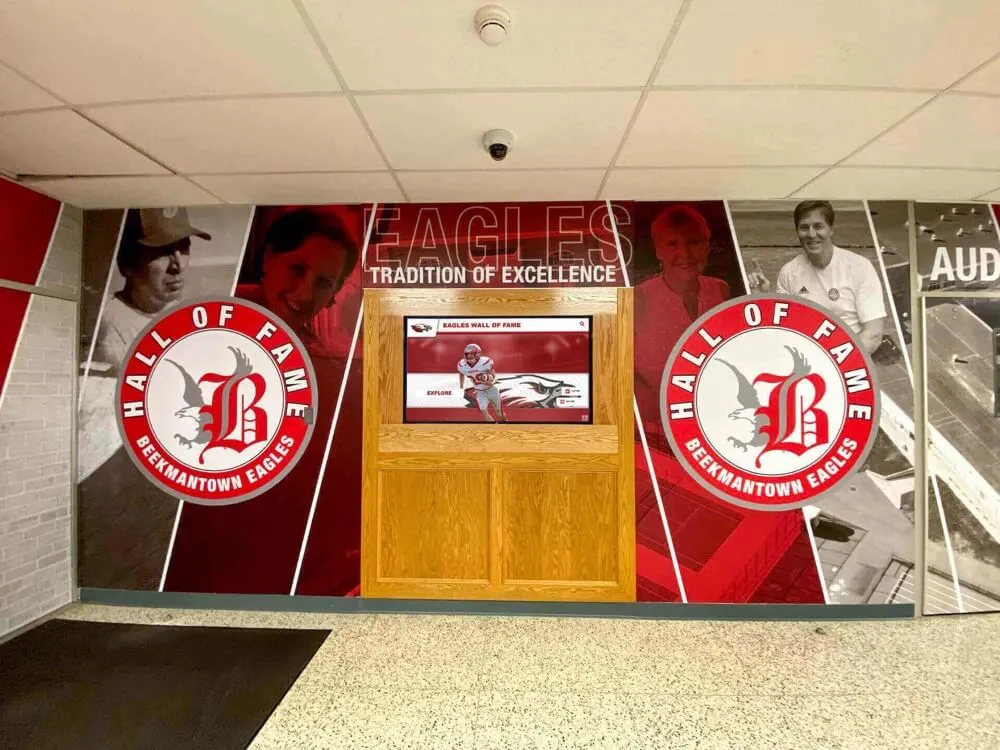
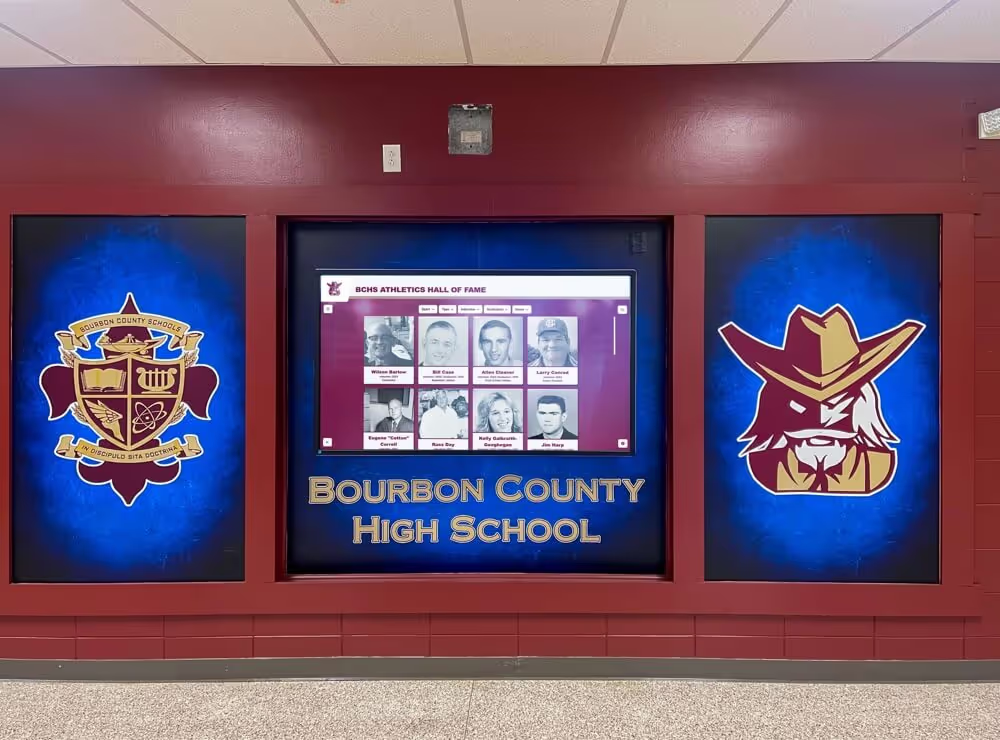
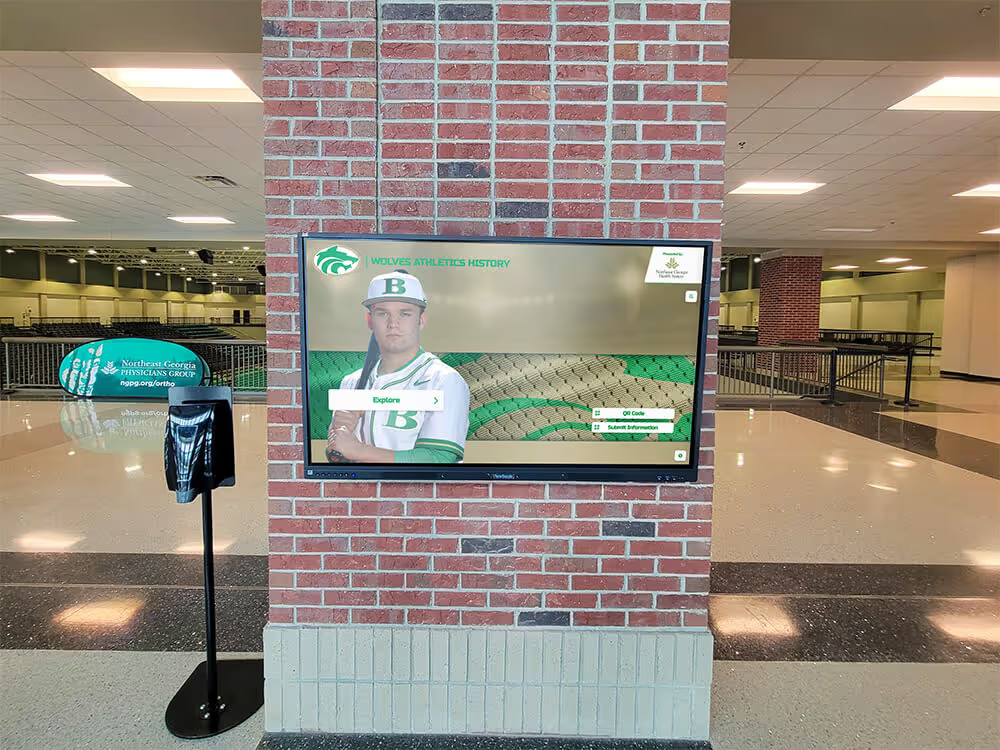
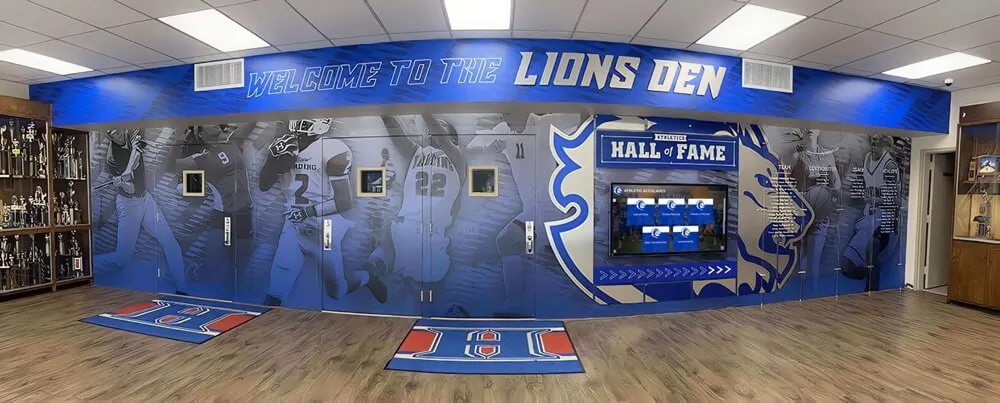
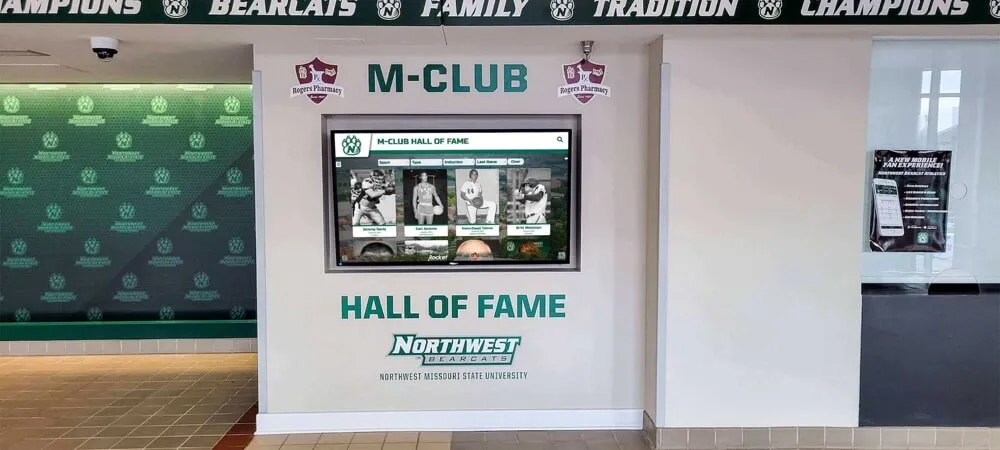
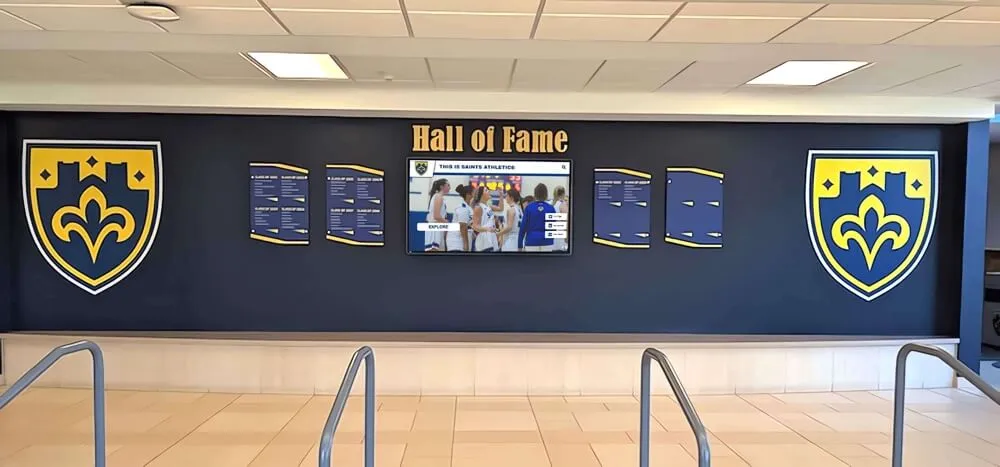
Touchscreen kiosk systems represent the most feature-rich connection between award databases and public-facing displays. Rather than showing a static list, interactive kiosks allow visitors to search by athlete name, filter by sport or year, view photos, and navigate award histories in ways that surface decades of recognition history without requiring a complete wall renovation.
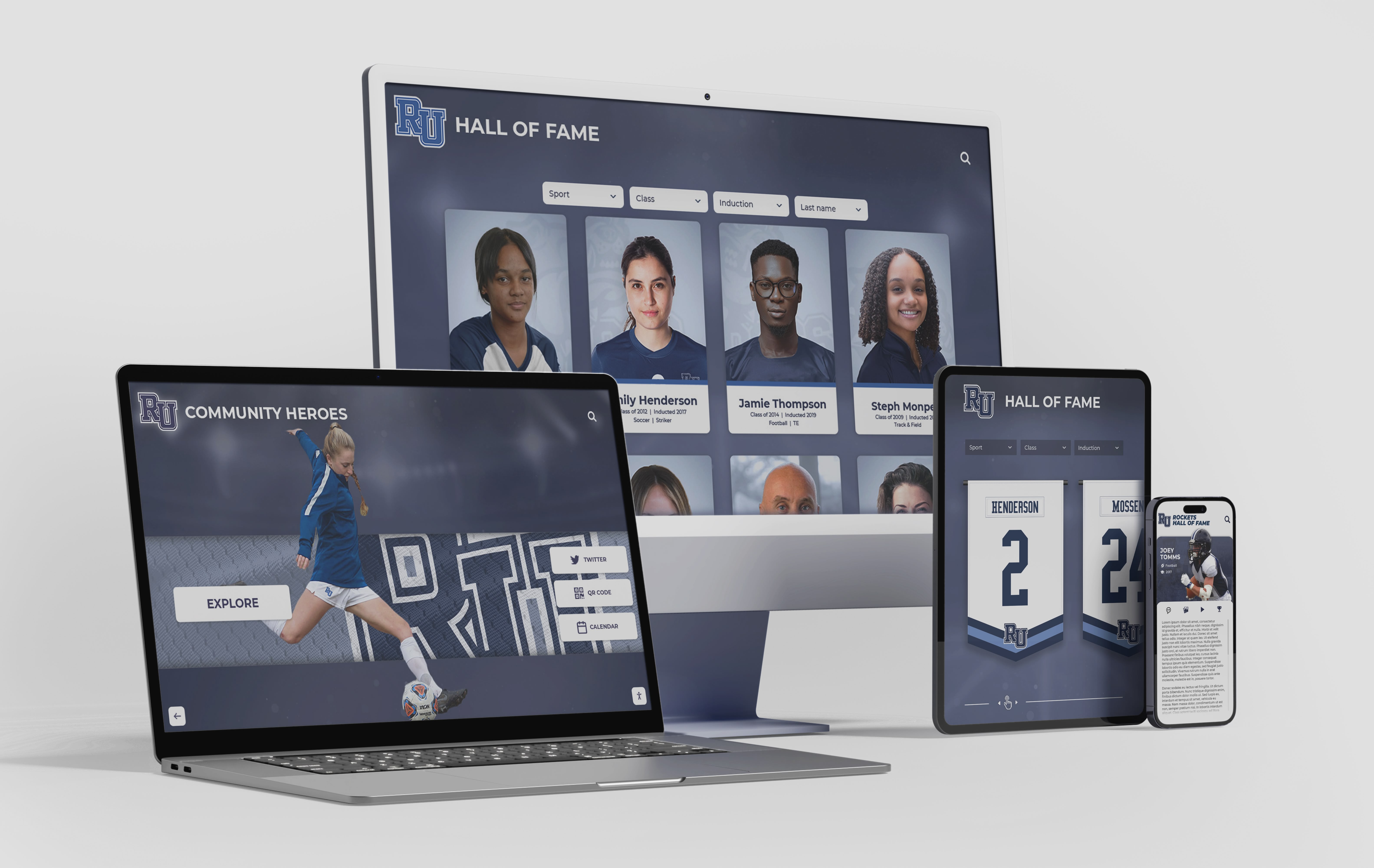
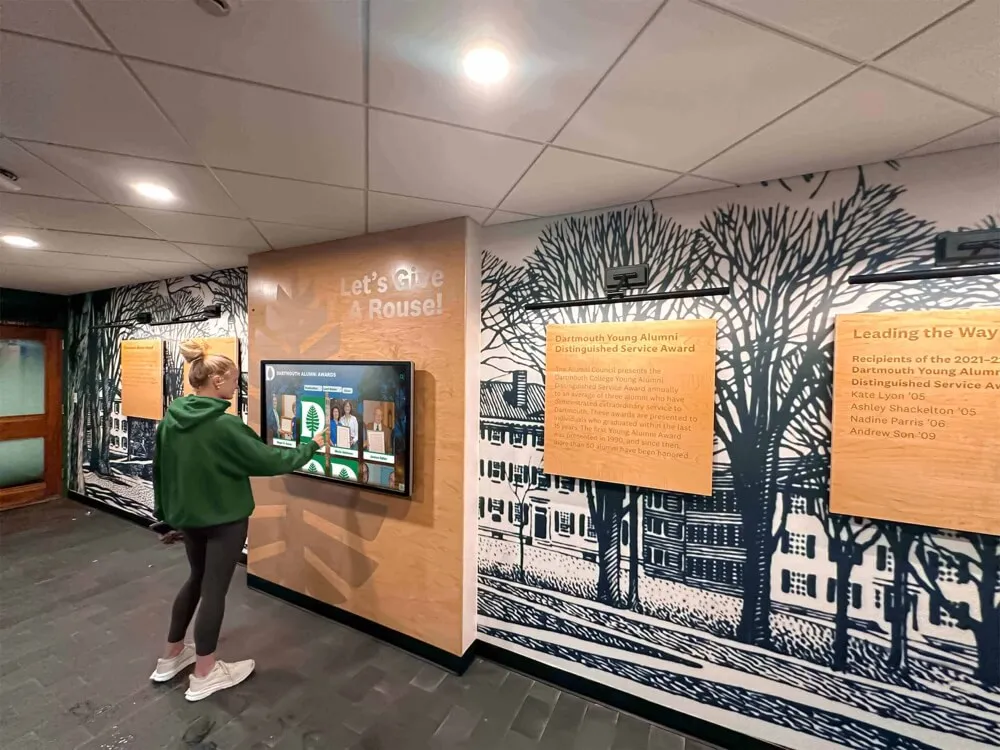
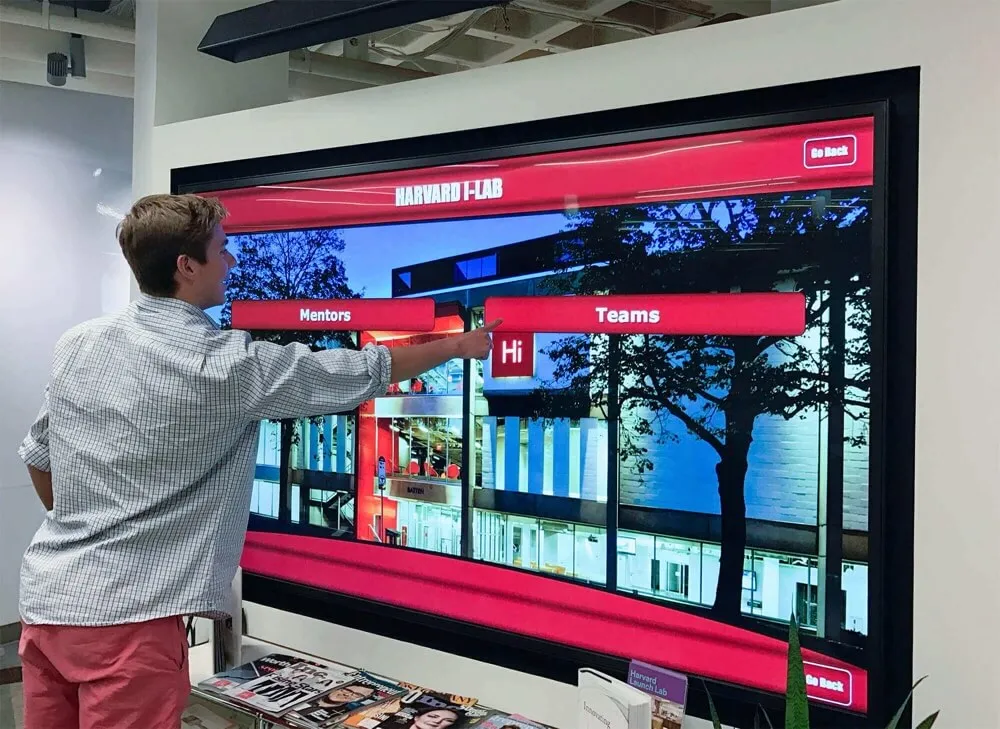
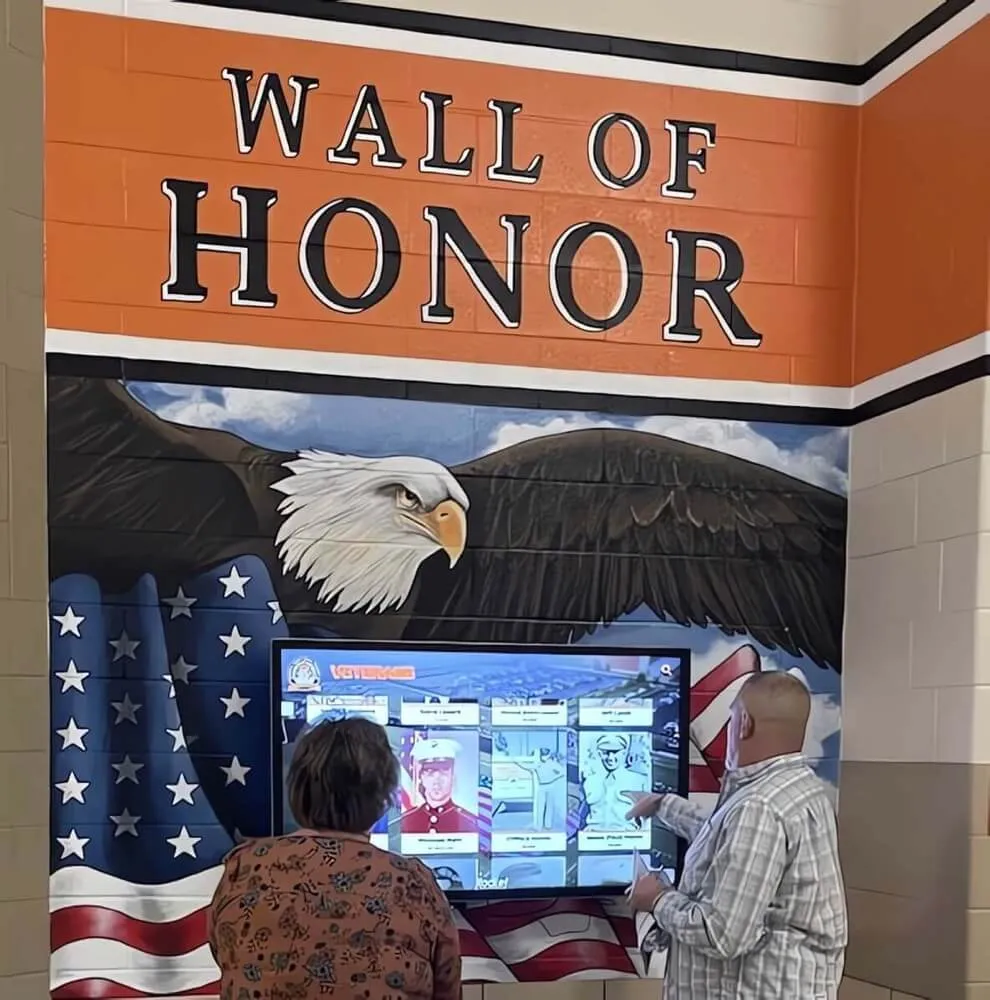
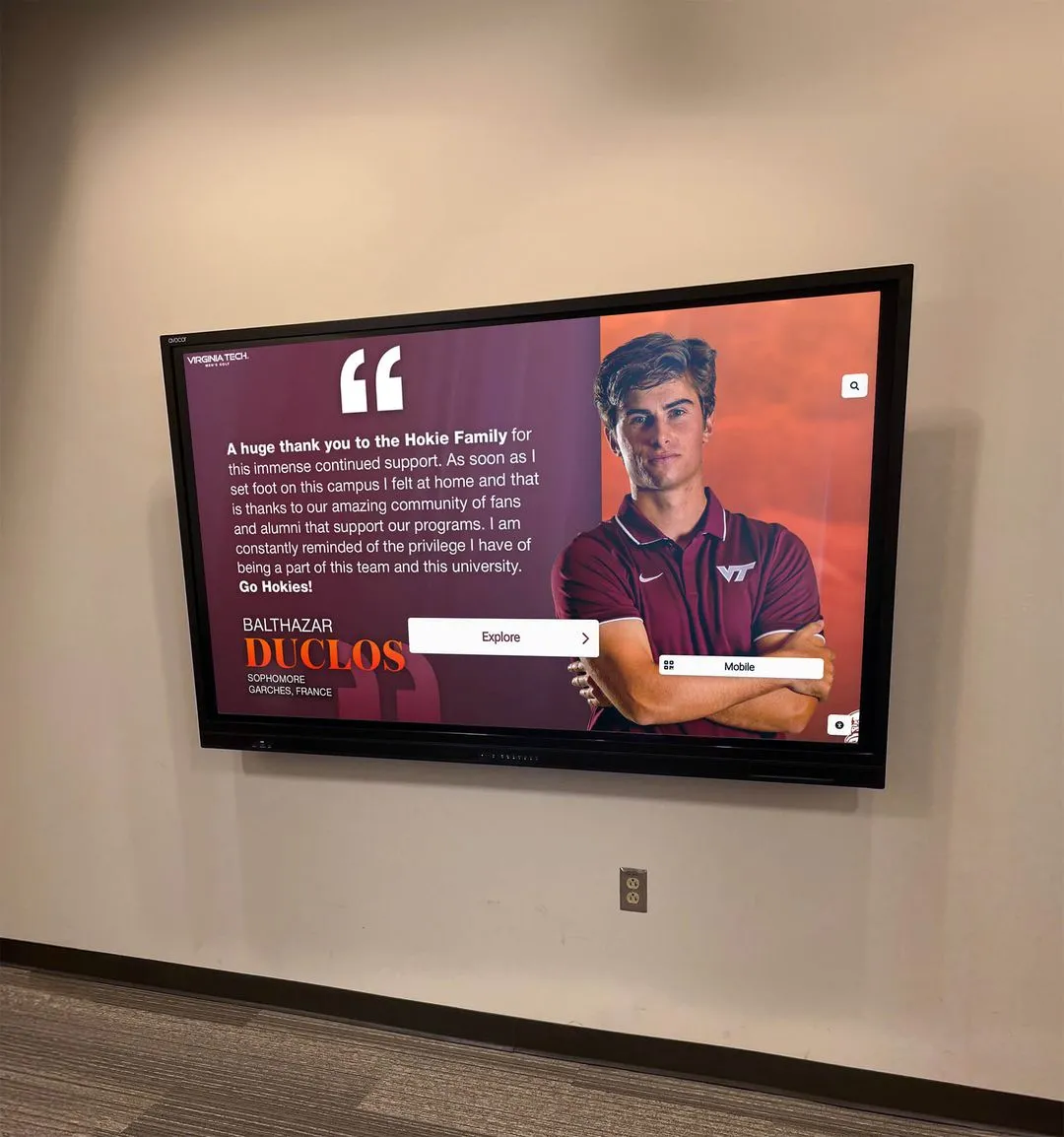
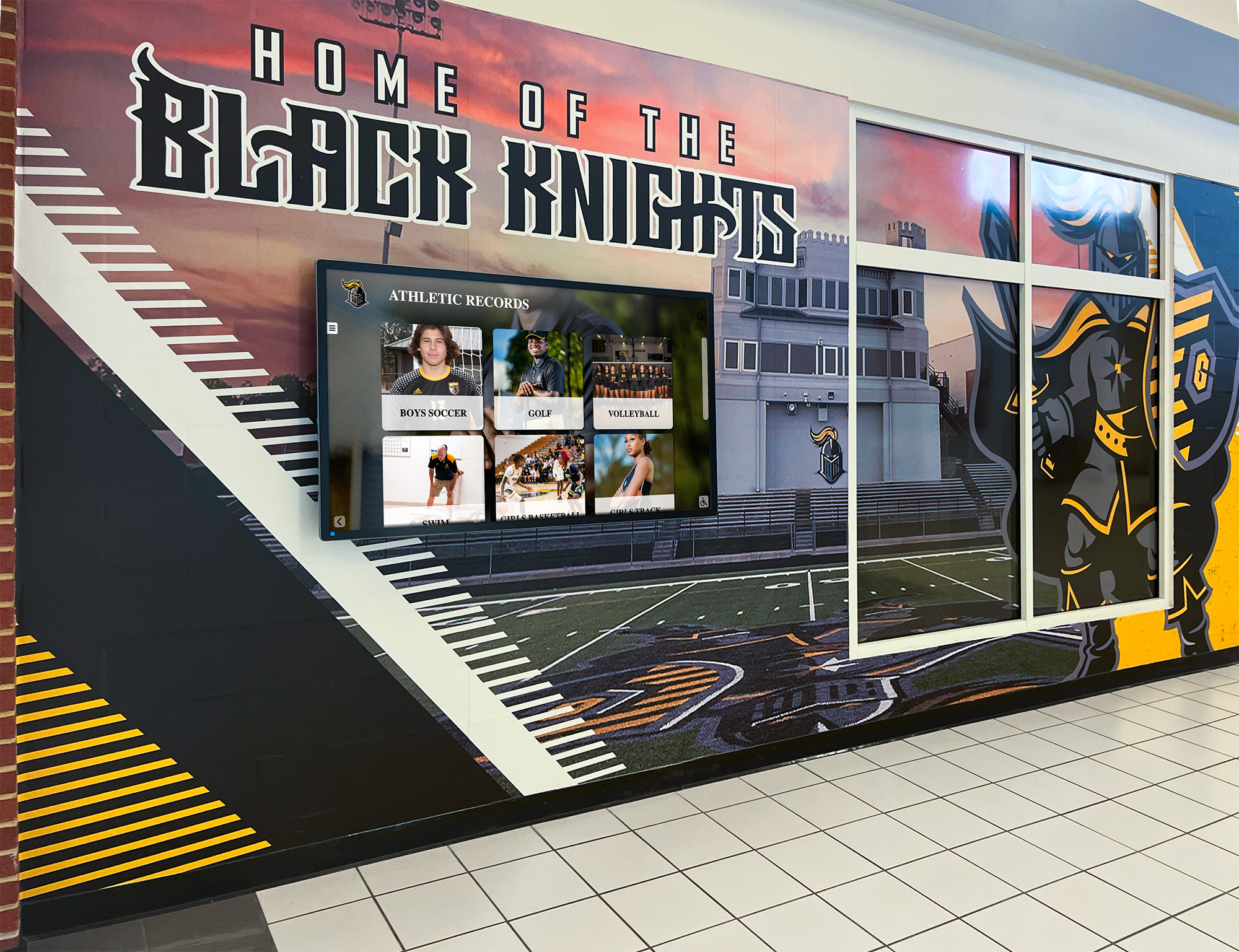
Touchscreen and web-based displays make decades of award history searchable rather than simply archived — visitors find the recognition they're looking for in seconds
For programs exploring interactive recognition environments, alumni event ideas that connect physical spaces to digital histories demonstrate how touchscreen displays create engagement opportunities that static plaque walls cannot replicate.
How Unified Digital Platforms Change the Database Equation
The most significant shift in athletic recognition management over the past decade has been the emergence of platforms that combine database functionality with display output—eliminating the gap between record and recognition.
Traditional workflow: Athletic director maintains spreadsheet → manually orders plaques → waits six to eight weeks for fabrication → installs plaques → display may be one to two years behind current honorees.
Platform-based workflow: Athletic director enters award into platform → platform automatically generates display-ready content → display updates within hours → database and display stay synchronized with zero fabrication lag.
Platforms like Rocket Alumni Solutions are built around this unified model. A school’s entire award winner database—historical and current—lives in a single system that simultaneously powers trophy room touchscreen kiosks, hallway digital screens, web-based alumni databases, and printed program exports. When a new athlete wins the Leadership Award this May, the same entry that satisfies the administrative record requirement also populates the hallway display, the alumni website, and the year-end report.
The practical benefit for schools managing long recognition histories: records entered once are accessible everywhere. There’s no version drift between the spreadsheet the athletic director maintains and the display the advancement team shows donors. For programs that want to see how unified platforms handle their specific recognition history and display goals, requesting a demonstration of Rocket Alumni Solutions shows the full system in the context of comparable school programs.
For additional examples of how digital platforms handle awards across different program types and scales, a review of hall of fame tools for athletics, donors, arts, and history illustrates the range of display configurations these systems support.
Building a Backfill Plan for Historical Records
Many schools decide to build a proper award winner database after years of informal record-keeping—which means the first task isn’t ongoing maintenance but historical reconstruction.
Practical backfill sources, roughly in order of reliability:
- Physical plaque walls and trophy cases (inscriptions are primary sources)
- Printed banquet programs from the athletic department archive
- School yearbooks (often the only surviving record for some award years)
- Local newspaper archives covering end-of-season sports coverage
- Retired coach and athletic director interviews
- Alumni outreach through social networks and booster organizations
Backfill projects typically uncover inconsistencies—years where award names changed, sports that have since been discontinued, athletes who appear in some records but not others. Documenting uncertainty is better than fabricating completeness: a field noting “record unverified, probable based on yearbook reference” is more honest and more useful than a confident but potentially incorrect entry.
A realistic backfill timeline for a school with thirty or more years of recognition history: expect three to six months of part-time staff work to reach an 80 percent complete database. Full completeness may never be achievable, and that’s acceptable—an 80 percent complete database that’s 100 percent accurate for what it contains is more valuable than a 100 percent complete database with widespread unverified entries.
For programs connecting their historical records to ongoing youth sports awards traditions, consistent award naming conventions between historical and current records make the database significantly more useful for long-range recognition programs.
FAQ: Award Winner Database for Schools
What is an award winner database for schools?
An award winner database for schools is a structured record system documenting every athletic honor given across all sports programs—recipient name, graduation year, award category, sport, and season. It serves as the authoritative institutional record that powers physical displays, digital boards, touchscreen kiosks, alumni websites, and advancement outreach programs.
What fields should an athletic award winner database include?
At minimum: recipient full legal name, graduation year, student ID, standardized award name, award category, sport, season and academic year, award date, presenting coach or committee name, display eligibility flag, photo status, and source documentation. Fields tracking who entered the record and when it was last verified are essential for long-term accuracy.
How do schools keep award records accurate after staff turnover?
Store the database in an institutional account accessible by at least two staff members, document the structure and naming conventions in a written transition guide, and schedule an annual verification pass each spring. Treating the award database as institutional infrastructure—not personal workflow—is the practice that survives turnover reliably.
How do you connect an award winner database to a display?
Traditional plaque walls require manual ordering and installation from database exports. Digital record boards accept direct input. Unified platforms like Rocket Alumni Solutions synchronize database entries to all display surfaces automatically—touchscreens, digital walls, and web-based alumni databases—with no fabrication lag.
How long does backfilling a historical database take?
Three to six months of part-time staff work typically reaches 80 percent completeness for programs with thirty or more years of history. Primary sources include plaque inscriptions, banquet programs, yearbooks, and newspaper archives. Document uncertainty rather than guessing—an accurate partial database is more valuable than a complete one with unverified entries.
Build Recognition Records That Last
The schools with the most compelling athletic recognition environments share one characteristic: they treat award winner data as permanent institutional infrastructure from the very first entry. Trophies get dusty, plaques get moved to storage, paper programs decompose—but a well-maintained database stays complete, stays accurate, and connects every honoree from this season back to the first athlete who won that award forty years ago.
For athletic departments ready to unify their award winner database with the displays that make recognition visible every day, Rocket Alumni Solutions connects historical records, current honorees, and physical or digital display surfaces in a single platform—so the work of building a complete database pays dividends on every wall in your facility.