



Awards high school students can win span far beyond the honor roll and athlete of the year trophies most people envision. Today’s high schools recognize achievement across forty or more distinct categories, celebrating everything from academic excellence and athletic performance to community service, artistic talent, leadership development, and character growth. Understanding the full spectrum of available recognition helps students identify opportunities matching their strengths while helping schools design comprehensive programs ensuring every deserving student receives acknowledgment.
Yet many students and families remain unaware of the breadth of recognition opportunities available during high school years. Beyond traditional academic honors, students can earn prestigious national awards that enhance college applications, subject-specific recognition highlighting specialized talents, improvement awards celebrating growth regardless of starting point, and character-based honors acknowledging contributions that transcend test scores. Schools implementing comprehensive recognition systems report higher student engagement, increased motivation across all achievement levels, and stronger school culture where diverse talents receive equal celebration.
This comprehensive guide explores forty distinct award categories high school students can win, organized by achievement type, including eligibility criteria, prestige levels, and strategic value for college admissions and beyond.
High school represents a critical period for achievement recognition that shapes student identity, motivation, and future opportunities. The awards students earn during these four years appear on college applications, scholarship submissions, and early résumés, creating documentation of accomplishments that extends far beyond graduation. More importantly, recognition during adolescence builds confidence, validates effort, and reinforces positive behaviors that become lifelong patterns.

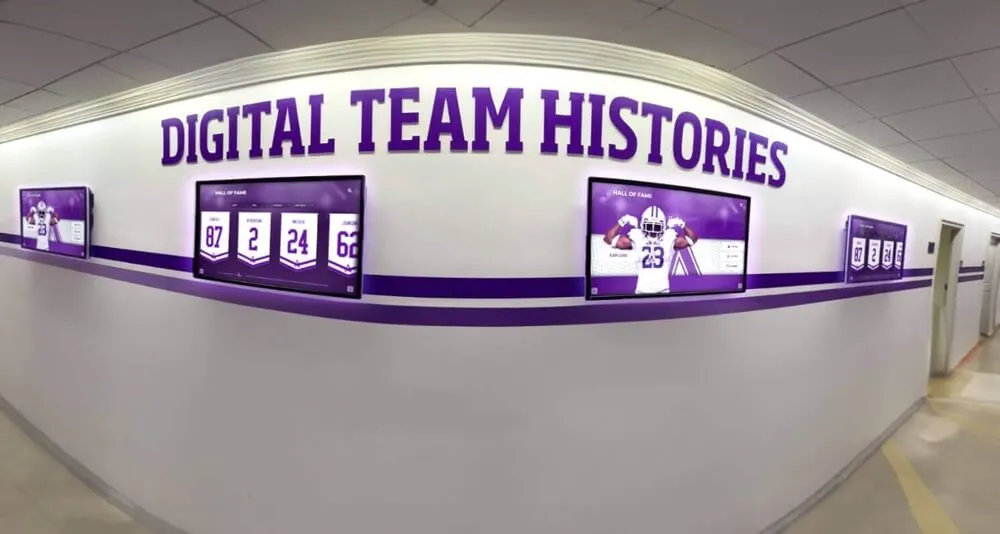
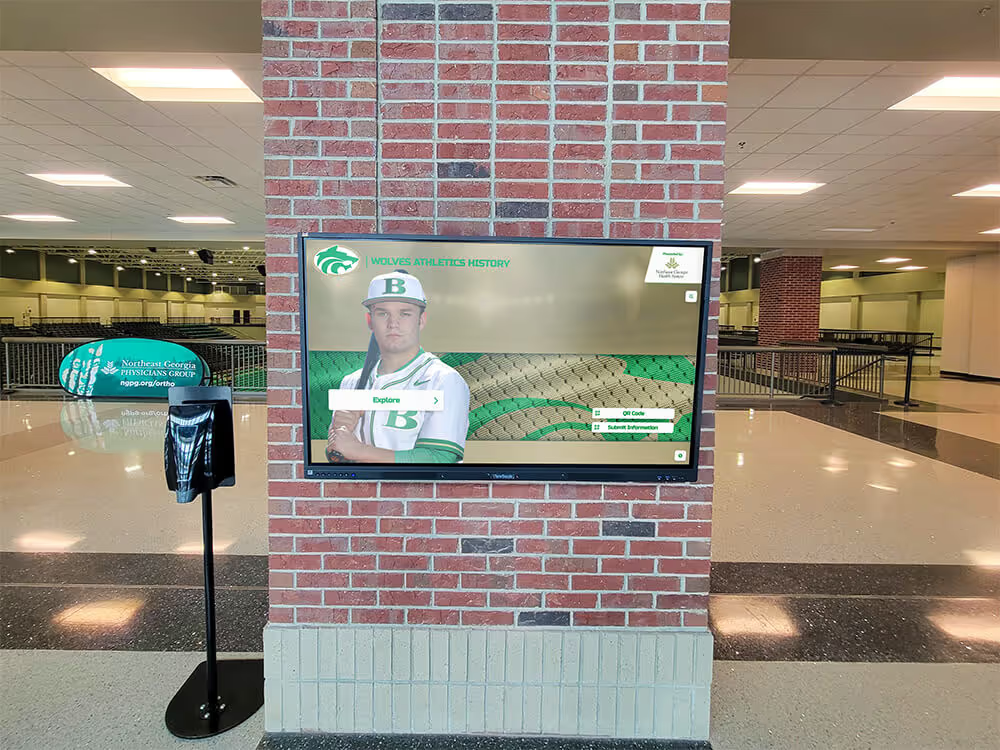
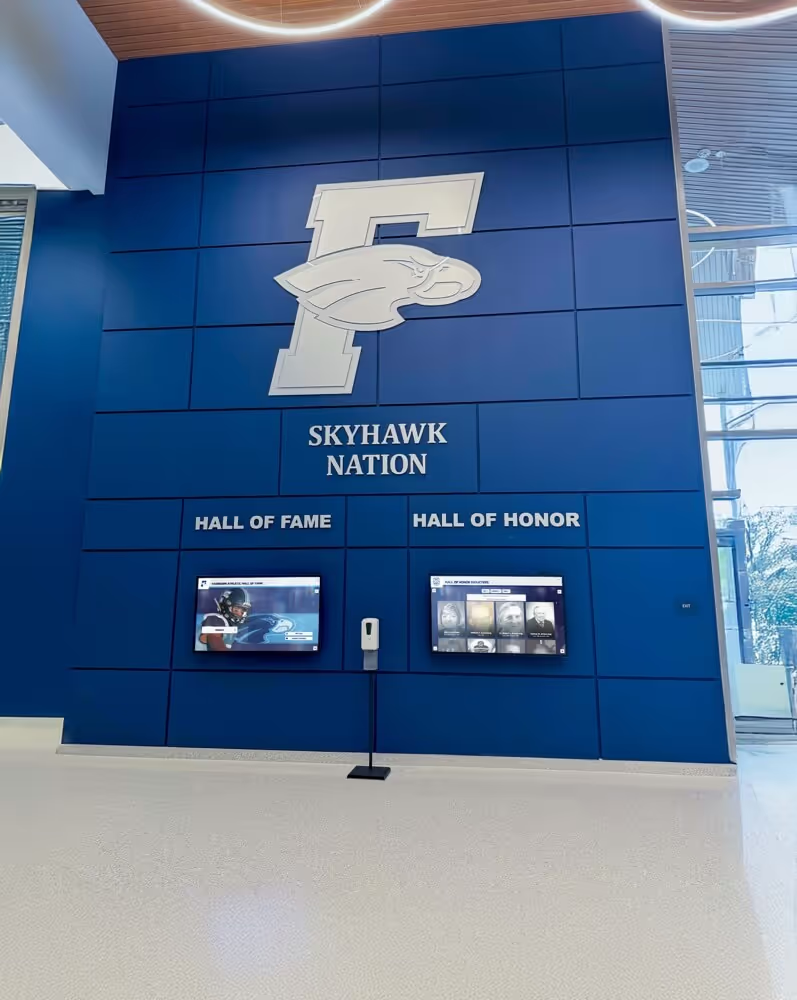
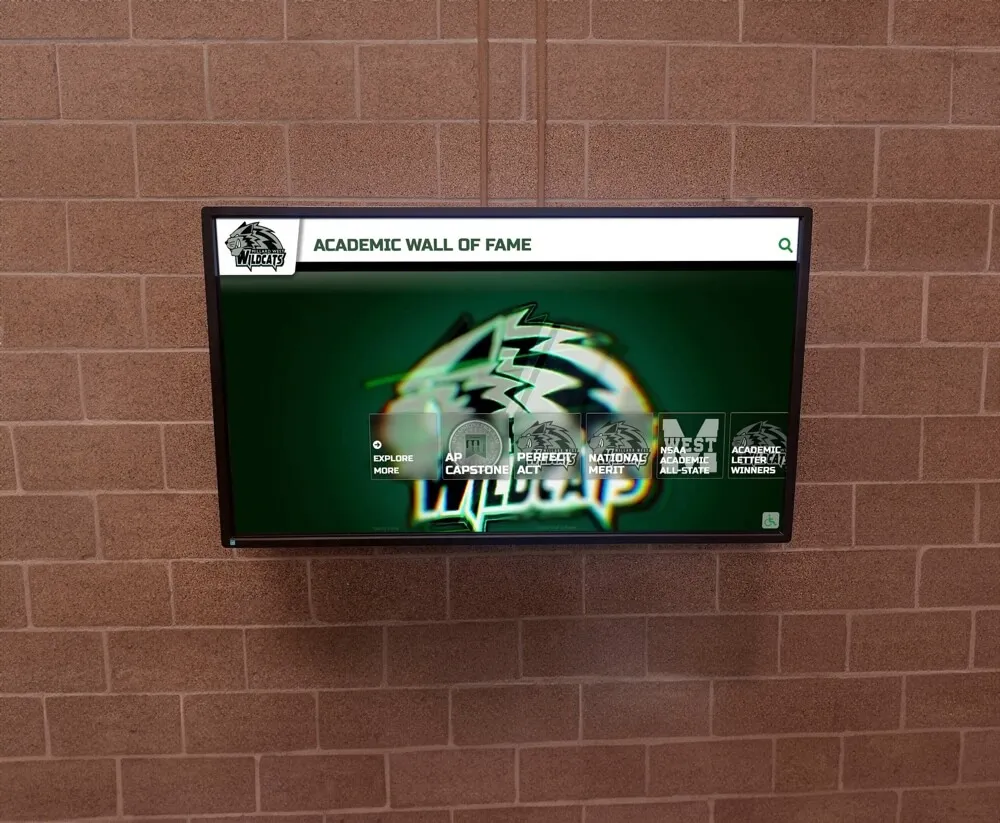
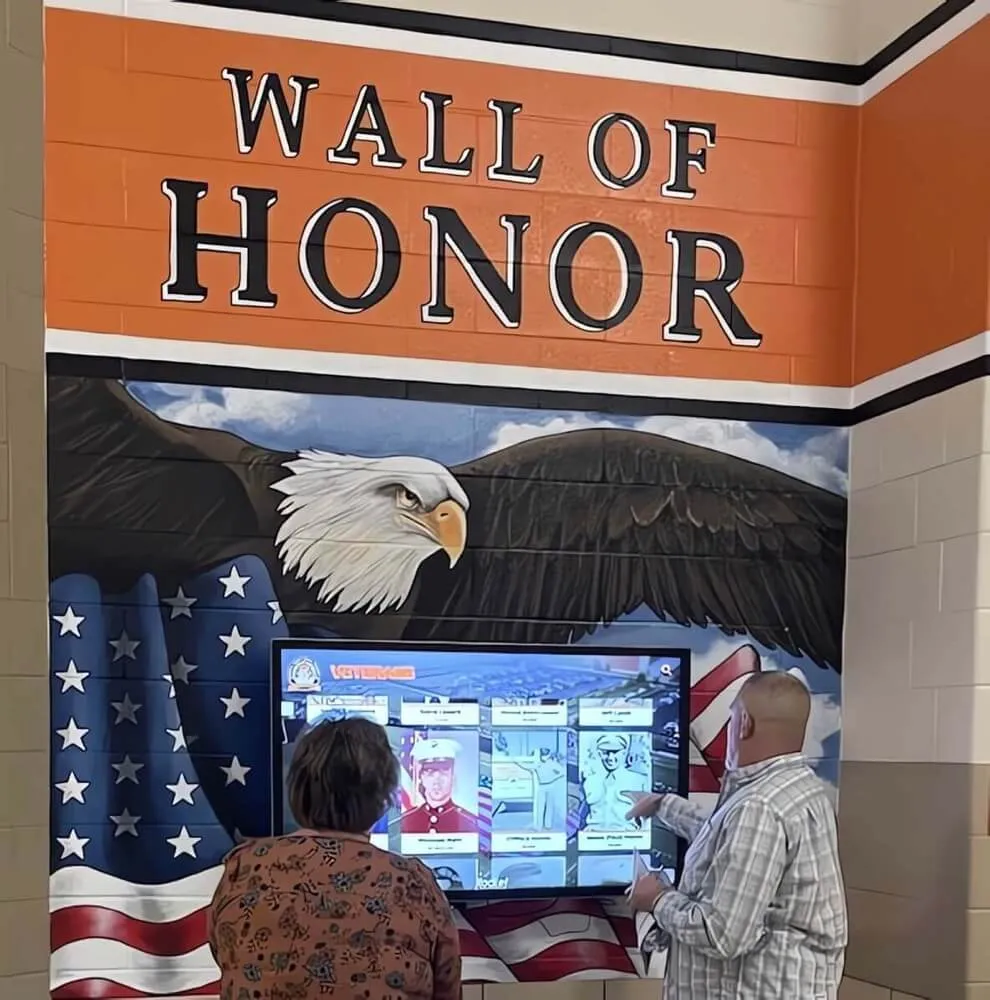
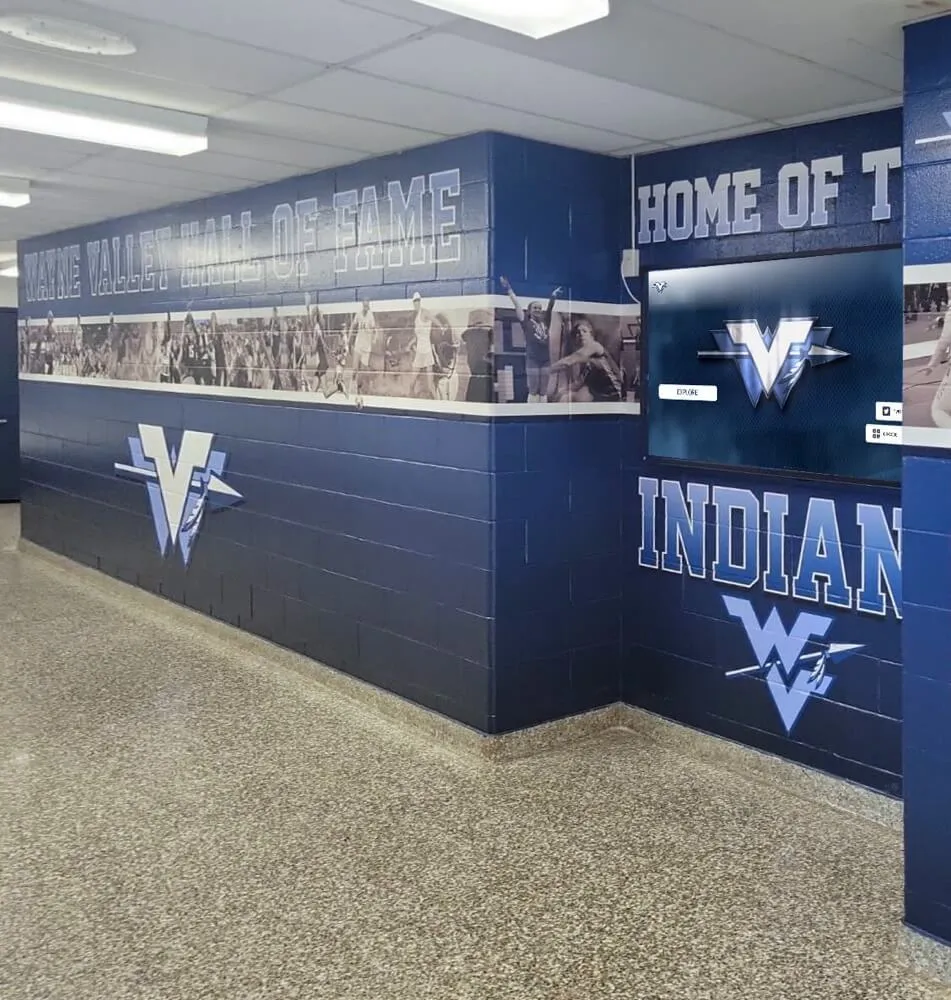
Modern recognition systems make diverse achievements visible, helping students discover the breadth of awards available
Understanding Award Categories and Their Value
Before exploring specific recognition types, understanding how awards function in the educational ecosystem helps students and schools maximize their impact.
Award Prestige Levels
Not all recognition carries equal weight for college admissions or long-term value:
Tier 1: National and International Recognition
- Highly selective awards with nationwide or global competition
- Significant college admissions impact, particularly at selective institutions
- Examples: National Merit Scholar, Presidential Scholar, International Olympiad medals
- Typical acceptance rates under 5% of applicants
Tier 2: State and Regional Recognition
- Competitive awards at state level or multi-state regions
- Meaningful college application enhancement, especially for in-state schools
- Examples: All-State academic team, state science fair winners, regional writing contests
- Acceptance rates typically 5-20% depending on competition
Tier 3: District and Local Recognition
- School district or county-level awards
- Demonstrates achievement within community context
- Examples: District honor band, county art show winners, local scholarship recipients
- Important for documenting consistent achievement patterns
Tier 4: School-Based Recognition
- Awards granted by individual schools
- Most accessible recognition tier with broadest participation
- Examples: honor roll, department awards, most improved recognition
- Foundation for building comprehensive achievement records
Schools should offer recognition across all tiers, ensuring opportunities exist for students at every achievement level while celebrating those reaching the highest distinction levels.
Strategic Award Value Beyond College Admissions
While college applications drive much award focus, recognition provides additional benefits:
Scholarship Opportunities Many awards come with direct financial scholarships, while others make students eligible for additional scholarship competitions. Local awards often provide more accessible pathways to financial support than highly competitive national programs.
Skill Validation Awards provide third-party verification of abilities, particularly valuable in subjective areas like writing, art, or leadership where objective measurement proves difficult.
Network Access Prestigious recognition programs often include alumni networks, mentorship opportunities, and connections to professionals in relevant fields, creating long-term career benefits.
Character Development The pursuit of recognition teaches goal-setting, persistence through challenges, and resilience following setbacks—skills more valuable than the awards themselves.
Learn more about comprehensive recognition in academic excellence awards and how schools recognize top students.
Academic Achievement Awards
Academic recognition represents the largest category of awards high school students can win, spanning general achievement, subject-specific excellence, and specialized academic competitions.
1. Valedictorian and Salutatorian
The most prestigious school-based academic awards recognize students with highest and second-highest grade point averages in their graduating class. Calculation methods vary by school, with some considering all four years while others focus on specific core courses.
Typical Requirements:
- Highest cumulative GPA in graduating class
- Minimum credit hour completion
- Enrollment since specific grade level at the school
- Character and citizenship standards

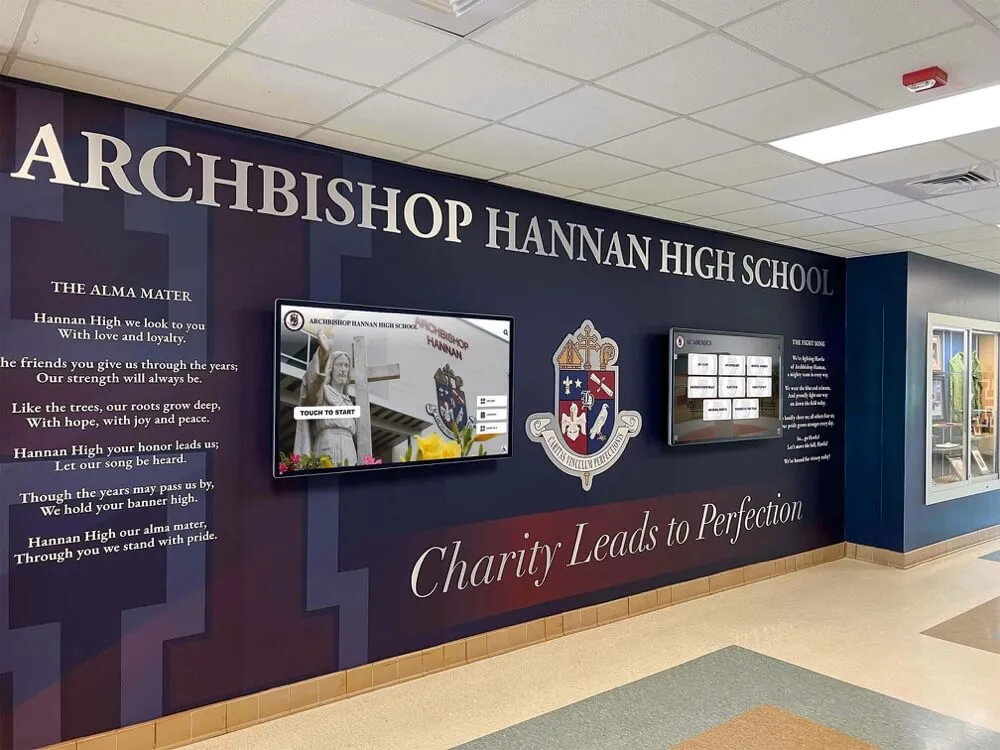
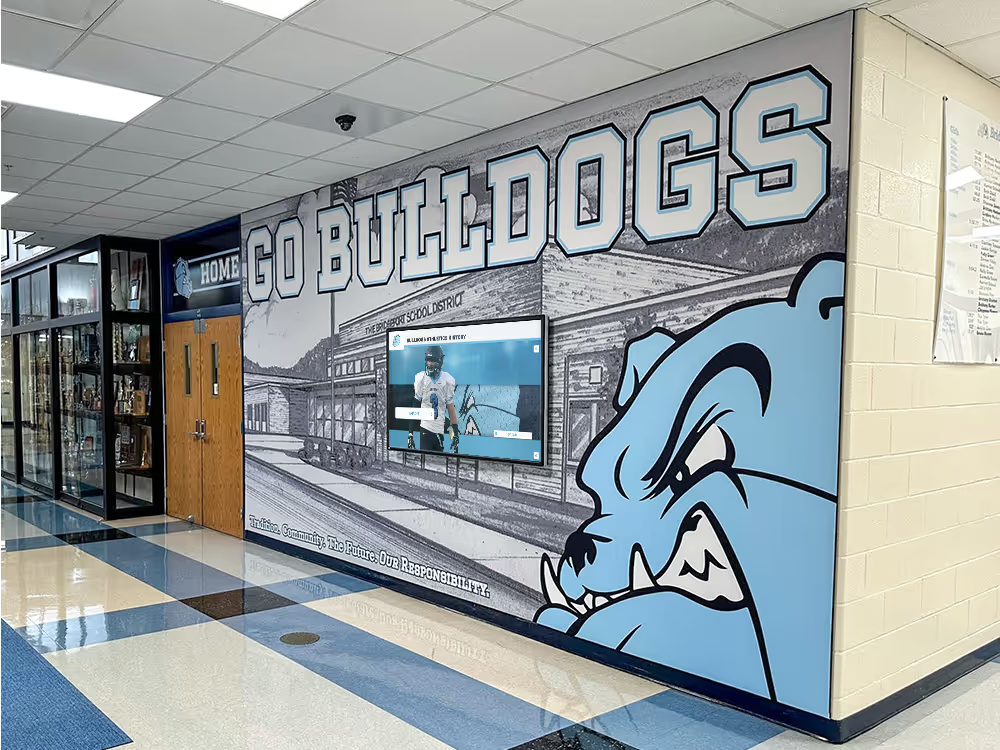
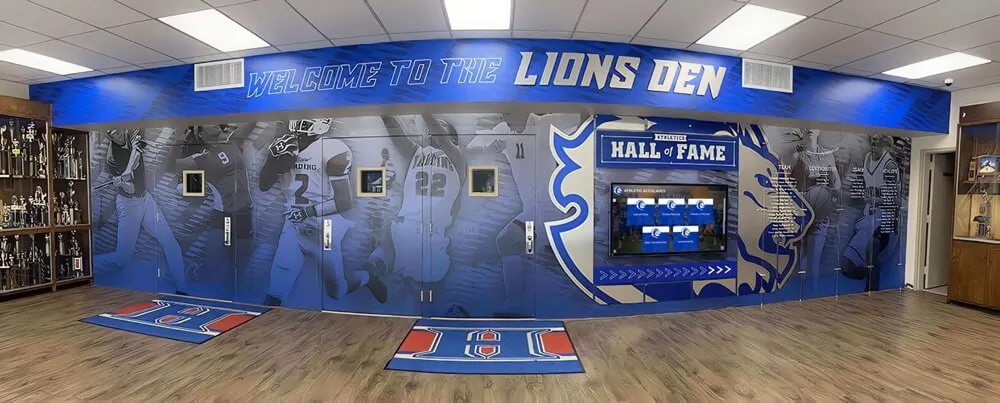
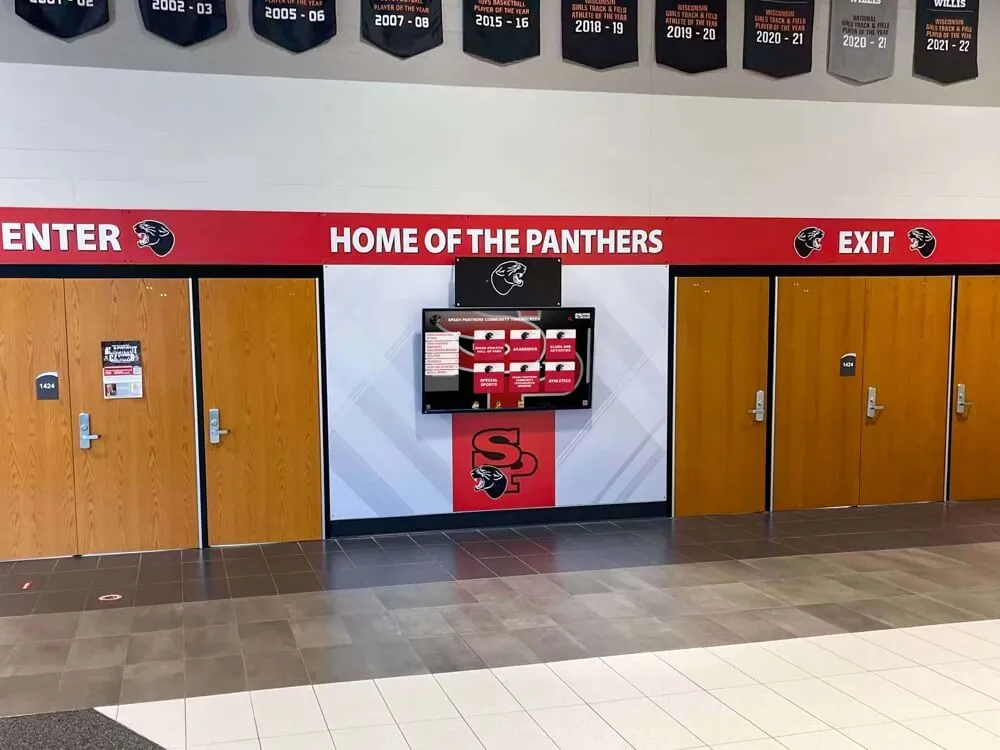
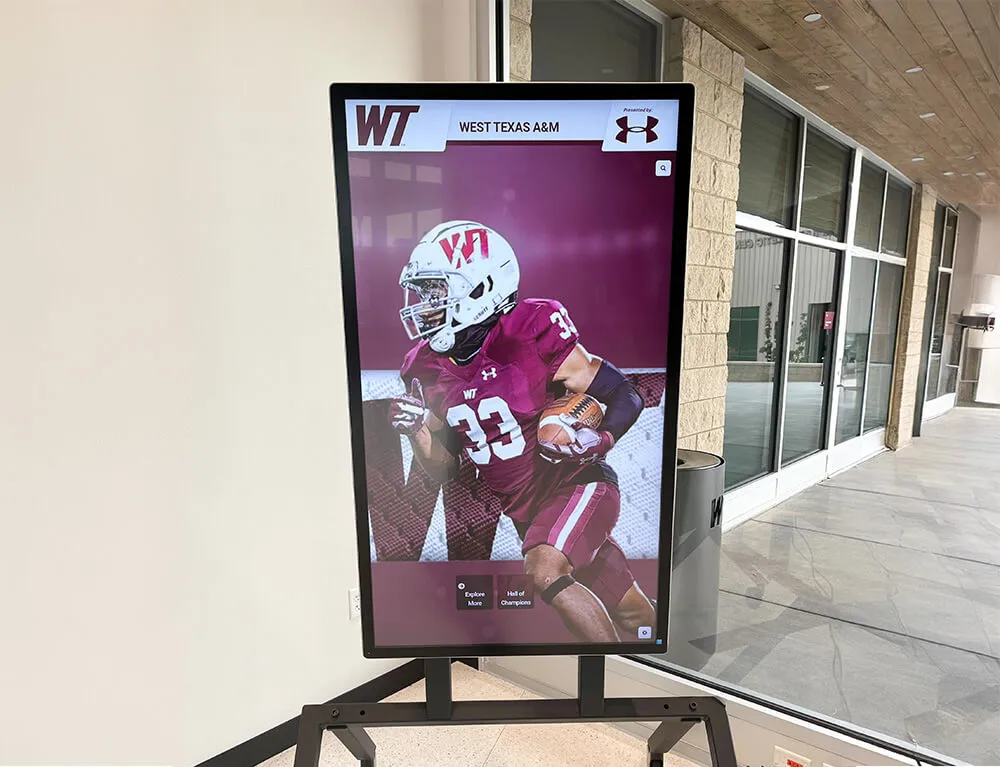
Comprehensive recognition systems showcase diverse academic achievements across all categories
2. National Merit Scholar
Among the most prestigious academic honors in the United States, National Merit recognition begins with PSAT/NMSQT scores taken during junior year. Approximately 50,000 students qualify for recognition annually, with about 7,500 earning finalist status and scholarship awards.
Recognition Levels:
- Commended Students (top ~3% nationally)
- Semifinalists (top ~1% within each state)
- Finalists (~15,000 students)
- Scholars (~7,500 scholarship recipients)
This recognition significantly enhances college applications and often comes with substantial scholarship offers from universities specifically recruiting National Merit Scholars.
3. Presidential Scholar
The U.S. Presidential Scholars Program represents one of the nation’s highest honors for high school seniors, recognizing approximately 161 students annually for academic achievement, artistic excellence, or career and technical education accomplishment.
Selection Criteria:
- Academic Scholars: Selected based on SAT/ACT scores and additional accomplishments
- Arts Scholars: Selected through portfolio review and auditions
- CTE Scholars: Recognition for career and technical education achievement
Recipients receive medallions presented by the Department of Education, though no monetary award accompanies the honor.
4. AP Scholar Awards
College Board’s Advanced Placement program offers several recognition tiers based on AP exam performance:
Recognition Levels:
- AP Scholar: 3 or higher on three or more AP exams
- AP Scholar with Honor: Average score of 3.25+ on all AP exams, 3+ on four or more exams
- AP Scholar with Distinction: Average 3.5+ on all AP exams, 3+ on five or more exams
- State AP Scholar: Highest average score on highest number of AP exams in state
- National AP Scholar: 4+ average on all AP exams, 4+ on eight or more exams
These awards demonstrate sustained excellence in rigorous coursework, particularly valued by selective colleges.
5. National Honor Society Membership
NHS membership represents selective academic recognition requiring GPA thresholds (typically 3.5+), service hours, leadership demonstration, and character references. Despite widespread availability, NHS maintains prestige through its selectivity and comprehensive membership requirements.
6. Subject-Specific Departmental Awards
Most high schools present annual awards recognizing top students in each academic department:
- English/Language Arts Excellence Award
- Mathematics Achievement Award
- Science Department Recognition
- Social Studies/History Award
- World Language Proficiency Award
- Computer Science Achievement
These departmental awards identify students with exceptional performance in specific disciplines, often accompanied by scholarships or book awards.
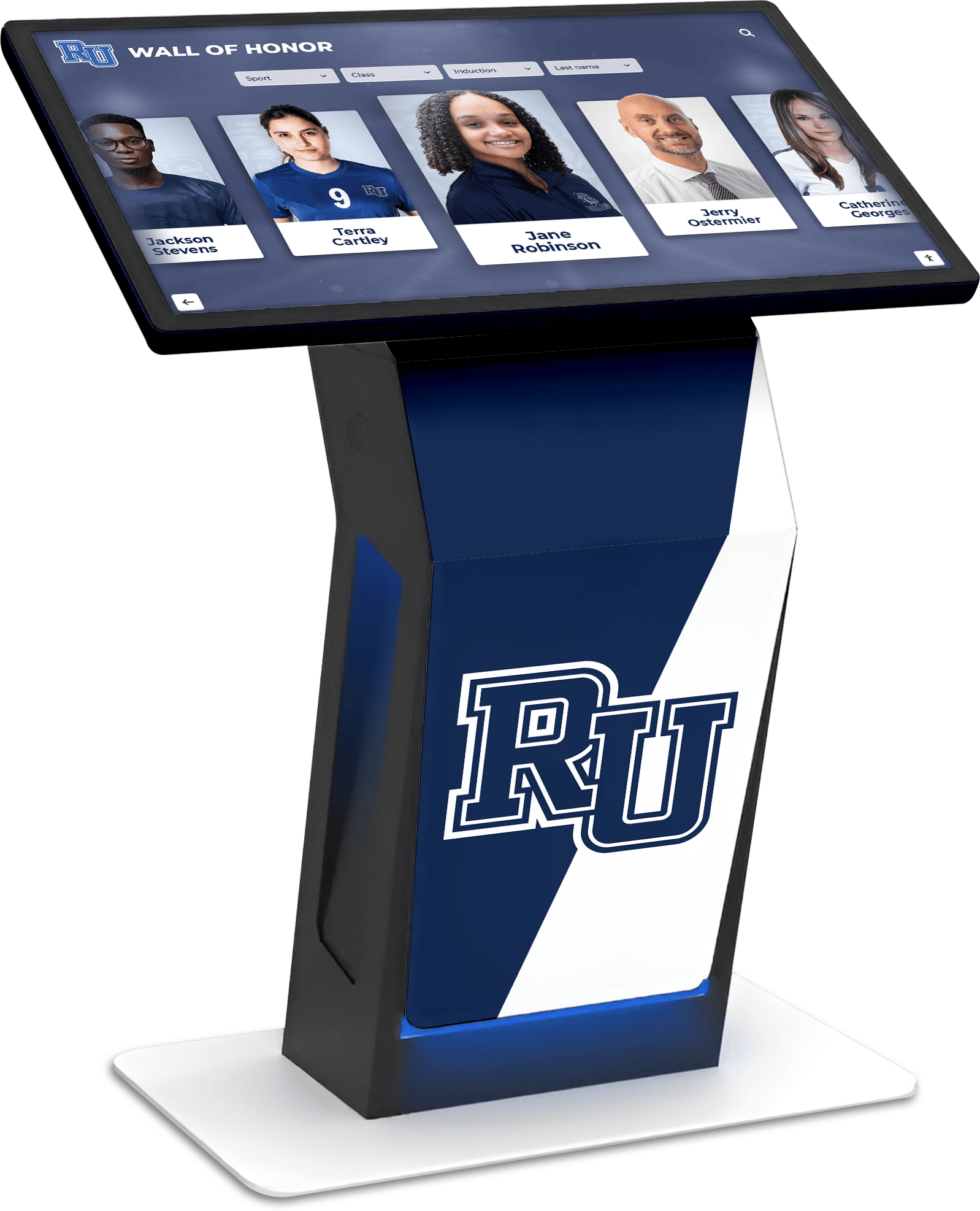
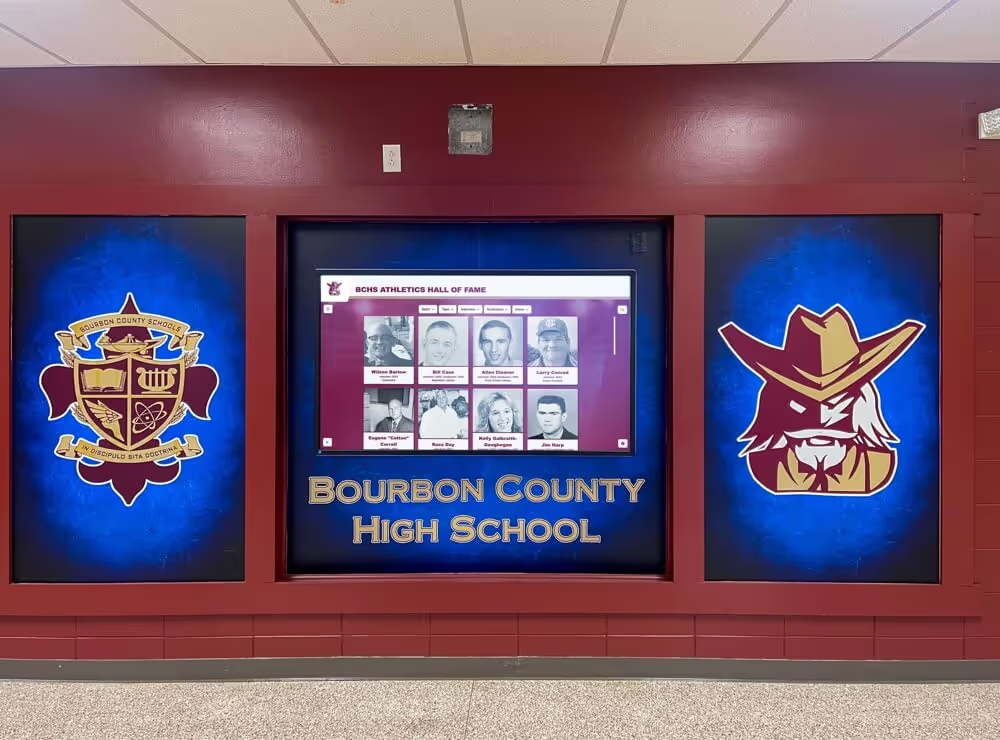
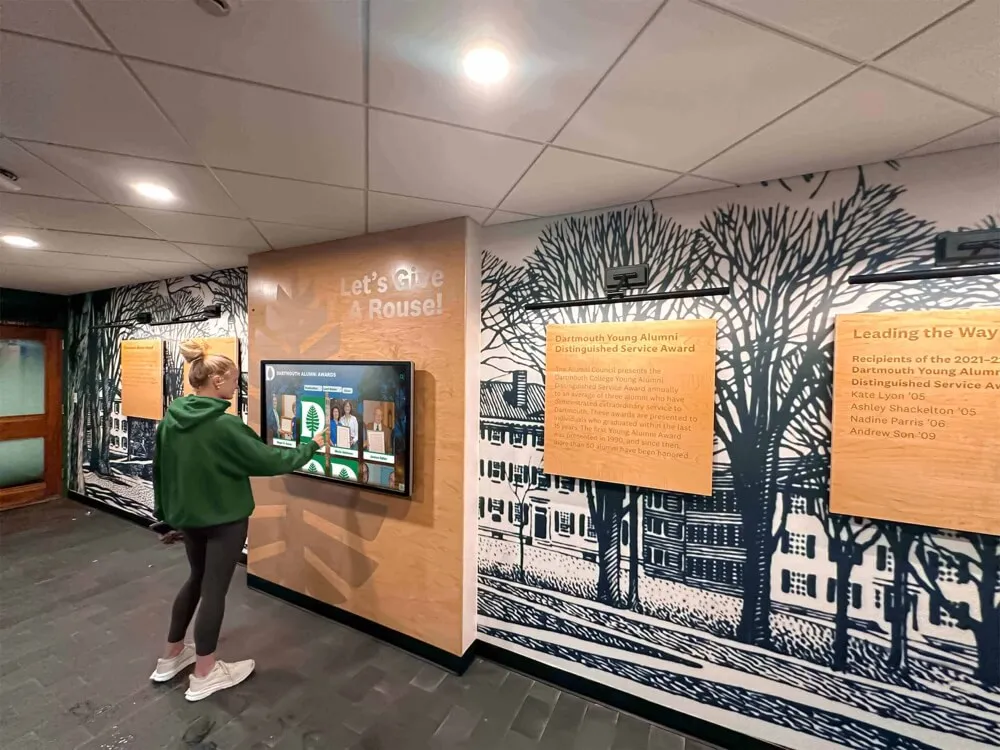
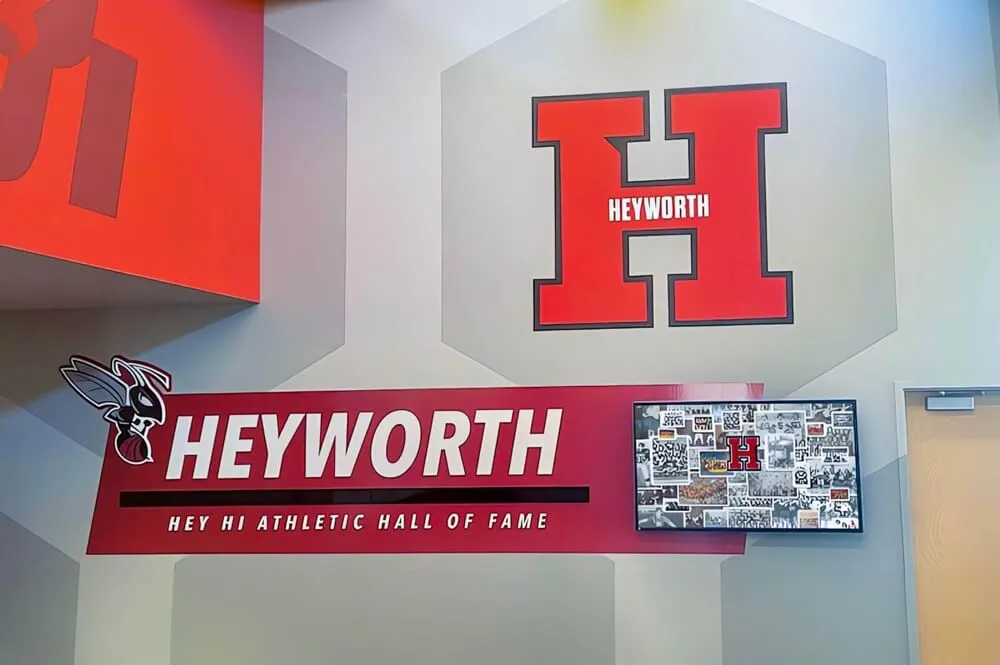
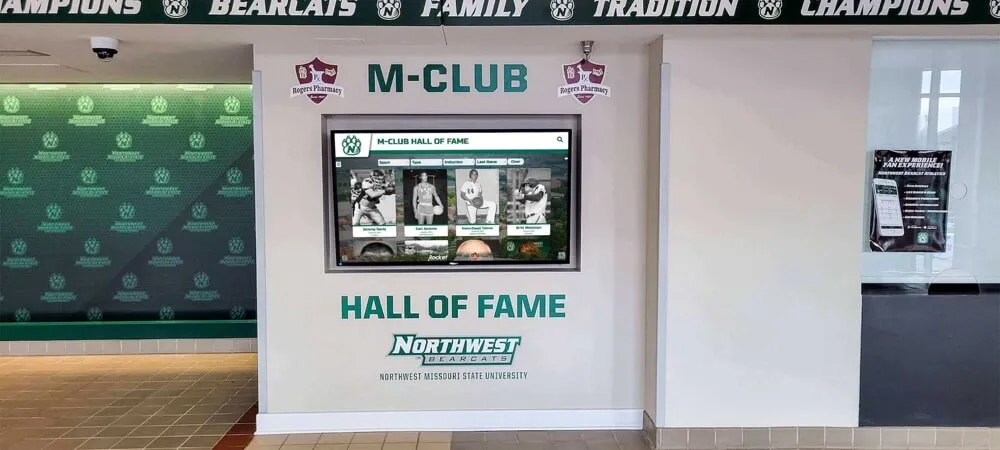
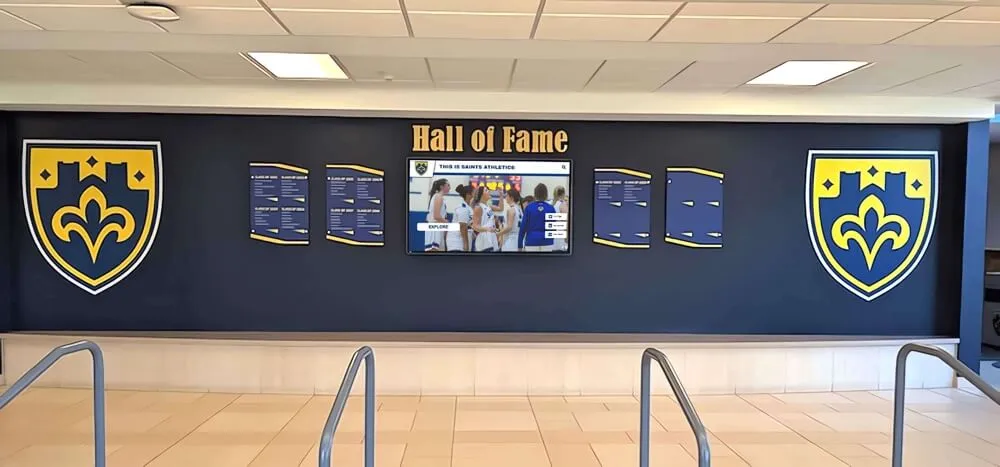
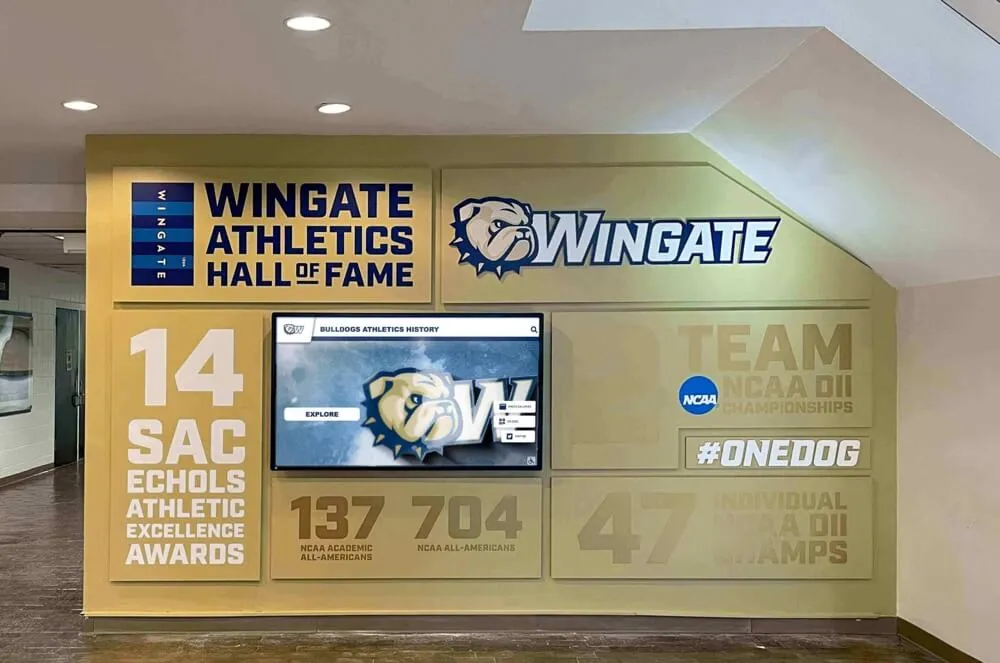
Digital recognition kiosks enable schools to showcase unlimited achievements across all categories
7. Honor Roll Recognition
While less selective than pinnacle academic awards, honor roll provides accessible recognition for consistent academic performance:
Common Honor Roll Levels:
- Principal’s List/High Honor Roll: Typically 3.75-4.0 GPA
- Honor Roll: Usually 3.25-3.74 GPA
- Merit Roll: Sometimes 3.0-3.24 GPA
Schools present honor roll recognition quarterly or by semester, creating multiple opportunities throughout high school. Explore effective approaches in academic honor roll recipients recognition.
8. Academic Improvement Awards
Recognition for significant GPA growth acknowledges students making substantial progress regardless of absolute achievement level. These awards motivate students who may never reach honor roll but demonstrate remarkable improvement.
9. Perfect Attendance Awards
While academically adjacent rather than purely academic, perfect attendance recognition acknowledges reliability and commitment:
- No absences throughout entire school year
- May allow excused absences while excluding unexcused
- Sometimes tiered (zero absences vs. one or two excused absences)
10. College Board National Recognition Programs
Launched to expand access to achievement recognition, these programs celebrate historically underrepresented students demonstrating strong academic achievement:
Program Categories:
- First-Generation Recognition Award
- Rural and Small-Town Recognition Award
- National African American Recognition Award
- National Hispanic Recognition Award
- National Indigenous Recognition Award
Eligibility: GPA of 3.3+ and either top 10% PSAT/AP performance in category OR 3+ on two AP exams by 10th grade.
These prestigious awards enhance college applications while connecting students to institutions actively recruiting diverse scholars.
Academic Competition Awards
Beyond course-based recognition, academic competitions provide achievement opportunities in specialized areas.
11. Science Olympiad Medals
Science Olympiad competitions span 23 events covering biology, chemistry, physics, earth science, and engineering. Teams compete at invitational, regional, state, and national levels, with medals awarded to top performers in each event.
12. Math Competition Recognition
Multiple mathematics competitions offer recognition opportunities:
American Mathematics Competition (AMC)
- AMC 8, AMC 10, and AMC 12 examinations
- Top scorers invited to American Invitational Mathematics Examination (AIME)
- AIME qualifiers eligible for USA Mathematical Olympiad (USAMO)
MATHCOUNTS Middle school competition extending into early high school, recognizing problem-solving excellence through team and individual competition at chapter, state, and national levels.
13. Science Fair Awards
Science fairs at school, district, state, and international levels provide research recognition:
- International Science and Engineering Fair (ISEF): Most prestigious student science competition worldwide
- State science fairs: Gateway to ISEF and state-level recognition
- School science fairs: Accessible entry point for research recognition
Top ISEF winners receive scholarships, research internships, and naming rights for discoveries, with some students earning recognition comparable to graduate-level research.
14. History Day Competition Awards
National History Day competitions recognize student research in historical topics through documentaries, exhibits, performances, papers, and websites. County, state, and national competitions provide increasing recognition levels, with national finalists receiving substantial scholarships and recognition.
15. Debate and Speech Competition Recognition
Forensics competitions provide extensive recognition opportunities:
National Speech and Debate Association (NSDA)
- Points accumulated toward degrees: Novice through Superior Distinction
- Tournament victories at local, district, and national levels
- National Tournament qualification and success
Policy Debate Recognition
- Tournament of Champions (TOC) qualification
- National Championship victories
- State championship recognition
Success in debate demonstrates critical thinking, research, and communication skills highly valued by selective colleges.
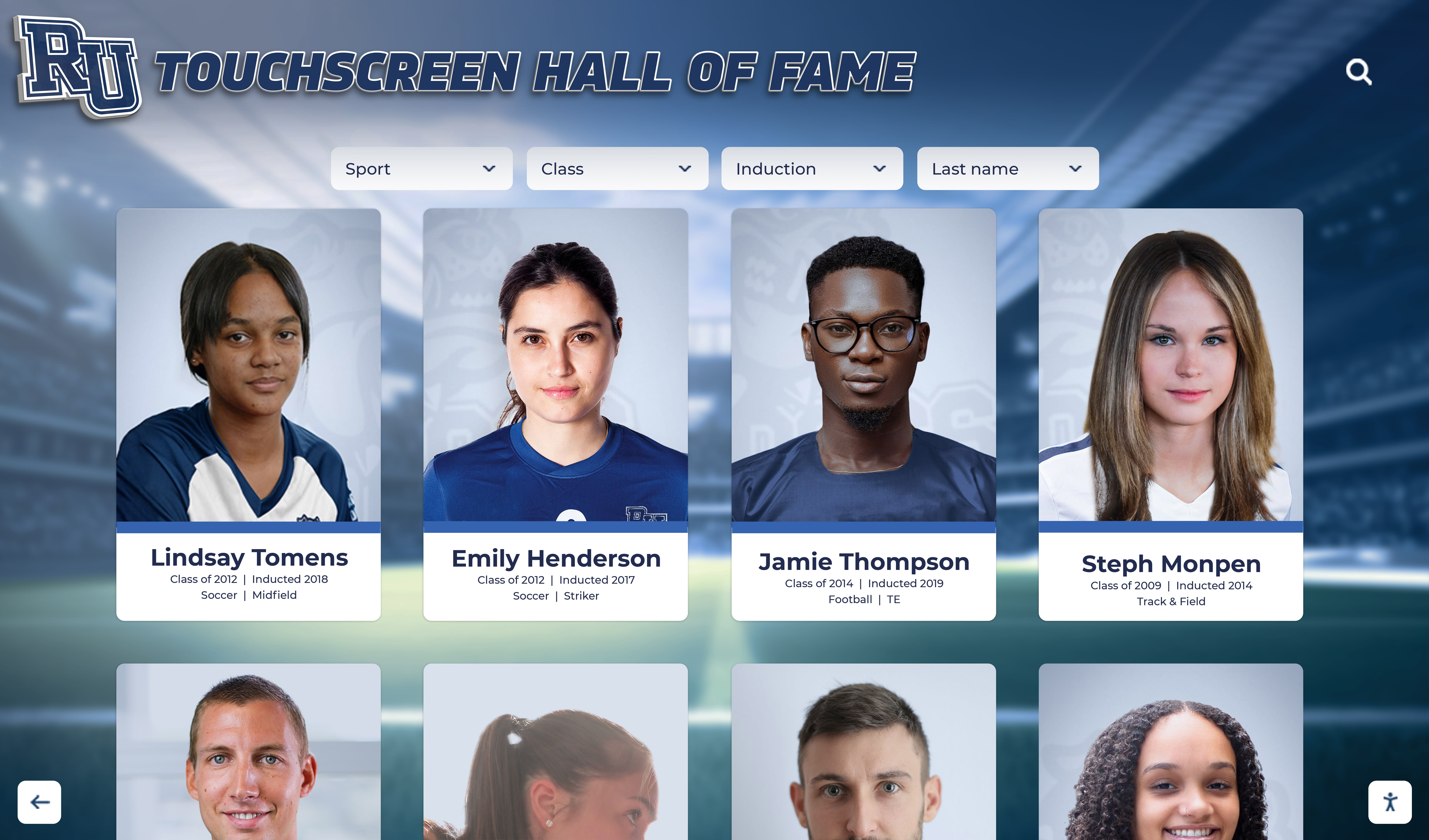
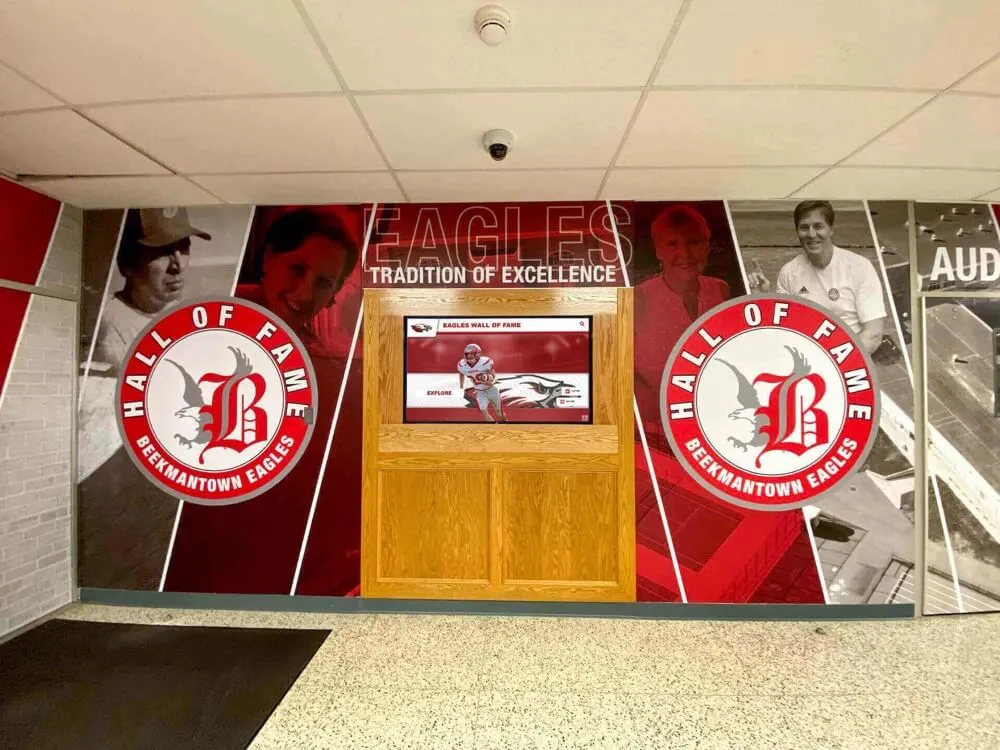
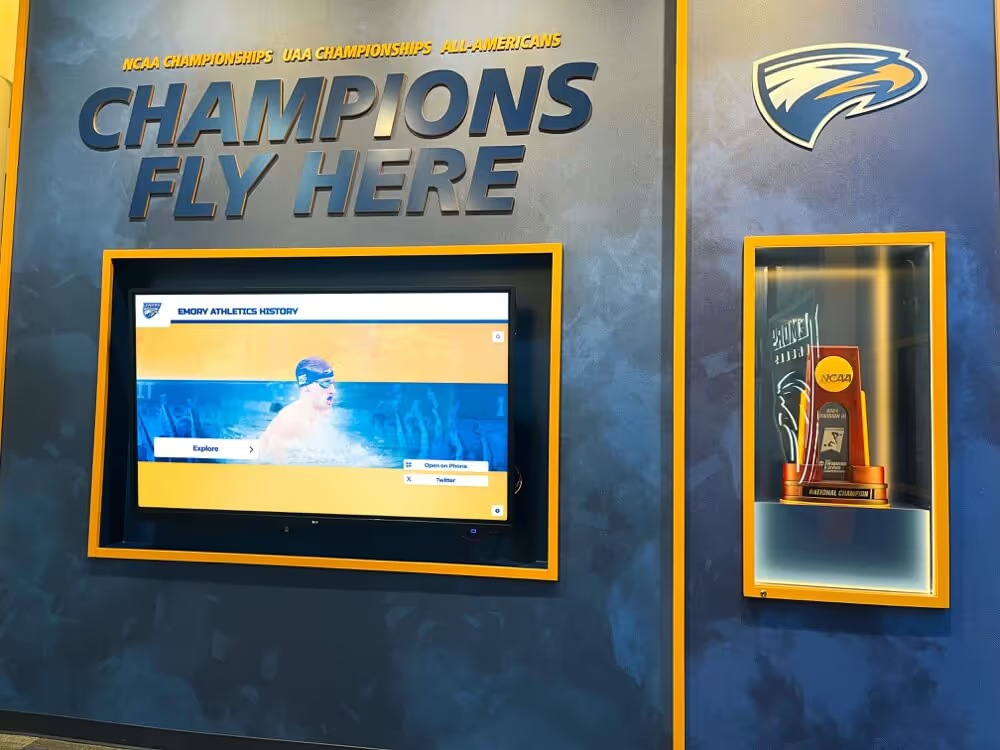
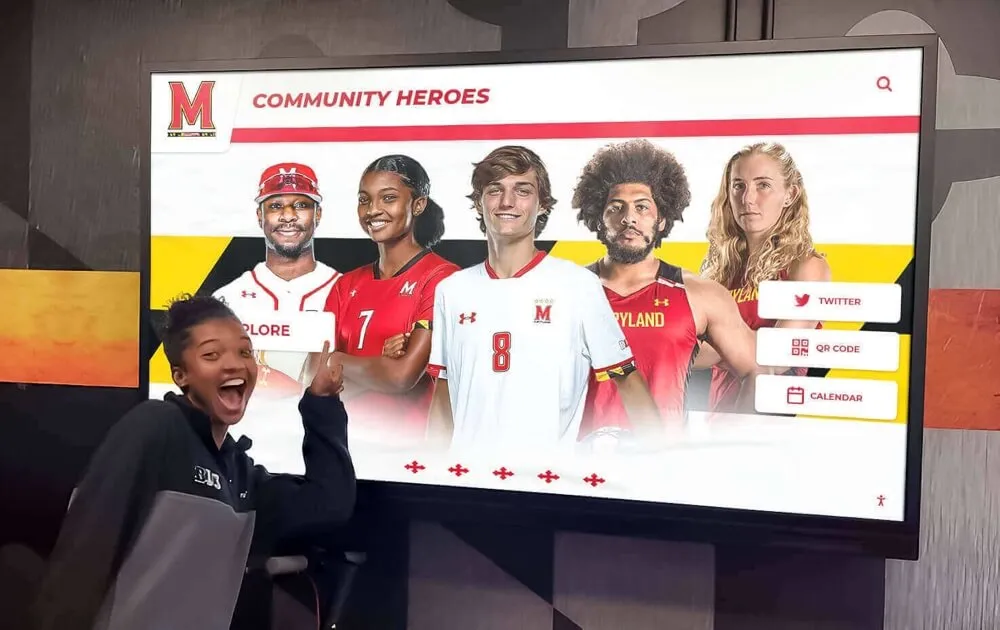
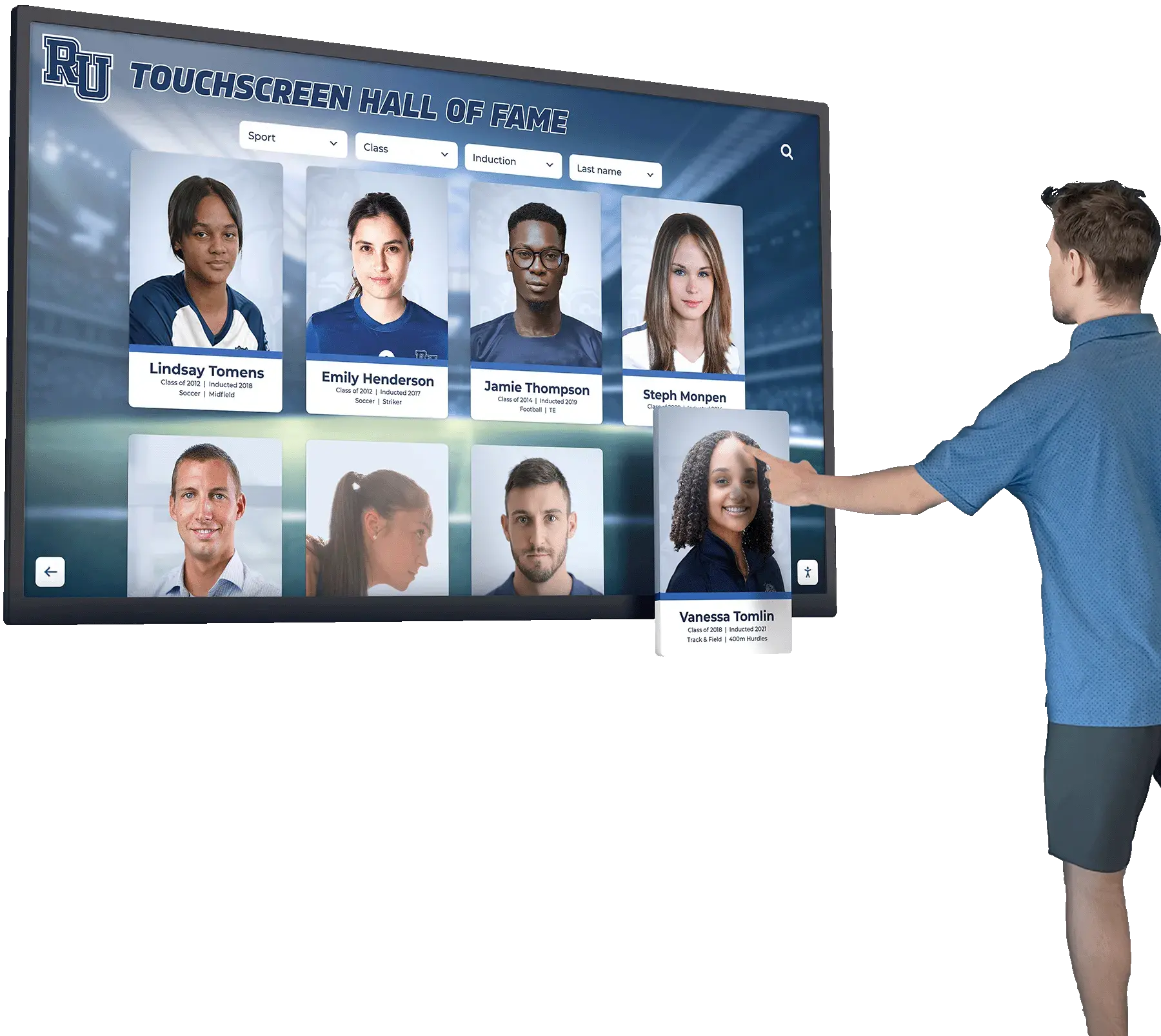
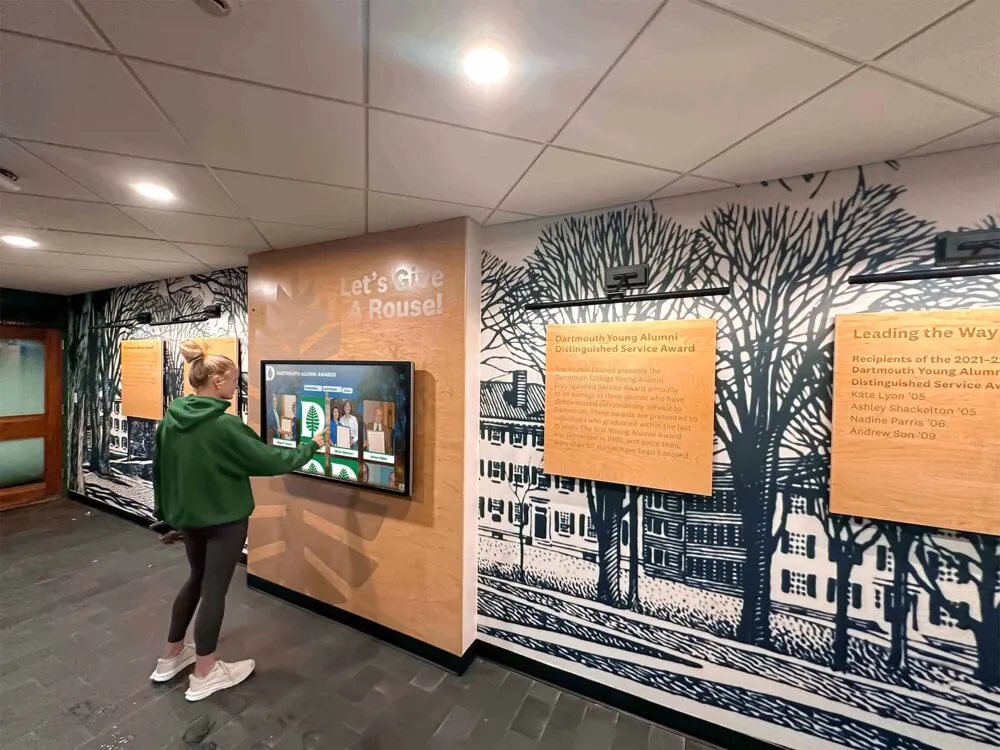
Modern displays enable schools to celebrate achievements across academics, athletics, arts, and service simultaneously
16. Academic Decathlon and Quiz Bowl
Team academic competitions recognizing well-rounded knowledge:
Academic Decathlon Nine-member teams compete in ten events covering art, economics, essay, interview, language and literature, mathematics, music, science, social science, and speech. State and national competitions provide team and individual recognition.
Quiz Bowl/Scholar Bowl Fast-paced trivia competitions testing general knowledge across all academic subjects, with state and national tournaments providing recognition opportunities. Learn about recognition in academic decathlon recognition for top scholar teams.
Athletic Recognition Awards
Athletic achievement generates some of the most visible high school recognition, spanning team sports, individual competitions, and multi-sport accomplishments.
17. All-Conference and All-District Recognition
Conference and district organizations select top performers at each position across all sports. Selection typically requires coach nomination and voting by league coaches, with criteria including statistics, leadership, and sportsmanship.
18. All-State Athletic Recognition
State athletic associations recognize the best high school athletes in each sport statewide, representing pinnacle state-level athletic achievement. Selection processes vary by state and sport but typically involve:
- Nomination by coaches or athletic directors
- Statistical performance requirements
- Championship performance consideration
- Selection committees including coaches and administrators
All-State recognition significantly enhances college recruitment for athletes pursuing collegiate competition. Explore approaches in all-state plaque digital display solutions.
19. All-American Athletic Recognition
National All-American teams represent the highest level of high school athletic recognition:
- MaxPreps All-American Teams: Sport-specific national recognition
- Under Armour All-American Games: Elite showcases in multiple sports
- McDonald’s All-American: Prestigious basketball recognition
- U.S. Army All-American Bowl: Top football player recognition
These awards typically accompany national-level recruitment and scholarship offers.
20. Team Captain Recognition
While less formal than All-State selection, team captaincy represents peer and coach recognition of leadership, representing significant achievement on college applications demonstrating leadership ability.
21. Most Valuable Player Awards
Team MVP recognition acknowledges exceptional contribution to team success, with selection considering:
- Statistical performance
- Leadership and team impact
- Clutch performance in critical moments
- Practice and preparation excellence
- Sportsmanship and character
22. Sportsmanship Awards
Character-based athletic recognition honoring athletes demonstrating exceptional integrity, respect, and positive attitude regardless of performance statistics.
23. State Championship Medals
Participation in state championship teams or individual state championship victories represents pinnacle team achievement, with recognition varying by sport and competition format.
24. Record-Breaking Achievements
Schools typically recognize athletes establishing new records:
- School records in individual sports
- Conference or district records
- State records in rare cases
- Significant milestone achievements (1,000-point scorers, etc.)
Explore recognition approaches in 1,000-point scorer recognition.
25. Student-Athlete Academic Excellence Awards
Awards recognizing students maintaining high academic standards while participating in athletics:
- Academic All-Conference recognition
- Scholar-Athlete awards
- NCAA Academic All-American recognition (senior year)
Arts and Creative Achievement Awards
Artistic talent deserves recognition equal to academic and athletic achievement, with awards spanning visual arts, performing arts, music, and creative writing.
26. Scholastic Art & Writing Awards
Among the most prestigious recognition for creative high school students, Scholastic Awards honor work in 28 categories including:
Visual Arts Categories:
- Painting, drawing, printmaking
- Photography and digital art
- Sculpture and ceramics
- Portfolio recognition
Writing Categories:
- Poetry, short story, personal essay
- Critical review, journalism, humor
- Science fiction, dramatic script
- Portfolio recognition
Regional Gold Key awards advance to national competition, with national Gold Medals representing pinnacle achievement. Many winners receive scholarships and exhibition opportunities.
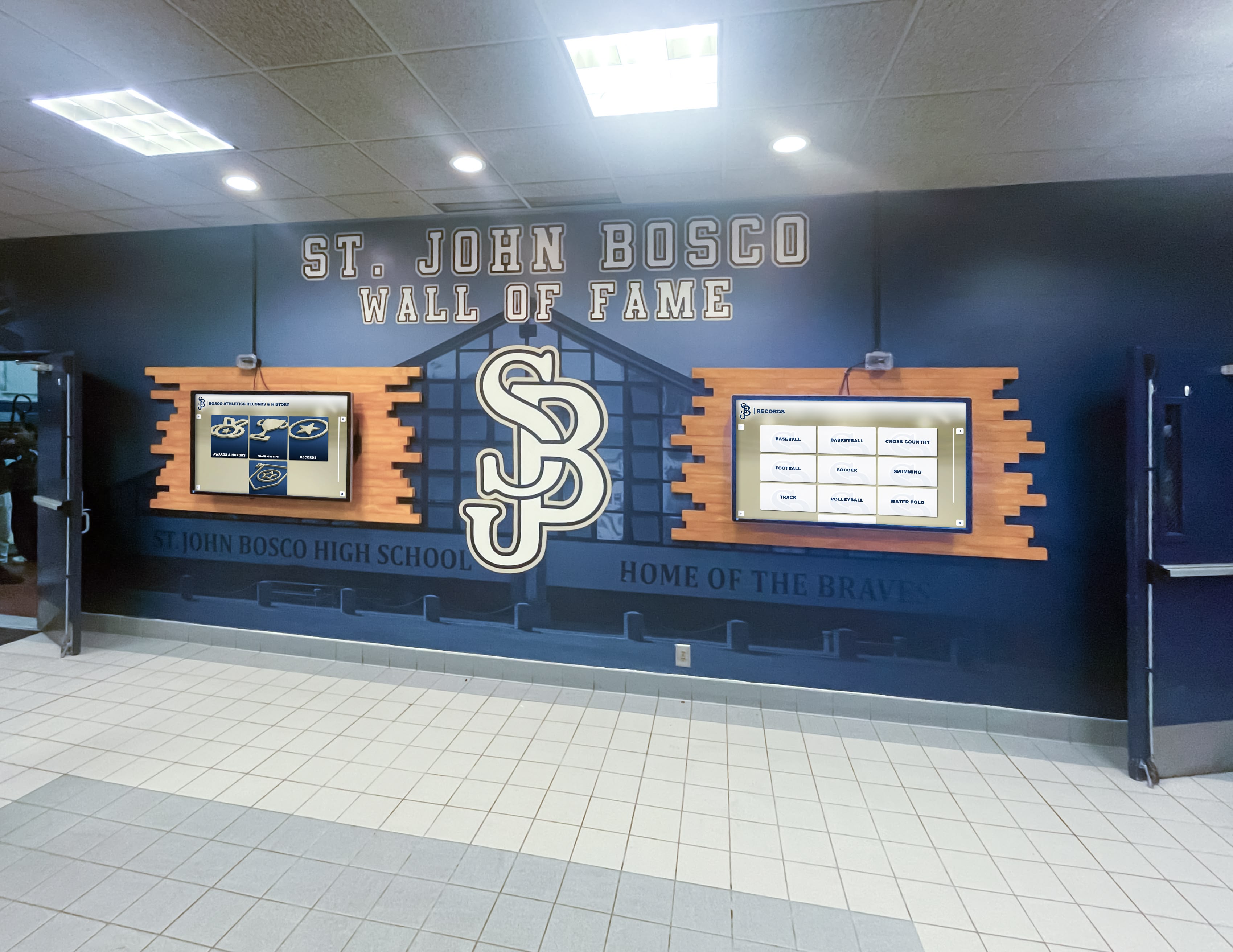
Multiple displays enable schools to simultaneously showcase achievements across all categories
27. All-State Music Recognition
State music education associations select top musicians through competitive auditions:
Recognition Types:
- All-State Band, Orchestra, or Choir
- All-District or Regional Ensembles
- Solo and Ensemble Festival Superior Ratings
- State music competition victories
Selection requires audition, typically including prepared pieces, sight reading, and technical exercises.
28. Thespian Society and Drama Awards
International Thespian Society provides recognition structure for theater achievement:
- Point accumulation toward honor thespian status
- Superior ratings at state thespian festivals
- Regional and national theater competition recognition
- School theater production awards
29. Art Exhibition Awards
Recognition through exhibition and competition:
- School art show best-in-show awards
- Regional and state art competition recognition
- Congressional Art Competition winners (displayed in U.S. Capitol)
- Local gallery exhibition opportunities
30. National YoungArts Recognition
YoungArts (National Foundation for Advancement in the Arts) represents highly selective recognition in visual, literary, design, and performing arts. Winners receive scholarships, mentorship, and exhibition opportunities, with Presidential Scholars in the Arts selected from YoungArts winners.
Leadership and Service Awards
Recognition for contributions beyond academics, athletics, and arts acknowledges students building stronger communities.
31. Student Government Leadership Awards
Recognition for elected student government positions and outstanding service:
- Student body president, vice president, class officers
- Outstanding student government member awards
- Leadership conference participation recognition
- Student government achievement awards
32. Community Service Recognition Awards
Hours-based and impact-based service recognition:
Presidential Volunteer Service Award Federal recognition for volunteer service hours:
- Bronze: 100-174 hours (ages 16-25)
- Silver: 175-249 hours
- Gold: 250+ hours
Many schools present additional service recognition for milestones like 50, 100, or 500 total service hours.
33. Key Club and Service Organization Recognition
Service organizations provide structured recognition:
- Key Club International Achievement Awards
- Interact Club recognition from Rotary International
- National Honor Society service leadership awards
- School-specific service club recognition
Learn about comprehensive approaches in alumni engagement strategies.
34. Youth Leadership Conference Recognition
Recognition for participation and achievement in leadership development programs:
- Hugh O’Brian Youth Leadership (HOBY)
- National Student Leadership Conference
- State youth leadership programs
- School leadership academy completion
35. Peer Tutoring and Mentoring Recognition
Academic service recognition for students supporting peers:
- Tutor of the Year awards
- Peer mentorship recognition
- National Junior Honor Society tutoring awards
- Academic support leadership acknowledgment
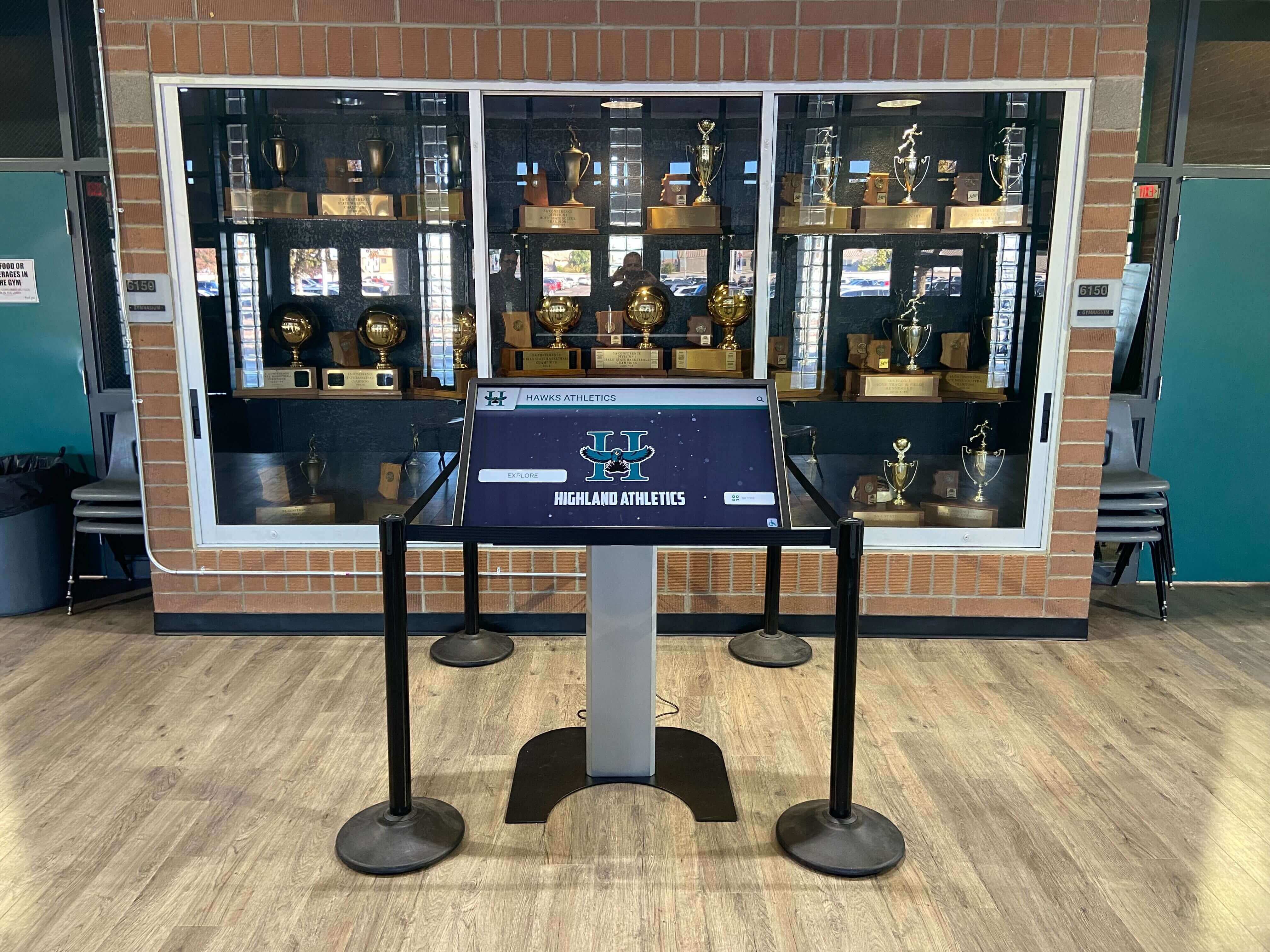
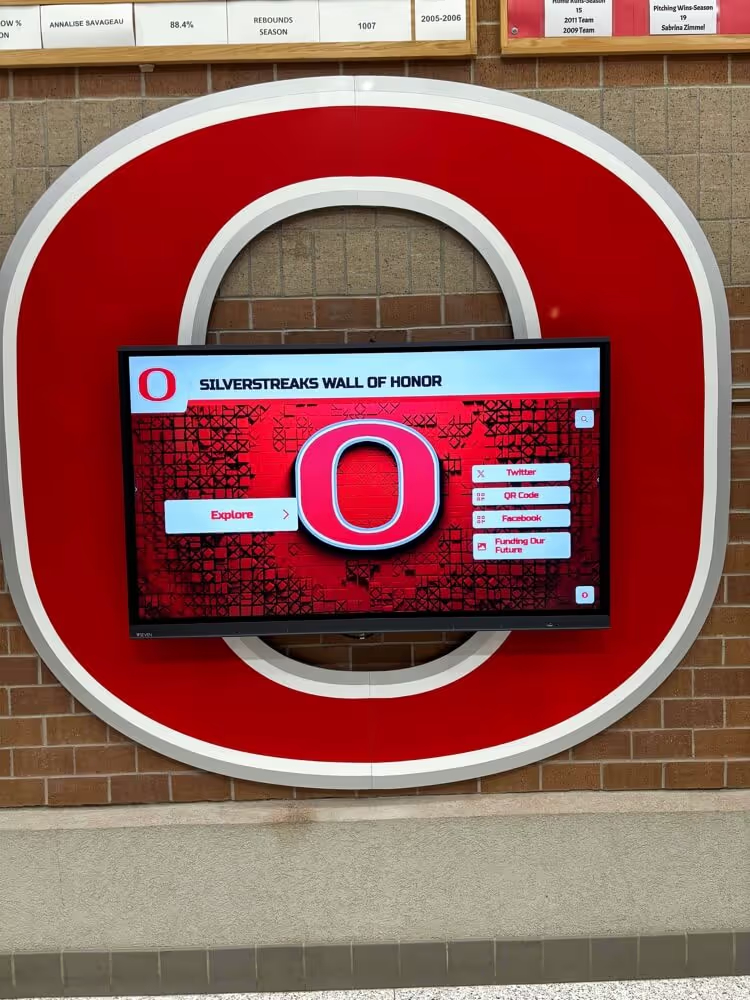
Integrated systems combine traditional trophy displays with digital recognition for comprehensive celebration
Character and Citizenship Awards
Recognition transcending measurable achievement to honor qualities that build strong communities.
36. Character Education Recognition
Awards honoring specific character traits schools emphasize:
- Integrity and honesty awards
- Respect and responsibility recognition
- Compassion and kindness awards
- Perseverance and resilience recognition
- Citizenship excellence awards
37. Peer-Nominated Recognition
Student-selected awards representing authentic peer acknowledgment:
- Most likely to brighten your day
- Unsung hero awards
- Positive influence recognition
- Spirit and enthusiasm awards
These peer-selected honors often mean more to students than adult-selected recognition.
38. School Spirit and Pride Awards
Recognition for students embodying school values and demonstrating exceptional pride:
- Superfan awards for athletic support
- School tradition preservation recognition
- Spirit week participation awards
- School ambassador designation
39. Anti-Bullying and Inclusion Recognition
Modern character awards acknowledging students creating welcoming environments:
- Upstander awards for intervention in bullying situations
- Inclusion champion recognition
- Peer support and kindness awards
- Culture builder recognition
40. Good Citizenship Awards
Recognition from civic organizations and community partners:
- Daughters of the American Revolution Good Citizen Award
- Veterans of Foreign Wars awards
- Local civic organization citizenship recognition
- Community partner character awards
These awards often include scholarship opportunities and recognition ceremonies beyond school.
Implementing Comprehensive Recognition Programs
Understanding the breadth of awards available helps schools design systematic approaches ensuring all deserving students receive acknowledgment.
Building Multi-Category Recognition Systems
Comprehensive programs span all categories:
Academic Recognition Framework
- Quarterly honor roll with multiple tiers
- Annual subject-specific departmental awards
- Improvement and growth recognition
- Competition achievement celebration
- National program connection and nomination
Athletic Recognition Structure
- All-conference and all-state nomination processes
- Team awards at season-end banquets
- Record-breaking achievement acknowledgment
- Multi-sport athlete recognition
- Scholar-athlete academic-athletic honors
Arts and Leadership Recognition
- Arts showcase and exhibition awards
- Service milestone recognition
- Leadership position acknowledgment
- Character and citizenship honors
- Peer-nominated recognition opportunities
Schools implementing comprehensive systems report 60-75% of students receiving some recognition during high school, compared to 20-30% in schools with limited programs.
Modern Recognition Display Solutions
Traditional limitations like physical space constraints and static displays prevented comprehensive recognition visibility. Modern solutions like Rocket Alumni Solutions transform how schools celebrate achievement:
Digital Recognition Platforms
- Unlimited capacity showcasing all forty recognition categories
- Interactive touchscreen exploration enabling student discovery
- Cloud-based management for easy updates across school year
- Search and filter functionality helping students find achievements
- Integration with school websites extending reach beyond campus
Comprehensive Achievement Archives Digital systems preserve recognition across multiple years, enabling students to see progression from freshman awards through senior honors while maintaining permanent institutional achievement records.
Explore solutions in digital trophy case comprehensive guides.
Nomination and Selection Processes
Fair, transparent processes maximize trust and participation:
Clear Criteria Communication
- Published requirements for each award
- Rubrics for subjective selection decisions
- Timeline communication for nominations and selections
- Multiple pathways for recognition across achievement types
Diverse Selection Committees
- Faculty representation across departments
- Student input for peer-nominated awards
- Administrator oversight ensuring equity
- Community partner involvement where appropriate
Regular Recognition Cycles
- Quarterly honor roll announcements
- Monthly recognition highlights
- Annual comprehensive awards ceremonies
- Ongoing digital display updates
Equity and Inclusion in Recognition
Comprehensive systems ensure opportunities exist for all students:
Multiple Achievement Dimensions Recognition across absolute achievement, improvement, effort, character, and service ensures students with different strengths and starting points can earn acknowledgment.
Accessible Participation Award opportunities requiring no fees, equipment purchases, or outside resources ensure socioeconomic status doesn’t determine recognition access.
Cultural Responsiveness Recognition programs reflecting diverse community values and honoring varied achievement expressions create inclusive environments where all students see paths to acknowledgment.
Strategic Award Pursuit for College Applications
Understanding how different awards impact college admissions helps students strategically pursue recognition.
Tier 1 National Awards Strategy
Students aiming for highly selective colleges benefit from pursuing national recognition:
Target Opportunities:
- National Merit Scholar program (PSAT/NMSQT junior year)
- Presidential Scholar nomination (SAT/ACT senior year)
- National-level competition recognition (Olympiads, ISEF, etc.)
- Scholastic Art & Writing national medals
- YoungArts recognition in arts disciplines
These awards require years of preparation, making early high school planning essential.
Building Comprehensive Achievement Records
Selective colleges value depth and breadth across multiple categories:
Demonstrated Excellence Strategy:
- Sustained achievement in one or two areas (3-4 years)
- Leadership progression from participant to captain/president
- Competition advancement from local to state to national levels
- Impact documentation showing achievement significance
Well-Rounded Achievement Strategy:
- Recognition across multiple categories (academics, athletics, arts, service)
- Balanced excellence demonstrating versatile capabilities
- Character and citizenship honors complementing performance awards
- Community impact beyond individual achievement
Documentation and Presentation
College applications provide limited space, requiring strategic recognition presentation:
Common Application Honors Section
- Five total honors allowed
- List most prestigious/relevant to intended major
- Include level (school, state, national, international)
- Provide context for less familiar awards
Activities Section Awards Additional recognition can appear within activities descriptions, particularly leadership positions and competition achievements within clubs or teams.
Additional Information Section Comprehensive award lists can appear here when recognition history demonstrates important achievement patterns not visible in main application sections.
Supporting Students in Recognition Pursuit
Schools play crucial roles connecting students to award opportunities matching their strengths.
Awareness and Communication
Many students miss opportunities simply because they don’t know they exist:
Proactive Nomination Counselors and teachers identifying students meeting award criteria and encouraging application or nomination, particularly for first-generation students whose families may be unfamiliar with recognition programs.
Recognition Opportunity Databases Schools maintaining internal databases of available awards, eligibility requirements, deadlines, and application processes help students discover appropriate opportunities.
Regular Recognition Reminders Morning announcements, email newsletters, and counselor meetings highlighting upcoming award deadlines and opportunities ensure consistent awareness.
Application Support
Many prestigious awards require substantial applications where support improves success:
Essay Feedback Awards requiring written submissions benefit from teacher or counselor review, helping students articulate achievements effectively.
Recommendation Coordination Coordinating recommendation requests across multiple awards prevents teacher overwhelm while ensuring students receive strong letters.
Portfolio Development Support Arts awards requiring portfolios benefit from teacher guidance in selection, presentation, and technical execution.
Celebration and Visibility
Recognition impact multiplies when achievement receives appropriate visibility:
Multi-Channel Announcement
- Morning announcements following award receipt
- Social media posts celebrating recognition
- Newsletter features highlighting student achievement
- Local media press releases for significant honors
- Digital display updates adding new recognition
Recognition Ceremony Integration Incorporating external awards (All-State, national competition success, etc.) into school recognition ceremonies provides community celebration extending beyond individual notification.
Conclusion: Maximizing Recognition Opportunities
The forty-plus award categories high school students can win represent far more than résumé lines—they provide motivation, validation, and opportunities that shape educational trajectories and personal development. Students who understand the breadth of available recognition find achievement pathways matching their unique strengths, while schools implementing comprehensive programs create cultures where diverse talents receive equal celebration.
From prestigious national recognition like National Merit Scholar and Presidential Scholar to school-based honors celebrating improvement, character, and specialized talents, today’s high schools offer unprecedented recognition opportunities. The challenge lies not in award availability but in awareness, accessibility, and systematic approaches ensuring deserving students pursue and receive appropriate acknowledgment.
Showcase Every Student Achievement
Discover how modern digital recognition solutions can help your school celebrate achievements across all forty award categories, ensuring no accomplishment goes unrecognized.
Explore Recognition SolutionsModern recognition technology eliminates traditional limitations that forced schools to choose whose achievements received visibility. Digital platforms enable comprehensive celebration across academic excellence, athletic achievement, artistic talent, leadership contributions, service impact, and character demonstration—simultaneously and permanently archived for future inspiration.
Students benefit most when schools provide clear communication about available awards, support for application processes, and visible celebration ensuring recognition drives motivation beyond initial recipients. The awards students earn during high school years create opportunity, build confidence, and establish achievement patterns extending throughout life.
Start by auditing your current recognition program against these forty categories, identifying gaps where deserving students lack acknowledgment pathways. Then systematically expand offerings, communication, and visibility until every student who demonstrates excellence, improvement, leadership, or character finds appropriate recognition during their high school journey.
Your students’ diverse achievements across these forty recognition categories deserve celebration creating the motivation, opportunity, and positive culture where all students thrive.