



Booster club in-kind donation valuation log records give your program a clear paper trail when sponsors contribute goods or services instead of cash. Intent: define a recordkeeping workflow that connects fair-market valuation notes to donor recognition decisions, so every printing vendor, equipment lender, or installation volunteer receives credit that is both accurate and consistently applied.
Without a written log, valuation guesses pile up on sticky notes, sponsor thank-you letters go out late or with wrong amounts, and end-of-year financial summaries become a scramble. This guide walks through the fields your log needs, how to document valuation reasonably, and how to turn that log into a recognition touchpoint that sponsors actually notice.
Practical note: This guide covers organizational workflow for booster clubs. It is not legal or accounting advice. Consult your school’s finance office, a CPA, or legal counsel regarding IRS requirements, written acknowledgment letters, and any state-specific nonprofit reporting rules.

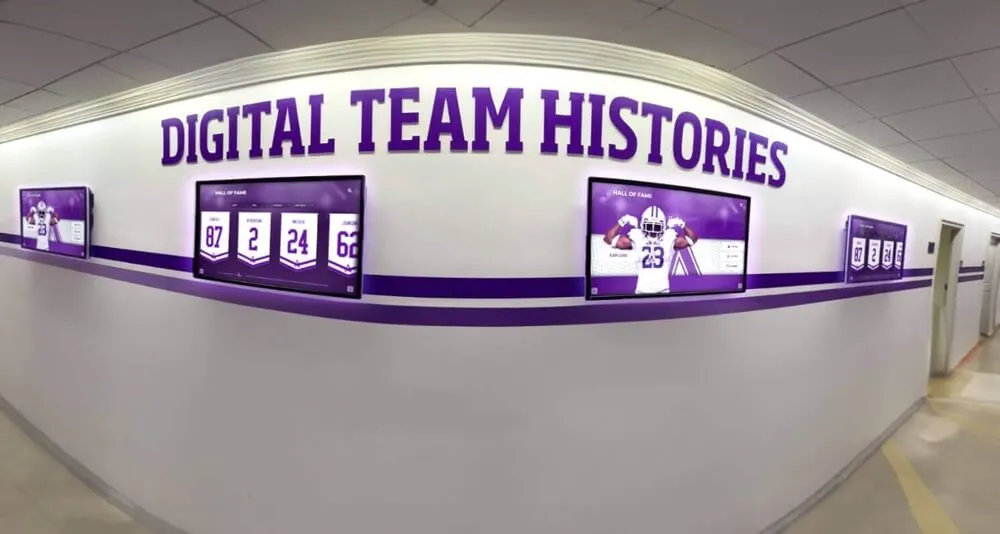
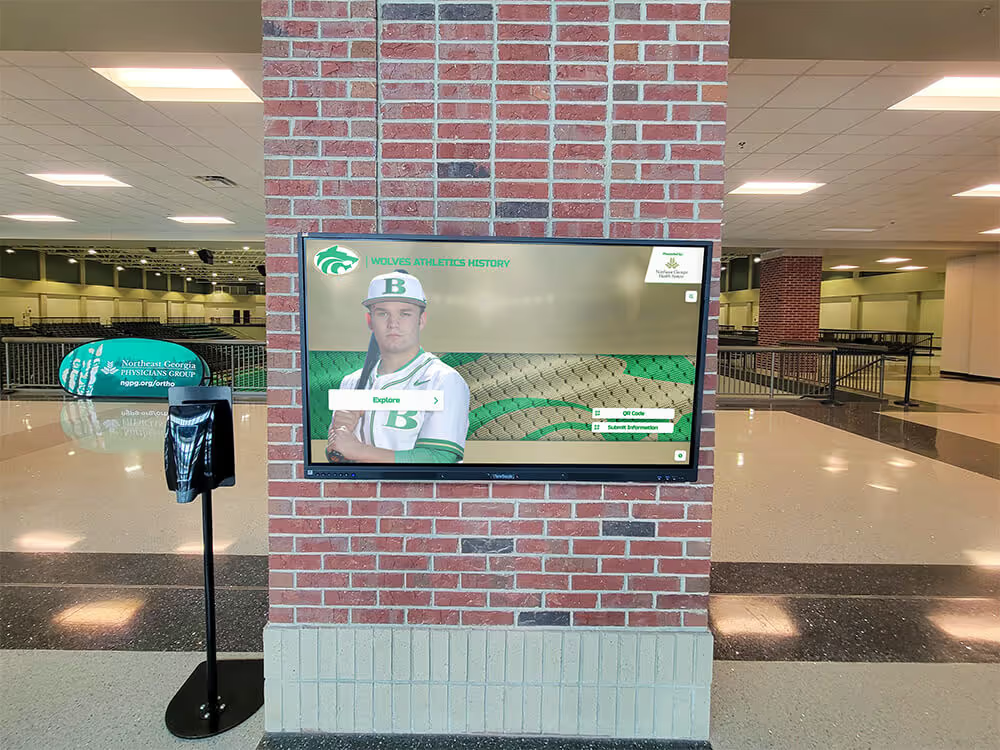
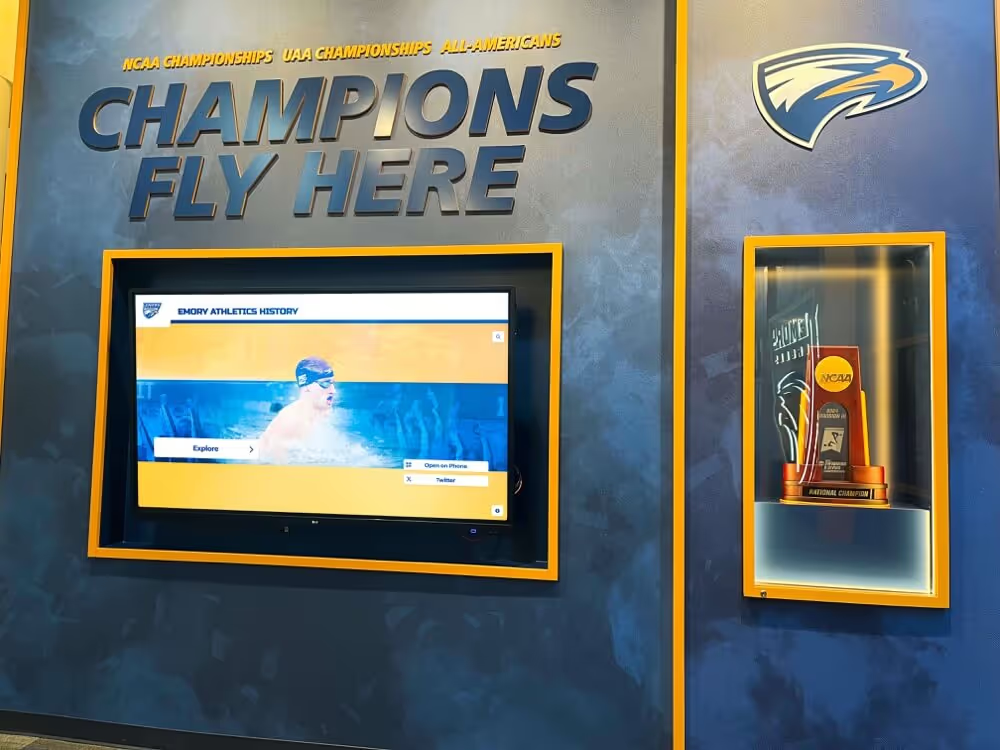
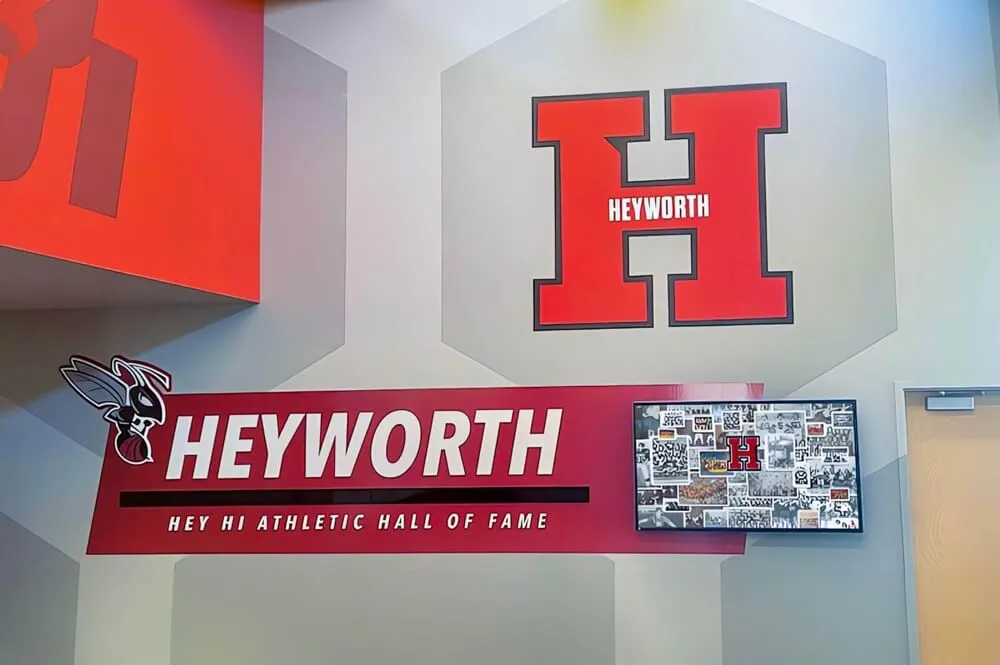
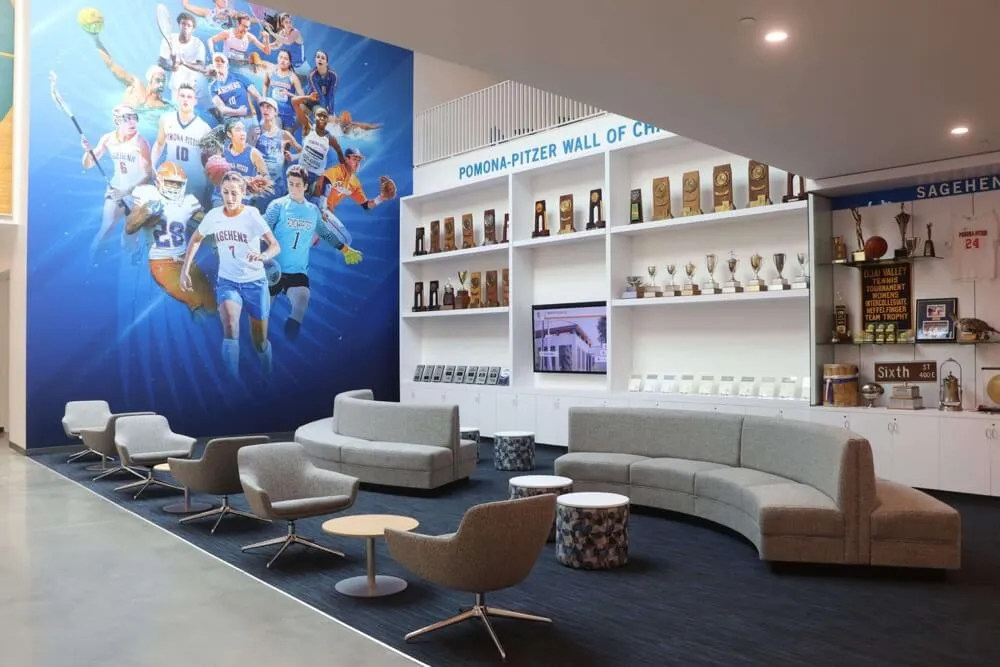
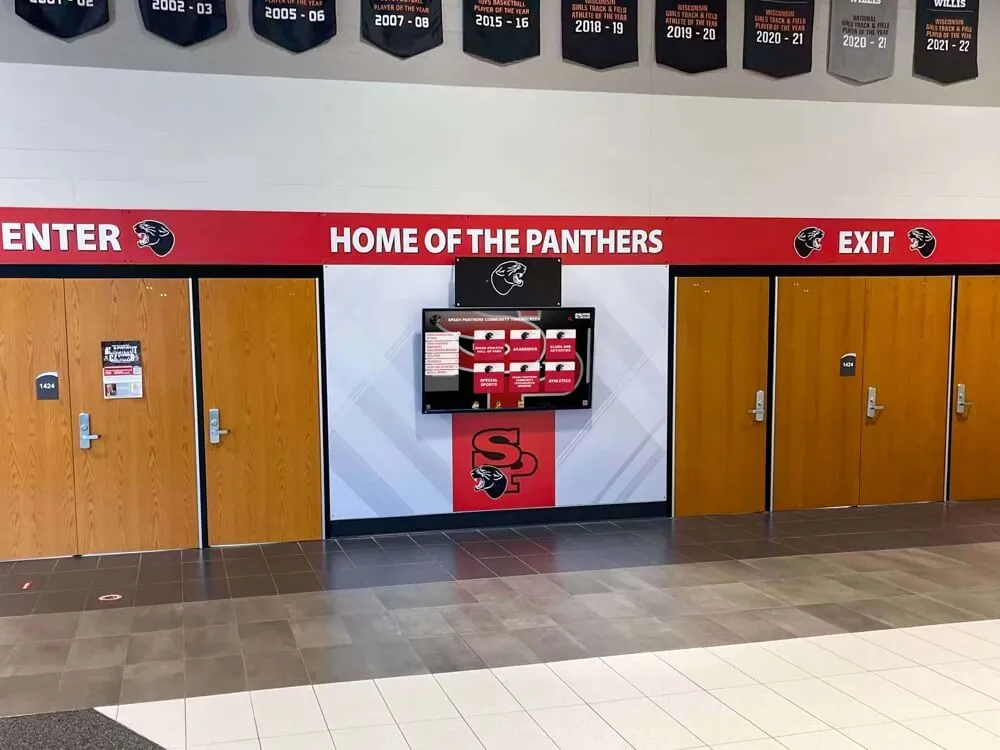
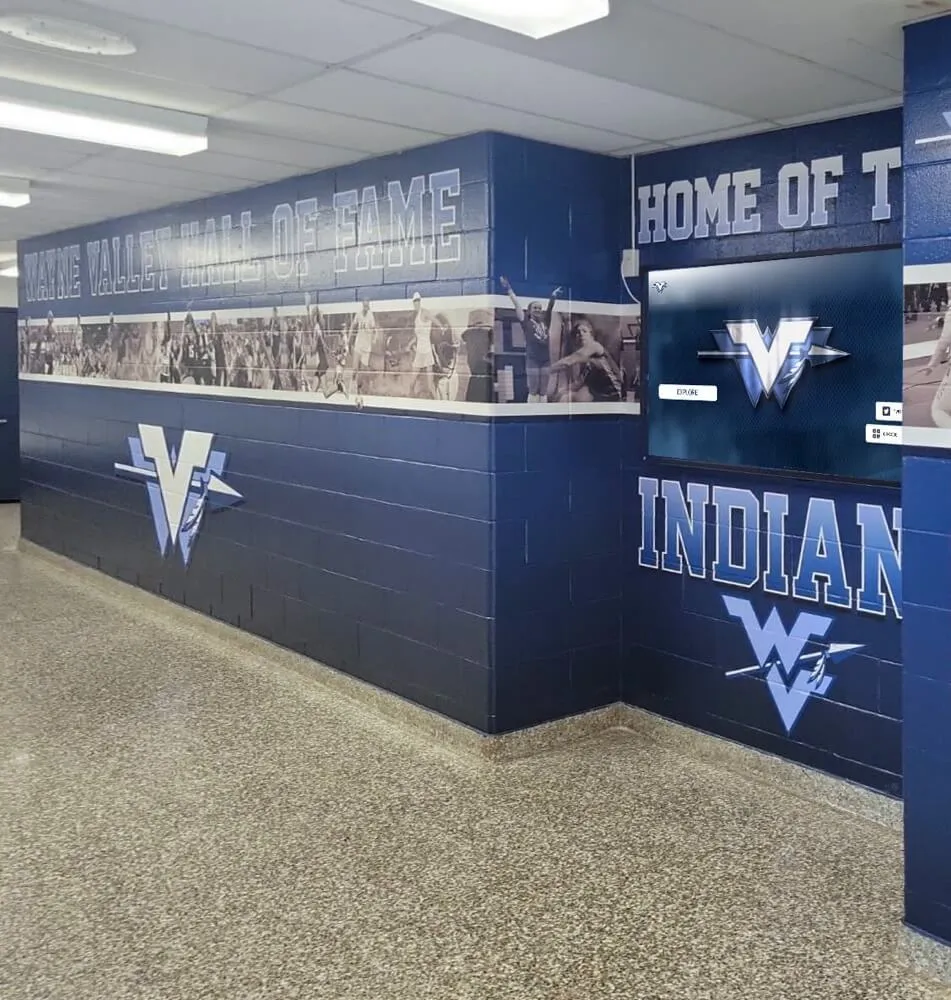
A well-maintained donor log keeps sponsor names accurate when it is time to update recognition displays
Why In-Kind Gifts Need Their Own Log
Cash donations are simple to record: a check arrives, a dollar amount is deposited. In-kind gifts are different. A local print shop donates 500 game-day programs. A photography studio shoots the athletic banquet at no charge. A construction company installs a trophy case display wall. Each of these has real value—but someone has to write it down consistently.
Common problems that appear when there is no dedicated in-kind log:
- Inconsistent valuation: One volunteer records the retail price, another uses the cost the vendor would charge a nonprofit, a third just leaves the field blank.
- Missing sponsor follow-up: A donor provides equipment in October, but the thank-you letter referencing the valuation never goes out because no one owns that step.
- Recognition errors: A sponsor expects prominent acknowledgment at the awards banquet but receives only a brief mention—or none—because the gift was not categorized correctly.
- Audit exposure: If the booster club is audited, undocumented in-kind gifts or gifts with unsupported values create complications.
A dedicated log solves all four problems by creating one authoritative source that finance, recognition, and communications staff can each reference.
Core Fields Every Log Entry Needs
Your in-kind donation valuation log does not need to be complex software. A shared spreadsheet works well for most booster clubs. What matters is that every entry captures the same fields consistently.
Donor Identification
- Full legal name of donor or organization
- Primary contact name and title
- Contact email and phone
- Mailing address (for written acknowledgment letters)
- Relationship to school (alumni, local business, parent, etc.)
Gift Description
- Detailed description of goods or services provided
- Quantity or scope (e.g., “500 full-color programs, 8.5×11, saddle-stitched”)
- Date delivered or service performed
- Gift category (printing, equipment, photography, installation, food/catering, transportation, other)
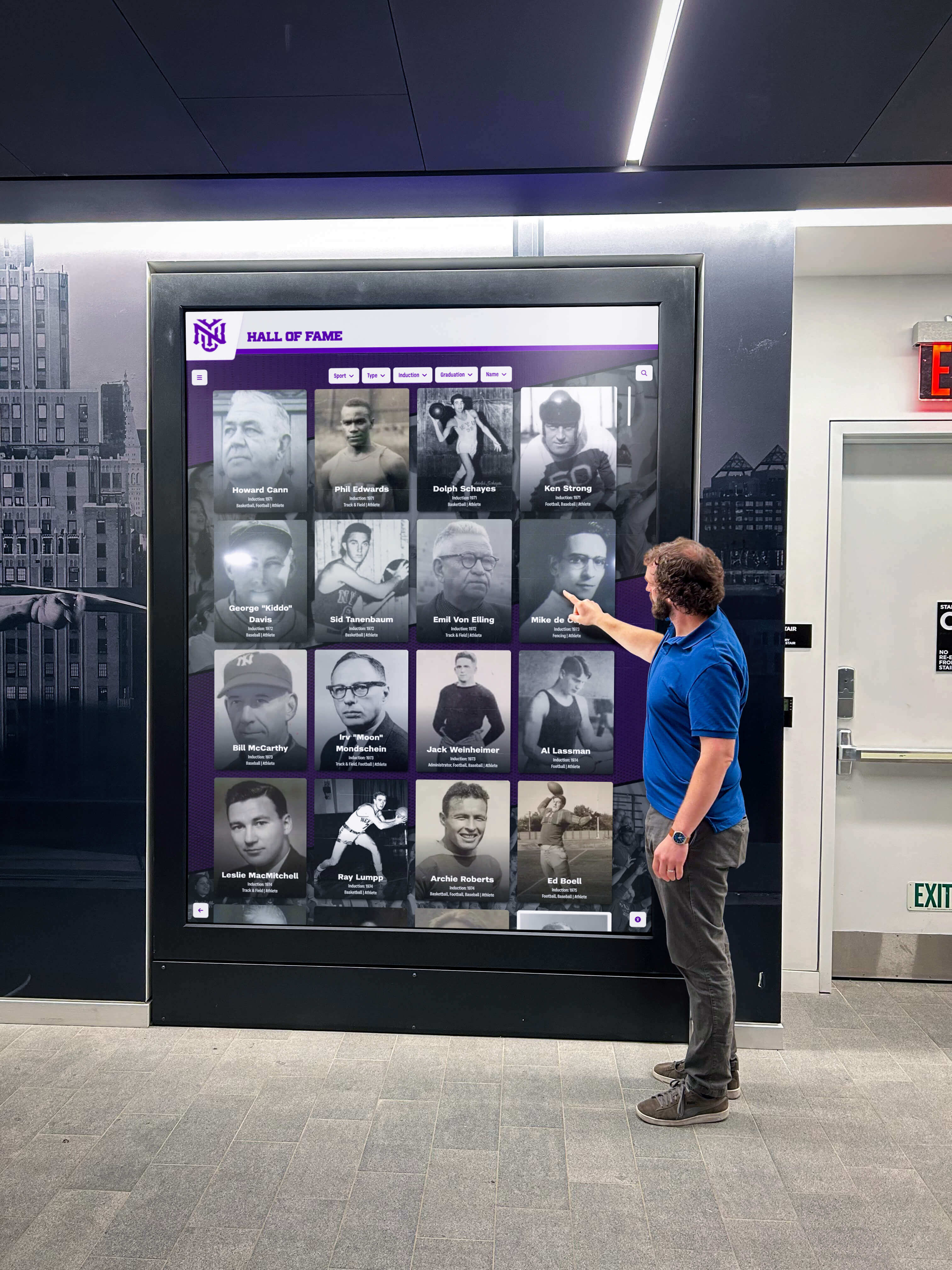
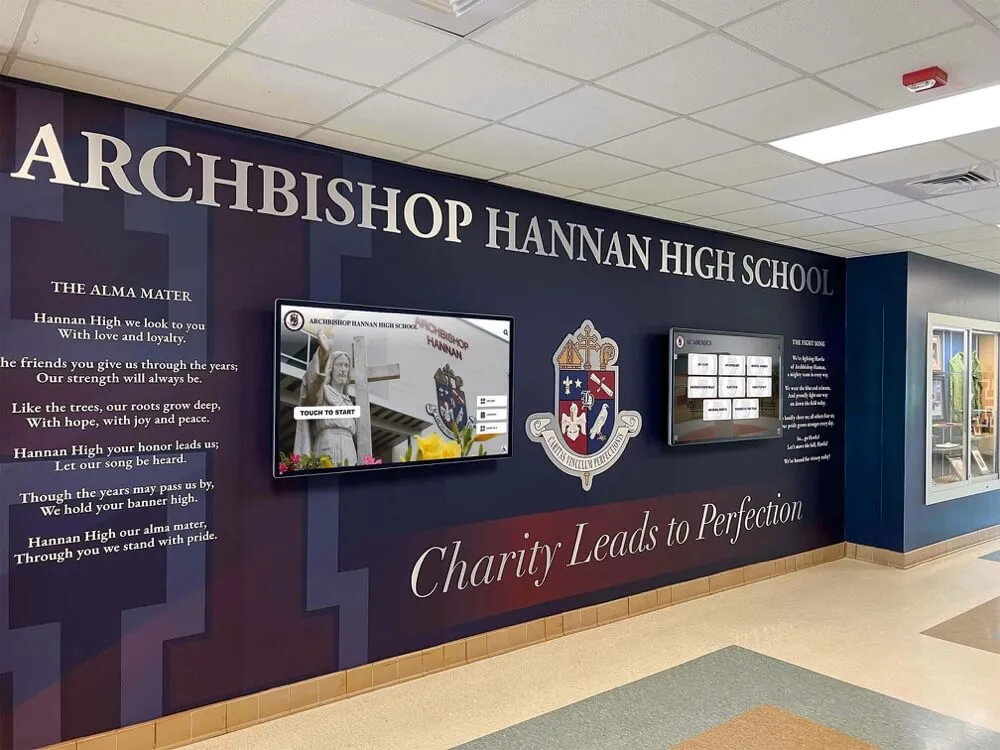
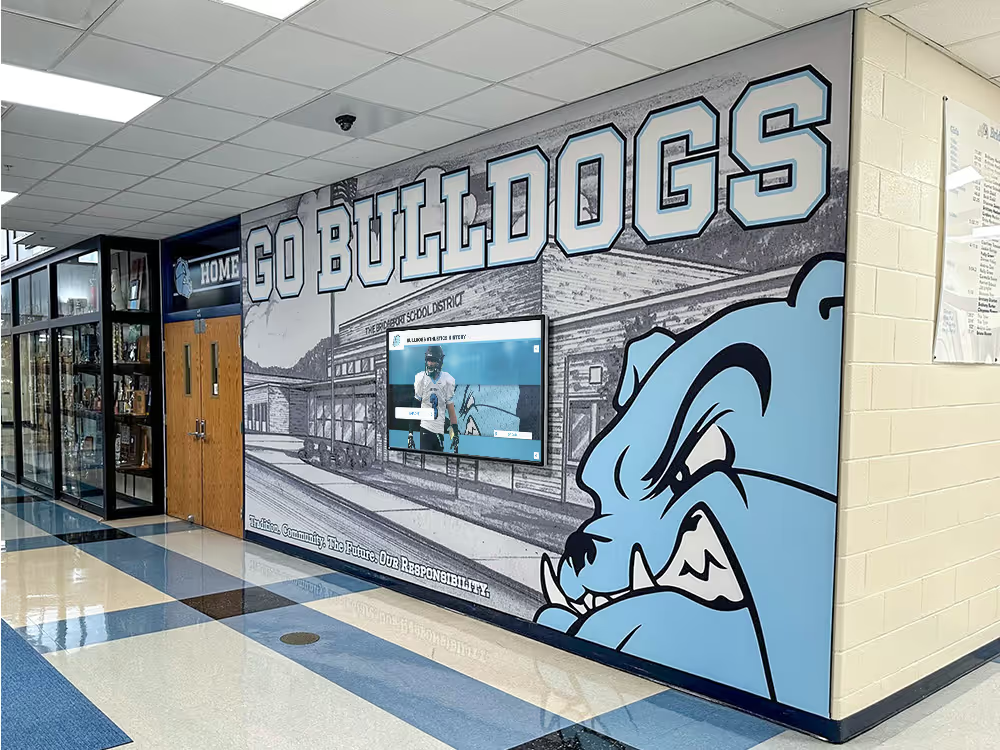
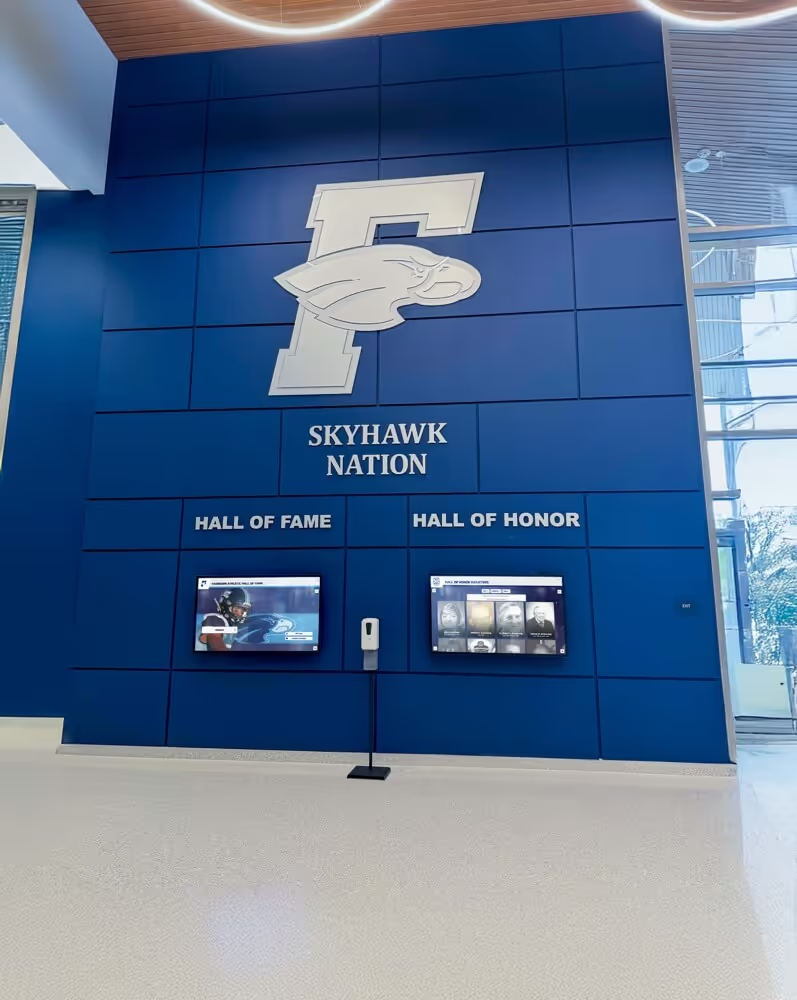
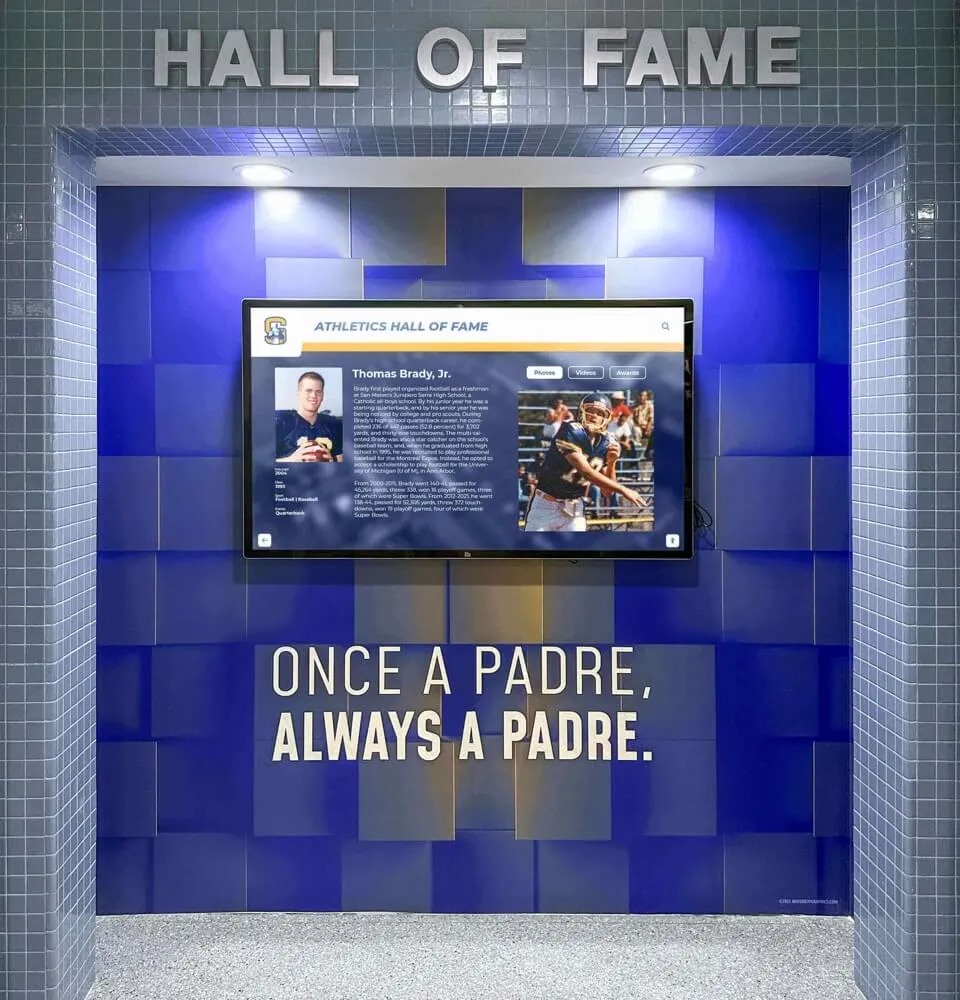
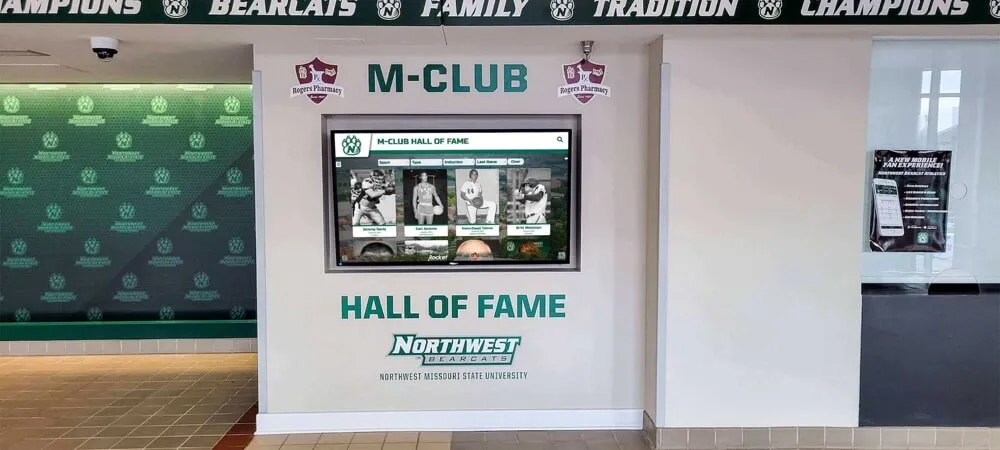
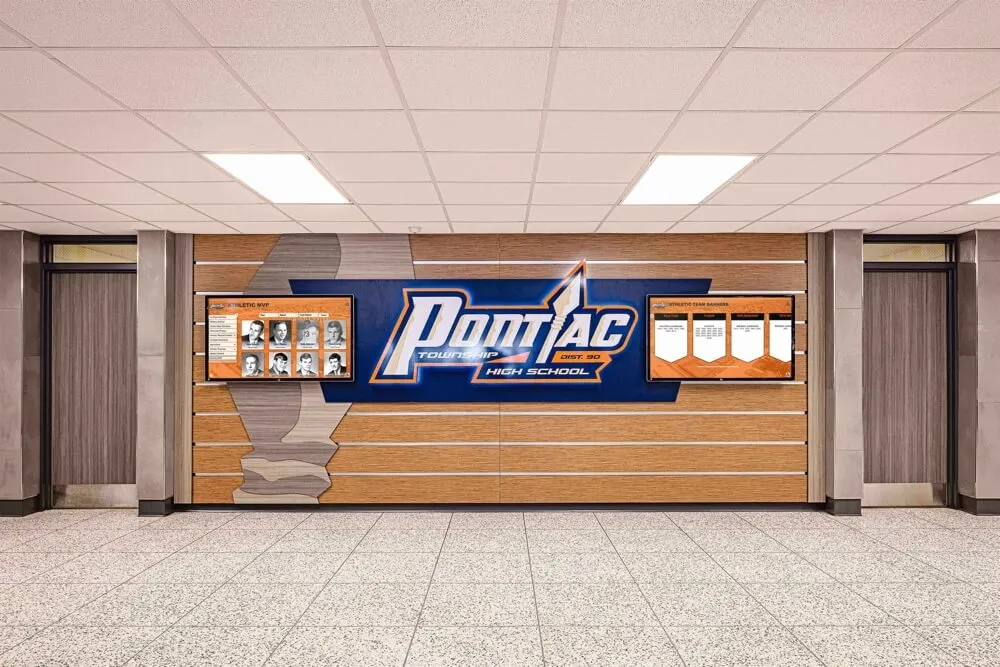
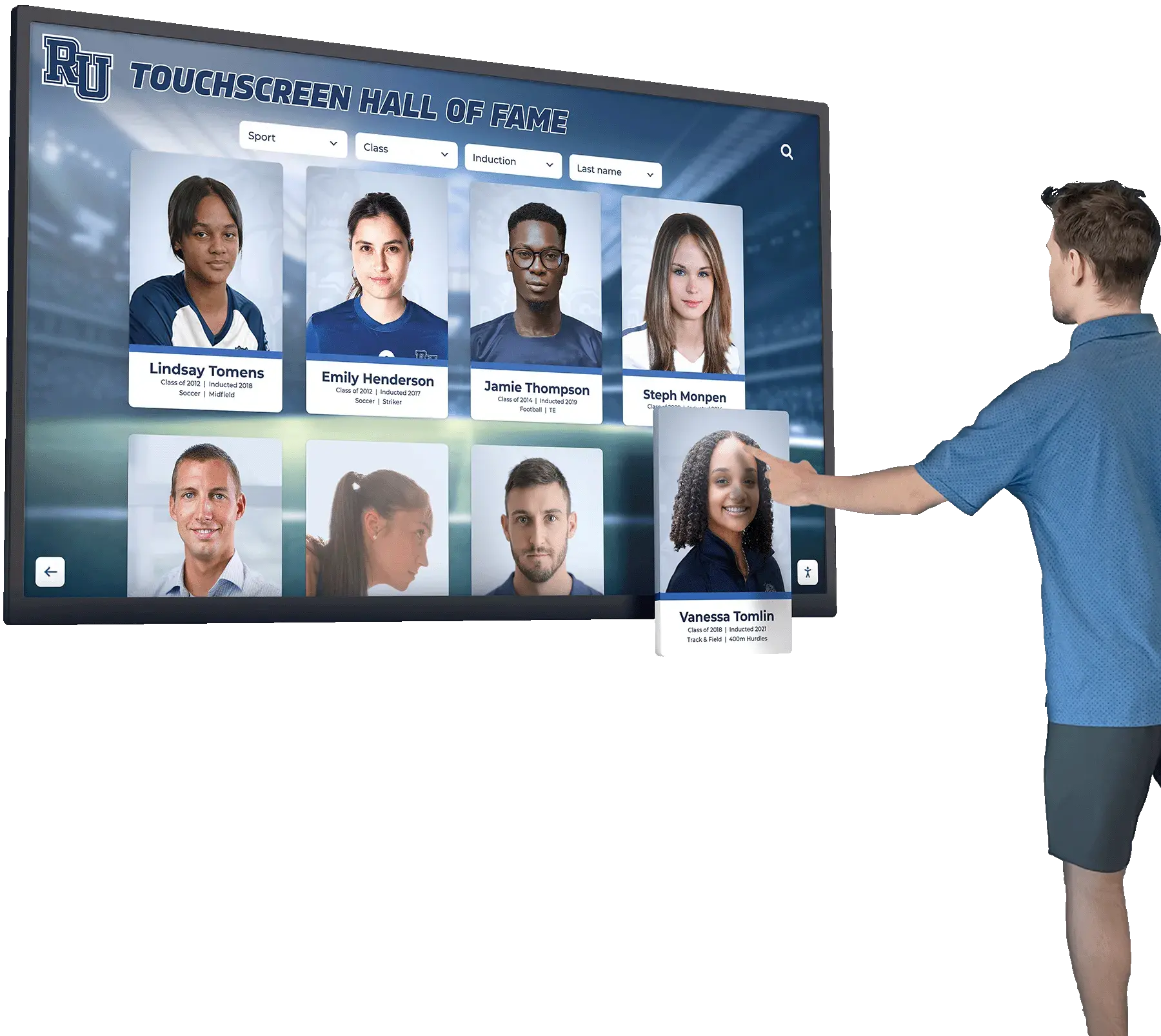
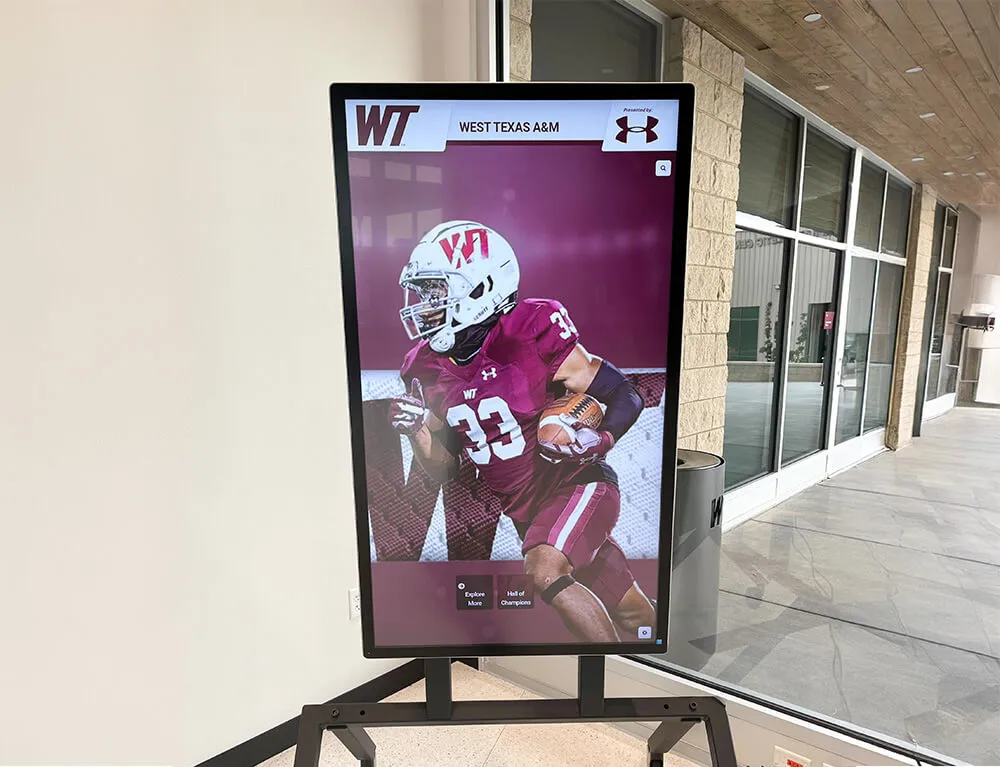
Digital recognition systems make it easier to update sponsor acknowledgment entries as valuations are confirmed
Valuation Fields
- Estimated fair-market value (FMV)
- Valuation method used (see section below)
- Source citation (vendor quote, published rate card, comparable invoice)
- Date valuation was determined
- Reviewed by (initials of person who confirmed the figure)
Recognition and Follow-Up Fields
- Agreed recognition level (Presenting Sponsor, Gold, Silver, Bronze, In-Kind Supporter, etc.)
- Recognition placements promised (program ad, banner, scoreboard acknowledgment, website listing, annual ceremony mention)
- Thank-you letter sent date
- Letter signed by (booster president, AD, principal)
- Recognition fulfilled date
- Notes on any special recognition requests or conversations
Valuation Methods and When to Use Each
The IRS requires that organizations provide written acknowledgment of in-kind gifts but does not require the organization to determine the value—that responsibility falls on the donor for tax deduction purposes. Still, your log needs a consistent internal figure so recognition levels can be assigned fairly and communications can reference an appropriate amount without over- or understating what was received.
Four practical approaches for common in-kind gift types:
1. Published Rate Card or Retail Price List
Best for: printing, signage, photography packages, catering
Ask the vendor for the rate card or price list they charge non-discounted clients. If they do not have one, ask for a written statement of what they would have charged another customer for the same deliverable. File this document as the valuation source.
This is the most defensible method because it connects directly to the vendor’s own pricing.
2. Comparable Invoice Method
Best for: installation labor, equipment rental, specialized services
Pull two or three invoices from similar vendors for similar work. Use the average or the middle value. Note the comparable vendors in your source citation field so the valuation can be reconstructed later.
3. Volunteer Labor Rate (with limits)
Best for: donated time from skilled professionals
The IRS generally does not allow donors to deduct the value of their personal services, so this category often carries no formal tax acknowledgment. However, documenting volunteer hours and a reasonable hourly rate for skilled labor (based on published wage surveys for the relevant occupation) helps your booster club understand the true scope of in-kind support and recognize donors at the right level.
Keep this figure clearly labeled as an internal recognition value rather than a tax-deductible contribution amount.
4. Vendor-Provided Valuation Statement
Best for: equipment loans, software licenses, specialized equipment
Ask the vendor to provide a brief written statement of the fair-market value. This is particularly useful for equipment with a known retail or rental price, and it shifts documentation responsibility to the party with direct knowledge of the value.
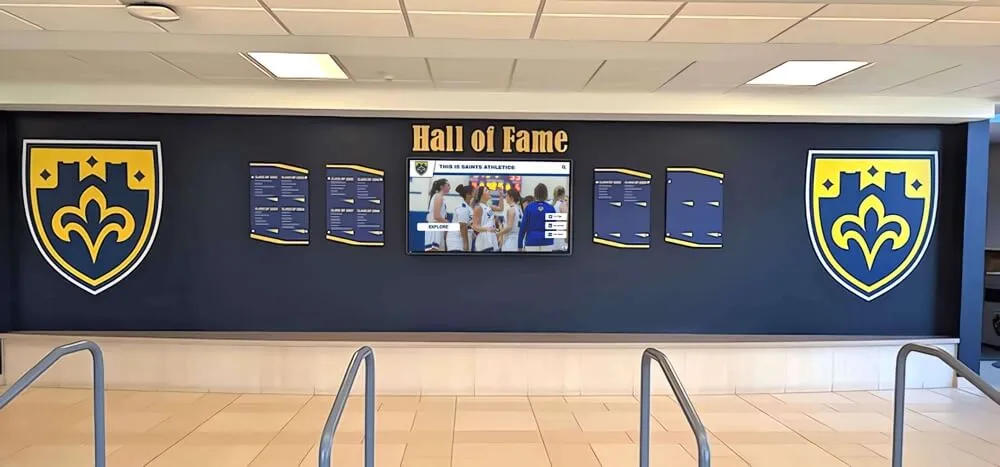
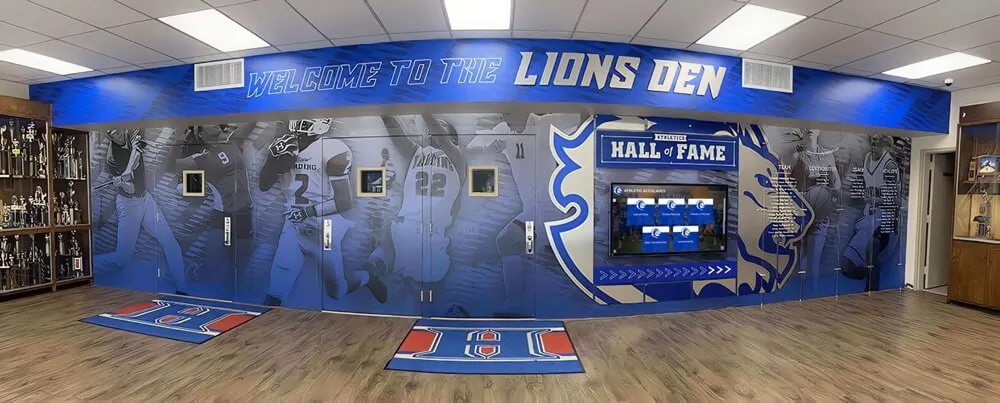
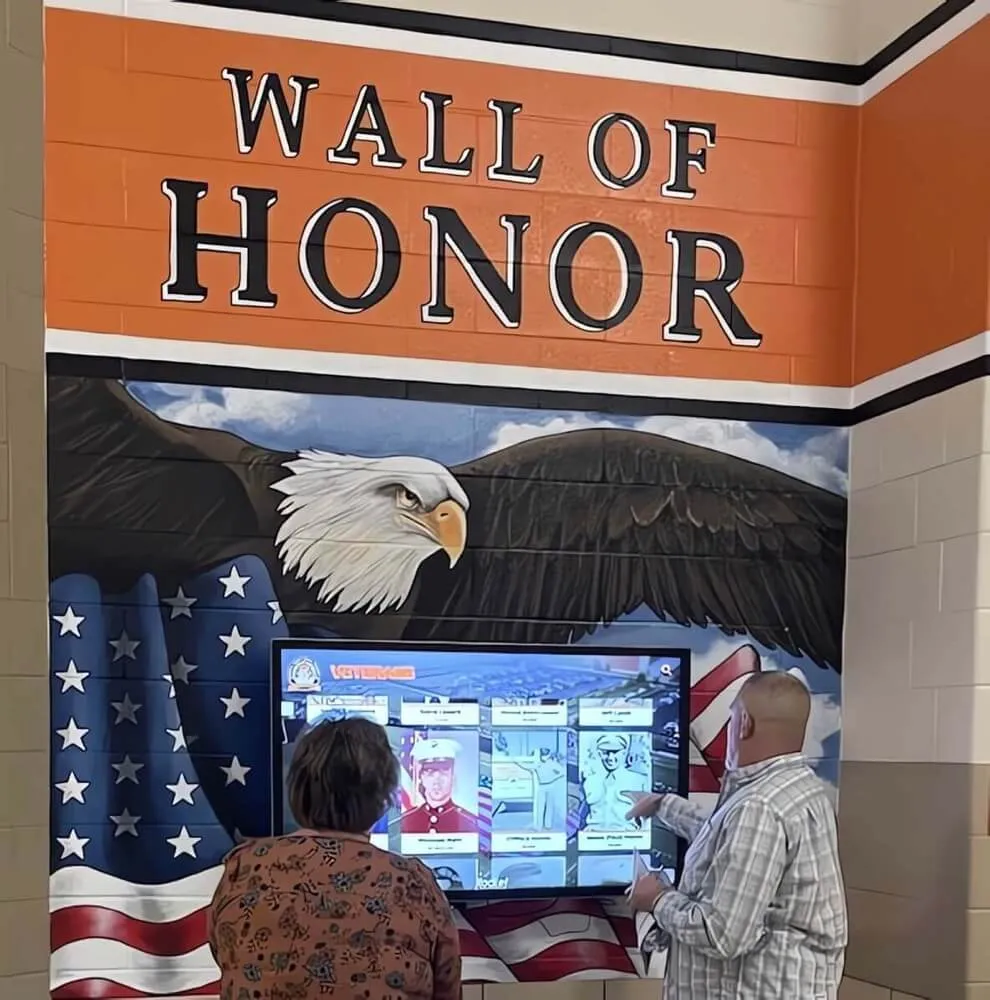
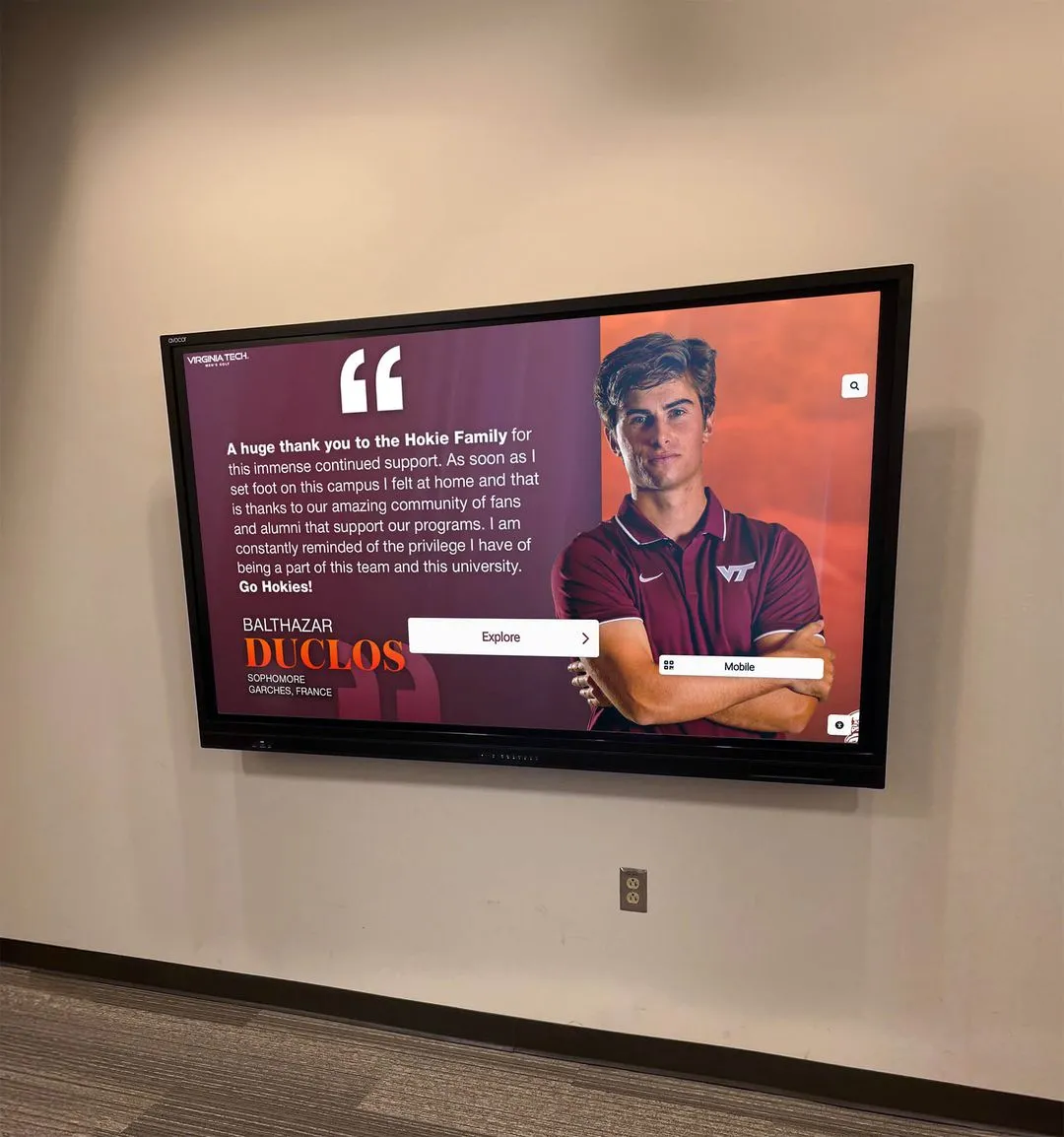
In-kind donors who contribute to recognition infrastructure—like display installation—deserve acknowledgment at the same level as cash contributors at similar tiers
Building the Log: A Step-by-Step Workflow
Here is a repeatable workflow your booster club can run for every in-kind gift received:
Step 1 — Capture at Point of Contact
Assign one person (usually a board member or volunteer coordinator) as the in-kind log owner. When any board member, coach, or parent learns of an in-kind gift commitment, they email the log owner within 48 hours with: donor name, gift description, approximate value if known, and point of contact. The log owner opens a new row and flags it as “Pending Documentation.”
Step 2 — Collect Supporting Documentation
Within two weeks of the gift being delivered or the service performed, the log owner follows up with the donor contact to gather: a rate card or valuation statement, a description of the deliverable for the acknowledgment letter, and any recognition promises previously made verbally.
Step 3 — Confirm Valuation
The log owner and the booster club treasurer review the documentation together and agree on the FMV figure. Both initials go in the “Reviewed by” field. If there is a significant discrepancy between what the donor expects and what the comparable-market evidence supports, the treasurer flags it for a board discussion before the acknowledgment letter goes out.
Step 4 — Assign Recognition Level
Using the confirmed FMV, the log owner assigns a recognition level according to the club’s current sponsor tier schedule. In-kind gifts at the same value threshold as cash donations should generally qualify for the same tier. Document any exceptions (a vendor who requests a lower profile, a donor whose gift category does not fit standard tiers) in the notes field.
Step 5 — Send Written Acknowledgment
The booster president or athletic director signs a written acknowledgment letter within 30 days of the gift. The letter describes the gift, states that no goods or services were provided in exchange (if applicable), and notes the recognition placements the donor will receive. File a copy of the signed letter and record the send date in the log.
Step 6 — Fulfill Recognition Commitments
As the season or program year unfolds, check off each recognition placement in the log as it is completed: program ad placed, banner hung, website listing published, annual ceremony mention included. When all placements are fulfilled, mark the row as complete.
Step 7 — Year-End Reconciliation
At the end of the fiscal year, export the log and reconcile it against the booster club’s financial statements. Total in-kind support should appear as a line item in the annual report. Any rows still marked as “Pending Documentation” or incomplete recognition should be resolved before the books close.
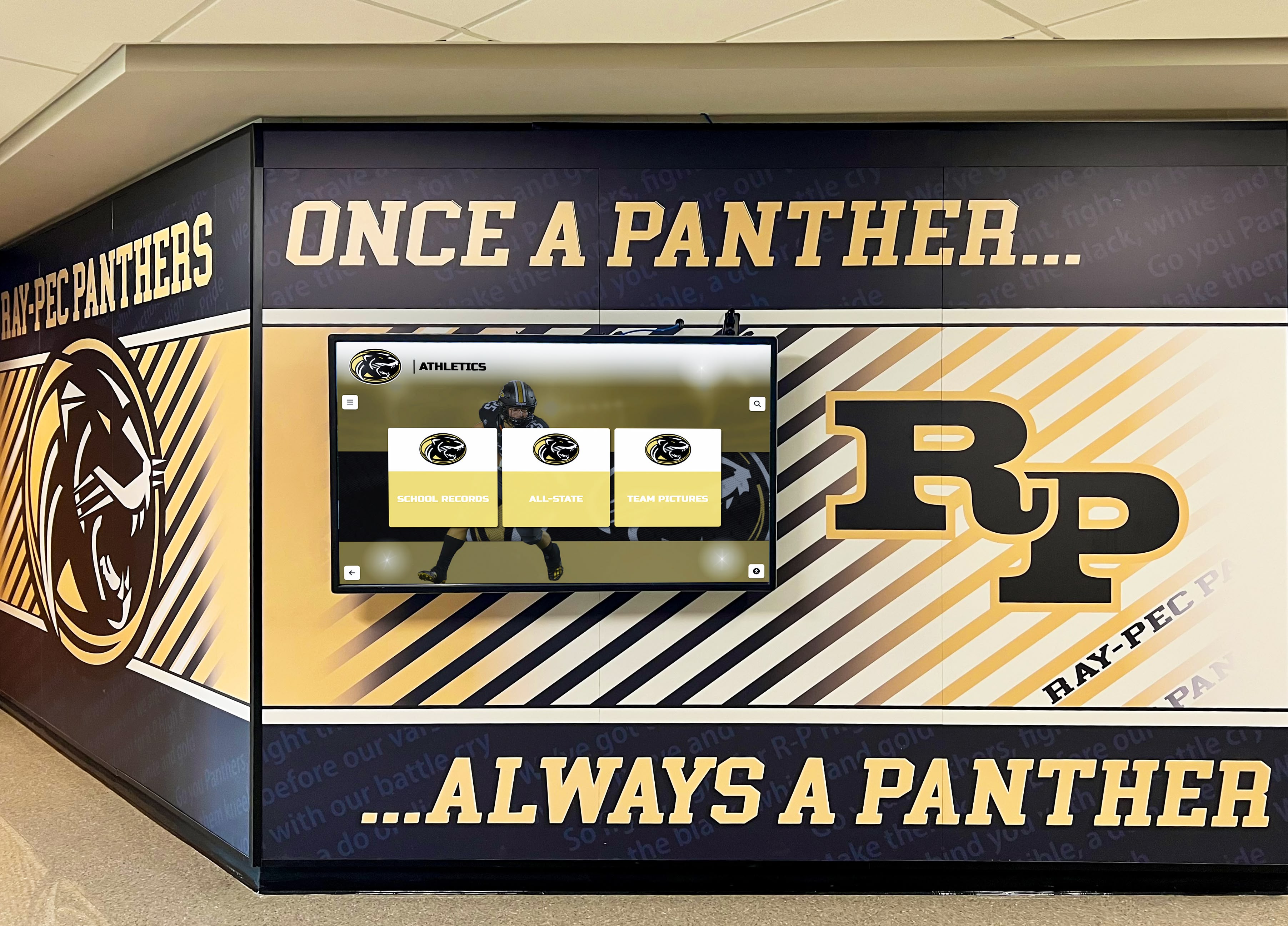
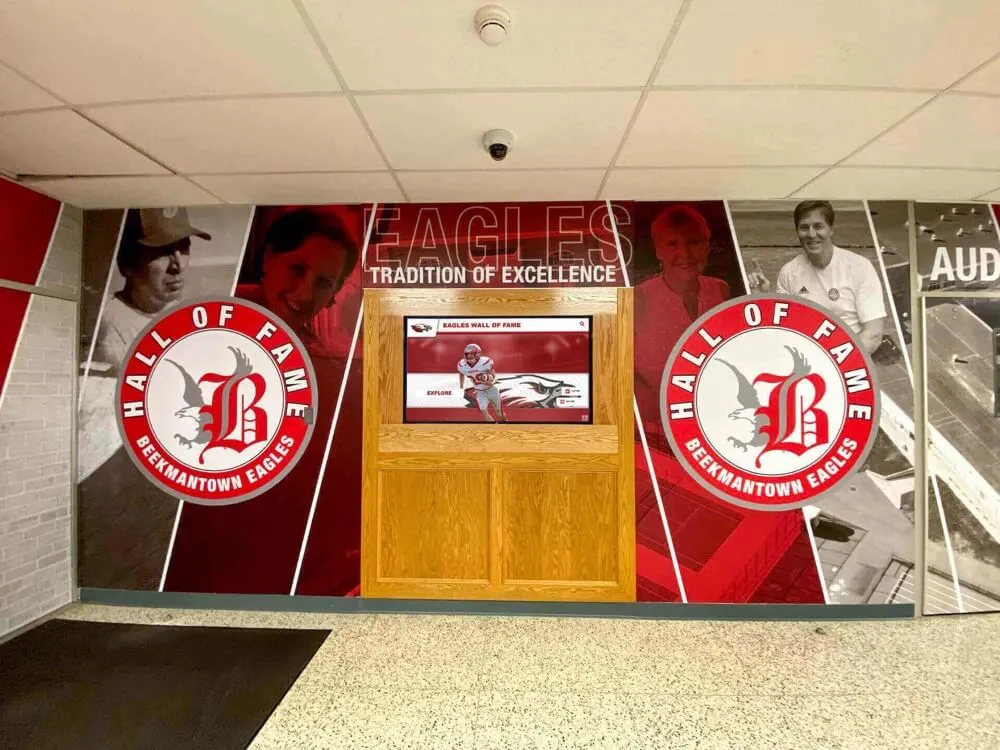
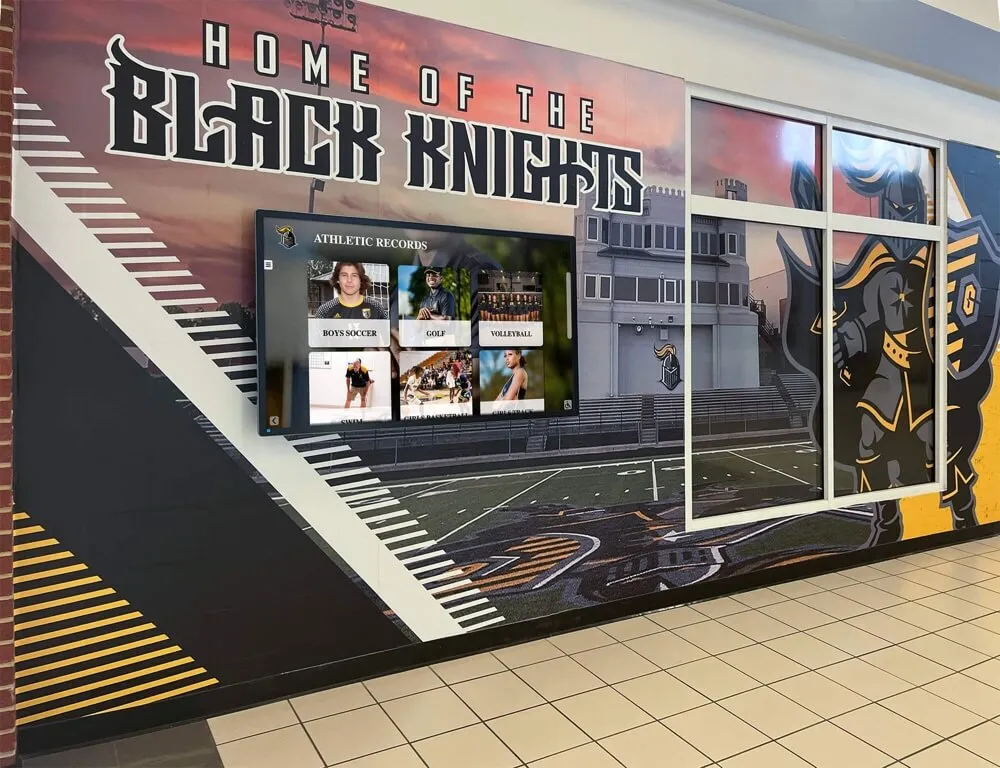
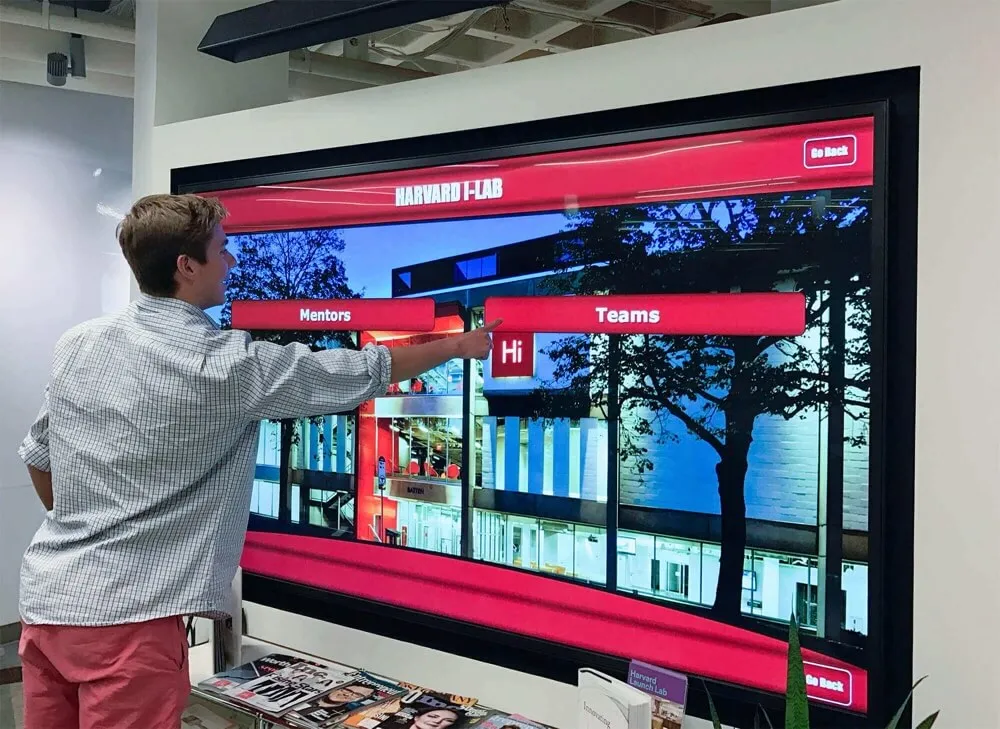
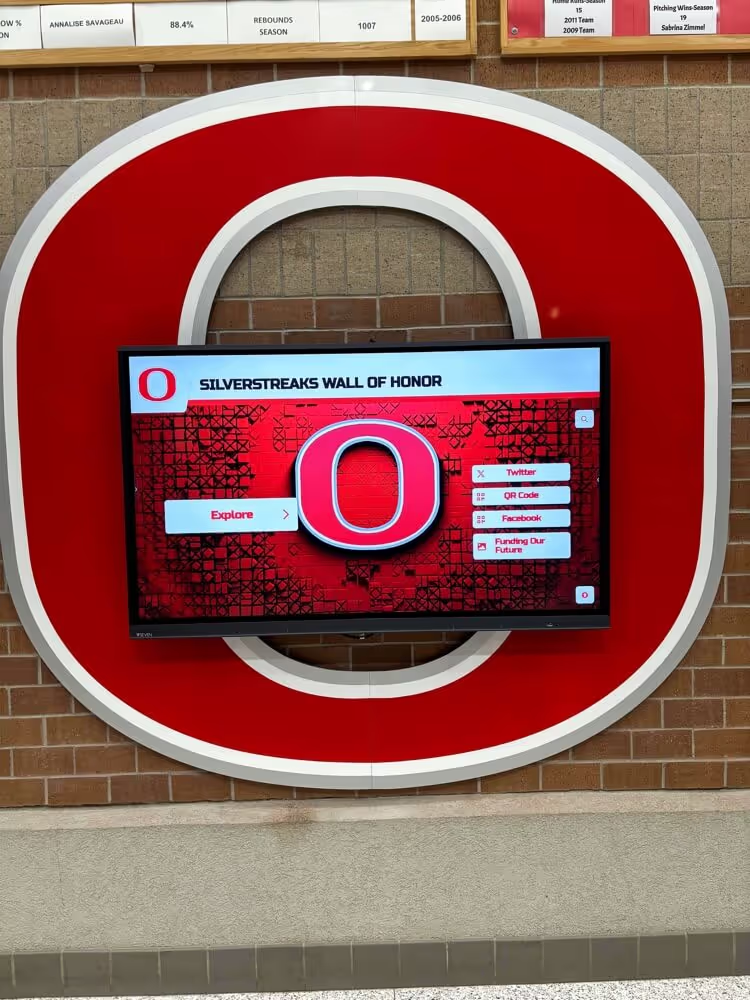
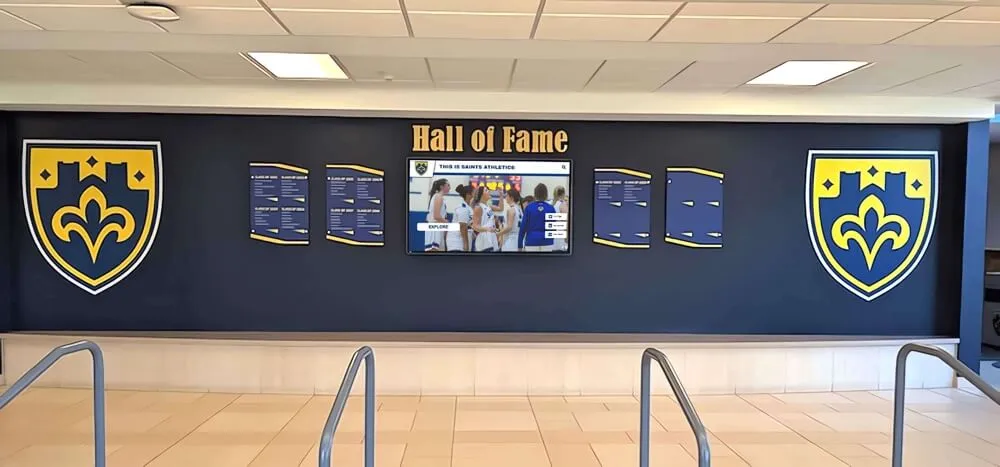
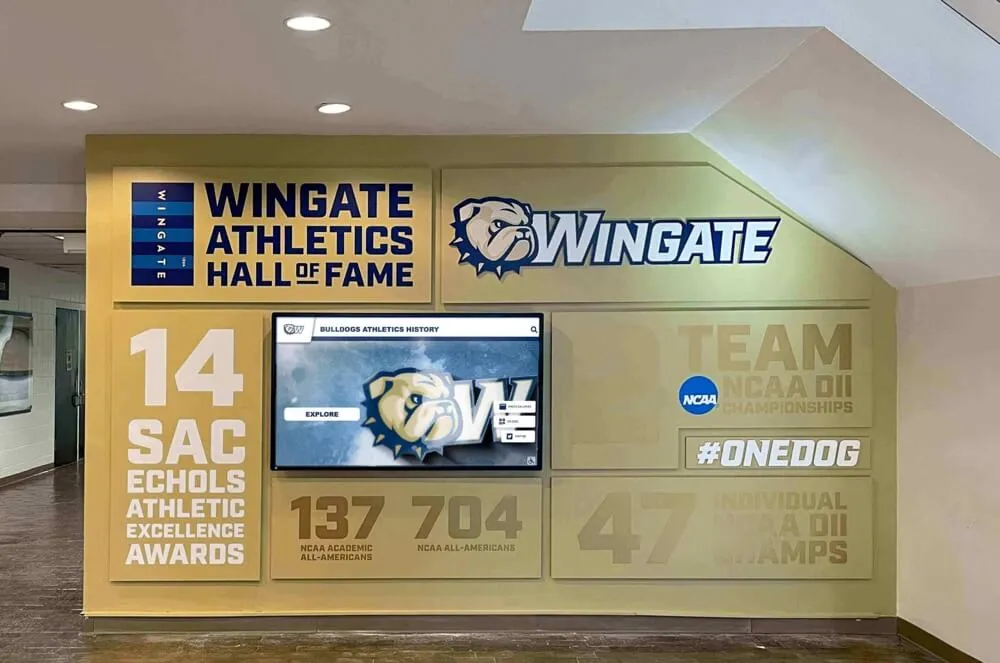
Sponsors who contribute to athletics infrastructure often want their names visible in the spaces their gifts helped create
Common In-Kind Gift Categories and Recognition Notes
Different gift types come with different recognition expectations. Your log workflow should account for these nuances:
Printing and Signage
Vendors who donate programs, banners, or scoreboard signs often want a small credit line on the printed piece (“Printed by [Business Name]”). Capture this expectation in the recognition field so the design team knows before files go to print.
Photography and Videography
A studio that donates coverage of the athletic banquet or hall of fame unveiling typically wants a credit in distributed photos or video and possibly a listing on the booster club website. Confirm whether the photographer retains licensing rights or transfers them, as this affects how the school can use the images.
Equipment Loans
Borrowed scoreboards, sound systems, or display hardware should be logged with a return date and condition report. Valuation is based on the rental rate for the period, not the purchase price. Ensure the acknowledgment letter is clear that the gift is a temporary loan if that is the arrangement.
Installation Labor
Contractors or volunteers who install display cases, murals, or athletic signage may represent the largest in-kind contribution a booster club receives in a given year. Skilled installation labor rates vary widely by region and trade; use the comparable invoice method and document at least two reference sources.
Connecting the Log to Sponsor Recognition Displays
The in-kind donation log is not just a finance document—it is the source of truth for who gets recognized and how. When the time comes to update sponsor boards, program listings, or digital recognition displays, the log should tell you exactly what each donor was promised.
For schools using digital recognition tools for athletics and donor programs, an accurate in-kind log makes content updates straightforward: the person updating the display can pull confirmed values and recognition tiers directly from the log without guessing.
Booster clubs that maintain physical sponsor boards or trophy cases often face the challenge that donor information changes year to year—businesses rebrand, contacts leave, giving levels shift. Maintaining a clean log with current contact information and confirmed recognition levels reduces the scramble every time a display needs to be refreshed.
For programs exploring digital options, interactive hall of fame and recognition wall platforms allow sponsor acknowledgments to be updated remotely without reprinting or re-engraving physical materials. An in-kind donor who upgrades from an equipment loan to a cash gift in a subsequent year can be moved to a new recognition tier in the system quickly, provided the original gift was logged correctly.
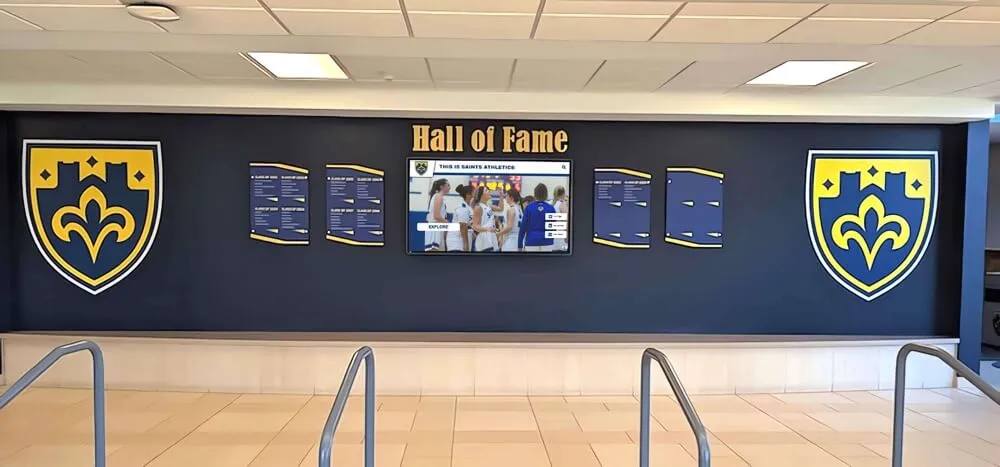
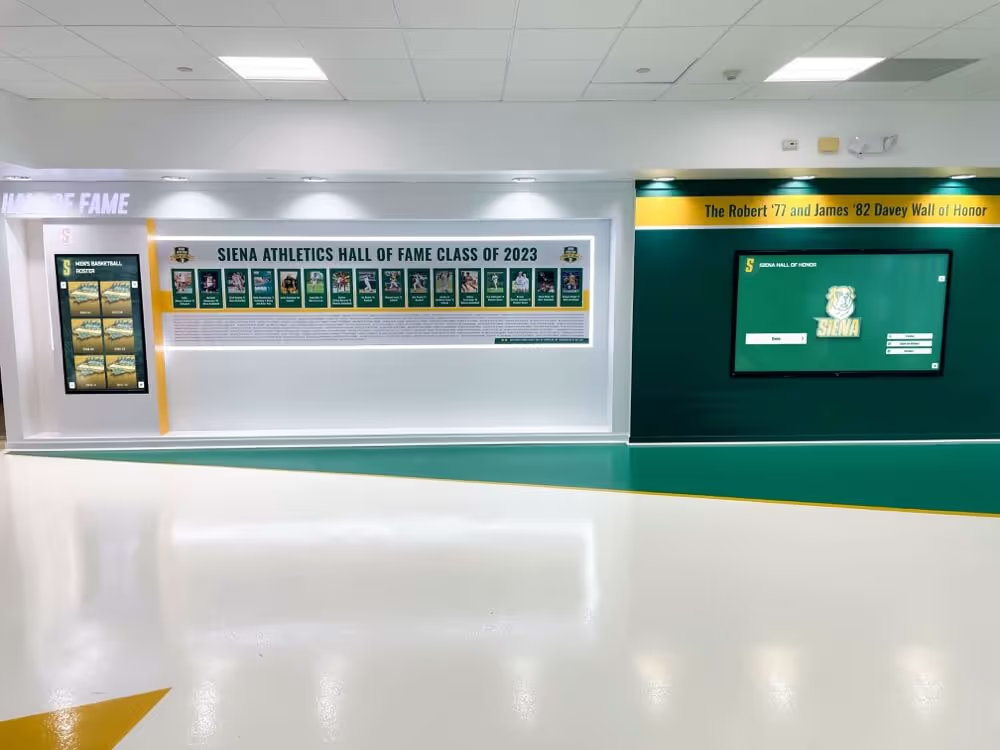
Tiered recognition displays work best when every donor's level was confirmed at the time of the gift—not reconstructed months later
Sponsor Follow-Up Beyond the Acknowledgment Letter
The acknowledgment letter fulfills a compliance step, but the recognition relationship does not end there. Sponsors who feel genuinely appreciated—not just legally notified—are more likely to renew and increase their support.
Use the in-kind log as a trigger for a follow-up calendar:
- 30 days after gift: Acknowledgment letter sent (required)
- At each recognition fulfillment: A brief email or phone call confirming the placement (“Your name is in the fall program—we’ll send you a copy”)
- Mid-season check-in: A note from the booster president with a season update and a photo if the donor’s signage or equipment is visible
- End of year: An annual summary letter listing all recognition placements fulfilled, thanking the donor for the year’s partnership, and previewing next year’s opportunities
For digital recognition programs, some schools share a link to the online or touchscreen display so in-kind donors can see exactly how their name appears. This is a low-cost, high-impression touchpoint that physical plaques cannot replicate.
Schools interested in expanding their academic and athletic recognition programs beyond physical boards can explore how platforms designed for interactive recognition programs handle multi-year sponsor data—keeping records current while giving donors a living proof point they can revisit and share.
Sample Log Structure
Below is a simplified example of how entries might look in a spreadsheet-based in-kind log. Adapt column names to match your booster club’s recognition tiers and fiscal calendar.
| Field | Example Entry |
|---|---|
| Entry ID | IK-2026-041 |
| Donor Name | Westside Print & Design LLC |
| Contact | Maria Torres, Owner |
| Gift Category | Printing |
| Description | 600 full-color game programs, 8.5×11, 32 pages, saddle-stitched |
| Date Delivered | 2026-09-12 |
| FMV | $1,440 |
| Valuation Method | Vendor rate card |
| Source on File | Yes — rate card dated 2026-08-28 |
| Reviewed By | T.L. / R.M. |
| Recognition Tier | Gold Sponsor |
| Placements Promised | Program back cover credit, website listing, banquet mention |
| Acknowledgment Sent | 2026-09-28 |
| Signed By | Booster President |
| Program Credit Fulfilled | 2026-09-12 |
| Website Listing Fulfilled | 2026-09-15 |
| Banquet Mention Fulfilled | Pending — banquet date 2026-05-08 |
| Status | Active — partial fulfillment |
| Notes | Donor requested credit line read “Printed by Westside Print & Design” |
Integrating the Log with Your Annual Budget and Reporting
In-kind support has real budget implications. When a vendor donates printing, your booster club does not need to allocate cash for that expense. Tracking in-kind gifts alongside cash revenue gives your board a complete picture of the program’s total resource base.
For the annual report and any grant applications, total in-kind support is typically listed separately from cash contributions. Some granting organizations and school districts require detailed in-kind documentation before counting non-cash contributions toward program budgets or matching fund calculations. A well-maintained log makes this reporting straightforward.
Programs exploring how digital recognition solutions enhance hall of fame and donor wall display options often find that in-kind donors—vendors who contributed to the physical installation or content development—can be recognized within the digital system itself, creating a visible, lasting record that extends the value of the original gift.
Frequently Asked Questions
Does the booster club have to determine the value of in-kind gifts for tax purposes?
Generally no. For IRS purposes, the responsibility for determining and substantiating the value of a noncash contribution for deduction purposes rests with the donor, not the recipient organization. Your written acknowledgment should describe the gift and note that no goods or services were provided in return (if applicable) but does not need to state a value. Your internal log maintains a value for recognition-tier and budget purposes—this is an operational figure, not a formal valuation for donor tax deduction. Consult your school’s finance office or a CPA for guidance specific to your situation.
What if a donor’s estimate of their gift’s value seems inflated?
Document your own FMV determination using the comparable invoice or rate card method and use that figure for recognition-tier assignment. If a donor expects recognition at a level inconsistent with the gift’s fair-market value, address it directly in a conversation before the acknowledgment letter goes out. Overstating in-kind gift values on acknowledgment letters creates risk for both the organization and the donor.
How long should we retain in-kind log records?
Consult your school district’s records retention policy and your state’s nonprofit requirements. Many nonprofit advisors recommend retaining donation records—cash and in-kind—for at least seven years. Your in-kind log, supporting valuation documents, and copies of acknowledgment letters should all be retained together for the same period.
Can we recognize in-kind donors at the same level as cash donors?
Yes, and most booster clubs do. A $1,500 printing donation and a $1,500 cash contribution both represent equivalent support and typically qualify for the same recognition tier. The key is documenting the in-kind gift’s FMV rigorously so the tier assignment is defensible if a donor at a different level questions the comparison.
What happens when a vendor donates in one year and switches to a paid relationship the next?
Keep the in-kind log record intact for the donation year and close it as complete. When the vendor transitions to a paid sponsorship, create a new record under your cash sponsorship system. This maintains a clean history of the relationship that is useful for long-term partner recognition and for demonstrating stewardship during renewal conversations.
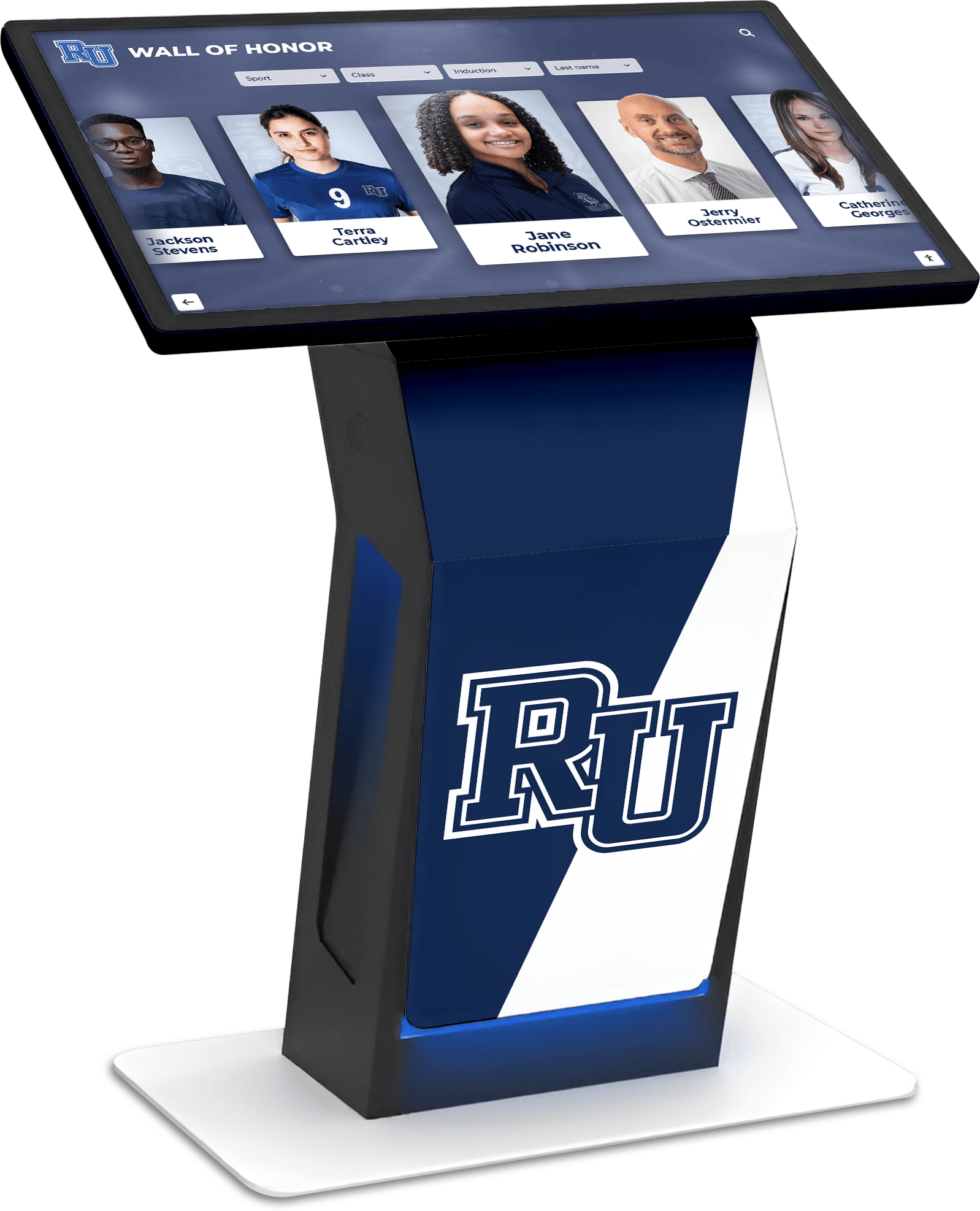
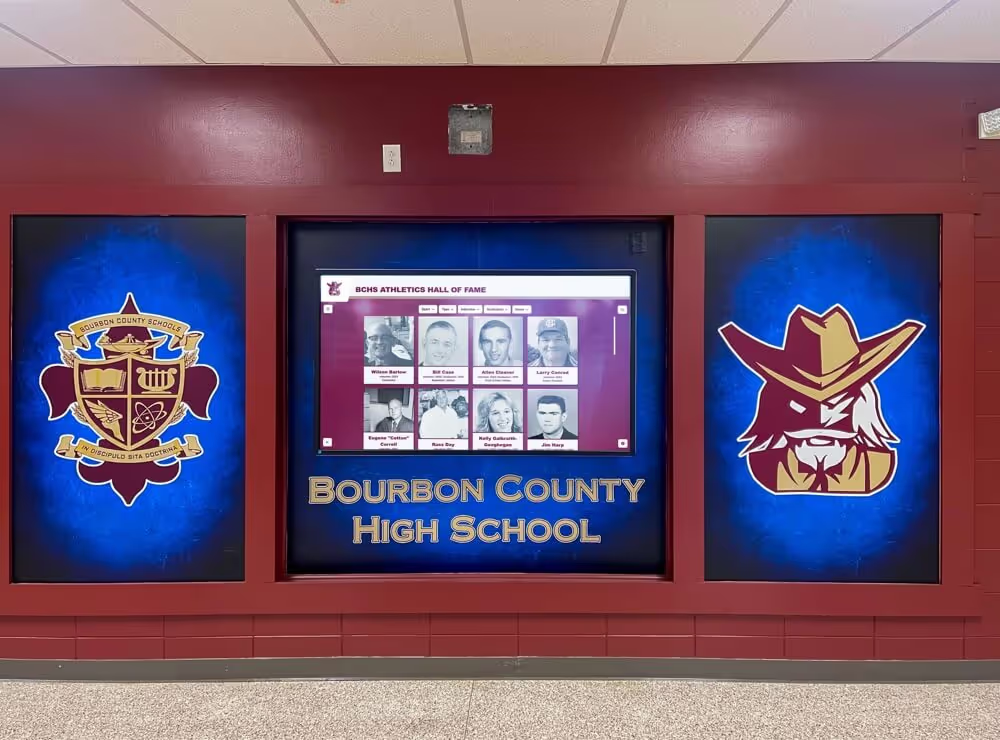
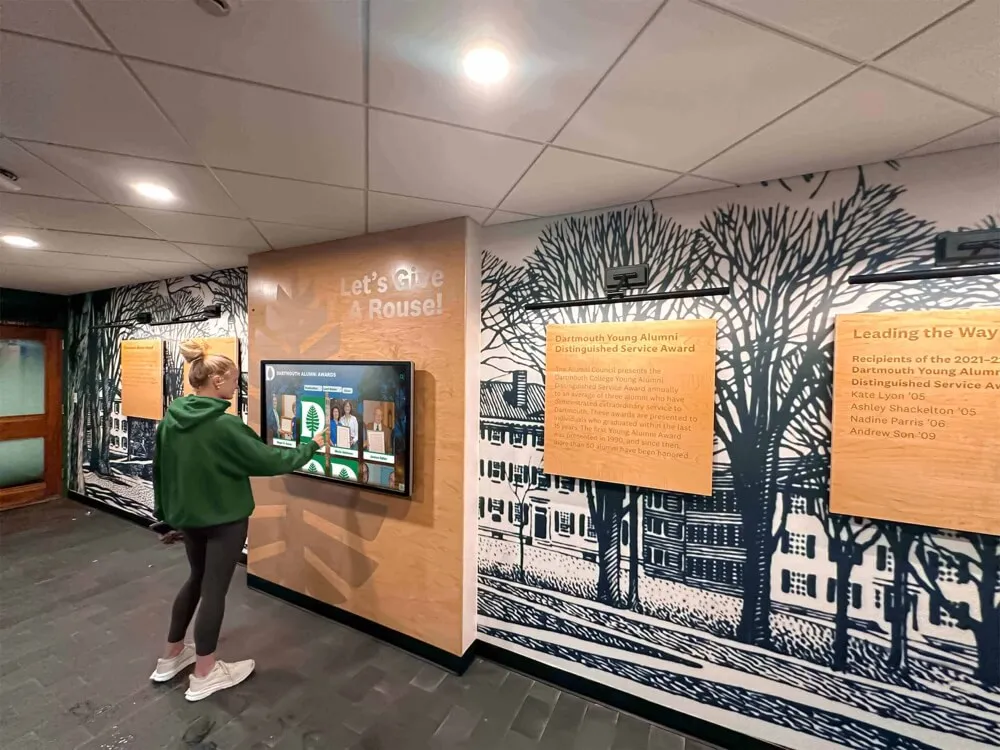
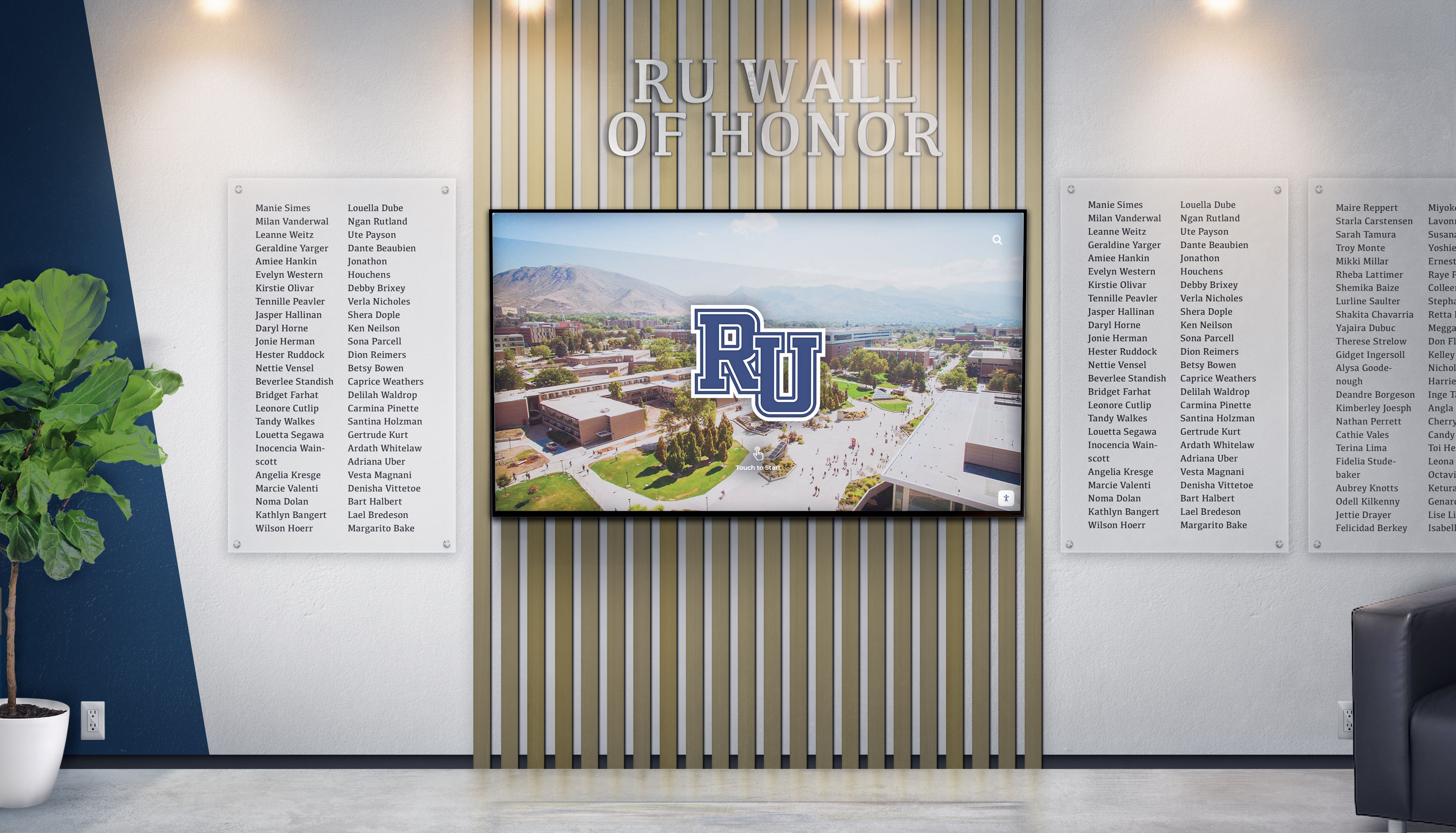
Digital recognition platforms allow sponsor and donor acknowledgments to be updated and displayed without reprinting physical materials
Making In-Kind Recognition Visible Year-Round
One limitation of traditional recognition—programs, banners, plaques—is that visibility is tied to specific moments: game night, the awards banquet, the end-of-season dinner. Sponsors who contributed in-kind gifts at significant values may receive brief visibility at these events and then fade from view.
Digital recognition platforms give booster clubs and athletic departments a way to extend sponsor acknowledgment beyond single-event moments. An interactive recognition display in the school lobby or athletic hallway that lists current-year in-kind sponsors alongside named award winners creates persistent, daily visibility. For vendors and local businesses, that ongoing presence in a community institution carries meaningful value.
For booster clubs exploring recognition display options, interactive recognition wall platforms and digital hall of fame solutions show how schools are combining athletic achievement displays with current-year sponsor acknowledgment in a single system—keeping donor names visible to students, families, and visitors throughout the year rather than only at season-end events.
The in-kind donation valuation log connects to this visibility strategy: accurate records and confirmed recognition tiers feed directly into what appears on the display, ensuring the acknowledgment matches what was promised and that no gift falls through the cracks.
Maintaining a consistent booster club in-kind donation valuation log is not complicated, but it requires ownership, a repeatable workflow, and fields designed to support both financial recordkeeping and sponsor recognition. The log turns informal gift conversations into documented commitments, keeps valuation methods consistent, and gives every team member—finance, recognition, communications—a single source of truth.
If your school is ready to modernize how athletic and donor achievements are recognized—moving beyond paper programs and static plaques to interactive, updatable recognition displays—request a custom demo from Rocket Alumni Solutions to see how digital recognition systems can work for your program.