



Color guard senior night is one of the most emotional milestones in a performer’s high school career—the moment when years of early morning rehearsals, competition weekends, and flag tosses in freezing bleachers all converge into a tribute that finally says: we see you, we are proud of you, and we will miss you. Unlike the senior nights planned for varsity sports teams, color guard senior tributes require their own ceremony logic. The performers aren’t walking off a basketball court or a soccer field. They are artists, athletes, and ensemble members whose contributions blend music, movement, and visual design in ways that defy a single box score.
When directors, parents, and band boosters put real thought into the color guard senior night experience, they create something lasting—not just a halftime moment, but a tribute that graduates carry with them long after graduation. This guide covers ceremony formats, parent involvement ideas, slideshow and poster traditions, flag retirement ceremonies, and how to extend that recognition beyond a single night with permanent displays that honor every performer who ever wore your program’s uniform.
A well-planned senior night tribute acknowledges what color guard seniors have actually done: committed hundreds of hours to an art form that demands physical precision, artistic interpretation, and the discipline to perform under pressure. Directors who approach this night with intentionality create moments that resonate for families who have driven to competitions at 5 a.m. and spent three autumns cheering through halftime shows in the rain.

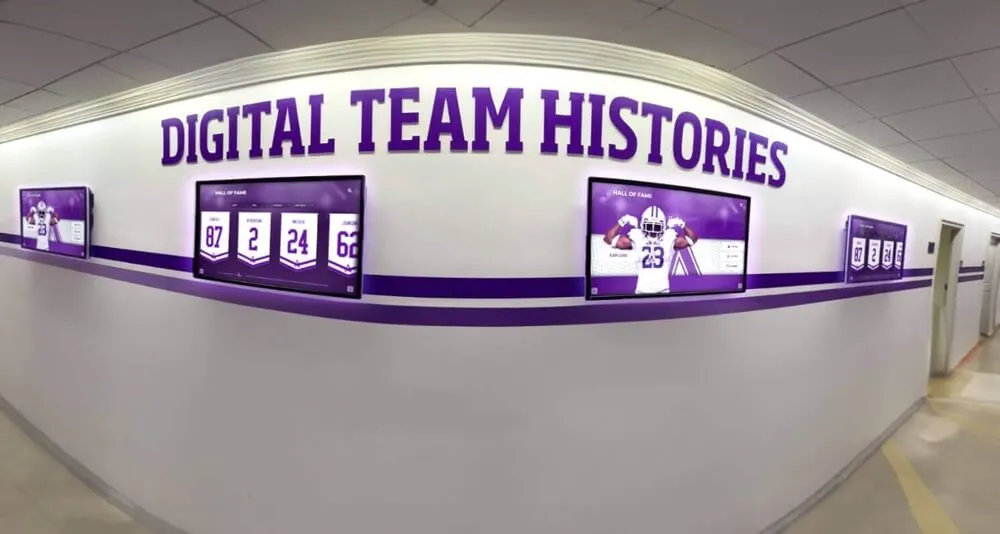
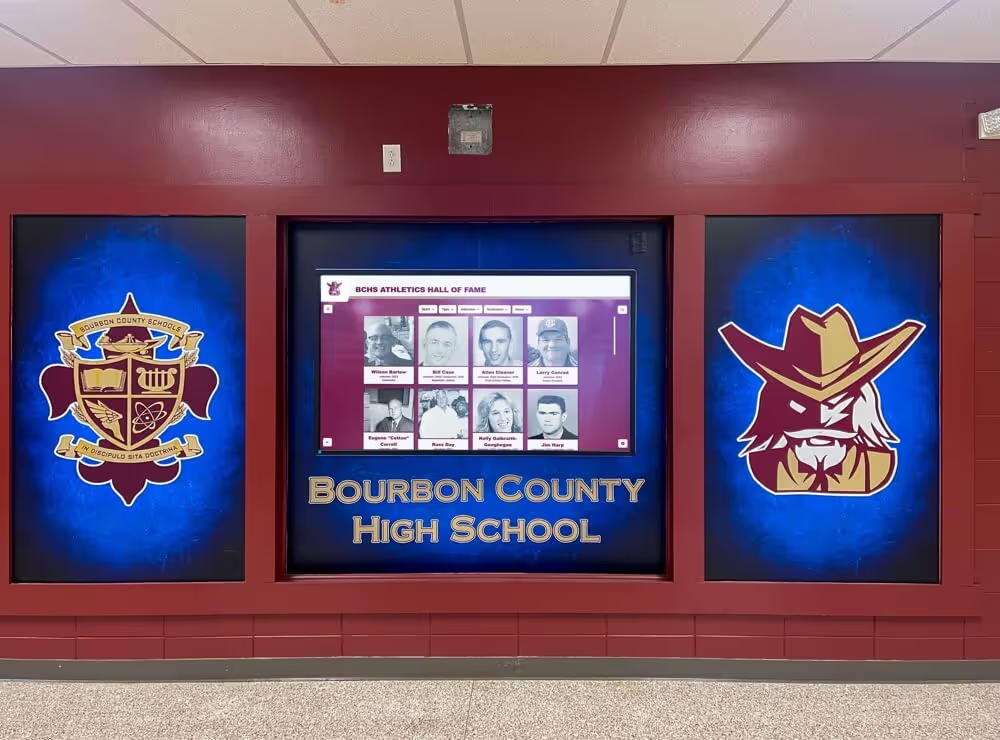
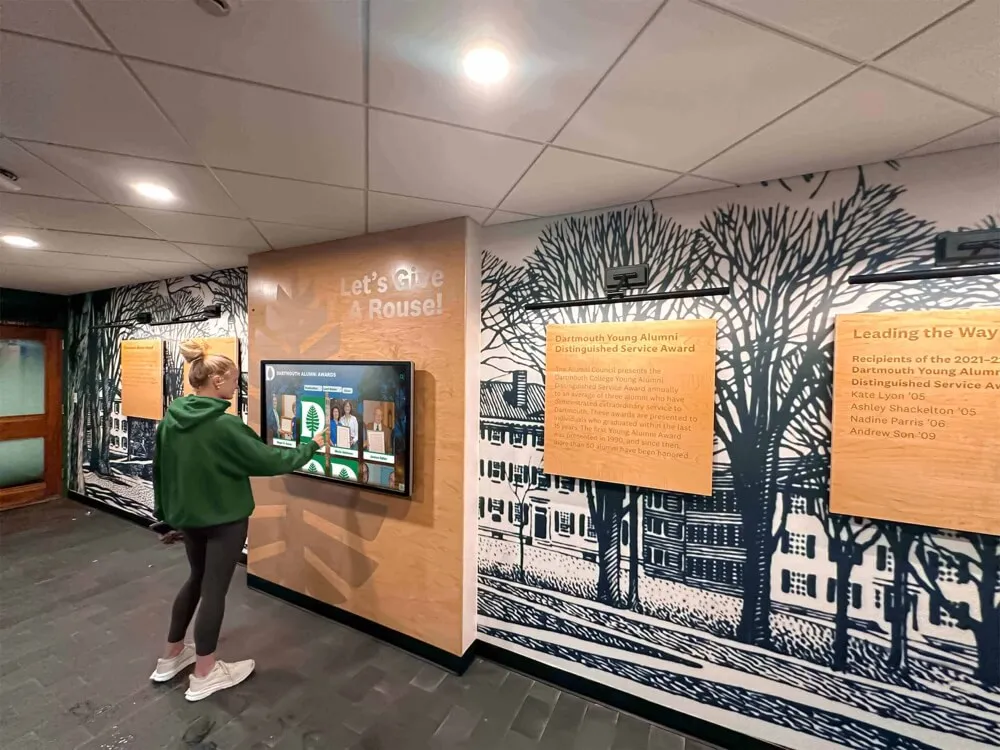
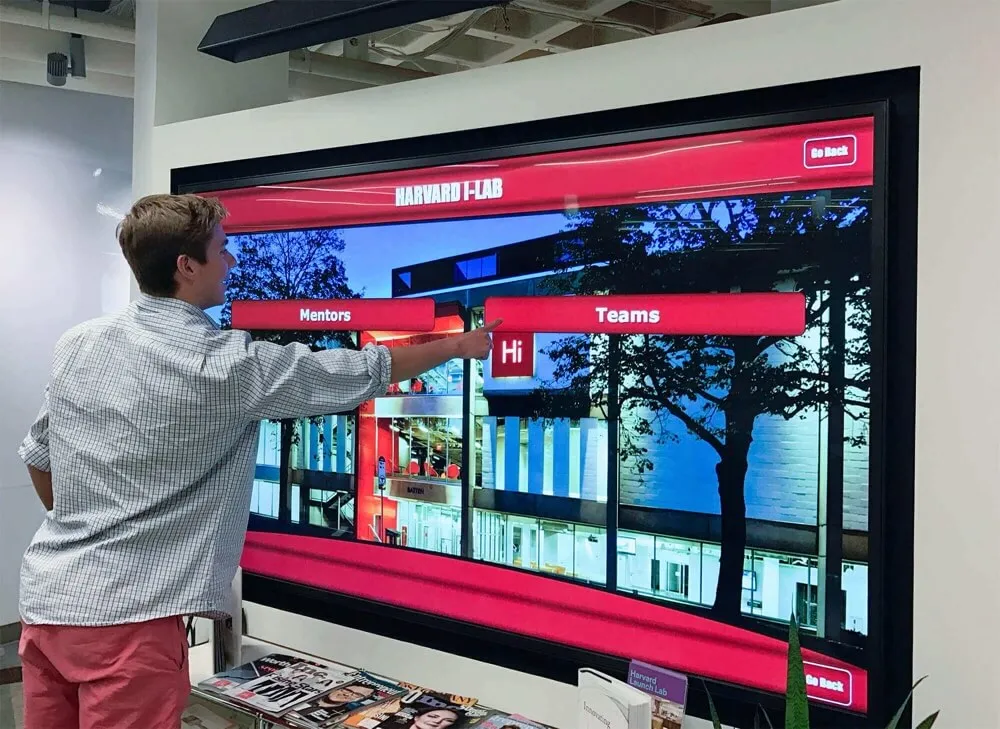
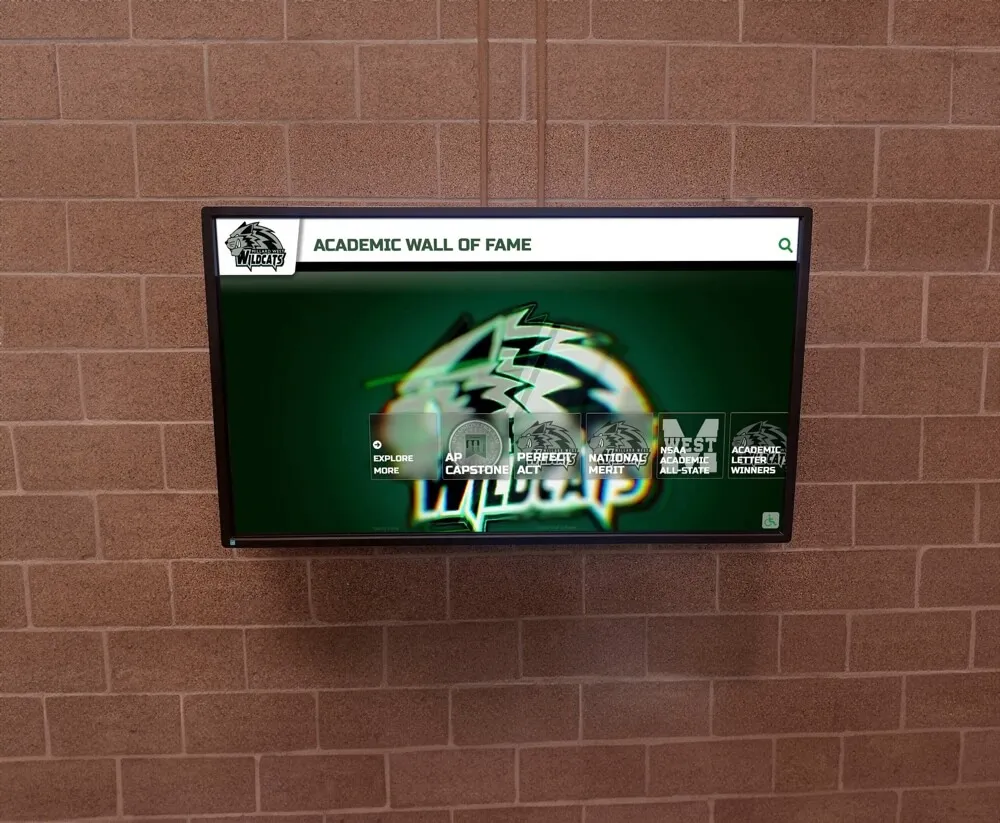
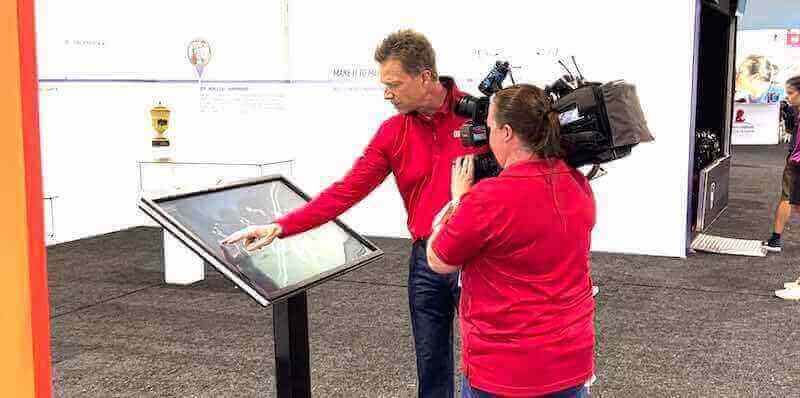
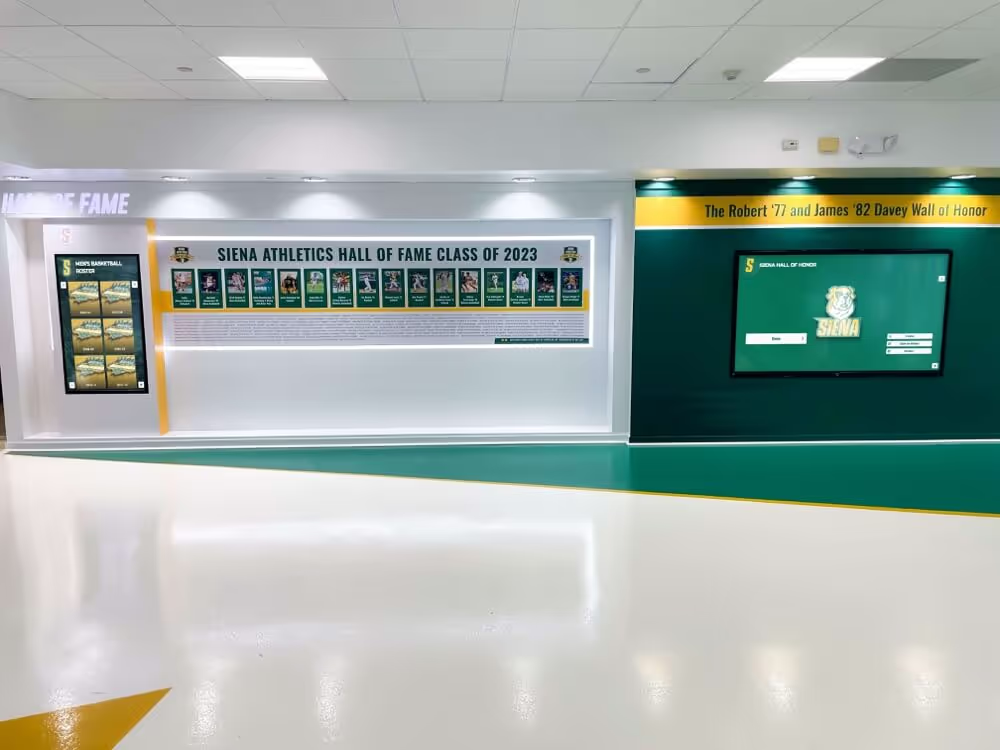
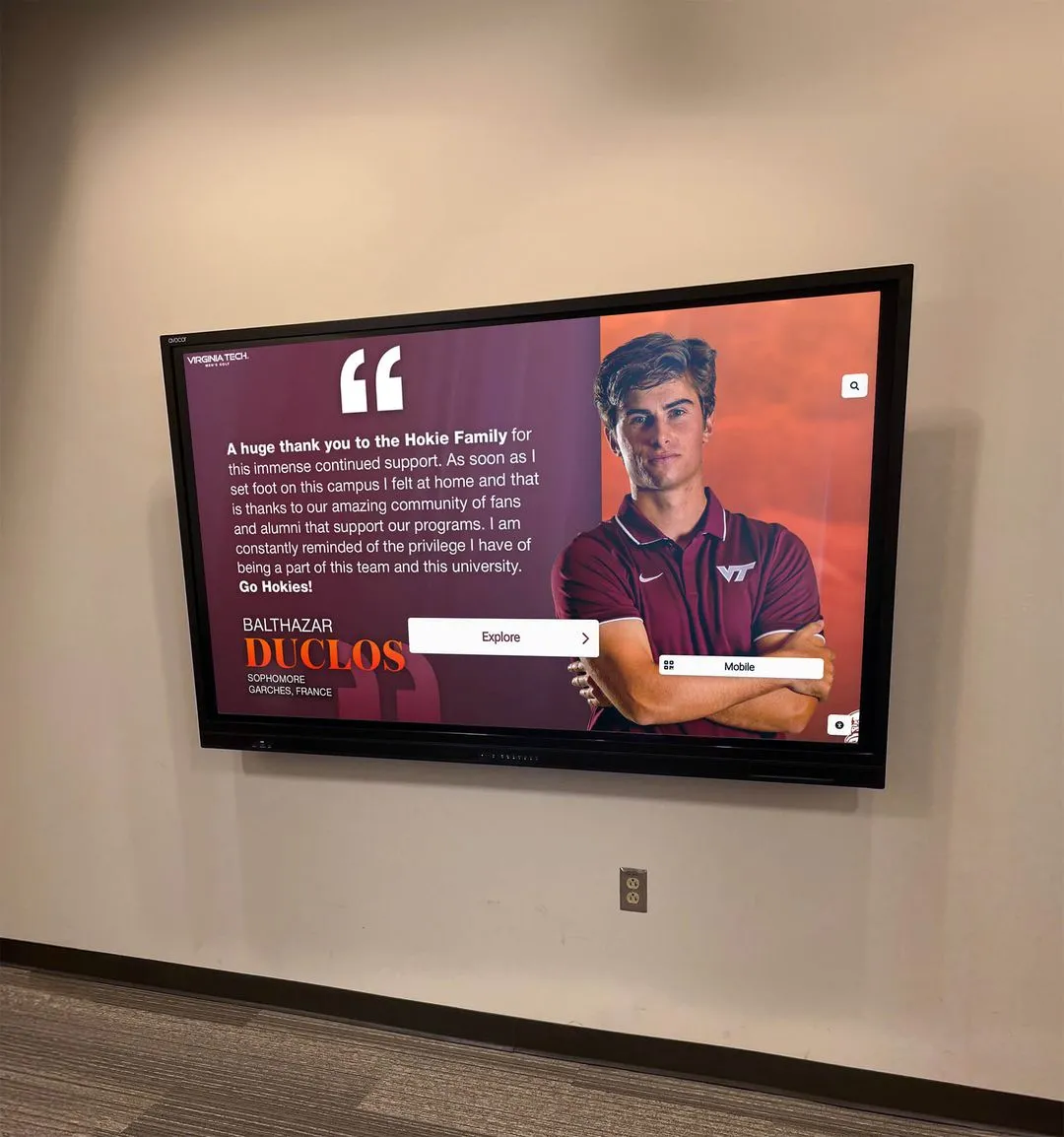
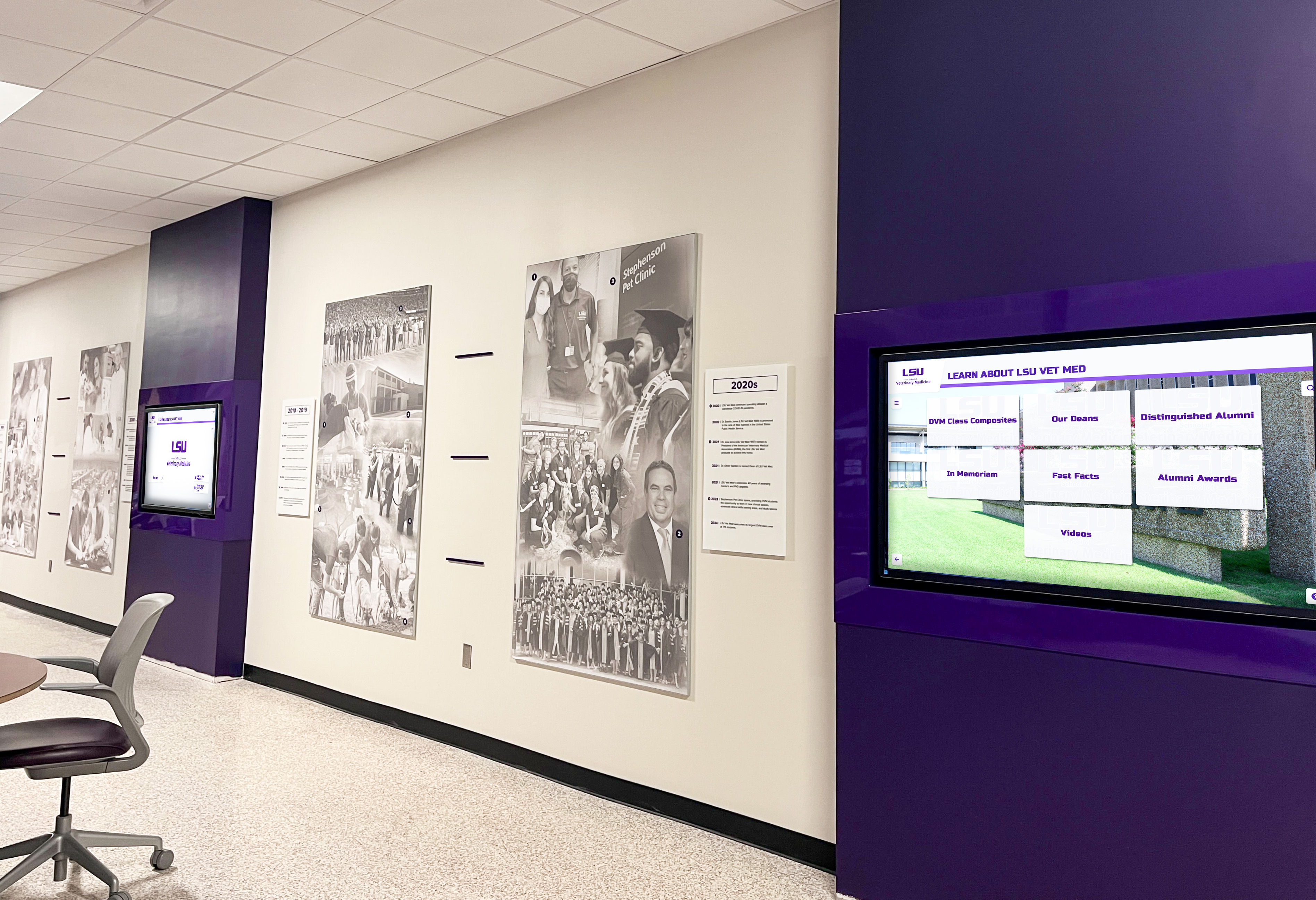
Permanent digital displays keep color guard senior tributes visible year-round rather than fading after a single ceremony night
What Makes Color Guard Senior Night Different
Color guard occupies a unique space in the school performance landscape. Unlike athletic sports, color guard rarely earns its own game night, its own section in the gymnasium banner system, or its own highlight reel in the local newspaper. Many programs share senior night with the marching band’s final home game, meaning the tribute happens at halftime in front of a crowd that is primarily there for the football game. That context requires deliberate planning to ensure the moment feels genuinely significant rather than rushed.
There are also logistical realities unique to color guard programs:
The dual season. Many performers compete in both fall marching band season and winter indoor guard (often through Winter Guard International or state circuit competitions). A senior who has been in the program since freshman year may have competed in eight or more competitive seasons. A tribute that covers only the fall halftime show undersells their full contribution.
Small rosters. Color guard ensembles often range from six to thirty performers. That intimacy means a senior tribute can be deeply personal in ways that are harder to achieve in a program with seventy athletes.
Equipment significance. Flags, rifles, and sabres are more than props—they are the tools a performer spent years learning to master. Ceremonies that acknowledge this relationship, including formal equipment retirement moments, carry real meaning for graduates.
Artistic identity. Color guard performers often find their artistic voice through this activity in ways that define their high school identity. A tribute that reflects the specific shows they performed, the moments that challenged them, and the growth they demonstrated honors that artistic journey.
For more ideas on how different programs structure senior recognition events, see senior night traditions across sports and performing arts programs.
Planning the Color Guard Senior Night Ceremony
Choosing the Right Moment
Most marching band programs schedule color guard senior night during the final home game of the regular football season, typically in October or November. Some programs hold a separate ceremony at the final competition of the season or at the winter guard banquet in spring—creating two distinct tribute moments that honor both halves of a performer’s year.
The ideal ceremony placement depends on your program’s structure:
- Halftime walk-out: The most visible option, performed in front of the full home crowd. Seniors walk out with their parents or family members, are announced by name, and receive a brief tribute before the halftime performance.
- Post-performance tribute: Conducted after the last home performance, when the field is clear and the moment feels less rushed. Works well for smaller programs where individual tribute time per senior can be longer.
- Banquet ceremony: Winter guard programs often hold their senior tribute at the end-of-season banquet, where a slideshow, director tribute, and individual recognitions can be delivered without time constraints.
- Dual recognition: Programs with strong dual-season participation can recognize seniors at both the final fall performance and the spring banquet, giving each season its own tribute moment.
Coordinating with Band Leadership and Administration
Color guard directors should confirm ceremony logistics with the band director, athletic director, and school administration at least six weeks in advance. Key coordination items include:
- Field or stage access time before and after the halftime show
- PA system access for announcements and music playback
- Photography and video permissions, especially for performers who are minors
- Coordination with cheerleading, dance team, or other groups sharing the halftime slot
- Communication to parents about timeline, entry points, and dress expectations
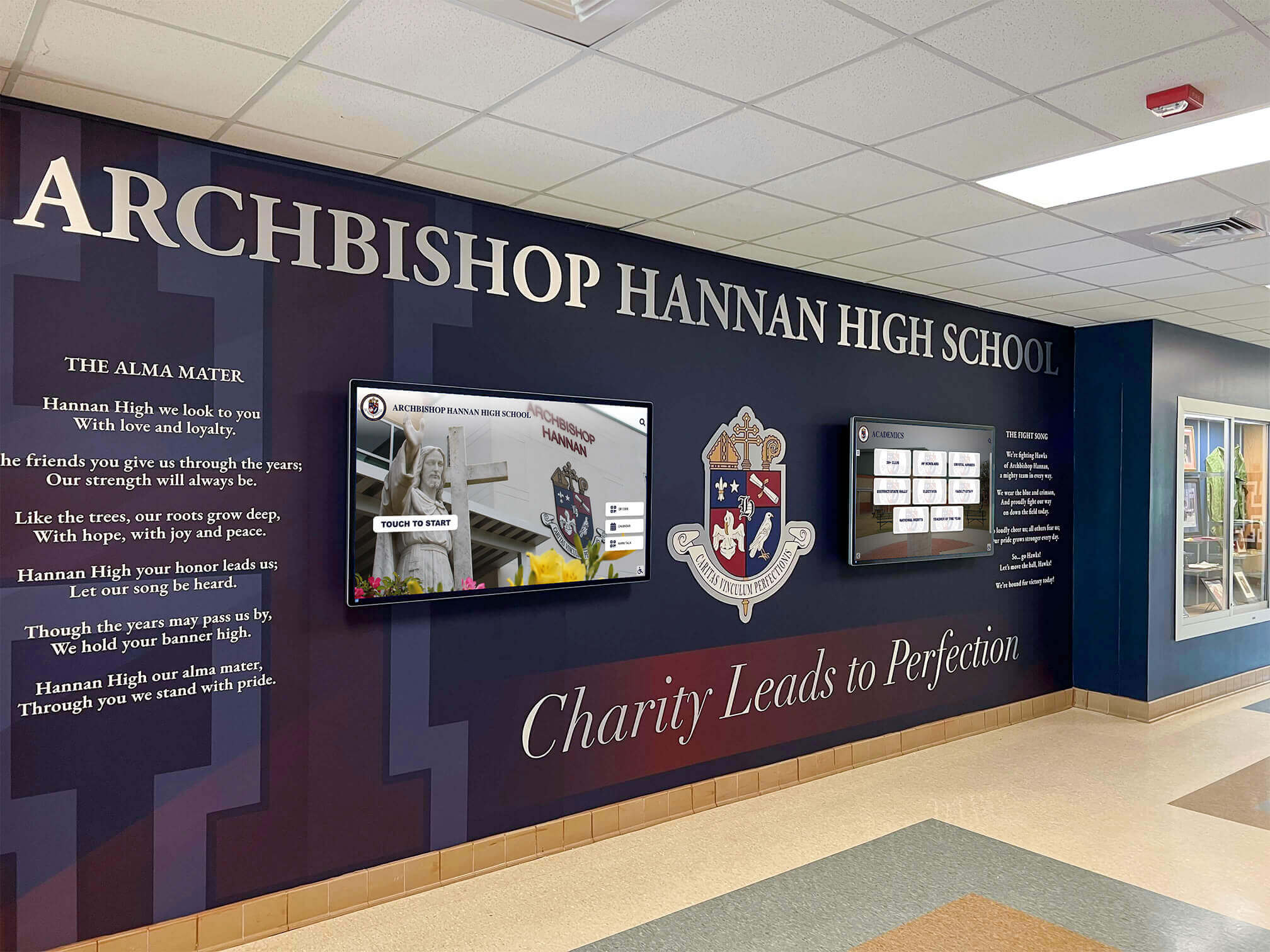
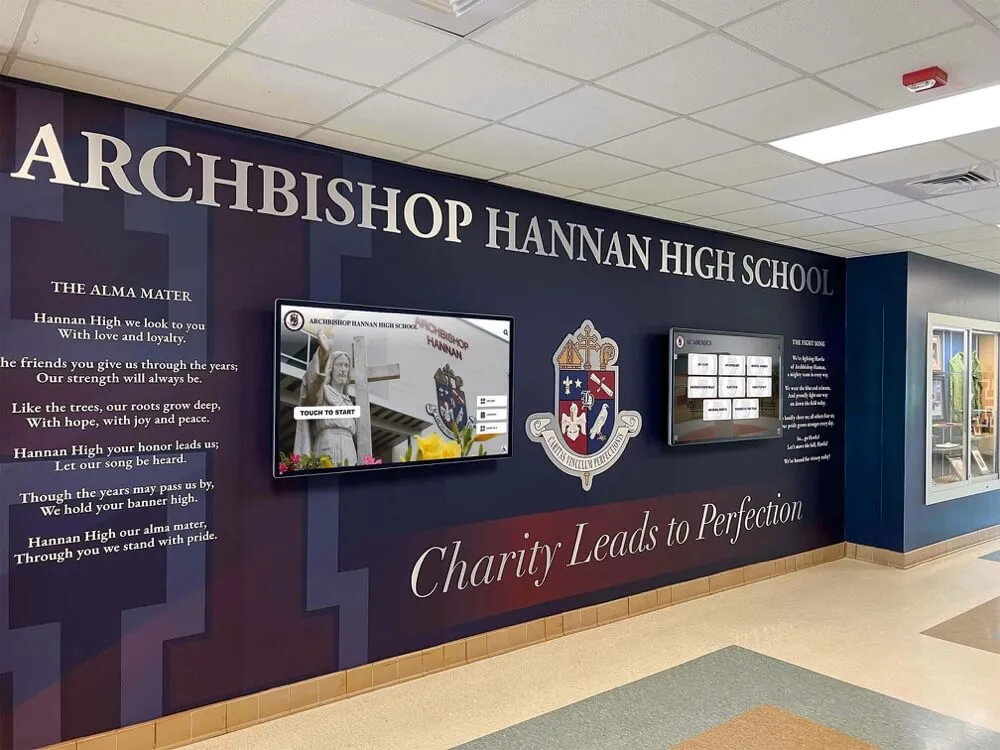
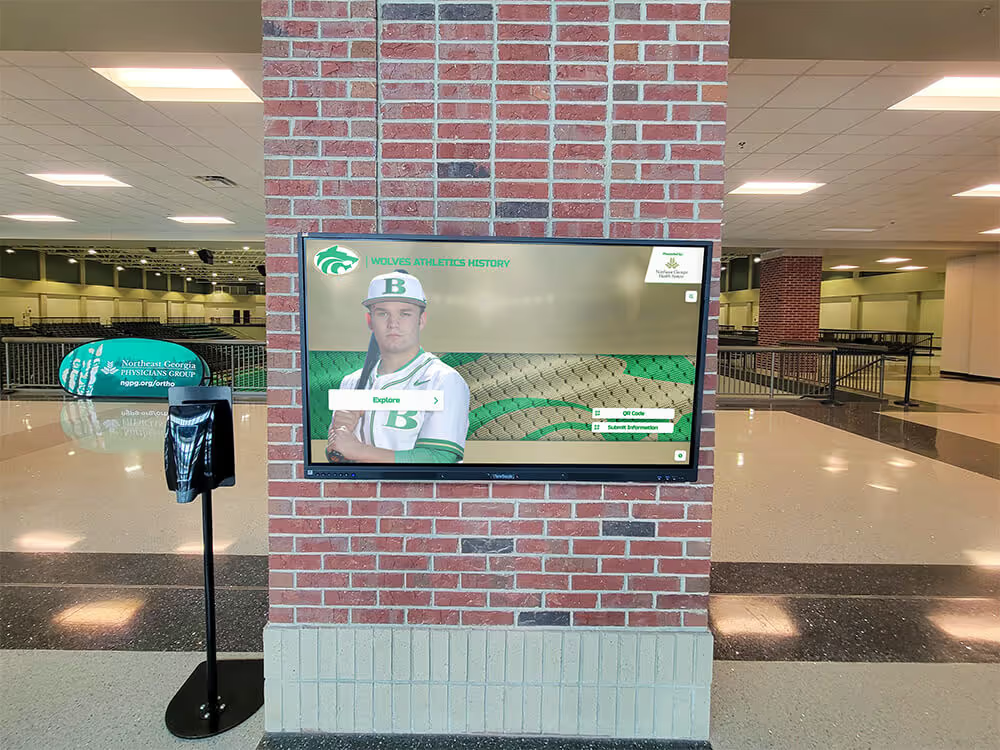
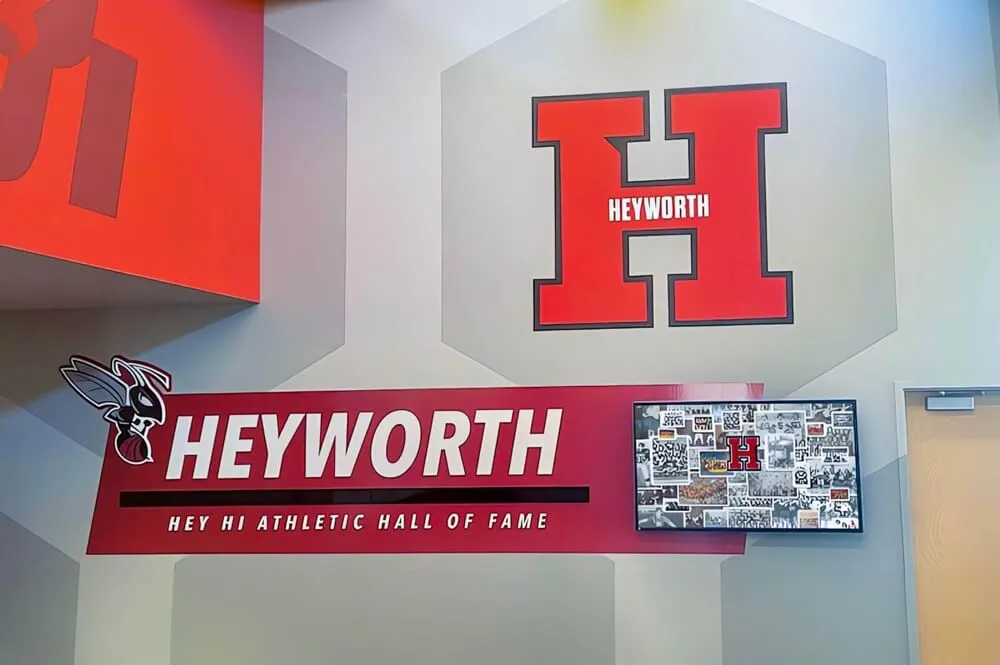
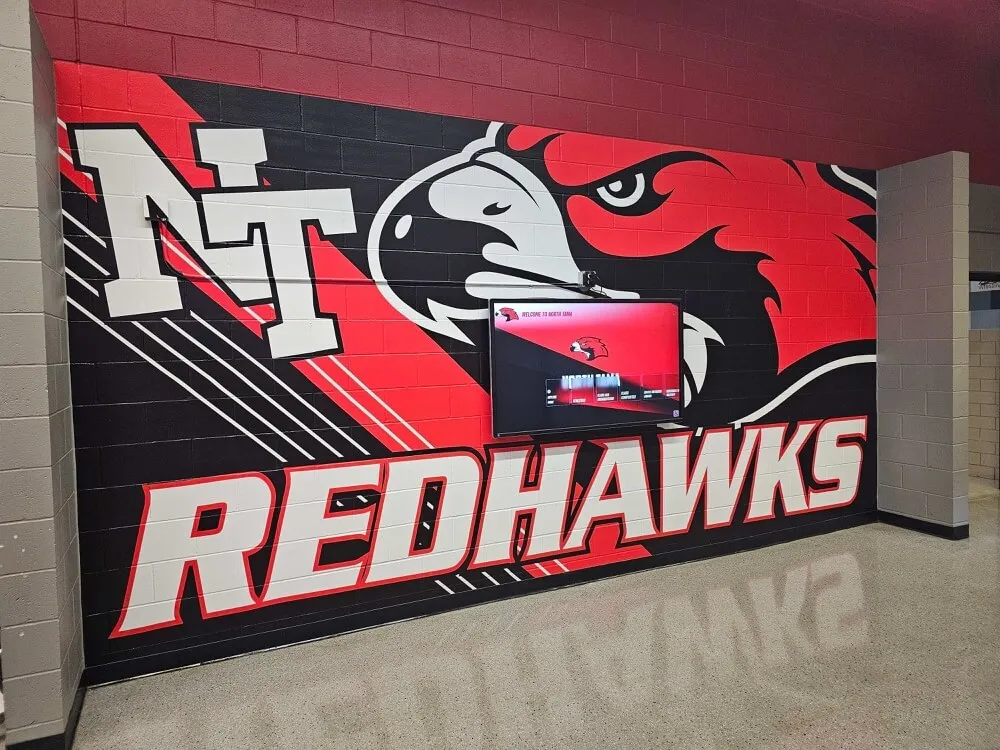
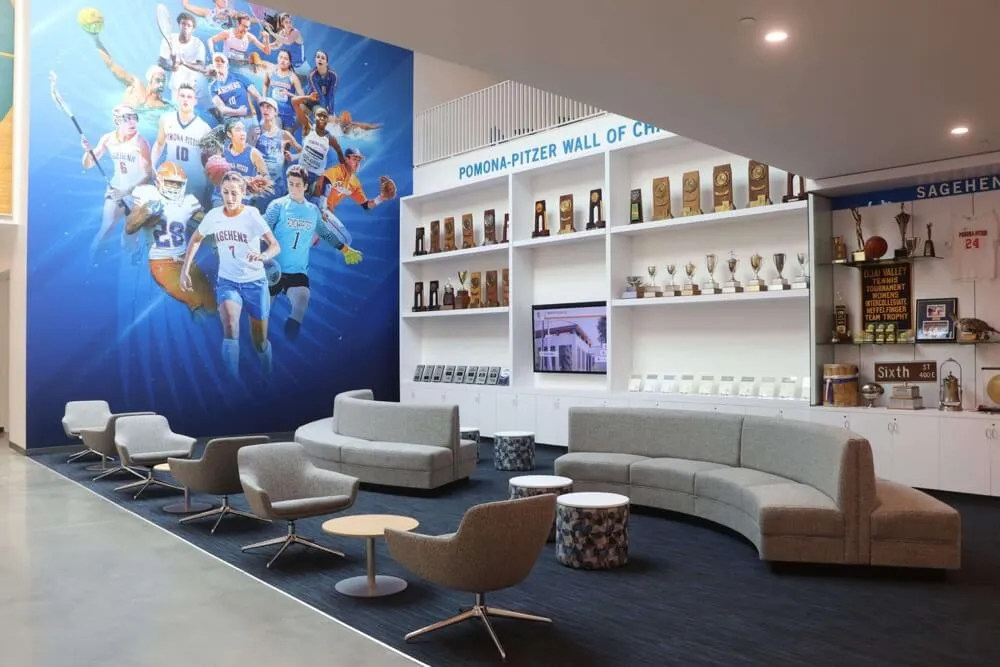
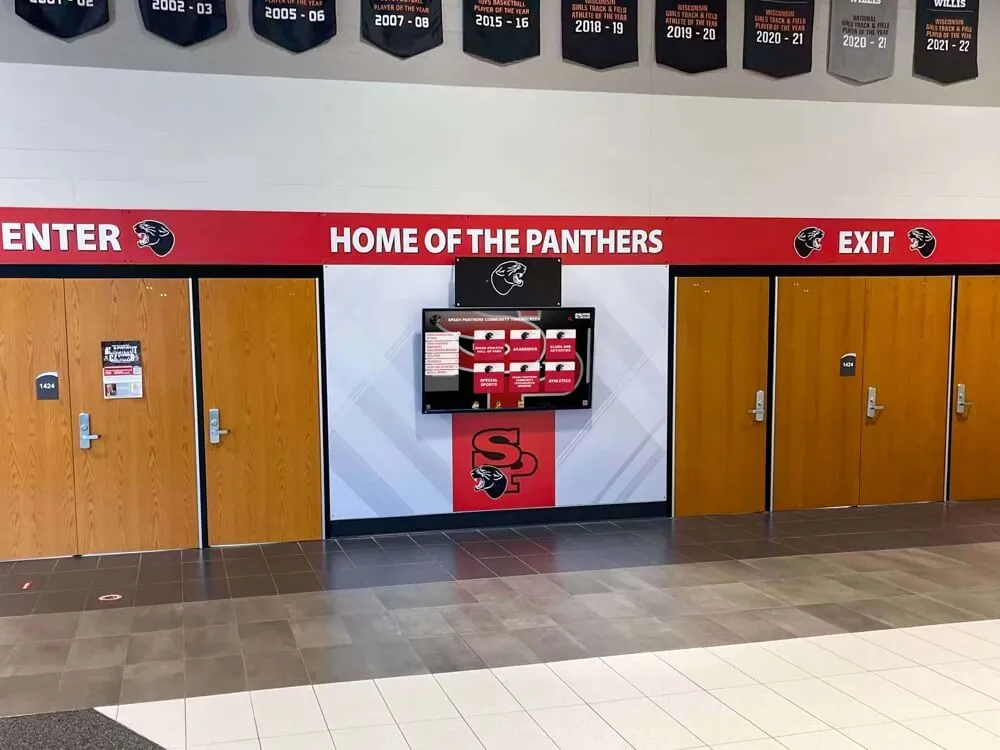
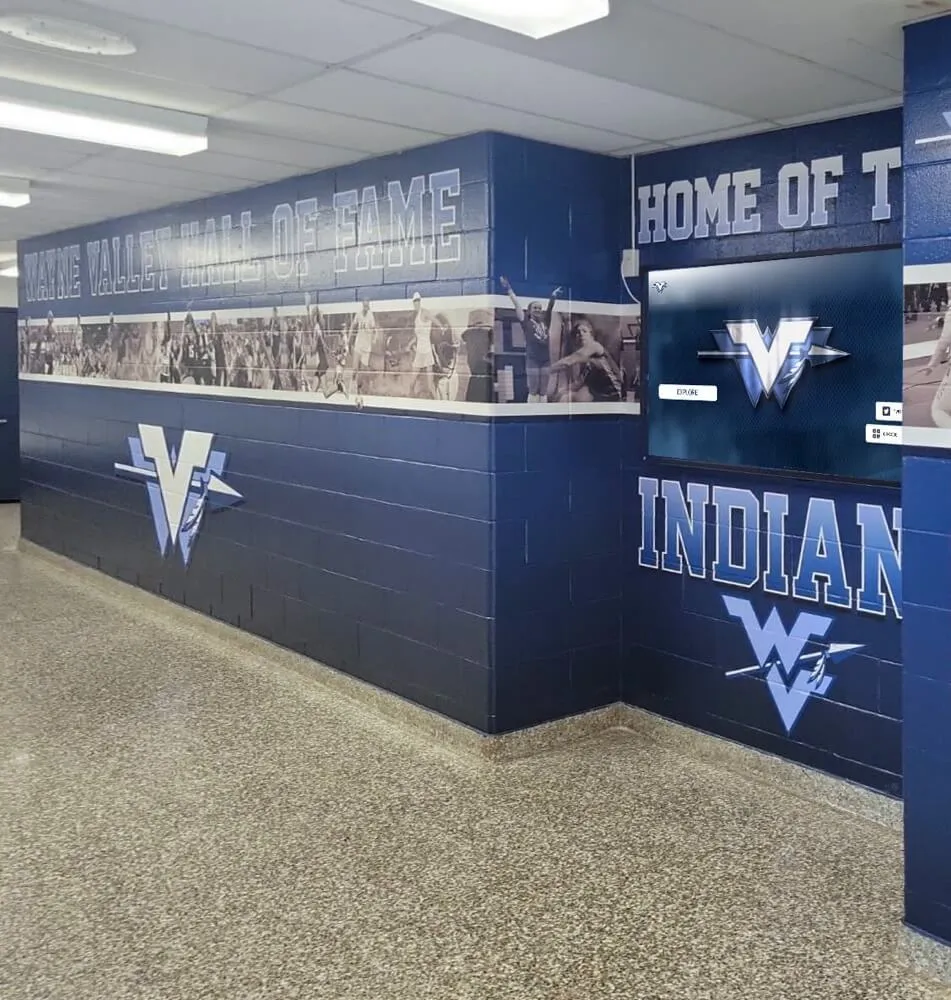
School lobbies that combine murals with digital screens create spaces where performing arts achievements remain visible beyond a single ceremony night
Color Guard Senior Night Ceremony Elements
The Walk-Out Tradition
The walk-out is the centerpiece of most color guard senior nights. Each senior is announced by the PA announcer or the director—typically with a brief biographical line highlighting their years in the program, their role, and a personal detail—and walks from the end zone or sideline to a designated position on the field. Families walk with them, often carrying poster boards and flowers.
Walk-out announcement script elements:
- Full name and class year
- Number of years in color guard (and winter guard if applicable)
- Positions or leadership roles held (captain, section leader, equipment specialist)
- A brief personal tribute line chosen by the director or submitted by the performer
- College or post-graduation plans, if the senior wishes to share
Many programs play a snippet of the senior’s favorite piece or a meaningful song from one of their show years during the walk-out. This small detail transforms a standard announcement into an emotional callback.
Parent and Family Tribute
The walk-out is equally a tribute to the families who supported the journey. Consider these touches for the family portion:
- Ask families to wear school colors or color guard program apparel
- Provide a pre-designed poster board template or supply blank boards and markers in a staging area before the game
- Present parents with a small memento—a program from the current season, a custom button with the senior’s photo, or a handwritten note from the director
- Include a formal “thank you to the families” in the public announcement script
The family tribute aligns with broader senior recognition philosophy explored in unforgettable senior night celebration ideas for school programs.
Slideshow Tributes
A photo and video slideshow is one of the most emotionally resonant elements of a color guard senior night. Played before the ceremony, during the pre-show gathering, or at the banquet, a well-produced slideshow can cover:
- Freshman-through-senior progression photos for each performer
- Competition and performance highlights across all seasons
- Behind-the-scenes moments: bus rides, warm-up circles, backstage preparations
- Show photos from each year, organized chronologically to show artistic growth
- Candid photos submitted by families and teammates
Practical slideshow tips:
- Collect photos from parents, booster club photographers, and the performers themselves starting at least three weeks before the ceremony
- Include at least three to five photos per senior, more if your roster is small
- Run approximately fifteen to twenty seconds per senior with the full group moments interspersed between individual tributes
- Use a consistent theme, typography, and music selection that reflects your program’s identity rather than generic templates
- Export at high resolution so the slideshow can be projected on a jumbotron, gym screen, or banquet room display
Programs that invest in organized photo archives across multiple seasons find slideshow production dramatically easier. Resources like how to build an athletic photo archive that preserves team history offer practical frameworks for managing these archives across years.
Flag and Equipment Retirement Ceremony
For color guard programs, a flag or equipment retirement ceremony carries powerful symbolic weight. This tradition—borrowed loosely from military flag retirement ceremonies—acknowledges that the equipment a performer has trained with represents their commitment, growth, and sacrifice.
A retirement ceremony can be structured several ways:
Simple presentation: The director presents each senior with a piece of equipment—a flag, a saber, or a rifle—that they performed with during their final season. The equipment is folded or displayed in a way that signals its transition from performance use to memorial significance.
Formal ceremony with narration: A narration script acknowledges what the equipment represents: every practice hour, every competition performance, every moment of growth. The equipment is presented to the senior with a formal folding and handoff.
Group ceremony with individual moments: The full ensemble gathers in a circle. Each senior’s equipment is retired in sequence, with teammates offering a word or two about what that performer contributed to the ensemble.
This type of ceremony connects color guard senior night to broader performing arts recognition traditions, including the recognition frameworks used for drum major recognition and marching arts tribute ceremonies.
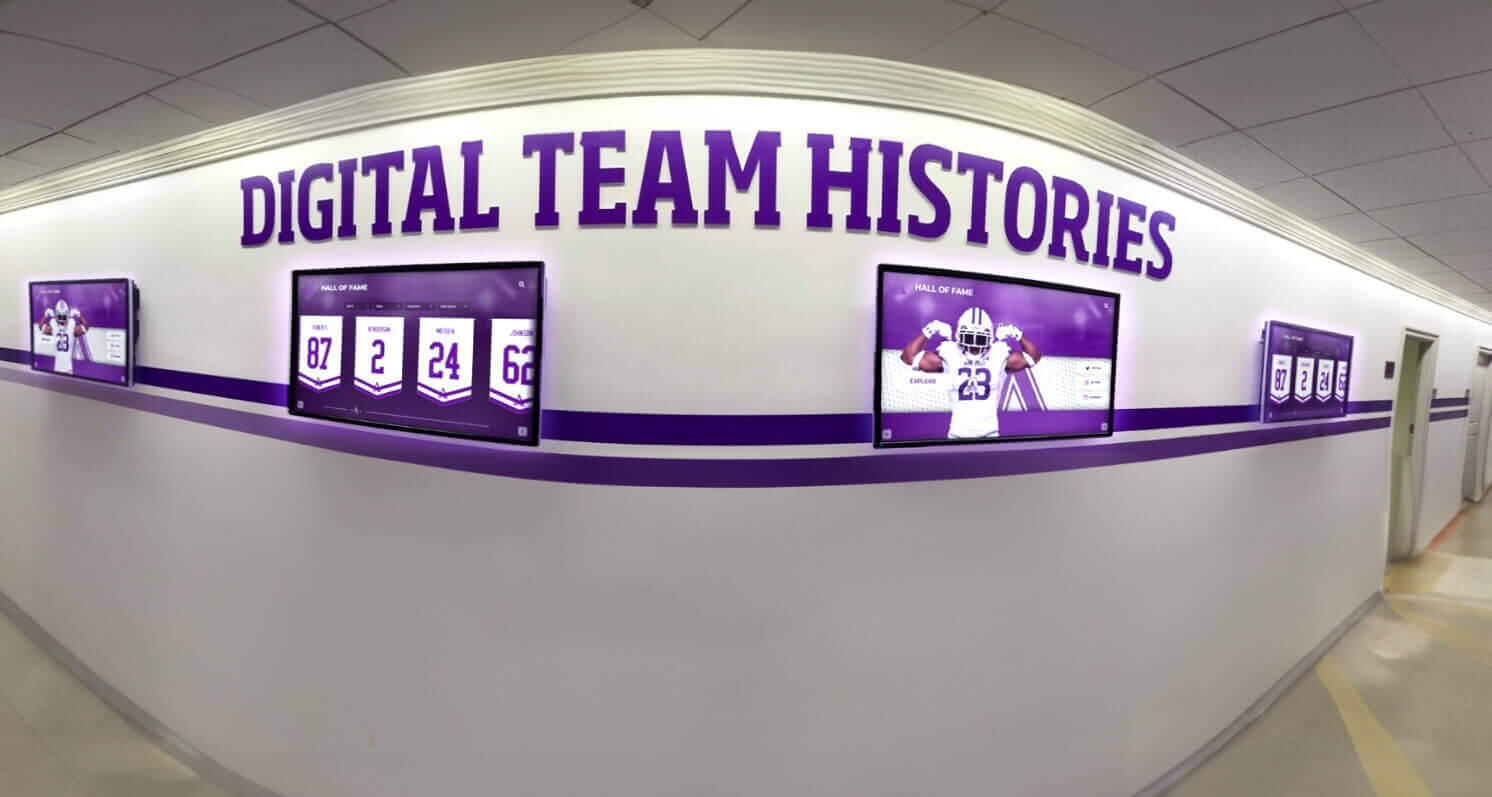
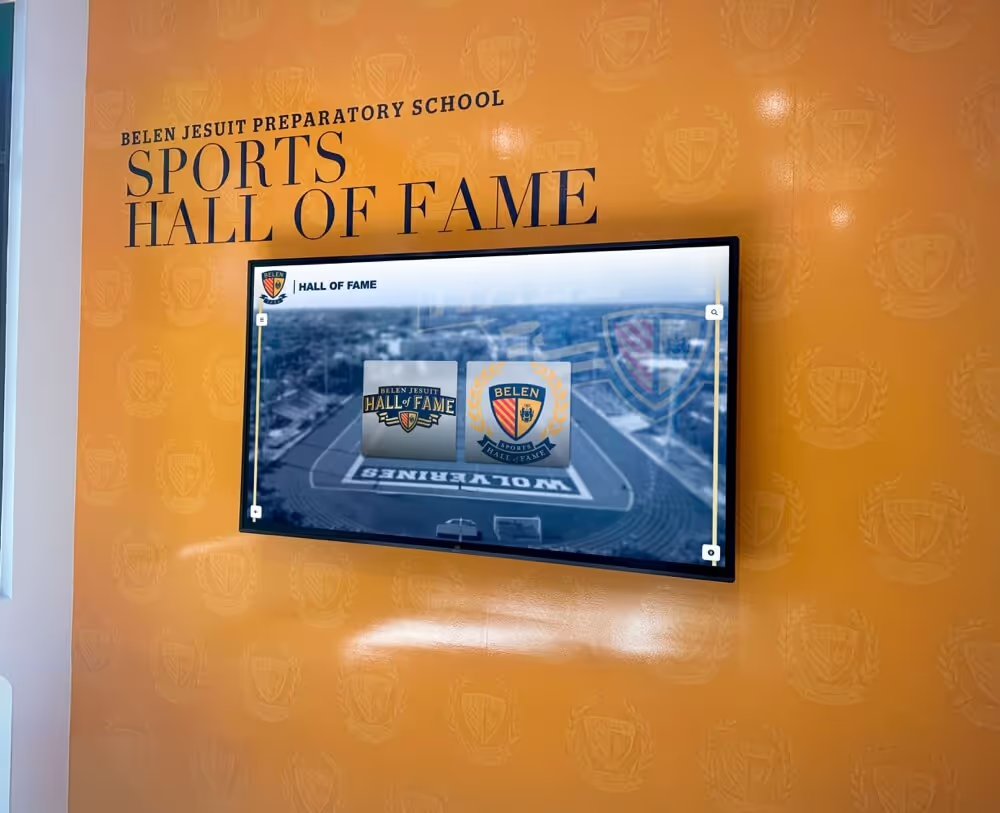
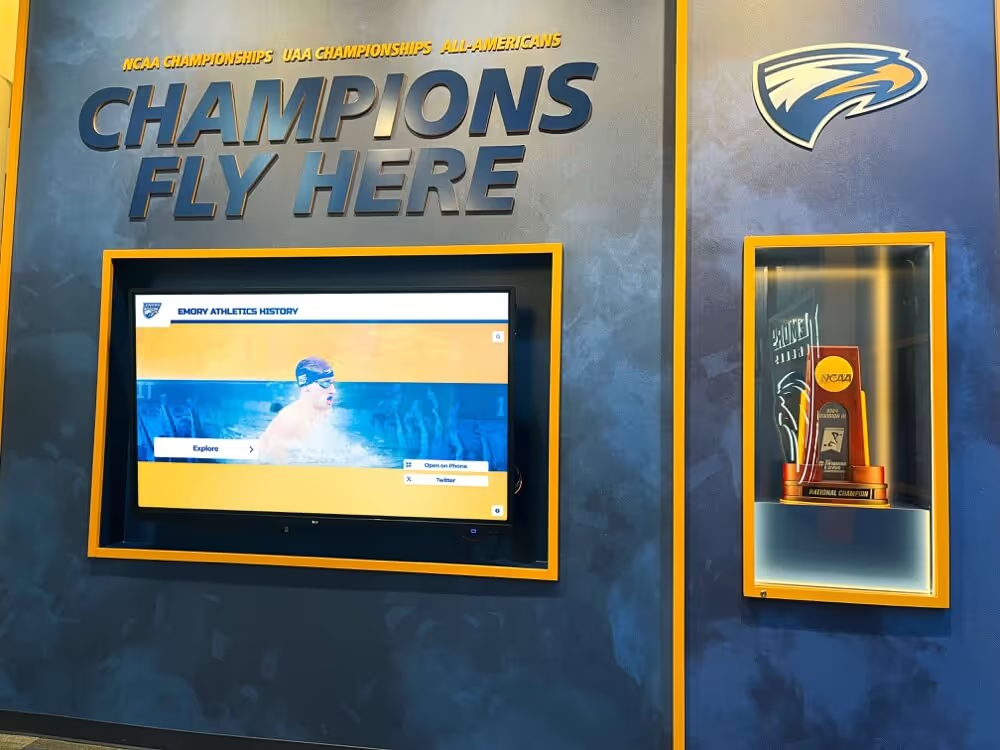
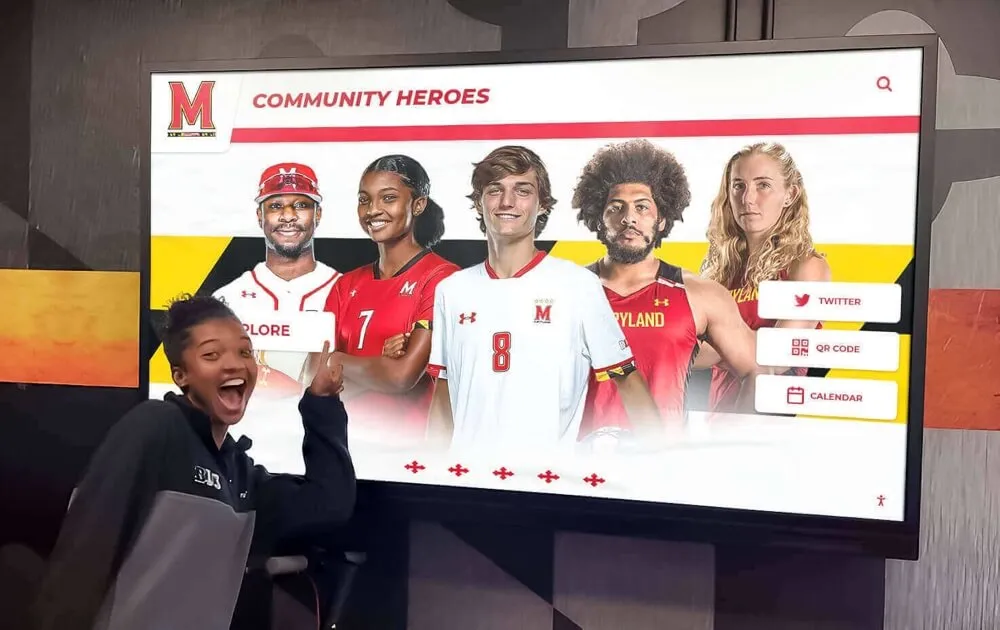
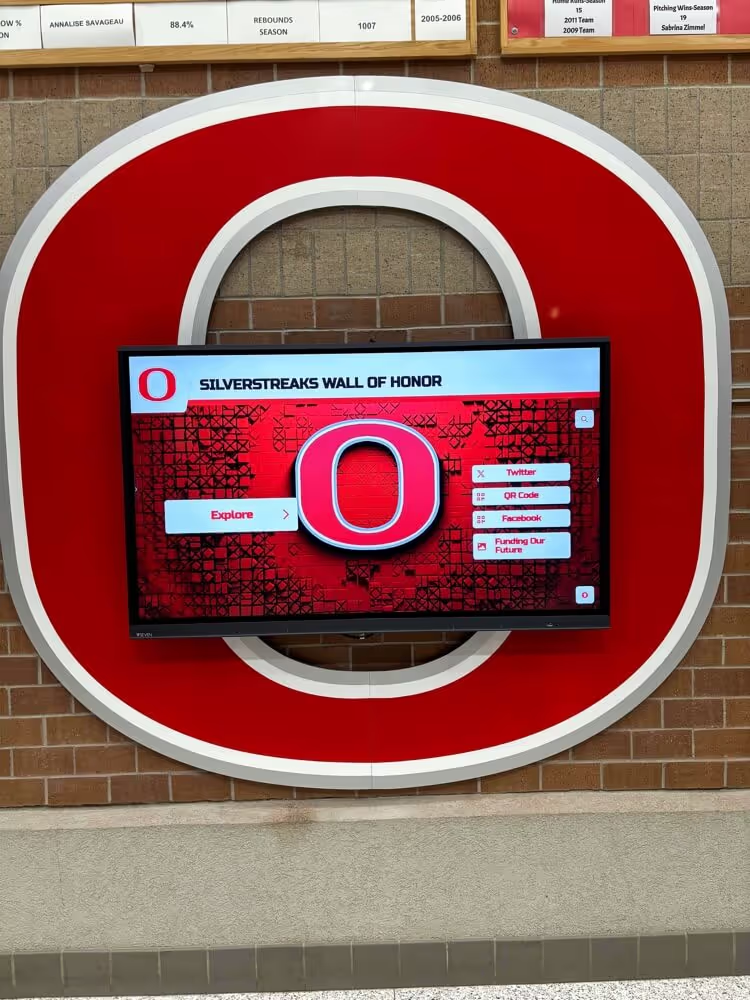
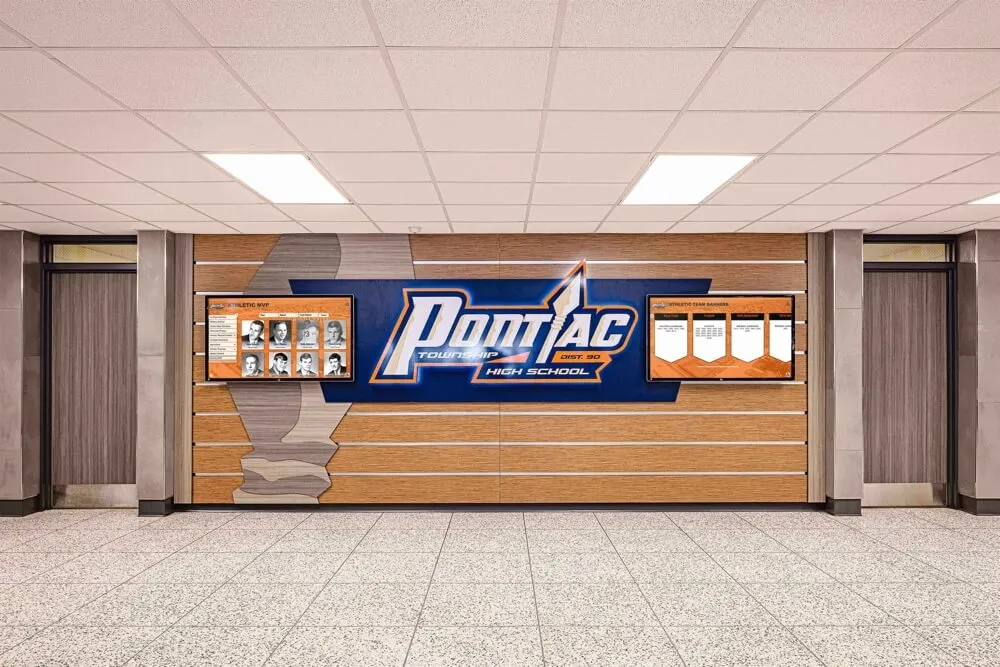
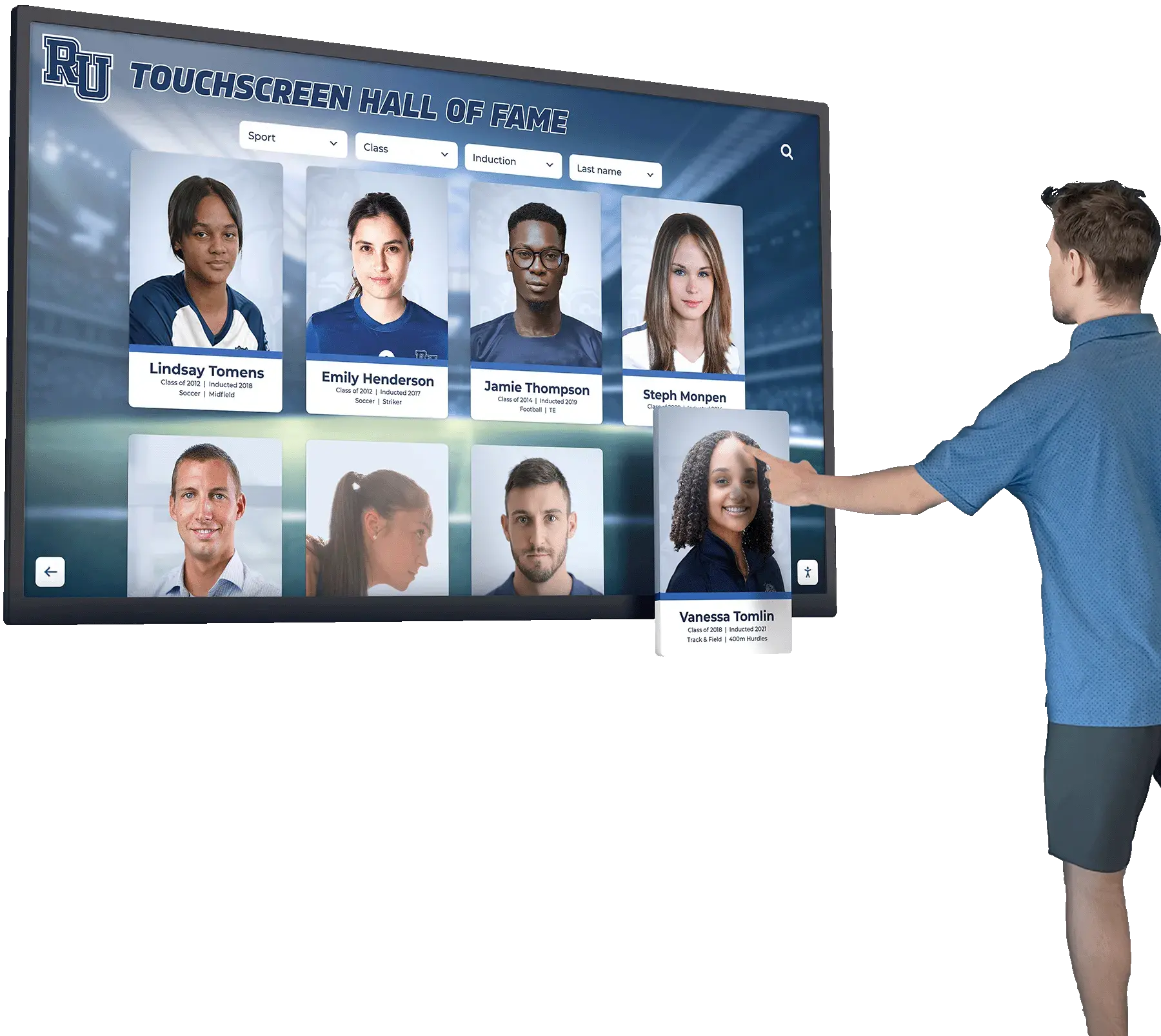
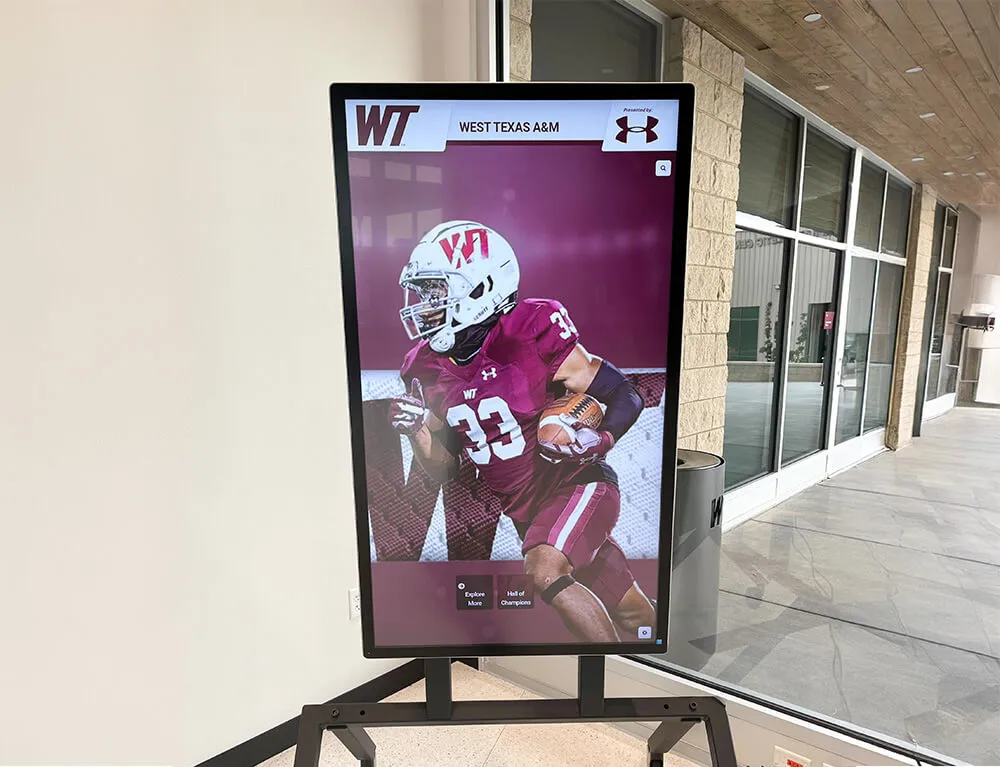
Digital history displays allow color guard programs to surface photos and achievements from every season, making them ideal for senior tribute backdrops
Honoring Each Senior Performer Individually
Director Tribute Speeches
The most memorable senior night tributes include personalized remarks from the director for each performer. This does not need to be long—sixty to ninety seconds per senior is appropriate for a halftime ceremony, with more time available at a banquet format.
Effective director tribute elements:
- A specific memory from the performer’s first season
- A moment of challenge and the growth that followed
- A defining artistic or leadership contribution unique to this performer
- A personal quality the director will remember long after graduation
- A forward-looking wish or belief statement about the performer’s future
Directors who write these tributes from memory rather than a template create a fundamentally different emotional experience. Families notice when remarks are specific and personal. They notice when they are generic.
Teammate Recognition
Peer tributes add a dimension that director speeches cannot replicate. Consider these formats for incorporating teammate voices:
- A brief written tribute submitted by a returning member for each senior, read aloud during the ceremony
- A “secret tradition” where underclassmen decorate the senior’s equipment bag or locker during the week leading up to the ceremony
- A group photo session in matching senior night apparel before the performance
- A letter exchange, where seniors write to the program and underclassmen write back, read at the banquet
Senior Speeches and Reflections
Many programs invite seniors to address the ensemble at the end of the season—either at the final practice, at the banquet, or at a separate senior night dinner. This moment matters enormously for both the graduating performers and the underclassmen who will carry the program forward.
Prompts that generate meaningful reflections:
- What did you learn in this program that you could not have learned anywhere else?
- What is the performance or competition moment you will always remember?
- What do you want to leave behind for the ensemble?
These reflections, when preserved in writing or video, become part of the program’s living history.
Color Guard Senior Night Gifts and Mementos
Physical mementos anchor emotional memories to tangible objects. The most meaningful gifts for color guard seniors tend to reflect the program’s specific history rather than generic awards.
Program-specific mementos:
- A custom ornament or shadow box featuring the senior’s name and a photo from each season
- A bound photo book covering their entire career, assembled by the booster club
- A custom engraved piece of equipment (flag pole, saber handle) with their name and years in the program
- A framed collage of their show designs across every season
- A custom video montage delivered digitally, which they can share and preserve indefinitely
Team gifts from the ensemble:
- A custom blanket, hoodie, or gear bag signed by every current member
- A scrapbook assembled collaboratively by underclassmen with handwritten notes and photos
- A class-year banner or pennant representing their senior season show theme
For broader context on recognizing performers through meaningful gifts, explore ideas from cheer coach gift ideas and performing arts recognition approaches.
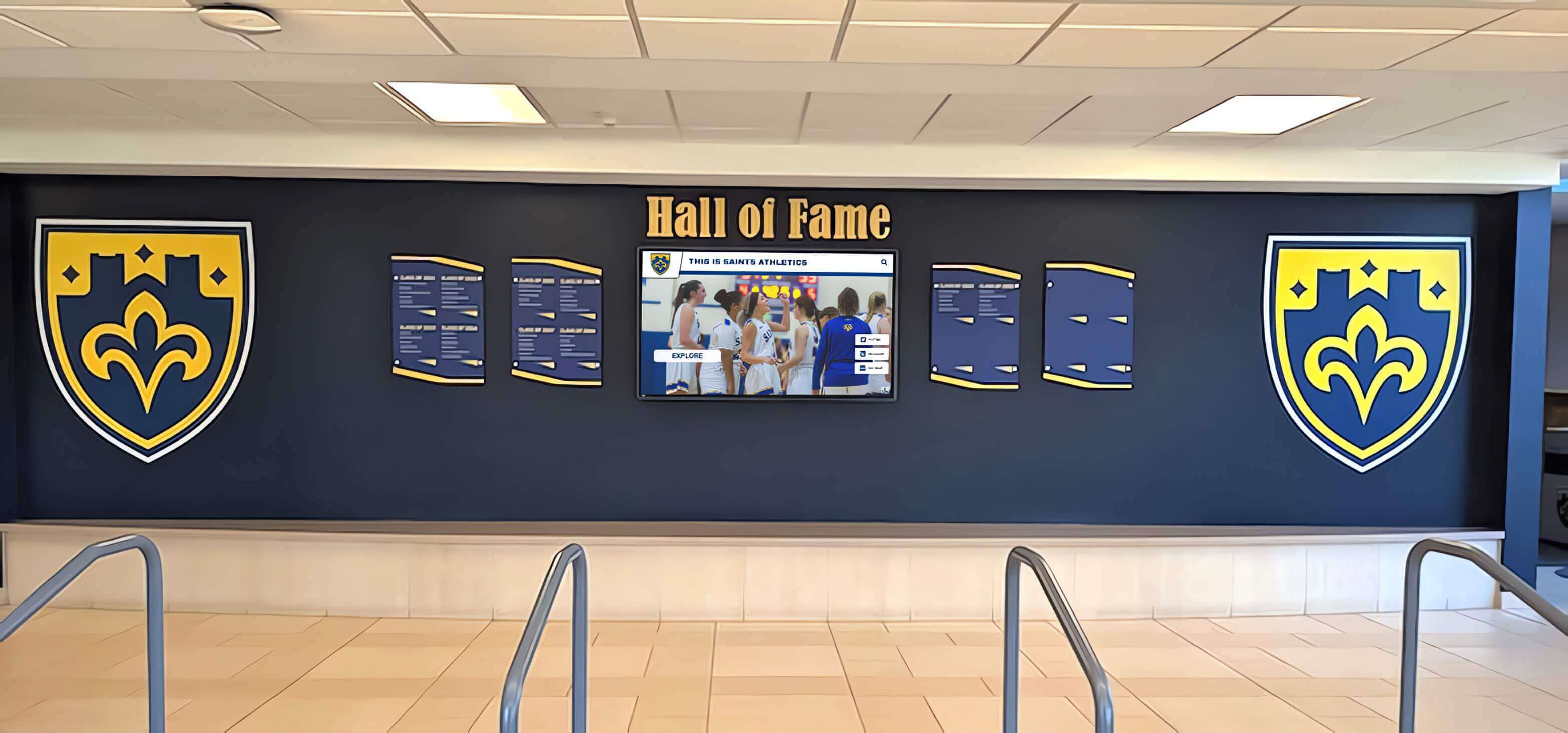
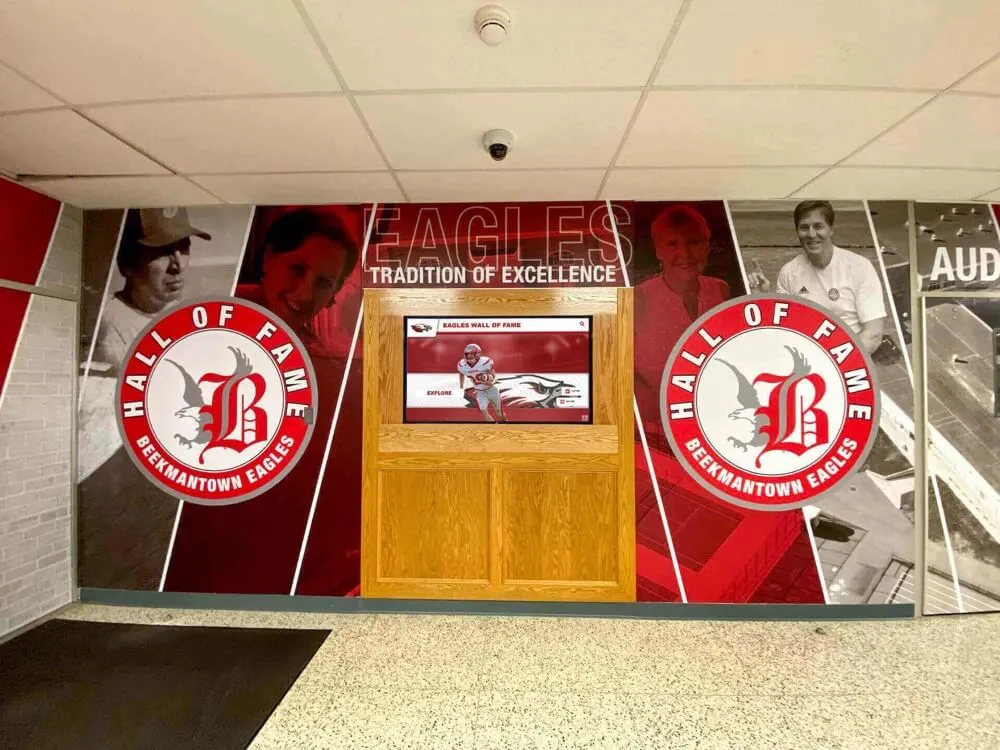
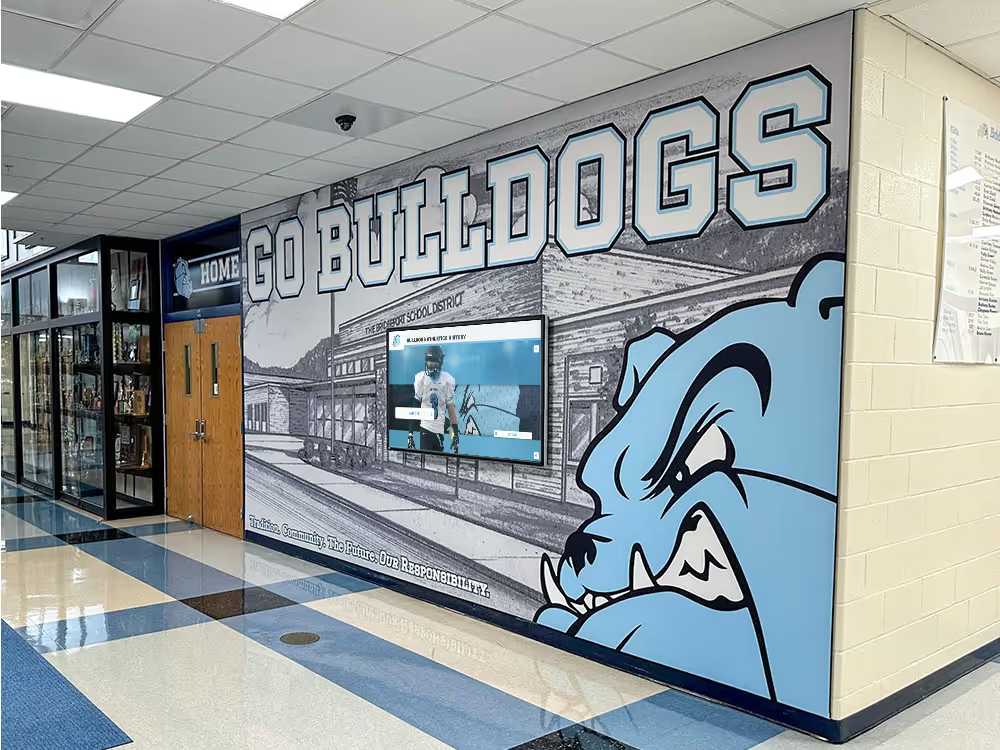
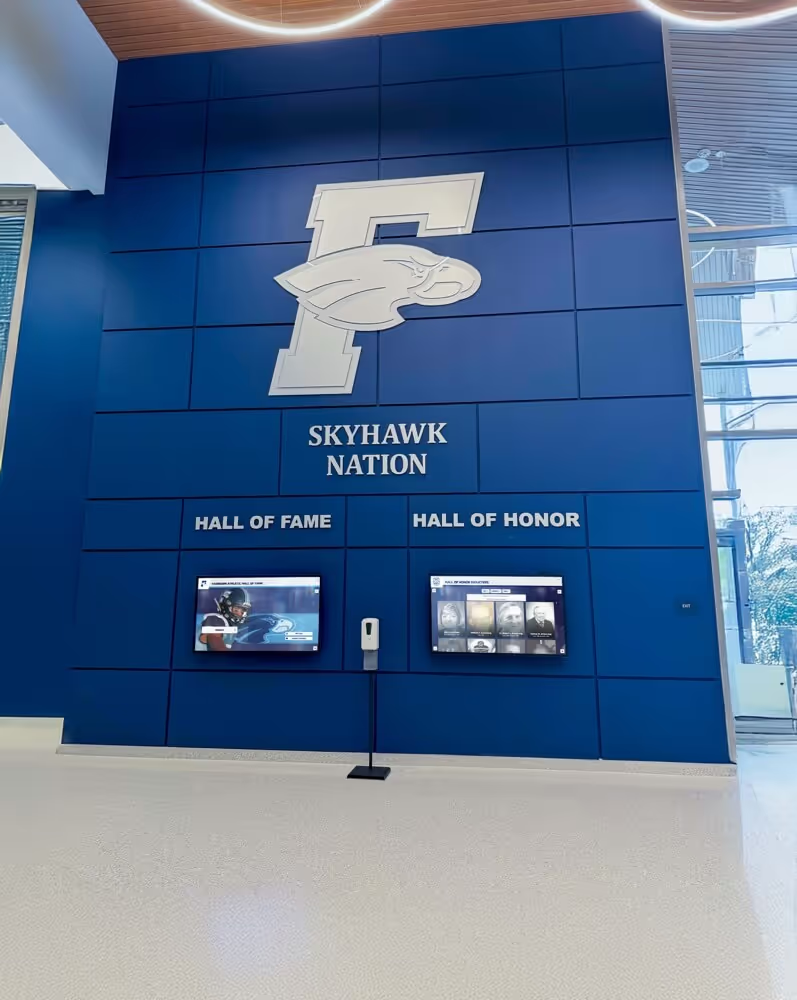
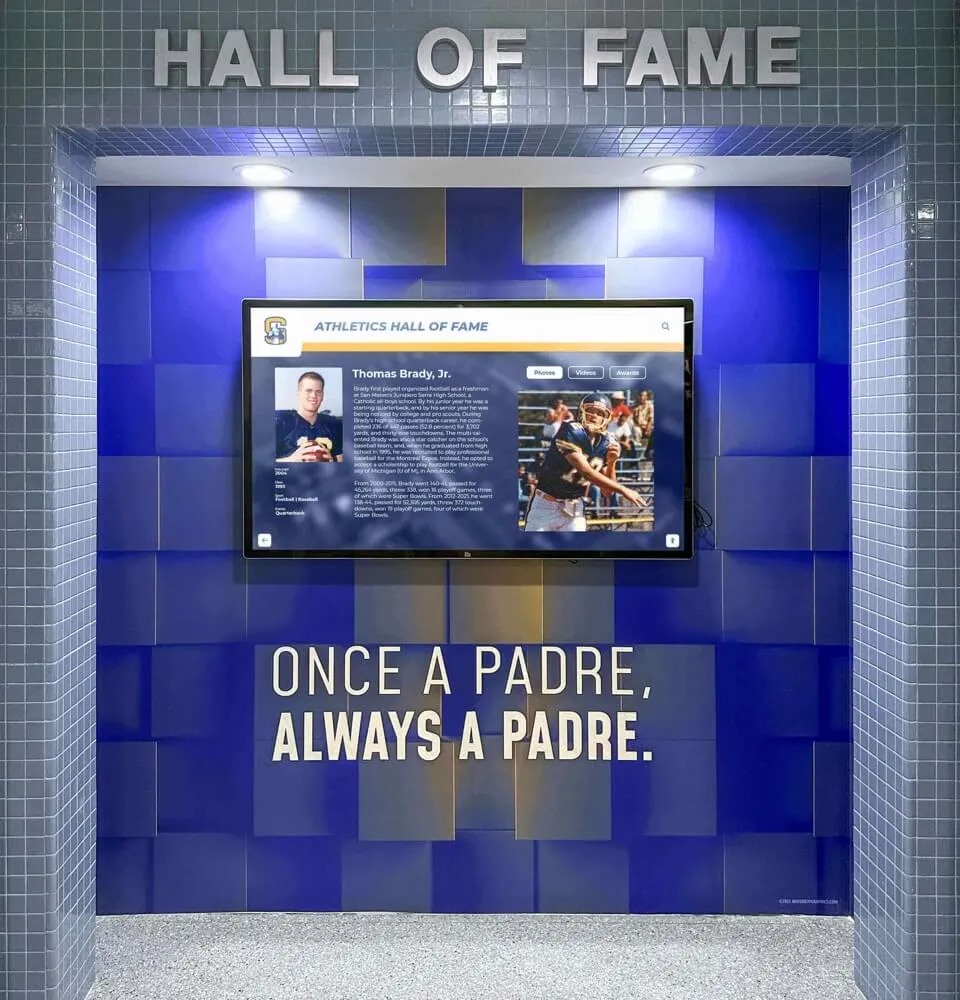
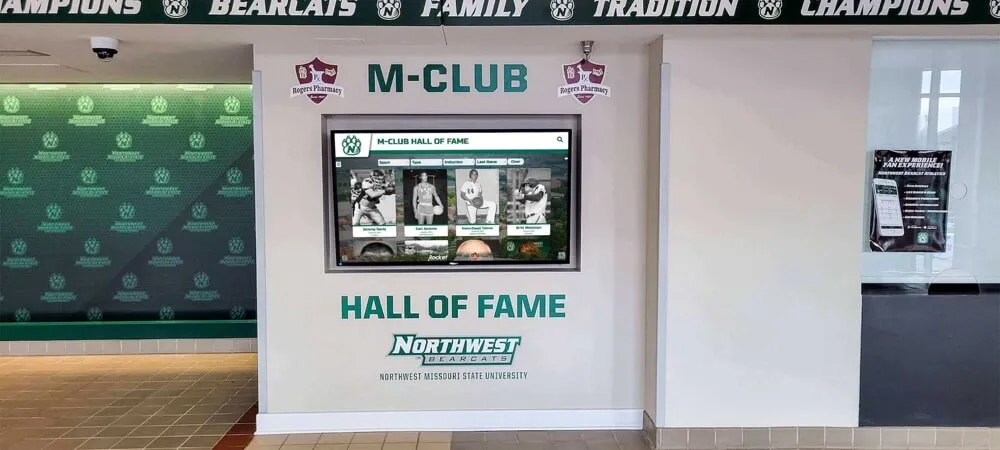
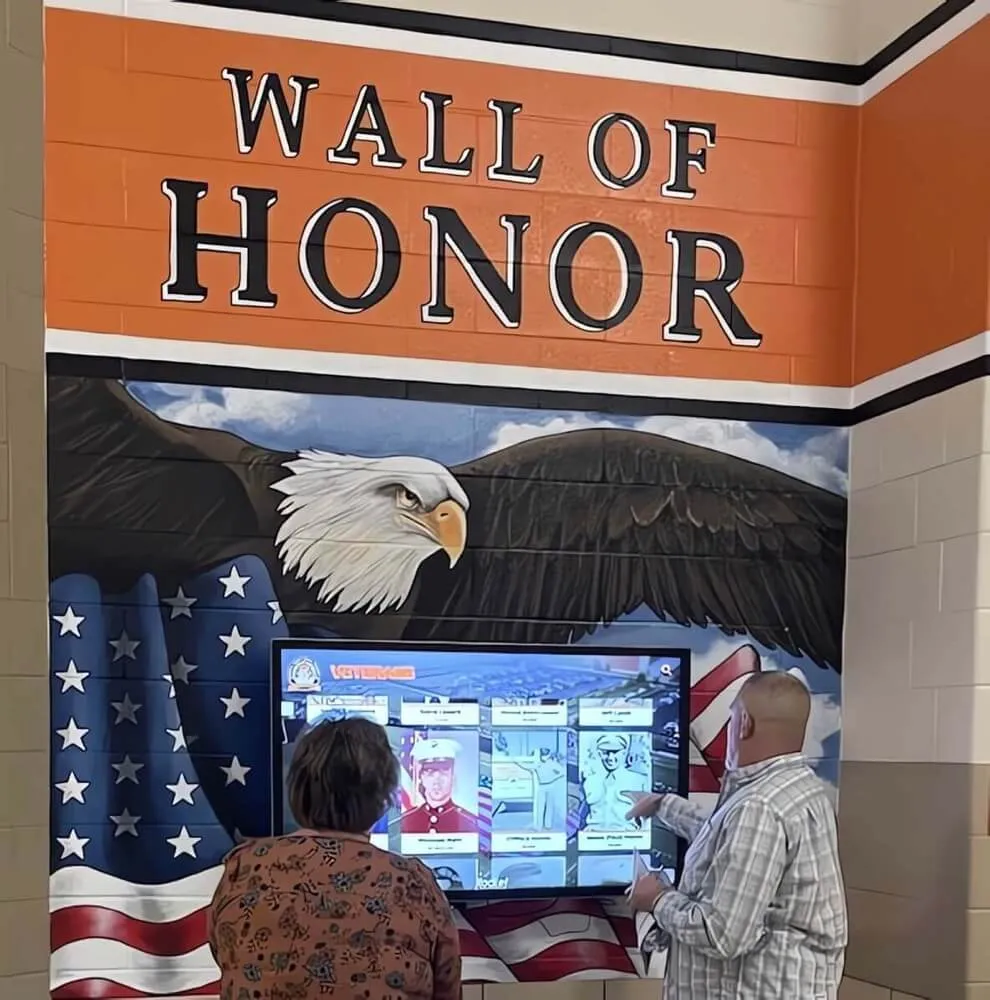
Lobby recognition displays extend the color guard senior tribute into a permanent installation visible to the entire school community
The Post-Event Recognition Problem
Color guard senior night creates a peak emotional moment. The challenge is what happens afterward. In most programs, the tribute exists only in the memories of those who attended and the photos that families take home. A week later, the next event has begun and the recognition has faded entirely from the school’s visible landscape.
This pattern shortchanges performers who dedicated four or more years to the program. It also creates a motivation gap: underclassmen who never see color guard seniors recognized in permanent ways have less reason to imagine their own contributions as significant or lasting.
Programs that invest in post-event recognition infrastructure extend the value of senior night indefinitely.
Physical Recognition Displays
Trophy cases traditionally house athletic trophies and championship banners. Adding a dedicated color guard section communicates that the program is valued on equal footing with sports. Options include:
- A designated shelf or case section with competition trophies organized by year
- Individual performer plaques for seniors who completed all four years
- A photo display updated annually with the current senior class
- Competition circuit awards and scoring milestones prominently displayed
Digital Recognition Displays
Modern interactive displays allow schools to showcase color guard achievements with the depth and richness the art form deserves. Rather than a static plaque, a digital display can include:
- Video clips from major competition performances across multiple seasons
- Senior tribute pages with photos, director quotes, and personal milestones
- A complete program history with show titles, competition results, and rosters
- A dedicated section that families can explore when visiting the school
For schools considering this upgrade, interactive display solutions for performing arts and educational programs offer a comprehensive look at what these systems can achieve.
Interactive displays also solve a fundamental problem with color guard recognition: the art form is visual and motion-based. A static plaque cannot communicate what a performer did. A display that plays video from a championship show does.
Alumni Recognition Wall
Long-established color guard programs often have alumni who have gone on to march with Drum Corps International corps, compete at the college level, or work as instructors in the performing arts world. An alumni recognition section—physical or digital—creates a legacy dimension that inspires current performers to see their participation as part of a larger story.
See how schools build alumni legacy displays that connect generations of program participants for practical approaches to structuring this kind of ongoing recognition.
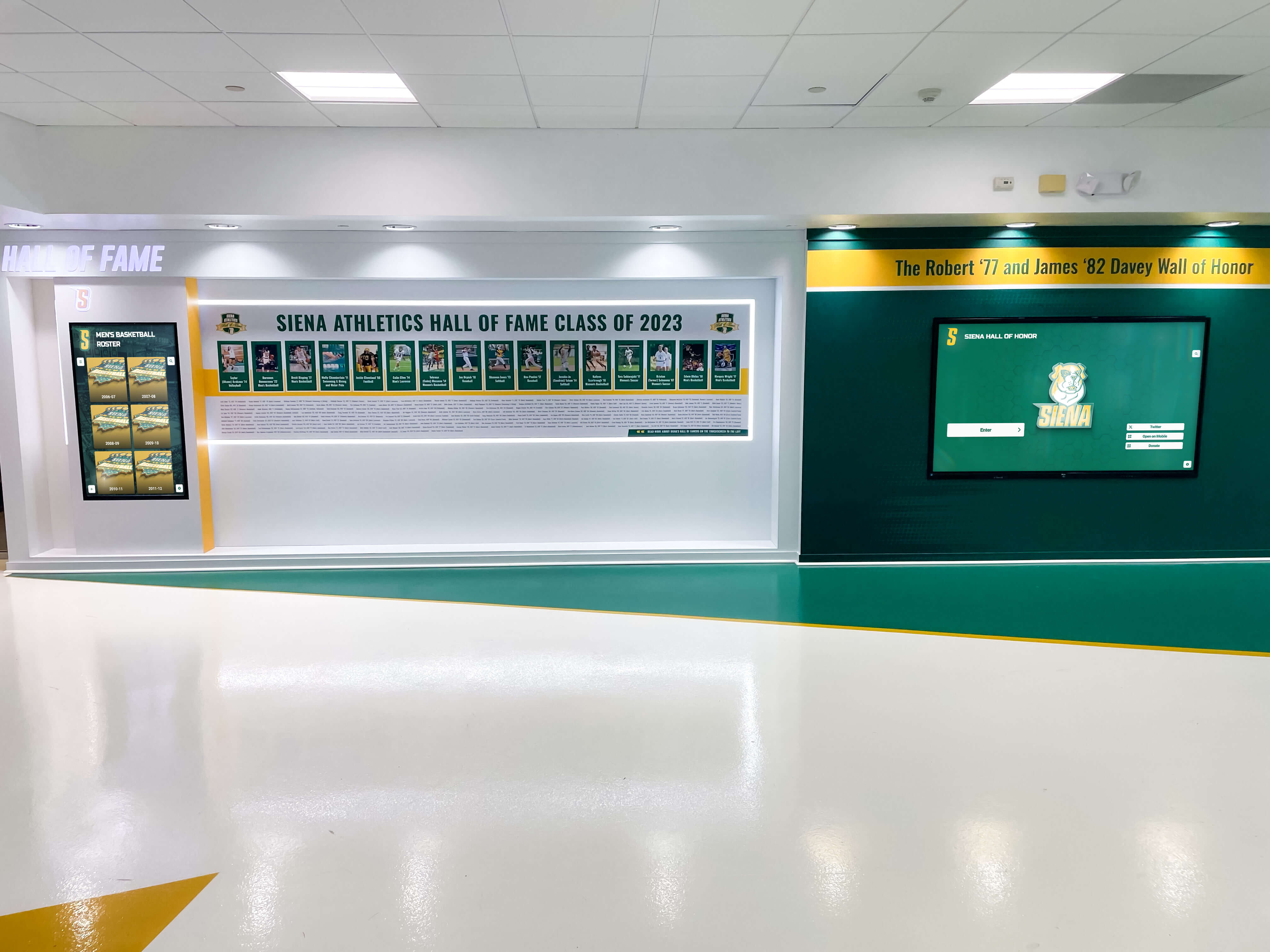
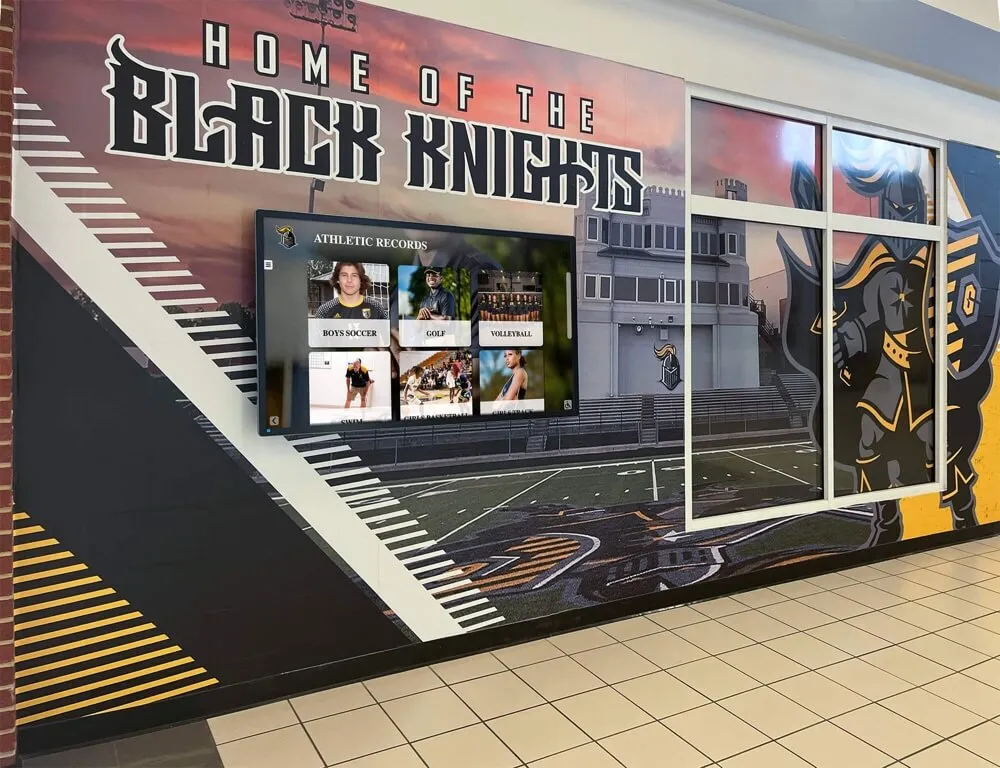
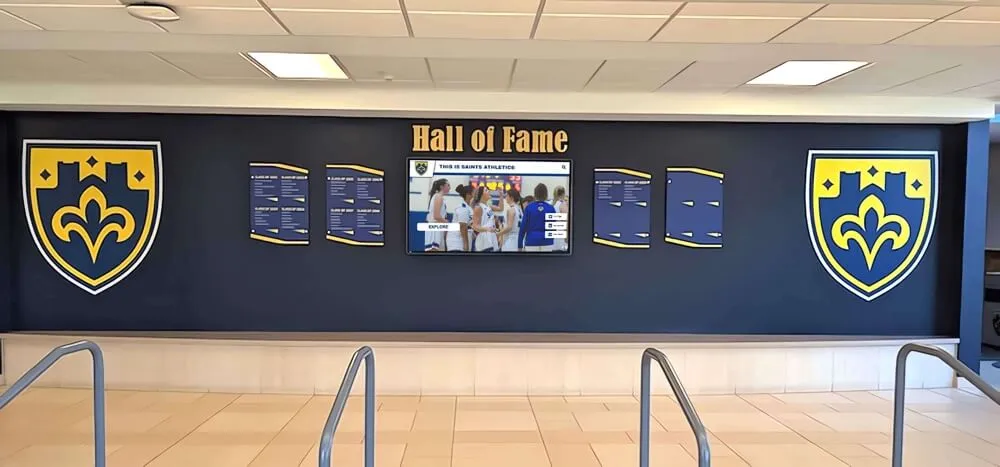
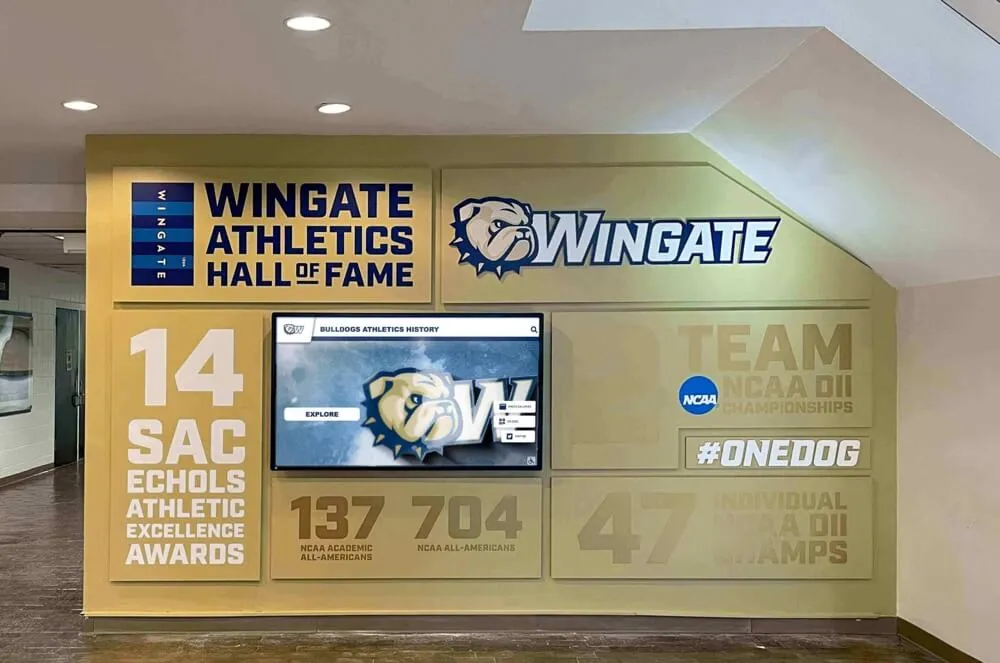
Well-designed program history displays communicate to current and prospective performers that their contributions will be remembered long after graduation
Building a Color Guard Senior Night Tradition
Single-year ceremonies are meaningful. Traditions are transformative. When underclassmen watch the senior ceremony and see the same structure, the same equipment retirement, the same director tributes year after year, they begin anticipating their own senior night from the moment they join the program. That anticipation is a powerful motivator that sustains participation across difficult seasons.
Building a repeatable tradition requires:
Documentation and templates. Keep a program director’s guide that captures the ceremony format, the announcement script template, the equipment retirement narration, and the logistics checklist. Transfer this documentation when directors change so the tradition survives leadership transitions.
Consistent ceremony elements. Even small consistent touches—the same song during the walk-out, the same gift item format, the same format for director tributes—accumulate meaning over time. Current seniors who remember watching the ceremony as freshmen feel the continuity.
Community involvement. Invite returning alumni to attend the ceremony. Their presence communicates to current seniors that the program values its graduates beyond their active membership years. Alumni who return to watch a senior night ceremony often deepen their own connection to the program, creating the foundation for future booster involvement and financial support.
For programs thinking about how to formalize alumni involvement as part of broader recognition strategy, the framework in volunteer service recognition display design offers a useful model.
Connecting Senior Night to the Broader Recognition Ecosystem
Color guard senior night is most powerful when it sits within a recognition ecosystem rather than existing as a standalone event. That ecosystem might include:
- Pre-season recognition: Announcing captain selections and leadership appointments with ceremony-level acknowledgment at the first parent meeting
- Mid-season spotlights: Short performer profiles in the school newsletter or social media throughout the season
- Competition milestone recognition: Acknowledging when the program reaches scoring milestones or earns a first-place finish in a circuit
- Senior night ceremony: The capstone tribute for graduating performers
- Post-season banquet: A structured awards event that includes individual achievement recognition alongside the senior tribute
- Permanent recognition installation: A display that carries the achievement forward for years
This kind of layered approach reflects the thinking behind how schools develop comprehensive senior recognition programs for athletes and performing arts students.
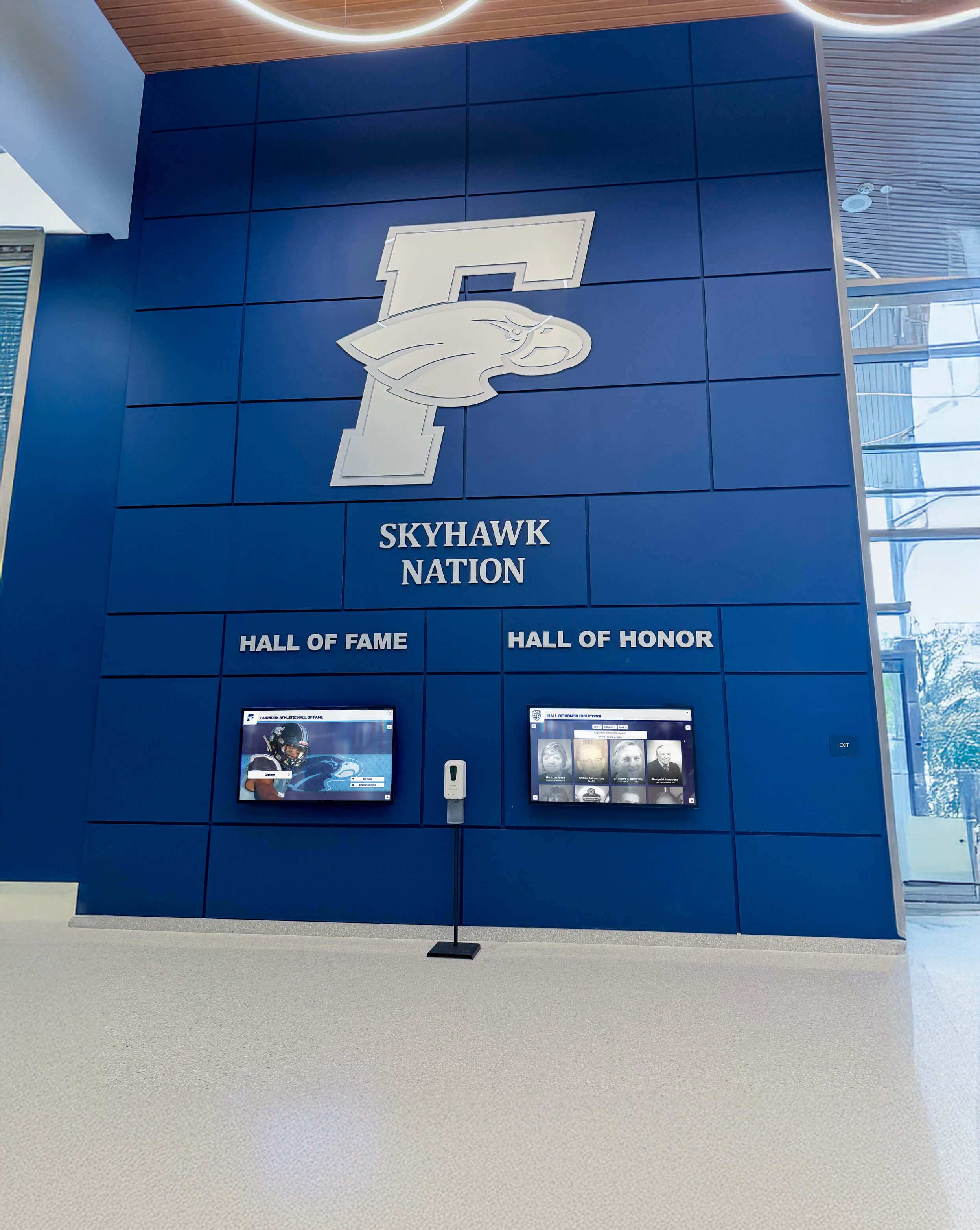
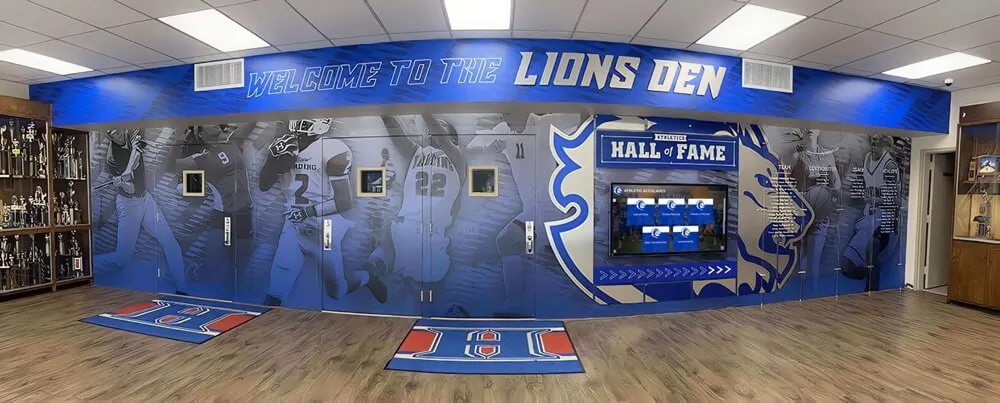
Schools that dedicate permanent lobby space to performing arts program recognition signal institutional respect for color guard and band participants
Frequently Asked Questions About Color Guard Senior Night
When should color guard senior night be scheduled?
Most marching band programs schedule the color guard senior tribute at the final regular-season home football game, typically in October or November. Programs with strong winter guard programs often hold a second tribute at the spring banquet. For indoor-only programs, the end-of-season banquet or the final competition weekend are the most common ceremony moments.
How long should the ceremony take during halftime?
A halftime walk-out ceremony typically requires eight to fifteen minutes, depending on roster size. Plan for thirty to forty-five seconds per senior for the announcement and walk-out, plus two to three minutes for opening remarks, a brief slideshow segment if possible, and a closing statement. Coordinate with the band director and athletic department on exact time allocation.
How do you involve parents who can’t attend in person?
Live-stream the ceremony through the school’s booster club social media or a platform like YouTube Live so parents who cannot attend can watch in real time. Record and archive the ceremony and slideshow so families can access them afterward. Share the video slideshow digitally with all families regardless of attendance. Some programs mail a physical memento package to families who live far away or cannot make the event.
What should be included in a senior tribute poster board?
A well-designed color guard senior night poster board typically includes a large current photo, photos from each season year, the performer’s name and class year, a quote from the director or the senior themselves, and personal notes from teammates and family. Using consistent framing (school colors, program logo) makes a row of poster boards look cohesive in photographs.
How do small-roster programs handle senior night when only one or two performers are graduating?
Small-roster senior nights can actually be the most emotionally powerful because the ceremony can be entirely personalized. For one or two seniors, the director can deliver extended tributes, the full ensemble can participate in a group presentation, and the walk-out can include every current member as an honor guard. The smaller scale allows for a depth of recognition that large-roster ceremonies cannot achieve.
How can programs memorialize color guard seniors beyond the ceremony?
Permanent options include a trophy case section, a digital recognition display with performance videos and senior profiles, an alumni wall featuring post-graduation accomplishments, and a physical ensemble photo gallery updated each season. Program directors can also maintain a searchable archive of past rosters, show themes, and competition results that provides historical context for current and prospective performers.
Creating Color Guard Recognition That Lasts
Color guard senior night deserves the same institutional investment that schools bring to athletic senior recognition—perhaps more, given how often performing arts programs are underrepresented in school recognition culture. When directors plan ceremonies with genuine intentionality, when parents and boosters bring creativity to the physical tributes, and when schools invest in permanent recognition displays that carry these tributes forward, they create a recognition culture that recruits motivated freshmen, sustains participation through difficult seasons, and honors graduating performers with the respect their dedication has earned.
The ceremony itself is the emotional peak. The infrastructure around it—the archive, the display, the alumni wall, the documented tradition—is what transforms a single night into a lasting legacy.
Give Your Color Guard Program the Recognition It Deserves
Rocket Alumni Solutions builds interactive digital displays that bring color guard and performing arts program histories to life—featuring performance videos, senior tribute profiles, competition achievements, and alumni recognition that stays visible year-round rather than fading after a single ceremony night.
Explore Recognition Display SolutionsThe graduates who walked out on that field, flags in hand, gave everything they had to your program. A single ceremony night honors that commitment. A permanent recognition system preserves it.