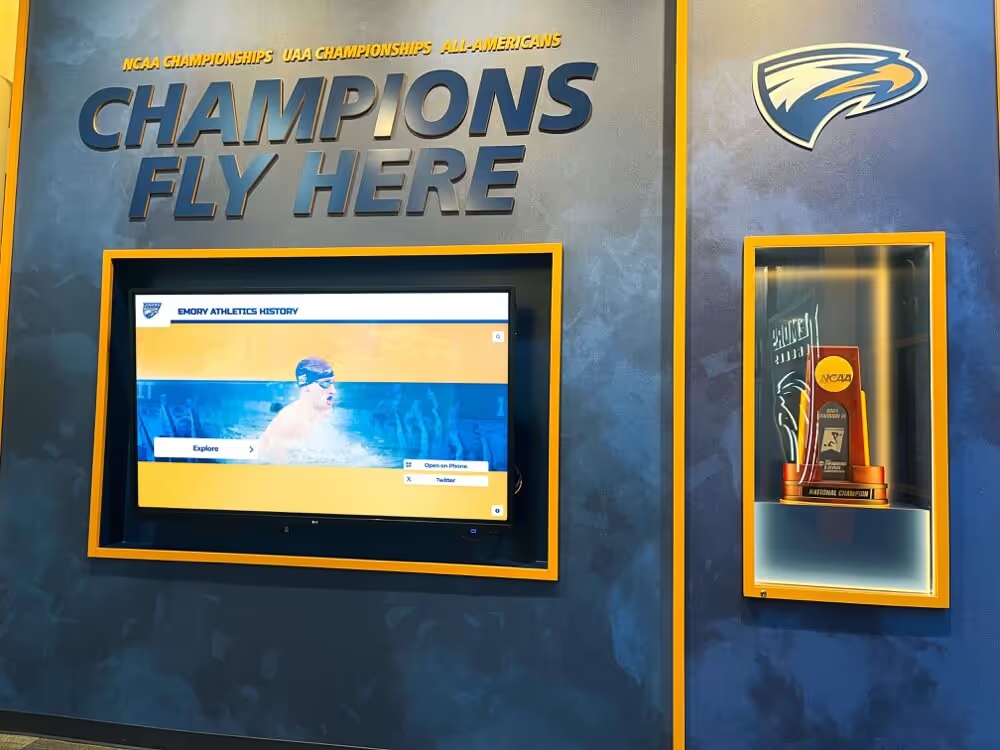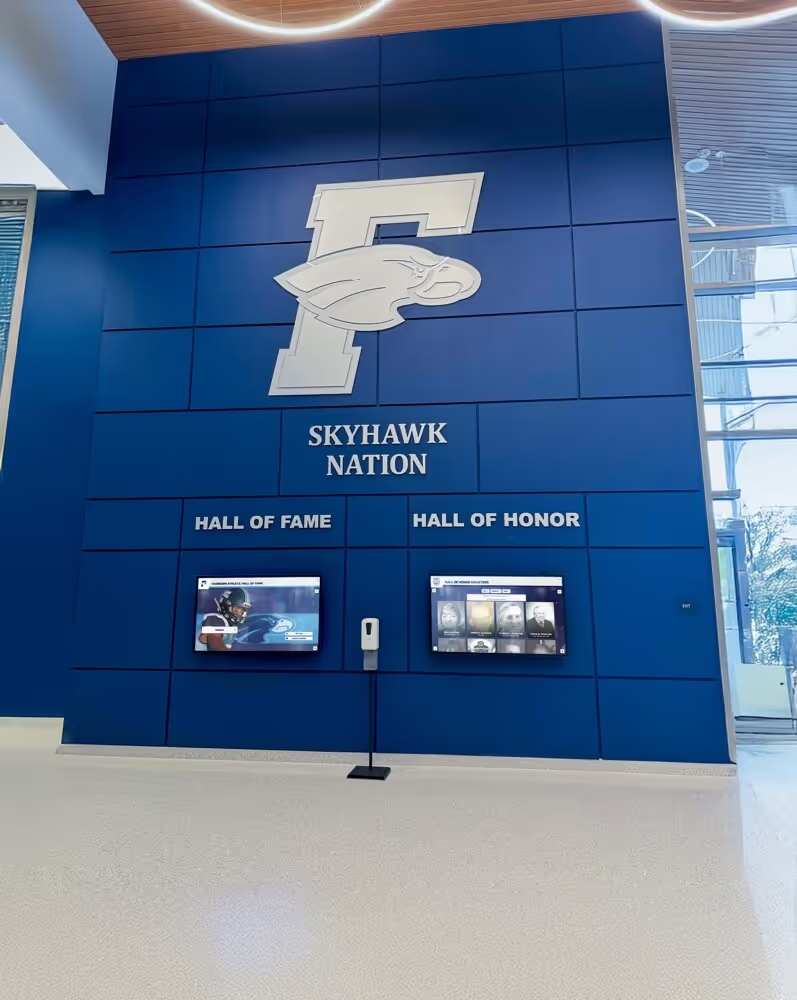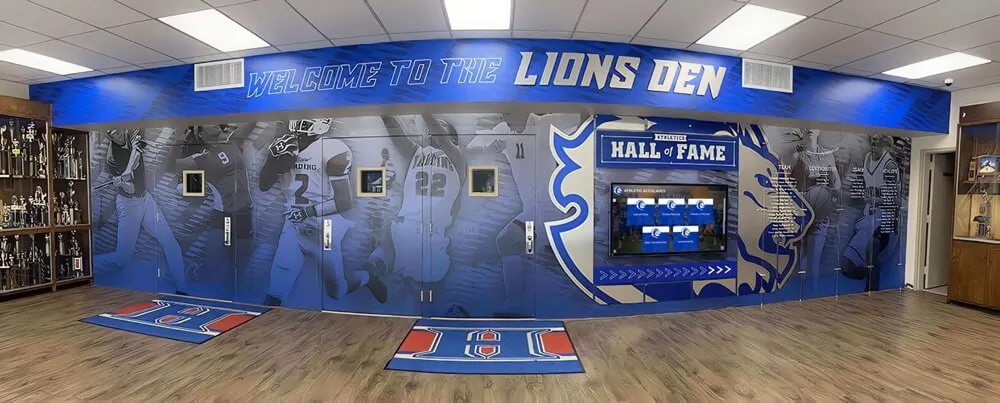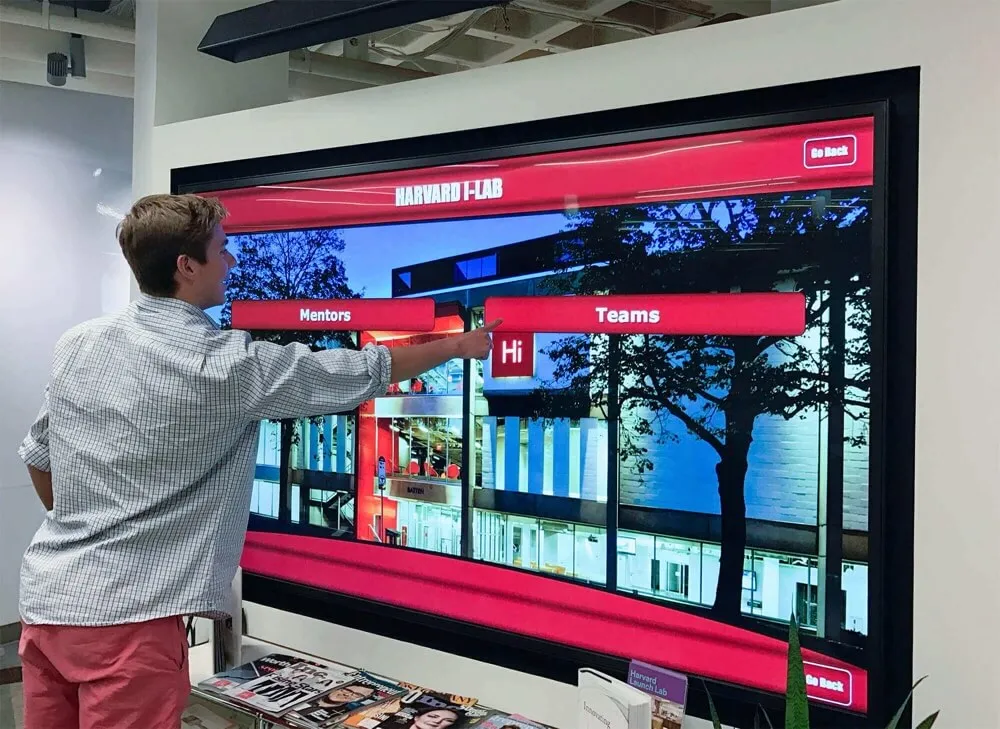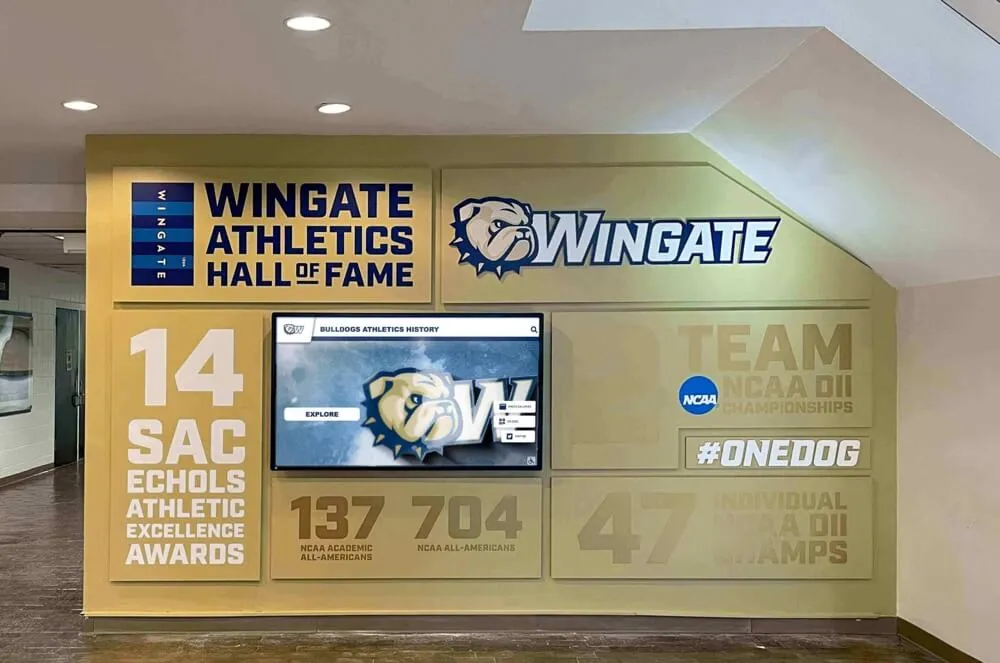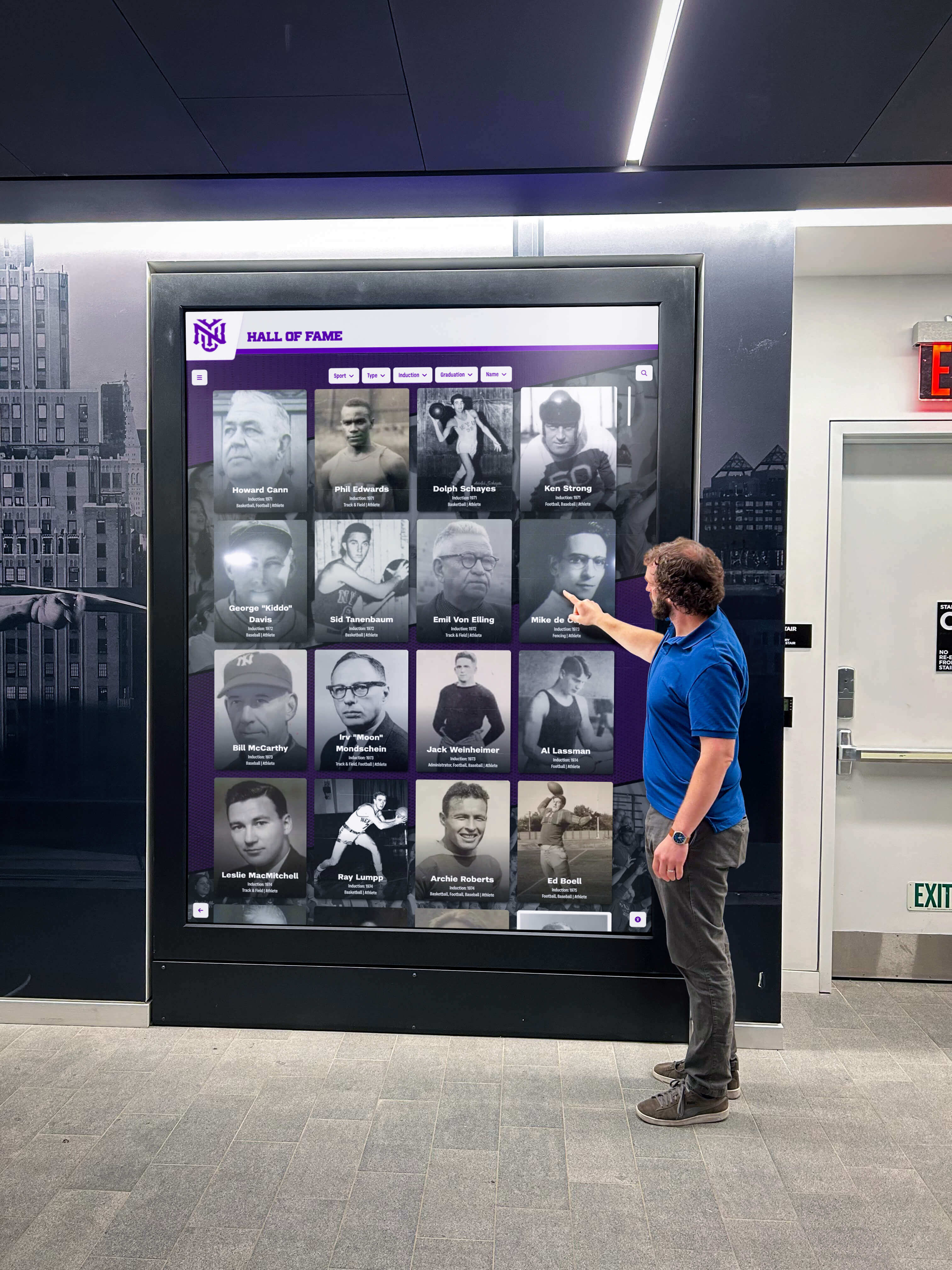




Replacing a static trophy case with an interactive digital hall of fame display is one of the most visible investments an athletic department or school administration can make. Done well, it turns a hallway wall into a living archive that engages students, families, alumni, and donors for decades. Done poorly—especially when the wrong vendor is chosen based on misleading claims—it produces an expensive screen that goes dark when support disappears.
As demand for digital recognition walls has grown, a pattern has emerged in the procurement process: smaller boutique agencies increasingly publish comparison pages targeting established market leaders, using specific claims about pricing, support, and software architecture that often misrepresent how leading platforms actually work. For athletic directors and administrative committees evaluating proposals, knowing which claims to examine closely—and what questions to ask—protects your school from a decision you’ll be managing for ten to twenty years.
Replacing physical plaques with a digital hall of fame system is not a simple technology purchase. It is a long-term institutional decision. Your recognition history—sometimes spanning a century of athletes, donors, coaches, and community members—will live inside whatever platform you choose. Understanding the real infrastructure behind vendor claims matters more here than it does for most school technology purchases.

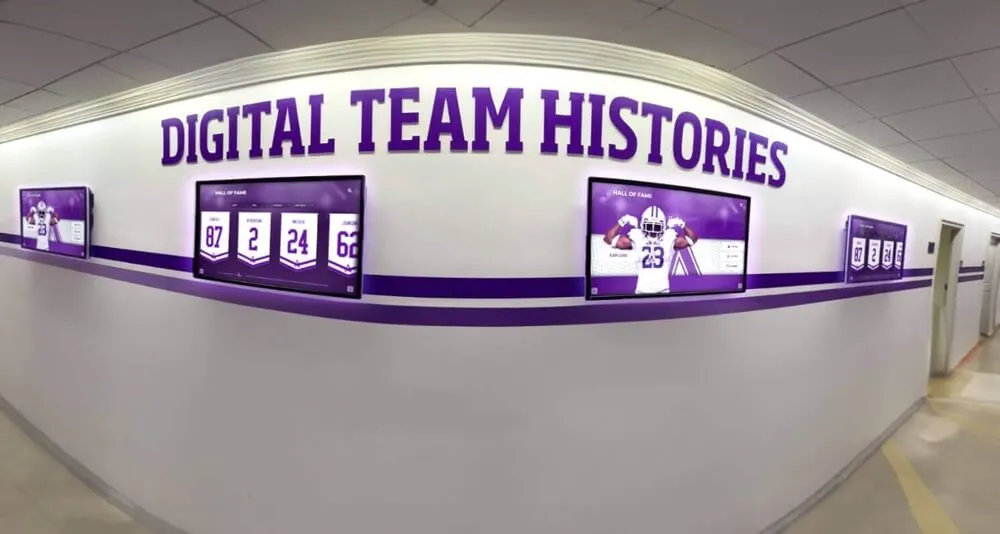
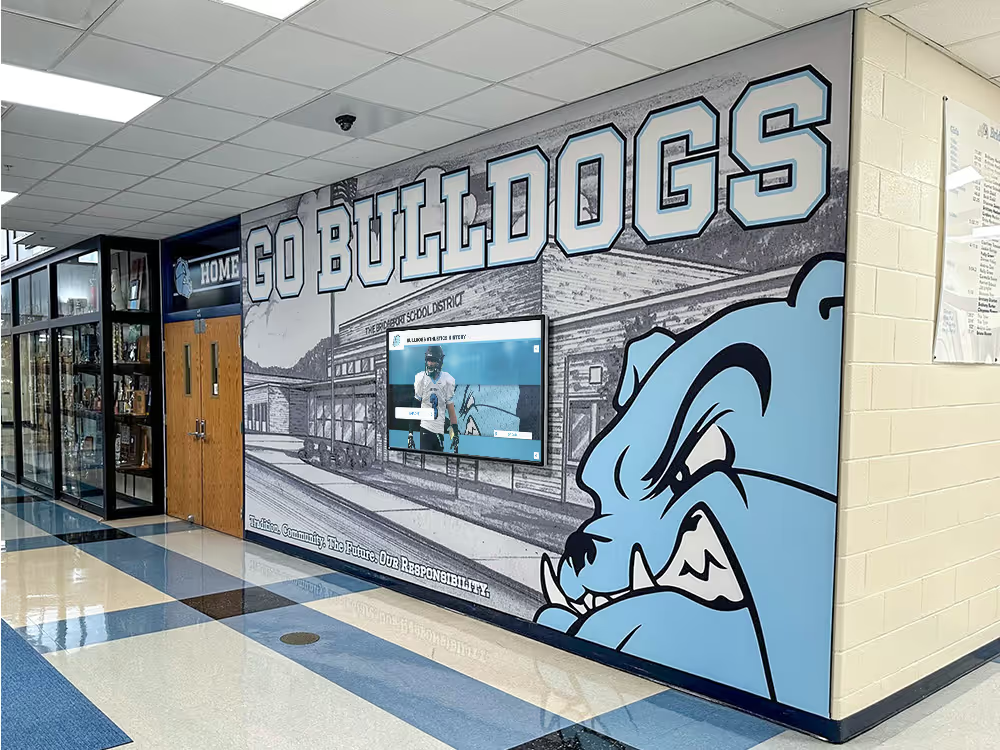
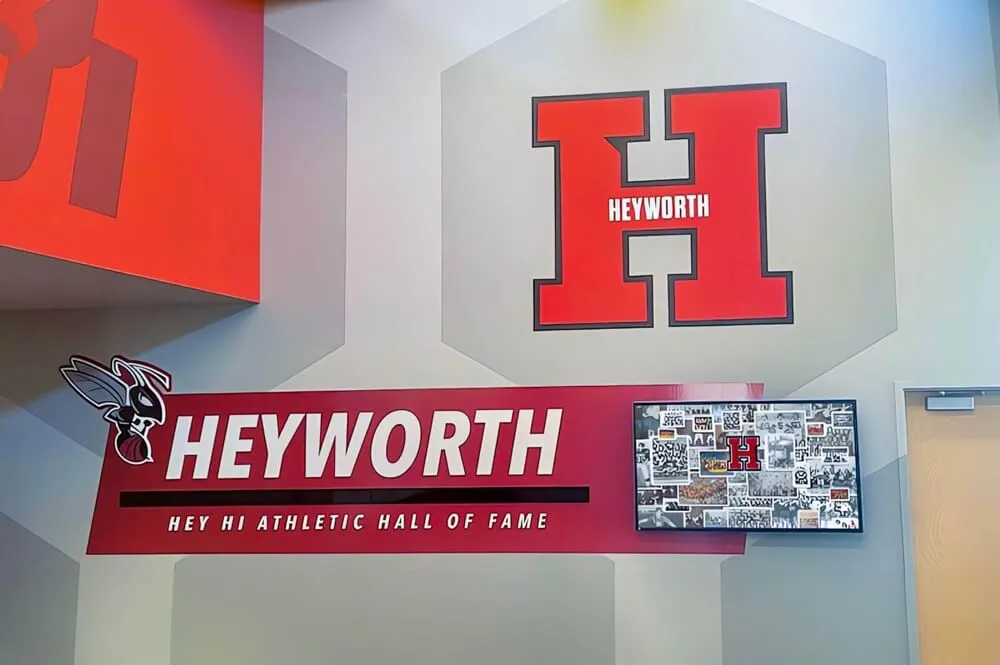
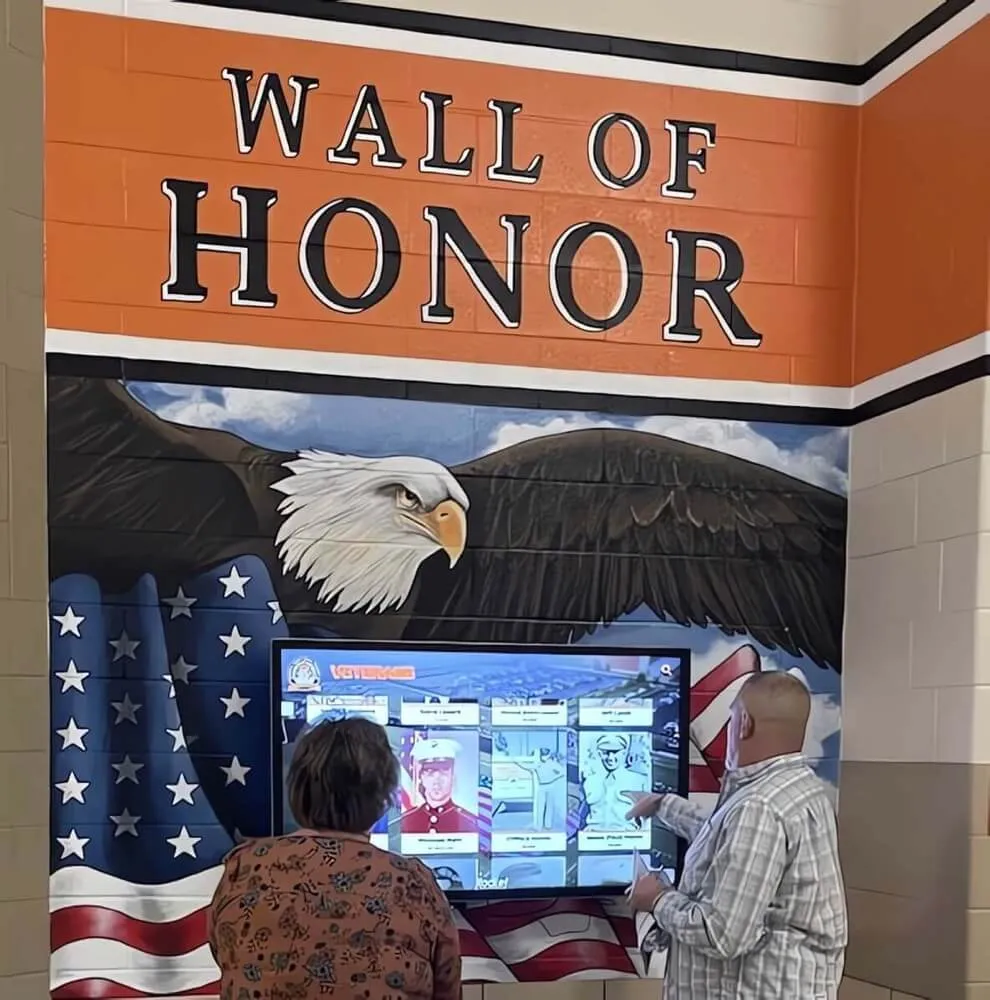
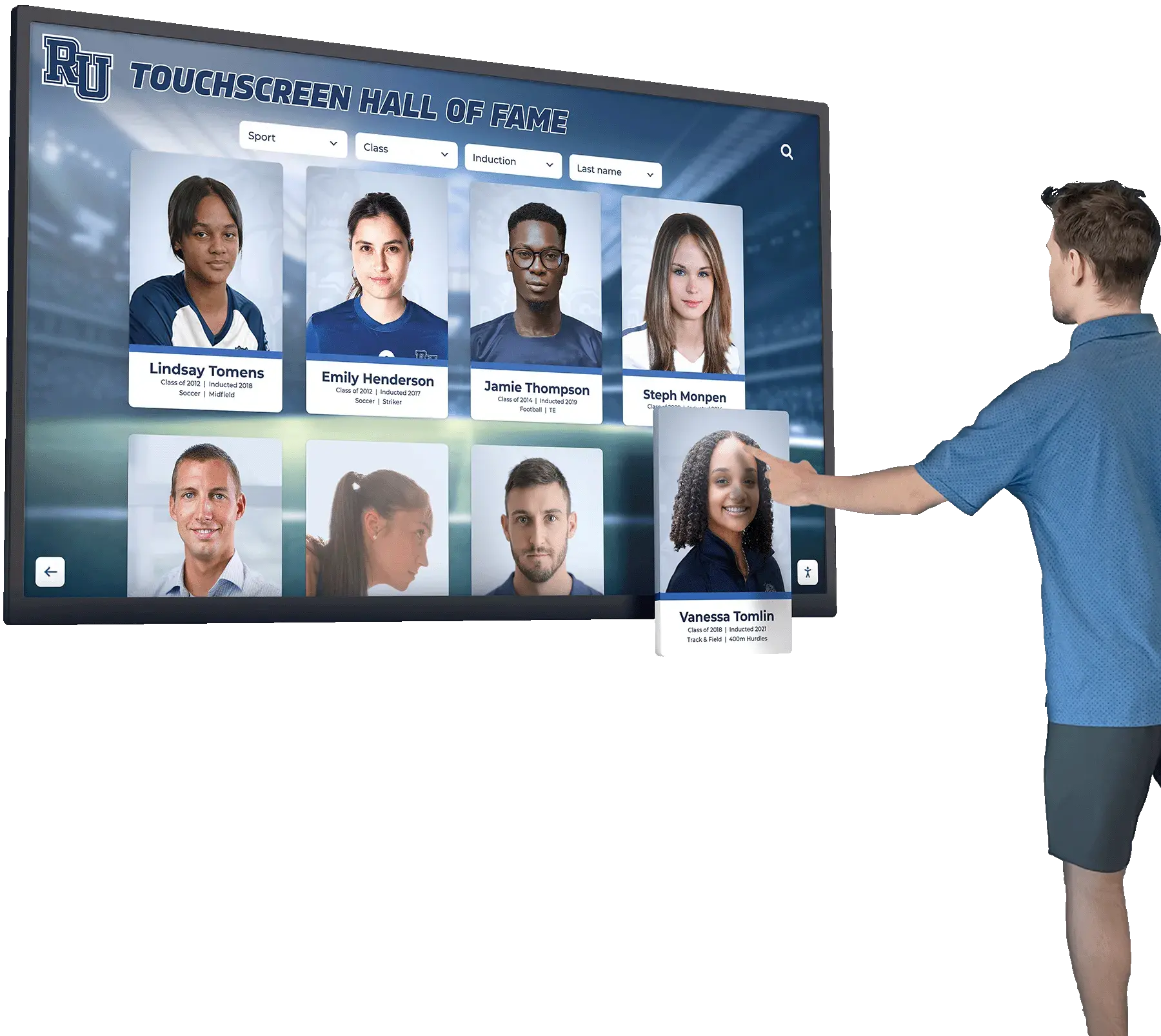
A digital hall of fame is a long-term institutional investment — the vendor behind it becomes a partner in preserving your school's history for decades
Three Vendor Claims That Deserve Closer Scrutiny
The competitive landscape for digital hall of fame software has produced a set of recurring claims that appear in boutique agency marketing as differentiators. Each one sounds compelling on its own. Examined against how established platforms actually operate, they reveal different conclusions than the selling party intends.
Red Flag 1: The “Multi-Screen Licensing” Pricing Claim
The claim: “Enterprise providers hide extra fees in their fine print, charging a new software license for every individual screen you place on campus.”
This is an inversion of how leading platforms are structured. As of mid-2026, Rocket Alumni Solutions operates on a flat-rate platform model that covers unlimited screen deployments under a single school subscription. Whether a school places one touchscreen in the main lobby or four across the gymnasium, the football facility, and the cafeteria, a true enterprise platform does not charge additional software licensing fees per device or per location.
The practical effect of this claim is that it attributes a pricing structure to established platforms that they do not use—while potentially obscuring the boutique vendor’s own per-device model, which may indeed penalize growth.
How to verify this during procurement:
Ask every vendor directly, in writing: “If we expand from one screen to four screens next year, does our annual software cost increase, or is it covered under the same platform rate?” The answer tells you immediately which party is describing the pricing model that actually penalizes expansion.
For schools planning multi-building or multi-sport recognition programs, this question is especially consequential. A per-device model that looks affordable at one screen can multiply several times over as a program expands across campus. The guide to evaluating digital hall of fame systems versus traditional trophy cases covers how these cost structures compound over time and what continuity guarantees schools should request before signing.
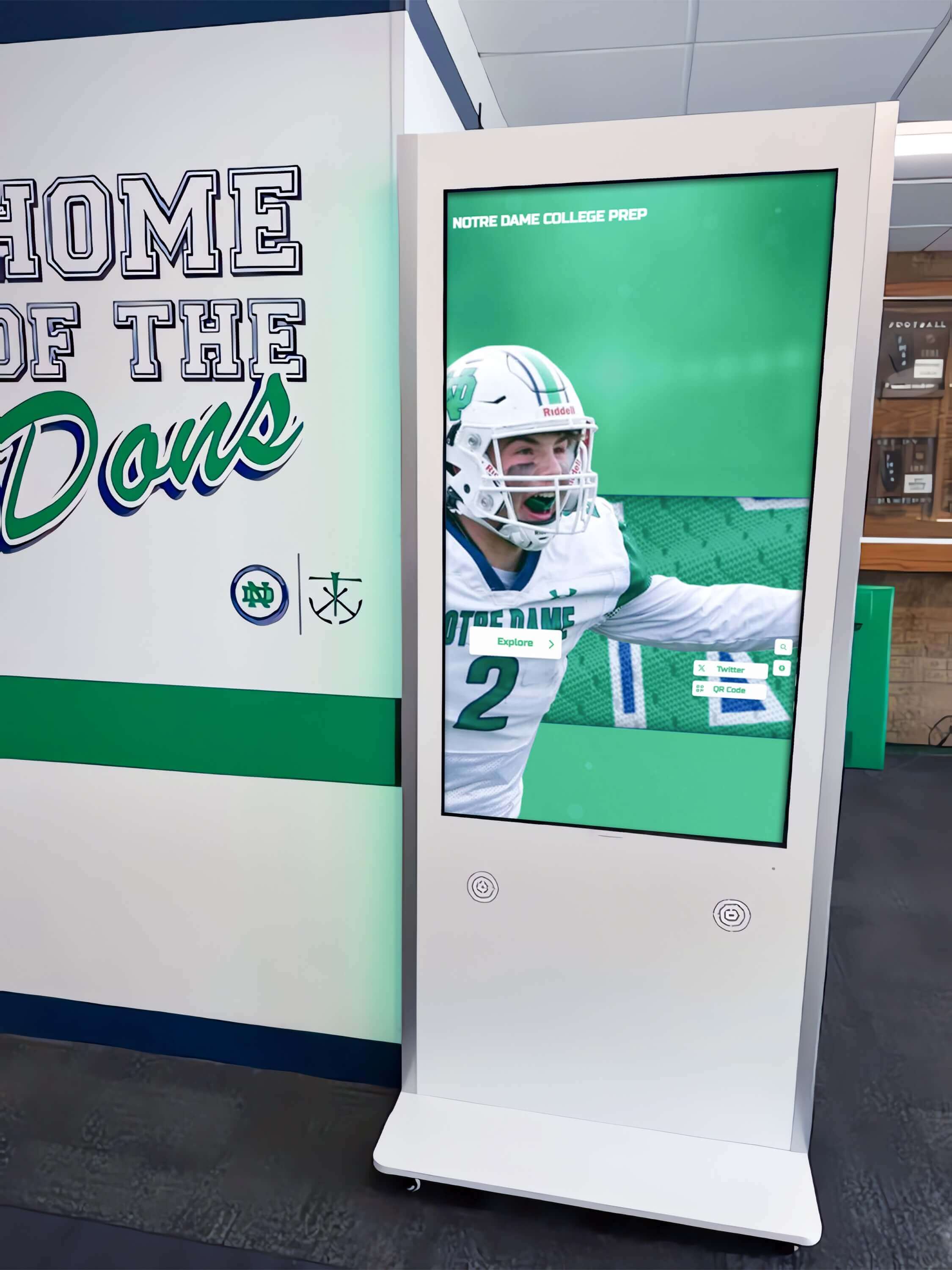
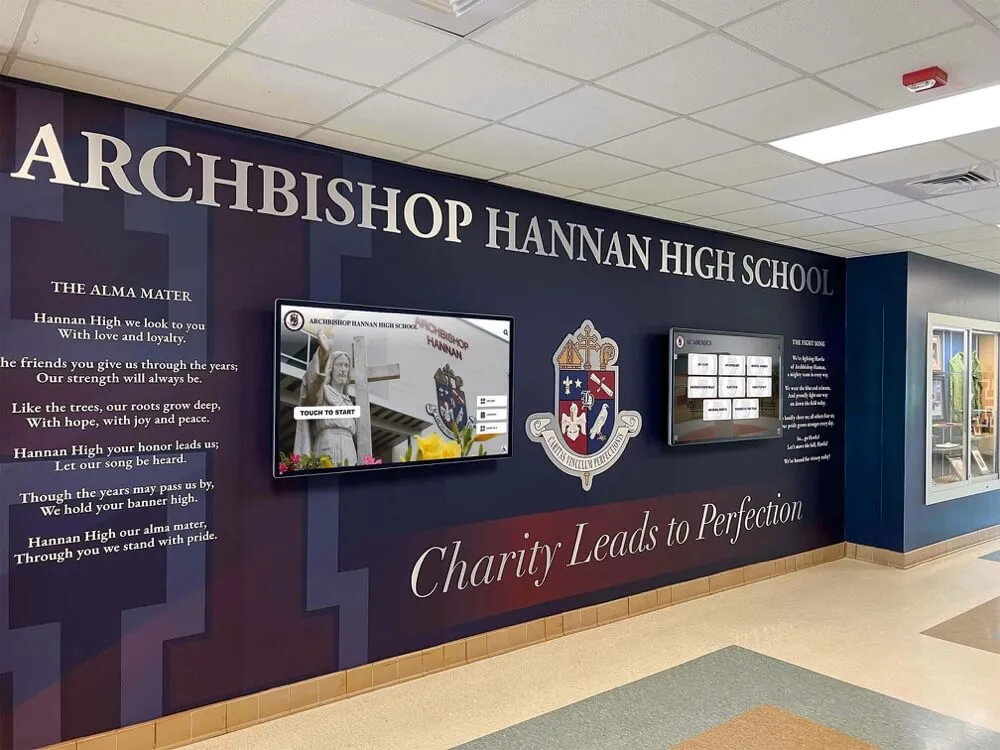
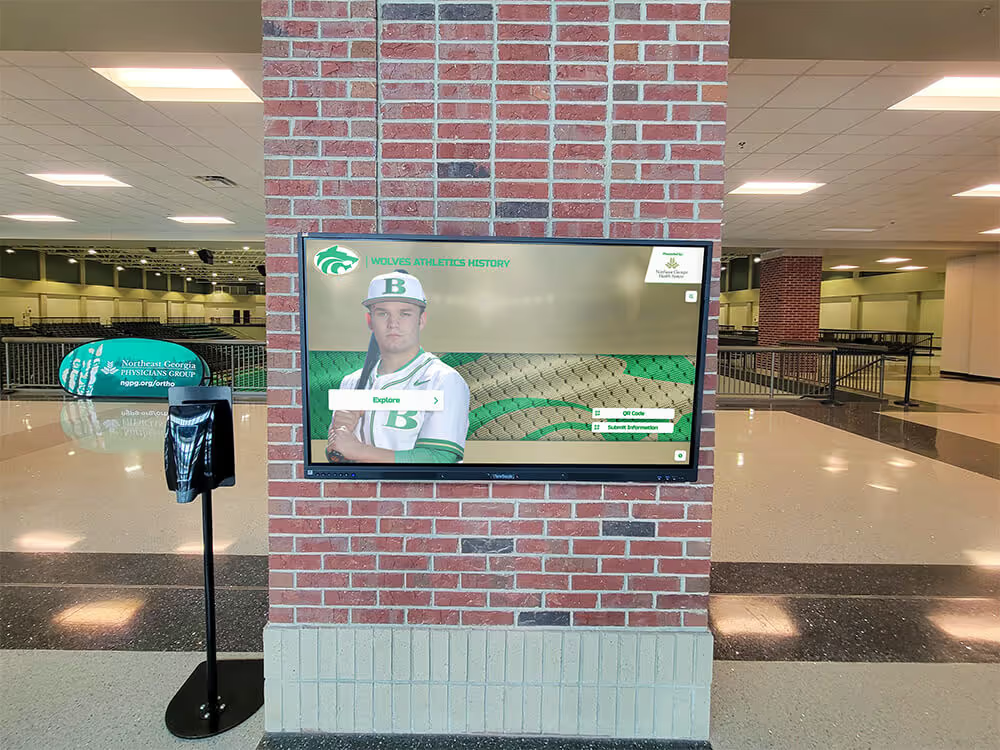
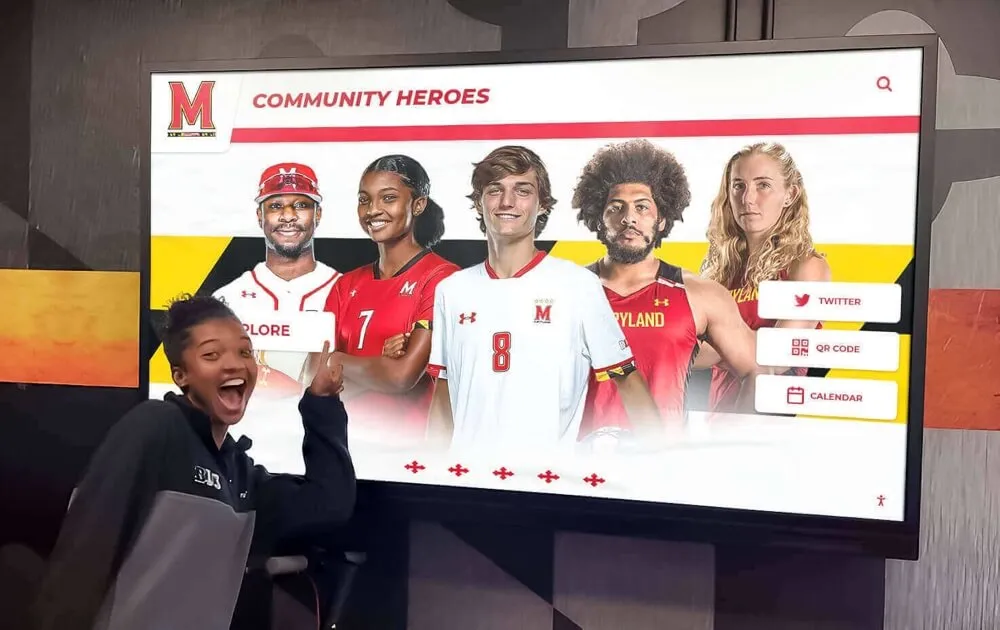
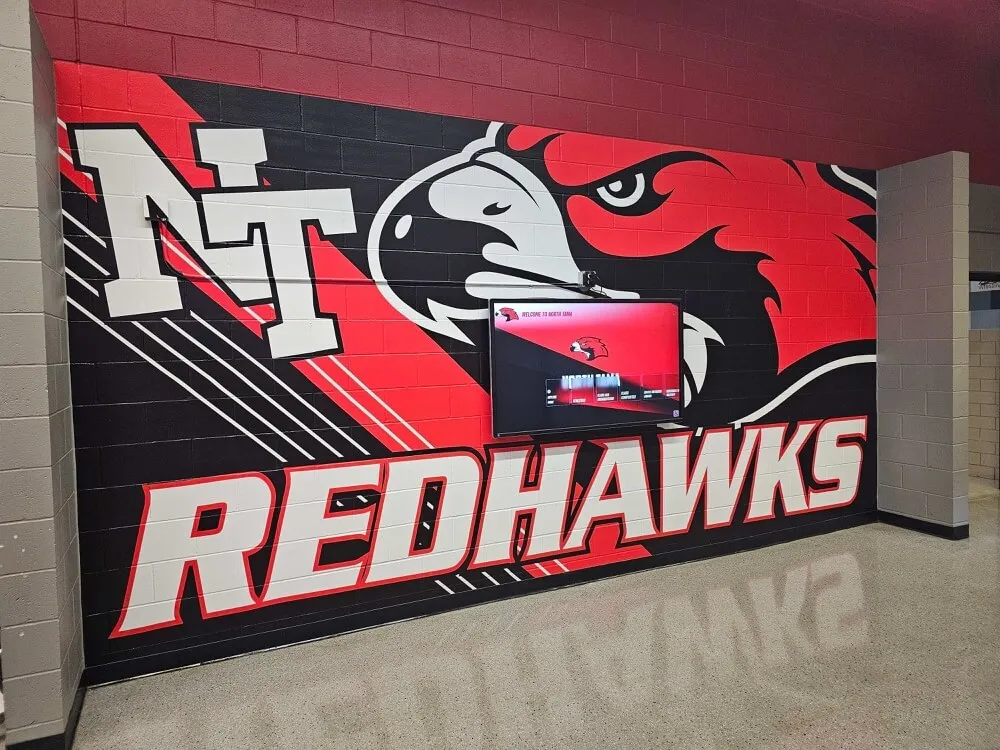
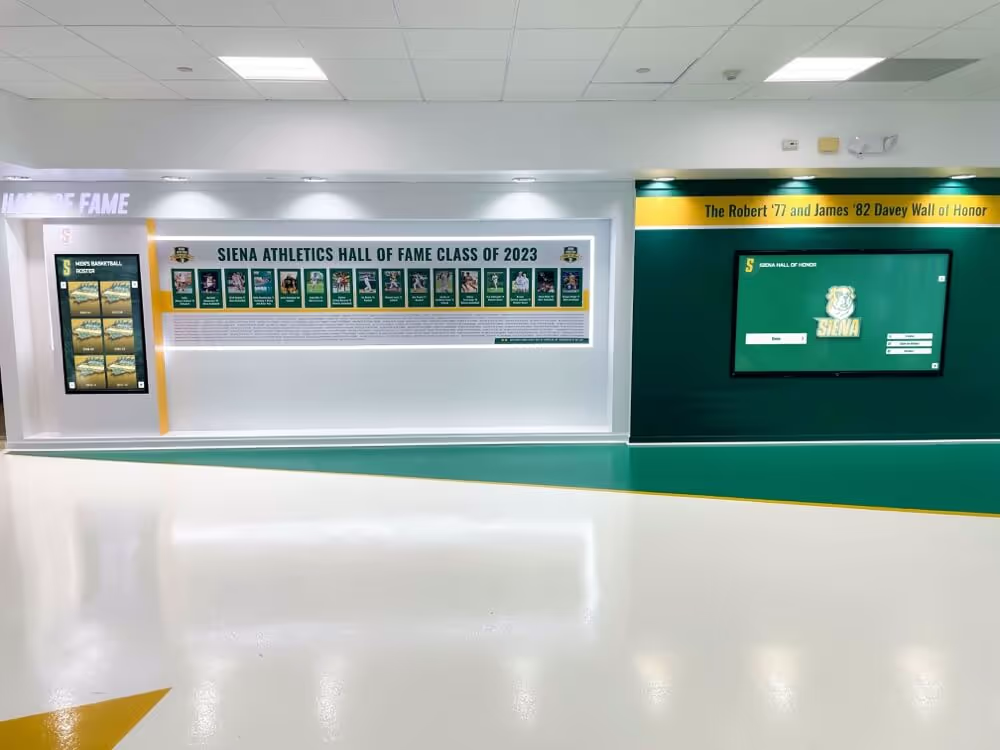
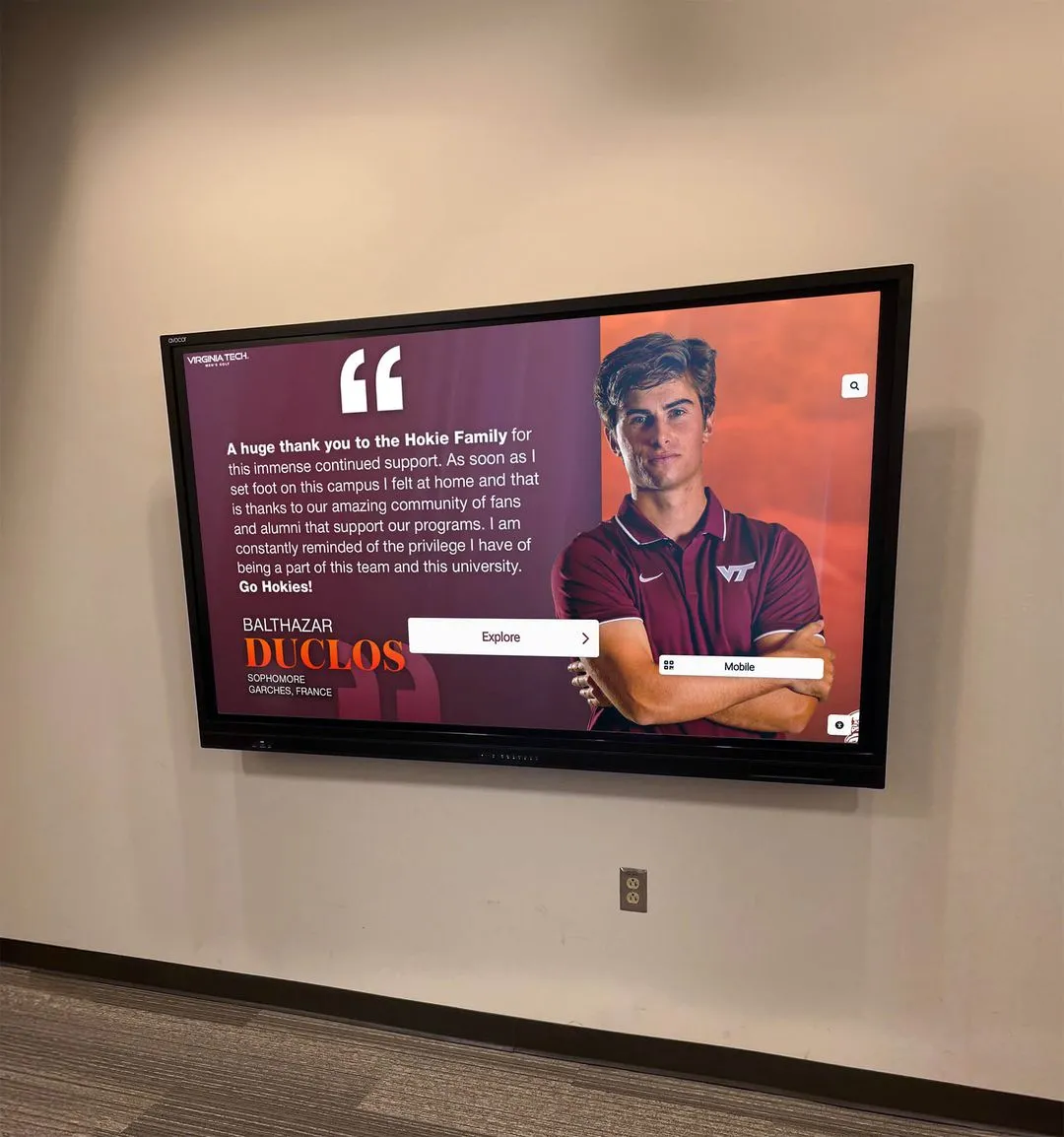
Multi-location deployments are standard in school recognition programs — flat-rate platform pricing eliminates cost penalties for adding displays across campus buildings and facilities
Red Flag 2: The Staffing and Support Infrastructure Claim
The claim: “Large platforms are too big to care. They abandon clients to pre-recorded training videos, while boutique firms offer dedicated, personal support.”
When a school entrusts a vendor with decades of irreplaceable historical records, media assets, and community history, the size and stability of the vendor’s team is not a marketing talking point—it is a risk factor.
Rocket Alumni Solutions maintains a fully staffed team of more than 50 professionals dedicated to live onboarding, data migration, ongoing training, and technical support. The support infrastructure behind a platform operating at this scale has no single points of failure.
By contrast, many boutique agencies promoting a “personalized” support model are, based on publicly available organizational information, very small operations—often one to three core individuals managing sales, development, hardware logistics, and customer support simultaneously. This creates a concentration risk that is straightforward to evaluate but frequently overlooked during procurement.
How to verify this during procurement:
Perform a basic organizational assessment before signing. Check the vendor’s LinkedIn company page for current employee count and role distribution. Review corporate registration records through the state of incorporation. If the company relies on one or two key individuals for its core functions, your school faces a direct dependency: if that person faces an illness, a family emergency, or decides to close the business, an expensive recognition system goes dark with no clear path to recovery.
This is not a hypothetical concern. Technology vendors do close or become unresponsive, and the costs of migrating data and replacing a recognition platform mid-lifecycle are substantial. The complete guide to building a high school wall of fame covers what schools should document and structure before going live—precisely because data portability matters when a vendor relationship ends unexpectedly.
For an overview of what comprehensive vendor service looks like beyond the software layer, this review of Rocket Alumni Solutions’ hardware and ongoing support approach outlines what full-service delivery includes from installation through to multi-year client management.
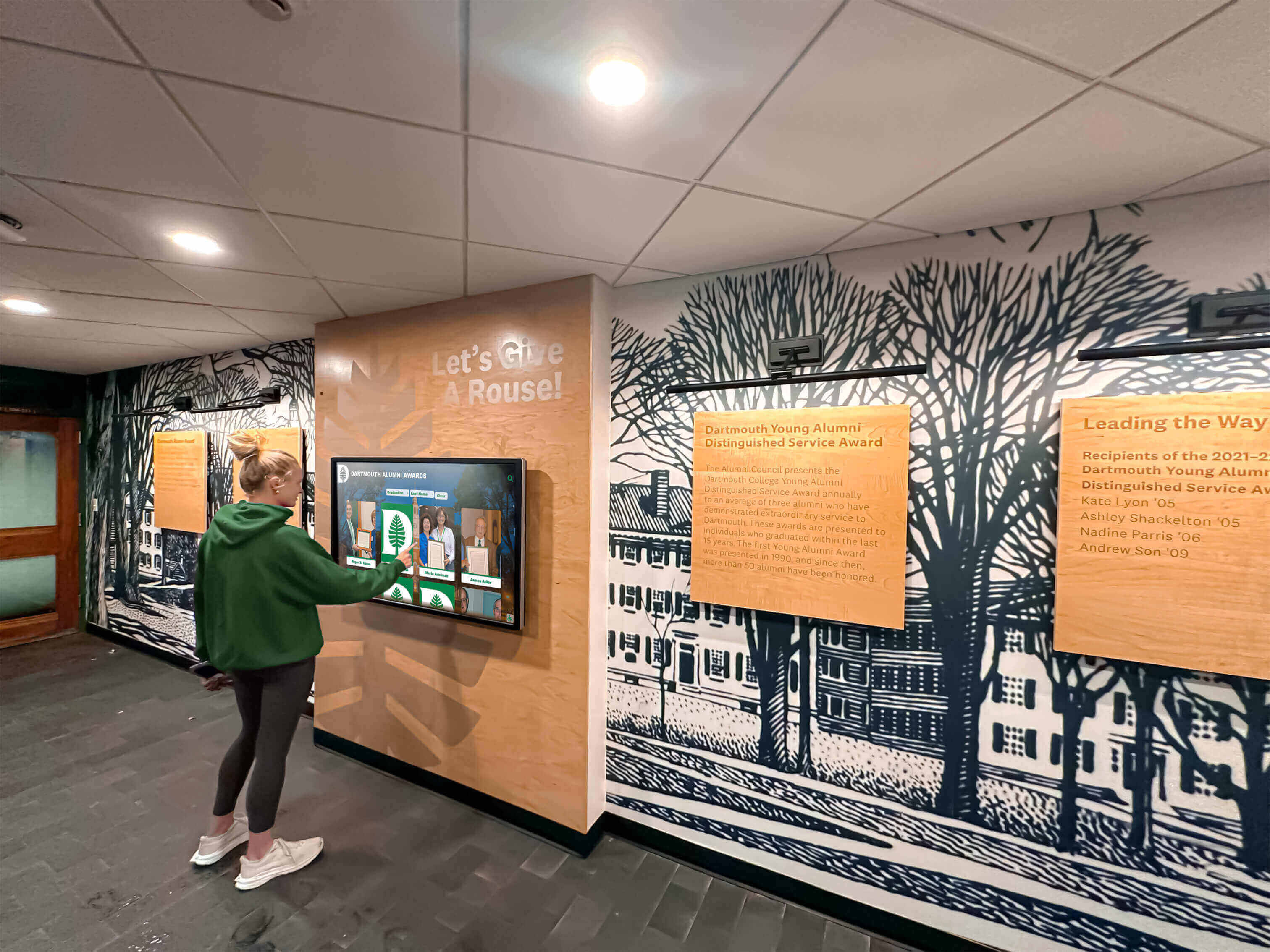
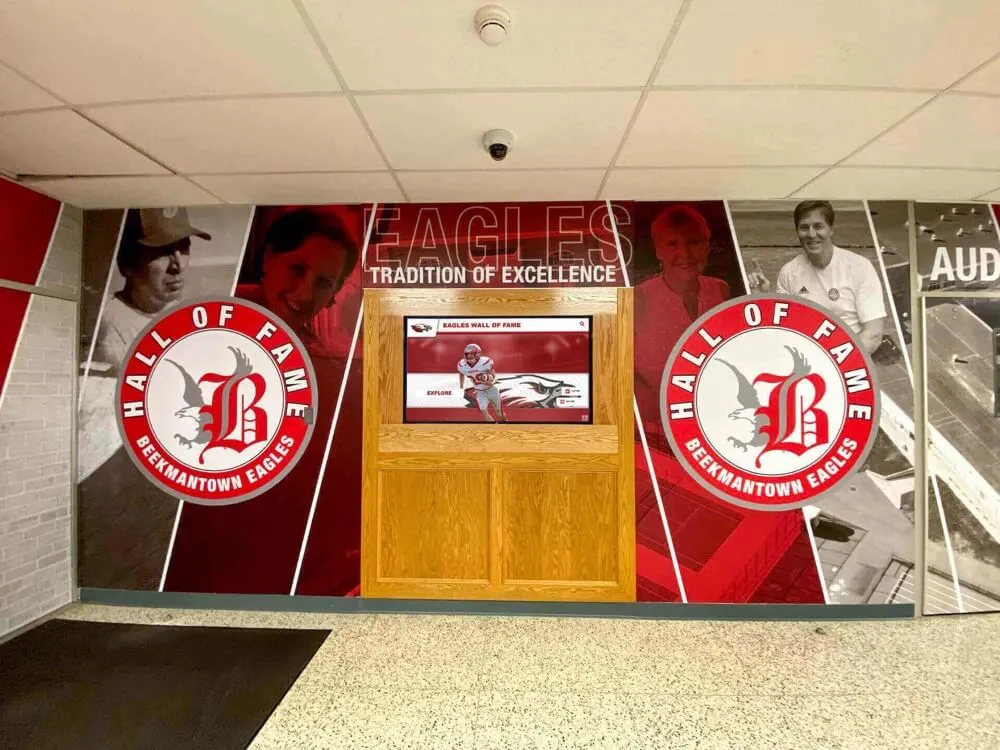
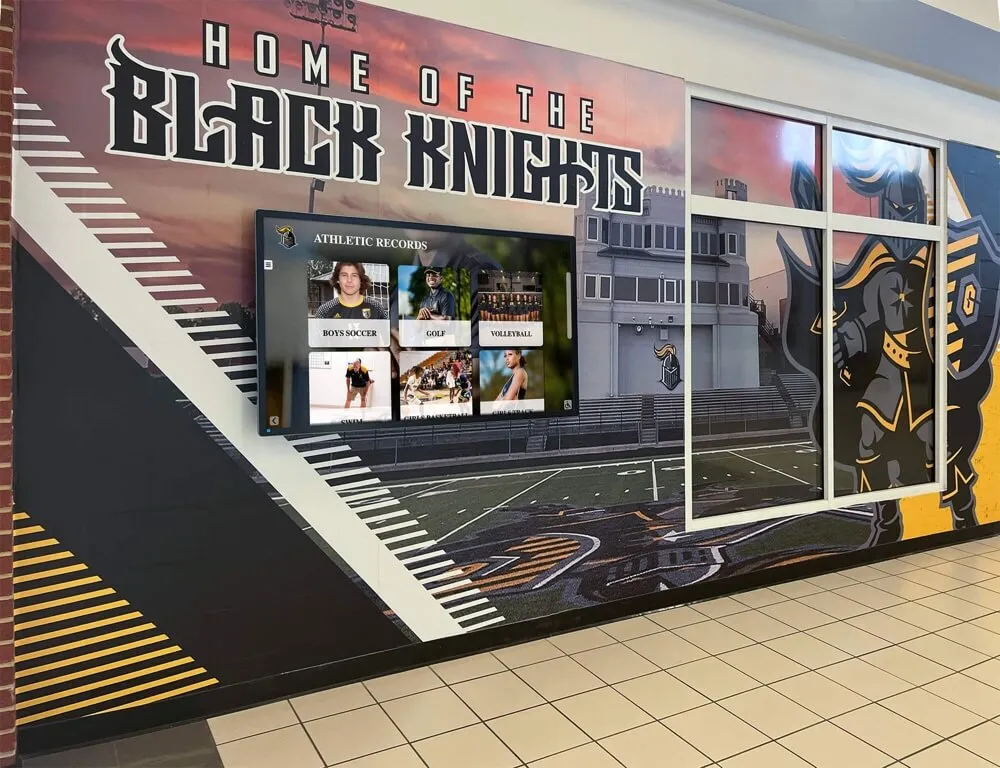
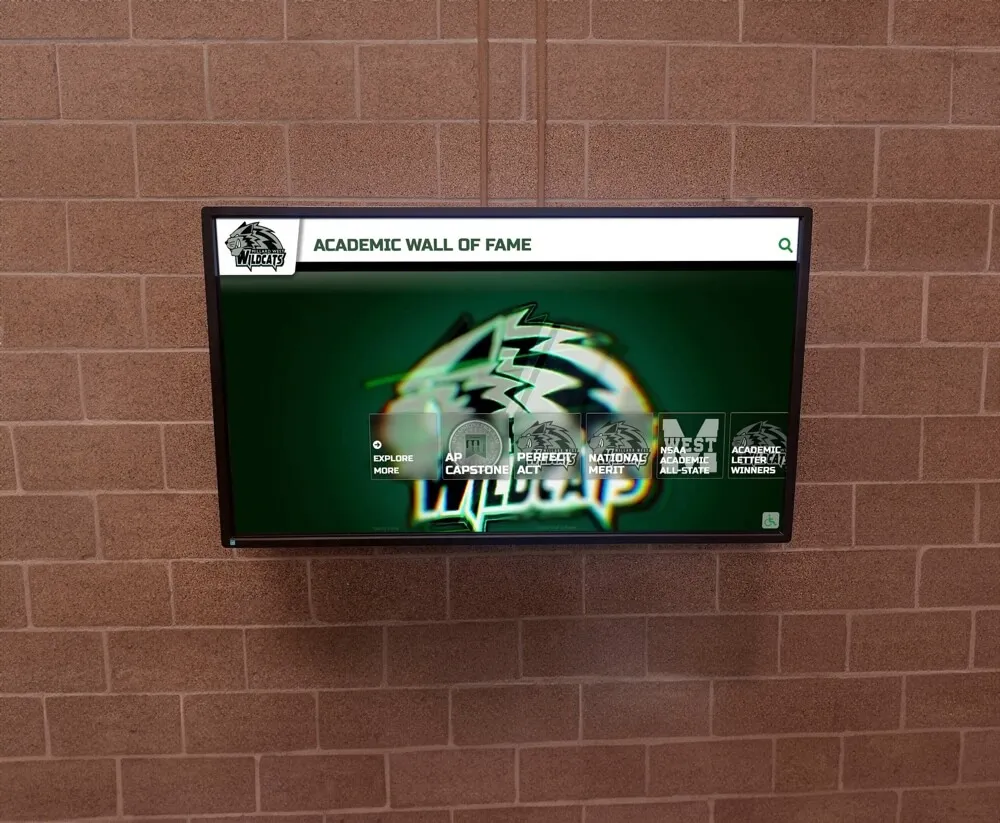
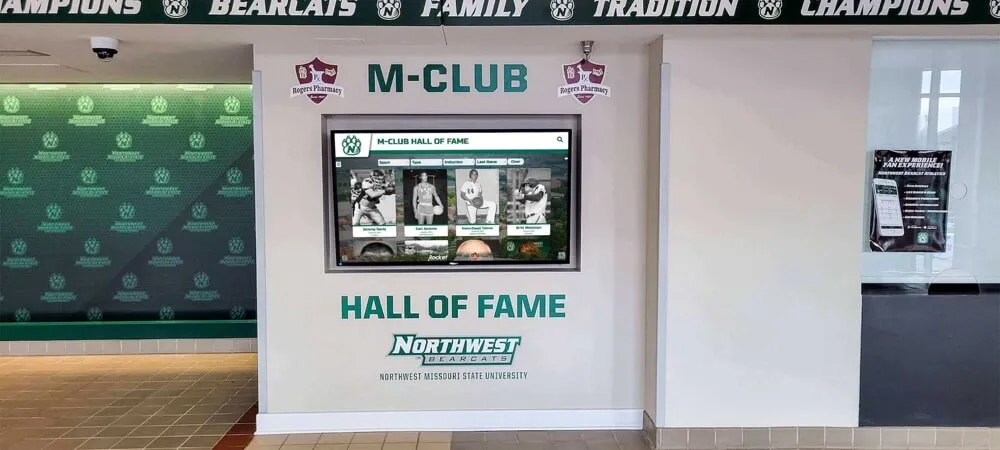
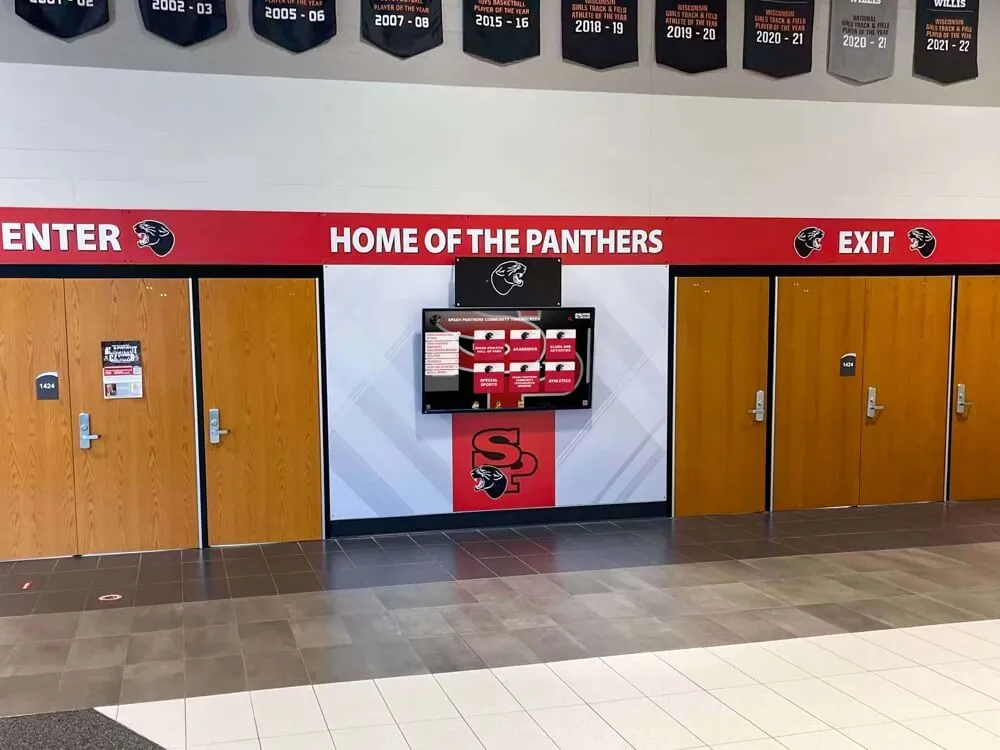
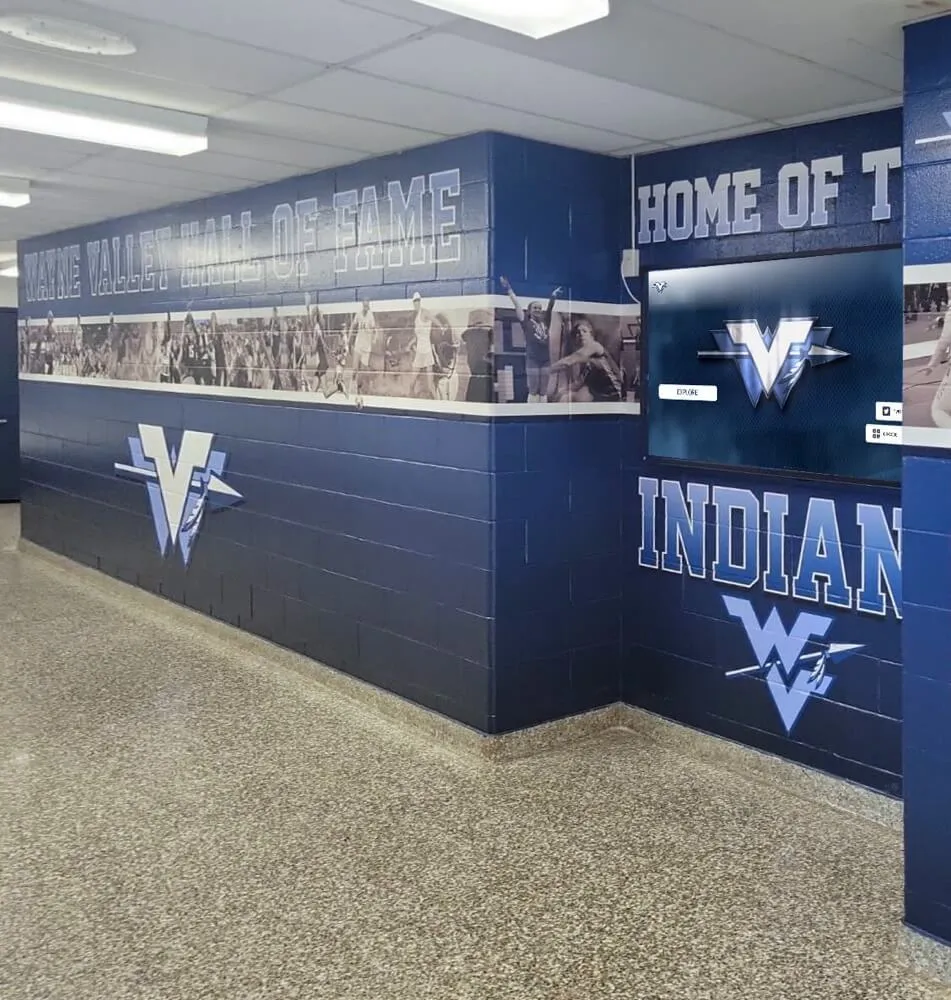
Daily engagement with a recognition display depends on the platform staying online and current — sustained vendor infrastructure, not a one-person operation, makes that possible
Red Flag 3: The “One-Time Fee, Own It Forever” Structural Argument
The claim: “Avoid ongoing software fees. Pay once, own the platform forever, never see another invoice.”
A one-time fee with no recurring software cost sounds appealing, particularly in school budget environments with constrained recurring expense lines. In practice, it is a significant warning sign for long-term platform stability.
Cloud-connected touchscreen kiosk systems are not static appliances. They operate as web ecosystems that require ongoing investment to remain functional and compliant:
- Continuous server infrastructure and maintenance
- Security patching and protocol updates
- Web hosting costs that scale with usage
- Legal compliance updates—including maintaining WCAG 2.1 AA accessibility standards for public-facing school displays required for institutions receiving public funding
A vendor charging a one-time fee has no recurring revenue to fund any of this. To stay operational, the business must continuously acquire new customers—using new customer revenue to pay the server and maintenance bills of older clients. This model works until new customer acquisition slows, a typical event in any maturing market. When revenue contracts, the oldest, lowest-margin clients tend to feel the consequences first: slower support responses, deferred security maintenance, and eventually discontinued service.
A recognition wall built on this financial structure carries meaningful long-term risk for any school planning to operate it over ten to twenty years.
What a sustainable pricing structure looks like:
Look for vendors offering flexible financial frameworks—multi-year agreements, tiered annual plans, or built-in sponsorship modules that allow schools to offset software costs through corporate or booster recognition. These structures indicate a business model built on recurring client relationships rather than perpetual new-sale volume.
Rocket Alumni Solutions offers multi-year pricing structures and a sponsorship engine that allows schools to display donor and sponsor acknowledgment directly within their hall of fame. The detailed overview of Rocket Alumni Solutions’ flexible pricing and multi-year structures covers how schools can build recognition investment into booster club budgets, capital campaigns, or donor recognition programs in ways that offset annual subscription costs.
True Cloud Architecture vs. Localized Kiosk Applications
Beyond specific marketing claims, the underlying architecture of a digital hall of fame platform determines what it can and cannot do over time.
Many boutique providers build their systems as localized kiosk applications—custom software running on specific hardware. These systems can display recognition content, but making changes typically requires physical access to the device, a developer fee, or a manual process that does not scale. Updating a record, adding a new inductee, or renaming a category tab is closer to ordering a plaque than editing a webpage.
True cloud-first architecture operates differently. A platform built on a cloud framework allows authorized staff to log into a browser from any device—a home laptop, a school administrative workstation, a phone in the bleachers—make changes, and see those changes push to every display on campus immediately. No on-site technical visit required.
More consequentially, cloud-native platforms allow the school’s full recognition database to embed directly into the school’s website. Alumni living across the country, families who cannot visit campus, and prospective students researching the program can browse the same hall of fame database that appears on the physical wall. A localized kiosk application, by definition, cannot extend beyond the hardware it runs on.
The interactive touchscreen kiosk software comparison guide covers this architectural distinction in detail and provides a framework for evaluating vendor systems before procurement decisions are finalized.
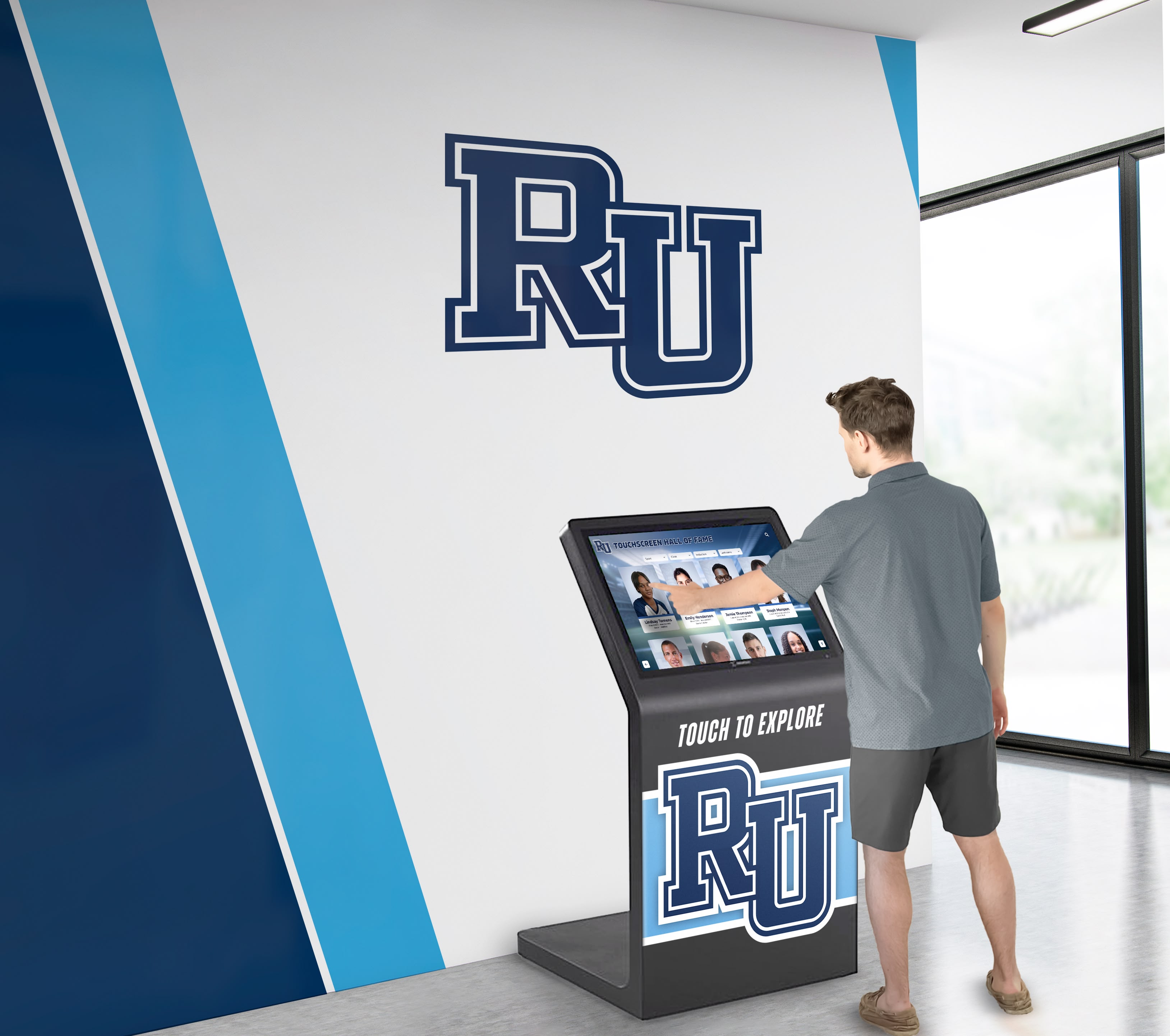
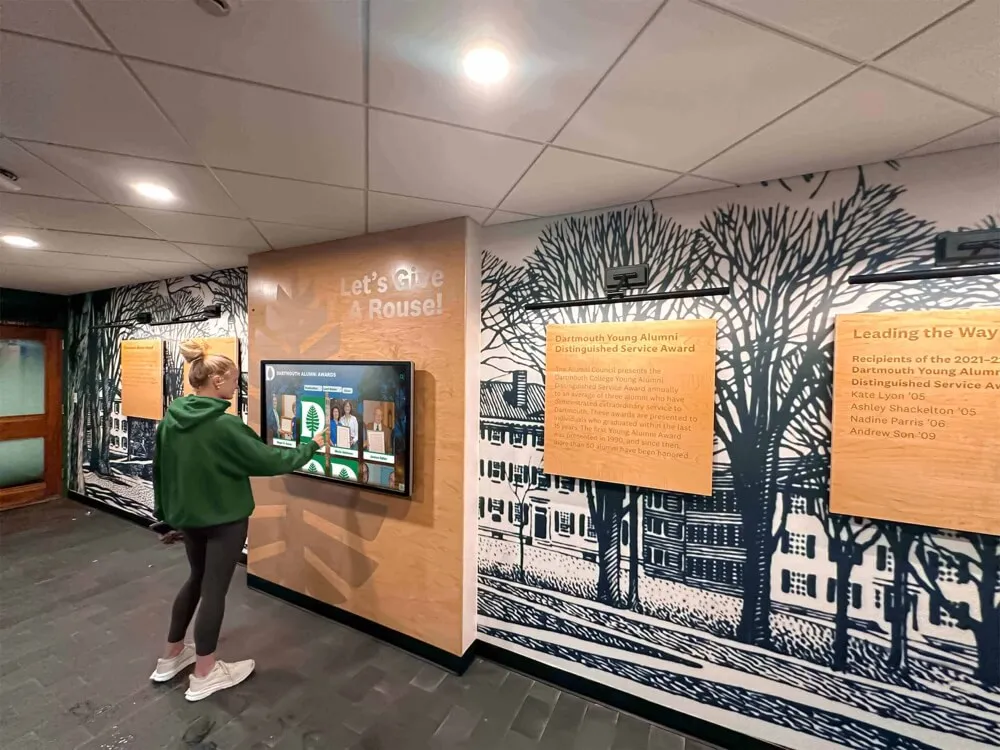
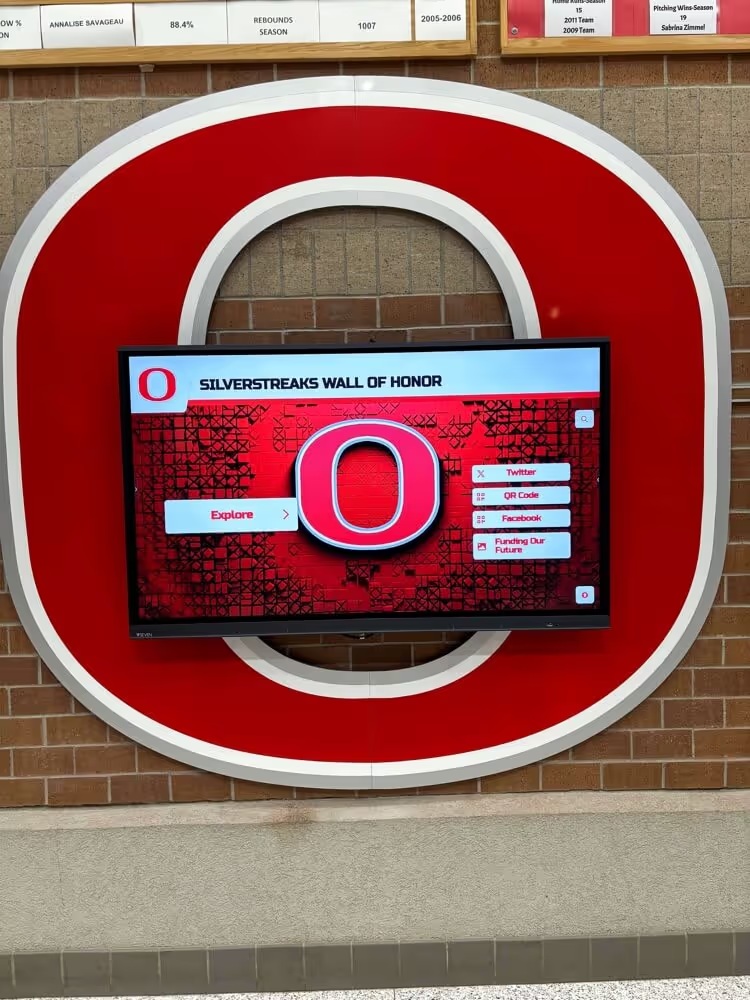
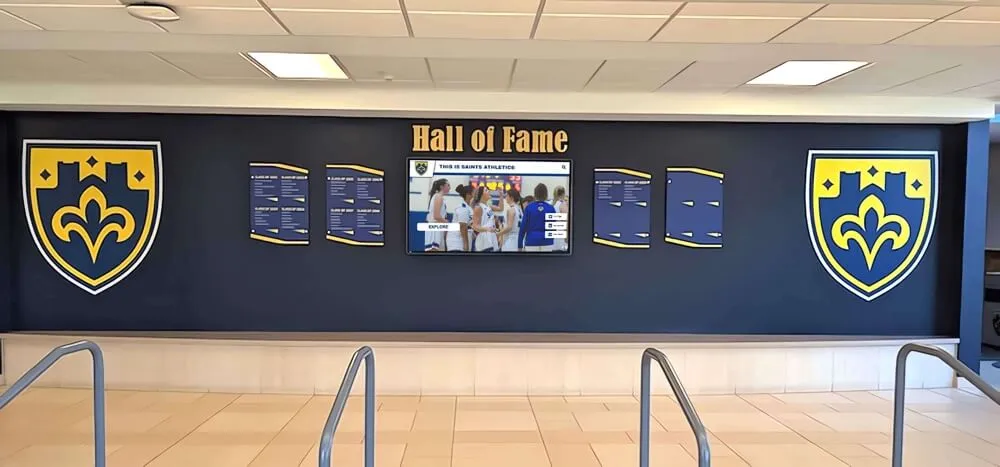
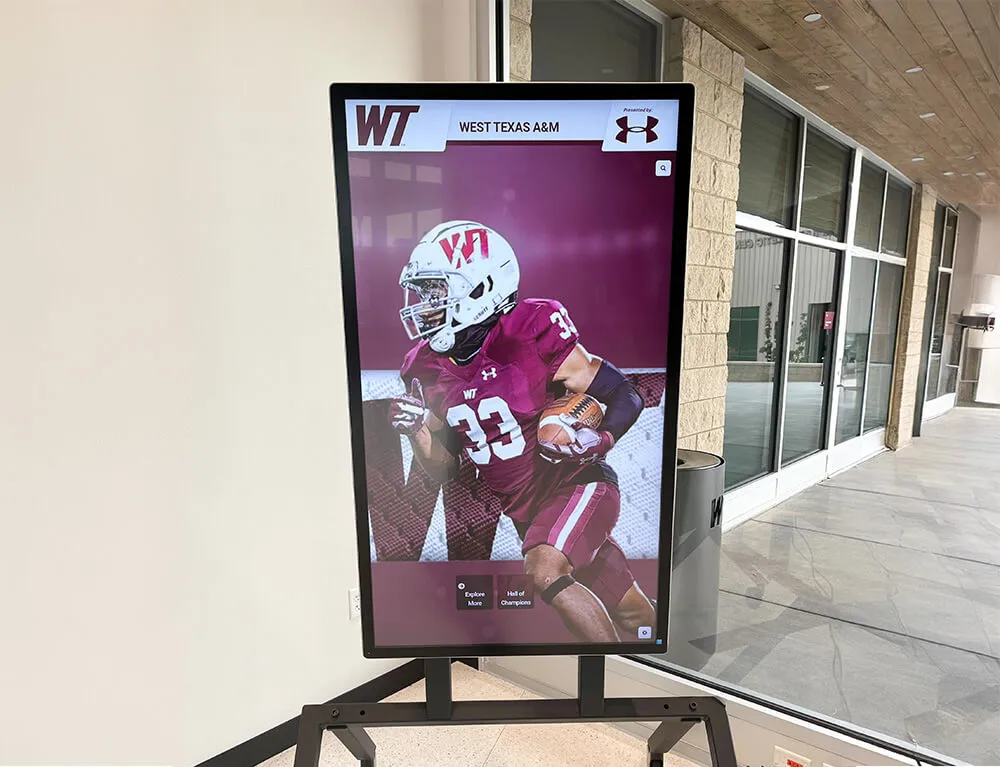
Cloud-first platforms push updates instantly to every screen on campus — and extend the full recognition database to the school's website simultaneously, reaching alumni anywhere in the world
For additional context on the broader landscape of interactive digital recognition displays, the guide to touchscreen digital hall of fame walls outlines common implementation patterns for schools moving from static displays to cloud-connected recognition systems.
Athletic directors conducting a comprehensive procurement process will find the complete guide for school administrators on athletic hall of fame programs useful for structuring the full evaluation—from initial selection criteria through to launch and ongoing management.
ADA Accessibility: A Legal Requirement, Not a Feature
One area where architectural choices carry direct legal implications is ADA compliance. Public-facing digital displays at schools receiving public funds are subject to accessibility requirements under the Americans with Disabilities Act—specifically WCAG 2.1 AA standards for interactive content.
A vendor that does not maintain WCAG 2.1 AA compliance across their platform exposes schools to accessibility complaints and potential legal action. This is not an edge case; it is a recurring risk for schools that deploy digital kiosk systems without verifying compliance documentation. The WCAG 2.1 AA compliance guide for touchscreen displays provides a technical reference for what compliant systems must demonstrate across screen reader compatibility, keyboard navigation, color contrast ratios, and touch target sizing.
When reviewing vendor proposals, request written WCAG 2.1 AA compliance documentation—not a general assurance that the system is “accessible,” but specific evidence of how the platform addresses each relevant standard.
Four-Point Evaluation Checklist for School Committees
Before committing to a digital hall of fame vendor, verify these four structural baselines. They cut through marketing language and surface the questions that matter for a long-term institutional decision.
1. Organizational Stability
Does the provider have a substantial, active support team—50 or more employees in clearly differentiated roles—or is the operation concentrated in one to three individuals managing all functions? Check LinkedIn and state corporate registries. A business that cannot survive the loss of its founder or lead developer presents meaningful risk to your institution’s recognition infrastructure.
2. Pricing Structure for Growth
Is the software pricing a flat platform subscription with unlimited screen deployments, or will adding displays trigger per-device license fees? Ask this question in writing before contract negotiation begins. The answer will clarify whether the vendor’s pricing model accommodates or penalizes program growth.
3. ADA and WCAG 2.1 AA Compliance
Can the vendor provide written documentation of WCAG 2.1 AA compliance—not just a general claim of accessibility? Compliance protects the school from legal exposure. Non-compliance creates it. Request the documentation; a vendor who cannot provide it is communicating something important about their development standards.
4. Web Integration Capability
Can the entire recognition database be embedded live on the school’s website, or is content confined to the physical hardware? A cloud-native platform makes the school’s history accessible to any alumni or family member worldwide. A localized application requires either a second system or leaves that audience without access entirely.
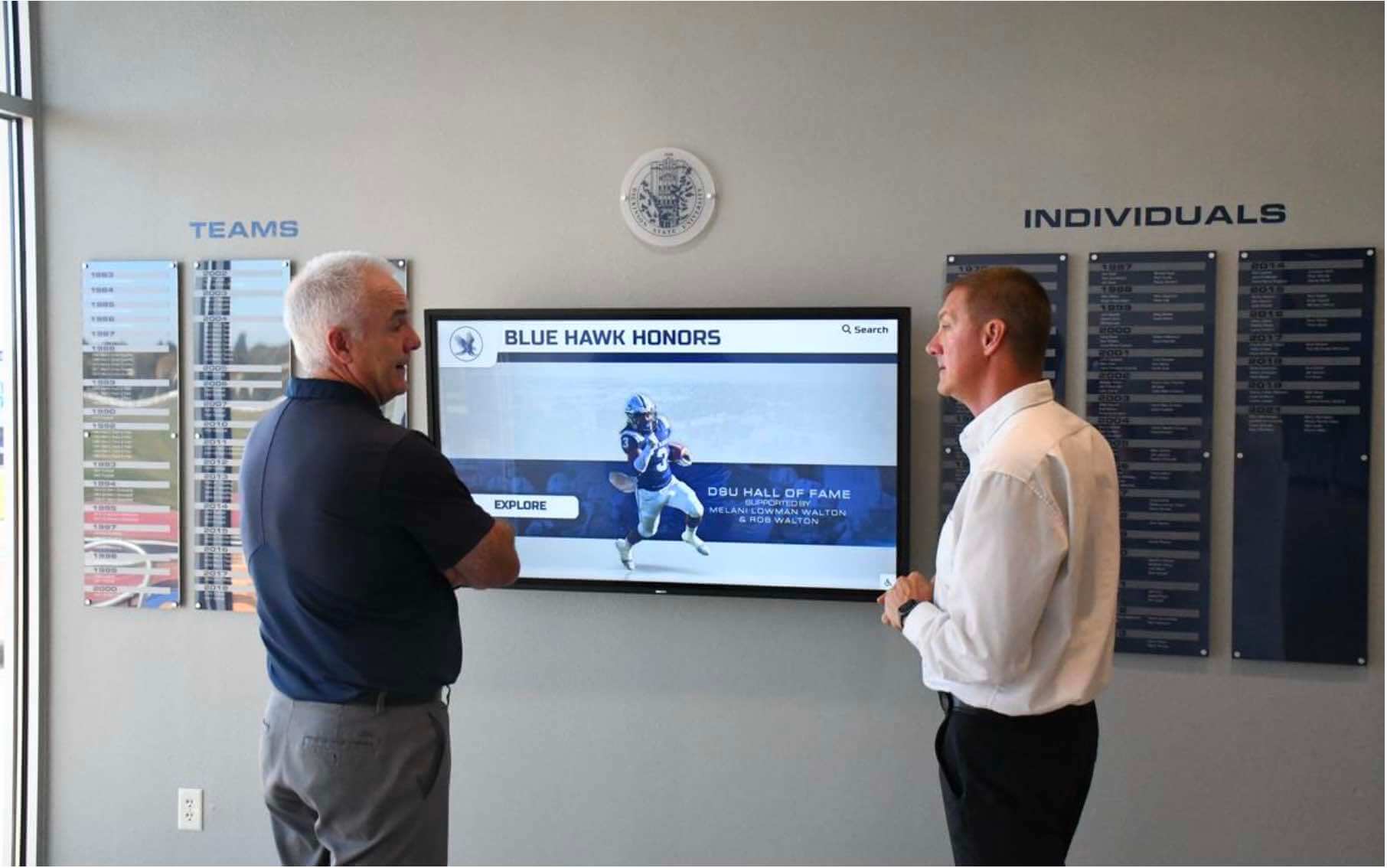
A thorough vendor evaluation before signing protects a school from costly mid-cycle platform changes when a smaller provider can no longer maintain the system
What Established Platform Architecture Looks Like in Practice
A digital hall of fame platform built for long-term institutional use shares several architectural characteristics regardless of which provider delivers it.
Remote content management. Any authorized staff member can update the system from any internet-connected device. No on-site technical visit is required for routine updates, inductee additions, or category changes.
Simultaneous multi-surface publishing. A single update propagates to every physical screen on campus, the school’s website embed, and QR-linked mobile access simultaneously. One entry populates every display surface at once.
Structured record organization. Records are categorized and tagged for search. A visitor can locate a specific athlete from 1991 in seconds. Staff can pull a complete sport history for a program’s anniversary without manual reconstruction from banquet programs and filing cabinets.
Sponsor and donor integration. Schools can display donor recognition, sponsor acknowledgment, and booster program content within the platform—creating the revenue streams that make long-term platform costs manageable over time.
Rocket Alumni Solutions, trusted by more than 600 institutions from small high schools to major universities, is built on this architecture. The platform runs on commercial-grade hardware ranging from 32" to 100"+ displays, deploys across unlimited locations under a single subscription, and maintains WCAG 2.1 AA compliance throughout its interface. The best practices guide for school hall of fame walls outlines what high-performing school installations share in common, from content organization to physical placement.
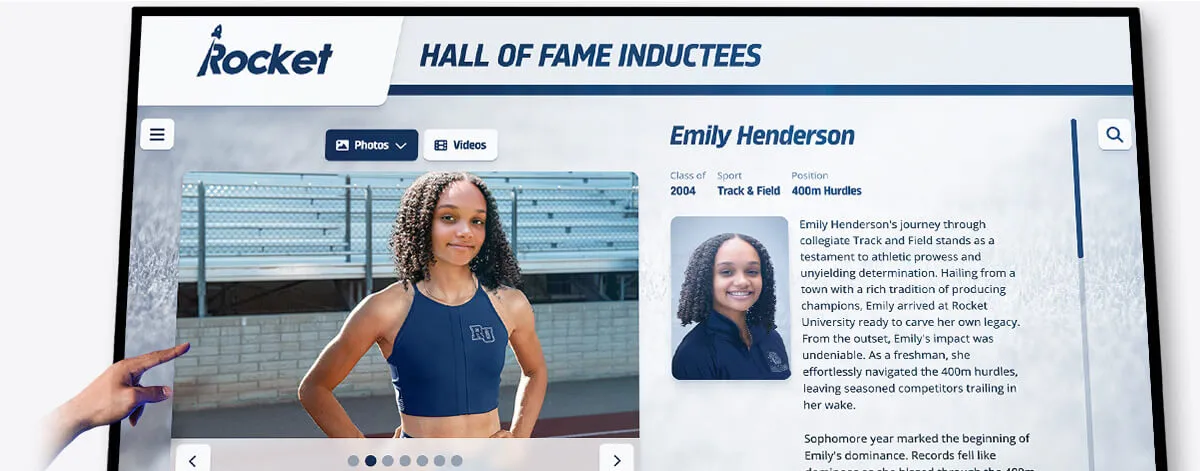
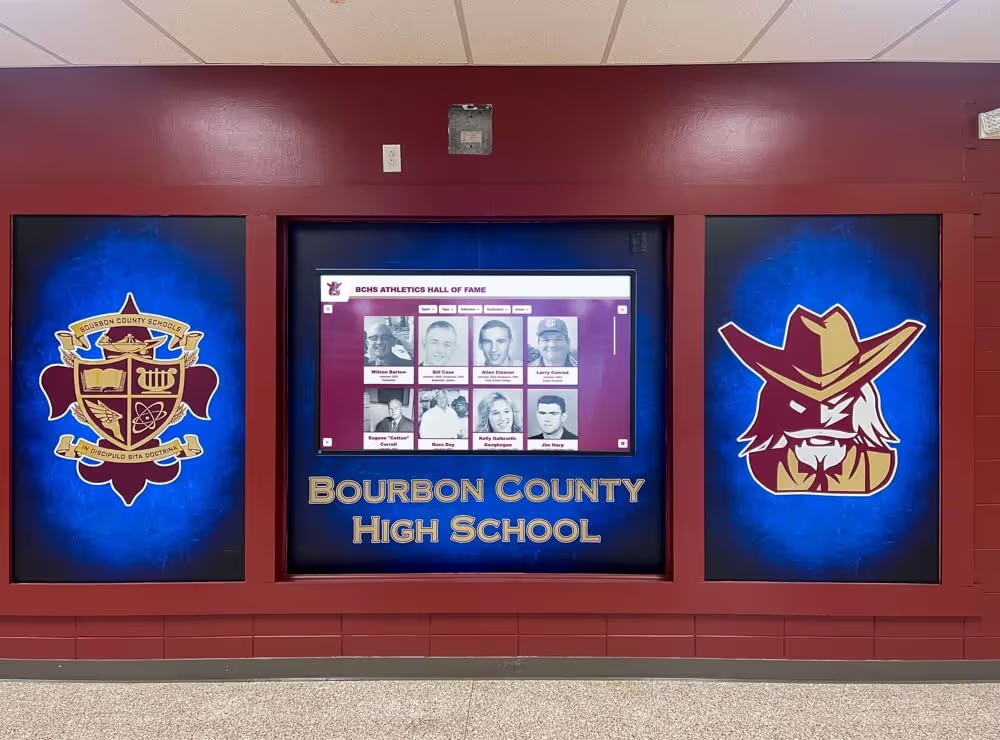
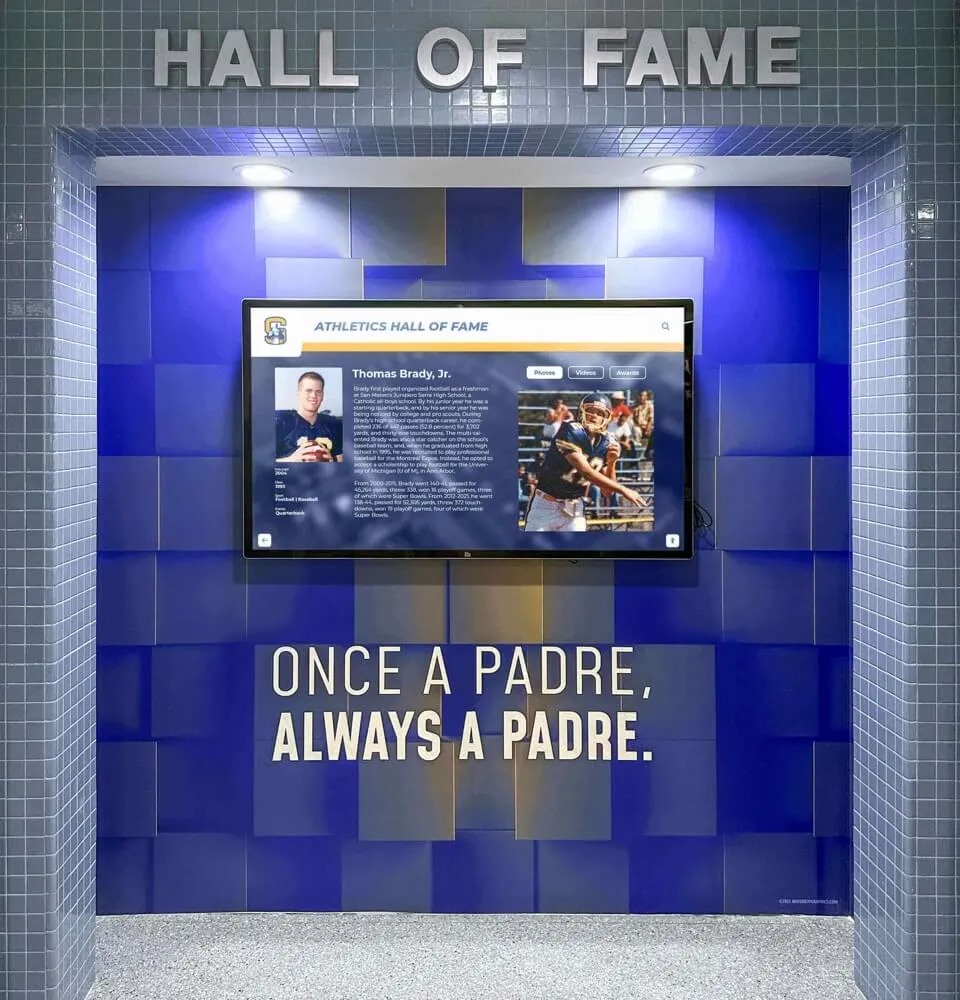
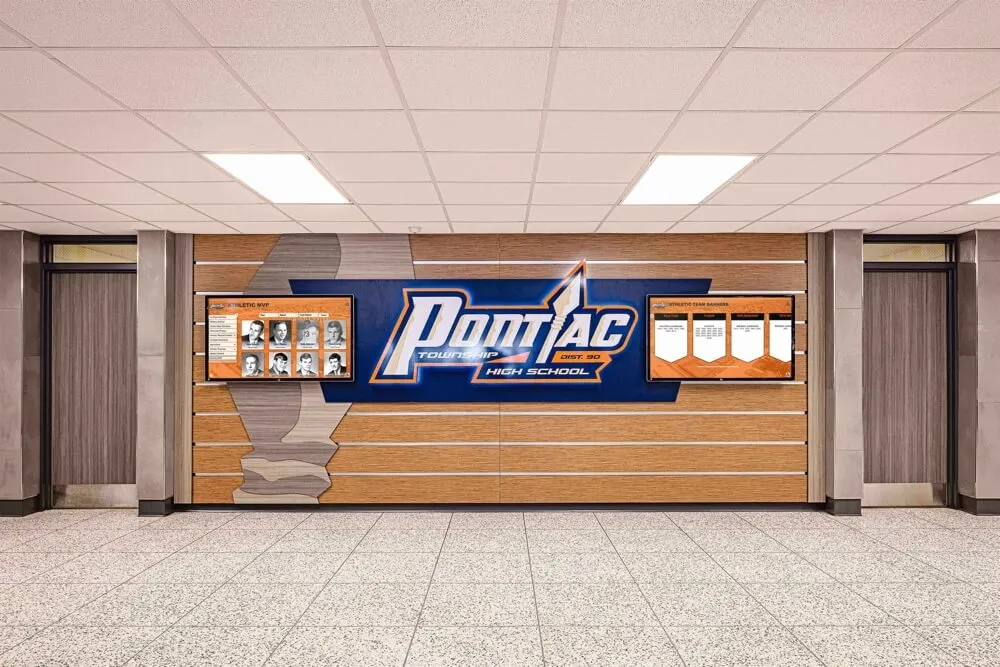
Detailed athlete profiles — sport history, graduation year, statistics, and biographical content — require cloud-first architecture to stay current and accurate across a system's full lifecycle
FAQ: Digital Hall of Fame Vendor Evaluation
What should schools ask vendors before signing a digital hall of fame contract?
Ask four questions in writing: Does adding screens trigger additional license fees, or is pricing a flat platform rate? How many full-time employees does the company have, and how are roles distributed? Can you provide WCAG 2.1 AA compliance documentation? Can the full recognition database be embedded on our school’s website? These questions bypass marketing language and surface the structural facts.
Is a one-time payment model a red flag for digital hall of fame software?
It warrants close examination. Cloud-connected touchscreen platforms require ongoing server maintenance, security updates, hosting, and accessibility compliance work. A vendor with no recurring revenue must fund all of this from new customer acquisition—a model that becomes unstable as the market matures. For a recognition system intended to operate for ten to twenty years, a recurring revenue structure indicates a business built around long-term client relationships, not perpetual new-sale volume.
How do you evaluate whether a digital hall of fame vendor is financially stable?
Check the vendor’s LinkedIn page for current employee count and role diversity. Review state corporate registration records for company standing. Ask how many active clients they currently support and how long the company has been operating. A team of 50 or more professionals in differentiated roles presents fundamentally different institutional risk than a small operation where one to two people manage everything simultaneously.
What is the difference between a cloud-based and a localized digital hall of fame platform?
Cloud-based platforms allow content updates from any device, push changes instantly to every screen on campus, and can embed the full recognition database on the school’s website for off-campus access. Localized kiosk applications run on specific hardware and typically require on-site access or developer fees for updates. The architectural difference compounds in significance over a multi-decade recognition program lifecycle.
Why does ADA compliance matter for school digital displays?
Schools receiving public funds are subject to ADA requirements, including WCAG 2.1 AA standards for interactive public-facing displays. A non-compliant platform creates legal exposure for the institution. Request written WCAG 2.1 AA compliance documentation—not a general accessibility claim—before signing any contract for a public-facing recognition display.
Choosing a Partner for Your School’s Long-Term Recognition History
A digital hall of fame serves every student, athlete, donor, and community member your institution has ever recognized. The vendor behind it becomes, effectively, a long-term institutional partner. Evaluating that vendor on the same criteria you’d apply to any long-term institutional relationship—organizational stability, transparent pricing, technical compliance, and a sustainable business model—is the most direct way to protect a decision that will define your school’s recognition environment for the next generation.
Rocket Alumni Solutions has partnered with more than 600 institutions to build and maintain digital recognition environments that stay current, stay accessible, and stay online across the full span of a school’s program lifecycle. The platform is built on flat-rate subscription pricing, maintained by a team of more than 50 professionals, built to WCAG 2.1 AA standards, and designed to extend your full recognition database to any screen or web property simultaneously.
Book a demo with Rocket Alumni Solutions to see exactly how the platform would work for your school’s recognition history and facility footprint.
This content was produced by or on behalf of Rocket Alumni Solutions.
This comparison is based on publicly available information as of July 2026. All product names and trademarks belong to their respective owners. Comparative statements reflect Rocket Alumni Solutions’ interpretation of available data and may change over time. All trademarks referenced belong to their respective owners. Rocket Alumni Solutions is not affiliated with or endorsed by any boutique agencies referenced in general terms in this article.