
An ejection-free school recognition display comes down to one practical decision: where does the certificate live in your awards area, and how do you label it so visitors understand its scope at a glance? Place it in a dedicated school-recognition section—separate from individual student-athlete honors and competitive championship titles—and use a caption that names the institution, the certifying body, and the academic year. A compact example: [School Name] · NCHSAA Ejection-Free School Recognition · 2022–23. That single label tells visitors this is a whole-school acknowledgment of conduct across all varsity sports for one specific year—not a trophy for a winning season, and not an award any single student-athlete earned.
The NCHSAA Awards & Recognitions page categorizes Ejection-Free School status under school recognition, listed at the end of the academic year—a deliberate organizational choice that keeps it separate from individual student-athlete honors and from competitive results. Getting that same separation right on your physical or digital display prevents the most common labeling confusion athletic directors face when adding a sportsmanship certificate to an existing recognition wall.
Understanding exactly what this certificate represents—and what it does not—makes every display and labeling decision clearer.
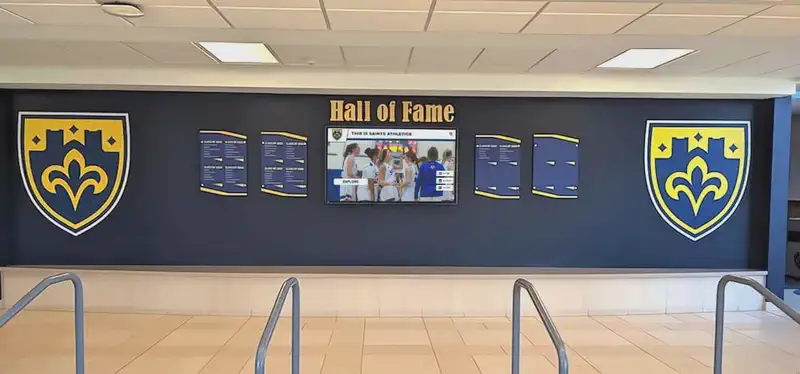
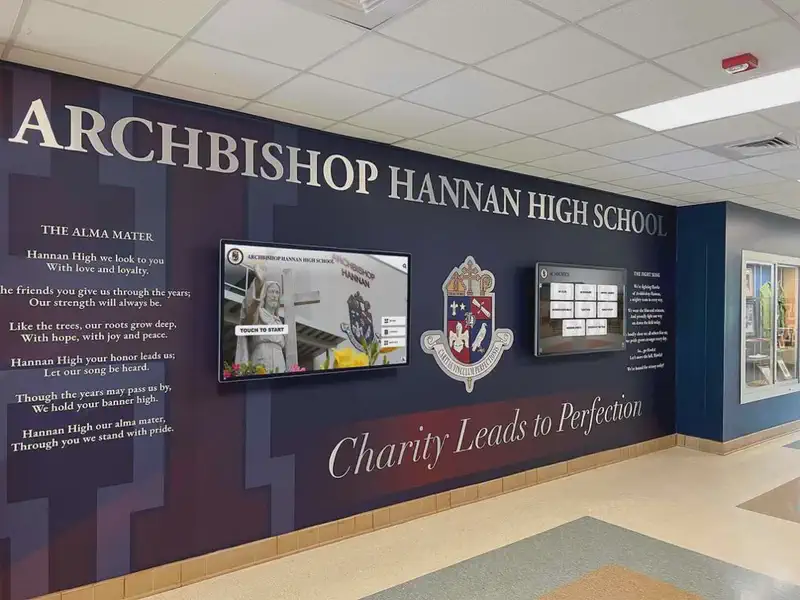
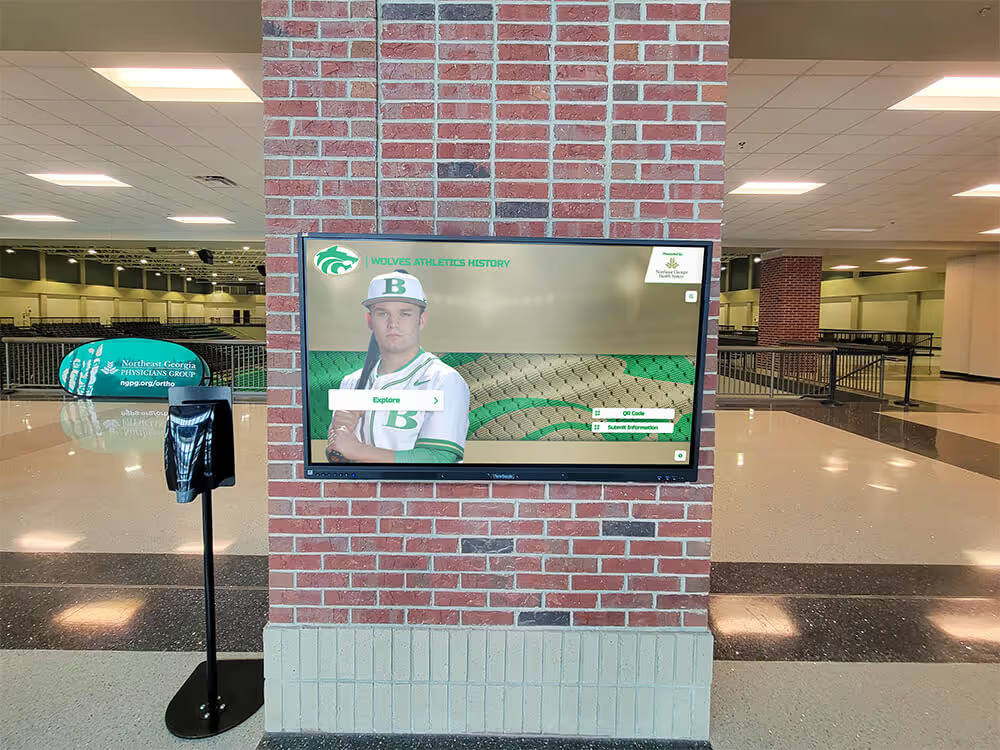
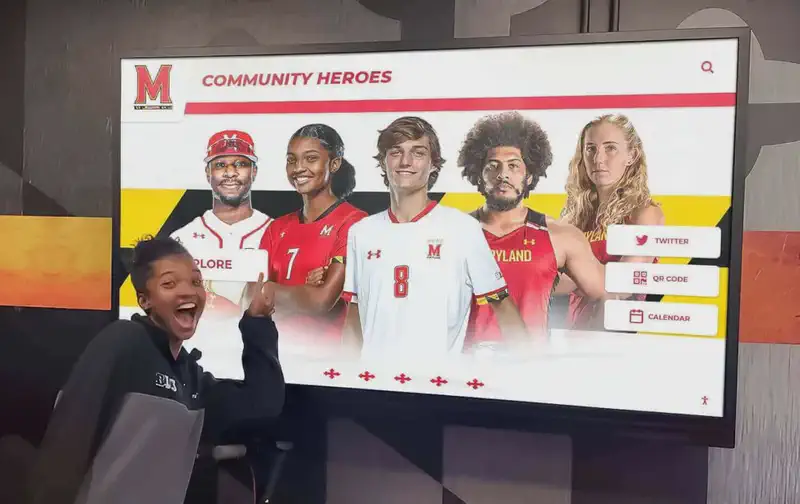
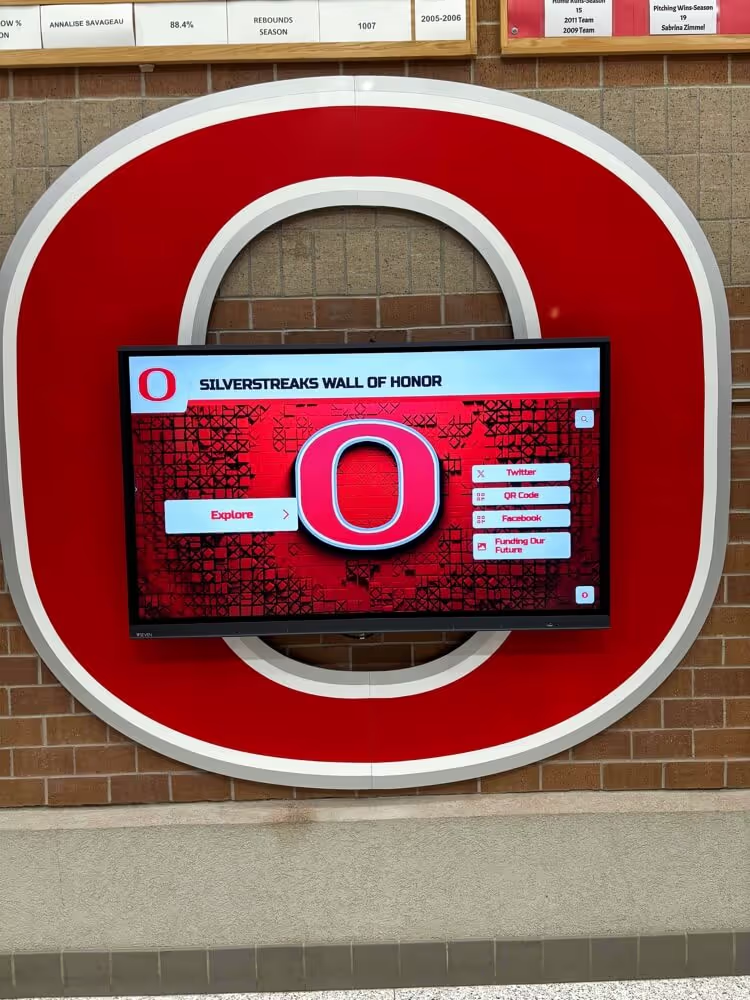
Organized recognition walls group distinct award categories visually, helping visitors understand the scope and type of each honor without reading fine print
What the Ejection-Free School Recognition Actually Is
The ejection-free school recognition is an institutional acknowledgment—not an individual award, not a team championship, and not a disciplinary document. According to the September 11, 2023 NCHSAA release, the association honored high schools that recorded zero ejections across all sports throughout the 2022–23 academic year, with certificate presentations announced for that cycle. The recognition belongs to the institution as a whole.
A few things this recognition is not:
- Not proof about any specific athlete. The certificate documents the school’s collective conduct record across all varsity sports for an academic year. No individual student-athlete’s name or record appears in or can be inferred from a school-level certificate.
- Not a permanent or ongoing status. The 2023 release describes recognition for the 2022–23 cycle specifically. Whether a school appears in a future list is a separate question the certificate cannot answer.
- Not a competitive result. No opponent was defeated and no championship bracket was involved. The recognition acknowledges a conduct standard met, not a competitive outcome.
Keeping these distinctions clear when you write display labels prevents visitors from misreading the certificate as either a sports title or a statement about any individual student’s history.
How the Ejection-Free School Recognition Differs from Heart of a Champion
The NCHSAA also recognizes individual student-athletes through its Heart of a Champion program—and because both programs involve the concept of an ejection-free record, they are easy to conflate in a display if not labeled carefully.
According to the 2025-2026 Heart of a Champion Winners release, the Heart of a Champion is an individual student-athlete recognition. Honorees must have participated in at least one varsity sport, maintained an ejection-free record, and demonstrated broader character qualities. The NCHSAA classifies this under student-athlete recognition—a deliberately separate category from the Ejection-Free School recognition, which applies to the institution.
The display implication is straightforward: a Heart of a Champion honor belongs in the individual student-athlete section of your recognition wall, not alongside the school-level sportsmanship certificate—even though both involve an ejection-free record as a component. Placing them in the same display panel without clear labeling creates the impression that a school-level certificate is an individual award, or vice versa.
This distinction matters beyond just NCHSAA programs. Wherever individual conduct honors and school-level recognition certificates share wall space, clear categorical labels for each section do the most work.
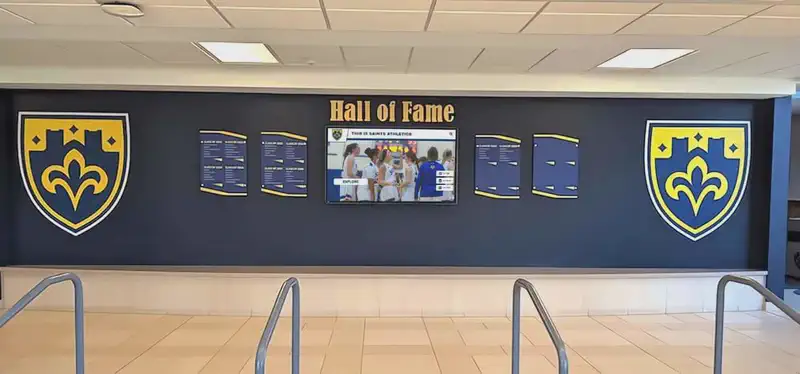
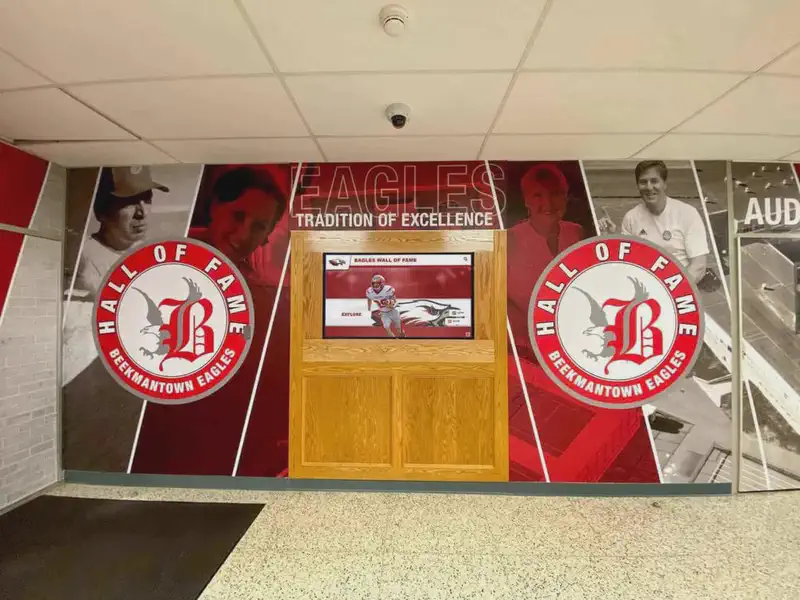
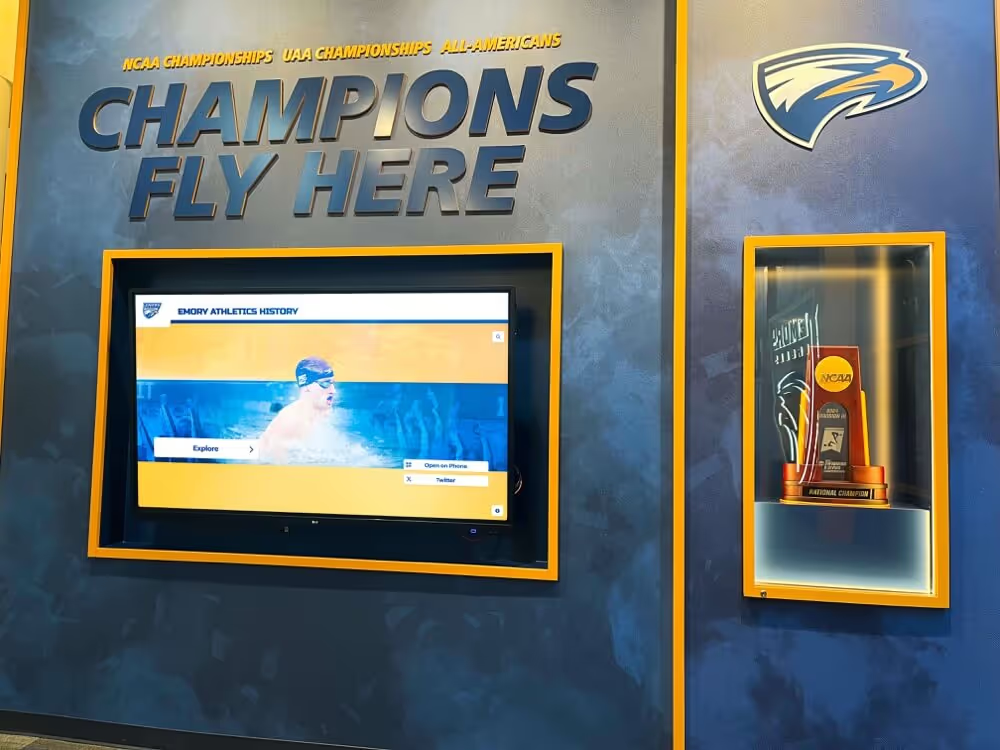
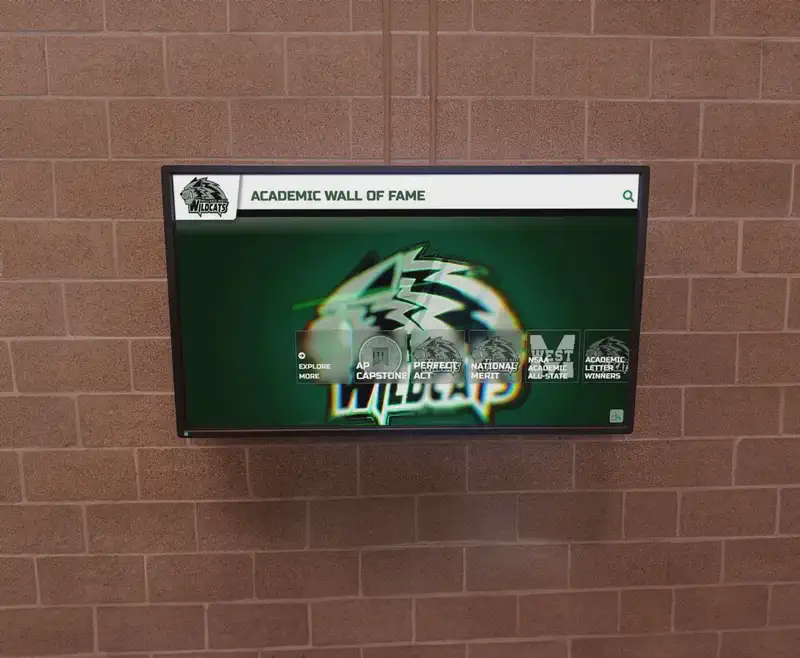
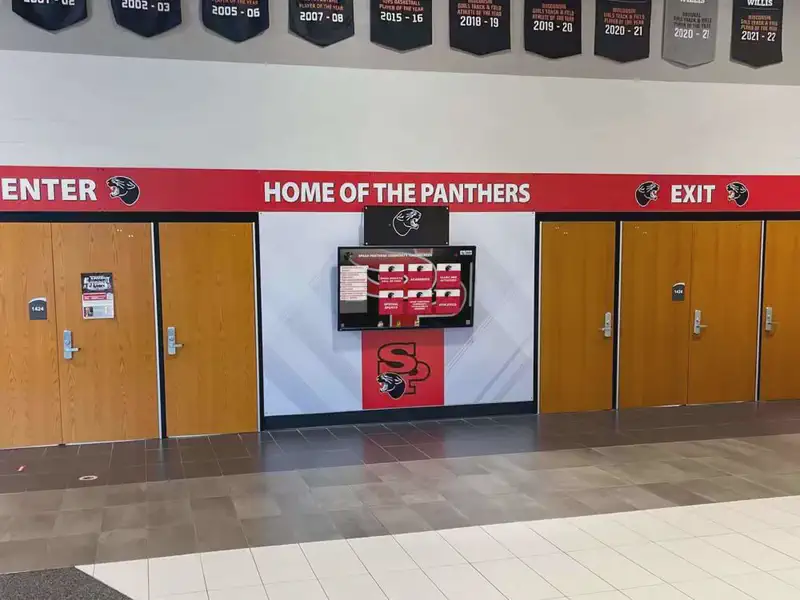
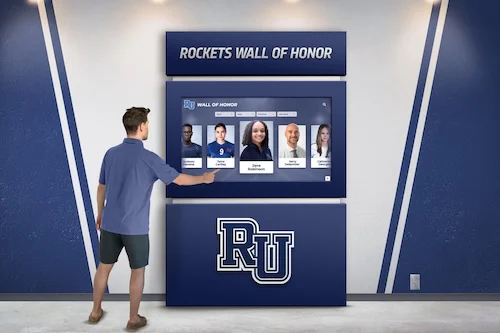
Combining physical panels with labeled digital sections allows an awards display to present multiple recognition categories clearly without crowding any single area
How the Certificate Differs from Competitive Titles
Both conduct-based certificates and competitive titles appear in most school awards displays, but they serve different purposes and should never share the same section or label without clear distinction.
| Recognition Type | Awarded to | Basis | Scope |
|---|---|---|---|
| Ejection-Free School Certificate | The institution | Zero ejections across all sports | Full academic year, all varsity sports |
| Heart of a Champion | Individual student-athlete | Individual conduct and character | At least one varsity sport per honoree |
| State or regional championship | A specific team | Competitive performance | That team’s season |
A team championship tells visitors which competition a team won and when. An ejection-free school recognition certificate tells visitors that the institution maintained a zero-ejection record across all varsity sports during an academic year. Placing them in visually distinct sections—and using labels that make the category explicit—prevents a visitor from assuming the sportsmanship certificate is a trophy for winning anything, or that a championship banner reflects anything about individual or institutional conduct.
Where to Place the Certificate in Your Display
Place the ejection-free school recognition certificate in a school-recognition section of your awards display, not in one of the following locations:
- Individual athlete honor sections – reserved for personal distinctions such as all-state selections, Heart of a Champion, or scholar-athlete awards
- Team championship sections – reserved for titles, trophies, and banners marking competitive victories
- Sport-specific trophy cases – organized around a single program’s history rather than school-wide recognition
If your existing display does not yet have a labeled school-recognition section, consider adding a simple header card or display label such as “School Recognition” or “Institutional Honors” to group this certificate with any other school-wide acknowledgments your school has received.
Athletic directors handling multiple recognition types in one wall benefit from the same organizational principle applied to service and leadership honors. For parallel guidance on labeling and positioning program-wide recognition in a school display, see how schools label athletic director and service awards.
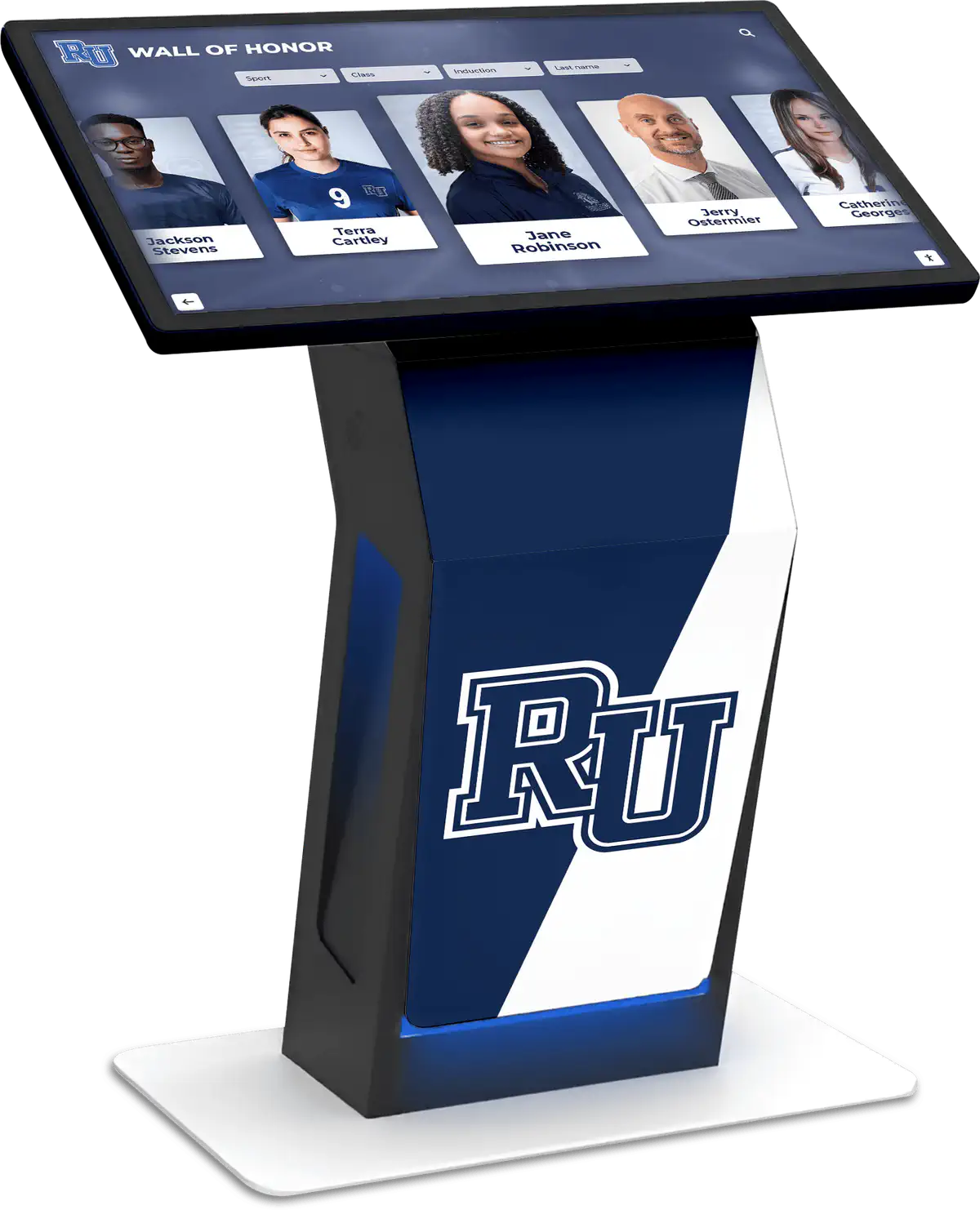
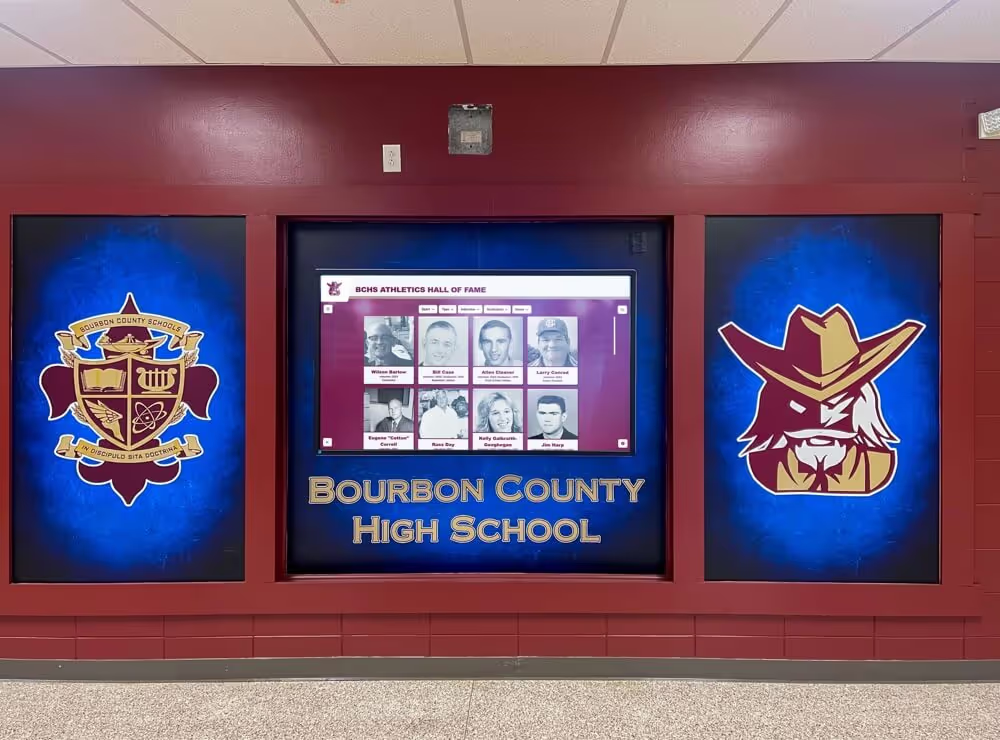
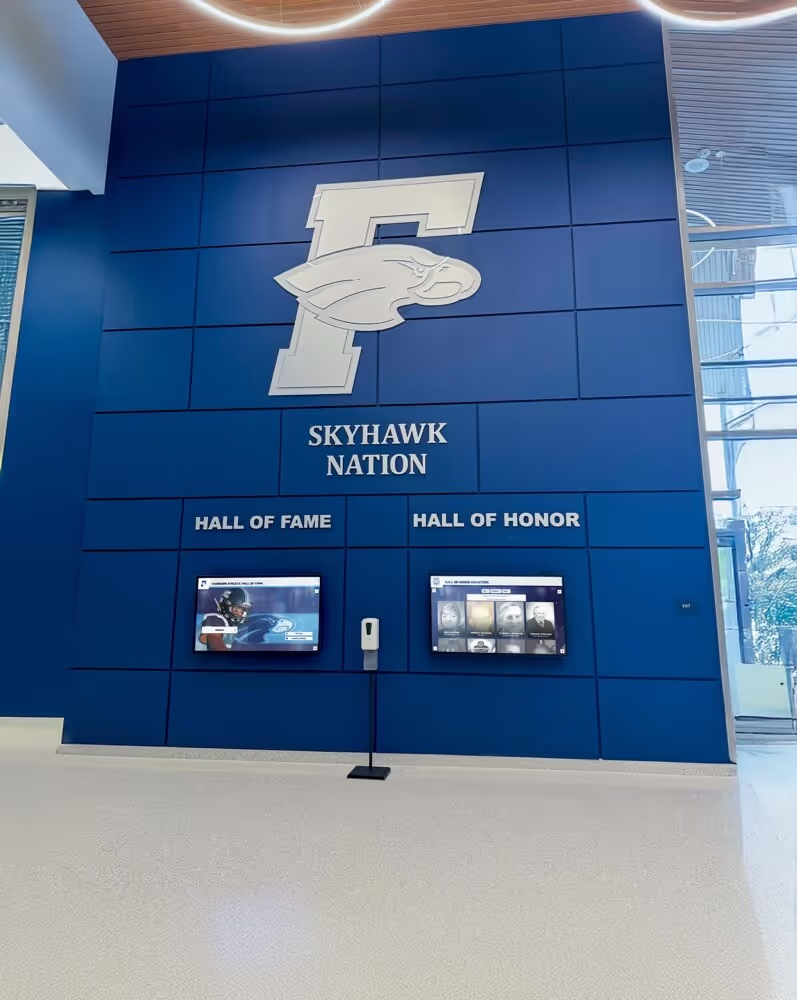
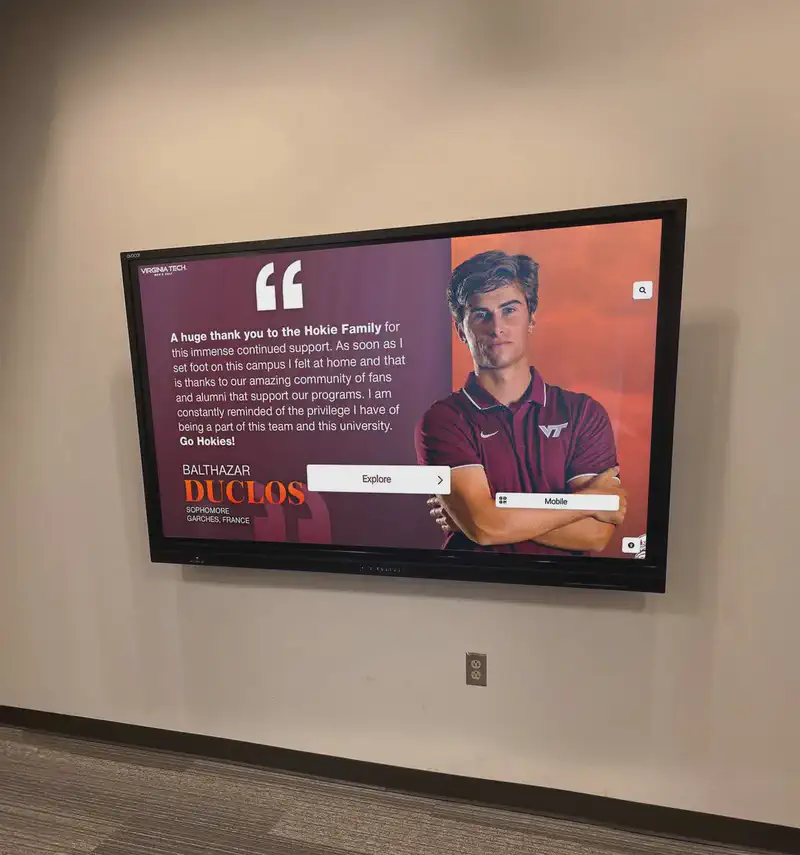
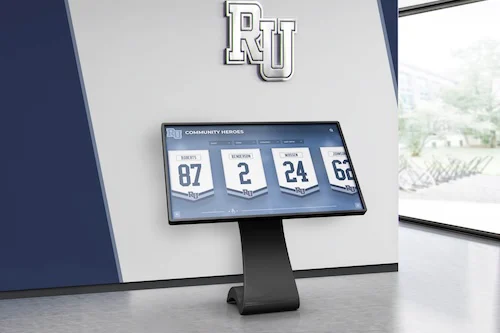
Digital recognition kiosks allow distinct sections for school-level certificates, individual athlete honors, and competitive titles—each clearly labeled and searchable by category
Two Caption Patterns for the Certificate
Your caption text carries most of the labeling work. Two optional patterns:
Pattern A — Compact, institution-first:
[School Name] · NCHSAA Ejection-Free School Recognition · [Academic Year, e.g., 2022–23]
This pattern works for a small label card or a digital display entry header. It names the institution, the awarding body, and the academic year of recognition in one line.
Pattern B — Category-explicit, year-first:
[Academic Year] · School-Level Sportsmanship Recognition · Zero Ejections Across All Varsity Sports (NCHSAA)
This pattern is useful when your display already shows the school name as a section header, so the caption can lead with the year and describe what the recognition measures. It is particularly helpful when visitors may not recognize the program name on its own.
A few labeling practices to follow regardless of which pattern you use:
- State the academic year, not just a calendar year. “2022–23” is more precise than “2023” for a recognition that spans both calendar years.
- Distinguish the recognition year from the news release date. The NCHSAA September 11, 2023 release announced recognition for 2022–23. Those are distinct: the academic year of conduct, the date of the news release, and the date certificates were presented. Only the academic year of recognition belongs in a standard display caption.
- Do not omit the certifying body. NCHSAA in the label tells a viewer which organization issued this recognition and that it applies in North Carolina, not that it represents a universal national standard.

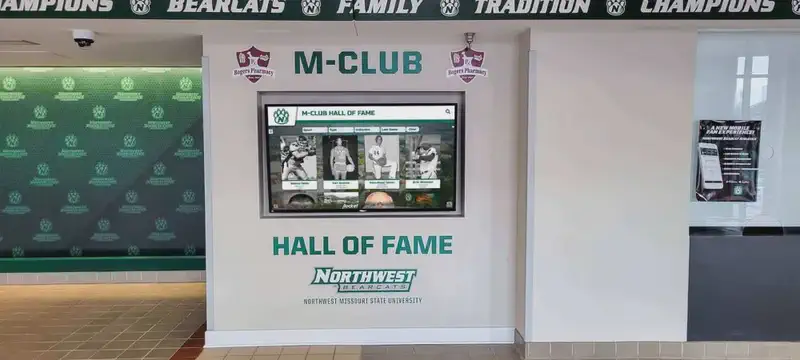
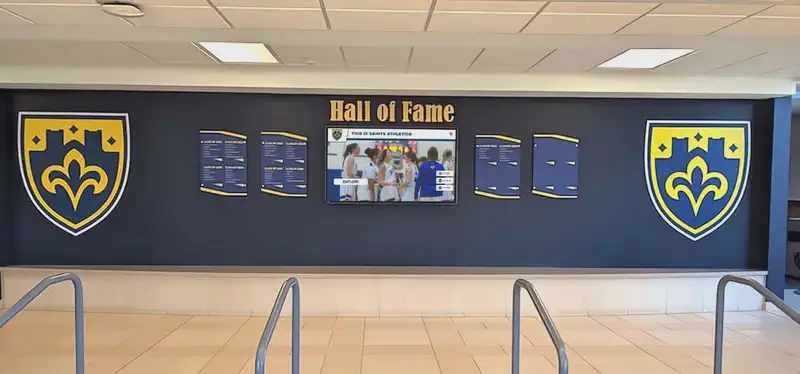
Digital displays with labeled category sections make it easy for visitors to distinguish school-level recognition from individual and team honors without reading small print
Managing the Display When Future Recognition Cycles Change
The 2023 NCHSAA release described recognition for one specific cycle: the 2022–23 academic year. A school’s presence in that cycle does not predict future recognition, and a school not on that list cannot be inferred to have had ejections—absence from a published list may reflect other factors, and not every school’s data is necessarily published in every release.
This matters for display management in a practical way:
- Display only verified certificates you hold. A label for a year in which you hold a certificate is accurate. A label for a year without a confirmed certificate is an inventory error.
- Date each entry in your display. A certificate from 2022–23 displayed without an academic year reads as ongoing status rather than a dated recognition—which misrepresents what the certificate actually says.
- Keep the category consistent if you add future certificates. If your school earns Ejection-Free School recognition in a subsequent year, add a new dated entry in the same school-recognition section rather than altering the original label.
Digital recognition platforms simplify this maintenance. A cloud-managed display entry can be dated precisely, assigned to the correct category, and updated without physical reordering of a wall case.
Applying This in a Digital Recognition Display
A physical certificate requires a physical placement decision. A digital recognition display offers more flexibility and clearer organization—and the same labeling principles apply.
In a digital system, each entry in your school-recognition section should include:
- Category tag: “School-Level Recognition” or “Institutional Honor” (distinct from “Individual Award” or “Team Championship”)
- Issuing body: NCHSAA
- Recognition year: 2022–23 (or the applicable academic year)
- Brief description (optional): One sentence explaining that the recognition reflects zero ejections across all varsity sports for the academic year
Because digital displays can organize entries by category, visitors searching your recognition wall can find both a school-level sportsmanship certificate and any individual Heart of a Champion honorees from your school—each in its correct section, clearly labeled, without manual wall rearrangement.
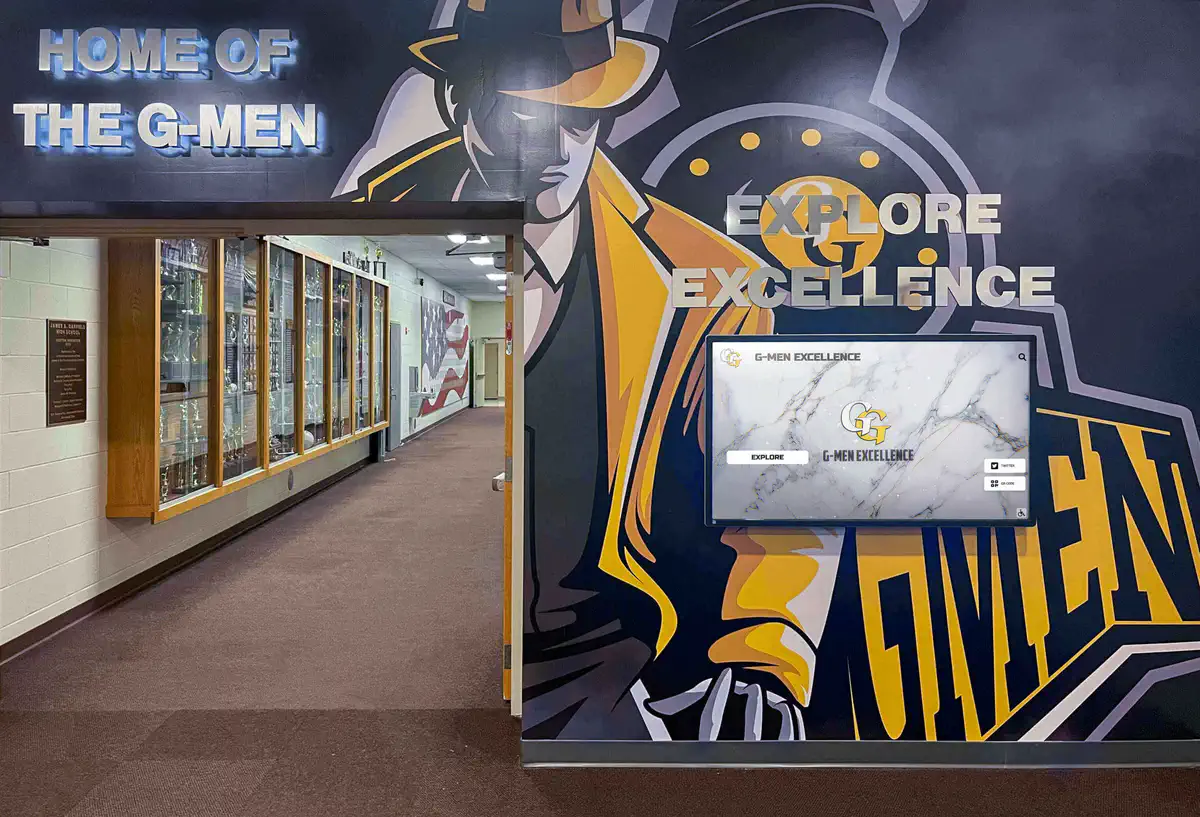
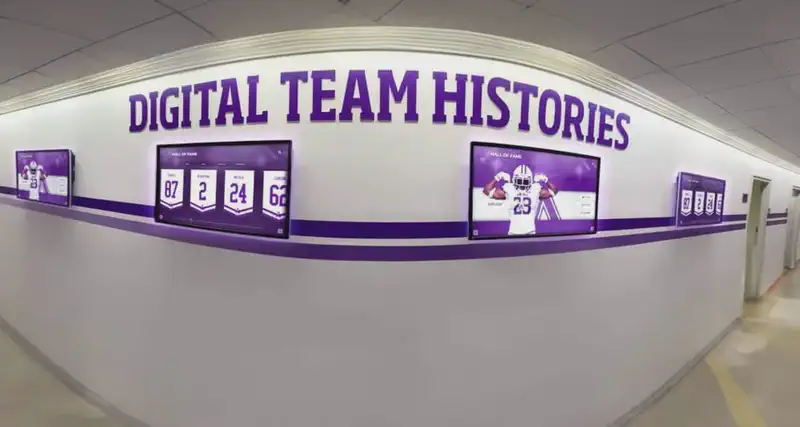
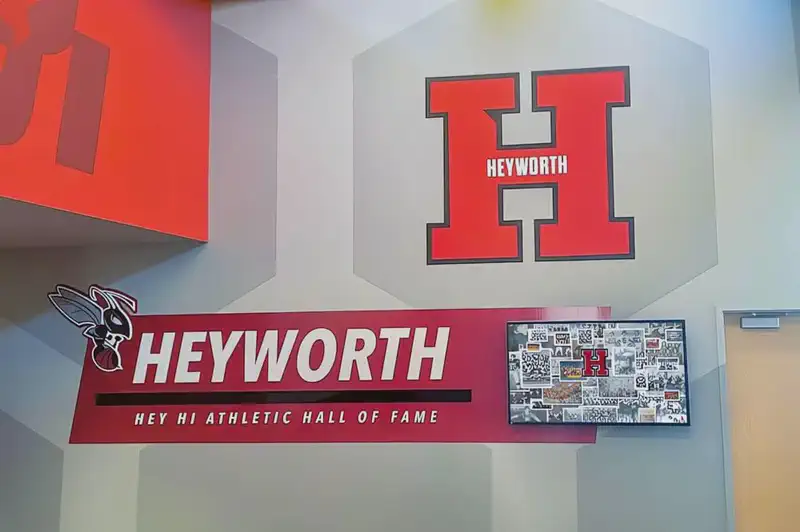
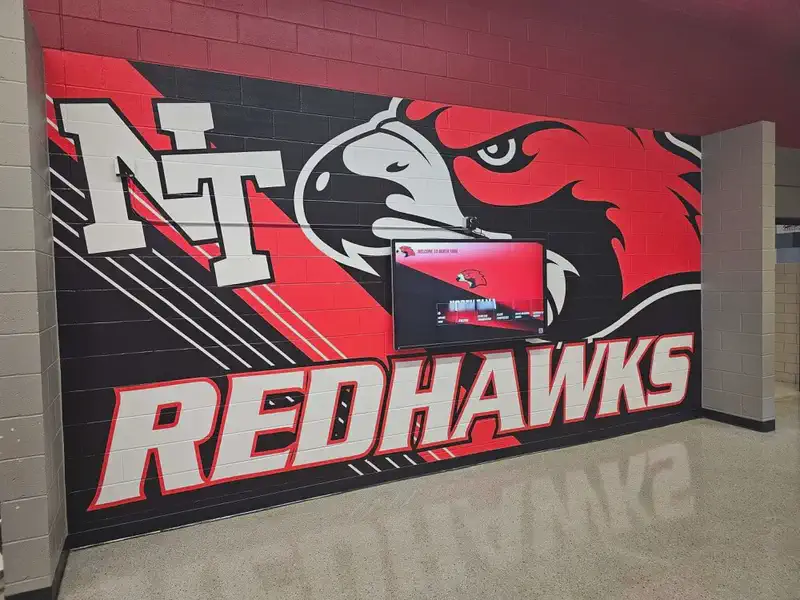
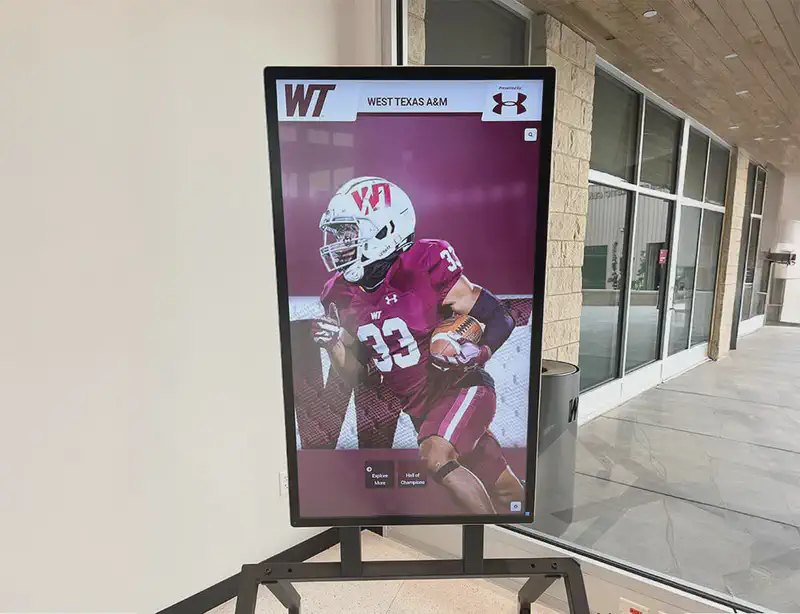
Well-organized hallway environments give each recognition type its own space—competitive trophies, school-level honors, and individual awards each visible and clearly separated
Frequently Asked Questions
What is the NCHSAA Ejection-Free School recognition, and who does it apply to?
The NCHSAA Ejection-Free School recognition is a school-level honor. The NCHSAA Awards & Recognitions page places it under school recognition, determined at the end of the academic year. The September 11, 2023 NCHSAA release confirmed it honored high schools with zero ejections across all sports during 2022–23, with certificate presentations announced for that cycle. It applies to the institution as a whole, not to any individual student-athlete or coach.
How is the Ejection-Free School recognition different from the Heart of a Champion?
The Heart of a Champion is an individual student-athlete recognition: honorees must have participated in at least one varsity sport, maintained an ejection-free record, and demonstrated broader character criteria. The Ejection-Free School recognition applies to a school’s collective record across all sports for the full academic year. The NCHSAA Awards page lists them in separate categories—school recognition versus student-athlete recognition—and your display should reflect that same separation.
Where should the ejection-free school certificate go in an awards display?
It belongs in a school-level or institutional recognition section, not in an individual athlete honor section or a team championship section. Using a category header such as “School Recognition” or “Institutional Honors” makes the certificate’s scope clear to visitors without requiring them to read fine print on the certificate itself.
What should a display caption for the certificate include?
At minimum: the institution’s name (or the section header if your display already names the school), the certifying body (NCHSAA), the program name (Ejection-Free School Recognition), and the academic year of recognition (such as 2022–23). Keep the academic year of recognition distinct from the date of the news release and the date certificates were presented—those are three separate pieces of information, and only the recognition year belongs in a standard display caption.
Can a school display Ejection-Free School recognition for multiple academic years?
Yes, if the school holds certificates for multiple recognition cycles. Each cycle should appear as a separate dated entry. Do not consolidate multiple years into a single undated label, as that would misrepresent the dated nature of each recognition. Verify each entry against the certificates your school actually holds before adding it to the display.
Make Every Certificate Easy to Find and Understand
Rocket Alumni Solutions helps schools organize every recognition type—school-level honors, individual student-athlete awards, and competitive titles—in clearly labeled, searchable digital displays that any visitor can navigate without guesswork. See how a custom recognition display could work for your school.
Request a Custom Demo