



Forensics team recognition that matches the intellectual rigor of competitive speech and debate is one of the most underdeveloped areas of student recognition at American schools. When a debater wins a state championship in Lincoln-Douglas, when an Original Oratory delivers a speech that earns a national qualifier bid, or when a Congressional Debate student reaches elimination rounds at the National Speech and Debate Association tournament, those accomplishments reflect months of preparation, competitive discipline, and skills that translate directly to leadership and professional success. They deserve the same prominent, permanent recognition that schools give to athletic champions.
Yet in most schools, forensics trophies sit in an advisor’s classroom. Banners hang in gymnasiums but nowhere near the hallway where speech events take place. The student who won four varsity tournaments and qualified for nationals walks across the stage at graduation with less institutional acknowledgment than the athlete who lettered in a single season. Closing this recognition gap is not just about fairness—it’s about using recognition to build the kind of culture where students invest serious effort in academic competition.
This guide covers practical forensics team recognition strategies: award categories, physical and digital display systems, banquet planning, and the approaches leading schools use to make speech and debate achievement permanently visible across their campuses.
Forensics programs represent one of the oldest and most academically respected co-curricular activities in American education. The National Speech and Debate Association (NSDA), the primary governing body for competitive speech and debate in the United States, reports membership across thousands of member schools with hundreds of thousands of student participants annually. Students in these programs compete across a broad range of events—Lincoln-Douglas Debate, Public Forum Debate, Policy Debate, Congressional Debate, Extemporaneous Speaking, Original Oratory, Dramatic Interpretation, Humorous Interpretation, and Impromptu Speaking, among others.
Research consistently links forensics participation to improved academic outcomes. Studies published through the NSDA and in peer-reviewed education journals have found that students who participate in competitive speech and debate demonstrate higher academic achievement, stronger critical thinking skills, greater civic engagement, and better performance in post-secondary education. These students work as hard as any athlete, invest as many hours as any musician, and compete at state and national levels with the same high stakes—yet most school recognition programs treat their achievements as secondary.

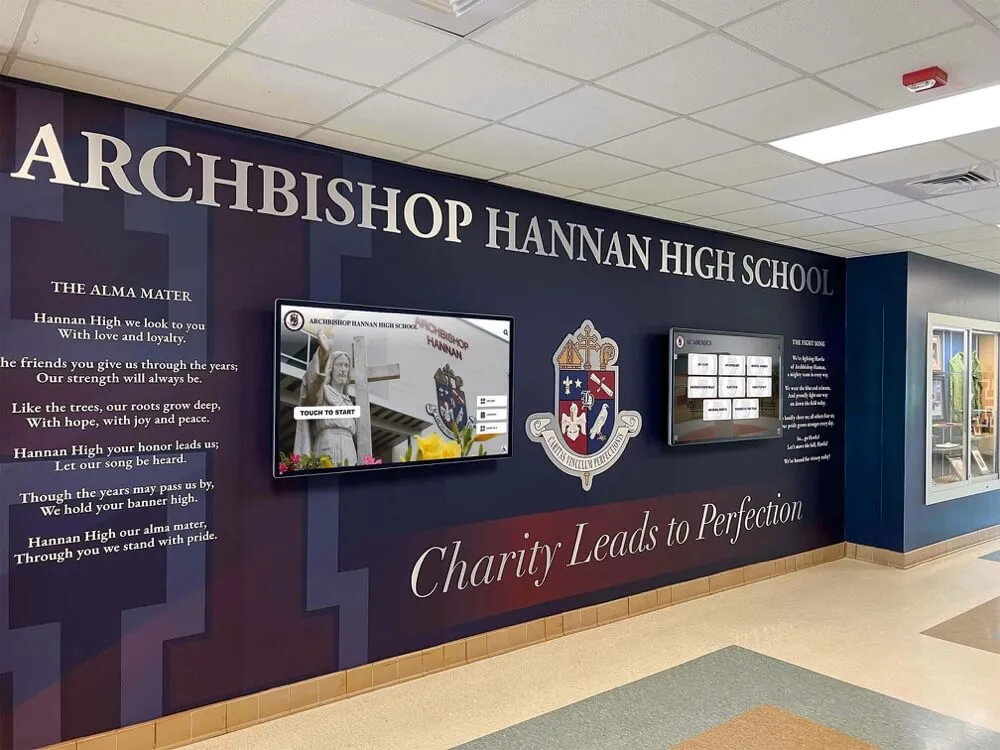
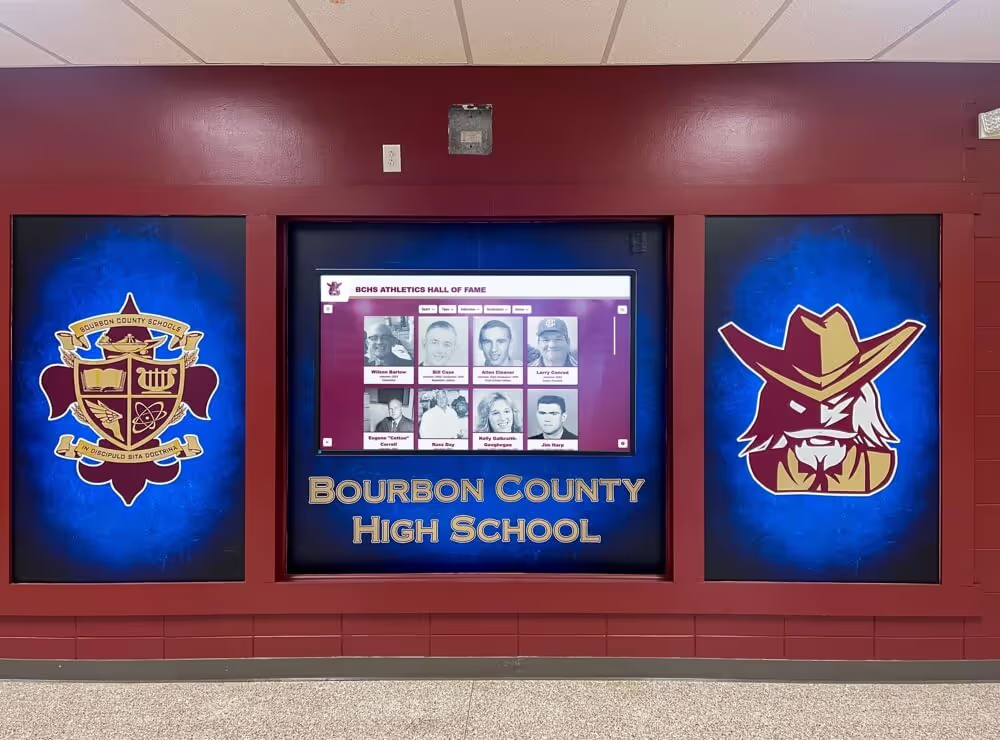
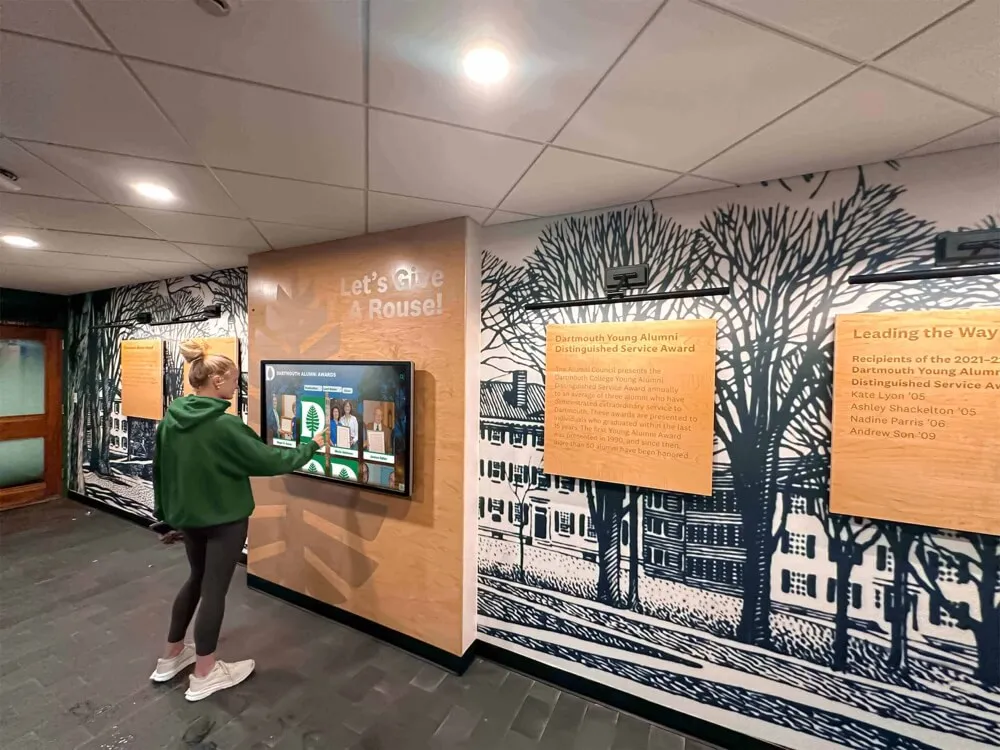
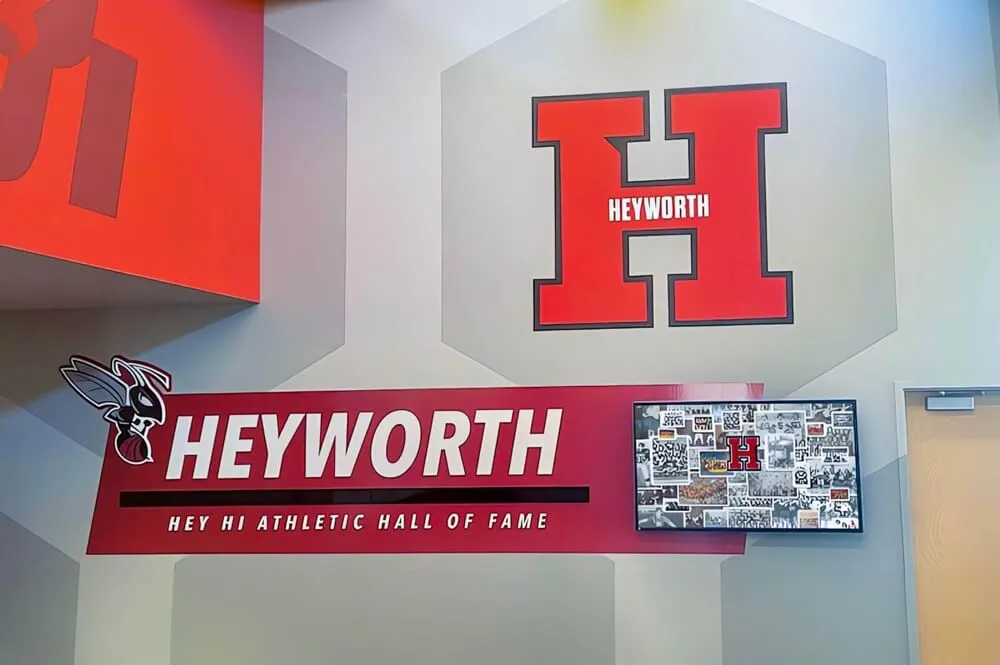
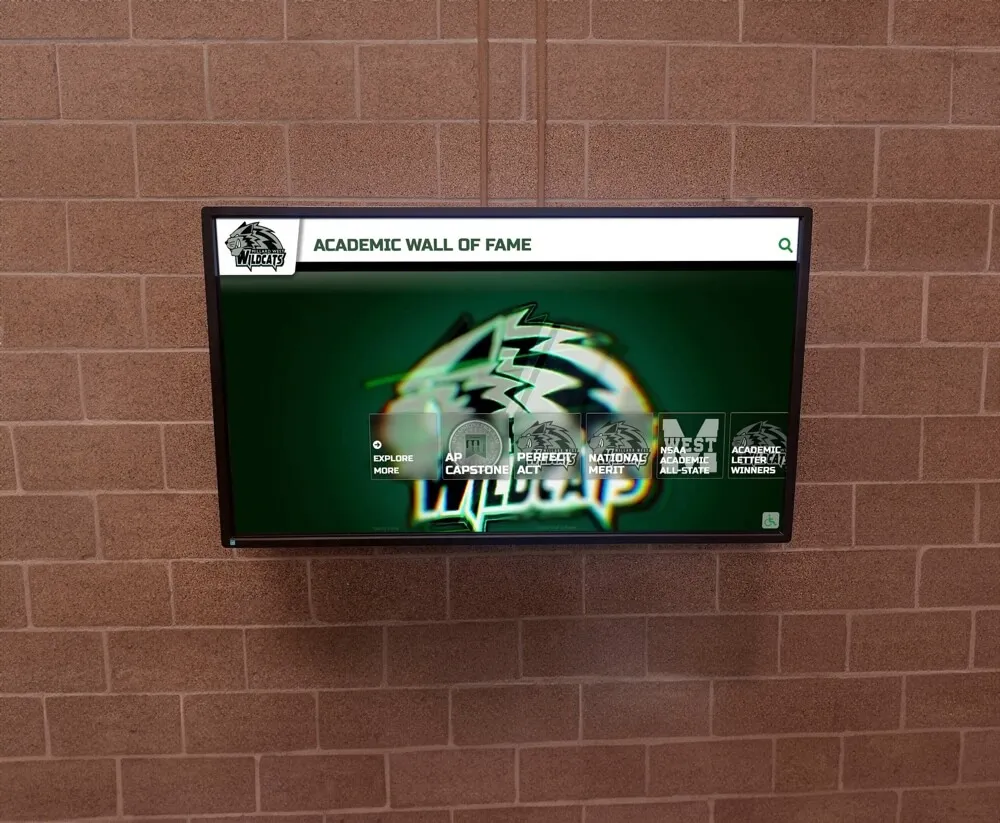
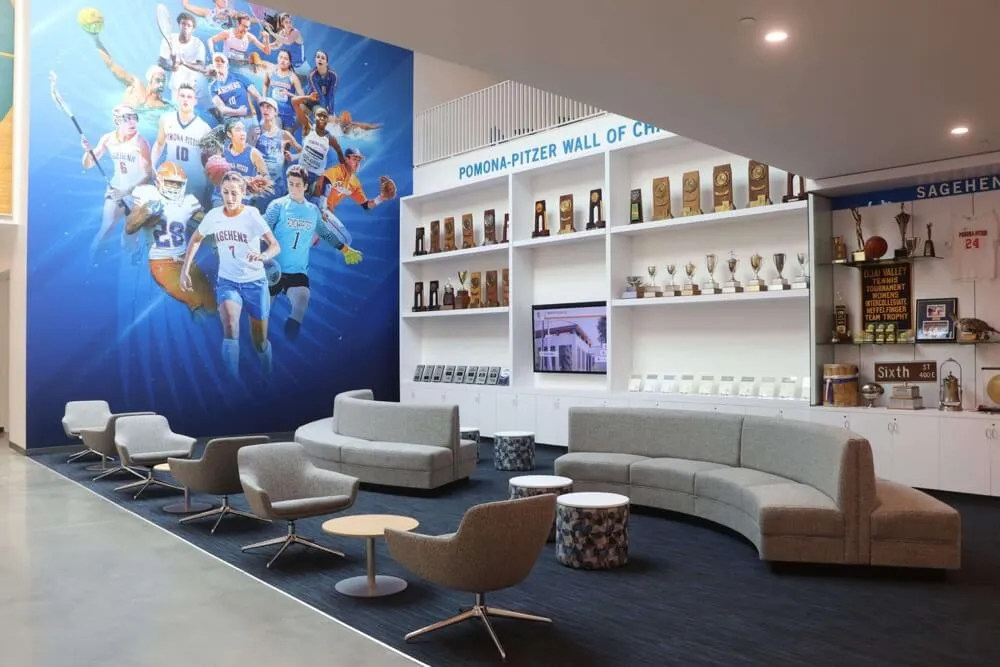
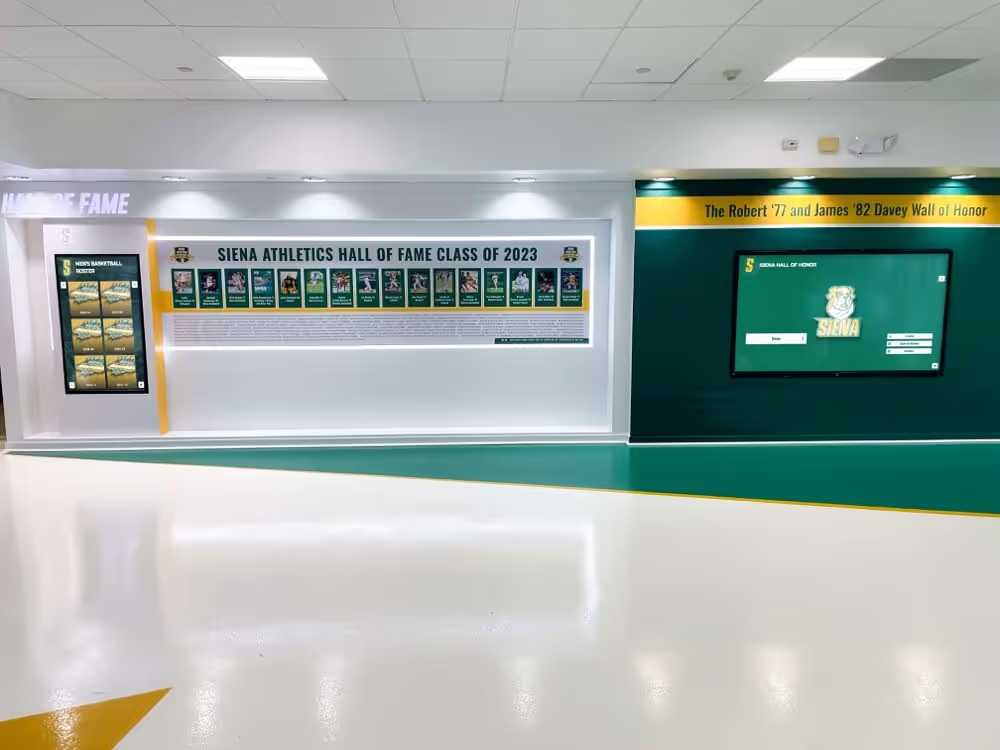
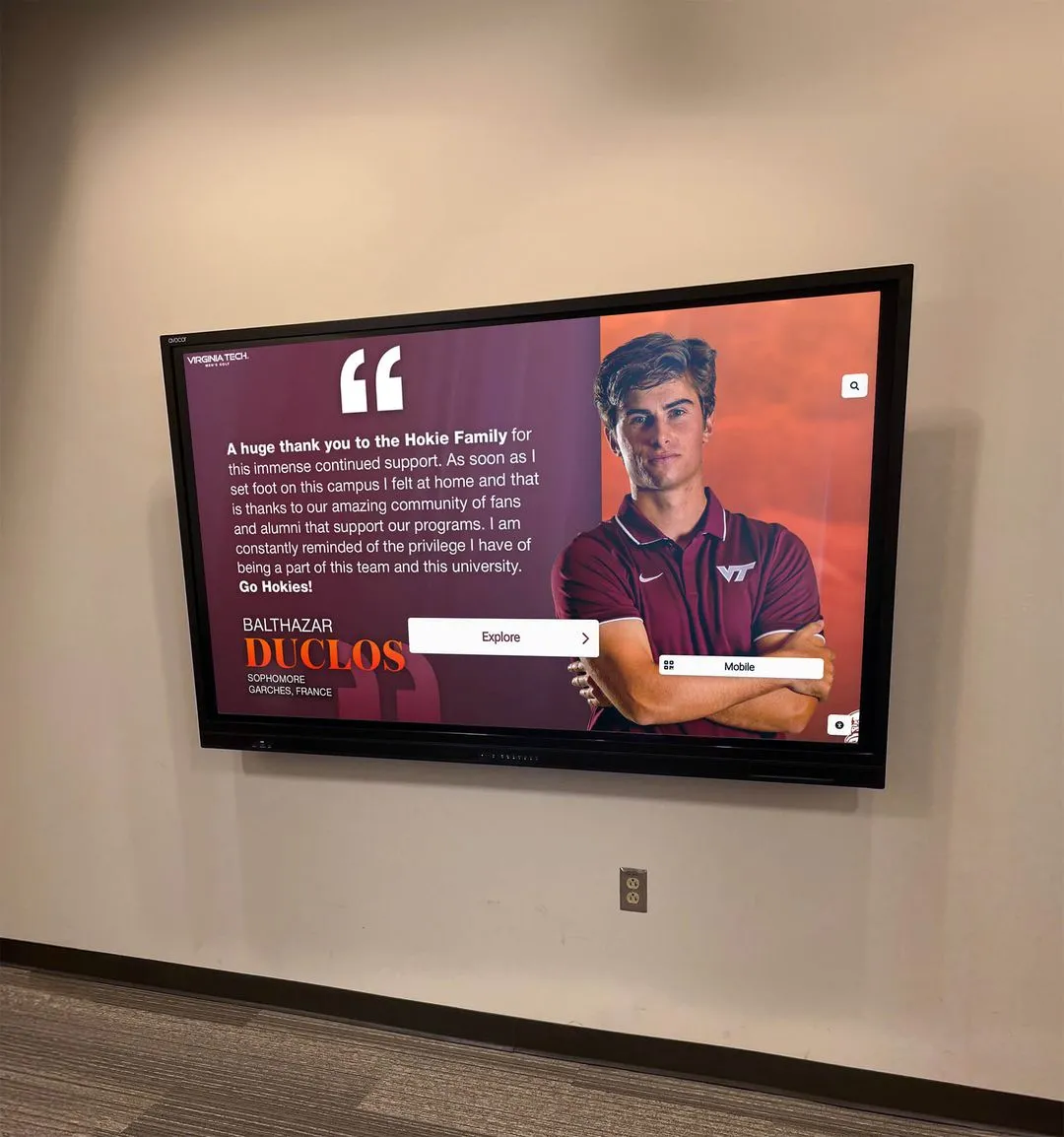
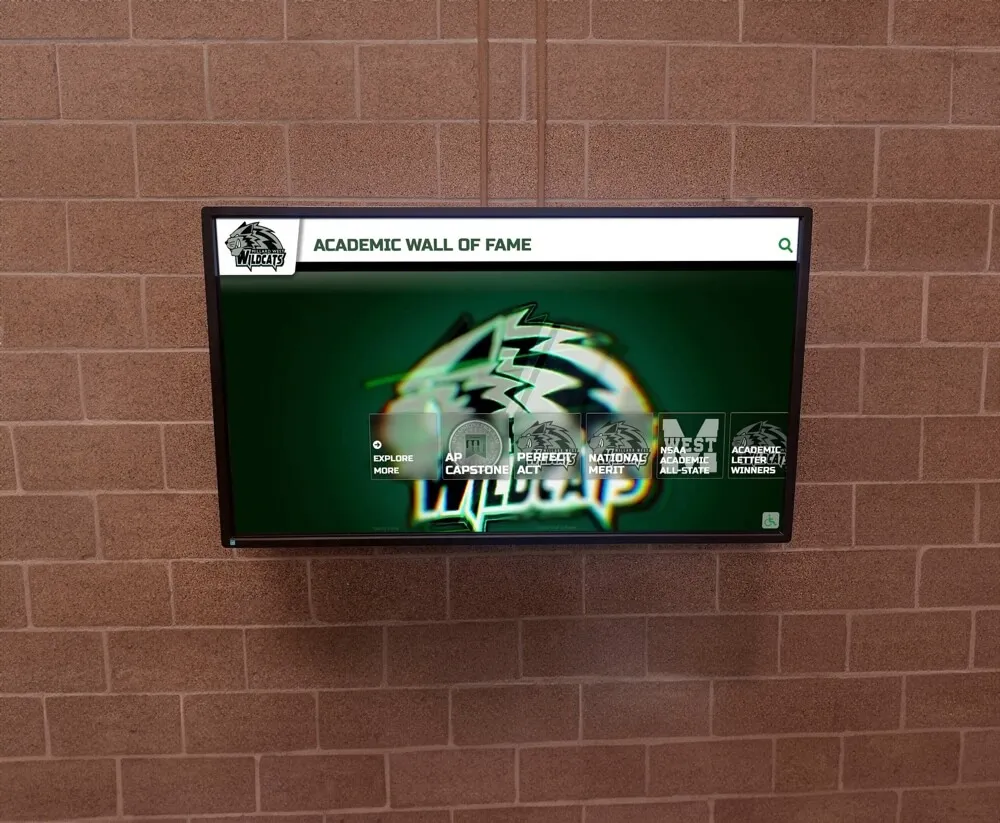
Academic walls of fame that include forensics program achievements give speech and debate recognition the same permanent visibility as traditional athletic honors
Why Forensics Team Recognition Programs Deserve Investment
Before addressing specific recognition strategies, it’s worth understanding what sustained recognition programs accomplish—why the investment of time and resources in building forensics recognition pays dividends for programs and schools.
Driving Retention and Program Depth
Forensics programs live and die on the depth of their active roster. The student who receives genuine recognition at the end of a competitive season is significantly more likely to return for the next one. Programs that build visible, multi-category recognition structures give participants clear aspirational targets at every level—from the freshman attending their first invitational to the senior competing for a national title. When students see their names on permanent displays alongside previous champions, they develop an identity connection to the program that survives difficult competitive stretches and early-season losses.
Recruiting Future Competitors
Visible forensics recognition in school hallways does recruiting work without any additional effort. When eighth graders touring the building encounter a digital display showcasing forensics champions, or when incoming freshmen see a banner marking a state championship, they learn that competitive speech and debate is something their school takes seriously. Programs struggling to sustain the roster depth needed for team competitions—where active participation from a critical mass of students is necessary—benefit directly from recognition infrastructure that signals program prestige.
Elevating Academic Co-Curricular Status
Schools communicate institutional values through the achievements they display prominently. A hallway full of athletic trophies and empty space where forensics achievement should be recognized sends a clear message about what the school considers worth celebrating. Programs that give forensics recognition genuine institutional prominence—comparable display space, equivalent ceremony investment, formal permanent records—reshape that message. For the school community, for parents, and for students themselves, recognition visibility signals that academic competition is a legitimate path to distinction.
For ideas on how academic co-curricular recognition integrates with broader school recognition culture alongside honors like chess club and academic competition achievements, well-established models from peer programs offer practical frameworks.
Award Categories for Forensics Team Recognition
Effective forensics recognition covers the full range of competitive events and team contributions. A structured award system creates multiple recognition pathways, ensuring students with different strengths receive acknowledgment rather than a single “best speaker” award capturing all the attention.
Competition Achievement Awards
Competition performance provides externally validated, objective benchmarks—the natural foundation of any recognition program.
Tournament Achievement Recognition
- First-place finishes at invitational tournaments
- Division champion and runner-up recognition by event
- Recognition for advancing from preliminary rounds to elimination (octofinals, quarterfinals, semifinals, finals)
- Perfect preliminary round records—going undefeated through pool rounds is a meaningful achievement worth formalizing
Qualification Milestone Recognition
- Recognition for qualifying to state championship competition
- State-level placement awards: state champion, state runner-up, top-six finisher
- National tournament qualification is among the highest achievements in competitive forensics—treat it as the equivalent of an athletic state title, with permanent display and formal ceremony recognition
- NSDA point thresholds: Degree awards recognizing cumulative NSDA points earned across a career (Distinguished Distinction, Premier Distinction, etc.) represent multi-year achievement and deserve formal institutional acknowledgment
Event-Specific Awards
Forensics encompasses a wide range of competitive events, each requiring distinct skill sets. Recognition that names specific events—rather than generic “speaker awards”—gives participants ownership of their particular discipline.
Competitive speech events worth individual recognition categories:
- Original Oratory: The student who crafted an original persuasive speech from research to delivery
- Extemporaneous Speaking: The competitor who synthesized current events into coherent, polished arguments under time pressure
- Lincoln-Douglas Debate: One-on-one values debate requiring philosophical depth and rapid argument construction
- Public Forum Debate: Two-on-two current events debate emphasizing accessible argumentation and cross-examination
- Policy/CX Debate: Research-intensive team debate with complex evidence and argument structures
- Congressional Debate: Simulating legislative debate, requiring bill analysis, floor speeches, and parliamentary procedure
- Dramatic and Humorous Interpretation: Performance events requiring technical acting skill, emotional range, and literary analysis
- Duo Interpretation: Partner performance events adding coordination and relational timing to performance demands
When a student earns first place in Original Oratory at a major invitational, that achievement should appear in recognition displays by event name—not folded into a generic “academic award.”
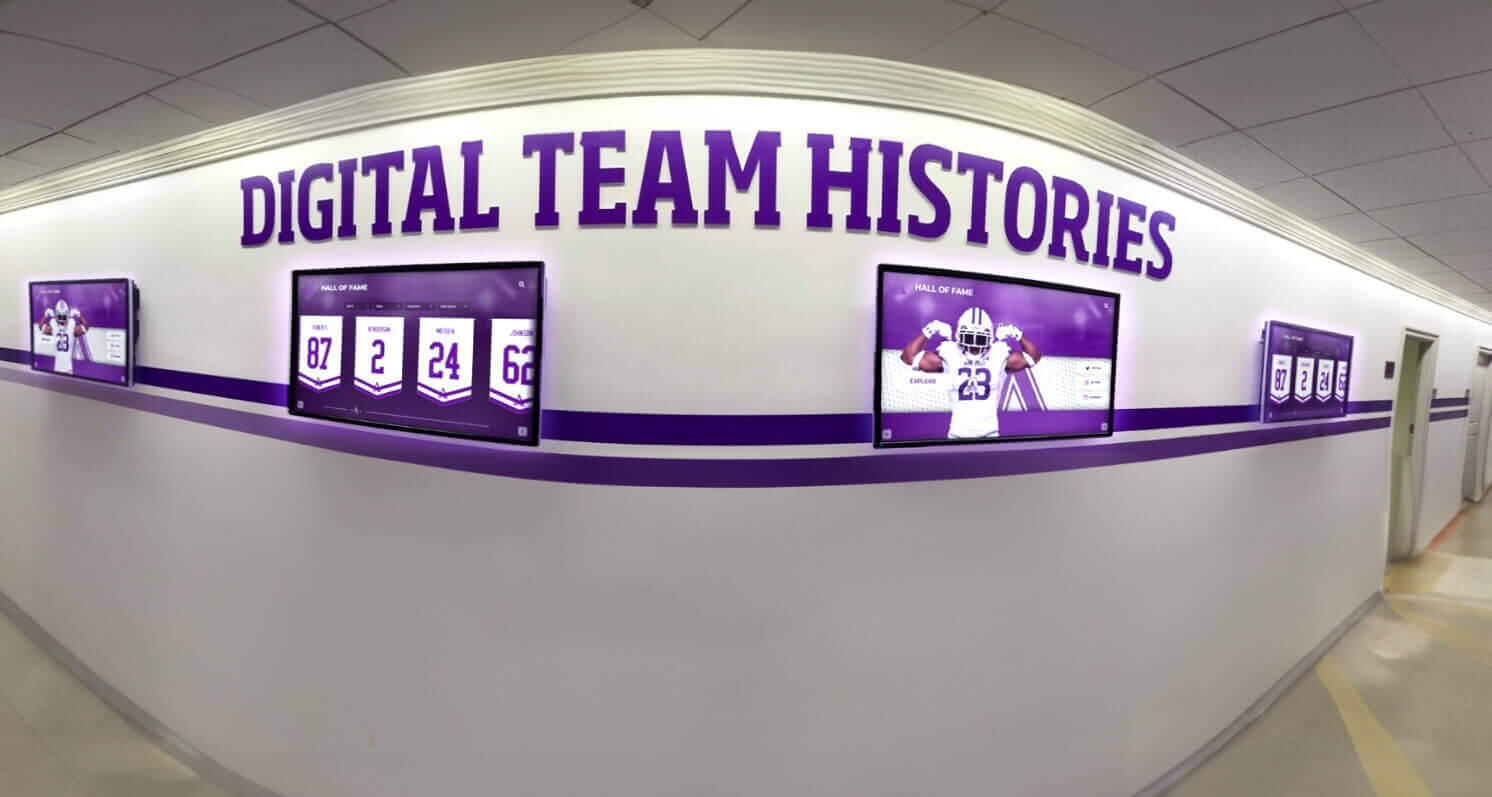
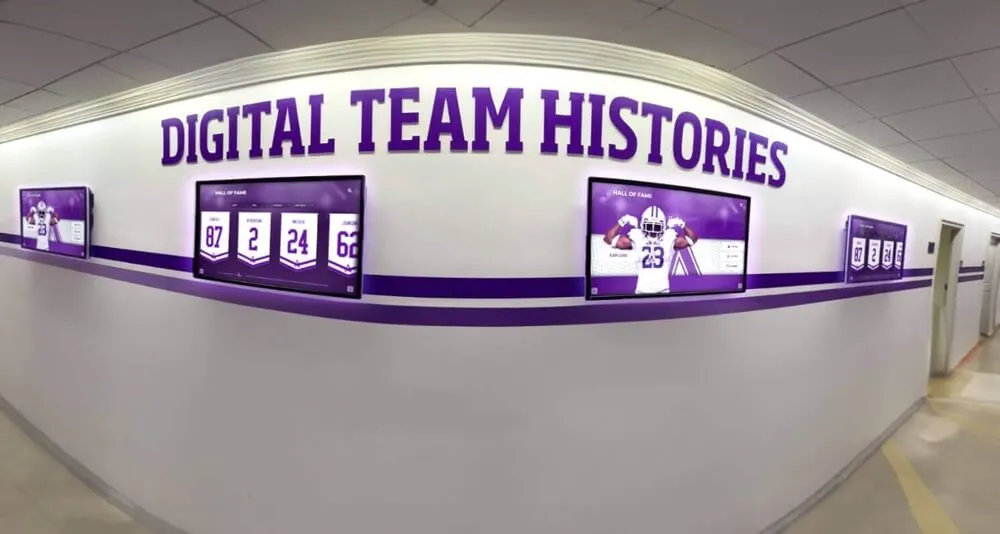
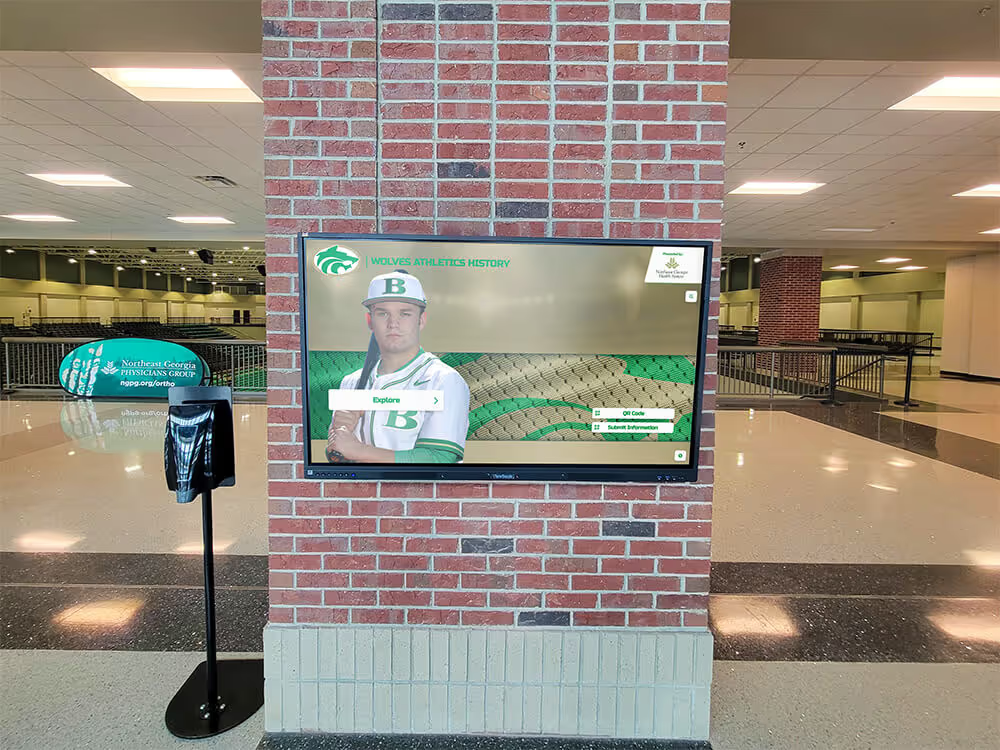
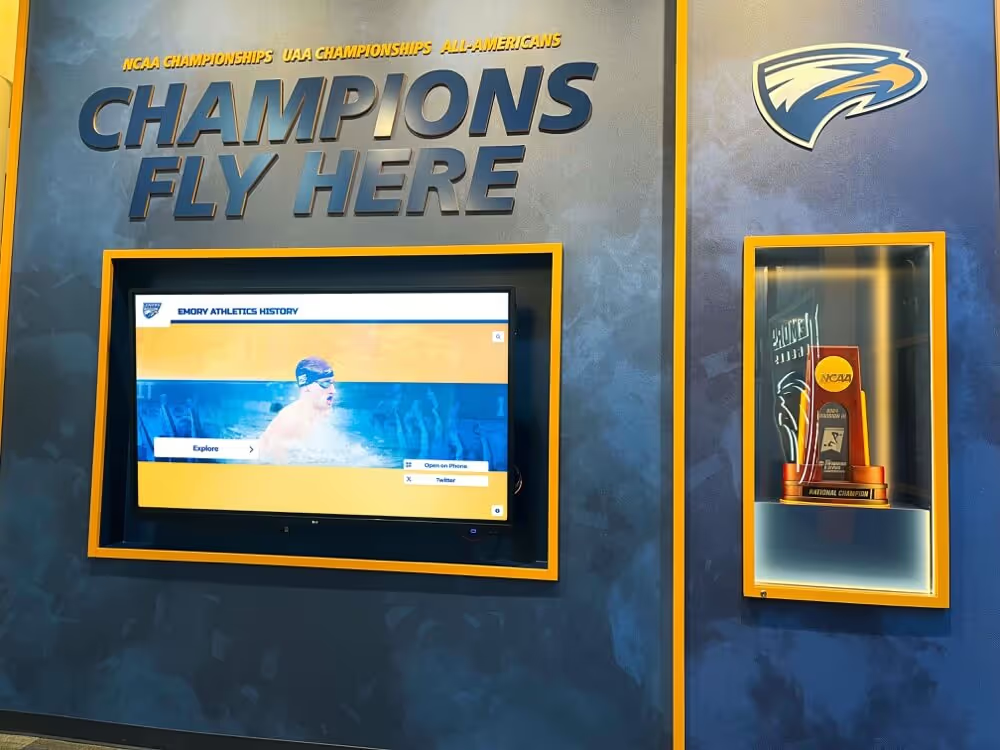
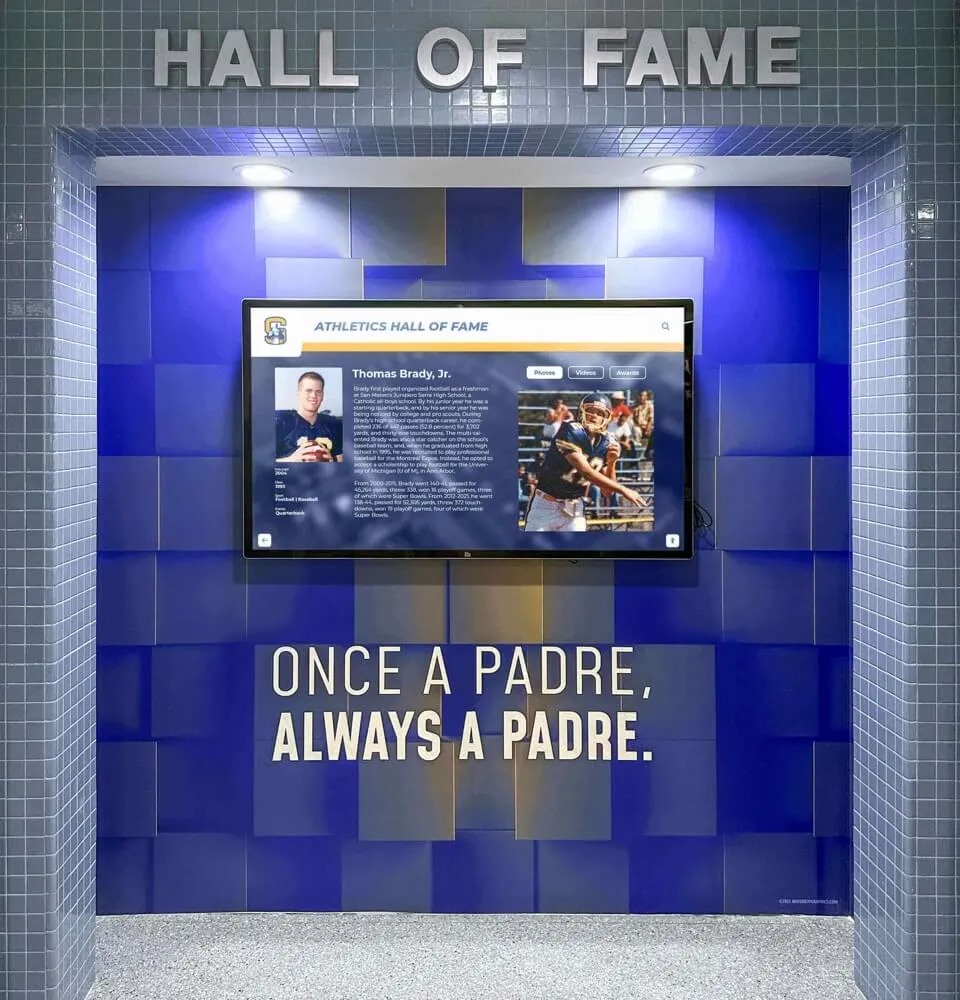
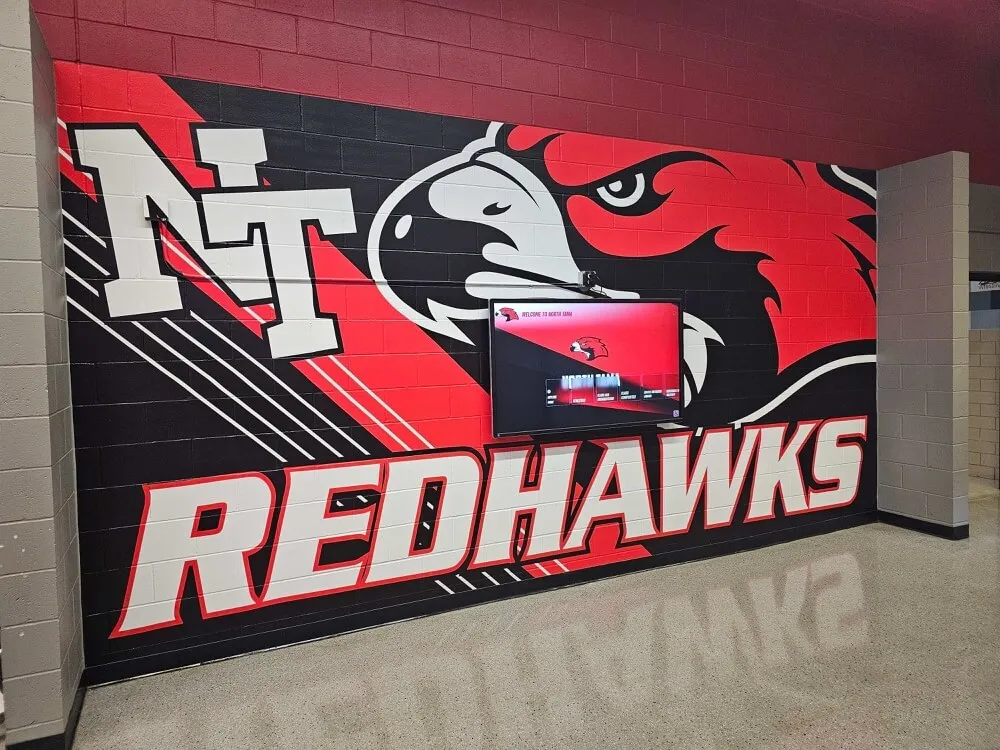
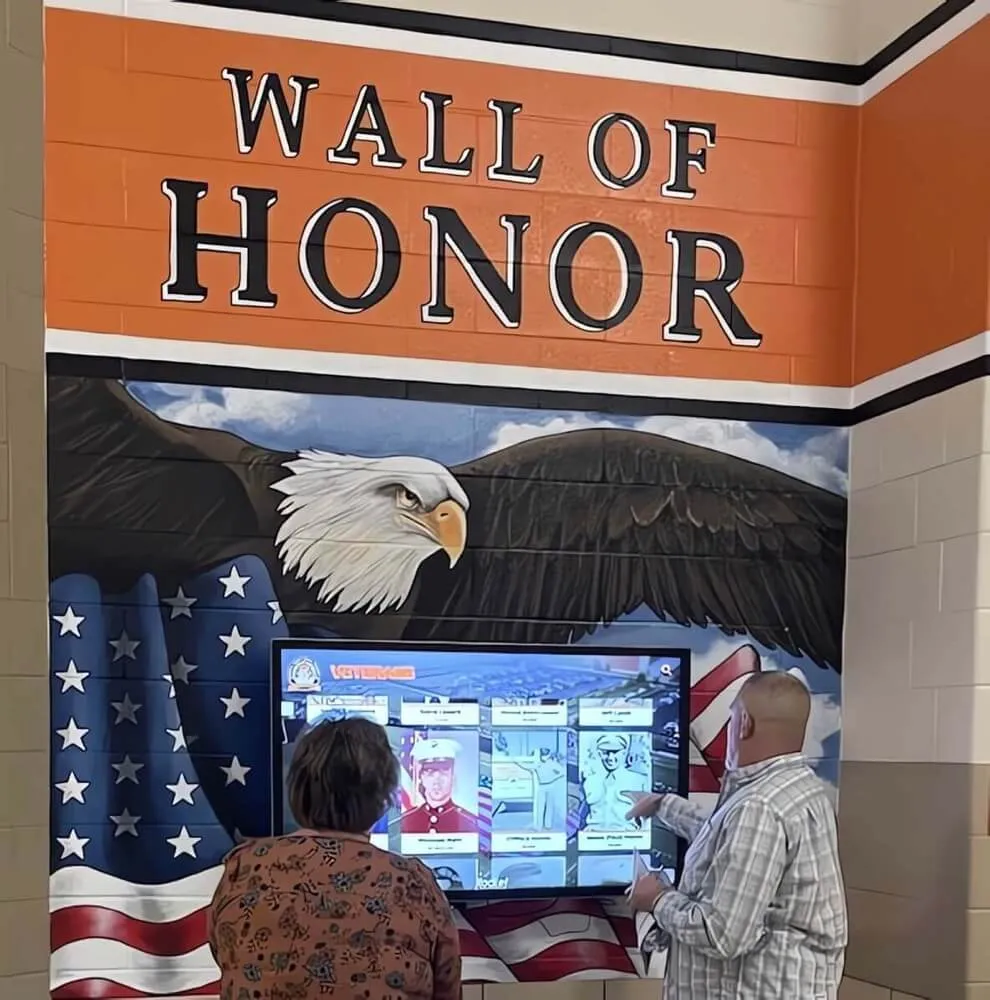
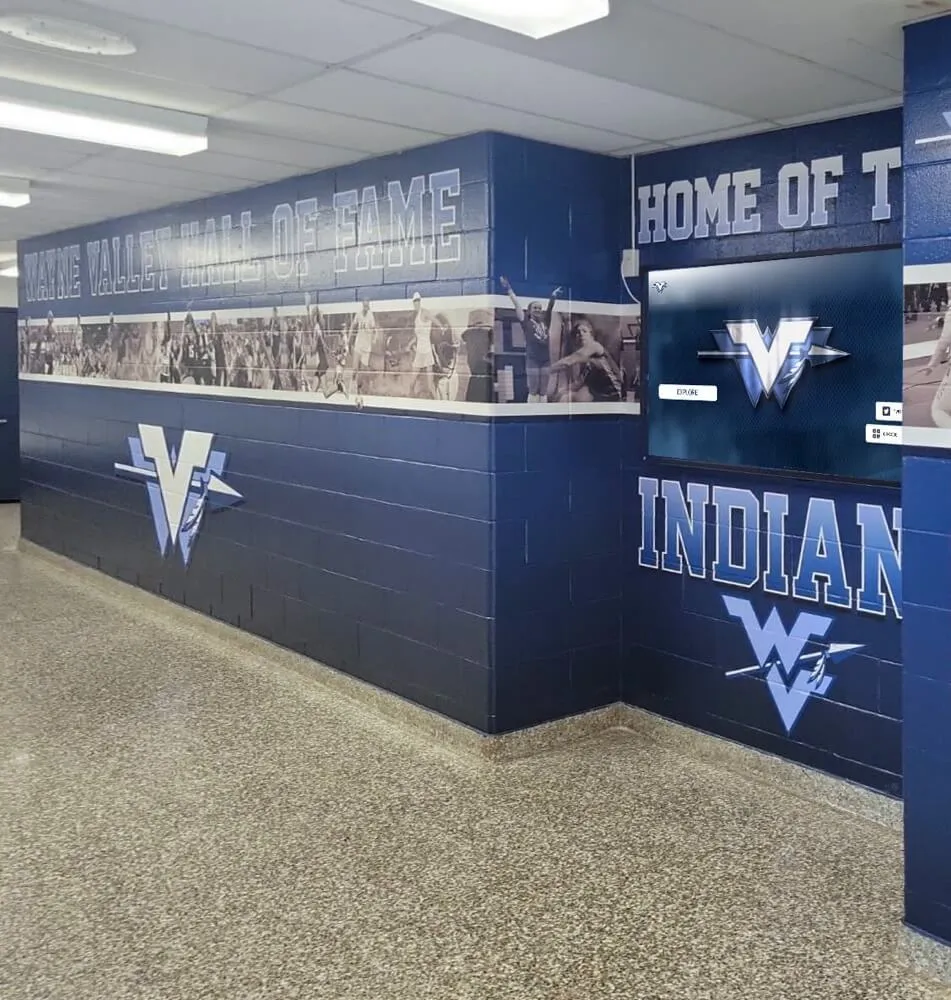
Digital team history displays allow forensics programs to present season-by-season achievement records without the space constraints of physical trophy cases
Role and Contribution Awards
Forensics teams, like athletic programs, involve specialized roles and contributions beyond competitive wins. Recognition that acknowledges these contributions builds a broader culture of investment.
Team Captain and Leadership Award Formal recognition for the student(s) assuming leadership responsibilities—organizing practice schedules, mentoring newer competitors, coordinating tournament logistics, and setting the team’s competitive tone. Leadership in a forensics program requires organizational skill, competitive credibility, and interpersonal effectiveness—all worth formal acknowledgment.
Most Improved Competitor Some of the most meaningful growth in a forensics program happens with students who begin with limited competitive experience and develop into consistent performers. A Most Improved recognition—based on coach evaluation and competitive record comparison across the season—creates a visible target for developing competitors and signals that the program values growth as much as results.
Rookie of the Year First-year competitors who demonstrate exceptional performance, attitude, and program commitment deserve dedicated recognition. This award creates a visible aspirational standard for incoming students and acknowledges the courage required to compete publicly while still learning a demanding craft.
Best Preparation and Research Award Research quality and case construction are invisible at competition—judges see the argument, not the hours that built it. An award recognizing the student who demonstrated exceptional research discipline, argument development, and evidence quality honors the intellectual labor behind competitive success.
Mentor and Peer Coach Award Upper-class forensics competitors who invest time developing newer teammates’ skills are essential to program continuity. When a senior teaches a sophomore how to run a counterplan, or a junior coaches a freshman through their first oratory, that investment builds program depth. Formal recognition validates the time and effort those mentoring relationships require.
Sportsmanship and Character Award Competitive forensics involves vigorous disagreement, high-stakes judging decisions, and occasional frustrating outcomes. The student who consistently demonstrates grace, respect for opponents and judges, and integrity under competitive pressure exemplifies the character that co-curricular activities are meant to develop. Peer-nominated character recognition in forensics carries particular weight because teammates observe conduct throughout travel weekends and long tournament days.
Academic Integration Awards
Forensics programs that pair competitive achievement recognition with academic achievement send a clear message: these goals are complementary, not competing.
Scholar Competitor Award Recognition for the team member who meets both an established GPA threshold (commonly 3.5 or above) and achieved meaningful competitive results. By requiring both criteria, the award positions academic excellence and competitive drive as mutually reinforcing—not as a choice between one or the other.
Overall Program Academic Excellence Team GPA recognition, presented alongside competitive achievement, builds a dual-identity culture. When the team’s collective academic performance receives formal acknowledgment, forensics participation becomes explicitly connected to academic outcomes in a way that resonates with students, parents, and administrators alike.
Explore how recognizing students who achieve perfect ACT scores and similar academic milestones works alongside co-curricular recognition programs to build a complete academic achievement culture.
Physical Recognition Displays for Forensics Programs
Trophies and certificates that live in an advisor’s classroom accomplish little beyond filling a shelf. Effective forensics recognition requires display infrastructure that places achievement in high-traffic, permanent locations where the school community encounters it daily.
Dedicated Trophy and Display Cases
Establishing a Forensics Achievement Space
The baseline requirement is a dedicated physical space where forensics hardware lives in a prominent location—a main corridor case, a lobby display, or a space within a shared academic achievement wall. A program competing seriously at the state and national levels accumulates trophies, plaques, and awards over years that deserve organized, labeled, accessible display.
Key elements of a strong forensics trophy display:
- Competition trophies organized chronologically by season
- Tournament plaques labeled with event name and placement
- Team photos from each competitive season, mounted and captioned
- State and national qualifier certificates framed and displayed with context explaining what qualification means to non-forensics audiences
- A roster of NSDA degree honorees—students who earned national recognition through cumulative points—with degree level displayed
Lobby and Hallway Integration
Schools that display athletic championship banners in main hallways and lobbies should apply the same standard to forensics achievement. A banner reading “State Speech Champions — 2025” or “National Tournament Qualifiers” belongs in the same school entrance as a football conference title banner. Some schools have implemented combined academic achievement walls that display forensics achievements alongside MATHCOUNTS, Science Olympiad, Mock Trial, and other competition program results—creating a single high-visibility destination for academic co-curricular achievement.
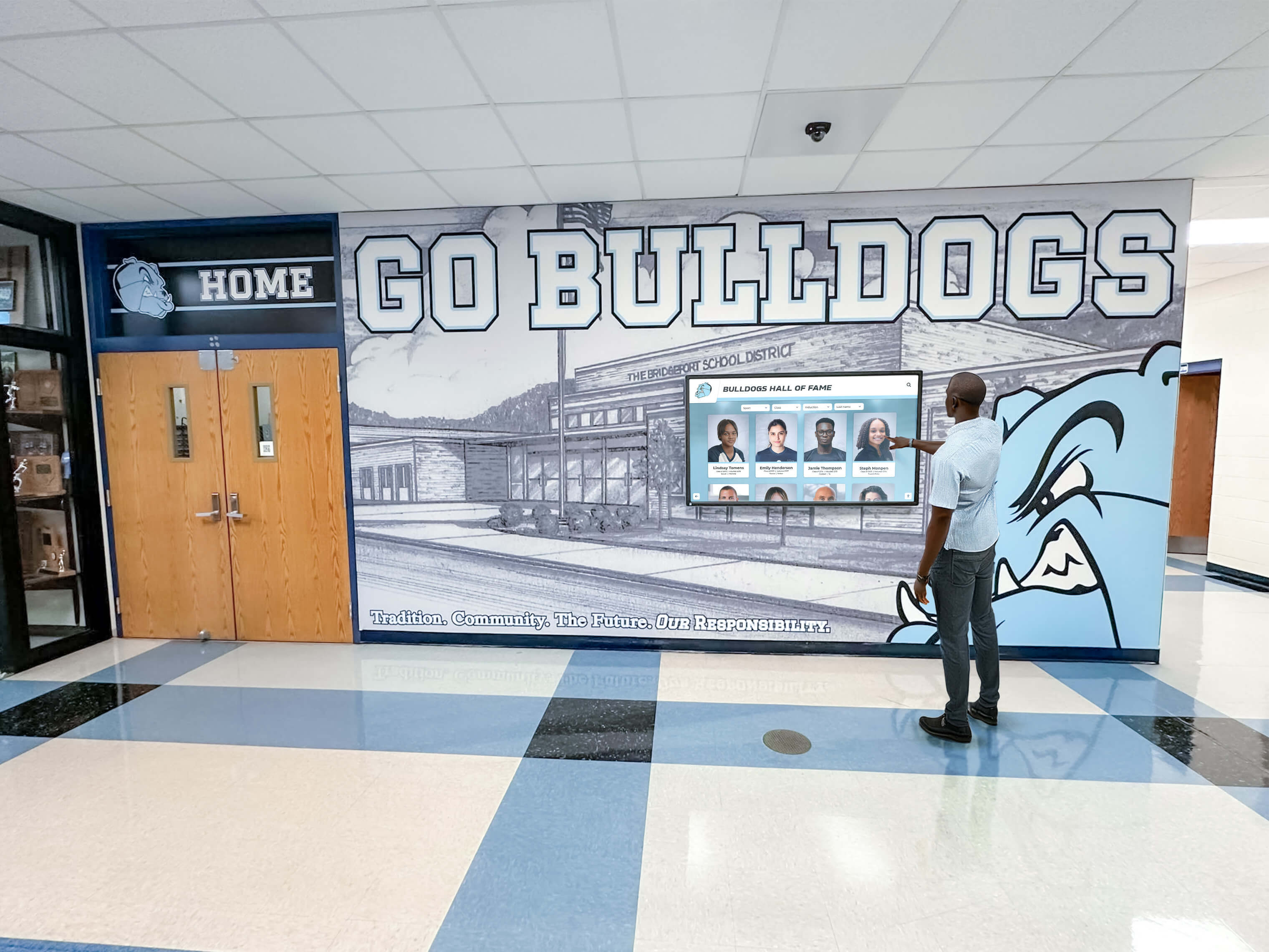
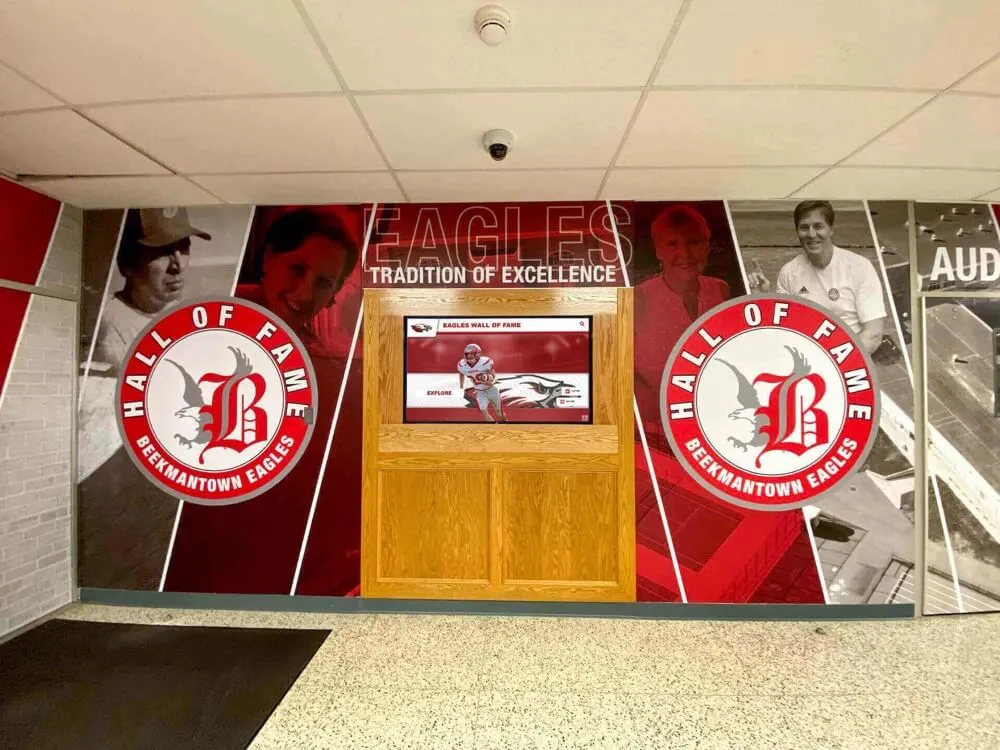
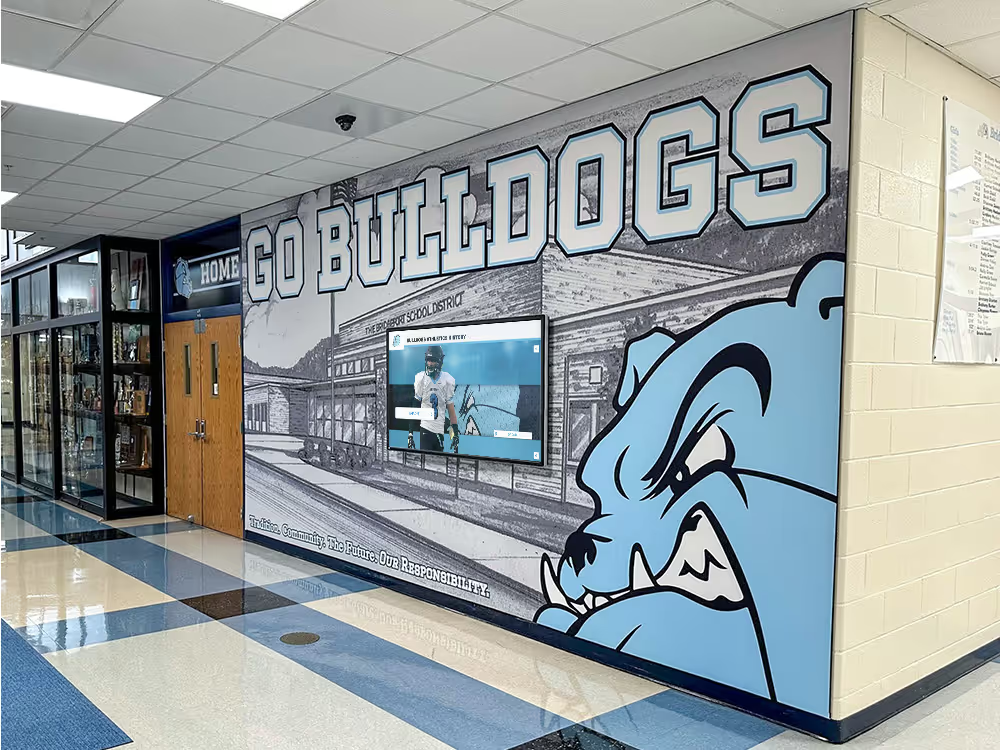
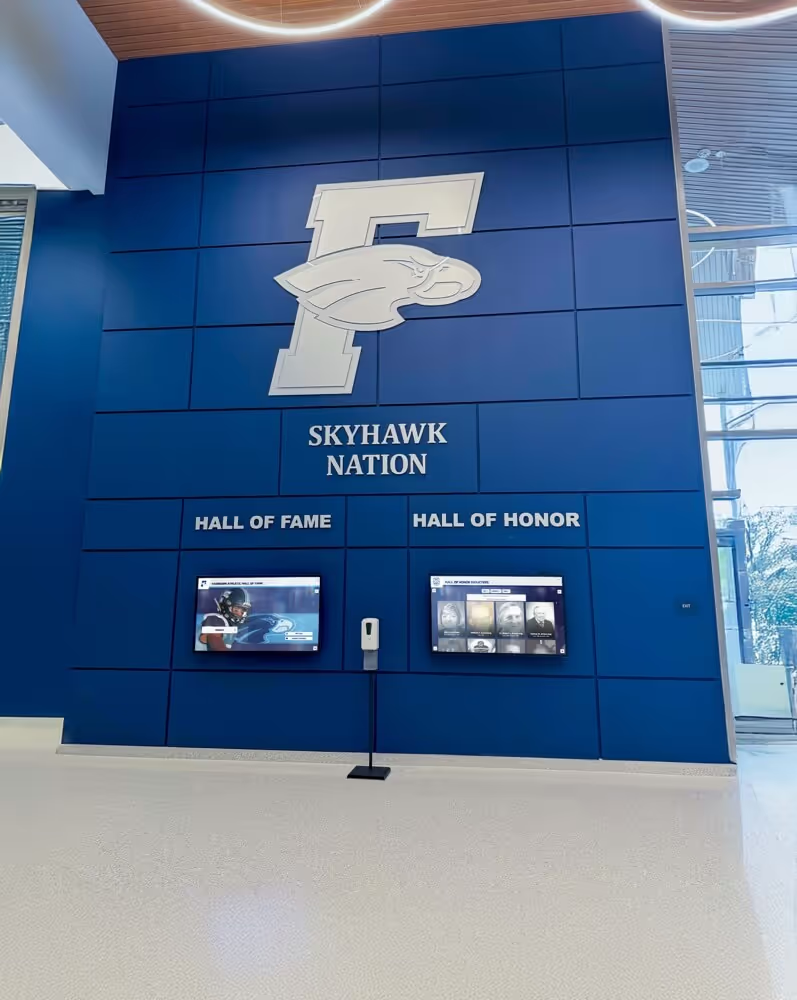
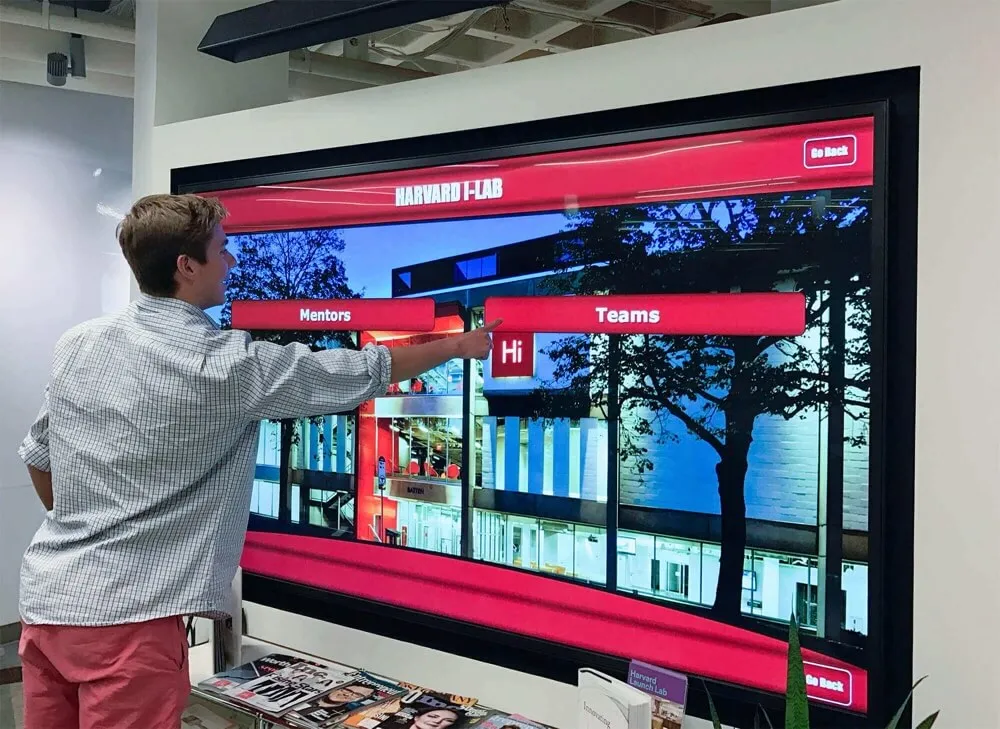
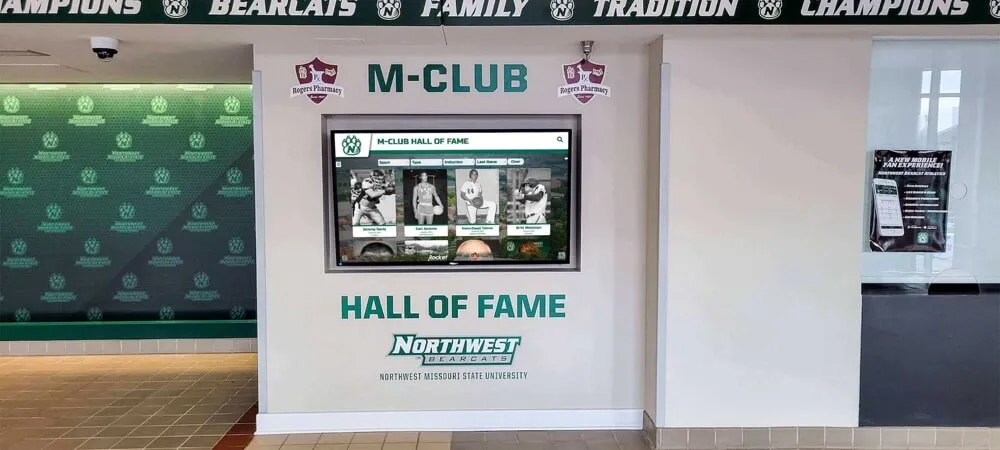
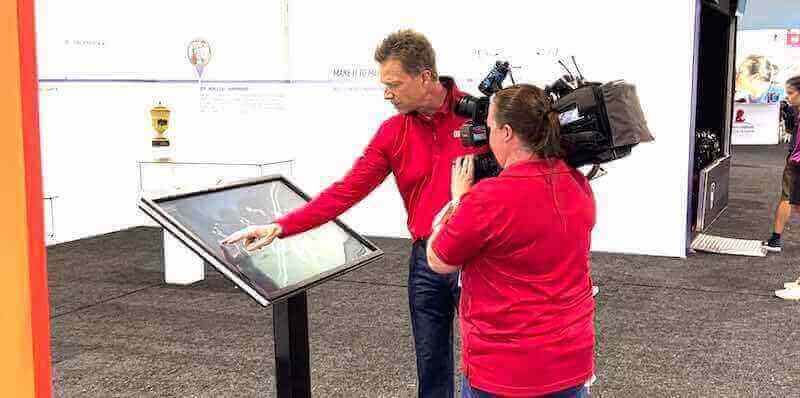
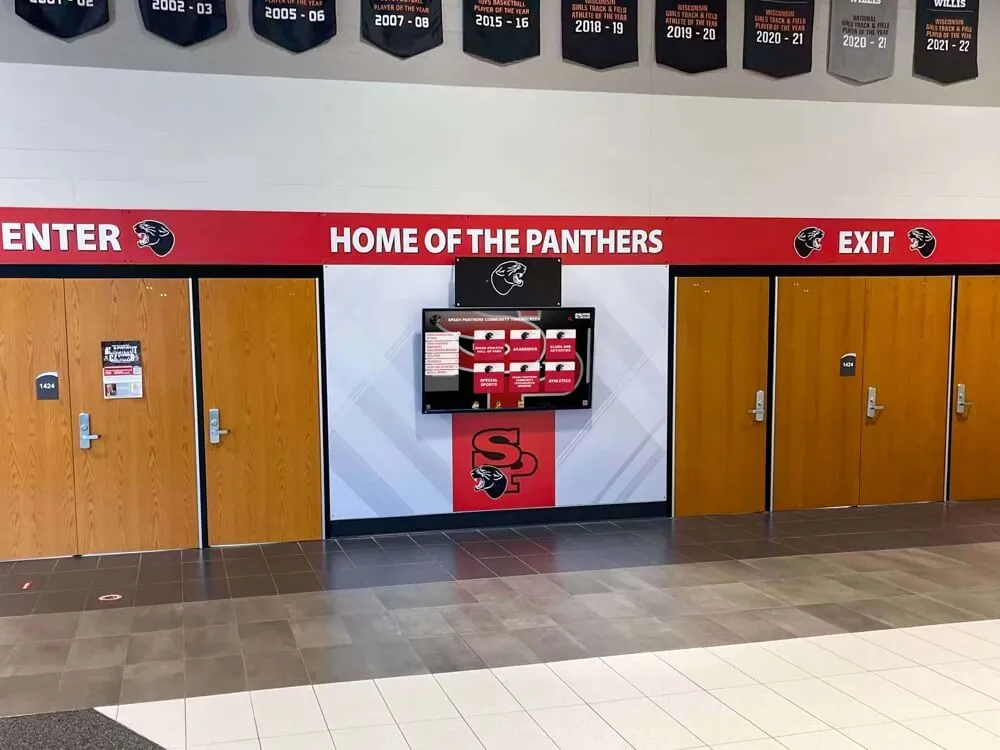
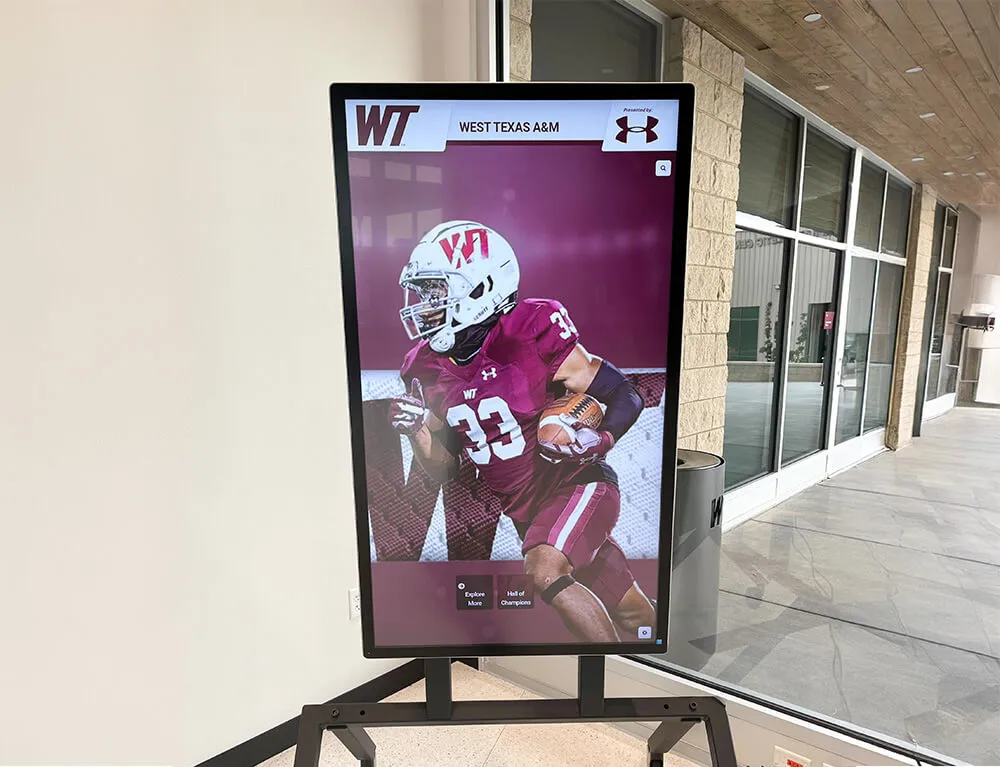
Interactive displays in school hallways let visitors and students explore program history, individual achievement records, and competition results on demand
Recognition Banners
Banners combine high visibility with relatively low cost, making them among the most effective recognition tools for programs working with limited budgets.
Championship and State Qualifier Banners
- Standard banner format for state championship or state finalist recognition
- Hung in the school gymnasium, near auditorium entrances, or in main corridors—wherever school community traffic is highest
- Should include year, event or tournament name, and placement
National Tournament Appearance Banners National qualification in speech and debate reflects one of the most competitive qualification processes in American scholastic competition. A banner in the main corridor—“2025 NSDA National Tournament Qualifier”—communicates that achievement to community members who may not follow forensics competition closely.
Multi-Year Achievement Displays Tracking years of state or national qualification on a single cumulative display creates visible program momentum—the forensics equivalent of an athletic win-streak banner. When incoming students see that their program has qualified for nationals in multiple consecutive years, they understand they’re joining something with an established competitive identity.
For ideas on how transforming school hallways with meaningful recognition displays elevates program visibility, approaches developed for athletic spaces translate directly to academic co-curricular environments.
Digital Recognition Systems for Forensics Programs
Physical displays have meaningful constraints: space fills up, older recognition gets moved to storage, and telling the story of a program’s development over ten or twenty years becomes structurally impossible in a trophy case. Digital recognition systems address all three limitations while expanding how schools present forensics achievement.
Interactive Touchscreen Displays
Interactive touchscreen systems designed for school recognition allow forensics programs to present far more depth than physical displays accommodate:
- Complete competition history with searchable, year-by-year records for every tournament, event, and student
- Individual competitor profiles documenting each student’s event history, tournament placements, NSDA points, and program contributions
- Season retrospectives for each year the program has been active
- Video content—tournament round recordings, award ceremony moments, graduation tributes for forensics seniors
- Award histories with contextual explanations so community members unfamiliar with forensics formats understand what each recognition represents
A program active for fifteen or twenty years has potentially hundreds of alumni, thousands of competitive rounds, and decades of achievement that no trophy case can meaningfully present. A touchscreen display makes that entire history navigable by event, year, student name, or tournament—giving every alumnus and current competitor a findable place in program history.
Rocket Alumni Solutions builds interactive touchscreen wall of fame systems specifically designed for school recognition programs—including programs that want to present academic and forensics achievement with the same institutional quality as athletic halls of fame. Schools using these systems give forensics students permanent, accessible, high-visibility recognition that matches the quality of their competitive preparation.
For a comprehensive look at how digital trophy wall systems work for programs spanning multiple years and categories, the features and implementation strategies translate directly to forensics program contexts.
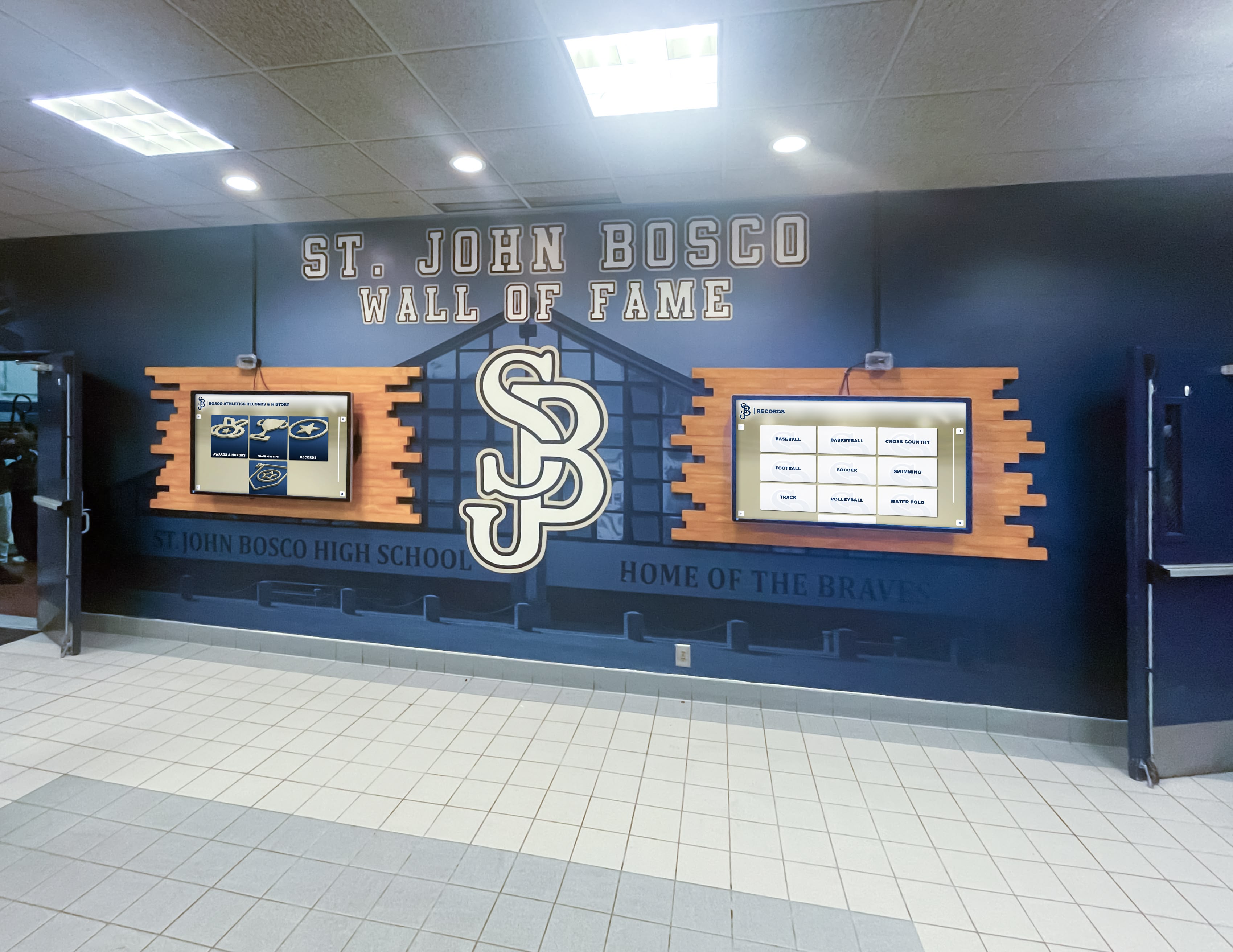
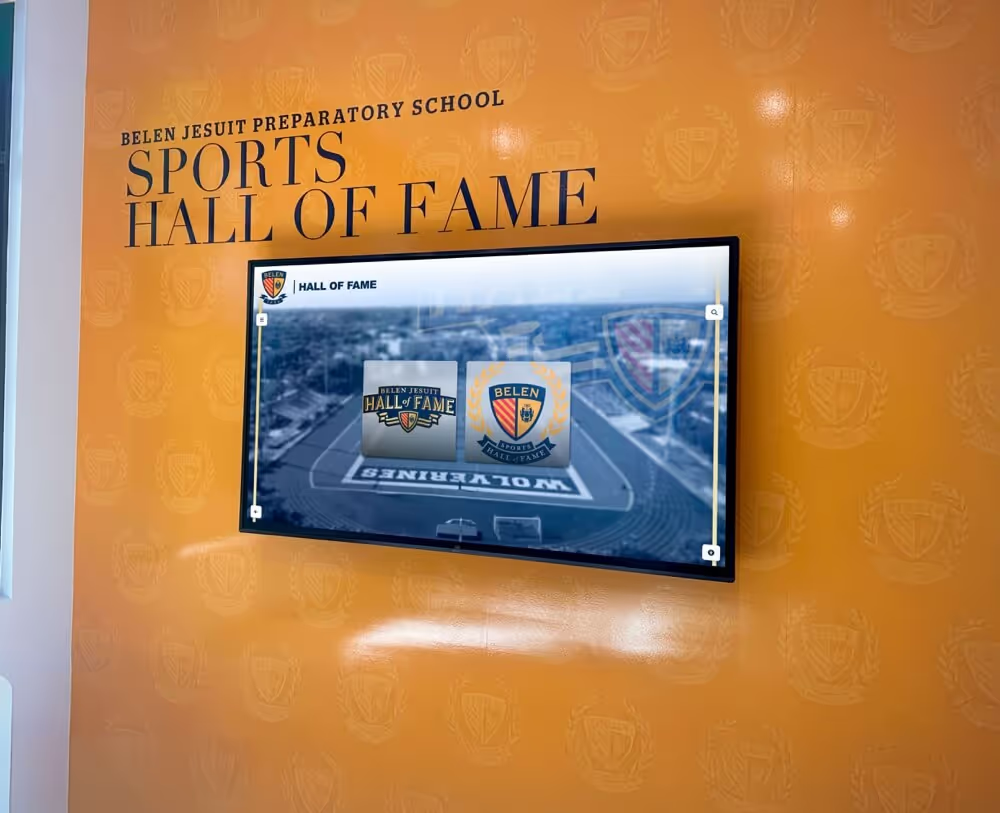
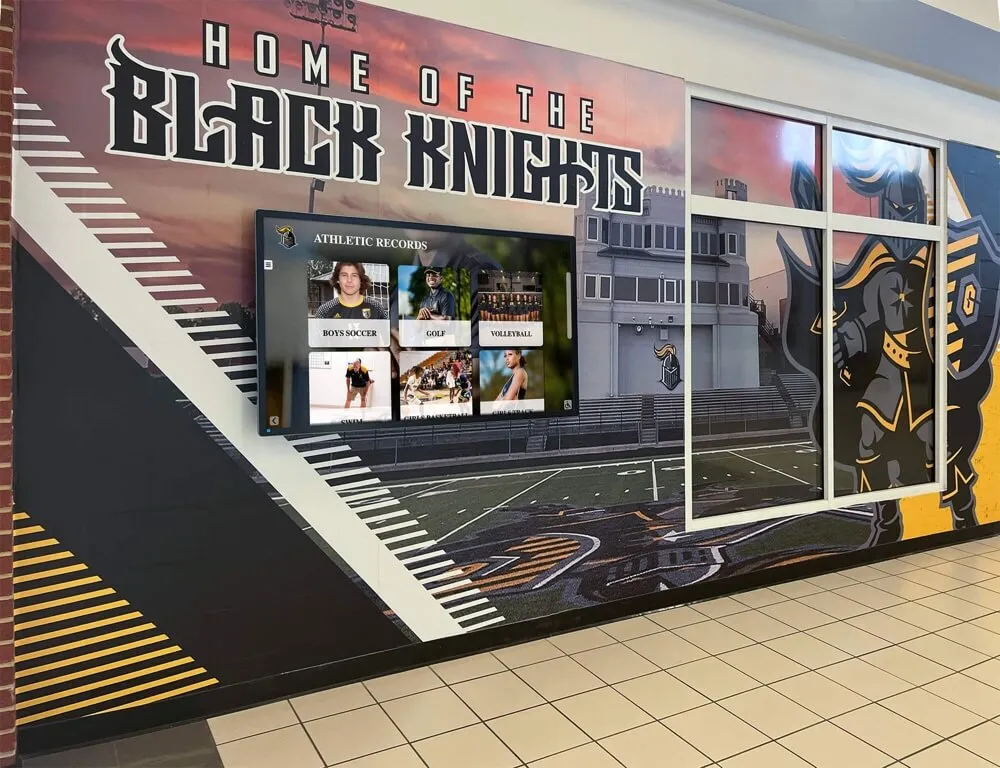
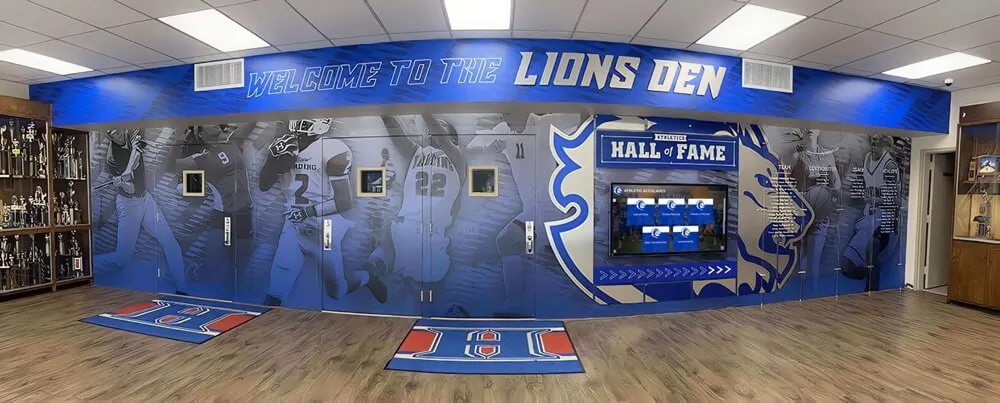
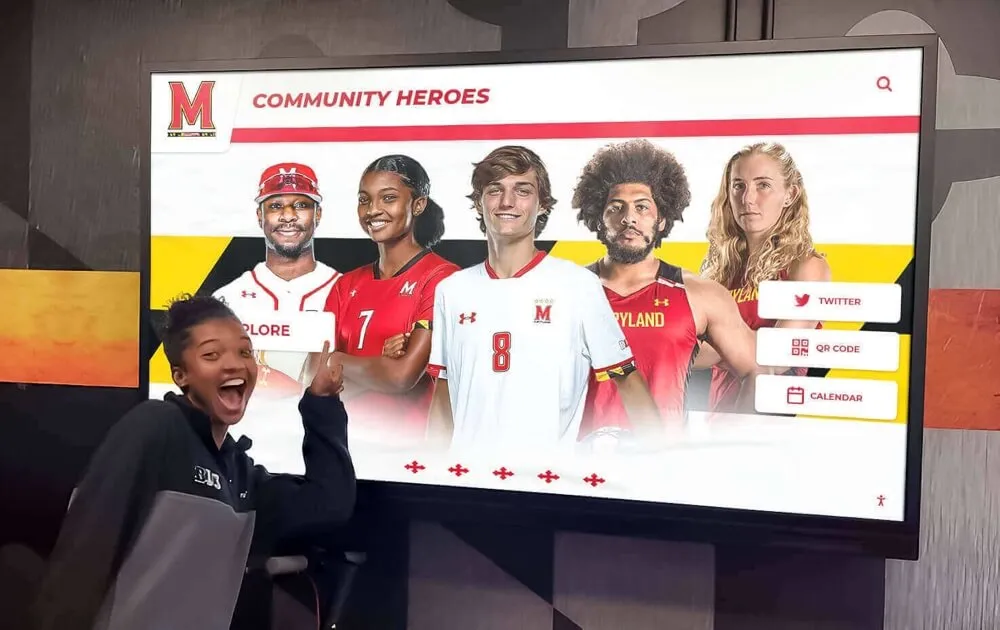
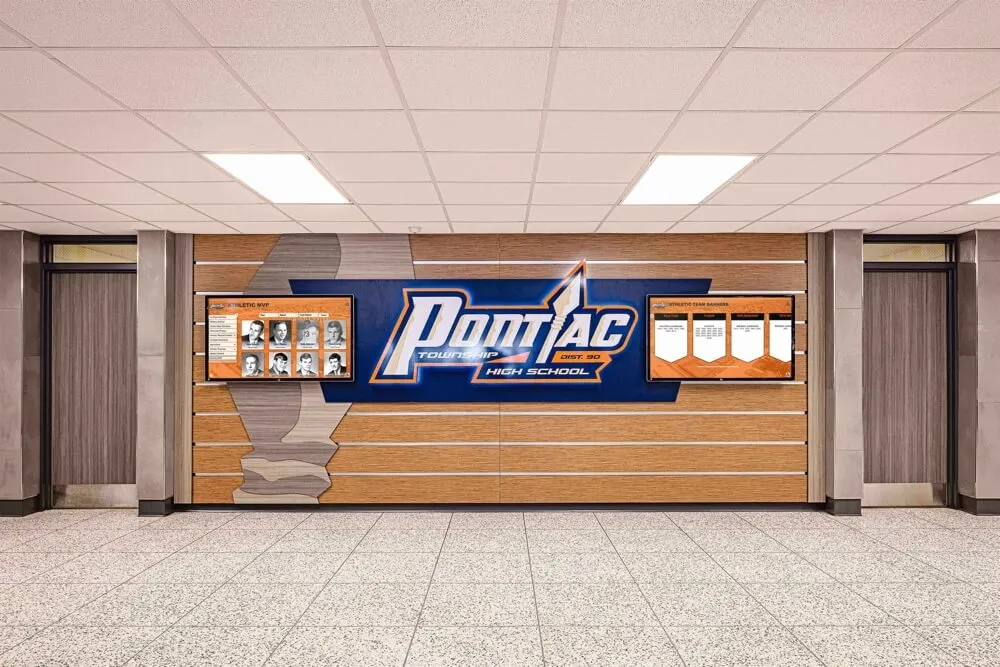
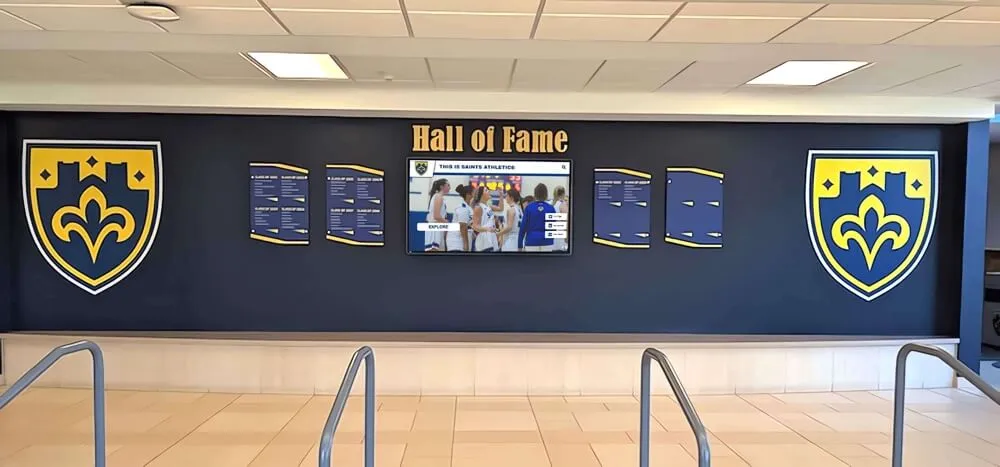
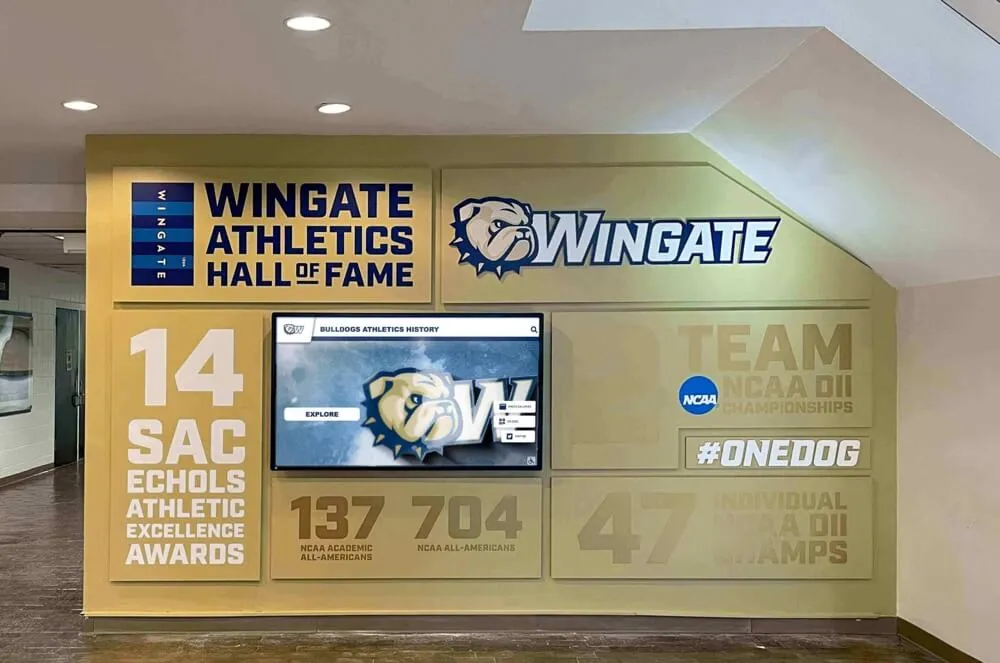
Dual-screen recognition installations create dynamic hallway environments that can present forensics achievements alongside broader academic program recognition
Digital Photo and Media Archives
Forensics competitions generate extensive photography and video content—student preparation sessions, tournament round recordings, award ceremony moments, and team photos from each competitive season. Without a systematic archive system, this content scatters across personal phones and drive folders.
A structured digital archive:
- Organizes competition media by year, tournament, and event
- Preserves the visual record of a program’s development over time
- Provides content for recognition displays, alumni communication, and recruitment
- Creates a navigable history that alumni can return to years after graduation
For guidance on how interactive announcement feeds and digital communications in schools create ongoing community visibility for academic program achievements, these frameworks extend naturally to forensics recognition.
Online Recognition Presence
Digital recognition extends beyond physical touchscreen installations:
- School website sections dedicated to forensics program history and current-season achievements
- Social media recognition during and after competition weekends that keeps the broader school community connected
- Online program records documenting tournament results year-by-year
- Shareable achievement graphics for significant milestones—national qualification, state championships, NSDA degree attainment—that families and students can distribute through their own networks
The Forensics Team Awards Banquet
End-of-season recognition events consolidate competitive achievement, character acknowledgment, and program community into a formal celebration that honors the investment forensics students make throughout the year.
Event Planning and Format
Timing
Most forensics programs hold end-of-season recognition in spring, after the primary competitive season—typically after state championships and following the national tournament for qualifying teams. The spring timing allows full-season achievement to be documented and recognized without artificially rushing the competitive record.
Format Options
- Team-only celebration: Dinner or gathering for competitors, coaches, and families—appropriate for smaller programs and creates an intimate recognition context
- Academic activities recognition night: Combined event with Mock Trial, Science Olympiad, MATHCOUNTS, Model UN, and similar academic competition programs—signals broad institutional commitment to academic co-curricular achievement
- Schoolwide awards ceremony inclusion: Some schools integrate forensics recognition into spring academic honors ceremonies—effective for visibility, but requires careful planning to ensure forensics receives substantive acknowledgment rather than a brief mention
Agenda Structure
A well-organized forensics recognition event includes:
- Season review: tournament record, highlights, and key moments presented through a slideshow or short video
- Competition achievement recognition: state and national qualifications, tournament championships, NSDA degree awards
- Individual event awards: presented by event category with context explaining what each event requires
- Character and contribution awards: leadership, mentorship, most improved, rookie of the year
- Senior tribute: dedicated recognition for graduating competitors
- Coach and advisor recognition: formal acknowledgment of the program leadership
For comprehensive guidance on end-of-season banquet planning, including program structure, speaker selection, and award presentation strategies, established models from competitive programs apply directly to forensics banquet contexts.
Presenting Awards With Impact
Award presentations that land with genuine resonance go beyond a name and a handshake. For forensics recognition, effective presentations:
- Name the event and the achievement specifically: “First place in Original Oratory at the State Championship” tells a more meaningful story than “First place in speech”
- Describe what the achievement required: Context for parents and community members who may not know forensics event formats makes recognition legible beyond the forensics community
- Cite a specific competitive moment: One concrete example from the season makes recognition personal and memorable rather than generic
- Allow time for photographs: The formal photo moment signals the award’s significance to families and creates documentation for program records
Senior Recognition
Seniors completing their final competitive season in forensics deserve dedicated acknowledgment proportional to their investment. Effective senior recognition:
- Individual certificate or plaque documenting competitive career highlights and NSDA points earned
- Public acknowledgment of multi-year participation and contributions to program culture
- Opportunity for each senior to address the team at the banquet
- Advisor or coach-delivered personal tribute describing each senior’s specific contributions and competitive journey
- Recognition at graduation ceremonies equivalent to what athletic seniors receive
Seniors who competed in forensics across multiple years have built programs, mentored younger competitors, and carried the program’s competitive identity through difficult seasons. That investment deserves formal institutional acknowledgment, not a brief end-of-banquet mention.
Explore how school recognition days and calendars create formal institutional moments throughout the year to acknowledge academic co-curricular participants—including forensics team members—beyond the season-end banquet.
Integrating Forensics Recognition Into Schoolwide Culture
The most effective forensics recognition doesn’t exist in isolation—it connects to the school’s broader recognition culture and communicates to the entire community, not just the forensics program participants.
School Communications and Announcements
When forensics teams achieve significant results, school communications should cover them with the same enthusiasm reserved for athletic victories:
- Morning announcements covering tournament results during major competition weekends
- School social media recognition immediately following state and national placements
- All-school email or newsletter recognition for state championships, national qualifications, and NSDA degree attainments
- Display screens in common areas featuring forensics achievement updates during competition season
Recognition Parity With Athletic Programs
The recognition gap between athletic and academic co-curricular programs is narrowing at leading schools but remains significant at most institutions. Practical steps toward parity:
- Ensure forensics trophies and plaques appear in the same prominent corridor and lobby display areas as athletic hardware
- Include forensics program coverage in the school yearbook equivalent to the depth given to athletic teams
- Invite forensics team members to spring awards ceremonies where athletic recognition is presented
- Advocate with administration for display space in main corridors rather than only in rooms where the team practices
For how academic recognition programs like Latin honors and graduation distinctions integrate with co-curricular recognition to create complete academic distinction profiles, schools implementing forensics recognition can draw on frameworks already in use for graduation honors.
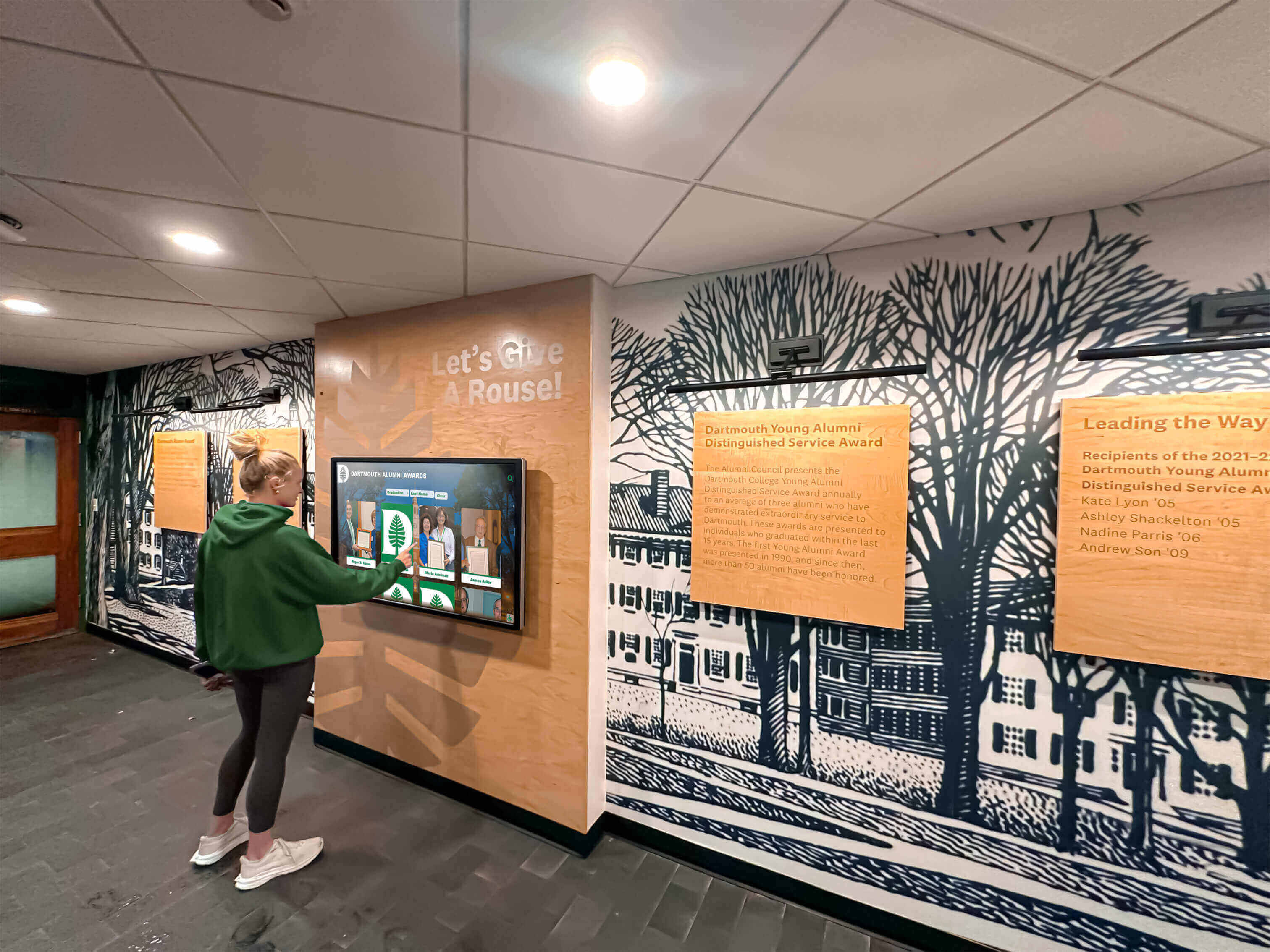
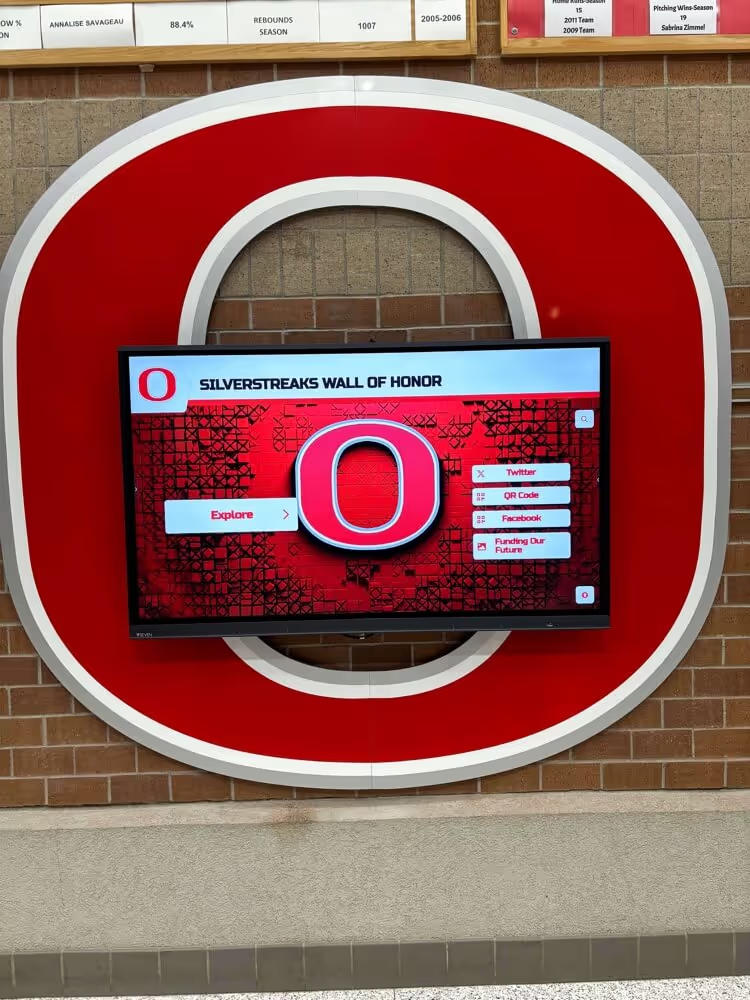
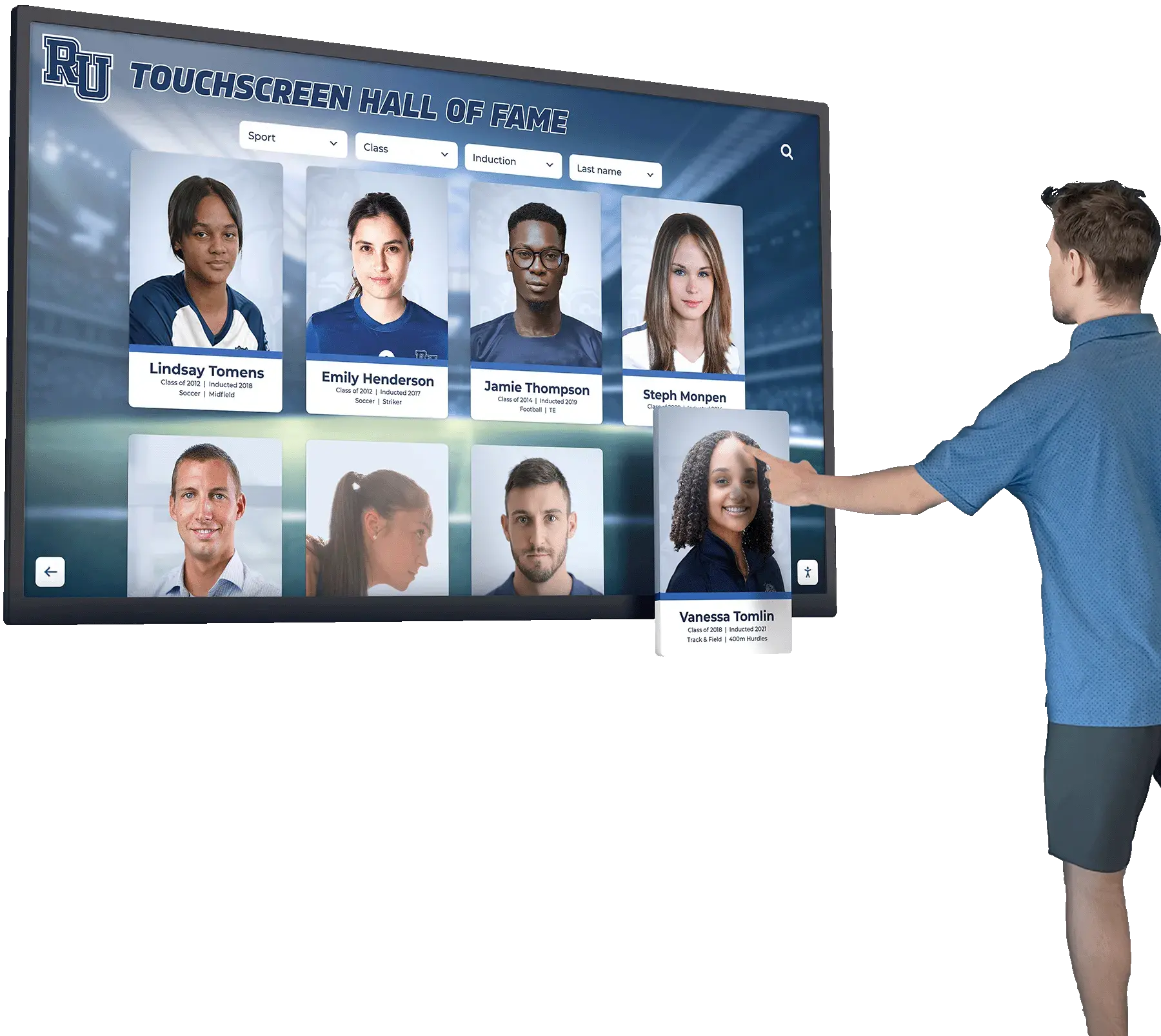
Interactive recognition displays allow students to independently explore program history—building connection to past competitors and inspiring future participation
Alumni Engagement for Forensics Programs
Forensics alumni are among the most professionally successful co-curricular alumni groups at many schools—lawyers, executives, politicians, journalists, and educators disproportionately come from speech and debate programs. A structured alumni engagement approach:
- Annual recognition of notable alumni who pursued careers where forensics training was foundational
- Alumni who return to judge tournaments or coach recognized formally at the end-of-season event
- An alumni contact database maintaining connection between current program and former participants
- Periodic communication—newsletter, social update—keeping alumni informed of current program achievements and milestones
This engagement creates a pipeline of mentors, judges, and financial supporters that sustains program resources and quality over time.
Building Long-Term Recognition Infrastructure
Sustainable forensics recognition requires systems and documentation, not just annual effort.
Documentation Essentials
- Season log: every tournament entered, results achieved, and individual placements documented
- Competitor roster by year: name, events competed, placements, NSDA points, and program contributions
- Photo archive: organized by season and tournament, backed up reliably
- Award archive: documentation of each competitive award received with context
Recognition Traditions Traditions give programs institutional identity across graduating classes:
- Perpetual trophies that pass annually between recipients, with names added each year
- Named awards honoring influential alumni, program founders, or mentors
- An annual program record tracking best-ever finish at state and national competition levels
- A senior class contribution: each graduating class adds something permanent to the program’s displayed history
For how wall display cases in schools create permanent, organized recognition infrastructure that serves programs across decades rather than seasons, display case design principles developed for athletic programs adapt directly to forensics contexts.
FAQ: Forensics Team Recognition
What makes forensics team recognition different from athletic recognition?
Forensics recognition shares the same structural elements as athletic recognition—individual achievement awards, team performance records, seasonal banquets, and permanent display—but must also account for event-specific recognition across a wide range of disciplines. Unlike sports with a single scoring metric, forensics encompasses events as diverse as policy debate and humorous interpretation, each requiring distinct skills. Effective forensics recognition names specific events and explains what they require, so that community members unfamiliar with forensics formats understand the depth of preparation involved.
How should schools display forensics team trophies and awards permanently?
Forensics awards belong in the same high-traffic display locations as athletic trophies—main corridors, school lobbies, and entrance areas. A dedicated display case in a main hallway, or an integrated academic achievement wall that includes forensics alongside other competition programs, gives forensics achievement the daily visibility that reinforces its institutional importance. For programs with decades of competitive history, interactive digital displays allow complete program histories—including every competitor, tournament, and award—to be accessible in a format that physical cases cannot accommodate.
What should a forensics team awards banquet include?
A well-structured forensics awards banquet should include: a season review covering tournament results and competitive highlights; competition achievement recognition naming specific qualifications and placements; event-specific individual awards distinguishing between speech and debate disciplines; character and contribution awards recognizing leadership, mentorship, and most improved; dedicated senior tribute; and formal recognition of coaches and advisors. Presentations gain impact from specificity—naming the exact tournament, event, and competitive context for each award rather than presenting generic recognition.
How do schools recognize multi-year forensics team achievement?
Multi-year recognition works best through cumulative systems: NSDA degree awards (which already track career point totals), hall of fame or wall of honor induction for exceptional program alumni, perpetual trophies passed annually between recipients with permanent name records, and digital displays that maintain complete career profiles for every competitor. A “program record” tradition—tracking the best-ever finish at each competition level—creates benchmarks that future competitors aspire to surpass and connect incoming students to the program’s competitive legacy.
What is the NSDA and why does it matter for forensics team recognition?
The National Speech and Debate Association (NSDA) is the primary governing body for competitive speech and debate in the United States, with member schools competing through regional and national circuits. The NSDA administers the National Tournament, the most prestigious competitive event in American scholastic forensics, and operates a points system that tracks cumulative competitive achievement across a student’s career, awarding degree recognitions at established thresholds. When schools formally recognize NSDA degree attainments and national tournament participation in their permanent displays, they connect program achievement to the nationally recognized standards of the sport.
Conclusion: Giving Forensics Teams the Recognition They Have Earned
Forensics team recognition that truly works treats speech and debate achievement with the same institutional seriousness that schools apply to athletic programs. The student who won five invitational tournaments and qualified for the national championship, the competitor who spent a summer building a policy case and delivered it with precision at state, the oratory writer who crafted a speech from original research into a nationally competitive argument—these students have earned recognition that matches their investment.
The recognition infrastructure for forensics programs doesn’t require starting from scratch. Award categories, banquet formats, display systems, and alumni engagement structures all have proven models from athletic and academic programs that adapt readily to the forensics context. What’s required is the institutional commitment to close the recognition gap—to place forensics trophies in main-corridor cases, to hang state championship banners in the same hallways as athletic banners, and to build the kind of digital recognition systems that make a program’s full competitive history permanently accessible.
Whether your forensics program is in its first competitive season or has sent teams to nationals for a decade, the recognition strategies in this guide provide a starting point for building the institutional culture that gives speech and debate students the acknowledgment their competitive preparation has earned.
Showcase Your Forensics Program's Champions Year-Round
Rocket Alumni Solutions builds interactive touchscreen recognition systems that give speech, debate, and argumentation programs the same permanent, high-visibility display as athletic halls of fame—so your forensics team's tournament championships, national qualifications, and career achievements stay visible to students, families, and visitors every single day.
Explore Digital Recognition Solutions