



Golf swing fundamentals form the foundation upon which all successful golf games are built. For high school and college golf coaches working with student-athletes, teaching proper swing mechanics from the ground up creates consistency, power, and long-term development that translates to competitive success. When coaches systematically break down the golf swing into teachable components—from grip and stance through backswing, downswing, and follow-through—they give players the technical framework needed to develop repeatable swings that perform under tournament pressure.
Yet many beginning golfers struggle with inconsistency because they’ve never learned proper fundamentals. Self-taught swings develop compensations and bad habits, isolated instruction on individual swing components fails to connect the full sequence, quick-fix tips create temporary improvement without lasting change, and lack of structured practice prevents proper motor pattern development. Meanwhile, coaches without systematic teaching approaches struggle to diagnose swing flaws and build progression pathways for players at different skill levels.
This comprehensive guide breaks down golf swing fundamentals into clear, teachable steps—providing coaches with the technical knowledge, teaching progressions, and practice structures needed to develop powerful, repeatable swings in student-athletes from beginners through advanced competitors.
Golf swing instruction requires both technical precision and patient skill development. The most effective coaches understand that building proper fundamentals takes time, requires systematic progression from basic to advanced concepts, and demands consistent practice reinforcing correct movement patterns. Schools with successful golf programs invest in structured coaching education, recognition systems celebrating player development, and facilities supporting year-round skill improvement.

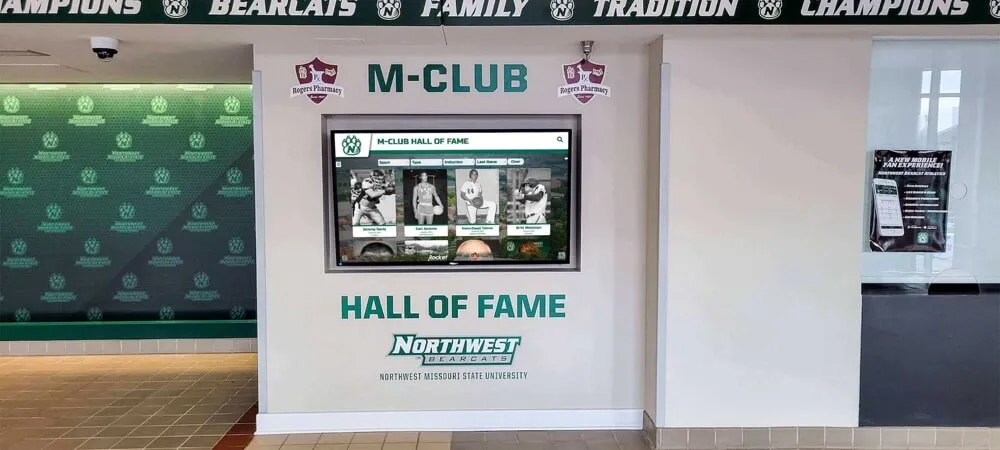
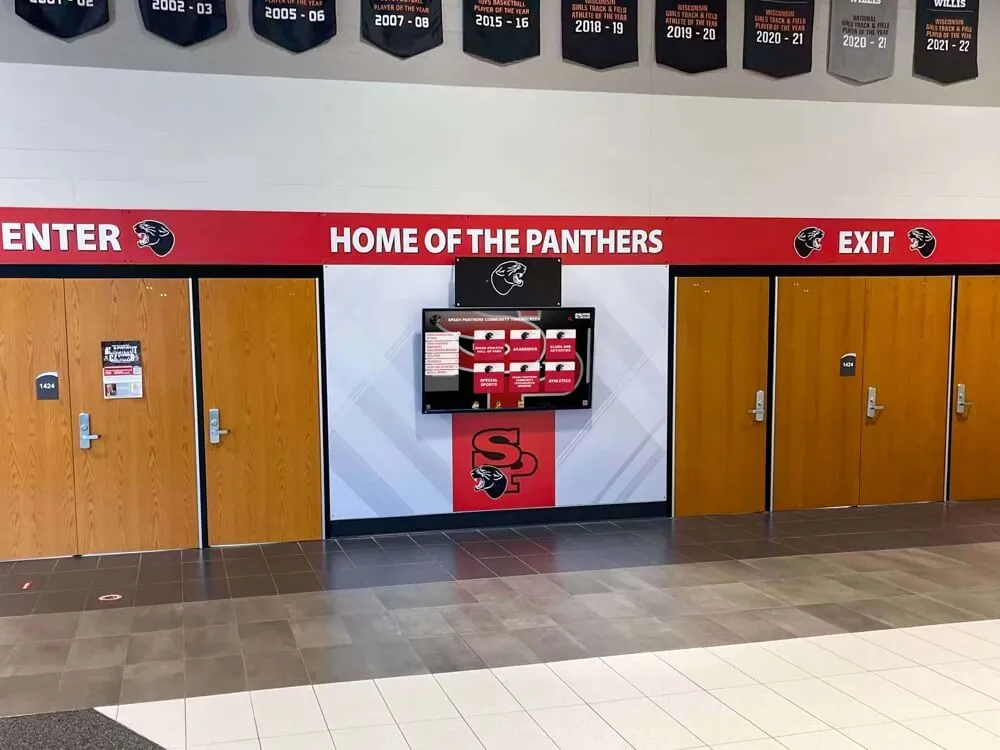
Recognition displays celebrating athletic excellence motivate golf teams to commit to fundamental skill development
Understanding the Complete Golf Swing Sequence
Before breaking down individual components, coaches must understand the golf swing as an integrated athletic movement.
The Golf Swing as an Athletic Motion
The golf swing shares biomechanical principles with other rotational sports:
Kinematic Sequence and Energy Transfer
- Movement initiates from ground up through kinetic chain
- Lower body generates power through weight transfer and rotation
- Core transfers energy from legs to upper body
- Arms and club accelerate through release of stored energy
- Proper sequencing maximizes clubhead speed at impact
Similarities to Other Athletic Movements
- Baseball swing’s rotational mechanics and weight transfer
- Tennis serve’s kinetic chain and sequential acceleration
- Throwing motion’s ground-up power generation
- Track and field’s explosive hip rotation movements
- Basketball shooting’s coordinated full-body mechanics
According to biomechanics research, elite golfers generate 80% of swing power from lower body and core rotation, with only 20% coming from arm and hand action. This fundamental principle contradicts many beginning golfers’ instinct to swing with arms alone.
The Seven Phases of the Golf Swing
Professional instruction breaks the swing into distinct phases:
Pre-Swing Fundamentals
- Setup and Address: Grip, stance, posture, alignment, ball position
- Takeaway: Initial club movement establishing swing plane
Swing Execution 3. Backswing: Rotation and weight transfer loading power 4. Transition: Direction change at top of swing 5. Downswing: Sequential acceleration toward impact 6. Impact: Club meets ball with proper angle and path 7. Follow-Through: Completion of swing maintaining balance

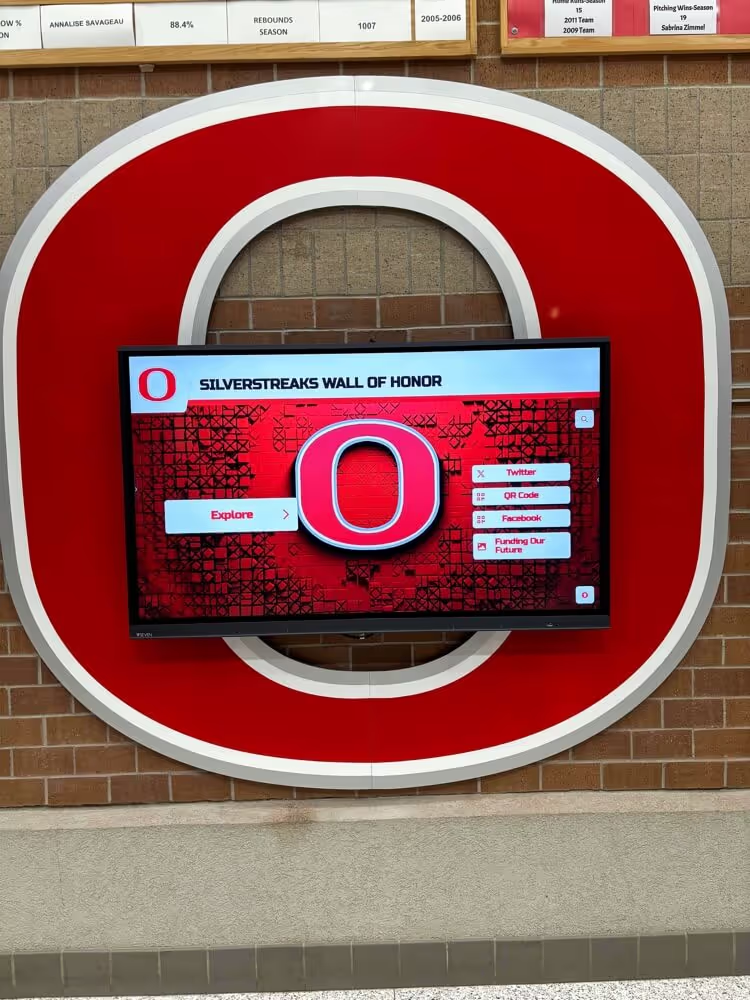
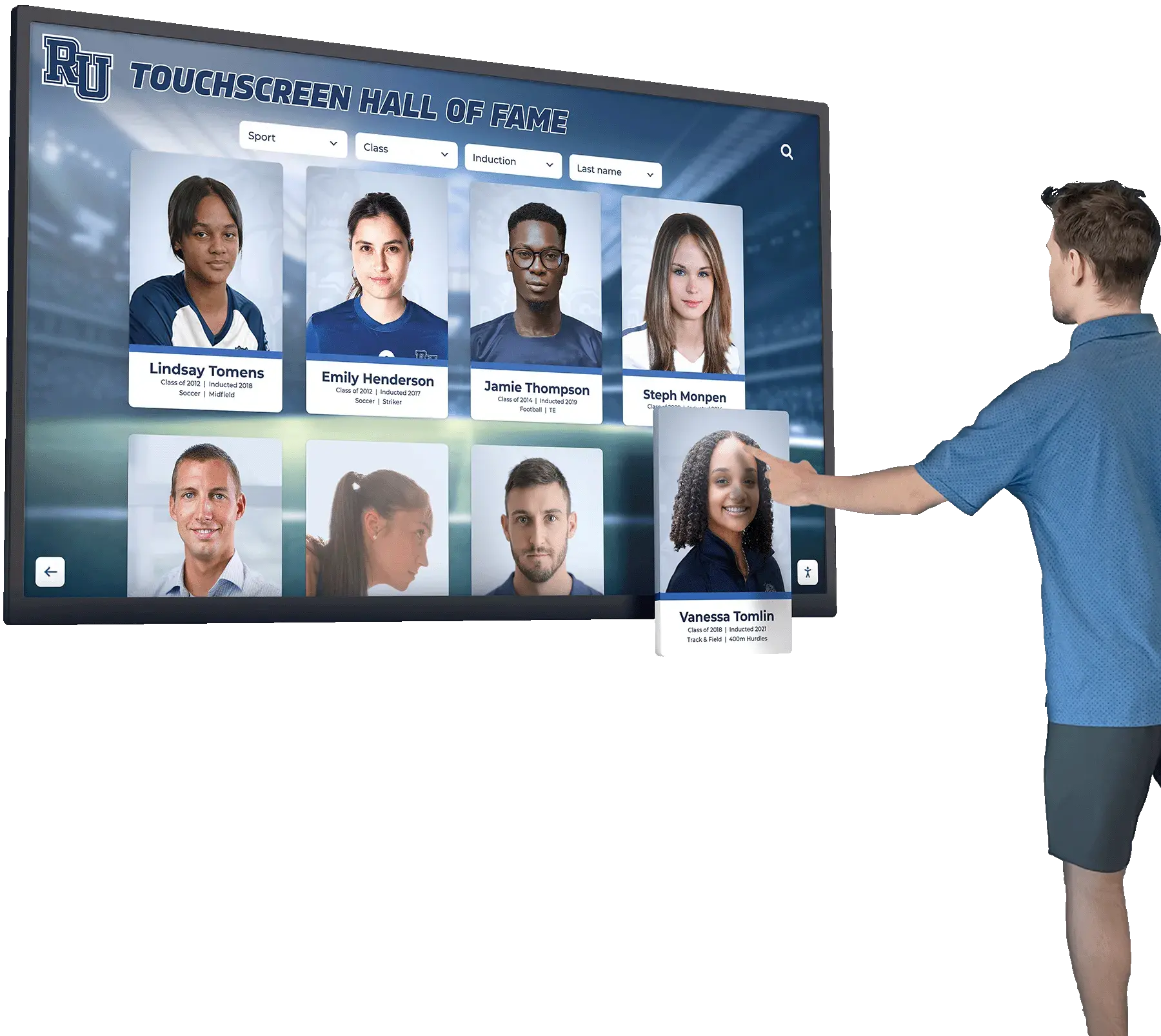
Systematic skill development in athletics requires breaking complex movements into teachable fundamentals
Each phase builds upon the previous, making proper sequencing essential. Flaws in early phases (setup, takeaway) compound through the swing, while late-phase compensations (impact, follow-through) often indicate earlier mechanical problems.
Fundamental #1: The Proper Golf Grip
The grip represents the only physical connection between golfer and club, making it the most fundamental element coaches must teach.
The Three Standard Grip Styles
Each grip style offers different advantages for different players:
Overlapping Grip (Vardon Grip)
- Most common among professional golfers
- Right pinky finger overlaps left index finger (for right-handed golfers)
- Promotes unified hand action and control
- Best for players with larger hands
- Reduces tendency for right hand to overpower left
Interlocking Grip
- Right pinky interlocks with left index finger
- Popular among players with smaller hands
- Creates very secure connection between hands
- Used by many tour professionals including major champions
- Excellent for beginning players learning hand unity
Ten-Finger Grip (Baseball Grip)
- All fingers on the club, no overlap or interlock
- Maximum surface contact with grip
- Easiest for absolute beginners to learn
- Can generate good power for players with less hand strength
- May allow hands to work independently (both advantage and disadvantage)
Grip Fundamentals That Apply to All Styles
Regardless of style chosen, certain grip principles remain constant:
Hand Position and Pressure
- Grip in fingers, not palms (creates wrist hinge capability)
- Left hand (lead hand) thumb points slightly right of center on grip
- Right hand (trail hand) palm faces target
- “V” formed by thumb and index finger points toward trail shoulder
- Firm but not tense grip pressure (5-6 on scale of 10)
- Consistent pressure throughout swing
Neutral Grip Position
- See 2-3 knuckles on lead hand at address
- Clubface square to target line
- Hands work together as single unit
- Neither excessively strong (rotated right) nor weak (rotated left)
- Promotes natural clubface rotation through impact
Common Grip Errors Coaches Must Correct
- Gripping in palms rather than fingers (reduces wrist hinge)
- Excessive grip pressure creating tension
- Hands working independently rather than unified
- Grip too strong (promotes hooks) or too weak (promotes slices)
- Changing grip pressure during swing
Learn more about systematic skill development in athletic programs through student awards recognition programs that celebrate progress.
Teaching Progression for Grip Fundamentals
Effective coaches use systematic grip instruction:
Step 1: Grip Education
- Demonstrate proper grip on club
- Explain hand positions and pressure
- Show common grip styles and their characteristics
- Allow players to feel different grips
Step 2: Supervised Practice
- Players grip club under coach observation
- Immediate feedback on hand position
- Check grip from multiple angles
- Ensure consistent pressure
Step 3: Repetition and Muscle Memory
- Players re-grip club multiple times per practice
- Grip club without looking (developing feel)
- Maintain grip through practice swings
- Check grip alignment frequently
Step 4: Grip Maintenance
- Regular grip checks during all practice sessions
- Address grip changes before working on other elements
- Understand that grip changes feel uncomfortable initially
- Commit to proper grip for 2-3 weeks before assessing results
According to teaching professionals, grip changes require 300-500 repetitions before feeling natural, and 3-4 weeks of consistent practice before becoming automatic.
Fundamental #2: Stance, Posture, and Alignment
Proper setup position determines swing plane, balance, and power potential.
Athletic Stance Fundamentals
Golf stance shares principles with defensive positions in other sports:
Foot Position and Width
- Feet shoulder-width apart for mid-irons
- Slightly wider for driver (more rotational stability)
- Slightly narrower for short irons (more precision)
- Weight distributed on balls of feet
- Toes slightly flared outward (aids rotation)
Knee Flex and Lower Body Position
- Slight knee flex creating athletic ready position
- Weight centered over balls of feet
- Hips back as if sitting on high stool
- Lower body stable but not rigid
- Ready to initiate rotational movement
Spine Angle and Posture
- Spine tilted forward from hips (not rounded)
- Back relatively straight, not hunched
- Head behind ball at address
- Arms hanging naturally from shoulders
- Slight spine tilt away from target (driver setup)
Similar athletic positioning principles apply across sports, as discussed in comprehensive athletic recognition approaches for student achievement.
Ball Position and Alignment Fundamentals
Ball position relative to stance changes with club selection:
Standard Ball Position Guidelines
- Driver: Inside left heel (forward in stance)
- Fairway woods: 1-2 inches behind driver position
- Mid-irons (5-7 iron): Center of stance
- Short irons (8-PW): Slightly back of center
- Wedges: Back-center of stance
Alignment Checkpoints
- Feet, hips, and shoulders parallel to target line
- Club face aimed directly at target
- Body aligned slightly left of target (for right-handed golfer)
- Railroad track alignment: body on one track, ball-to-target on other
- Use alignment aids during practice
Posture Verification Checklist
- Spine tilted forward from hips
- Arms hanging freely from shoulders
- Weight on balls of feet
- Knees flexed comfortably
- Head positioned behind ball
- Can draw straight line from shoulders through hips to feet

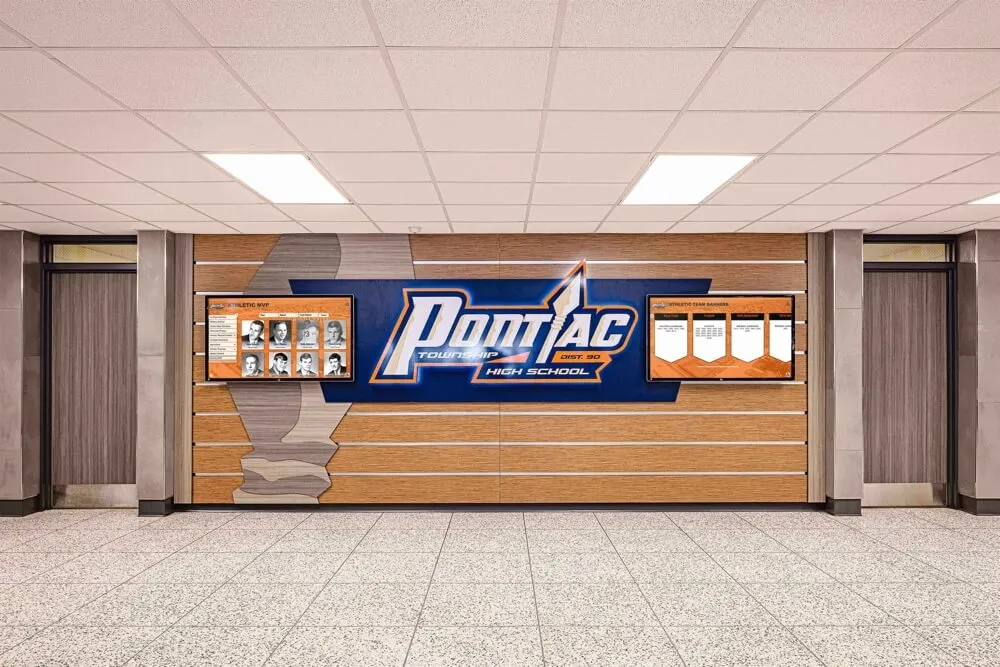
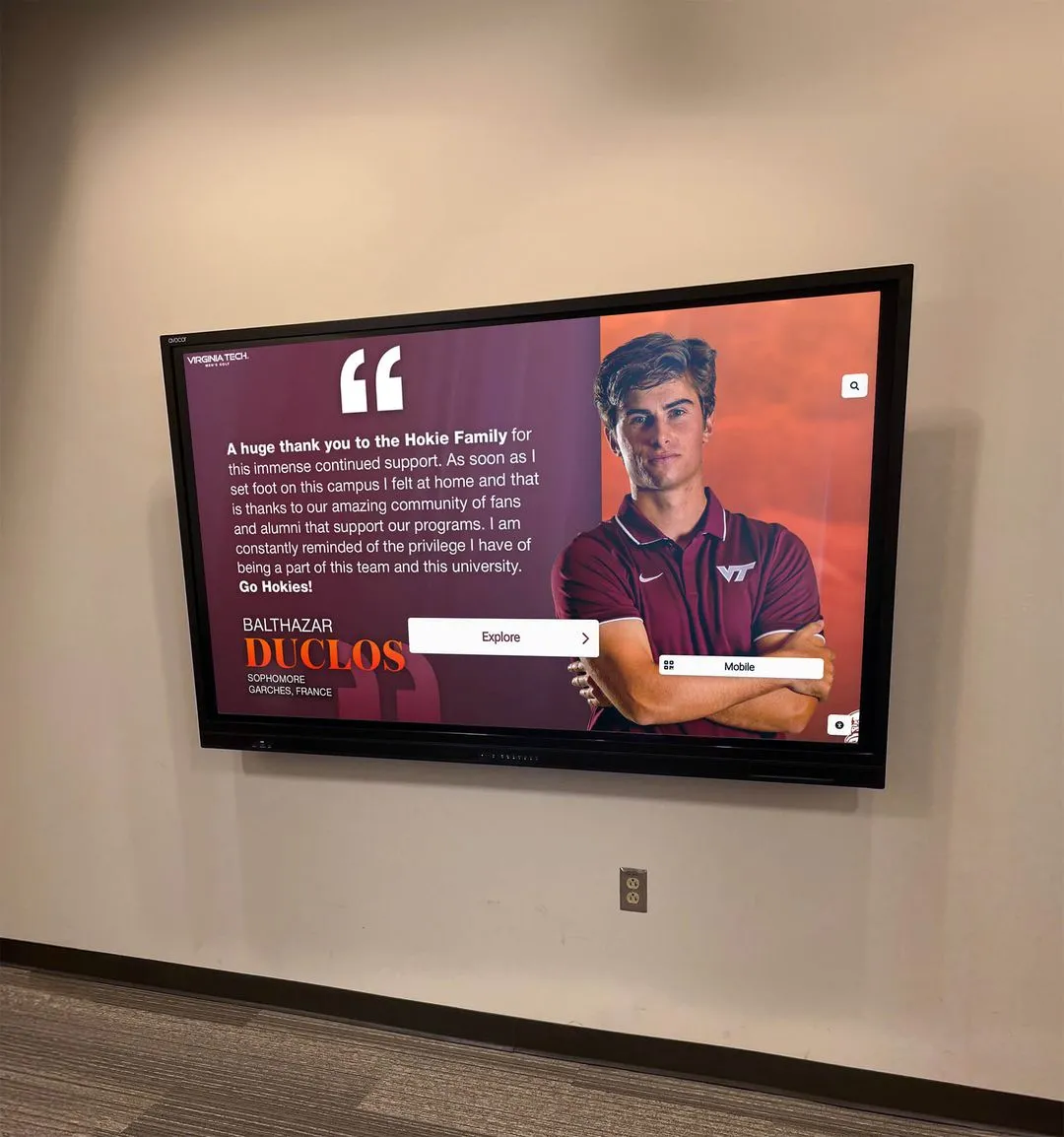
Championship programs build excellence through systematic attention to fundamentals and consistent recognition of achievement
Common Setup Errors and Corrections
Coaches must identify and correct these frequent mistakes:
Setup Error: Standing Too Upright
- Problem: Reduces swing arc and power
- Cause: Discomfort with proper forward tilt
- Correction: “Sit down” into stance, hinge from hips
- Drill: Place hand on lower back, push hips back while maintaining straight spine
Setup Error: Weight on Heels
- Problem: Prevents proper weight transfer and rotation
- Cause: Too much knee flex or improper balance
- Correction: Feel weight on balls of feet, lift heels slightly to find balance point
- Drill: Rock forward onto toes, back onto heels, find centered position
Setup Error: Poor Alignment
- Problem: Swinging at perceived target rather than actual target
- Cause: Not using alignment aids or checkpoints
- Correction: Lay alignment stick on ground parallel to target line
- Drill: Use two clubs forming railroad tracks for feet and ball-target line
Fundamental #3: The Takeaway and Backswing
Proper backswing mechanics load power while maintaining swing plane and balance.
One-Piece Takeaway Fundamentals
The first 12 inches of club movement establish the entire swing:
Connected Takeaway Mechanics
- Shoulders, arms, and club move together as unit
- No independent hand or wrist action initially
- Triangle formed by arms and shoulders stays intact
- Club stays in front of body center
- Low and slow initial movement (not jerky or quick)
Weight Transfer Beginning
- Slight pressure shift to inside of back foot
- Maintains balance and stability
- Not dramatic lateral movement
- Foundation for power generation
- Engages large muscles (not just arms)
First Move Checkpoint
- When club shaft is parallel to ground, shaft points at target line
- Club face slightly open (toe up)
- Hands still in front of chest
- Shoulder turn beginning
- No wrist hinge yet (comes later in backswing)
Full Backswing Mechanics
Complete backswing positions body to deliver maximum power:
Shoulder Rotation Requirements
- 90-degree shoulder turn for full swing
- Left shoulder (lead shoulder) turns under chin
- Maintains spine angle established at address
- Core muscles engaged through rotation
- No excessive lateral movement (stay “in the box”)
Hip Rotation and Resistance
- 45-degree hip rotation (half of shoulder rotation)
- Creates “X-factor” (differential between hip and shoulder turn)
- Lower body resists while upper body rotates
- Builds potential energy like coiling spring
- Right knee (back knee) maintains flex
Arm Position and Wrist Hinge
- Left arm (lead arm) relatively straight but not rigid
- Right elbow (trail elbow) stays relatively close to body
- Wrists hinge naturally as club rises
- Club shaft approximately parallel to ground at top
- Hands positioned above trail shoulder
Weight Distribution at Top of Backswing
- 70-80% of weight on inside of back foot
- Back knee maintains flex (not straightened)
- Weight loaded but balanced
- Pressure on inside of back foot (not outside)
- Ready to shift weight forward in transition
Explore how structured skill progressions translate to other athletic contexts in digital hall of fame solutions that celebrate progressive achievement.
Backswing Length Considerations
Not all golfers need identical backswing length:
Factors Determining Backswing Length
- Flexibility and physical capabilities
- Club being used (driver vs. wedge)
- Shot requirements (power vs. control)
- Swing speed and tempo preferences
- Individual biomechanical characteristics
Shorter Backswing Advantages
- Increased accuracy and consistency
- Easier to maintain positions
- Better for players with limited flexibility
- Reduces timing challenges
- Still generates adequate power with proper mechanics
Full Backswing Benefits
- Maximum power potential
- Utilizes complete range of motion
- More natural for flexible players
- Greater clubhead speed potential
- Requires excellent timing and sequencing
According to biomechanics studies, three-quarter backswings often produce optimal combinations of power, accuracy, and consistency for developing players.
Fundamental #4: Transition and Downswing Sequence
The transition from backswing to downswing represents the most critical moment in the golf swing.
The Transition Phase
Proper transition initiates the kinetic sequence generating power:
Lower Body Initiates Downswing
- Movement starts with subtle lateral weight shift
- Lead hip begins rotating toward target
- Lower body moves while upper body still completing backswing
- Creates separation between lower and upper body
- Shallow club approaches ball from inside
Common Transition Error: Casting
- Problem: Releasing wrists too early from top
- Result: Loss of power, inconsistent contact
- Cause: Upper body initiating downswing instead of lower body
- Correction: Feel “bump” of lower body starting downswing
- Drill: Hit balls with feet together focusing on sequencing
Maintaining Lag in Downswing
- Angle between lead arm and club shaft maintained
- Wrist hinge preserved through early downswing
- Club “lags” behind hand position
- Power stored for release through impact
- Prevents early release and loss of speed
Downswing Sequence and Kinematic Chain
Proper sequencing maximizes energy transfer:
Sequential Acceleration Order
- Hips: Rotate toward target starting downswing
- Torso: Follows hip rotation with slight delay
- Shoulders: Rotate after torso begins moving
- Arms: Accelerate following shoulder rotation
- Hands and Club: Last to accelerate (fastest speed at impact)
Ground Force and Weight Transfer
- Push off inside of back foot
- Weight transfers to front foot
- Lead leg begins straightening through impact
- Weight shift completes before impact
- 80-90% weight on front foot at finish
Maintaining Posture Through Downswing
- Spine angle established at address maintained
- No “standing up” or “dipping down”
- Head stays behind ball position
- Right shoulder (trail shoulder) drops slightly
- Steady head position (not excessive lateral movement)
Learn about systematic approaches to athletic development in interactive digital displays that track progressive achievement.
Path and Plane Fundamentals
Club must approach ball on correct path and plane:
Inside-to-Square-to-Inside Path
- Club approaches from inside target line
- Square to target at impact
- Returns inside target line after impact
- Produces slight draw ball flight
- Optimal path for power and consistency
Swing Plane Maintenance
- Club follows same plane established in backswing
- Maintains relationship between club and spine angle
- Steeper plane for irons, shallower for driver
- On-plane positioning produces solid contact
- Off-plane swings require compensations
Club Face Control Through Impact
- Club face square to target at impact
- Ball flight primarily determined by face angle
- Path influences ball start direction and curve
- Proper grip and wrist positions control face
- Practice drills develop face awareness
Fundamental #5: Impact Position and Ball Striking
Impact represents the moment of truth where all swing fundamentals converge.
Key Impact Position Checkpoints
Professional instruction identifies these critical impact positions:
Weight Distribution at Impact
- 70-80% weight transferred to lead side
- Pressure on inside of lead foot
- Trail heel beginning to lift
- Hips rotated 30-40 degrees open to target
- Upper body still “behind” ball
Body Position Through Impact
- Spine angle maintained from address
- Head behind ball position
- Lead arm and club shaft form straight line (irons)
- Hands ahead of club head (forward shaft lean)
- Shoulders beginning to open toward target
Club Position at Impact
- Club face square to target line
- Divot starts at or just after ball position (irons)
- Club approaching from inside path
- Handle ahead of club head
- Proper angle of attack for club being used
Common Impact Flaws
- Weight remaining on back foot (topped or thin shots)
- Hands behind ball (scooping action, inconsistent contact)
- Standing up through impact (thin shots, loss of power)
- Over-rotation of body (pulls, hooks)
- Casting club head (early release, weak impact)

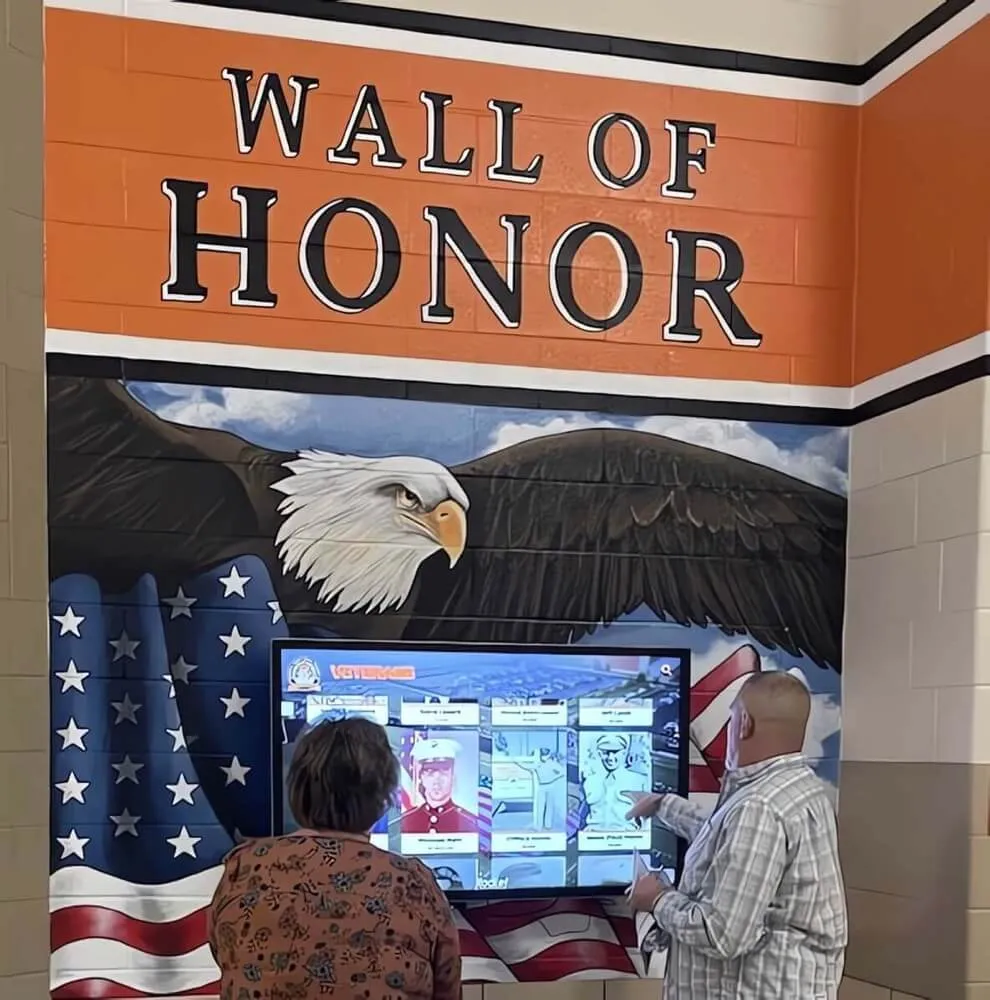
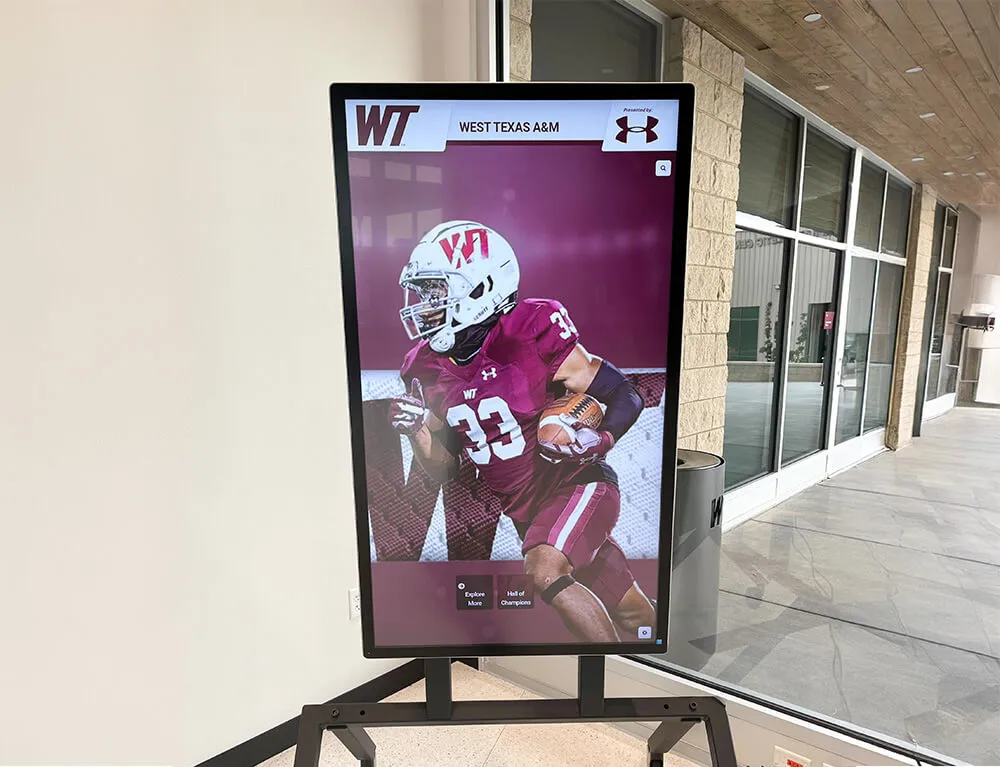
Excellence in athletics requires commitment to fundamental skill development and recognition of achievement milestones
Ball Contact and Compression
Proper impact creates optimal energy transfer:
Ball Compression Mechanics
- Club head speed at impact compresses ball
- Ball compression against club face creates distance
- Center contact on club face maximizes efficiency
- Proper angle of attack optimizes launch conditions
- Sweet spot contact produces best results
Angle of Attack by Club Type
- Driver: Slightly upward attack angle (+2 to +5 degrees)
- Fairway woods: Level or slightly descending
- Irons: Descending attack angle (divot after ball)
- Wedges: Steeper descending attack
- Putter: Level to slightly ascending
Impact Sound and Feel
- Solid contact produces distinct “click” sound
- Center strikes feel effortless
- Off-center hits feel heavy or harsh
- Feedback develops through practice repetitions
- Awareness improves with experience
Fundamental #6: Follow-Through and Finish Position
Complete follow-through indicates proper swing sequencing and balance.
Follow-Through Mechanics
Proper finish position reveals swing quality:
Full Extension Through Ball
- Arms extend toward target after impact
- Release of stored energy through ball
- Club head accelerating through impact zone
- No deceleration before contact
- Weight continuing forward onto lead foot
Body Rotation and Balance
- Hips fully rotated facing target
- Chest facing target or slightly past
- Back foot on toe (heel completely off ground)
- Weight 95% on lead foot
- Balanced finish position held for 2-3 seconds
Finish Position Checkpoints
- Hands finish high near lead shoulder
- Club wraps around body
- Belt buckle facing target
- Back shoulder closer to target than front shoulder
- Balanced on lead foot without swaying or falling
Finish Position Diagnosis
Finish reveals swing flaws requiring attention:
Incomplete Finish (Hands Low)
- Indicates: Deceleration through impact, lack of rotation
- Common cause: Fear of missing, insufficient body turn
- Correction: Practice full swings with exaggerated high finish
- Drill: Hold finish position for 5 seconds each swing
Loss of Balance in Finish
- Indicates: Excessive lateral movement, poor weight transfer
- Common cause: Too much lower body slide, improper sequencing
- Correction: Practice with narrow stance focusing on rotation
- Drill: Hit balls with feet together developing rotational balance
Falling Back onto Trail Foot
- Indicates: Reverse weight shift, scooping action
- Common cause: Trying to “help” ball into air
- Correction: Feel weight moving forward through impact
- Drill: Hit balls with trail foot pulled back (step-through drill)
Discover how comprehensive tracking systems celebrate progressive development in all-state record board recognition programs.
Building Practice Routines for Fundamental Development
Structured practice reinforces proper swing mechanics.
Fundamental-Focused Practice Structure
Effective coaches design practices emphasizing skill building:
Practice Session Breakdown
- Warm-up: 10-15 minutes (stretching, light swings)
- Fundamental drills: 30-40 minutes (specific skill work)
- Full swing practice: 20-30 minutes (integration)
- Short game: 20-30 minutes (putting, chipping)
- Cool-down: 10 minutes (assessment, stretching)
Fundamental Drill Progression
- Week 1-2: Grip and setup exclusively
- Week 3-4: Takeaway and backswing mechanics
- Week 5-6: Transition and downswing sequence
- Week 7-8: Impact position and ball striking
- Week 9-10: Full swing integration and refinement
Repetition Requirements
- 50-100 practice swings per session (without ball)
- 75-100 balls per practice session
- 3-4 practice sessions per week minimum
- 30-60 days for fundamental changes to become automatic
- Consistent practice more valuable than marathon sessions
Key Practice Drills for Each Fundamental
Specific drills develop individual swing components:
Grip Drills
- Re-grip club 10 times focusing on proper positions
- Grip club with eyes closed developing feel
- Swing with focus on maintaining consistent grip pressure
- Hit balls pausing at top to check grip hasn’t changed
Setup and Alignment Drills
- Use alignment sticks for every practice swing
- Set up, step away, re-setup checking consistency
- Have coach verify posture from multiple angles
- Video analysis of setup position
- Mirror work checking posture and spine angle
Backswing Drills
- Slow-motion backswings focusing on positions
- Stop at top of backswing holding position
- Half-swings focusing on proper rotation
- One-piece takeaway drill (triangle drill)
- Right arm only backswing (feeling proper positions)
Downswing and Impact Drills
- Impact bag practice (proper impact positions)
- Punch shots (low follow-through emphasizing impact)
- Feet-together swings (sequencing and balance)
- Hitting off uphill/downhill lies (weight transfer)
- Split-hand grip drill (preventing casting)
Follow-Through Drills
- Hold finish position for 5 seconds each swing
- Exaggerated high finish positions
- One-leg finish balance drill
- Step-through drill (trail foot steps forward after impact)
- Full-speed practice swings without ball
Similar systematic practice structures apply across athletic contexts, as explored in wrestling state championship preparation and recognition.
Video Analysis and Feedback
Modern technology enhances fundamental instruction:
Effective Video Analysis
- Record swings from down-the-line and face-on views
- Compare to model swings at similar skill levels
- Focus on one fundamental at a time
- Create before/after comparisons tracking progress
- Use slow-motion analysis for specific positions
Coach Feedback Protocols
- Provide one or two points maximum per session
- Use positive reinforcement with corrections
- Demonstrate proper positions physically
- Allow sufficient practice time before next feedback
- Track progress through documentation
Self-Assessment Skills
- Players learn to identify own swing characteristics
- Feel vs. real (what swing feels like vs. actual positions)
- Develop kinesthetic awareness
- Understand cause-and-effect relationships
- Build independent practice capabilities
Common Swing Faults and Fundamental Corrections
Understanding typical errors helps coaches diagnose and correct problems.
Slice: The Most Common Ball Flight Issue
Slicing (ball curving dramatically left-to-right for right-handed golfer) stems from fundamental errors:
Primary Causes
- Weak grip (hands rotated too far left on club)
- Open club face at impact
- Out-to-in swing path
- Insufficient body rotation
- Over-the-top transition move
Fundamental Corrections
- Strengthen grip (see more knuckles on lead hand)
- Check alignment (aiming left compounds problem)
- Work on inside-to-out swing path
- Increase hip and shoulder rotation
- Initiate downswing with lower body, not shoulders
Slice Fix Progression
- Correct grip to neutral or slightly strong position
- Practice closed stance promoting inside-out path
- Develop proper rotation through impact
- Use alignment aids ensuring proper setup
- Hit intentional draws with practice drills
Hook: Excessive Right-to-Left Ball Flight
Hooks indicate opposite problems from slices:
Primary Causes
- Too-strong grip (hands rotated too far right)
- Closed club face at impact
- Excessive in-to-out swing path
- Too much hand and wrist rotation
- Insufficient body rotation (hands flip over)
Fundamental Corrections
- Weaken grip toward neutral position
- Ensure proper body rotation through impact
- Check ball position (too far back promotes hooks)
- Reduce excessive hand action through impact
- Maintain structure through impact (no early release)
Topped Shots and Thin Contact
Hitting top of ball or making thin contact indicates setup or swing flaws:
Primary Causes
- Rising up through impact (losing spine angle)
- Weight remaining on back foot
- Ball position too far forward
- Trying to “help” ball into air
- Looking up too early
Fundamental Corrections
- Maintain spine angle established at address
- Feel weight moving to lead foot through impact
- Check ball position for club being used
- Trust loft of club (ball goes up because of club design)
- Keep head steady through impact
Fat Shots and Heavy Contact
Hitting ground before ball wastes energy and reduces distance:
Primary Causes
- Ball position too far back in stance
- Excessive downward attack angle
- Weight hanging on back foot
- Casting club from top of swing
- Dipping down through impact
Fundamental Corrections
- Move ball slightly forward in stance
- Shallow angle of attack (sweep, don’t dig)
- Ensure proper weight transfer to front foot
- Maintain wrist hinge longer into downswing
- Keep posture steady (don’t dip or rise)
Fitting Fundamentals to Individual Students
Not all golfers should swing identically—individual characteristics matter.
Physical Considerations
Body type and capabilities influence optimal swing mechanics:
Height Considerations
- Taller players: More upright swing plane, wider stance
- Shorter players: Flatter swing plane, standard stance
- Adjust posture ensuring proper spine angle regardless of height
- Club fitting essential for optimal positioning
Flexibility Factors
- Limited flexibility: Shorter backswing, more compact motion
- High flexibility: Full backswing potential, watch for over-rotation
- Age-appropriate expectations (younger vs. older players)
- Individual mobility assessments guide instruction
Strength and Speed Characteristics
- Stronger players: May handle heavier/stiffer clubs, fuller swings
- Developing players: Lighter/more flexible clubs, controlled swings
- Match swing length and speed to current capabilities
- Progress gradually as strength develops
Learning Style Adaptations
Effective coaches adapt instruction to individual learning preferences:
Visual Learners
- Demonstrate proper positions extensively
- Use video analysis frequently
- Provide visual models and images
- Draw lines and angles showing positions
- Show rather than tell
Kinesthetic Learners
- Emphasize feel and movement
- Use physical manipulation to place in positions
- Develop internal awareness of positions
- Lots of repetition building motor patterns
- Minimize verbal overload
Analytical Learners
- Explain biomechanical principles
- Provide detailed technical explanations
- Use data and statistics showing progress
- Discuss cause-and-effect relationships
- Appreciate systematic progression
Learn more about recognizing individual progress in diverse learners through touchscreen yearbook displays celebrating student achievement.
Mental Fundamentals and Course Management
Golf swing fundamentals extend beyond physical mechanics to mental approach.
Pre-Shot Routine Development
Consistent pre-shot routines enhance performance:
Pre-Shot Routine Components
- Stand behind ball visualizing shot
- Select target and commit to club selection
- Take practice swing rehearsing feel
- Approach ball and align club face to target
- Set stance and alignment
- Final look at target
- Initiate swing with no hesitation
Routine Benefits
- Creates consistency in setup
- Reduces anxiety and overthinking
- Focuses attention on process not results
- Develops trigger for muscle memory
- Maintains tempo and rhythm
Routine Development
- Establish routine during practice
- Use same routine for every shot
- Keep routine relatively brief (20-30 seconds)
- Maintain routine under pressure
- Adjust as needed but stay consistent
Managing Practice vs. Performance
Golf fundamentals manifest differently in practice and competition:
Practice Mindset
- Focus on specific mechanical improvements
- Acceptable to isolate swing components
- Experimentation and exploration encouraged
- Learn from mistakes without score pressure
- Build long-term capabilities
Performance Mindset
- Trust swing developed in practice
- Focus on target and strategy, not mechanics
- Commit fully to each shot
- Accept results without mid-round adjustments
- Execute fundamentals automatically
Bridging Practice and Performance
- Simulation practice (competitive scenarios)
- On-course practice rounds with consequences
- Gradual transition from mechanical to automatic
- Pre-tournament preparation routines
- Develop both technical skills and mental toughness
Recognizing Golf Achievement and Building Program Culture
Successful golf programs celebrate fundamental skill development and competitive achievement.
Creating Recognition Systems for Golf Programs
Golf team recognition extends beyond low-score awards:
Achievement Recognition Categories
- Individual tournament victories and placements
- Season-long scoring averages and improvement
- State and regional championship qualifications
- Academic all-conference and all-state honors
- Most improved player awards
- Commitment and practice excellence recognition
Program History Preservation
- All-time scoring records and achievements
- Championship team rosters and scores
- Individual career accomplishments
- Alumni golf achievement tracking
- Coach milestone recognition
Modern Recognition Solutions
Schools are increasingly turning to digital recognition platforms that celebrate golf achievements alongside other athletic accomplishments. Interactive touchscreen displays enable:
- Comprehensive player profiles with statistics and achievements
- Season highlights and championship documentation
- Skill development tracking and progress visualization
- Integration with other school athletic programs
- Year-round visibility celebrating golf excellence
- Alumni connection to current program
These recognition systems motivate student-athletes to commit to fundamental skill development by celebrating both competitive results and progressive improvement. When golf teams see their achievements permanently documented and displayed, it reinforces the value of dedicating practice time to mastering swing fundamentals.
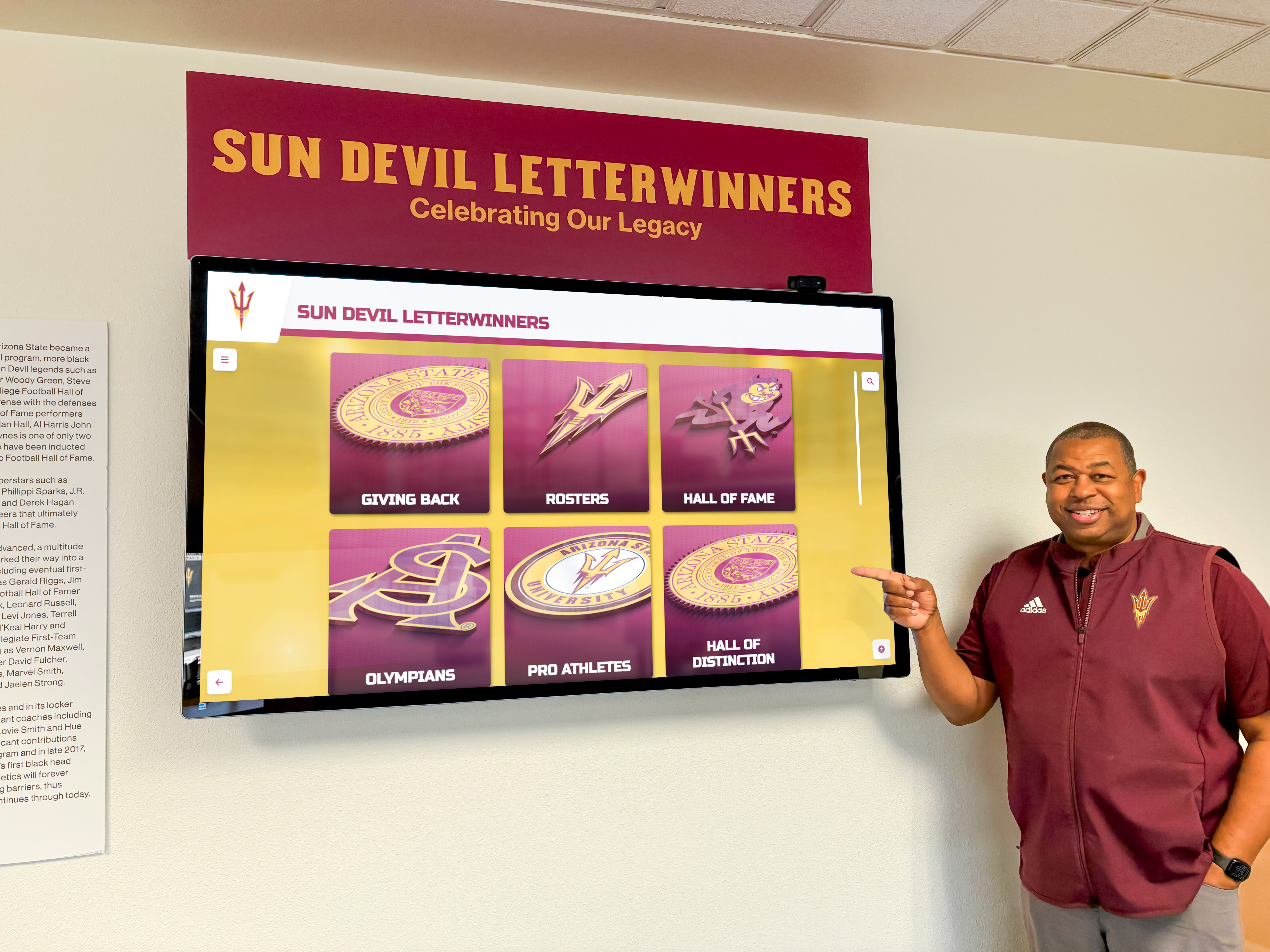
Permanent recognition displays honor athletic achievement while inspiring continued commitment to excellence
Building Practice Culture Around Fundamentals
Championship golf programs develop cultures emphasizing systematic skill development:
Team Practice Standards
- Regular attendance and punctuality expectations
- Structured practice with fundamental focus
- Peer accountability and support
- Coach observation and individual instruction
- Progressive skill assessments
Individual Practice Commitments
- Off-season practice requirements
- Range time with specific fundamental focus
- On-course playing experience
- Short game and putting practice
- Physical conditioning supporting golf performance
Program Values Communication
- Emphasis on long-term development over immediate results
- Celebration of improvement and effort
- Recognition of commitment to fundamentals
- Team support for individual skill building
- Integration of practice excellence with competitive success
Long-Term Development and Progression
Golf swing fundamentals provide foundation for continuous improvement.
Progression from Beginner to Advanced
Systematic skill development follows predictable pathways:
Beginning Golfer Focus (First Year)
- Master proper grip, setup, and alignment
- Develop consistent contact and ball striking
- Learn basic full swing mechanics
- Introduction to short game fundamentals
- Course management and rules education
Intermediate Golfer Development (Years 2-3)
- Refine swing mechanics for consistency
- Develop reliable pre-shot routine
- Expand shot variety (draws, fades, trajectory control)
- Advanced short game skills
- Course strategy and competitive experience
Advanced Golfer Refinement (Years 3+)
- Fine-tune swing for optimal performance
- Develop complete shot repertoire
- Master pressure situations
- Advanced course management
- Competitive tournament experience
Ongoing Development
- Continuous refinement of fundamentals
- Adaptation to physical changes
- Equipment optimization
- Mental game development
- Teaching and leadership roles
Preventing Fundamental Regression
Maintaining proper mechanics requires ongoing attention:
Regular Fundamental Checkups
- Periodic return to basic drills
- Video analysis at regular intervals
- Coach observation and feedback
- Self-assessment awareness
- Immediate correction of bad habits
Seasonal Preparation
- Pre-season fundamental review
- Off-season skill development focus
- In-season maintenance practice
- Post-season assessment and planning
- Year-round engagement with fundamentals
Conclusion: Building Excellence Through Fundamentals
Golf swing fundamentals represent the essential building blocks upon which all successful golf games are constructed. For coaches working with high school and college golfers, systematic instruction in grip, stance, backswing, downswing, impact, and follow-through creates the technical foundation enabling consistent, powerful, repeatable swings that perform under competitive pressure. When coaches break down the golf swing into teachable components, provide structured practice focusing on skill development, and adapt instruction to individual student-athletes’ characteristics and learning styles, they build programs producing continuous improvement and long-term competitive success.
The most effective golf instruction recognizes that fundamental skill development requires patience, systematic progression, and consistent practice reinforcement. Quick fixes and band-aid solutions may produce temporary improvement, but lasting excellence emerges from deep understanding and mastery of swing fundamentals. Coaches who invest time teaching proper mechanics from the beginning save countless hours correcting ingrained bad habits later while giving players the technical tools needed for lifelong golf enjoyment and success.
Successful golf programs also understand that recognizing achievement—both competitive success and progressive skill development—motivates continued commitment to fundamental practice. When student-athletes see their accomplishments celebrated and their improvement documented, they develop deeper investment in the systematic skill work that separates average players from champions. Modern recognition systems enable schools to preserve golf program history while inspiring current players to add their own chapters through dedication to fundamental excellence.
Ready to transform how your school celebrates golf achievements and athletic excellence? Explore Rocket Alumni Solutions’ interactive recognition displays that showcase golf team accomplishments, individual player achievements, and program history in engaging digital formats. Our touchscreen solutions create year-round visibility for golf excellence while building school spirit and inspiring student-athletes to commit to the fundamental skill development that drives championship performance. Celebrate your golf program’s success with recognition systems as excellent as the fundamentals you teach.