



Gym rules signage plays a critical role in keeping school gymnasiums and fitness centers safe, welcoming, and well-maintained. When facilities post clear, visible rules at key locations throughout the space, they communicate behavioral expectations, reduce equipment misuse, prevent injuries, and establish the professional culture your athletic program deserves.
Yet many school gymnasiums rely on outdated laminated sheets taped to walls, handwritten rules on whiteboards, or no formal signage at all. This inconsistency leads to confusion among students and visitors, increases injury risk, creates liability exposure for schools, and fails to reflect the quality of your athletic program. Students entering spaces without clear guidance default to behaviors they learned elsewhere—behaviors that may not align with your school’s safety standards or facility policies.
This comprehensive guide explores gym rules signage ideas for school gymnasiums, fitness centers, and weight rooms—covering what rules to post, signage formats, design best practices, placement strategies, and how modern digital displays are transforming facility communications for schools across the country.
Effective gym rules signage serves multiple purposes beyond simply listing prohibitions. Well-designed signage communicates your school’s values, reinforces safety culture, welcomes new students and visitors, and reflects the professionalism that defines high-quality athletic programs. Schools that invest in quality signage create facilities students take pride in—and treat accordingly.

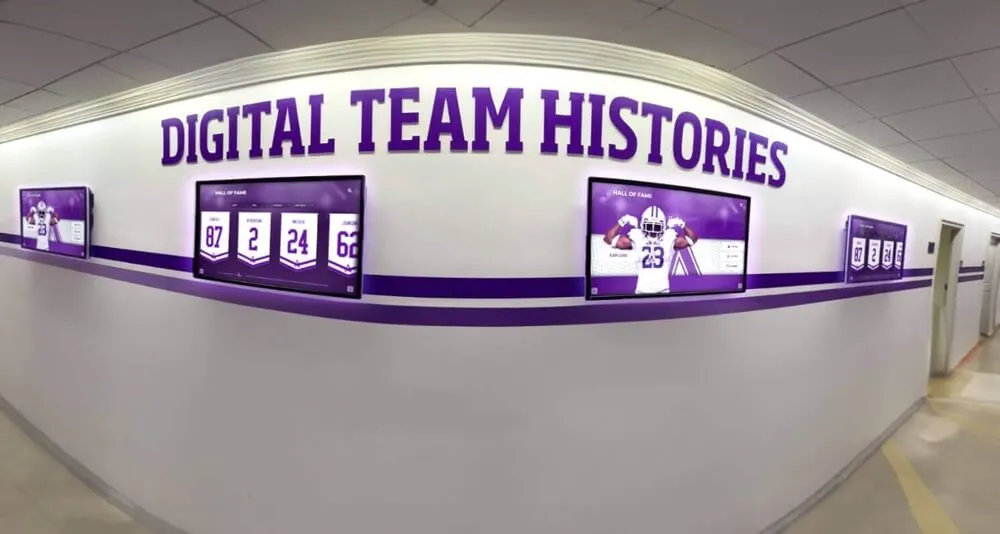
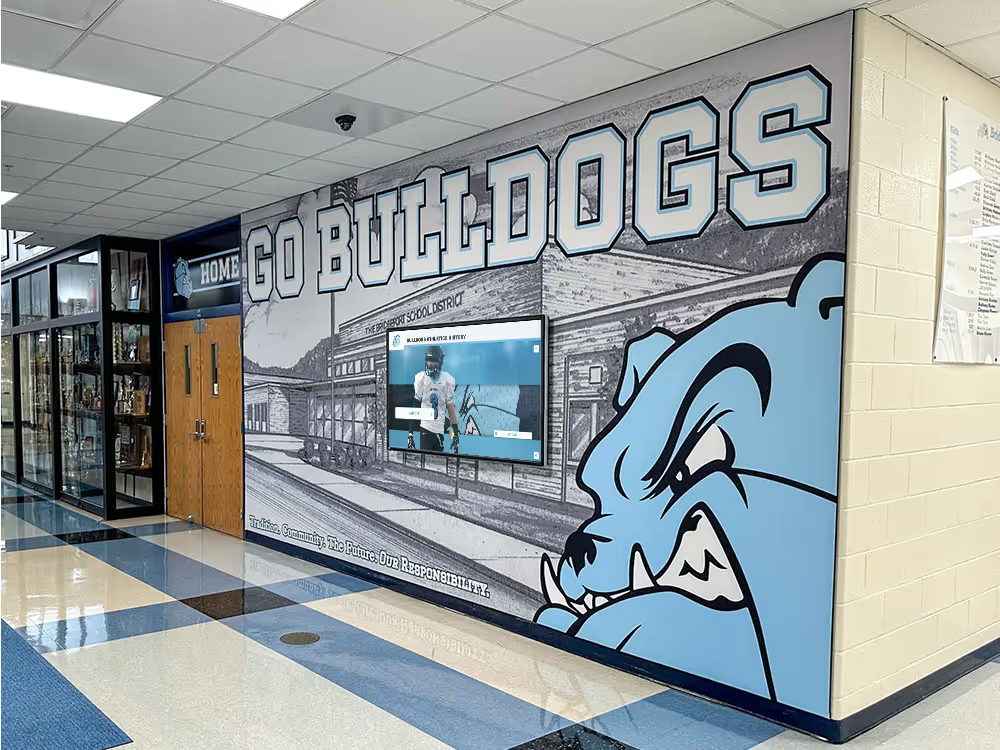
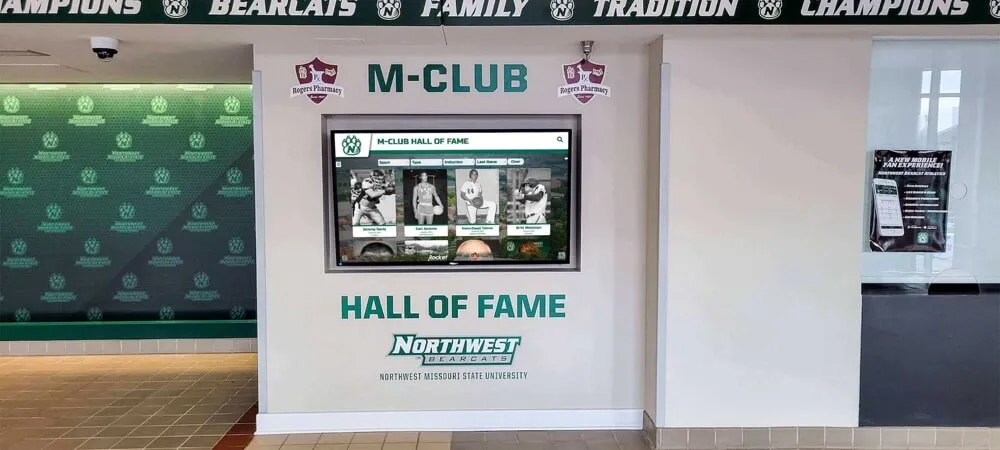
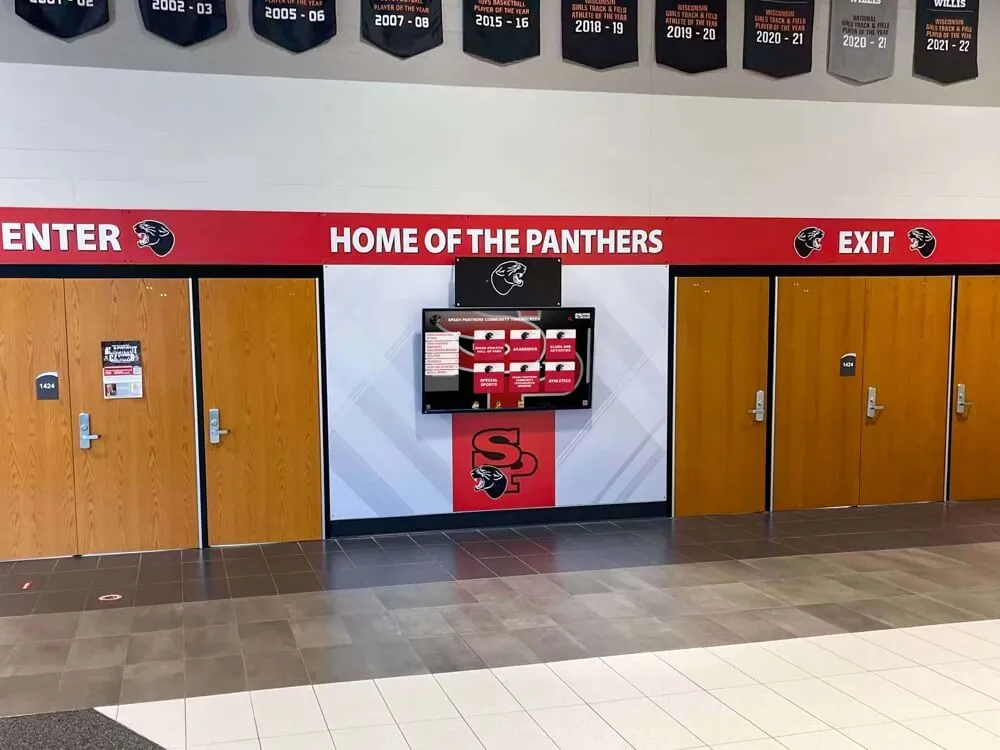
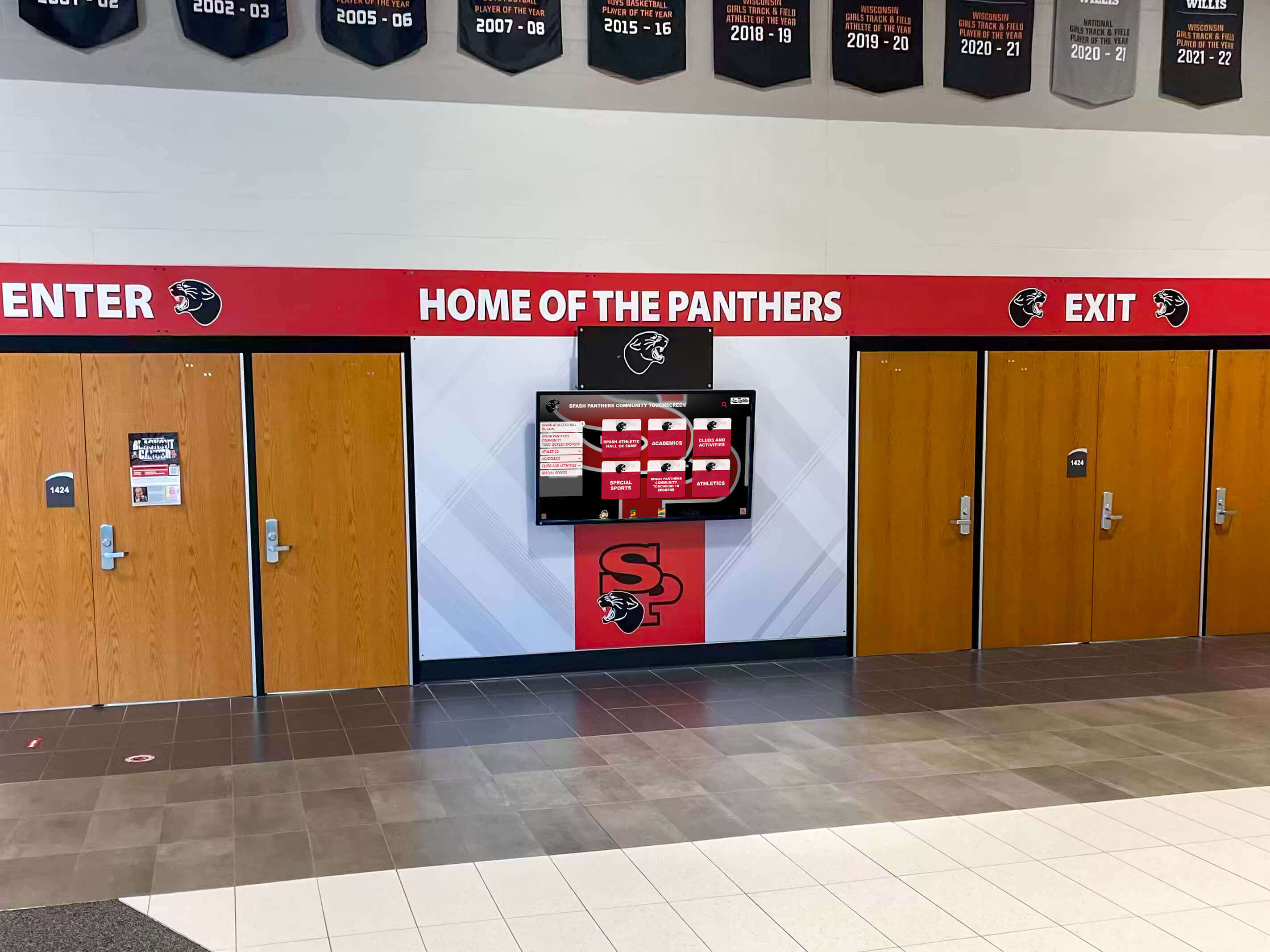
Digital displays at gymnasium entrances communicate rules and expectations while projecting a professional image for your athletic program
Why Gym Rules Signage Matters in School Athletic Facilities
Gym rules signage directly impacts safety outcomes, facility maintenance, and student behavior in measurable ways.
Safety and Liability Protection
School gymnasiums contain equipment and activities that carry inherent injury risks. Posted rules create documentation that your institution communicates safety expectations to all facility users—an important consideration for managing institutional liability. The American College of Sports Medicine (ACSM) recommends that fitness facilities maintain posted safety guidelines near all exercise areas, including specific warnings for high-risk equipment such as free weights, cable machines, and climbing apparatus.
Clear safety signage helps students recognize hazards before encountering them. A student entering a weight room for the first time benefits immediately from seeing posted requirements for spotters, weight collars, and proper lifting technique. Without visible guidance, students learn safety protocols only after an incident occurs—exactly the situation athletic directors want to prevent.
Behavioral Standards and Facility Culture
Beyond safety, gym rules signage establishes behavioral norms that maintain facility quality over time. Schools that post and enforce clear expectations about cleaning equipment after use, returning weights to racks, and respecting equipment limits see measurably better facility conditions compared to institutions relying on verbal reminders alone.
Signs also serve an equity function: they ensure every student receives identical information regardless of when they use the facility, which instructor supervises, or whether they are first-time users or experienced athletes. For school administrators responsible for facility management, consistent posting standards create systematic accountability that verbal guidance cannot replicate.
Community Trust and First Impressions
Community members, parents, and recruits form impressions of your athletic program partly through facility condition and presentation. A gymnasium with professional, clearly posted rules signals that your program takes safety and facility stewardship seriously. This matters during open houses, recruiting visits, and public events where your facility represents your entire athletic department.
Essential Rule Categories for School Gymnasium Signage
Effective gym rules signage covers several distinct categories of expectations, each serving different purposes.
Safety Rules
Safety requirements belong prominently in your gym rules signage, ideally visually distinct from general conduct rules through color coding or bold formatting. Common safety rules for school gymnasiums include:
- Always use a spotter when lifting weights above a safe threshold
- Collars required on all barbell exercises
- No running in the weight room or fitness center
- Report damaged equipment immediately to staff
- Emergency exit locations and evacuation procedures
- First aid kit and AED locations clearly marked
- Minimum age and supervision requirements by activity type
Reserve red or high-visibility yellow backgrounds for safety-critical information to signal urgency and draw immediate attention.
Equipment Use Requirements
Equipment-specific rules protect both students and school investments. Post at each relevant station where practical:
- Weight limits per piece of equipment
- Proper adjustment procedures for adjustable equipment
- Return weights and equipment to designated storage after use
- No slamming weights or dropping dumbbells
- Time limits on cardio equipment during peak-use hours
- Reservation procedures for specialty equipment
- Mandatory cleaning requirements after use
Dress Code and Footwear
Physical education and athletic facilities maintain dress codes for both safety and hygiene purposes:
- Athletic shoes required at all times (no bare feet, sandals, or casual footwear)
- Appropriate athletic clothing requirements
- No jewelry during contact sports or lifting activities
- Hair tie requirements for equipment with moving parts
- Policy distinctions between athletic attire and street clothing
Dress code signage placed near entrance points ensures students and visitors understand requirements before entering—preventing awkward in-space conversations and enforcement conflicts.
Hygiene and Sanitation Standards
Post hygiene expectations prominently, particularly near equipment stations and shared amenities:
- Wipe down all equipment before and after use with provided supplies
- Hand sanitizer station locations and usage expectations
- Personal towel requirements
- No sharing of personal items including water bottles and towels
- Policies for athletes with open wounds or active skin conditions
- Shower requirements or expectations for locker room use
The CDC’s guidance on environmental cleaning in shared exercise spaces provides a sound public health framework for developing sanitation-focused rules that protect student wellbeing.
Scheduling and Access Rules
Administrative expectations often warrant their own signage category near facility entry points:
- Facility hours including open access periods
- Supervision requirements by activity type and user age
- Priority access schedules during team practices and PE classes
- Sign-in or check-in procedures
- Policies for guests and community visitors
- Photography and social media policies
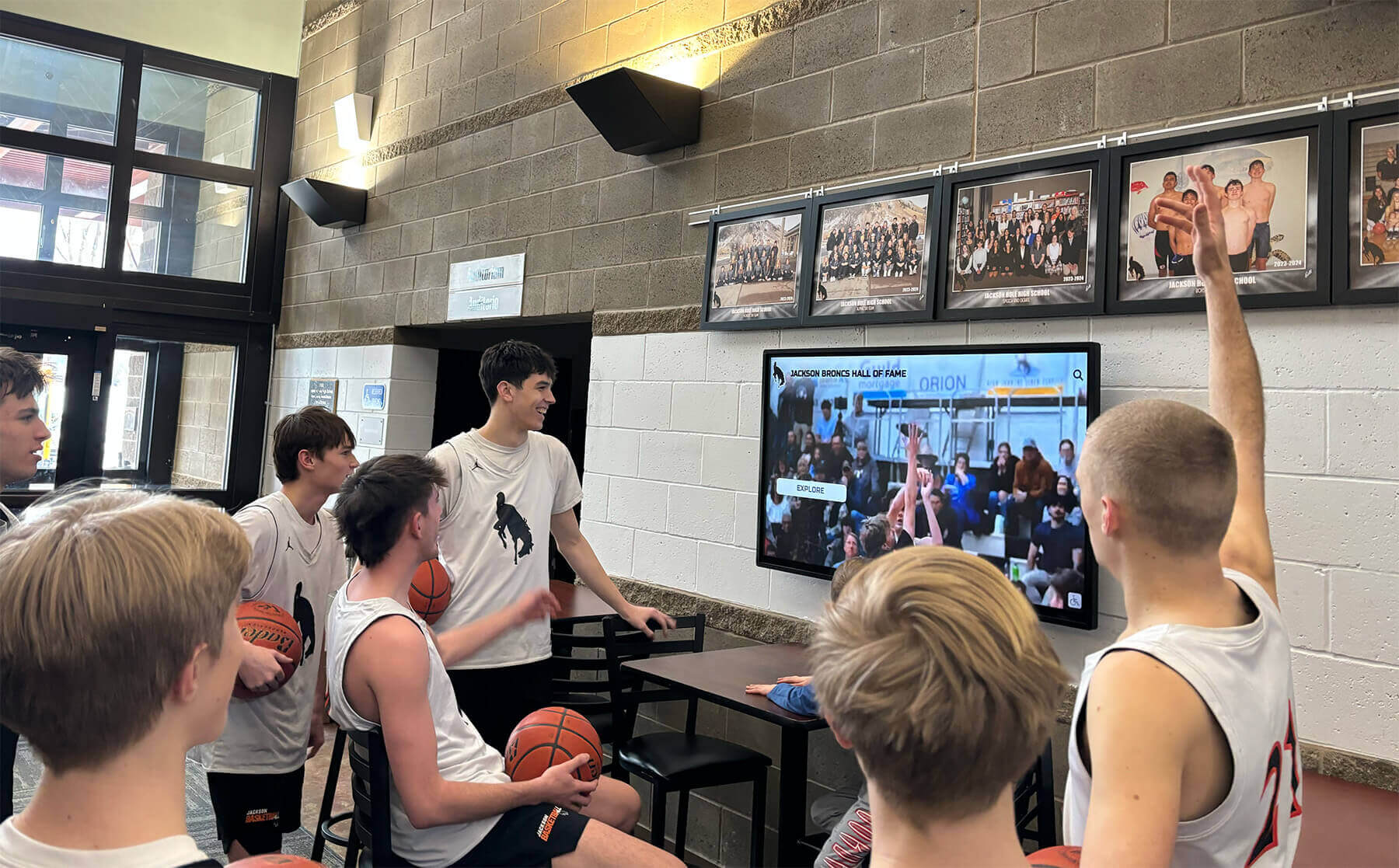
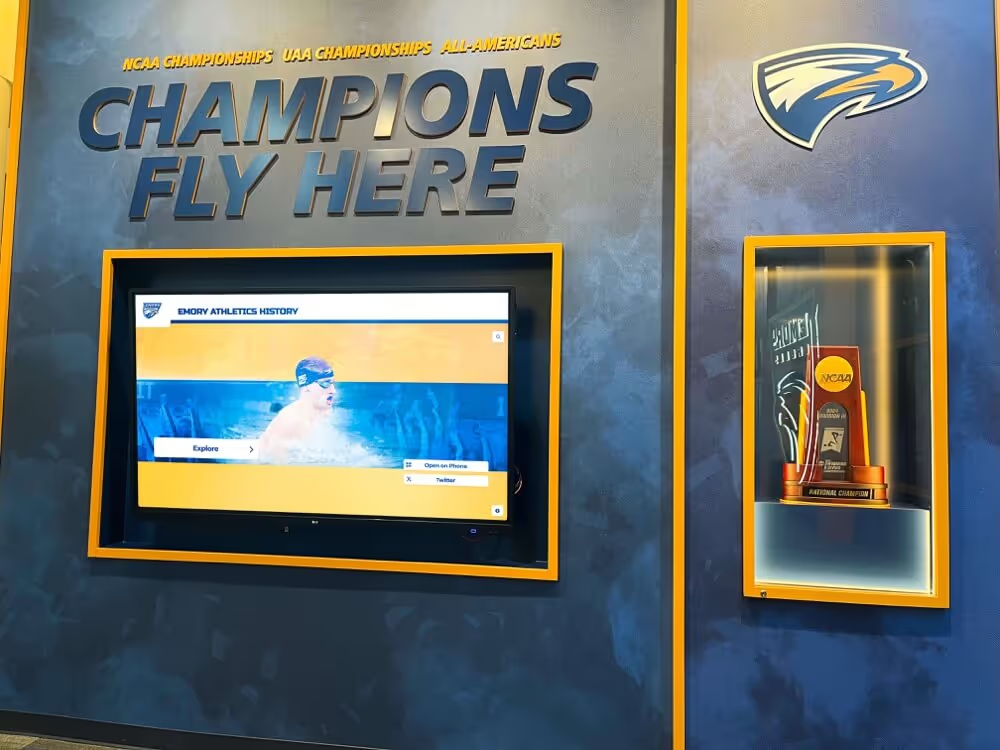
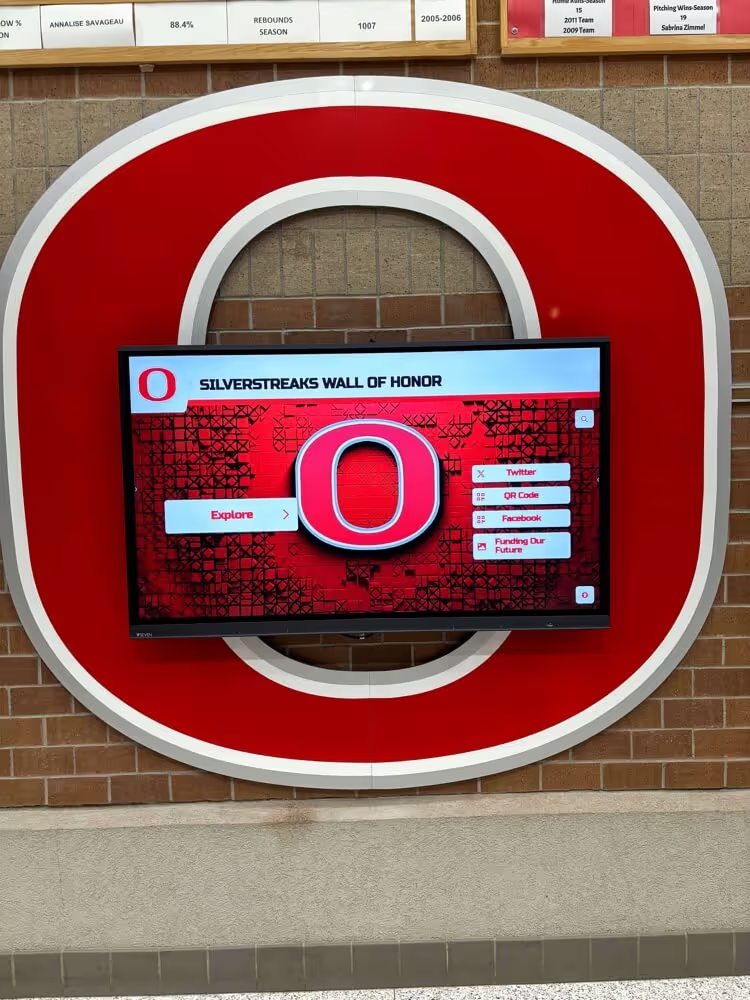
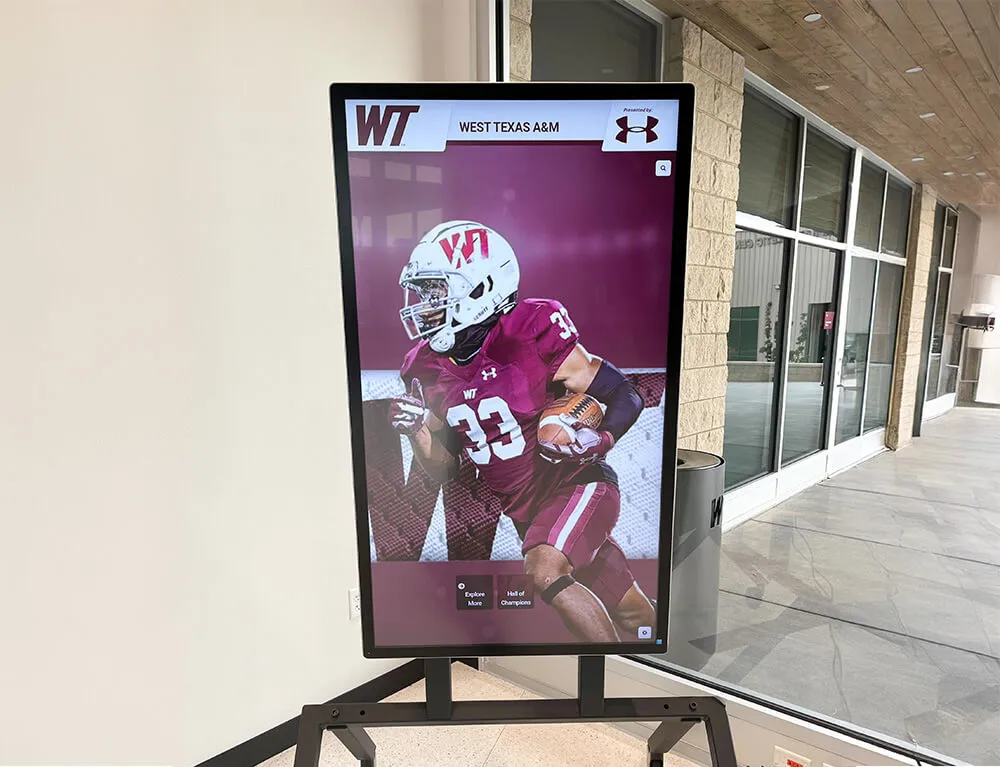
Digital screens near gymnasium entrances engage student athletes with schedules, announcements, and community content
Types of Gym Rules Signage Formats
School gymnasiums can deploy various signage formats, each offering distinct advantages depending on your facility’s needs and budget.
Traditional Printed Signs
Printed signs remain the most common approach for gym rules signage in school settings:
Framed Poster Signs
- Professional appearance in standard 8.5x11" or 11x17" frames
- Easy to update by reprinting and replacing inserts
- Available in magnetic-back frames for metal surface mounting
- Grouped framing creates a coherent, organized visual presentation
Vinyl Decals and Wall Graphics
- Adhesive application directly to walls, floors, or equipment
- Durable, fade-resistant materials appropriate for high-traffic areas
- Custom shapes and sizes matching available wall space
- Floor graphics particularly effective for safety zones and equipment boundaries
Aluminum or Plastic Panel Signs
- Commercial-grade durability for permanent rules posting
- Available in single-color or full-color printing
- ADA-compliant versions with Braille and tactile elements where required
- Weatherproof options for outdoor athletic facilities and covered exterior areas
For broader context on navigating athletic facilities effectively, reviewing wayfinding signage principles for schools and institutions provides useful design and placement frameworks that apply directly to gymnasium environments.
Banner and Hanging Signs
Hanging signs and banners work particularly well in gymnasiums where available wall space is limited by windows, bleachers, or equipment:
Fabric Banners
- Large format visibility from across the full gymnasium floor
- School colors and logo integration for branded appearance
- Double-sided printing for high-traffic corridor placement
- Retractable banner stands for temporary or reconfigurable placement
Rigid Overhead and Ceiling-Mounted Signs
- Suspended from gymnasium ceiling or rafters for high-ceiling spaces
- Visible from anywhere in the facility regardless of user position
- Effective for zone designations (weight area, cardio zone, stretching area)
- Point-of-use overhead signs placed directly above equipment stations
ADA Signage Requirements
Schools must ensure gym rules signage meets applicable accessibility requirements under the Americans with Disabilities Act when applicable:
- Mounting height requirements (centerline at 60" from floor for accessible signage)
- Minimum character height and font size requirements
- Contrast ratios between text and background colors
- Tactile characters and Braille for permanent room identification signs
- Non-glare finishes reducing visual barriers for users with vision differences
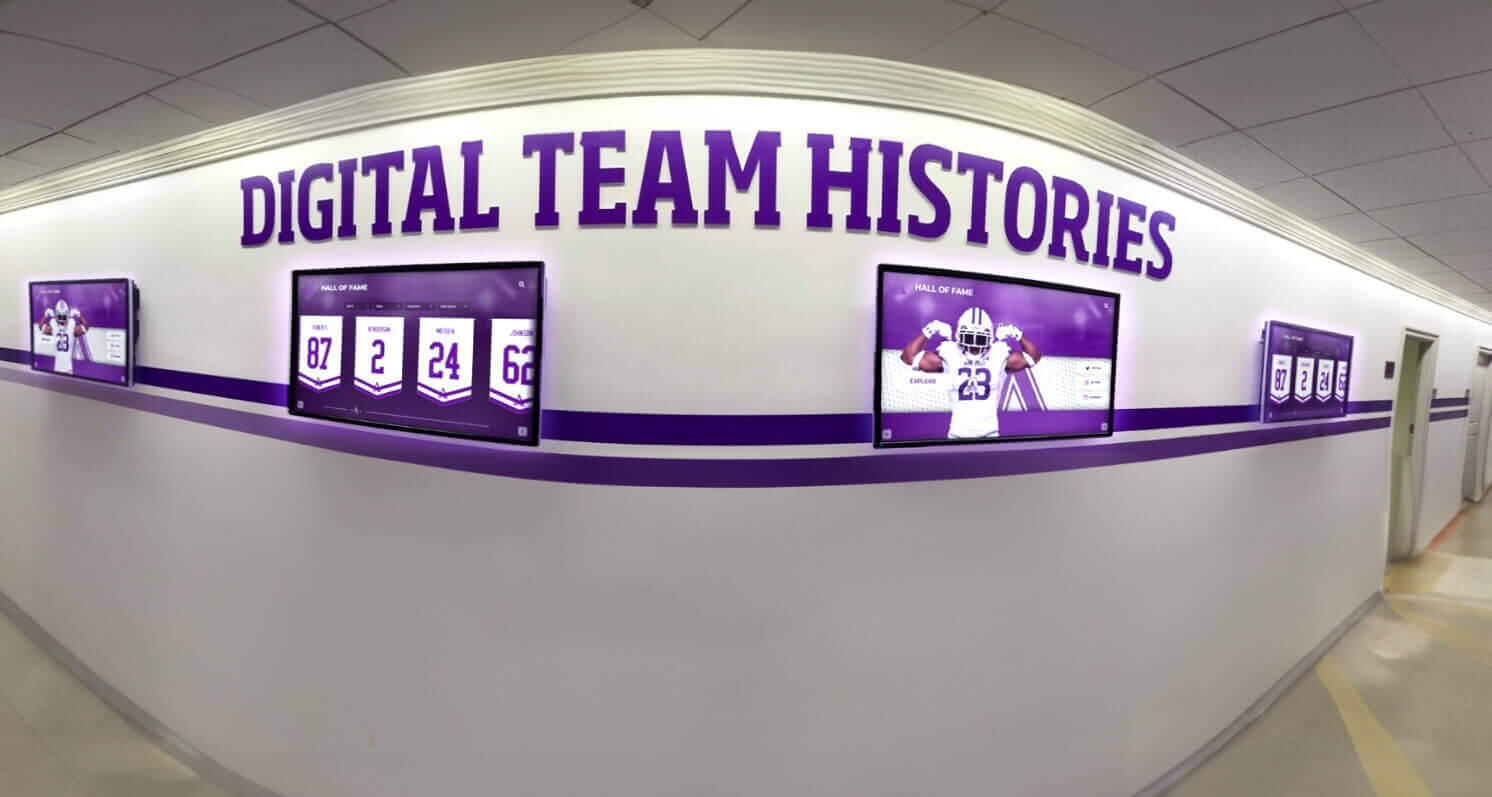
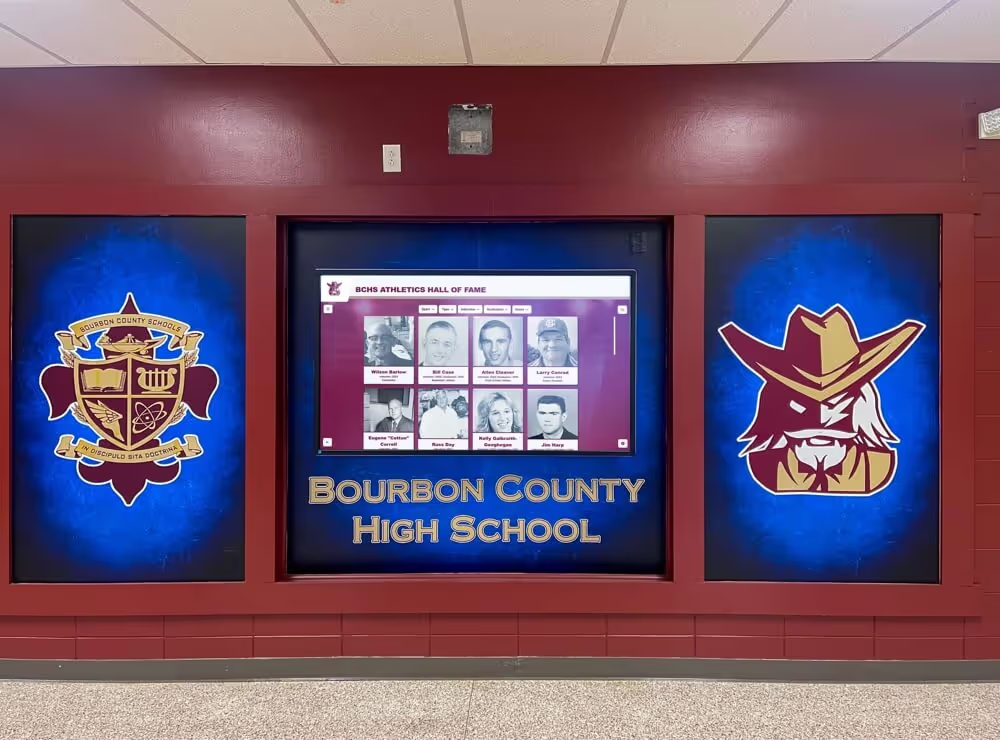
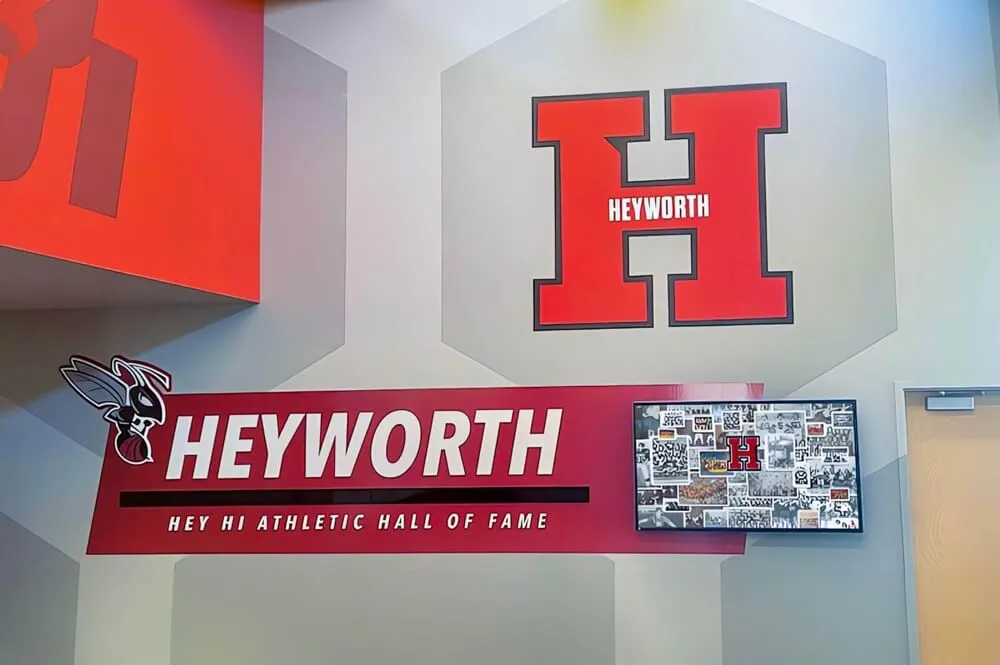
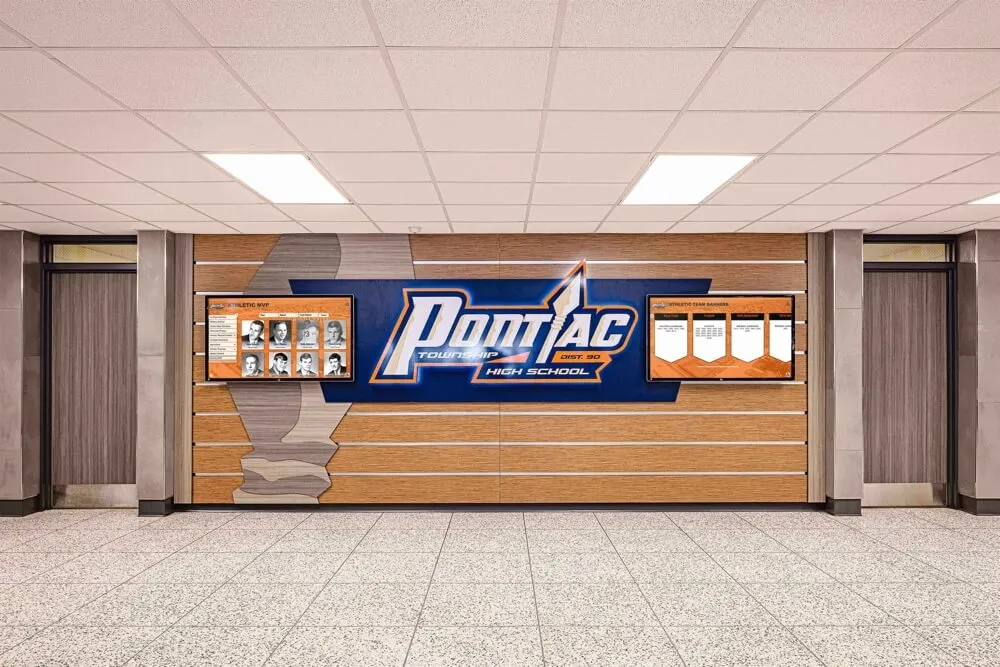
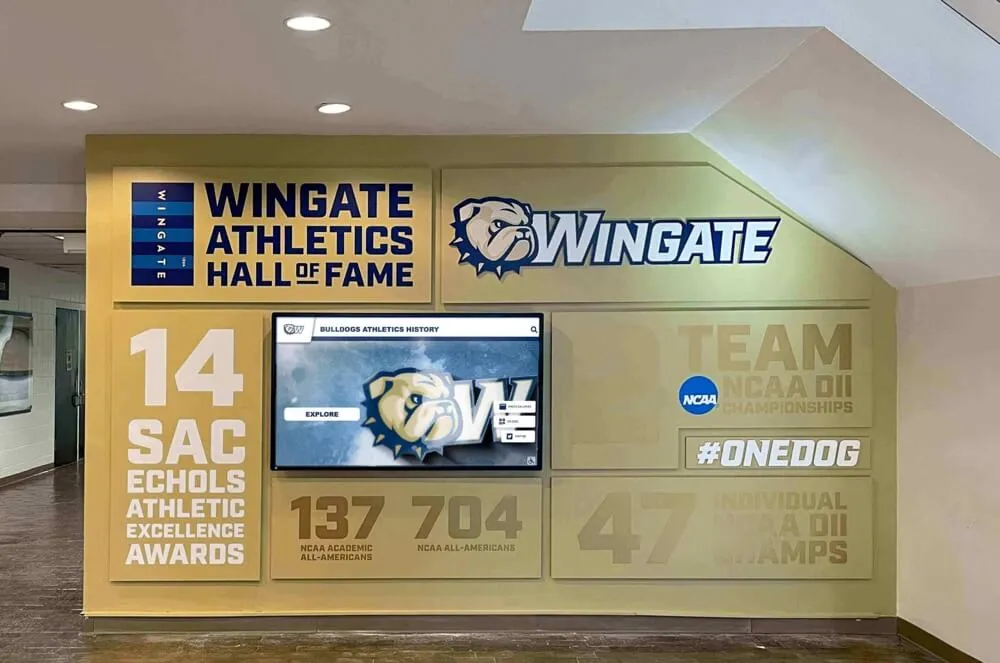
Hallway digital displays near gymnasium entrances can rotate between rules, schedules, and athletic recognition content
Digital Gym Rules Signage: Modern Display Solutions
Digital displays represent an increasingly popular approach to gym rules signage for schools seeking flexibility, visual impact, and multi-purpose communication from a single investment.
Benefits of Digital Gym Signage
Static printed signs communicate one fixed message until physically changed. Digital gym rules signage enables dynamic content that adapts to facility conditions, schedules, and programming needs throughout the day. Schools implementing digital displays for gymnasium signage benefit from:
Dynamic Content Rotation
- Display facility rules during open gym hours
- Switch to scheduling and event information at class change times
- Feature athletic event announcements and game schedules before competitions
- Recognize student athletes between rules and schedule displays
- Broadcast emergency notifications instantly to all displays
Easy Updates Without Reprinting
- Update rules, schedules, or policies from any internet-connected device
- No printing or installation costs when content changes
- Immediate publication when safety procedures or access policies are updated
- No need to physically locate and replace signs throughout the facility
Multi-Purpose Communication
- Single display serves multiple communication functions throughout the day
- Combine mandatory rules posting with achievement recognition content
- Display school-wide announcements alongside facility-specific information
- Provide visual interest that engages students rather than merely regulating them
When evaluating how static and dynamic display options compare, understanding the difference between digital and traditional displays in school hallways provides useful context for making informed facility investment decisions.
Touchscreen Kiosk Solutions for Gymnasiums
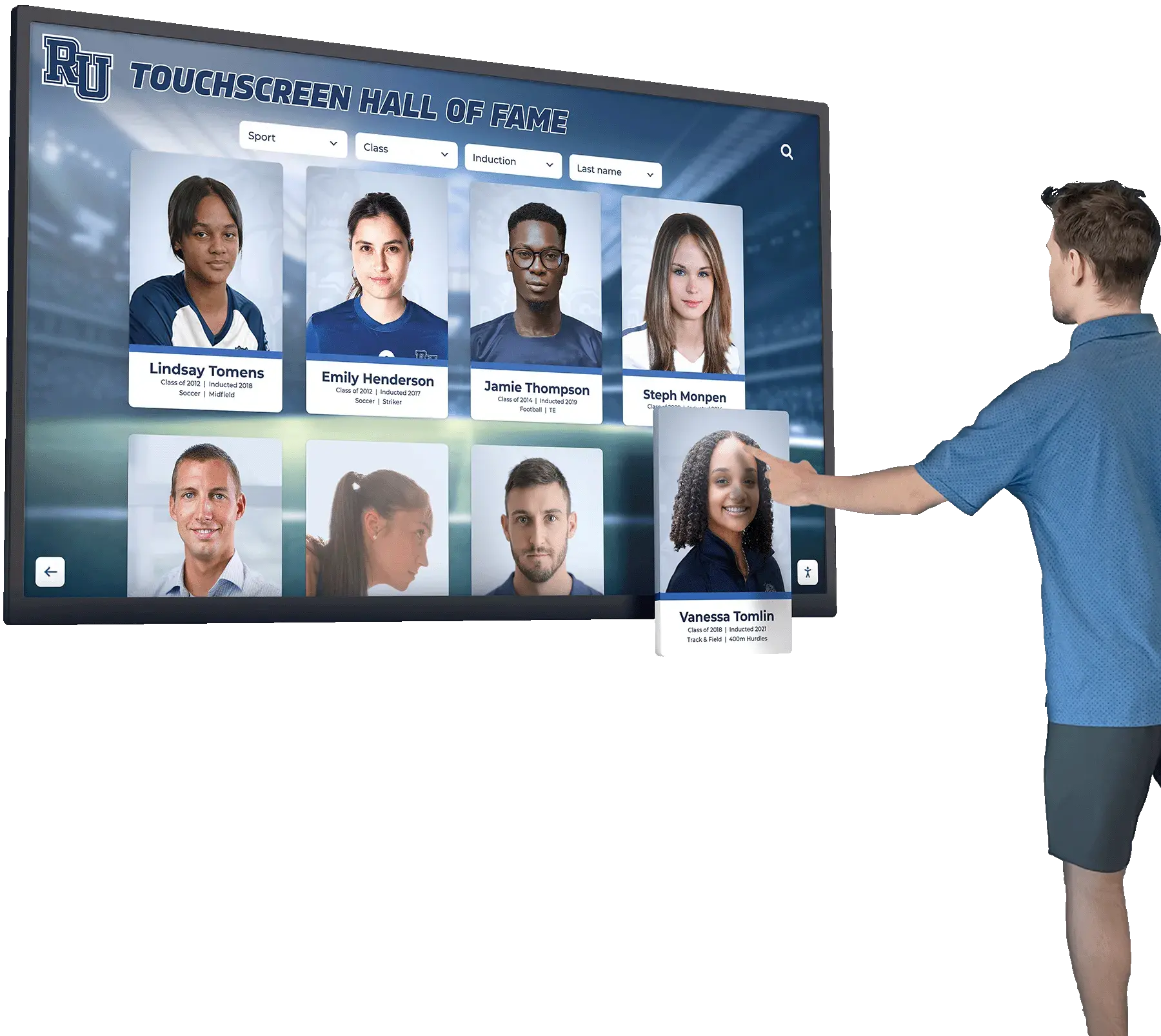
Interactive touchscreen kiosks at gymnasium entrances enable students to explore information far beyond basic rule posting. Platforms like Rocket Alumni Solutions allow schools to deploy touchscreen displays that provide:
- Searchable facility rules and policies organized by category
- Equipment tutorials and safety demonstration videos
- Athletic program history and hall of fame recognition
- Event and game schedules updated in real time
- Coach and staff contact information
- Photo galleries from competitions and school events
Touchscreen kiosk solutions for schools offer a compelling combination of facility communication and community recognition that static signage cannot replicate. A student checking facility hours at the entrance kiosk might also discover their name in the hall of fame recognition display—creating an entirely different kind of engagement than reading a rules poster.
Digital Signage Software for School Facilities
Managing content across multiple displays requires purpose-built software. Touchscreen digital signage software designed for school environments enables athletic directors and facility managers to:
- Update content across all displays simultaneously from a single interface
- Schedule content to appear during specific hours or before designated events
- Create templates using school branding guidelines without design expertise
- Manage displays remotely without visiting each physical location
- Monitor display status and receive alerts for technical issues
Transform Your Gymnasium With Digital Display Solutions
Modern touchscreen displays let schools communicate facility rules, celebrate athletes, and engage the community—all from a single platform that updates instantly from any device.
Explore Digital Display Solutions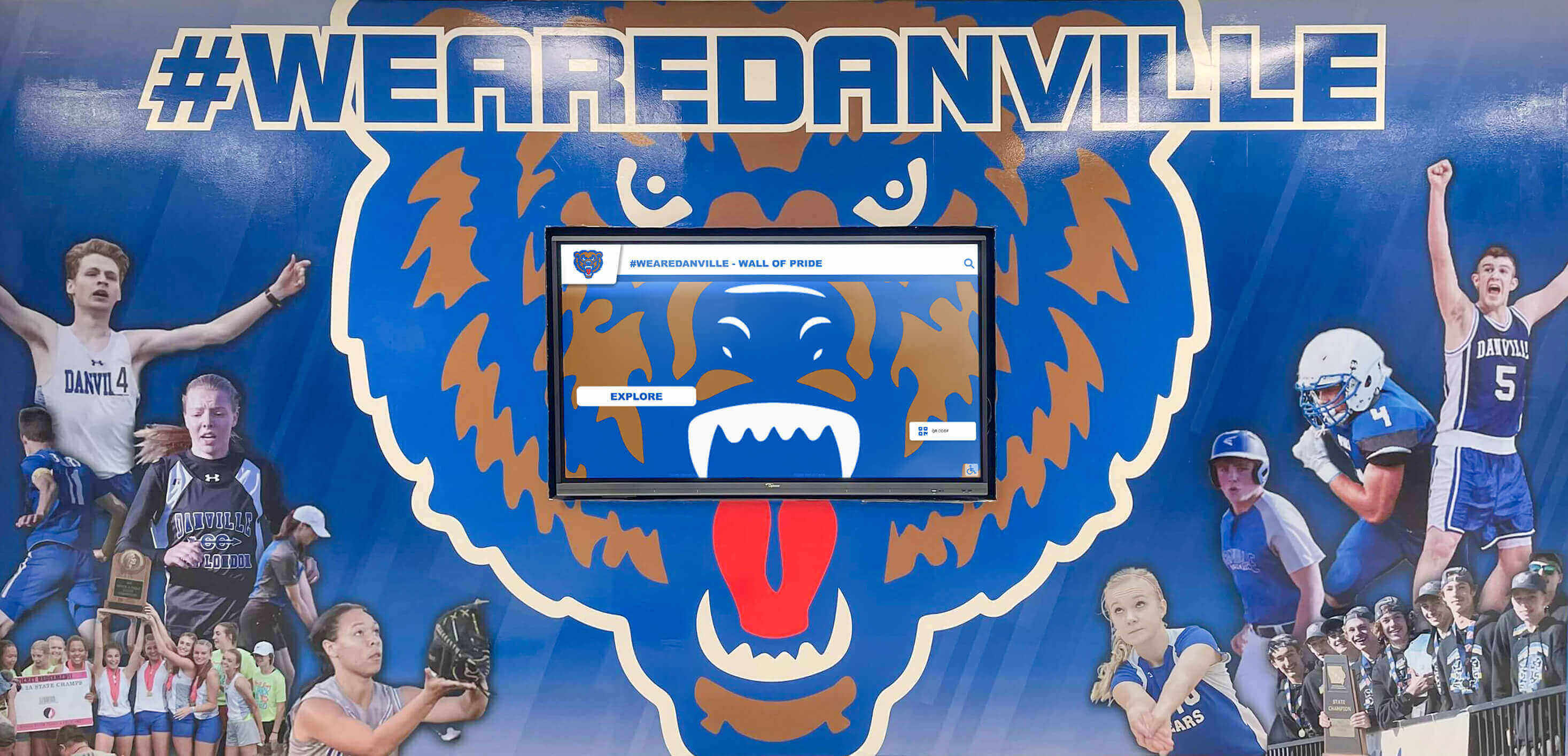
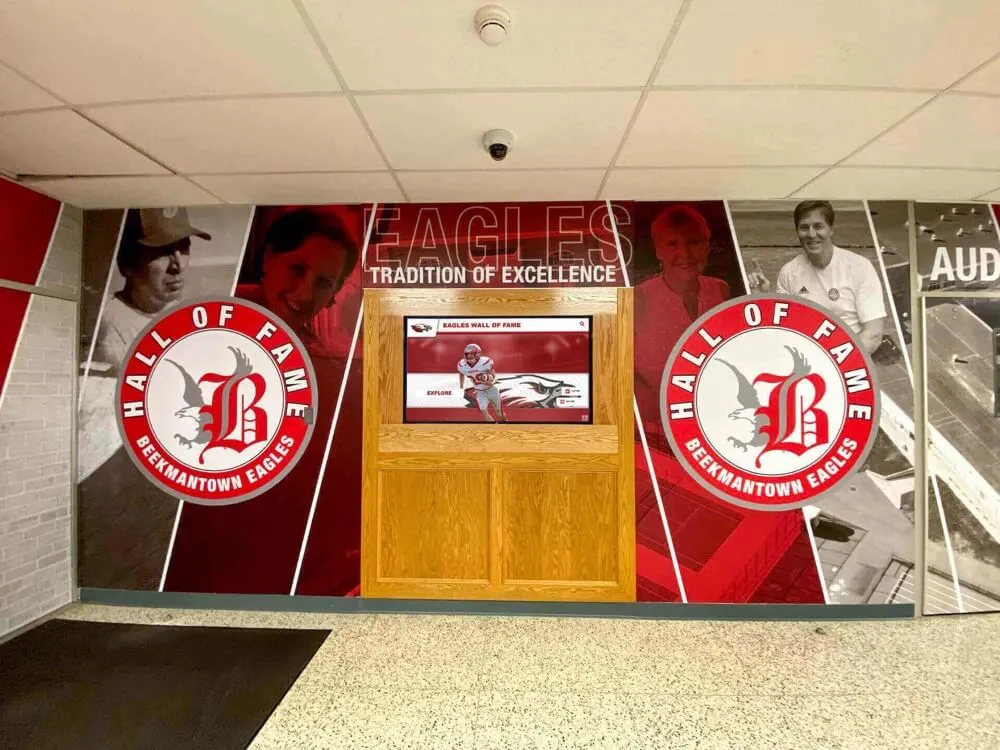
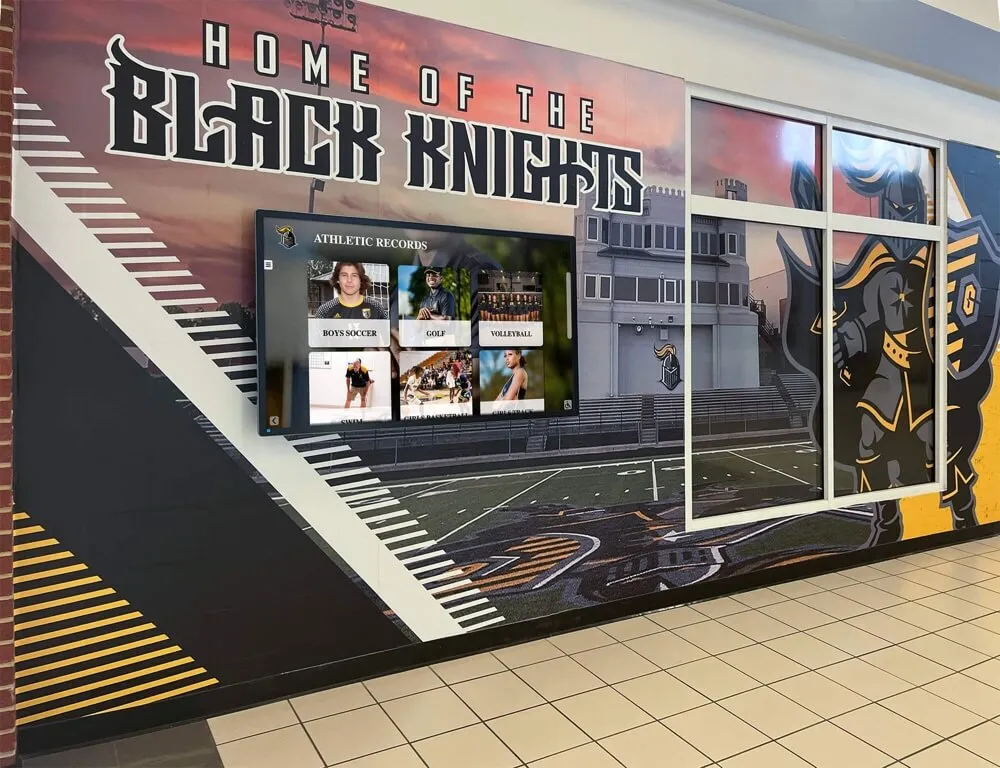
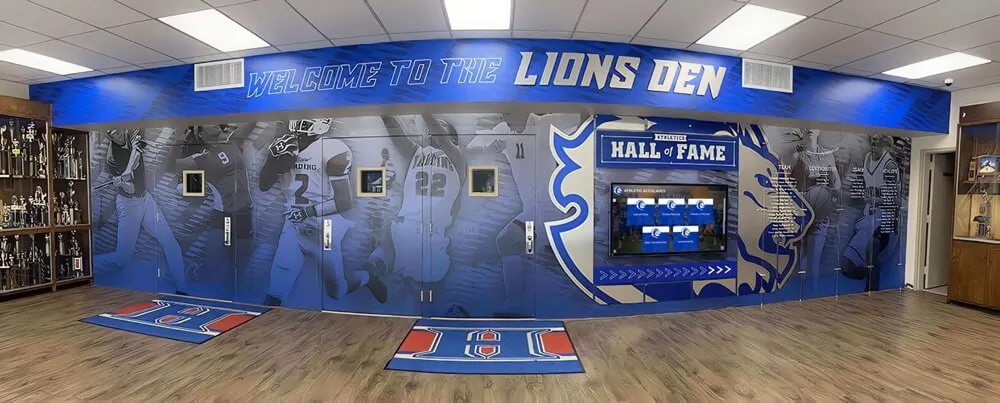
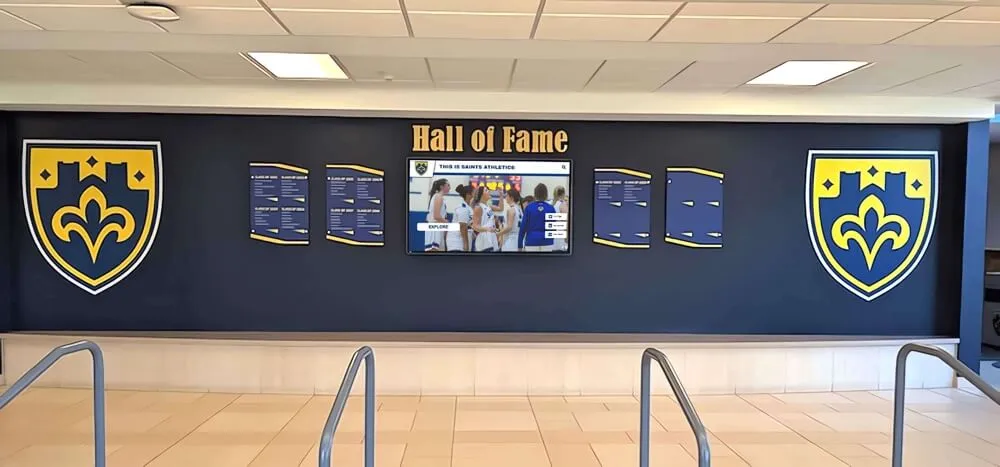
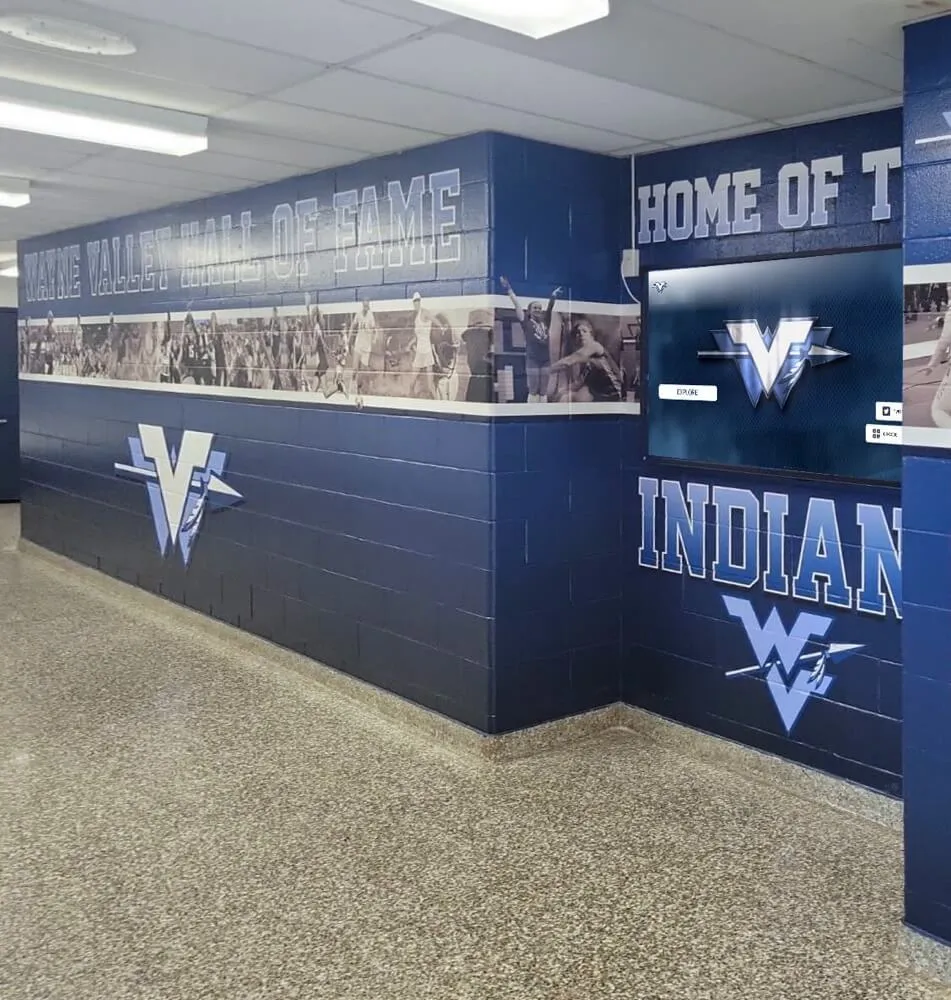
Combining athletic murals with digital screens creates complete facility environments that communicate identity alongside rules and scheduling
Gym Rules Signage Design Best Practices
Effective signage design ensures rules are seen, read, and understood—not just posted.
Typography and Readability Standards
- Body text: Minimum 24-point font size for signs read at arm’s length; 36-48pt for headers
- Font selection: Sans-serif fonts like Arial, Helvetica, or Open Sans for maximum readability at distance
- Avoid decorative fonts: Script and display typefaces reduce legibility significantly
- Adequate line spacing: 1.4–1.6 line height improves reading speed and comprehension
- List formatting: Use numbered lists for sequential instructions, bullet points for independent rules
Color and Contrast
- Maintain minimum 4.5:1 contrast ratio between text and background for accessibility
- Use school colors for headers and branding elements; neutral backgrounds for body text
- Reserve red for warnings and safety-critical information
- Use yellow or orange for caution and advisory notices
- Use green for permitted actions and positive behavioral expectations
- Avoid busy or patterned backgrounds that reduce text legibility
Incorporating School Branding
Gym rules signage integrates naturally with your facility identity when designed with consistent visual language. Maintaining design consistency while allowing creative flexibility is a principle that applies directly to gymnasium signage planning: your rules signs should feel like part of the same visual system as your trophy cases, hall of fame displays, and athlete recognition materials throughout the facility.
Branding elements to incorporate:
- School mascot and logo in header position or corner
- School colors in borders, headers, and accent elements
- Consistent font family matching other school communications
- Athletic department name or program tagline
- Contact information for reporting equipment issues or safety concerns
Icons and Visual Communication
Universal icons dramatically increase signage comprehension, particularly for students with varying literacy levels or multilingual backgrounds:
- No food/drink icon for eating and beverage restrictions
- Footwear icon for shoe requirements
- Cleaning/spray bottle icon for equipment sanitation rules
- Weight limit icon for equipment restrictions
- Sign-in icon for supervision and check-in requirements
- First aid cross symbol for emergency information locations
Strategic Placement for Gym Rules Signage
Where you place signage matters as much as what the signs say. Rules posted where users cannot easily see them achieve very little.
Gymnasium Entrance Placement
Facility entrances represent the highest-priority placement location for gym rules signage. Students and visitors who encounter rules before entering the space receive guidance at exactly the moment behavioral expectations are most relevant.
Recommended entrance placements:
- Eye-level sign immediately beside or on the entry door
- Floor graphic indicating check-in area or sign-in station
- Digital display visible from the entrance showing rules and daily schedules
- Overhead sign visible upon entry in facilities with high-ceiling lobbies
Point-of-Use Equipment Signage
Rules posted at the point of use create immediate contextual relevance. Students reading equipment instructions while standing at a machine comply at far higher rates than students who saw a general rules poster at the entrance twenty minutes earlier.
- Mount individual equipment instructions at each station
- Post weight room general rules at the entry point to the weight area
- Place cleaning supply station signs near paper towel dispensers and spray bottles
- Display spotter requirements prominently near squat racks and bench press stations
- Post capacity and age requirements at specialty equipment
Connecting facility signage with comprehensive trophy room and facility display ideas can help athletic directors envision a gymnasium as a complete environment where signage, recognition displays, and athletic heritage work together.
Locker Room and Transition Areas
Hygiene and personal conduct rules belong prominently in locker rooms and transition spaces:
- Shower and hygiene expectations posted inside locker room
- Cleanliness standards near towel dispensers and waste receptacles
- Personal property security reminders at entry points
- Photography policy notices at locker room and changing area entrances
- Emergency contact information and first aid kit location
Gymnasium Walls and Overhead Zones
For large open gymnasiums hosting multiple simultaneous activities:
- High-wall or overhead signs for general conduct rules visible from anywhere in the space
- Zone designation signs identifying different activity areas (weight area, cardio zone, court space)
- Court boundary and floor marking explanations
- Emergency exit and evacuation route signage meeting fire code requirements
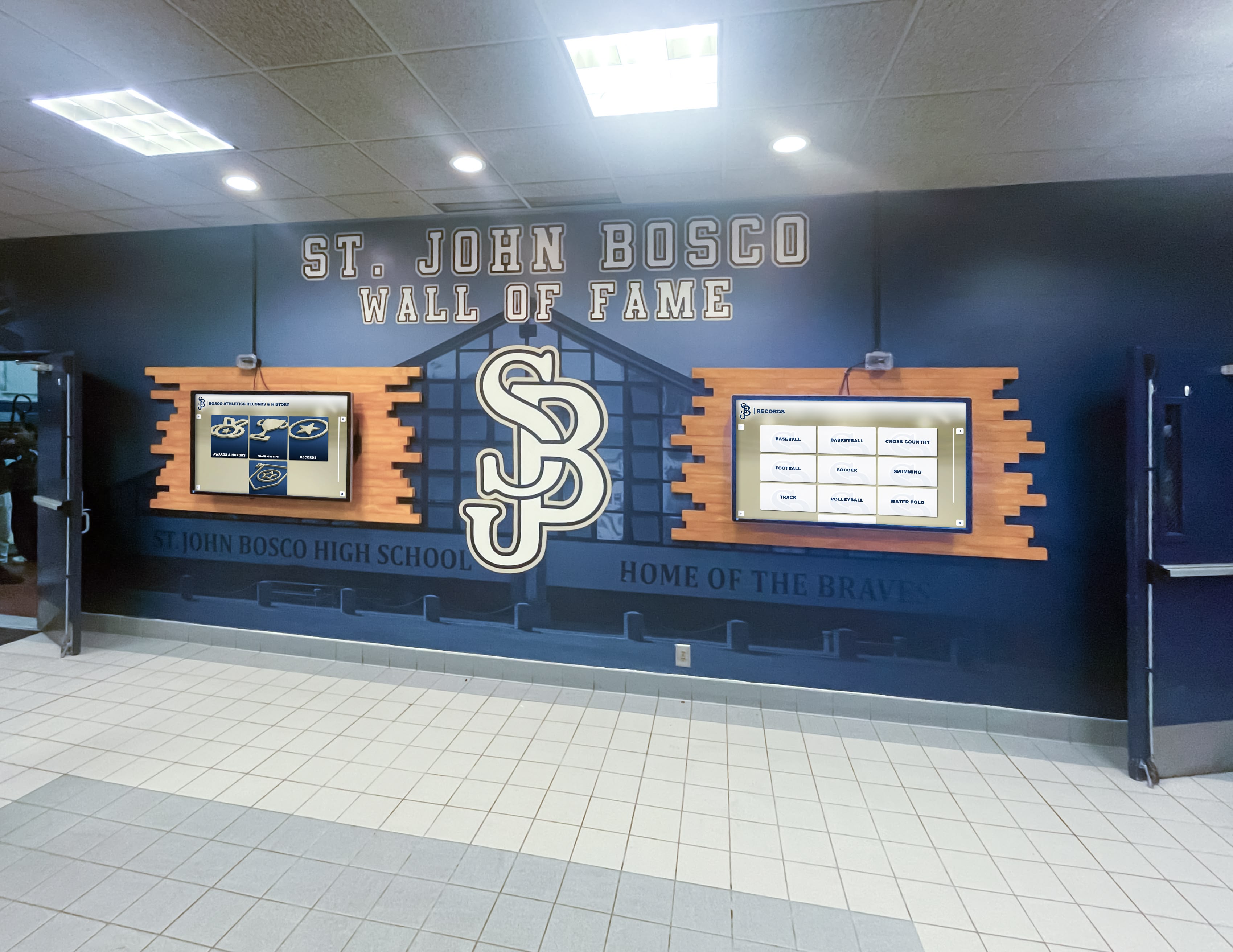
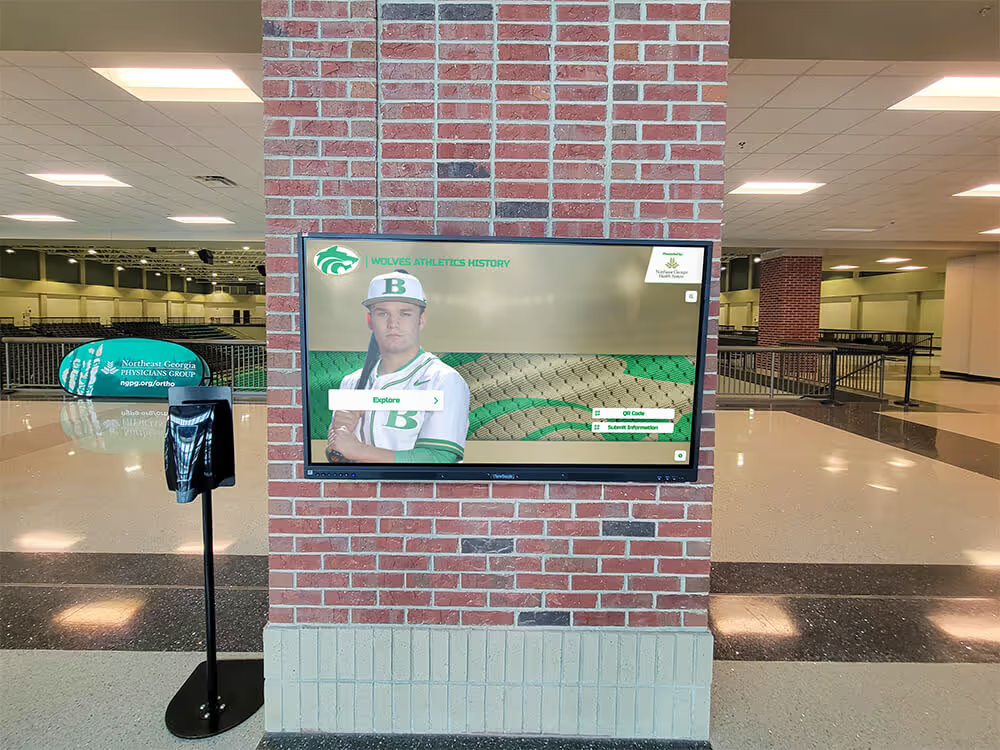
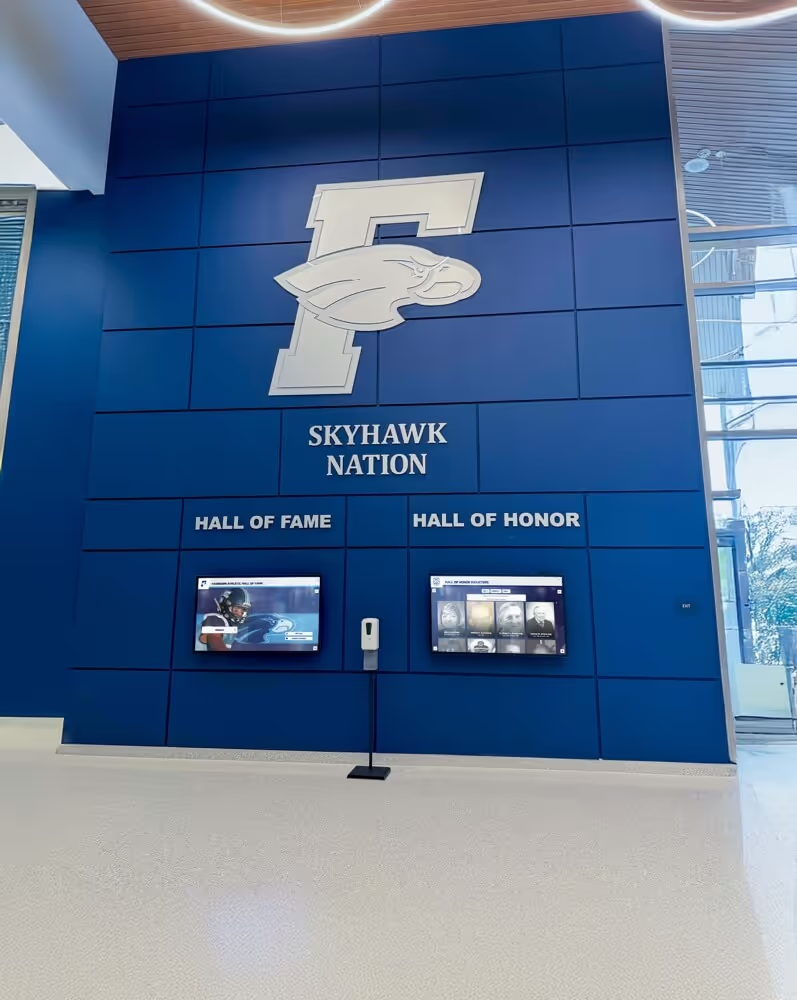
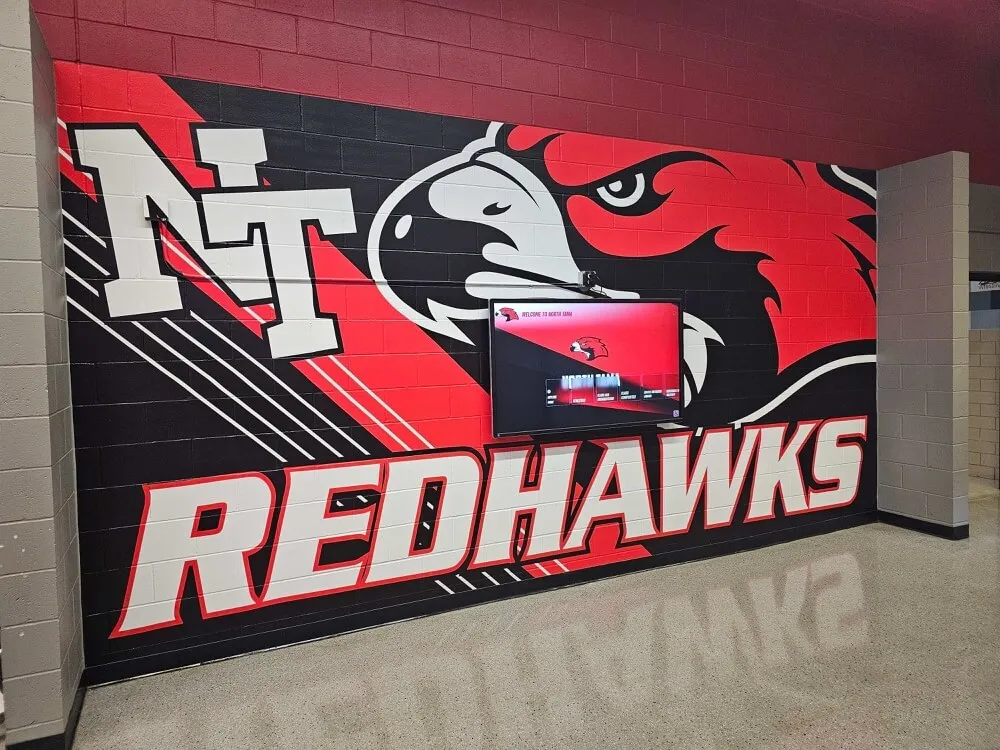
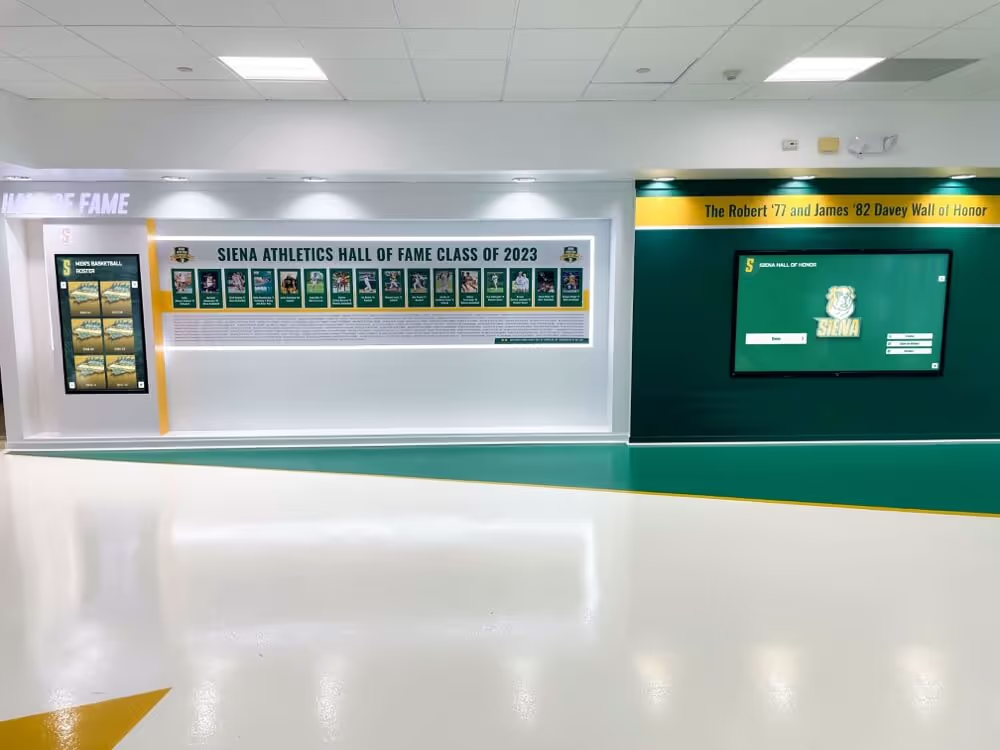
Multiple digital displays positioned strategically throughout athletic facilities create comprehensive communication environments for rules and recognition
Gym Signage for Different School Facility Types
Different athletic spaces require distinct signage approaches based on their activities, users, and risk profiles.
High School Gymnasium Signage
High school gymnasiums typically serve physical education classes, team practices, intramural programs, community events, and public competitions. Signage must communicate clearly across very different user groups with varying levels of familiarity with the space.
- Student-appropriate language calibrated for in-school hours and PE class context
- Community-accessible rules for after-school programs and public events
- Multi-sport applicability since most high school gyms host basketball, volleyball, wrestling, and other activities
- Clear demarcation between activity zones when multiple programs occupy the space simultaneously
- Supervisory requirements posted prominently since adult presence policies vary by activity type and age group
High school gyms particularly benefit from connecting facility rules signage with student recognition. A dual-purpose digital display showing rules during class periods and celebrating student athlete recognition programs during open gym hours creates compound value from a single display investment.
Weight Room and Fitness Center Signage
School weight rooms carry the highest safety signage requirements among athletic spaces due to free-weight and resistance training risks:
- Equipment-specific instructions at every station (not just general room rules at entry)
- Spotter requirements prominently posted at squat racks, bench press, and overhead press stations
- Weight limits and progression guidance for student users at different training levels
- Emergency procedures and first aid kit location posted clearly on entry
- Supervision and age requirements for unsupervised access
Multi-Purpose Athletic Spaces
Facilities that convert between gymnasium, event space, and meeting room need flexible signage strategies that adapt with the space:
- Digital displays that switch content based on the current facility configuration
- Removable signage systems for activities requiring different room setups
- Clear zone designation when multiple programs share the space simultaneously
- Temporary signage solutions for events hosted by external organizations
When school facilities host large community events or spirit-building programs, spirit week themes and community-building ideas can help athletic staff think about transitioning gymnasium environments from rules-focused communication to celebratory community displays for special occasions.
Connecting Gym Signage With Athletic Recognition
The most effective school gymnasiums integrate rules posting with broader athletic identity communication. When students enter a facility that both clearly communicates behavioral expectations and celebrates the accomplishments of athletes who trained and competed there, the environment reinforces a culture of excellence rather than merely enforcing compliance.
Digital display systems designed for digital wall of fame content planning allow the same gymnasium display to rotate between facility rules, daily scheduling announcements, and hall of fame recognition throughout the day. Platforms like Rocket Alumni Solutions are built specifically for school environments, providing content management tools that non-technical staff can operate confidently while maintaining professional display quality.
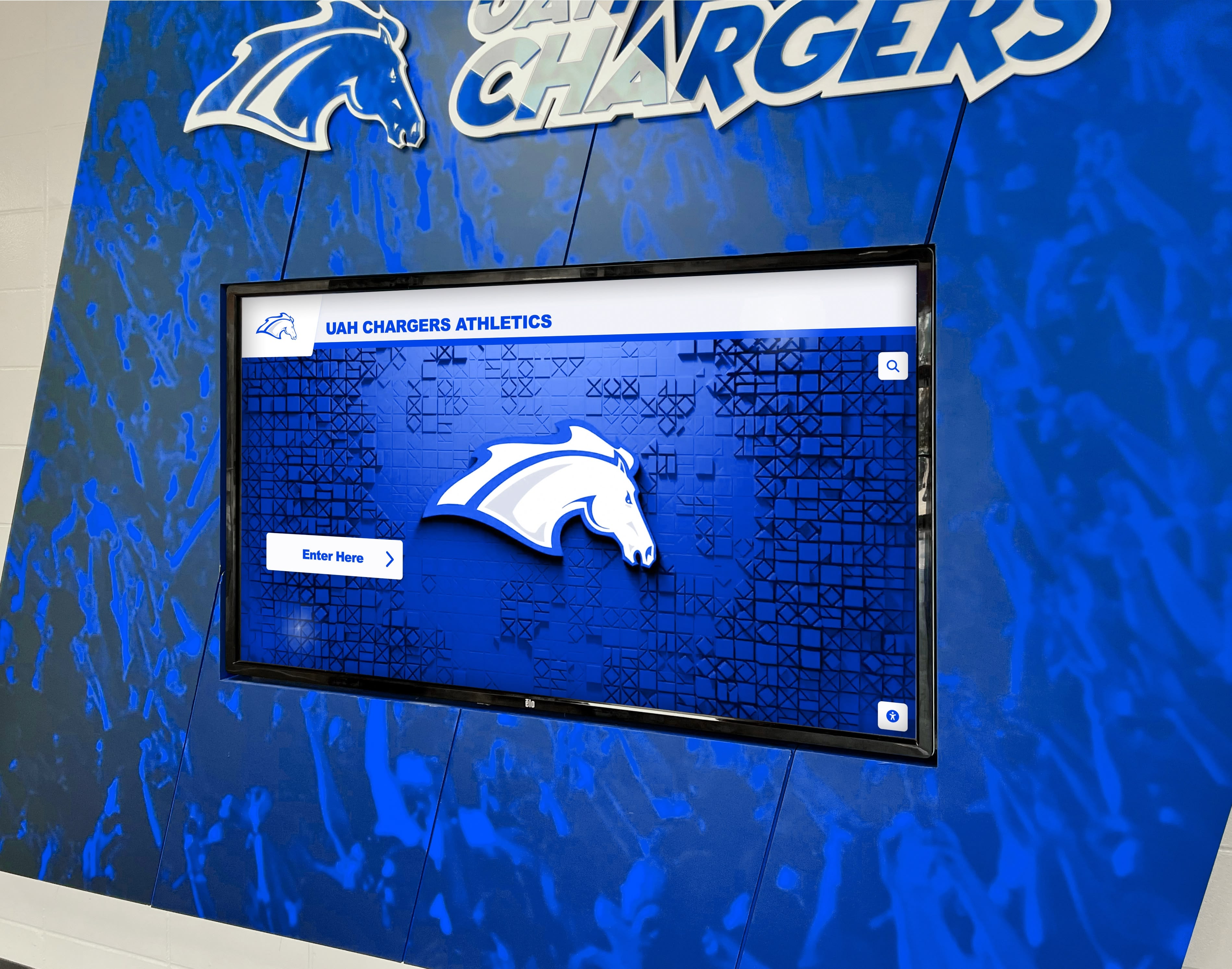
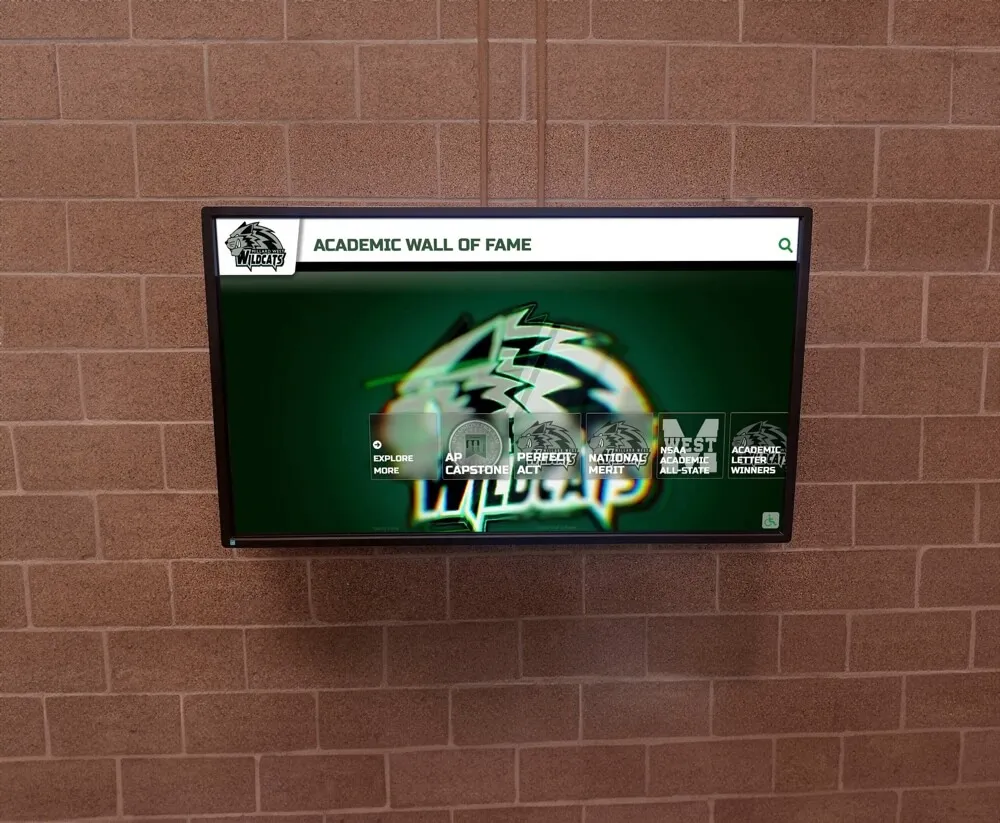
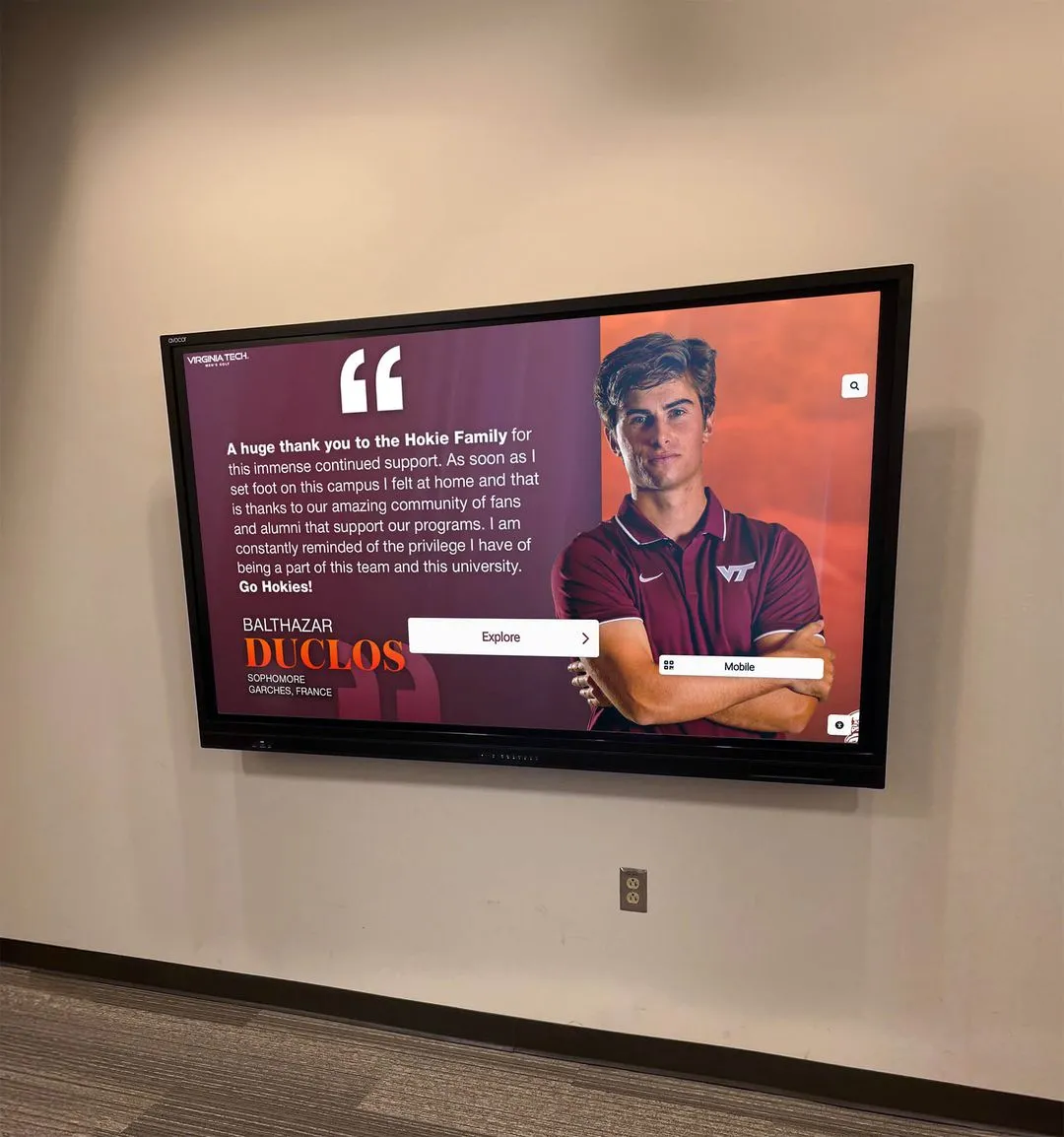
Digital screens mounted on gymnasium walls serve as flexible communication platforms rotating between rules, schedules, and athletic recognition
FAQ: Gym Rules Signage for School Gymnasiums
What should be included in gym rules signage for a school gymnasium?
School gymnasium rules signage should cover safety requirements (spotter rules, equipment use limits, emergency procedures), dress code and footwear expectations, equipment cleaning and return policies, supervision and access requirements, facility hours and scheduling, and emergency information including first aid kit and AED locations. Safety-critical rules should be visually distinct through color coding or bold formatting, and rules should be organized by category to help users quickly locate relevant information for their specific activity.
What size should gym rules signs be for school facilities?
Sign size should match your facility’s viewing distances. For signs read at arm’s length near equipment, standard 8.5x11" to 11x17" formats with minimum 24-point body text work effectively. Signs intended to be read from across a weight room or gymnasium floor should be at least 18x24" with 36-48pt headers. Overhead gymnasium signs visible from the full court require proportionally larger formats. Digital displays eliminate rigid size constraints by enabling scrollable or zoomable content visible at any distance.
How often should school gym rules signage be updated?
Review all gym rules signage at minimum annually to update any rules reflecting changed policies, contact information, or equipment. Update immediately whenever safety procedures, supervision requirements, or access policies change during the year. Digital displays allow same-day content updates; printed signs require reprinting and physical replacement. Assigning a specific staff member responsibility for signage review during each annual facilities audit ensures rules remain accurate and current.
Should schools use digital or printed signs for gym rules?
Both formats offer genuine advantages. Printed signs require no power or connectivity, carry lower upfront cost for rules that rarely change, and are universally familiar to all users. Digital displays offer content flexibility to rotate multiple messages, enable instant updates when policies change mid-year, and can serve dual purposes by simultaneously managing rules, schedules, and athletic recognition. Many schools adopt a hybrid approach: printed signs for permanent safety requirements at equipment stations, digital displays for scheduling, announcements, and recognition that changes frequently.
Are there accessibility requirements for gym rules signage in schools?
The Americans with Disabilities Act requires accessible signage for permanent rooms and spaces, including specific mounting height requirements (centerline at 60" from floor), minimum contrast ratios, and tactile characters with Braille for permanent room identification signs. Informational rules signs have more flexibility than room identification signs under ADA standards, but schools should maintain adequate contrast ratios and readable font sizes as best practice for serving students with visual impairments and complying with Section 504 and IDEA requirements.
Creating Gym Signage That Reflects Your Athletic Program’s Standards
Gym rules signage is far more than a compliance exercise—it expresses your school’s commitment to student safety, facility stewardship, and athletic program quality. When gymnasium signage communicates clear expectations through professional design, strategic placement, and consistent branding, it reinforces the culture of excellence that defines outstanding athletic programs at every level.
Whether you choose traditional printed signs, vinyl wall graphics, overhead banners, or modern digital displays, the most important factor is that your gym rules signage is visible, readable, consistently enforced, and reflects the standards your athletic program upholds. Schools investing in professional signage systems—particularly digital solutions that communicate rules alongside recognition, scheduling, and community announcements—create facilities that inform and inspire simultaneously.
Start with an honest audit of your current signage: assess coverage completeness, readability at actual viewing distances, and placement effectiveness across your facility. Identify gaps in rules coverage, areas lacking clear guidance, and opportunities to replace outdated or difficult-to-read signs. Then develop a phased plan aligned with your facility’s communication goals and available budget.
The facilities that attract the best student athletes, retain the strongest coaches, and build lasting community pride are those where every detail—including the rules posted on the walls—reflects the seriousness of purpose and pride of place that defines championship programs.
Upgrade Your Gym Signage With Modern Display Solutions
Discover how Rocket Alumni Solutions helps schools communicate facility rules, recognize student athletes, and engage communities through professional digital displays designed specifically for school environments.
Explore Digital Recognition Solutions