



Honors cord colors by GPA provide the visible markers that distinguish academic achievement levels during graduation ceremonies, transforming what could be uniform processions into colorful celebrations of scholarly excellence. These braided cords draped over graduation gowns communicate specific accomplishment thresholds—typically ranging from 3.5 GPA for cum laude honors through 3.9+ for summa cum laude distinction—creating instant recognition of the dedication and academic rigor that graduating students have demonstrated throughout their educational careers.
Yet confusion about GPA-based cord assignments remains widespread among students and families. Graduates preparing for commencement often don’t understand the GPA thresholds that determine cord eligibility, schools use different color systems creating inconsistency across institutions, and the relationship between Latin honors designations and physical cord colors varies significantly. Meanwhile, families attending ceremonies struggle to decode what the various cord colors signify, and students sometimes feel uncertain about whether they’ve earned recognition or which cords they should wear.
This comprehensive guide decodes the relationship between honors cord colors and GPA thresholds, explains how schools determine cord assignments, clarifies Latin honors designations, and provides frameworks for understanding the graduation recognition system that makes these colorful achievements meaningful.
Understanding how honors cords correspond to grade point averages helps students set clear academic goals, enables families to appreciate the significance of earned recognition, and assists schools in implementing consistent, meaningful graduation honor systems. When institutions establish transparent GPA-to-cord mappings and communicate criteria clearly, graduation ceremonies become powerful celebrations where visible recognition accurately reflects the academic dedication that students have sustained throughout their educational journeys.

Academic recognition systems celebrate the achievements that graduation cords visibly honor during commencement ceremonies
Understanding the Honors Cord and GPA Connection
The relationship between grade point average and graduation cord eligibility creates a systematic approach to recognizing cumulative academic achievement.
The GPA Recognition Framework
Grade point average serves as the primary quantitative measure determining honors cord eligibility at most institutions:
Why GPA Determines Cord Recognition
Educational institutions use cumulative GPA as the foundation for graduation honors because it:
- Provides objective, quantifiable achievement measurement across all courses
- Reflects sustained academic performance rather than single-semester accomplishments
- Enables fair comparison among students with different course selections
- Aligns with Latin honors traditions dating back centuries
- Creates clear thresholds students can track throughout their academic careers
- Offers transparent criteria that students, families, and employers understand
According to research from the National Association of Colleges and Employers, employers consistently rank GPA among the top factors considered when evaluating recent graduates, making visible GPA-based recognition through graduation cords professionally valuable beyond ceremony symbolism.
Cumulative vs. Final Semester GPA
Nearly all institutions base honors cord eligibility on cumulative GPA rather than final semester performance:
- Cumulative GPA: Averages all coursework throughout the entire degree program
- Final semester exclusion: Most schools calculate honors using GPA through the penultimate semester, since final grades often aren’t available when cord orders occur
- Minimum credit requirements: Institutions typically require minimum completed credit hours at the institution (often 60+ credits) to ensure GPA represents substantial work
- Transfer credit considerations: Schools handle transfer coursework differently—some include it in GPA calculations while others use only institution-specific coursework
Learn about comprehensive academic achievement recognition in academic scholarships and their requirements.

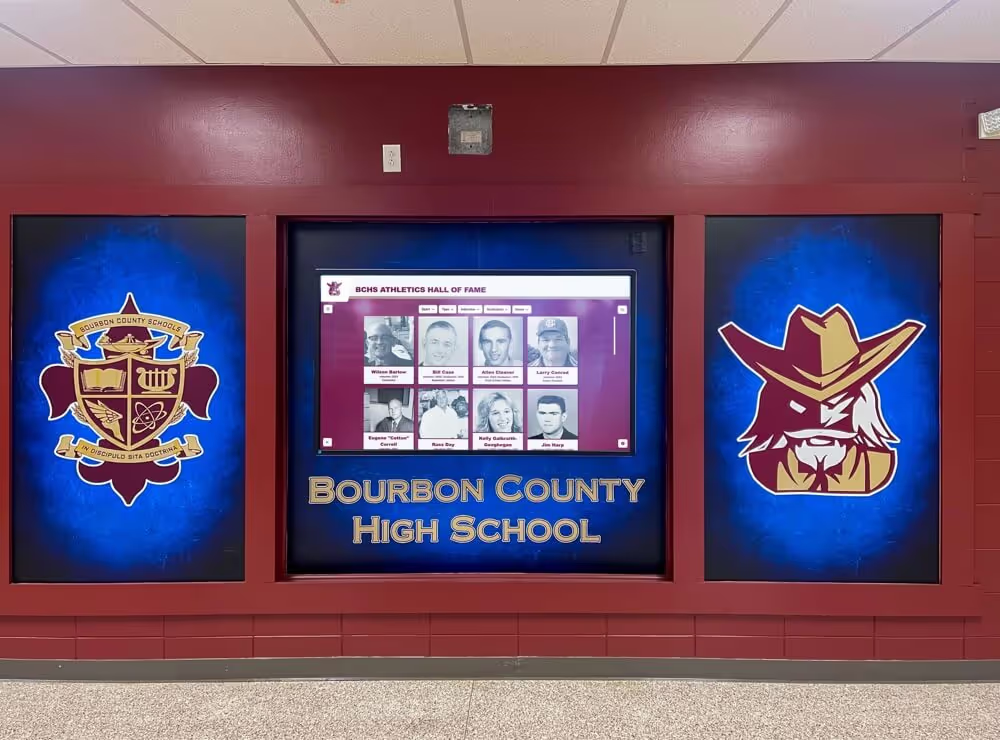
Modern academic displays showcase the achievements that culminate in graduation cord recognition
The Latin Honors System
Latin honors designations provide the traditional framework that most GPA-based cord systems follow.
Three-Tier Latin Honors Structure
The classic Latin honors system creates three achievement levels:
Cum Laude (“with honor”)
- Typically requires 3.5-3.69 cumulative GPA
- Entry-level academic honors designation
- Represents top 20-35% of graduating class at most institutions
- Usually receives gold cord or single gold cord in systems using quantity differentiation
- Demonstrates consistent above-average academic performance
Magna Cum Laude (“with great honor”)
- Generally requires 3.7-3.89 cumulative GPA
- Mid-level honors reflecting substantial academic achievement
- Represents top 10-20% of graduating class typically
- Often receives double gold cords, gold with white, or gold with school color
- Indicates exceptional sustained academic excellence
Summa Cum Laude (“with highest honor”)
- Usually requires 3.9-4.0 cumulative GPA
- Highest academic honor designation
- Represents top 5-10% of graduating class
- Frequently receives triple gold cords, gold combined with white, or distinctive metallic combinations
- Signifies truly outstanding cumulative academic achievement
These GPA ranges represent common thresholds but vary significantly by institution. Elite universities with highly competitive student bodies may set higher requirements, while regional institutions might use slightly lower thresholds ensuring appropriate percentages of graduates receive recognition.
Percentage-Based vs. Fixed GPA Systems
Schools implement Latin honors through two primary approaches:
Fixed GPA Thresholds
- Predetermined GPA requirements (3.5, 3.7, 3.9, for example)
- Allows varying percentages of students to achieve honors across graduating classes
- Creates transparent targets students can track throughout academic careers
- May result in larger or smaller honors groups depending on class achievement
- Provides clear, objective criteria requiring no judgment
Percentage-Based Rankings
- Top specific percentages receive each honor level regardless of absolute GPA
- Ensures consistent honors distribution across graduating classes
- May result in different GPA thresholds each year
- Prevents “honors inflation” as standards rise with class performance
- Creates competition among students rather than absolute achievement targets
Research from the National Collegiate Honors Council indicates that fixed GPA systems provide clearer motivation for students since they can monitor progress toward specific, unchanging targets throughout their academic careers.
Common GPA-to-Cord Color Mappings
While variation exists across institutions, certain patterns appear consistently:
Gold Cords - Universal Honors Symbol
- Gold represents academic achievement most universally
- Single gold cord: Cum laude (3.5-3.69 GPA)
- Double gold cord: Magna cum laude (3.7-3.89 GPA)
- Triple gold cord: Summa cum laude (3.9-4.0 GPA)
Gold and White Combinations
- White symbolizes purity of intellectual pursuit
- Gold/white braided cord often indicates magna cum laude
- Triple gold/white may designate summa cum laude
- National Honor Society also uses gold/white in high schools

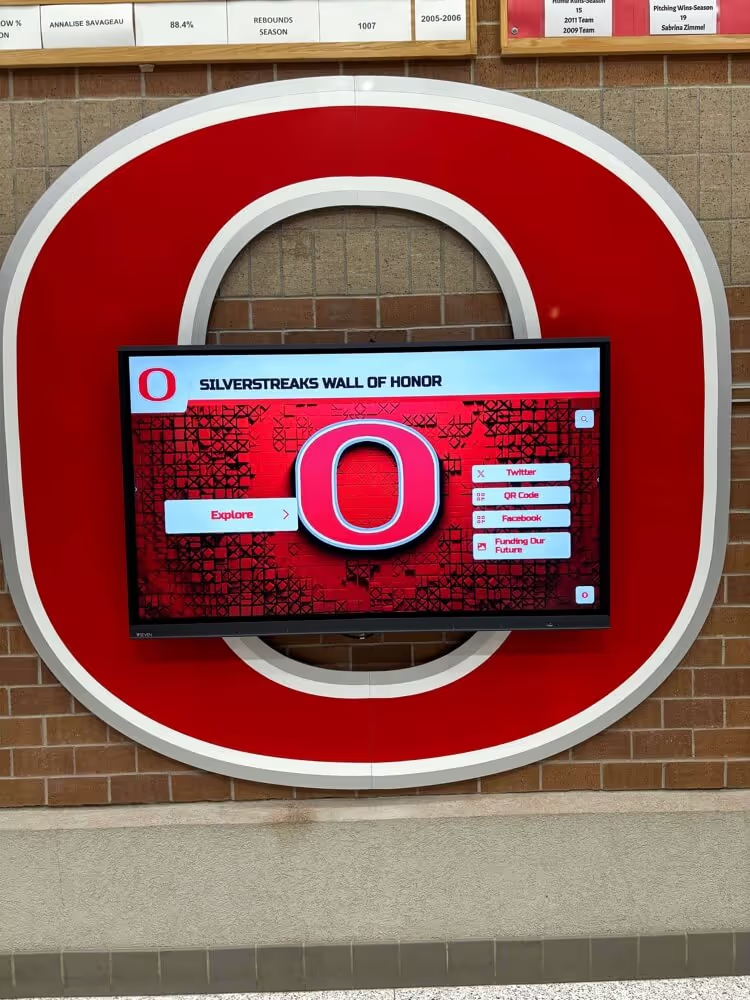
Interactive displays enable students to explore the academic journeys that lead to graduation cord recognition
Silver or White Cords - Alternative Systems
- Some institutions use silver instead of gold
- White cords may indicate specific GPA thresholds
- Metallic silver combined with school colors
- Secondary honors below primary Latin designations
School Color Integration
- Many institutions incorporate school colors
- Gold with school color braiding for specific honor levels
- School color intensity varying by achievement level
- Distinctive institutional identity in honors recognition
High School Honors Cord GPA Systems
Secondary education institutions implement GPA-based cord recognition with approaches tailored to high school contexts.
High School GPA Calculation Considerations
High schools face unique challenges in GPA-based honors determination:
Weighted vs. Unweighted GPA
The weighted versus unweighted GPA question significantly impacts honors eligibility:
Unweighted GPA System (traditional 4.0 scale)
- A = 4.0, B = 3.0, C = 2.0, D = 1.0
- All courses treated identically regardless of difficulty
- Maximum possible GPA of 4.0
- Creates potential disadvantage for students taking challenging coursework
- Simpler calculation but may not reflect course rigor
Weighted GPA System (5.0+ scales)
- Advanced Placement, International Baccalaureate, honors courses receive GPA boost
- AP/IB courses: A = 5.0, B = 4.0, C = 3.0
- Honors courses: A = 4.5, B = 3.5, C = 2.5 (varies by school)
- Rewards students challenging themselves with rigorous coursework
- Can result in GPAs exceeding 4.0 (sometimes reaching 5.0+)
- Requires adjusted honors thresholds
Impact on Cord Eligibility
Schools using weighted systems must adjust honors thresholds accordingly:
- Cum laude might require 4.2-4.4 weighted GPA
- Magna cum laude could need 4.5-4.7 weighted GPA
- Summa cum laude may require 4.8+ weighted GPA
Some high schools solve this by calculating honors using unweighted GPA while reporting weighted GPA for college admissions, creating consistent honors standards across different course-taking patterns.
Explore academic achievement recognition in homecoming celebrations that honor student success.
High School Honors Cord Color Systems
Secondary schools typically implement cord systems with these characteristics:
Valedictorian and Salutatorian Recognition
Top academic achievers receive special distinction:
Valedictorian (highest GPA)
- Gold with white cord combination
- Special tassel designation
- Triple gold cords at some schools
- Recognized during ceremony with speaking opportunity
- Represents absolute highest cumulative GPA
Salutatorian (second-highest GPA)
- Gold with school color combination
- Special recognition though secondary to valedictorian
- Double gold cords frequently
- Often speaks at graduation ceremony
- Second-highest cumulative GPA
Honor Roll-Based Cord Systems
Many high schools tie graduation cords to sustained honor roll achievement:
Principal’s List/High Honor Roll (typically 3.75+ GPA)
- Gold cords or gold with white
- Requires consistent high honor roll throughout high school
- May require 6+ semesters of high honor roll
- Recognizes sustained excellence rather than just senior year
Honor Roll (typically 3.25-3.74 GPA)
- Silver, white, or single gold cord
- Demonstrates above-average consistent performance
- Often requires minimum number of honor roll semesters
- Secondary recognition tier below principal’s list
Merit Recognition (3.0-3.24 GPA)
- School color cords or bronze
- Acknowledges solid academic performance
- May be minimum threshold for cord eligibility
- Encourages students working toward higher achievement

Recognition walls celebrate academic achievements that graduation cords visibly honor
National Honor Society and GPA Requirements
National Honor Society membership provides additional cord recognition connected to GPA:
NHS Eligibility and Cords
National Honor Society requirements include GPA thresholds:
- Minimum 3.0 cumulative GPA for eligibility (some chapters require 3.5+)
- Gold and blue braided cords traditional for NHS
- Some chapters use gold and white combinations
- Requires scholarship, leadership, service, and character beyond just GPA
- Students may wear both NHS cord and Latin honors cords simultaneously
National Junior Honor Society (middle school)
Where middle school graduations occur:
- Similar GPA requirements adapted to middle school context
- Recognition cords matching high school NHS traditions
- Establishes achievement recognition culture early
Learn about comprehensive student recognition in athletic awards that complement academic honors.
College and University Honors Cord Systems
Higher education institutions implement more standardized GPA-based cord recognition following academic traditions.
Standard College Latin Honors GPA Thresholds
Four-year colleges and universities typically use these GPA ranges:
Liberal Arts Colleges and Private Universities
Elite and selective institutions often employ higher thresholds or percentage-based systems:
Example Fixed GPA System
- Summa cum laude: 3.90-4.00 cumulative GPA
- Magna cum laude: 3.75-3.89 cumulative GPA
- Cum laude: 3.50-3.74 cumulative GPA
Example Percentage-Based System
- Summa cum laude: Top 5% of graduating class
- Magna cum laude: Top 10% (excluding summa recipients)
- Cum laude: Top 20% (excluding higher honors)
Public State Universities
Large public institutions frequently use fixed GPA thresholds:
Typical State University System
- Summa cum laude: 3.85-4.00 cumulative GPA
- Magna cum laude: 3.65-3.84 cumulative GPA
- Cum laude: 3.45-3.64 cumulative GPA
These slightly lower thresholds compared to highly selective institutions reflect broader student body academic profiles while maintaining meaningful distinction.
Community Colleges and Two-Year Institutions
Associate degree programs often implement accessible honors systems:
Two-Year College Honors
- Highest honors: 3.75-4.00 cumulative GPA
- High honors: 3.50-3.74 cumulative GPA
- Honors: 3.25-3.49 cumulative GPA
Some community colleges use simpler two-tier systems or align with transfer destination university requirements.
Departmental Honors Beyond GPA
Many college programs offer departmental honors requiring excellence beyond cumulative GPA:
Departmental Distinction Criteria
Academic departments recognize majors demonstrating:
- Minimum GPA in major coursework (often 3.5-3.7+)
- Cumulative GPA meeting basic threshold (typically 3.25-3.5+)
- Successful honors thesis or capstone project completion
- Comprehensive examination passage
- Research or creative work presentation
Departmental Cord Colors
Departments may provide distinctive cords representing:
- Traditional academic discipline colors (engineering = orange, science = gold, etc.)
- School color combined with discipline-specific hue
- Department-designated recognition colors
- Worn in addition to Latin honors cords
Honor Society Cords with GPA Requirements
Academic honor societies issue cords to members meeting GPA criteria:
Phi Beta Kappa (liberal arts and sciences)
- Top 10% of class at participating institutions
- Rigorous GPA requirements varying by institution
- Blue and gold braided cords
- Most prestigious undergraduate honor society
Phi Kappa Phi (all disciplines)
- Top 10% academic standing requirement
- Red and gold cords
- Multidisciplinary recognition
- Graduate and undergraduate membership

Detailed achievement profiles document the sustained excellence that determines honors cord eligibility
Discipline-Specific Honor Societies
Field-specific societies with GPA requirements:
- Beta Gamma Sigma (business): Top 10% of business students, distinctive blue and gold cords
- Tau Beta Pi (engineering): Top 20% of engineering students, orange and white cords
- Sigma Tau Delta (English): Minimum 3.0 GPA with excellence in English, cardinal and black cords
- Psi Chi (psychology): Psychology GPA and cumulative GPA minimums, blue and gold cords
Students may wear multiple honor society cords simultaneously along with Latin honors cords, creating cumulative visible recognition of diverse achievements.
How Schools Determine and Assign Honors Cords
Understanding institutional processes helps students know what to expect and when.
The Honors Determination Timeline
Schools follow systematic processes for determining cord eligibility:
Fall Semester Senior Year
- Initial GPA calculations and projected honors estimates
- Communication about honors eligibility requirements and deadlines
- Information sessions explaining cord ordering and costs
- Preliminary lists of honors-eligible students
Early Spring Semester
- Updated GPA calculations incorporating fall semester grades
- Formal notification of honors candidacy to eligible students
- Cord ordering period begins
- Financial assistance information for students needing support
6-8 Weeks Before Graduation
- Final GPA calculations using all completed coursework
- Official honors designation determination
- Final cord distribution lists published
- Verification process for students questioning designation
2-4 Weeks Before Graduation
- Cord distribution to eligible students
- Verification that all honors students received correct cords
- Backup cord inventory available for errors or late designations
- Final ceremony program preparation with honors designations
Communication and Transparency Requirements
Effective institutions ensure students understand honors systems:
Published Criteria and Requirements
Schools should clearly document:
- Exact GPA thresholds for each honors level
- Whether weighted or unweighted GPA determines honors
- Minimum credit hour requirements at the institution
- Transfer credit policies in GPA calculations
- Appeal or verification processes for disputed calculations
- Timeline for honors determination and notification
Student Notification Systems
Multiple communication channels ensure awareness:
- Individual email notification when honors-eligible
- Student portal indicators showing honors candidacy
- Academic advisor discussions about honors progress
- Published honor roll lists for semester achievements
- Graduation ceremony program listings with honors designations
Accessibility and Equity Considerations
Honors cord programs should address:
- Free or low-cost cord provision for eligible students
- Need-based assistance eliminating financial barriers
- Clear communication in multiple languages for diverse families
- Explanation resources helping families understand honors significance
- Verification processes enabling students to confirm correct designation
Research from the American Council on Education indicates that students who clearly understand honors requirements throughout their academic careers show 15-20% higher sustained GPA maintenance compared to those who learn about systems only during senior year.

Modern recognition systems enable students and families to explore achievement histories and understand recognition criteria
Addressing Common Calculation Issues
GPA-based honors determination occasionally produces disputes requiring resolution:
Transfer Credit Complications
Different institutional policies create confusion:
- Some schools include all transfer credits in GPA calculations
- Others calculate GPA using only institution-specific coursework
- Transfer students may face minimum residency credit requirements
- Clear policies should specify transfer credit treatment
Grade Replacement and Retake Policies
Course retakes affect GPA differently across institutions:
- Some schools replace original grades when courses are retaken
- Others average retake grades with original attempts
- Some count only most recent attempt but show all attempts on transcripts
- Honors calculations should follow consistent, published policies
Rounding Policies
GPA rounding can affect honors designation:
- Some institutions round 3.495 to 3.50, affecting cum laude eligibility
- Others require exact threshold achievement without rounding
- Inconsistent rounding creates equity concerns
- Published rounding policies ensure transparency
Appeal and Verification Processes
Students should have mechanisms to:
- Request GPA calculation verification
- Appeal honors designation decisions
- Correct transcript errors affecting GPA
- Petition for honors consideration with extenuating circumstances
- Access timeline allowing resolution before graduation
Regional and Institutional Variations in Cord Systems
Honors cord practices vary significantly across institution types and geographic regions.
International Baccalaureate and Advanced Programs
Specialized programs create additional cord recognition opportunities:
IB Diploma Recognition
International Baccalaureate students often receive:
- IB-specific cords (commonly navy blue or blue/white) for diploma completion
- Separate GPA-based honors cords following institutional standards
- Recognition of both IB achievement and cumulative GPA excellence
- Special acknowledgment during ceremonies for rigorous program completion
IB students may wear both IB program cords and Latin honors cords, with some graduating with 3-4 different cords representing various achievements.
Advanced Placement Scholar Recognition
While AP Scholar awards don’t traditionally include standardized cords:
- Some high schools provide AP-specific cords for students earning AP Scholar designations
- Recognition of 3+ on multiple AP exams
- Cord colors vary by institution (often school colors or gold variations)
- Worn alongside GPA-based honors cords
Dual Enrollment and Early College
Students completing college coursework during high school:
- May receive recognition for associate degree completion alongside diploma
- College-level GPA calculated separately from high school GPA
- Some institutions provide distinctive cords for early college graduates
- Creates pathway recognition beyond traditional honors
Military Academy and ROTC Distinctions
Service academy and ROTC students receive specialized recognition:
Military Academy Honors
Service academies implement rigorous academic standards:
- Dean’s List recognition for semester GPA achievement
- Distinctive academic excellence cords
- Gold stars or special insignia on uniforms
- Recognition integrated with military honors and rankings
ROTC Academic Excellence
Reserve Officers’ Training Corps programs recognize:
- Academic achievement alongside military training excellence
- University Latin honors plus ROTC-specific recognition
- Leadership and academic combined achievement awards
- Distinctive cords or uniform modifications acknowledging success
Professional Programs and Graduate Schools
Graduate-level programs adapt honors recognition:
Law School Honors
Legal education uses specialized recognition:
- Order of the Coif for top 10% of graduating class
- Latin honors based on law school GPA
- Journal membership recognition
- Distinctive hoods and cords for legal education
Medical School Recognition
Medical degree programs recognize achievement through:
- Alpha Omega Alpha honor society membership
- Gold Humanism Honor Society recognition
- Academic achievement acknowledgment
- Clinical excellence awards
MBA and Business Graduate Programs
Business schools implement professional program honors:
- Beta Gamma Sigma honor society for top performers
- Concentration-specific excellence recognition
- Leadership and academic combined awards
- Professional recognition alongside academic achievement
Wearing Multiple Cords: Understanding Cumulative Recognition
Many students earn multiple cords representing diverse achievements beyond GPA alone.
Cord Wearing Etiquette and Guidelines
When students receive multiple honors cords:
How Many Cords Can Students Wear?
No formal maximum exists, though practical considerations emerge:
- Most students wear 2-6 cords representing different achievements
- Physical limitations emerge around 6-8 cords (becomes unwieldy)
- Students should wear all earned cords rather than selecting favorites
- Multiple cords demonstrate comprehensive excellence across categories
Arranging Multiple Cords
Proper arrangement ensures all recognition remains visible:
- Distribute cords evenly around neck preventing bunching
- Layer cords so all colors remain visible in photographs
- Most prestigious innermost (closest to gown), though order varies
- Left-right balance creating symmetrical appearance
- School should provide guidance on arrangement best practices
Coordinating GPA Cords with Other Recognition
Students often combine:
- Latin honors cords (GPA-based)
- Honor society cords (GPA + other criteria)
- Departmental excellence cords (major-specific achievement)
- Leadership and service cords (extracurricular recognition)
- Specialized program cords (IB, ROTC, special programs)
This cumulative recognition creates comprehensive celebration of multi-dimensional student achievement.
Photographing and Documenting Cord Recognition
Preserving the visible recognition cords provide:
Ceremony Photography Strategies
Ensuring cords appear prominently:
- Professional photographers aware of cord significance
- Close-up photos showing cord details and colors
- Poses highlighting multiple cords
- Family photos capturing full regalia
- Stage crossing photography documenting cord-wearing graduates
Post-Graduation Cord Preservation
Many graduates preserve cords through:
- Shadow boxes with diploma, tassel, and cords
- Framed displays in homes or offices
- Photograph albums featuring regalia and ceremony
- Memory quilts incorporating graduation elements
- Passing cords to future generations as family achievement symbols
Digital Recognition Integration
Modern platforms extend cord recognition beyond ceremony day:
- Digital profiles documenting honors earned and corresponding cords
- Searchable databases of honors graduates and achievement levels
- Photo galleries showing graduates in full regalia with cords
- Alumni directories indicating honors designations
- Virtual halls of fame preserving graduation recognition
Solutions like Rocket Alumni Solutions enable institutions to create comprehensive digital recognition systems showcasing honors graduates with their achievement details, cord colors earned, and the academic journeys that led to recognition—preserving graduation honors far beyond commencement day.
Beyond the Cord: What GPA-Based Honors Really Mean
Understanding the lasting significance of academic achievement beyond ceremonial recognition.
Academic Transcript Notation
Honors designations appear permanently on official transcripts:
Transcript Recording Practices
Institutions document honors through:
- Latin honors designation printed on official transcripts
- Degree conferral records noting honors level
- Separate honors notation in academic record systems
- Permanent documentation accessible throughout career
Professional and Graduate School Value
Transcript honors recognition provides:
- Objective achievement marker for employer evaluation
- Graduate school application enhancement
- Professional credential validation
- Lifetime academic accomplishment documentation
Research indicates that Latin honors designations significantly influence graduate school admission decisions, with honors graduates admitted to competitive programs at 25-35% higher rates compared to non-honors candidates with similar test scores.
Scholarship and Award Connections
GPA thresholds determining cord eligibility often align with:
Merit Scholarship Requirements
Financial aid tied to GPA achievement:
- Institutional scholarships often requiring 3.5+ GPA
- External scholarship eligibility using similar thresholds
- Renewal requirements maintaining honors-level GPA
- Competitive awards prioritizing honors-designated candidates
Honor Society Eligibility
Academic honor societies use similar GPA requirements:
- Phi Beta Kappa, Phi Kappa Phi, and others requiring top percentage achievement
- Discipline-specific societies with major GPA thresholds
- Lifetime membership benefits and networking
- Career connections through alumni networks
Graduate Assistantships and Fellowships
Advanced study funding often requires:
- Minimum undergraduate GPA of 3.0-3.5
- Honors designation strengthening competitiveness
- Teaching and research assistantship opportunities
- Fellowship consideration for highest achievers
Career Implications of Honors Recognition
Graduation honors affect professional trajectories:
Employer Perspectives
Hiring managers view Latin honors as:
- Work ethic and dedication indicators
- Intellectual capability demonstrations
- Detail orientation and persistence markers
- Competitive advantage in applicant pools
Resume and CV Presentation
Honors should appear prominently:
- Degree listing with Latin honors designation
- GPA inclusion when meeting employer thresholds (typically 3.5+)
- Honors society memberships in activities section
- Academic awards and recognitions category
Long-Term Professional Impact
Early career advantages from honors recognition:
- Higher starting salary offers (averaging 5-12% higher for honors graduates)
- Accelerated promotion consideration
- Leadership program selection
- Credibility in academic and research-oriented careers
Explore comprehensive recognition approaches in alumni events that celebrate academic success.
Planning Your Path to Honors Cord Eligibility
Strategic approaches help students achieve GPA thresholds earning graduation recognition.
Setting GPA Goals Early
Beginning from freshman year creates achievable paths:
First-Year Foundation Building
Establishing strong early GPA:
- Research institutional honors thresholds before enrollment
- Understand how GPA calculations work at your school
- Build solid GPA foundation in general education courses
- Seek academic support resources early when struggling
- Balance course load avoiding overwhelming first-semester schedules
Tracking Progress Throughout Academic Career
Systematic monitoring enables course correction:
- Calculate cumulative GPA after each semester
- Understand how individual grades affect cumulative average
- Use GPA calculators projecting future requirements
- Meet regularly with academic advisors discussing honors progress
- Adjust course selection and study strategies maintaining trajectory
Strategic Course Selection for GPA Management
Thoughtful course choices support honors achievement:
Balancing Rigor and Performance
Finding the appropriate challenge level:
- Challenge yourself with rigorous coursework demonstrating capability
- Avoid overloading on extremely difficult courses simultaneously
- Consider professor reputation and grading patterns
- Use pass/fail options strategically for required courses outside strengths
- Sequence challenging courses across semesters for manageable load
Major and Elective Selection
Curriculum decisions affecting GPA:
- Choose major aligning with genuine interests and strengths
- Select electives strategically in strong subject areas
- Consider minor or concentration complementing major strengths
- Research grade distributions in potential courses
- Balance distribution requirements with preferred subjects
Grade Replacement and Retake Strategies
When courses don’t go well:
- Understand institutional grade replacement policies
- Retake courses where policies allow replacement
- Prioritize retaking courses with greatest GPA impact
- Use summer sessions for retakes when beneficial
- Focus improvement energy on courses with most effect
Academic Support Resources
Utilizing available assistance:
Institutional Support Systems
Schools offer numerous GPA-supporting resources:
- Writing centers for composition and research assistance
- Tutoring centers providing subject-specific help
- Peer tutoring and study group facilitation
- Academic coaching for study skill development
- Disability services ensuring appropriate accommodations
- Academic advisors providing strategic guidance
Building Effective Study Habits
Practices supporting sustained achievement:
- Consistent study schedules rather than last-minute cramming
- Active learning strategies beyond passive reading
- Practice testing and self-assessment
- Collaborative study with motivated peers
- Time management preventing overcommitment
- Physical health maintenance supporting cognitive performance
Seeking Help Proactively
Addressing challenges early:
- Attend professor office hours regularly
- Request help at first sign of confusion, not after failing
- Communicate with instructors about challenges
- Explore course withdrawal when appropriate
- Use grade forgiveness policies when available
Frequently Asked Questions About Honors Cord Colors and GPA
What GPA do you need for honors cords?
GPA requirements for honors cords vary by institution but typically follow these ranges: cum laude honors require 3.5-3.69 cumulative GPA, magna cum laude requires 3.7-3.89 GPA, and summa cum laude requires 3.9-4.0 GPA at most colleges and universities. High schools often use similar thresholds adjusted for their GPA scales (weighted or unweighted). Some institutions use percentage-based systems where top 5%, 10%, and 20% of the class receive different honors levels regardless of absolute GPA. Always check your specific school’s requirements, as thresholds vary across institutions.
What color cord is 3.5 GPA?
A 3.5 GPA typically earns a gold honors cord representing cum laude (with honors) recognition at most institutions. Gold serves as the universal color symbolizing academic achievement, with a single gold cord indicating the entry level of Latin honors. Some schools use gold combined with white, gold with school colors, or silver instead of gold. The specific color depends on institutional tradition, but gold remains the most common cord color for the 3.5-3.69 GPA range that qualifies for cum laude honors at colleges and universities following standard Latin honors systems.
What GPA is a white cord?
White cords don’t have a standardized GPA association like gold does for Latin honors. Some institutions use white cords combined with gold for higher honors levels like magna cum laude (3.7-3.89 GPA) or summa cum laude (3.9-4.0 GPA). Other schools use white cords for specific recognitions beyond pure GPA, such as National Honor Society membership, dean’s list achievement, or departmental honors. White may also indicate secondary honors levels at institutions using alternative color systems instead of traditional gold. Check your specific school’s honors cord system, as white cord meanings vary significantly across institutions.
Do all schools use the same cord colors for GPA levels?
No, schools do not use standardized cord color systems for GPA levels. While gold remains the most common color representing academic honors across institutions, specific GPA-to-cord mappings vary significantly. Some schools use single, double, or triple gold cords to distinguish honors levels, while others use gold combined with white, silver, or school colors. A few institutions use entirely different color systems. Honor societies add further variation—National Honor Society uses gold and blue or gold and white, while other organizations have distinctive colors. Always verify your specific institution’s cord color system rather than assuming universal standards.
Can you wear multiple honors cords at graduation?
Yes, students can and should wear all honors cords they earn at graduation. Many graduates wear 2-6 cords representing different achievements: GPA-based Latin honors cords, honor society membership cords, departmental excellence cords, and specialized program recognition cords. No formal maximum exists, though practical limits emerge around 6-8 cords when wearing becomes unwieldy. Students should arrange multiple cords evenly around their neck so all colors remain visible in photographs. Wearing multiple cords demonstrates comprehensive excellence across different achievement categories and is encouraged by most institutions as appropriate recognition of diverse accomplishments.
Does graduating with honors cords help your career?
Yes, graduating with honors cords provides career advantages by signaling the Latin honors designation permanently recorded on your transcript. Research indicates honors graduates receive 5-12% higher starting salary offers and gain admission to graduate programs at 25-35% higher rates compared to non-honors peers. Employers view Latin honors (represented by graduation cords) as indicators of work ethic, intellectual capability, and persistence. The transcript notation “cum laude,” “magna cum laude,” or “summa cum laude” provides lifetime professional credibility. While the physical cord itself is ceremonial, the academic achievement it represents offers tangible career benefits through enhanced resume credentials and demonstrated excellence.
Honoring Academic Achievement Through Meaningful Recognition
Honors cord colors by GPA create visible celebration of the sustained academic dedication that defines scholarly excellence, transforming graduation ceremonies into colorful demonstrations of intellectual achievement that families, peers, and communities can immediately recognize and appreciate. When schools implement clear GPA thresholds, transparent communication systems, and meaningful cord color distinctions, they create recognition programs that appropriately honor the years of focused effort behind every cord draped over graduation gowns.
The GPA-to-cord mapping systems explored throughout this comprehensive guide provide frameworks ensuring academic recognition remains consistent, equitable, and aligned with educational traditions dating back centuries. From the standard three-tier Latin honors structure using cumulative GPA thresholds through specialized honor society requirements and departmental excellence recognition, these systematic approaches ensure that visible graduation honors accurately reflect genuine academic accomplishment deserving celebration.
Understanding how honors cords correspond to specific GPA achievements empowers students to set clear academic goals throughout their educational careers, provides families with context to appreciate the significance of earned recognition, and enables institutions to implement programs that maintain meaningful standards while celebrating diverse forms of scholarly excellence. When combined with permanent transcript notation and professional credential value, these colorful ceremonial cords represent far more than decorative accessories—they symbolize intellectual dedication, sustained performance, and the pursuit of excellence that defines academic achievement.
Preserve Honors Cord Recognition Beyond Graduation Day
Discover how modern digital recognition solutions can showcase honors graduates, document GPA-based achievements, and celebrate academic excellence year-round through interactive displays that inspire current students toward the accomplishments those cords represent.
Explore Recognition SolutionsWhether your institution follows traditional Latin honors thresholds with gold cord systems, has developed unique local recognition using specialized color combinations, or implements percentage-based approaches ensuring consistent honors distribution, the key lies in maintaining transparent criteria, consistent implementation, and meaningful standards that ensure cords represent genuine achievement worthy of the recognition they provide. Your graduating students’ academic accomplishments deserve celebration that honors their sustained dedication while inspiring those who follow toward the intellectual excellence that makes these colorful achievements meaningful.