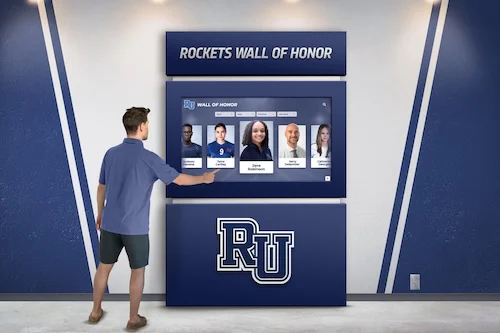
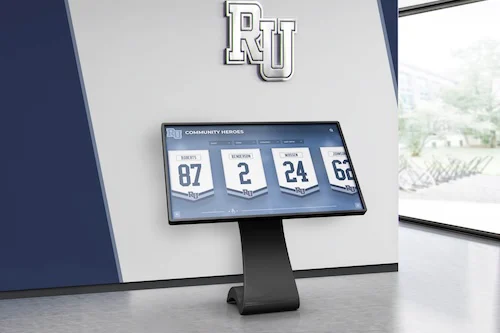

The right NCHSAA Commissioner’s Trophy display decision starts with one clarification: label this award as school-level community service recognition, not a competitive championship. The 2025-2026 NCHSAA Commissioner’s Trophy recipient list names eight North Carolina high schools whose student-athletes undertook action-oriented service projects during the school year. Each entry identifies the school as recipient and the specific athletic group that led the project. A display label that captures both—along with the award name, the cycle year, and the organizing body—gives every visitor an accurate read without suggesting any competitive outcome occurred.
What the label must not say: “championship,” “title,” or any competitive qualifier. What it must not do: fold this recognition into the school’s competitive trophy count or list it as an individual athlete honor. The NCHSAA awards page lists the Wells Fargo Cup and the Commissioner’s Trophy as separate recognitions. They measure different things, and a display environment should reflect that distinction clearly.
Knowing what the award recognizes—and what it does not—makes every label and placement decision straightforward.
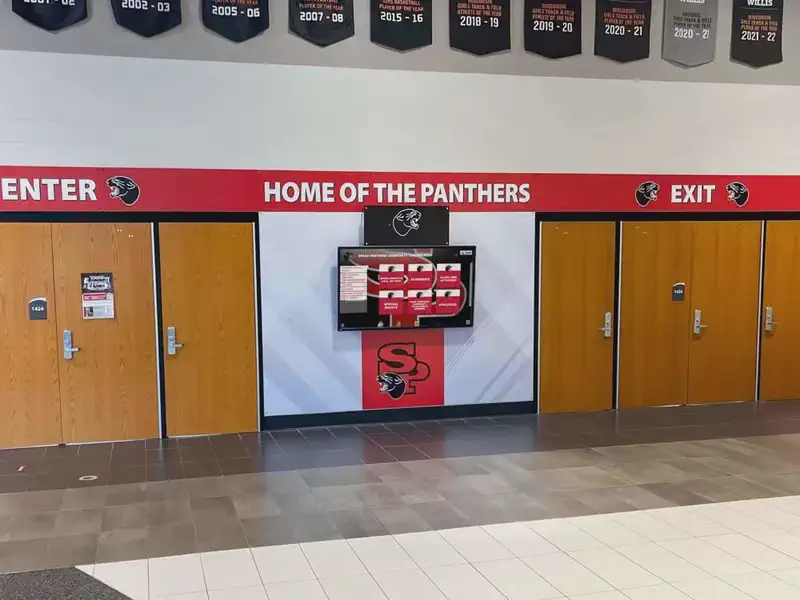
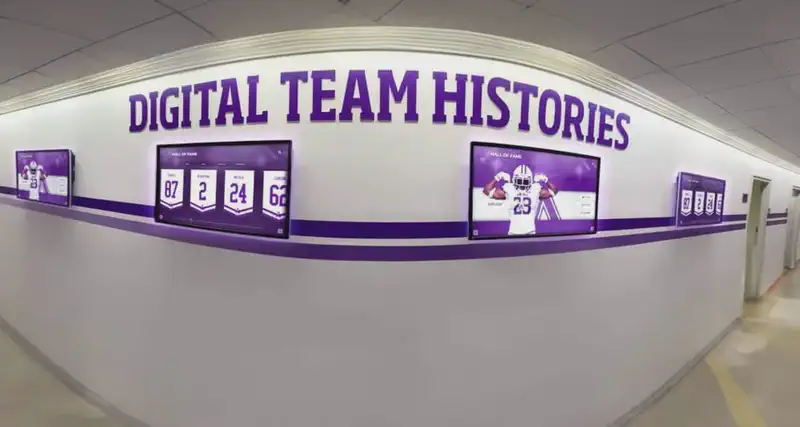
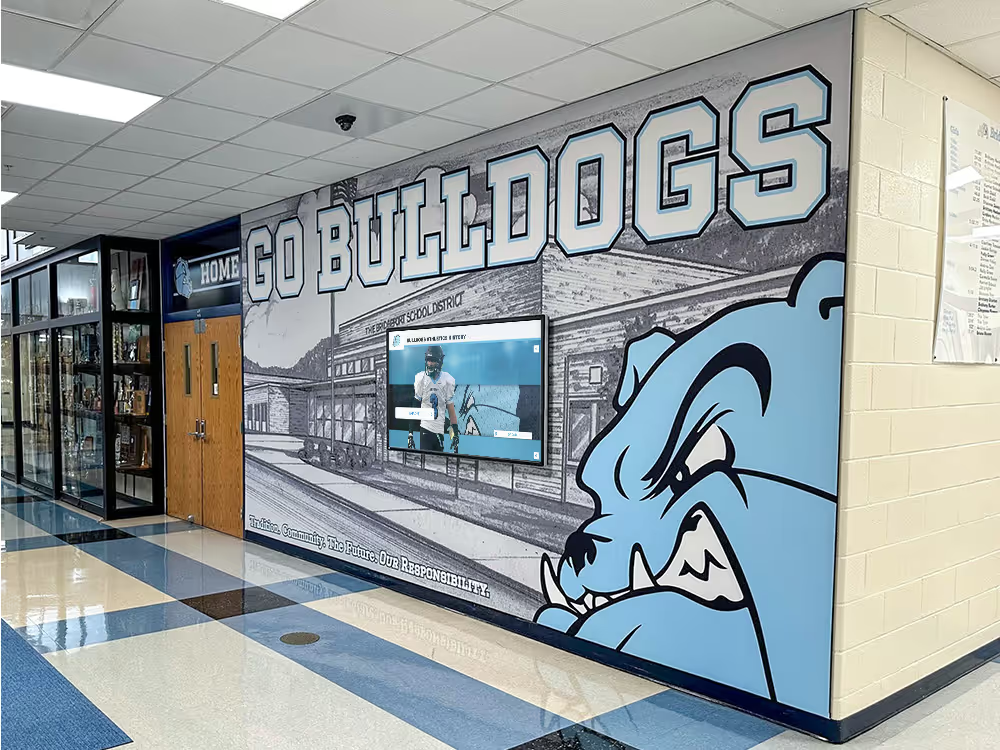
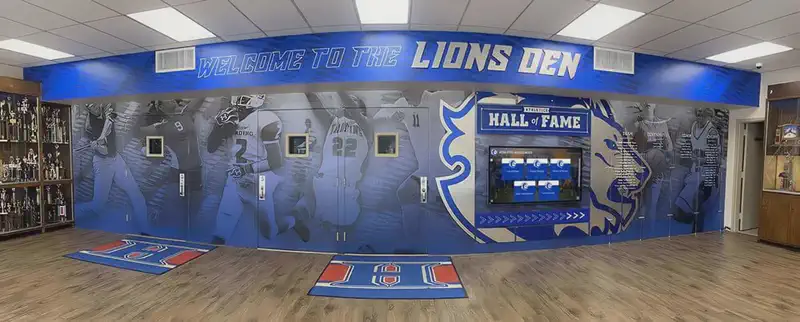
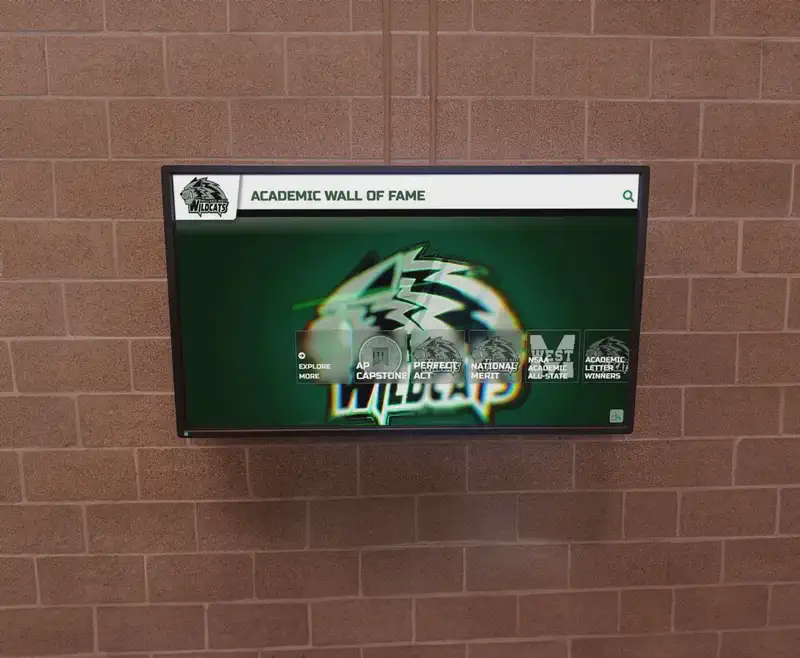
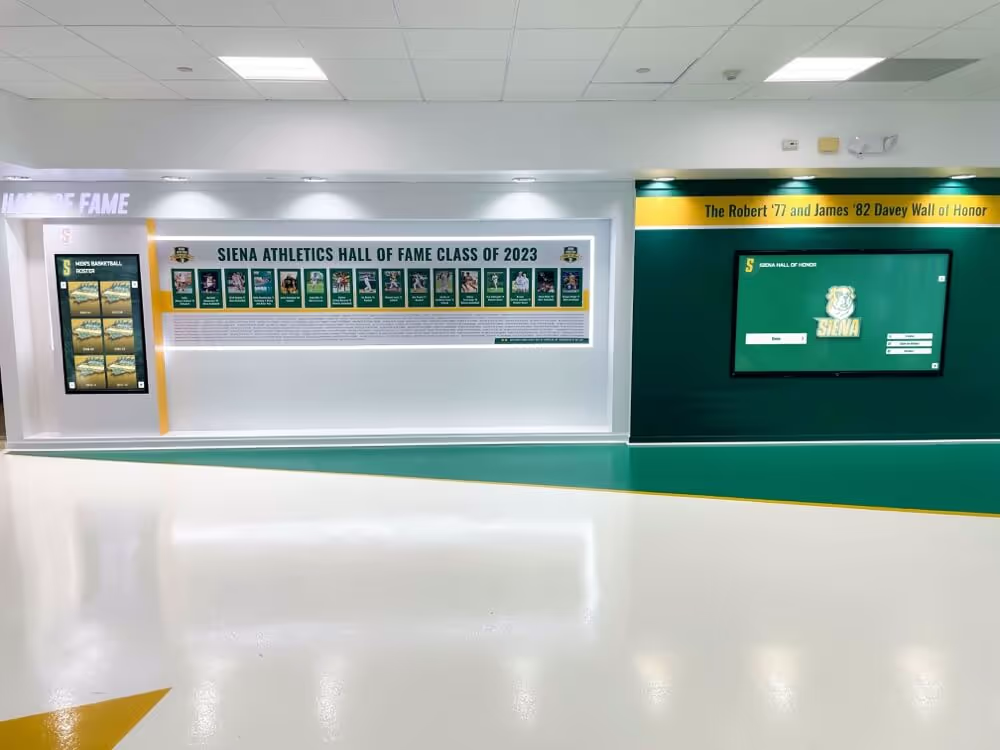
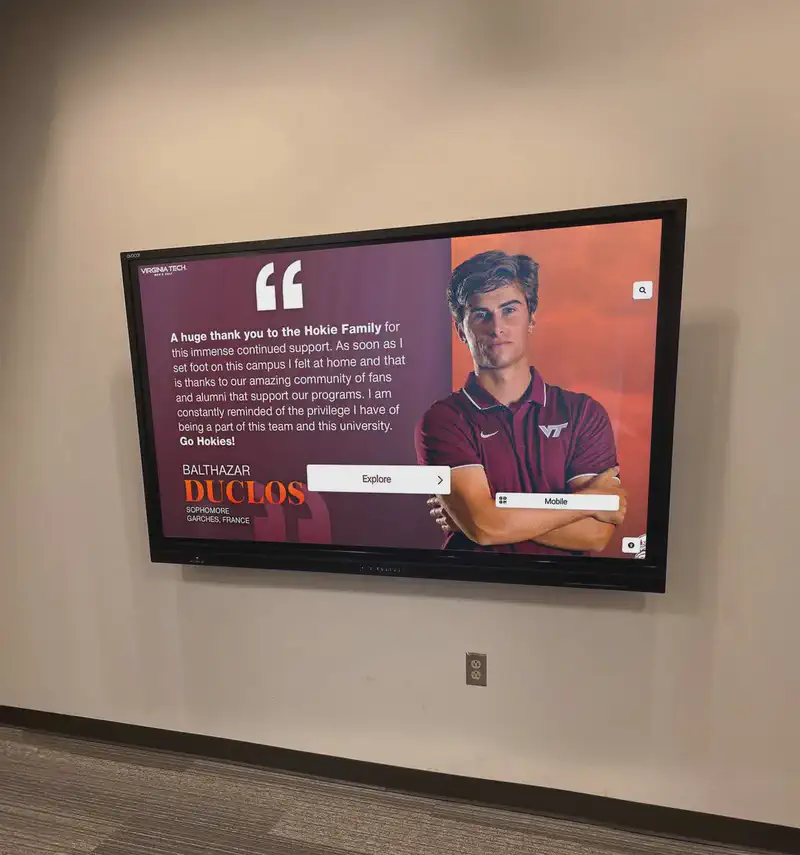
A hallway display environment that organizes recognition by labeled category makes it straightforward to place community service awards separately from competitive titles—each visible to visitors without confusion about what it represents
What the NCHSAA Commissioner’s Trophy Recognizes
The Commissioner’s Trophy is not a sport championship. It is a school-level recognition for community and institutional service—awarded to NCHSAA member schools whose student-athletes address community and school needs through action-oriented projects during the school year.
The 2025-2026 release, dated April 20, 2026, names eight recipient schools and identifies the specific athletic group credited with leading each project: Ashe County (women’s tennis), Athens Drive in Raleigh (football), Eastern Guilford (cheer), Felton Grove in Apex (multiple sports), Franklin (multiple sports), Mount Tabor in Winston-Salem (men’s and women’s soccer), North Henderson (volleyball), and West Brunswick (dance).
NCHSAA Commissioner Que Tucker’s statement from the release captures the award’s basis: “These efforts embody the ‘why’ we do what we do in education-based athletics. Student-athletes working as teams invested in greater community building endeavors demonstrates how classroom teaching and learning yields life lessons and practices that students will carry with them well beyond playing days.”
The criteria are service-oriented. No opponent was defeated. No bracket determined the outcome. The fact that specific athletic programs organized each project does not convert the award into a sport team championship in those programs. The recognition belongs to the institution for community engagement, not to the team for athletic performance.
How the Commissioner’s Trophy Differs from the Wells Fargo Cup
The NCHSAA awards page presents the Wells Fargo Cup and the Commissioner’s Trophy as distinct school-level recognitions. They operate under different criteria, and they serve different purposes in a display environment.
The Wells Fargo Cup measures athletic performance across sports programs over a school year—it is a competitive recognition based on how programs finish in NCHSAA-sanctioned competition. The Commissioner’s Trophy measures community service. A school that earns both in the same year has two separate achievements; each belongs in its own display category, labeled by what it actually recognizes.
Placing both under a single “School Awards” header without further distinction risks implying they share criteria. For visitors and families who read the display, the category label does the clarifying work that the award name alone cannot.
Why This Recognition Should Not Enter the Competitive Count
A common display mistake is adding a Commissioner’s Trophy to the count of state championships, conference titles, or bracket results for the athletic program named in the release. The logic runs: “Our volleyball team earned a Commissioner’s Trophy—it goes with the volleyball awards.” That logic is wrong in two ways.
First, the award recipient is the school, not the volleyball team. The release identifies the athletic group that organized the project; it does not assign the award to that team for sport performance.
Second, the award criteria are not competitive. Including the Commissioner’s Trophy in a sport program’s title count misrepresents both what the honor is and what the program achieved in competition. A visitor reading a volleyball trophy case that includes a Commissioner’s Trophy entry alongside state runner-up plaques has no way to know, without additional context, that one entry measures service and the others measure athletic standing.
The clean solution is a separate category, clearly labeled, so each type of recognition is immediately legible.
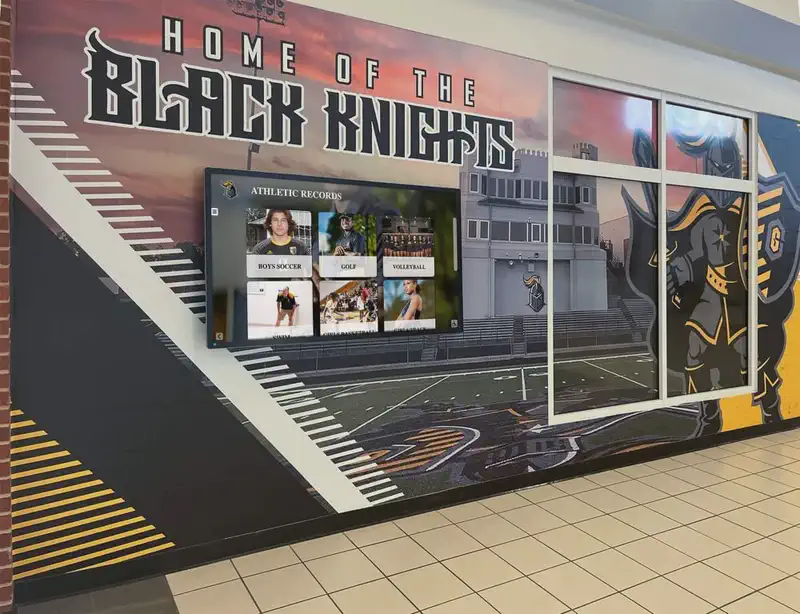
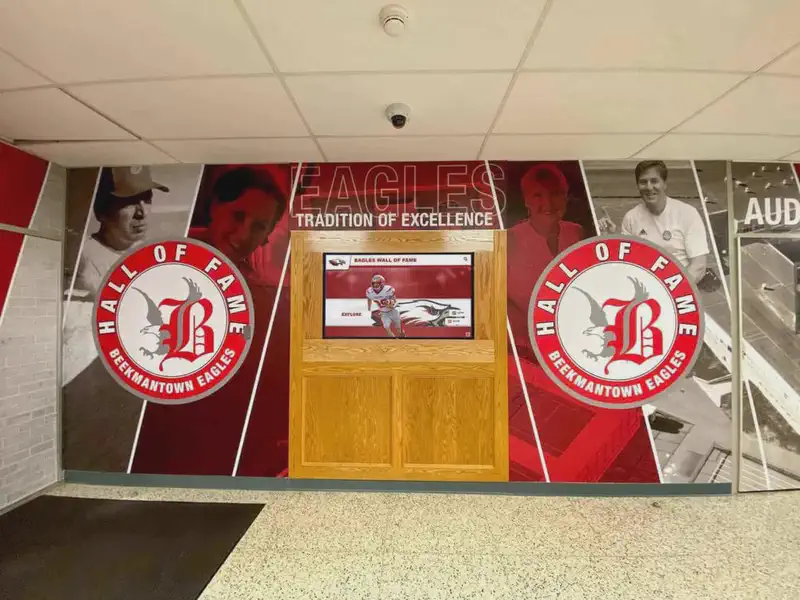
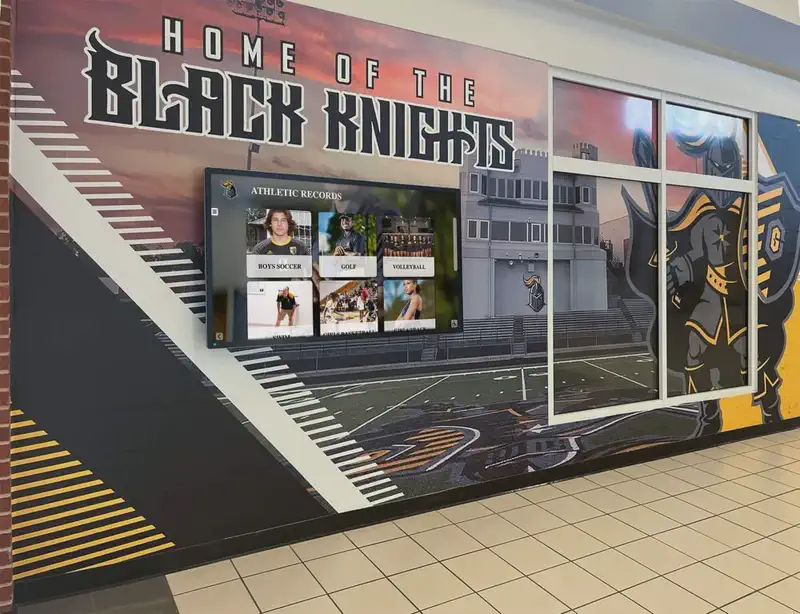
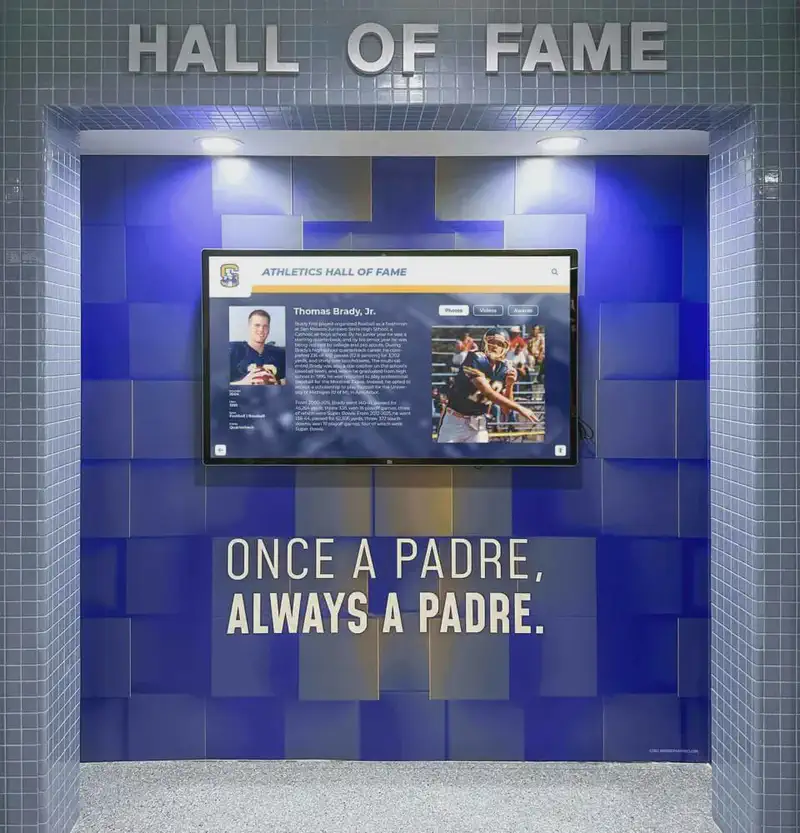
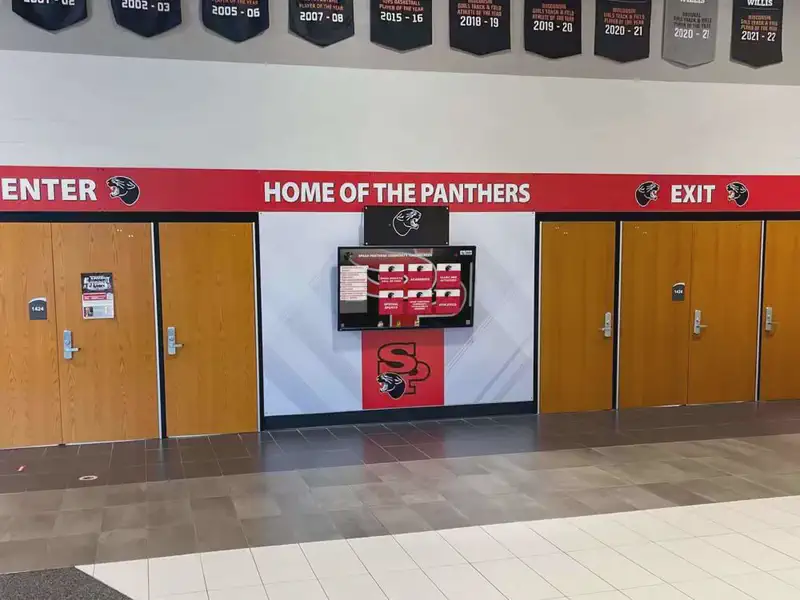
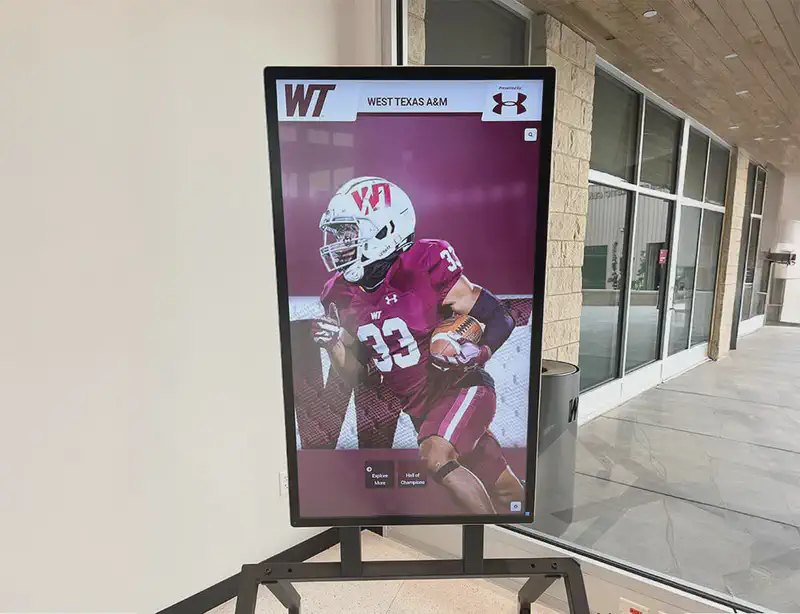
Digital screens in athletic hallways can organize recognition by type—competitive records in one section, program awards in another—so visitors can find each category without reading category confusion into adjacent entries
The Award Recipient and Label Components
The NCHSAA names the school as the Commissioner’s Trophy recipient. For display purposes, the athletic group attribution from the release enriches the entry without changing who receives the award.
A complete label for the Commissioner’s Trophy covers four required components and one optional field:
| Label Component | What It Communicates | Example Value |
|---|---|---|
| School name | Identifies the award recipient as named in the NCHSAA release | [School Name] |
| Athletic group attribution | Names the program that led the project, as identified in the release | Led by [Sport Program] |
| Award name and issuing body | Names the specific award and the organizing association | NCHSAA Commissioner’s Trophy |
| Cycle year | Anchors the entry to a specific school year | 2025-26 |
| Project description (optional) | Useful in digital entries where description space is available; use the language from the NCHSAA release | From the release entry for that school and year |
The project description is optional in physical displays where space is limited. In a digital entry, it provides context that the award name alone cannot carry, and it identifies specifically what the program did—not a generic statement about service.
The 2024-2025 release illustrates how this attribution works in practice: Ardrey Kell High School’s volleyball team was identified as the program that led their cycle’s project. The school is the recipient; the team attribution tells display readers who organized the work. A school may earn the award in multiple cycles with different programs listed in different years—each entry should reflect the specific cycle, the specific program named, and that year’s project as described in the release.
Optional Caption Examples
The following are templates with a fictitious project description included for illustration. The project text is illustrative only; use the actual project description from the NCHSAA release for the relevant school and cycle.
Example A — Compact, institution-first:
[School Name] · Led by [Sport Program] · NCHSAA Commissioner’s Trophy · Community Service Recognition · 2025-26
This pattern fits a physical label, a banner line, or a brief digital entry where description space is limited. It identifies the recipient, the leading program, the award, the category, and the year.
Example B — Descriptive, with project context (illustrative project in brackets):
[School Name] · [Sport Program] · [Illustrative project: organized a multi-week supply collection drive to support area residents facing food insecurity] · NCHSAA Commissioner’s Trophy · 2025-26
The italicized project text in Example B is illustrative only. Replace it with the description from the NCHSAA release for the actual school and year. Do not apply a description from one cycle to a different year’s entry.
For a parallel example of how to caption a distinct professional athletic staff recognition—where the same discipline of naming the award, the recipient role, and the program applies—the high school athletic equipment manager award display guide provides a comparable framework from a staff recognition context.
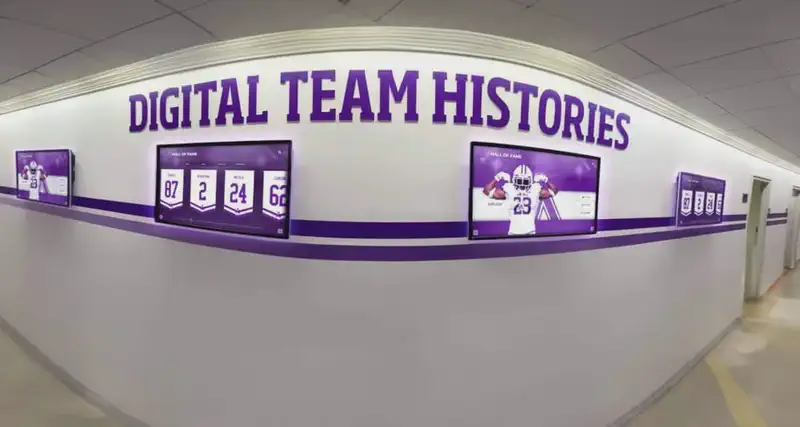
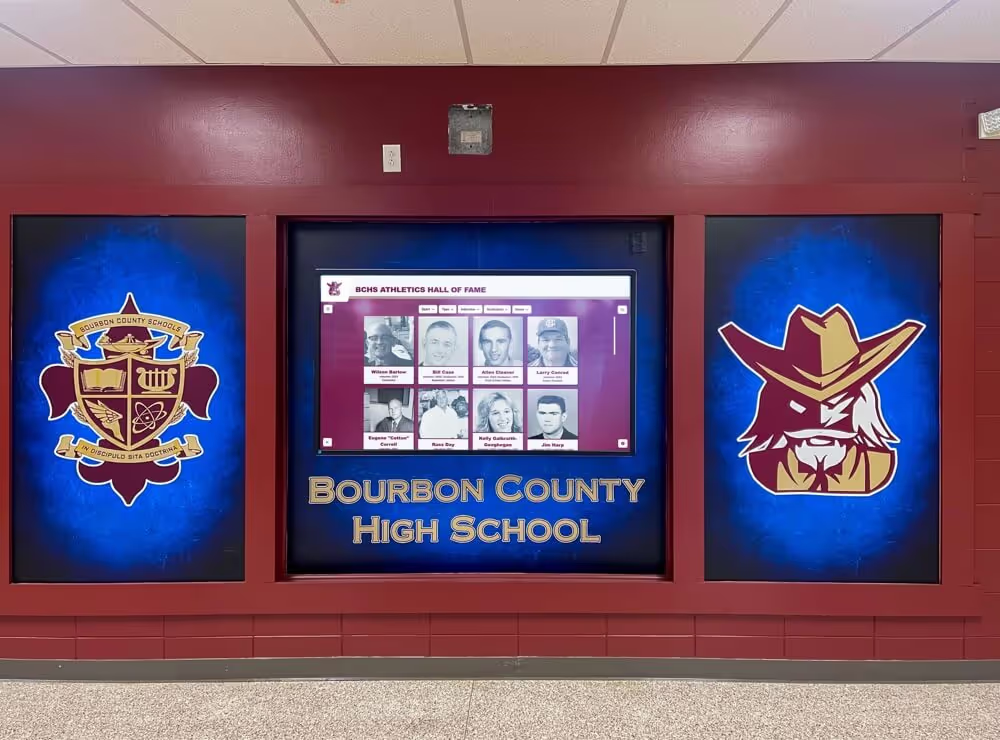
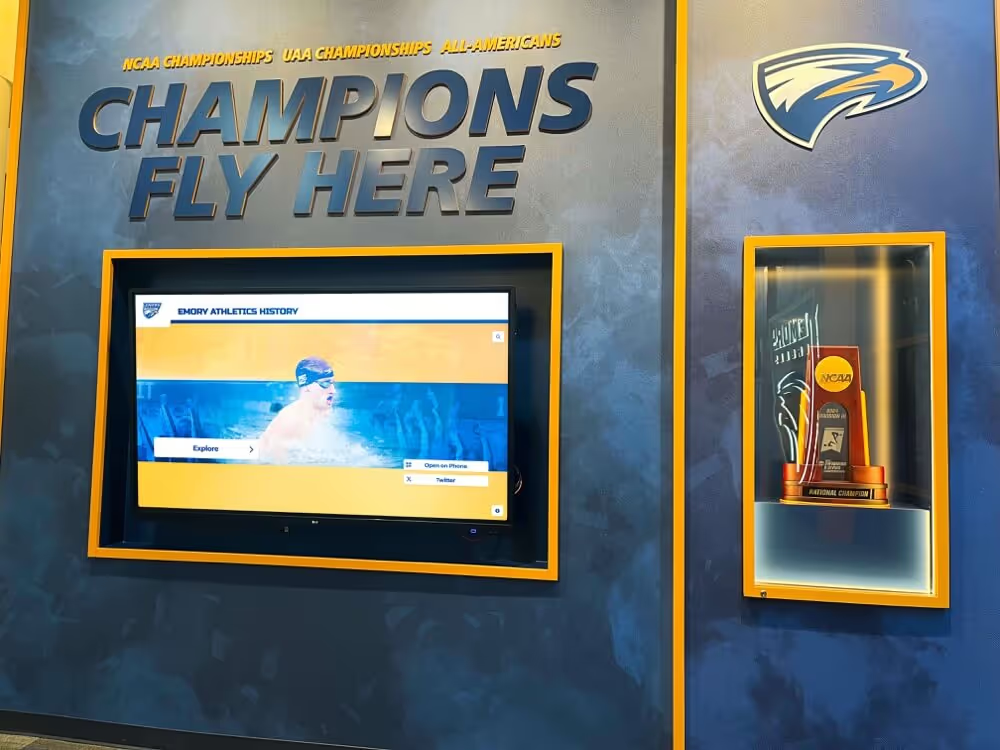
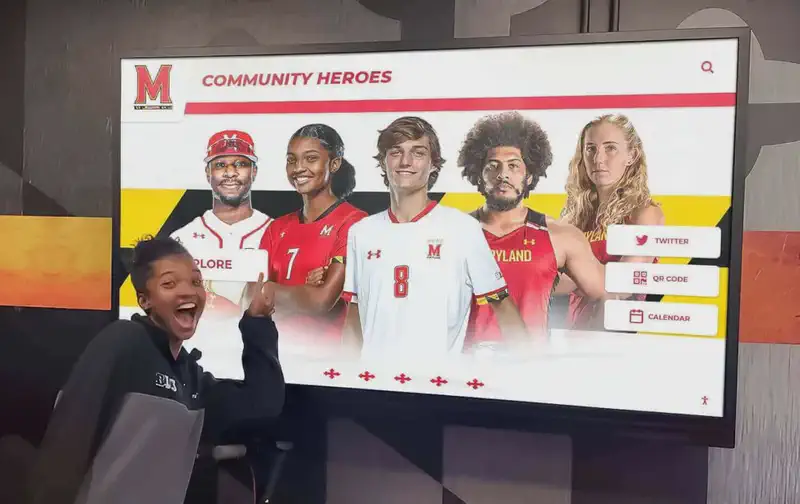
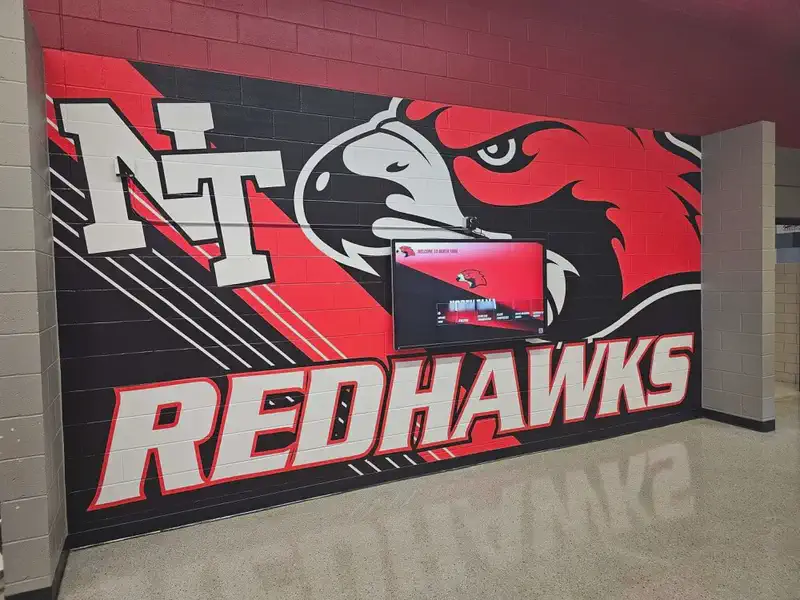
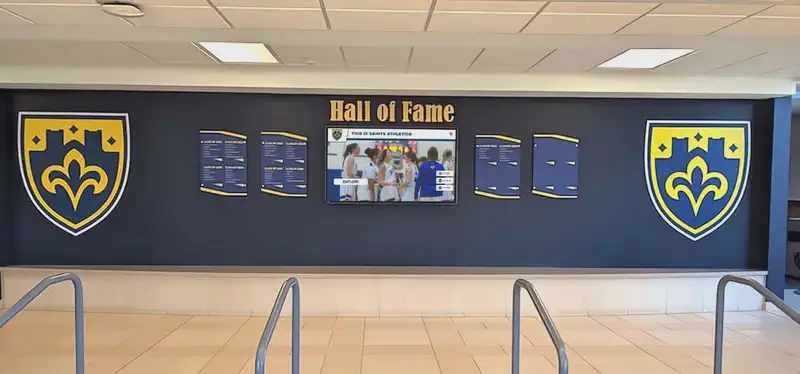
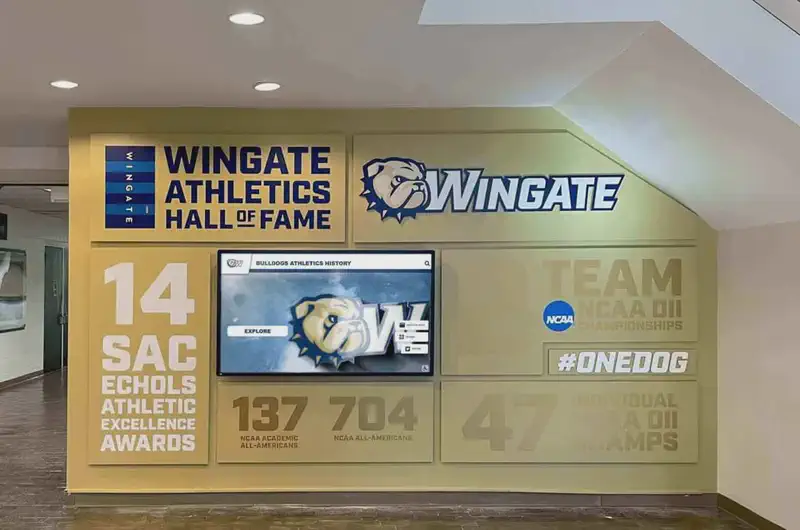
Multi-screen hallway installations can dedicate separate screens or sections to different recognition categories, making it straightforward to present community service honors separately from athletic competitive histories
Placement in Your Awards Environment
Place the NCHSAA Commissioner’s Trophy in a school-level community service or program recognition section—distinctly separate from the following:
- Competitive championship sections — reserved for state titles, conference championships, bracket results, and playoff honors
- Individual athlete honor sections — all-state selections, scholar-athlete designations, and similar individually-conferred awards
- Sport-specific trophy cases — organized around a single program’s competitive history
A category header—“Community Service Recognition,” “NCHSAA Program Awards,” or “School-Level Recognition”—placed above the Commissioner’s Trophy entry does the disambiguation work for every visitor who reads the display. With or without digital infrastructure, that header prevents the entry from being misread as a competitive outcome.
For schools that hold both competitive titles and service recognitions in the same program (a common situation for active athletic departments), keeping the two categories visually and structurally separate ensures each reads accurately. For how schools handle the parallel challenge of distinguishing individual, team, and institutional-level sportsmanship recognitions in a shared display, the high school sportsmanship award recognition guide covers the organizational decisions that apply across non-competitive school honors.
Combining Physical and Digital Display
A physical entry—a plaque, certificate frame, or display panel—communicates in the space where it hangs. A digital entry in a touchscreen or searchable kiosk extends that communication to any screen where the award catalog is accessible.
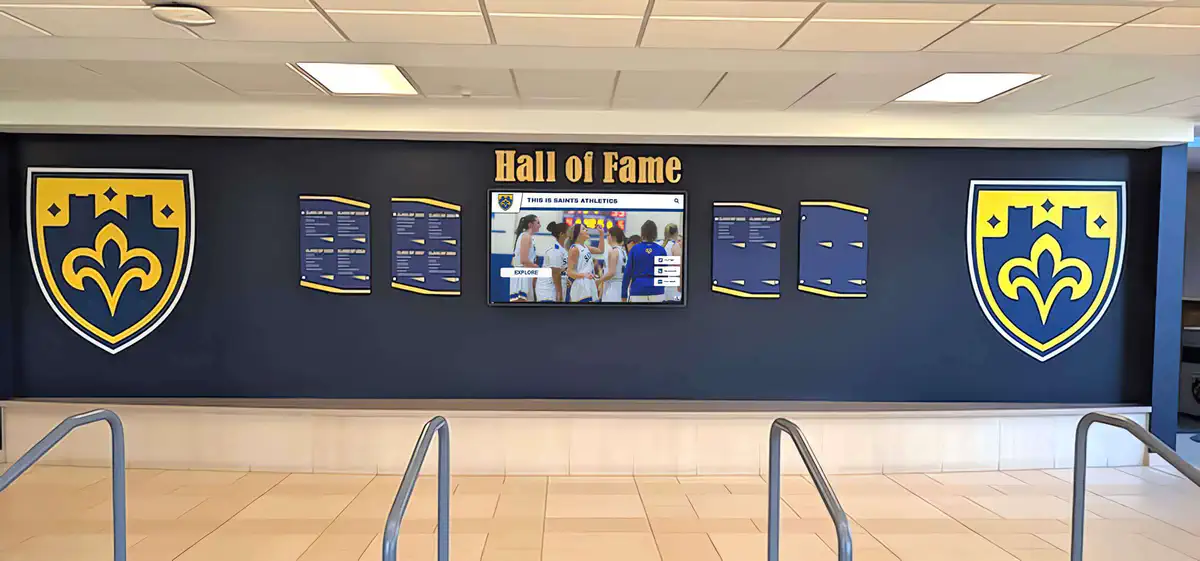
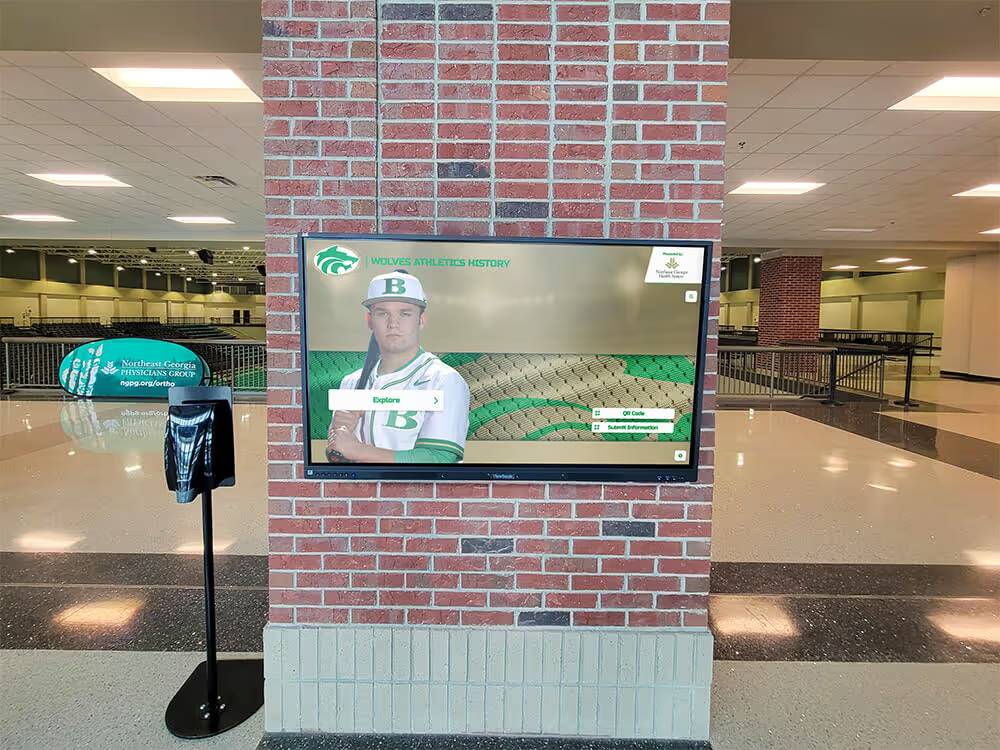
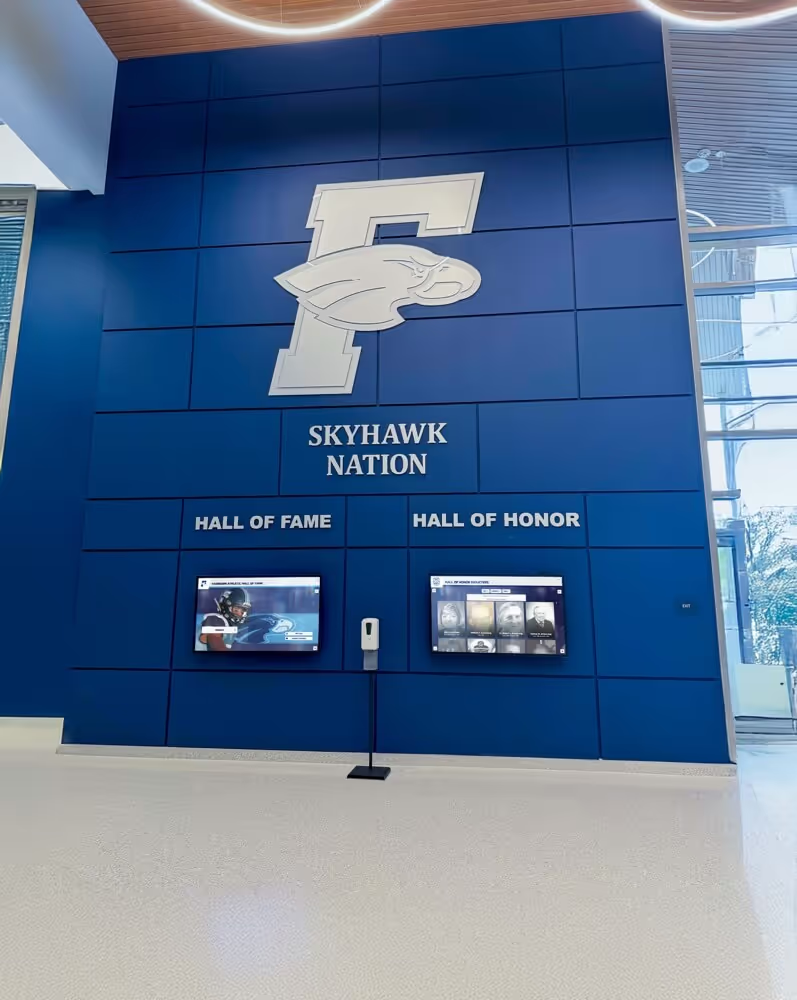
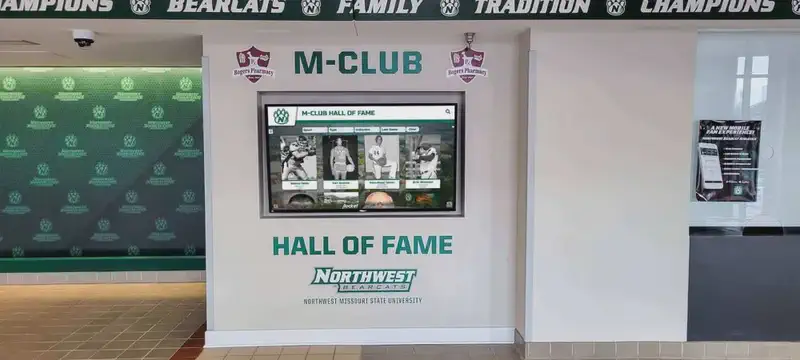
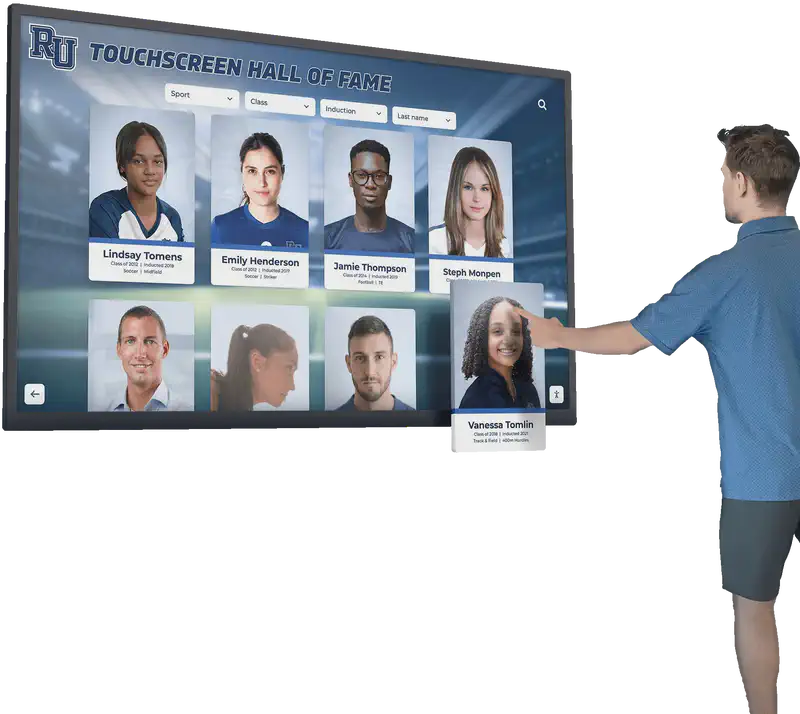
Recognition lobbies that pair physical display elements with a central digital screen create two parallel channels for the same record—the physical element visible immediately, the digital entry searchable and filterable by category
When creating a digital entry for the Commissioner’s Trophy, the entry fields allow context that a physical artifact cannot carry:
| Display Element | Physical Entry | Digital Entry |
|---|---|---|
| Award name | On label or plaque | Full text field |
| Athletic group attribution | Space permitting | Dedicated field |
| Issuing body (NCHSAA) | Abbreviated or full | Issuing body field |
| Cycle year | Present | Date field |
| Project description | Rarely included at length | Description field |
| Category distinction | Physical section placement | Category tag: “Community Service” |
A digital category tag—“Community Service Recognition” or “NCHSAA Program Award”—makes the entry searchable under the right heading. Without it, a search for a named sport at a school where that program led the Commissioner’s Trophy project might surface the entry alongside competitive results, creating exactly the confusion a labeled category prevents.
Labeling the digital entry with the cycle year is especially important for schools that appear in multiple cycles. A school that earned the award in 2024-25 and again in 2025-26 may have different athletic groups and entirely different projects in each entry. A dated, program-attributed entry is accurate; an undated or cycle-conflated entry is not.
Verifying the Release Before Labeling
Before finalizing any display label, confirm the specific language in the NCHSAA release for the relevant cycle. Each release identifies the school name as listed in NCHSAA membership records, the athletic group credited with the project, and a description of the project itself. These are the authoritative sources for every field in the display entry.
For the 2025-26 cycle, the NCHSAA Commissioner’s Trophy page is the dated source. For prior cycles, the corresponding release page for that year is the authoritative reference. Do not apply the program details or project description from one cycle’s release to a different year—each cycle is a separate recognition event.
A note on physical hardware and payment: the word “trophy” in the award name and the stipend announcement in the release do not, by themselves, confirm that a physical object was delivered or that a stipend was paid by the time a display label is created. The release for 2025-26 states that recipient schools “will receive” stipends—future tense at time of announcement. For display purposes, the NCHSAA release is the evidence of recognition. The existence and delivery of a physical award object should be confirmed before describing one in a display label.
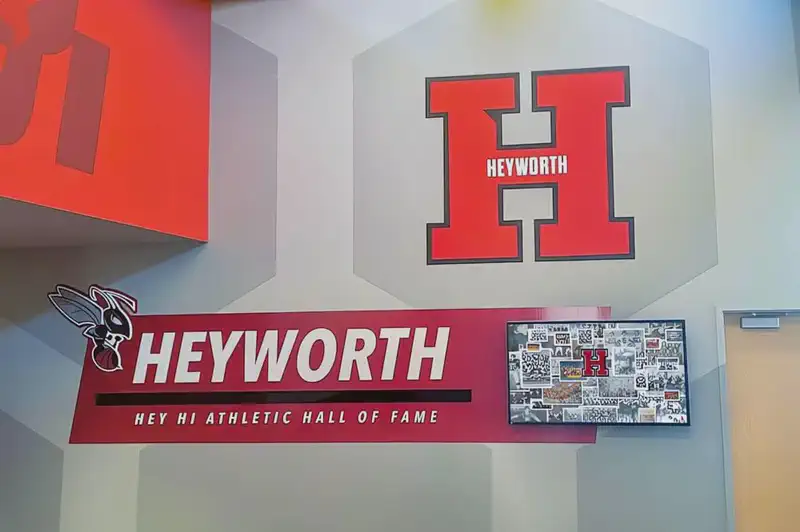
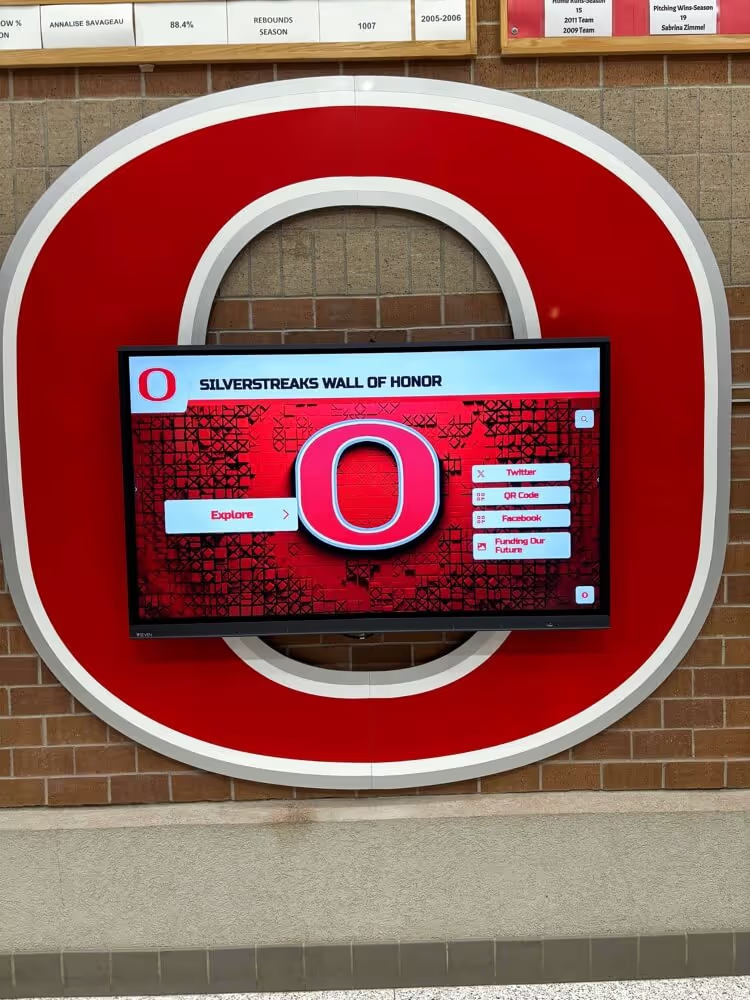
Entry-point signage that labels the recognition section clearly establishes the category before visitors read any individual award, reducing the disambiguation work that individual entries otherwise need to carry on their own
Frequently Asked Questions
Is the NCHSAA Commissioner’s Trophy a competitive championship?
No. The Commissioner’s Trophy is awarded to schools whose student-athletes undertake recognized community and school service projects during the school year. The NCHSAA awards page lists the Commissioner’s Trophy and the Wells Fargo Cup—which measures athletic competition—as separate recognitions. This award should not appear in a school’s competitive title count or be labeled with championship language.
Who is the award recipient—the school or the athletic team?
The school is the award recipient. The NCHSAA Commissioner’s Trophy release identifies the specific athletic program or group that led the project (such as “Women’s Tennis” or “Multiple Sports”), but the honor belongs to the institution. The program attribution tells visitors which students organized the project; it does not make the award a sport-team competitive title in that program.
What should the display label for the Commissioner’s Trophy include?
A complete label includes the school name (as listed in the NCHSAA release), the athletic group that led the project, the award name (NCHSAA Commissioner’s Trophy), and the cycle year (e.g., 2025-26). An optional project description is useful in digital entries where space is available. Do not use competitive language—“championship,” “title,” or bracket terminology does not apply to this recognition.
Where should the Commissioner’s Trophy be placed in a school’s awards environment?
Place it in a school-level community service or program recognition section, clearly separate from competitive championship sections, individual athlete honor sections, and sport-specific trophy cases. A category header such as “Community Service Recognition” or “NCHSAA Program Awards” above the entry prevents it from being misread as a competitive outcome.
Can a school appear in the Commissioner’s Trophy across multiple cycles?
Yes. Schools may earn the Commissioner’s Trophy in multiple cycles with different athletic groups and different projects in each year. For display purposes, each cycle’s entry should reflect the specific year, the specific program identified in that year’s release, and that year’s project description. Do not apply one cycle’s program or project details to a different year’s entry.
An accurate NCHSAA Commissioner’s Trophy display comes down to four label decisions—school name, athletic group attribution, award name with cycle year, and community service category placement—and one structural decision: keep it out of the competitive championship count. Those five decisions ensure that everyone who reads the display, now or in future years, understands exactly what the award marks: a school’s student-athletes recognized for community engagement in a named annual program, in a specific year.
Organize Every Recognition Category Clearly
Rocket Alumni Solutions helps schools build searchable digital recognition environments where community service awards, competitive titles, and individual honors each appear in their own clearly labeled section. See what a custom recognition display could look like for your school.
Request a Custom Demo