



A player of the game graphic has become one of the most common tools in high school athletics — a quick design posted to Instagram after Friday night’s game, shared by parents, liked by teammates, and forgotten by Monday morning. The athlete gets a moment of visibility. The program gets a social post. And then the recognition disappears.
That cycle plays out at thousands of schools every week across every sport, and the missed opportunity is significant. Every player-of-the-game honor represents a real achievement — a statistically dominant performance, a clutch contribution in a close game, or a defensive effort that held a state-ranked opponent in check. Those moments deserve more than a 48-hour social shelf life. This guide explains how to design a better player of the game graphic program from day one, and how to connect those weekly honors to a season archive, a digital display feed, and an end-of-year recognition record that athletes, families, and alumni can access long after the season ends.
The gap between weekly recognition and lasting recognition is not a design problem — it is a systems problem. Most athletic programs post a player of the game graphic without a clear protocol for what happens to that recognition afterward. There is no archive, no display feed, no organized database of honorees. By late October, the coach who ran the program in September may not even remember who won the first week’s honor. By the time the athletic banquet arrives in November or December, the weekly honorees have been largely forgotten.
Building a program that closes that gap takes less infrastructure than most athletic directors assume. The foundation is a consistent graphic format, a lightweight archive process, and a display strategy that keeps weekly honors visible to the school community throughout the season — not just for 48 hours after posting.

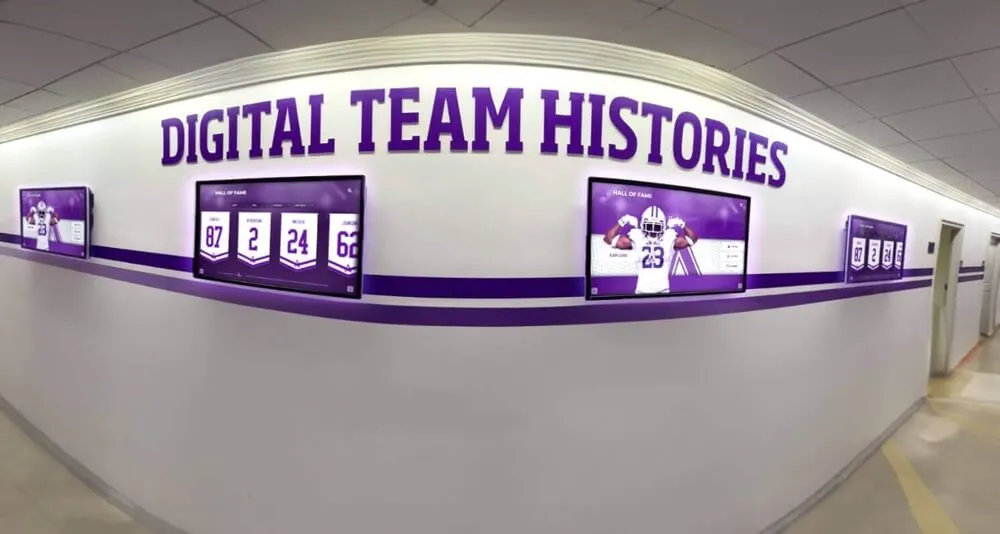
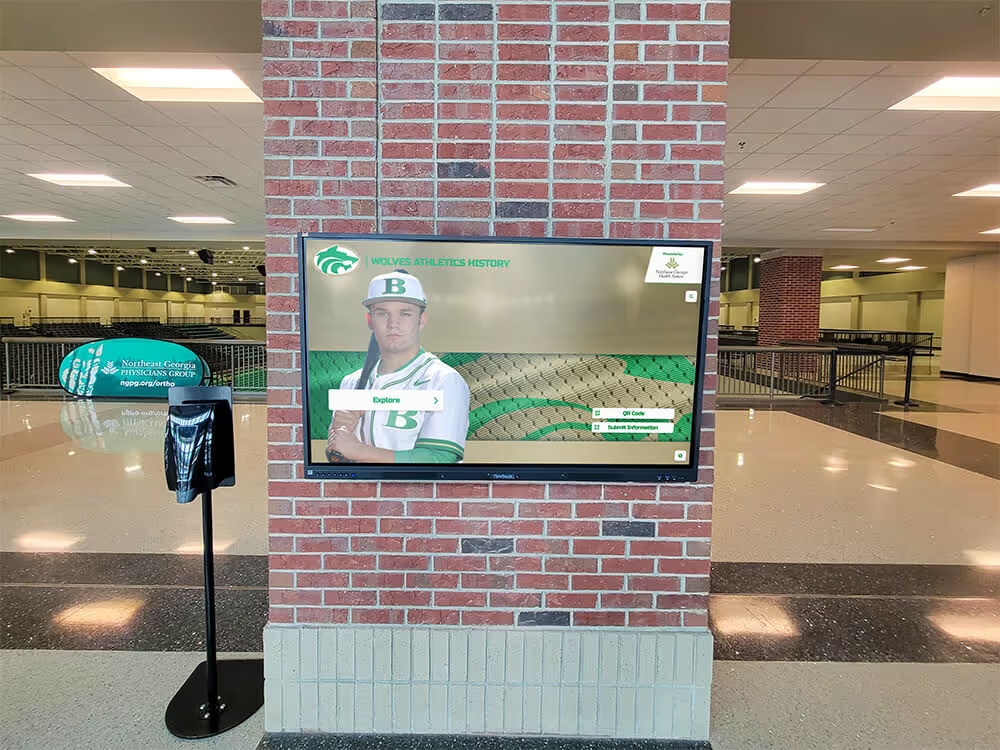
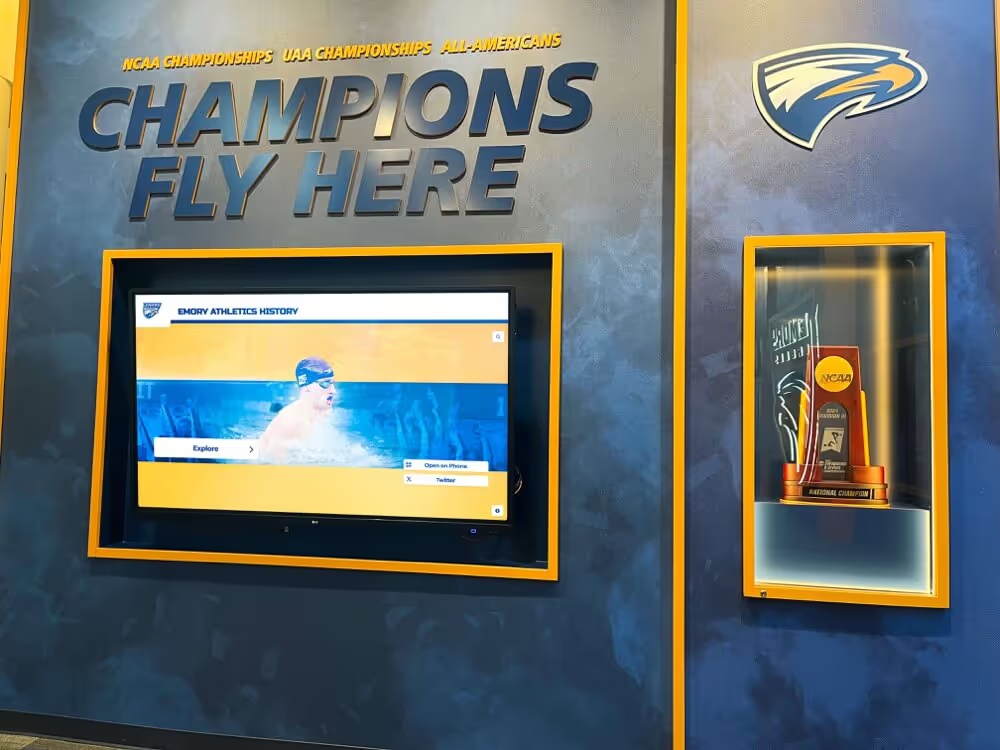
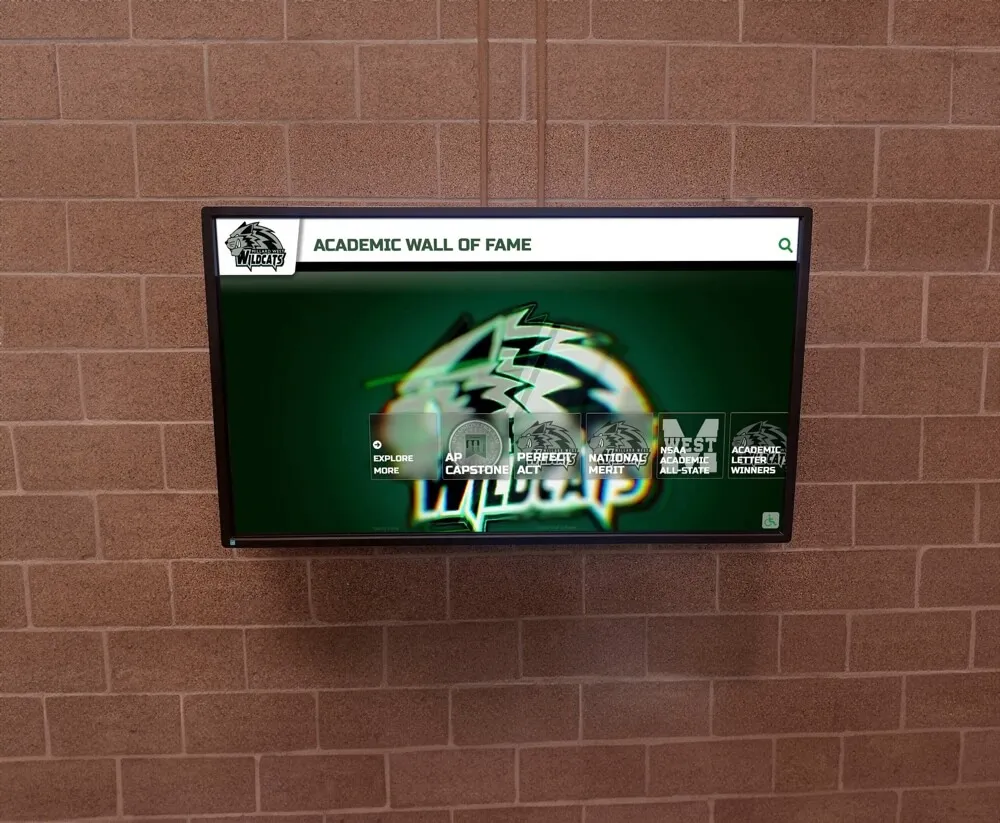
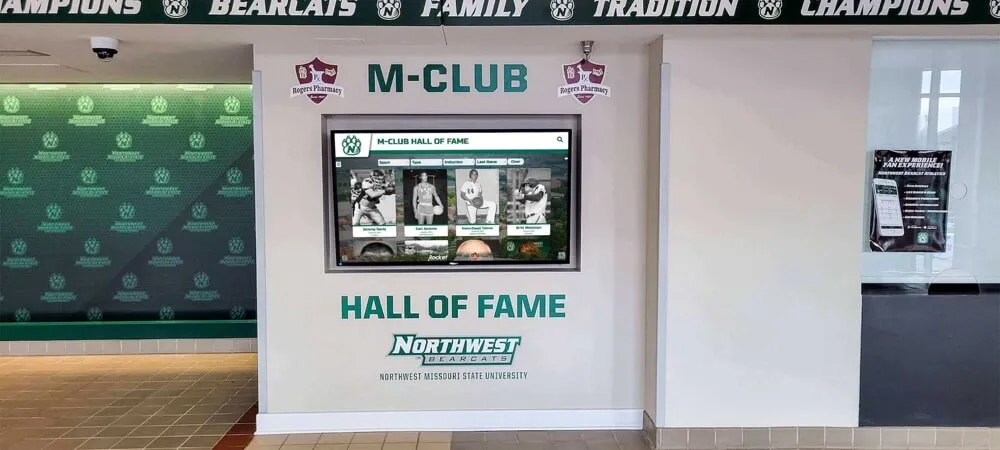
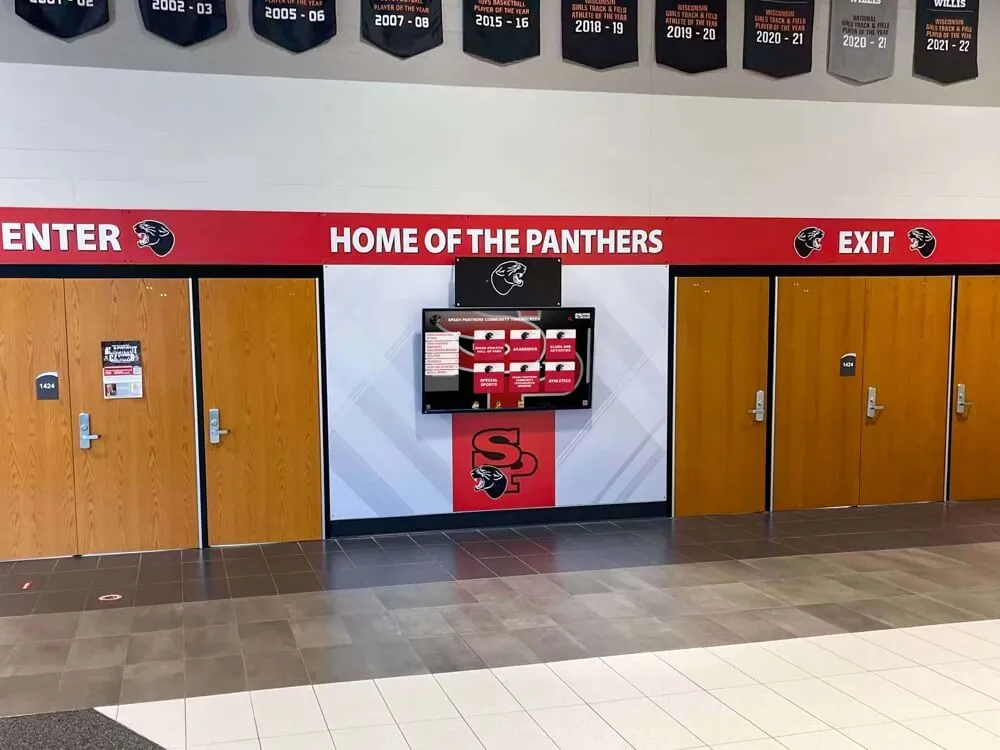
Digital lobby screens that pull in game-day recognition content keep player of the game honors visible to the full school community — not just social media followers
What Makes a Player of the Game Graphic Work
Before addressing the archive and display strategy, it is worth understanding what makes the graphic itself effective. A well-designed player of the game graphic does several things simultaneously: it names the honoree clearly, communicates the achievement specifically, reflects school brand identity, and is visually compelling enough that players and parents want to share it.
The Core Design Elements
Athlete name and photo. The combination of name and photograph is what makes a player of the game graphic feel like a real honor rather than a generic template. Programs that post a photo-free graphic with only a name miss the emotional resonance that comes from seeing the athlete’s face attached to the recognition. Even a game-action photo from the school photographer — or, in its absence, a portrait from the school’s athlete database — significantly elevates perceived recognition value.
Specific achievement context. The graphic should communicate what the athlete did: not just “Player of the Game” but “20 points, 8 rebounds, 3 blocks vs. Riverside” or “Complete game shutout, 7 strikeouts.” The achievement context transforms the graphic from a ceremonial acknowledgment into a documented record of a specific performance. This specificity also makes the graphic far more archivable — a search for a player’s highlights three years later will return meaningful results.
Consistent school branding. Programs that maintain a consistent color scheme, font set, and logo placement across every player of the game graphic for an entire season create a visual identity for their recognition program. Consistent branding signals that the recognition is institutional — a program standard — rather than an ad hoc social media post.
Sport and date. Including the sport and competition date in the graphic creates metadata that makes archiving and display retrieval infinitely easier. A graphic labeled “Basketball — January 14, 2026” can be organized and recalled without guesswork.
Template Consistency Across Sports
Programs that produce player of the game graphics across multiple sports — football, volleyball, soccer, basketball, baseball, softball, wrestling, and more — benefit from maintaining a consistent base template with sport-specific color or imagery variations. The structural consistency communicates that all sports are recognized with equal seriousness. Athletes in lower-profile sports notice when their recognition uses a different, clearly lower-effort template than the football program. Template consistency eliminates that inequity at no additional cost.
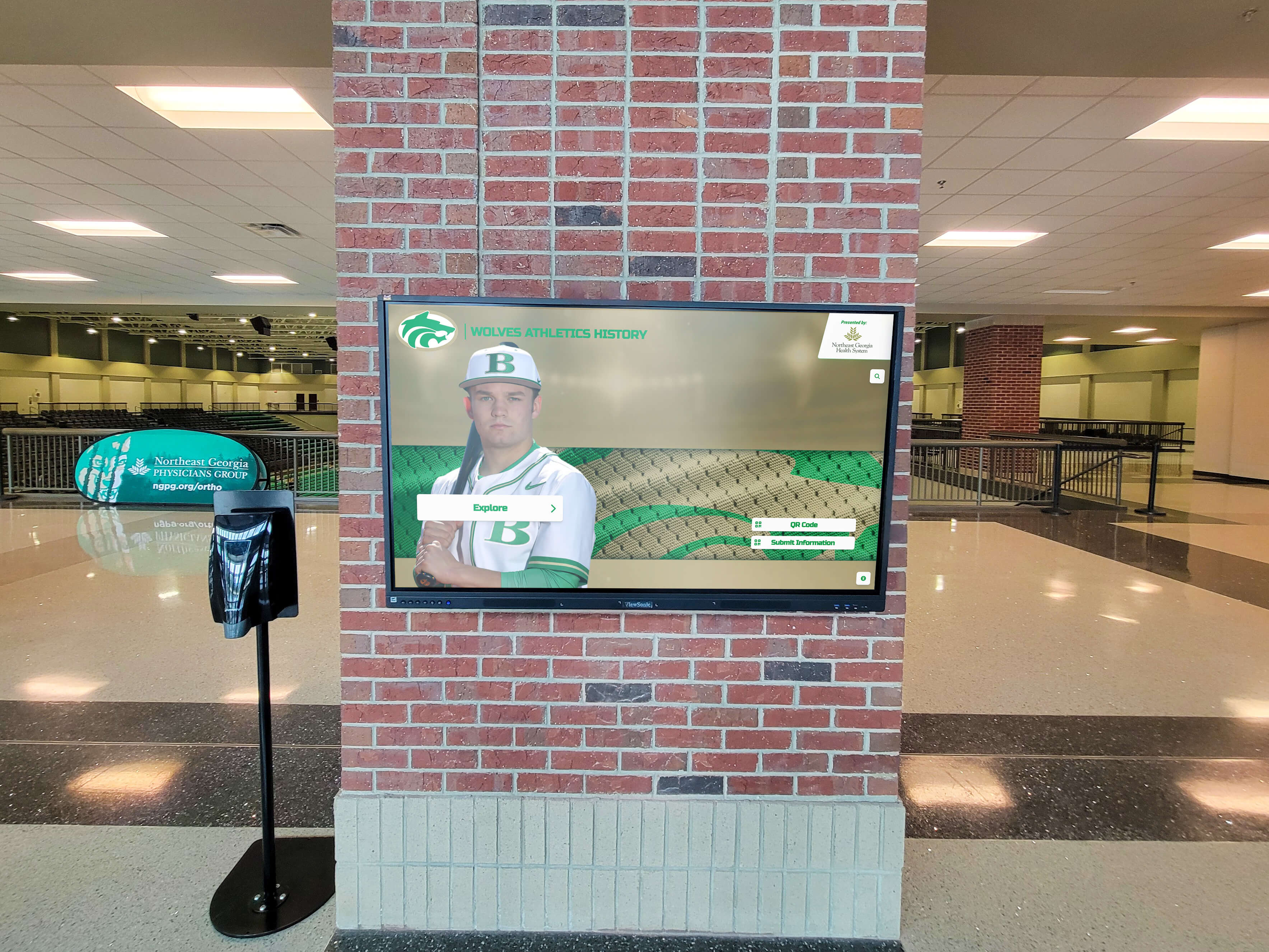
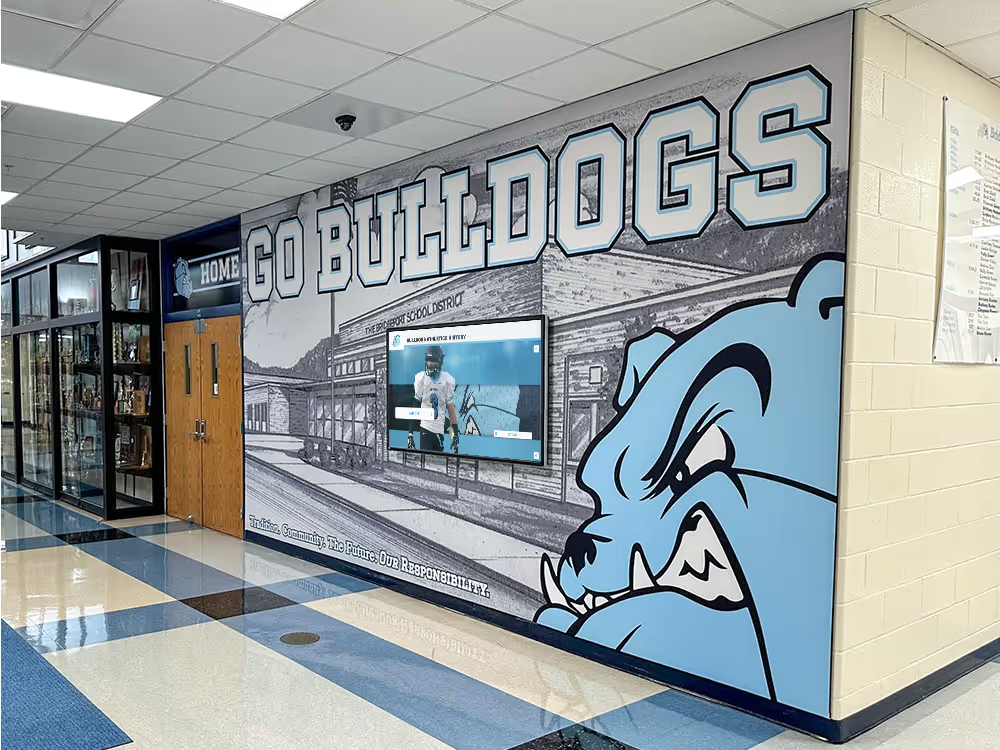
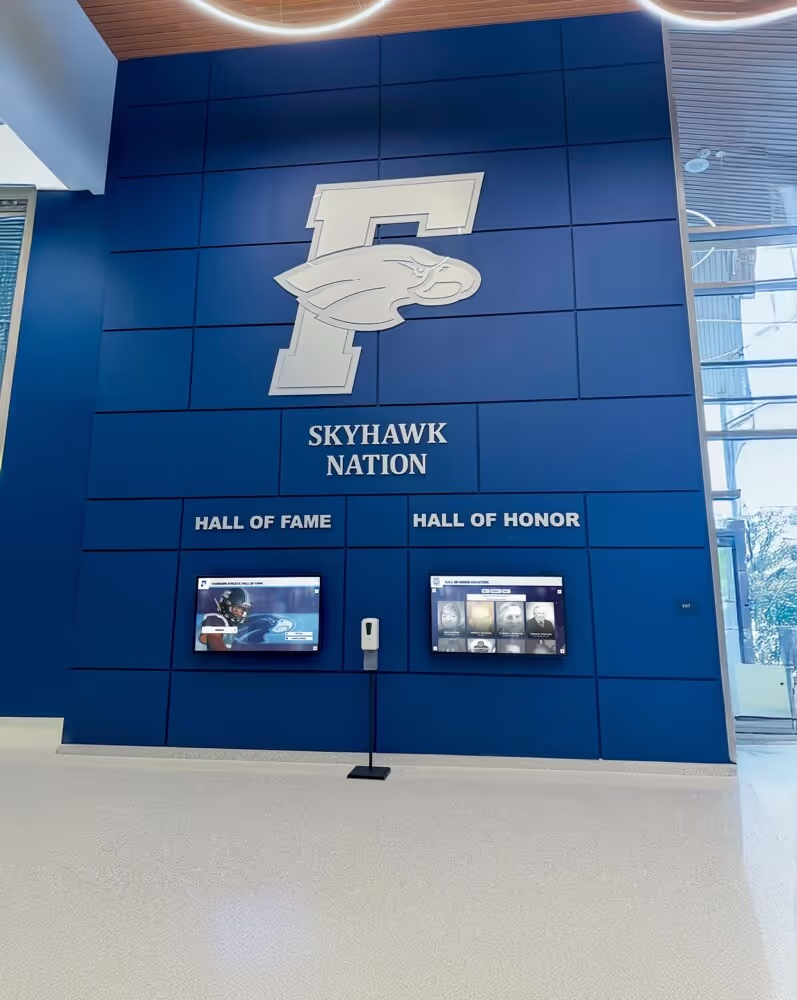
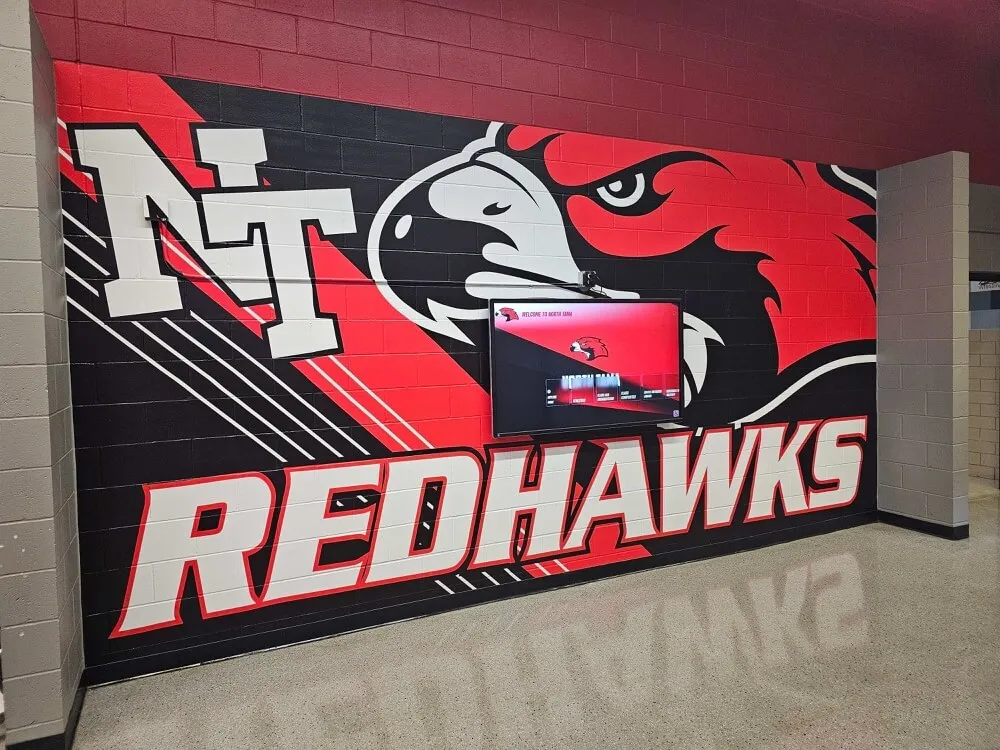
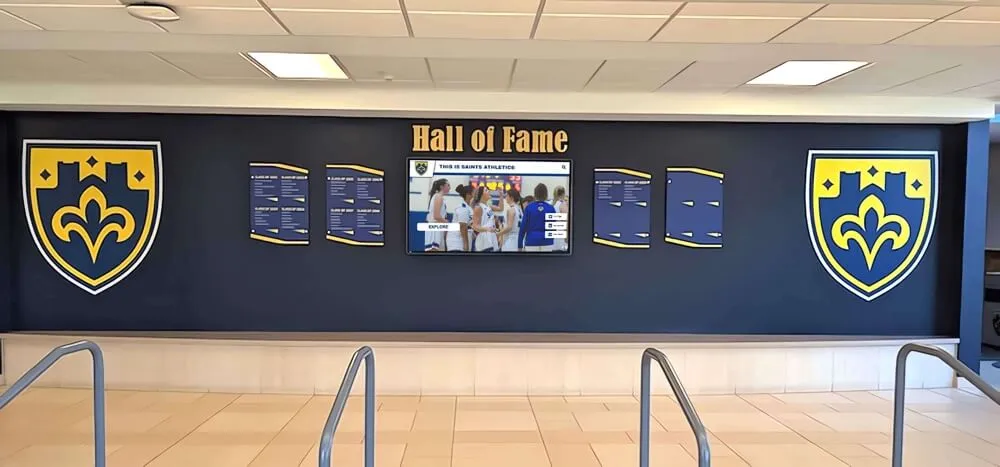
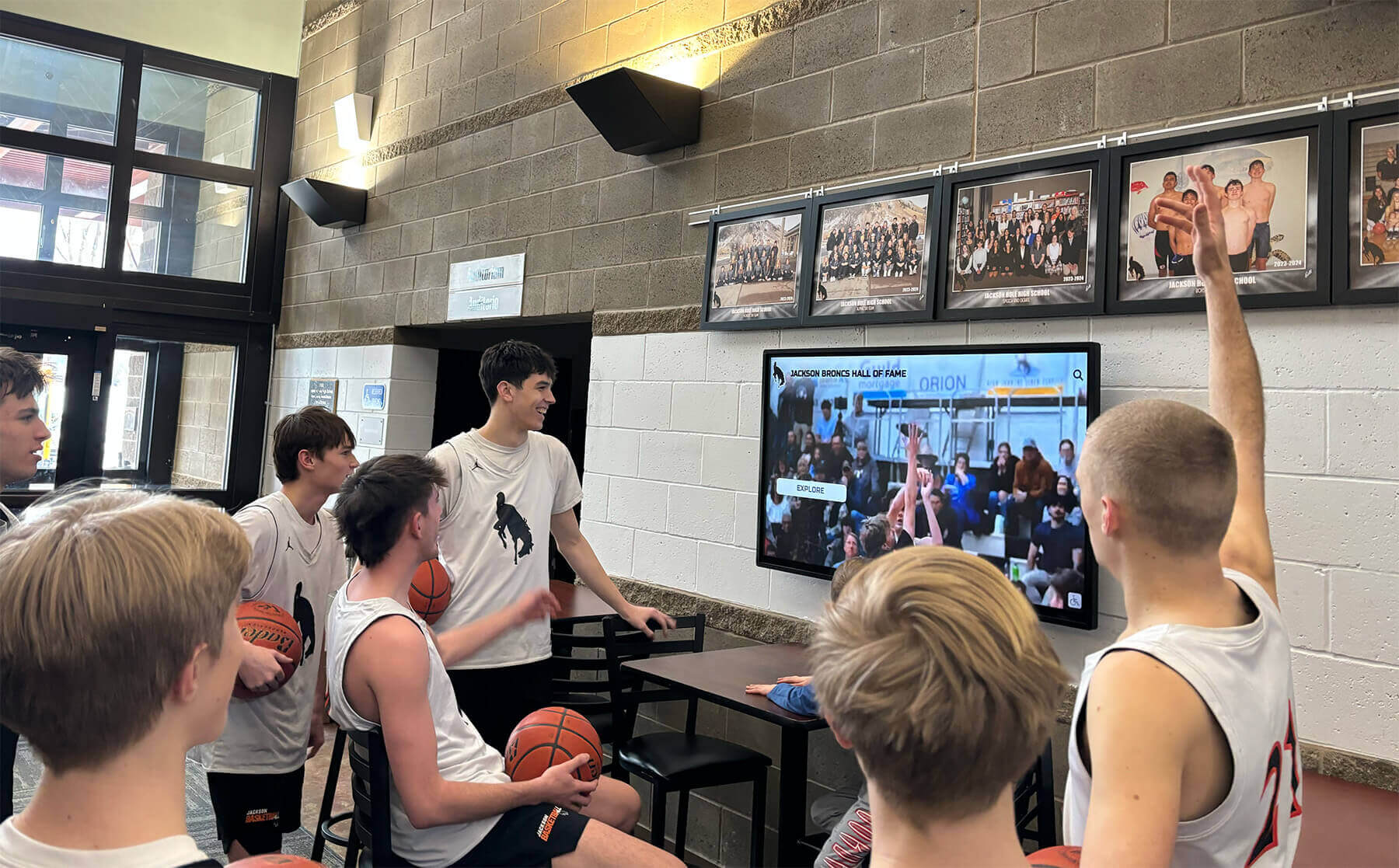
Large-format digital displays in athletic lobbies can cycle player of the game graphics throughout the week, keeping recognition visible to everyone who enters the building
Building a Season-Long Recognition Archive
The most important infrastructure decision a program makes is whether to treat each player of the game graphic as a one-time post or as a record in an ongoing archive. The archive decision costs almost nothing in time — but it changes everything about what the recognition program can become by season’s end.
What to Capture Each Week
For each player of the game selection, record the following:
- Athlete’s full name
- Graduation year or grade
- Sport and team (varsity, JV, freshman)
- Date and opponent
- Specific statistical performance or qualitative achievement description
- The graphic image file, saved with a consistent naming convention (e.g.,
potg-basketball-2026-01-14-jane-smith.jpg) - Any social engagement metrics if the program tracks those
This takes two to three minutes per honoree. After 15 games, the archive contains a complete season-long record of recognized athletes that can be used for the banquet, the school’s athletic website, a year-end video, or a digital display feed.
Archive Format Options
Spreadsheet-based archives are the simplest starting point. A shared Google Sheet with the fields above, accessible to the athletic director and relevant coaches, costs nothing and requires no technical setup. The limitation is that spreadsheets do not easily connect to displays or websites — they are a data source that requires manual export for most downstream uses.
Cloud folder archives pair the spreadsheet data with organized image files stored in a shared cloud drive (Google Drive, Dropbox, OneDrive). Folders organized by sport and week create a navigable archive that staff can reference during the banquet planning process without hunting through email threads.
Database-backed systems connect the archive directly to a display or web platform. Programs using recognition software platforms can upload each honoree’s data and photo once — and the platform handles display, retrieval, and organization automatically. This is the highest-investment option up front but requires the least ongoing management.
Curious how schools build broader archival systems around weekly and seasonal recognition? The school archives policy framework for athletic and academic recognition covers retention schedules, format standards, and access policies that translate directly to athletic recognition programs.
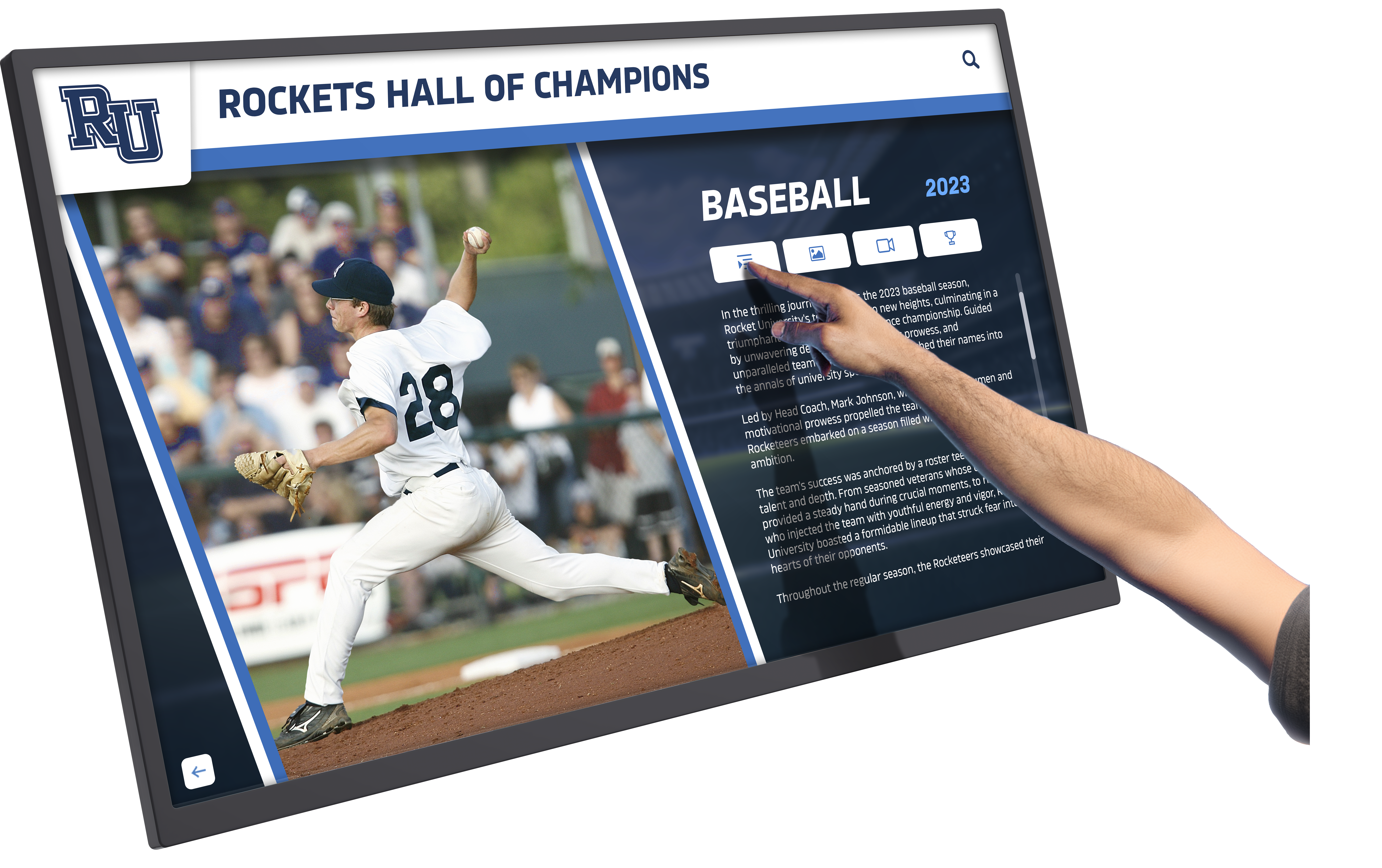
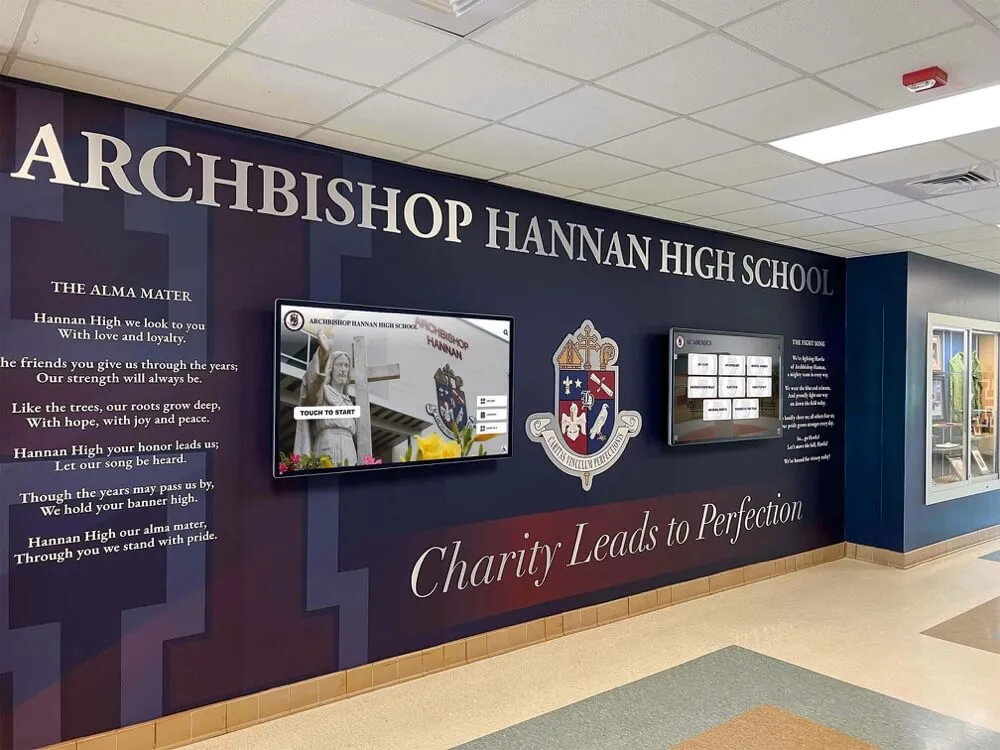
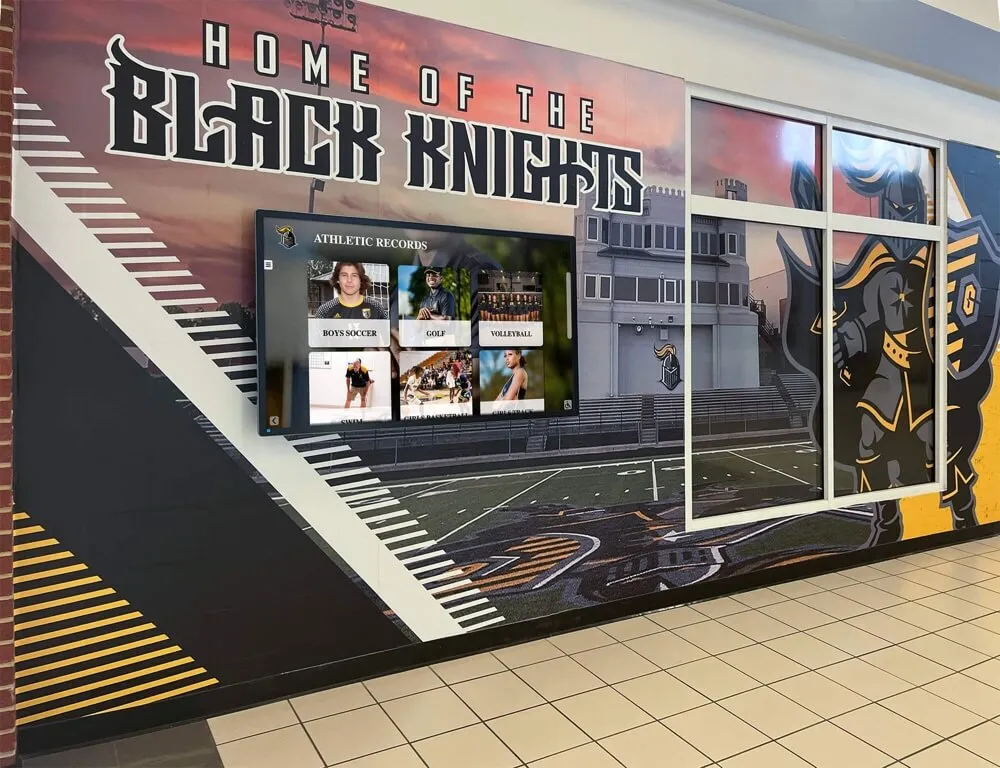
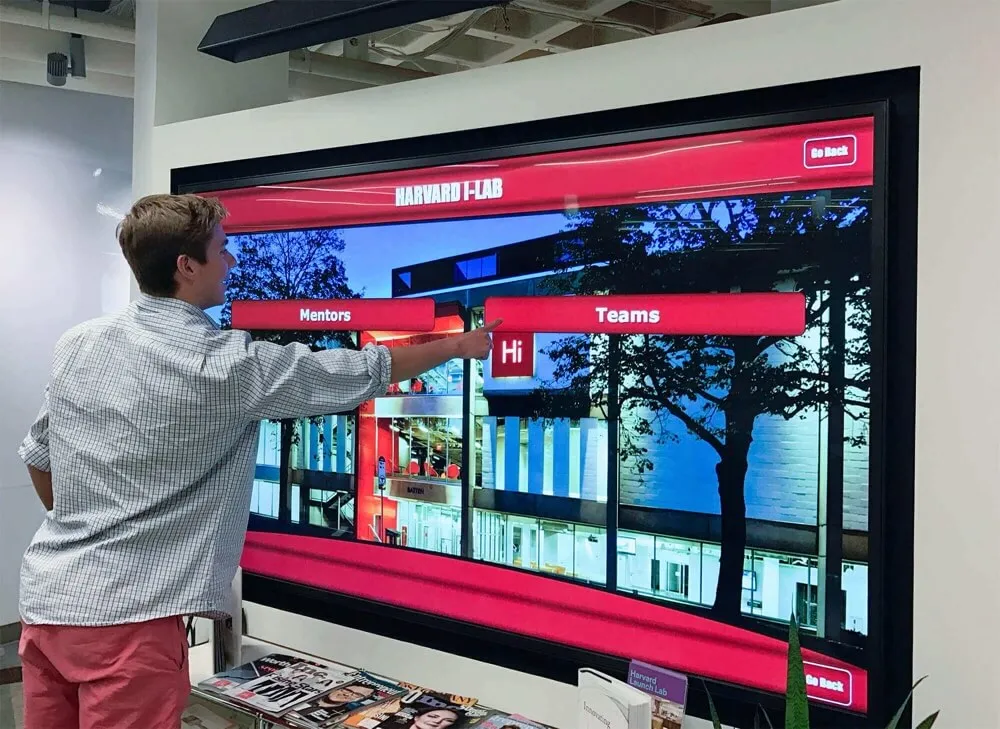
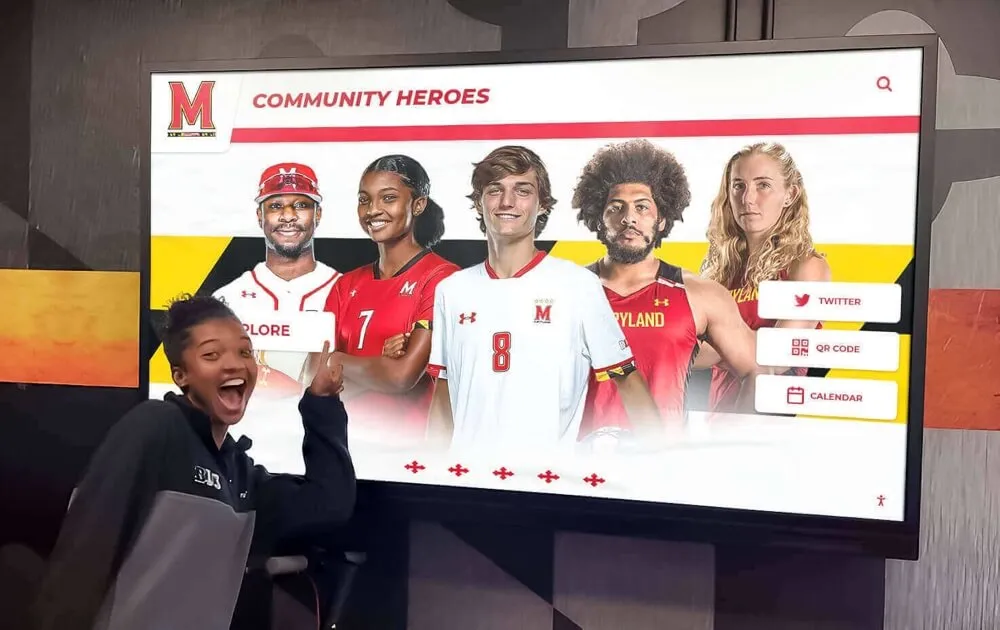
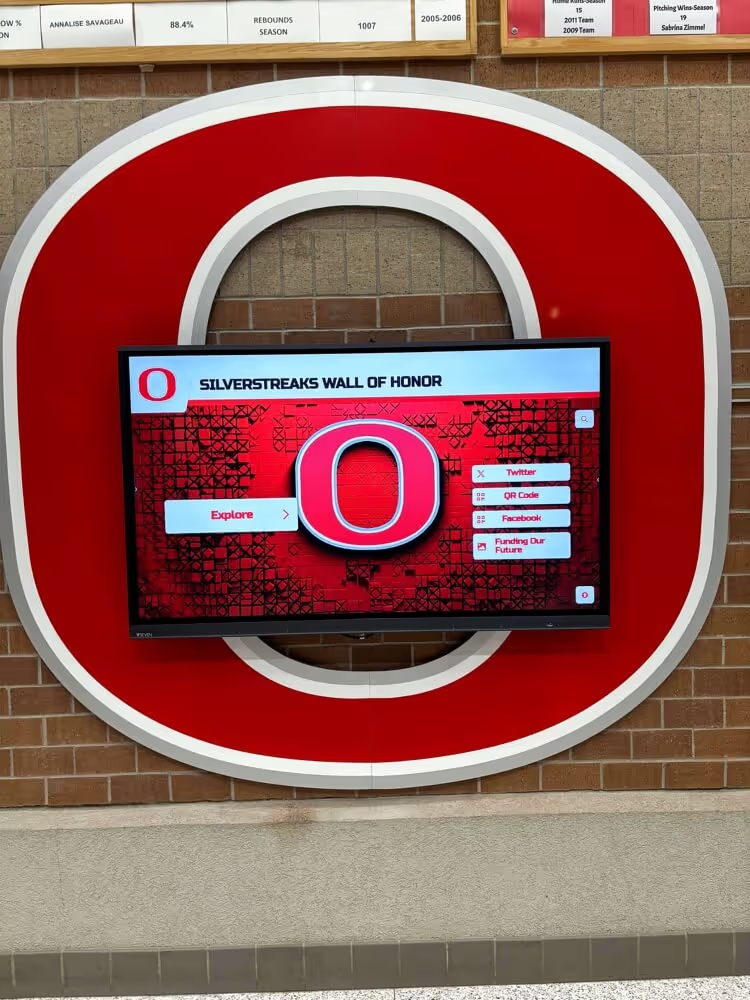
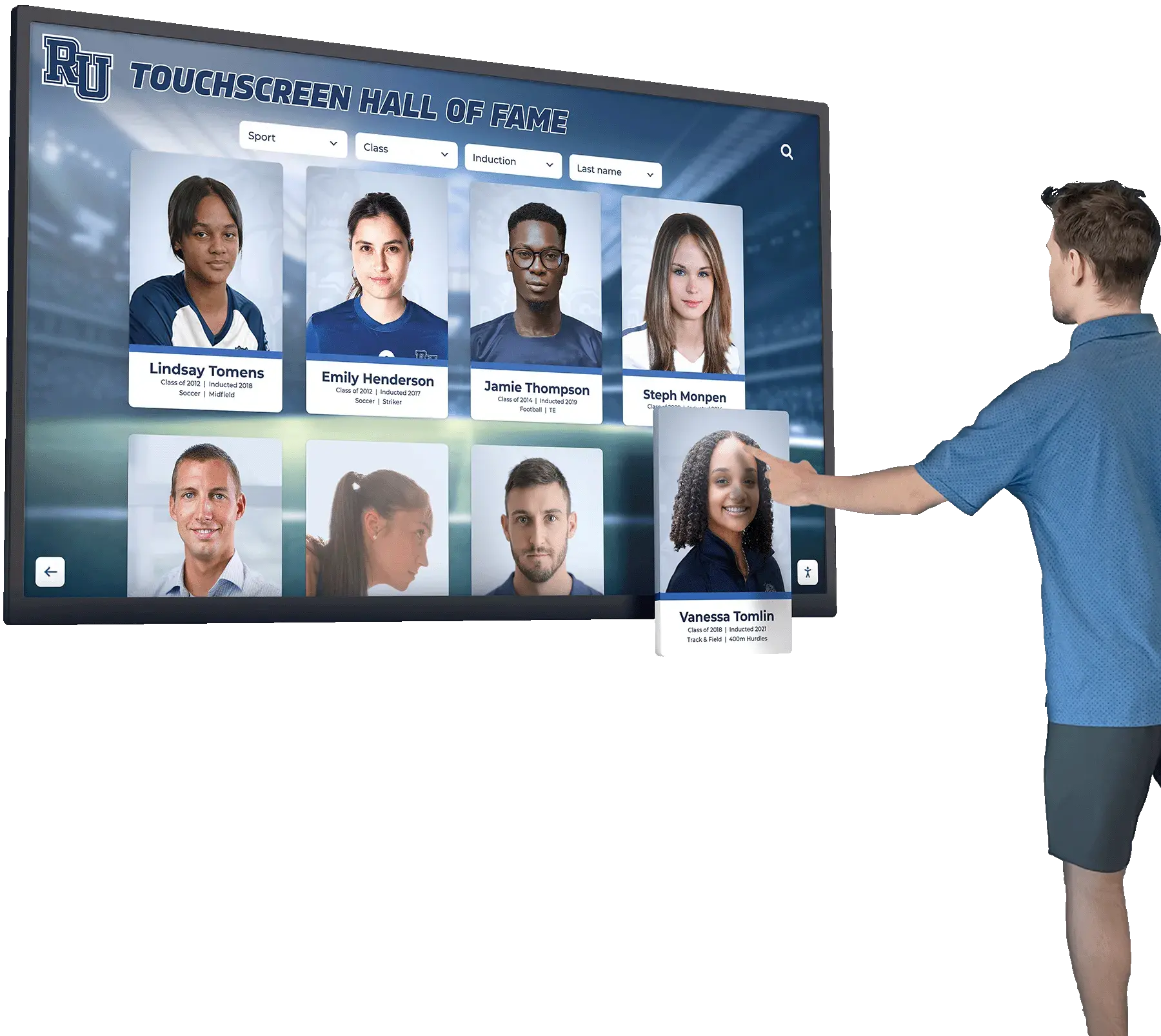
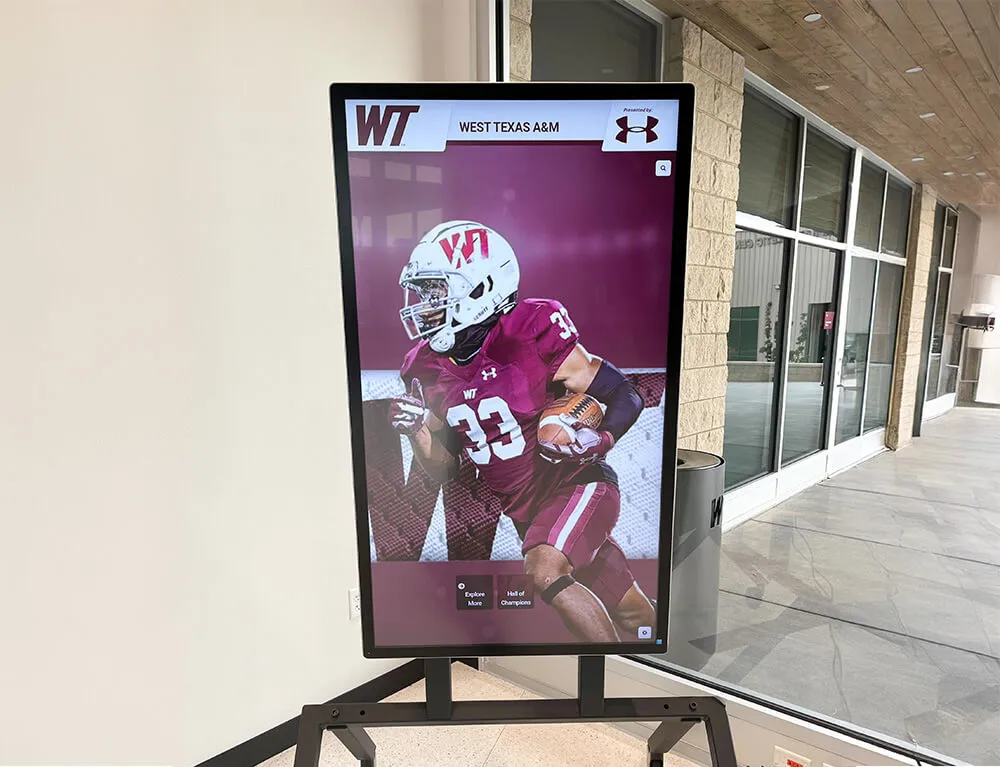
Interactive touchscreen systems allow coaches, athletes, and families to explore season-long recognition records organized by sport, date, and honoree
Connecting Weekly Graphics to a Digital Display Feed
Once the archive exists, the next step is making the recognition visible inside the building — not just on social media. A player of the game graphic that lives only on Instagram is a community-facing post. A graphic that also appears on a lobby screen, athletic hallway display, or trophy case kiosk is an institutional record.
Digital Signage Integration
Commercial digital signage systems used by most schools for announcements, lunch menus, and event calendars can be configured to display player of the game graphics on a rotating schedule. The practical workflow:
- Coach or athletic director selects the honoree and generates the graphic using a consistent template
- The graphic is exported to the digital signage content management system (CMS)
- The signage CMS adds the graphic to the athletic recognition rotation
- The graphic displays throughout the school day on lobby and hallway screens for the following week before rotating out
This workflow adds five to ten minutes to the recognition process and delivers hallway-level visibility that a social post alone cannot provide. Every student who walks through the main entrance sees the honoree’s name and photo. Athletes from other programs see who their peers honored. Families visiting for evening events see the current recognition before a single word is spoken at the front desk.
Interactive Kiosk Displays
Programs with interactive touchscreen kiosks in athletic lobbies or trophy case areas have an additional option: building a searchable “Player of the Game” section within the interactive display. This creates a different experience than a rotating signage loop — instead of passively viewing a single graphic, visitors can actively search for a specific athlete, browse by sport, or review the full season’s weekly honorees in one place.
Building player of the month programs into school athletic culture shows how schools that formalize weekly and monthly recognition into searchable, browseable displays generate meaningfully stronger recognition culture than programs relying on social media alone.
QR Code Bridges Between Social and Physical
For programs whose primary recognition channel is social media and whose buildings do not yet have digital signage in high-traffic areas, QR codes offer a lightweight bridge. Print-and-post a weekly recognition flyer with a QR code linking to the school’s online recognition archive. Position these near gym entrances, in team dugouts, or outside the athletic director’s office. Athletes and families scan to see the full archive — a minimal investment that meaningfully extends the life of each week’s graphic beyond the social post.
Want to turn your weekly player graphics into a year-round recognition display? Rocket Alumni Solutions builds interactive touchscreen systems that connect weekly honors to a permanent, searchable archive students and families can explore every time they visit your school.
See How It WorksTurning Weekly Honorees Into an End-of-Season Recognition Record
The most underutilized use of a player of the game archive is end-of-season recognition. Programs that maintain a clean, complete archive throughout the season arrive at their athletic banquet with a ready-made resource: a full list of who was honored, when, and why.
How the Archive Supports the Banquet
A complete player-of-the-game archive enables several banquet enhancements that are impossible without it:
Identify multi-week honorees. When a single athlete has been named player of the game four times across a season, that pattern of dominance deserves specific acknowledgment at the banquet beyond a single MVP trophy. The archive makes multi-week honorees immediately visible — without it, coaches are relying on memory across an entire competitive schedule.
Recognize non-MVPs who earned consistent weekly acknowledgment. Some of the most compelling banquet moments come from recognizing athletes who were not the season MVP but who showed up in the weekly record multiple times. A junior who was named player of the game in a rivalry win, a home playoff game, and the final regular-season match has a documented season of high-impact moments — a banquet narrative ready to be told.
Build a year-end video. Programs that associate game photos or video clips with each weekly honoree arrive at the season-end with a highlight reel that essentially writes itself. Each honoree’s graphic, paired with the achievement description and a game clip, creates a player-of-the-season video that generates genuine emotional response when played at the banquet.
Update the permanent athletic record. Player-of-the-game honors, when entered into a permanent display system alongside career statistics, championship records, and hall of fame inductions, become part of the institutional athletic archive that future athletes and alumni can access. Schools that build this connection between weekly recognition and permanent records create a richer athletic history than programs that treat each season as a standalone event.
Academic recognition programs for high schools and universities demonstrate how recognition programs that connect weekly and semester-based honors to a permanent institutional record generate stronger long-term alumni engagement — a dynamic that translates directly to athletic programs.
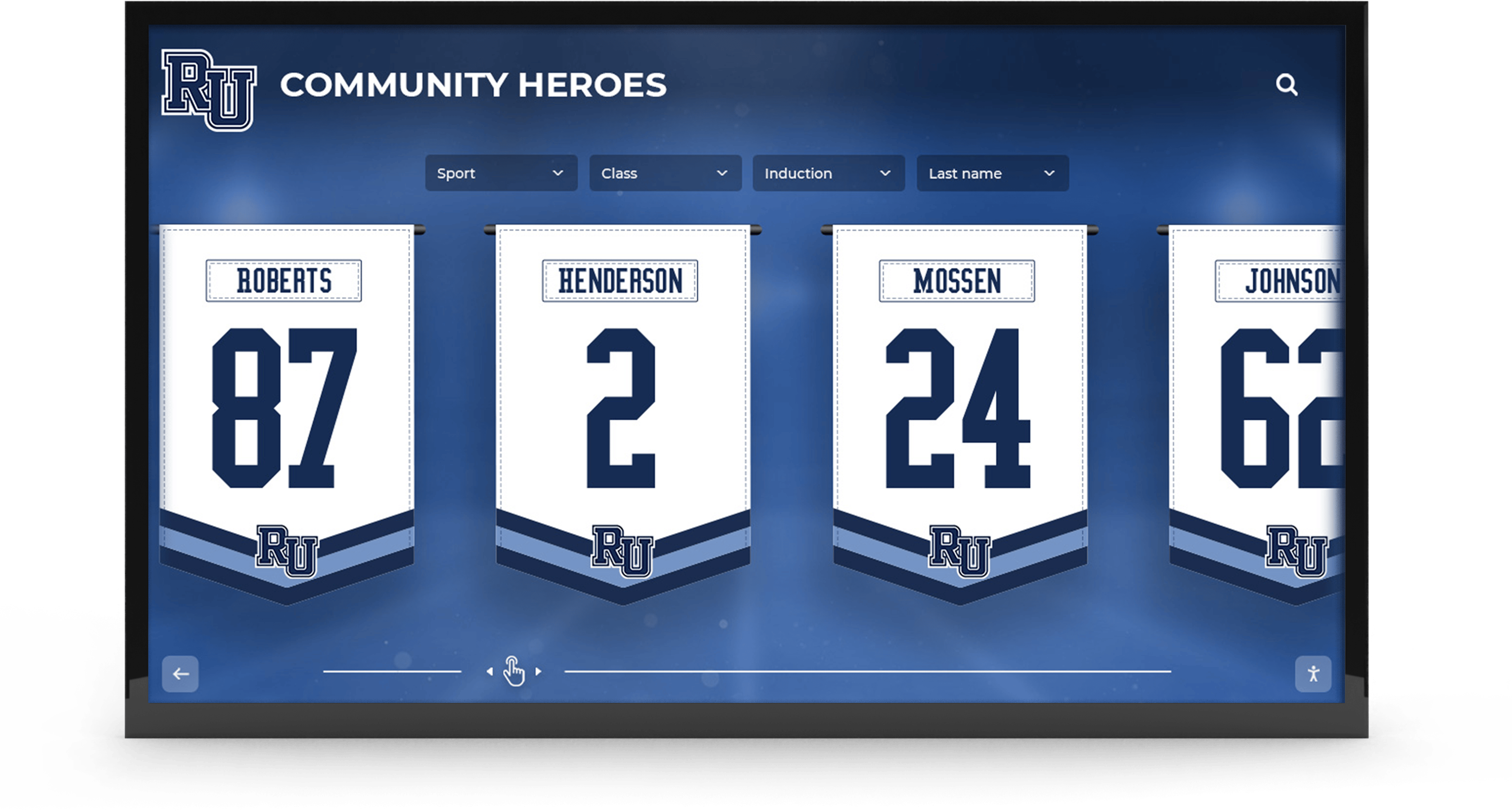
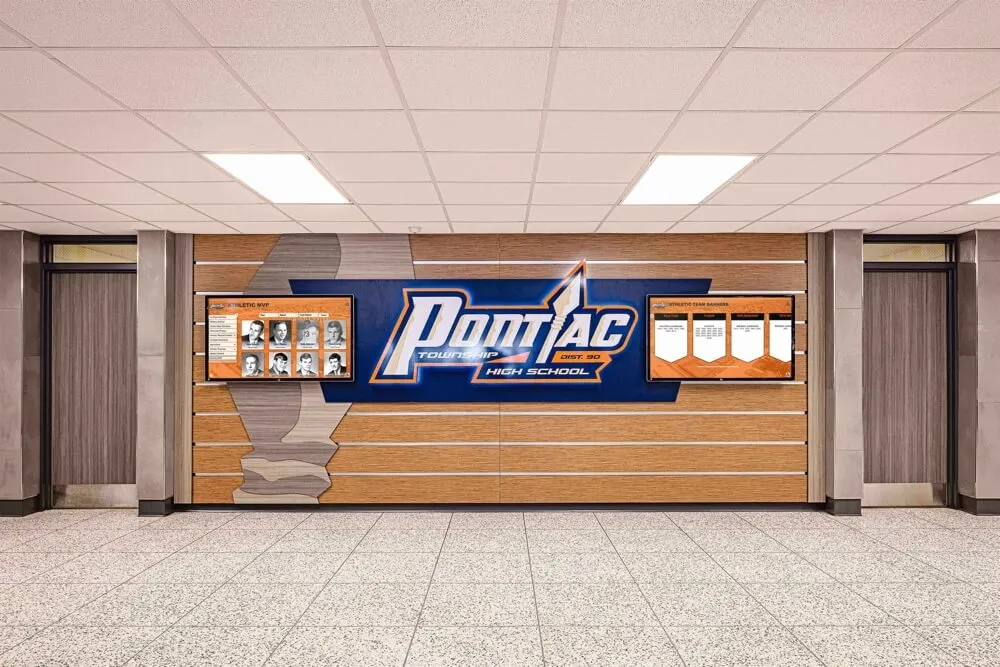
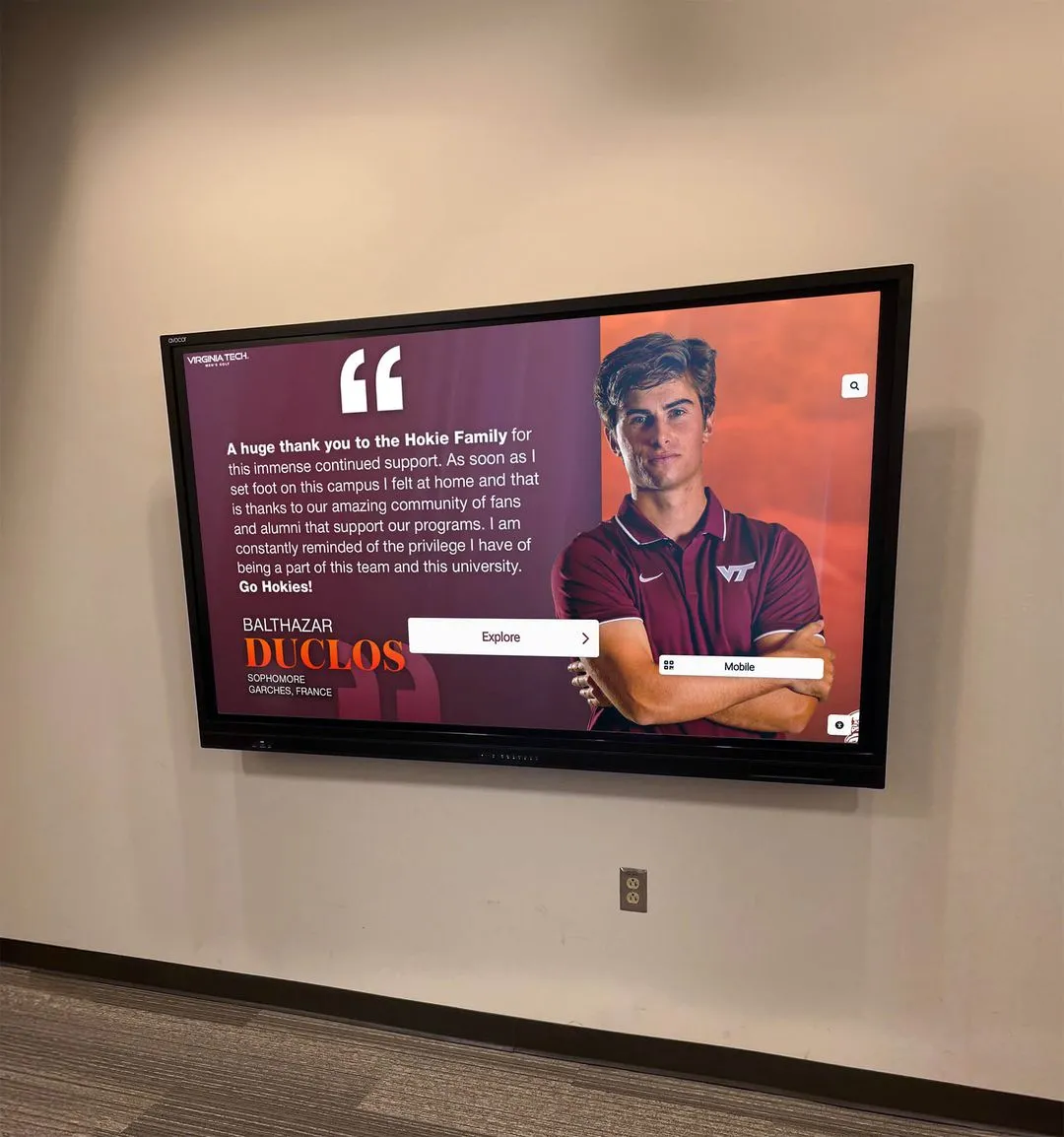
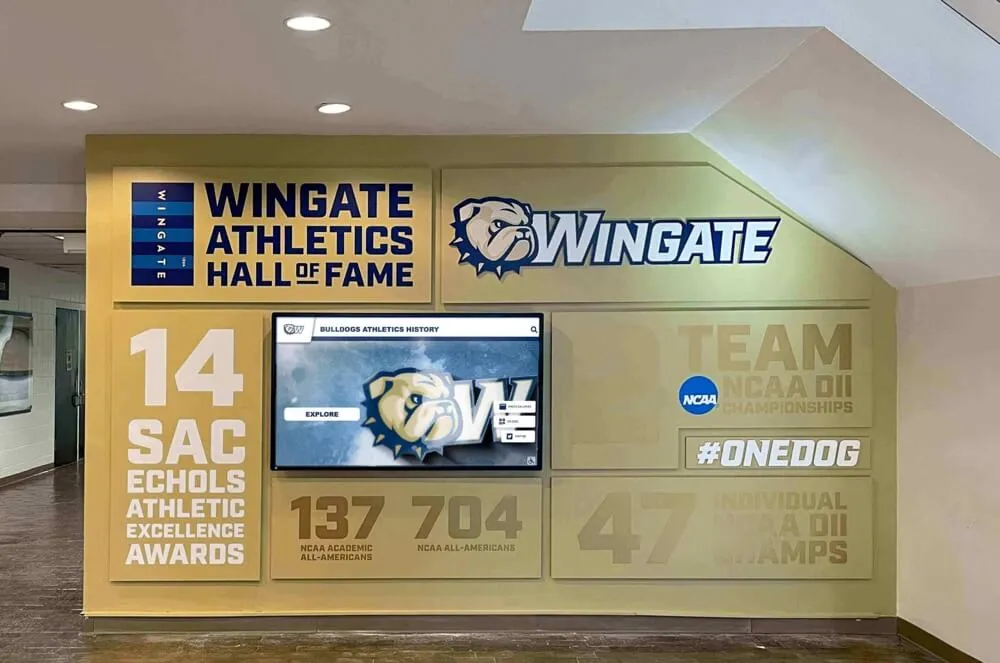
Permanent digital banner displays that incorporate weekly honoree data connect game-day recognition to school-wide visibility that lasts all season
Checklist: Converting Weekly Graphics Into Lasting Recognition
The following checklist covers the complete process from graphic creation through permanent archiving. Use it to audit your current program and identify the specific gaps to close this season.
Graphic Creation Checklist
- Template includes athlete name, photo, sport, opponent, and date
- Statistical or qualitative achievement is written into the graphic
- Template matches school brand colors and logo placement
- Consistent base template is used across all sports (with sport-specific variations)
- Final graphic is exported at display resolution (minimum 1080px wide)
- File is saved with a consistent naming convention including sport, date, and athlete name
Archive Process Checklist
- Athlete data is recorded in a shared spreadsheet or recognition platform within 24 hours of posting
- Graphic file is saved in an organized cloud folder with the corresponding data record
- Archive is accessible to athletic director, relevant coaches, and administrative staff
- Archive is backed up at least monthly to prevent data loss
In-Building Visibility Checklist
- Graphic is submitted to digital signage system for lobby/hallway display the same week as posting
- Signage rotation period is at least five school days (full week of visibility)
- Interactive kiosk (if available) is updated with new honoree data and photo
- QR code link to online archive is posted in high-traffic athletic areas
End-of-Season Checklist
- Full season archive is compiled and reviewed before the athletic banquet
- Multi-week honorees are identified for specific banquet recognition
- Year-end graphic compilation or video is prepared using archive materials
- Season’s honorees are entered into permanent recognition platform or display system
- Archive is transferred to school’s long-term records system per retention policy
Schools managing recognition programs across multiple sports and award categories will find that the same archive discipline applied to player of the game honors extends naturally to other weekly and monthly programs. Explore how comprehensive school programs build multi-sport recognition archives and connect weekly honors to permanent records in guides covering baseball awards ideas for players across all levels and other sport-specific recognition frameworks.
Moving From Archive to Permanent Display
A season-long archive of player of the game graphics is a database. A permanent display system turns that database into something athletes, families, and alumni can experience.
What a Permanent Display Adds
The difference between an archive folder on a shared drive and a permanent athletic recognition display is the difference between a filing cabinet and a wall. The filing cabinet holds the same information — but only the people who know it exists and know how to navigate it can access it. The display makes the same information visible, engaging, and emotionally resonant to everyone who walks through the building.
Permanent recognition displays built on interactive touchscreen platforms allow athletic departments to organize player of the game honorees by sport, year, or individual athlete name. A student athlete browsing the display can see every player honored in a specific sport over multiple seasons — creating a contextual record of the program’s history that no individual coach or administrator carries in their head.
For athletic departments building out recognition across multiple categories — individual game honors, season awards, hall of fame inductees, championship records, and record board achievements — a unified platform eliminates the data silo problem. The player of the game archive feeds the same system as the varsity letter records, the team roster histories, and the conference championship recognition. Everything is searchable, organized, and accessible from the same display.
High school athletic recognition categories covering academic achievement alongside athletic performance show how schools that build unified recognition platforms across achievement types create richer institutional profiles than programs that silo athletic and academic recognition in separate systems.
Connecting Player Recognition to School History
Some programs overlook the most powerful aspect of a player of the game program maintained over multiple years: it becomes a searchable slice of school athletic history. A graduated athlete who wants to show their children where they went to school can find their name on the display, associated with a specific game, a specific opponent, and a specific performance. That moment of recognition — years after the game was played — is something a social media post 48 hours after the event can never deliver.
Programs at schools with rich athletic traditions often discover, when they begin building permanent recognition archives, that decades of game-day honors were never formally documented. Weekly programs that existed before the era of social media generated no lasting record. Retroactive documentation — pulling from game programs, newspaper archives, and coach records — is possible but far more labor-intensive than maintaining a clean archive going forward.
Minnesota high school athletics provides one example of how programs with strong recognition traditions build alumni-accessible records of historic player achievements that connect current students to program histories spanning multiple generations.
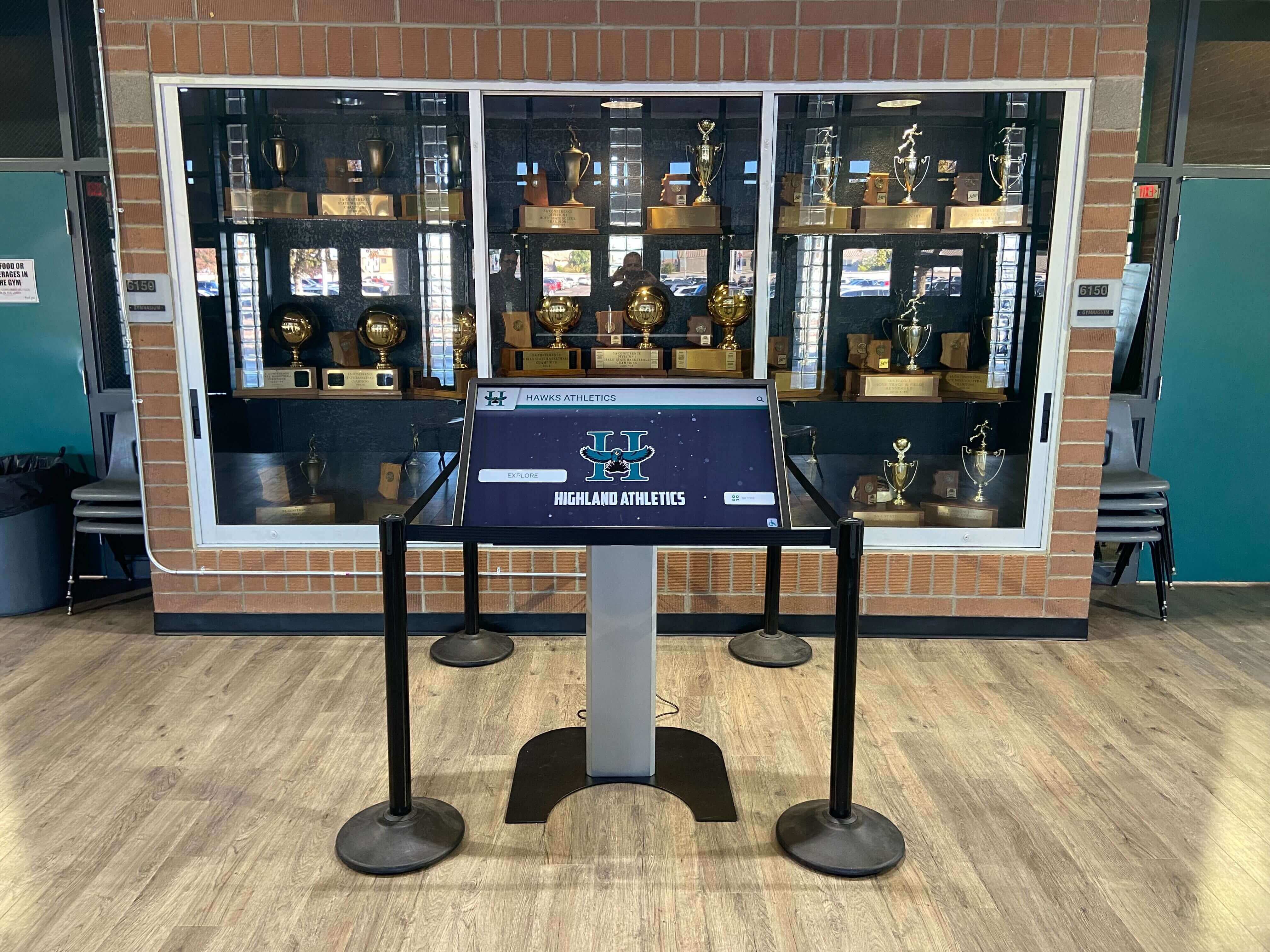
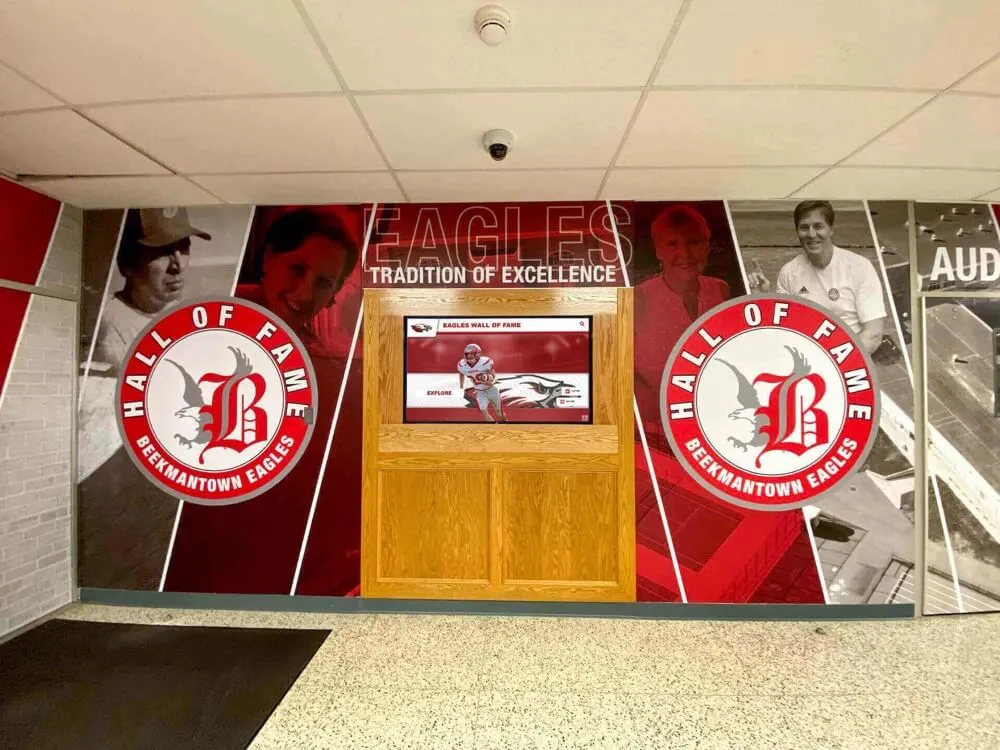
Embedding a touchscreen kiosk within a traditional trophy case creates a hybrid recognition environment — physical hardware for championship trophies, digital depth for weekly and seasonal honorees
Player of the Game Programs Across Sports: Common Questions
How often should a player of the game graphic be posted?
For varsity programs, the standard is once per game or match — so for a team with a 20-game schedule, 20 graphics over the course of the season. Programs that also want to recognize JV and freshman teams should consider whether to run parallel programs at each level or concentrate on the varsity program and reference JV/freshman honorees in a combined end-of-season recognition.
Some programs post a player of the game graphic after every contest including scrimmages and jamborees. Others limit recognition to official competition. The decision depends on program size, graphic production capacity, and whether the coaching staff can select a credible honoree for every event. It is better to run a consistent, high-quality program for 15-20 regular season games than an inconsistent one across 30+ events where selection criteria erode.
What criteria should determine the player of the game selection?
The most defensible and motivating criteria are specific and communicated in advance. Criteria might include:
- Highest statistical output in a single game (points, assists, saves, strikeouts, etc.)
- Most impactful contribution in the closest game
- Most improved performance relative to seasonal baseline
- Coach’s discretionary selection based on factors not captured by statistics
Programs that communicate selection criteria at the start of the season — and apply them consistently — create recognition that athletes perceive as earned rather than arbitrary. Peer-nominated selections, while more logistically complex, generate especially strong team-culture impact because athletes experience the recognition as coming from their teammates rather than solely from coaching staff.
How do you handle ties or multiple standout performers in a single game?
Two practical options: select one winner and note the runner-up in the archive (not necessarily on the public graphic), or post a multi-athlete graphic when two performers genuinely shared standout contributions. Multi-athlete graphics are common in team-dominant defensive performances — for example, a volleyball team shutout where multiple blockers and the libero all had statistically equal contributions.
The archive matters here: if the program runs 20 games and gives two awards on three occasions, the season total is 23 recognition events. Tracking all of them ensures no athlete gets missed in the banquet review.
Can player of the game graphics be used for non-athletic student recognition?
Yes, and this is an underutilized extension of the format. Student of the week, academic achievement spotlight, artist of the month, and community service recognition programs all use the same fundamental graphic format — name, photo, specific achievement, date — and benefit from the same archive and display strategy. Schools that build a unified recognition graphic program across athletic and academic categories create a coherent visual language for student achievement that feels intentional rather than fragmented.
Academic awards for high school students covering recognition categories beyond athletics show how schools that extend recognition graphic programs into academic departments build more comprehensive student recognition cultures.
How do you recognize year-end totals from the weekly archive?
Programs with a complete season archive can recognize cumulative weekly honors at end-of-year ceremonies alongside traditional season awards. Options include:
- Most player-of-the-game selections in a single season (a clear statistical record)
- First player to win consecutive weeks
- Only freshman to be named player of the game
- Athlete named in both regular season and playoff rounds
These derived categories create additional recognition opportunities without requiring any new selection process — the data already exists in the archive. For schools that also maintain honors programs across academic and extracurricular domains, recognition programs that define and display multiple levels of student achievement provide a broader framework for how weekly records connect to cumulative year-end recognition.
Schools whose recognition programs span athletic and academic excellence, including graduation honors and merit recognition, will find that the same principles guiding athletic recognition archives apply to documenting student academic achievements for display, retrieval, and long-term institutional record-keeping.
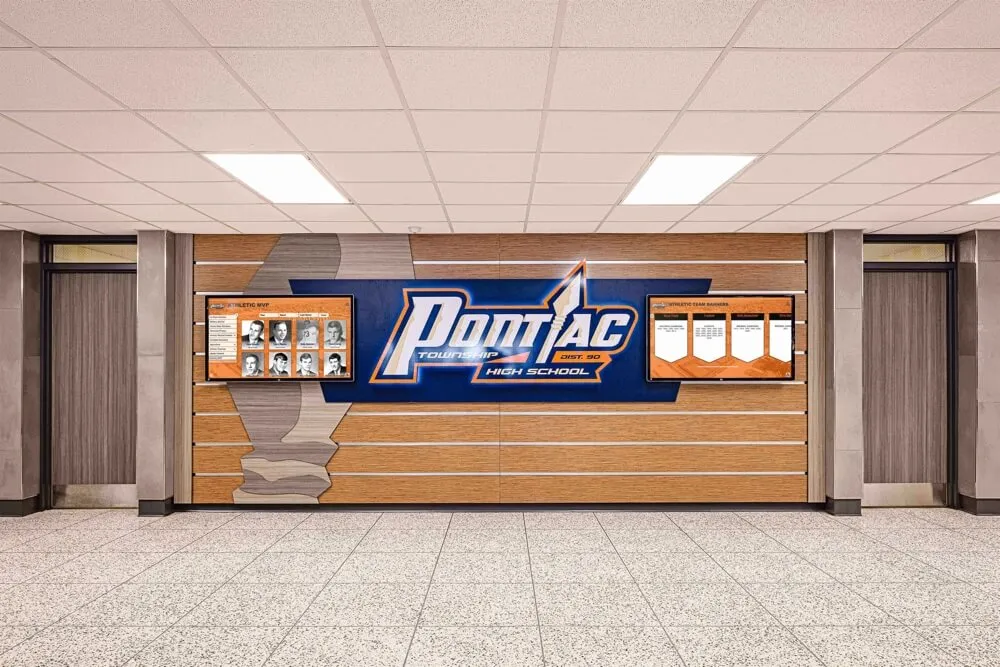
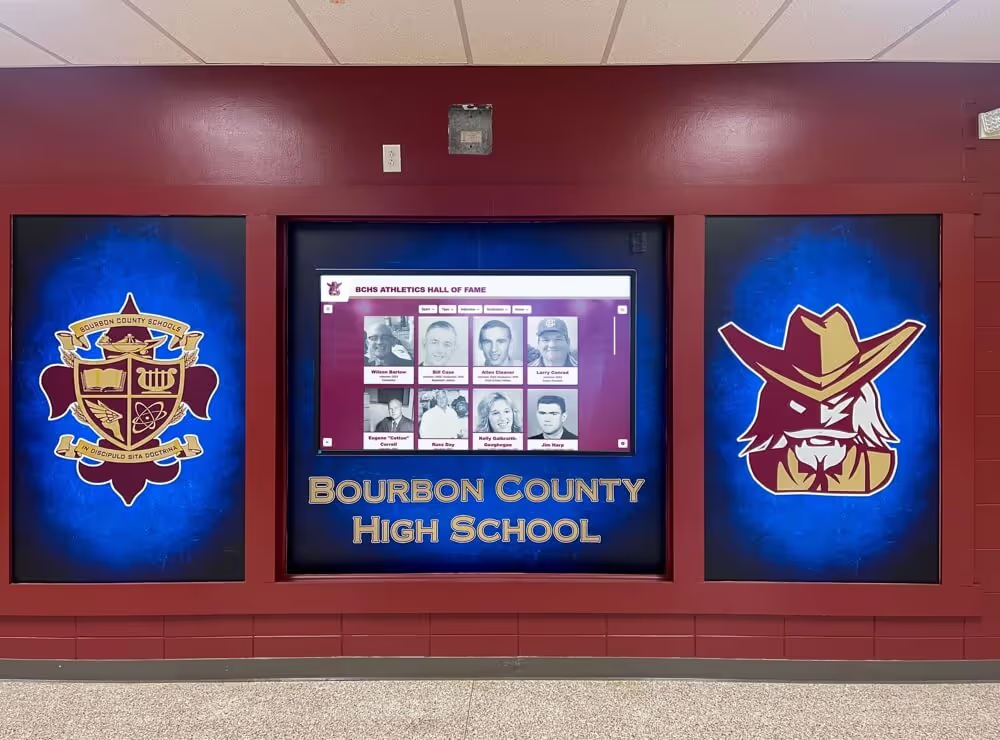
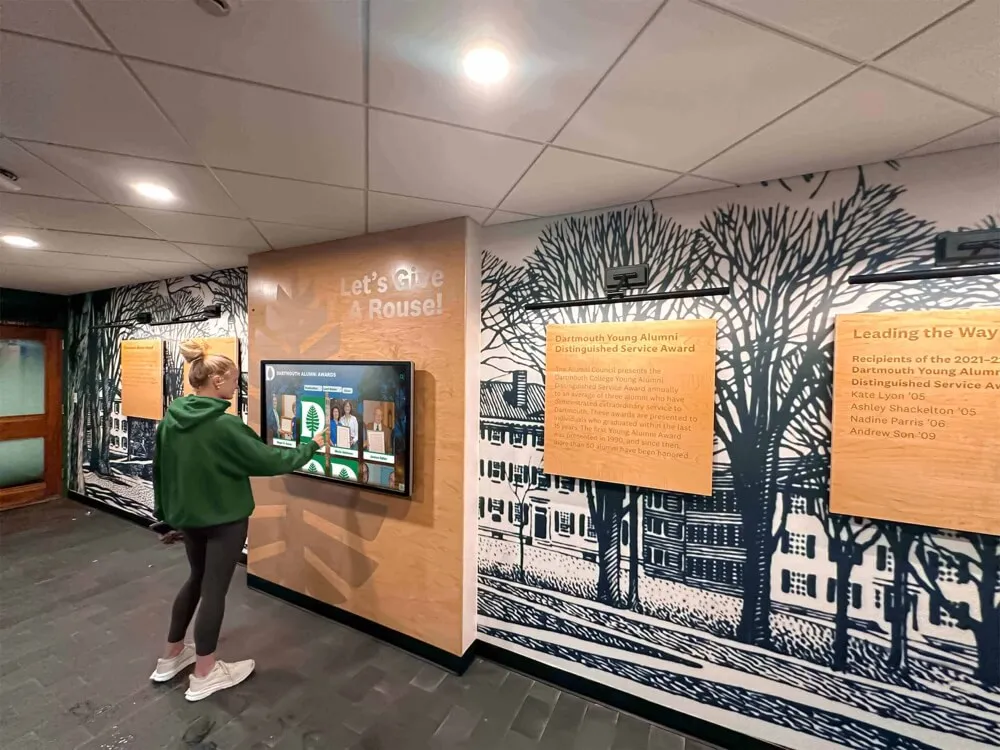
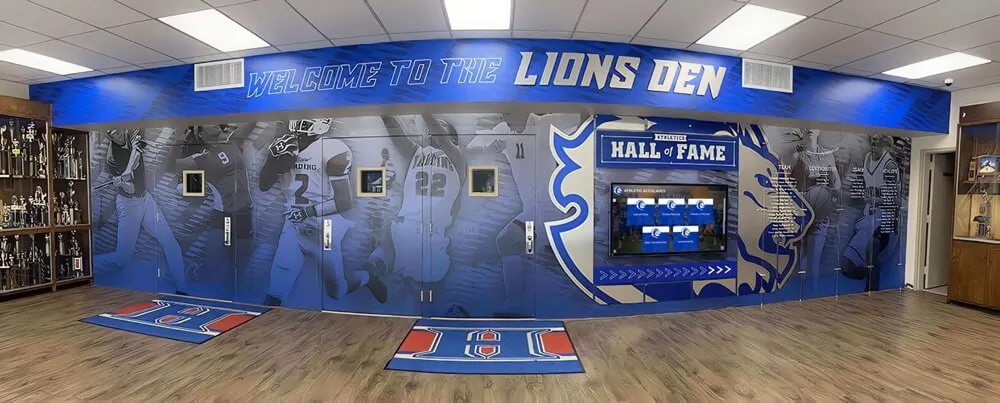
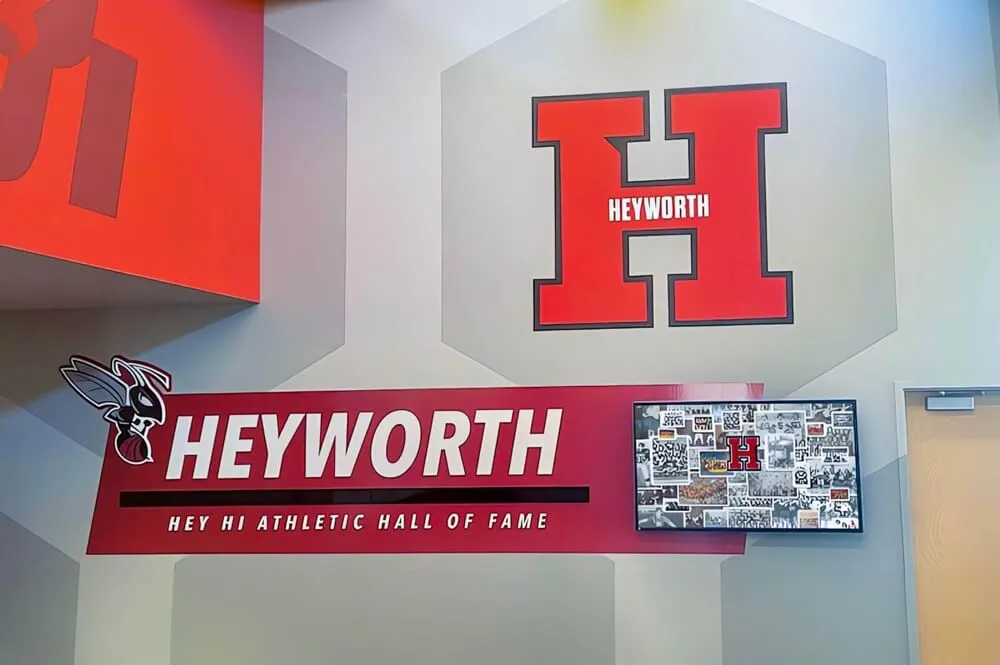
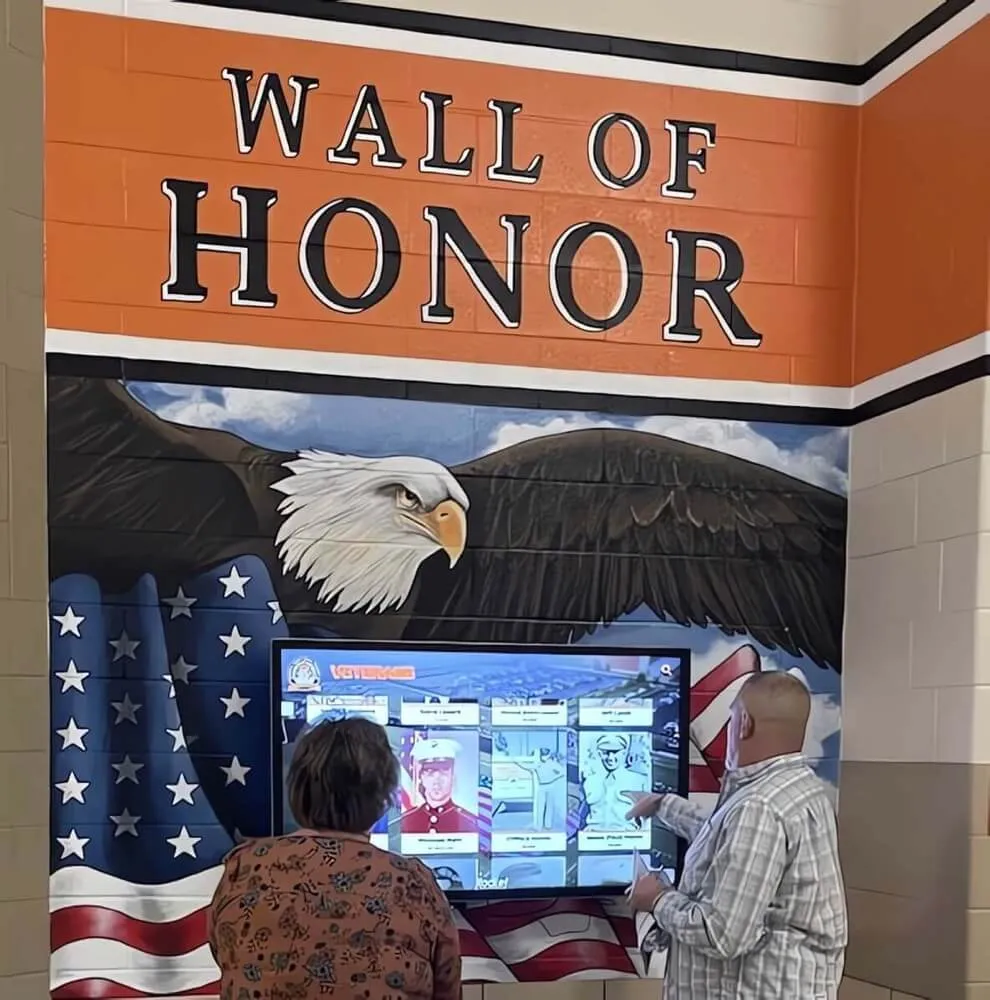
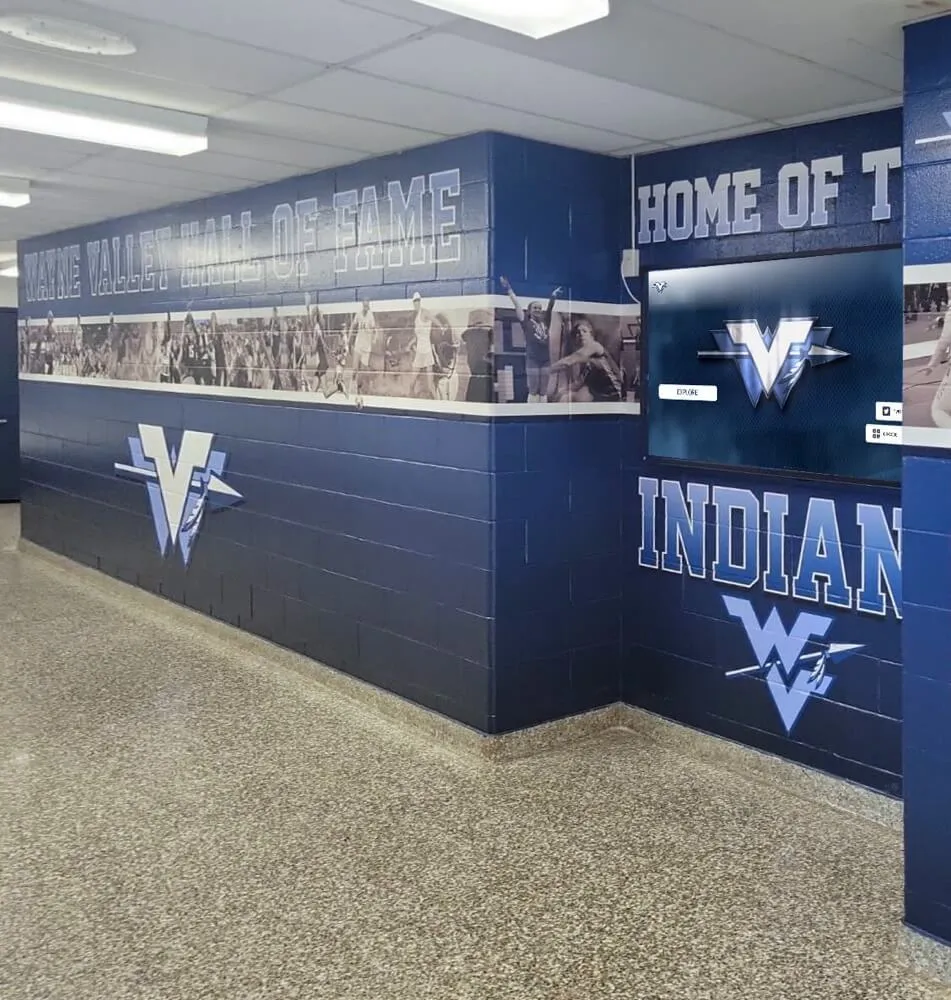
Athletic honor walls that incorporate weekly and seasonal recognition create hallway environments where student achievement is visible to the entire school community every day
Building Recognition That Outlasts the Season
The player of the game graphic is one of the most common weekly touchpoints in school athletics — and one of the most consistently underinvested in terms of what happens after the post goes live. Programs that treat each graphic as a one-time social asset and nothing more leave an opportunity untaken: the chance to build a season-long archive, a visible in-building recognition presence, and a permanent institutional record of athletic achievement that extends well beyond Friday night.
The infrastructure required is not complex. A consistent graphic template. A shared archive spreadsheet. A digital signage submission process. A year-end review before the banquet. These four steps convert a social media program into a recognition system — and at season’s end, into the foundation for a permanent athletic display that motivates athletes in future seasons by connecting them to the players who came before.
Programs looking to connect weekly recognition to a broader year-round display should also review how graduation honors recognition and permanent records are archived and displayed at the institutional level — the same principles that make academic recognition permanent apply directly to building a lasting athletic recognition program from weekly game-day honors.
Give Your Weekly Honors a Permanent Home
Rocket Alumni Solutions builds interactive touchscreen recognition systems that connect weekly player of the game honors to a permanent, searchable archive — visible in your lobby, accessible to families, and lasting far beyond any social media post. Give every honoree the recognition they earned, displayed where your entire school community can see it.
Explore Athletic Recognition Displays