



Finding the right recognition award wording examples for school athletics is harder than it looks. Coaches and athletic directors who can narrate a season with clarity often find themselves staring at a blank plaque order form, unsure whether to write something formal or personal, brief or detailed. The stakes feel higher than they should—this wording will appear on a physical object, a permanent display, or a digital record that outlasts every member of the current coaching staff.
This guide takes the guesswork out of athletic award wording. Whether you’re writing for an MVP plaque, a sportsmanship certificate, a hall of fame induction, or a senior tribute, the 50-plus templates below are copy-ready—adapt a name and a specific detail, and the wording is done. Categories cover every major athletic recognition type used at the middle school, high school, and collegiate levels.
Effective athletic award wording does three things simultaneously: it names the achievement, identifies what made this athlete or team worthy of recognition, and signals what the program values. “Most Valuable Player — Jordan Smith” accomplishes only the first of these. The wording examples throughout this guide model all three.

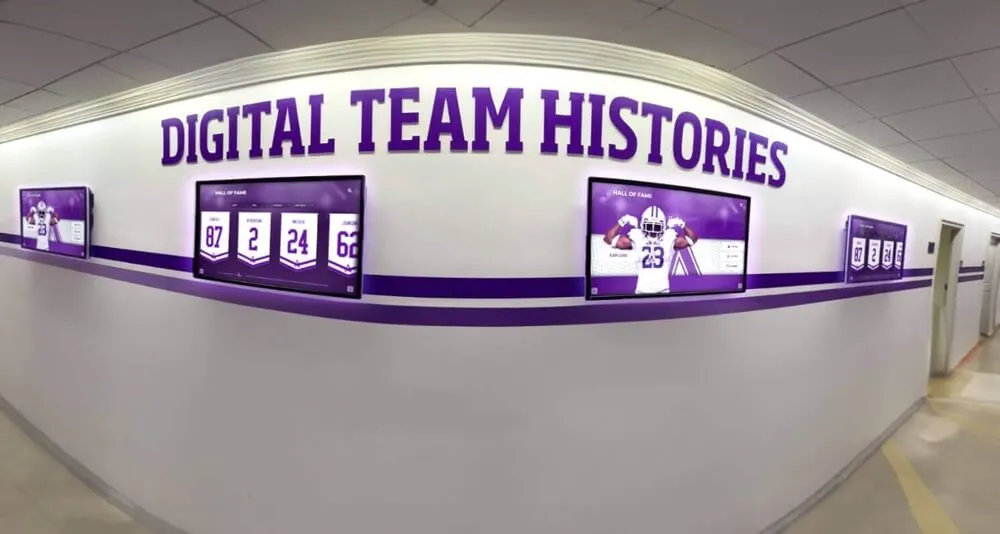
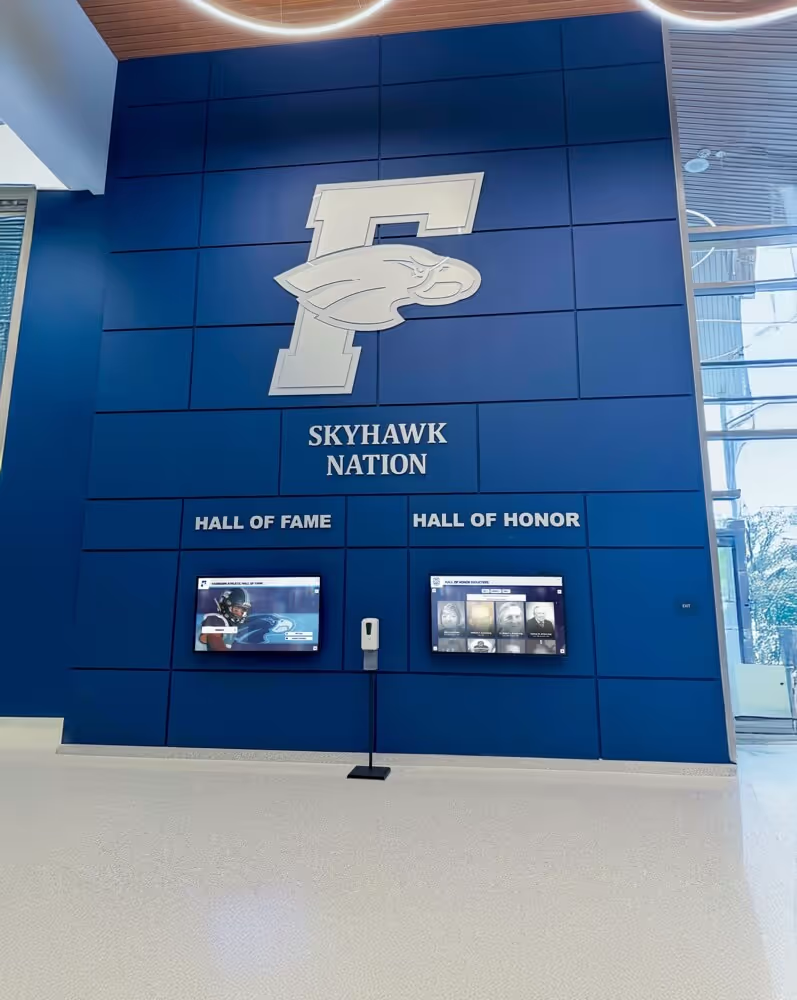
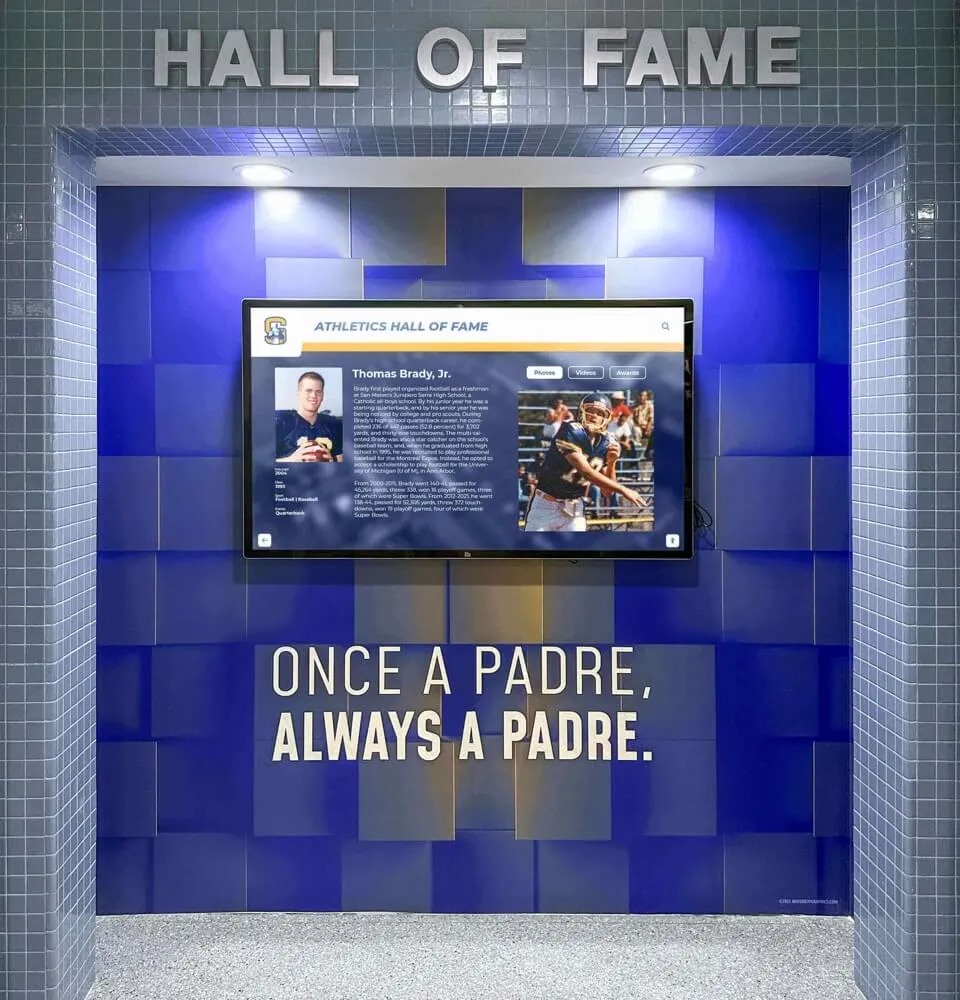
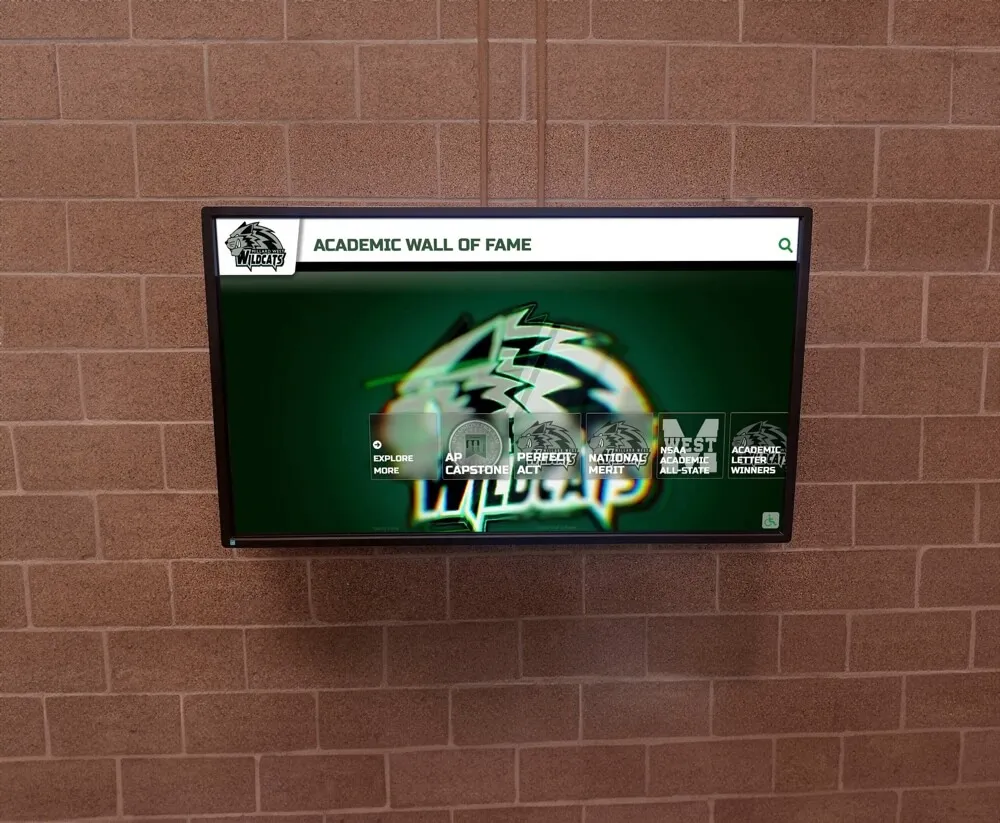
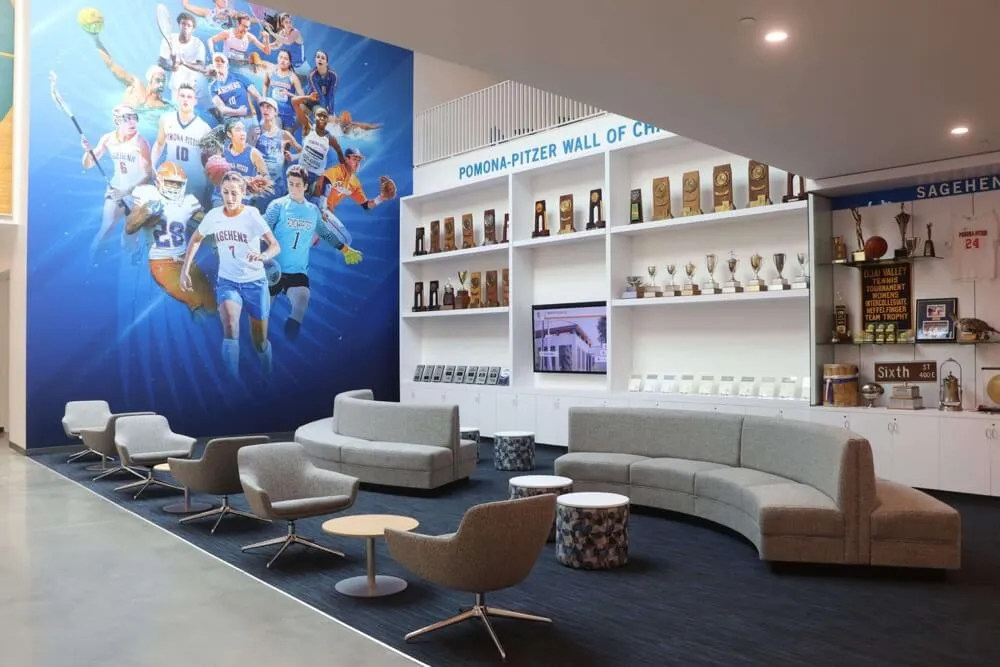
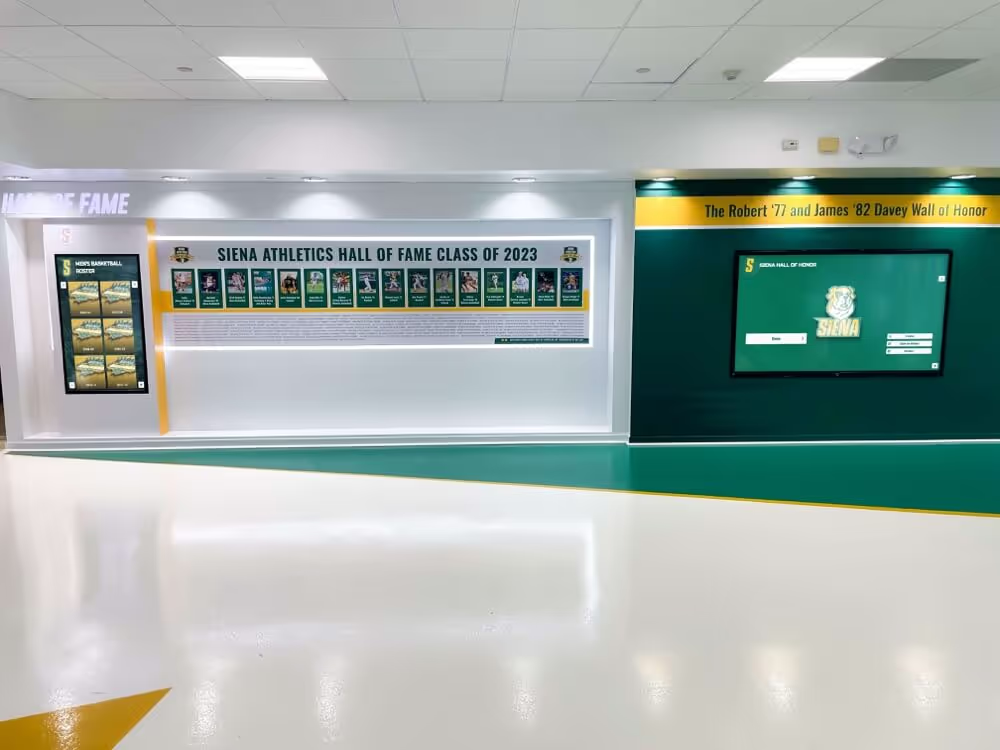
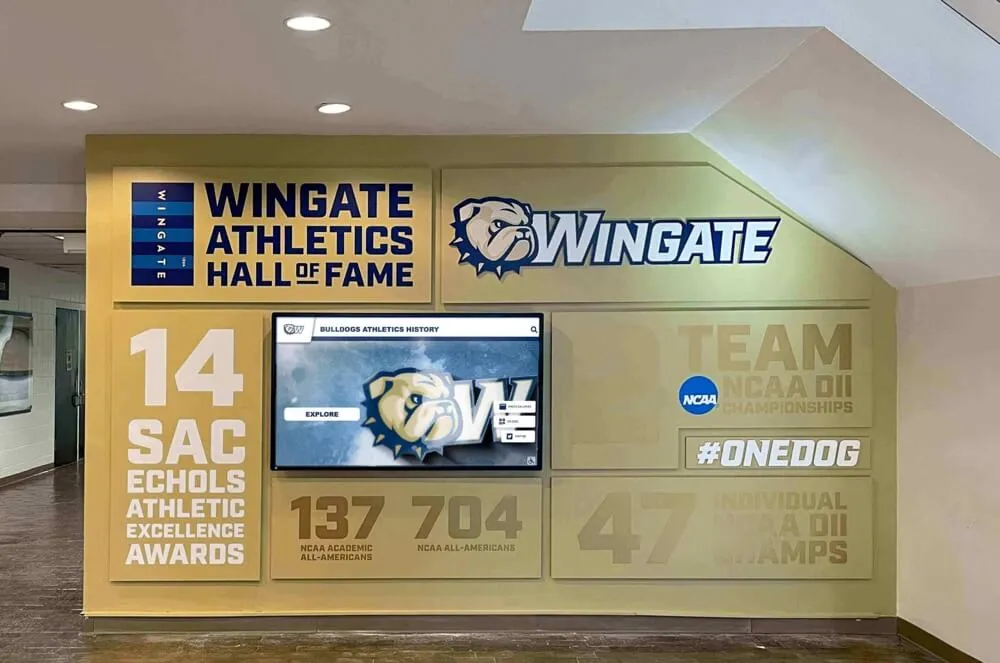
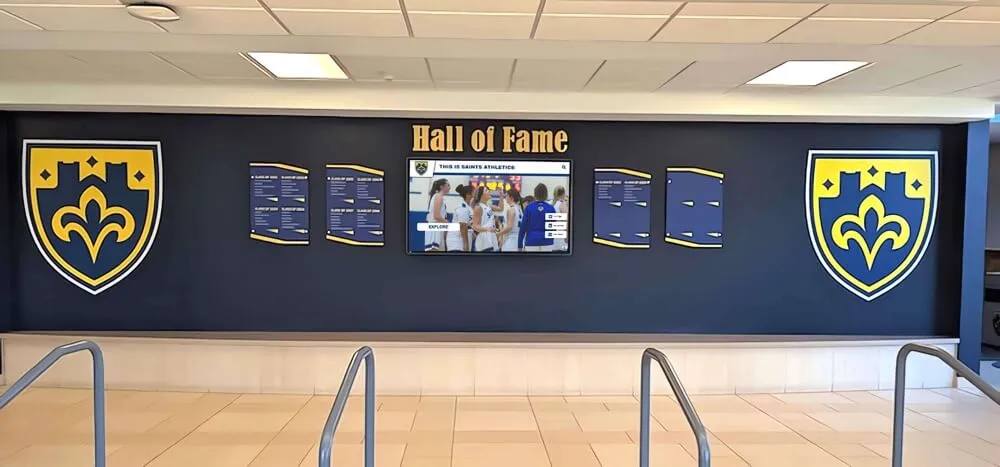
A well-worded hall of fame wall communicates program values through every plaque—not just the name and year, but the specific achievement that earned a place on the wall
What Makes Athletic Award Wording Work
Before reaching for a template, it helps to understand what separates memorable wording from forgettable filler.
Specificity over generality. “For outstanding athletic achievement” appears on thousands of plaques. “For breaking the school’s single-season rushing record, set in 1998, during a season in which the team returned to the state playoffs for the first time in twelve years” is on one. Specific wording earns attention and creates meaning that generic language never will.
Active voice and strong verbs. Passive constructions (“This award is presented to…”) add words without adding meaning. Active constructions (“In recognition of…”, “For demonstrating…”, “Presented to…followed by the action”) create momentum and clarity.
Present the action, not just the result. The best wording captures both what the athlete did and why it mattered to the program or team. “Led the team in defensive stops while mentoring three younger players into starting roles” is more meaningful than “Most Improved Defender.”
Calibrate length to context. Trophy plates, plaques, and physical certificates have space constraints that engraved or printed wording must respect. Digital displays and programs have no such limits. The templates below include short versions (suitable for engraving) and expanded versions (suitable for programs, digital profiles, and digital recognition systems) where applicable.
For inspiration on how wording pairs with ceremony delivery, award speech examples for school recognition nights and hall of fame inductions demonstrate how written plaque language translates into spoken presentations that audiences remember.
MVP Award Wording Examples
The Most Valuable Player category carries the most prestige in most athletic programs and deserves wording with proportional weight. Avoid wording that could describe anyone on the roster—anchor every MVP citation to the specific qualities that made this particular athlete the selection this particular season.
Short-form (engraving):
Most Valuable Player | [Sport] | [Season Year] In recognition of exceptional on-field leadership, team-defining statistical production, and the competitive consistency that elevated every teammate throughout the season.
Most Valuable Player | [Season Year] For leading the [team name] in [key statistic], maintaining [GPA or eligibility standard], and demonstrating the competitive drive that defined the [year] season.
Expanded (program or digital profile):
[Name] is recognized as the [Year] Most Valuable Player in [Sport] for [specific contribution—e.g., “leading the program in scoring for the third consecutive season while anchoring a defensive unit that held opponents to the lowest scoring average in program history”]. [Name]’s ability to perform in high-pressure situations—including [specific game or moment]—exemplified the standard of excellence this program holds for every athlete who wears the [school name] jersey.
Peer-nominated variant:
Selected by teammates as the athlete whose presence made every member of the squad better. [Name] led the [Year] [team name] in [statistic] and, more importantly, in the daily standard of effort that championship programs are built on.
Most Improved Player Wording Examples
Most Improved wording lands best when it anchors to a measurable baseline—a preseason benchmark, a statistical category, a position change—rather than a general impression of growth.
Short-form:
Most Improved Player | [Season Year] For demonstrating the discipline and coachability that transformed measurable preseason limitations into competitive strengths by season’s end.
Most Improved | [Sport] | [Year] Recognized for the commitment to daily improvement that elevated [Name]’s performance in [specific skill or statistic] from [starting point] to [end point] across the full [year] season.
Expanded:
From the opening week of preseason to the final competition of the season, [Name] demonstrated that consistent effort applied to specific weaknesses produces measurable results. Entering the year ranked [position on depth chart or stat rank], [Name] finished [final ranking or achievement], earning recognition not only from the coaching staff but from teammates who observed the daily commitment that produced this growth.
Team Captain and Leadership Award Wording Examples
Leadership wording should distinguish between the formal title of captain and the observable behaviors that define what leadership looks like in this program. The most meaningful leadership recognition cites specific conduct rather than the title itself.
Short-form:
Leadership Award | [Year] For serving as the consistent standard-bearer of program values in practice, competition, and every interaction between.
Captain’s Award | [Team] | [Year] Recognized for leading the [team name] through [specific challenge—e.g., “a six-game losing streak”—or a notable achievement] with the composure, accountability, and care for teammates that define great athletic leadership.
Expanded:
The [Year] Leadership Award recognizes the athlete whose influence extended furthest beyond their own statistical performance. [Name] consistently set the example in preparation, accountability under pressure, and investment in the success of teammates at every level of the roster. The [team name] coaching staff presents this award to an athlete whose impact on program culture will be felt long after the [year] season is archived.
For programs building team culture recognition into multi-sport recognition systems, team recognition awards and building culture in athletics offers frameworks for connecting leadership wording to visible year-round display programs.
Sportsmanship Award Wording Examples
Sportsmanship recognition carries the most credibility when peer-nominated—athletes know better than any observer which teammate consistently demonstrated character under competitive pressure. Wording for peer-nominated awards should reflect that selection process.
Short-form:
Sportsmanship Award | [Sport] | [Year] Selected by teammates for consistently representing [school name] athletic values with integrity, in victory and in defeat.
[School name] Athletic Sportsmanship Award | [Year] Presented to the athlete whose conduct on and off the field best embodied the character standards that define [school name] athletics.
Expanded:
[Name] receives the [Year] Sportsmanship Award selected by [team name] teammates as the athlete who most consistently demonstrated the values of honesty, respect, and competitive integrity throughout the season. Whether in a rivalry game or a routine practice, [Name]’s conduct raised the standard for every player in the program and represented the school’s athletic values exactly as they should be represented.
Combined sportsmanship/character variant:
For competing with unwavering integrity, treating opponents with respect, and representing [school name] athletics with the character that this program expects from every athlete who earns a roster spot.
Scholar-Athlete Award Wording Examples
Scholar-athlete recognition benefits from wording that emphasizes the genuine difficulty of maintaining both academic and competitive performance simultaneously—not just that the recipient has a high GPA.
Short-form:
Scholar-Athlete Award | [Year] In recognition of maintaining academic excellence while competing at the highest level of school athletics—a dual commitment that reflects the full purpose of student-athlete participation.
[School] Scholar-Athlete | [Year] Presented to [Name] for achieving [GPA or honor roll status] while contributing [athletic role or achievement] to the [team name] program throughout the [year] academic year.
Expanded:
The [Year] Scholar-Athlete Award recognizes [Name] for demonstrating that the discipline, focus, and time management required to compete at the varsity level and maintain [specific academic achievement] simultaneously are not competing priorities—they are expressions of the same fundamental commitment. [Name] is the model of what [school name] athletics exists to develop.
The presidential academic fitness award provides a national context for academic achievement recognition that can inform how schools frame scholar-athlete wording at the program level.
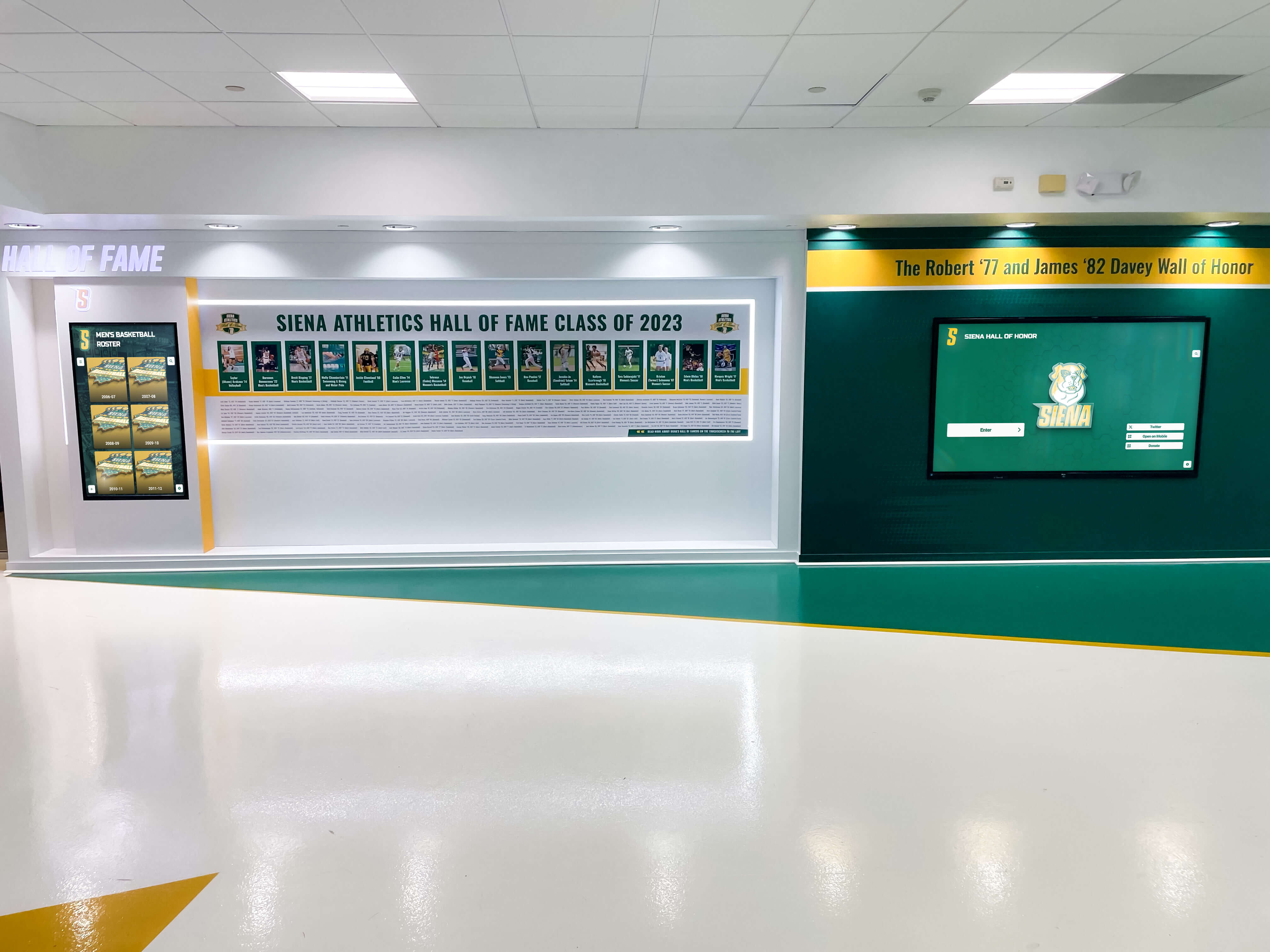
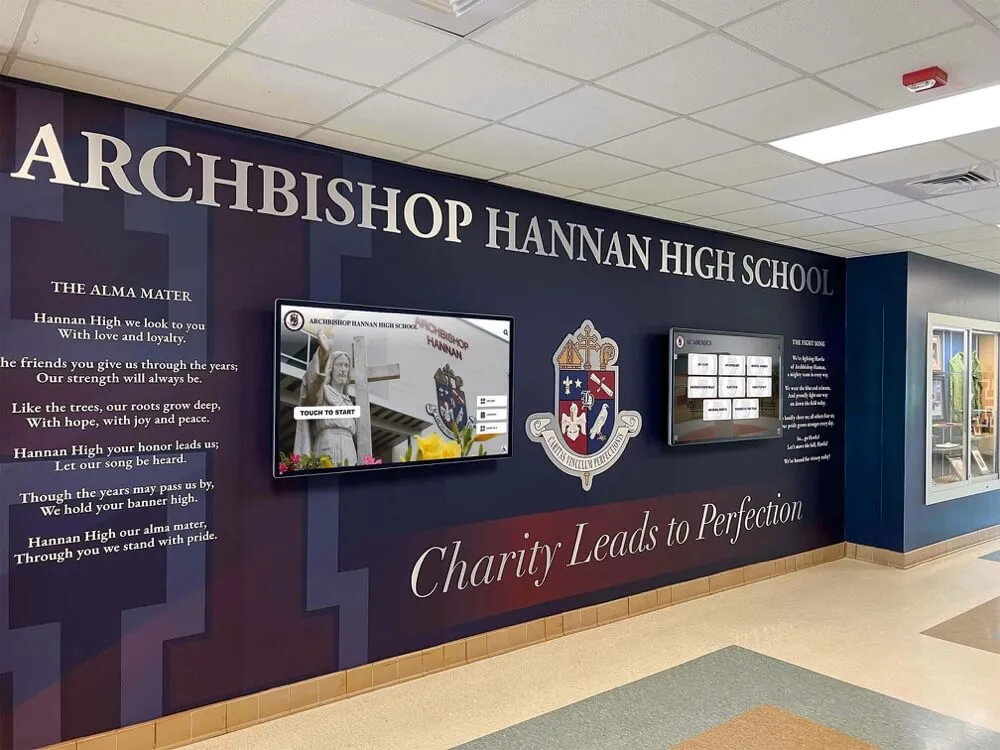
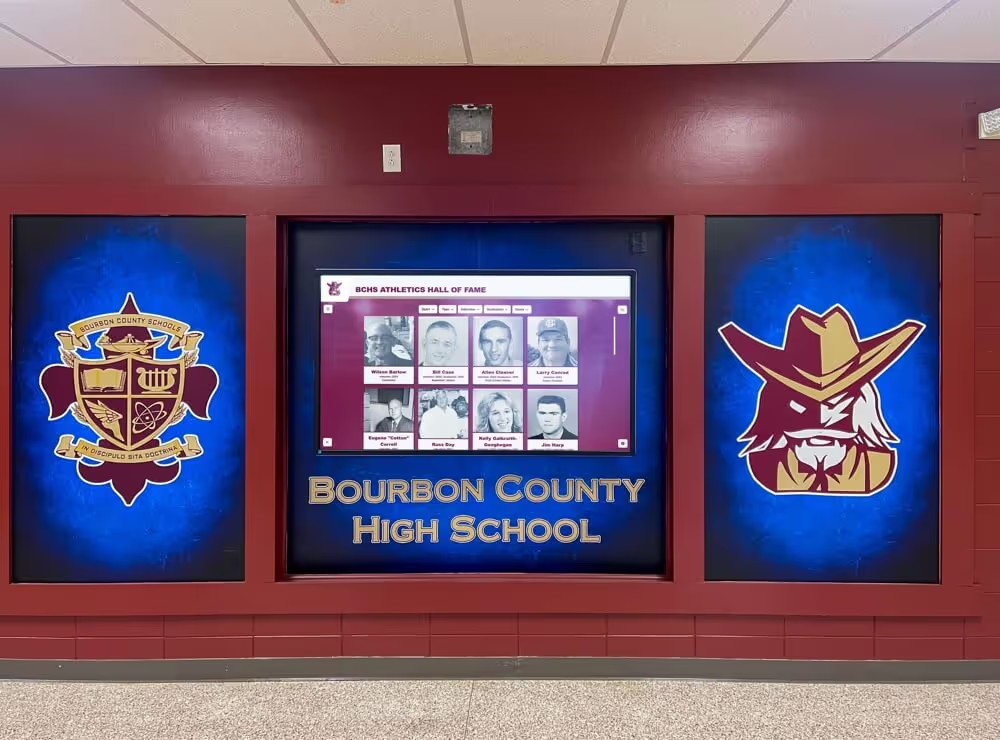
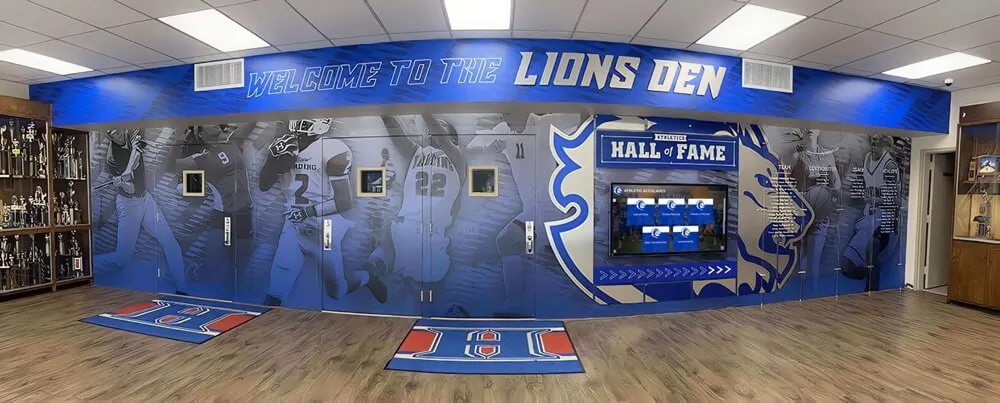
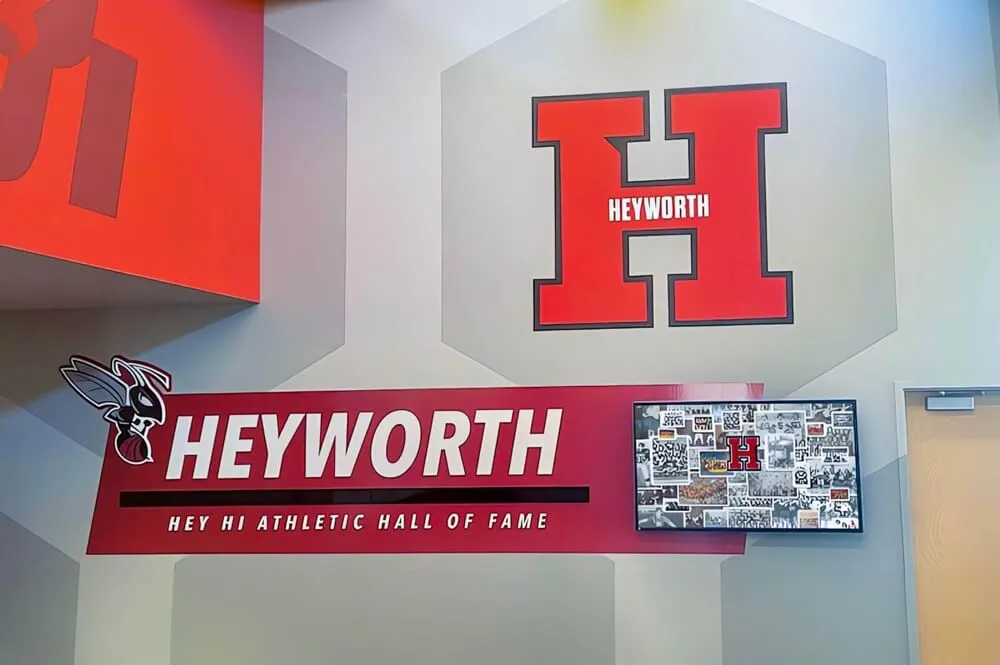
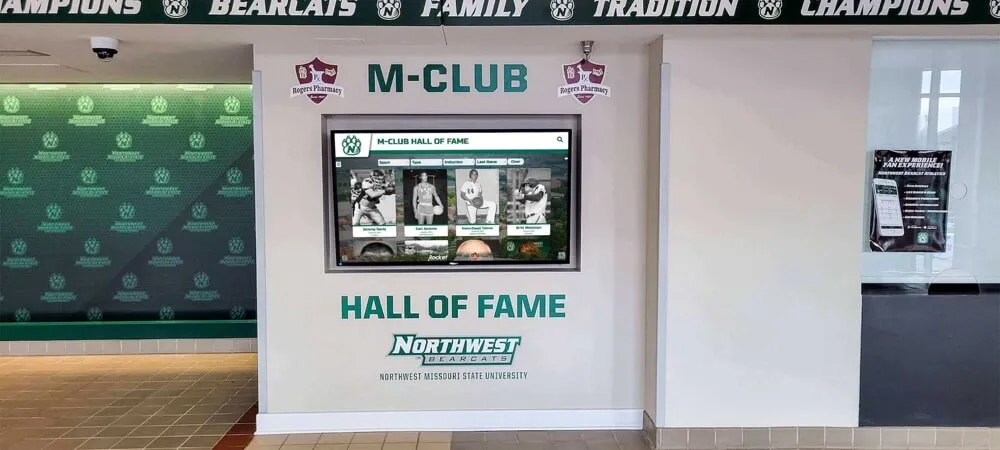
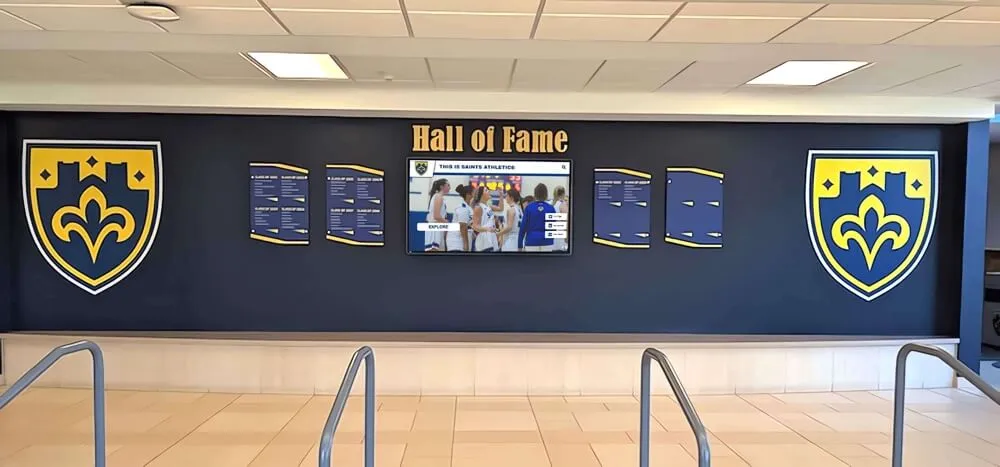
Hall of fame wall displays demonstrate how concise, specific wording creates a permanent recognition environment that reads as purposeful rather than generic
Coach’s Award Wording Examples
The Coach’s Award—often the category most closely expressing what the program’s leadership actually values—deserves wording that names the specific behaviors that earned this recognition.
Short-form:
Coach’s Award | [Team] | [Year] Presented to the athlete who, in the complete judgment of the coaching staff, most fully embodied program values across competition, preparation, academics, and community.
[Head Coach] Award | [Year] For the athlete who gave the [team name] coaching staff complete confidence in practice, in competition, and in every situation the season presented.
Expanded:
The [Year] Coach’s Award is presented to [Name] in recognition of qualities that statistics never fully capture: the consistency of daily effort, the composure under pressure that stabilizes teammates, the accountability that requires no external reinforcement, and the investment in the program that extends beyond personal achievement. Every coaching staff hopes to develop athletes of this character. This award acknowledges that [Name] arrived there.
Senior Tribute and Legacy Award Wording Examples
Senior recognition wording should honor the full arc of multi-year participation—not just the final season’s production. The most meaningful senior tributes reference specific growth over time and the program’s investment in the individual.
Short-form:
Senior Tribute | [Name] | Class of [Year] Four years of daily commitment to [team name] athletics—in the weight room, on the field, and in every moment that defines what this program stands for.
Class of [Year] Senior Award | [Name] In recognition of [number] years of dedication to [school name] [sport], the personal growth demonstrated across every season of eligibility, and the legacy left for every athlete who follows.
Expanded:
[Name] joined the [team name] program as a [year/position] and leaves as [final status/achievement], but the most important measures of [Name]’s impact on this program are not in any box score. [Name] showed every underclassman what four years of commitment to a program looks like from the inside—the hard practices, the disappointments absorbed and overcome, and the genuine investment in teammates that builds programs across generations. The [school name] athletic community is better for [Name]’s four years in it.
Perpetual plaque name-plate addition:
[Name] | [Graduation Year] | [Sport] | [Years on Roster] | [One-line achievement]
For programs designing recognition pages that put senior tribute wording in front of online audiences alongside physical displays, school website examples for athletics and alumni awards recognition pages shows how peer institutions structure web-based recognition alongside physical installations.
Hall of Fame Induction Wording Examples
Hall of fame wording operates at a different register than annual award recognition—it is a permanent institutional statement that must hold meaning for inductees, families, and future athletes who encounter it decades from now.
Short-form (plaque):
[School Name] Athletic Hall of Fame [Name] | Inducted [Year] [Sport(s)] | [Years] | [Achievement summary in one line]
[School Name] Hall of Fame Inductee | [Year] [Name] | [Sport] | [Graduating Class or Eligibility Years] Recognized for [specific achievement—e.g., “three consecutive all-state selections and a program-record 1,847 career points”].
Expanded (program or digital profile):
[Name] is inducted into the [School Name] Athletic Hall of Fame in recognition of [specific career achievements]. During [eligibility years], [Name] [key career highlights, using active language]. Beyond statistics, [Name] exemplified the values—[two or three specific values]—that the [school name] athletic program has sought to develop in every generation of student-athletes since [founding year or reference point]. [Name]’s induction honors not only a career but a standard.
Coach/contributor variant:
[Name] | Inducted [Year] | [Role—e.g., “Head Football Coach, 1988–2009”] In recognition of [wins/championships/specific impact], the program culture [Name] built, and the [number] athletes who graduated from [school name] better prepared for every challenge that followed because of [Name]’s coaching.
For extended speech presentations paired with hall of fame induction ceremonies, award speech examples for school recognition hall of fame provides structures that complement formal plaque wording with ceremony-ready presentations.
Championship Team Recognition Wording Examples
Championship wording should document complete context—not just “champions” but what level of competition, what the record was, and ideally something about what made this particular group’s achievement distinctive.
Short-form (trophy or plaque):
[School Name] [Sport] | [Conference/District/State] Champions | [Year] Season Record: [W-L] Coached by [Head Coach Name]
[Year] [Level] Championship [School Name] [Sport] “[Season/team motto or defining characteristic]” Final Record: [W-L-T]
Expanded (display panel or digital profile):
The [Year] [school name] [sport] program captured the [level] championship with a [record] season—the program’s [nth] title and its first since [prior year if applicable]. This team, coached by [head coach name], defined its season by [specific quality—“an undefeated conference record,” “a comeback from a 0-3 start,” “holding opponents to single digits in every postseason game”]. Every athlete on this roster earned a permanent place in program history.
Back-to-back or dynasty variant:
[School Name] [Sport] | [Year1] and [Year2] [Level] Champions The [Year1–Year2] seasons produced consecutive [level] championships—only the second time in program history the [team name] captured back-to-back titles. This recognition honors both rosters and the coaching staff whose vision sustained excellence across two complete seasons.
Special Category Wording Examples
These wording examples cover award categories used frequently at athletic banquets that don’t fit the major award structure.
Hustle / Heart Award
Hustle Award | [Year] | [Name] For outworking every limitation, outrunning every expectation, and demonstrating that effort is always within the athlete’s control—even when outcomes are not.
Comeback Award
Comeback Award | [Year] | [Name] Recognized for returning from [specific adversity—injury, personal challenge, performance setback] with the focus and determination that inspired everyone who witnessed it. This team is better because [Name] came back.
Unsung Hero Award
Unsung Hero | [Year] | [Name] For the contributions that never appeared in a box score but that every teammate and coach recognized as essential. The [team name] program would not have accomplished what it did this season without this athlete.
Best Teammate Award
Best Teammate | [Team] | [Year] Selected by the full roster for being the athlete everyone wanted on their side—in practice, in competition, and especially in the moments that tested the group’s character.
Keep Award Wording Visible All Year
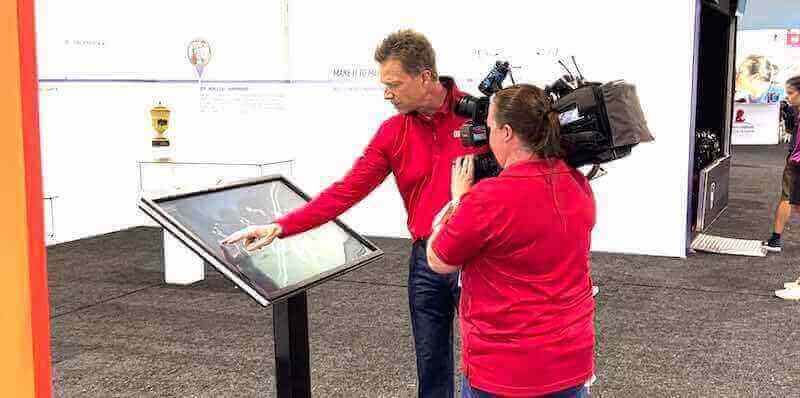
Once your wording is crafted, Rocket Alumni Solutions' touchscreen recognition systems let you display every award, wording, and honoree in a searchable, interactive format accessible to athletes, families, and alumni year-round—no wall space limits, no archiving older recognition to make room for new.
See How Recognition Displays WorkAcademic and Multi-Disciplinary Award Wording
Not every athletic recognition moment is purely sport-based. Schools presenting cross-program recognition that combines athletic and academic achievement need wording that honors both dimensions without minimizing either.
Multi-sport athlete:
Multi-Sport Excellence | [Year] | [Name] For representing [school name] in [Sport 1] and [Sport 2] across [number] seasons, contributing at the highest level of each program while maintaining the academic standing that makes multi-sport participation possible.
Academic-athletic balance:
[Year] Athletic Excellence and Academic Achievement [Name] | [Sport] | [GPA or Honor Roll Status] In recognition of the discipline required to compete at the varsity level and excel academically simultaneously—the dual achievement that school athletics exists to develop.
For programs that want to display academic award recognition alongside athletic achievement, academic awards for high school students and recognition categories covers how schools build recognition structures that value both domains visibly and equitably.
Adapting Award Wording for Physical vs. Digital Displays
Wording that works on an engraved bronze plaque is not the same wording that works on a 65-inch touchscreen display profile. The physical constraints of plaque engraving demand economy of language; the unlimited canvas of a digital profile invites narrative depth.
Physical plaque constraints:
- Standard plaque sizes accommodate roughly 30–60 words at readable engraving scales
- Abbreviations are acceptable on plaques (e.g., “Capt.” for “Captain,” “Conf.” for “Conference”) where engraving space is limited
- Uniform formatting across multiple plaques creates visual coherence—choose one template structure and apply it consistently
Digital profile advantages:
- No word limits—extended narrative versions of every wording example above work well in digital athlete profiles
- Photos, video highlights, career statistics, and post-graduation information can accompany award wording
- Wording can be updated or supplemented when additional context becomes available (post-graduation achievements, corrections, expanded recognition)
- Alumni can find their own profiles years after graduation by searching name, sport, or graduation year
Programs maintaining both physical and digital recognition should create a wording document that has both the short-form (engraving) and expanded (digital) versions of every award, so the work is done once and applied across both contexts. Back-to-school ideas for recognition displays illustrates how programs can use display systems to refresh wording visibility at the start of each academic year as new athletes encounter existing honorees for the first time.
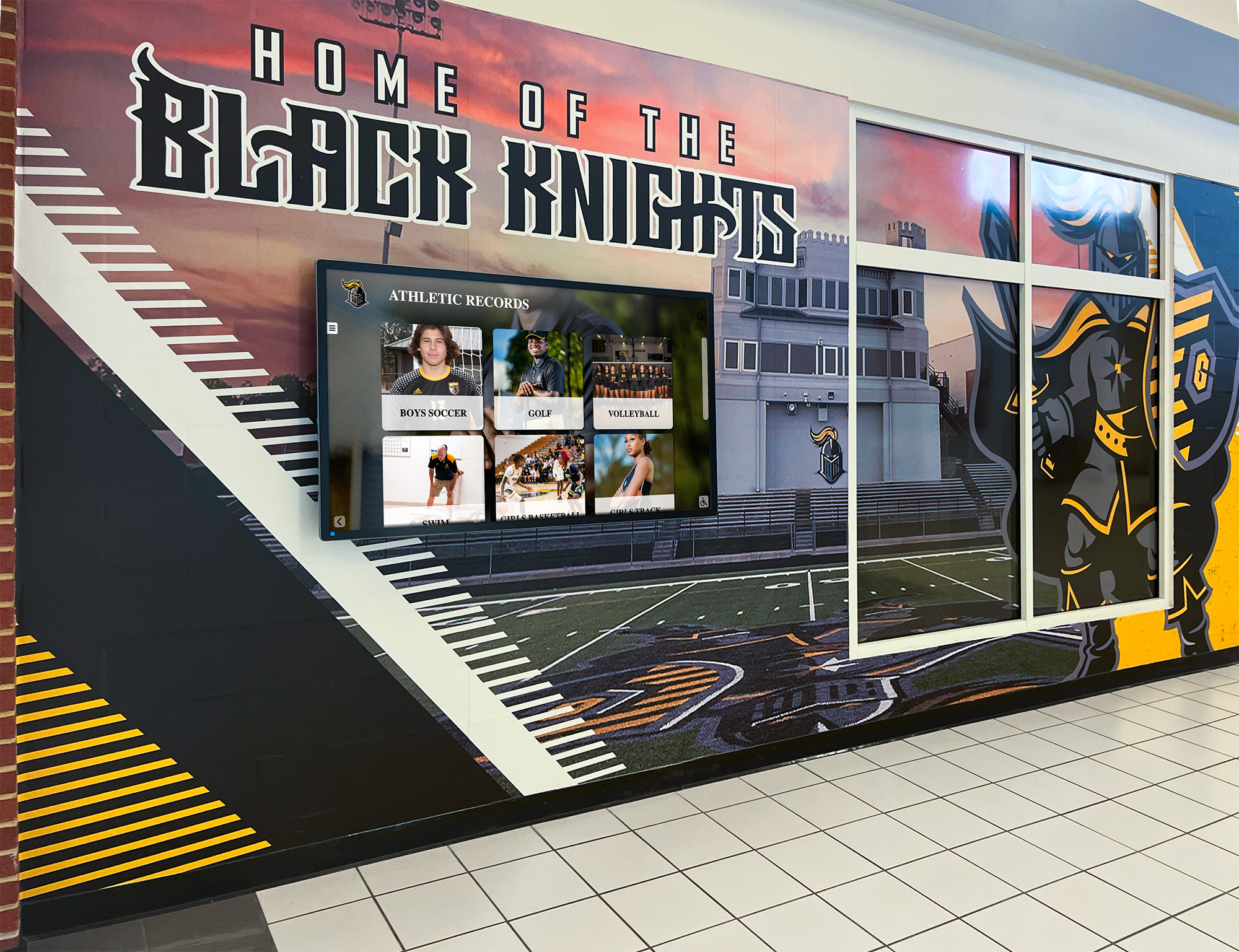
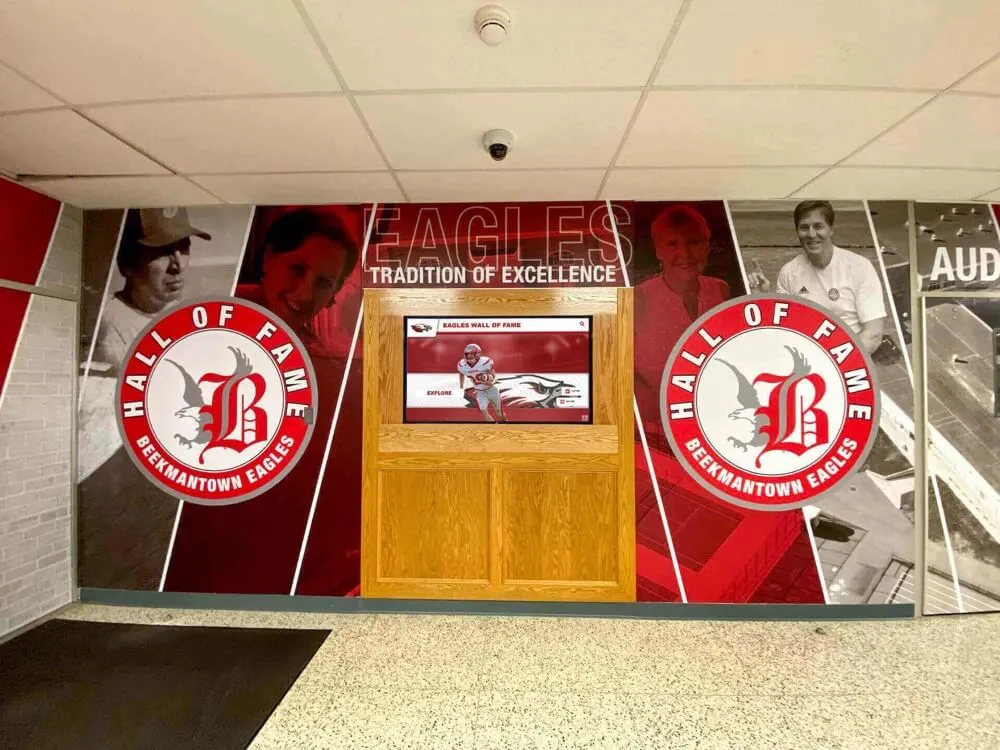
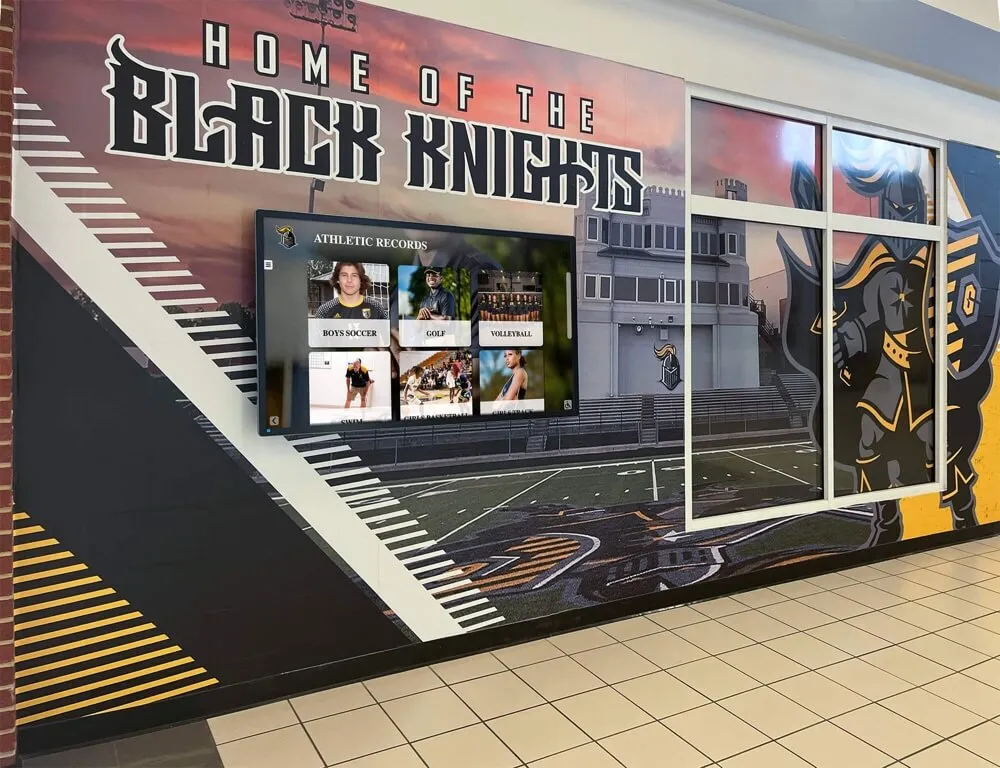
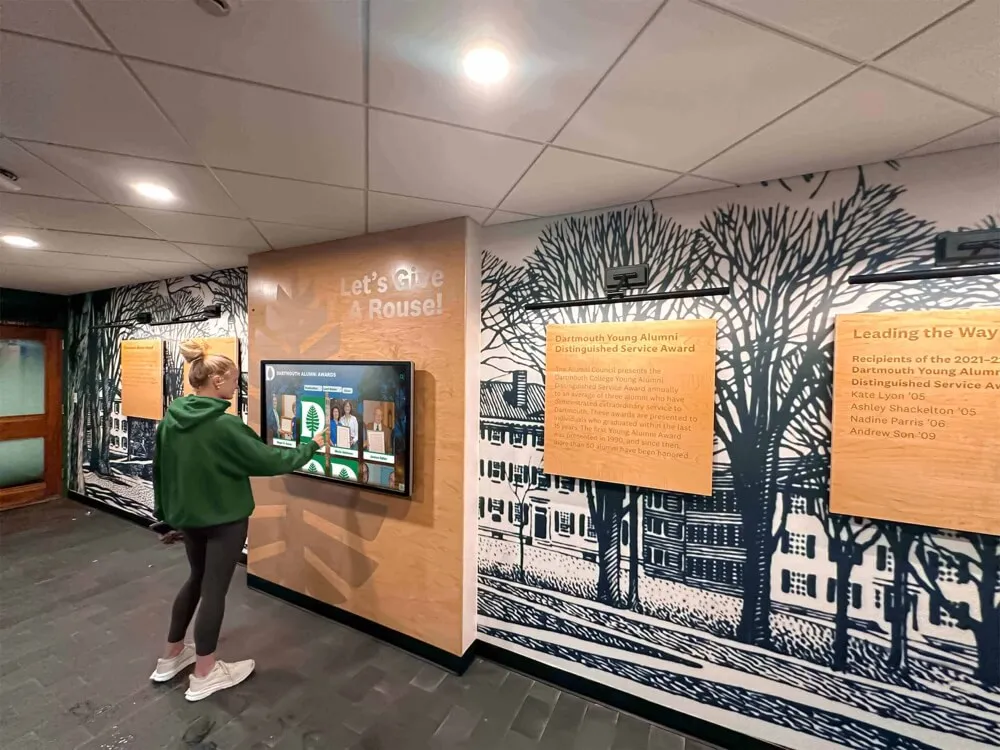
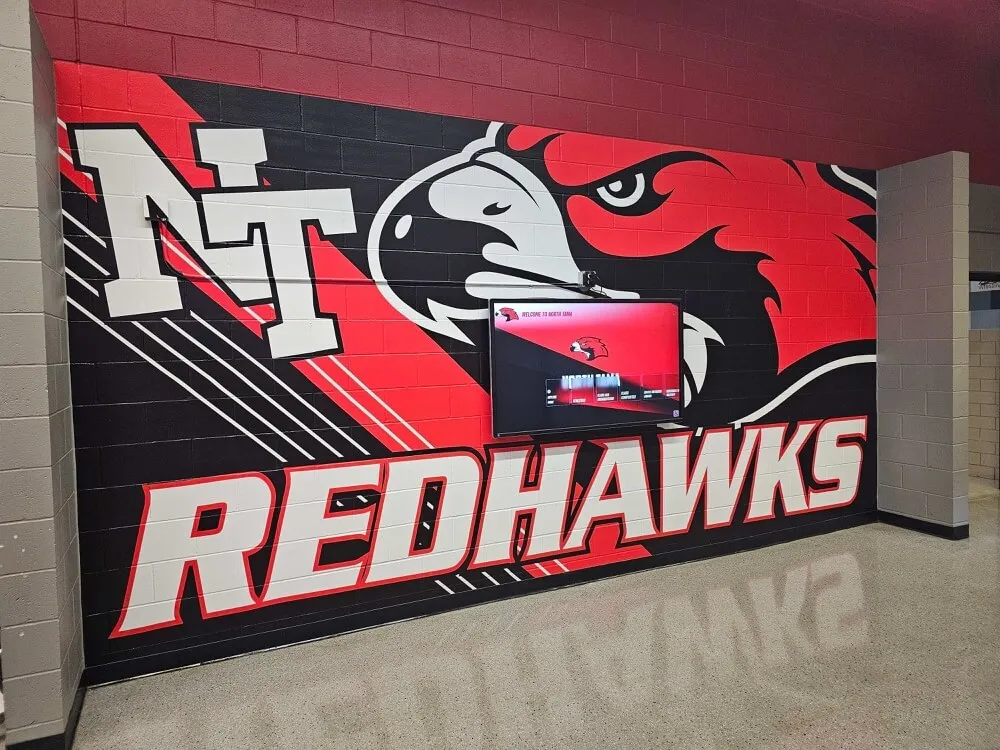
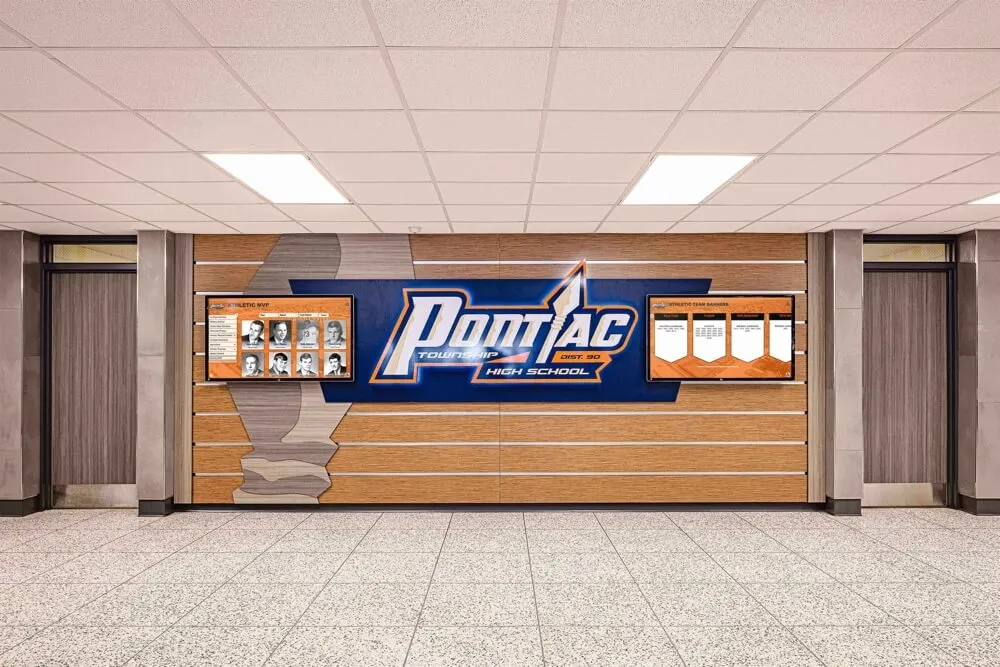
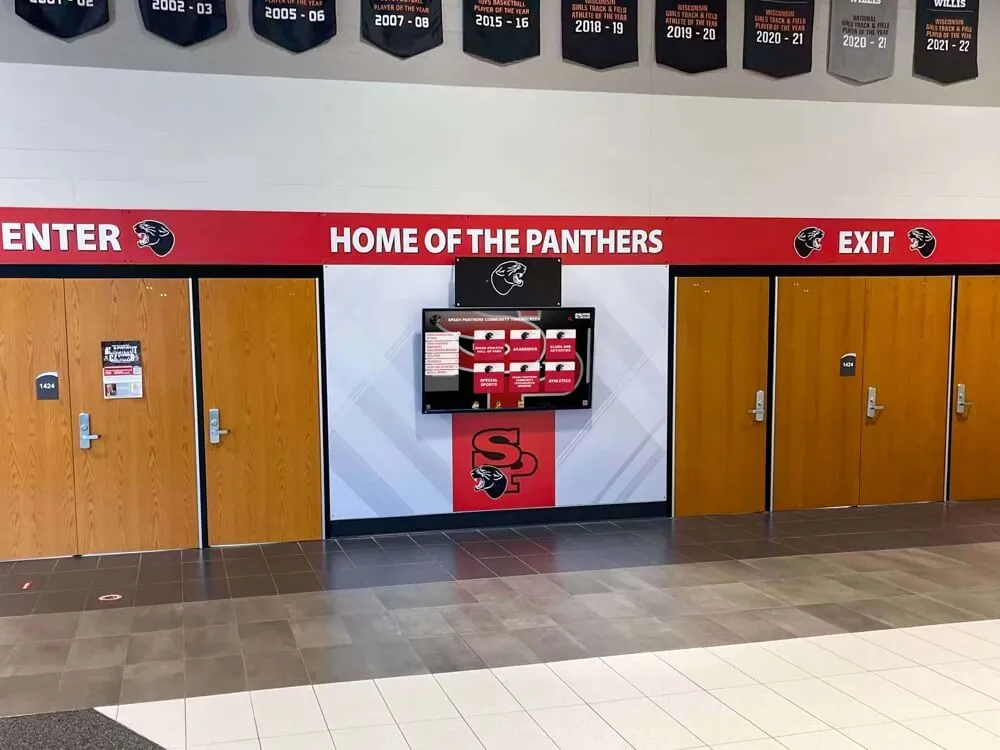
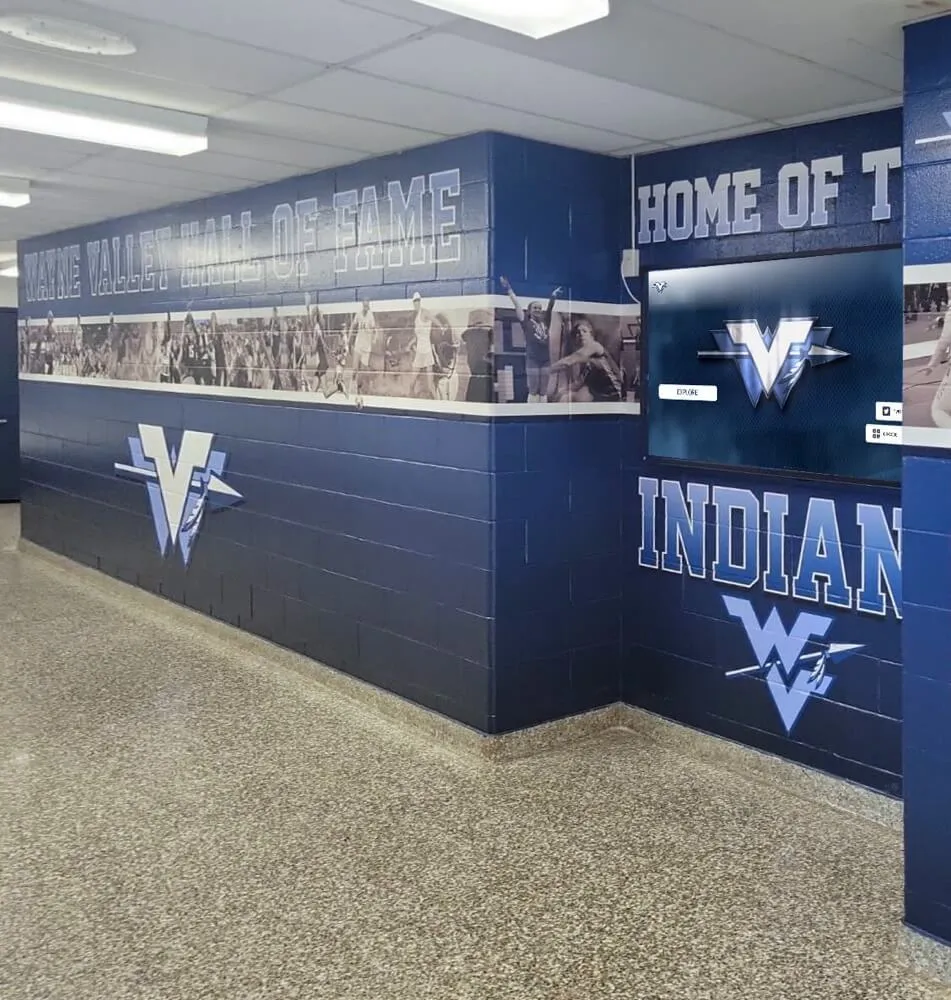
Pairing mural art with digital display panels allows programs to keep award wording continuously visible and updated without the space constraints of traditional plaque walls
Wording for Staff and Coach Recognition
Athletic programs that recognize coaches and staff alongside athletes in their formal recognition programs need wording that honors professional contributions without sounding like a performance review.
Retiring head coach:
[Name] | Head [Sport] Coach | [Years of Service] In recognition of [number] seasons coaching [school name] [sport], [number] athletes developed, [career record] overall record, [championships] and a program culture that endures long after any individual season. [Name] is recognized not only for victories but for the athletic program built, brick by brick, across [years of service] years of daily commitment.
Volunteer/assistant coach:
[Name] | [Title] | [Sport] | [Years] For contributing [specific contribution—e.g., “goalkeeper coaching,” “strength and conditioning programming,” “film analysis”] to [team name] athletics across [number] seasons. [Name]’s investment in athletes came without a contract and produced results that a contract cannot measure.
Athletic director/administrator tribute:
[Name] | Athletic Director | [Years of Service] For building the infrastructure, policies, and culture that allowed [number] sports programs and [number] student-athletes to compete, grow, and succeed across [years] years of [school name] athletics.
Programs that recognize staff contributions alongside athletes on staff appreciation wall ideas for year-round school recognition create recognition environments where the full team that makes athletics possible—coaches, trainers, administrators, and volunteers—receives visible acknowledgment.
Thank-You Wording for Certificates and Participation Recognition
Not every athletic recognition moment is tied to competitive achievement. Certificate wording for participation, contribution, and appreciation contexts requires a different register—warm and sincere without overstating competitive merit.
Participation certificate:
This certificate recognizes [Name] for [number] year(s) of participation in [school name] [sport] athletics. Every practice attended, every teammate encouraged, and every competition entered contributed to the program community that [school name] athletics depends on.
Manager and team support recognition:
[Name] | [Sport] Program | [Year] In appreciation for the equipment management, logistical support, and program dedication that kept the [team name] ready to compete every day of the [year] season. Great athletic programs are built by every person in the program—including those who never appear in any box score.
Banquet thank-you to families:
The [school name] [sport] program thanks the families of the [year] roster for the years of support—the early mornings, the travel, the sideline presence, and the home environment that makes athletic development possible.
For inspiration on sincere appreciation wording in related recognition contexts, thank you message examples for principal appreciation demonstrates tone and structure applicable to any institutional appreciation recognition.
How to Make Wording Your Own: A Practical Framework
Templates become authentic when programs invest 10–15 minutes per award category filling in three specific details:
1. Name one observable behavior. What did this athlete actually do that you watched? “Set screens until every possession was accounted for” is observable. “Worked hard” is not.
2. Name one outcome or impact. What did the observable behavior produce for the team? “Freed up [other player] to score 22 points in the final quarter of the championship game” is an outcome. “Made the team better” is not.
3. Name one forward-looking quality. What does this recognition predict about the athlete’s future? “The work ethic that built this season will serve [Name] in every competitive environment to come” closes the recognition with forward momentum.
Applying this framework to any of the templates above—MVP, Sportsmanship, Hall of Fame, or Senior Tribute—produces wording that could only be written about this specific athlete in this specific season.
Programs that invest in this level of specificity across their entire award lineup create banquets where athletes lean forward rather than sit politely. Award wording that names observable behavior and real impact is wording athletes carry with them.
For programs using card-format recognition at ceremonies or in hallway displays, principal appreciation card recognition designs and wording message ideas shows how short-form wording translates effectively into designed card and display contexts applicable to athletic recognition as well.
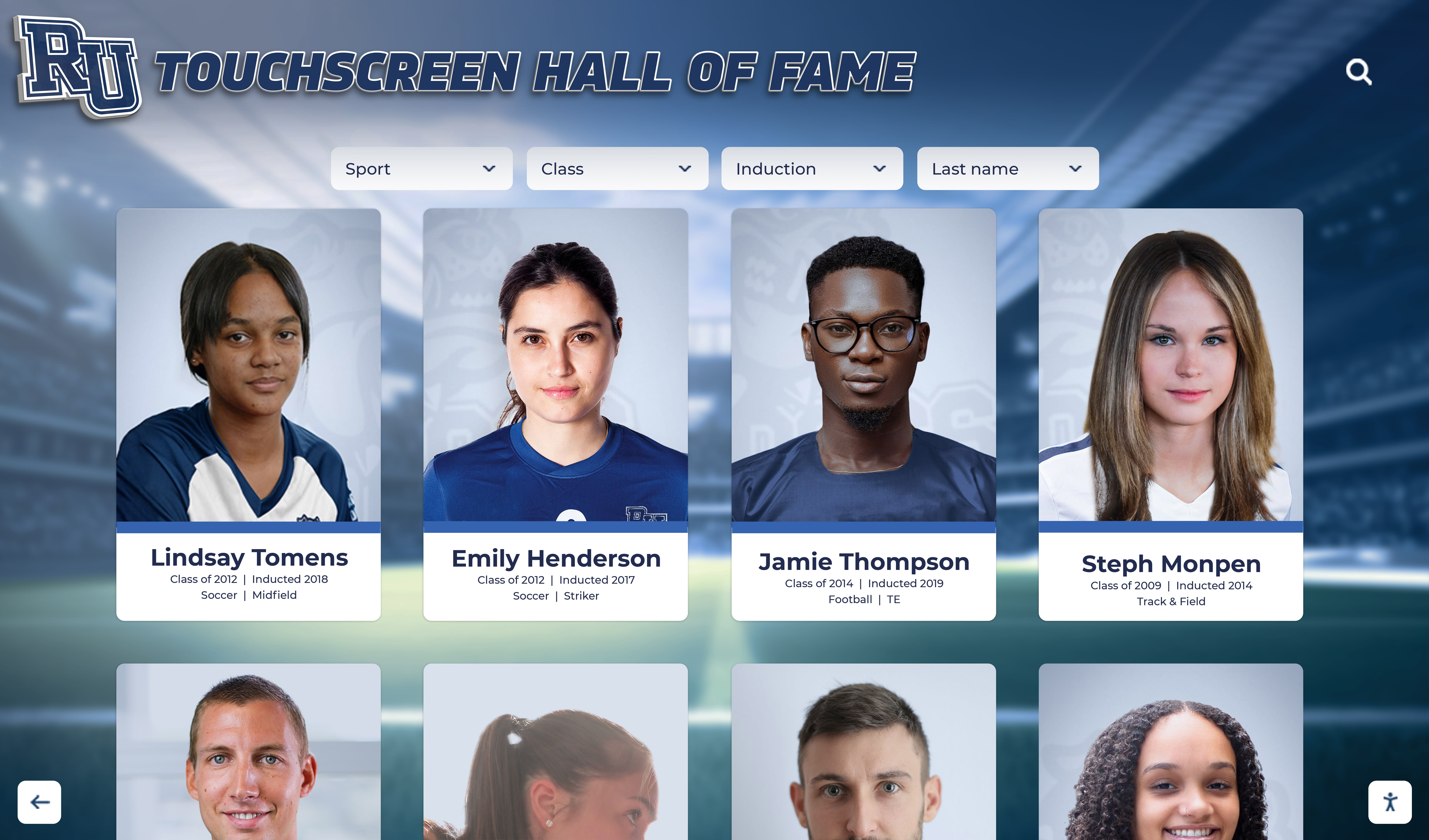
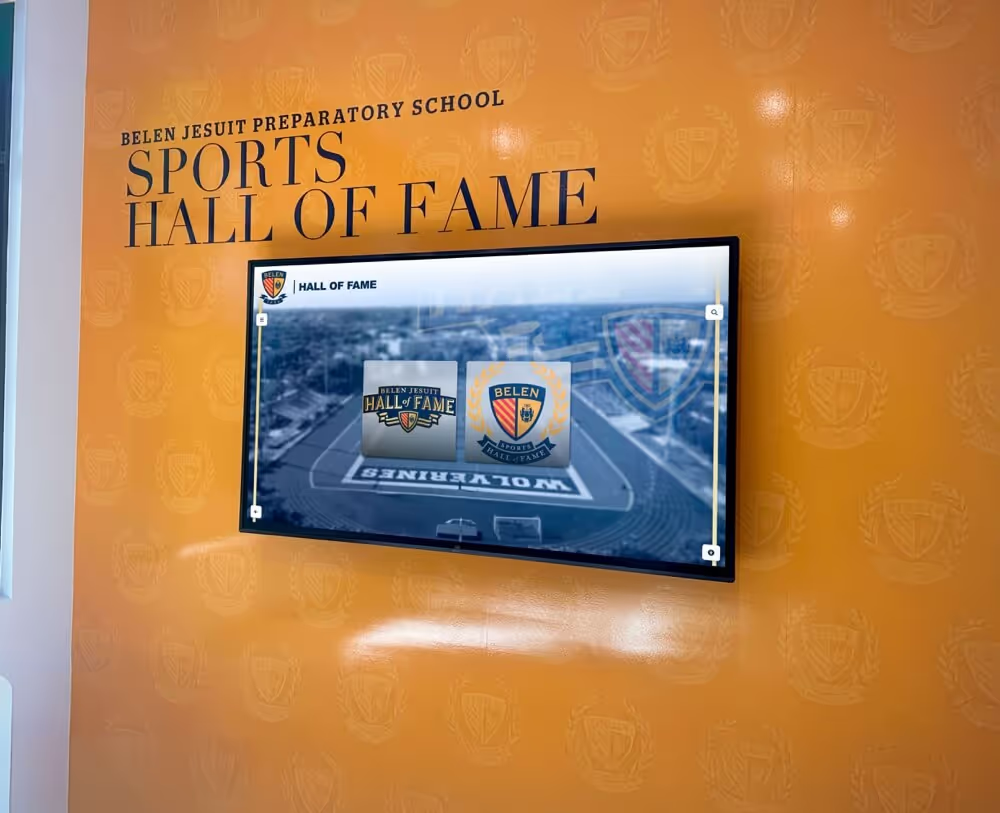
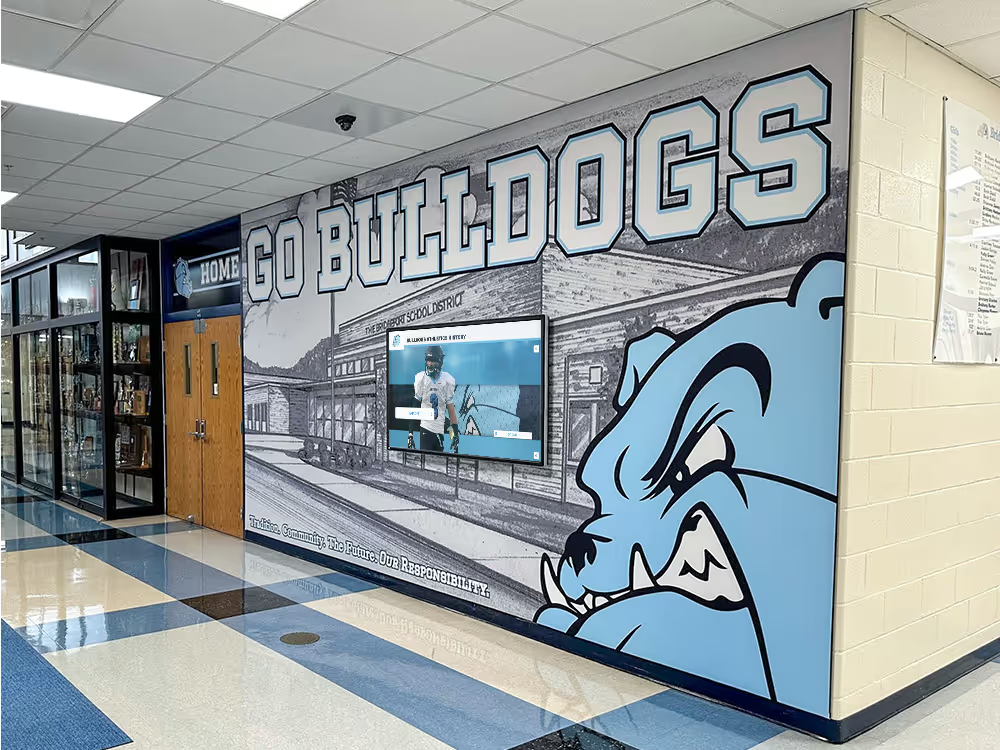
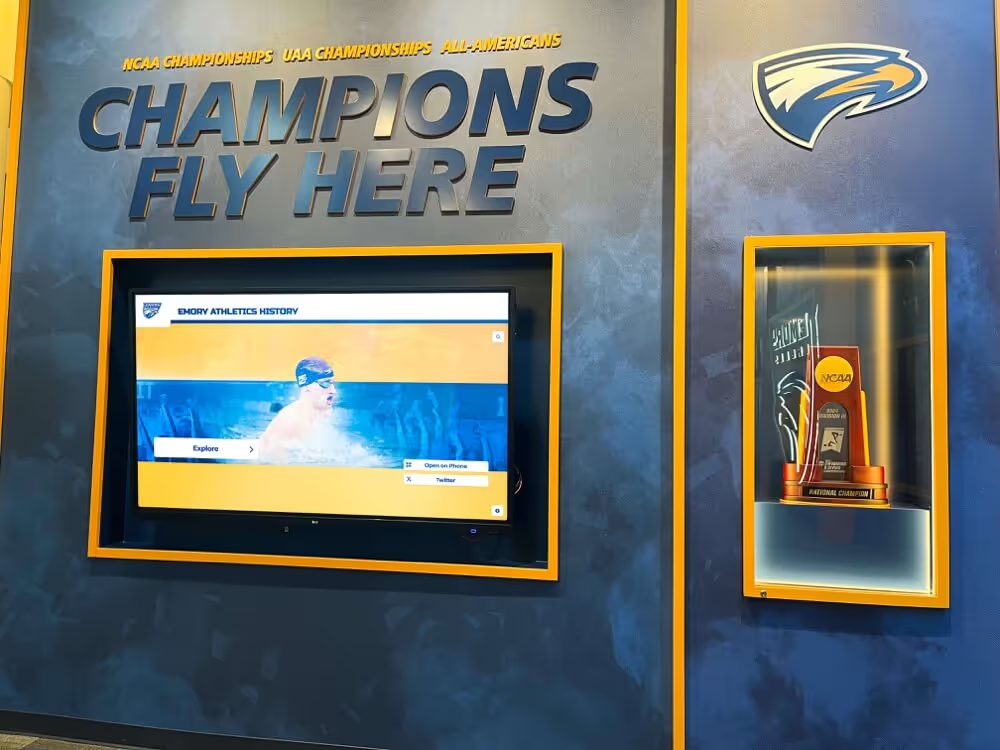
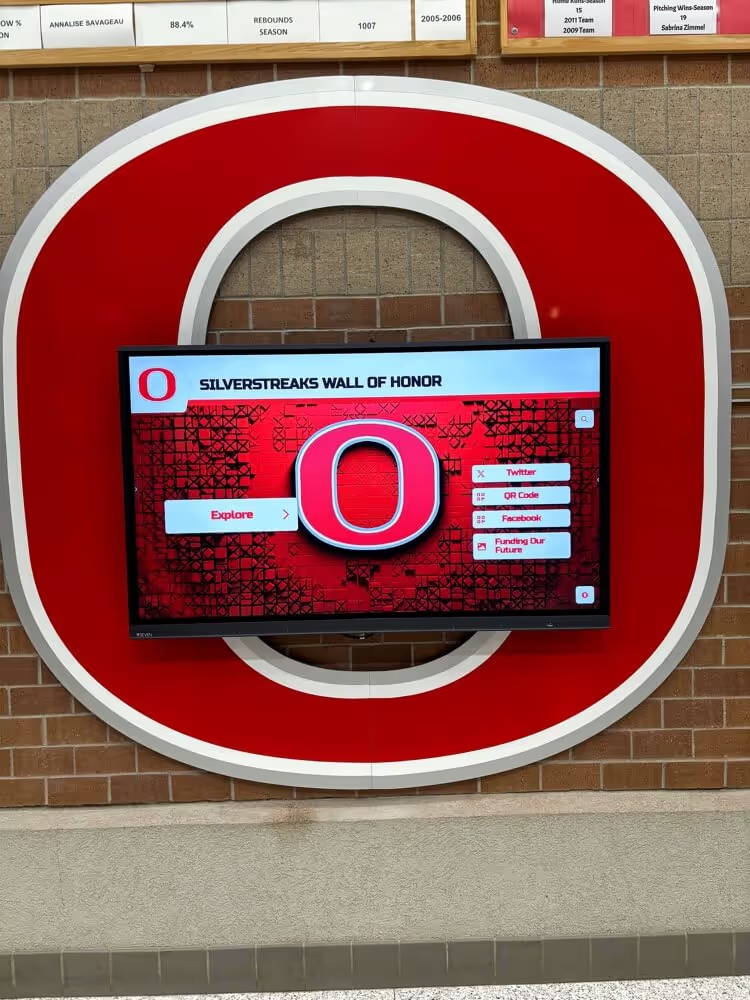
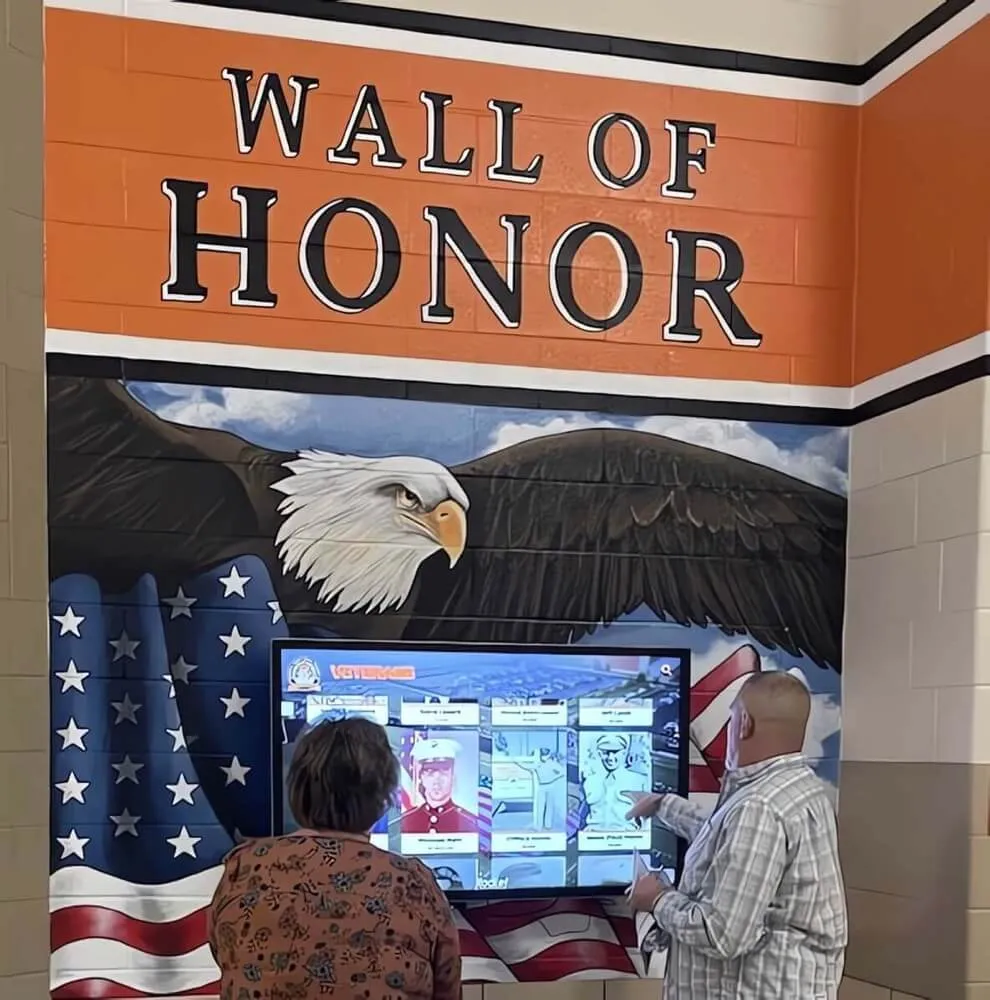
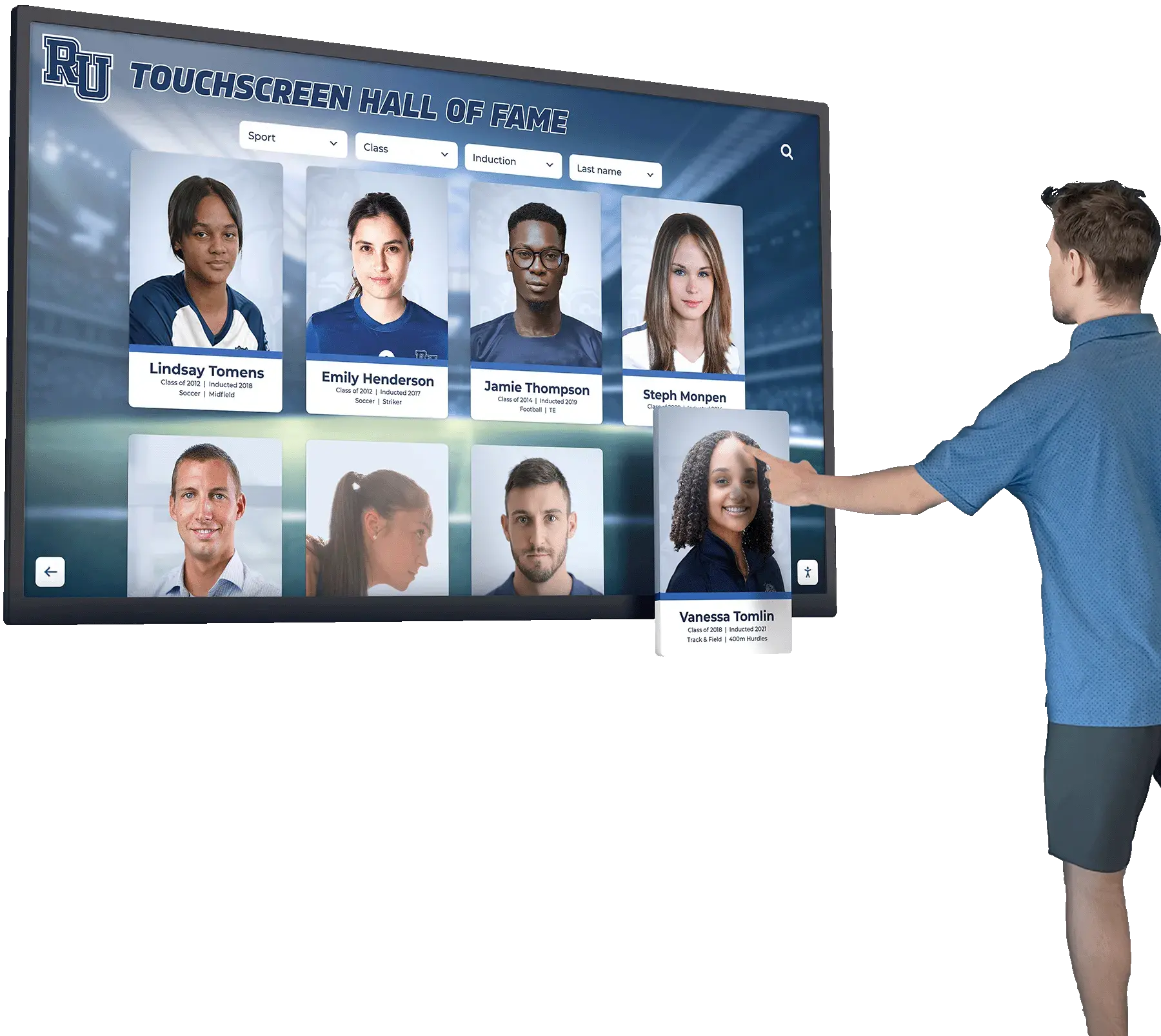
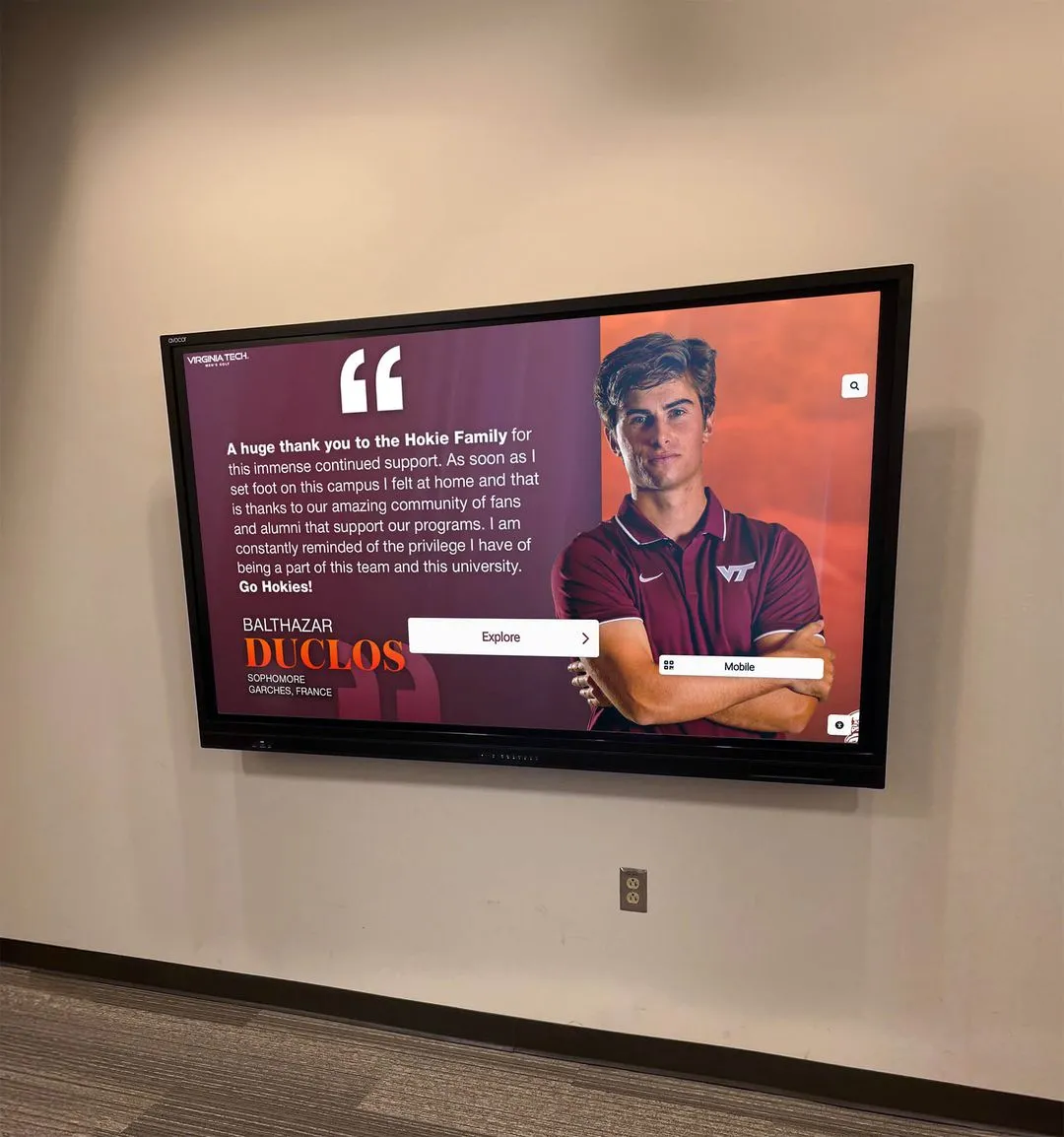
Digital recognition systems display award wording alongside athlete photos, stats, and biographical details—delivering narrative depth that physical plaques can't accommodate within their engraving constraints
From Wording to Permanent Display
Crafted wording deserves a permanent home. The most common recognition gap in school athletic programs is not weak wording—it’s wording that disappears. A certificate rolled up after the banquet. A plaque stored when the wall fills. A program document archived somewhere no current athlete will find it.
Programs that invest in permanent year-round recognition infrastructure transform award wording from a one-night experience into ongoing motivational infrastructure.
Physical options:
- Trophy case plaques with full expanded wording panels for hall of fame honorees
- Hallway display boards with season-by-season award listings
- Record boards updated immediately when marks fall, with the original record-setting wording preserved
Digital options:
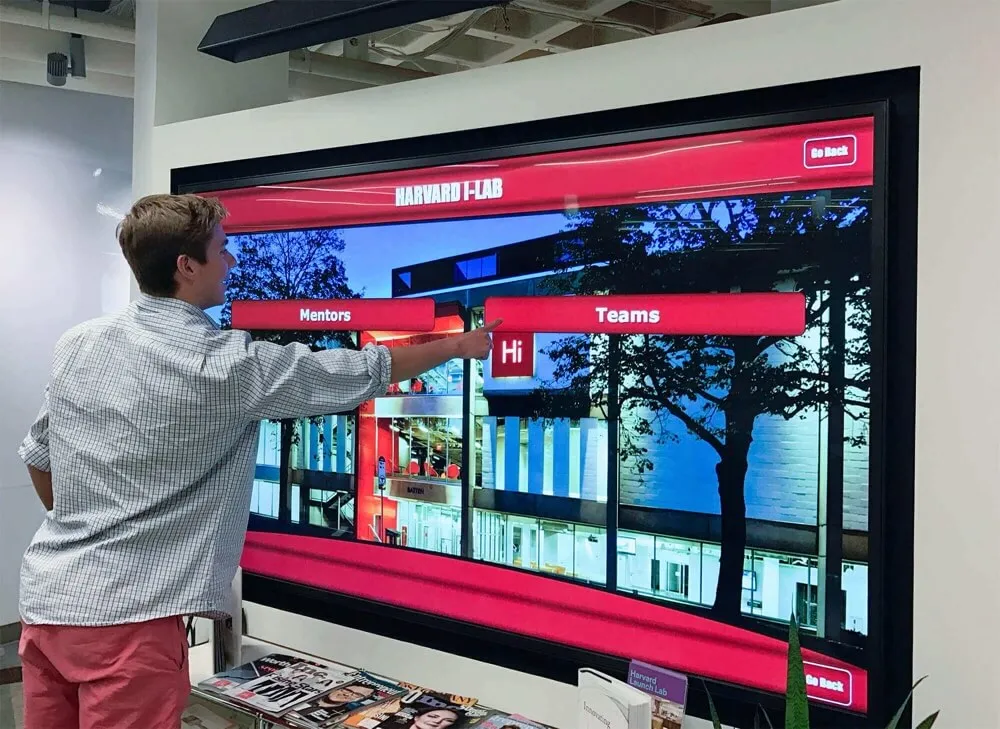
- Interactive touchscreen displays where every athlete has a searchable profile with full award wording, photos, and career details
- Web-accessible recognition pages viewable by alumni worldwide
- Cloud-managed content that can be updated remotely when new honorees are added, records change, or post-graduation achievements warrant expanded recognition
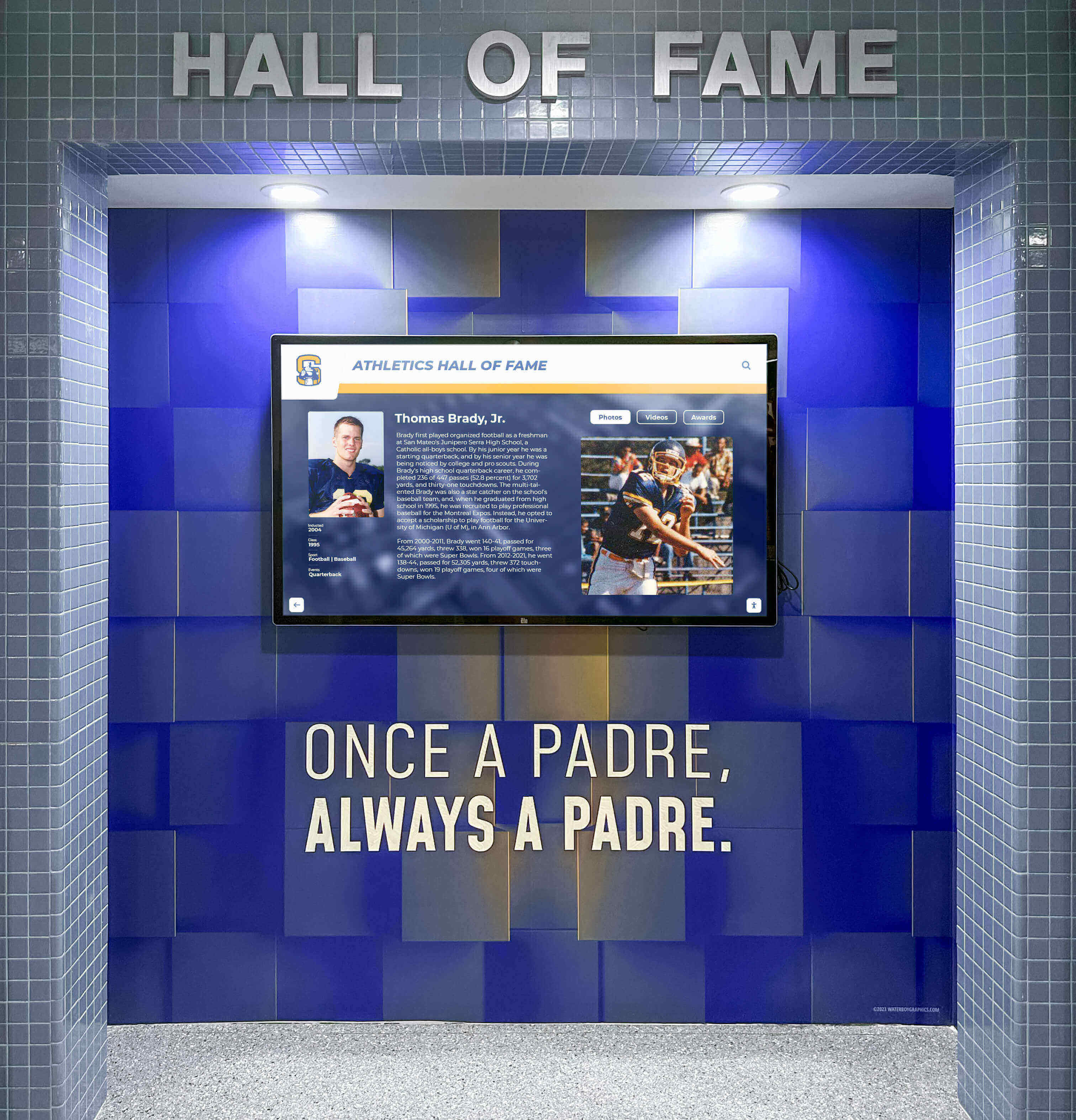
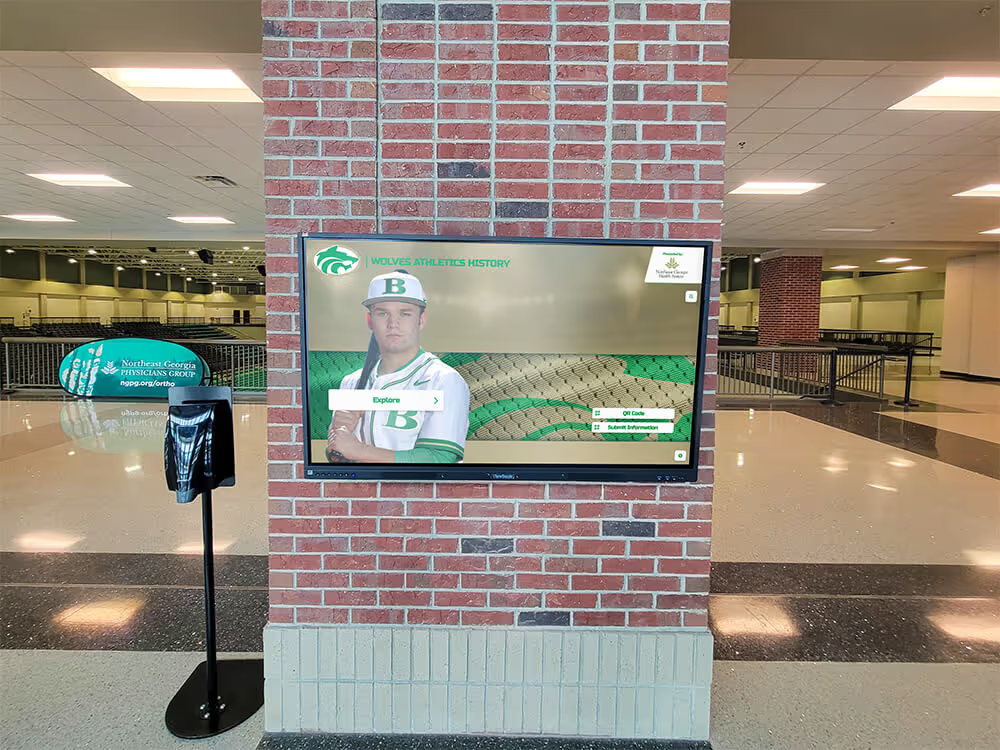
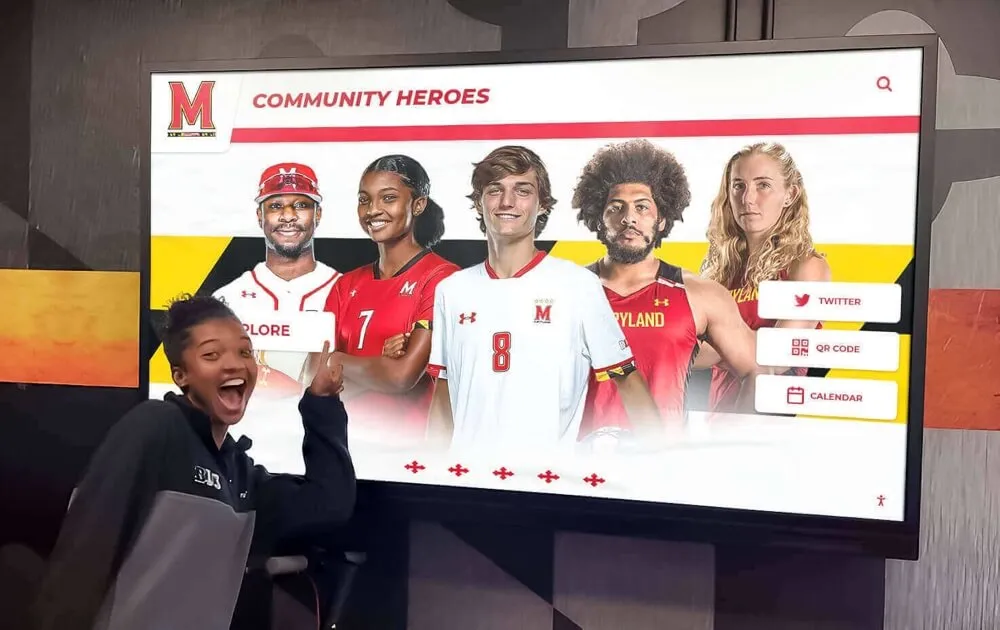
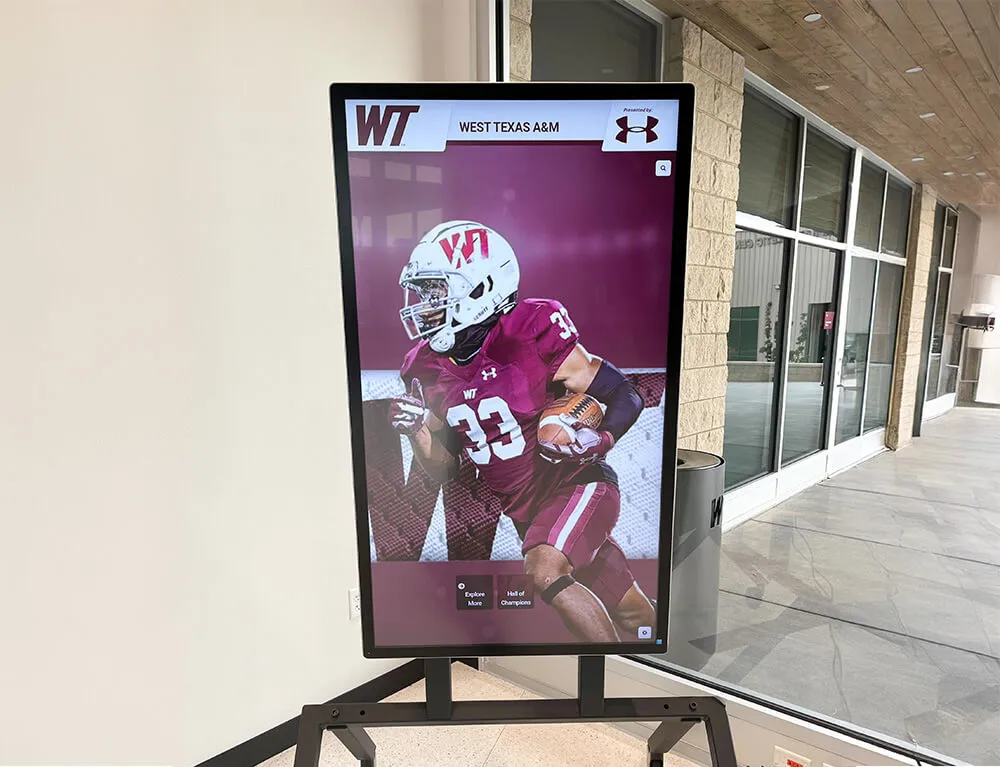
Digital recognition screens integrate seamlessly into athletic facility environments—keeping award wording, honoree profiles, and program history visible and accessible long after the recognition ceremony ends
FAQ: Recognition Award Wording for School Athletics
What should I write on an MVP award for school athletics?
MVP award wording should name the specific contribution that made the recipient the clear selection—not just the category. Effective short-form wording includes a one-line citation: “In recognition of exceptional on-field leadership, team-defining statistical production, and the competitive consistency that elevated every teammate throughout the season.” Expanded versions can cite specific statistics, game moments, and the qualities that distinguished this athlete from the rest of the roster.
How do you write wording for a sportsmanship award?
Sportsmanship award wording is most credible when it references peer selection and names specific conduct rather than generic character. Example: “Selected by teammates for consistently representing [school name] athletic values with integrity, in victory and in defeat.” For expanded versions, citing a specific moment when the recipient demonstrated exceptional character under pressure—a rivalry game, a difficult call, an adversity situation—gives the wording authenticity that generic language can’t provide.
What should hall of fame plaque wording include?
Hall of fame plaque wording should include the inductee’s name, induction year, sport(s), eligibility years, and a one-to-two line achievement summary. Expanded digital profiles can include full career narratives, coaching tributes, and post-graduation information—depth impossible on a physical plaque but important for comprehensive historical recognition.
How long should athletic award wording be?
Length depends on the display format. Physical plaques and trophy engravings typically accommodate 30–60 words at readable scales—concise, active language focused on the achievement. Digital profiles, programs, and banquet materials have no length constraints, allowing expanded narratives of 100–300 words that include career context, specific moments, and forward-looking tributes.
Can the same award wording templates be used across different sports?
Template structures can apply across sports. The content must be sport-specific to be meaningful—replace generic references with sport-specific statistics, positions, and competitive contexts. An MVP template for swimming should reference times, events, and relay contributions; the same template for basketball should reference points, assists, and defensive metrics. The framework is reusable; the specific details must always reflect the individual athlete’s actual sport and season.
Award Wording That Outlasts the Season
The right recognition award wording examples for school athletics share a common quality: specificity. Wording that names an observable behavior, identifies a real impact, and signals what the program values transforms a generic certificate into a document athletes keep. The templates throughout this guide give athletic directors, coaches, and recognition committees a starting point—but the best version of any award wording is the one that fills in specific details only your coaching staff observed across an actual season.
When that specific wording is paired with permanent display infrastructure—a well-designed plaque wall, a digital touchscreen hall of fame, an accessible online recognition archive—the investment in crafted language compounds. Athletes who encounter past recognition in their team’s hallway or on an interactive display don’t just read a name and year. They read a specific reason, in specific language, and understand what this program means when it says “this athlete earned it.”
Display Every Award with the Detail It Deserves
Rocket Alumni Solutions builds interactive touchscreen recognition systems for school athletic programs—giving every honoree, every award, and every wording detail a permanent, searchable home that athletes, families, and alumni can access year-round. No space constraints. No archiving older recognition. Just the full story of your program, organized and visible.
Request a Recognition System Demo