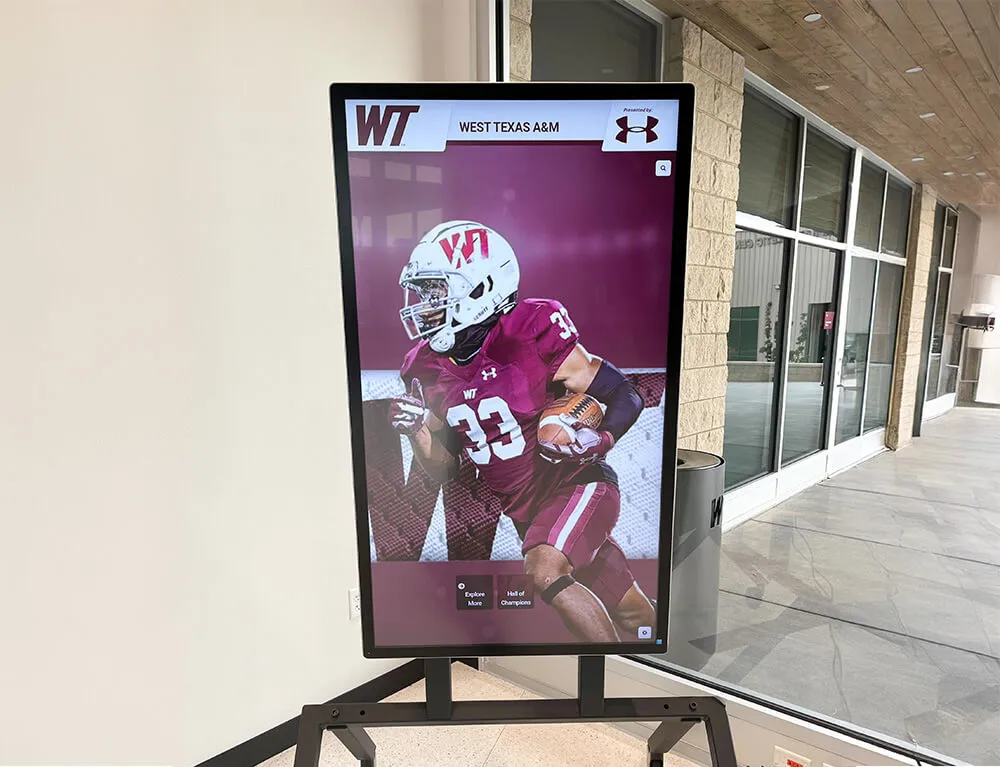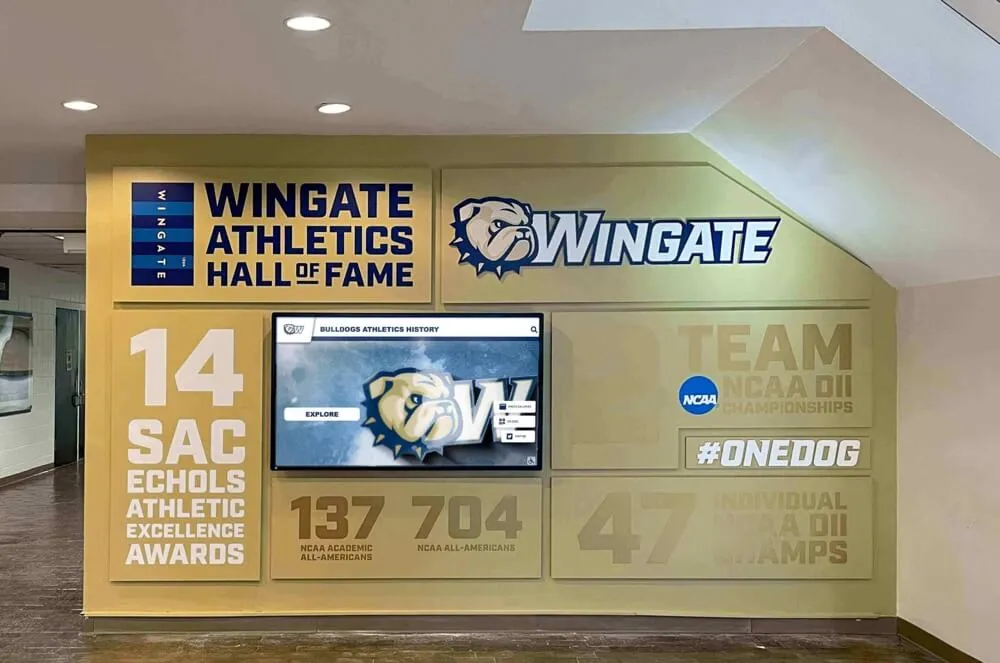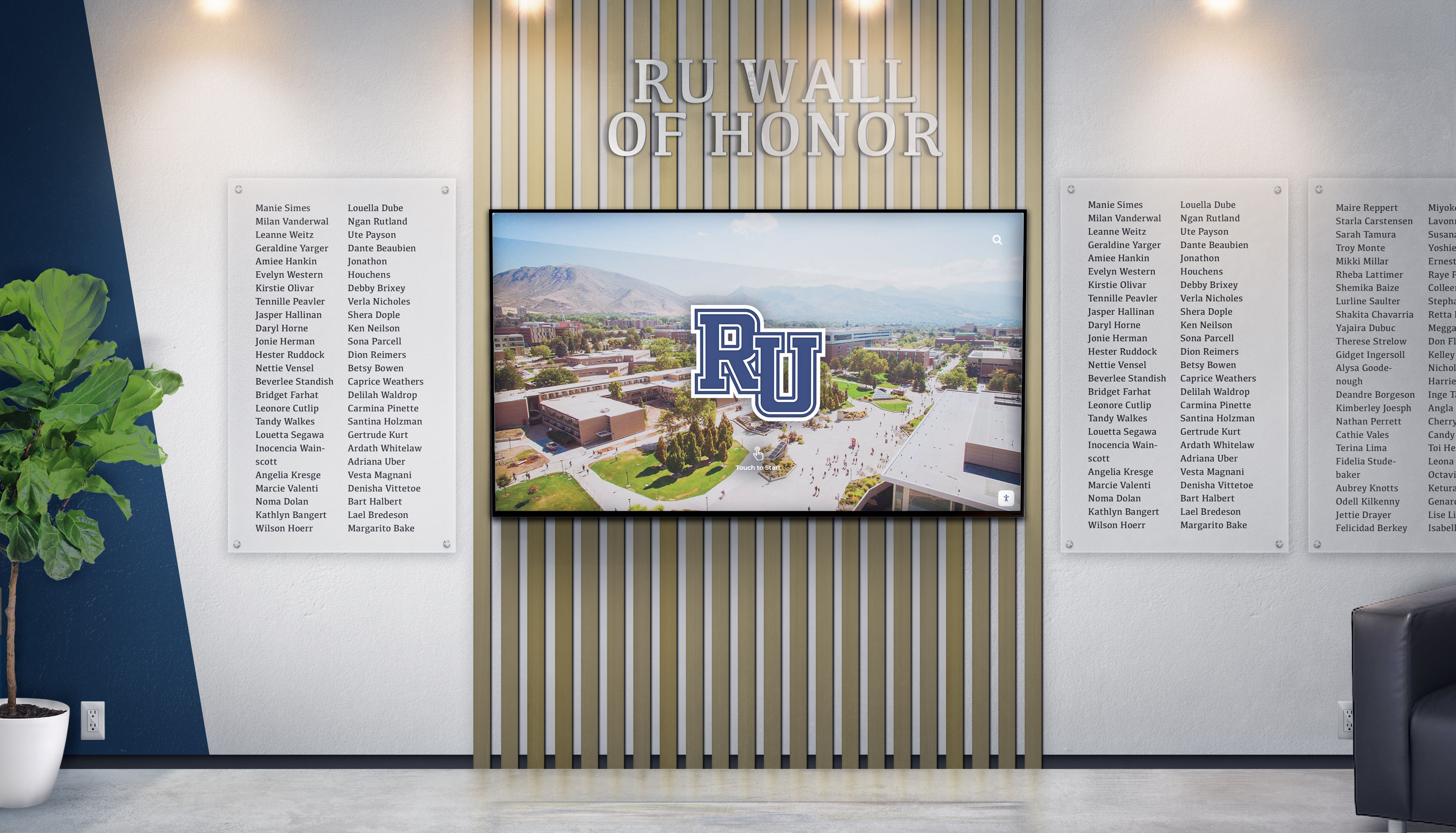




Recognition plaques represent timeless ways schools acknowledge achievement, honor contributions, and celebrate milestones that matter to their communities. From commemorating championship teams to honoring distinguished alumni, well-designed plaques create lasting visual tributes that inspire current students while preserving institutional history for future generations.
Yet many schools find themselves frustrated with traditional plaque systems. Physical plaques accumulate in trophy cases until space runs out, forcing impossible decisions about what stays visible. Engraving costs for adding new names create ongoing budget pressure. Fixed installations become outdated as programs evolve, and static displays lack the storytelling capacity to convey the full context behind achievements.
This comprehensive guide explores proven recognition plaque approaches—from traditional materials and design options to innovative digital alternatives—helping you create meaningful recognition that honors achievements appropriately while building sustainable systems that serve your school for years to come.
Effective recognition extends beyond simply mounting attractive plaques on available walls. The most successful recognition programs balance aesthetic excellence with functional requirements, create flexible systems accommodating future growth, tell compelling stories about achievements and impact, and inspire others to pursue excellence. Schools excelling at recognition design displays serving both ceremonial acknowledgment and strategic motivational purposes.

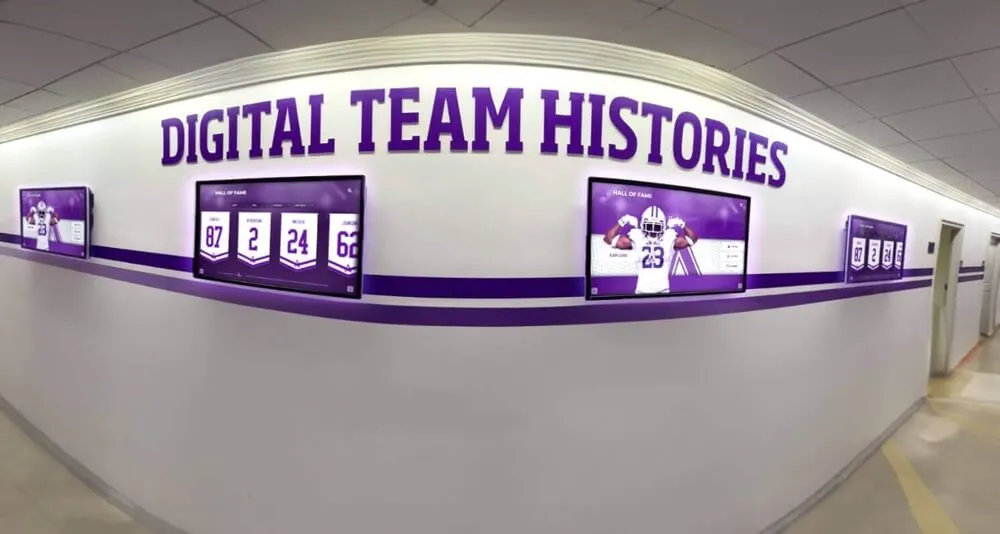
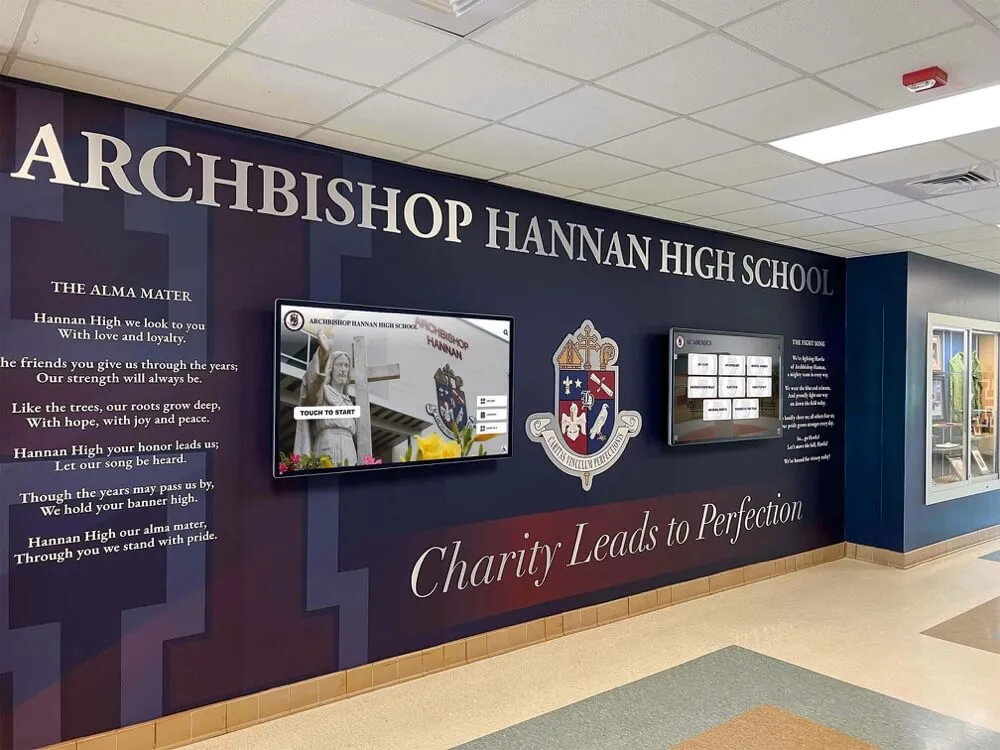
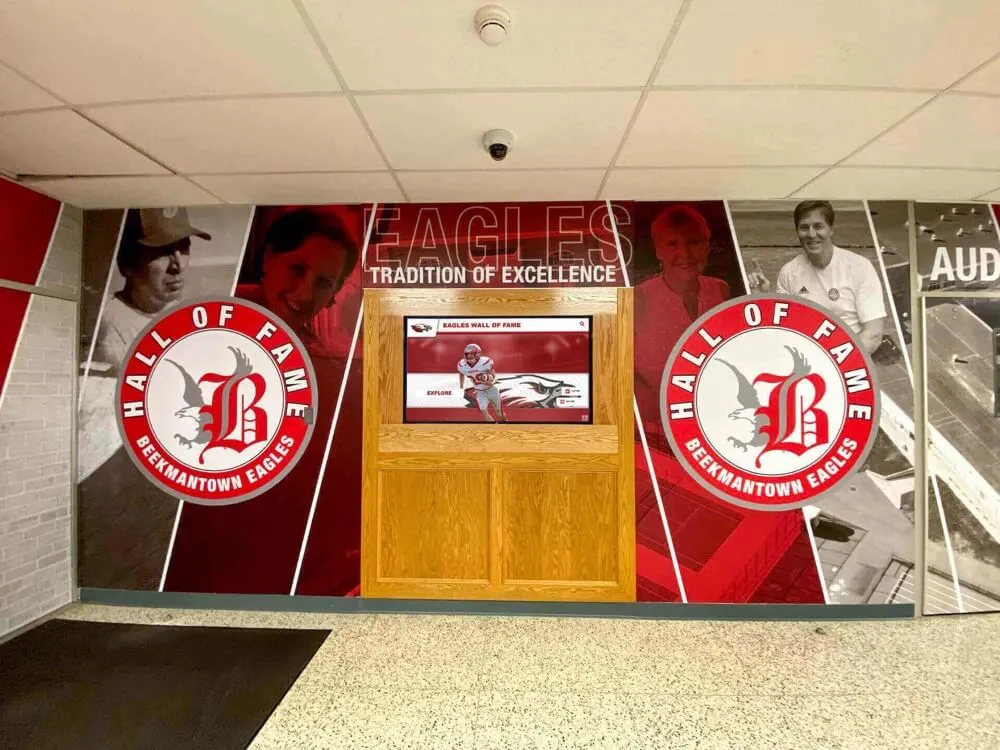
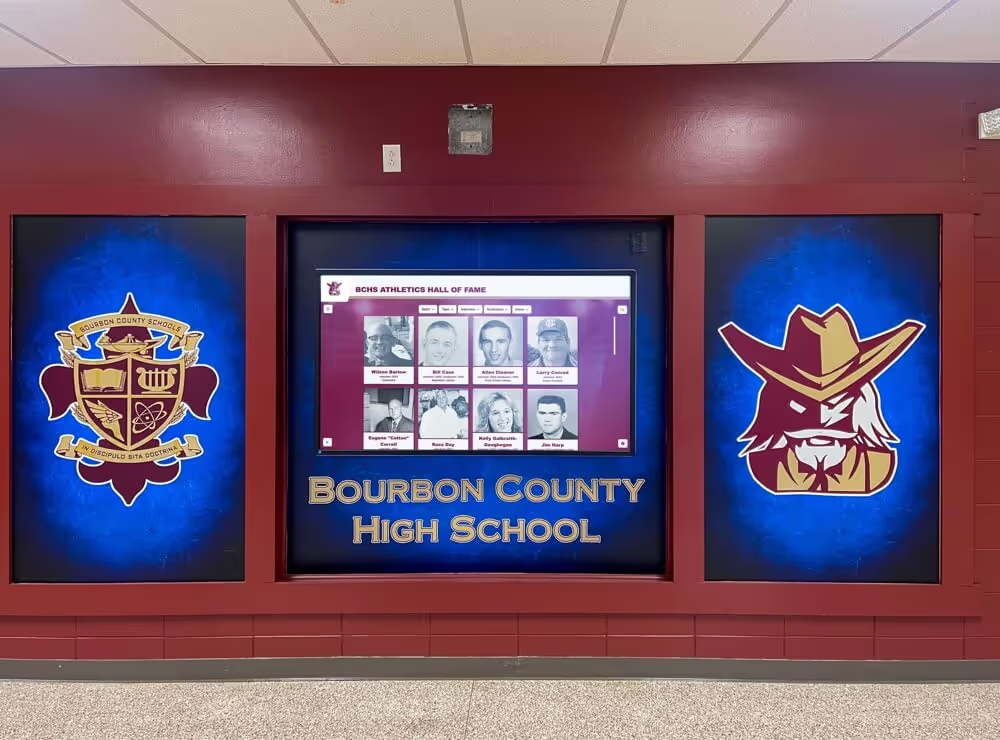
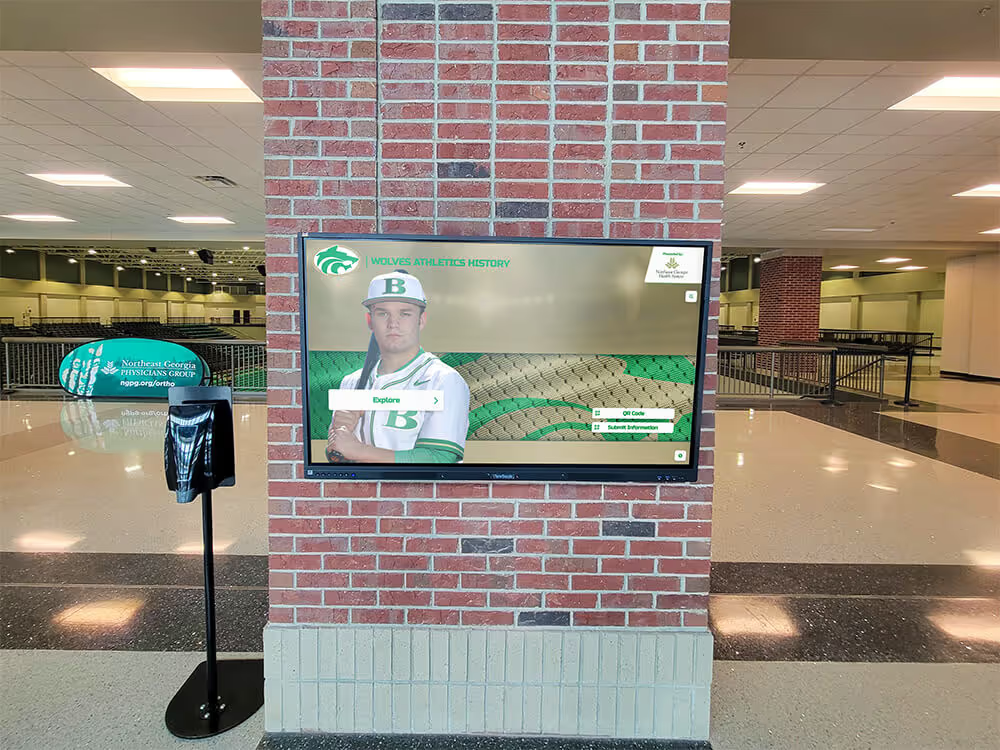
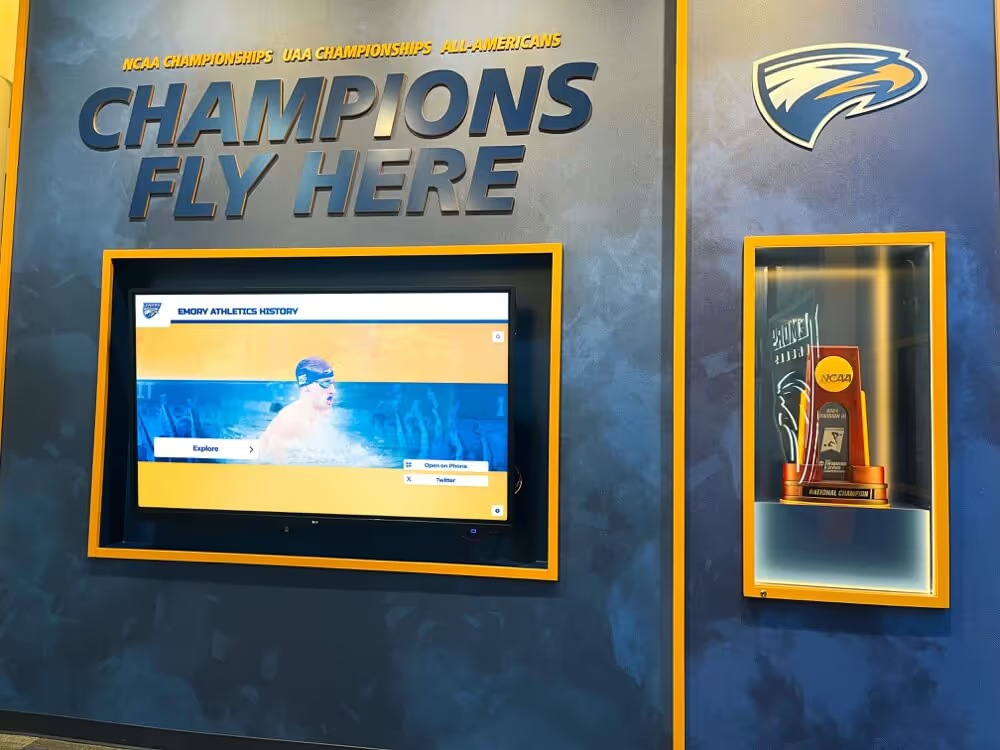
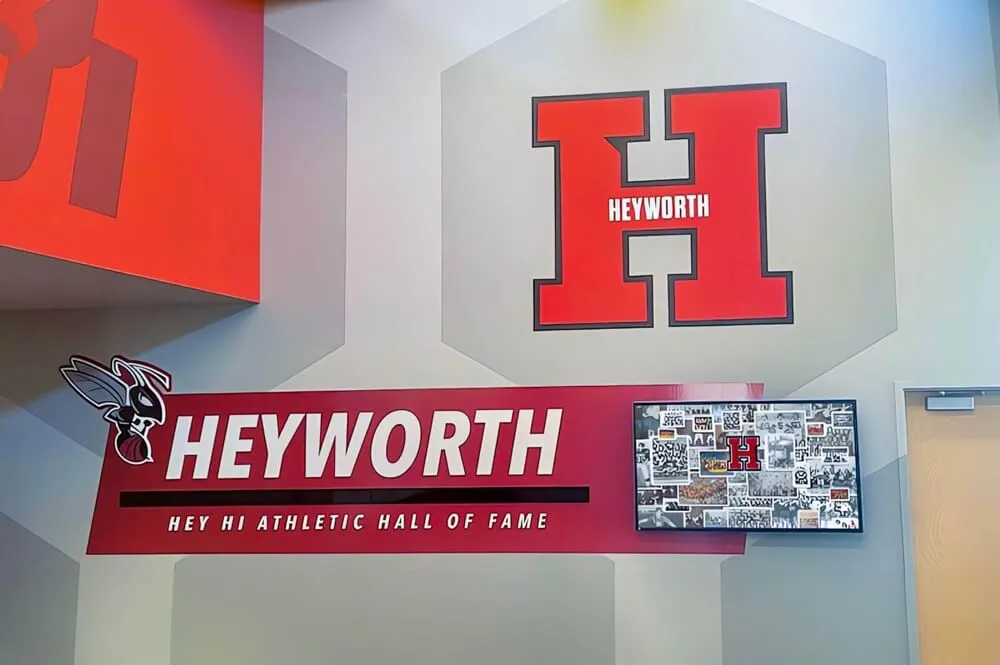
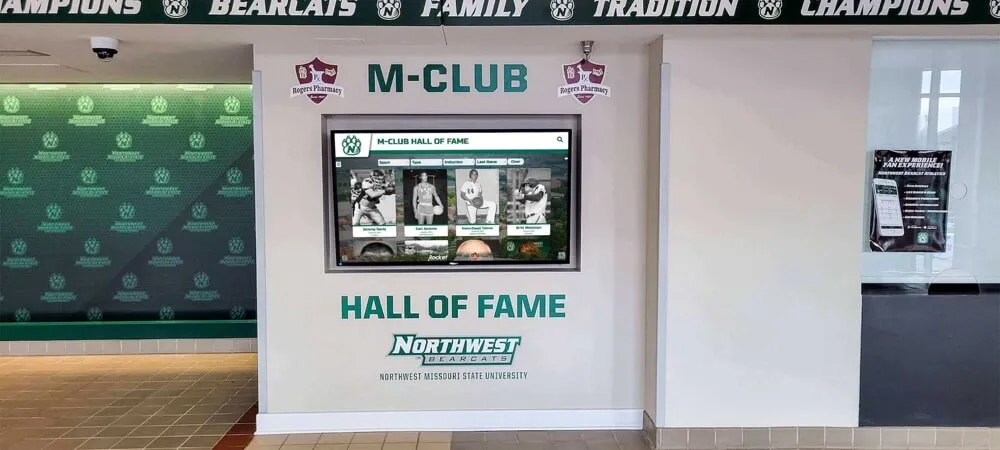
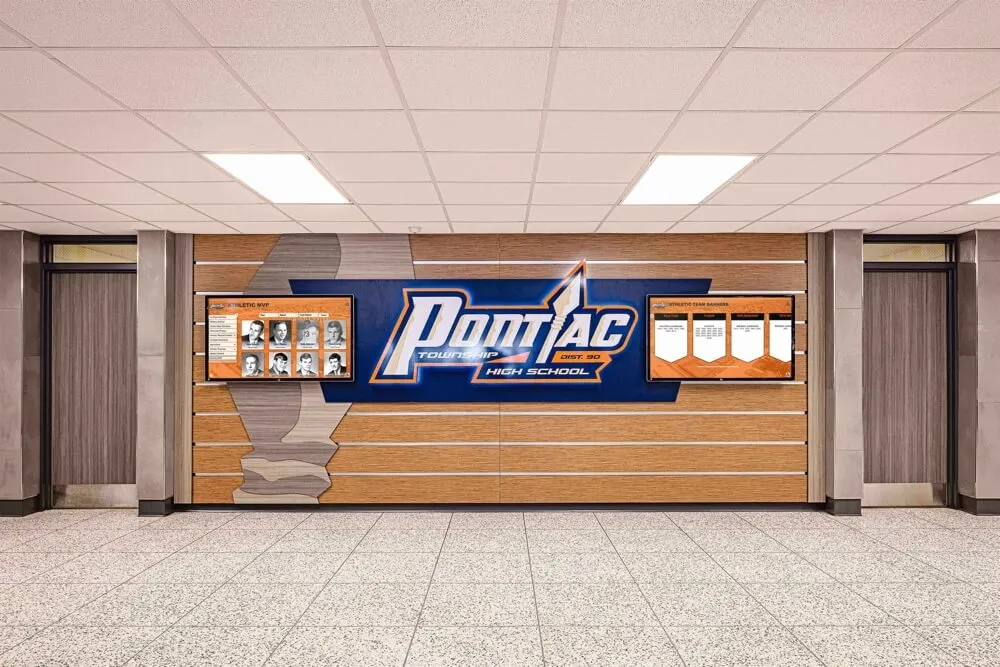
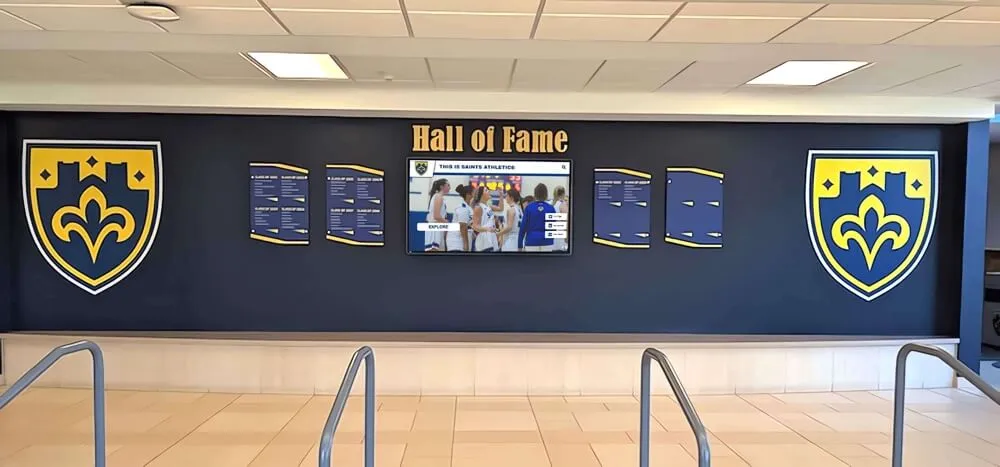
Traditional plaque recognition provides permanence while digital displays add storytelling capacity and unlimited flexibility
Understanding Recognition Plaque Purposes and Types
Before selecting materials or designing layouts, clarifying what your recognition plaques should accomplish ensures design decisions support your objectives.
Primary Functions of Recognition Plaques
Recognition plaques serve multiple interconnected purposes within school communities:
Honoring Individual Achievement
- Celebrating academic excellence and scholarship recipients
- Recognizing athletic championships and record-breaking performances
- Acknowledging artistic accomplishments and creative achievements
- Commemorating leadership contributions and service excellence
- Preserving student achievement history for future generations
Inspiring Current Students
- Showcasing what’s possible through dedication and effort
- Normalizing excellence as an achievable goal
- Providing visible role models and achievement examples
- Creating aspirational recognition motivating increased effort
- Building school culture that values and celebrates success
According to research from the National Association of Secondary School Principals, schools with prominent, well-maintained recognition displays report 22-28% higher student participation in achievement programs compared to schools with minimal or poorly executed recognition, demonstrating the motivational value of thoughtful plaque design.
Preserving Institutional Memory
- Creating permanent records of significant achievements
- Documenting program history and evolution
- Connecting current students to institutional traditions
- Building continuity across graduating classes
- Celebrating milestone moments and special accomplishments
Common Recognition Plaque Categories
Schools typically use plaques for distinct recognition purposes:
Academic Recognition Plaques
- Valedictorian and salutatorian honors by graduation year
- National Merit Scholar designations
- Subject-specific academic achievement awards
- Perfect attendance recognition across multiple years
- Academic scholarship recipient acknowledgment
- Honor society membership documentation
Athletic Achievement Plaques
- Championship team recognition with roster listings
- Individual record holders and statistical achievements
- All-conference and all-state athlete honors
- Coach of the year and coaching milestone recognition
- Athletic hall of fame inductees
- Retired jersey number commemorations
Service and Leadership Plaques
- Student government leadership recognition
- Community service hour achievement milestones
- Volunteer of the year acknowledgments
- Club and organization officer recognition
- Distinguished alumni contributions
- Donor and supporter appreciation
Understanding these categories helps schools develop comprehensive recognition systems addressing multiple achievement dimensions.
Traditional Recognition Plaque Materials and Design Options
Material selection significantly impacts both aesthetic appeal and long-term value.
Metal Plaques: Bronze, Brass, and Aluminum
Metal remains the most traditional and prestigious recognition material:
Bronze Plaques
- Premium recognition material conveying highest honor
- Exceptional durability lasting 50+ years with minimal maintenance
- Distinctive oxidized patina developing attractive aged appearance
- Suitable for both interior and exterior installations
- Traditional casting processes enabling detailed relief designs
- Price range: $150-$600 per plaque depending on size and complexity
Brass Plaques
- Bright, polished finish creating formal appearance
- Excellent engraving surface for crisp, readable text
- More affordable than bronze while maintaining prestige
- Requires periodic polishing to prevent tarnishing
- Ideal for interior trophy case and wall installations
- Price range: $75-$300 per plaque
Aluminum Plaques
- Lightweight material simplifying mounting
- Anodized finishes available in multiple colors
- Budget-friendly option for multiple plaque installations
- Modern aesthetic suitable for contemporary school designs
- Weather-resistant for outdoor applications
- Price range: $40-$150 per plaque
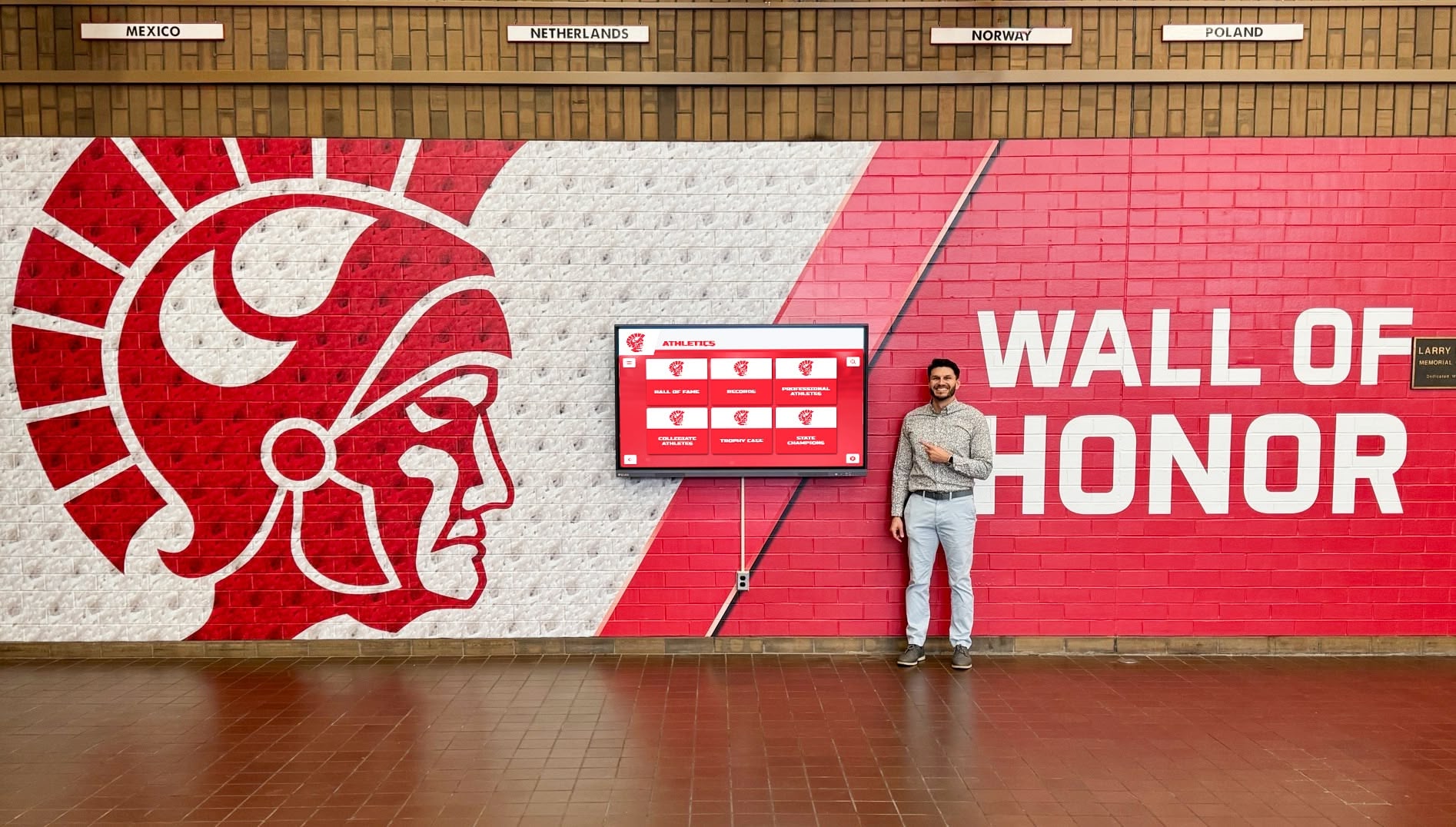
Traditional plaque installations create dignified recognition appropriate for formal school spaces
Metal Plaque Advantages
- Permanence demonstrating lasting commitment to honor achievements
- Vandalism resistance in high-traffic public spaces
- Prestigious appearance familiar to stakeholders and donors
- Minimal ongoing maintenance requirements
- Timeless aesthetic avoiding dated design trends
Metal Plaque Limitations
- Higher per-plaque cost compared to alternative materials
- Limited flexibility once installed—difficult to modify
- Ongoing engraving costs for adding names or updating information
- Space constraints requiring careful capacity planning
- Weight considerations for mounting surfaces
Schools planning long-term recognition with stable achievement categories often select metal materials for their permanence and prestige, particularly for their most significant honors like athletic hall of fame displays.
Wood Plaques and Carved Materials
Natural wood creates warm, traditional recognition:
Solid Wood Options
- Walnut, cherry, oak, and mahogany varieties
- Engraved or routed text with contrasting finishes
- Photo or logo plates mounted on wood backing
- Traditional craftsmanship aesthetic
- Natural material warmth complementing school environments
- Price range: $30-$200 per plaque depending on wood type and size
Wood Plaque Applications
- Individual achievement awards and certificates
- Perpetual plaques with annual winner plates added
- Championship team rosters with attached photo
- Service recognition and appreciation gifts
- Coach and educator milestone celebrations
Wood Material Considerations
- Moderate durability requiring climate-controlled interior spaces
- Susceptible to warping or cracking in high-humidity environments
- Periodic refinishing may be needed to maintain appearance
- Limited outdoor application due to weathering concerns
- Traditional aesthetic may feel dated in contemporary buildings
Wood works particularly well for smaller individual recognition and awards ceremonies where recipients receive personal plaque keepsakes.
Acrylic and Glass Modern Plaques
Contemporary materials offer sleek, modern aesthetics:
Acrylic Recognition
- Clear or colored transparent materials
- Laser engraved or UV-printed graphics and text
- LED backlighting possibilities for dramatic effect
- Lightweight construction simplifying installation
- Modern appearance appealing to current students
- Price range: $35-$175 per plaque
Glass Plaques
- Premium transparent material with substantial presence
- Beveled edges and shaped designs available
- Sandblasted or etched surface treatments
- Color printing options for logos and imagery
- Contemporary aesthetic suitable for modern facilities
- Price range: $50-$250 per plaque
Modern Material Benefits
- Design versatility enabling creative layouts
- Full-color printing capabilities for complex graphics
- Lighter weight than metal or stone
- Contemporary appearance resonating with younger audiences
- Moderate cost between budget and premium options
Acrylic and Glass Limitations
- More susceptible to scratching than metal options
- Cleaning requirements to maintain transparency
- Less traditional appearance may not suit historic buildings
- Potential for dated appearance as design trends evolve
- Indoor-only application for most styles
These materials suit schools with contemporary architecture and recognition programs emphasizing visual impact over traditional formality.
Recognition Plaque Design Elements and Layout
How you design plaques significantly impacts both aesthetic appeal and information clarity.
Essential Design Components
Effective recognition plaques incorporate several key elements:
Headers and Titles
- Clear identification of recognition type (Academic Excellence, Championship Team, Distinguished Alumni)
- Institutional name and official logo placement
- Year or time period designation
- Specific achievement or honor category
- Visual hierarchy establishing importance
Primary Content
- Individual names or team rosters
- Achievement details and statistics
- Dates and milestones
- Relevant context and qualifying criteria
- Class year, grade level, or affiliation when applicable
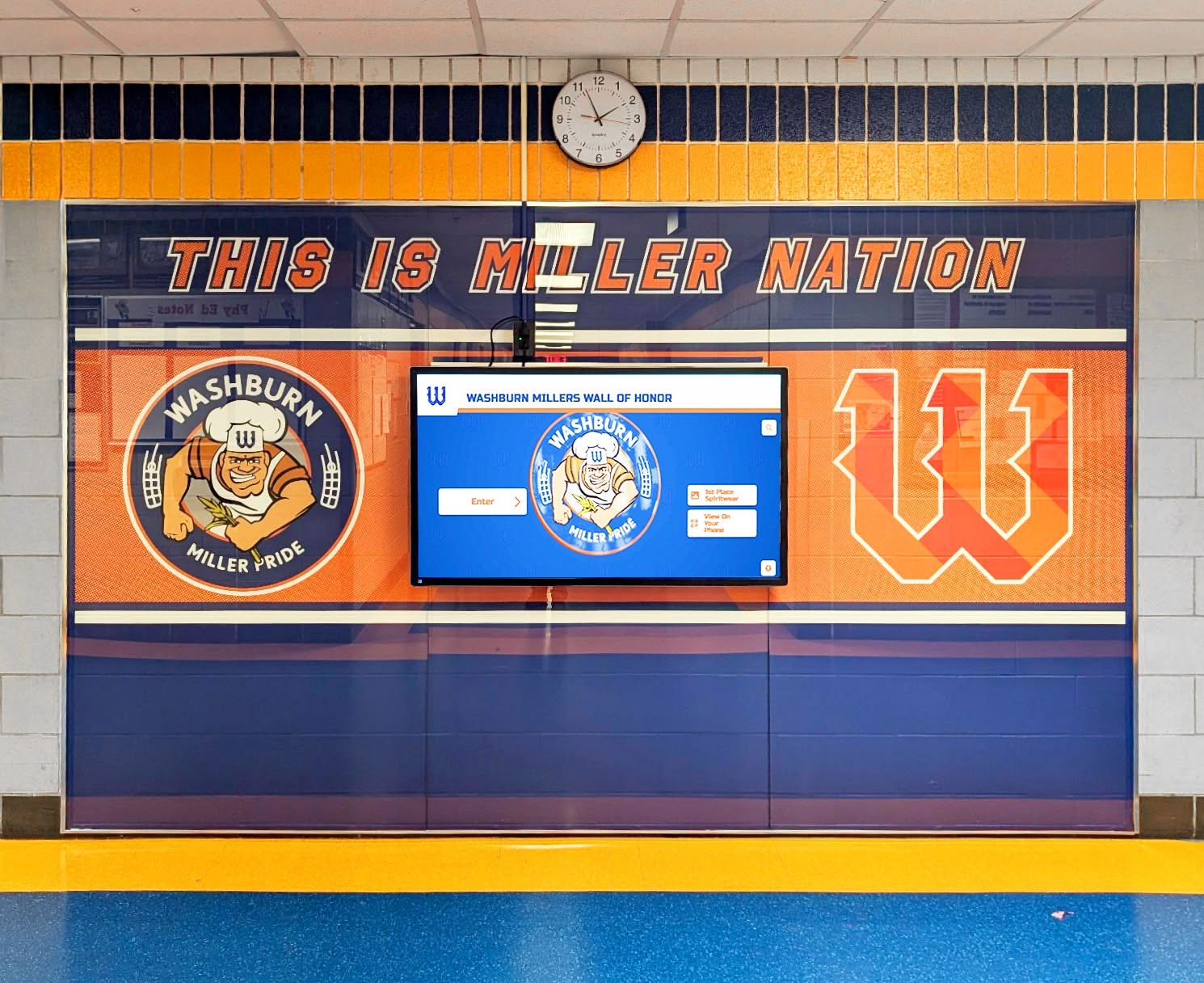
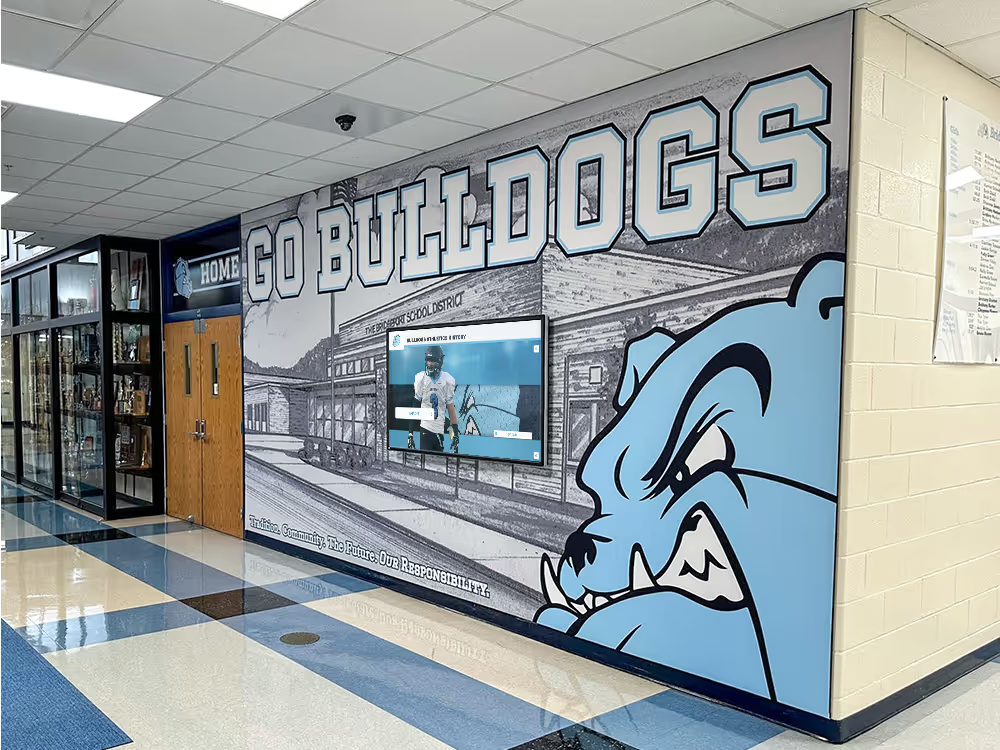
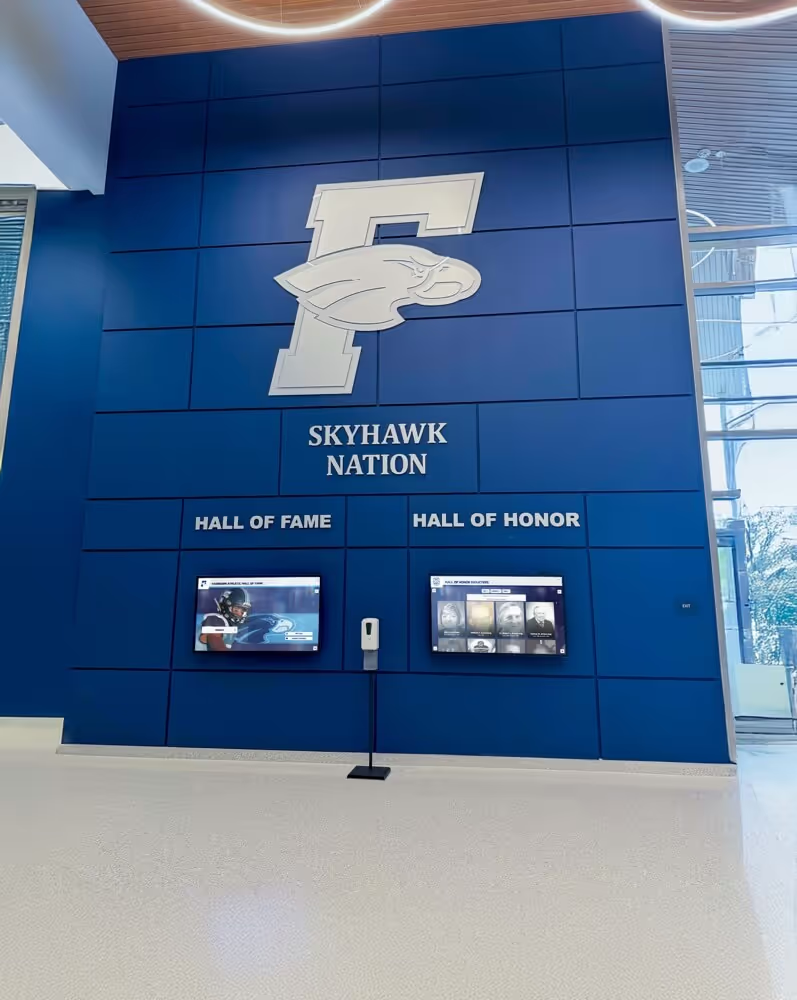
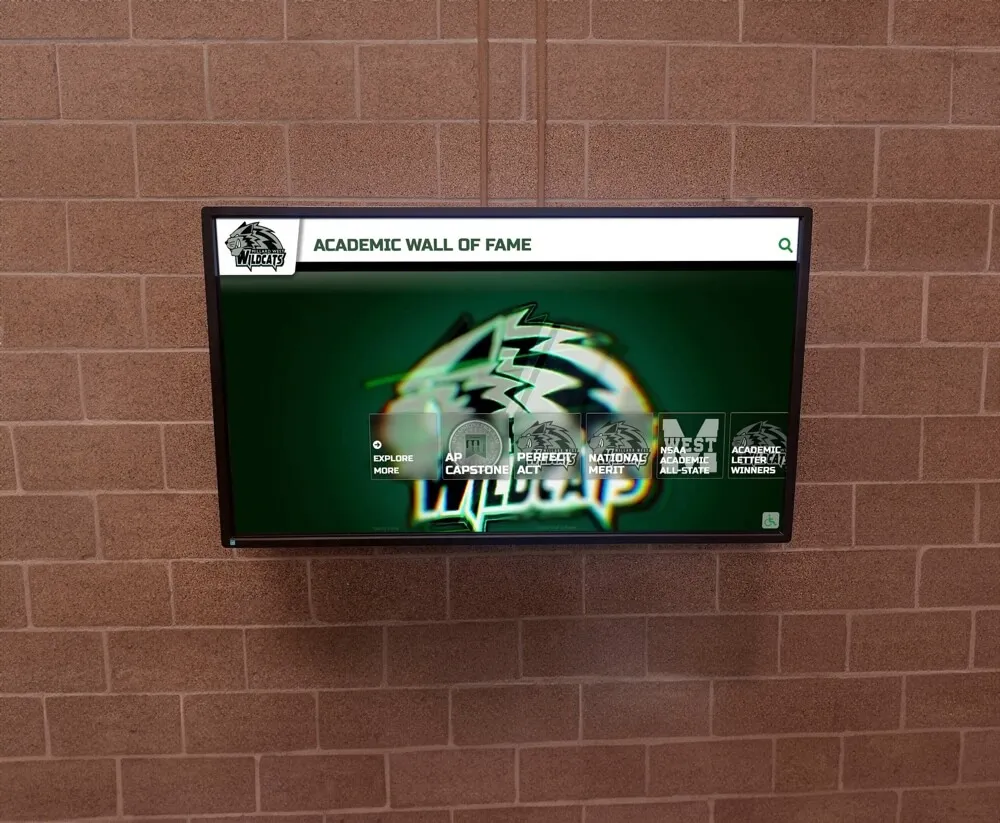
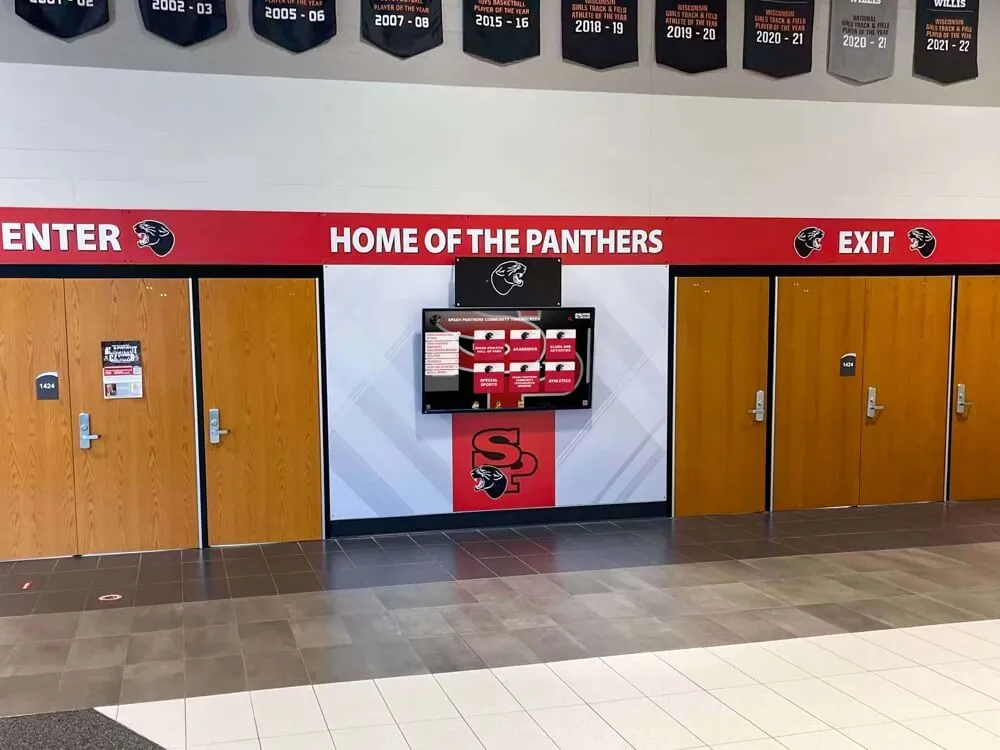
Combining traditional permanence with digital storytelling creates comprehensive recognition addressing multiple needs
Supporting Visual Elements
- School logos, mascots, and branding
- Decorative borders and frames
- Achievement symbols (academic seals, sports icons, service emblems)
- Background textures and patterns
- Color schemes matching institutional identity
Design Specifications
- Text size ensuring readability from typical viewing distances (minimum 1/4" letter height for 6-foot viewing)
- Font selections balancing formality with clarity
- Contrast between text and background for accessibility
- Spacing preventing crowded, cluttered appearance
- Quality standards reflecting achievement significance
Layout Patterns and Organization
Strategic organization enhances both appearance and function:
Single Achievement Plaques
- Individual recognition for specific honorees
- Typical sizes: 7"x9", 9"x12", or 12"x15"
- Centered layouts with balanced composition
- Prominent name presentation
- Achievement description and context
Perpetual Recognition Plaques
- Master plaque with space for annual additions
- Small plates added each year with new recipients
- Planning for 10-20 years of additions
- Clear organization by year or category
- Header plaque with tradition description
Team Roster Plaques
- Championship teams with complete membership
- Columns or rows organizing multiple names
- Coach and staff recognition included
- Achievement details (record, scores, tournament)
- Team photo integration when appropriate
Schools developing senior day celebration recognition often use combinations of these formats to honor graduating athletes across multiple sports appropriately.
Color, Finish, and Aesthetic Choices
Visual design decisions impact overall effectiveness:
Color Palettes
- School colors for immediate brand recognition
- Metallic finishes (gold, silver, bronze) conveying prestige
- Contrasting text colors ensuring readability
- Background colors coordinating with installation location
- Subdued palettes for formal recognition spaces
Finish Options
- Glossy finishes creating formal, polished appearance
- Matte finishes reducing glare in bright environments
- Textured backgrounds adding visual interest
- Antiqued or oxidized treatments suggesting tradition
- UV coatings protecting outdoor installations
Aesthetic Approaches
- Traditional formal designs for historic schools
- Contemporary minimalist layouts for modern facilities
- Ornate decorative elements for prestigious awards
- Clean, simple designs emphasizing content
- Custom designs reflecting unique institutional character
The most successful plaque designs balance aesthetic appeal with practical considerations like readability, durability, and future flexibility.
Recognition Plaque Wording and Inscription Guides
What you say on plaques matters as much as how they look.
Standard Wording Templates by Recognition Type
Proven templates ensure appropriate, effective messaging:
Academic Achievement Plaques
[School Name]
Academic Excellence Award

Presented to
[Student Name]
Class of [Year]

In recognition of outstanding academic achievement
and dedication to scholarly excellence

[Date]
Alternative format:
Valedictorian
[School Name]

[Student Name]
Graduated [Year]
[GPA if appropriate]
Athletic Championship Plaques
[School Name] [Sport]
[Conference/State/National] Champions

[Year/Season]

[Team Roster Names]

Record: [W-L Record]
Coach: [Coach Name]
Service Recognition Plaques
In Appreciation

[Recipient Name]

For [number] years of dedicated service
to [School Name] and its students

Your commitment has made a lasting difference

[Date]
Donor and Supporter Recognition
[School Name] gratefully acknowledges

[Donor Name/Organization]

For generous support of
[Specific program or facility]

[Year]

Your partnership strengthens our community
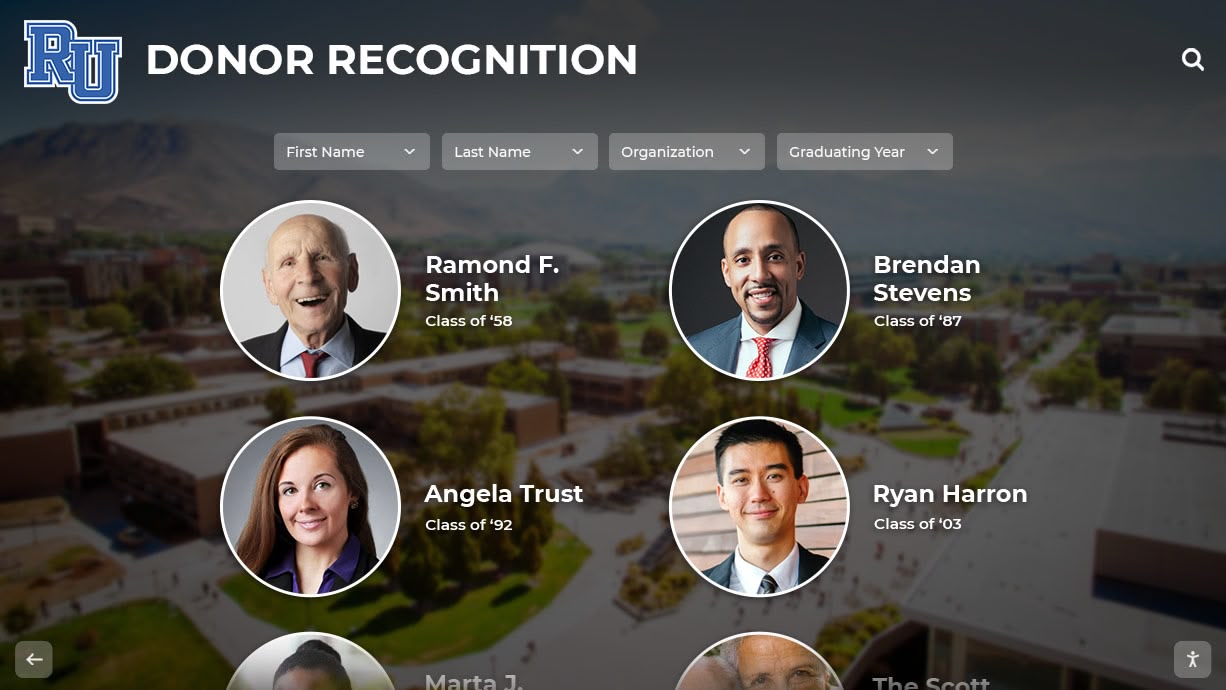
Recognition systems celebrating supporters inspire continued engagement and build cultures of philanthropy
Wording Best Practices and Guidelines
Effective plaque inscriptions follow proven principles:
Clarity and Conciseness
- Use clear, direct language avoiding jargon
- Keep total word count reasonable for space and readability
- Prioritize essential information over excessive detail
- Assume readers viewing plaques briefly in passing
- Test readability from typical viewing distances
Appropriate Formality
- Match tone to achievement significance and school culture
- Use complete names (first and last, middle initials when customary)
- Include appropriate titles and credentials
- Maintain consistency across similar recognition types
- Balance formality with warmth and authenticity
Inclusive and Respectful Language
- Use person-first language when appropriate
- Avoid gendered terms when gender-neutral alternatives exist
- Respect name preferences and chosen identities
- Include all team members and contributors
- Acknowledge collaborative achievements appropriately
Future-Proof Wording
- Avoid specific details likely to become outdated
- Use language remaining relevant across time
- Consider how text reads years after installation
- Focus on timeless achievement rather than temporal context
- Design for permanence while acknowledging change
Schools planning comprehensive recognition systems often establish wording standards documented in recognition policies, ensuring consistency as new plaques are created over time. Similar principles apply to booster club donor recognition displays where appropriate acknowledgment strengthens supporter relationships.
Common Wording Mistakes to Avoid
Learning from typical errors prevents future regrets:
Spelling and Accuracy Issues
- Carefully verify all names (students, coaches, staff)
- Confirm date accuracy and format consistency
- Double-check achievement details and statistics
- Review school name official styling and formatting
- Establish proofing processes before fabrication
Overly Specific Details
- Avoid excessive statistics cluttering the design
- Skip lengthy explanatory text better suited to digital formats
- Don’t reference temporary staff or programs
- Minimize time-sensitive information
- Focus on essential recognition elements
Exclusionary or Problematic Language
- Review for unintended bias or exclusive terminology
- Avoid assumptions about recipients or achievements
- Consider diverse audience perspectives
- Seek input from stakeholders before finalizing
- Update outdated terminology on existing plaques when feasible
The cost and permanence of traditional plaques makes careful wording review essential—errors engraved in metal or glass persist for decades.
Display Strategies and Installation Ideas
Where and how you display recognition plaques dramatically impacts their effectiveness.
Traditional Display Locations and Methods
Strategic placement maximizes visibility and impact:
Trophy Case Installations
- Climate-controlled protection for valuable plaques
- Organized displays grouping related achievements
- Lighting highlighting recognition appropriately
- Glass security preventing vandalism or theft
- Capacity planning for ongoing additions
Wall-Mounted Displays
- High-traffic corridor locations ensuring visibility
- Entrance and lobby areas creating first impressions
- Department or program spaces (athletic wing, arts center, academic hallways)
- Dedicated recognition walls honoring specific achievements
- Eye-level mounting for optimal readability
Dedicated Recognition Spaces
- Hall of fame rooms showcasing historical achievements
- Alumni centers celebrating institutional history
- Library or student center gathering spaces
- Athletic facility lobbies and meeting rooms
- Development office and donor reception areas
Research indicates that recognition placed in high-engagement locations where people naturally pause rather than simply pass through generates 5-7 times higher viewing rates compared to placement in pure circulation corridors.
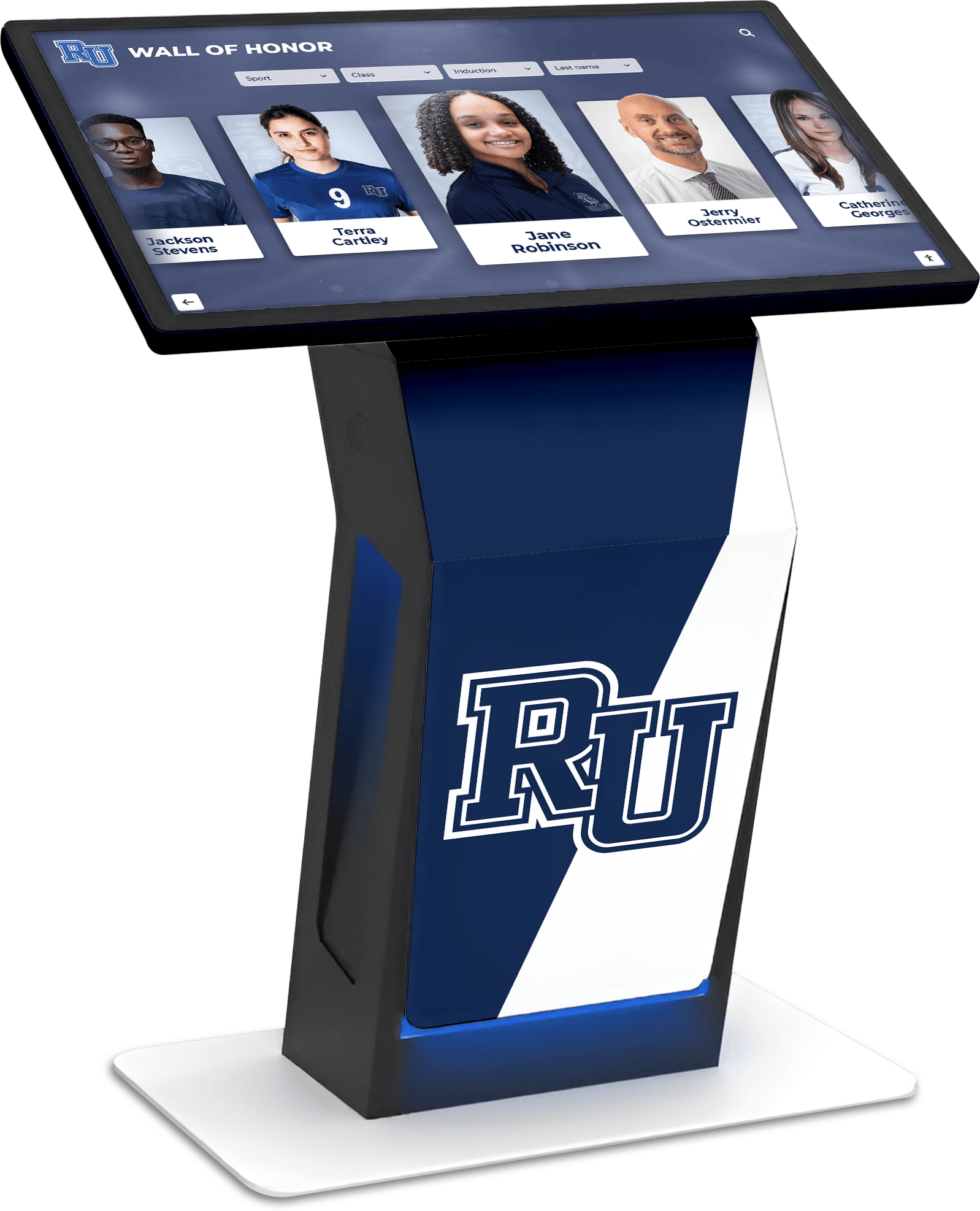
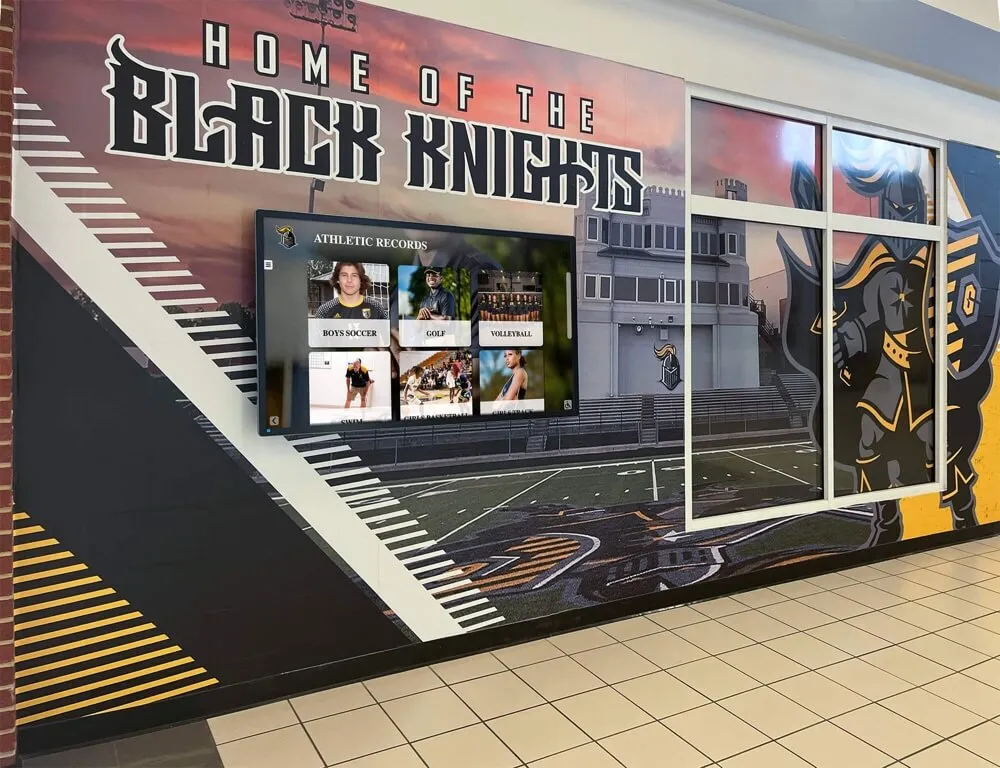
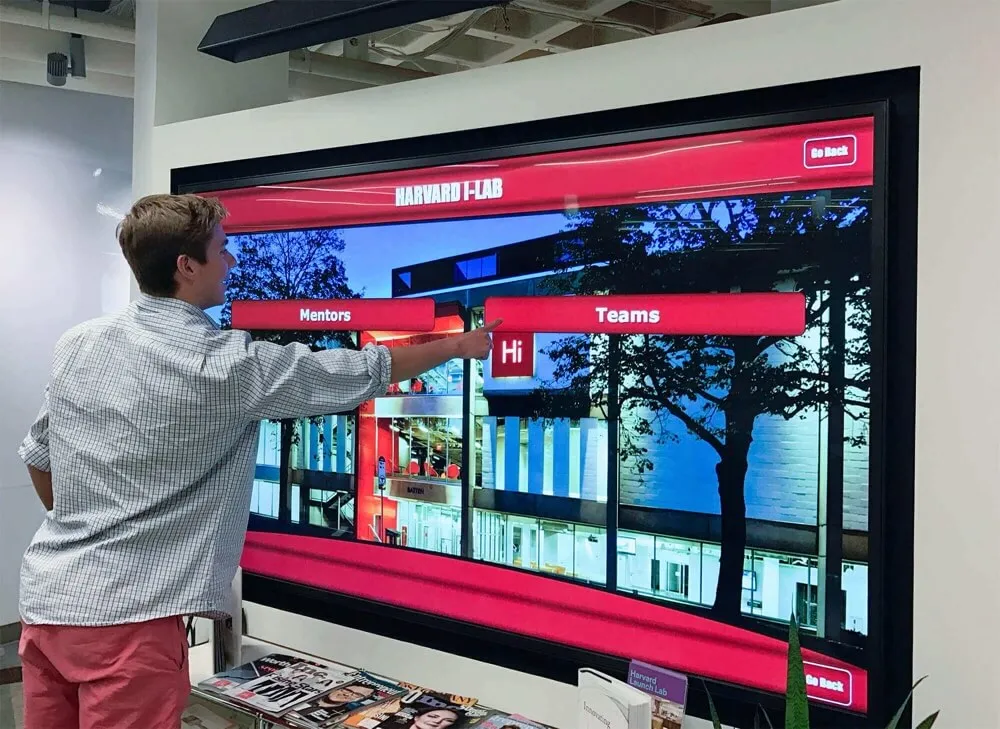
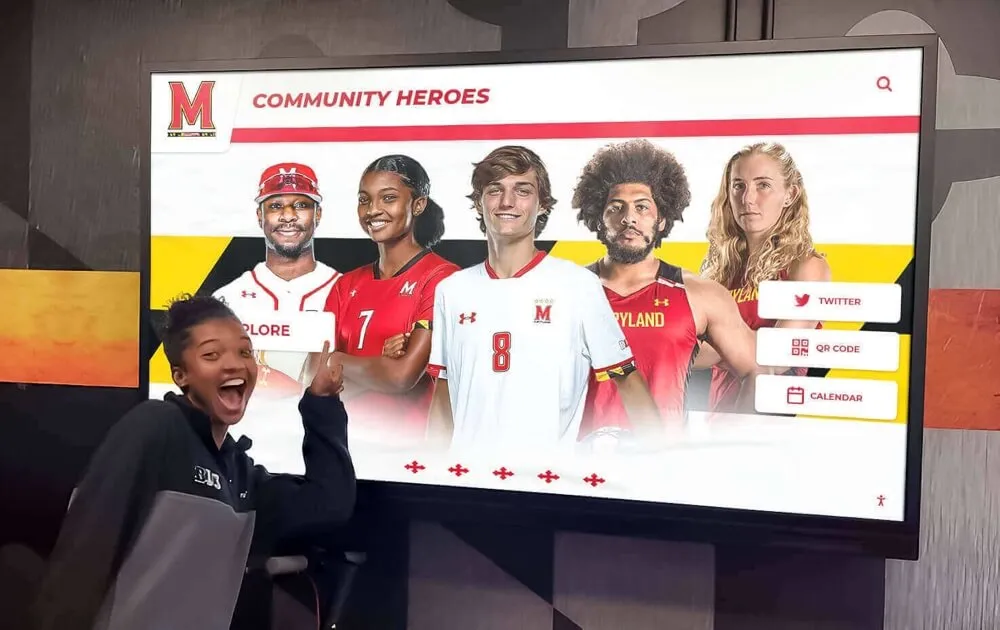
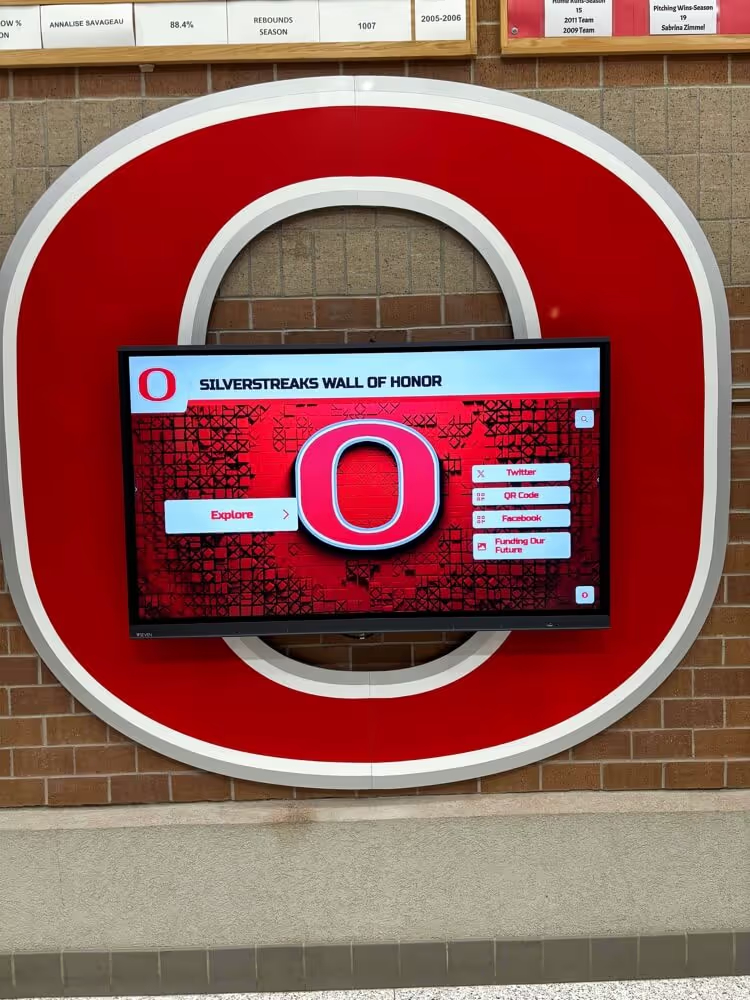
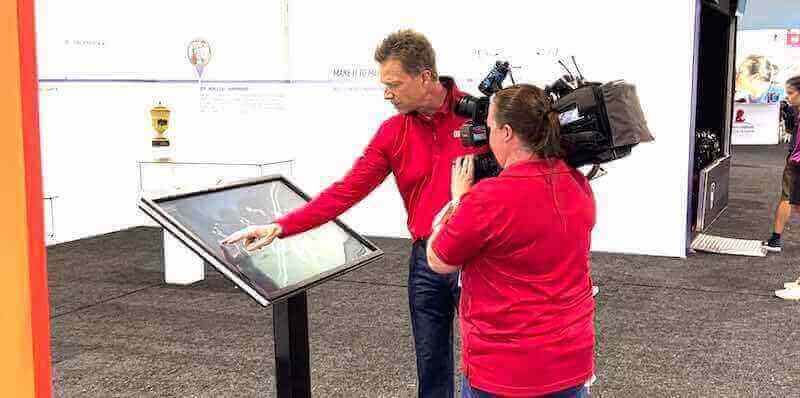
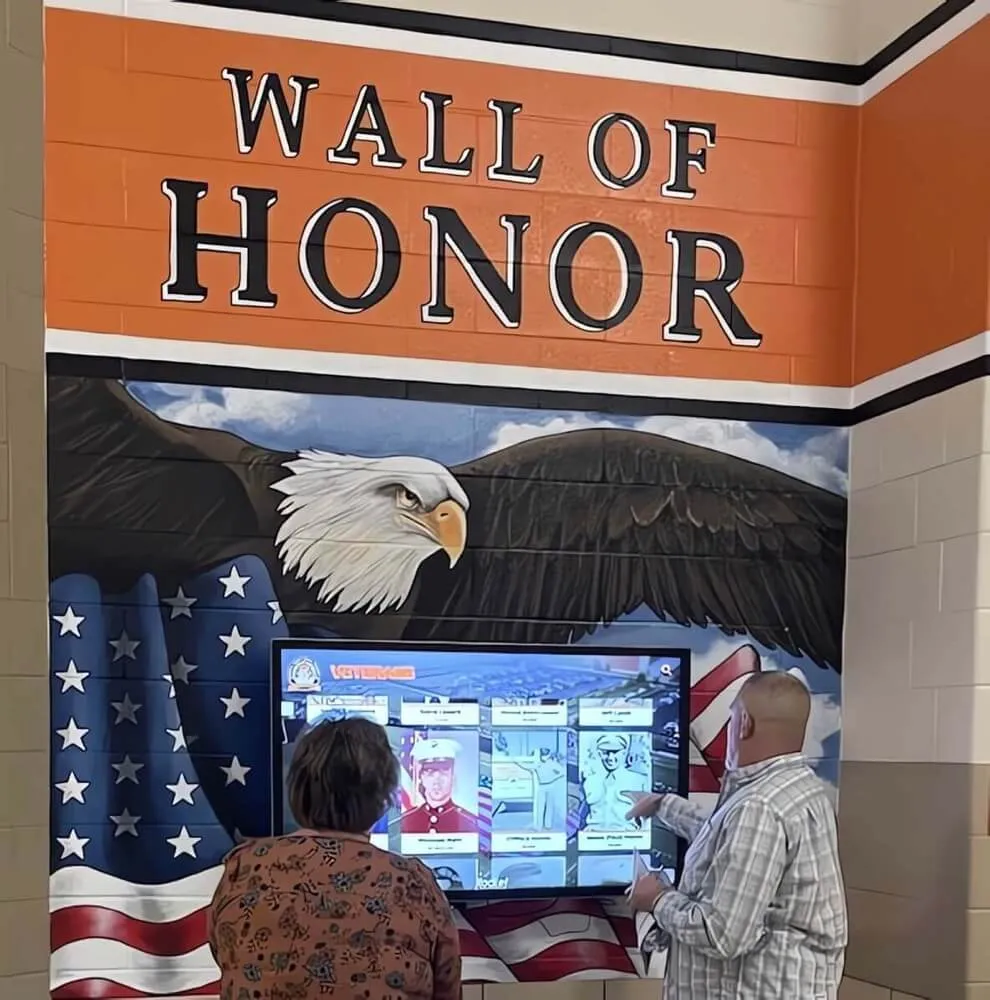
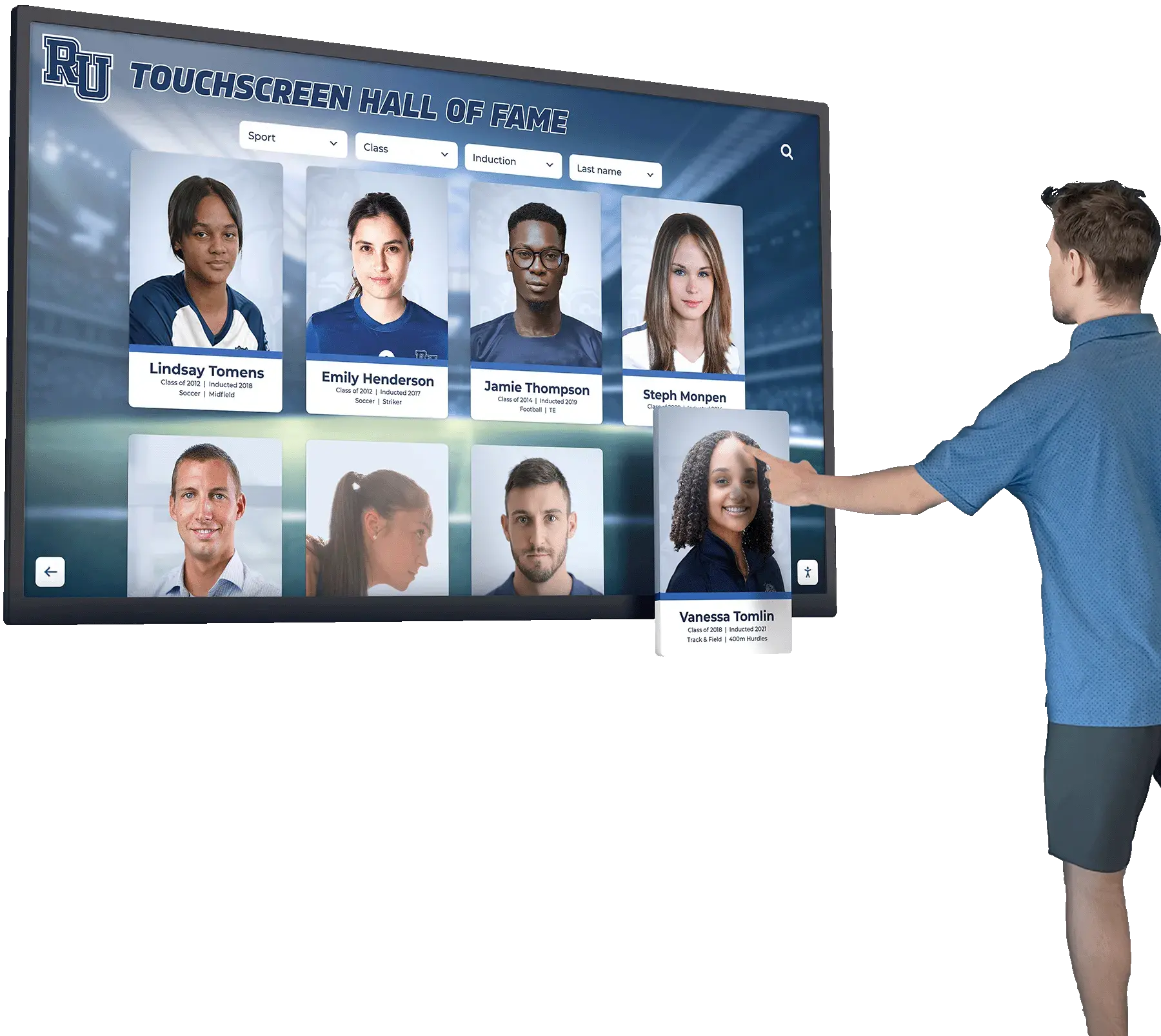
Modern interactive recognition kiosks provide unlimited capacity and rich storytelling impossible with traditional plaques alone
Creative Display Approaches
Innovative installations create memorable experiences:
Thematic Recognition Groupings
- Chronological arrangements showing achievement progression
- Achievement category organization (academic, athletic, service)
- Class year or graduating cohort displays
- Program-specific recognition (drama, music, robotics, athletics)
- Milestone celebrations (decades of excellence, centennial recognition)
Integrated Display Systems
- Combining plaques with photos and artifacts
- Trophy and plaque coordinated arrangements
- Traditional plaques complemented by digital displays
- Donor recognition integrated with program information
- Achievement walls telling comprehensive stories
Environmental Design Integration
- Custom millwork and cabinetry housing recognition
- Architectural features incorporating plaques
- Branded environments coordinating with plaques
- Lighting design enhancing plaque visibility
- Material selections complementing building aesthetics
Schools planning homecoming festivities often refresh recognition displays before alumni return to campus, ensuring graduates can find their own achievements while connecting with school traditions.
Maintenance and Long-Term Care
Proper maintenance preserves recognition value:
Regular Cleaning and Care
- Dusting and cleaning appropriate to plaque materials
- Metal polishing for brass and unfinished materials
- Glass and acrylic cleaning to maintain transparency
- Wood conditioning and refinishing when needed
- Protective coatings reapplication for outdoor plaques
Organization and Updates
- Regular audits ensuring plaques remain appropriate and accurate
- Removal or relocation of outdated recognition
- Consistent addition processes for new achievements
- Documentation of plaque locations and content
- Scheduled replacement of damaged or deteriorated plaques
Space Planning
- Monitoring available space for future recognition
- Proactive planning before locations reach capacity
- Rotation systems when space becomes constrained
- Digital alternatives when physical space exhausted
- Archive strategies for removed historical plaques
Schools avoiding proactive maintenance find recognition displays deteriorating in appearance, undermining rather than enhancing the achievements they commemorate.
Modern Alternatives: Digital Recognition Solutions
Technology-based recognition offers unprecedented flexibility and storytelling capacity traditional plaques cannot match.
Interactive Touchscreen Recognition Displays
Modern digital solutions transform recognition from static plaques to engaging experiences:
Touchscreen Recognition Capabilities
Solutions like Rocket Alumni Solutions provide comprehensive digital recognition addressing traditional plaque limitations:
- Unlimited capacity: Single display showcases unlimited achievers across all categories without physical space constraints
- Rich individual profiles: Detailed pages featuring photos, achievement descriptions, statistics, video highlights, and personal stories
- Easy search and filtering: Students, alumni, and visitors can find specific individuals, teams, or time periods instantly
- Real-time updates: Add new recognition immediately via cloud-based management—no engraving delays or costs
- Comprehensive storytelling: Connect achievements to broader context with photos, videos, statistics, and narratives impossible on physical plaques
According to institutional data, schools implementing interactive digital recognition report 55-70% higher visitor engagement compared to traditional plaque walls, with average interaction times of 4-6 minutes versus brief glances at static displays.
Interactive Display Features
- Championship team rosters with individual player profiles
- Season highlights and game footage integration
- Statistical achievement tracking across years
- Coach and program history documentation
- Alumni wall ideas showcasing returning graduates
- Historical photo galleries and timeline narratives
- Donor recognition with impact storytelling
- Academic achievement portfolios with student work samples
Management and Maintenance Advantages
- Remote content updates from any internet-connected device
- No ongoing fabrication or engraving costs
- Immediate recognition publication following achievements
- Easy correction of errors without replacement costs
- Multiple user permissions enabling appropriate staff access
- Scheduled content changes for seasons and programs
- Analytics showing which recognition content engages viewers
Schools report 80-90% reduction in ongoing recognition maintenance costs after implementing digital systems compared to traditional plaque addition and replacement expenses.
Hybrid Recognition Approaches
Combining traditional and digital elements leverages strengths of both:
Integrated Hybrid Systems
- Traditional plaques for most prestigious historical achievements
- Digital displays providing comprehensive recognition and storytelling
- Physical plaques offering permanence assurance to traditionalists
- Digital components enabling unlimited flexibility and rich content
- Combined systems addressing diverse stakeholder preferences
Implementation Strategies
- Major championships and hall of fame recognition on permanent plaques
- Season-by-season and annual recognition featured digitally
- Touchscreen kiosks adjacent to traditional trophy cases
- Web-based recognition extensions accessible beyond physical campus
- Catholic honors student recognition displays combining tradition with technology
Hybrid approaches often represent optimal solutions, honoring traditionalist preferences while embracing technology’s advantages for contemporary engagement, unlimited capacity, and ongoing cost reduction.
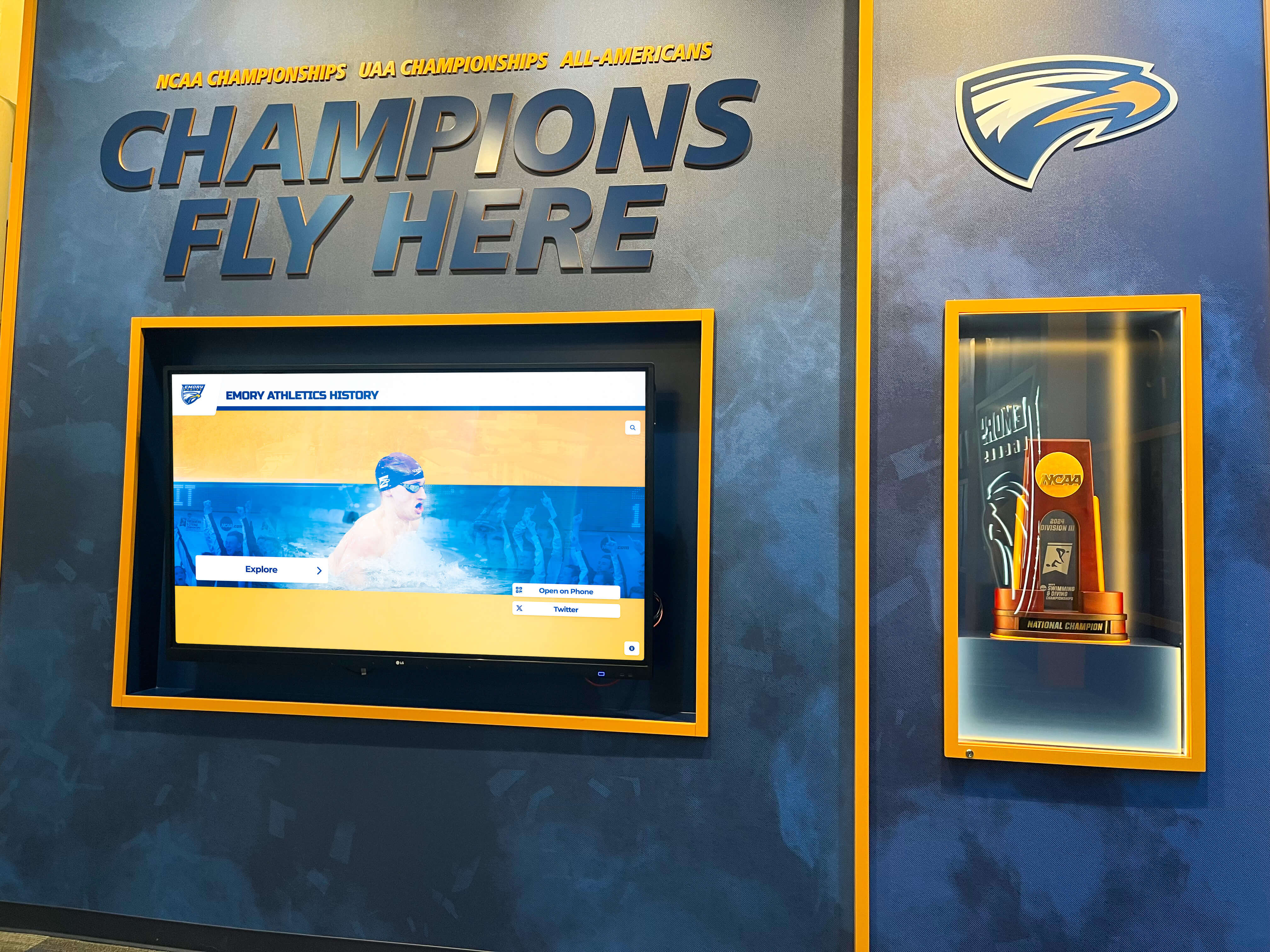
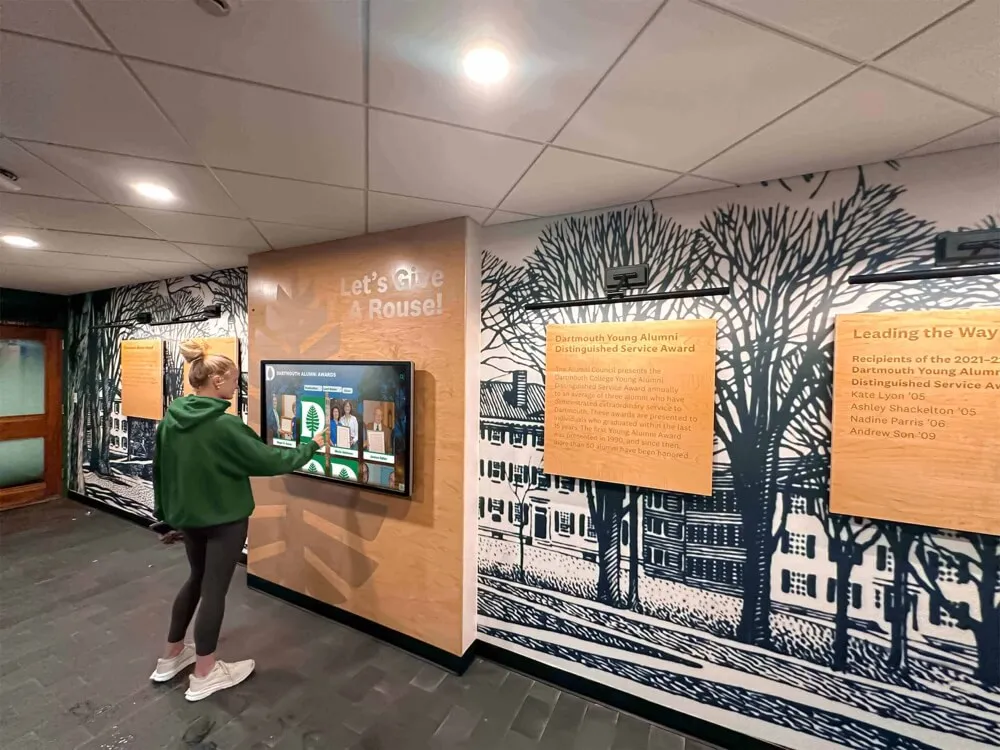
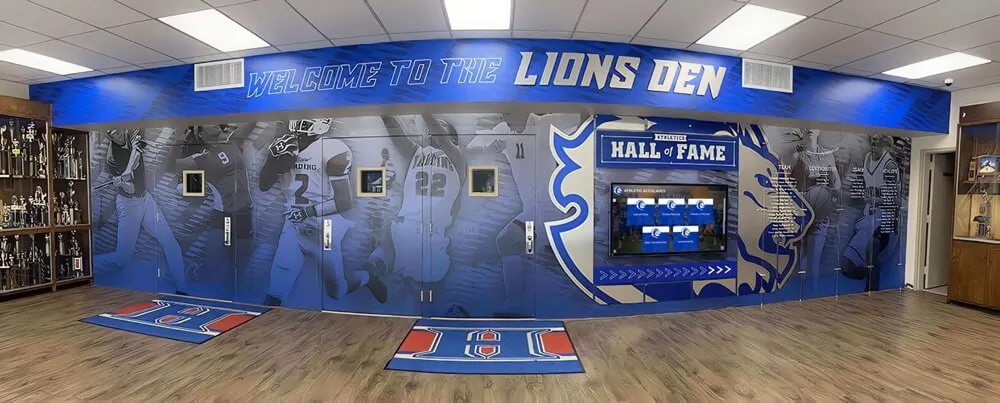
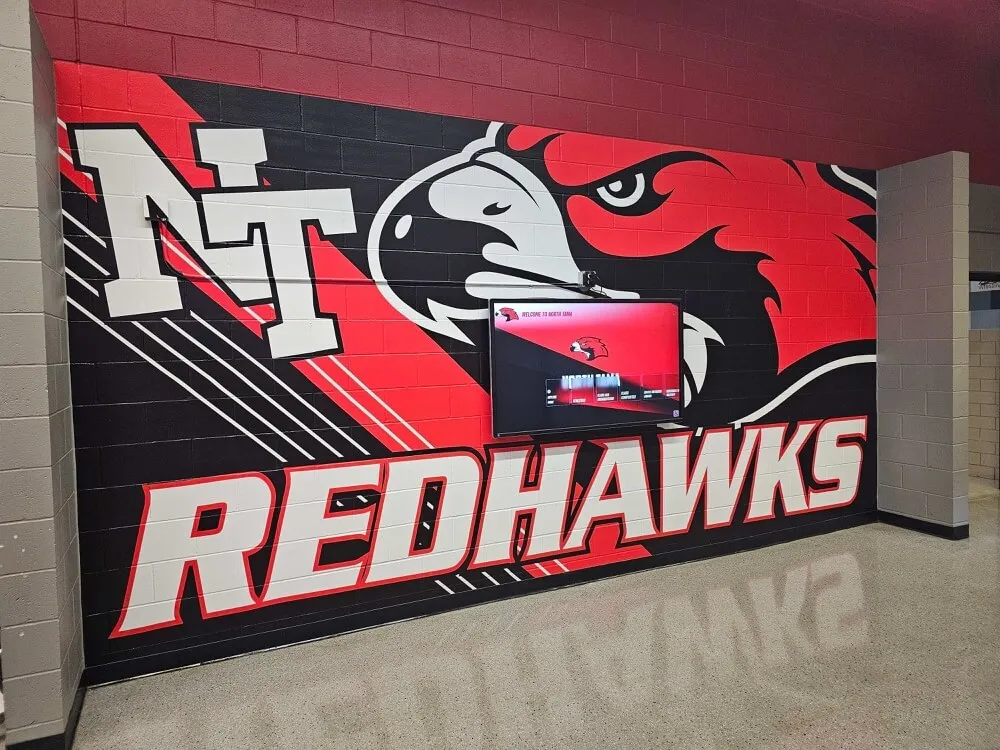
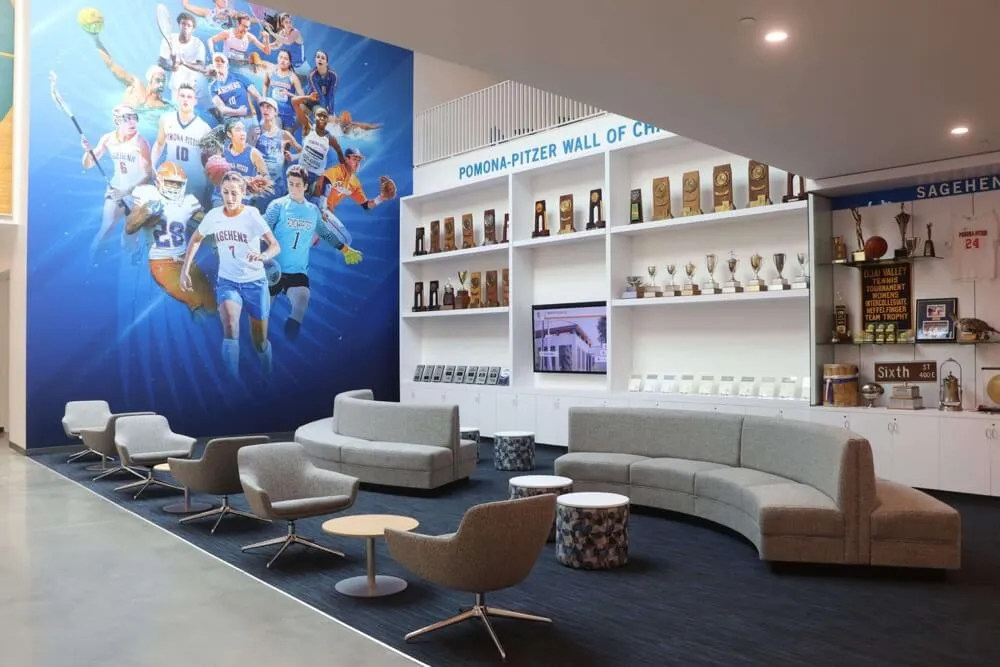
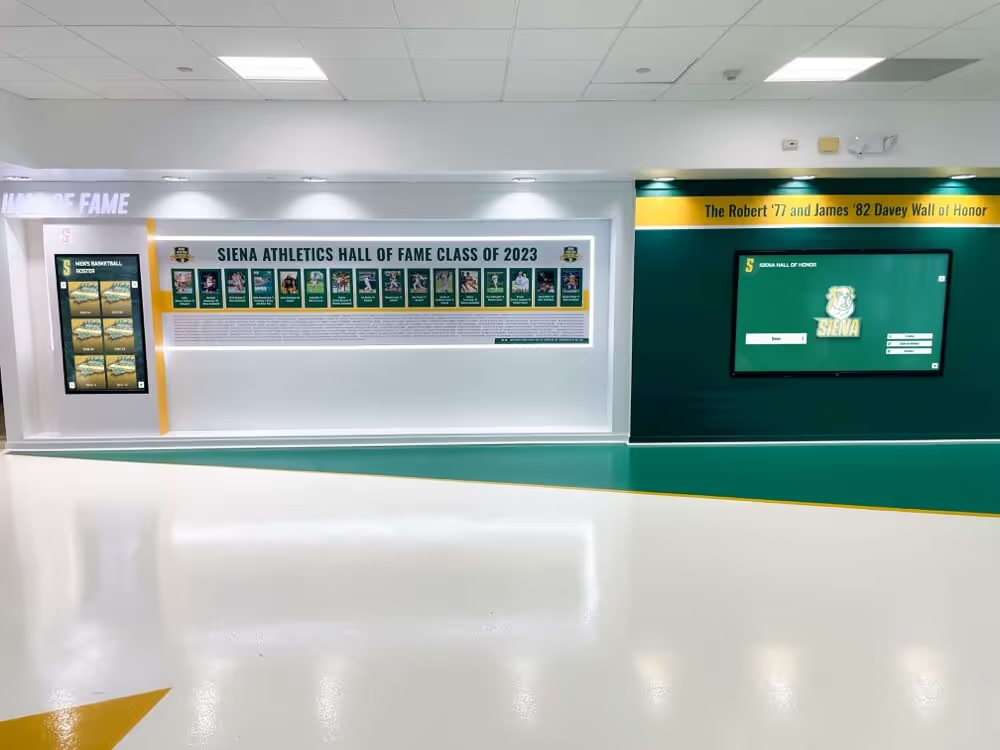
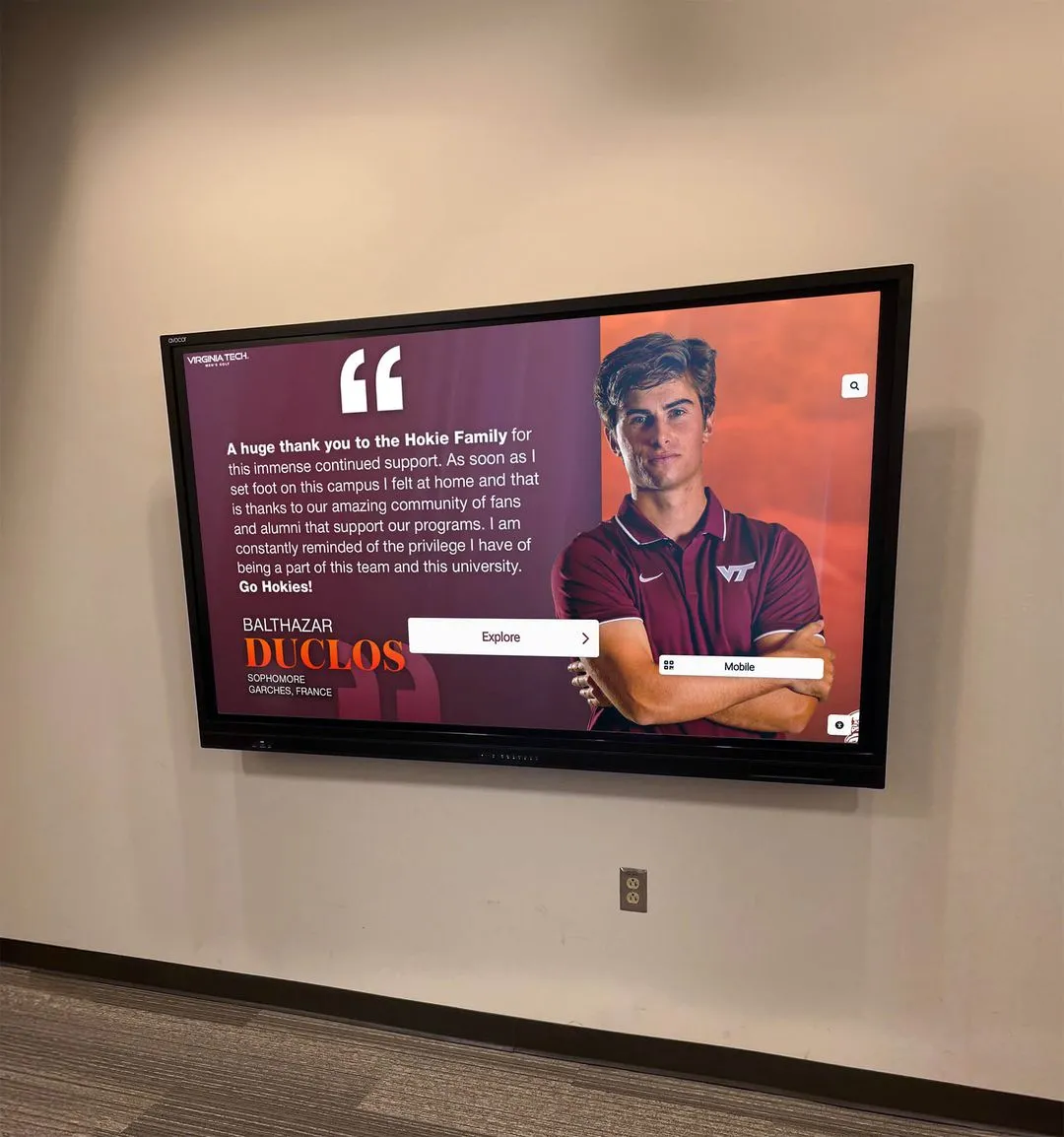
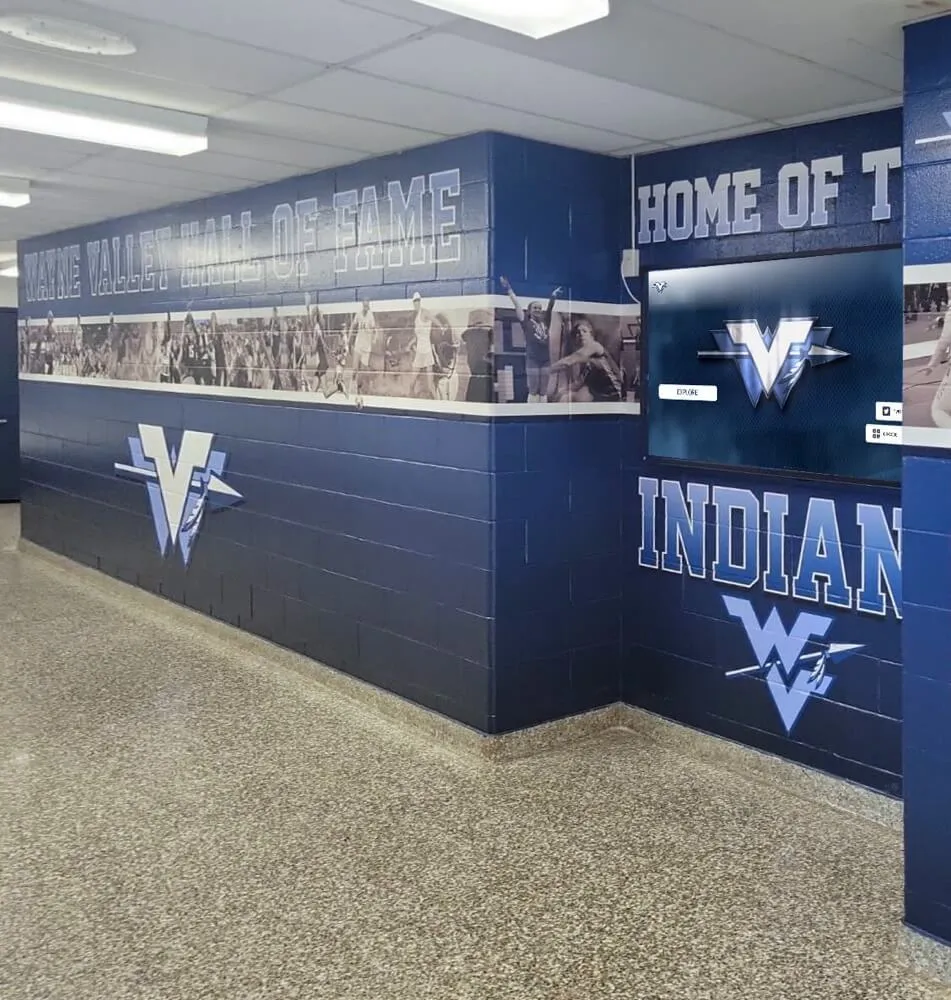
Comprehensive recognition environments celebrate achievements through multiple formats addressing different needs and preferences
Digital Recognition Benefits for Schools
Technology-based recognition addresses common traditional plaque challenges:
Space and Capacity Solutions
- No physical space limitations regardless of achievement volume
- Accommodation of unlimited categories and achievement types
- Equal prominence for recent and historical achievements
- Scalability supporting institutional growth
- No decisions about removing plaques to create space
Cost and Budget Advantages
- Elimination of per-recognition engraving and fabrication costs
- No mounting, installation, or wall preparation for additions
- Reduced maintenance compared to physical plaque care
- One-time hardware investment serving indefinitely
- Predictable software licensing rather than variable project costs
Enhanced Engagement and Impact
- Dramatically higher visitor interaction rates
- Storytelling capacity inspiring current students
- Social sharing features extending recognition reach
- Search functionality enabling personal connections
- Analytics demonstrating recognition program value
Schools implementing top-performing sales recognition approaches in corporate contexts find similar benefits apply to educational recognition programs.
Budget Planning and Cost Considerations
Recognition represents significant investment requiring strategic financial planning.
Traditional Plaque Cost Ranges
Understanding typical expenses enables realistic budgeting:
Per-Plaque Costs by Material
- Basic aluminum or acrylic: $40-$100
- Standard brass or wood: $75-$200
- Premium bronze or glass: $150-$400
- Large format or complex designs: $300-$800
- Custom fabrication and artwork: $500-$2,000+
Installation and Display Costs
- Trophy case retrofit or replacement: $2,000-$8,000
- Custom wall mounting systems: $500-$2,500
- Lighting installation: $300-$1,500
- Architectural integration: $1,000-$5,000
- Professional installation labor: $200-$800
Ongoing Recognition Expenses
- Annual additions (5-10 plaques): $500-$2,000
- Perpetual plaque name plates: $15-$40 per addition
- Replacement of damaged plaques: $75-$400 each
- Cleaning and maintenance: $100-$300 annually
- Periodic trophy case updates: $1,000-$3,000 every 5-10 years
Typical Program Budgets
- Small recognition program (10-15 annual plaques): $1,500-$4,000 per year
- Medium program (20-30 annual plaques): $3,000-$7,000 per year
- Comprehensive program (50+ annual plaques): $6,000-$15,000+ per year
- Initial trophy case installation: $5,000-$20,000
- Major recognition wall project: $15,000-$50,000+
Digital Recognition Investment
Technology solutions require different budget considerations:
Initial Investment Costs
- Commercial touchscreen display (43-55"): $1,500-$4,000
- Large format touchscreen (65-75"): $4,000-$8,000
- Custom kiosk enclosure and mounting: $2,000-$6,000
- Professional installation and configuration: $1,500-$4,000
- Initial content development and setup: $2,000-$8,000
- Network infrastructure if needed: $500-$2,000
Ongoing Operating Expenses
- Cloud software platform annual licensing: $1,200-$3,600
- Content management and updates: $500-$2,000 annually (if outsourced)
- Hardware maintenance and support: $300-$800 annually
- Electricity costs: $50-$150 annually
- Technology refresh budget (hardware replacement every 7-10 years): $150-$800 annually
Typical Digital Recognition Budgets
- Single touchscreen kiosk: $8,000-$18,000 initial, $2,000-$5,000 annually
- Multi-display installation: $20,000-$40,000 initial, $4,000-$10,000 annually
- Comprehensive digital program: $30,000-$60,000 initial, $6,000-$12,000 annually
While digital solutions require ongoing costs, they eliminate per-recognition fabrication expenses, making them increasingly cost-effective as recognition volume grows. Schools recognizing 50+ achievements annually typically achieve payback within 3-5 years.
Budget Allocation Strategies
Strategic budget planning ensures sustainable recognition:
Phased Implementation
- Starting with highest-priority recognition categories
- Annual expansion to additional achievement types
- Funding from athletics, academics, and development budgets
- Capital campaign inclusion for major installations
- Facilities budget allocation for ongoing maintenance
Alternative Funding Sources
- Booster club and athletics association support
- Alumni association funding for graduate recognition
- Corporate sponsorship of recognition displays
- Memorial and tribute gift opportunities
- Naming rights for recognition spaces and systems
Cost-Benefit Analysis
- Comparing traditional plaque ongoing costs versus digital investment
- Calculating engagement value and student impact
- Assessing donor retention improvement from better recognition
- Evaluating recruitment and marketing benefits
- Measuring staff time savings from easier recognition management
Schools implementing 25 creative donor recognition approaches find that thoughtful investment in recognition systems generates measurable return through improved donor retention and increased giving.
Best Practices for Recognition Plaque Programs
Proven strategies ensure recognition remains meaningful and sustainable.
Establishing Recognition Policies
Clear policies prevent future conflicts and ensure consistency:
Policy Components
- Achievement criteria qualifying for recognition
- Recognition duration (permanent versus time-based)
- Approval processes and decision authority
- Naming conventions and formatting standards
- Timeline from achievement to recognition installation
- Removal or relocation circumstances
- Archive strategies for historical plaques
Governance and Oversight
- Committee responsible for recognition decisions
- Athletic director, principal, or advancement role
- Student input for peer recognition categories
- Alumni association involvement for graduate recognition
- Board approval for major recognition investments
Communication and Transparency
- Published recognition criteria and standards
- Timeline communication to achievers and families
- Installation ceremony or recognition event planning
- Photo documentation of recognition additions
- Social media sharing extending recognition reach
Systematic Recognition Processes
Consistent procedures ensure reliable execution:
Annual Recognition Calendar
- Fall sports recognition timeline
- Winter and spring sports schedules
- Academic achievement (honor roll, graduation honors)
- Service and leadership recognition
- Arts and activity program acknowledgment
- End-of-year comprehensive celebration
Workflow Management
- Achievement verification and documentation
- Content collection (names, photos, statistics)
- Design review and approval
- Fabrication or digital publication
- Installation or system update
- Dedication ceremony coordination
- Archive documentation
Quality Control
- Proofing procedures preventing errors
- Multiple reviewer requirements
- Standardization across recognition types
- Professional fabrication standards
- Installation quality verification
Schools developing systematic recognition processes find fewer errors, more timely acknowledgment, and higher stakeholder satisfaction compared to ad-hoc recognition approaches.
Measuring Recognition Program Effectiveness
Assessment ensures recognition achieves intended outcomes:
Quantitative Metrics
- Number of individuals recognized annually
- Achievement categories covered
- Budget per recognition
- Installation timeline adherence
- Viewer engagement rates (for digital systems)
Qualitative Indicators
- Student and family satisfaction with recognition
- Staff perception of program effectiveness
- Visitor impressions during campus tours
- Alumni engagement with historical recognition
- Community pride in showcased achievements
Continuous Improvement
- Annual program review and assessment
- Stakeholder feedback collection
- Comparison with peer institutions
- Budget efficiency analysis
- Strategic enhancement planning
Regular evaluation enables refinement ensuring recognition programs continue serving schools effectively as needs evolve.
Conclusion: Creating Recognition That Honors Achievement and Inspires Excellence
Effective recognition plaque programs represent far more than attractive displays acknowledging past achievements—they create visible expressions of institutional values, inspire current students to pursue excellence, preserve meaningful history, and strengthen school culture and community. When schools invest in recognition that appropriately honors accomplishments while telling compelling stories about what makes achievements significant, they transform acknowledgment into strategic tools generating lasting impact.
The materials, designs, and approaches explored throughout this comprehensive guide provide frameworks for creating recognition matching both your available resources and strategic objectives. From traditional bronze plaques offering timeless permanence to innovative digital displays enabling unlimited capacity and rich storytelling, recognition options exist for every school context, aesthetic preference, and budget reality.
Successful recognition balances competing priorities—honoring individual achievements while celebrating collective success, maintaining appropriate distinction while ensuring all accomplishments feel valued, providing permanence while accommodating inevitable change, and creating beauty while serving practical motivational functions. Schools implementing thoughtful approaches that address these tensions create recognition programs that students appreciate and that measurably strengthen achievement cultures.
Transform Your Recognition Program with Digital Solutions
Discover how interactive touchscreen recognition displays can help you celebrate unlimited achievements while eliminating ongoing plaque engraving costs and space constraints.
Explore Recognition SolutionsMost importantly, remember that recognition serves students and institutional missions simultaneously. While materials, designs, and technologies matter, what truly distinguishes exceptional recognition is the authentic appreciation it expresses and the meaningful inspiration it provides. The most beautiful bronze plaque or sophisticated digital display ultimately succeeds or fails based on whether students feel genuinely honored and motivated to pursue their own excellence.
Whether you select traditional engraved plaques, innovative interactive touchscreens, or hybrid approaches combining both, focus recognition design on the human motivation at achievement’s heart. Create displays that tell compelling stories, celebrate dedication and growth, demonstrate what’s possible, and inspire others to join the culture of excellence you’re building. When recognition authentically honors accomplishments while advancing institutional mission, it becomes invaluable infrastructure strengthening your school for generations.
Your students deserve recognition reflecting the significance of their achievements and the values they represent. Start with clear objectives, develop thoughtful policies, invest appropriately in quality solutions matching your school’s context, and create acknowledgment that celebrates excellence while inspiring future achievement throughout your community.