



Intent: define. A school trophy case setting block inspection is a systematic review of the small neoprene, EPDM, or plastic pads placed beneath glass panels in a trophy case frame—confirming those blocks are correctly positioned, undamaged, and properly sized to prevent point-loading stress on glass edges, unexpected breakage, and moisture infiltration around irreplaceable award memorabilia. Facilities managers, athletic directors, and maintenance staff should perform this inspection at least twice per school year and after any glass replacement, heavy cleaning, or hardware adjustment event.
This guide defines what setting blocks do, how to locate them in common case types, how to conduct a field inspection using a diagram and pass/fail table, and how to escalate deficiencies through a structured checklist. It also connects setting block condition to the broader question of when physical trophy case maintenance demands justify evaluating a digital recognition alternative.
Setting blocks sit quietly behind every glass trophy case panel, yet they perform one of the most mechanically critical functions in the entire assembly. Without correctly positioned and correctly sized blocks, a glass panel that looks perfectly secure can develop edge chips, sill cracks, or full breakage from glass self-weight concentrating at a single unsupported point. A school trophy case setting block inspection turns that invisible load distribution problem into a documented, manageable maintenance item before it becomes a safety event.
For school facilities teams, this inspection matters especially because trophy case glass panels often remain in service for ten to twenty or more years without a scheduled replacement cycle. Setting blocks in older cases may have compressed, migrated, or degraded long before the glass they support shows any visible sign of stress. By the time an edge chip appears, the underlying block failure has typically been present for months.

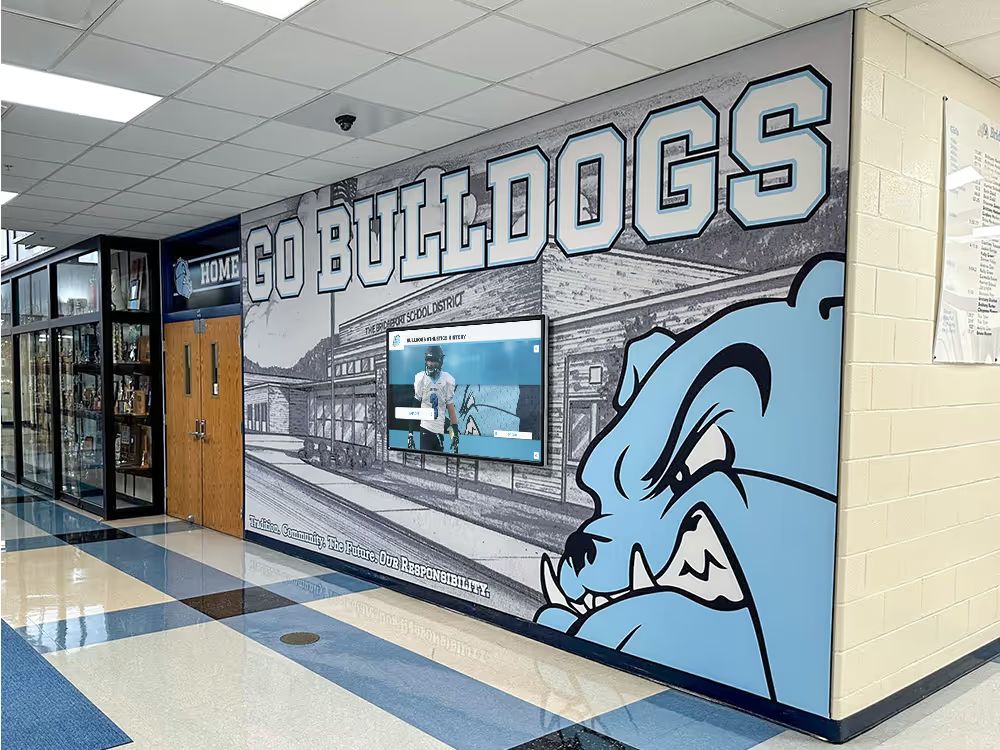
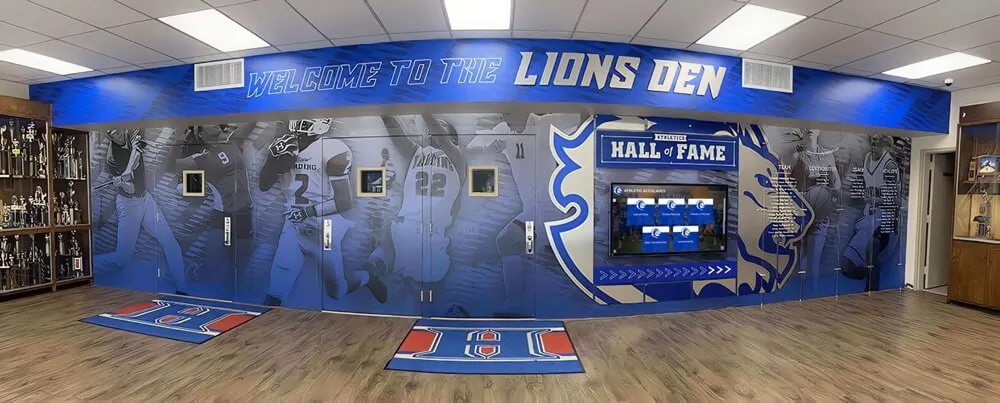
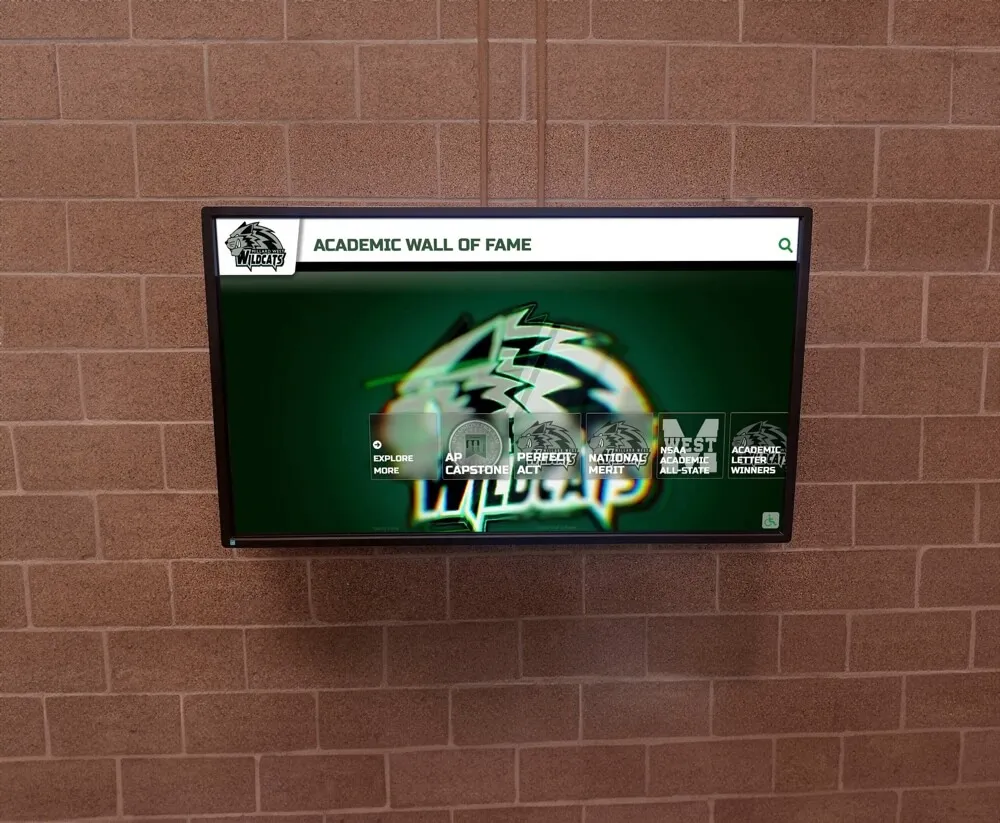
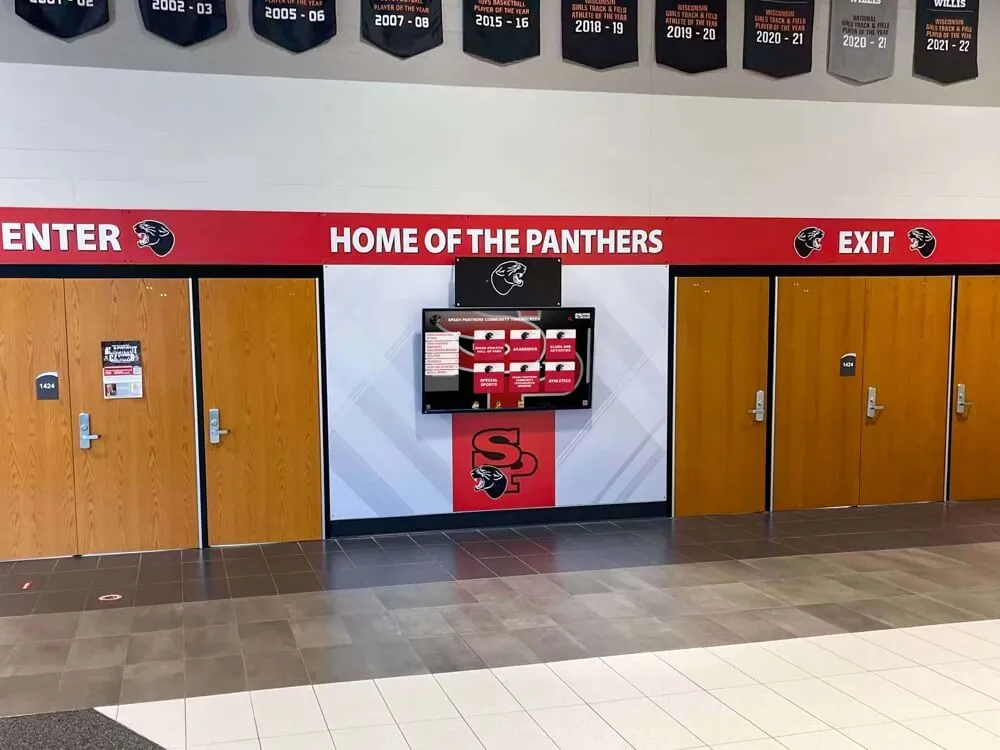
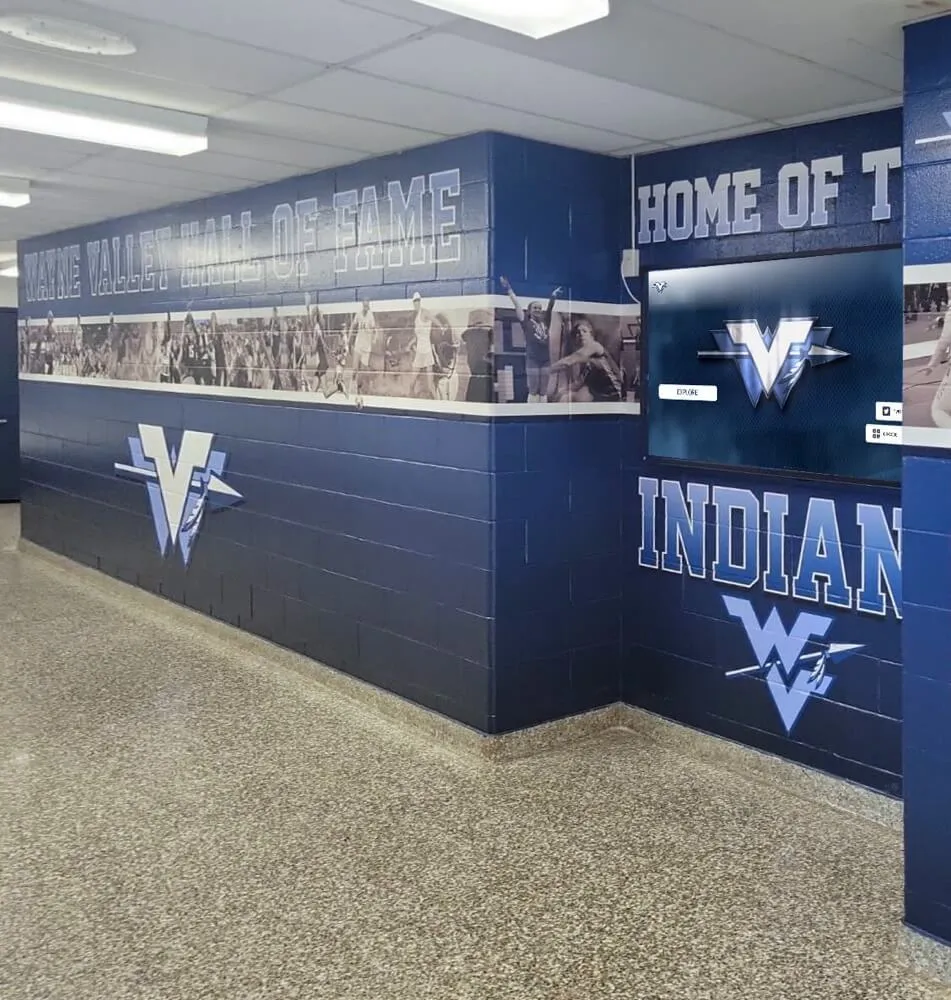
Trophy cases in school hallways often contain decades of athletic and academic history—proper setting block maintenance protects both the glass and the irreplaceable memorabilia inside
What Are Setting Blocks and Why Do They Matter?
Setting blocks are small rectangular or square pads—most commonly made from neoprene, EPDM (ethylene propylene diene monomer) rubber, or dense plastic—placed at specific positions along the bottom channel of a glass frame before the glass panel is installed. Their function is twofold.
Load transfer. Glass panels carry meaningful self-weight. A standard quarter-inch-thick glass panel measuring 24 by 48 inches weighs roughly 15 to 17 pounds. Without setting blocks, that weight concentrates wherever the glass first contacts the frame channel material, creating localized edge stress that grows over time as the glass settles. Setting blocks distribute the weight across a defined bearing surface and transmit it to the frame structure, not to the glass edge itself.
Edge protection. Setting blocks also hold the glass panel clear of direct contact with metal frame channels. Aluminum channels—standard in most manufactured trophy cases—have hardness values far above glass. Direct contact between an aluminum channel edge and a glass panel edge creates a stress concentration point. Repeated thermal expansion and contraction cycles cause micro-movement at that contact zone, gradually initiating an edge chip or crack. Correctly sized setting blocks hold a consistent buffer between glass and metal.
Setting block specifications in trophy case applications follow the same principles that govern architectural glazing: block width should span at least one-eighth of the glass panel width, block height should equal or slightly exceed the depth of the frame channel so the glass rests on the block rather than the channel floor, and blocks should be positioned symmetrically at the bottom quarter-points of the panel. In practice, many school trophy cases were installed without verified block specifications and their blocks have never been re-inspected since installation.
How to Locate Setting Blocks by Case Type
Trophy cases vary widely in construction, from custom wood cases built into school walls in the 1970s to mass-manufactured aluminum-and-glass units installed more recently. Setting blocks appear differently depending on design.
Sliding glass door cases. Setting blocks sit in the bottom channel that the glass panel slides within. Open the door to its full travel and examine the bottom channel. You should see one or two small blocks—depending on panel width—sitting in the channel with the glass resting on top. If the glass appears to sit directly on the channel floor with no visible separation, blocks may have migrated out of position or were never installed.
Hinged glass door cases. Setting blocks are typically located in the bottom frame rabbet, the recessed ledge that the glass panel rests within. With the door open, examine the inner lower edge of the door frame. Blocks are often visible as small neoprene rectangles along the bottom edge of the glass.
Fixed panel cases. Fixed glazing in trophy case backs or side panels may use setting blocks placed in routed channels during installation. These are not accessible without partial frame disassembly but can sometimes be confirmed by inserting a thin inspection mirror along the glass-to-frame gap.
Frameless or butt-jointed cases. Some modern case designs use minimal or no traditional setting blocks, relying instead on structural silicone at the glass perimeter. These cases require an inspection approach focused on sealant condition rather than block position.
Inspection Diagram: Setting Block Layout
Use the following diagram description when developing a site-specific inspection form or briefing maintenance staff unfamiliar with setting block conventions.
For a standard sliding-door panel (viewed from the front, door open):
┌──────────────────────────────────────────────────────────────────┐
│  ←────────────── GLASS PANEL WIDTH (W) ──────────────→          │
│                                                                  │
│                                                                  │
│                                                                  │
│   [BLOCK A]                               [BLOCK B]             │
│   ←─W/4─→                            ←─W/4 from right─→        │
└──────────────────────────────────────────────────────────────────┘
         ↑ BOTTOM CHANNEL (primary inspection zone)
- Block A is at the left quarter-point of the panel width (measured from the left edge)
- Block B is at the right quarter-point (measured from the right edge)
- Both blocks should be centered within the channel depth—not skewed toward the front or back of the channel
- The glass panel rests on top of both blocks; the panel center is intentionally unsupported
- Blocks should have 1–3 mm clearance from each side channel wall; they must not be wedged against the walls
Side-edge setting blocks (when specified). Some cases include additional thin blocks at the side edges of a glass panel to prevent racking within the frame. These are positioned at the quarter-points of panel height, not the full height. Add them only if specified in the original case installation drawings.
Reference standard. The Glazing Association of North America (GANA) publishes detailed setting block specifications in its glazing manual. Although oriented toward commercial architectural glazing, GANA block sizing and positioning guidance is directly applicable to trophy case glass panels and provides a conservative, code-aligned baseline for facilities teams without access to original case specifications.
Pass/Fail Inspection Table
Use this table to assess each glass panel’s setting block condition. Record findings by panel location on your inspection form.
| Check Item | Pass Condition | Fail Condition | Priority |
|---|---|---|---|
| Block presence | Both blocks visible and in contact with the glass bottom edge | One or both blocks missing, or glass resting on channel floor | Critical |
| Block position | Blocks at left and right quarter-points (±10% of panel width) | Blocks at panel center, at panel corners, or migrated more than 15% from quarter-point | High |
| Block integrity | Block is firm and not compressed flat, cracked, or crumbled | Block is compressed to less than half original height; block is split or fragmented | High |
| Material condition | Neoprene or EPDM is flexible; plastic block is intact with no surface cracks | Material has hardened, become brittle, or shows surface cracking | Moderate |
| Glass-to-frame contact | No direct glass edge contact with frame metal or channel floor | Glass edge contacts any metal frame surface, even partially | Critical |
| Block alignment | Block is centered within channel depth and level | Block is tilted or protruding above channel level, creating uneven glass support | High |
| Edge gap clearance | 1–3 mm clearance between block ends and side channel walls | Block is wedged against side wall, potentially transferring lateral load to glass edge | Moderate |
| Block sizing | Block width spans at least ⅛ of panel width | Block width is narrower than ⅛ of panel width | High |
| Block stability | Block remains in position through normal door operation | Block shifts or falls out when door is opened or closed | High |
| Channel cleanliness | No debris accumulation beneath blocks | Grit, debris, or hardened caulk present beneath blocks | Moderate |
Any Critical failure means the glass panel is at elevated breakage risk and requires immediate corrective action. Any High failure should be corrected within five business days. Moderate failures should be scheduled within thirty days.
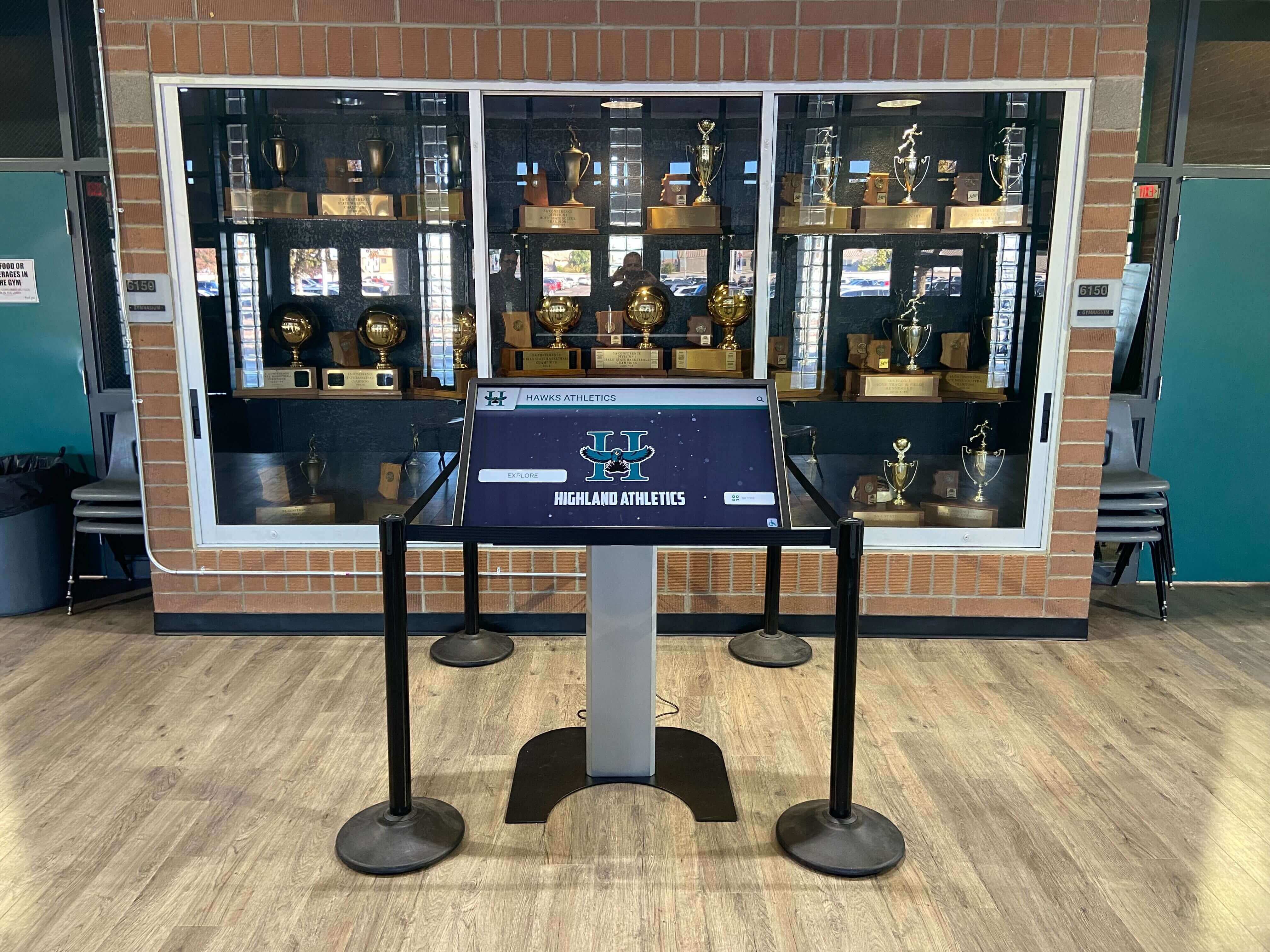
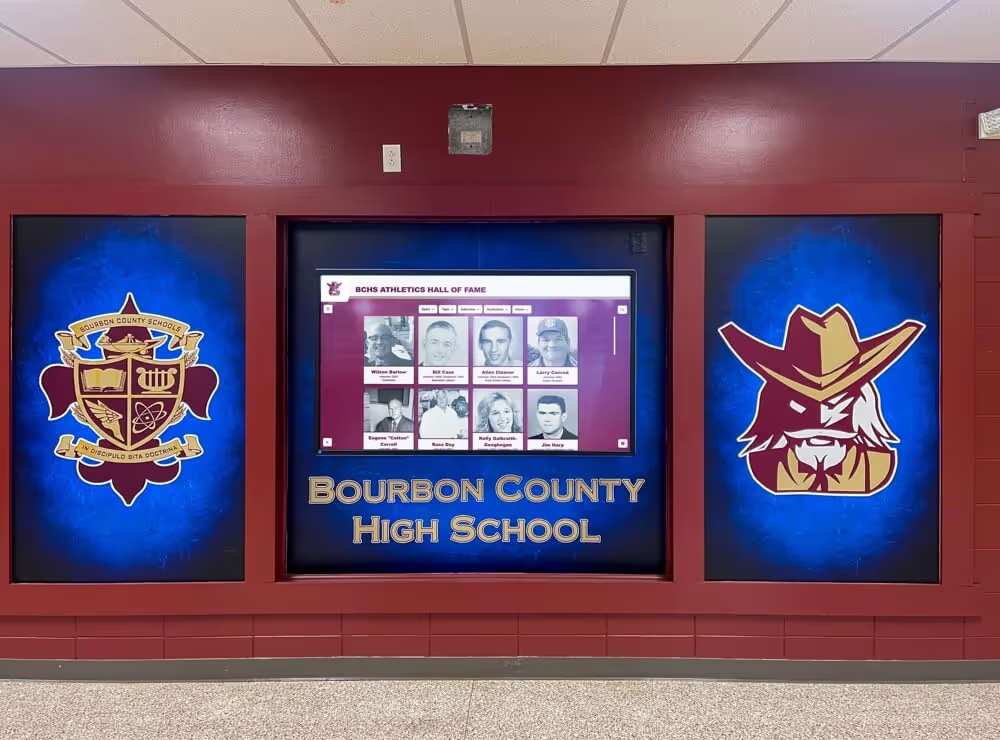
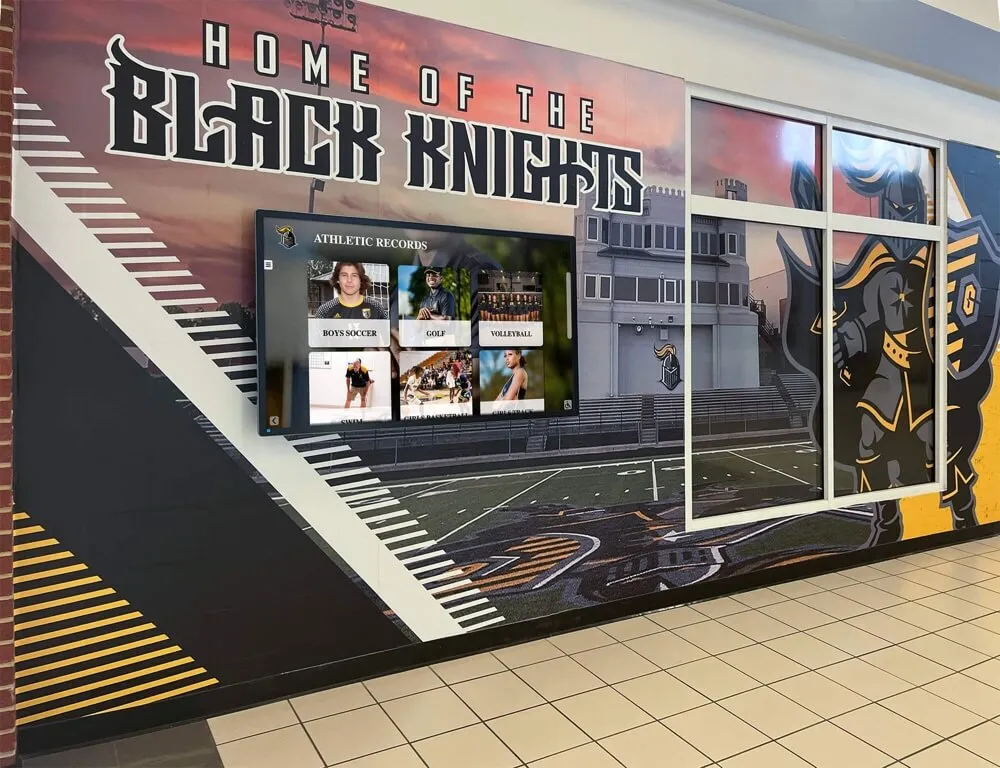
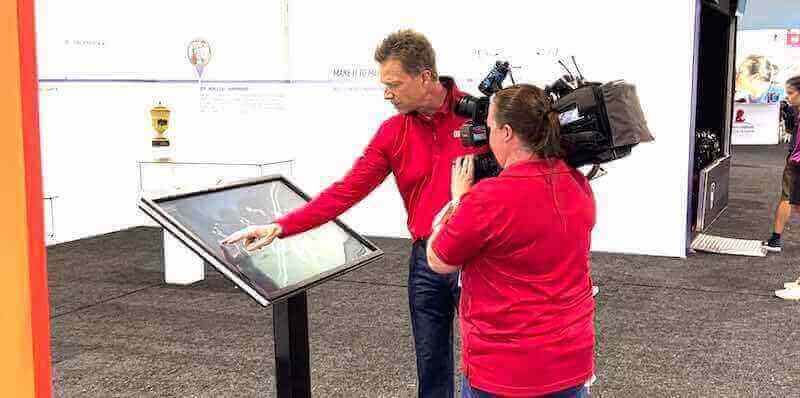
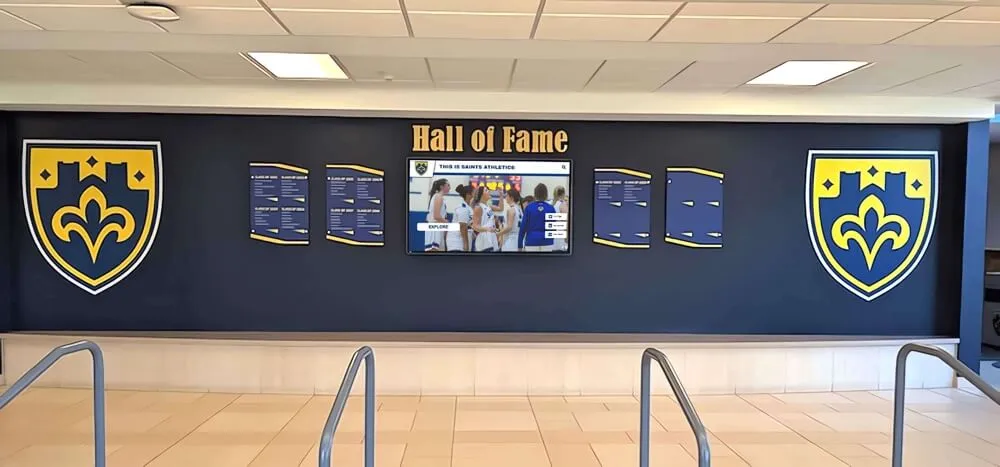
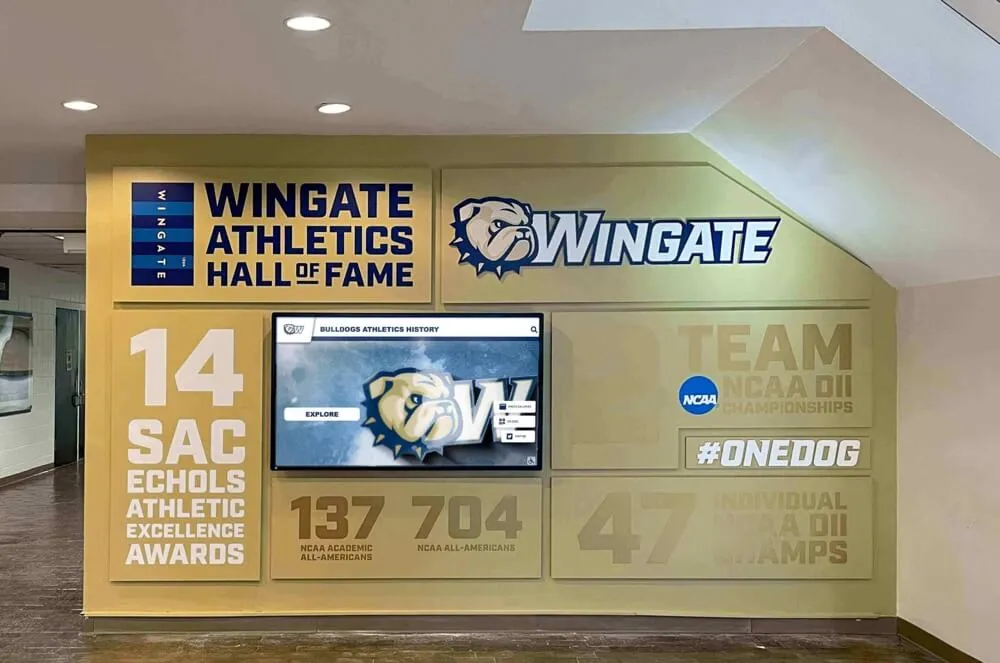
Well-maintained trophy cases that combine physical display with integrated digital kiosks require separate maintenance protocols for each component, including setting block inspection for the glass panels
Step-by-Step Inspection Protocol
Step 1: Prepare and Document the Case
Before inspecting any panel:
- Record the case location, case identifier, total number of glass panels, and inspection date
- Photograph the case in its closed state before opening any doors (documents baseline condition)
- Put on nitrile or cut-resistant gloves before touching any glass-adjacent hardware
Step 2: Open Each Door Fully and Inspect the Bottom Channel
For sliding-door cases:
- Slide each panel to its fully open position
- Use a pocket flashlight to illuminate the bottom channel
- Locate both setting blocks and visually confirm position relative to the panel quarter-points
- Check that neither block has migrated toward the panel center or corners
- Look for debris between blocks and beneath the glass panel’s bottom edge
For hinged-door cases:
- Open the door to full travel
- Examine the inner lower frame edge for setting blocks in the bottom rabbet
- Confirm blocks are present, intact, and in contact with the glass bottom edge
Step 3: Assess Block Condition
With a gloved hand, gently press each block to assess compression:
- Neoprene and EPDM in good condition feel resilient, not rigid or completely flat
- A block compressed to roughly half its original height or less has exceeded its elastic range and is no longer distributing load effectively
- A plastic block showing surface cracking or feeling brittle should be marked for replacement
Step 4: Check Glass-to-Frame Contact
Using the flashlight at a low angle, examine the glass-to-frame interface at the bottom corners of each panel:
- Look for metal contact marks—bright scratches or scuff marks on the glass edge near frame contact points
- Observe whether the glass edge clears the channel floor or appears to rest on it directly
- Listen for clicking or grinding during slow door operation; either sound indicates glass-to-metal contact
Step 5: Record and Flag
Using the pass/fail table, classify each panel and record:
- Panel location (e.g., “main lobby case, right door, bottom channel”)
- Block position, condition, and glass-to-frame contact results (pass/fail)
- Overall severity classification (Critical / High / Moderate / Pass)
- Recommended corrective action and assigned timeline
Escalation Checklist for Setting Block Deficiencies
When inspection identifies failures, use this checklist to ensure the right people are involved and the response timeline is appropriate.
Immediate — Critical failures (same day):
- Photograph the specific failure condition before any corrective work
- Notify principal or athletic director of the safety-relevant finding
- Post a visual caution on the case if immediate access restriction is warranted
- Contact a licensed glazier to assess and replace blocks; do not attempt to reposition glass without professional involvement
- If students have access to the area, cordon off the case until the block condition is corrected
Short-term — High failures (within 5 business days):
- Source replacement block material: neoprene or EPDM pads in the correct thickness (typically 3–6 mm depending on channel depth)
- Schedule glazier visit or facilities technician inspection for block repositioning or replacement
- Verify block sizing against GANA or manufacturer specifications before installing replacement material
- Update the maintenance log with the finding date, severity, and corrective action scheduled
Scheduled — Moderate failures (within 30 days):
- Add to the facilities work order queue with a 30-day completion target
- Re-inspect at the 30-day mark to confirm no deterioration to High or Critical status
- If the condition has worsened, escalate to the appropriate higher tier immediately
Documentation requirements (all findings):
- Record findings in the school’s facilities management system under the trophy case asset record
- Attach photographs of Critical and High findings
- Note the next scheduled inspection date
- If the inspection was triggered by a reported incident, document the report source and date
- Retain inspection records for a minimum of five years to support end-of-life replacement decisions
Why Setting Blocks Fail in School Trophy Cases
Understanding failure causes helps facilities teams prevent recurrence after corrective action.
Block migration is the most common failure in sliding-door cases. Every time a glass panel is opened or closed, a small horizontal force acts on the block. If blocks are not bonded or dimensioned correctly, they gradually shift toward the panel center over repeated cycles. A case that sees five or six door openings per day during awards season—when coaches and athletic directors are adding new hardware—can displace a block by several centimeters within a single school year.
Material hardening is typical in older neoprene blocks. Neoprene has a useful indoor life of roughly fifteen to twenty years before hardening begins. A case installed in the early 2000s may have original blocks that have lost most of their elastic recovery. Hardened neoprene transmits load less effectively and may develop surface cracks, allowing fragment loss at the contact zone.
Incorrect replacement sizing is a common consequence of non-standard maintenance. When a block fails and is replaced with a convenient material—a scrap rubber sheet, a silicone pad from another application—there is no guarantee the replacement has appropriate compressive stiffness or dimensions. Oversized blocks prevent the glass from seating correctly; undersized blocks do not achieve adequate load distribution.
Debris accumulation is a particular risk in cases with bottom-track sliding doors. Fine grit and dust entering the bottom channel settle beneath setting blocks over time, creating point-load contact between grit particles and the glass edge. Regular channel cleaning is a necessary companion to setting block inspection.
Setting Block Replacement: What Facilities Teams Need to Know
Material selection. Neoprene Shore A 70 durometer is the standard specification for glazing setting blocks in most commercial applications and is appropriate for school trophy case glass. This hardness provides sufficient stiffness to support panel self-weight without excessive compression while maintaining enough elasticity to absorb small movement from thermal cycling and door operation. EPDM of comparable durometer is an acceptable alternative. Do not use open-cell foam (compresses too easily and holds moisture), silicone rubber pads (insufficient stiffness under sustained load), or rigid plastic (transmits load without elastic cushioning).
Sizing. Block height should equal the channel depth so the glass rests on the block, not the channel floor. Block width should span at least one-eighth of the panel width—for a 24-inch-wide panel, that is at least 3 inches. Block depth (front-to-back dimension in the channel) should be at least 1 inch to prevent tipping.
Installation. Replacement blocks should be positioned at the panel quarter-points and, if channel geometry permits, bonded to the channel floor with a small amount of structural silicone—enough to hold the block in position through repeated door operation but not so much that future removal is difficult. Support the glass panel temporarily during any block replacement.
Post-replacement verification. After replacing blocks and re-seating the glass panel, confirm:
- The glass panel does not rock on the blocks when light lateral pressure is applied
- The door opens and closes without resistance or sounds indicating glass-to-metal contact
- Both blocks remain in their quarter-point positions after five to ten full door cycles
How Setting Block Condition Connects to Recognition Program Health
Trophy cases house the physical evidence of a school’s program history—championship trophies, framed team photographs, individual award plaques, and commemorative items that in many cases cannot be replaced. The glass panels protecting those items are themselves protected by setting blocks. When blocks fail, glass becomes vulnerable. When glass fails, items inside are exposed to breakage, moisture, and handling damage during emergency repair.
Schools planning significant recognition events—reunion weekends, hall of fame inductions, or anniversary celebrations—should add a pre-event setting block inspection to their facility preparation checklist. Opening trophy cases to rotate or photograph older items creates exactly the type of door-operation stress that accelerates block migration. Schools hosting 50th high school reunion events or milestone anniversary celebrations benefit from confirming all case glass is properly supported well before event week.
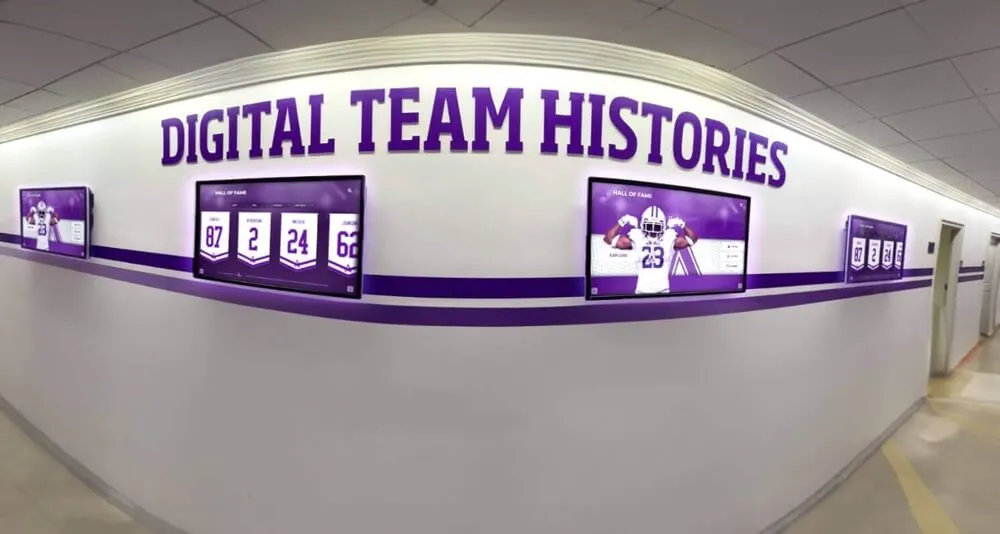
Schools that have expanded into digital recognition displays alongside physical cases—a workflow described in a day in the life of a school with digital displays—still need to maintain the physical glass cases that remain in service. A digital platform supplements physical case upkeep and, over time, can replace it when the physical maintenance burden exceeds the display value the case provides.
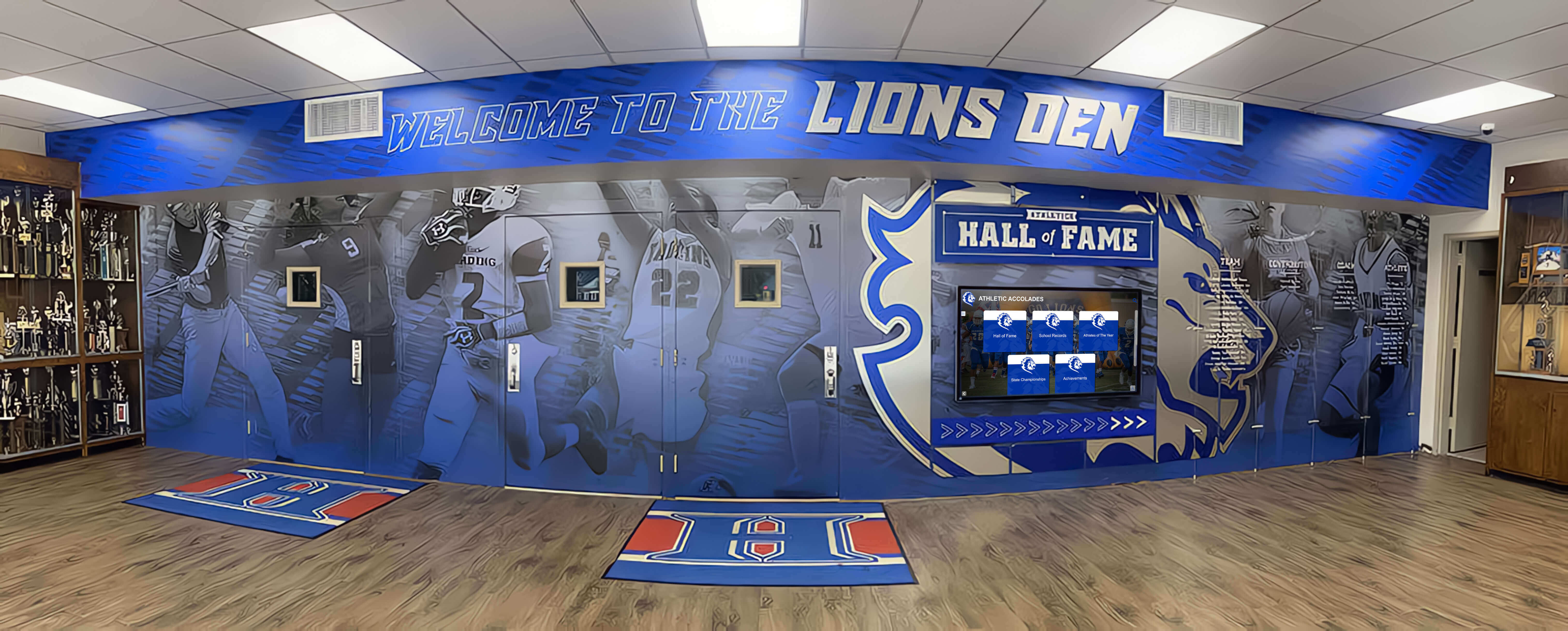
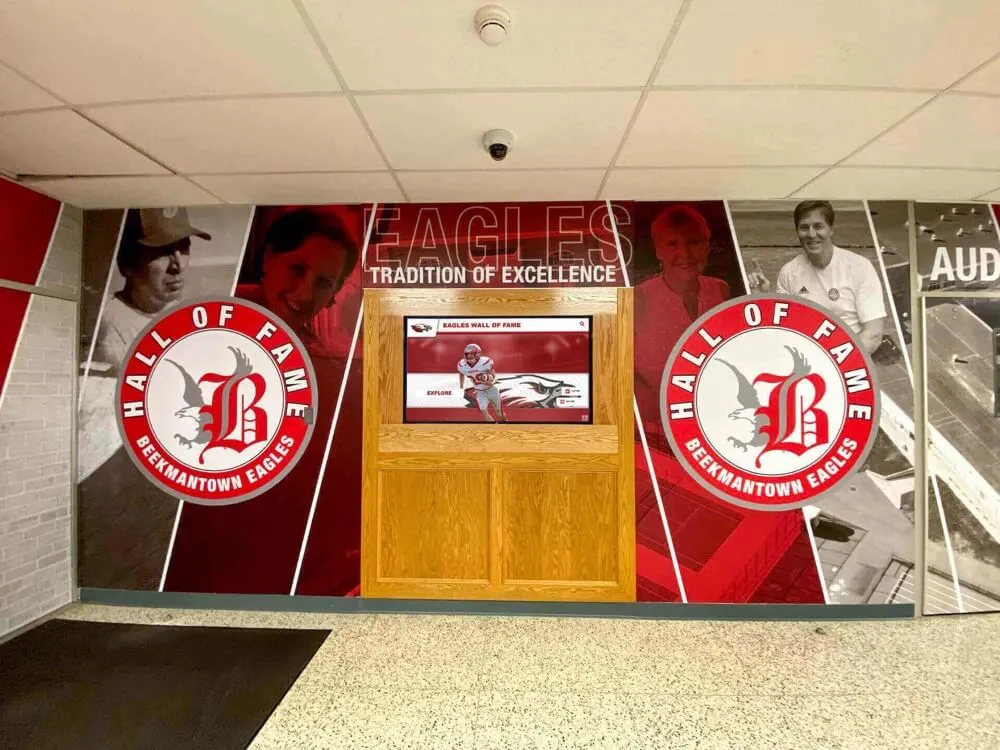
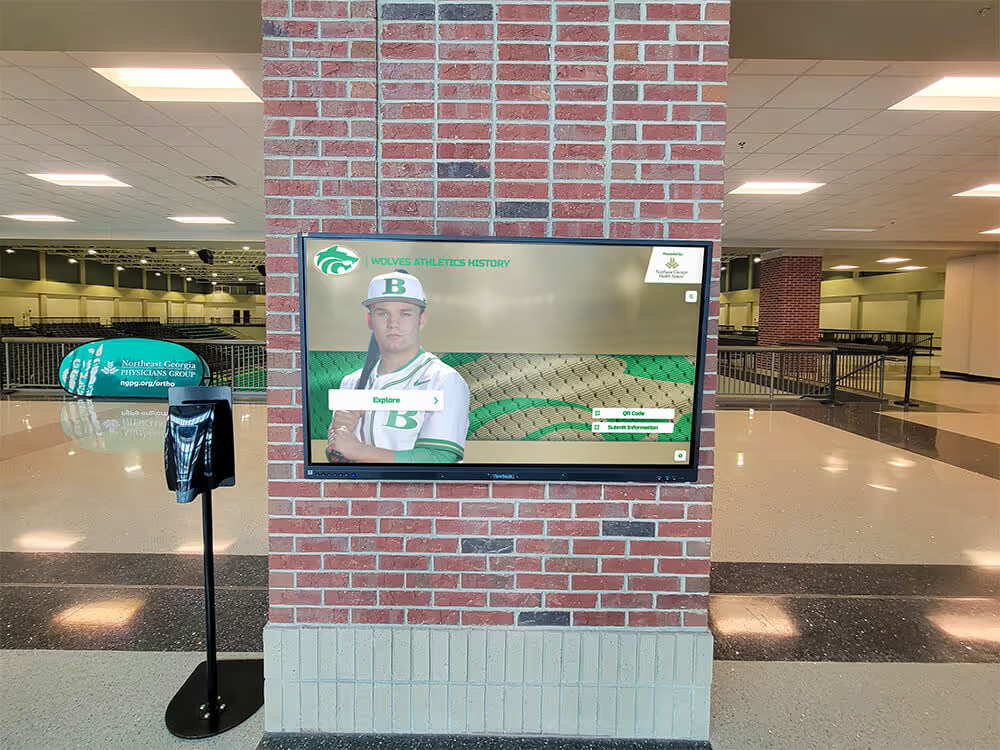
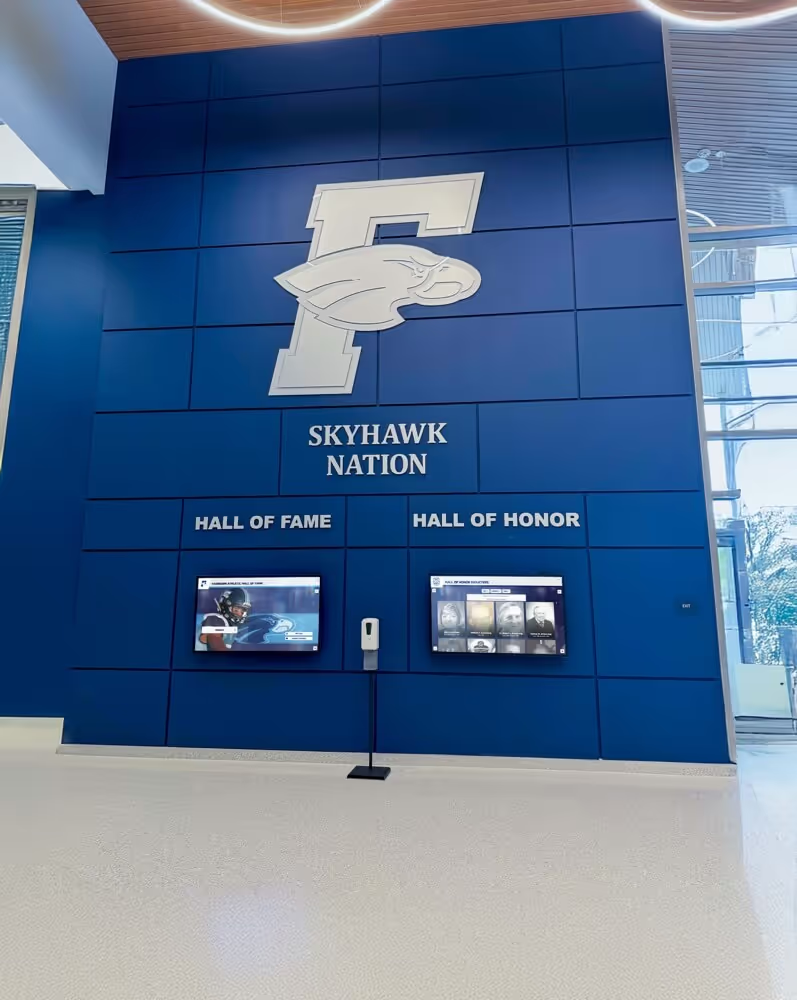
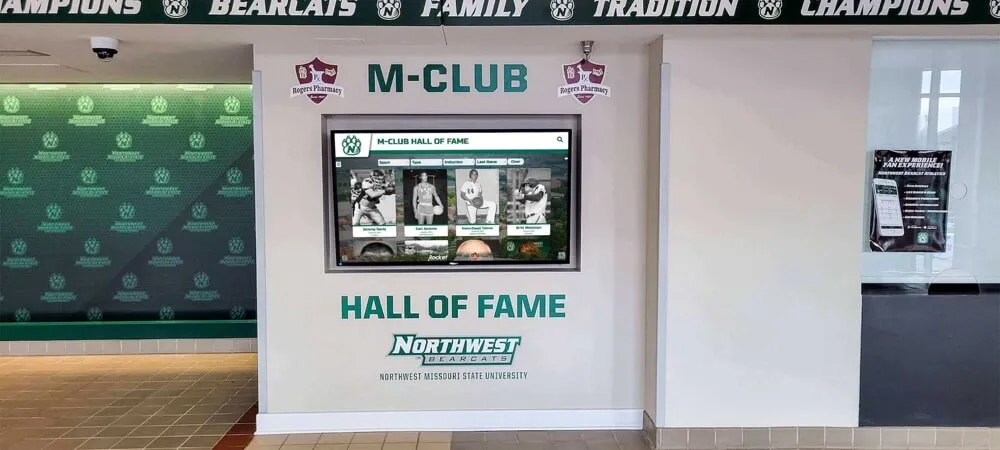
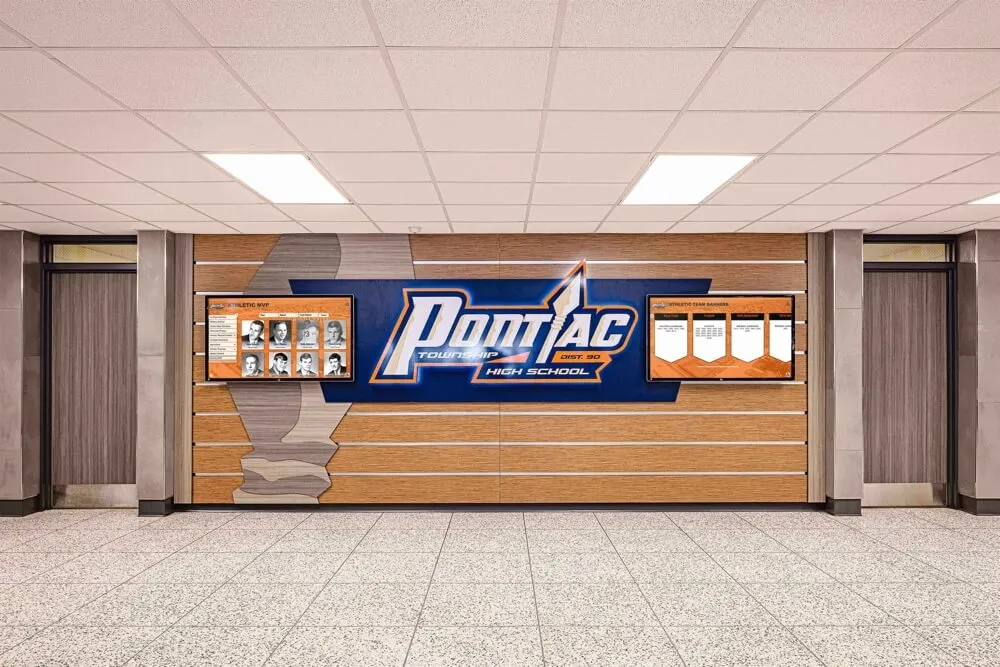
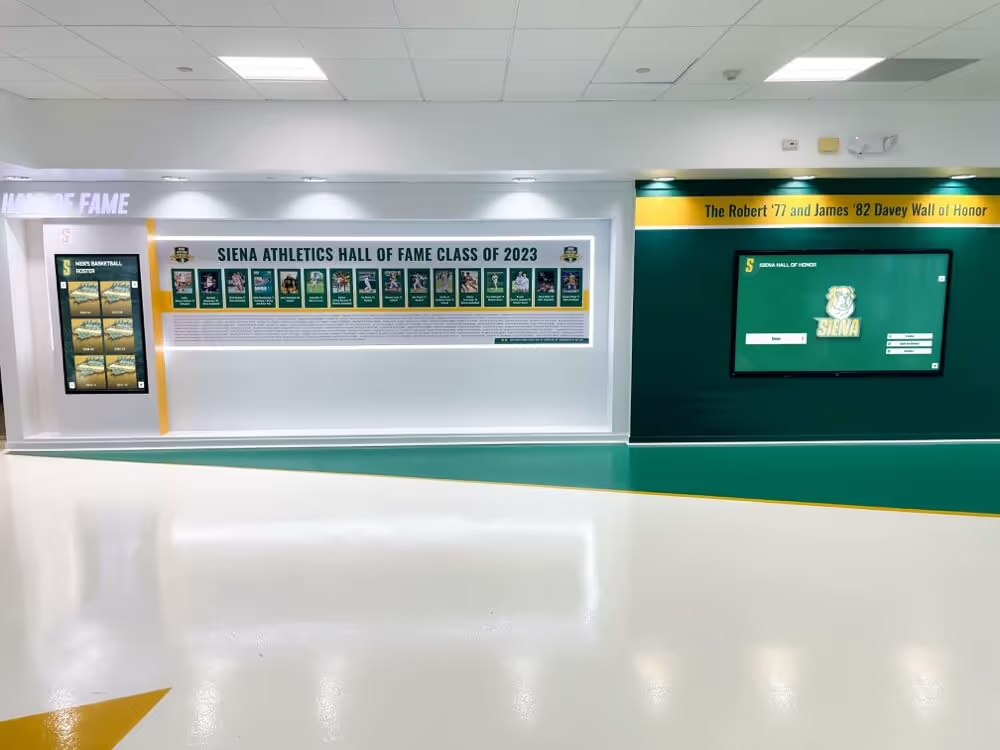
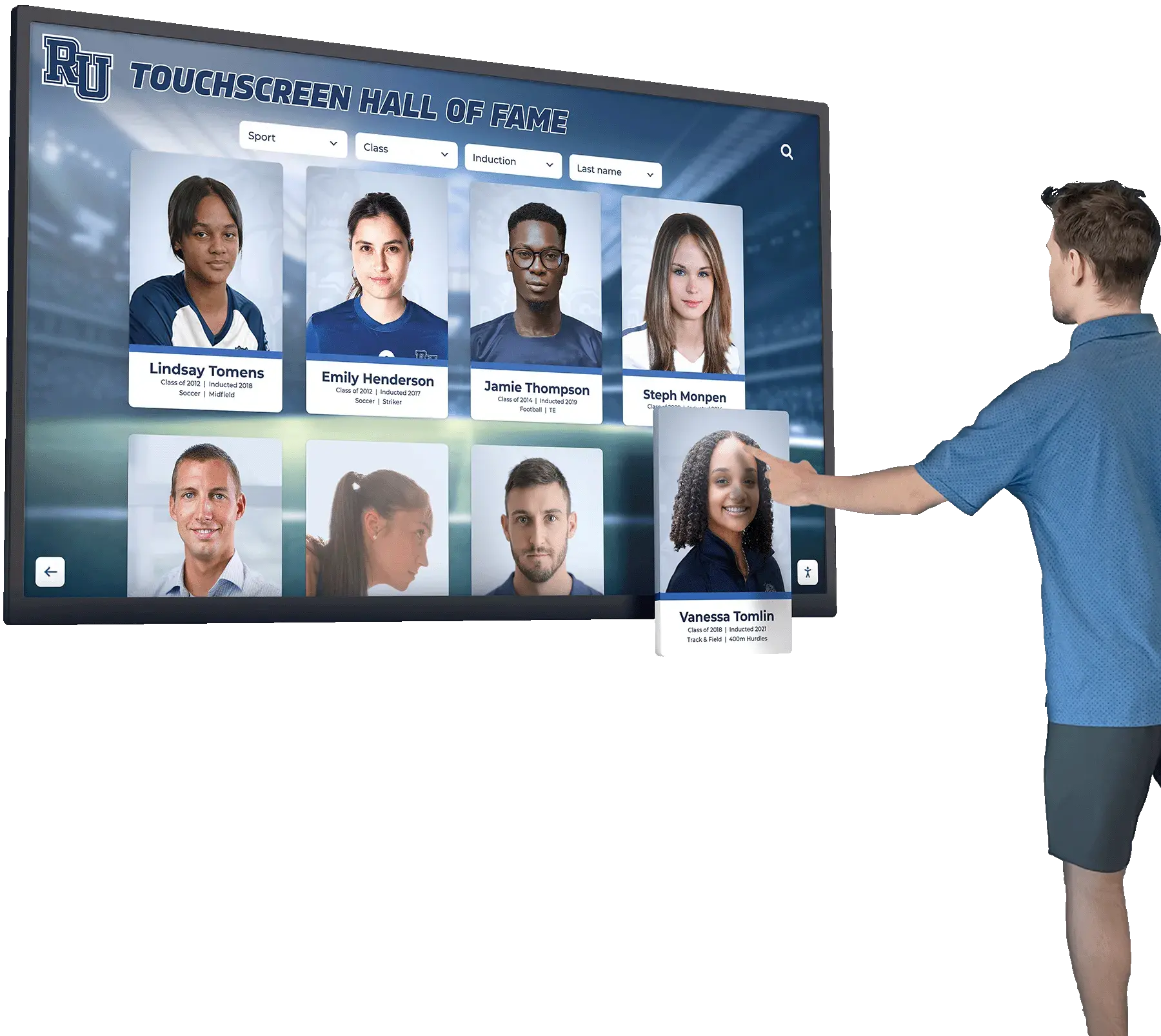
Schools maintaining active trophy case programs can use digital platforms to supplement physical cases, progressively reducing the physical glass area that requires setting block and glazing maintenance
Connecting Physical Case Maintenance to Broader Recognition Strategy
Athletic directors building the case for recognition infrastructure investment will find that carefully documented setting block inspection records—showing the frequency and cost of block replacements, emergency glazier visits, and case downtime—provide concrete evidence of the operational burden physical glass cases carry over time.
For schools wondering how digital platforms support multi-category student recognition beyond what physical cases can hold, the academic decathlon recognition guide at digitalwalloffame.com shows how digital displays accommodate specialized academic team recognition alongside athletic history in a single searchable platform.
Schools exploring recognition for scholar-athletes across academic and athletic domains—two areas that physical trophy cases often struggle to display together—will find useful framing in the academic all-state recognition guide at digitalawardsdisplay.com, which illustrates how digital platforms extend recognition beyond hardware displays to include academic achievement, fine arts, and community service.
For schools evaluating comprehensive recognition tools that span athletics, arts, donors, and institutional history, the 10 best hall of fame tools at best-touchscreen.com provides a framework for assessing platforms across recognition program types.
And for programs supporting youth athletic recognition across age groups—the kind of broad, multi-year archive that quickly outgrows physical case capacity—the 100 youth sports awards ideas guide at best-touchscreen.com illustrates how recognition scope expands when it is not constrained by physical display dimensions.
For schools preparing recognition programming around reunion milestones—occasions when multi-decade athletic and academic history becomes the center of the event—the 10-year high school reunion programming and digital displays guide at digitalawardsdisplay.com illustrates how digital platforms organize and present that depth of history for milestone celebrations.
When Physical Trophy Cases Reach Their Maintenance Limit
Setting block inspection is sound maintenance practice, but it takes place within a broader question that many school facilities teams eventually face: at what point does the cumulative maintenance demand of a physical trophy case installation—setting block inspections, glass edge inspections, gasket reviews, hardware servicing, lock cylinder maintenance, interior cleaning, and humidity management—exceed the display value the cases provide?
Indicators that a case has reached its maintenance limit include:
- Three or more glass-related corrective actions within a five-year period
- Frame corrosion at glass contact points that cannot be reversed without structural repairs
- Block replacement required at consecutive semi-annual inspection cycles
- Interior lighting that cannot be economically retrofitted
- Physical dimensions incompatible with accessible display placement under current ADA guidelines
At this stage, the inspection finding is not a maintenance order—it is a decommission recommendation. Schools in this position have a genuine decision point: replace like-for-like with a modern case, or transition the recognition program to an interactive digital platform where glazing maintenance requirements disappear entirely.
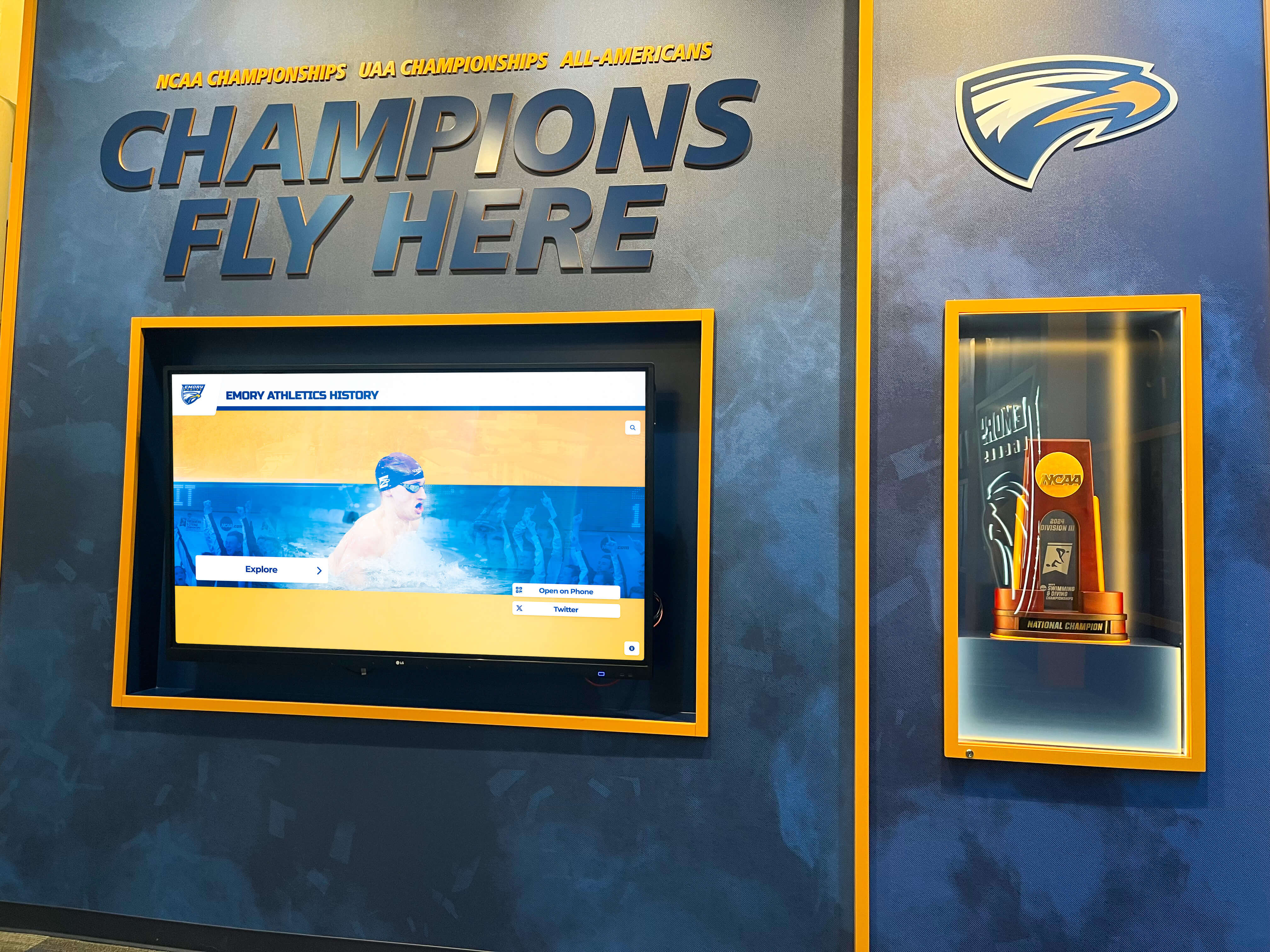
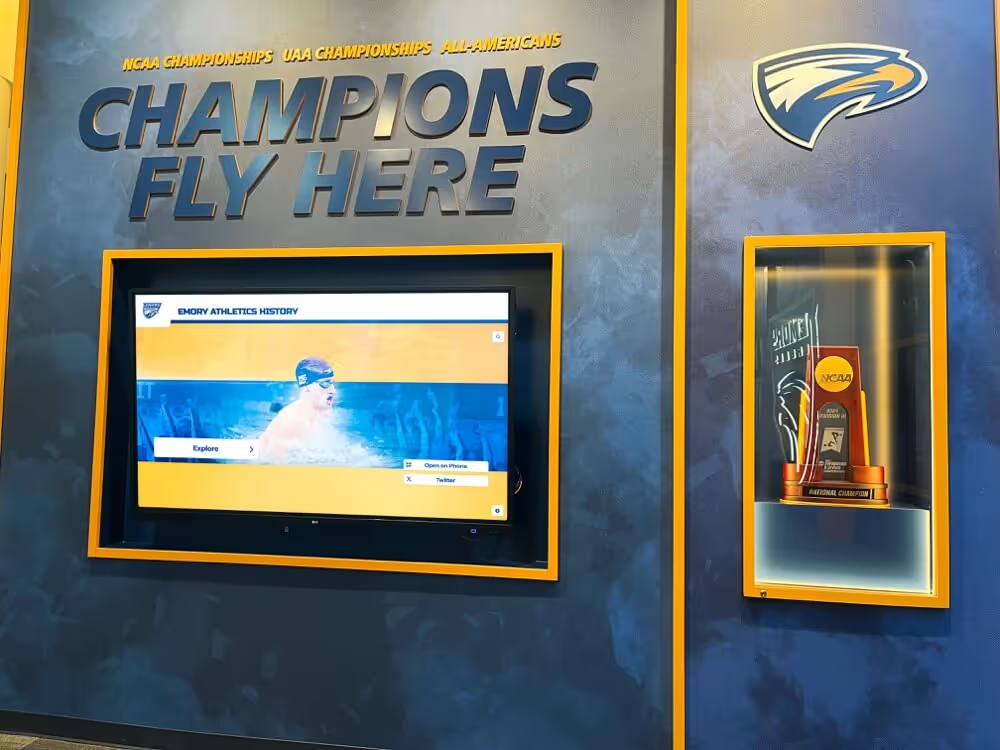
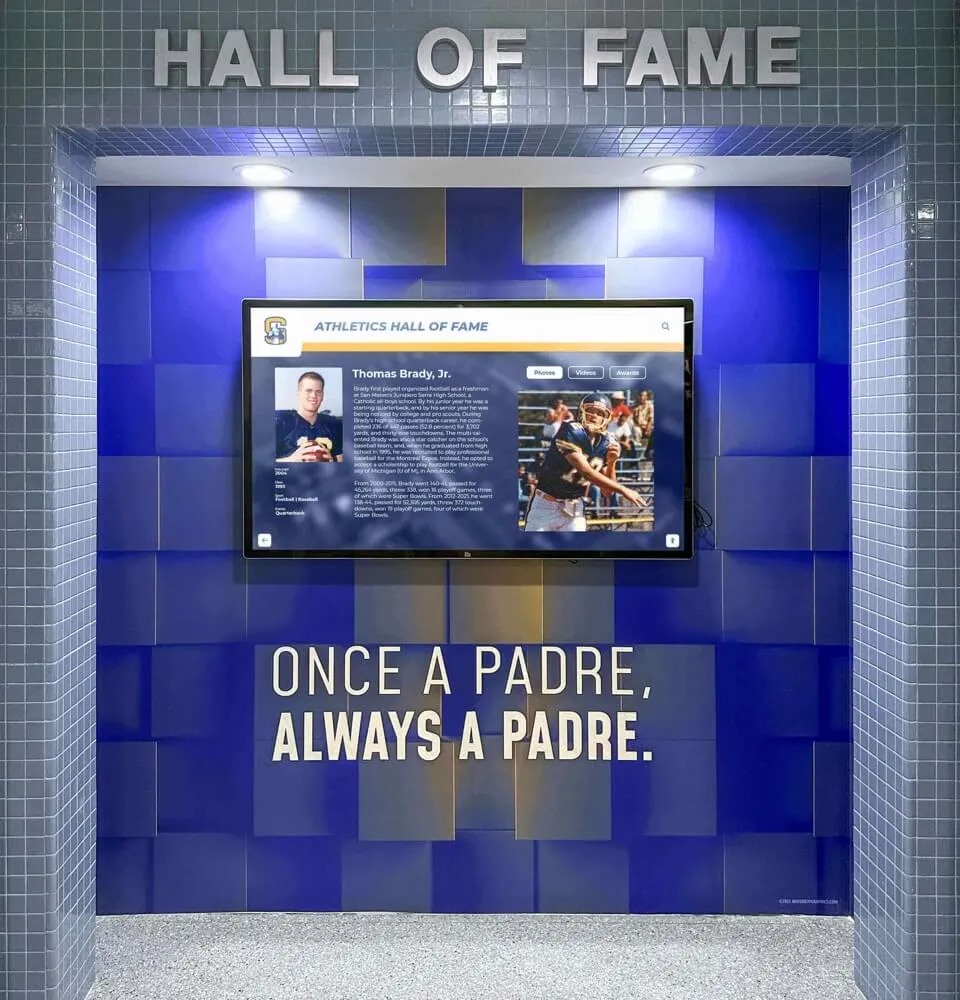
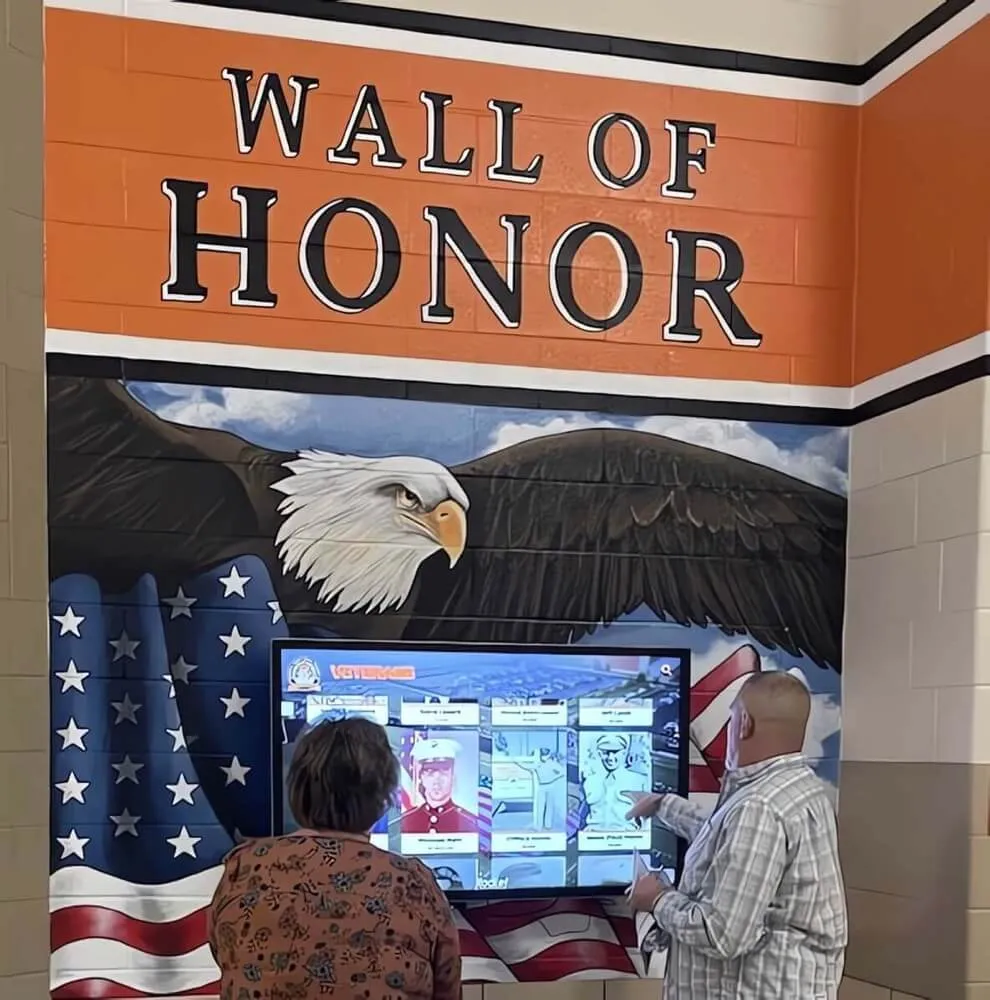
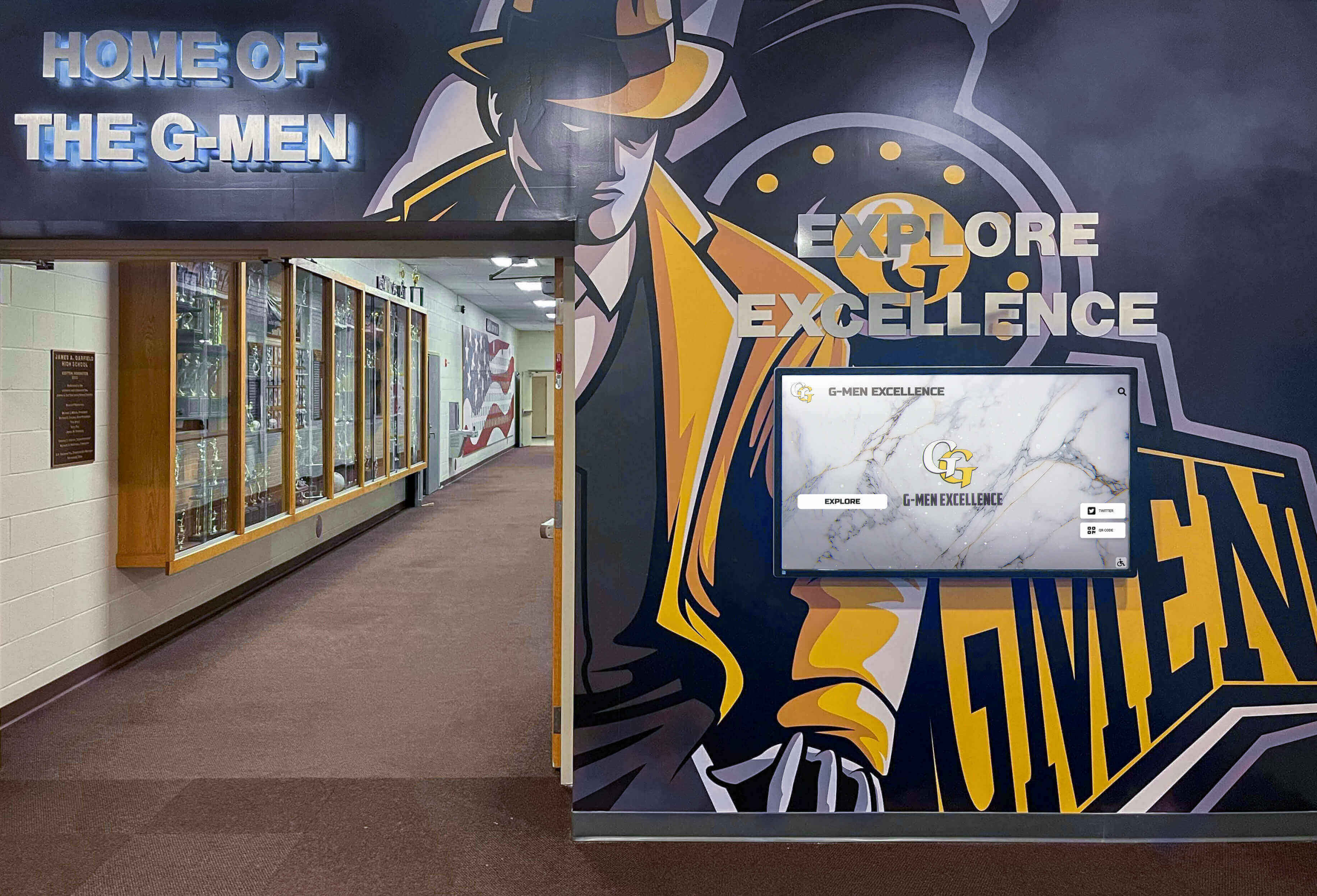
Championship hardware represents irreplaceable institutional history—setting block maintenance ensures the glass cases protecting that hardware remain structurally sound season after season
Frequently Asked Questions
What are setting blocks in a school trophy case? Setting blocks are small neoprene, EPDM, or plastic pads placed in the bottom channel of a trophy case glass panel frame. They support the weight of the glass panel across a defined bearing surface, preventing direct glass-to-metal contact that would concentrate stress on the glass edge and eventually cause chipping or cracking. Their correct position—at the quarter-points of the panel width—is as important as their presence, because off-center or corner-positioned blocks create uneven load distribution that accelerates edge stress.
How often should schools inspect trophy case setting blocks? Schools should conduct a formal setting block inspection at minimum twice per year, ideally at the start of fall and spring sports seasons when trophy case door activity is highest. Cases in high-traffic locations or cases with a history of glass-related maintenance events should be inspected quarterly. Any event involving opening a case for internal work—rotating items, replacing lighting, adding plaques—should be followed by a brief visual confirmation that blocks remain in their correct positions.
Can school maintenance staff replace setting blocks, or does it require a glazier? Block repositioning in accessible sliding-door channels can be performed by trained maintenance staff using correctly specified replacement material, provided the glass panel does not need to be removed. If the glass must be removed and re-seated, or if the case uses hinged doors with blocks in a bottom rabbet, professional glazier involvement reduces the risk of panel edge damage during the process. Any case where the glass shows existing edge damage should involve a glazier before any maintenance work proceeds.
What is the correct setting block material for trophy case glass panels? Neoprene with a Shore A durometer of approximately 70 is the standard specification for most commercial glazing setting blocks and is appropriate for school trophy cases. This hardness level provides sufficient stiffness to support panel self-weight without excessive compression, while maintaining enough elasticity to absorb small movement from thermal cycling and door operation. EPDM rubber of comparable durometer is an acceptable alternative. Avoid open-cell foam, silicone rubber pads, and rigid plastic—each lacks either the necessary stiffness or the elastic recovery required for this application.
Does installing digital trophy case displays eliminate the need for setting block inspections? Interactive digital recognition displays mounted on commercial screens do not use glass setting blocks. The mechanical requirements of a glass panel frame simply do not apply to screen-based displays. Schools that transition from physical glass trophy cases to digital recognition platforms eliminate setting block inspection, glass edge inspection, gasket maintenance, and the full range of glazing-related maintenance activities associated with physical cases. The maintenance profile of a digital display focuses on screen surface care, software updates, and periodic hardware inspection appropriate for commercial electronics—a substantially different and lower-burden obligation than glass case upkeep.
Protect Your Awards Display—and Your Students
A systematic school trophy case setting block inspection is one of the most cost-effective safety maintenance activities available to school facilities teams. The blocks themselves cost a few dollars each to replace; the glass panels they protect can cost hundreds; and the athletic and academic artifacts inside those panels may be irreplaceable in terms of institutional memory.
Building this inspection into a semi-annual facilities checklist—alongside glass edge inspection, gasket review, and hardware servicing—gives your school a complete trophy case maintenance program that protects students, preserves recognition assets, and documents the true operational cost of physical glass display cases over time.
When that documentation accumulates across several inspection cycles and the conversation turns from maintenance to modernization, Rocket Alumni Solutions offers a digital recognition platform trusted by hundreds of schools and institutions—fully WCAG 2.1 AA accessible, manageable remotely without any physical glass to inspect or maintain, and capable of displaying every category of student achievement, from athletic championships to academic honors, arts recognition, and community service contributions.
Request a custom demo to see what a digital awards showcase built for your school would look like.