



Sports award certificates are the most universal form of athletic recognition in schools—handed out at end-of-year banquets, posted in hallways, and tucked into scrapbooks by athletes and parents across every sport and skill level. A well-crafted certificate does more than mark an accomplishment: it names a specific achievement in language that feels personal, validates an athlete’s effort in a form they can keep, and creates a record that outlasts the season. But most programs struggle with two connected problems: finding wording that feels meaningful rather than generic, and figuring out what to do with that recognition after banquet night ends.
This guide covers every dimension of sports award certificate planning—categories, wording formulas, presentation ideas, and how schools are connecting paper certificates to permanent digital recognition that honors athletes long after the paper has yellowed.
Intent: decide/demonstrate
A sports award certificate works best when the category is specific enough to feel earned and the wording describes what the recipient actually did—not just that they were a “valued team member.” The highest-impact certificates pair an individual category, achievement-specific language, and a plan for preserving that recognition in a publicly visible form.

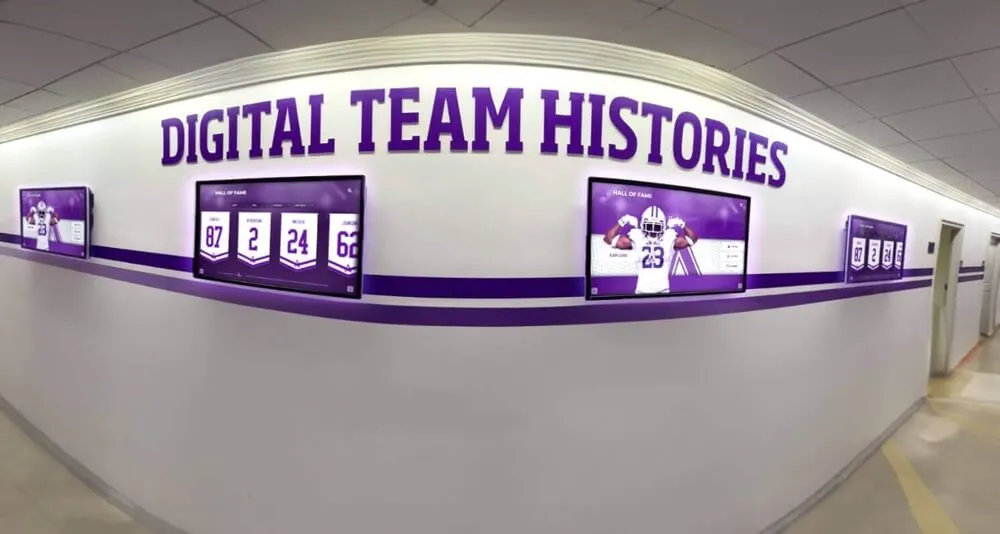
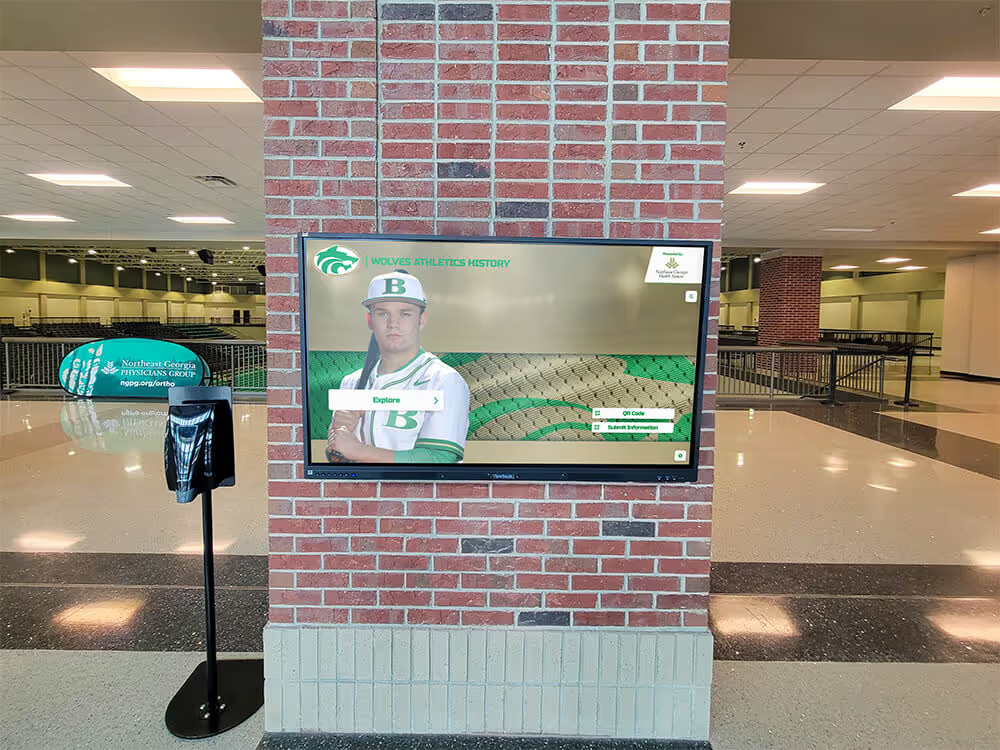
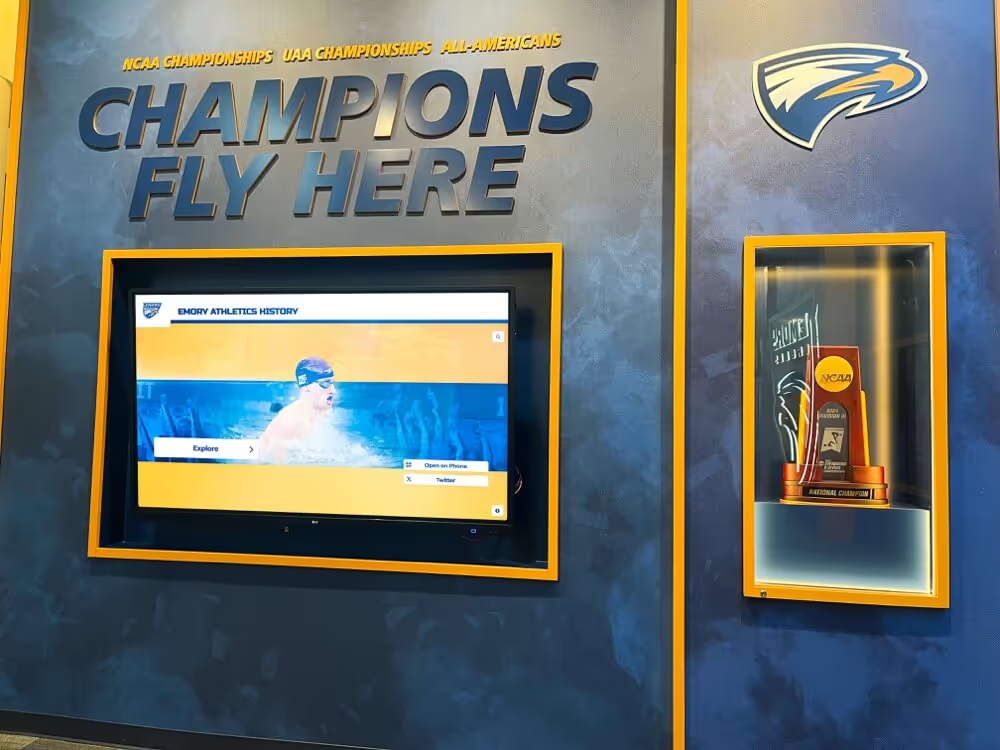
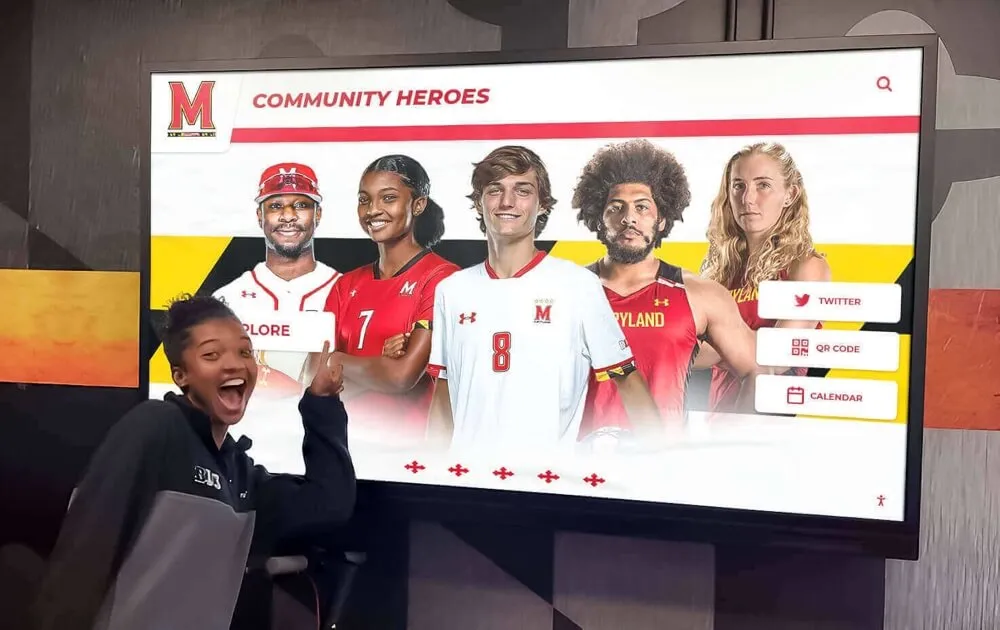
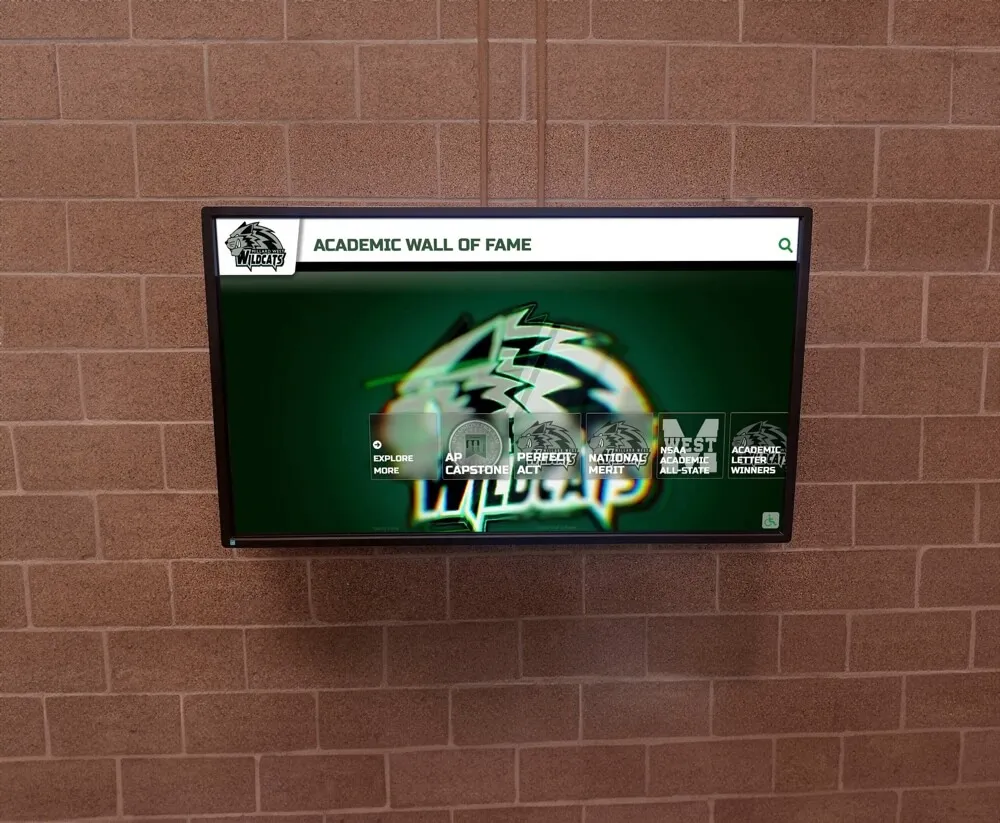
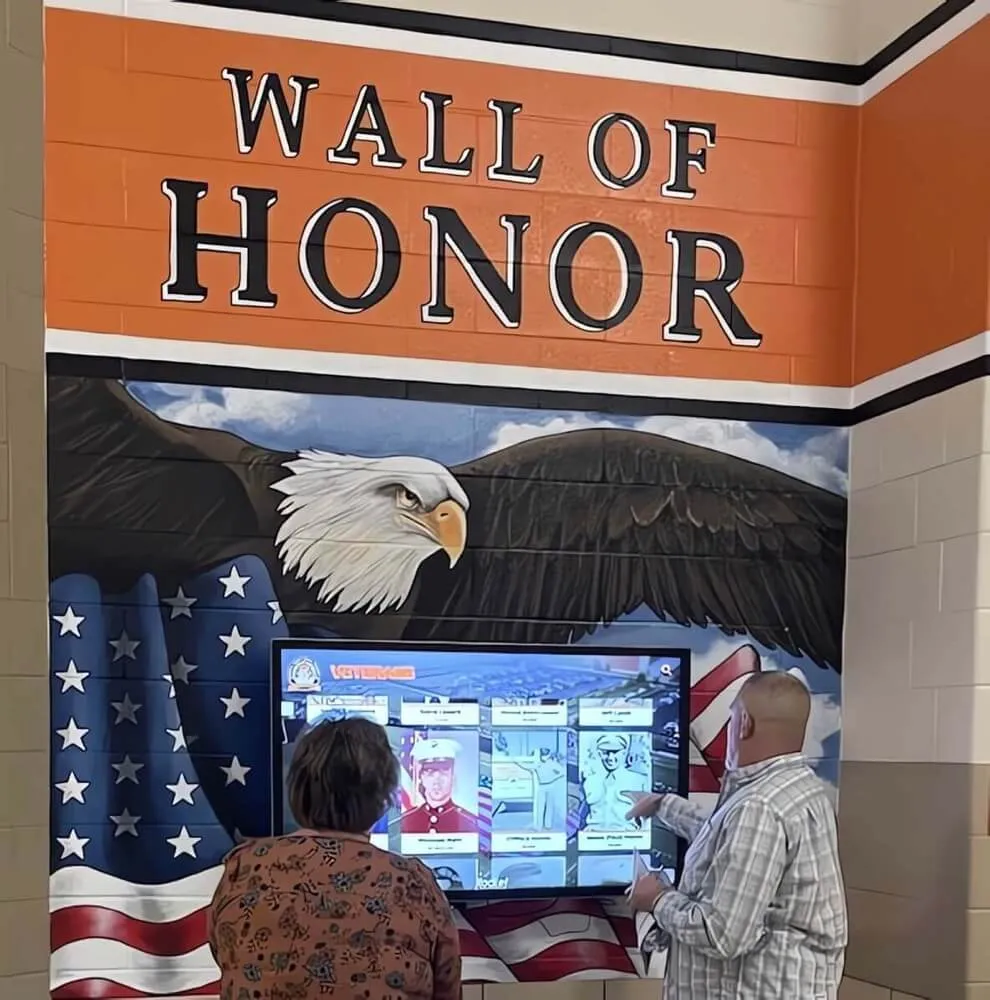
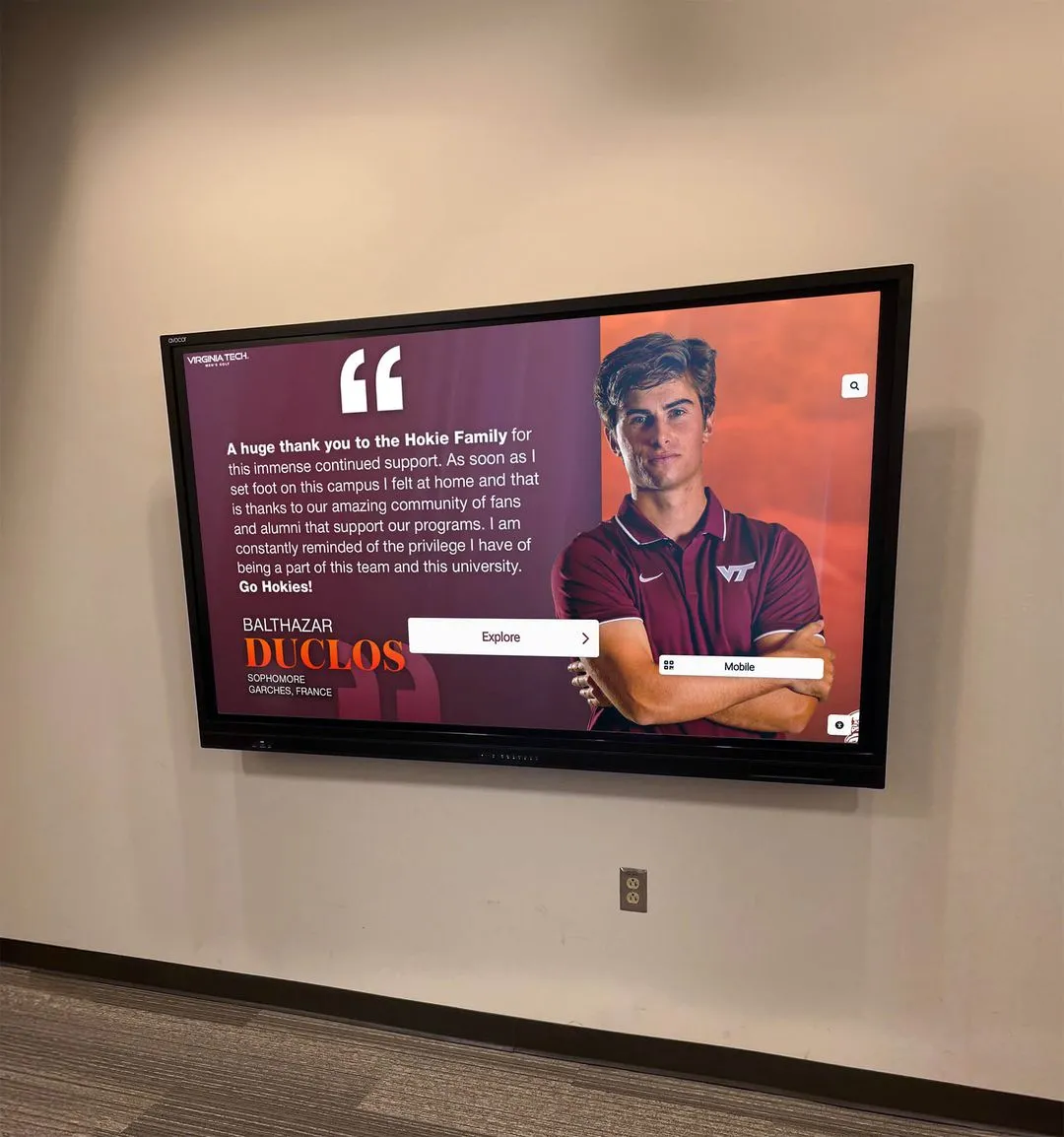
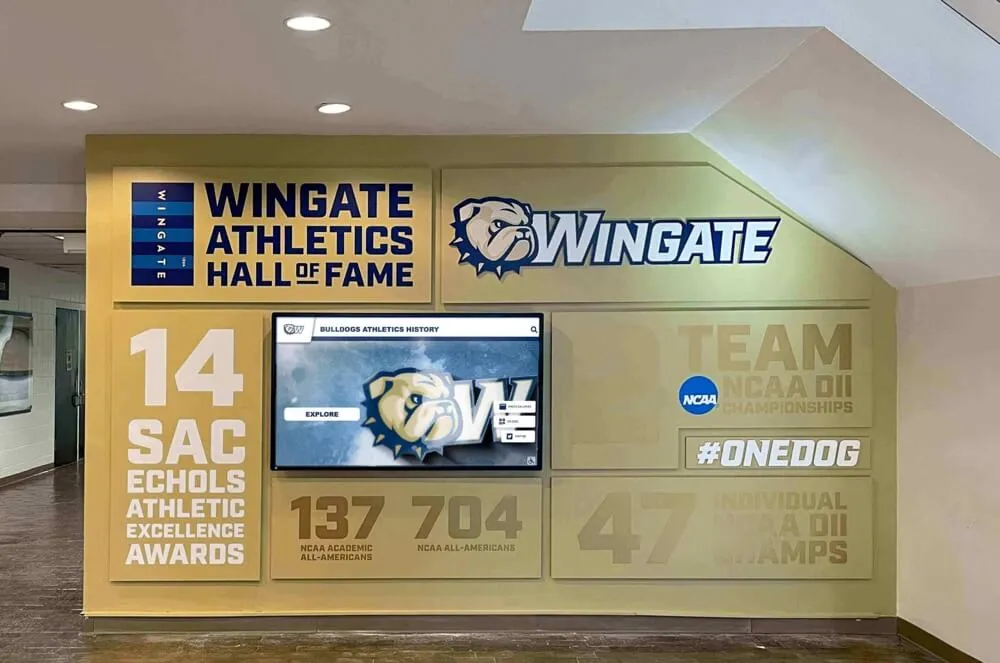
Athletic recognition environments that combine physical certificates, permanent displays, and digital archives give athletes recognition that lasts years beyond banquet night
What Makes a Sports Award Certificate Effective
A sports award certificate earns its place on a wall—or in a college application portfolio—when it communicates three things clearly: who is being honored, what they specifically accomplished, and who is conferring the recognition.
Core elements every sports award certificate should include:
- Recipient’s full name – spelled correctly, prominently displayed as the visual focal point
- Award category name – specific and distinct (“Defensive Player of the Year,” not “Outstanding Player”)
- Sport and season – program name and year give context that persists as decades pass
- School name and logo – institutional identification validates the recognition
- Brief achievement description – one to three sentences describing what the recipient specifically demonstrated
- Signature lines – athletic director, head coach, or principal; at least one authorizing signature
- Date of award – ceremony date or season end year
The element most often missing or poorly executed is the achievement description. Generic phrases like “for outstanding contributions to the team” give athletes nothing meaningful to reference in future applications and fail to communicate what made this particular recipient deserving. Specific language—“for leading the conference in defensive tackles while maintaining a 3.8 GPA”—creates a record that remains meaningful for decades.
Sports Award Certificate Categories: A Comprehensive List
Effective sports recognition programs cover three layers of achievement: individual performance, team contribution, and character/values. Programs that only recognize statistical performance miss the majority of their athletes; programs that hand out identical participation certificates for everyone undermine the motivational power of recognition.
Individual Performance Categories
These certificates recognize measurable athletic achievement:
| Category | Recipient Criteria |
|---|---|
| Most Valuable Player (MVP) | Overall impact across the full season |
| Offensive Player of the Year | Best individual offensive production by sport |
| Defensive Player of the Year | Best individual defensive performance by sport |
| Most Improved Player | Greatest measurable growth from start to end of season |
| Record Holder | Broke a program, school, district, or state record |
| All-Conference / All-District | External designation from conference or district |
| All-State Honoree | State athletic association nomination or selection |
| Statistics Leader | Led team in a primary statistical category |
| Varsity Letter Earner | Met the minutes or games threshold for letter award |
| Captain’s Award | Selected by coach or teammates for leadership during the season |
Team Achievement Categories
These certificates recognize collective accomplishment and roles within team success:
| Category | Recipient Criteria |
|---|---|
| Championship Team Member | Roster participant during a championship season |
| Undefeated Season | Member of a team with zero losses |
| Academic All-Conference | Team member meeting dual academic and athletic standards |
| Team Captain | Formally designated captain or co-captain |
| Rookie of the Year | First-year athlete with outstanding season impact |
| Senior Tribute | Completing final season of eligibility |
| Scholar-Athlete | Meeting athletic standards with a defined minimum GPA |
| Team Spirit Award | Voted by teammates for positive team culture contribution |
Character and Values Categories
Often overlooked but highly motivating for athletes who won’t win statistical awards:
| Category | Recipient Criteria |
|---|---|
| Coachability Award | Consistently receptive to coaching and feedback |
| Leadership Award | Demonstrated on- or off-field leadership beyond captain role |
| Community Service Award | Significant service contributions during the athletic season |
| Perseverance Award | Overcame injury, adversity, or setbacks during the season |
| Sportsmanship Award | Consistently modeled respectful, ethical competitive behavior |
| Work Ethic Award | Recognized by coaches for exceptional preparation and effort |
Multi-Sport and Cross-Program Categories
Schools with robust athletic programs can also issue certificates across sports:
- Multi-Sport Athlete Award – participated in three or more sports during the academic year
- Athletic Hall of Fame Induction – lifetime recognition for post-graduation honorees
- Coach of the Year – presented to coaching staff by athletic department or booster club
- Booster Club Scholar-Athlete Award – bridges athletic and academic recognition
For programs developing comprehensive recognition structures beyond athletics, academic recognition program frameworks offer parallel category structures for academic, arts, and STEM achievement that complement athletic certificate programs.

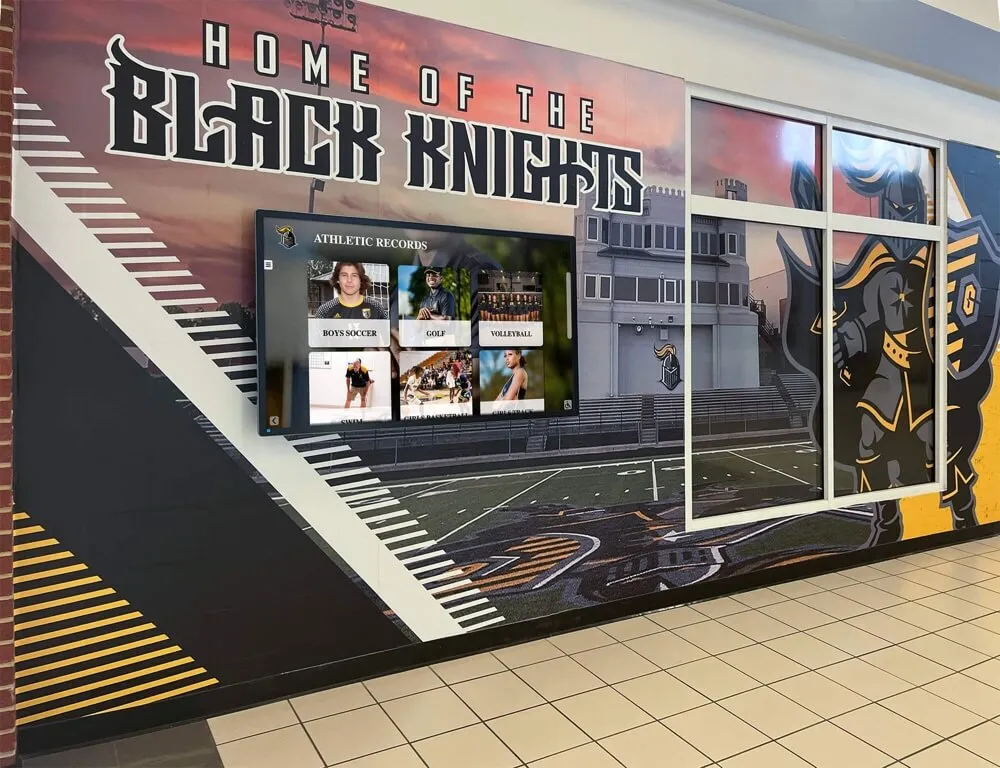
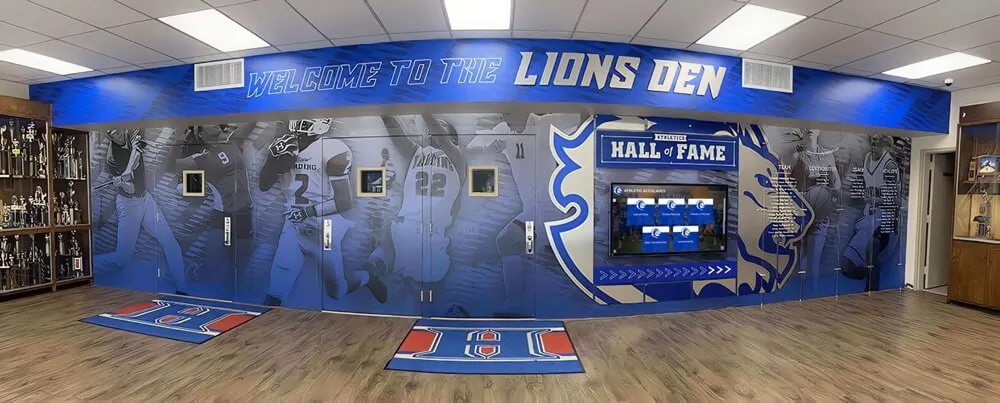
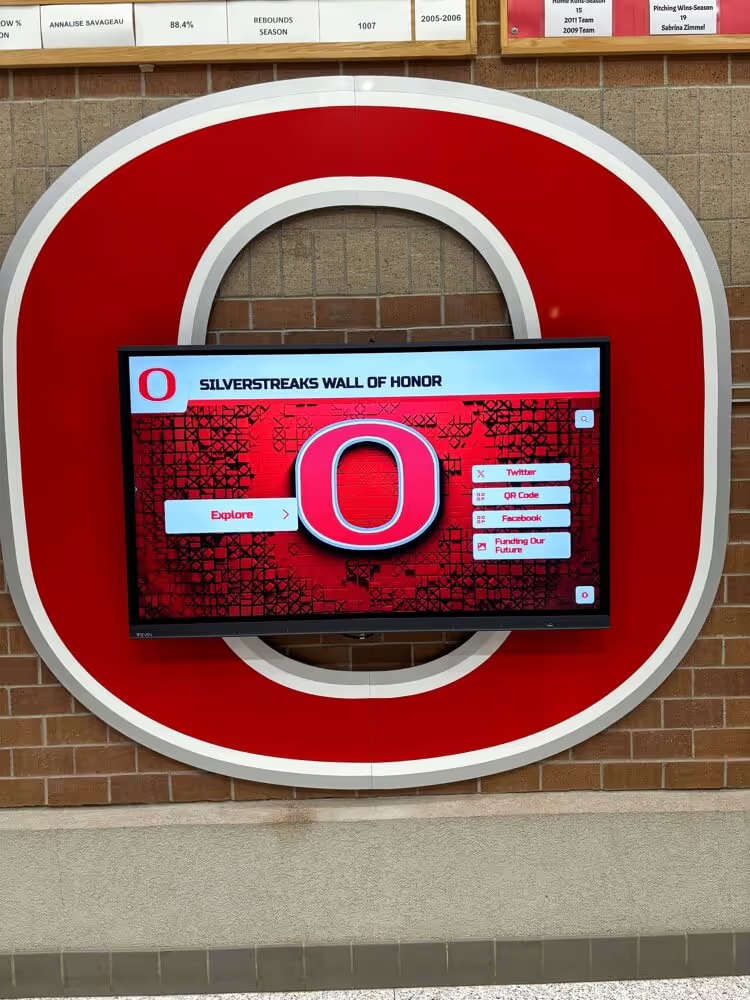
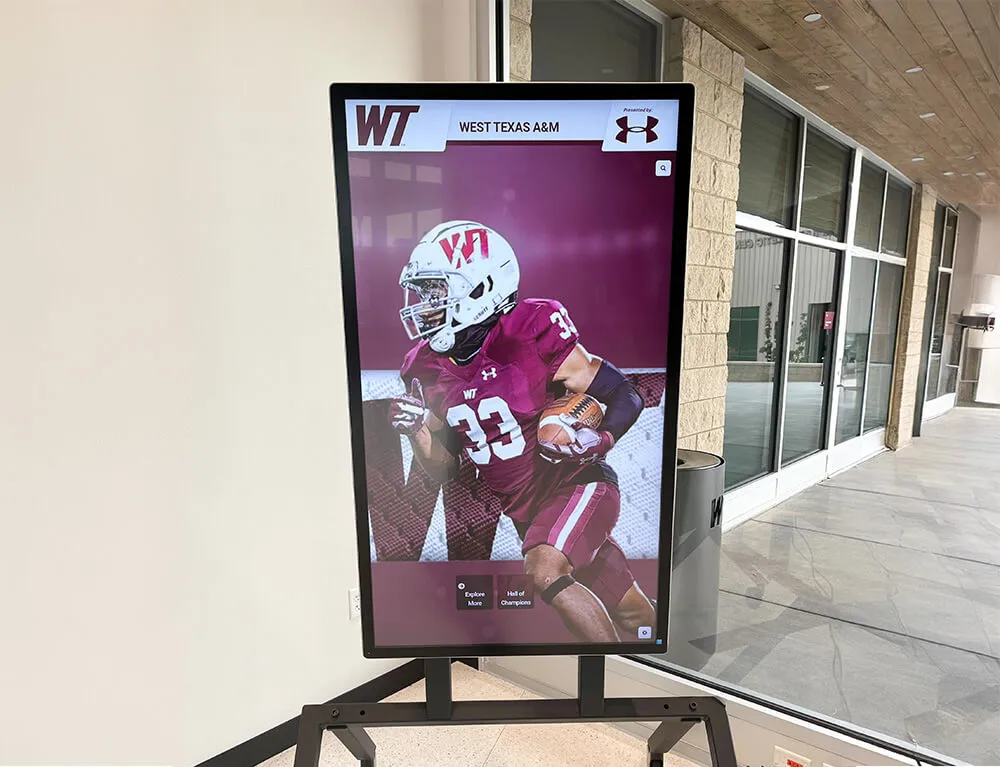
Hallway athletic honor walls display multiple recognition categories simultaneously, turning certificate recipients into permanently visible role models for current athletes
Sports Award Certificate Wording: Formulas and Examples
Certificate wording is the most common point of failure in recognition programs. Coaches and administrators pressed for time default to placeholder language that could apply to anyone—which means it effectively honors no one.
The formula for high-impact certificate wording:
[Recipient Name] is hereby recognized with the [Award Title] for [specific achievement description] during the [Year] [Team/Sport] season at [School Name].
Apply this formula across categories:
Most Valuable Player:
“Jordan M. is hereby recognized with the Most Valuable Player Award for leading the Riverside High School girls’ soccer team in assists and goals while anchoring the defensive midfield during the 2025–26 varsity season.”
Most Improved Player:
“This certificate recognizes Marcus T. with the Most Improved Player Award for reducing his 100m sprint time by 1.4 seconds and earning his first varsity letter during the 2026 track and field season at Lincoln High School.”
Sportsmanship Award:
“Ava R. receives the Sportsmanship Award in recognition of consistent respectful competition, graciousness in both victory and defeat, and positive representation of the Jefferson Eagles volleyball program during the 2025–26 season.”
Scholar-Athlete:
“This certificate is presented to Delia K. in recognition of a 3.95 cumulative GPA alongside varsity cross-country competition throughout the 2025–26 athletic year at Central High School—demonstrating excellence in both academic and athletic pursuits.”
Senior Tribute:
“Presented to Tyler G. in honor of four years of dedication to the Westbrook High School basketball program. Your commitment to the game, your teammates, and your school leaves a legacy that continues beyond your final season.”
The senior tribute example intentionally avoids statistical comparisons—appropriate for honoring multi-year commitment from athletes at every contribution level.
Adjusting Wording for Tone
Certificate wording should reflect the award’s spirit:
- Formal/ceremonial (hall of fame, conference awards): passive construction, elevated language (“is hereby recognized,” “presented in recognition of”)
- Warm/personal (senior tributes, sportsmanship): direct address, second person (“Your commitment,” “You demonstrated”)
- Achievement-focused (statistical leaders, record holders): specific metrics, active description (“led the conference,” “broke the program record”)
- Collective (championship rosters, team awards): inclusive framing (“as a member of,” “contributing to the 2026 championship season”)
Presentation Ideas for Sports Award Ceremonies
A certificate’s impact multiplies when the presentation moment is designed to feel significant. Athletes remember how an award was presented as much as what the award was for.
Ceremony Design Principles
Announce with context. Before presenting each certificate, spend 30–60 seconds explaining the award’s criteria and why this specific athlete was selected. Athletes hear their accomplishments described aloud, parents understand what their child earned, and younger teammates learn what they should aspire toward.
Involve the awarding authority. Certificates presented by head coaches carry more weight than those distributed at tables. Certificates co-signed by the athletic director signal institutional endorsement beyond the program level.
Create a physical moment. A certificate handed while standing at a podium, receiving applause, carries different emotional weight than one dropped into a manila envelope. Framing an award night around ceremony—applause, photos, a brief personal tribute—transforms recognition from administrative task to meaningful event.
Document the moment. Photographs of athletes receiving certificates become the beginning of a long-term recognition archive. A photo taken at the 2026 banquet may become part of a hall of fame profile in 2040.
For programs planning comprehensive end-of-season recognition across all sports, resources on recognizing and showcasing top scholar teams offer comparable frameworks for athletic and non-athletic recognition ceremonies that keep all student achievement visible.
Ceremony Logistics Checklist
- List each recipient and award in the printed program so athletes can anticipate recognition
- Prepare pronunciation guides for coaches unfamiliar with student names
- Group certificates by sport for consecutive presentation flow
- Allow 45–60 seconds per presenter; budget realistic time so ceremonies don’t run over
- Provide certificates in presentation folders, not loose—athletes keep them longer
- Designate a photographer for every award presentation
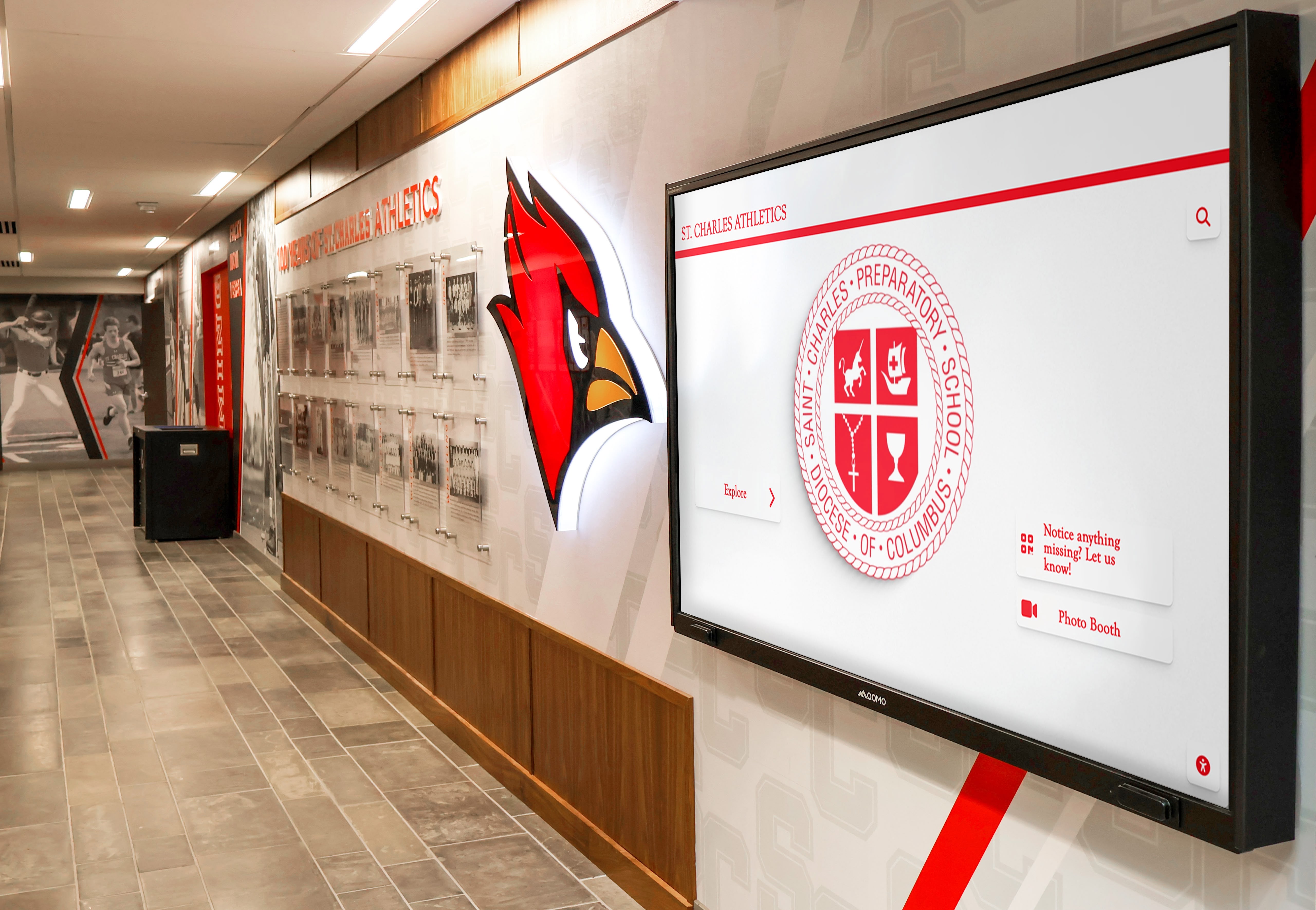
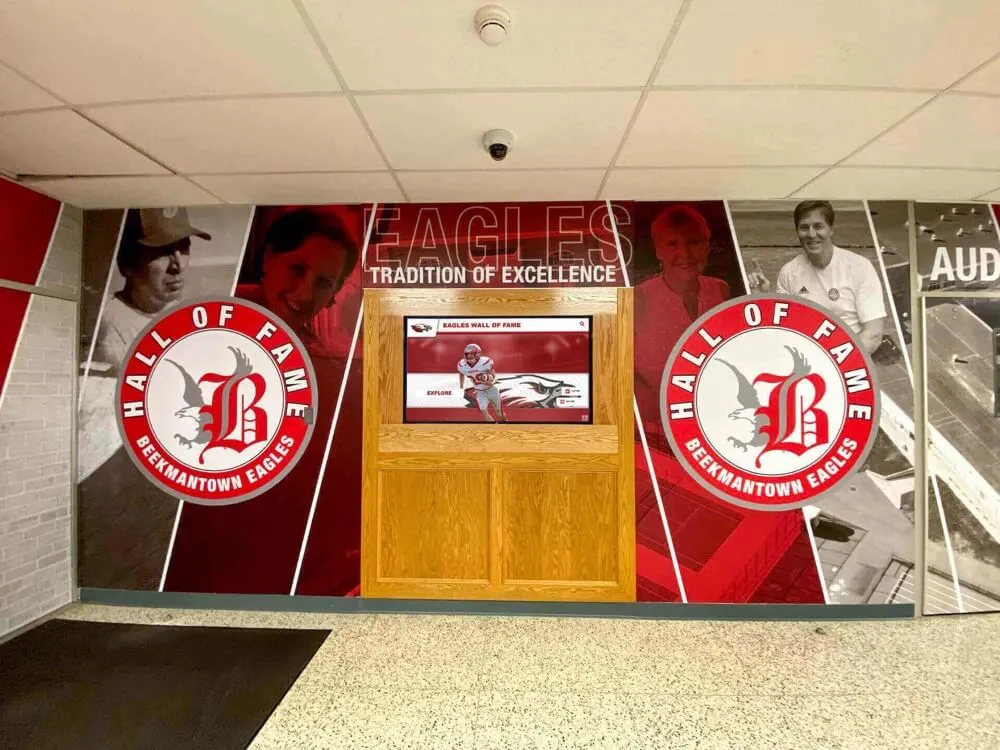
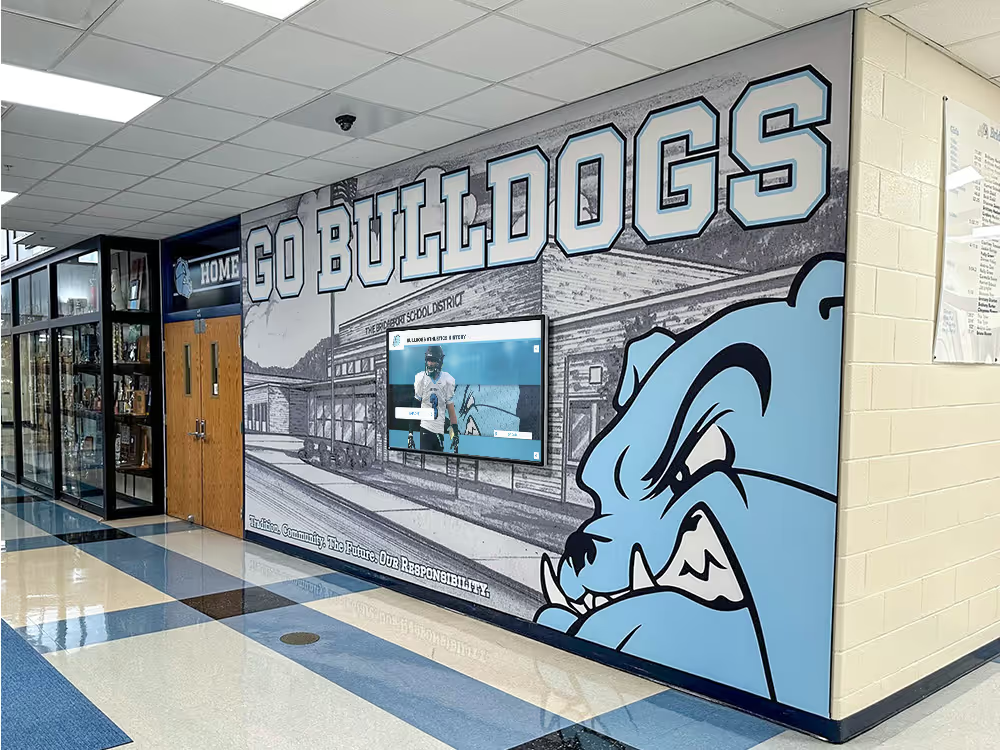
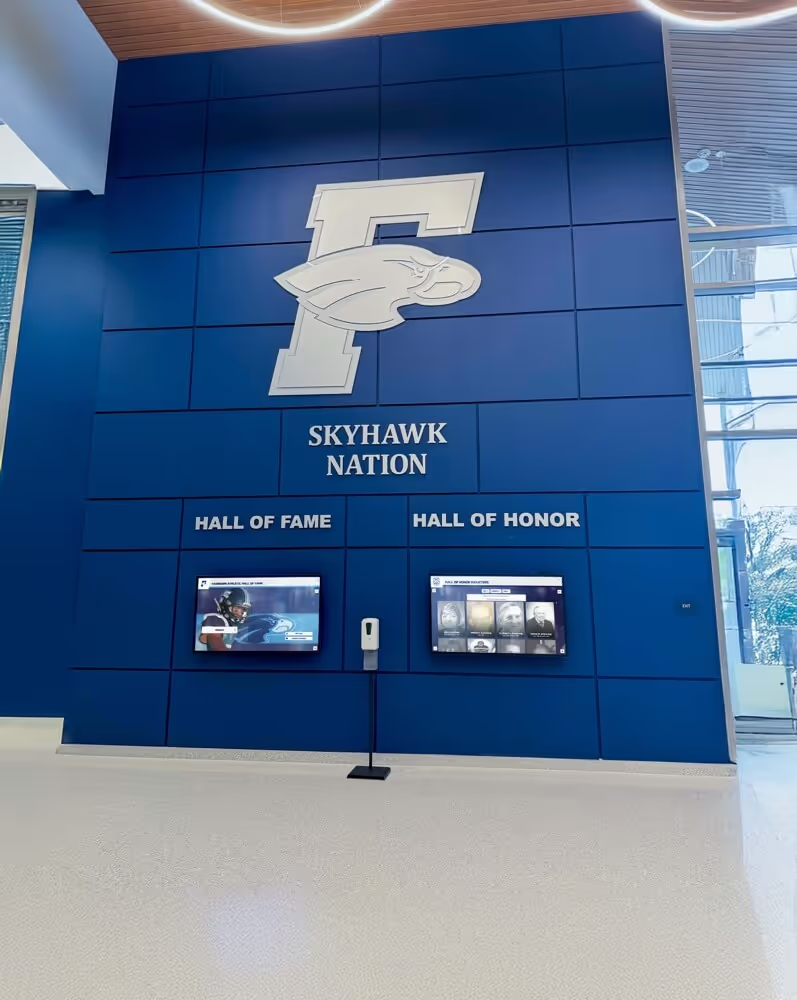
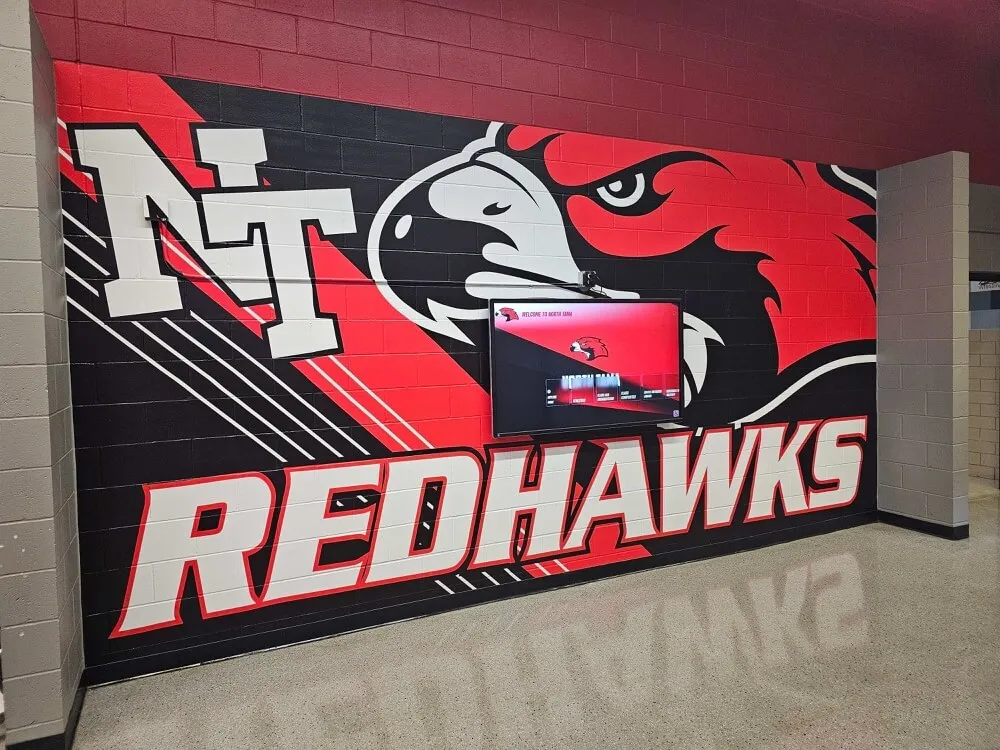
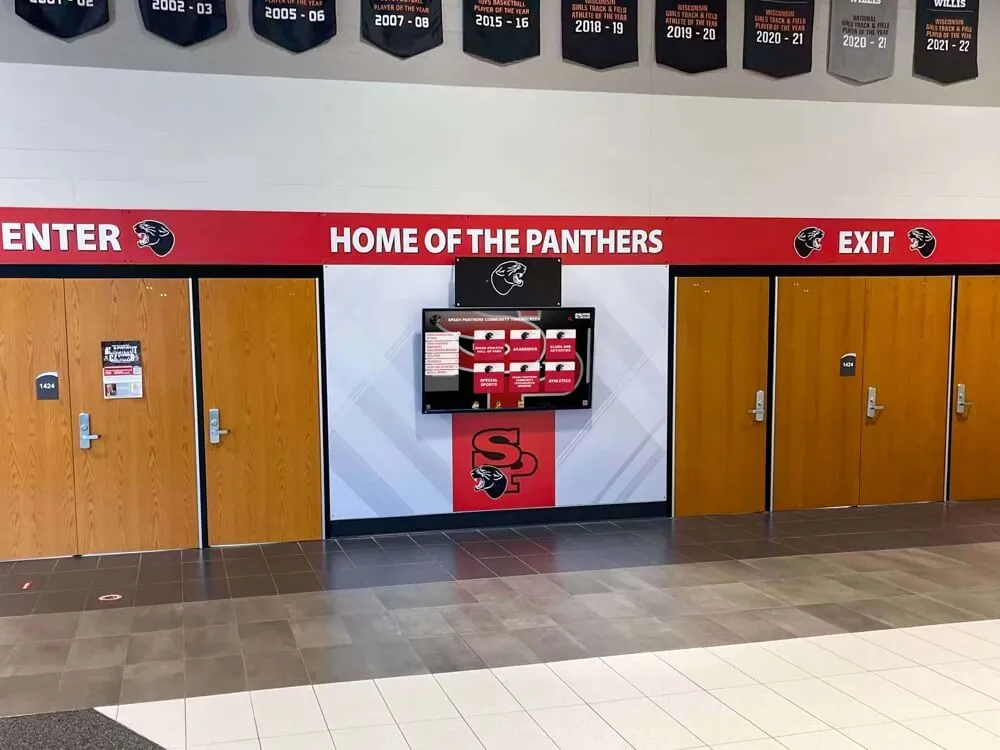
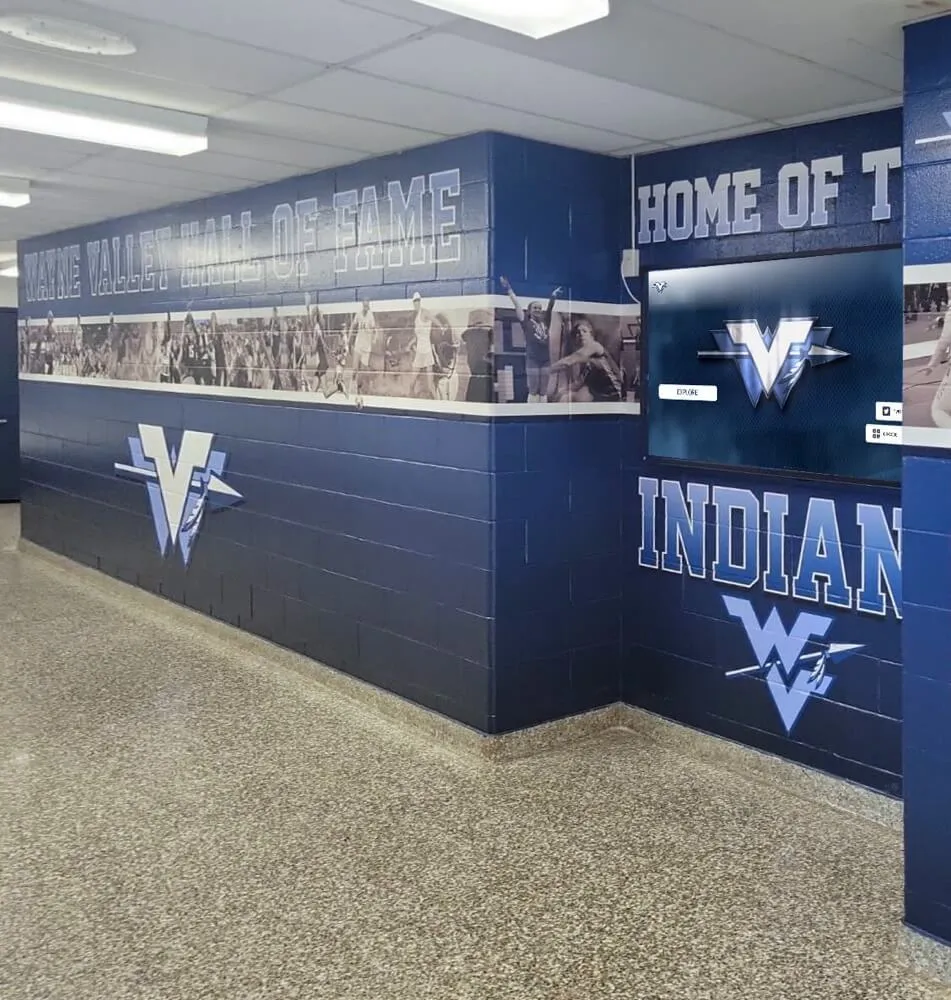
School hallways that pair mascot identity with digital recognition create daily touchpoints that reinforce athletic achievement culture between ceremonies
Long-Term Recognition: What Happens After the Certificate
A sports award certificate is a snapshot in time. The problem most programs face: once banquet night ends, the certificate disappears into an athlete’s room, and the institutional recognition it represents vanishes from public view. Future athletes never see who won the MVP award three years ago. Donors who fund scholar-athlete awards don’t know whether past recipients are being celebrated. Alumni returning for reunions can’t find their names in any searchable archive.
The solution is a deliberate recognition workflow that connects paper certificates to permanent, publicly visible records.
Step 1: Build a Recognition Registry
Before certificates are ordered each year, create or update a master recognition registry—a spreadsheet or database logging every award, every recipient, and every season. This registry becomes the foundation for:
- Physical hall of fame displays
- Digital recognition platforms
- Annual banquet programs
- Alumni outreach referencing past honorees
Even a simple spreadsheet maintained consistently for 10 years creates an invaluable institutional archive. For programs researching how to build structured recognition archives across both academic and athletic programs, comprehensive academic recognition program guides address the registry-building process in parallel contexts.
Step 2: Post Physical Recognition Beyond the Banquet
Physical recognition that lives only inside the gymnasium on banquet night misses the daily visibility that motivates current athletes year-round.
High-visibility physical recognition options:
- Hallway honor boards: Championship rosters and award winners posted in athletic corridors where students pass daily
- Trophy case integration: Annual MVP and category winners documented alongside championship hardware
- Record boards: Record-breaking certificates translated into permanent record-board entries
- Lobby wall of fame panels: Framed photographs of annual award recipients with their certificate category listed
Physical displays work best for the most prestigious annual categories—MVP, scholar-athlete, hall of fame inductees—where durable, formal recognition is expected and valued by coaches, families, and alumni.
Step 3: Connect Paper Certificates to Digital Archives
Paper certificates are vulnerable to loss, damage, and obscurity. Digital archives extend recognition indefinitely without those limitations.
Programs building digital recognition archives typically start with three elements:
- Indexed award records: Each award, year, and recipient searchable by name or category
- Recipient photos: Banquet ceremony photographs or athletic portrait photos linked to each award entry
- Achievement summaries: Brief descriptions expanding on the certificate’s specific language
These digital records allow future athletes to search their sport’s MVP history, alumni to find recognition from decades past, and current athletes to see exactly who they are following.
For programs evaluating the tools that make school-based digital recognition possible, comprehensive hall of fame tools guides for schools compare the leading options across athletic, academic, and community recognition applications.

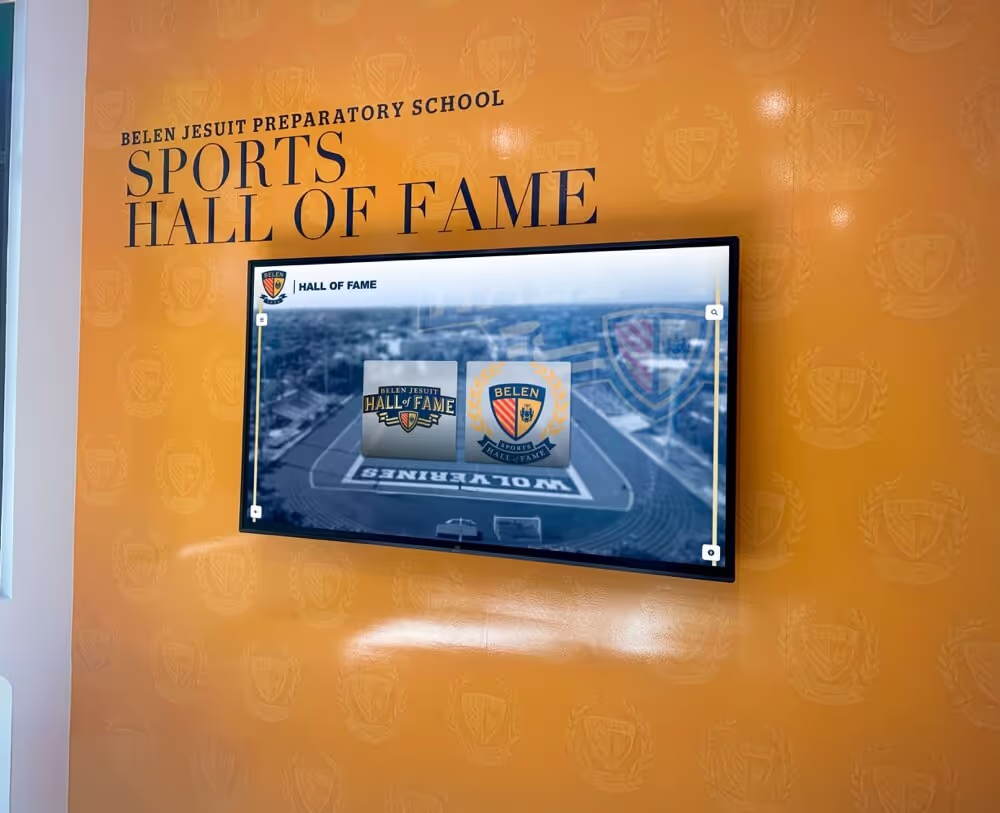
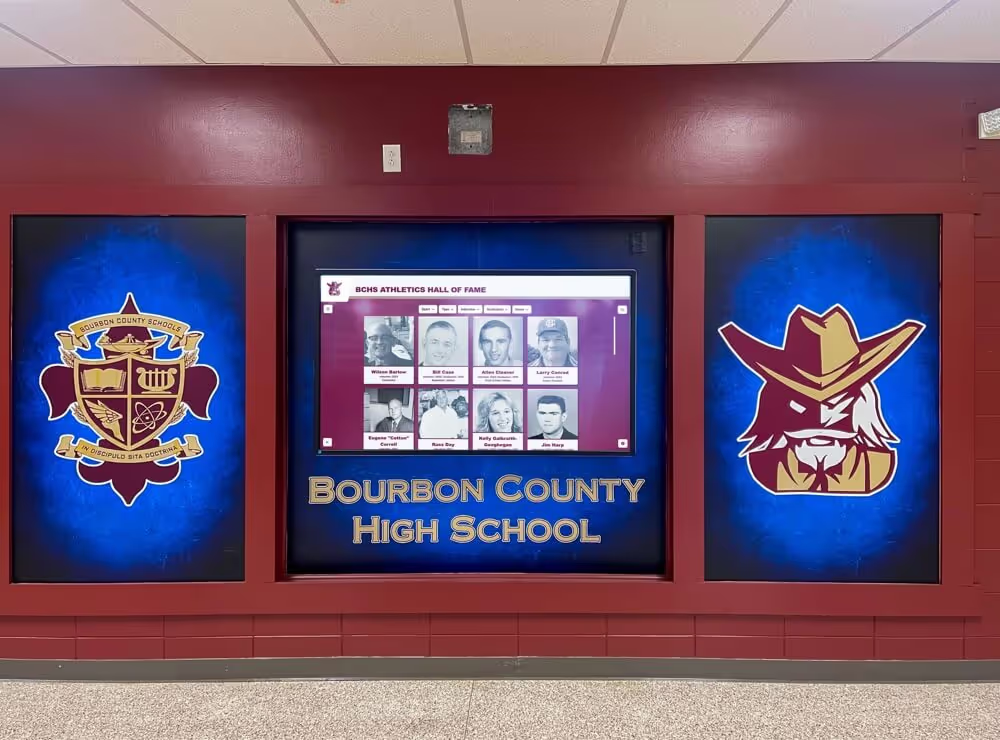
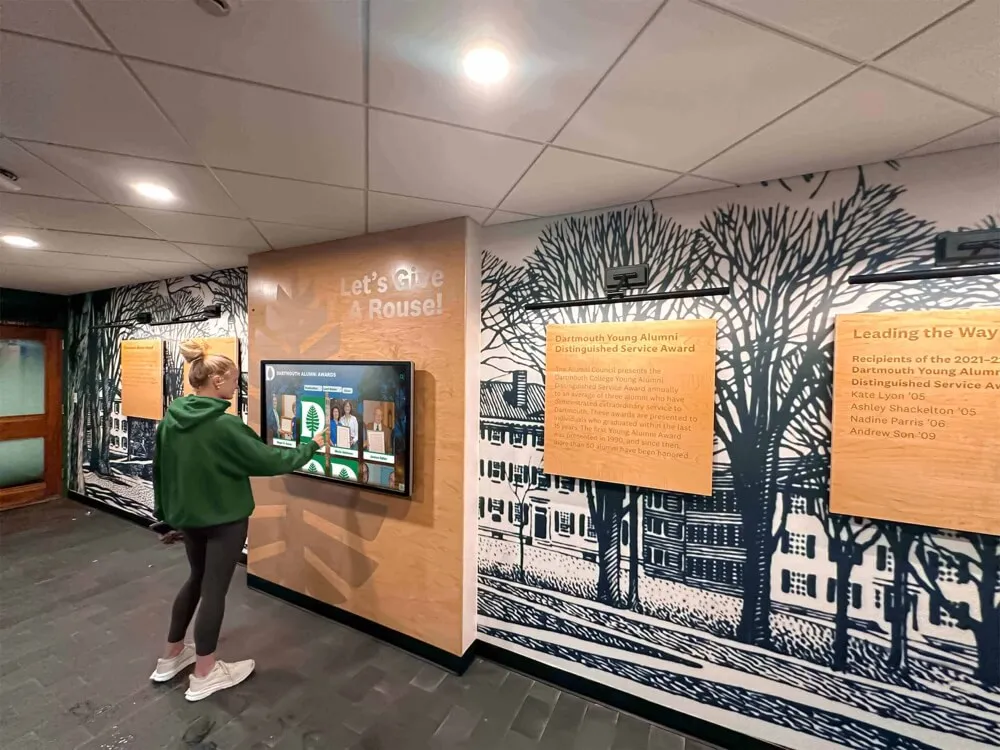
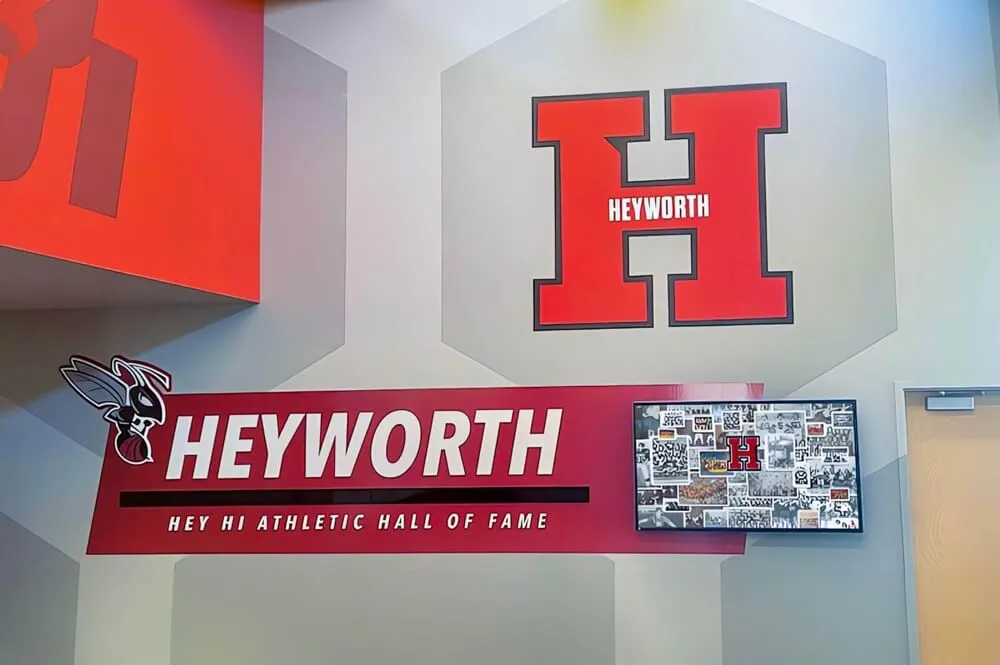
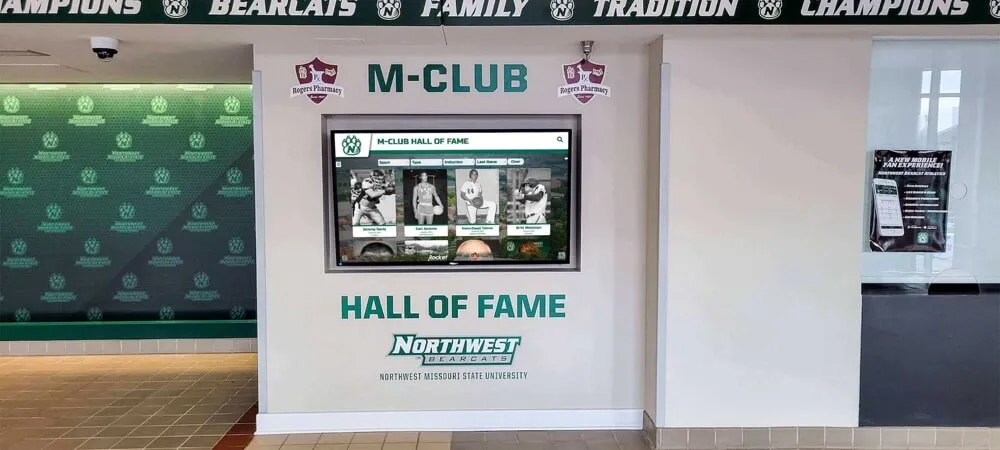
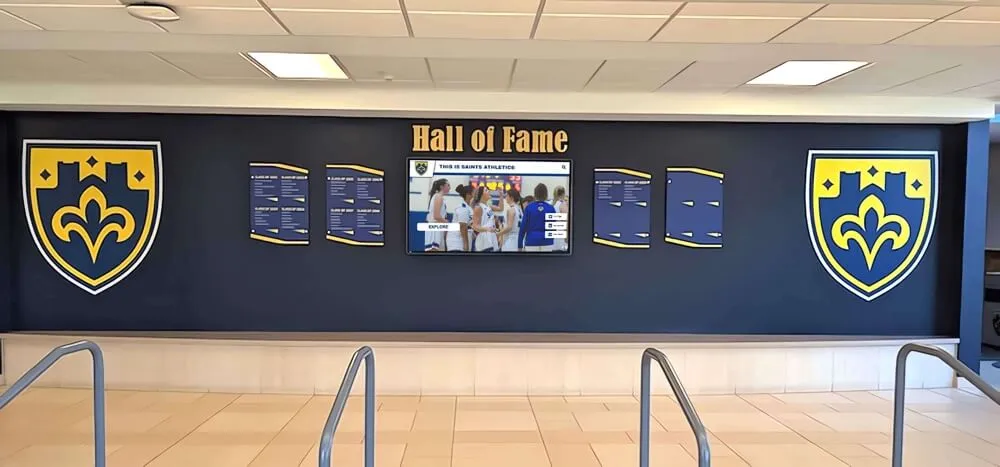
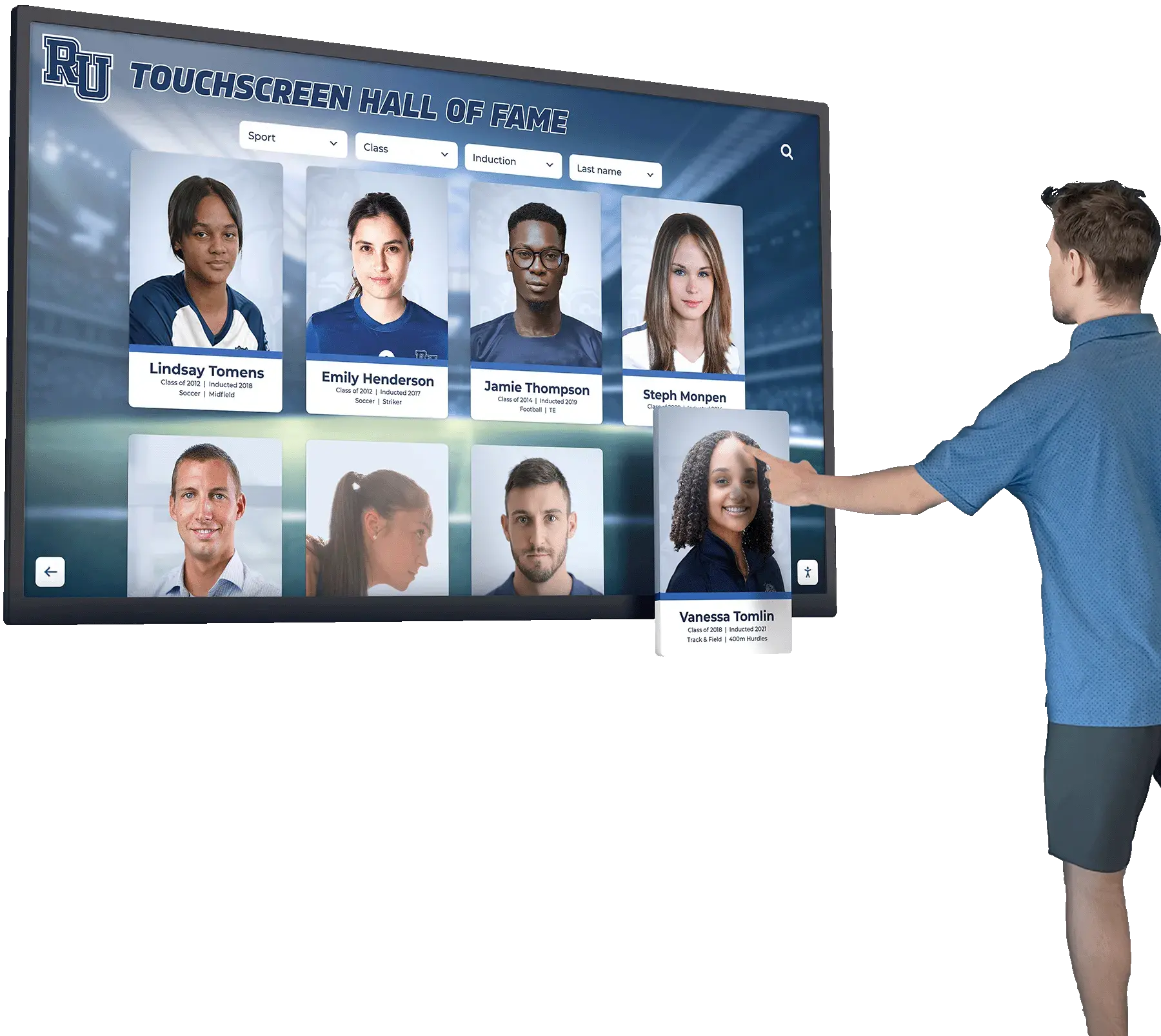
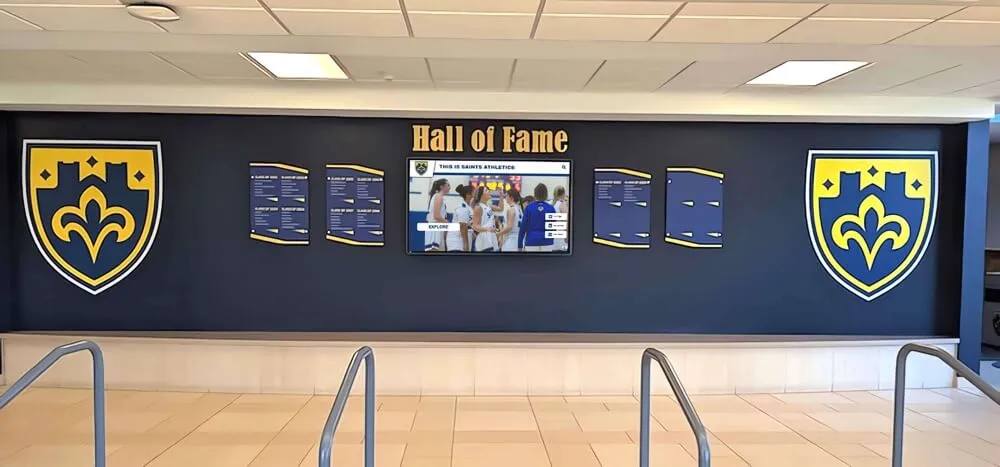
Digital touchscreen archives allow athletes, families, and alumni to search award recipients by sport, year, or category—preserving certificate recognition across decades
Digital Display Systems for Sports Award Recognition
Touchscreen recognition displays represent the highest-engagement option for making sports award certificate recipients permanently visible. Unlike static plaques or printed rosters, interactive digital systems allow visitors to browse, search, and explore award histories in depth.
Schools using interactive recognition displays for sports award archives typically organize content by:
- Sport: Navigate directly to basketball, soccer, swimming, track, and other programs
- Award category: Browse MVP history, scholar-athlete lists, record holders, and hall of fame inductees
- Year: See complete award rosters from any season going back to the archive’s founding year
- Individual athlete: Search by name to find every award a specific athlete received across all sports and seasons
This organizational depth is impossible in physical plaque formats, where space constraints force administrators to choose what gets displayed and what gets archived. Digital systems present unlimited recognition without those trade-offs.
For programs connecting sports certificate archives to broader school recognition—academic honors, arts awards, community service recognition—tools that combine multiple achievement types into unified searchable displays are increasingly valuable. Digital recognition platforms for hall of fame programs address how schools manage athletic and non-athletic achievement recognition in integrated systems.
For schools researching how digital archives support broader institutional goals like alumni engagement, digital display ideas for reunion programming and awards show how searchable archives transform class reunion events into recognition milestones where alumni rediscover their athletic history.
Rocket Alumni Solutions: Purpose-Built Sports Award Archives
Rocket Alumni Solutions builds touchscreen recognition platforms designed around the structures athletic programs already use—award categories, individual athlete profiles, season-by-season records, and hall of fame inductees—rather than generic digital signage repurposed for recognition.
Key capabilities relevant to sports award certificate programs:
- Unlimited award entries: Every certificate from every sport in every season can be entered without space constraints
- Rich individual profiles: Athletes recognized with certificates can have dedicated profile pages with photos, stats, career summaries, and post-graduation information
- Cloud-based CMS: Athletic staff add new recipients immediately following banquets without on-site technical assistance
- Auto-ranking for records: Statistical record categories update automatically when new marks are set
- QR code access: Athletes and families access recognition archives on mobile devices—useful for sharing recognition with college admissions offices and future employers
- Multi-sport organization: A single platform manages recognition for every varsity, junior varsity, and club sport simultaneously
- WCAG 2.1 AA compliant: Fully accessible to visitors using assistive technology
The platform is trusted by 600+ institutions, from small high school programs to university athletic departments and professional sports organizations, with average setup time of 2–4 weeks from contract to launch.
Physical Certificates + Digital Archives: Why Both Matter
Schools don’t have to choose between paper certificates and digital archives—the two serve different purposes and work best together.
Physical certificates:
- Provide a tangible, ceremonial object athletes can hold, frame, and present in future applications
- Signal institutional commitment through quality materials, signatures, and design
- Travel with recipients: college applications, scholarship portfolios, professional resumes
- Carry the emotional weight of ceremony—applause, photographs, coach recognition
Digital archives:
- Preserve the institutional record in searchable, shareable form
- Allow future athletes to discover program history and past award recipients
- Enable alumni to find their recognition decades after graduation
- Support donor acknowledgment by keeping scholar-athlete award histories publicly visible
- Scale without space constraints—every category, every year, every recipient
The most complete recognition programs document every certificate issued in a digital archive and create physical displays for the most prestigious annual and lifetime categories. For alumni returning to campus years later, 50th reunion planning resources illustrate how digital archives transform what graduates can find and celebrate when they come back. Programs building lasting hall of fame recognition across athletics, academics, and community contributions can explore tools designed for multi-type recognition programs to understand the full landscape of options.
FAQ: Sports Award Certificates
What should be included on a sports award certificate?
Every sports award certificate should include the recipient’s full name, the award category title, the sport and season year, the school name and logo, a brief description of the specific achievement the recipient demonstrated, and at least one authorized signature. The achievement description—specific language describing what the athlete actually did—is the element most often omitted and the most important for creating recognition that retains meaning over time.
What are the most common sports award certificate categories?
The most common categories are Most Valuable Player, Most Improved Player, Defensive/Offensive Player of the Year, Scholar-Athlete, Sportsmanship Award, Team Captain, Senior Tribute, and Varsity Letter. Effective programs also include character-based categories (Work Ethic, Coachability, Perseverance) that recognize athletes who contribute meaningfully but don’t lead in statistical categories.
How do you write good wording for sports award certificates?
Use this formula: “[Recipient Name] is hereby recognized with the [Award Title] for [specific achievement description] during the [Year] [Sport] season at [School Name].” Replace generic phrases with specific language describing what the athlete actually did. Specific wording creates certificates meaningful to recipients and useful in college applications.
How can schools preserve sports award certificate records over time?
Schools preserve recognition through a maintained award registry, physical displays in hallways and trophy cases for prestigious categories, and digital recognition platforms that maintain searchable archives accessible to athletes, families, and alumni long after graduation. Digital platforms offer the most durable solution because they scale indefinitely without space constraints.
Should sports award certificates be different for JV and varsity athletes?
Yes—JV certificates should be clearly distinguished from varsity certificates through different designs, header text identifying the program level, or separate award category names. Separate certificate programs for each level allow appropriate standards and recognition weight at every competitive tier, rather than diluting varsity recognition or shortchanging JV athletes with inferior acknowledgment.
Building Sports Recognition That Outlasts the Season
Sports award certificates achieve their full purpose not at the moment of presentation but across the years and decades that follow. An athlete who receives a meaningful, specific certificate—and later discovers their name in a searchable digital archive, displayed on a hallway honor board, or celebrated at an alumni reunion display—experiences a different kind of recognition than one whose certificate disappeared into a drawer the morning after banquet night.
The schools creating the most effective athletic recognition programs treat certificates as the beginning of a recognition workflow, not its conclusion. A well-crafted certificate, presented with ceremony, documented in a master registry, translated into physical displays, and preserved in a digital archive creates a permanent institutional record that motivates current athletes, honors returning alumni, and validates the investment of coaches, families, and donors year after year.
Turn Your Sports Award Certificates Into Permanent Recognition
See how schools are using Rocket Alumni Solutions to build searchable sports award archives, display recognition year-round, and connect every certificate to a lasting digital profile that athletes, families, and alumni can find for decades. Request a custom demo for your athletic program today.
Request a Custom Demo