



A sports award nomination form is the difference between a selection process parents respect and one that generates complaints before the banquet is over. When schools collect the right fields before a selection committee convenes, award decisions become easier to make, easier to explain, and far less vulnerable to the “they always pick the same kids” criticism that quietly erodes confidence in recognition programs. The fields on a nomination form define what evidence counts—and what gets ignored.
This guide covers every field schools should include on a sports award nomination form, from basic logistical data to criteria-specific evidence that makes selection committees confident in their choices. It includes a ready-to-use field reference table, guidance on form structure for both coach and peer submissions, and a walkthrough of how collected nomination data connects to permanent display eligibility for trophy walls and digital recognition systems.
Schools that skip formal nomination forms and let coaches select recipients from memory tend to produce the same outcome: the most visible athletes collect the awards, quieter contributors go home empty-handed, and the coaching staff spends part of the following week fielding messages from families who felt something was unfair. The frustration is usually legitimate—not because the wrong athlete won, but because there was no visible standard for what winning meant.

Award selection processes that generate trustworthy decisions are built on documented nomination data, not informal consensus
Why the Nomination Form Is the Foundation of a Fair Selection Process
A nomination form does three specific things that informal selection cannot replicate.
It creates a consistent information baseline. When every nomination arrives with the same data fields completed, selection committees compare athletes using the same evidence structure rather than weighing one coach’s verbal advocacy against another’s single-sentence email recommendation. Consistency prevents the advantage from going to the athlete whose coach is the most articulate, the most persistent, or the most senior.
It generates a documentation trail. The National Interscholastic Athletic Administrators Association (NIAAA) recommends that athletic departments maintain written documentation for recognition decisions. A completed nomination form is the simplest form of that documentation—and when a family questions a selection outcome, the athletic director can point to a form with specific criteria responses rather than reconstructing a conversation from memory.
It defines the criteria before the season ends. The most defensible award processes establish selection criteria early—ideally at the start of the season—so athletes and families can understand what the recognition is measuring. A nomination form that includes criteria-specific fields operationalizes those criteria at the moment of selection, creating continuity between what was promised and what was evaluated.
Programs managing large multi-sport environments find this structure essential. A department running 18 varsity sports with 12 different coaches—including everything from football and basketball to winter sports programs like wrestling and hockey—needs a shared form structure to ensure that the criteria applied to the swimming team’s MVP award aren’t functionally different from the criteria applied to the football team’s equivalent.
For schools that display award recipients in permanent recognition spaces, nomination documentation also provides the historical record that supports long-term programs. When an athletic director considers which prior-year recipients merit inclusion in a school memorabilia display, documented nomination forms from prior seasons provide a verified basis for selection that informal memory cannot match.
Section 1: Logistical Fields (Required for Every Form)
The administrative foundation of any sports award nomination form covers the basic identifying information that allows staff to process, organize, and file nominations. These fields are unglamorous but essential.
Nominator Information
- Nominator name: Full name of the person submitting the nomination—coach, athletic director, peer, or community member depending on nomination type
- Nominator role: Whether the nominator is a head coach, assistant coach, teammate, program administrator, or parent or community member
- Nominator contact information: Email address and phone number for follow-up if the form requires clarification
- Submission date: When the nomination was submitted; used to enforce deadlines and flag late submissions
- Relationship to nominee: How the nominator knows the athlete—coached directly, same team, program administrator
Nominee Information
- Athlete’s full name: As it appears in official school records; this matters when award recipients are added to permanent recognition displays
- Grade and graduation year: Used to determine eligibility thresholds and to file nominations in the correct graduation cohort for future hall of fame review
- Sport(s) participated in: Primary sport of the nomination, and whether the athlete competes in multiple sports
- Position or event: Relevant for position-relative statistical evaluation—a goalkeeper evaluated against a forward’s scoring statistics produces a meaningless comparison
- Years in the program: How many seasons the athlete has participated; informs context for improvement trajectories and commitment scoring
- Academic year of the season: Important when a nomination is submitted during or after a season that spans a calendar year boundary
Section 2: Criteria and Evidence Fields
This is the section where most nomination forms fall short. Basic forms collect identifying information and then leave a blank text box labeled “Explain why this athlete deserves the award.” That format produces nominations of wildly different quality and depth, making committee comparison nearly impossible.
A well-designed sports award nomination form breaks the criteria into specific fields that prompt nominators to provide structured, comparable evidence.

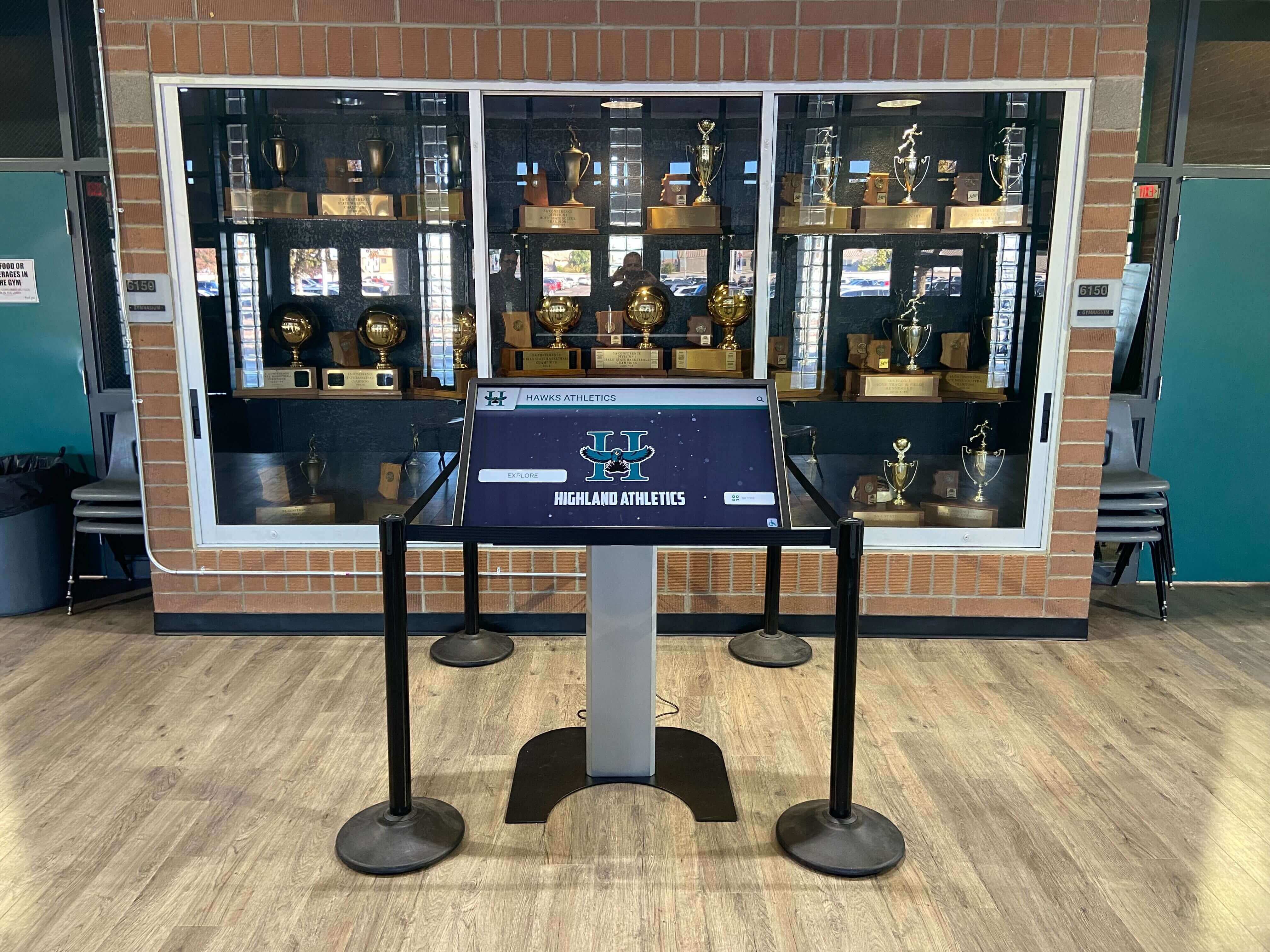
Award selections that feed into permanent recognition environments need structured nomination evidence to support defensible display eligibility decisions
Leadership Evidence Fields
Leadership is one of the most frequently cited award criteria and one of the hardest to evaluate without specific prompting. Nomination forms should ask nominators to provide evidence rather than assertions.
Effective leadership fields:
- Describe a specific situation this season where the nominee demonstrated leadership under pressure. (Free text, 150-word maximum)
- Did the nominee hold a formal leadership role—captain, co-captain, or elected team position? (Yes/No with role description)
- Rate the nominee’s leadership influence on teammates on a scale of 1–5, where 1 = limited influence and 5 = consistently elevates the team
- Describe how the nominee handled a setback, conflict, or adversity situation this season (Free text)
Requiring specific situations rather than general assessments forces nominators to demonstrate they observed the behavior they’re citing. A nominator who marks “leadership: 5” without a narrative provides less useful evidence than one who describes a specific practice or travel day incident.
Sportsmanship and Character Fields
Character evidence fields should align with your school’s code of conduct and state athletic association standards. The National Federation of State High School Associations (NFHS) provides published guidance on the documentation standards that support recognized sportsmanship programs at the state level.
Effective character fields:
- Number of documented conduct violations this season (Dropdown: 0 / 1 / 2 / 3 or more)
- Was the nominee cited by an official, opposing coach, or referee for a conduct violation? (Yes/No)
- Describe specific examples of this athlete modeling your program’s conduct standards for teammates (Free text)
- How did the nominee behave after losses or difficult competition outcomes? (Multiple choice: Respectful and Constructive / Neutral / Occasionally Problematic / Consistently Difficult)
Statistical and Performance Fields
Statistical evidence collection on a nomination form doesn’t replace a coaching staff’s own records—it creates an official record of what statistical evidence supported the nomination. This matters for transparency and for building the historical archive that supports digital awards display programs for schools.
Effective performance fields:
- Primary statistical metrics for this sport and position (sport-specific fields that change based on the sport selected)
- How does the nominee’s performance compare to the program’s historical average at this position? (Well below average / Below average / At or near average / Above average / Exceptional)
- Did the nominee improve statistically over the course of the season? (Yes/No with brief description)
- Was the nominee’s performance in key competition—playoffs, championship events—consistent with regular-season performance? (Yes/No)
- Any notable individual milestones this season—records broken, thresholds crossed (Free text)
For schools that maintain formal record boards alongside award programs, the milestone field connects nomination documentation to athletic record and achievement tracking workflows where a single athlete’s contributions may feed into multiple recognition systems simultaneously.
Academic Standing Fields
Academic fields in an athletic award nomination form reinforce that school athletic programs exist inside an educational institution, not parallel to one. According to the NIAAA, programs that honor academic-athletic balance produce stronger long-term alumni engagement than those that focus exclusively on athletic performance.
Effective academic fields:
- Current GPA or most recent reported GPA (Numeric)
- Academic honors earned this year (Checklist: Honor roll / Principal’s list / Scholar-athlete designation / None)
- Is the nominee currently meeting all academic eligibility requirements for participation? (Yes/No)
- Notable academic improvement from prior season (Yes/No/Not applicable)
Commitment and Attendance Fields
Attendance data is most accurately supplied by coaching staff from official records rather than self-reported on a nomination form. When coach-submitted, these fields draw from attendance logs. When submitted by peer nominators, mark them “coach verification required.”
Effective commitment fields:
- Approximate practice attendance rate this season (Percentage range or exact percentage from records)
- Did the nominee participate in voluntary skill development, film sessions, or off-season conditioning? (Yes/No/Unknown)
- Did the nominee demonstrate commitment during an injury period—modified participation, rehabilitation effort? (Yes/No/Not applicable)
Ready-to-Use Field Reference Table
Use the table below as a checklist when building or auditing your sports award nomination form. The “Form Type” column identifies whether a field is appropriate for peer nominations (submitted by teammates), coach nominations (submitted by coaching staff), or both.
| Field | Section | Form Type | Status |
|---|---|---|---|
| Nominator name | Logistics | Both | Required |
| Nominator role | Logistics | Both | Required |
| Nominator contact | Logistics | Both | Required |
| Submission date | Logistics | Both | Required |
| Athlete full name | Logistics | Both | Required |
| Grade and graduation year | Logistics | Both | Required |
| Sport and position | Logistics | Both | Required |
| Years in the program | Logistics | Both | Required |
| Leadership situation description | Criteria | Both | Required |
| Formal leadership role | Criteria | Both | Required |
| Leadership rating (1–5) | Criteria | Both | Required |
| Conduct violations count | Criteria | Coach | Required |
| Official conduct citation | Criteria | Coach | Required |
| Character narrative | Criteria | Both | Required |
| Post-competition conduct rating | Criteria | Coach | Required |
| Primary statistical metrics | Criteria | Coach | Required |
| Performance vs. program average | Criteria | Coach | Required |
| Statistical improvement | Criteria | Coach | Optional |
| Key-competition performance | Criteria | Coach | Optional |
| Individual milestones this season | Criteria | Both | Optional |
| Current GPA | Criteria | Coach | Required |
| Academic honors | Criteria | Coach | Required |
| Academic eligibility status | Criteria | Coach | Required |
| Academic improvement flag | Criteria | Coach | Optional |
| Practice attendance rate | Criteria | Coach | Required |
| Voluntary activities participation | Criteria | Coach | Optional |
| Injury-period commitment | Criteria | Coach | Optional |
| Nominator attestation / signature | Logistics | Both | Required |
The attestation field—requiring nominators to confirm the information provided is accurate to the best of their knowledge—discourages inflated ratings and signals to nominators that the form is a formal document, not a casual endorsement. Programs that include an attestation field report fewer complaints about the nomination process because nominators are less likely to make exaggerated claims when their names are on the submission.

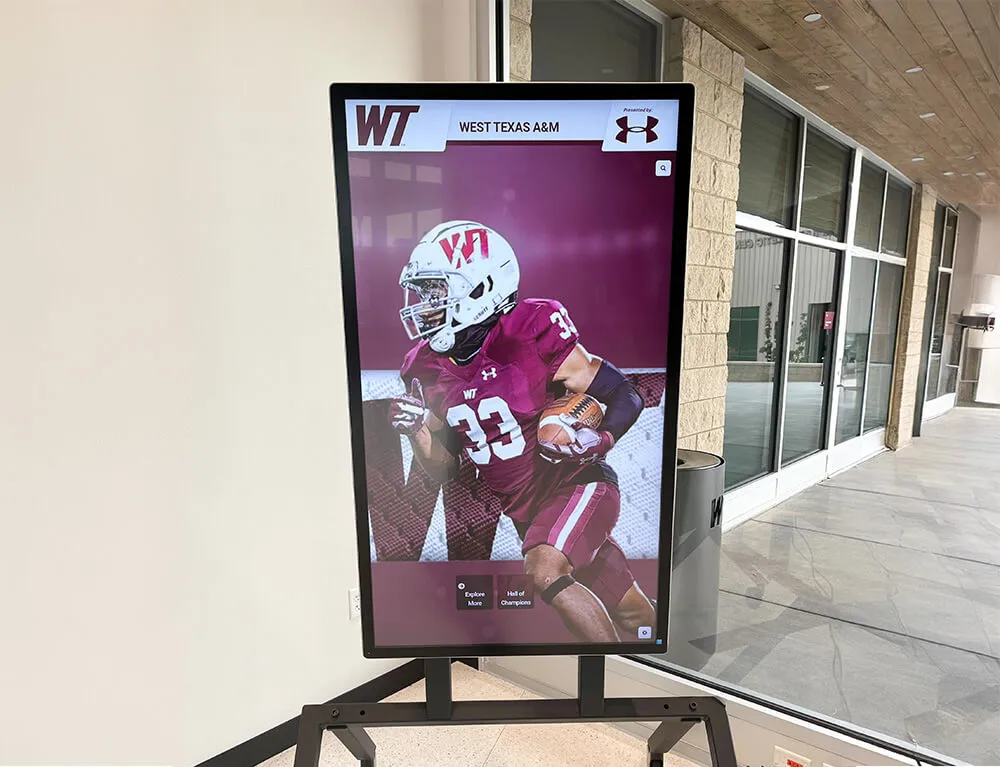
Digital recognition systems allow award recipients identified through nomination forms to be displayed with full supporting data—photos, stats, and season highlights
How Selection Committees Use Nomination Form Data
Collected nomination forms transform a selection committee meeting from a discussion based on competing impressions into a structured review of documented evidence. The following five-step process works for committees at any program size.
Step 1: Completeness Review
Before the selection meeting, a designated administrator—typically the athletic director—reviews all submitted forms for completeness. Incomplete forms (missing required fields, unsigned, or submitted after the deadline) are flagged. Establish and communicate the completeness policy before reviewing specific athletes—selective enforcement of submission standards is one of the fastest ways to undermine confidence in the process.
Step 2: Threshold Filtering
For awards with objective eligibility thresholds—minimum GPA, zero conduct violations, minimum attendance rate—apply those filters first to produce the eligible pool. The committee then evaluates only the athletes who cleared all thresholds rather than debating whether an exception should be made. If an exception is warranted, document that decision separately and have it reviewed by the athletic director before the ceremony.
Step 3: Per-Criterion Aggregation
For awards with multiple nominators (such as a team MVP where both peer and coach nominations are accepted), aggregate ratings within each criterion separately before combining totals. A nominee who receives high leadership ratings from five peers and one coach has different evidence weight than one who receives a single high coach rating. Be transparent about how ratings from different nominator types are weighted.
Step 4: Narrative Review
Numerical ratings matter less than the narratives for awards where character, leadership, and specific situational evidence carry the most weight. Selection committees should read the full text responses for the top candidates in each award category rather than relying exclusively on aggregated scores. The narratives are where the best evidence typically lives.
Step 5: Documentation of Selections
Once selections are made, record which nomination forms were reviewed, which thresholds were applied, and which athletes were in the final deliberation pool. This documentation supports the appeals process and the historical record that future hall of fame and honor wall committees will rely on.
Connecting Nomination Form Data to Display Eligibility
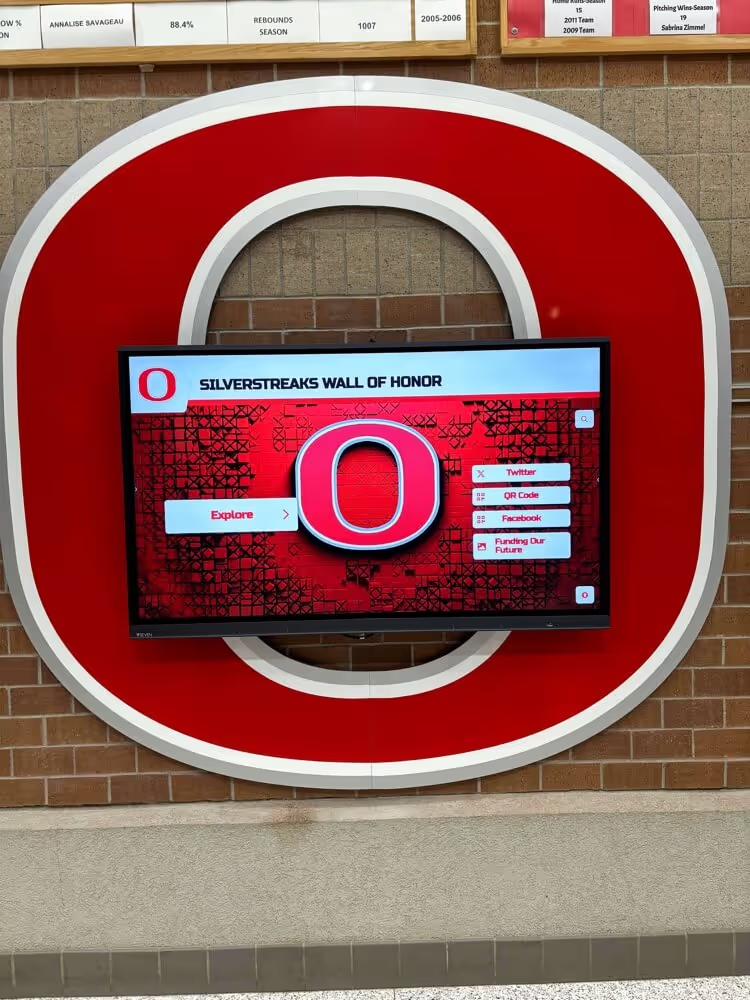
For schools that recognize award recipients in permanent display environments—trophy walls, digital halls of fame and recognition systems, or honor boards—the nomination form is the first entry in the athlete’s permanent recognition record.
A nomination form that includes full name as it appears in official records, graduation year, sport and position, statistical milestones, and academic standing gives the administrator building the display entry nearly everything they need. Schools that follow a comprehensive Rocket Alumni Solutions recognition workflow find that the transition from selection documentation to display content is dramatically faster when nomination forms were well-structured in the first place.
For long-term programs, archived nomination forms also support school memorabilia and archival display decisions years after the original selection. When a hall of fame committee reviews athletes from five, ten, or twenty seasons ago, archived nomination records provide a factual foundation rather than requiring retrospective reconstruction.
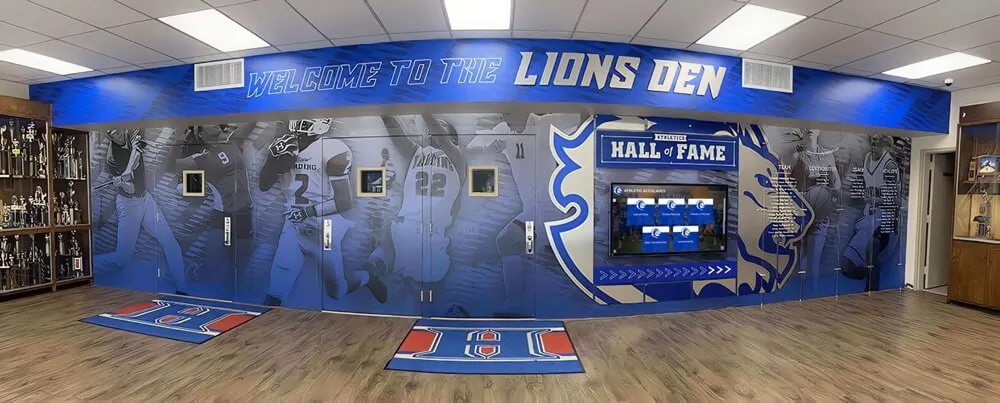
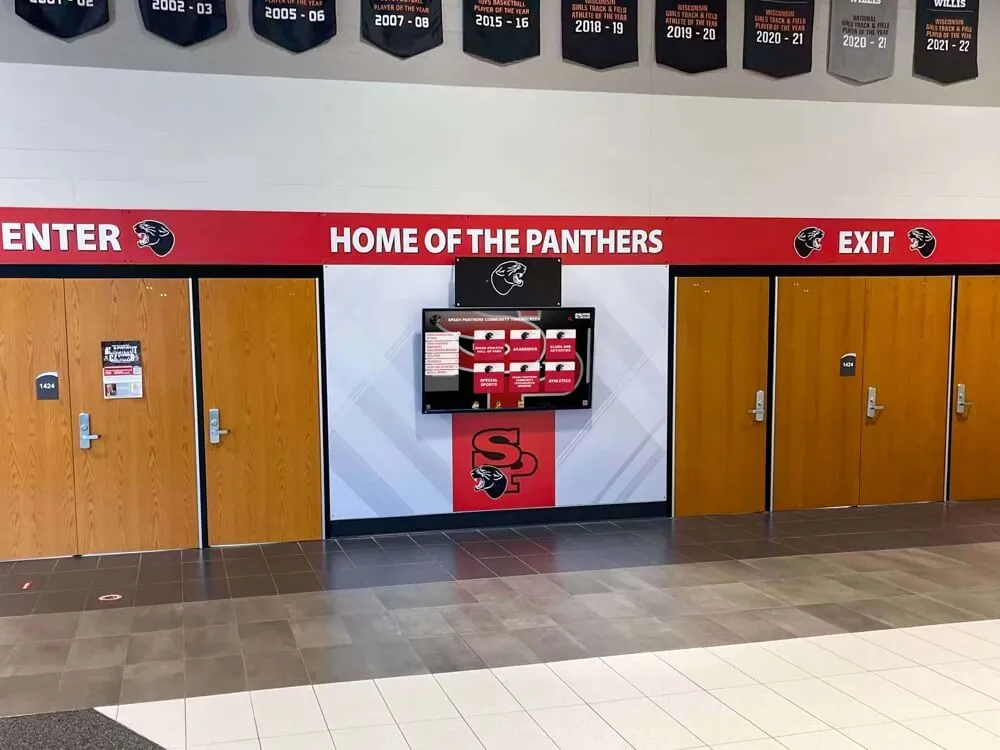
The visual context matters as much as the data. Schools that have invested in wall wraps and environmental recognition graphics alongside digital displays create recognition environments where award recipients appear in a program-specific context rather than on a generic screen. Connecting the nomination data to an environment designed to honor it elevates the entire recognition program.
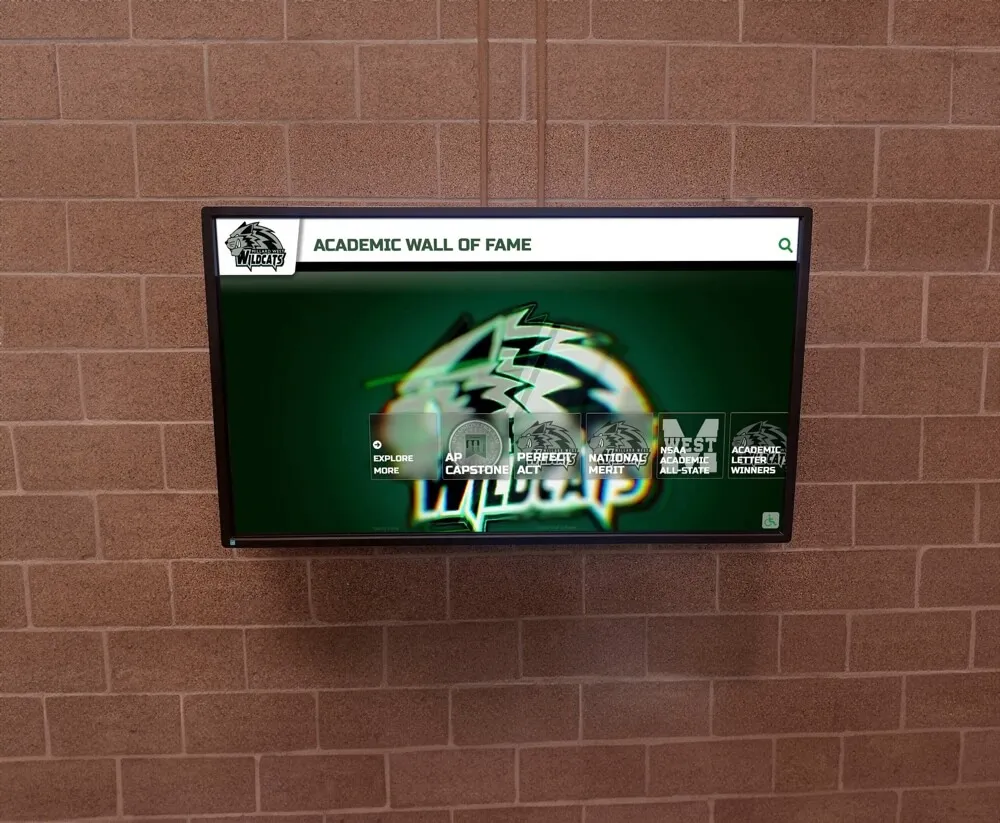
Digital recognition platforms that meet WCAG 2.1 AA accessibility standards—making every award profile and historical record accessible to visitors of all abilities—add another dimension to why nomination documentation quality matters. When display entries are built from well-structured nomination forms, every field (name, sport, year, milestone) arrives accurately and the administrator isn’t guessing at spellings or dates years after the fact.
See How Schools Display Every Award Recipient
Rocket Alumni Solutions builds digital recognition platforms that let schools display every nominated and selected athlete—with full photos, stats, and season summaries—without the physical space constraints of traditional trophy cases. See how your nomination data can flow directly into a permanent, searchable, ADA-compliant recognition display.
See a Custom Demo
Lobby recognition environments where students encounter their peers' achievements daily reinforce the value of every award in the program
Common Nomination Form Mistakes to Avoid
Using a Single Open-Ended Text Field for All Criteria
A nomination form with one blank box labeled “Explain why this athlete deserves the award” produces incomparable responses. One nominator writes four sentences; another writes four paragraphs. The committee ends up comparing depth of writing rather than depth of achievement. Structured criteria fields with specific prompts—combined with a short narrative section—produce more useful, comparable evidence across all submissions.
Not Communicating Form Requirements to Nominators in Advance
If peer nominators are completing a nomination form for the first time with no prior guidance, submission quality varies widely. Programs that distribute nomination guidelines at the start of the process—what information to gather, what a strong leadership narrative looks like, which official records nominators need access to—receive dramatically stronger submissions.
Using One Form for All Award Types
A form appropriate for an MVP award (evaluating performance, leadership, and character) is not appropriate for a Scholar-Athlete award (emphasizing academic achievement and commitment). A Sportsmanship Award needs different evidence emphasis than an MVP or a most-improved recognition. Different award categories may share a common logistical structure, but the criteria fields should be tailored to what the specific award is actually measuring.
Not Setting or Enforcing a Submission Deadline
Late nominations—especially if accepted for high-profile awards—signal that the process can be influenced by whoever advocates hardest at the last minute. A firm, communicated deadline with a documented late policy protects the integrity of selection decisions and the authority of final outcomes.
Discarding Forms After the Ceremony
For programs that maintain permanent yearbook-style achievement archives, nomination forms are primary-source documentation of athletic achievement that should be retained with the same care as other program records. An athlete’s nomination form from a championship season is a more detailed and accurate record of their contributions than a trophy cabinet or a banquet program. Minimum recommended retention is seven years; for programs with active hall of fame programs, indefinite retention is preferable.

Championship recognition environments are built over decades—the nomination records that support them need to be designed for long-term retention from the start
FAQ: Sports Award Nomination Forms
What fields should a sports award nomination form include?
A complete sports award nomination form should include two sections: logistics (nominator name, role, and contact; nominee name, graduation year, sport, position, and years in the program) and criteria (leadership situation narrative, conduct violation count, statistical performance versus program average, academic standing, practice attendance rate, and a nominator attestation). Peer nomination forms may flag fields requiring official coaching records as “coach verification required.”
How many fields should a sports award nomination form have?
An effective form for most school athletic award programs includes 15–25 fields covering identifying information, 4–5 criteria categories, and a nominator attestation. Fewer than 10 fields typically produces insufficient evidence for defensible decisions; more than 30 creates completion fatigue and discourages peer submissions. Coach-submitted forms can be more comprehensive because coaches have direct access to attendance logs, conduct reports, and academic records.
Should peer nominations and coach nominations use the same form?
No—peer and coach forms should share structure but differ on criteria fields requiring official records. Conduct violation counts, attendance percentages, GPA, and academic eligibility status require access to records that peers don’t have. Mark those fields “coach verification required” on peer forms rather than asking peers to estimate official data. Selection committees should weight coach-submitted documentation more heavily for criteria that depend on official records.
When should the nomination form be distributed?
No later than two weeks before the selection deadline—ideally at the start of the final month of the season. This gives peer nominators time to reflect across the full season and gives coaches time to compile attendance and conduct documentation. The form structure and criteria should be communicated to athletes and families at the start of the season so selection criteria are known before nomination, not revealed at the moment of submission.
How does nomination form data connect to permanent recognition displays?
Well-structured forms contain the core data for a permanent recognition display: athlete full name, graduation year, sport and position, statistical milestones, and academic honors. Programs that archive forms alongside display records can verify eligibility and support hall of fame decisions years later without reconstructed impressions. Schools using digital recognition platforms can import nomination data directly into display entries rather than re-entering information manually.
Building a Nomination Process That Lasts
A sports award nomination form is where the selection process becomes real. The fields chosen define the evidence that will matter; the structure chosen determines whether a committee can compare that evidence consistently; and the archive policy chosen determines whether the documentation survives long enough to support the hall of fame decisions that will inevitably arrive.
Programs that invest in nomination form design early—before the season ends, before the pressure of a looming banquet deadline—build recognition infrastructure that outlasts any individual coach’s tenure. The form that captures what a championship athlete accomplished in their senior season becomes the record a selection committee relies on when that athlete is nominated for the wall of fame a decade later.
When the documentation is strong and the criteria are clear, every award that comes out of the process carries weight—for the athletes who earned it, the families who watched, and the program that can point to a standard it has upheld year after year.
Ready to Connect Your Nomination Process to Lasting Recognition?
Rocket Alumni Solutions builds digital walls of fame that let athletic departments display every nomination-eligible athlete—with photos, stats, and season summaries—without running out of wall space. With unlimited inductee capacity, WCAG 2.1 AA accessibility, and remote CMS updates from anywhere, your award selections can live permanently where current athletes and future nominees see them every day.
Request a Custom Demo