



A teacher retirement message does more than mark the end of a career—it becomes part of a school’s permanent record of who built its culture and shaped its students. When a classroom teacher with 28 years of service walks out the door for the last time, the words a school chooses to honor that departure determine whether the legacy lives for another generation or fades within a few years.
This guide gives school administrators, recognition coordinators, and advancement staff practical wording they can use immediately—organized by tone and by the specific display context where the message will appear. Whether you’re preparing a retirement plaque, updating a digital recognition wall, drafting a card inscription, or building a searchable staff archive, the examples below are ready to adapt.
A well-written teacher retirement message serves two audiences simultaneously: the educator being honored, who deserves language that reflects the depth of their contribution, and the future students and visitors who encounter that message in a hallway, lobby, or digital display long after the ceremony ends. Getting the wording right matters for both.

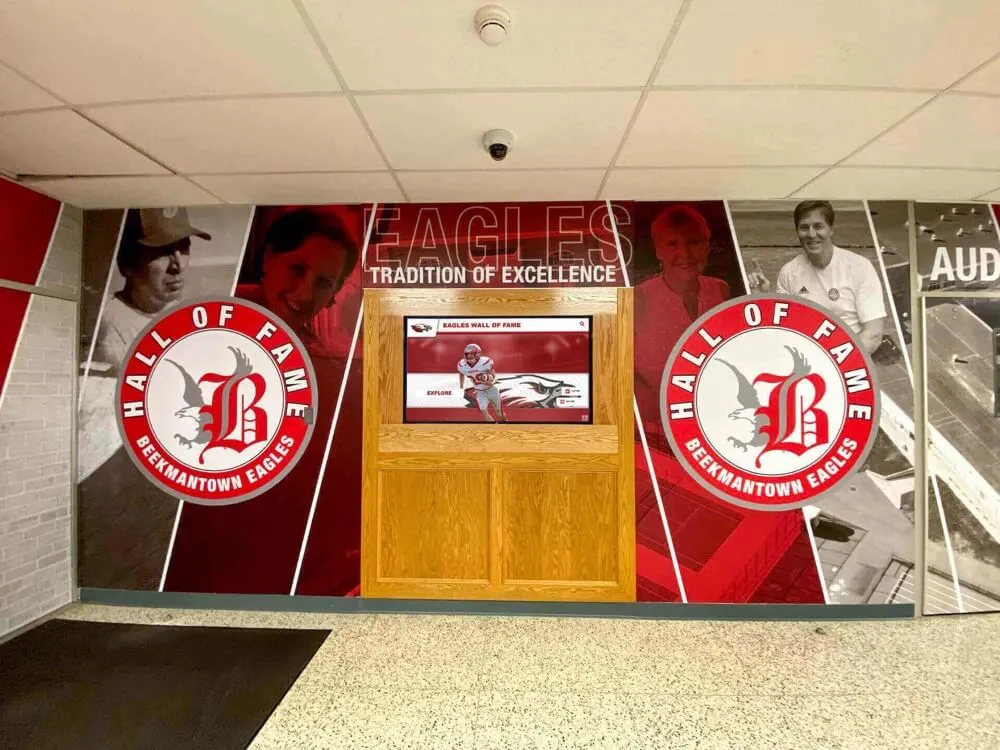
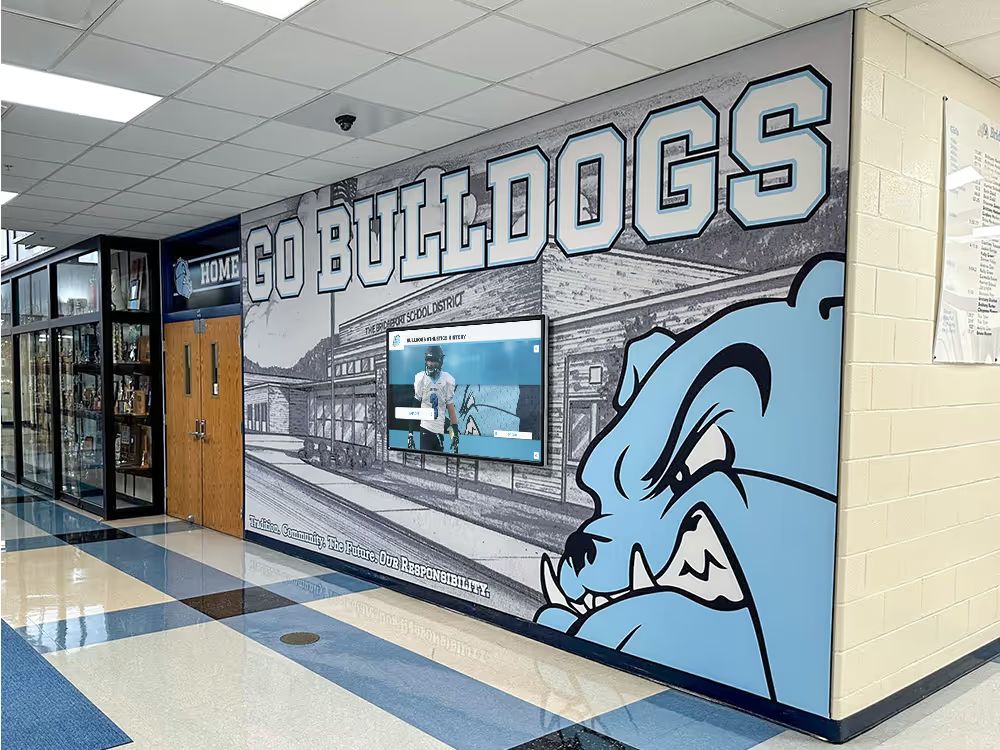
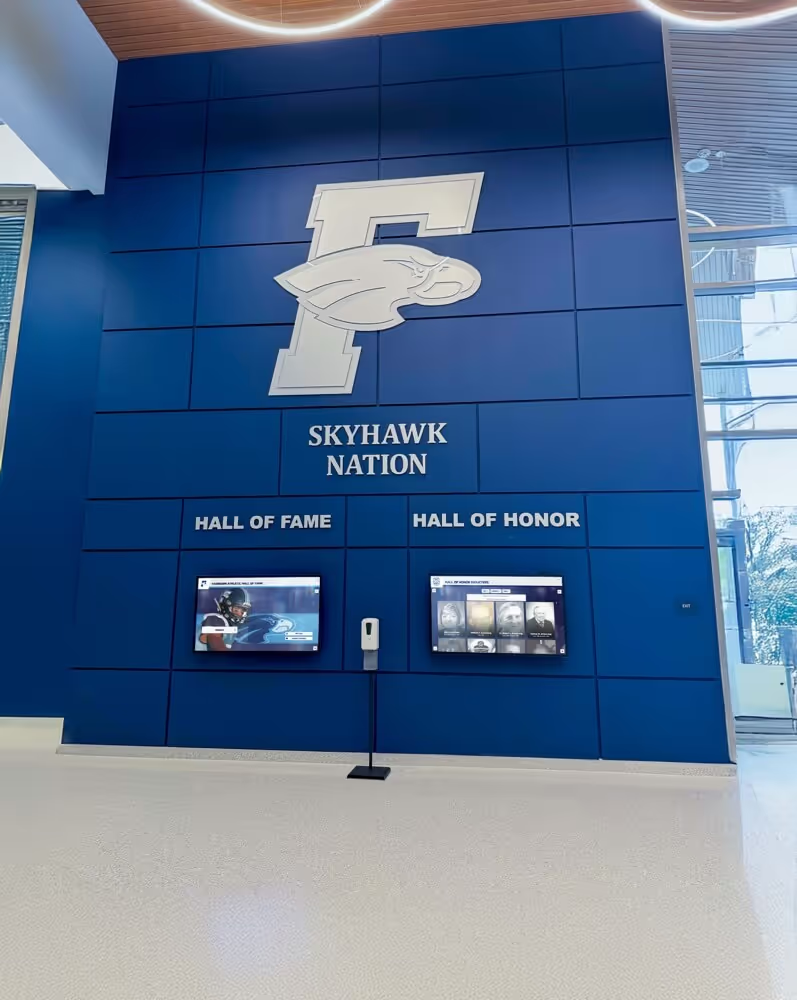
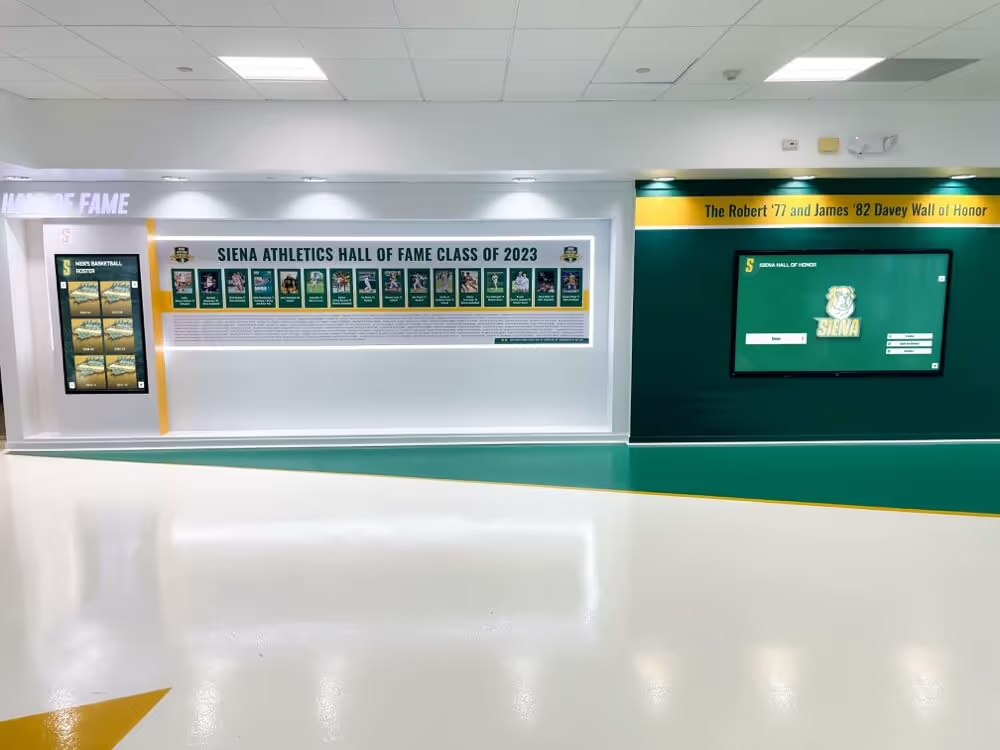
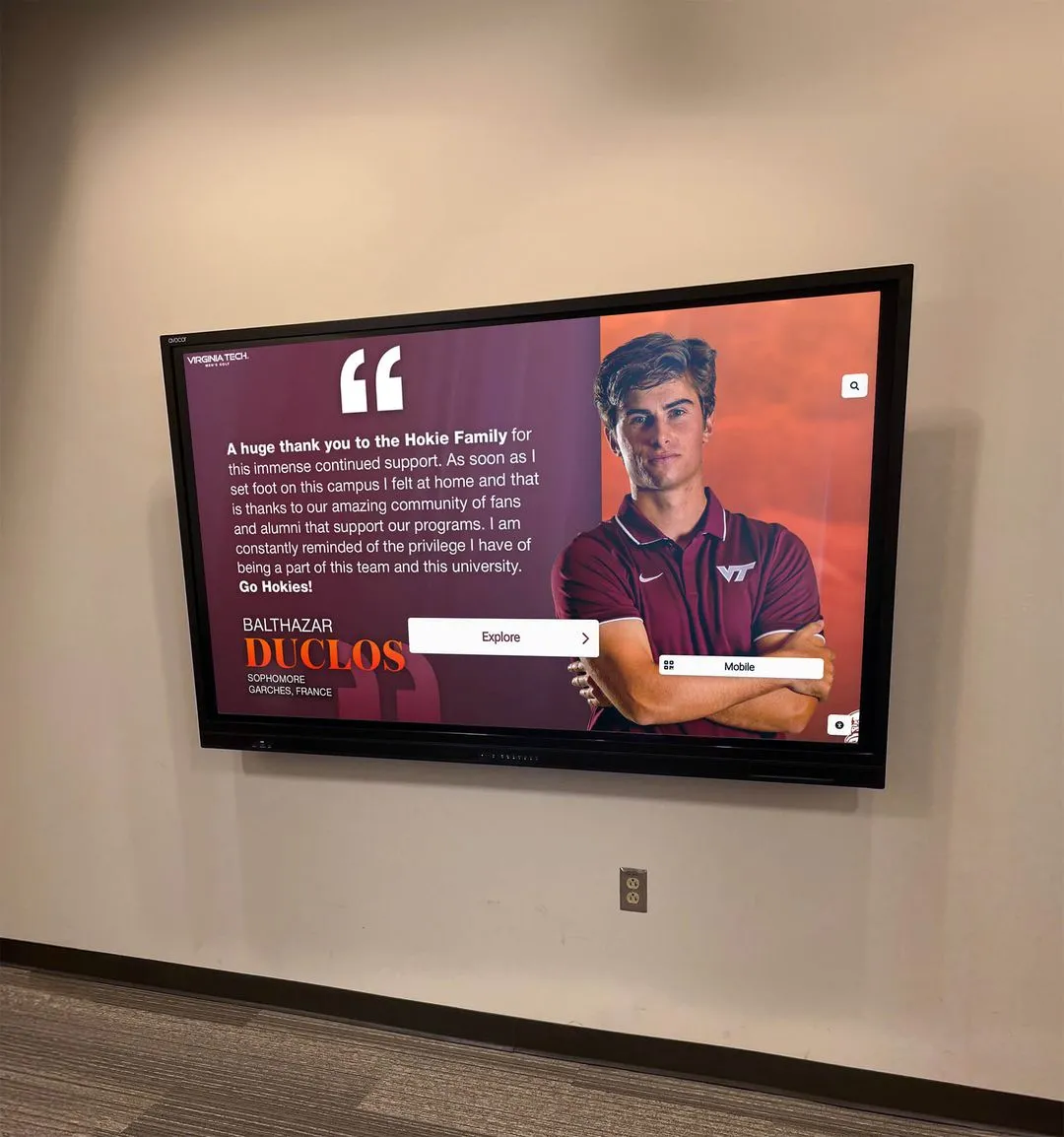
A school lobby recognition display extends a retirement message beyond the ceremony itself—making it visible to every student, family, and community member who walks through the door
What Makes a Teacher Retirement Message Meaningful
A meaningful teacher retirement message answers one question above all others: What did this person’s presence in this building actually mean? The most effective messages combine three elements: specificity (years of service, subjects taught, programs built), emotional truth (what students experienced in that classroom), and forward-looking language (the legacy they leave behind).
Schools that default to generic phrases—“Thank you for your dedication and service”—miss the opportunity that retirement recognition provides. A message that could describe any teacher at any school honors no teacher in particular. The goal is a message so specific to the individual that anyone who reads it understands exactly what was lost when that educator left.
Research from the Learning Policy Institute has documented that experienced teachers—particularly those with more than ten years of classroom tenure—produce measurably stronger student outcomes than their less-experienced peers. When a school recognizes a retiring educator, it is acknowledging that the departure carries real institutional weight, not simply ceremonial sentiment.
Teacher Retirement Message Examples by Tone
Formal and Professional
Formal messages work best for official plaques, framed dedications, and recognition displays in administrative spaces or lobbies where the audience includes community members, alumni, and visitors:
For a veteran classroom teacher:
“[Name] taught [subject] at [School Name] for [X] years, shaping the academic foundation of more than [X] generations of students. A master of craft, a champion of rigor, and a model of professionalism, [he/she/they] leaves a standard against which future educators will measure themselves.”
For a department head or curriculum leader:
“As [subject] teacher and department chair for [X] years, [Name] built the [department name] program from [context] into one of [School Name]’s signature strengths. [His/Her/Their] curriculum continues in every classroom.”
For a coach who also taught:
“[Name] served [School Name] for [X] years as both educator and coach, winning [X] championships and sending [X] student athletes to collegiate programs. In every season, the lessons given on the field matched those offered in the classroom.”
Warm and Heartfelt
Heartfelt messages fit retirement cards, ceremony programs, digital profile bios, and any context where the school is speaking directly to the honoree and their family:
“Thirty years ago, you walked into this building and made it better. Every student who struggled found in you a patient guide. Every colleague who doubted found in you a steady partner. [School Name] will carry your name forward not because of policy, but because of the people you made.”
“You gave your students more than a subject—you gave them a way of approaching hard problems, a reason to believe their effort mattered, and proof that one person’s commitment can shape a hundred lives at a time. Thank you for choosing us, year after year.”
“The best teachers are remembered not for what they covered in a syllabus but for the moment a student finally understood something difficult. We’ve heard from hundreds of your former students, and every one of them has that moment. That is your legacy.”
Humorous and Lighthearted
For retirement parties, staff celebration events, or when the retiring educator specifically appreciates warmth over formality:
“After [X] years of grading papers that tested every patience a human being possesses, [Name] has more than earned the right to read books for pleasure.”
“[Name] spent [X] years answering questions, solving problems, and managing a room full of people who were mostly trying to avoid doing those things. We call it retirement. [Name] calls it a fair exchange.”
“The good news: students can no longer ask ‘[Name]’ to explain this again. The bad news: there is no one left who can.”
Brief and Concise
Short messages are essential for physical plaques, digital wall entries, and any display where space is limited. These examples are designed to work at 25–75 words:
“[Name] | [Subject] Teacher | [Years of Service] Years | [School Name]. A classroom built on rigor, curiosity, and care. Retired [Year].”
“[X] years. Thousands of students. One unwavering standard. [Name] made this school what it is.”
“[Name] taught [subject] here from [year] to [year]. Students from every graduating class carried [his/her/their] methods with them. The room changes; the work does not.”
For guidance on how retirement wording can be adapted across formats—from plaques to digital cards to ceremony speeches—the resource on retirement quotes for plaques, cards, and recognition displays offers additional framing applicable to both staff and student honorees.
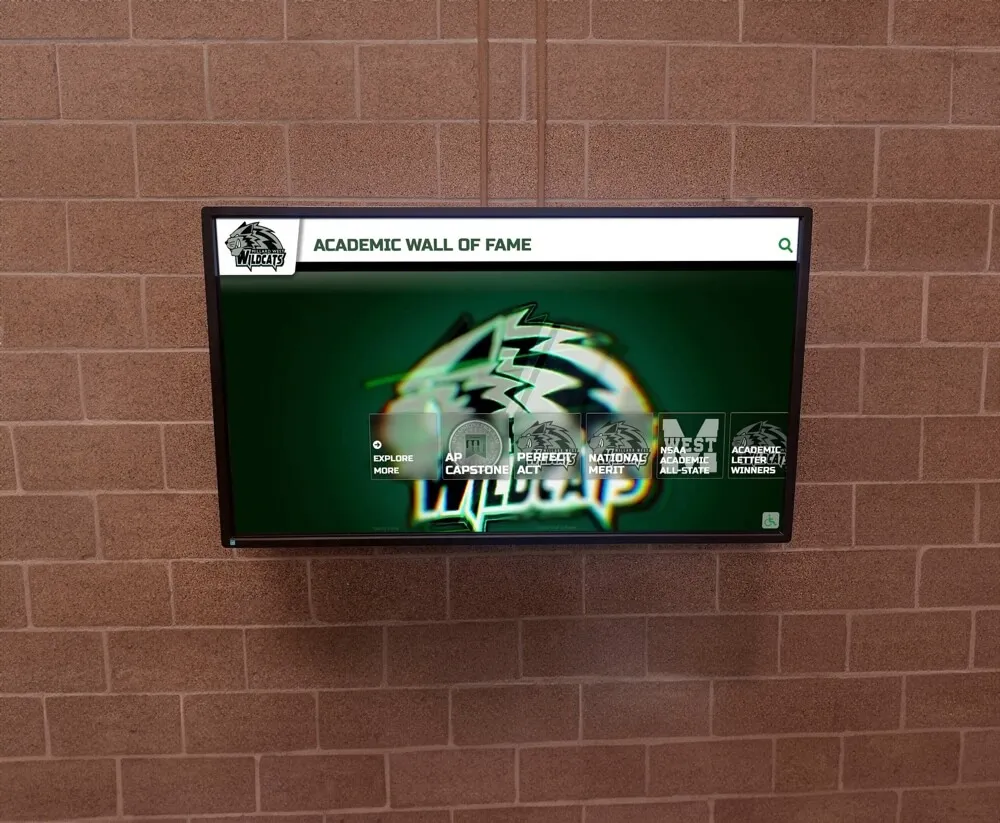
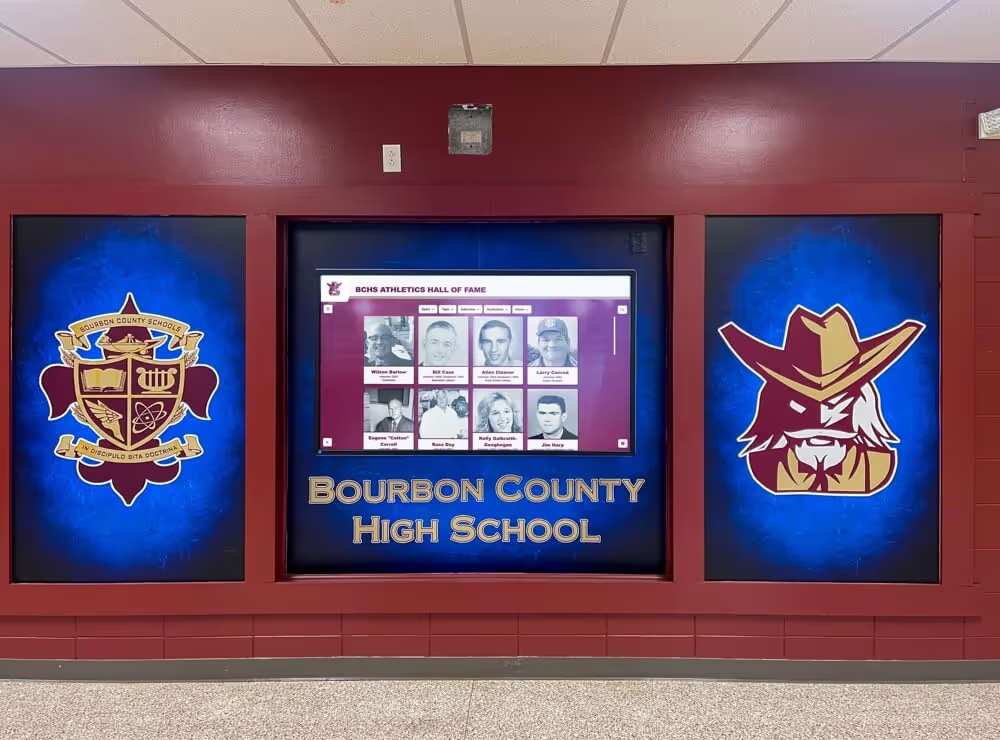
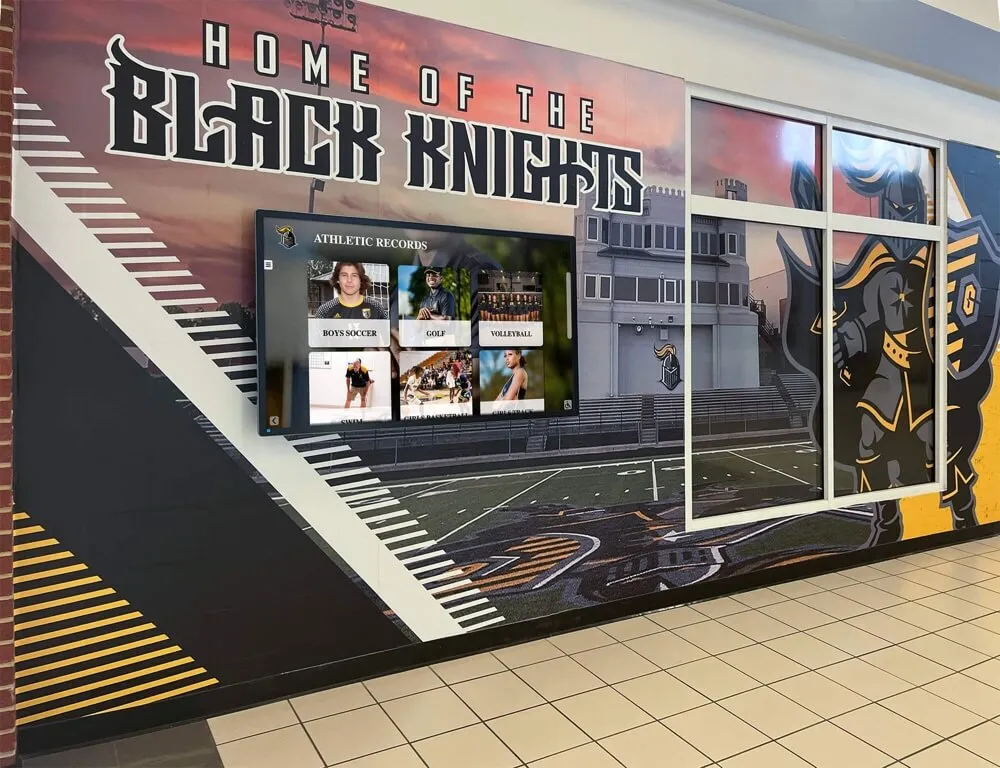
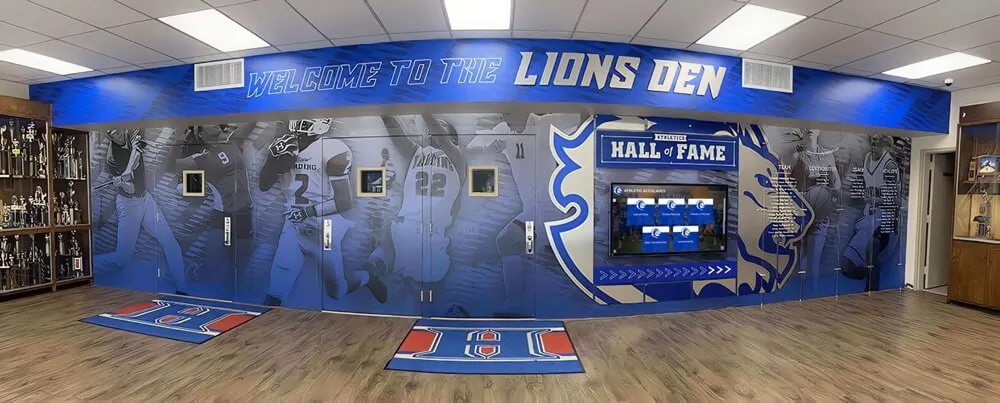
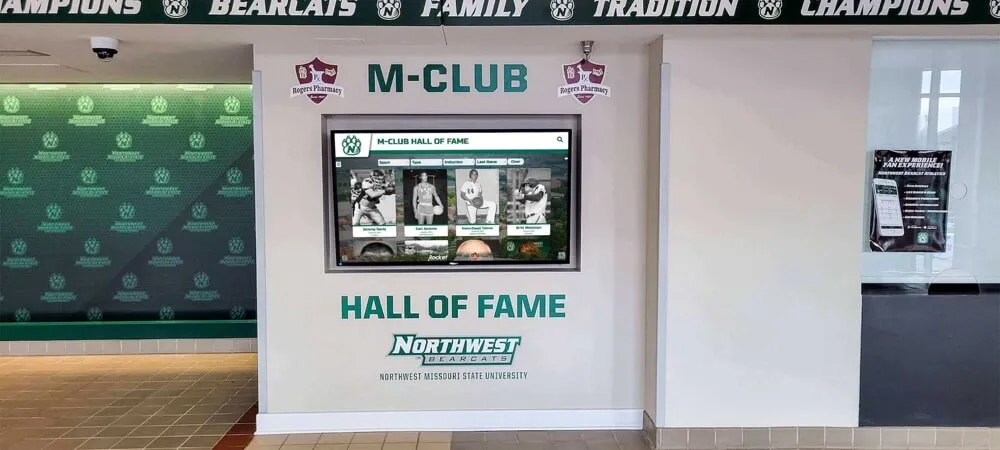
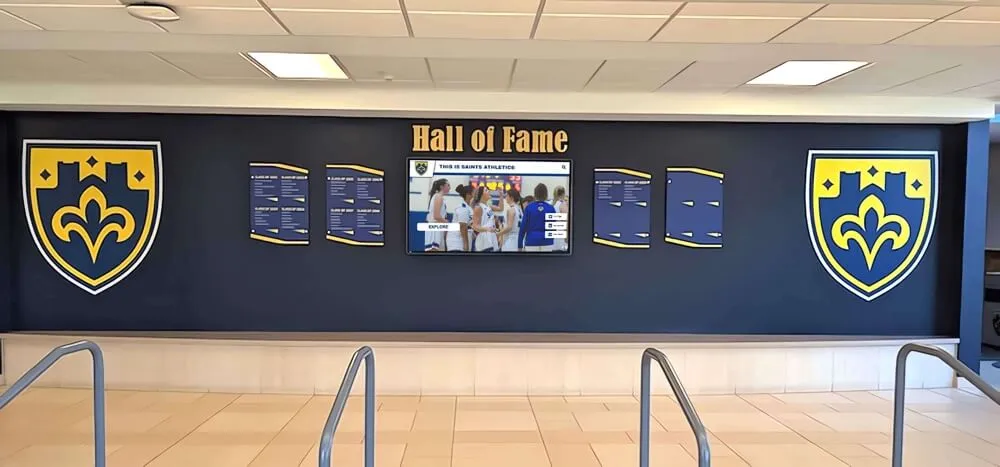
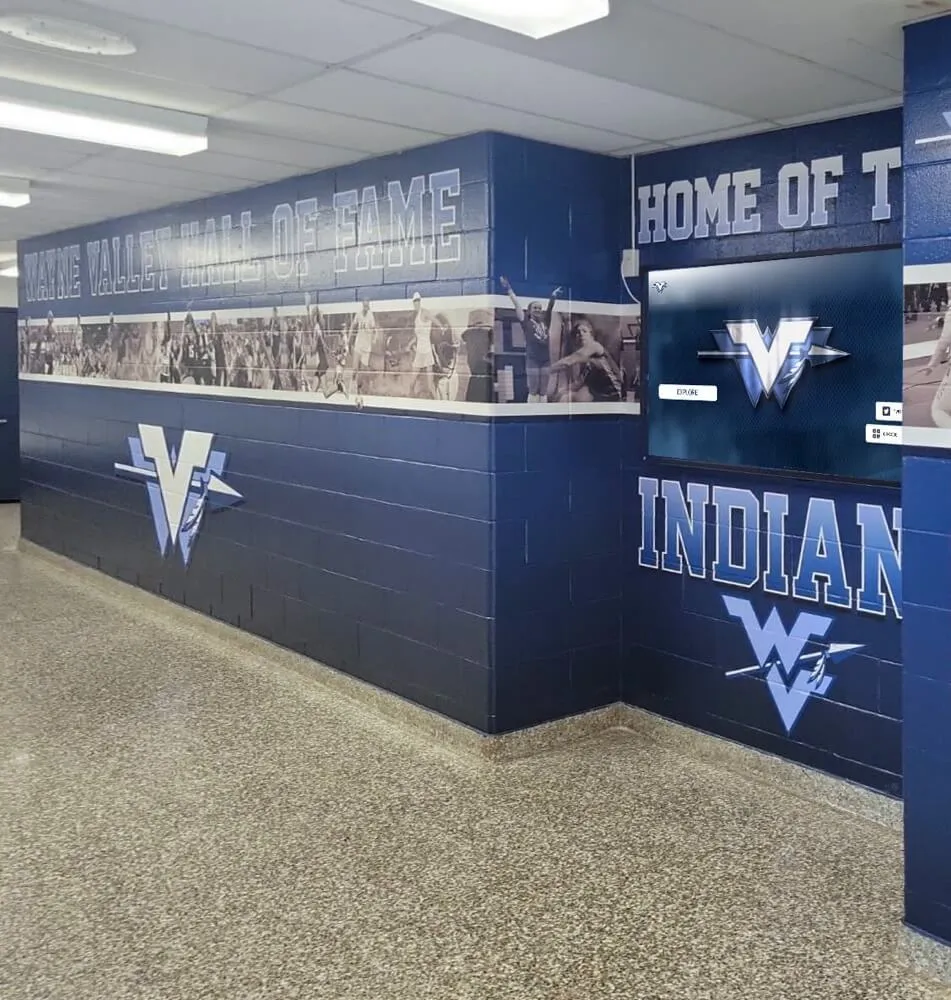
Digital displays let schools preserve detailed retirement messages, photos, and service histories in a searchable format that physical plaques cannot accommodate
Teacher Retirement Message Examples by Display Context
For Digital Recognition Walls
Digital recognition walls support richer content than plaques. A teacher’s digital profile entry can include their retirement message alongside a photo, years of service, subjects taught, notable accomplishments, and a brief narrative—essentially a full professional portrait rather than a name and date.
Profile headline (displays prominently on the screen):
“[Name] | [Subject] | [Years] Years of Service | Retired [Year]”
Display bio (150–200 words for a digital profile):
“[Name] joined [School Name] in [year] as a [subject] teacher and spent the next [X] years building one of the school’s most demanding and beloved programs. [He/She/They] introduced [notable initiative or program], coached [activity] for [X] seasons, and mentored dozens of colleagues through the school’s new teacher induction process.
Colleagues describe [Name]’s classroom as a place where students who thought they weren’t ‘good at’ [subject] discovered they’d been wrong. [He/She/They] was named [recognition] in [year] and [year], and [his/her/their] former students now teach, lead, and contribute across [region or field].
[Name] retired in [year] after [X] years at [School Name], leaving behind a department, a standard, and a community of people who are better for having known [him/her/them].”
For Physical Plaques and Hallway Displays
Physical plaques impose strict word limits. The best plaque inscriptions for retiring teachers work in three layers: identity (name, role, years), contribution (what they built or changed), and legacy (the continuing effect).
[Name] [Subject] Teacher & [Role, e.g., Department Chair] [School Name] | [Start Year]–[Retirement Year] "[X] years of students who learned what it means to think rigorously."
[Name] [X] Years of Distinguished Service Educator. Mentor. Coach. Retired [Year].
For schools developing comprehensive retirement recognition programs—including how to approach recognition planning well before a teacher’s final year—the teacher retirement planning and recognition guide outlines a framework many districts have adapted.
For Retirement Cards and Ceremony Programs
Card inscriptions and ceremony program notes call for warmer, more personal language than plaques. These messages are typically read privately and serve as keepsakes:
“We know what you sacrificed to be here, and we know what you gave when you were. This school is better because you chose it. You will be missed by people who will never fully be able to say so.”
“Thank you for every Tuesday when it was hard and you came anyway. For every student who almost gave up. For every year you could have stopped trying this hard and you didn’t. This retirement is yours. You’ve earned every quiet morning.”
“Your students are in the world now. They carry your questions with them. That is how your career continues even after today.”
For Digital Archives and Staff Legacy Records
Schools building long-term staff archives—searchable databases of educators who shaped the institution over decades—need message formats that hold meaning for visitors encountering them 10 or 20 years after the retirement:
“[Name] taught [subject] at [School Name] from [year] to [year], a span that covered [number] graduating classes. During [his/her/their] tenure, the [department or program] grew from [context] to [context], and [number] students under [his/her/their] guidance went on to careers in [field]. [Name] retired as the longest-serving [subject] teacher in school history. [He/She/They] is remembered by colleagues as someone who made rigor feel like a gift.”
This archival format preserves the factual record while giving future visitors an emotional anchor—critical for recognition that must stand on its own long after the ceremony has passed.
The broader question of how schools write wording for cards, ceremonies, and display contexts is addressed in depth in this guide on teacher retirement quotes for cards, speeches, and recognition.
How to Personalize a Teacher Retirement Message
Generic retirement messages fail because they could describe anyone. The antidote is a structured approach to gathering specifics before the message is written.
Five questions to gather before drafting:
- What did this teacher start or change? Programs, traditions, clubs, curricula—anything that exists at the school because this person built it.
- What do former students consistently say about their classroom? Asking alumni directly, or reviewing any available testimonials, provides language that feels authentic.
- What recognition did this teacher receive? Awards, grants, department head roles, coaching records—concrete achievements anchor abstract praise.
- What subject or grade level did they teach, and for how long? Specificity about what they did and for how many years grounds the message in reality.
- What should a student who never met this teacher understand about them? This is the archival question—the one that shapes messages meant to outlast the ceremony.
With these inputs, even a 50-word plaque inscription can be specific enough to honor a real person rather than a generic “dedicated educator.”
Schools designing more comprehensive staff celebration frameworks—including how to coordinate recognition across events, displays, and ongoing digital programs—will find useful guidance in the resource on teacher appreciation event ideas and staff recognition planning.
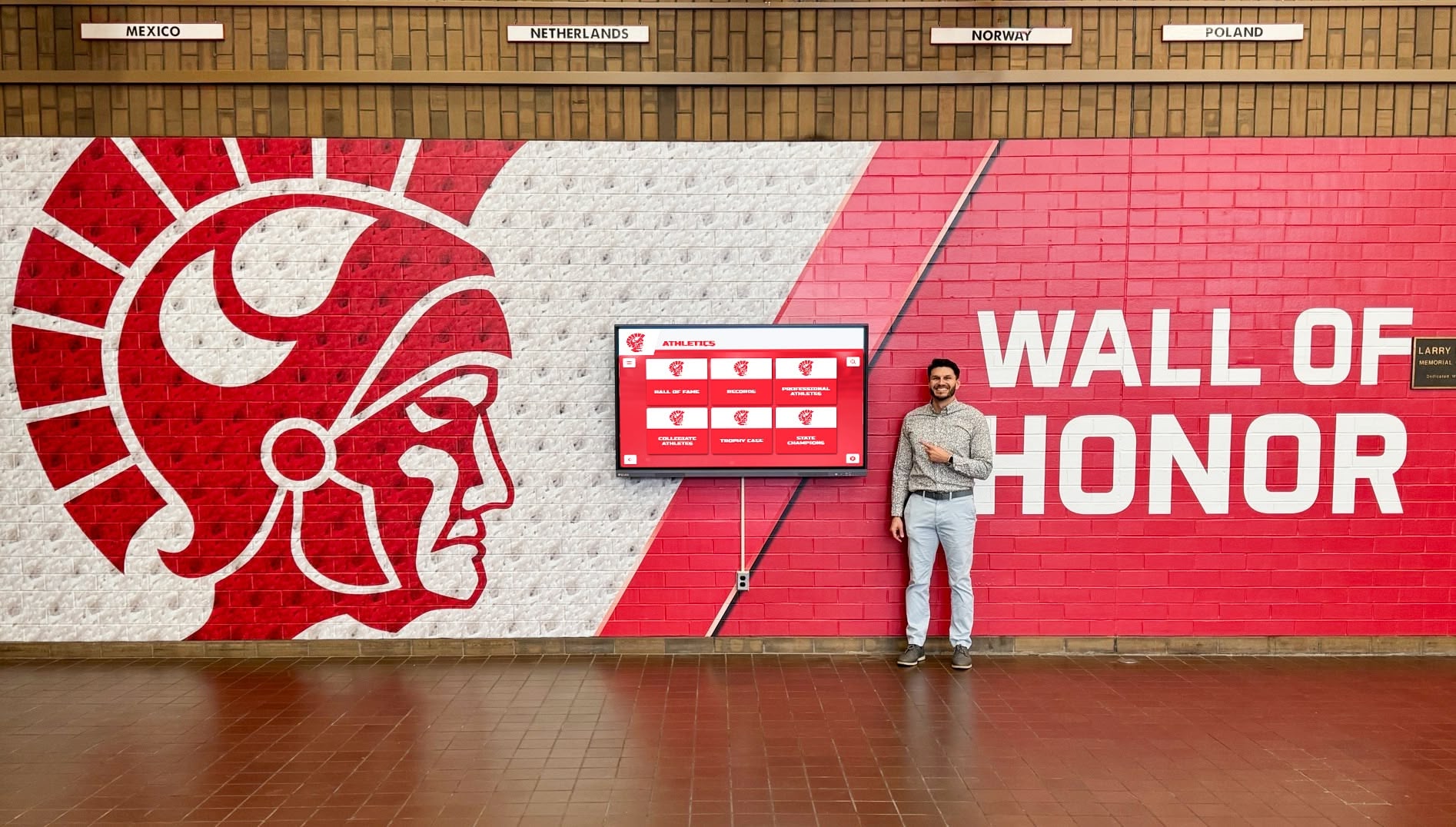
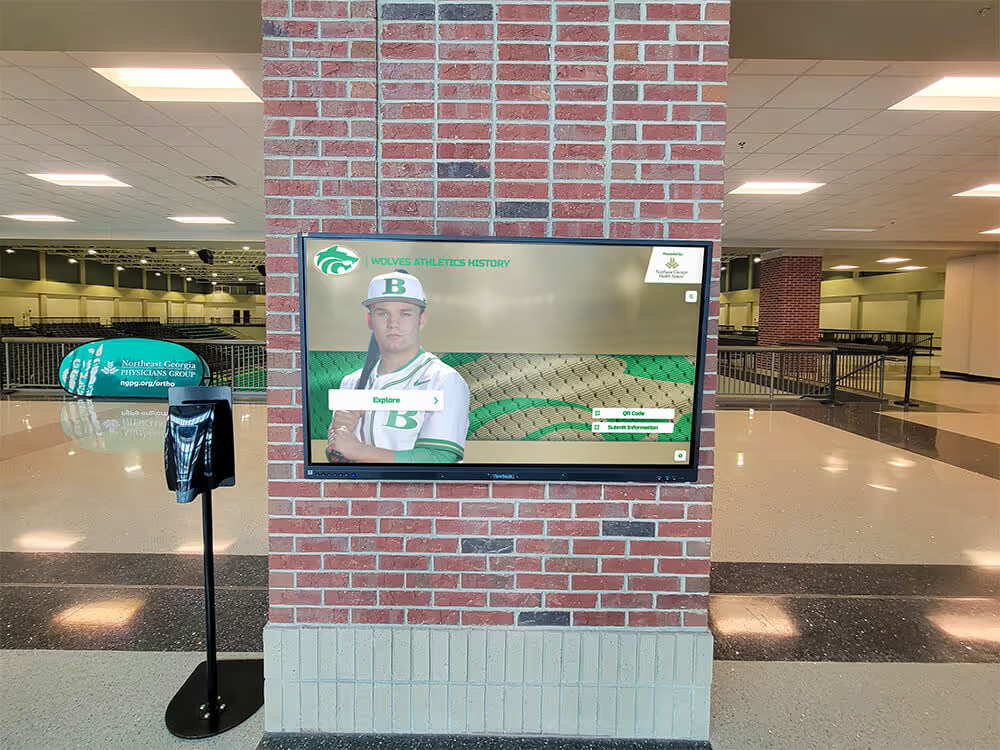
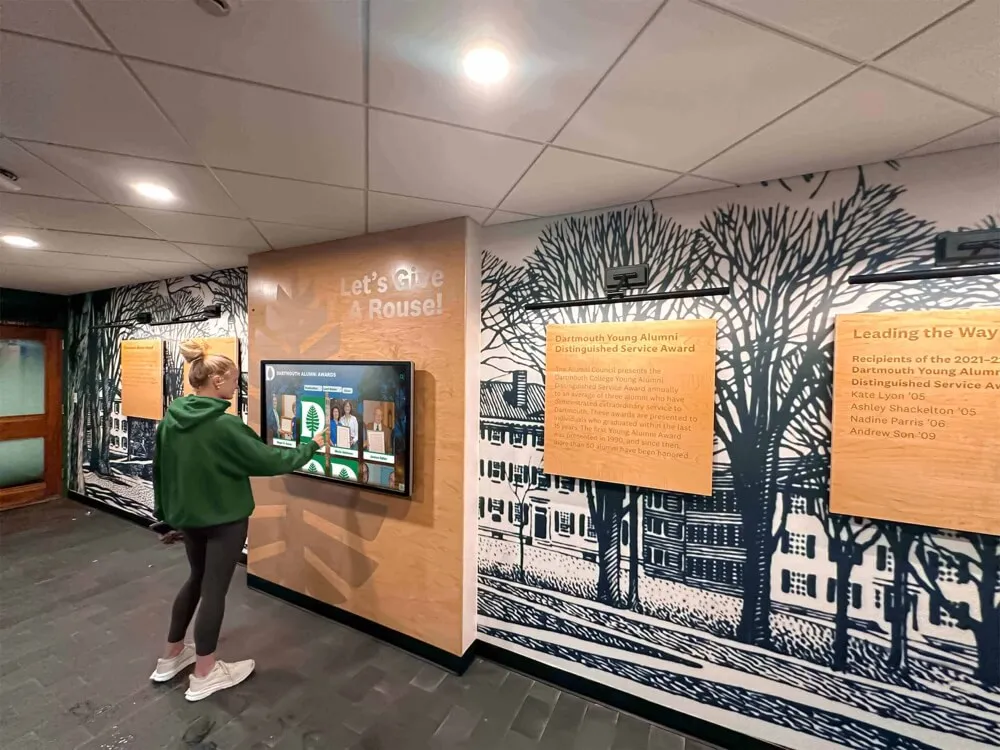
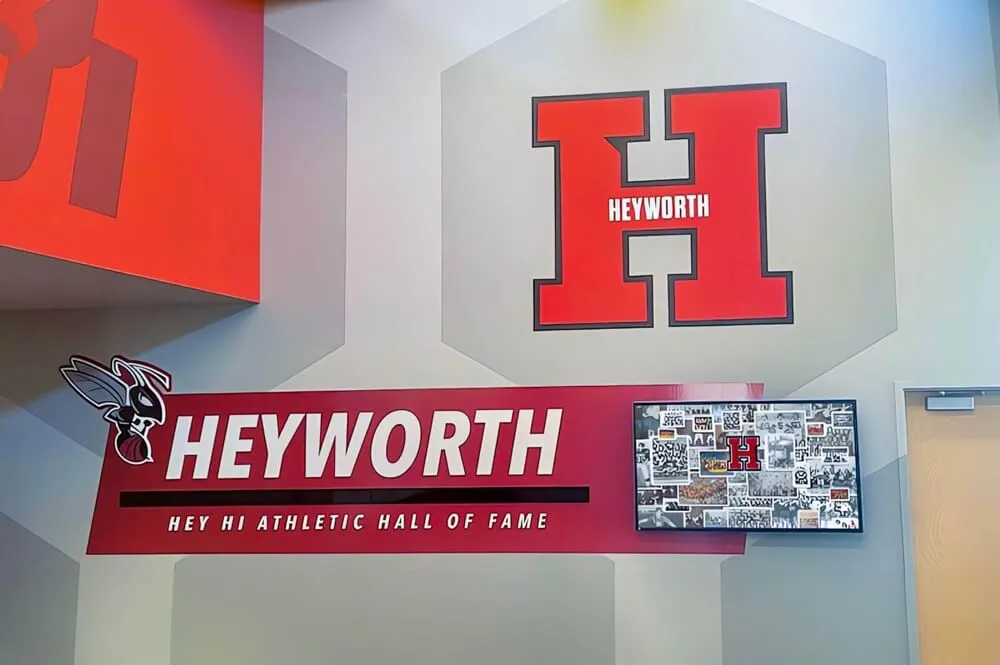
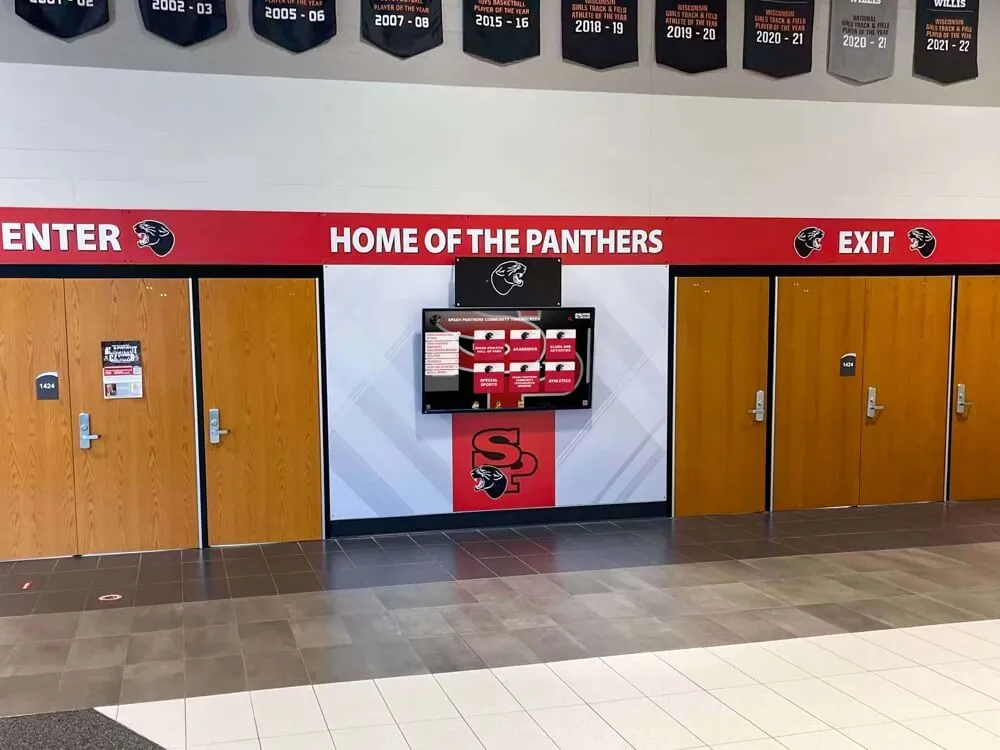
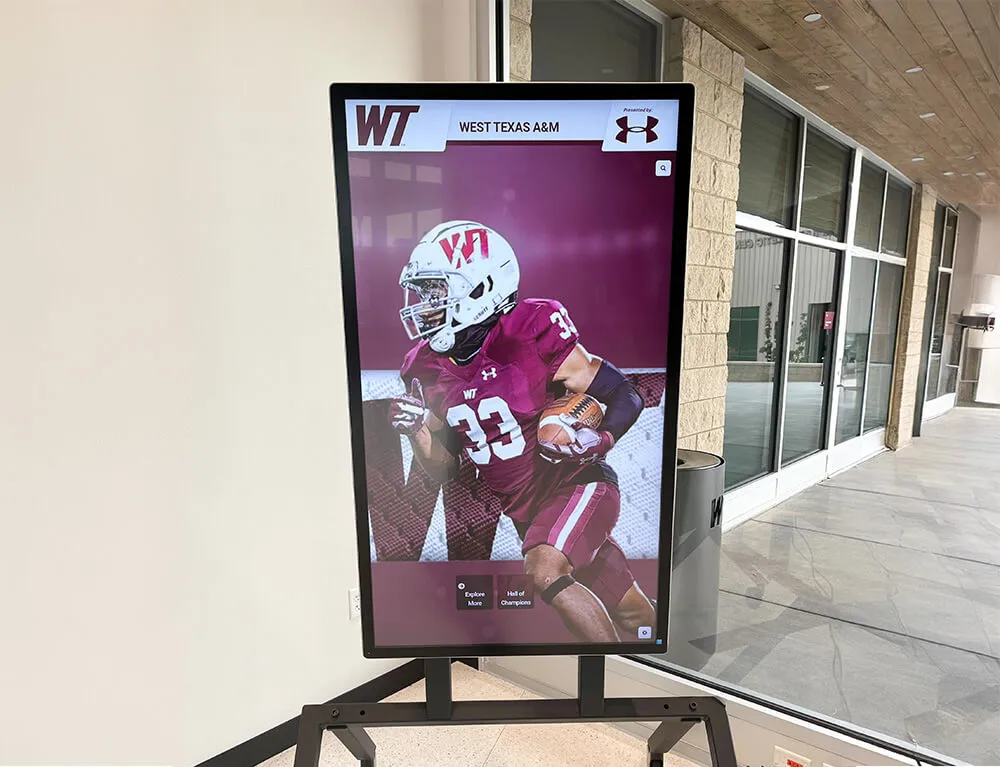
Hallway recognition displays become institutional memory—visitors encounter retiring teachers' messages years after the ceremony itself
Preserving Teacher Retirement Messages in Staff Recognition Displays
Writing a strong retirement message is only the first step. The second—and often overlooked—step is choosing a format that ensures the message is visible, searchable, and durable for the years ahead.
Why Display Format Determines Message Longevity
Physical plaques endure, but they have fixed capacity. A school that installs a retirement plaque wall in 1990 will eventually run out of space—and when it does, the choice is either to stop recognizing new retirees or to remove older plaques. Neither option serves the institution’s mission.
Digital recognition displays solve the capacity problem entirely. Every retiring teacher can receive a full-profile entry—complete with photo, retirement message, years of service, and biographical narrative—without the school ever running out of display space. When a student in 2040 asks who taught [subject] at this school for thirty years, a searchable digital archive can answer that question in seconds.
Message Formats for Each Display Type
| Display Type | Optimal Message Length | Key Characteristics |
|---|---|---|
| Physical plaque inscription | 25–60 words | Permanent, space-limited, formal register |
| Digital wall profile bio | 100–250 words | Rich context, searchable, includes photo |
| Hallway tribute panel | 75–150 words | Moderate length, visually prominent |
| Digital archive entry | 200–400 words | Full narrative, durable, multi-decade readability |
| Ceremony program note | 100–200 words | Warm register, keepsake quality |
| Retirement card inscription | 50–100 words | Personal, heartfelt, private audience |
For schools developing or upgrading staff recognition programs that go beyond individual messages to comprehensive staff legacy systems, the guide on teacher and staff recognition programs covers the programmatic scaffolding that makes individual messages part of a coherent institutional effort.
Schools that have invested in staff recognition digital displays report that retiring teachers often cite the permanent digital profile as one of the most meaningful parts of their recognition—more than the ceremony itself.
The Role of Digital Recognition Systems
Interactive digital recognition systems change what’s possible for teacher retirement messages in three specific ways:
1. No capacity ceiling. Every educator who ever retired from a school can be recognized permanently, without displacing predecessors. A school with a 60-year history can display profiles of every retiring teacher from 1965 to the present.
2. Rich media integration. Digital profiles can include the retirement message alongside a career photo, a timeline of the educator’s service, a list of programs they led, and even a video tribute—context that a plaque simply cannot hold.
3. Searchability. Visitors, alumni, and new staff can search for a specific teacher by name, subject, or year of service. This transforms passive recognition into active institutional memory.
For staff teams learning to manage and update recognition content on these systems, the training guide for digital recognition displays covers the workflows that keep staff profiles current and accurate year over year.
The adjacent question of how to write recognition messages for principals and other administrative staff—whose contributions often parallel those of retiring teachers—is addressed in the guide on principal appreciation card and recognition wording.

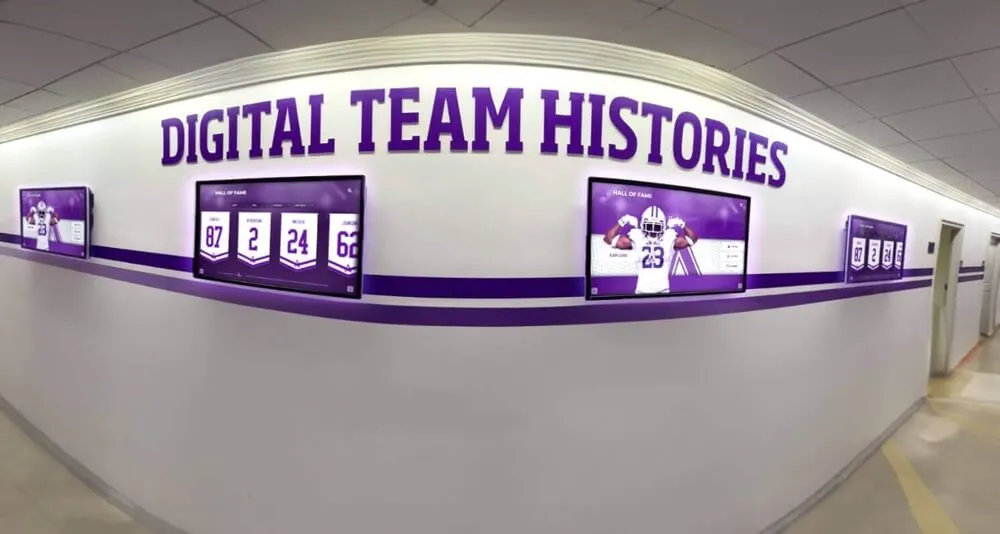
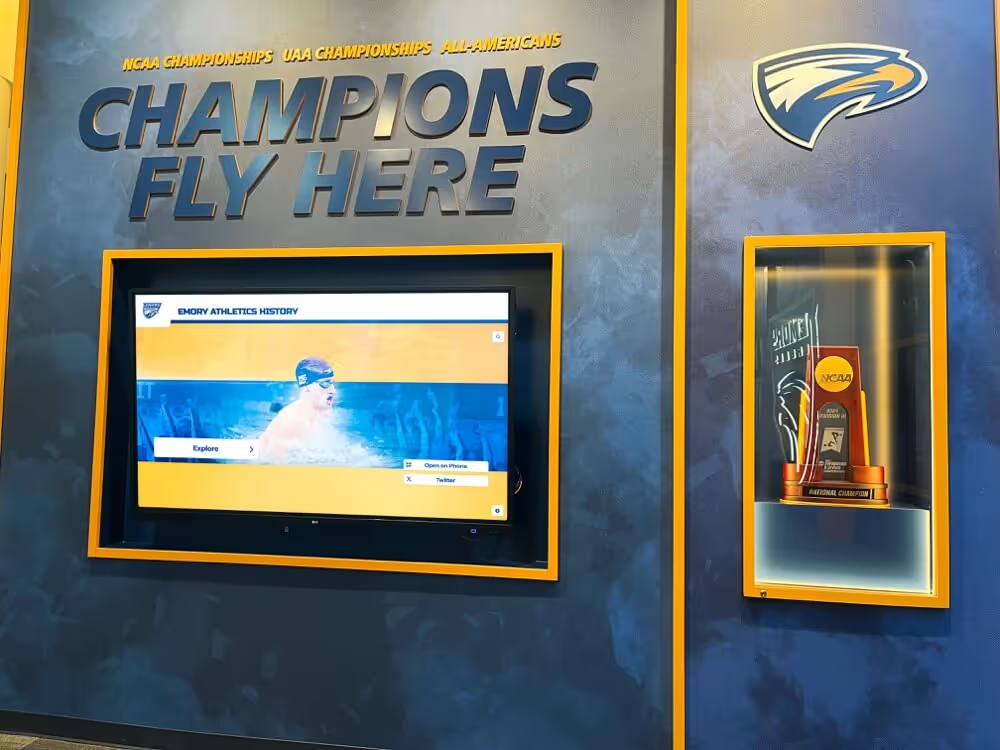
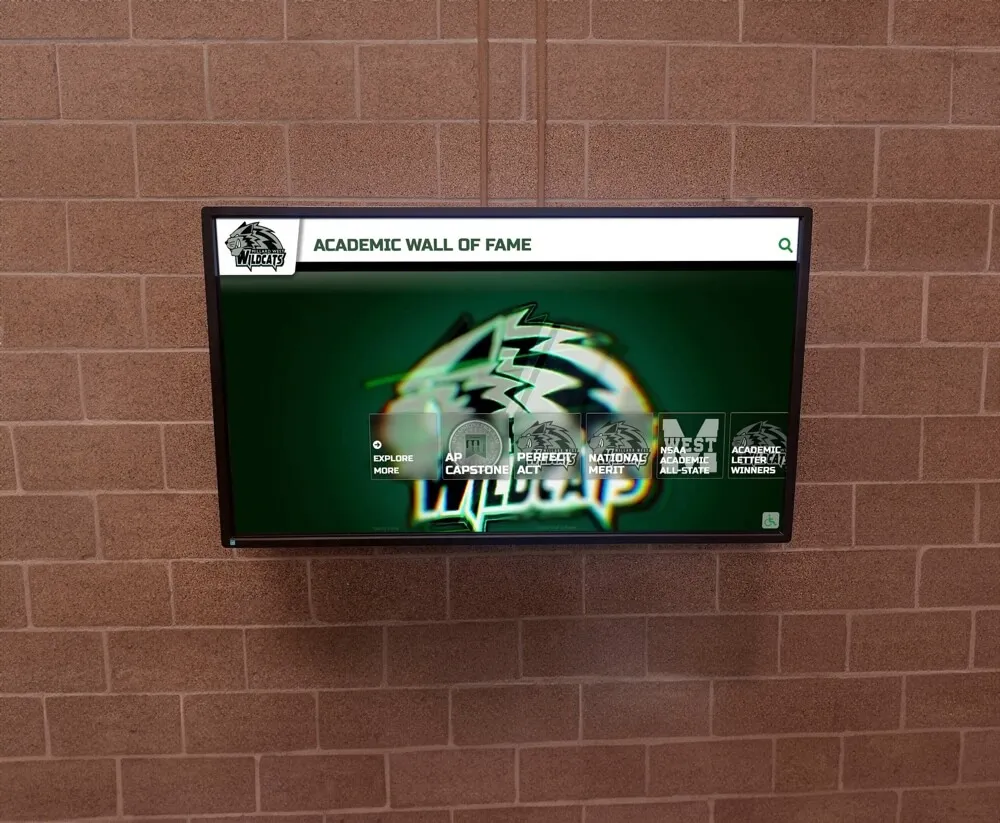
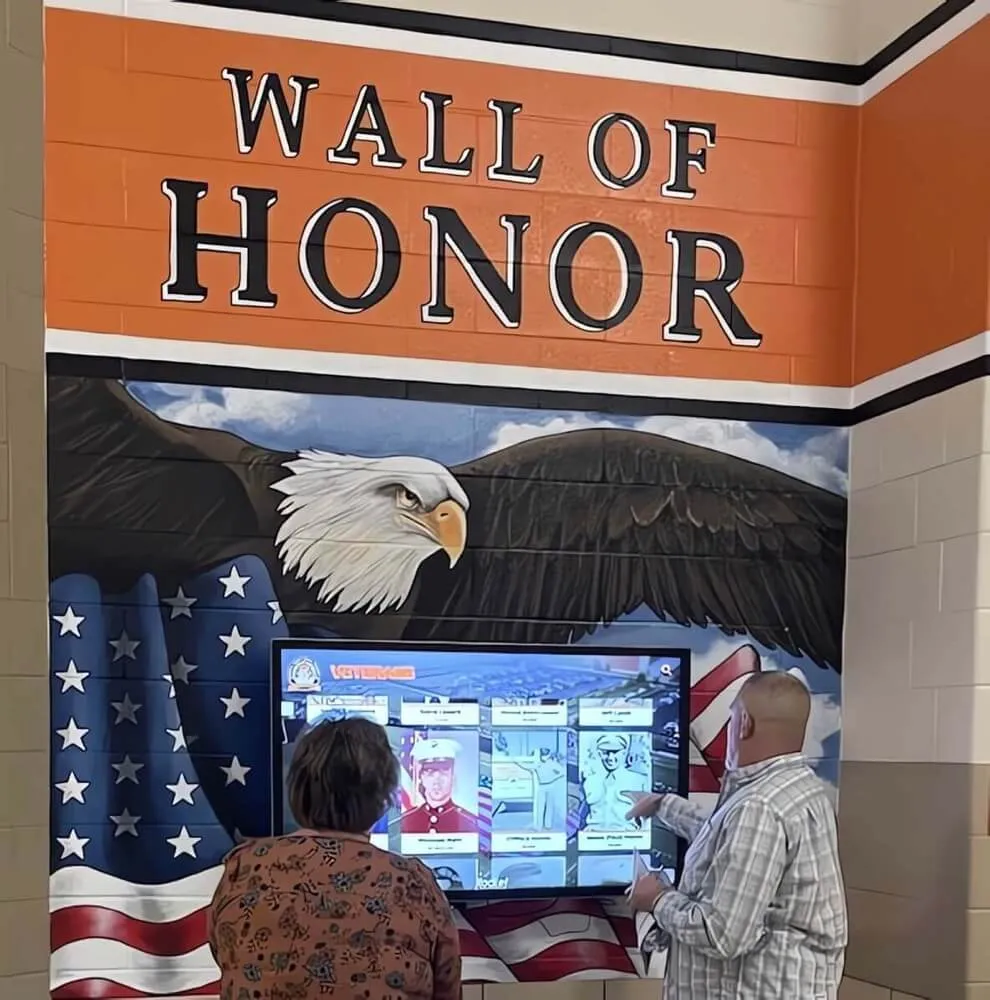
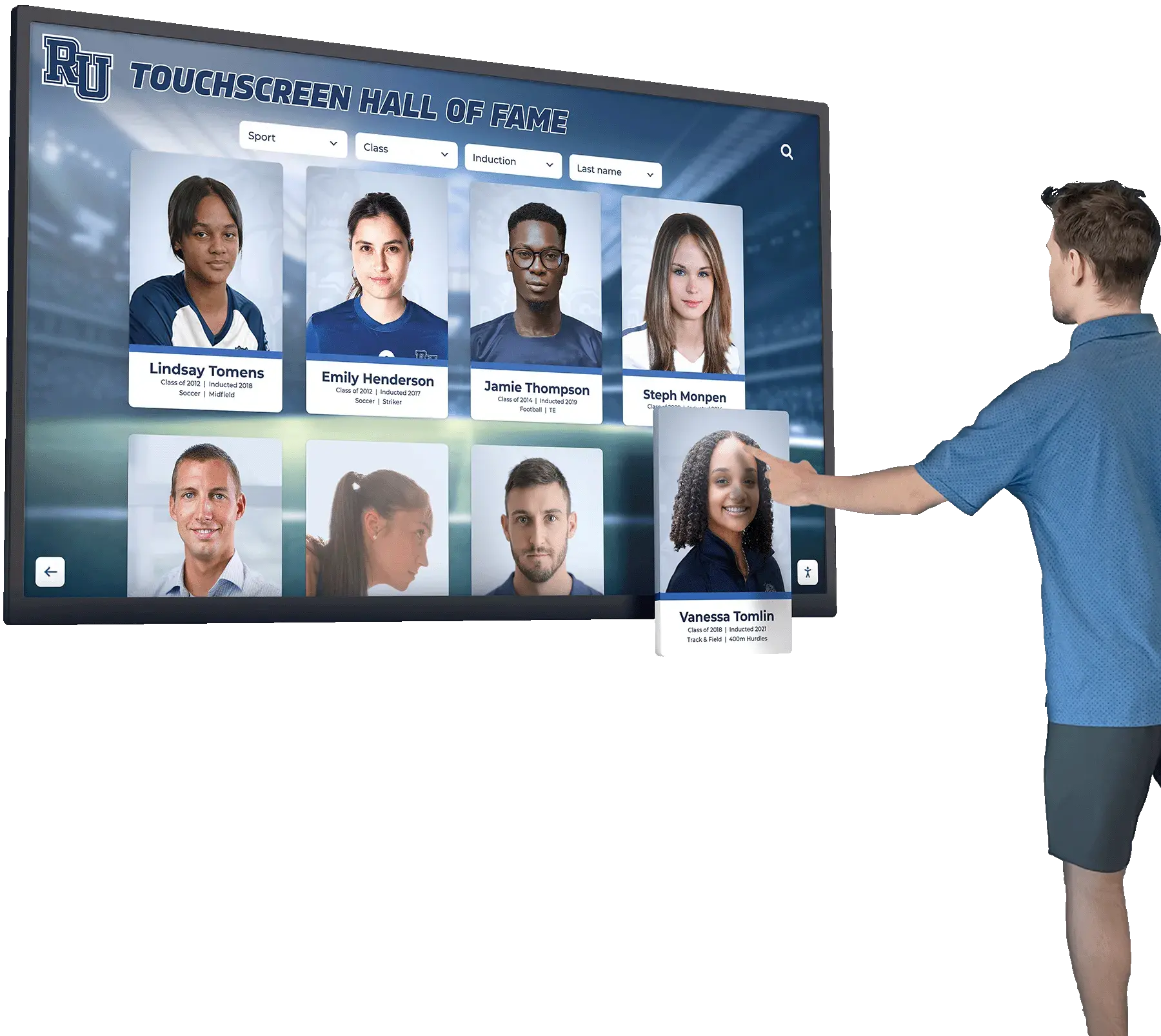
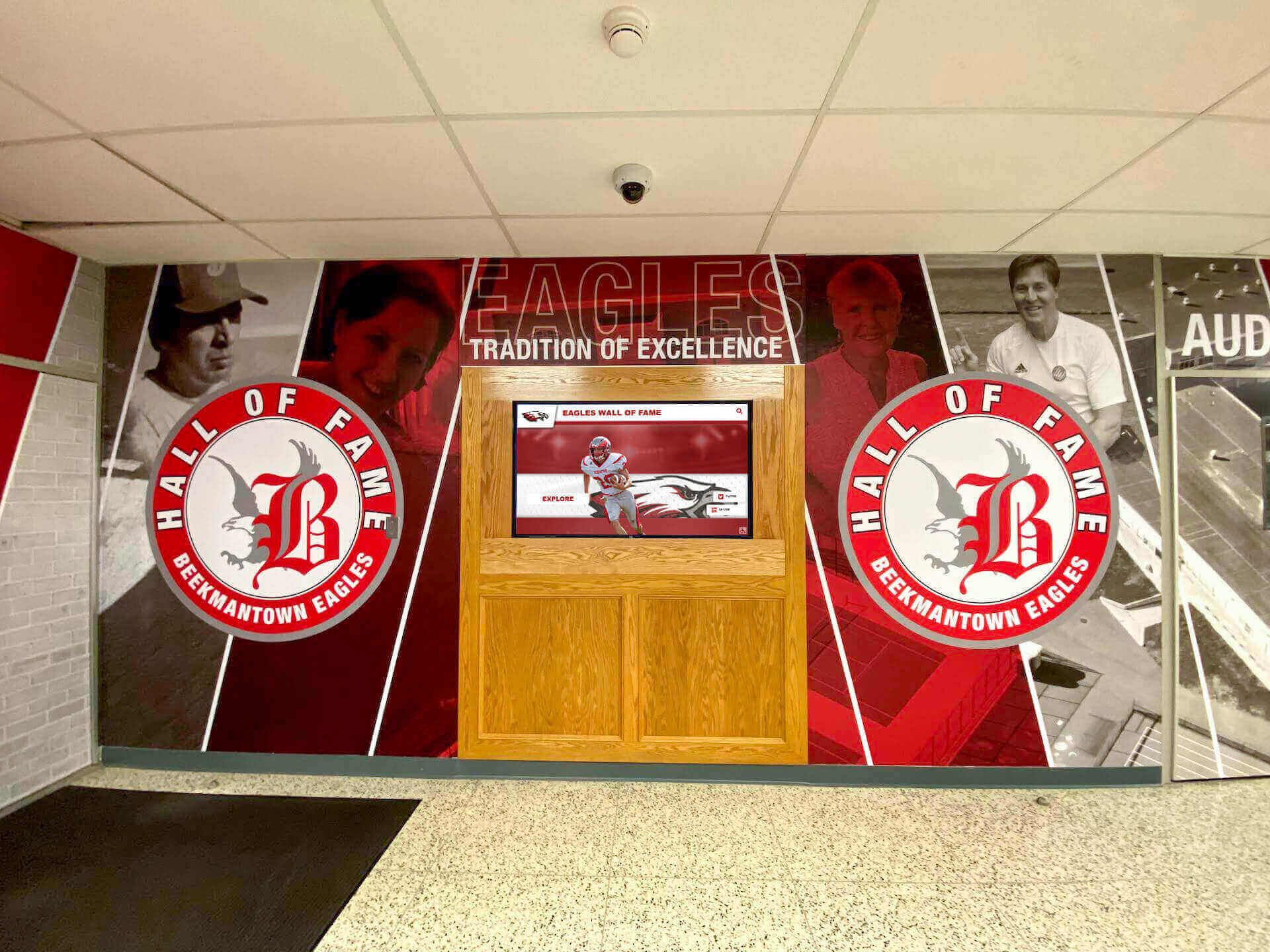
Corridor recognition systems give retiring educators a permanent presence in the school's daily life—their message visible to every student who passes by
How Rocket Alumni Solutions Supports Teacher Retirement Recognition
Rocket Alumni Solutions builds interactive touchscreen recognition systems designed specifically for school environments. For schools looking to preserve teacher retirement messages in a format that outlasts any physical plaque, the platform offers several features directly relevant to staff recognition:
Unlimited educator profiles. Every retiring teacher—whether they served 5 years or 35—can receive a full digital profile with retirement message, career photo, years of service, and biographical narrative. No capacity limits, no archiving required.
Cloud-based content management. School administrators can add or update a retiring teacher’s profile from any internet-connected device. A ceremony in June can be followed by a live digital profile the same week—no vendor orders, no 6-week fabrication lead times.
Rich media support. Profiles can include video tribute clips, career photos from multiple eras, a timeline of service milestones, and the full retirement message in whatever format the school chooses—from a concise plaque inscription to a full archival biography.
Searchable display. Visitors—including the retiring teacher’s former students, now adults returning to campus—can search by name and instantly find the recognition profile. The message that was written for the ceremony continues to reach new readers for decades.
Integration with broader recognition programs. Teacher retirement recognition lives alongside athletic hall of fame, academic achievement displays, student service boards, and donor walls—giving every category of institutional excellence a permanent home in the same system.
More than 600 schools and universities use Rocket Alumni Solutions to build recognition environments where every significant educator—including retiring teachers—receives the permanent visibility their service deserves.
FAQ: Teacher Retirement Messages for School Displays
What do you say to a teacher who is retiring?
A meaningful teacher retirement message acknowledges three things: how long the educator served, what they built or changed during that time, and what continues after they leave. Avoid generic phrases—a message that could describe any teacher honors no teacher in particular. The most effective messages reference specific contributions so the honoree and anyone who reads the display afterward understands exactly who is being recognized.
What is a good retirement message for a teacher?
A good teacher retirement message combines specificity with emotional truth. For a display or plaque: "[Name] taught [subject] here for [X] years, building the kind of classroom where students who thought they couldn’t discovered they were wrong." For cards and ceremonies, warmer language works better: “Thank you for every Tuesday when it was hard and you came anyway.” Match the tone and length to the context—plaques need brevity, digital profiles support full narratives, and cards allow personal warmth.
How long should a teacher retirement message be for a display?
Physical plaque inscriptions work best at 25–60 words. Digital recognition wall profile bios can range from 100 to 250 words, supporting a full career narrative. Archive entries intended as permanent institutional records can extend to 300–400 words. Every word should earn its place—a 40-word plaque that says something specific is more powerful than a 200-word block that doesn’t.
Can schools preserve teacher retirement messages digitally?
Yes—and digital preservation offers significant advantages over physical plaques alone. Interactive digital recognition systems store a teacher’s complete retirement message alongside a career photo, years of service, biographical narrative, and video tributes. These displays are searchable, meaning a retiring teacher’s profile can be found by former students returning to campus decades later.
What information should be included in a teacher retirement display?
A complete entry should include: full name, primary subject or grade level taught, total years of service (dates), significant roles held, notable accomplishments or programs built, the retirement message itself, and a career photo. Digital displays can also include a timeline of service milestones, former student tributes, and video content. The goal is a profile specific enough that someone who never met this educator still understands what made their service meaningful.
Conclusion: Write Messages Worth Preserving
A teacher retirement message is one of the few pieces of institutional writing that must simultaneously honor a person, educate future visitors, and endure. The educators who spend decades building a school’s culture deserve language that does justice to the weight of that service—not a generic acknowledgment that disappears into a storage room within five years.
The examples and frameworks in this guide give schools a starting point for every context: formal plaques, heartfelt cards, brief display entries, and rich digital archive profiles. The common thread across all of them is specificity—messages grounded in what this educator actually did, built, and left behind.
And once the message is written, the display system matters as much as the words. Physical plaques deliver permanence and ceremony. Digital recognition systems deliver permanence, depth, searchability, and the ability to honor every educator who ever served—not just those who fit on a wall.
Give Retiring Teachers the Permanent Recognition They've Earned
Rocket Alumni Solutions builds interactive digital recognition systems that preserve teacher retirement messages, career photos, and service histories in a searchable format that lasts for decades. Request a demo to see how it works for your school.
Request a Custom Demo