



Intent: define. A trophy case glass edge damage inspection is a structured, hands-on review of every glass panel in a school display case that identifies chips, cracks, spalling, and delamination along panel edges before those defects can injure students, staff, or visitors or allow moisture to reach irreplaceable memorabilia. Athletic directors, facilities managers, and archivists should complete this inspection at least once per semester and after any physical impact event—even one that appears minor from the outside.
This guide covers what edge damage looks like, how to classify it by severity, a complete step-by-step inspection protocol, a printable checklist, repair and replacement decision criteria, and how digital recognition displays eliminate the glass inspection requirement altogether for programs ready to modernize their awards showcase.
A trophy case glass panel can hold a chipped edge for months before anyone notices—and that quiet period is exactly when the risk builds. An unaddressed chip concentrates stress along its perimeter every time the case door opens, the building HVAC cycles, or temperature swings between a game-day crowd and an empty gym. Glass that appears stable today may shed a fragment tomorrow when a student leans in to read a championship plaque. A trophy case glass edge damage inspection turns that invisible risk into a documented, manageable maintenance item.
Schools that conduct scheduled inspections also protect the athletic and academic artifacts inside. A hairline crack along a sliding-door track channels moisture from seasonal humidity changes directly onto championship banners, framed photographs, and engraved awards that cannot be replaced. Catching edge damage early is both a safety protocol and a preservation strategy.

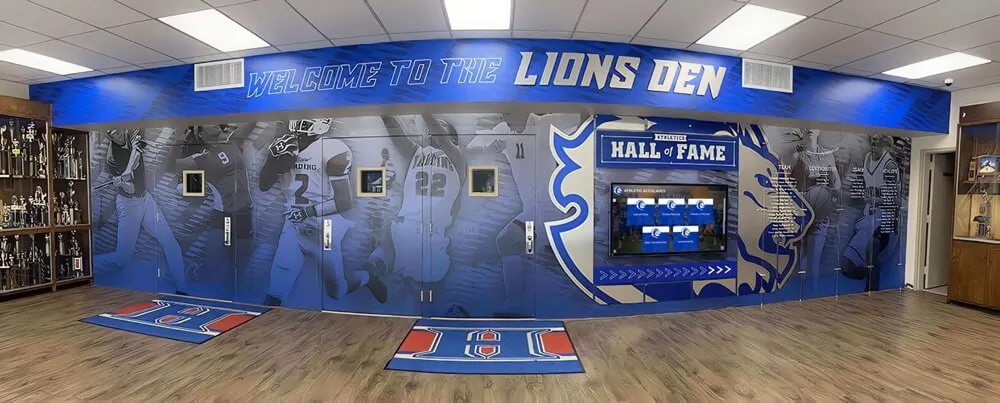
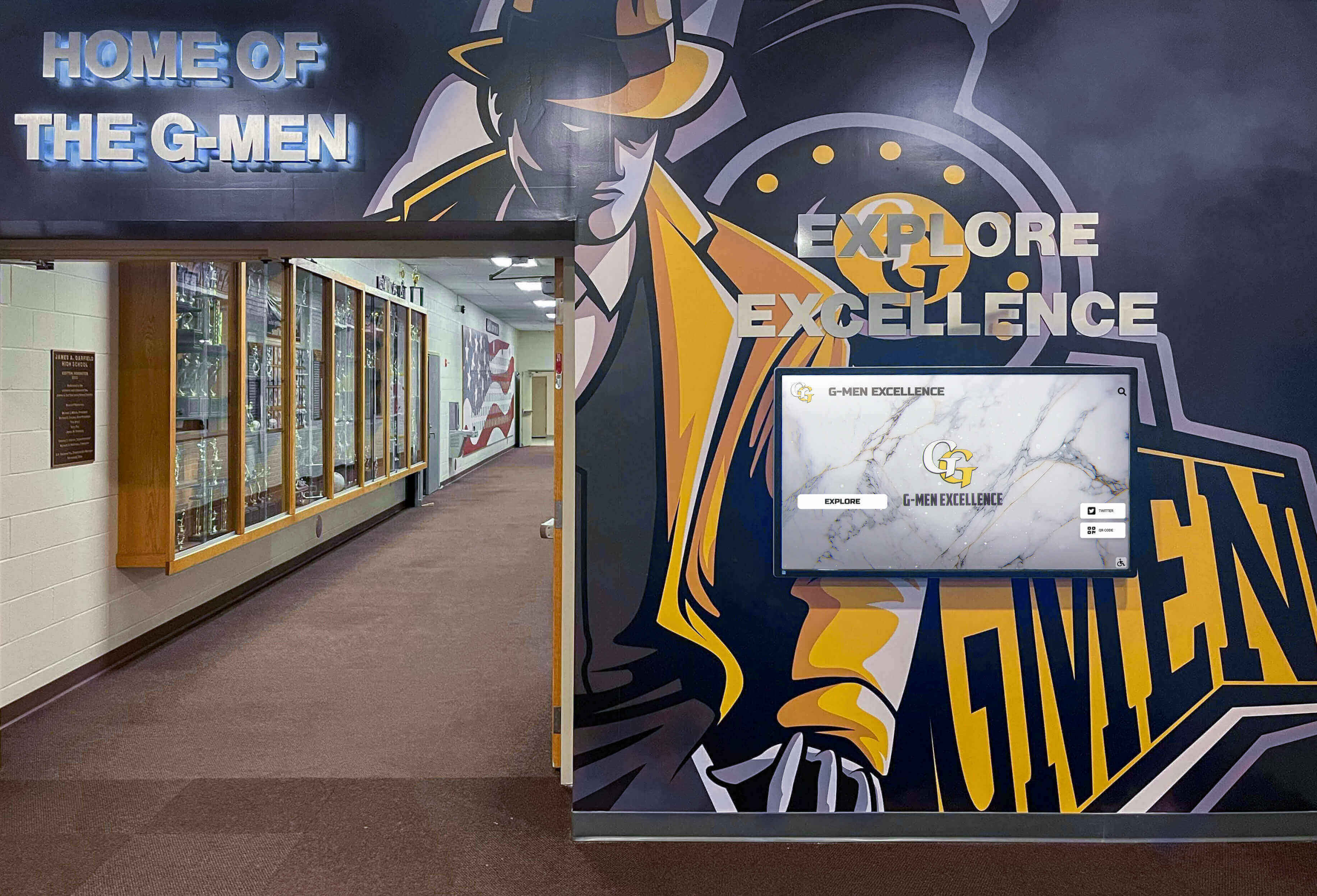
Trophy cases in school hallways require routine glass edge inspection to protect both visitors and the irreplaceable memorabilia displayed inside
What Counts as Glass Edge Damage in a Trophy Case?
Glass edge damage in a trophy case falls into four distinct defect categories, each with different implications for safety urgency and repair approach.
Chips are localized material losses at the panel edge—typically semicircular or V-shaped, ranging from a barely perceptible nick to a missing piece several centimeters in diameter. Even small chips create micro-fracture stress points that grow under repeated thermal or mechanical loading. A chip along a door edge that contacts its frame with every opening cycle is under active stress and should be treated as high-priority.
Cracks originate at an edge and propagate inward. Visible cracks that have already entered the panel face are structurally significant regardless of length—they compromise the load-bearing integrity of the entire panel and create sharply defined failure planes. Edge cracks that catch ambient light at an angle are often longer than they appear from a perpendicular view.
Spalling is the progressive flaking of thin glass layers from the panel face near an edge, often caused by compressed-edge installation (the panel was cut too tight for its channel), prolonged moisture exposure, or historical impact damage. Spalling looks like small crescent-shaped blisters or lifting layers and typically indicates that the panel’s structural integrity is already compromised across a wider area.
Delamination applies specifically to laminated safety glass, where the interlayer film begins to separate from one or both glass plies at the panel edge. Delaminated laminated glass loses the fragment-retention property that makes it safer than standard annealed glass, effectively reverting to the hazard profile of unprotected glass.
Understanding which defect type is present determines how quickly the panel must be addressed—and whether a repair is possible or a full replacement is required.
Step-by-Step Trophy Case Glass Edge Damage Inspection Protocol
Complete this inspection in sequence. Do not skip to later steps without completing earlier ones—the sequence is designed to identify hazards before you put your hands near damaged glass.
Step 1: Gather Inspection Materials
Before approaching any case, assemble:
- Nitrile or cut-resistant gloves (required before touching any glass edge)
- A pocket flashlight or narrow-beam LED torch
- A magnifying loupe (10× is sufficient for most edge defects)
- Inspection form or tablet with the checklist below
- Tape flags or adhesive labels in three colors: red (immediate action), yellow (monitor), green (pass)
- A ruler or tape measure for recording chip dimensions
- Isopropyl alcohol wipes for cleaning edge surfaces before close inspection
Step 2: Visual Survey from One Meter
Stand approximately one meter from the case and examine each glass panel without approaching. Look for:
- Visible cracks that extend into the panel face
- Large chips or missing glass segments along the top or side edges
- Discoloration or fogging along edges (indicates moisture intrusion)
- Any panel that sits at an unusual angle relative to its frame
Any panel showing visible cracks from one meter should be flagged red immediately. Do not open that case door or touch the panel until the severity assessment in Steps 4–5 is complete from a safe angle.
Step 3: Examine Framing, Channels, and Gaskets
Before inspecting glass edges directly, examine the framing system. Many edge defects originate in frame-level problems:
- Check aluminum or wood door channels for corrosion, cracking, or missing sections
- Look for gasket material that has shrunk, cracked, or pulled away from the channel—exposed glass edges without gasket buffering are at elevated chip risk
- Examine corner joints for separation; separated frame corners allow the glass panel to shift and contact the metal frame directly
- Note any frame areas where rust staining indicates long-term moisture contact
For a detailed walkthrough of gasket and seal inspection methodology that applies directly to the framing systems of school display cases, the school trophy case gasket seal inspection guide at digital-trophy-case.com covers compression testing, gap measurement, and replacement schedules that integrate naturally with a glass edge inspection workflow.
Step 4: Close-Range Edge Inspection with Flashlight
With gloves on, approach each panel and use the flashlight to rake light along all four edges at a low angle (roughly 15–20 degrees from the glass surface). Raking light causes chips and cracks to cast visible shadows that perpendicular examination misses entirely. Inspect:
- All four edges of each panel, including the top edge if accessible
- The full length of each sliding-door track contact zone
- Corner areas where two edges meet—corners concentrate stress from door operation
- Any area where a hinge, latch, or lock mechanism contacts or approaches the glass
Use the magnifying loupe to examine any area where raking light reveals potential damage. Measure and record chip dimensions and crack lengths on your inspection form.
Step 5: Check Interior Shelf Glass and Smaller Panels
Many trophy cases include internal glass shelves and smaller accent panels in addition to the main door panels. These secondary glass components are often overlooked in informal walkthroughs and frequently show edge damage from hardware contact during display changes. Inspect every glass component in the case, not only the door panels.
Step 6: Document, Label, and Assign Severity
After inspecting each panel, assign a severity classification (see the table below), apply the corresponding color flag, and document:
- Panel location (e.g., “main case, left door, bottom edge—right side”)
- Defect type (chip, crack, spalling, delamination)
- Defect dimensions (length, depth, width of chip as measurable)
- Recommended action and estimated urgency
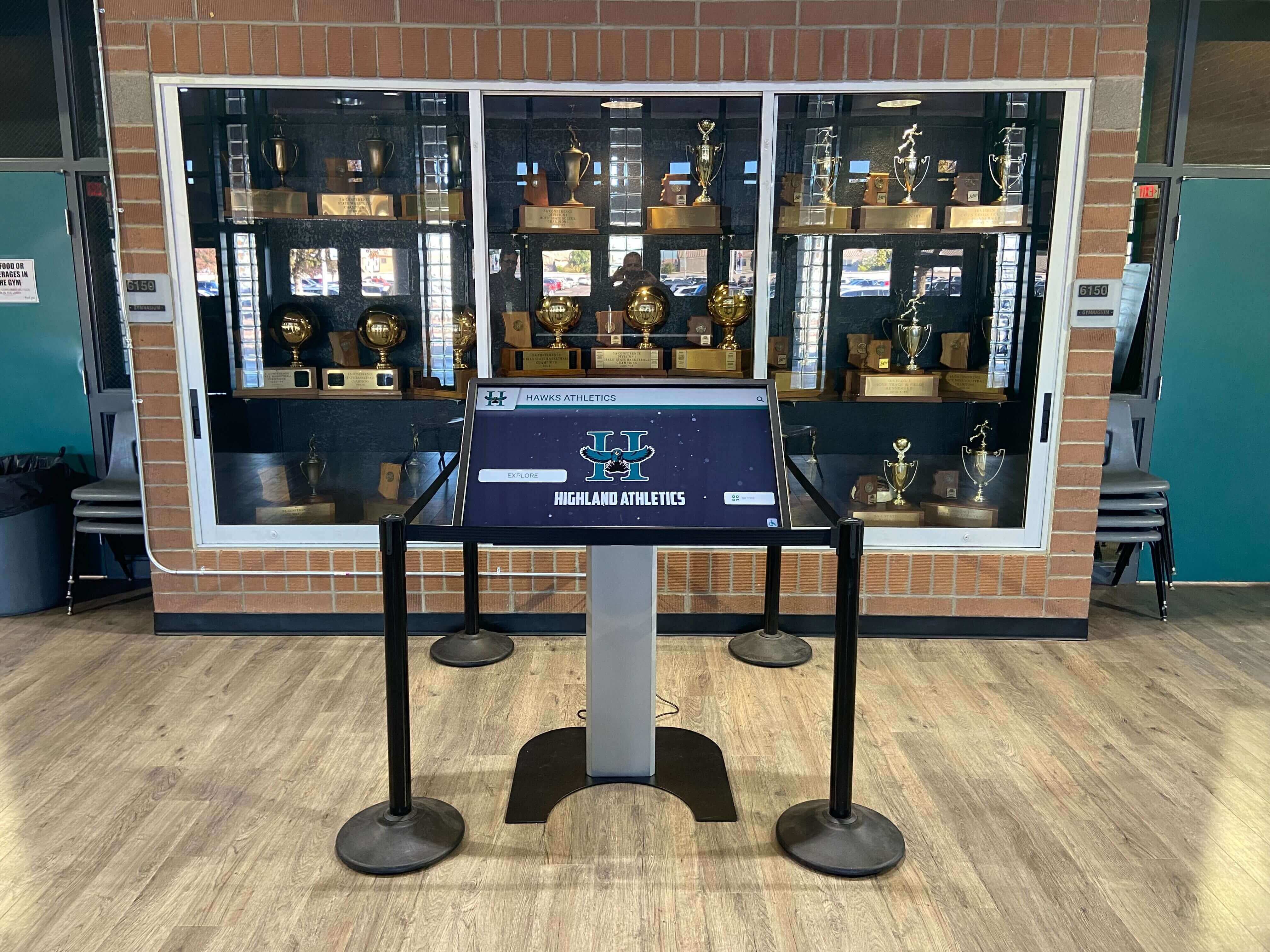
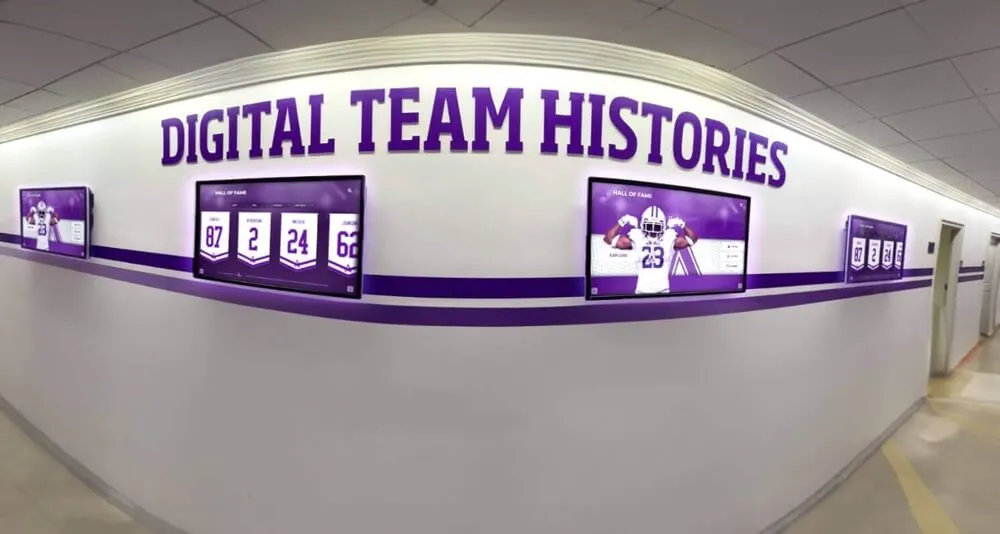
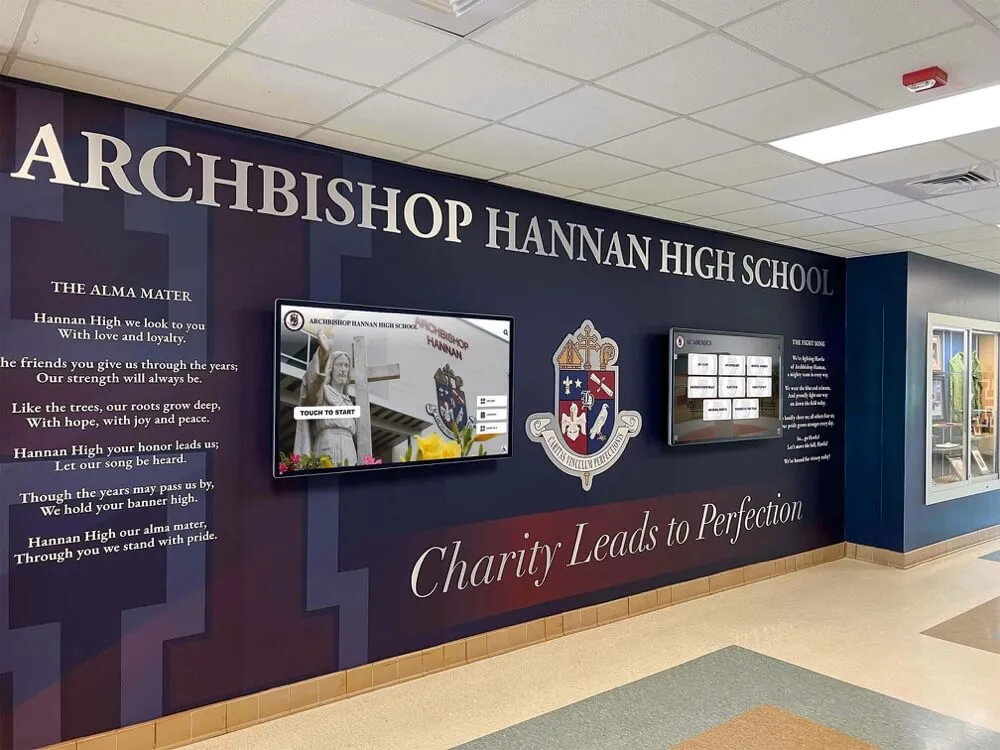
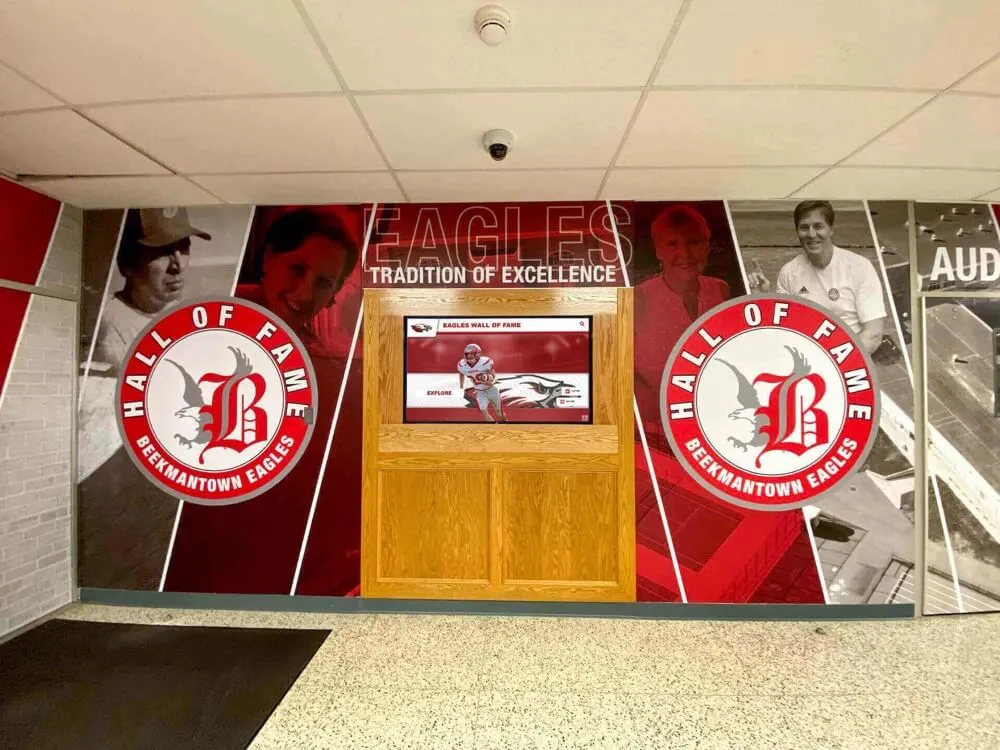
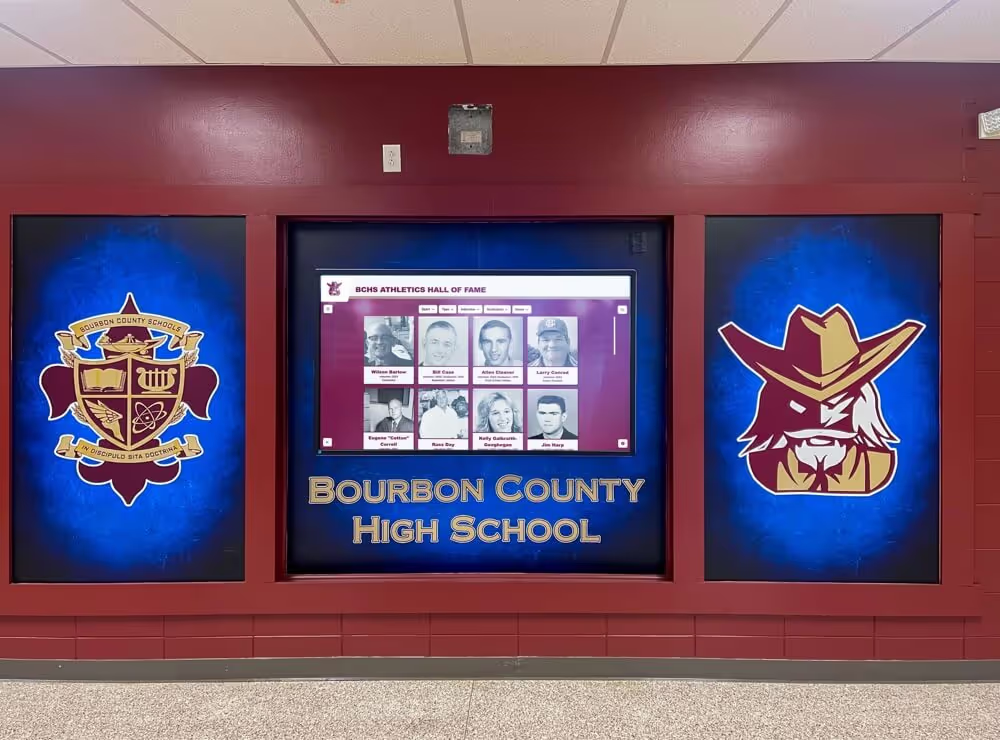
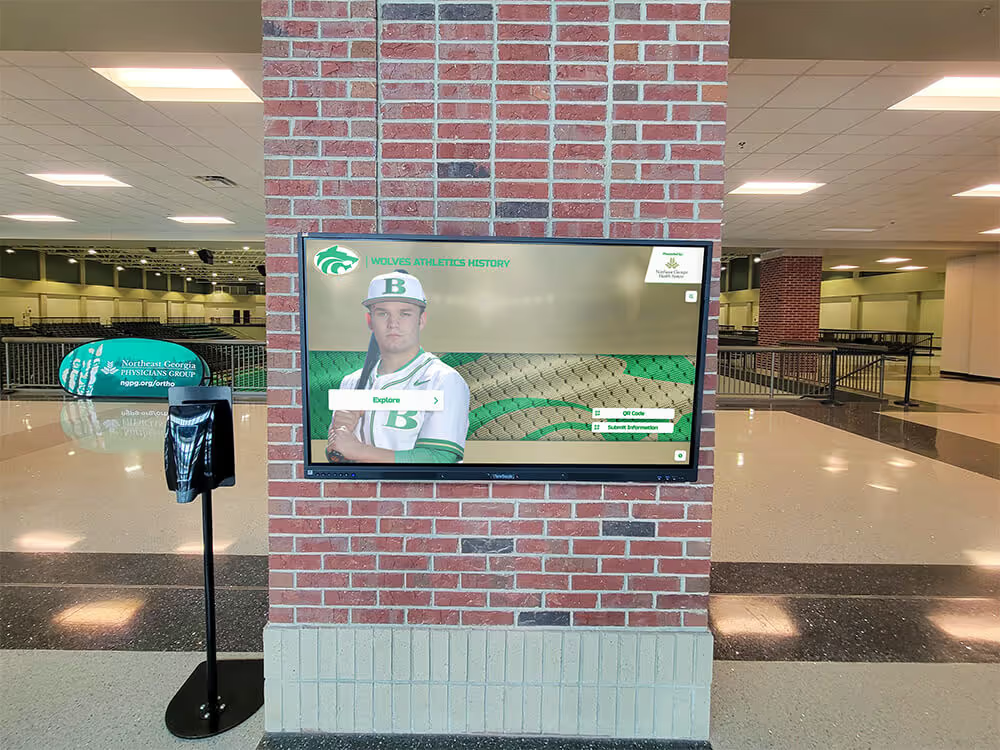
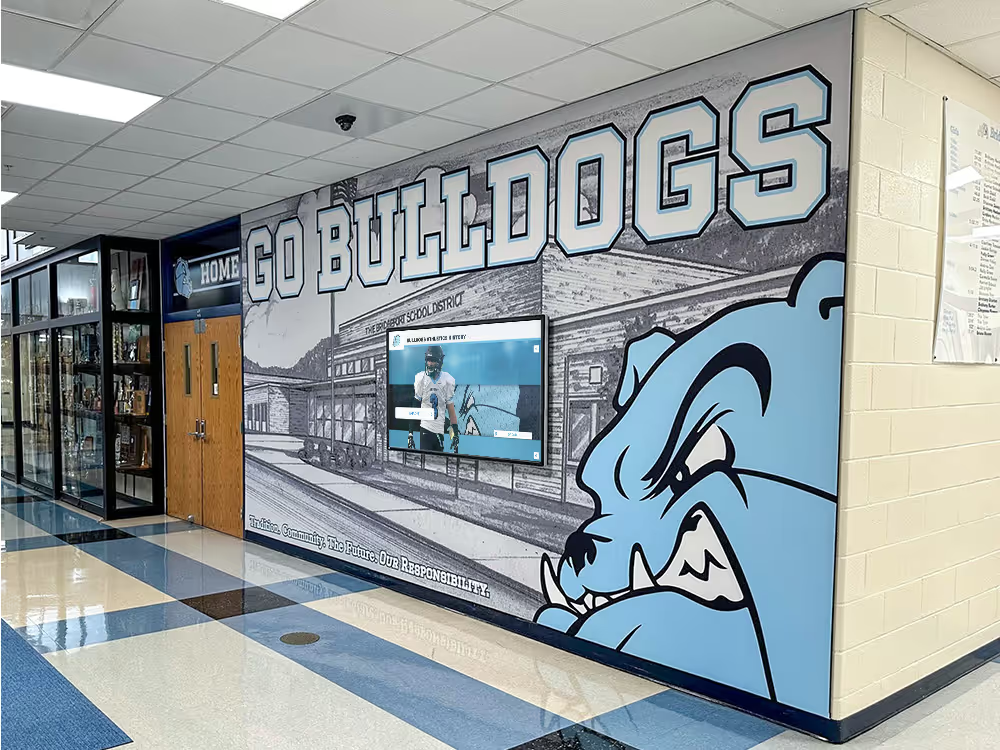
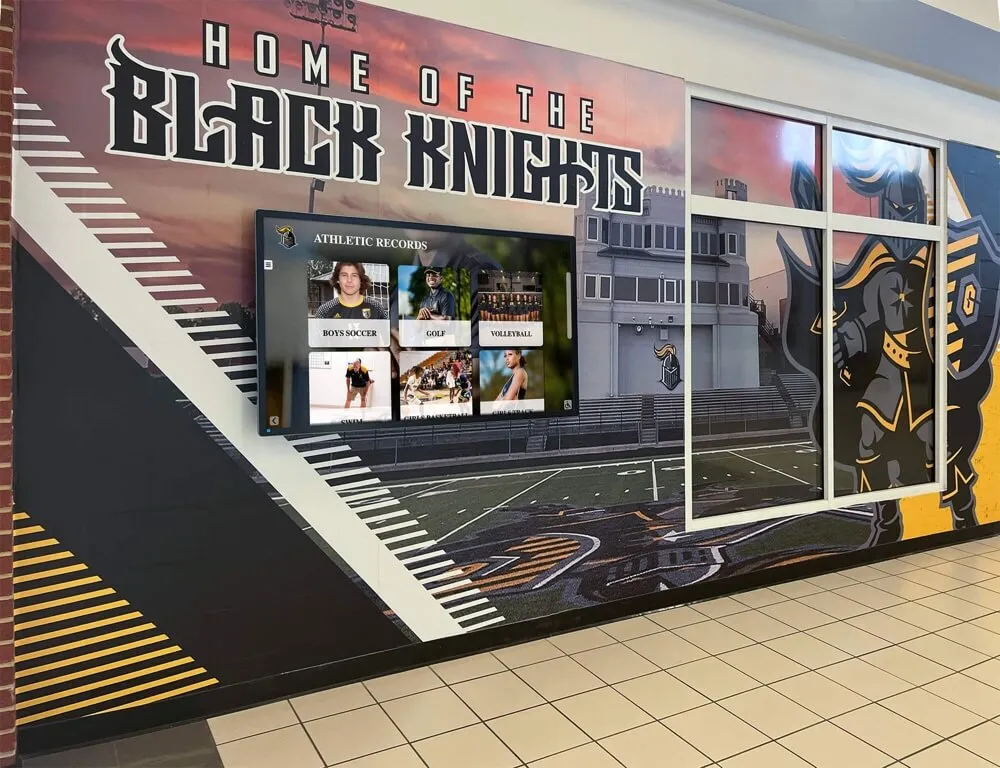
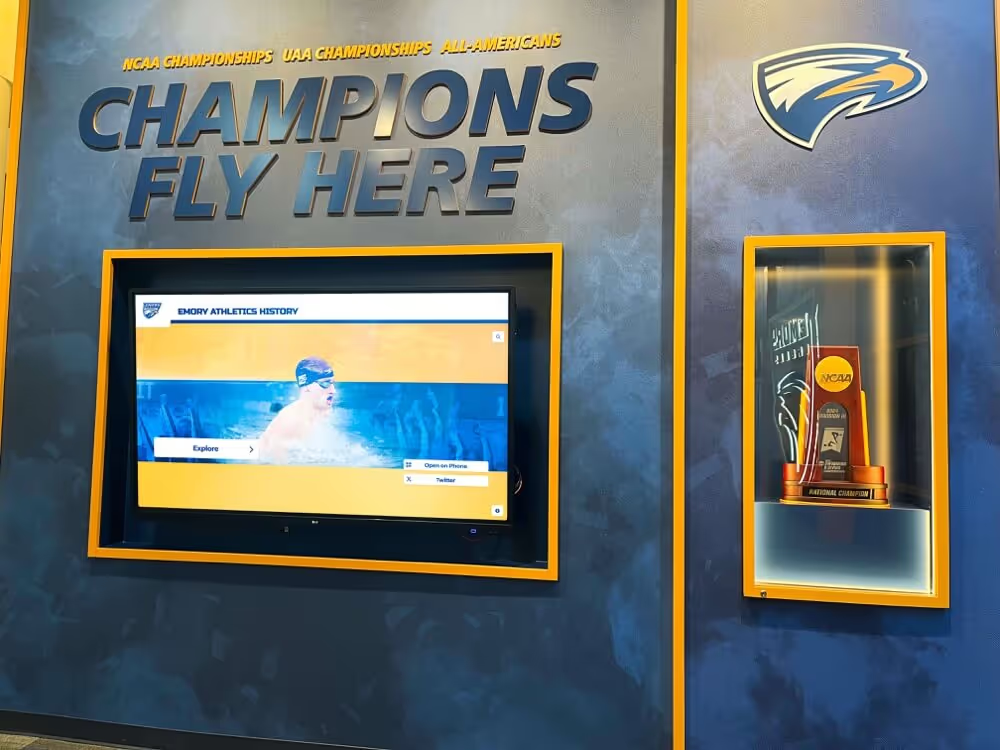
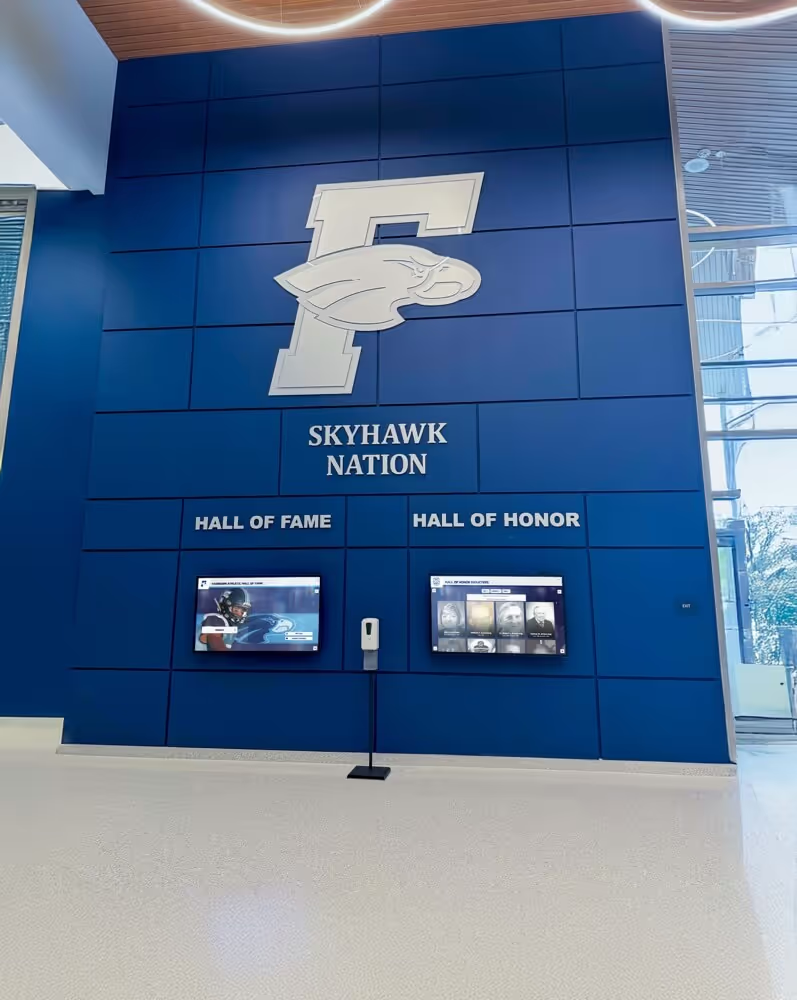
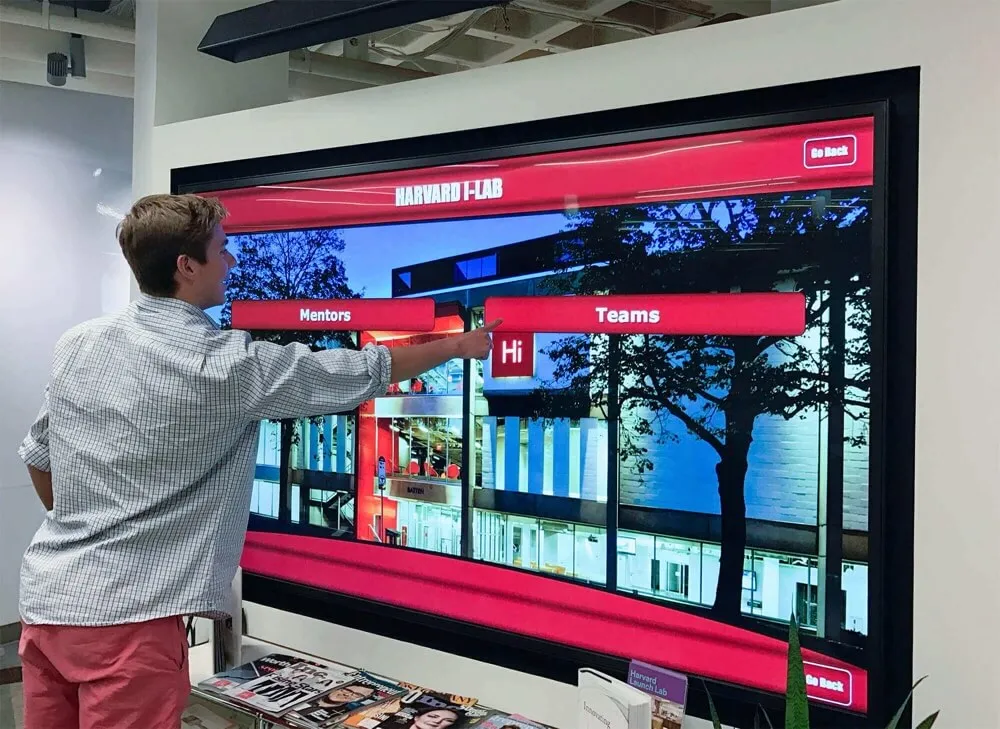
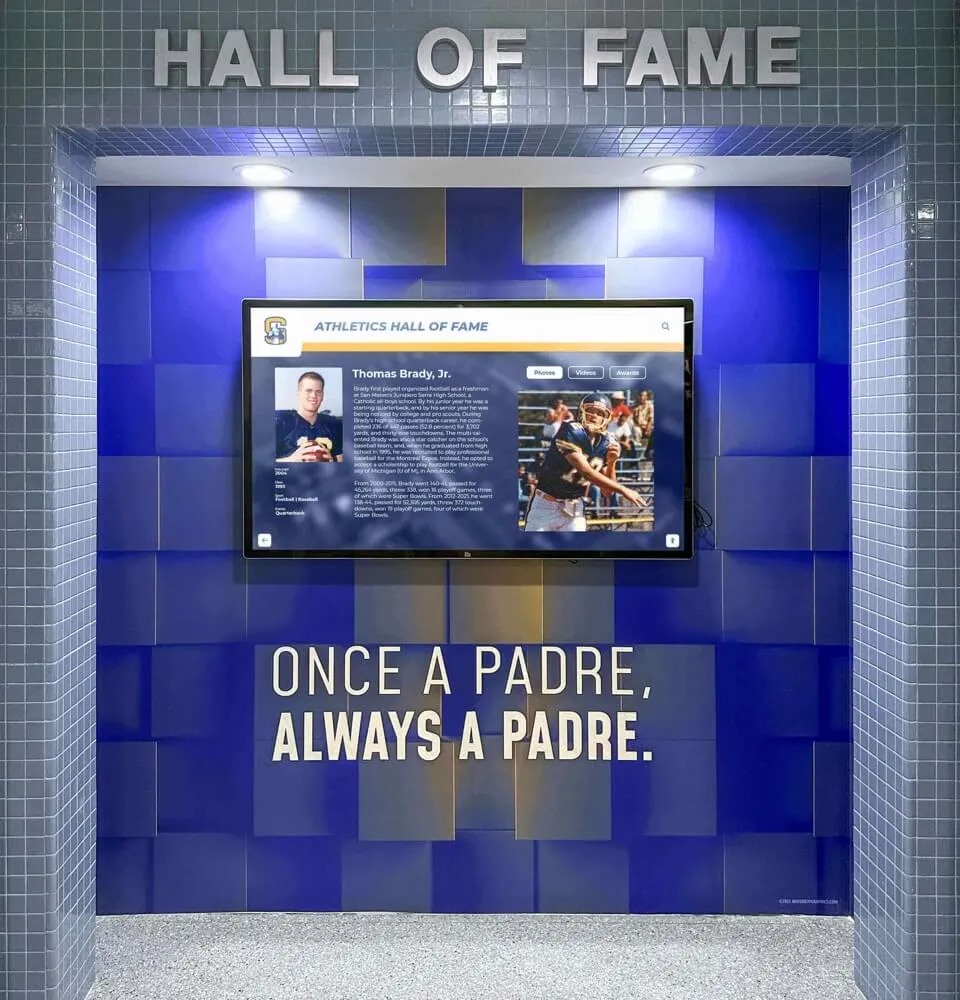
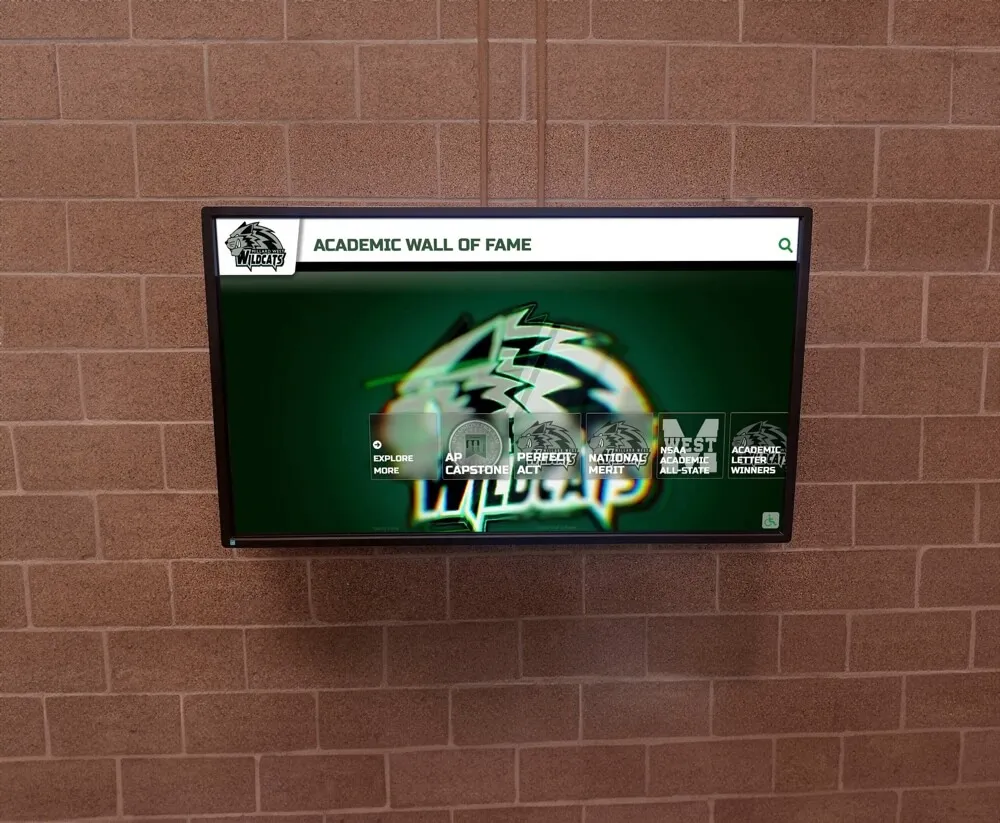
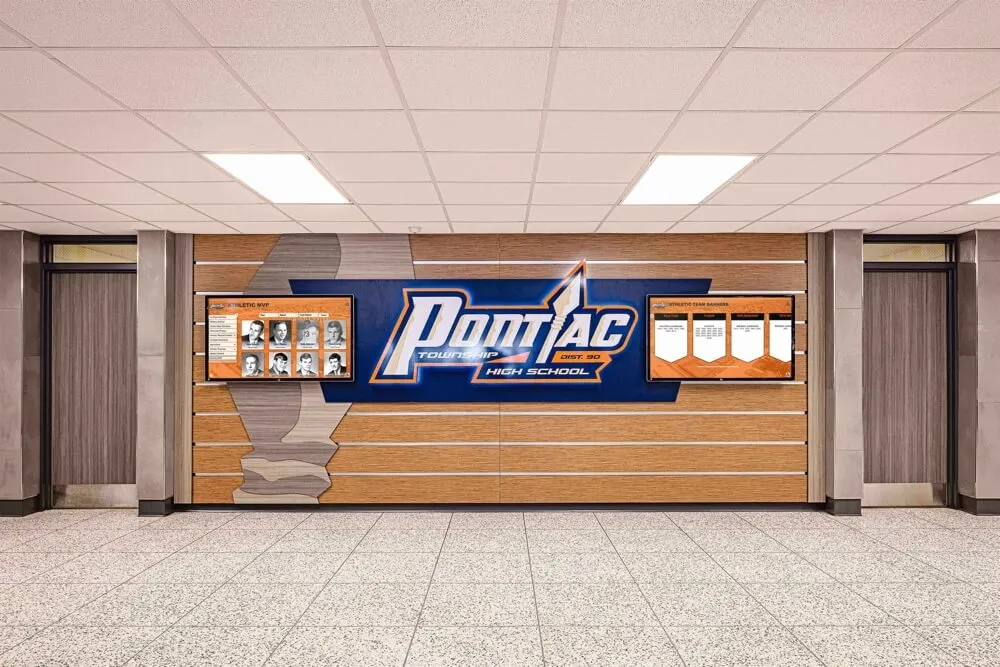
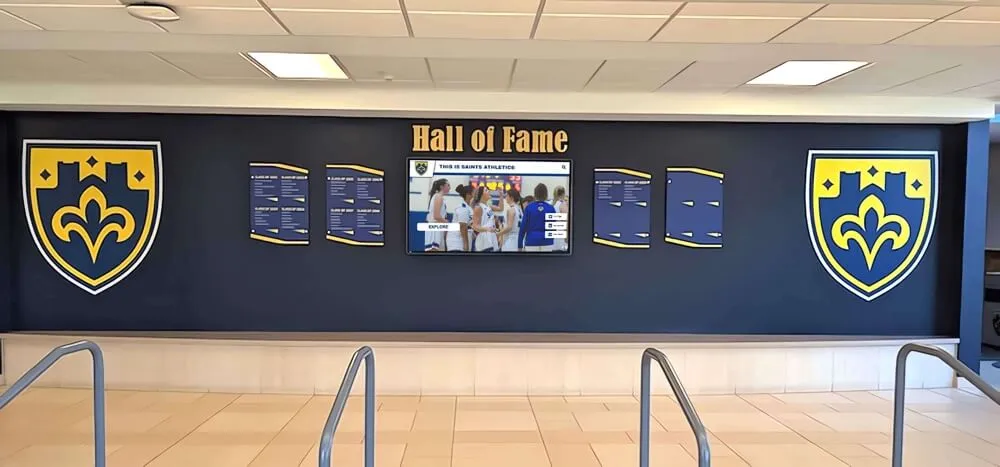
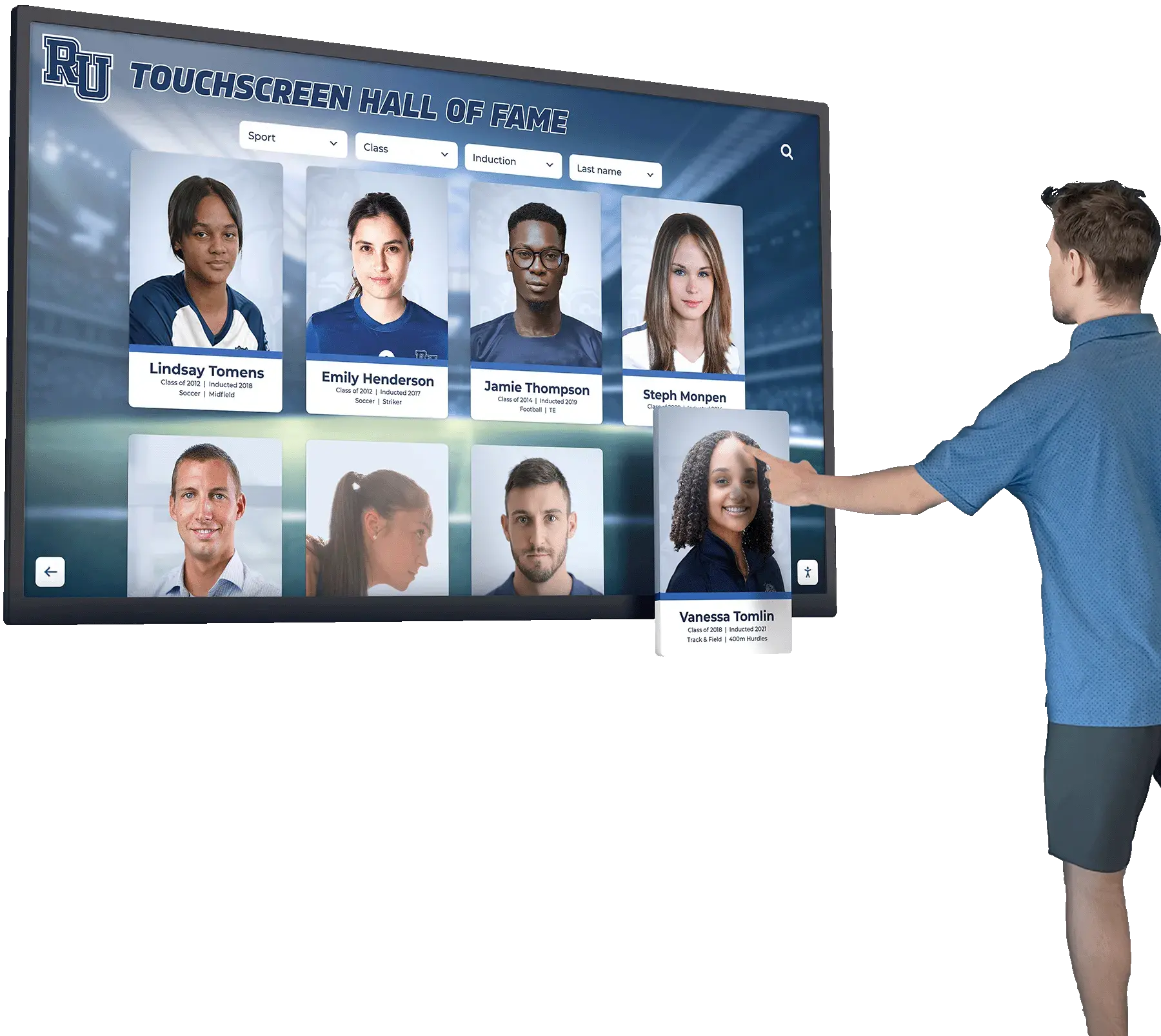
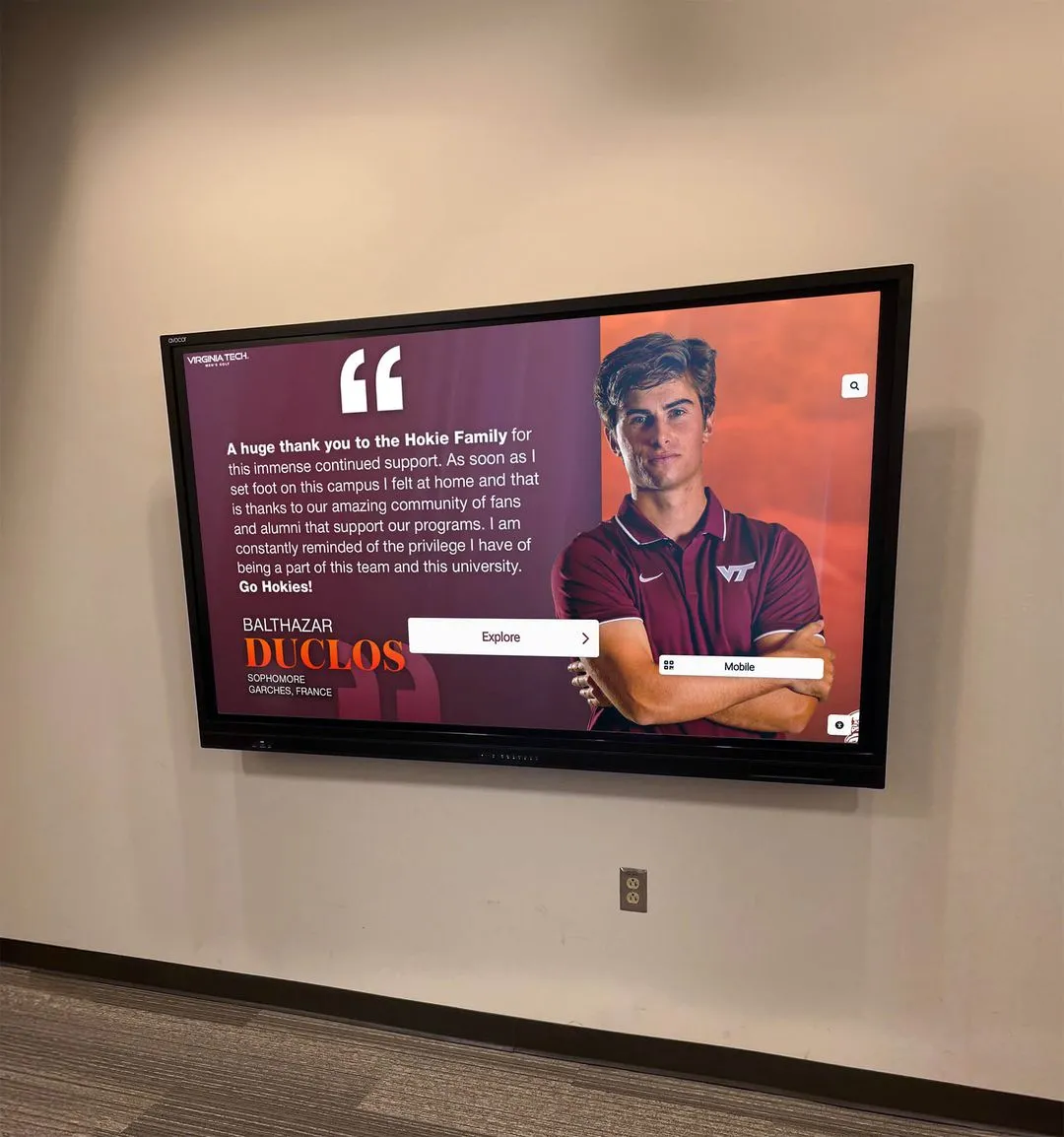
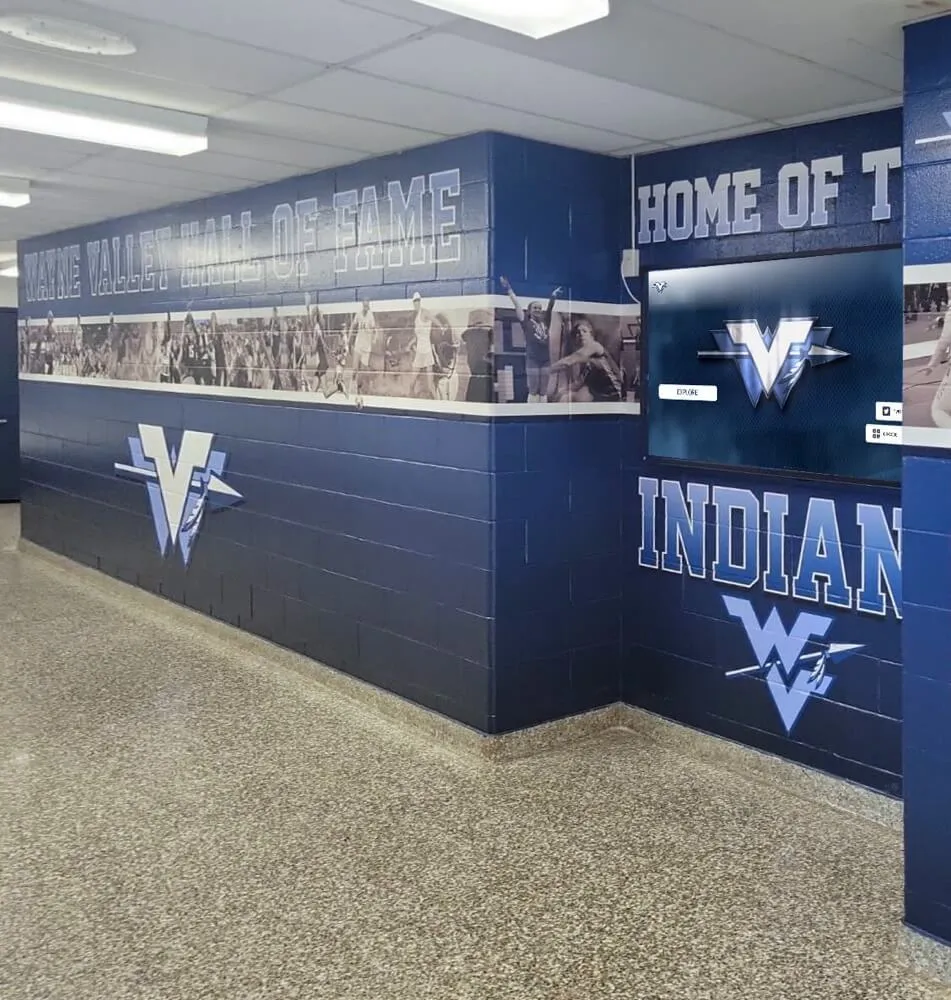
Modern installations integrate digital touchscreens with traditional trophy case structures, allowing schools to maintain physical displays while expanding recognition capacity digitally
Glass Edge Damage Severity Classification Table
Use this table to standardize your assessment language and prioritization across inspectors and inspection cycles.
| Severity | Description | Examples | Required Action | Timeline |
|---|---|---|---|---|
| Critical | Structural compromise; immediate safety risk | Propagating crack reaching panel face; large chip with sharp exposed edges on a door | Take case out of service; cordon off area; contact glazier | Same day |
| High | Significant defect under active mechanical stress | Chip at door-edge contact point; crack at corner ≥ 5 cm | Remove from service; schedule replacement within 5 business days | Within one week |
| Moderate | Defect present but not under immediate active stress | Chip on non-contact edge < 2 cm; early-stage delamination at panel corner | Flag for replacement; allow continued use with inspection every 30 days | Within 30–60 days |
| Low | Minor surface imperfection with no structural implication | Nick < 5 mm on a gasket-buffered edge; cosmetic micro-chip | Document and monitor; re-inspect at next scheduled interval | Next scheduled inspection |
| Pass | No defects identified | Clean edges, intact gaskets, no discoloration | Confirm pass; schedule next inspection | Per schedule |
Critical and high-severity findings should trigger an immediate review of the school’s glass breakage response protocol. The trophy display case guide for schools at digitalwarming.net covers both the selection criteria for replacement glass specifications and the access-control practices that reduce impact-related edge damage between inspection cycles.
Trophy Case Glass Edge Inspection Checklist
Use this checklist during each inspection cycle. Print one form per case location.
Pre-Inspection Setup
- Gloves and eye protection on before approaching glass
- Flashlight and loupe available
- Inspection form with case ID, date, and inspector name
- Color-coded flags prepared
Frame and Hardware
- All channel gaskets present and in contact with glass edges
- No frame corrosion at glass contact points
- Corner joints secure; no panel shift observed
- Hinges and latches operate without glass contact
- No visible rust staining at frame-glass interface
Main Door Panels
- Raking-light inspection completed on all four edges of each door panel
- No chips > 5 mm at door-edge contact zones
- No cracks visible from one-meter standoff
- No spalling or lifting layers at panel faces near edges
- Laminated panels: no delamination visible at edges
Interior Shelves and Secondary Panels
- All interior glass shelves inspected on all edges
- No contact damage at shelf support points
- No chips at shelf corners where shelves meet case walls
Documentation
- Each defect recorded with location, type, and dimensions
- Severity classification assigned and flag applied
- Recommended action and timeline recorded
- Photographs taken of any Critical or High findings
Repair vs. Replace vs. Upgrade Decision Criteria
Not every defect requires full panel replacement, but the decision criteria are more conservative than many facilities teams assume.
Repair is generally appropriate for: Minor chips on non-contact edges that a professional glazier can address with UV-cure resin fill—a process that stabilizes the chip margin, eliminates the sharp edge hazard, and prevents crack propagation from the defect site. Resin fills are not cosmetically perfect but are structurally effective for low-severity defects.
Replacement is required when: A crack has propagated into the panel face; a chip exceeds approximately 2 cm in its largest dimension or is located at any door-edge contact zone; spalling covers more than a small corner area; or laminated glass shows delamination along more than a few centimeters of edge. In each of these cases, the defect cannot be reliably stabilized and the panel should be replaced with glass meeting current safety glazing standards.
Upgrade to safety glazing should be considered when: Any case currently fitted with standard annealed glass requires panel replacement. Replacement is the logical point to upgrade to tempered or laminated safety glass, which reduces both the frequency of edge chip formation and the hazard posed by any fracture that does occur. Schools weighing this decision can find useful specification comparison data in the basketball display case ideas for school lobbies guide at digitalwarming.net, which addresses glass specification choices in the context of high-traffic hallway and lobby installations.
When to initiate a broader digital transition: If a case requires repeated glass replacements across multiple inspection cycles, or if physical expansion is impossible and the program’s recognition archive continues to grow, the inspection finding becomes a natural opportunity to evaluate whether a digital recognition platform eliminates the glass management requirement entirely while expanding what the program can display. Schools that have made this transition report that the ongoing maintenance burden of physical glass cases—inspections, replacements, lock and hinge servicing, interior cleaning, humidity monitoring—disappears and is replaced by a software update cadence managed remotely.
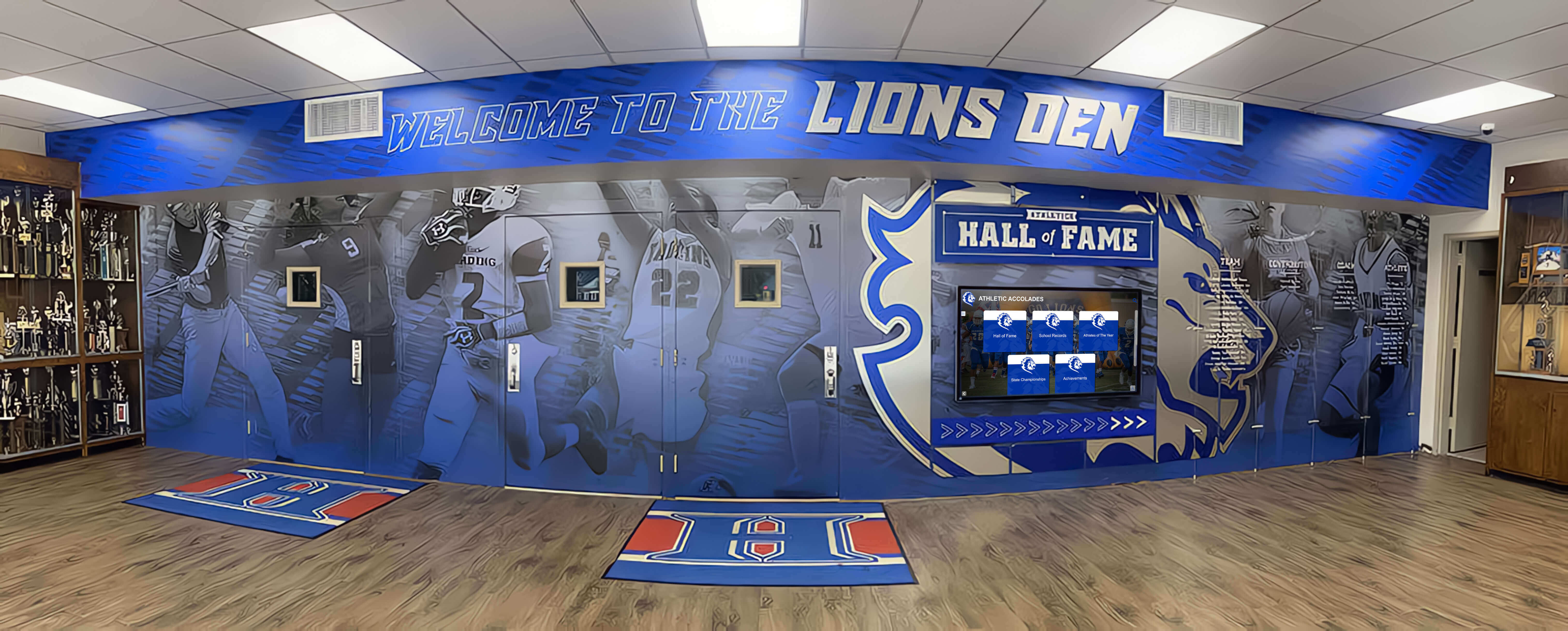
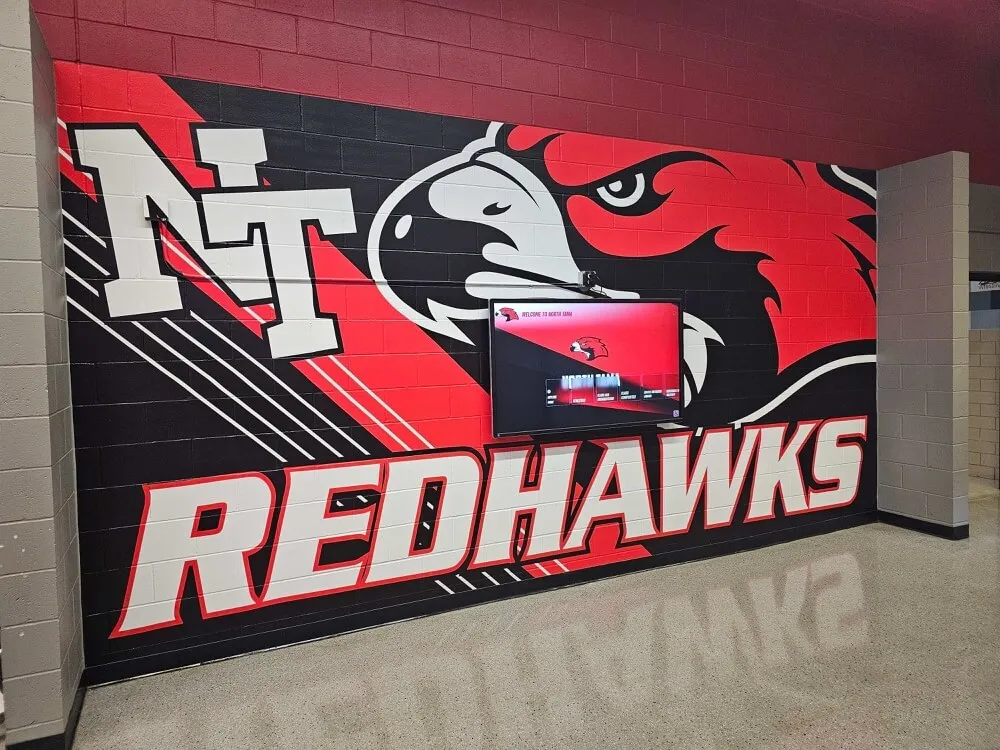
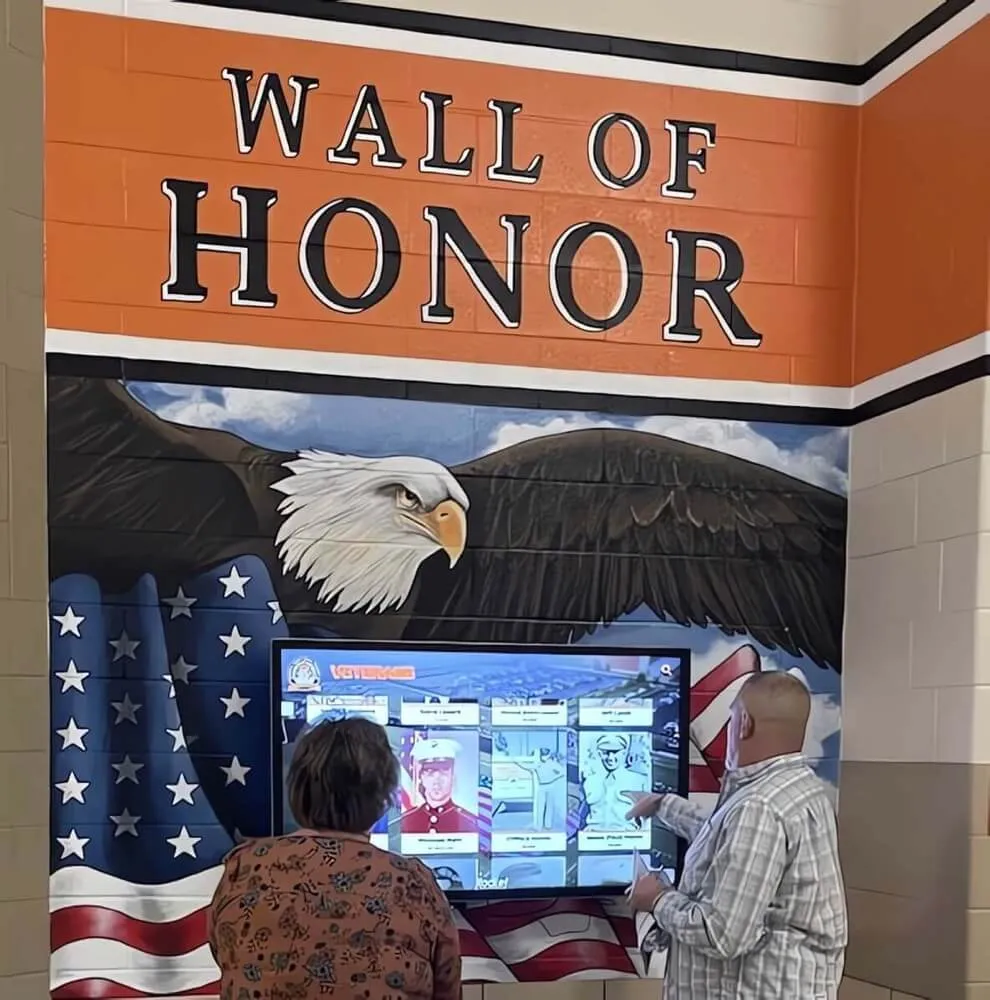
Schools across the country maintain large traditional trophy case installations that require systematic glass inspection protocols to protect students and preserve decades of athletic history
How Inspection Findings Connect to Your Recognition Program Workflow
A glass edge inspection is not only a safety exercise—it is a recognition program maintenance event. Cases that are taken out of service for glass replacement or that are cordoned off for safety reasons temporarily remove your school’s public recognition display from view. That interruption has a tangible effect on the visibility of student achievement.
For athletic directors and administrators building the case for recognition infrastructure investment, documenting the frequency and cost of glass-related case downtime provides concrete evidence of the operational burden that physical cases carry. That documentation supports budget requests for either case renovation or a transition to an interactive digital recognition system.
The comparison of digital hall of fame displays versus traditional trophy cases for school hallways at best-touchscreen.com lays out the full operational and cost comparison across maintenance, capacity, accessibility, and engagement metrics—a useful resource when presenting options to school leadership or a facilities committee.
Programs that have already transitioned to digital displays describe an additional, less obvious benefit: the physical fragility of glass cases had created an unspoken reluctance to fully curate and celebrate older archives. When a case is already crowded and the glass is borderline, adding more recognition hardware feels like a maintenance problem rather than an opportunity. Digital platforms remove that hesitation. Every achievement, from the current season back to program founding, can be displayed, searched, and celebrated without adding a single square inch of physical display space.
For schools exploring what digital trophy case installations look like in practice—including how they handle the artifacts that were previously housed in physical glass cases—the digital trophy case ideas for schools replacing glass cabinets guide at digital-trophy-case.com walks through the transition workflow in detail.
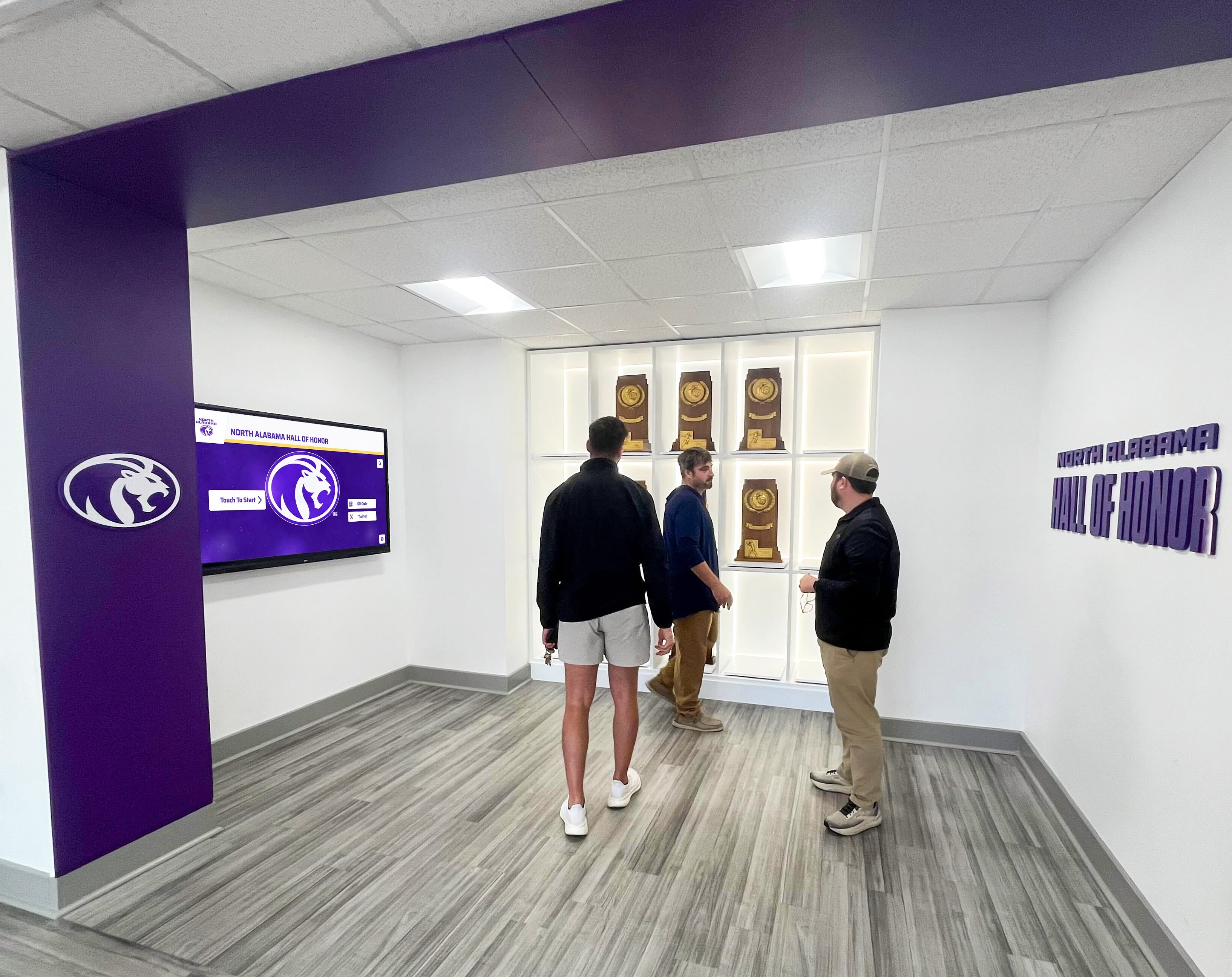
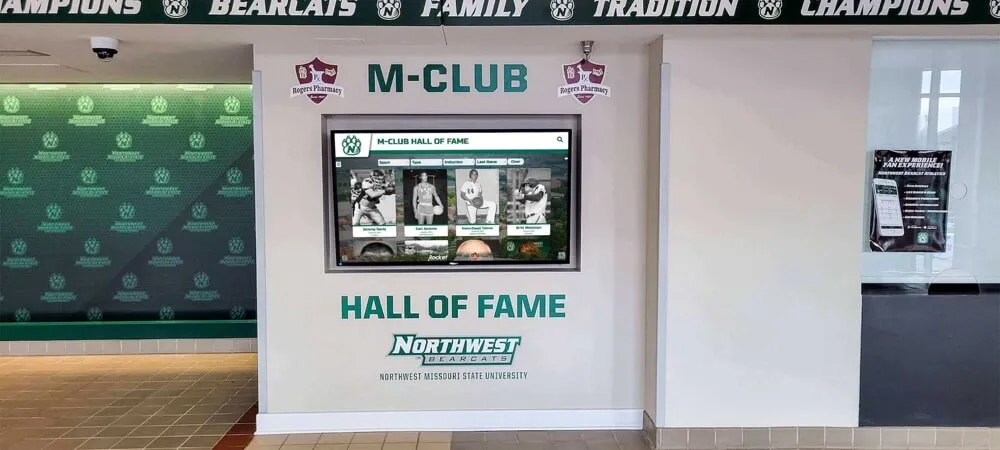
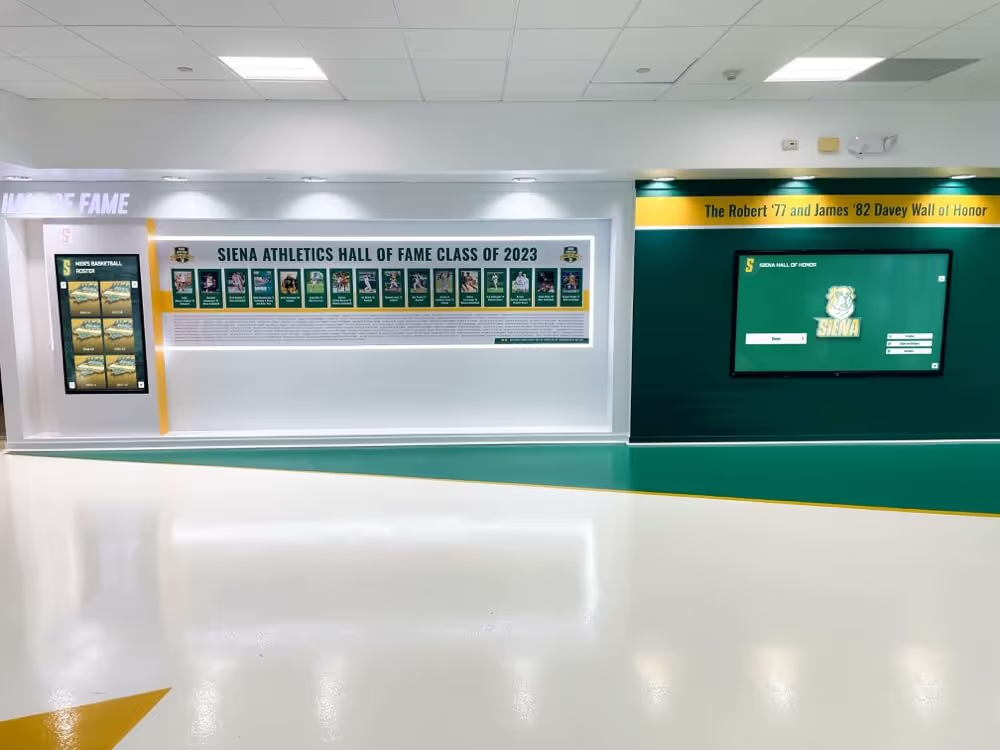
Well-maintained trophy displays support meaningful engagement with school history—systematic glass inspection is the maintenance protocol that keeps those displays safe and accessible
Inspection Frequency and Scheduling Recommendations
A once-per-semester inspection schedule is the minimum for most school trophy case installations. Programs with older cases, high-traffic display locations, or cases that have had previous glass damage should increase to quarterly.
Trigger events that require an unscheduled inspection:
- Any reported impact to a case, regardless of apparent severity
- An unusual sound during case door operation (clicking, grinding)
- Visible change in how a door aligns with its frame
- A new crack or chip reported by a student or staff member
- Water staining or foggy appearance inside a case following a humid period
Building the inspection into the athletic calendar rather than the facilities calendar increases compliance. Athletic directors who schedule glass inspection at the beginning of each sports season—before cases are opened frequently for adding new hardware—create a natural inspection rhythm tied to when cases receive the most use.
For schools considering how interactive digital trophy case displays for schools fit into a broader facilities modernization plan, the scheduling comparison is instructive: physical glass inspections require on-site presence and physical contact with every panel; digital recognition system maintenance consists primarily of remote software updates and periodic screen cleaning.
Protecting Memorabilia During and After Inspection
Glass edge inspections sometimes reveal conditions—moisture intrusion, spalling, corner delamination—that have already exposed memorabilia to risk. When an inspection identifies a moisture-related finding, the priority shifts from glass repair scheduling to immediate artifact assessment:
- Remove items from the affected case to a climate-controlled storage location
- Photograph any visible damage to memorabilia before handling
- Allow paper-based items (programs, photographs, certificates) to stabilize in a low-humidity environment before attempting further handling
- Consult an archivist before attempting to clean or repair moisture-damaged items—improper handling frequently worsens damage
Programs with significant archival holdings—decades of championship photographs, handwritten rosters, or original award certificates—benefit from a digital archive running parallel to physical display. Scanned, high-resolution digital records are not vulnerable to the glass-related moisture risk that physical originals carry. The digital hall of fame display vs. traditional trophy case comparison at digitalyearbook.org examines how digital archiving functions as a preservation layer alongside or instead of physical glass case storage.
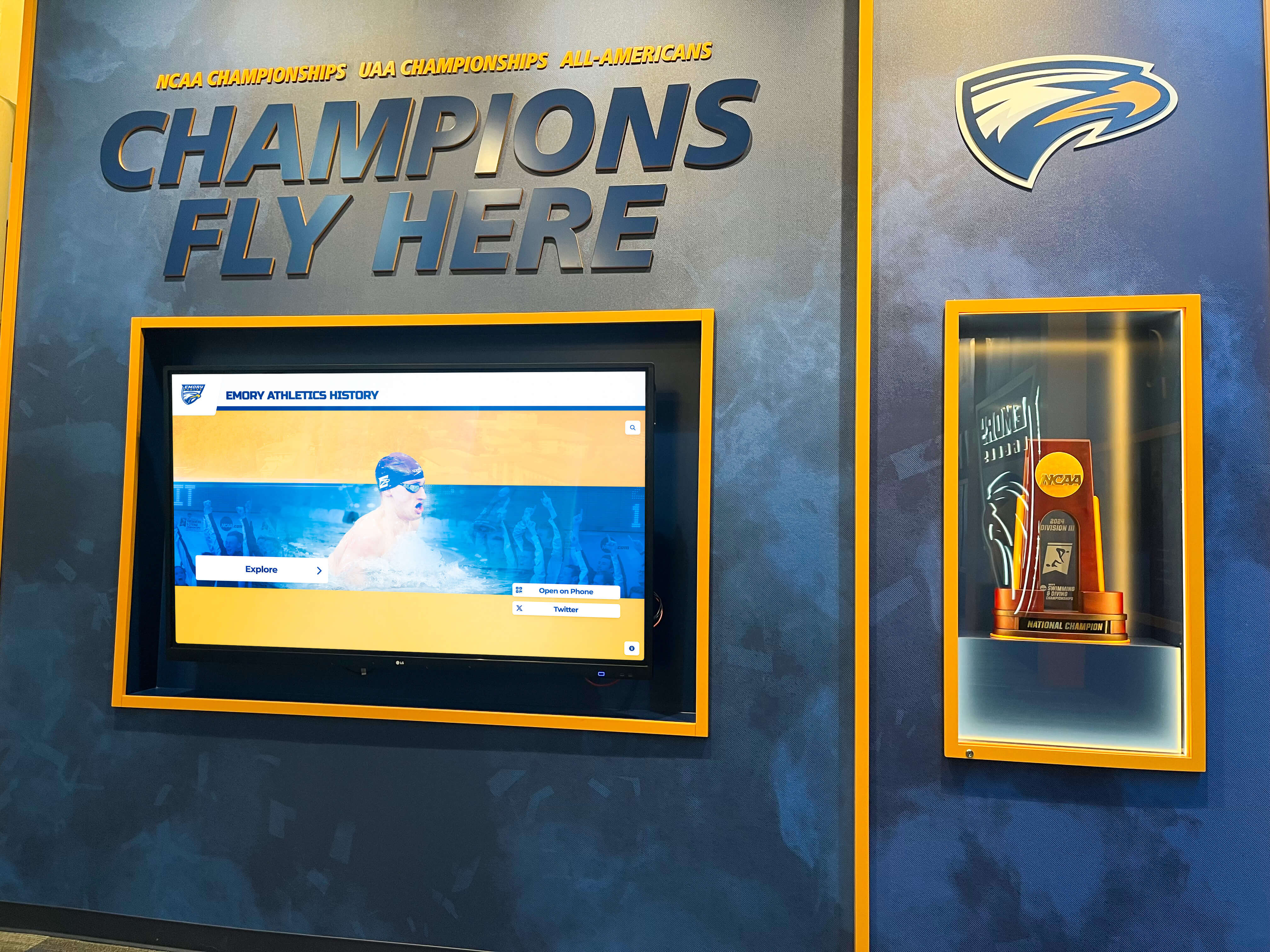
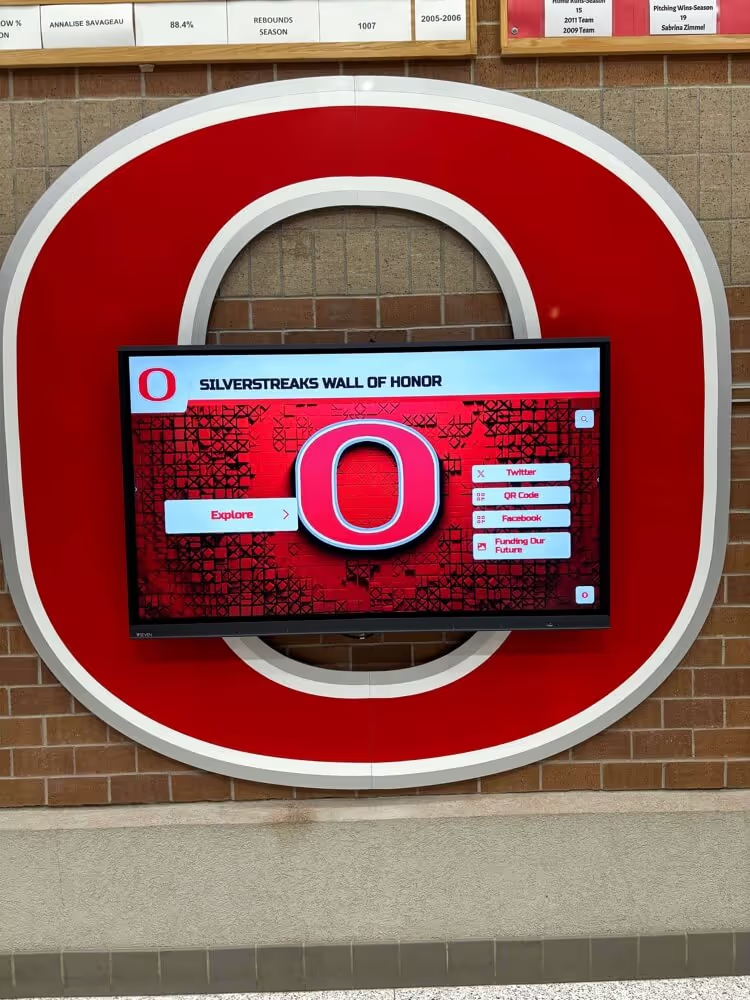
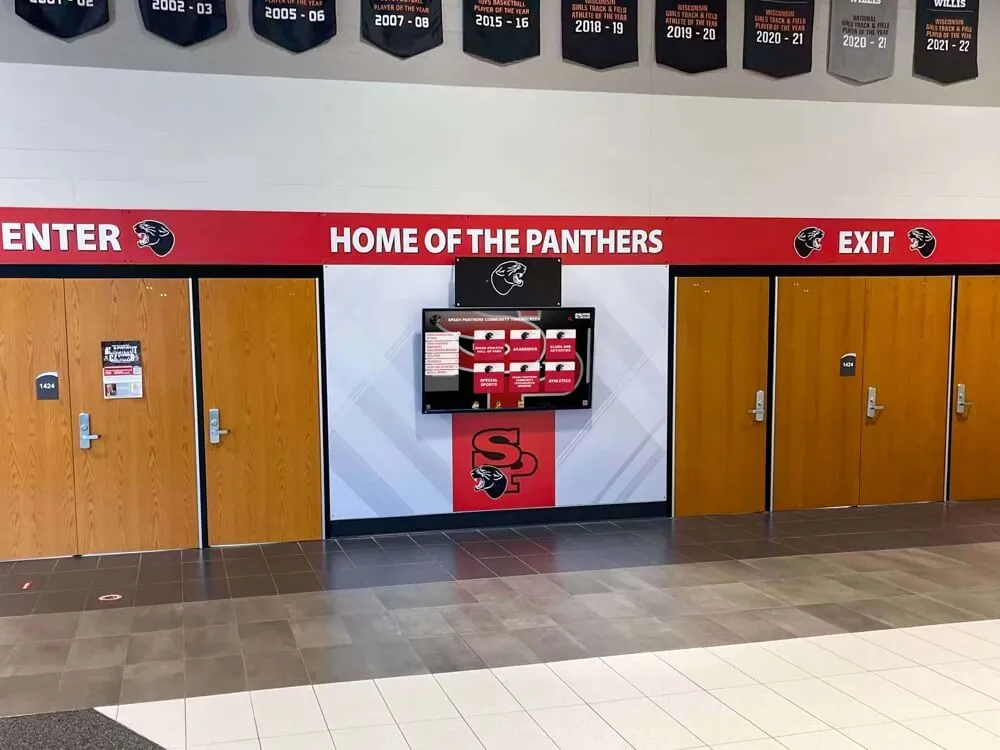
Championship hardware and historic memorabilia require both physical case maintenance and digital archiving to ensure long-term preservation and continued public access
When Your Glass Cases Have Reached End of Life
Some cases reach a point where the accumulated condition of the framing, gaskets, glass, and hardware makes continued maintenance a poor investment. Indicators that a case has reached end of life include:
- Three or more panel replacements within a five-year period
- Frame corrosion that cannot be reversed without structural repairs
- Door alignment problems that recur after adjustment
- Interior lighting systems that cannot be economically retrofitted to LED
- Physical dimensions that are incompatible with accessible display placement under current ADA guidelines
At this stage, the inspection finding is not a repair order—it is a decommission recommendation. Schools in this position have a genuine decision point: replace like-for-like with a modern case, or transition the recognition program to an interactive digital platform.
For programs that want to understand how a digital recognition display handles the multi-category recognition that glass cases traditionally consolidate—academic achievement, athletic accomplishment, arts recognition, community service honors—the 10-year high school reunion programming and digital displays guide at digitalawardsdisplay.com illustrates how digital platforms organize and present multi-decade, multi-category recognition archives for events where that depth of history is central to the program.
Frequently Asked Questions
How often should schools conduct a trophy case glass edge damage inspection? Schools should conduct a full trophy case glass edge damage inspection at minimum once per semester—ideally at the start of fall and spring sports seasons. High-traffic locations, cases with prior damage history, or older installations should be inspected quarterly. Any reported impact event requires an unscheduled inspection regardless of apparent severity. Consistent scheduling, rather than reactive inspection, is what prevents minor chips from becoming critical safety events.
What type of replacement glass is recommended for school trophy cases? Tempered safety glass or laminated safety glass both meet the safety glazing standards appropriate for school environments. Tempered glass fractures into small, relatively dull-edged pieces rather than sharp shards. Laminated glass holds fragments in place via an interlayer film, which is particularly valuable in cases where a panel could fall onto a floor-level display or adjacent students. Laminated glass is generally the better choice for door panels that are opened and closed frequently, because the interlayer provides fragment retention even if an edge chip propagates to a full break.
Can chips in trophy case glass be repaired rather than replaced? Minor chips on non-contact edges—those not subject to mechanical stress from door operation—can sometimes be stabilized with UV-cure resin fill performed by a professional glazier. This treatment eliminates the sharp edge hazard and reduces crack propagation risk but does not restore the original structural integrity of the panel. Any chip larger than approximately 2 cm, any chip at a door-edge contact zone, or any chip accompanied by a visible crack extending into the panel face requires full panel replacement, not repair.
How do I document glass edge damage findings for facilities records? Document each finding with: (1) the case identifier and specific panel location, (2) the defect type (chip, crack, spalling, or delamination), (3) the defect dimensions as measured, (4) the severity classification from your school’s rating system, (5) photographs of Critical and High findings, and (6) the recommended action and assigned timeline. Maintaining this documentation across inspection cycles creates a maintenance history that supports budget requests, insurance claims after damage events, and end-of-life replacement decisions when cumulative repair costs are compared to replacement cost.
Do digital trophy case displays eliminate the need for glass edge inspections? Interactive digital recognition displays mounted on commercial-grade screens do not use glass panels in the same structural capacity as traditional trophy cases, so the edge-chip and crack inspection requirements that apply to glass cases do not apply. The maintenance requirements for digital displays focus on screen surface cleaning, software updates, and periodic hardware inspections appropriate for commercial electronic equipment—a significantly different and generally less frequent maintenance burden than traditional glass case inspection and repair cycles. Schools that transition from physical glass cases to digital platforms typically report that the operational maintenance time associated with display upkeep decreases substantially.
Modernize Your Awards Display Beyond the Glass Case
A rigorous trophy case glass edge damage inspection program protects students, preserves memorabilia, and maintains the institutional memory housed in your display cases. It is sound facilities management and a genuine expression of care for the achievements your school has spent decades building.
It is also, for many programs, the moment when the question of modernization becomes practical rather than theoretical. When a case needs its second glass replacement in three years, or when an inspection reveals that the frame itself is deteriorating, the maintenance conversation naturally becomes an investment conversation.
Rocket Alumni Solutions works with schools across the country to build interactive digital recognition displays that celebrate athletic achievement, academic honors, arts accomplishments, and community service contributions in a single, searchable, always-current platform. The platform is fully WCAG 2.1 AA accessible, works on any commercial touchscreen from 32 to 100 inches, and is managed remotely—no glass to inspect, no panels to replace, no physical access required to add a new induction class.
If your next glass edge inspection is prompting a broader conversation about your recognition display program, request a custom demo to see what a digital awards showcase built for your school would look like.