



A trophy display case for school does more than store awards—it functions as the first piece of institutional memory most students, families, and visitors encounter. Placed in a main hallway, gymnasium lobby, or athletic wing, a well-curated trophy case communicates what the school values, how deep its competitive history runs, and which achievements are considered worth preserving. But most trophy cases are managed reactively: new trophies go in when there is room, old trophies stay until someone moves them, and the display grows cluttered rather than curated.
This guide gives athletic directors, facilities managers, and school administrators a complete framework for managing a school trophy display case with intention. It covers what to show, how to rotate older items without losing the institutional record, what to digitize before anything is removed, and a practical buyer’s checklist for selecting or replacing the physical case itself.
A school trophy case reaches its full potential only when it is actively managed as a curated display rather than a passive storage unit. According to the National Federation of State High School Associations (NFHS), schools that maintain organized, visible athletic recognition programs report stronger student engagement with school traditions and higher athlete pride in program history. The trophy case is the most public expression of that program history—and keeping it purposeful requires a clear decision-making framework.

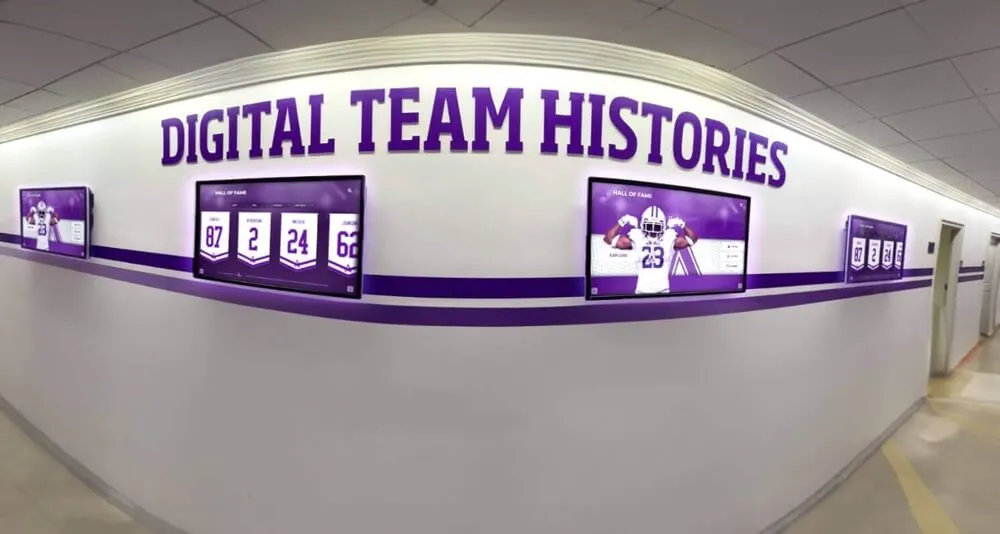
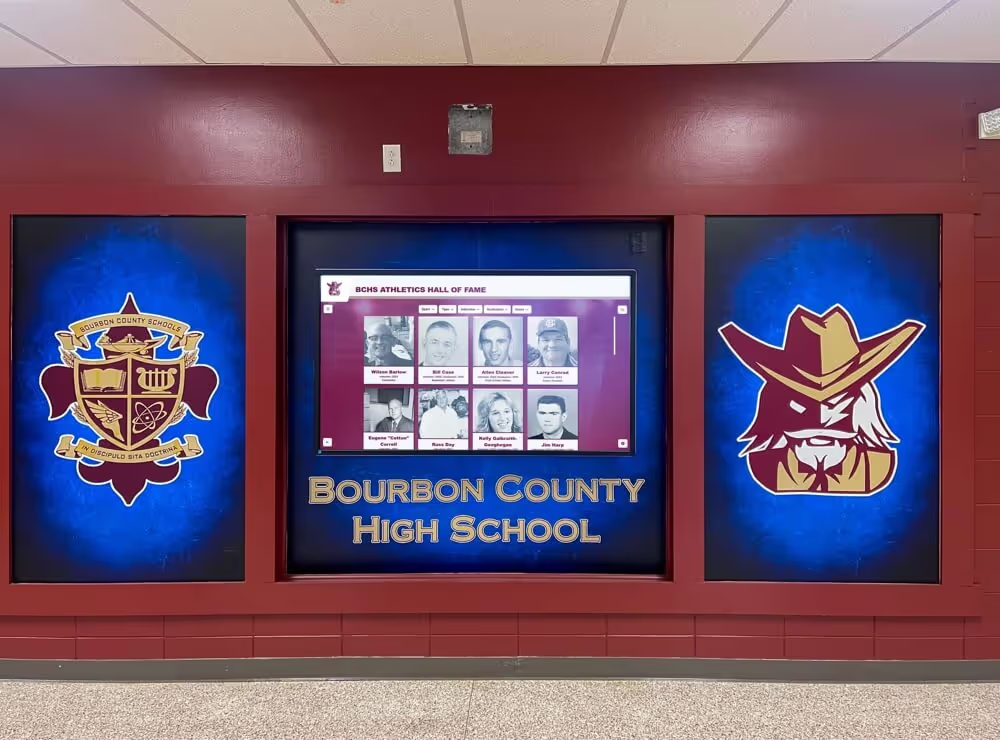
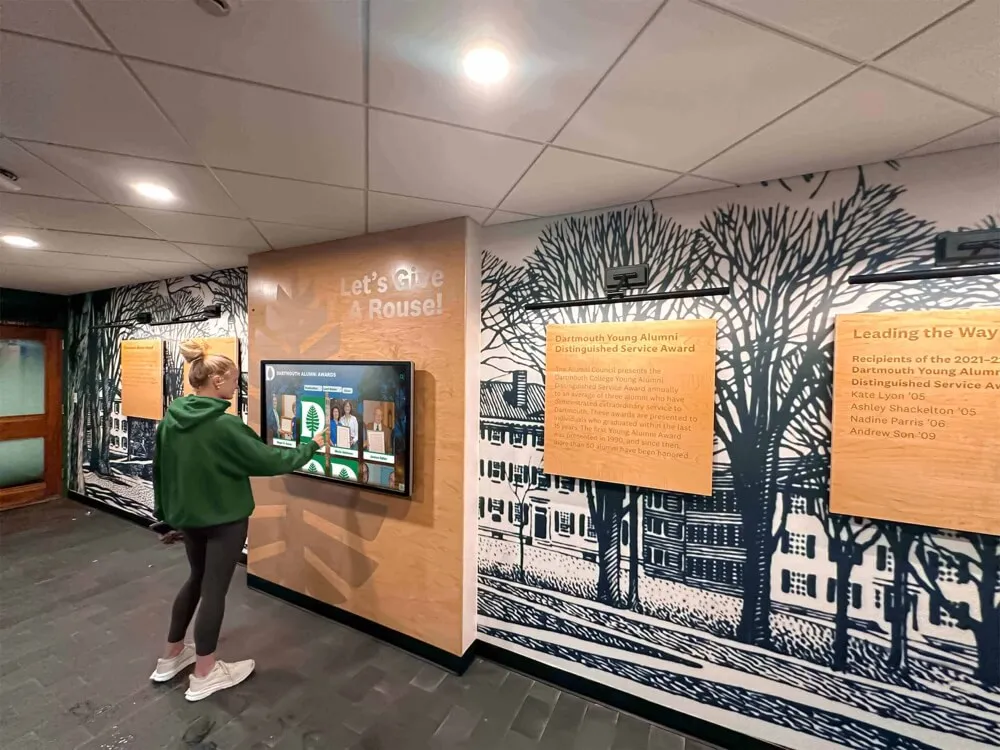
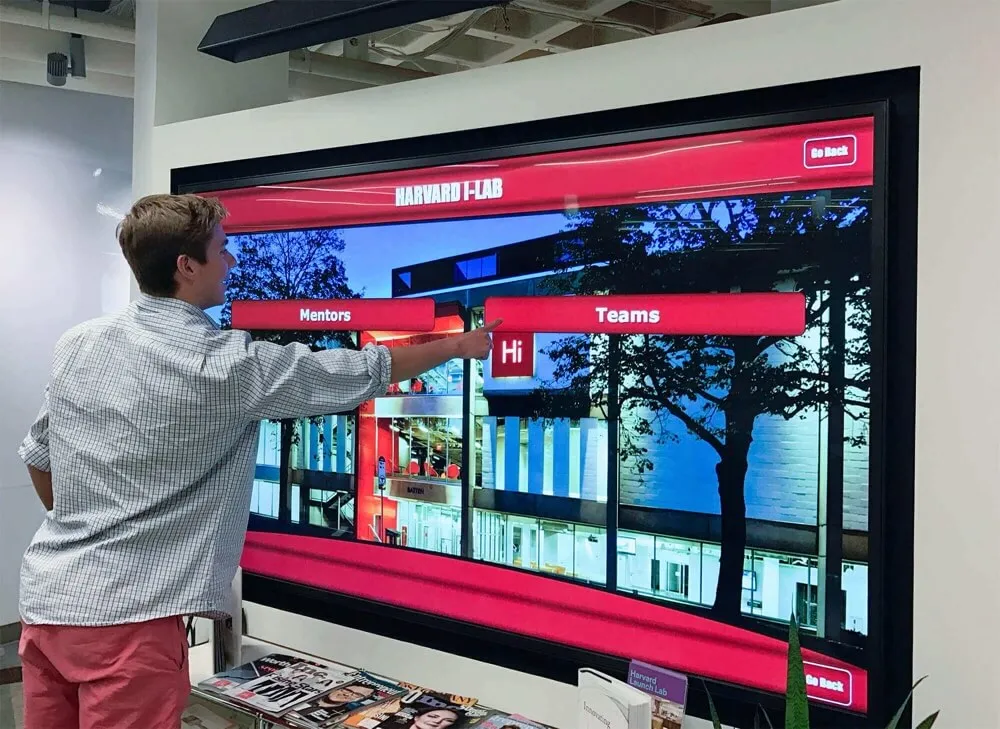
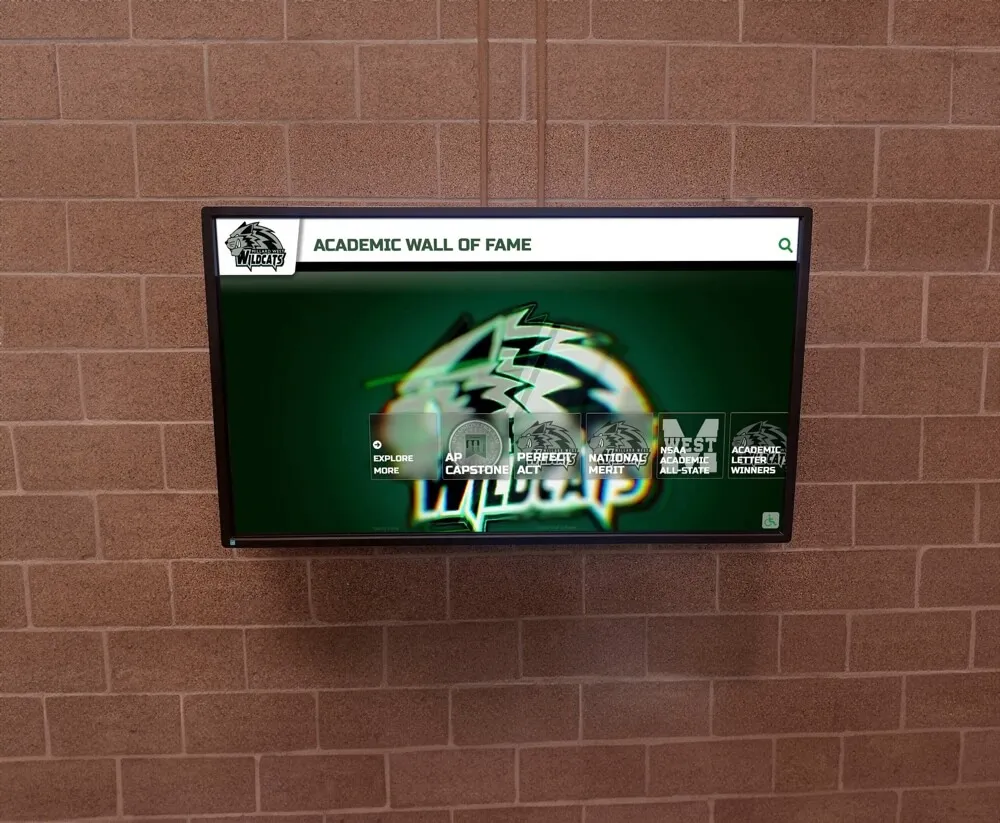
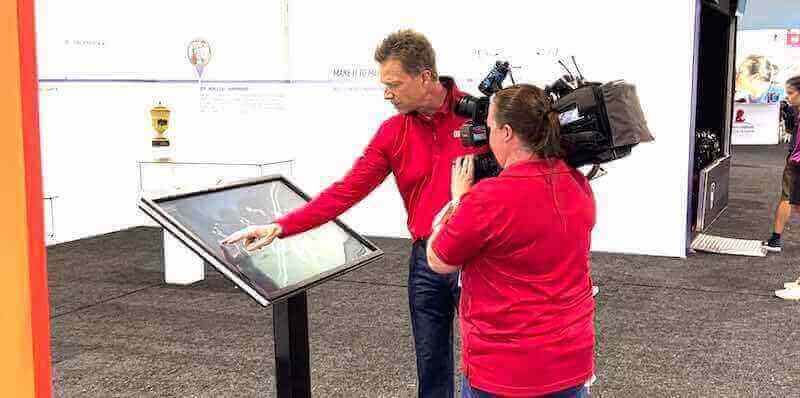
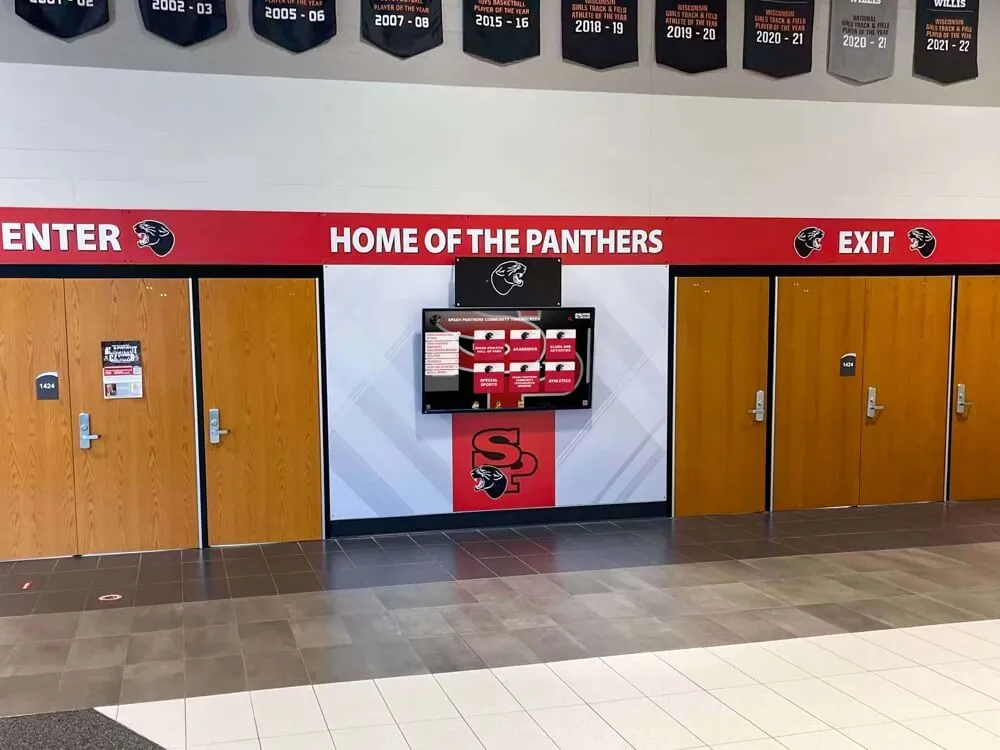
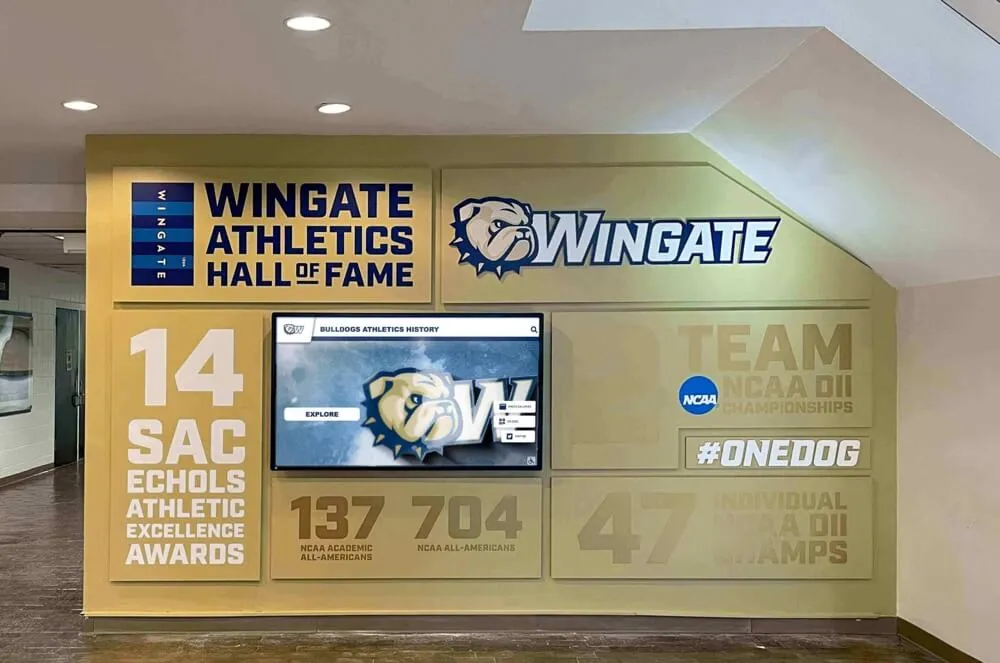
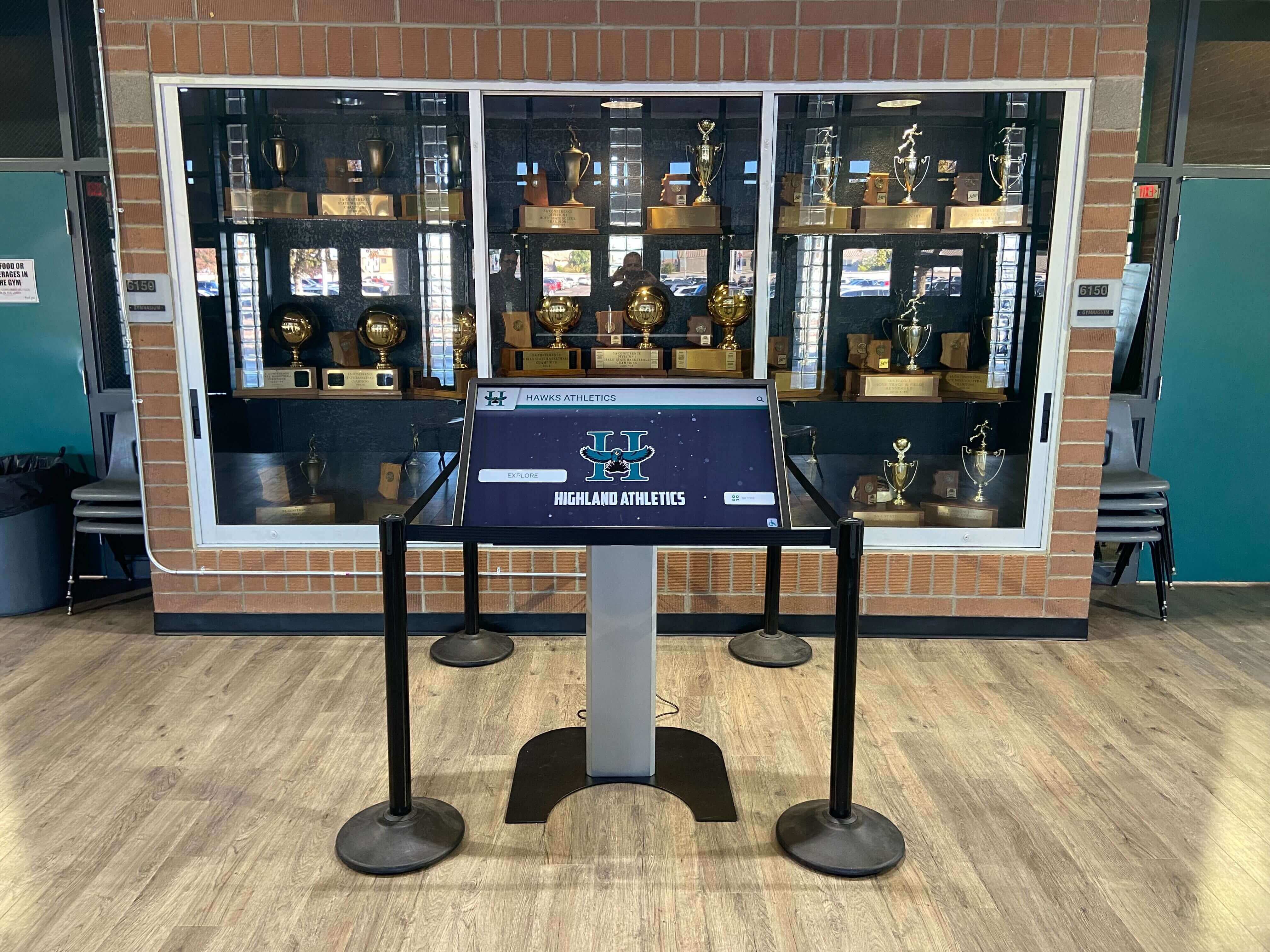
Modern schools combine physical trophy cases with interactive touchscreen kiosks so overflow items can be preserved digitally without crowding the physical display
What to Show in a Trophy Display Case for School
The most effective school trophy cases prioritize significance and variety over sheer volume. Every item on display should earn its space by representing one of the following categories.
Championship and State-Level Hardware
Championship trophies, state plaques, and tournament banners belong at the center of any school trophy display case. These are the items that anchor the case’s identity and communicate the program’s competitive ceiling to visitors who have never met a single athlete. Prioritize:
- State championship trophies across all sanctioned sports and academic competitions
- Regional or conference championship hardware for programs that have won multiple times
- Tournament finalist or runner-up trophies when they represent the program’s best historical finish
- Academic competition trophies from events like Science Olympiad, Quiz Bowl, or Debate—these balance athletic recognition with academic achievement and signal that the school values both
Individual Achievement Awards
Beyond team hardware, individual awards tell the story of exceptional performers who elevated the program. The trophy case should include a curated selection—not every MVP plaque, but the awards that carry the most weight:
- All-state individual recognitions across sports
- School records awards tied to measurable, documented performance milestones
- National Merit Scholar plaques and academic individual honors when space allows
- Career achievement trophies for multi-sport or multi-year standouts
Retired Jersey Numbers and Commemorative Items
Many schools use the trophy case to display retired jersey numbers, commemorative plaques for founding coaches, or milestone game balls. These items add narrative depth that trophies alone cannot provide and create conversation-starting displays for alumni visiting campus.
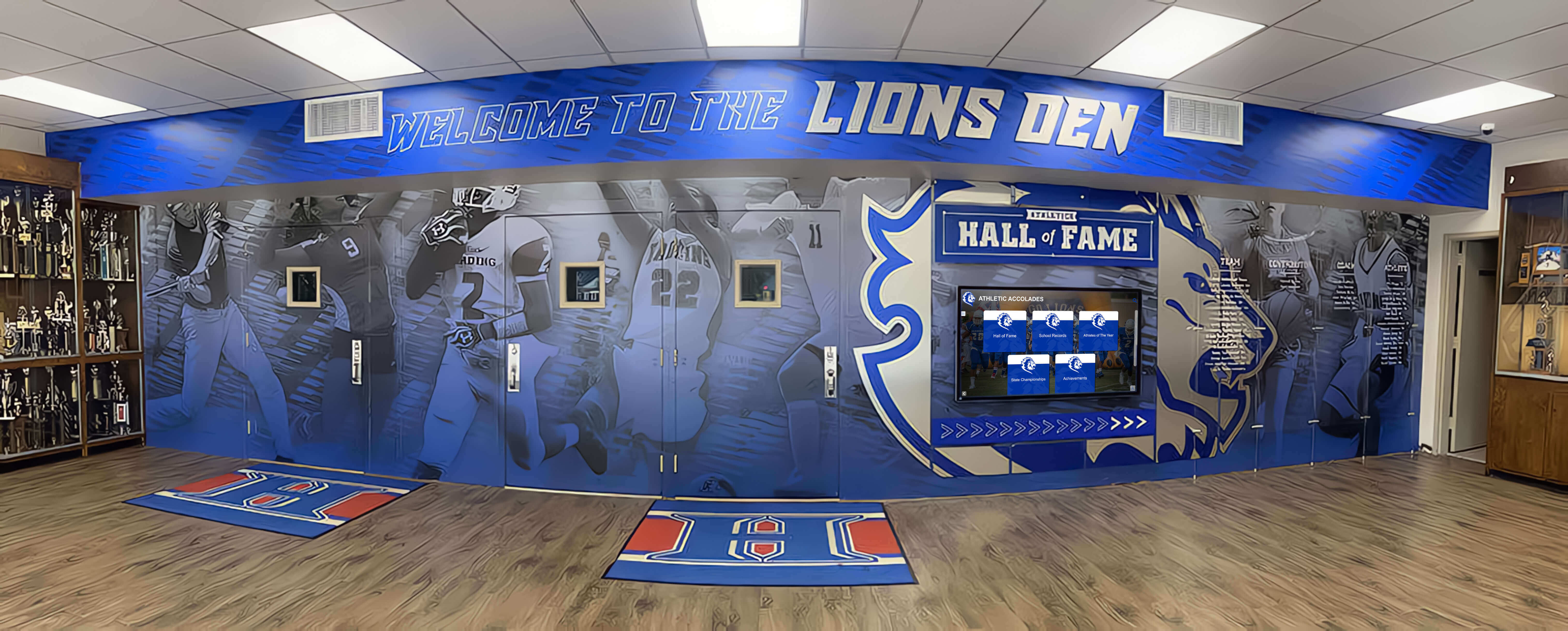
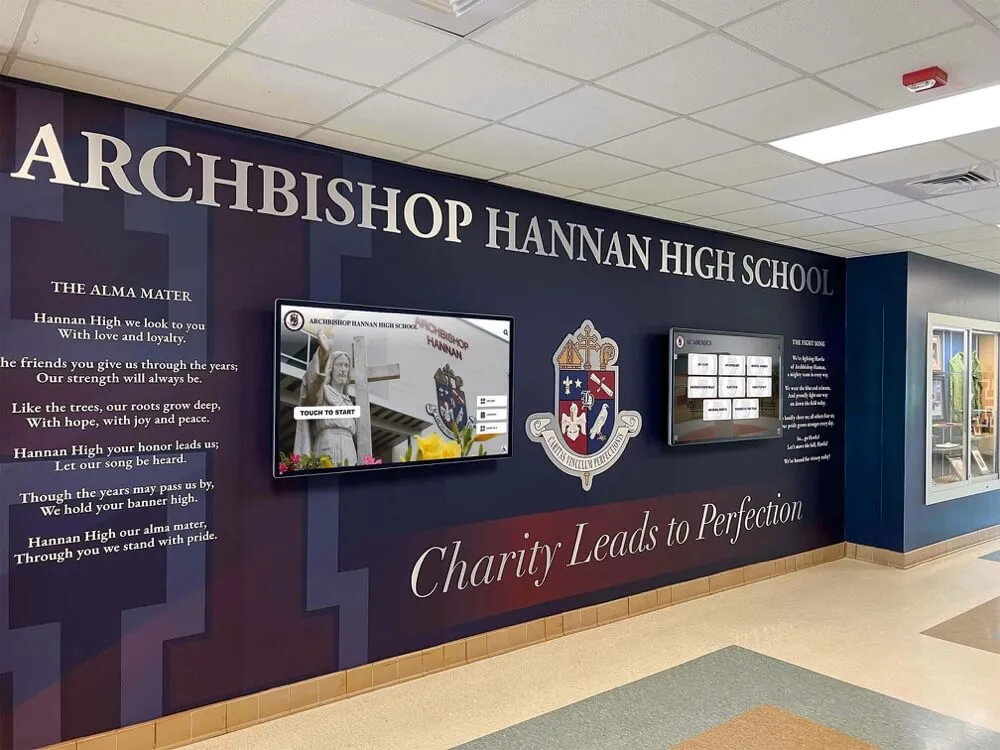
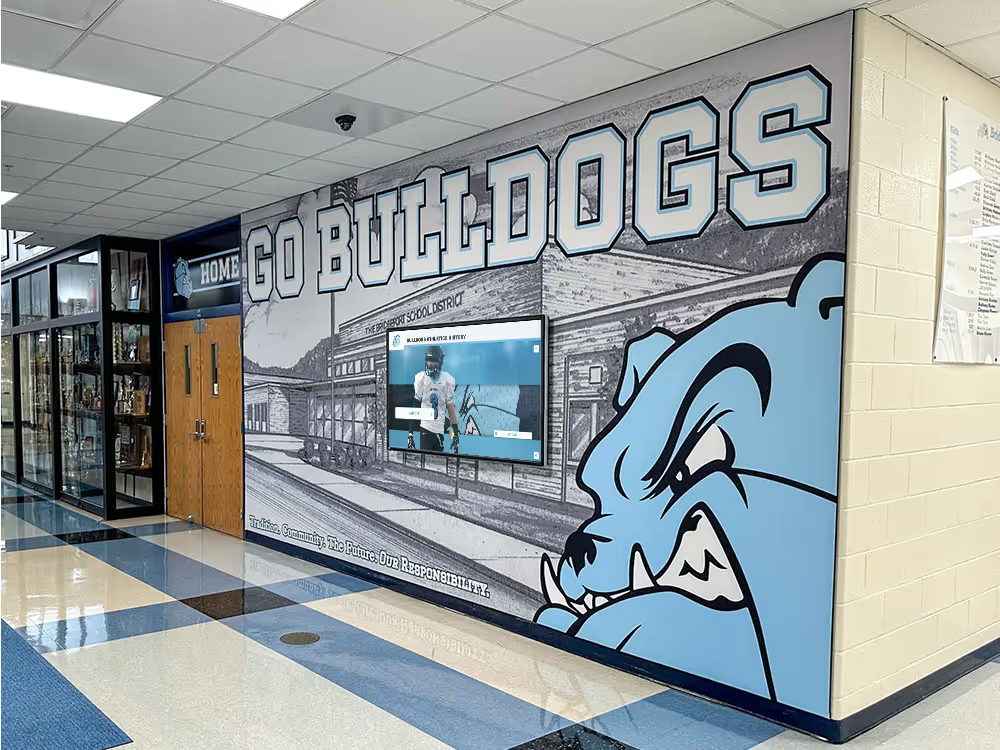
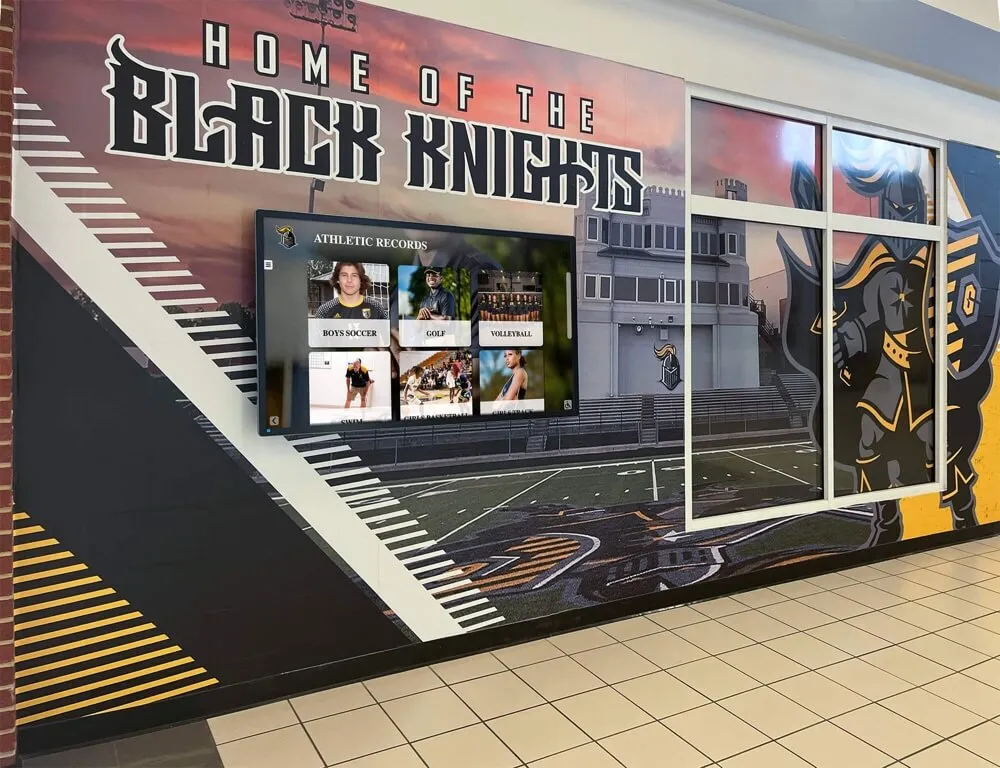
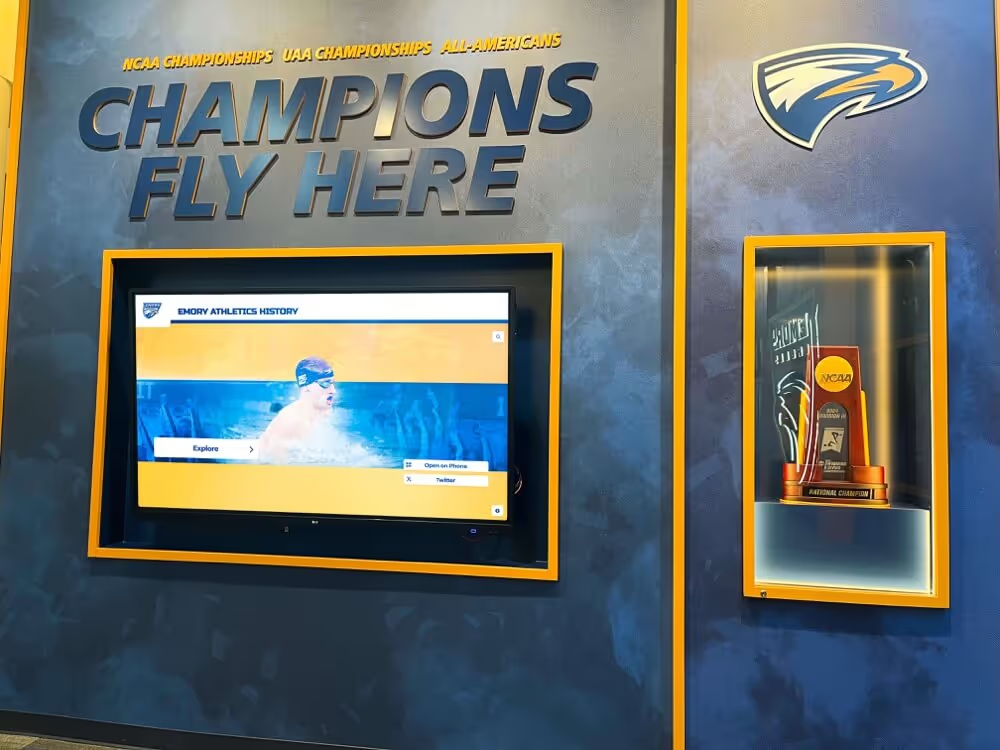
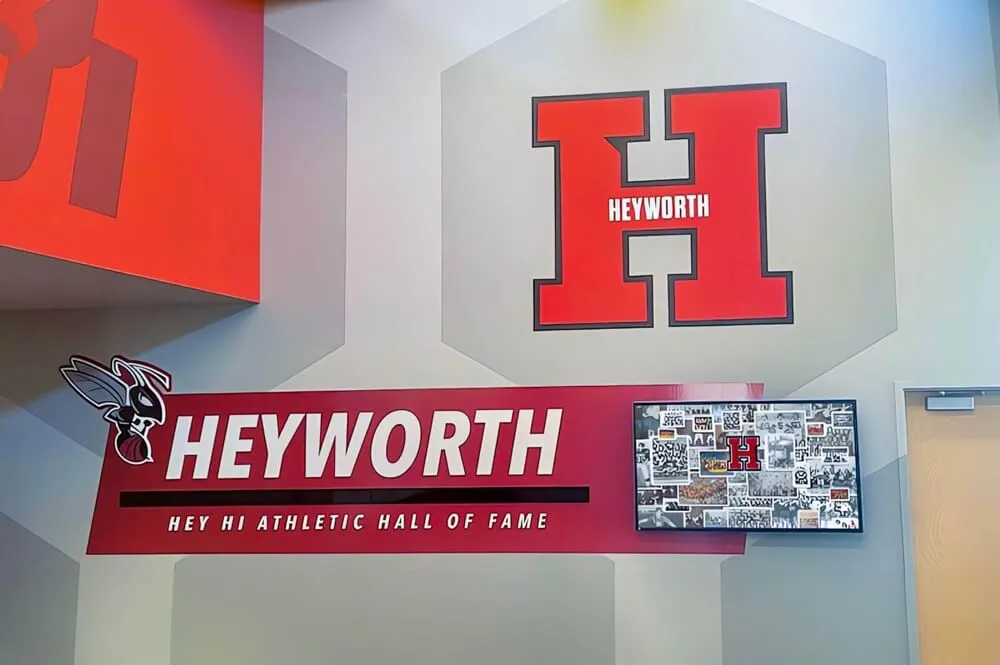
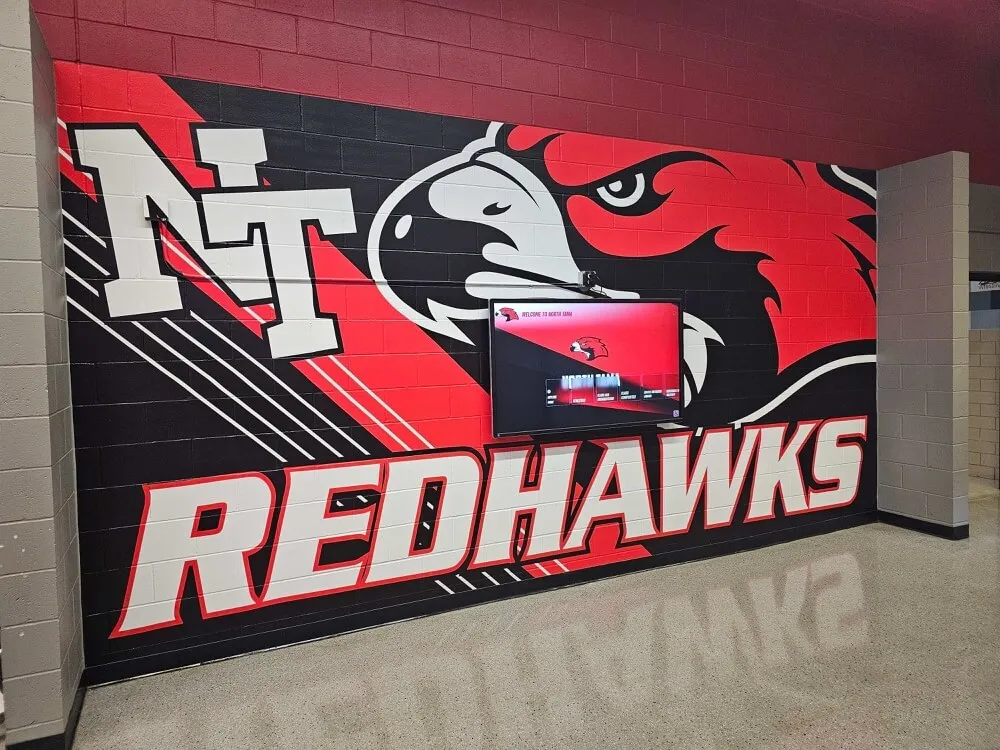
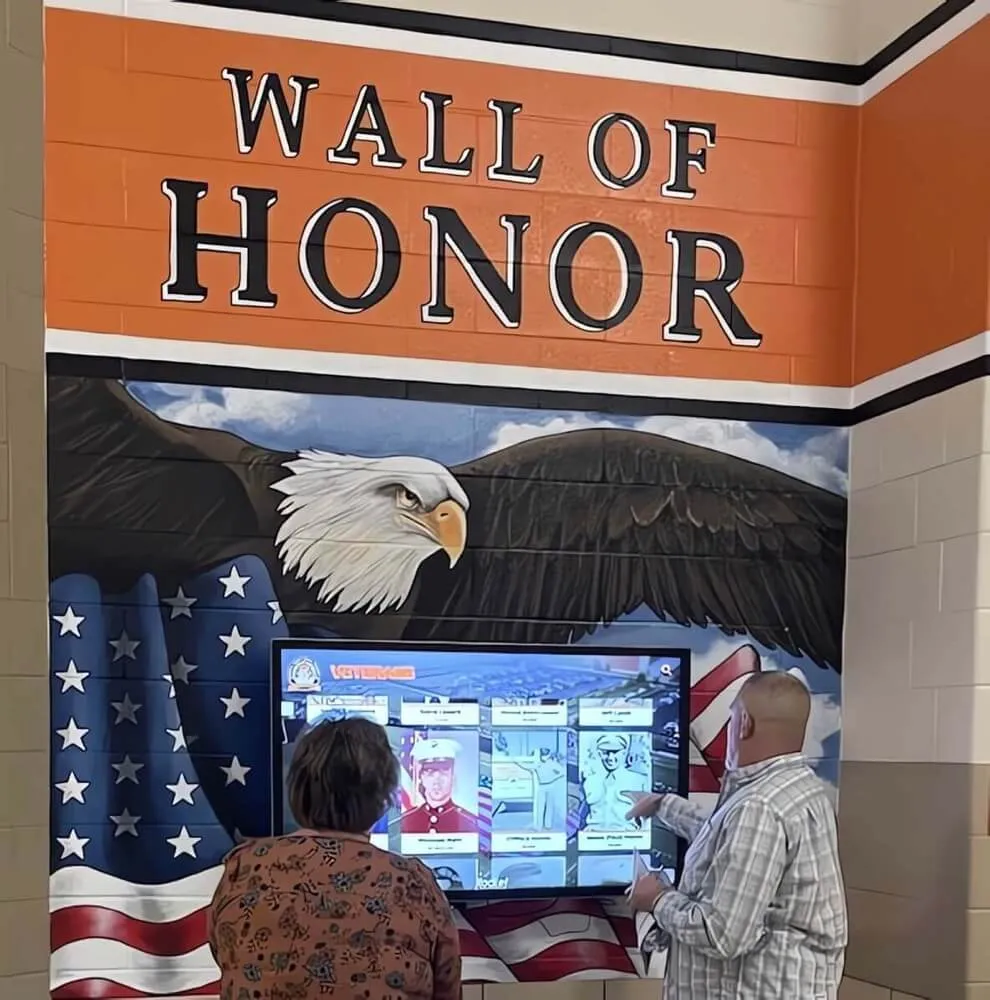
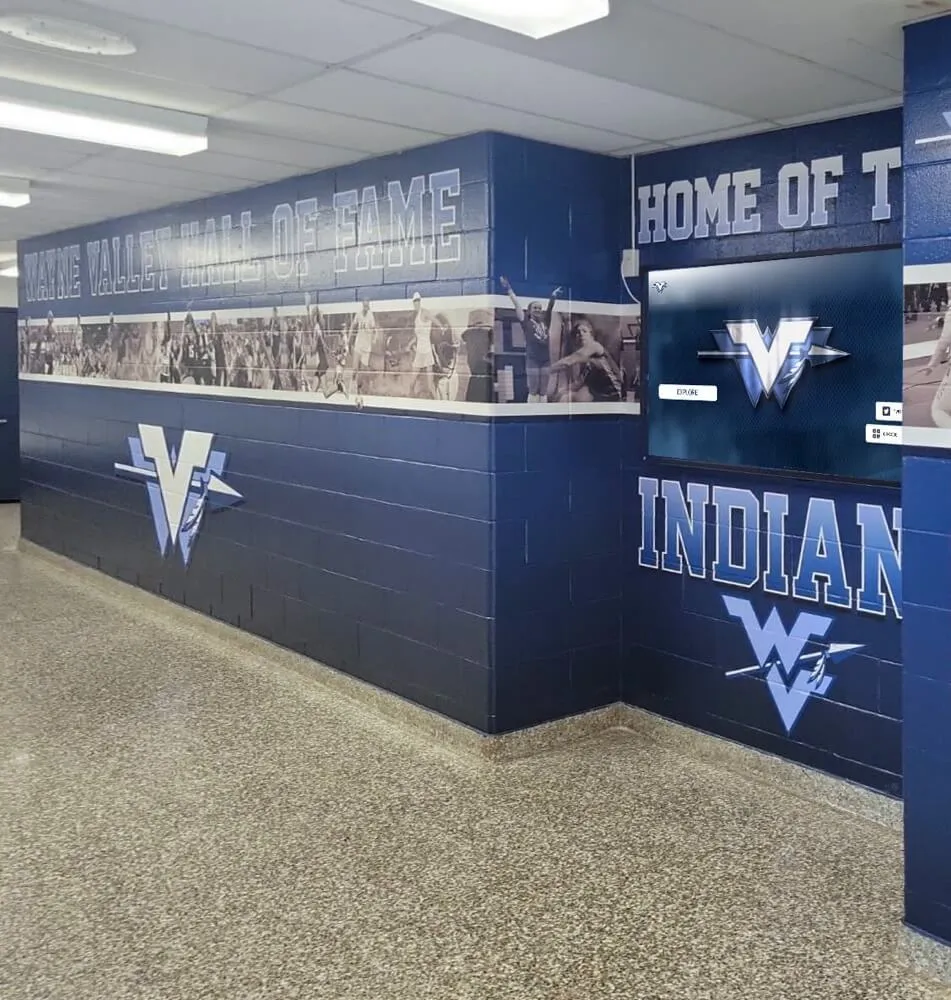
Integrating murals and signage alongside trophy cases creates a richer visual context that individual trophies cannot convey alone
Building a Curation Checklist: What Earns a Spot
Before adding any item to the case—or deciding what stays during a rotation—use a consistent evaluation checklist. This prevents the case from becoming a catch-all for every participation trophy while ensuring genuinely significant hardware does not get overlooked.
Trophy Display Case Curation Checklist:
- Is this a first-place or championship award at the conference, regional, district, or state level?
- Does this represent a school record or a program milestone (first state title, longest winning streak)?
- Is this an individual award from a state-sanctioned or nationally recognized program?
- Has this item been in storage for more than one full school year without being displayed?
- Is the physical condition of the item display-worthy (no significant damage, legible engraving)?
- Does the item represent a category or time period already represented by other items currently on display?
- Has this item been photographed and catalogued in a digital archive before being moved or removed?
Items that pass the first three checks belong in the case. Items that fail the last check should never be removed until digitized.
For broader context on what types of recognition belong in a school’s permanent record, 100 youth sports awards ideas covering every category from MVP to academic achievement offers a useful reference for understanding the full range of recognition that schools may want to preserve.
Trophy Case Rotation Workflow (Step-by-Step)
Space constraints make rotation inevitable. A school accumulating five to ten significant trophies per year will fill even a large trophy display case within a decade. The following rotation workflow ensures that removed items are honored and preserved rather than simply discarded.
Step 1: Annual Audit (August, Before the School Year)
At the start of each school year, conduct a full inventory of the trophy case contents. Document every item with:
- A photograph from at least two angles
- The sport or activity, award name, and year
- The engraving text (transcribed verbatim)
- Current physical condition
Store this inventory in a shared drive accessible to the athletic director, principal, and the school’s alumni or advancement office.
Step 2: Tier Classification
Sort all inventoried items into three tiers:
| Tier | Criteria | Action |
|---|---|---|
| Tier 1 – Permanent Display | State/national championship; school records; founding or milestone moments | Stays in the case indefinitely |
| Tier 2 – Rotating Display | Conference/regional championships; major individual awards; recent seasons’ hardware | Displayed for 3–5 years, then archived |
| Tier 3 – Archive | Participation trophies; duplicates; items no longer in display condition | Photographed, logged, removed |
Step 3: Digitize Before Removing
Before any Tier 2 item rotates out and before any Tier 3 item is archived or discarded, ensure the digital record is complete. This means:
- High-resolution photograph added to the school’s digital archive
- Entry created in a recognition database (spreadsheet minimum; dedicated platform preferred)
- Physical item labeled with its archive code and stored in a protective case, not loose in a box
Schools that digitize consistently build an accessible historical record that alumni can browse decades later—something a physical trophy case, no matter how well maintained, can never fully replicate.
Step 4: Incoming Items Review (May/June, End of Season)
At the close of each athletic and academic year, review new awards before they enter the case. Assign each item to Tier 1, Tier 2, or Tier 3 at intake rather than after the fact. This prevents the case from filling with lower-tier items that then block higher-significance hardware.
For practical frameworks on recognizing the full range of athletic achievement, award ideas covering every sport and academic discipline provides category-by-category guidance applicable to any school’s recognition program.
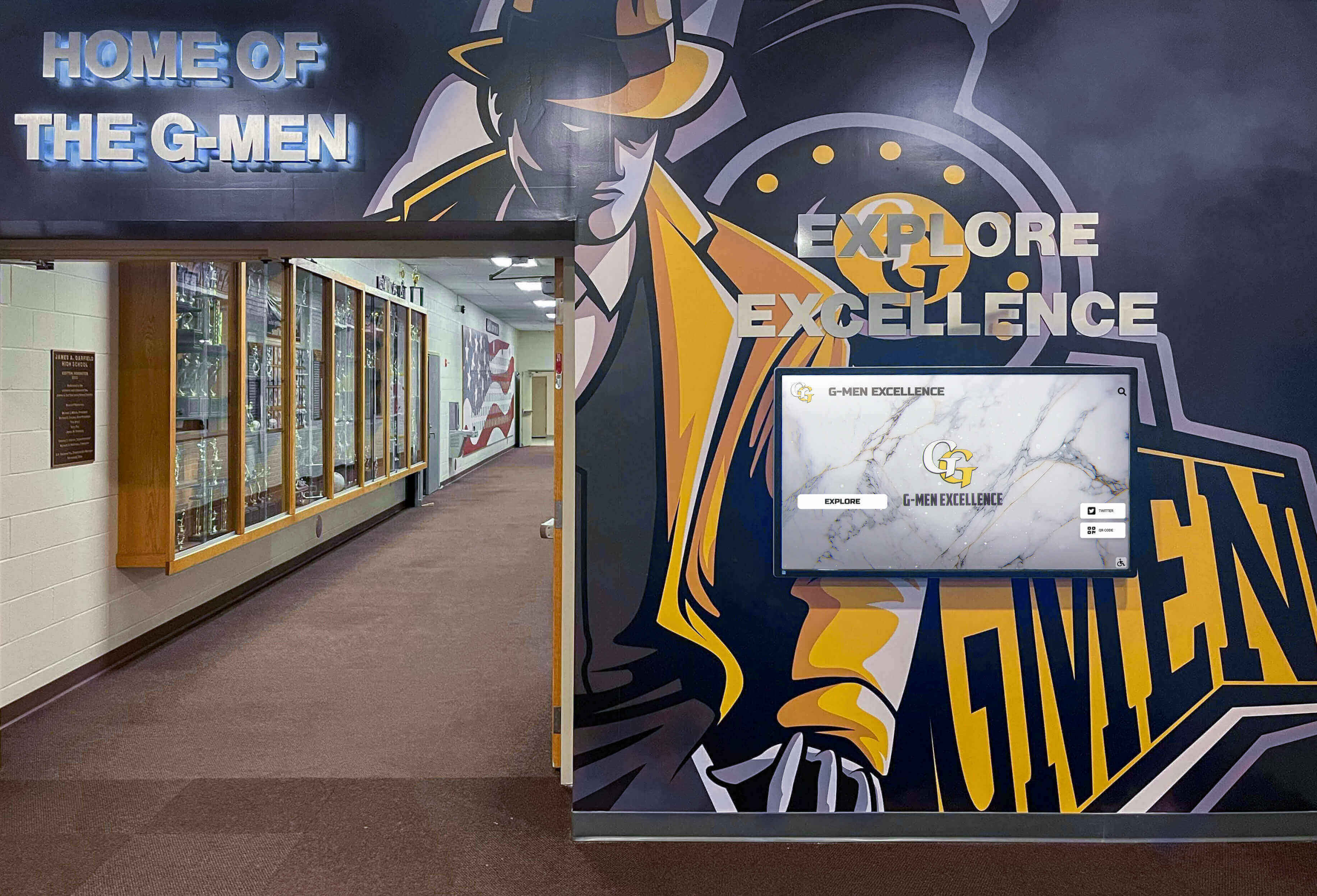
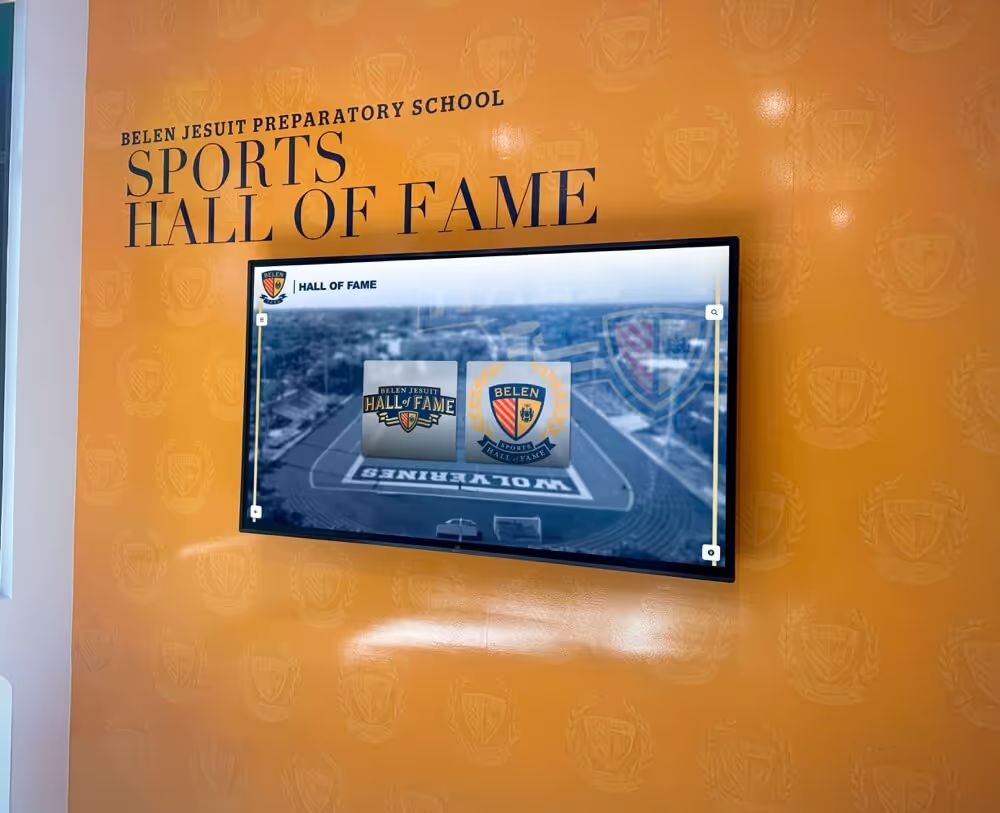
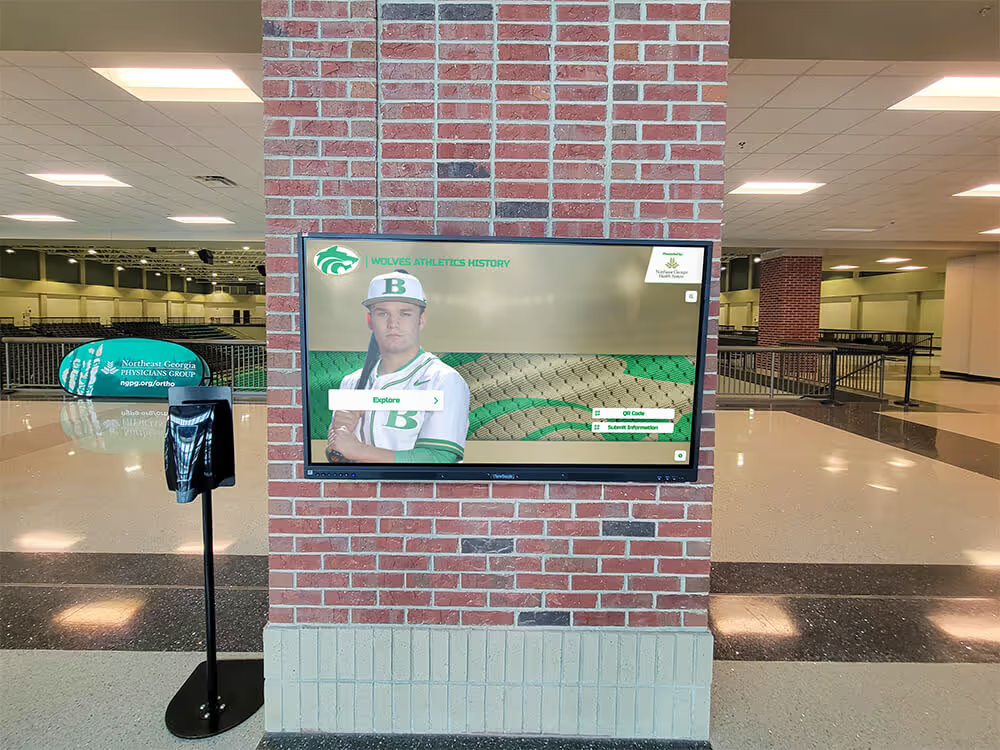
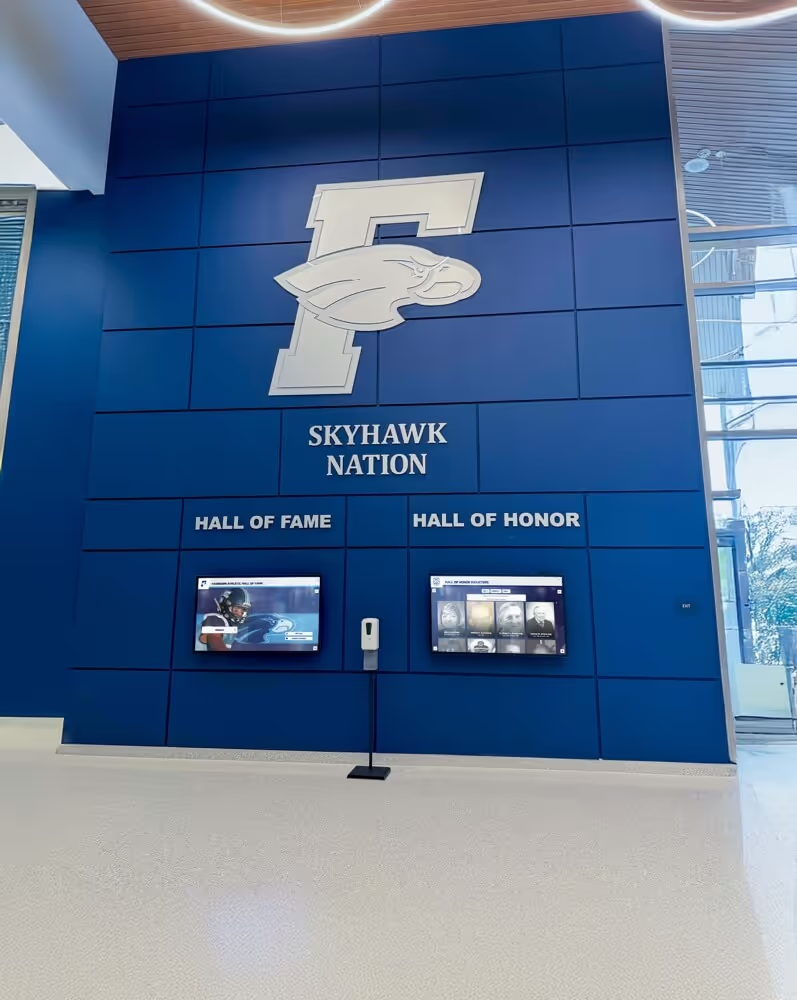
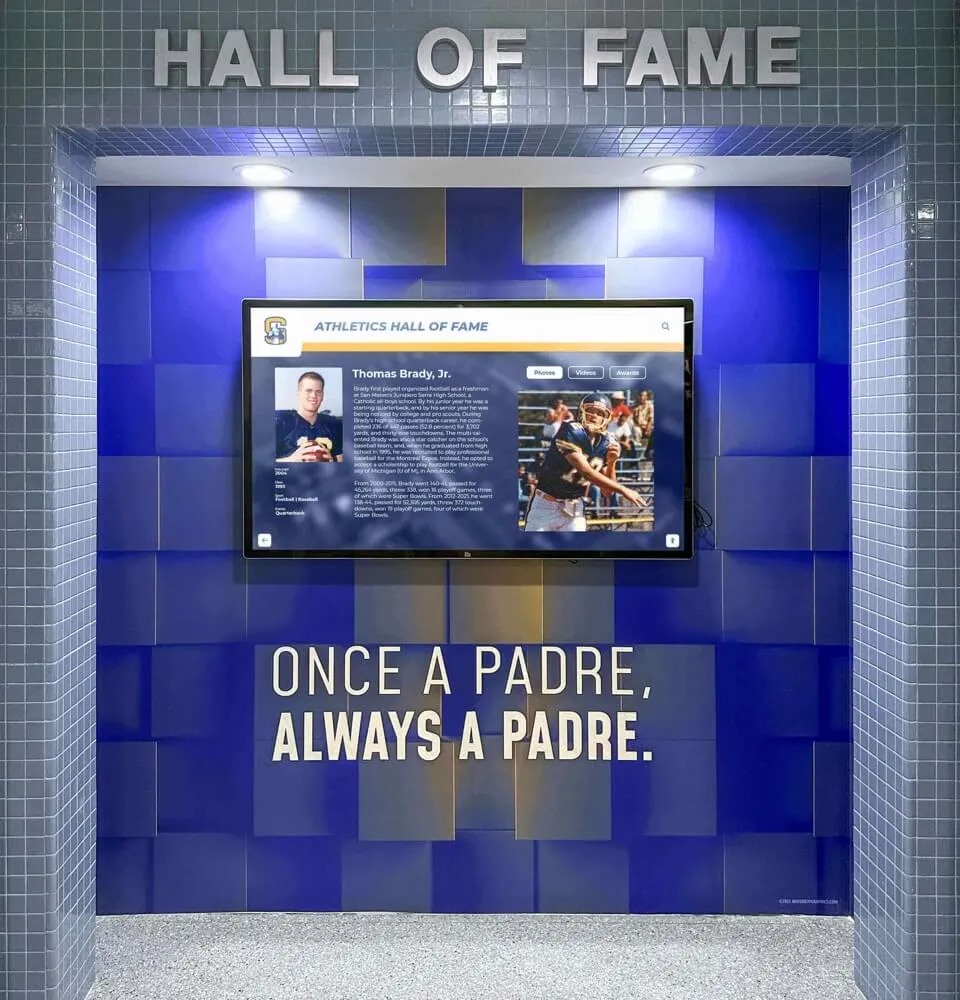
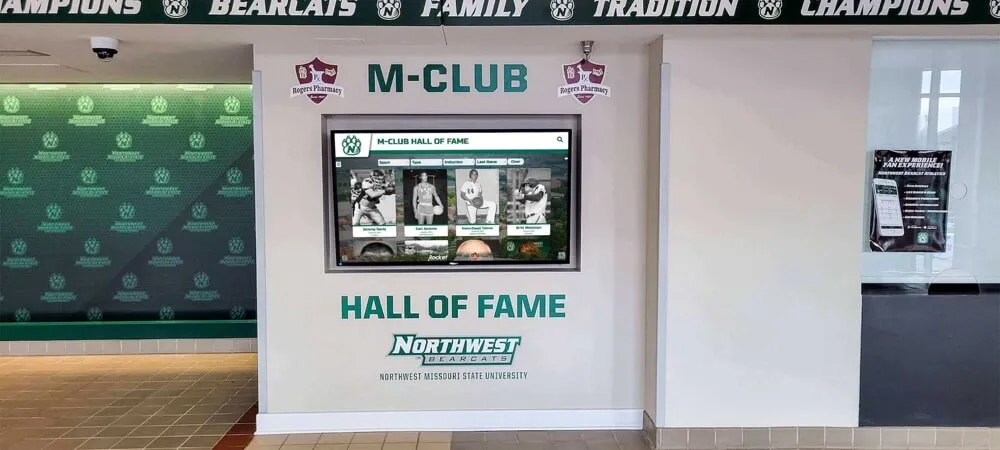
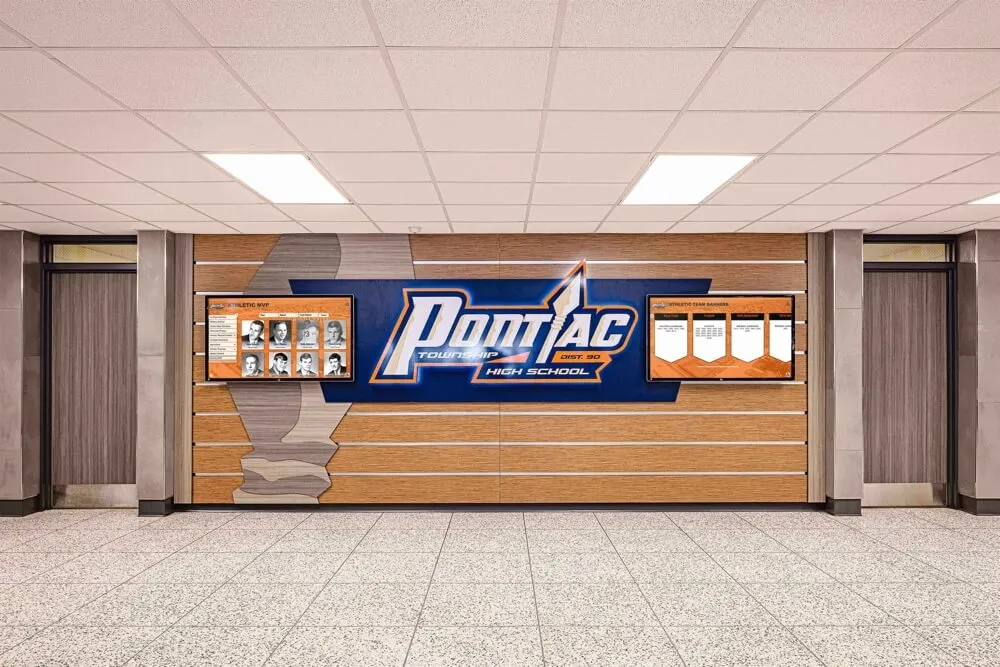
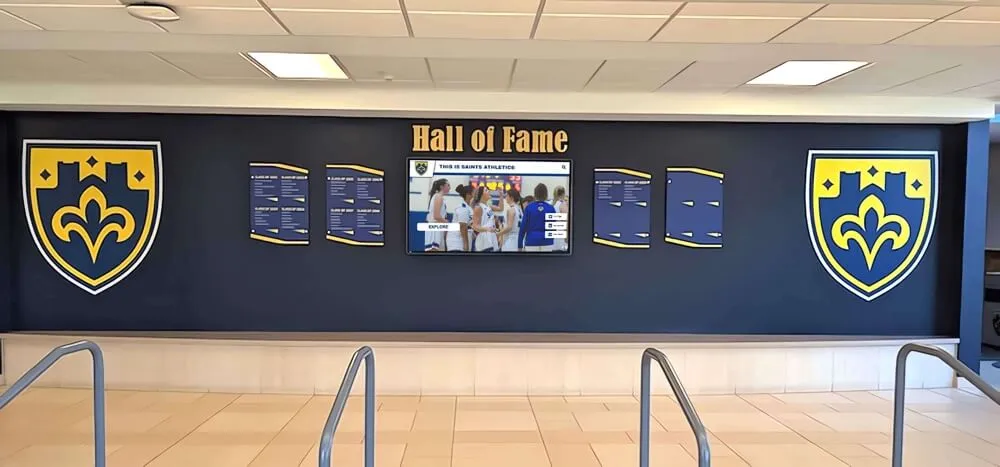
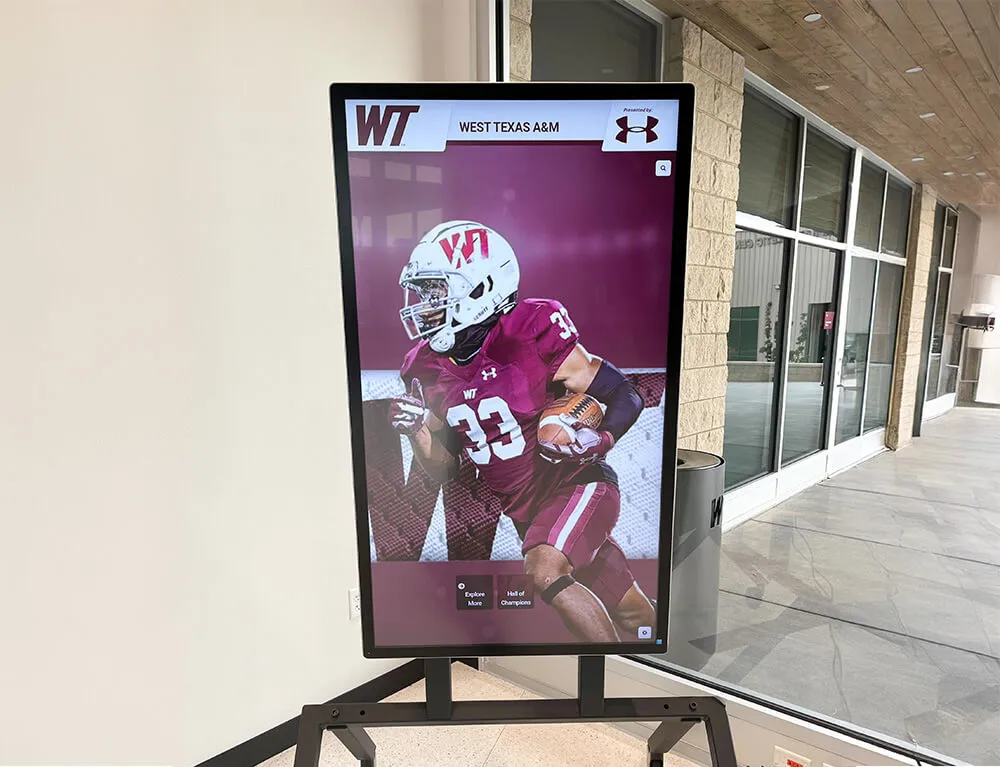
Digital displays mounted alongside physical trophy cases allow schools to present historical context that individual trophies cannot communicate on their own
What to Digitize from Your School Trophy Case
Digitization is not just a backup strategy—it is the mechanism that allows a school to honor every achievement without being limited by physical display space. When schools approach digitization systematically, the result is a searchable archive that serves alumni relations, advancement fundraising, and current student engagement simultaneously.
Priority Items for Digitization
Championship hardware (Tier 1): Even items that will remain in the case permanently should be digitized. A digital record survives floods, fires, facility renovations, and the inevitable moment when the trophy case is moved or replaced.
Individual awards with biographical context: A trophy engraved with a name and a year becomes far more meaningful when paired with a digital profile that includes the athlete’s photo, the season record, and what made that performance exceptional.
Retired jerseys and commemorative items: These are often irreplaceable. A high-resolution scan or photograph combined with written documentation—who wore the number, when it was retired, what the ceremony involved—preserves the meaning behind the object.
Older or fragile items: Trophies from the 1960s, 1970s, and 1980s are frequently in declining physical condition. Digitizing them now creates a permanent record before the object degrades beyond recognition.
What a Complete Digital Record Looks Like
A minimum viable digital record for each trophy case item includes:
- Two photographs (front and back, or trophy and engraving close-up)
- Category (sport/activity, award type, year)
- Verbatim engraving text
- Physical location (currently displayed, archived, stored elsewhere)
A comprehensive record adds:
- Individual athlete or team profile linked to the award
- Season statistics and record
- Newspaper coverage or game program scans if available
- Connection to related awards from the same era or program
Dedicated digital recognition platforms make this richer record practical to maintain and searchable for alumni and visitors. Tools designed specifically for school athletic recognition are reviewed in this comparison of the 10 best hall of fame tools for athletics, donors, arts, and history.
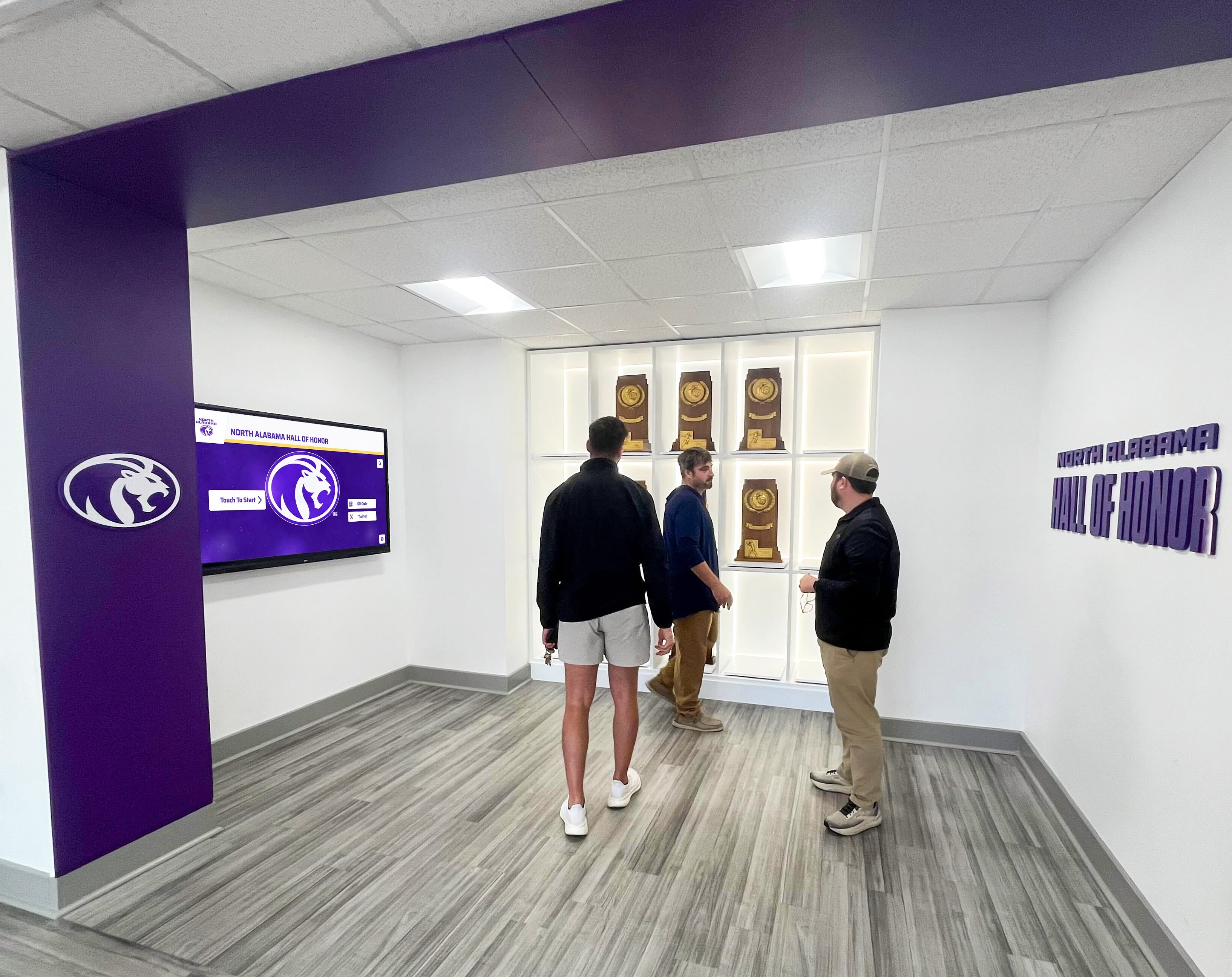
A well-organized trophy display creates natural moments for stories to be shared across generations of alumni and current students
Buyer’s Checklist: Choosing a Trophy Display Case for School
When selecting a new trophy display case for a school—or upgrading an existing one—the physical specifications matter as much as aesthetics. Use the following checklist before purchasing.
Size and Capacity Planning
- Measure available wall or floor space precisely before selecting a case
- Count current Tier 1 and Tier 2 items and project five-year growth (add 15–20% capacity buffer)
- Confirm interior shelf dimensions accommodate the largest existing trophy before ordering
- Decide between wall-mounted and freestanding based on foot traffic and viewing angle needs
Lighting
- LED interior lighting is strongly preferred over incandescent—lower heat output prevents warping and discoloration of wooden components and engraved plates
- Verify that lighting is positioned to illuminate engraved text and award details, not just the overall case silhouette
- Ask whether lighting can be adjusted or expanded as the case fills
Security and Access
- Lockable case with a keyed cylinder lock (not a simple latch) for high-traffic areas
- Tempered safety glass to prevent injury if the case is accidentally struck
- Sliding or hinged door access evaluated for staff convenience during frequent updates
Materials and Finish
- Anodized aluminum or powder-coated steel frames hold up better than painted wood in high-humidity environments (near gyms, pools)
- Interior backing in school colors with engraved or vinyl school logo creates a cohesive presentation
- Confirm interior shelf material (glass shelves show fingerprints; wood shelves complement traditional trophies; acrylic is a durable middle ground)
Integration Points
- Is there a power outlet nearby to support integrated LED lighting or a small digital display screen?
- Does the case have mounting points or adjacency space for QR codes linking to the digital archive?
- Is the case positioned where it will be visible to both students and visiting guests?
For a broader overview of recognition display tools that extend beyond the physical case, the best hall of fame display tools compared across athletics, donors, arts, and history programs provides a useful parallel reference for schools planning a full recognition environment.
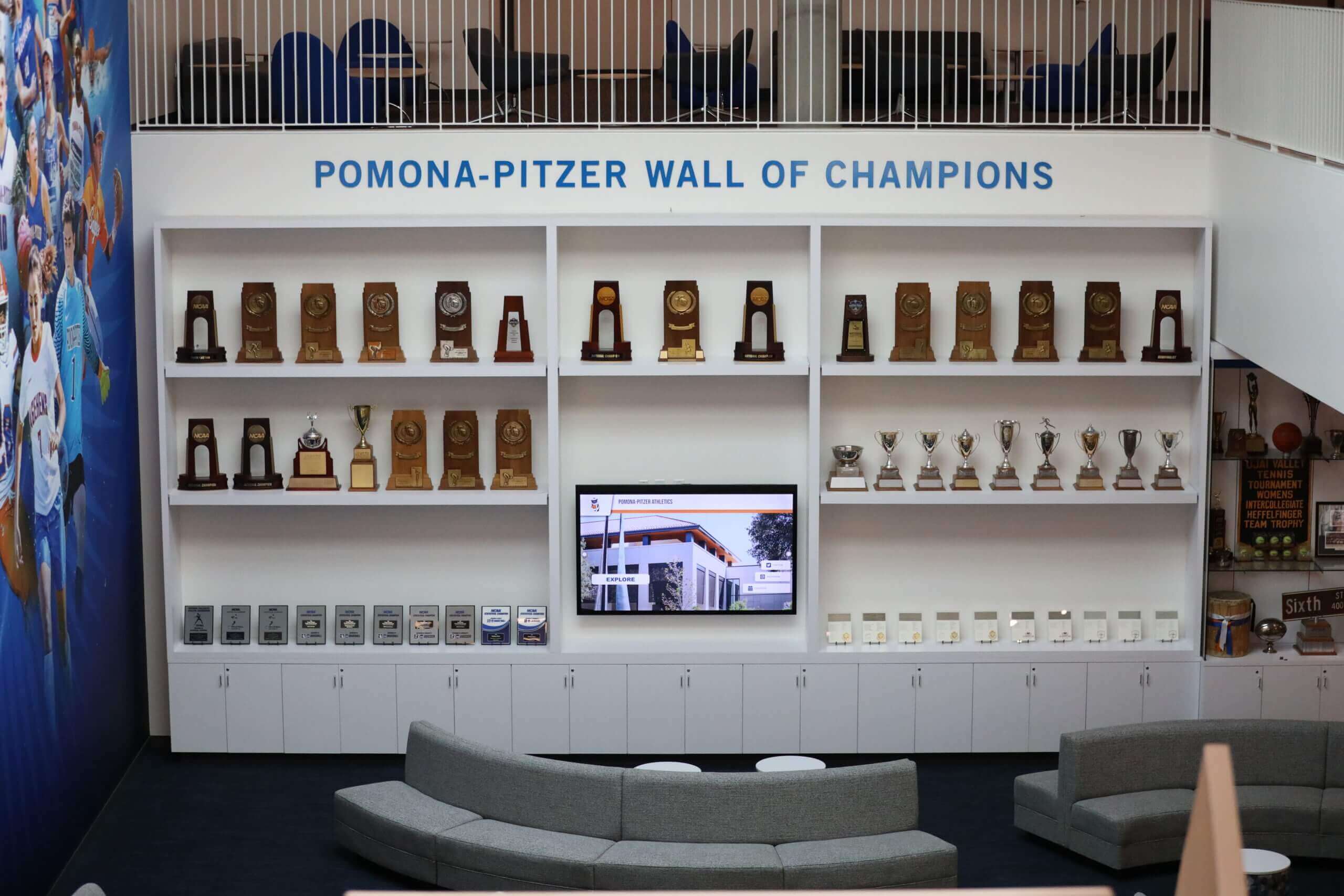
Trophy display lounges that pair physical cases with open seating create spaces where the history becomes part of the daily environment rather than a passing hallway glimpse
Digital Trophy Case Solutions: Extending What the Glass Case Cannot Hold
Even a large, well-maintained trophy display case for school has a hard ceiling: it can only show what fits inside it. Schools with decades of competitive history, multiple sports programs, and academic award traditions will always accumulate more significant hardware than any physical case can hold. Digital solutions close that gap.
Touchscreen Kiosk Integration
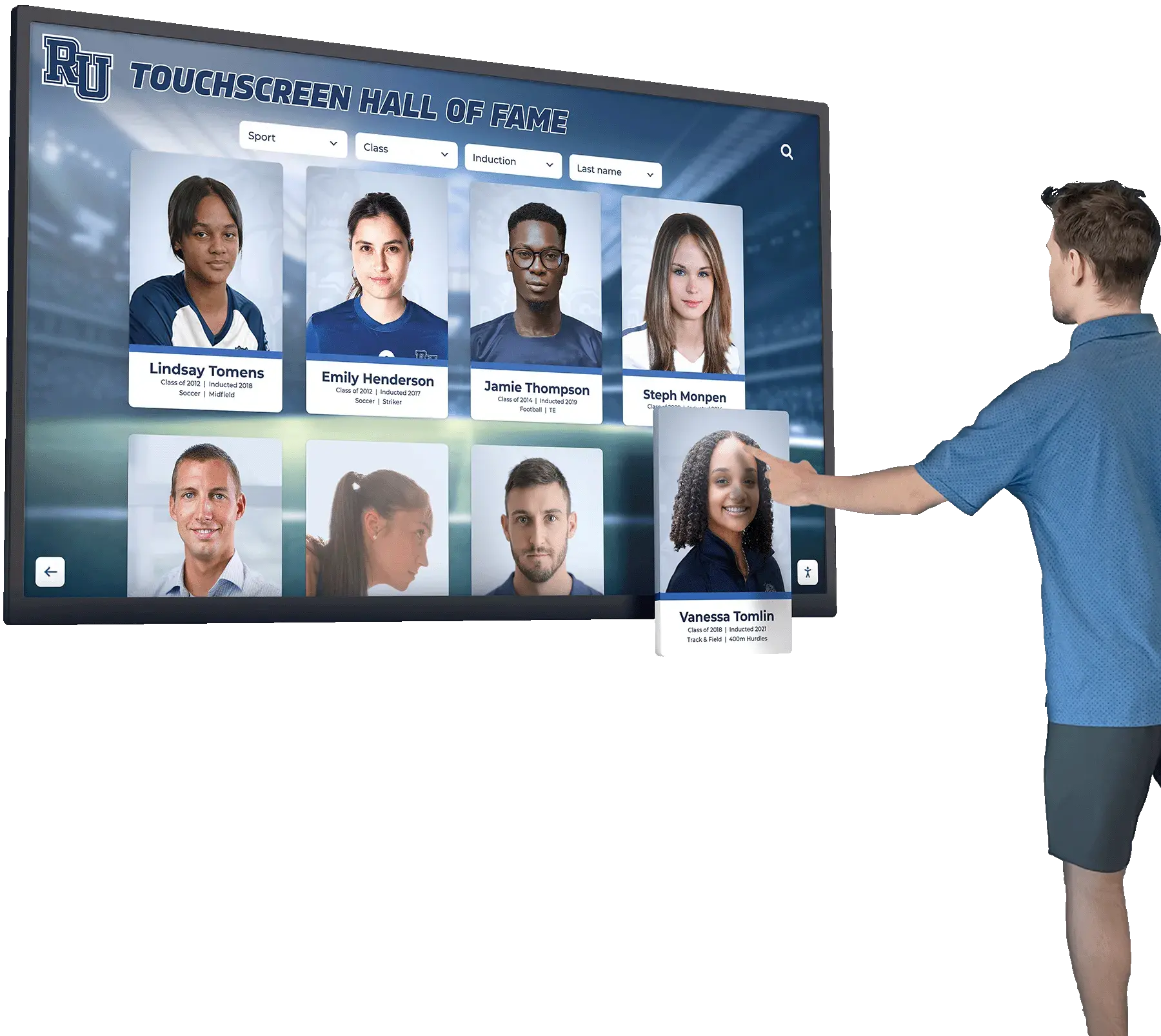
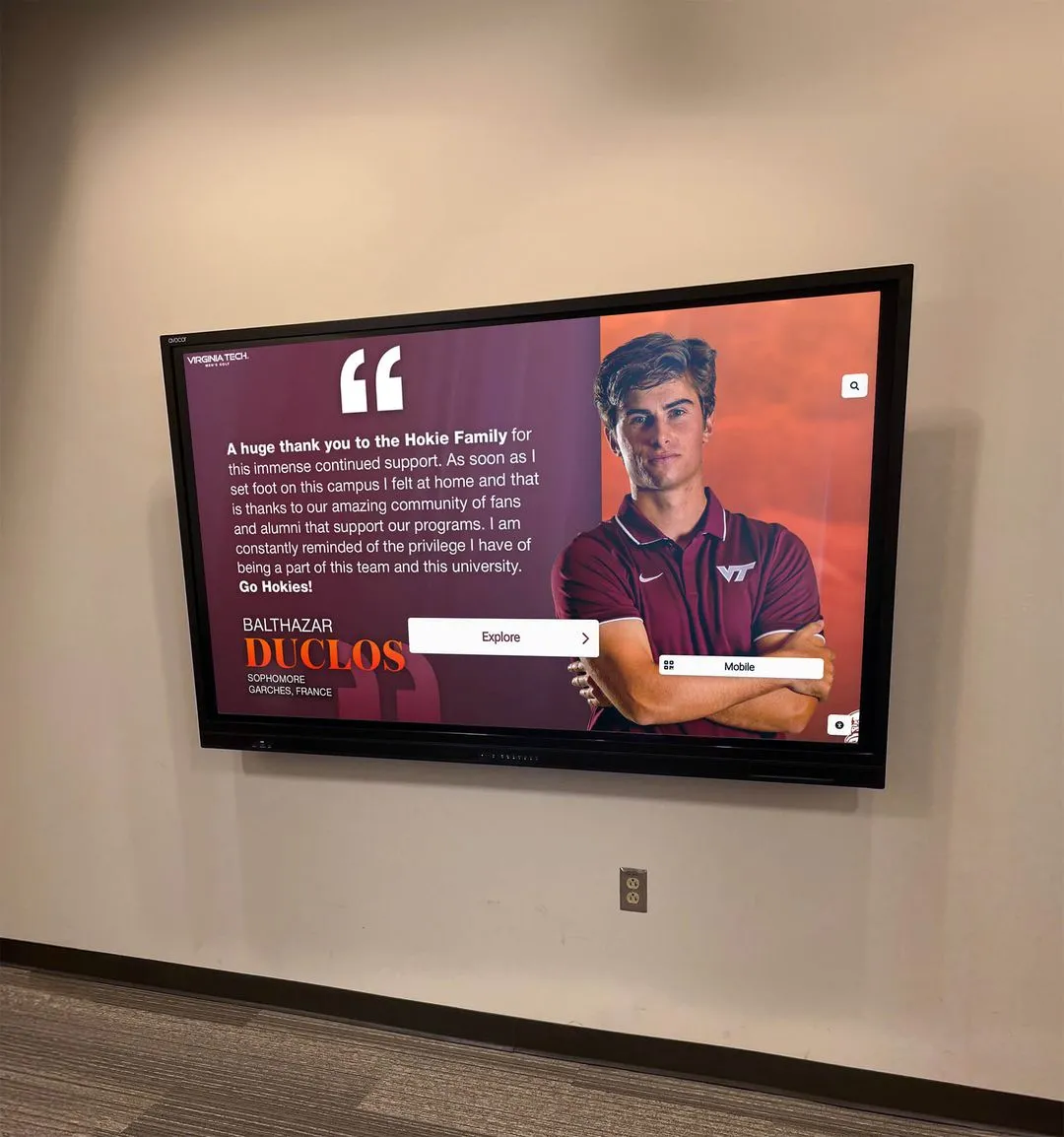
A growing number of schools install touchscreen kiosks directly adjacent to—or in some cases built into—the physical trophy case. Visitors can tap through decades of championship history, individual award recipients, and season-by-season records without those items needing to occupy physical shelf space. Items that have rotated out of the case remain accessible and searchable rather than disappearing into storage.
This approach is particularly effective during school open houses, alumni events, and athletic recruitment visits, where prospective students and returning alumni are specifically looking for evidence of program history and achievement culture.
Web-Accessible Digital Archives
A web-based digital recognition platform extends the trophy case’s reach to anyone, anywhere. Alumni who graduated twenty years ago can search for their team’s championship trophy. Parents of current athletes can share their student’s individual award on social media. Admissions staff can direct prospective families to a searchable history of academic and athletic achievement.
Platforms like Rocket Alumni Solutions provide schools with tools to build and maintain this kind of digital record—combining the visual presentation of a trophy case with the search, profile depth, and media capacity that physical cases cannot offer. Explore how Rocket Alumni Solutions supports school trophy case digitization and interactive hall of fame displays.
QR Code Bridges Between Physical and Digital
A simple, low-cost bridge between the physical case and the digital archive is a QR code mounted inside or adjacent to the case. Visitors scan the code with a smartphone and land on a digital page with full context for the items on display—engraving text, photos, season records, and linked athlete profiles. This requires no hardware investment beyond the printed code and adds meaningful depth to the physical display.
For schools managing broad recognition programs across multiple sports and academic disciplines, 100 youth sports awards ideas with category-by-category breakdowns offers practical context for understanding which award types deserve a physical presence versus digital-only recognition.
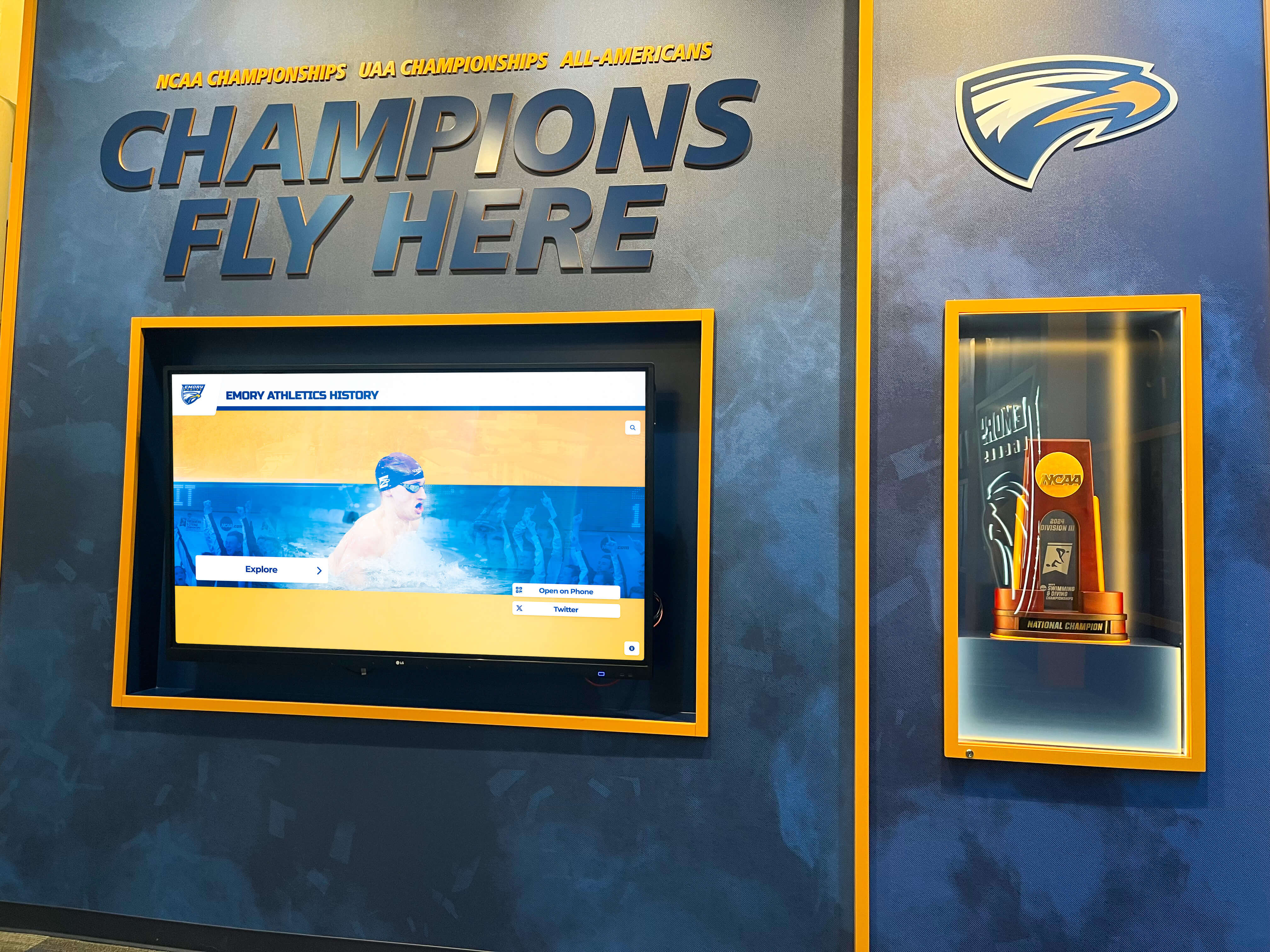
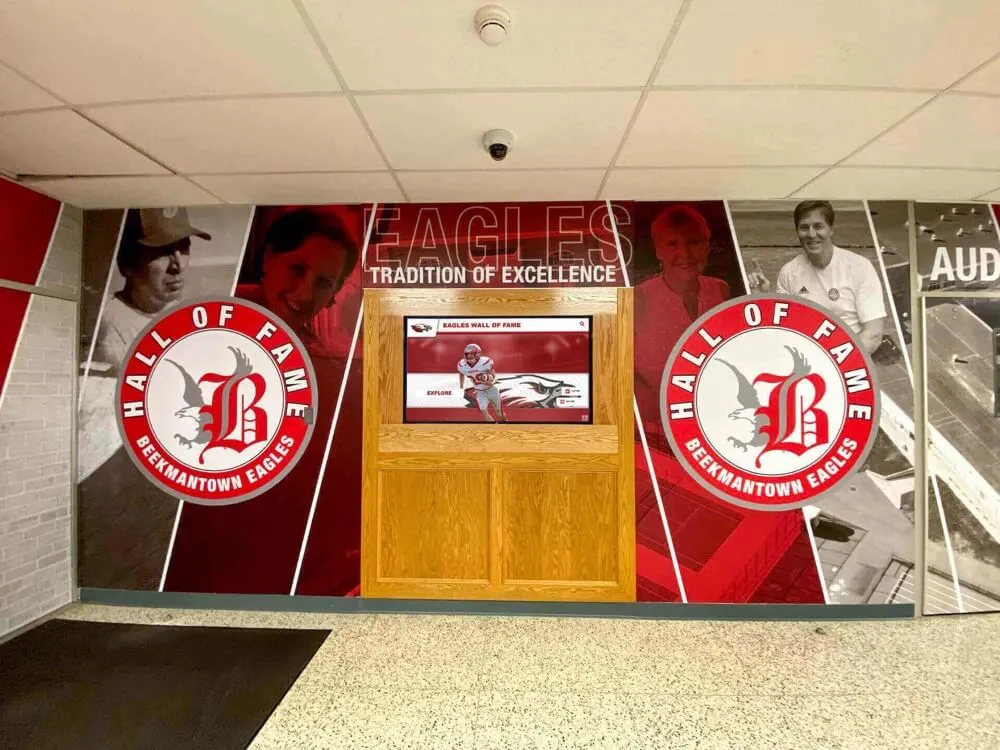
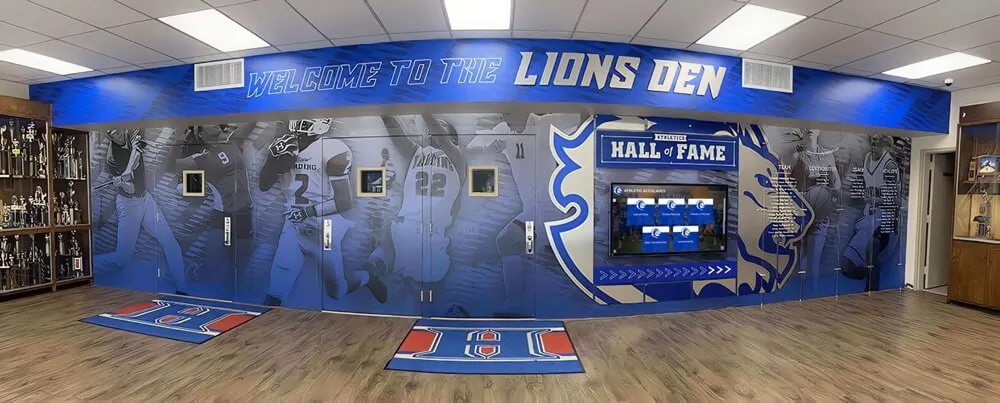
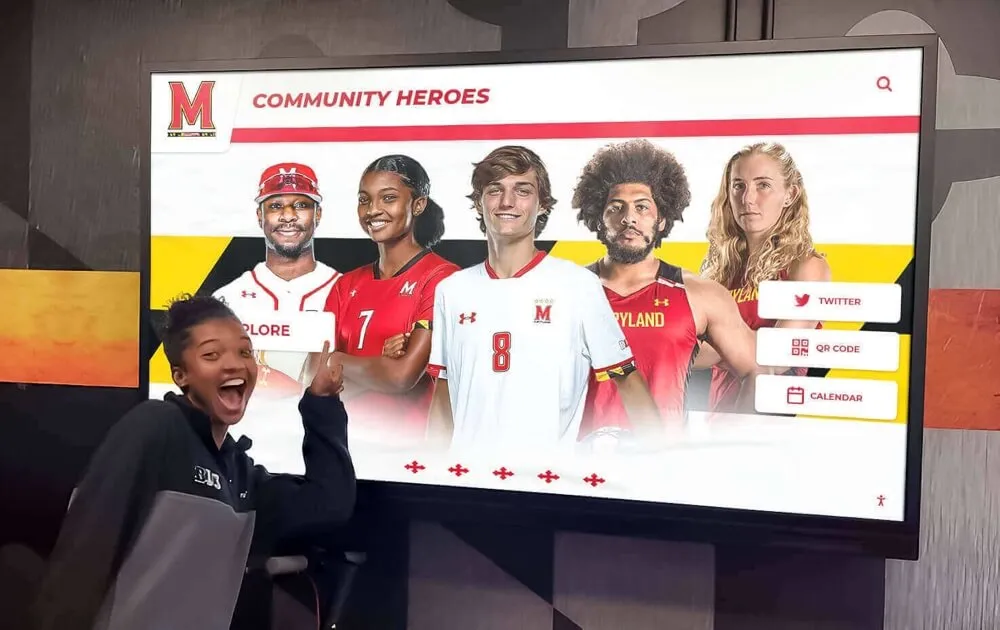
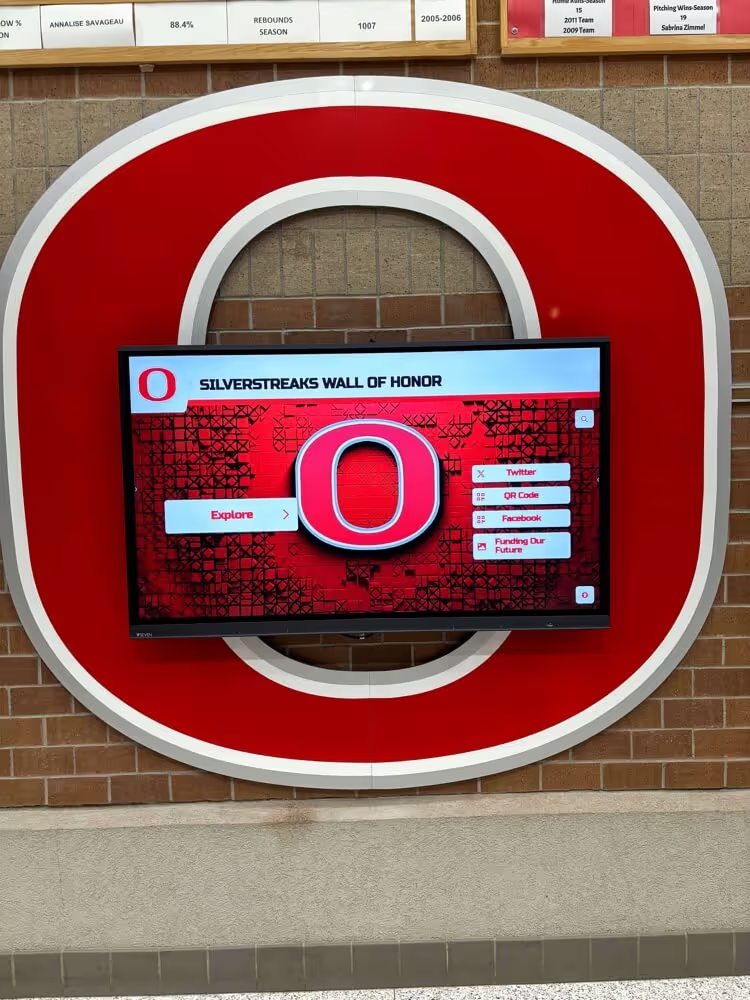
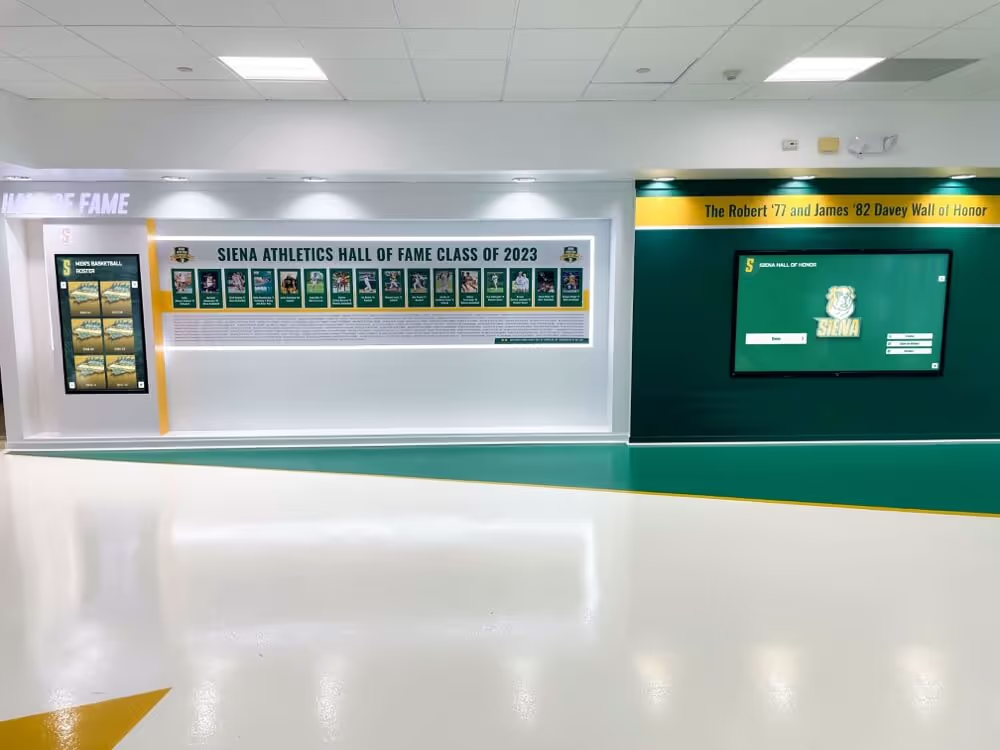
Championship walls and trophy cases work best when the physical display is paired with digital records that preserve the full story behind each award
FAQ: Trophy Display Case for School
What should a school trophy display case include?
A school trophy display case should prioritize championship and state-level hardware, individual all-state or school-record awards, and commemorative items like retired jersey numbers or milestone game balls. Participation trophies and lower-tier recognition are better archived digitally than displayed, so the case remains a curated statement about the school’s competitive and academic achievement ceiling rather than a storage unit for every award the program has ever received.
How often should a school rotate its trophy case?
An annual review at the start of each school year is the most manageable cadence. Conduct a full inventory in August, classify items into permanent, rotating, and archive tiers, and make additions and removals at the same time—before the school year’s foot traffic picks up. End-of-year intake in May or June should classify incoming awards before they enter the case, preventing reactive crowding.
What is the best way to digitize a school trophy collection?
Begin with a photograph-and-inventory pass: two photos per item (full trophy and engraving close-up), verbatim transcription of engraving text, and a condition note. Store records in a shared drive accessible to the athletic director, principal, and alumni office. For a more searchable, alumni-facing archive, a dedicated digital recognition platform that supports profile linking, media uploads, and public access is significantly more useful than a spreadsheet over time.
What size trophy display case does a school need?
Count your current Tier 1 and Tier 2 items, then plan for five-year growth with a 15–20% capacity buffer. Measure available wall or floor space precisely before ordering, and confirm that interior shelf depth and height accommodate your largest existing trophy. For schools with large collections, a combination of a flagship case for premier hardware and supplementary cases or digital displays for the broader collection is often more effective than a single oversized case.
Can schools combine physical trophy cases with digital displays?
Yes, and this is increasingly the recommended approach for schools with multi-decade competitive histories. Touchscreen kiosks placed adjacent to the physical case allow visitors to browse items that have rotated out of physical display. QR codes mounted in or near the case bridge to web-accessible archives. Digital signage in the same hallway can cycle through historical champions, season records, and individual award recipients on a rotation that the physical case cannot match.
Extend Your Trophy Case Beyond the Glass
Rocket Alumni Solutions helps schools build searchable digital archives of their trophy and recognition history—so every championship, individual award, and milestone moment is preserved and accessible, whether or not it fits in the physical case. See how schools are pairing physical trophy cases with interactive digital displays that tell the full story.
Explore Digital Trophy Case SolutionsA trophy display case for school is most effective when it functions as a curated, actively managed display rather than a passive storage container. The framework in this guide—clear criteria for what earns a spot, a consistent annual rotation workflow, a digitization protocol that runs ahead of any removal, and a physical case selected to serve the next decade rather than just the current one—gives schools the structure to make that distinction in practice.
The schools that get this right tend to share one common approach: they treat the trophy case as the physical anchor of a broader recognition system, not the entire system itself. Physical hardware for the most significant achievements, active rotation to keep the display current and meaningful, and a digital archive that preserves every item regardless of whether it fits behind the glass—that combination serves students, alumni, and the institution far better than a case that simply fills until it overflows.
For additional context on building a complete recognition environment that extends from individual awards to permanent institutional displays, the 10 best hall of fame tools for school athletic and recognition programs provides a broader comparison of platforms and approaches that complement a well-managed trophy display case.