



Volleyball passing drills form the foundation of every successful volleyball program, yet many teams struggle with inconsistent serve receive and defensive positioning that undermine otherwise strong offensive systems. When coaches implement progressive passing drill sequences—building from fundamental platform control through game-situation defense—they develop players who can consistently deliver quality balls to setters under competitive pressure, transforming defensive possessions into offensive opportunities.
Yet many volleyball programs approach passing practice without systematic progression. Generic drills fail to address specific technical deficiencies in platform angle or body positioning, random drill selection prevents players from building skills sequentially, and insufficient repetitions under game-like pressure leave athletes unprepared for match situations. Meanwhile, teams that neglect passing fundamentals inevitably suffer from offensive inconsistency regardless of how talented their hitters or setters may be.
This comprehensive guide presents 14 volleyball passing drills organized by skill level—from beginner fundamentals through advanced game situations—with detailed progression strategies that enable coaches to build elite passing performance throughout their rosters.
Passing excellence separates championship volleyball programs from average teams. While spectacular kills and blocks capture attention, consistent serve receive and defensive passing create the foundation that makes offensive execution possible. Programs that systematically develop passing skills throughout their rosters gain competitive advantages that compound across entire seasons.

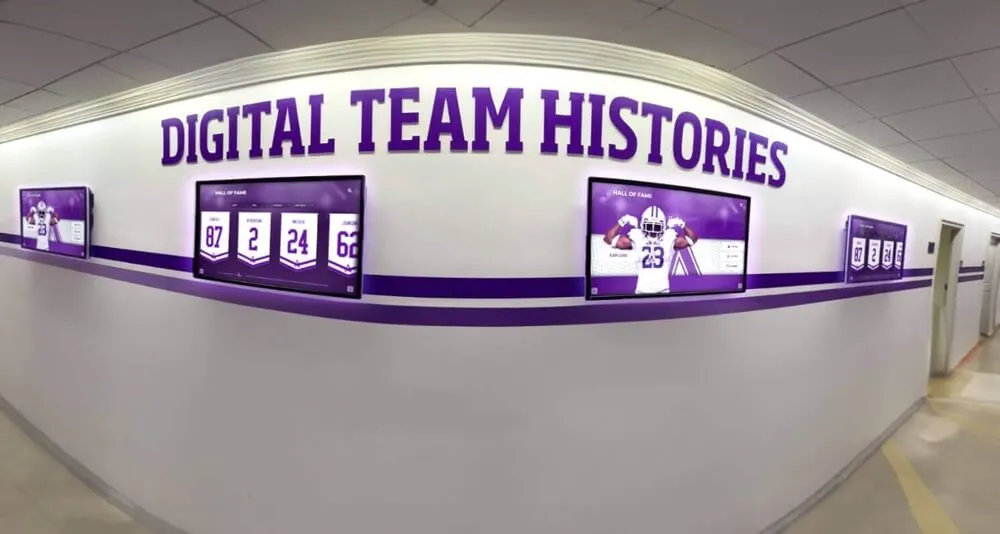
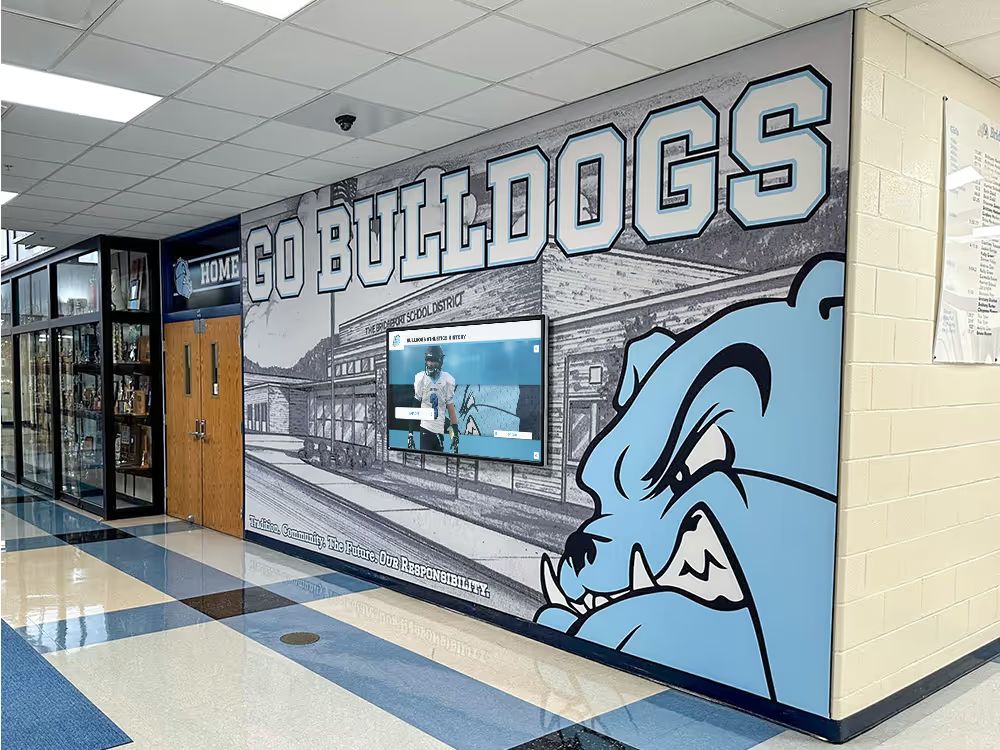
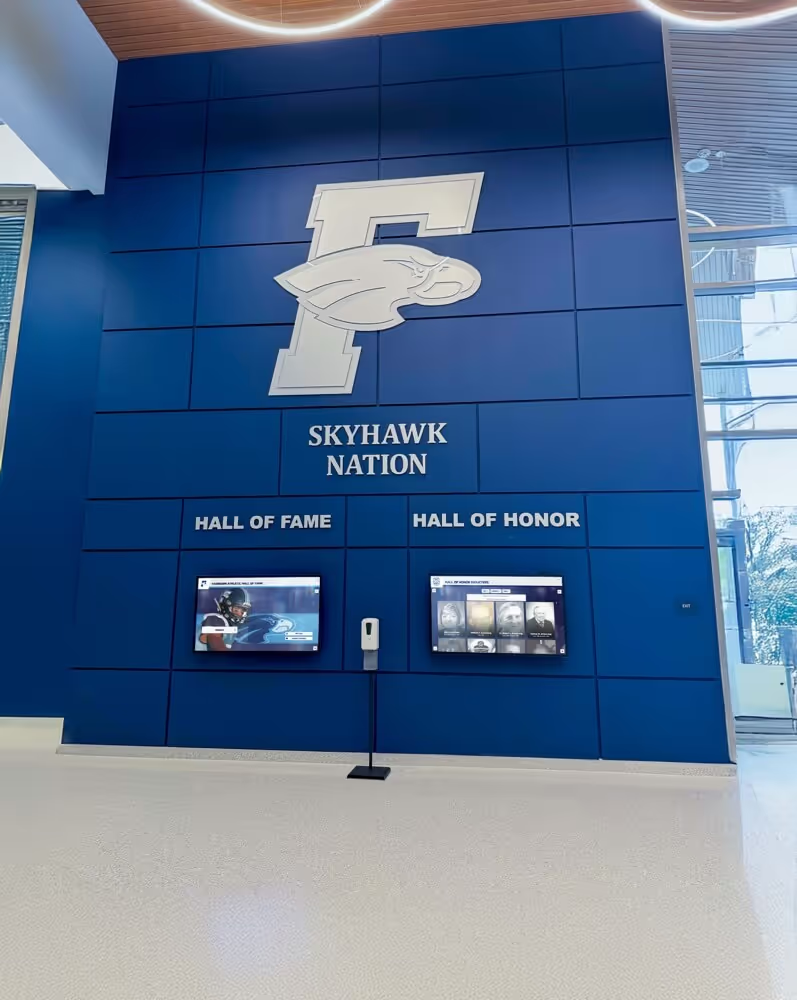
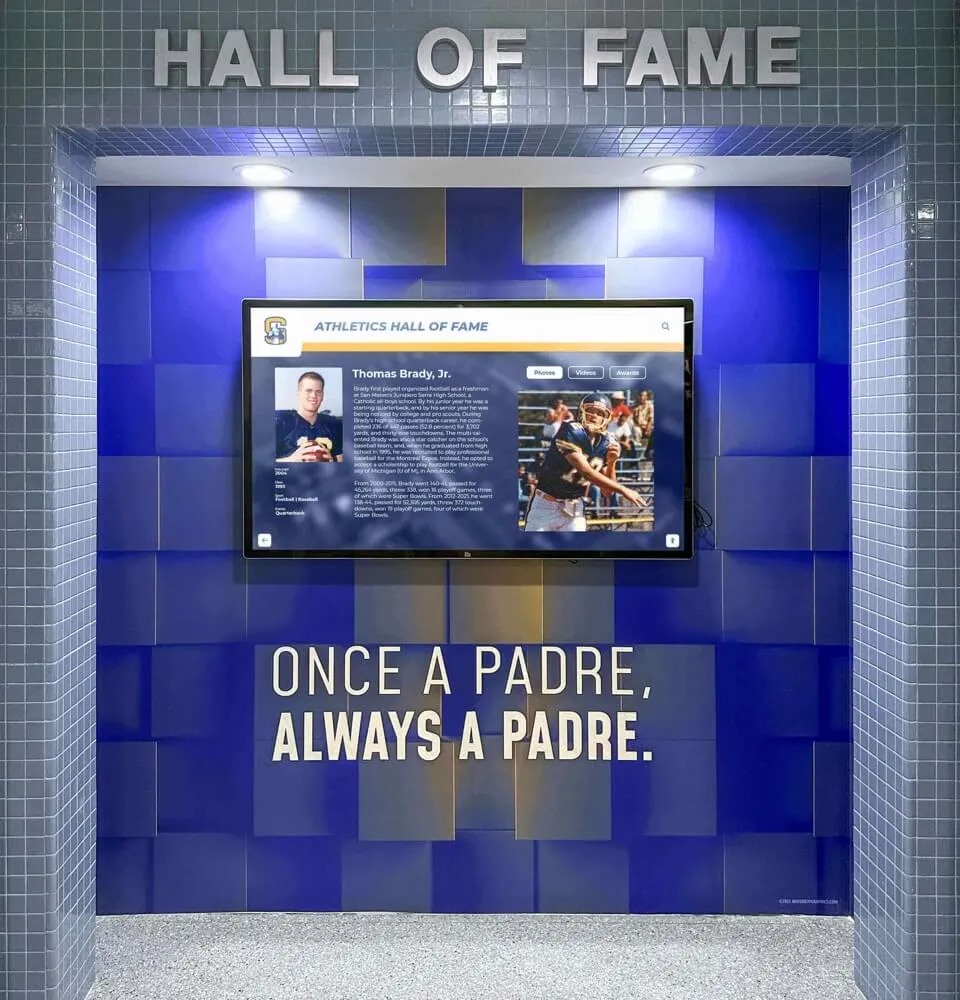
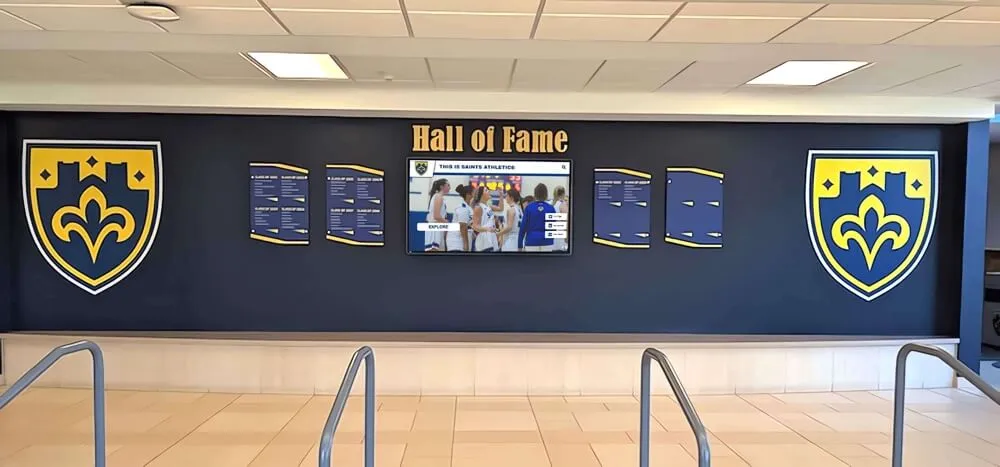
Championship volleyball programs celebrate defensive excellence and passing achievement alongside offensive statistics
Understanding Volleyball Passing Fundamentals
Before diving into specific drills, understanding proper passing technique ensures that practice repetitions build correct habits rather than reinforcing flawed mechanics.
Proper Platform Formation
The platform—created by your forearms—represents the most critical technical element in volleyball passing:
Hand and Arm Positioning
- Clasp hands together using preferred grip (fingers clasped, fist in palm, or thumb-over-thumb)
- Create flat, even surface by keeping arms straight and locked at elbows
- Rotate shoulders forward slightly to create wider platform surface
- Position thumbs parallel pointing at ground to ensure proper platform angle
- Keep wrists together eliminating gap between forearms
- Maintain firm but not tense arm muscles throughout contact
Platform Angle Control
- Angle platform toward target by adjusting shoulder height and body position
- For low balls, drop hips while maintaining platform height
- For high balls, let ball drop to platform height rather than reaching up
- Contact ball on flat part of forearms between wrists and elbows
- Direct ball using body positioning more than arm swinging
- Follow through by keeping arms stable after contact
According to USA Volleyball coaching education materials, proper platform mechanics allow passers to control ball direction primarily through body positioning rather than arm manipulation, resulting in more consistent and accurate passes under pressure.
Body Positioning and Footwork
Effective passing requires athletic positioning that enables quick movement to the ball:
Ready Position Fundamentals
- Feet shoulder-width apart with one foot slightly forward
- Knees bent with weight on balls of feet
- Hips low maintaining athletic stance
- Shoulders forward over knees
- Arms separated and ready (not clasped until approaching ball)
- Eyes tracking server or attacker
- Body weight slightly forward prepared to move in any direction
Movement Patterns to the Ball
- Use shuffle steps rather than running when possible
- Move feet first, then create platform once positioned behind ball
- Ideally position body so ball contacts platform at midline
- Get feet stopped before ball contact for stability
- Create passing triangle with feet positioned wider than shoulders
- Face shoulders and hips toward target throughout movement
Communication in Passing Situations
Verbal communication prevents collisions and clarifies responsibility:
- Call “Mine!” loudly and early when taking the ball
- Use player names to direct balls to specific passers
- Call “Help!” when passed a ball unexpectedly
- Communicate after each play about coverage responsibilities
- Use predetermined calls for specific serve or attack patterns
Learn more about comprehensive athletic achievement recognition in digital record board systems for volleyball programs.
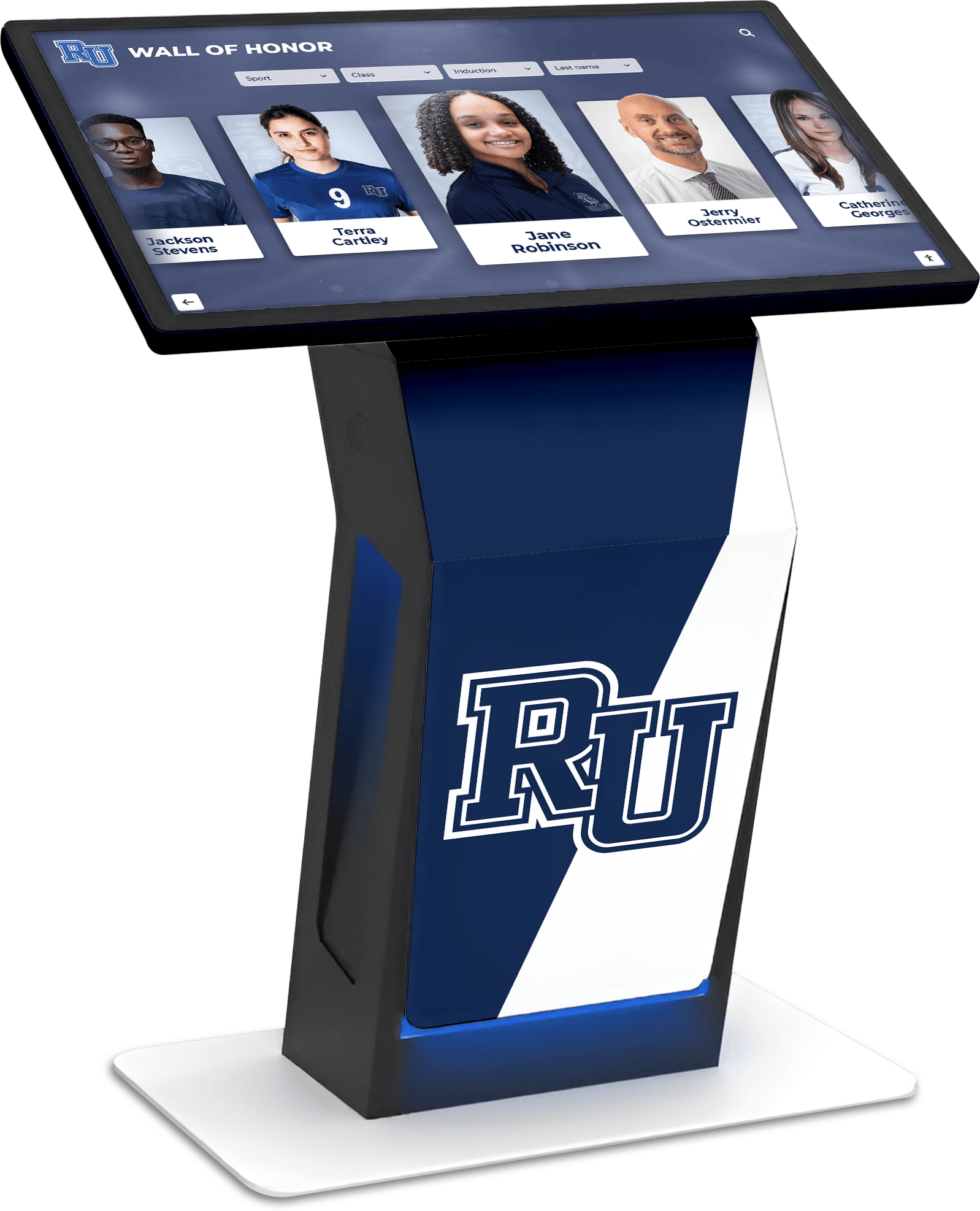
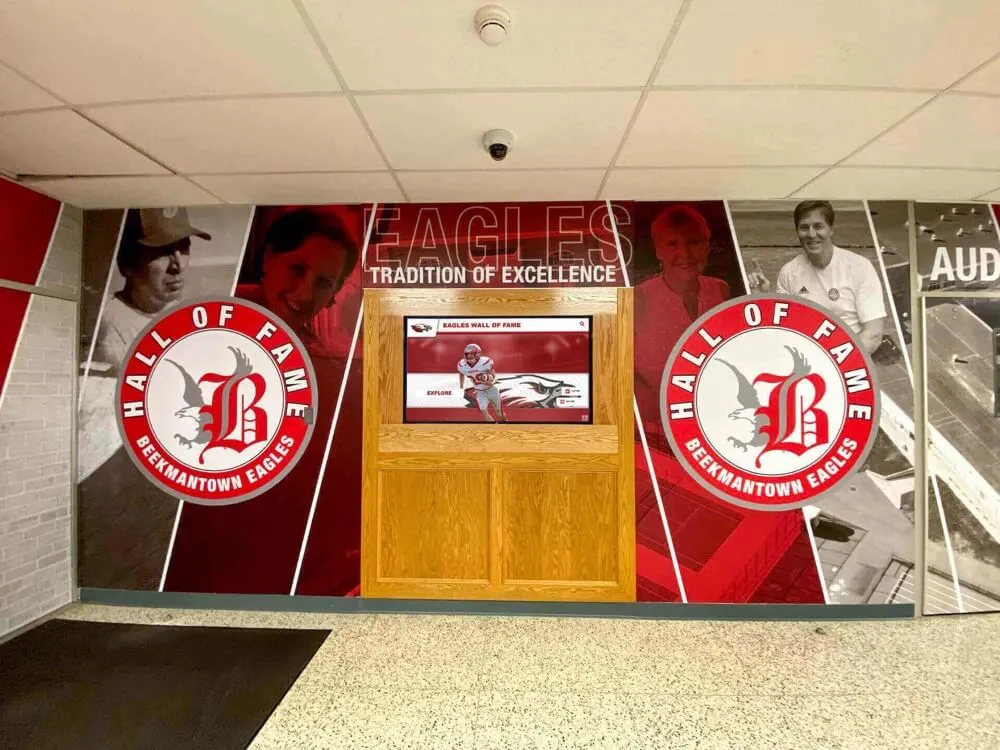
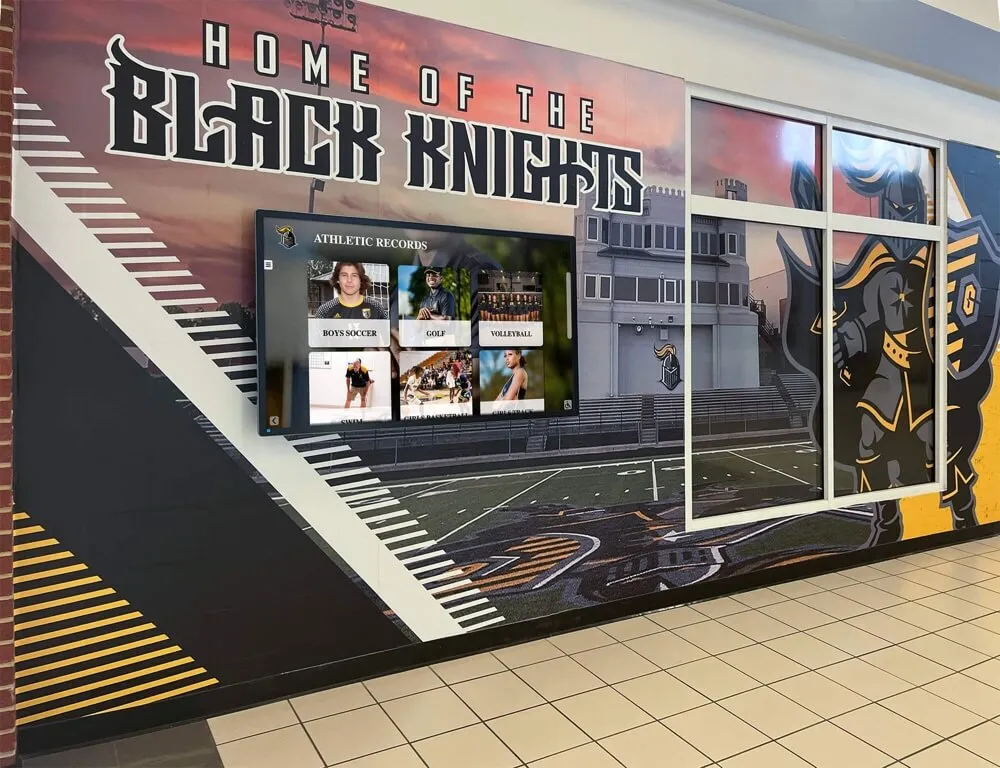
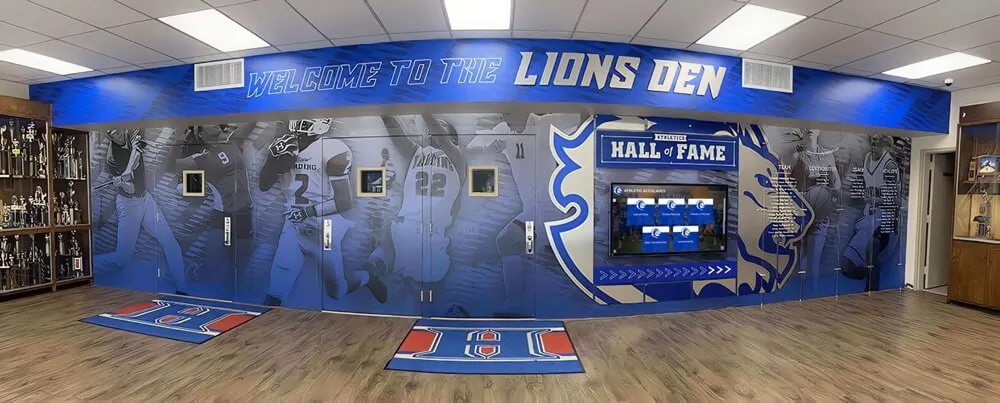
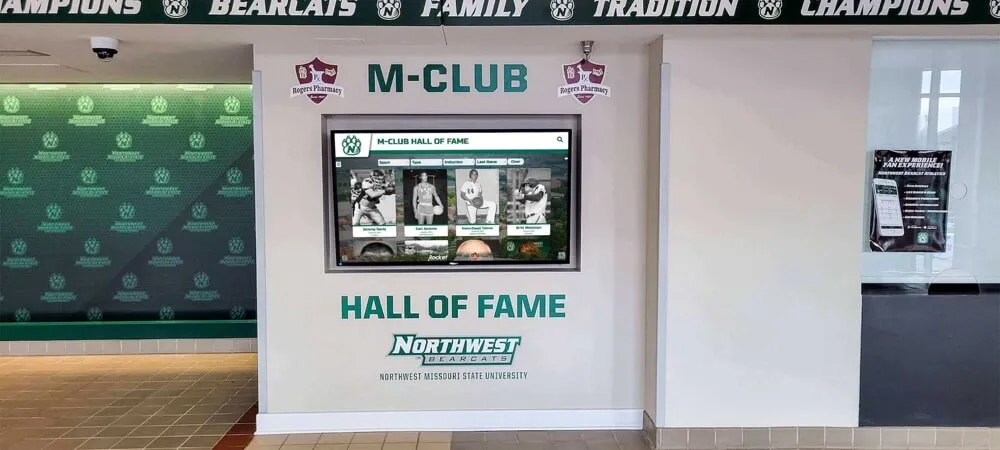
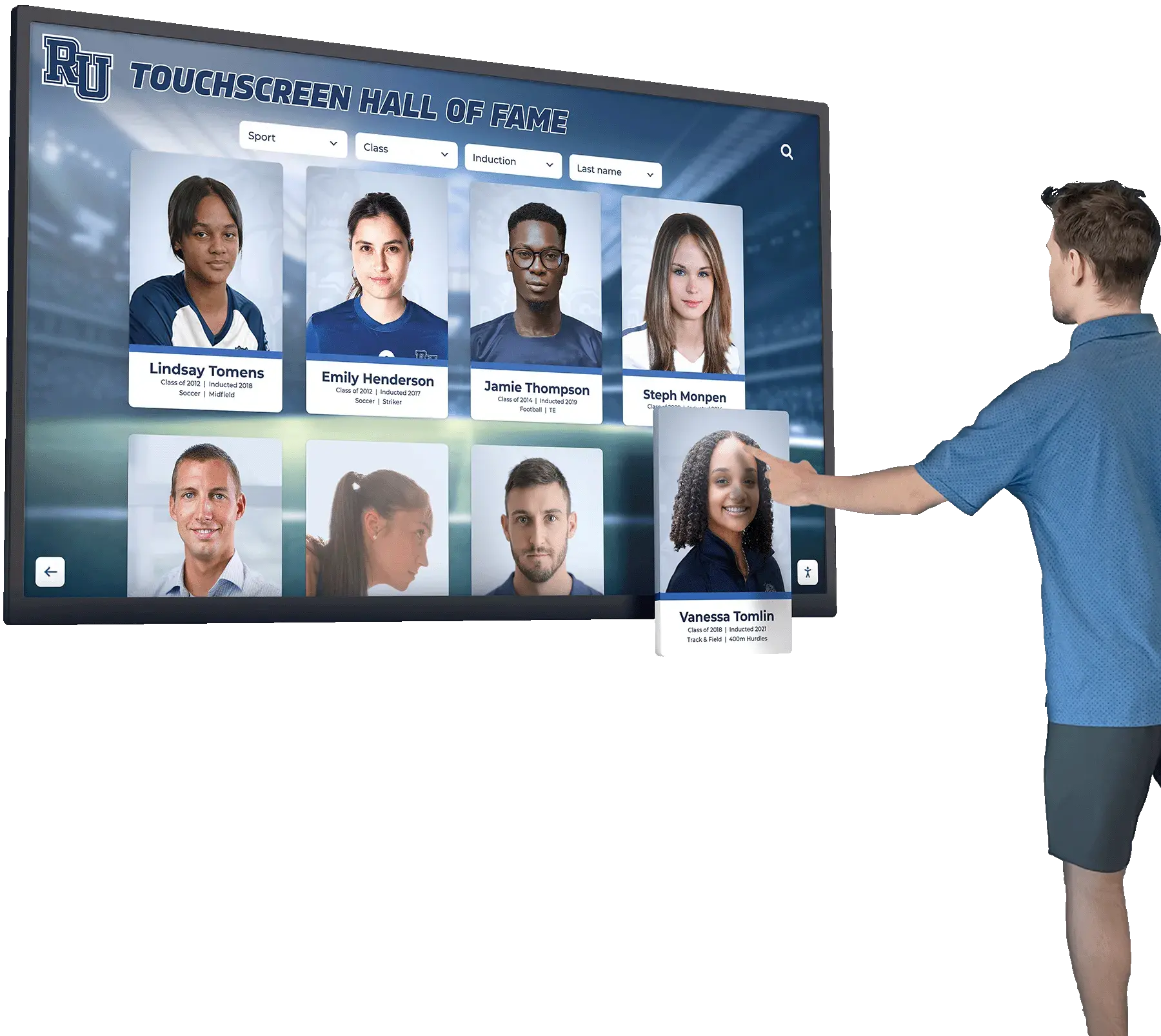
Modern recognition systems celebrate both offensive and defensive volleyball excellence throughout players' careers
Beginner Level Volleyball Passing Drills
Foundation drills develop proper technique before introducing competitive pressure or complex movement patterns.
Drill 1: Wall Passing for Platform Control
Purpose: Develop consistent platform angle and ball control through repetitive contact.
Setup:
- Players position 8-10 feet from wall
- Use regulation volleyball or lighter training ball for beginners
- Mark target zone on wall approximately 10-12 feet high
Execution:
- Player assumes ready position facing wall
- Self-toss ball gently toward wall
- Pass ball off wall using proper platform technique
- Allow ball to bounce once, then repeat
- Progress to continuous passing without bounce once control improves
- Aim for target zone consistency
Key Coaching Points:
- Focus on platform angle consistency rather than power
- Keep arms locked throughout contact
- Follow through toward target zone
- Count consecutive successful passes building toward goals (10, 25, 50 in a row)
Progression: Increase distance from wall, reduce target zone size, or require continuous passing without letting ball drop.
Common Mistakes: Swinging arms rather than holding platform stable, bending elbows at contact, poor follow-through direction.
Drill 2: Partner Pepper (Controlled)
Purpose: Develop passing accuracy to specific targets with movement between contacts.
Setup:
- Partners position 12-15 feet apart
- Each partnership needs one ball
- Mark or designate target zones for passes
Execution:
- Partner A tosses ball to Partner B’s midline
- Partner B passes ball back to Partner A using forearm pass
- Partner A catches and tosses again
- After 10 passes, partners switch roles
- Progress to continuous passing without catching once control develops
Key Coaching Points:
- Passer moves feet to get behind ball before contact
- Platform aimed at partner’s midline (chest height)
- Communicate before each contact
- Develop rhythm and consistency
Progression: Increase distance between partners, require toss to alternate sides forcing lateral movement, or add third partner for triangle passing pattern.
Variations: Three-person pepper with pass-set-pass pattern, competitive games counting consecutive passes without errors.
Drill 3: Triangle Passing Formation
Purpose: Develop passing accuracy while incorporating footwork and communication with multiple partners.
Setup:
- Three players form triangle approximately 15 feet apart
- One ball per group
- Designate passing direction (clockwise or counterclockwise)
Execution:
- Player 1 tosses ball to Player 2
- Player 2 passes ball to Player 3 using forearm pass
- Player 3 catches ball and tosses to Player 1
- Continue pattern with each player passing once per cycle
- Rotate roles after designated repetitions or time
Key Coaching Points:
- Passer calls “Mine!” before each contact
- Receiver calls partner’s name indicating target
- Move feet to position behind ball
- Pass to partner’s midline at catchable height
Progression: Remove catches and require continuous passing, add competitive element timing how long group maintains rally, or increase triangle size.
Coaching Tip: This drill introduces communication patterns essential for team passing while maintaining controlled environment.
Drill 4: Target Passing to Setter Zone
Purpose: Develop accuracy passing to specific court location simulating serve receive.
Setup:
- Mark target zone at right front position (setter location)
- Target should be approximately 3 feet in diameter
- One tosser and one passer
- Passers rotate after 10 attempts
Execution:
- Tosser stands on service line
- Passer positions in serve receive location
- Tosser delivers underhand toss simulating serve trajectory
- Passer delivers forearm pass to target zone
- Track successful passes hitting target zone
Key Coaching Points:
- Passer starts in ready position
- Move feet to get behind ball’s path
- Adjust platform angle based on ball trajectory
- Aim for target zone center at setter height (approximately 8 feet)
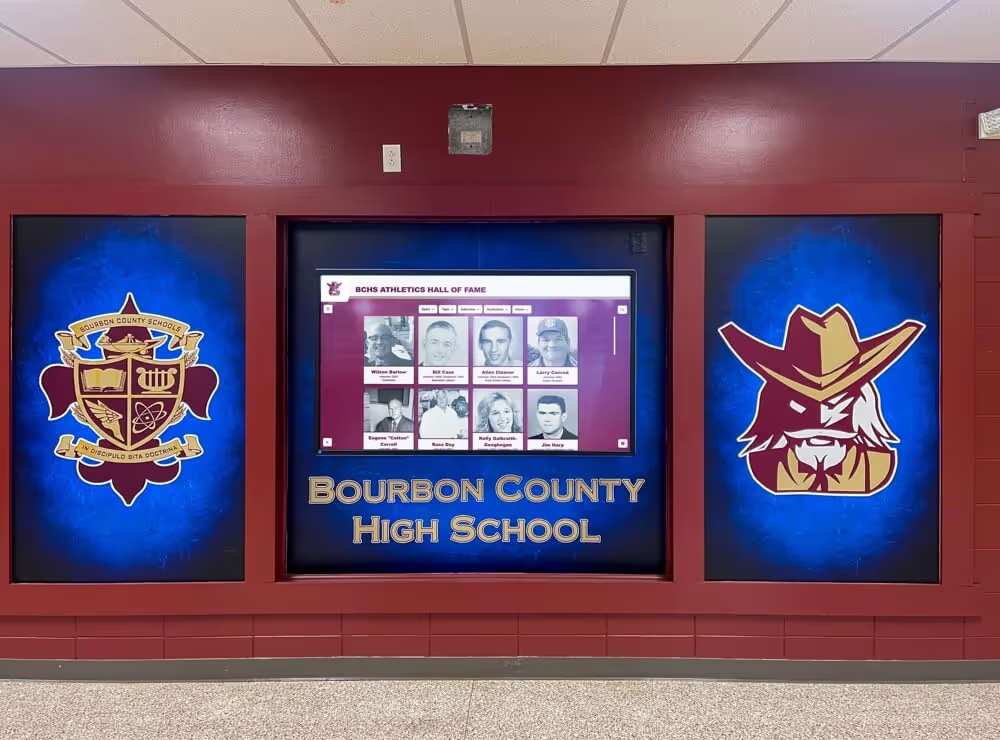
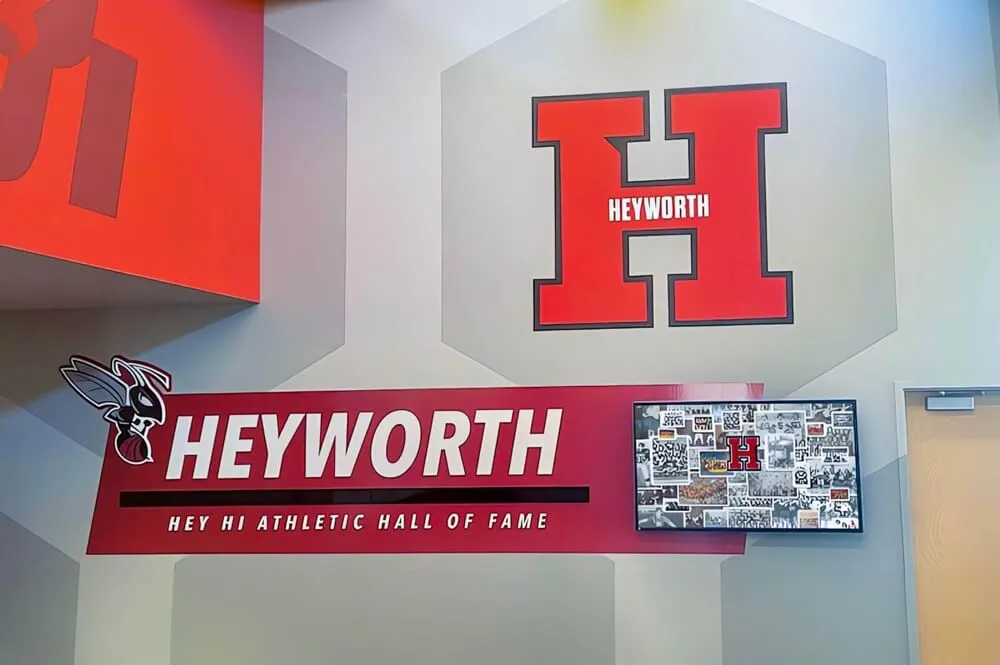
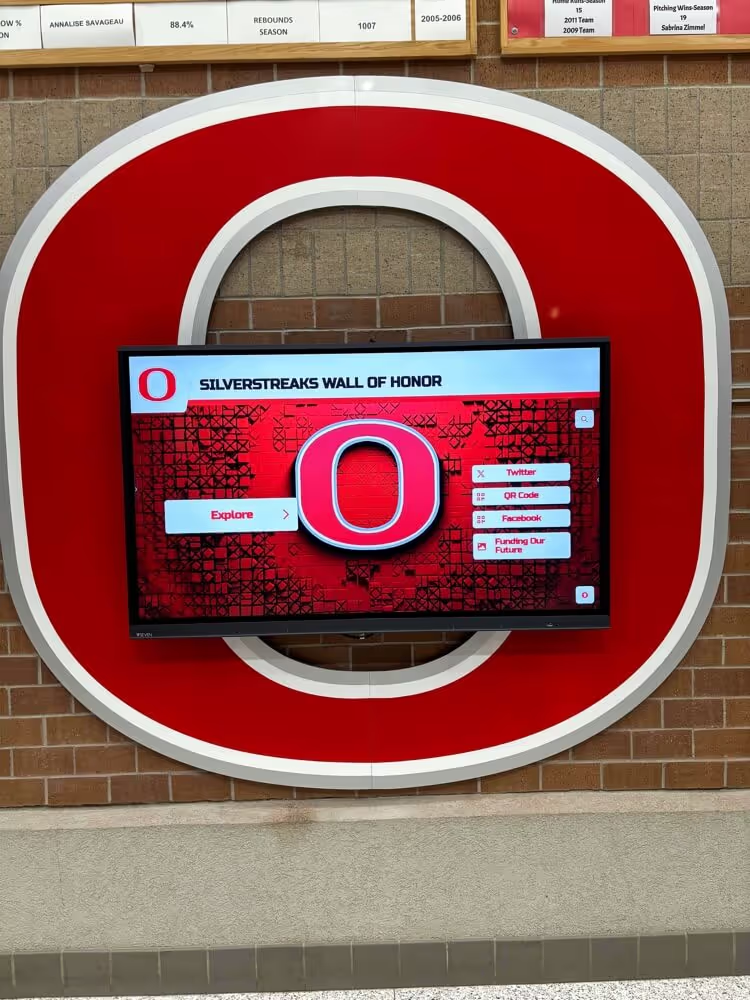
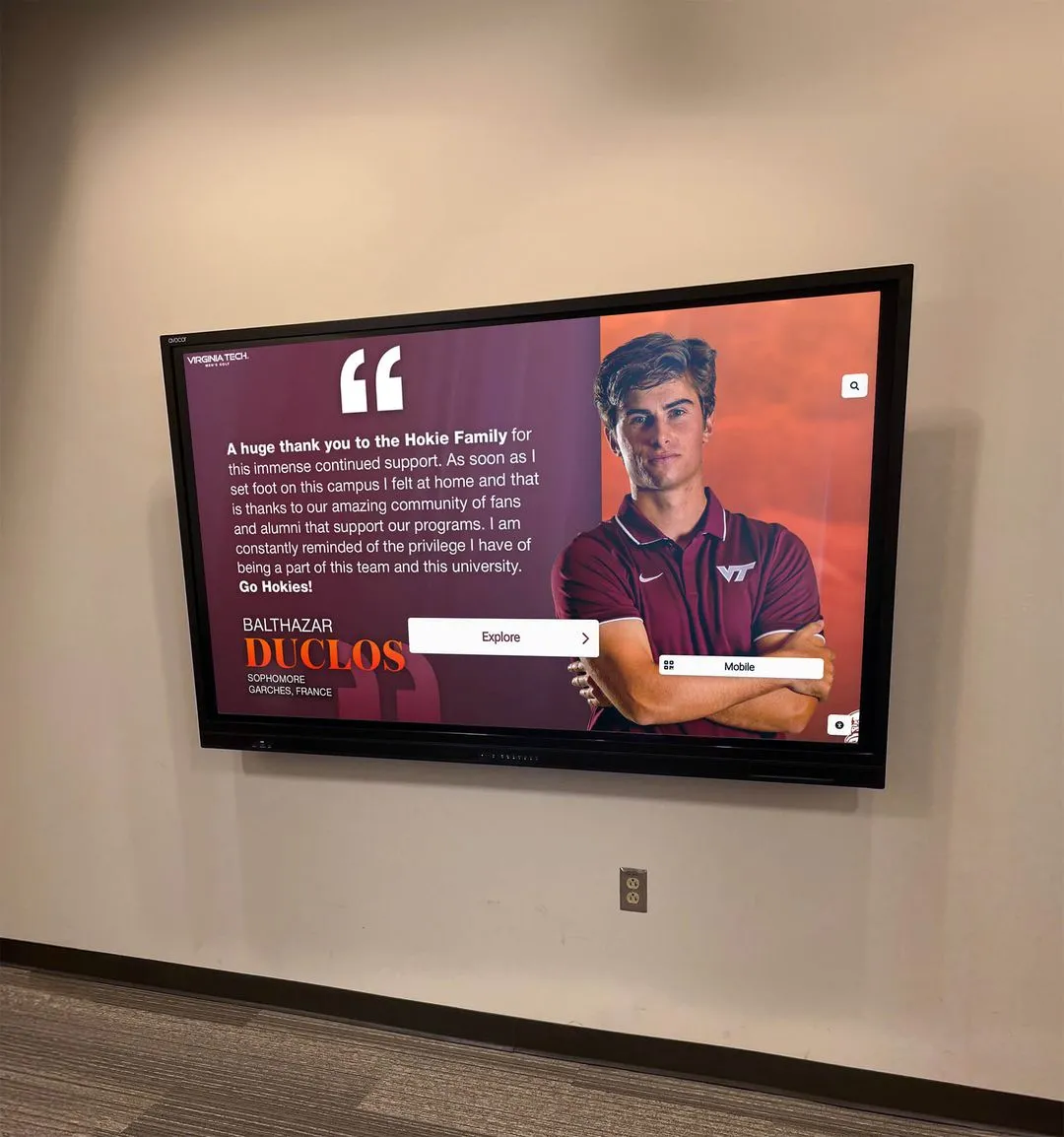
Recognition displays celebrate both individual passing statistics and team defensive achievements
Progression: Tosser increases ball speed, tosses to different locations requiring movement, or adds distraction elements.
Measurement: Track passing accuracy percentage (passes hitting target zone divided by total attempts).
Drill 5: Platform Angle Progression Drill
Purpose: Develop ability to control platform angle for balls at different heights and trajectories.
Setup:
- Coach or partner with bucket of balls
- Passer in ready position
- Target or partner at appropriate distance
Execution:
- Feeder calls “High,” “Medium,” or “Low”
- Feeder tosses ball at designated height
- Passer adjusts platform angle to deliver ball to target
- Focus on using body positioning rather than arm swinging to control angle
- Complete 5 reps at each height before rotating
Key Coaching Points:
- For high balls: let ball drop to platform height
- For medium balls: maintain neutral platform angle
- For low balls: drop hips while keeping platform level
- Minimize arm swing focusing on stable platform
Progression: Increase speed of feeds, randomize heights without calling, or combine with lateral movement requirements.
Coaching Tip: This drill directly addresses common passing error of swinging arms instead of adjusting body position to control ball trajectory.
Explore recognition of fundamental skill development in volleyball net height standards and program excellence.
Intermediate Level Volleyball Passing Drills
Intermediate drills add movement complexity, increased ball speed, and competitive elements while maintaining technical focus.
Drill 6: Serve Receive Lines
Purpose: Simulate game serve receive with repetitive practice under moderate pressure.
Setup:
- Passers form line at serve receive position
- Servers form line at service line
- Target zone marked at setter position
- Optional setter or target player catches passes
Execution:
- Server delivers ball over net to passer
- Passer delivers forearm pass to target zone
- Passer retrieves ball and joins serving line
- Server becomes next passer
- Continue rotation for designated time or repetitions
Key Coaching Points:
- Servers vary serve placement and speed appropriately for skill level
- Passers start in ready position tracking server
- Communication between passer and target
- Reset quickly between repetitions
Progression: Increase serving difficulty, add scoring system for passes in target zone, require passers to start from less ideal positions, or add defensive player creating traffic.
Competitive Variation: Passers earn points for target zone passes, compete to reach designated point total first.
Drill 7: Defensive Shuffle and Pass
Purpose: Develop passing accuracy following lateral movement simulating defensive plays.
Setup:
- Cones or markers positioned 10-15 feet apart
- Coach or feeder with balls on opposite side
- Passing target designated
Execution:
- Passer starts at left cone in ready position
- Coach calls “Shuffle!” and passer shuffles to right cone
- Coach feeds ball to passer at right cone
- Passer delivers forearm pass to target
- Passer shuffles back to left cone
- Repeat alternating directions
Key Coaching Points:
- Maintain athletic ready position throughout shuffle
- Get feet stopped before contact
- Platform forms only after positioning behind ball
- Consistent passes despite movement fatigue
Progression: Increase shuffle distance, feed balls while passer is moving requiring adjustment, vary ball trajectory and speed, or add competitive timing element.
Conditioning Benefit: Builds volleyball-specific endurance while maintaining technique under fatigue.
Drill 8: Four-Corner Passing Pattern
Purpose: Develop passing consistency with movement to multiple court positions.
Setup:
- Four players position at corners of court approximately 20 feet apart
- One ball per group
- Designate passing pattern (example: cross-court diagonal passes)
Execution:
- Player A passes diagonally to Player C
- Player C passes diagonally to Player B
- Player B passes diagonally to Player D
- Player D passes diagonally to Player A
- Continue pattern maintaining rhythm
Key Coaching Points:
- Move toward ball’s landing spot quickly
- Get platform positioned before ball arrives
- Consistent height and accuracy on all passes
- Communication calling each ball
Progression: Change passing pattern (example: pass left), increase court dimensions, add competitive goal of consecutive successful passes, or remove one player creating 3-person rotation with movement to cover empty position.
Team Building: Creates cooperation and rhythm requiring all four players to maintain quality simultaneously.
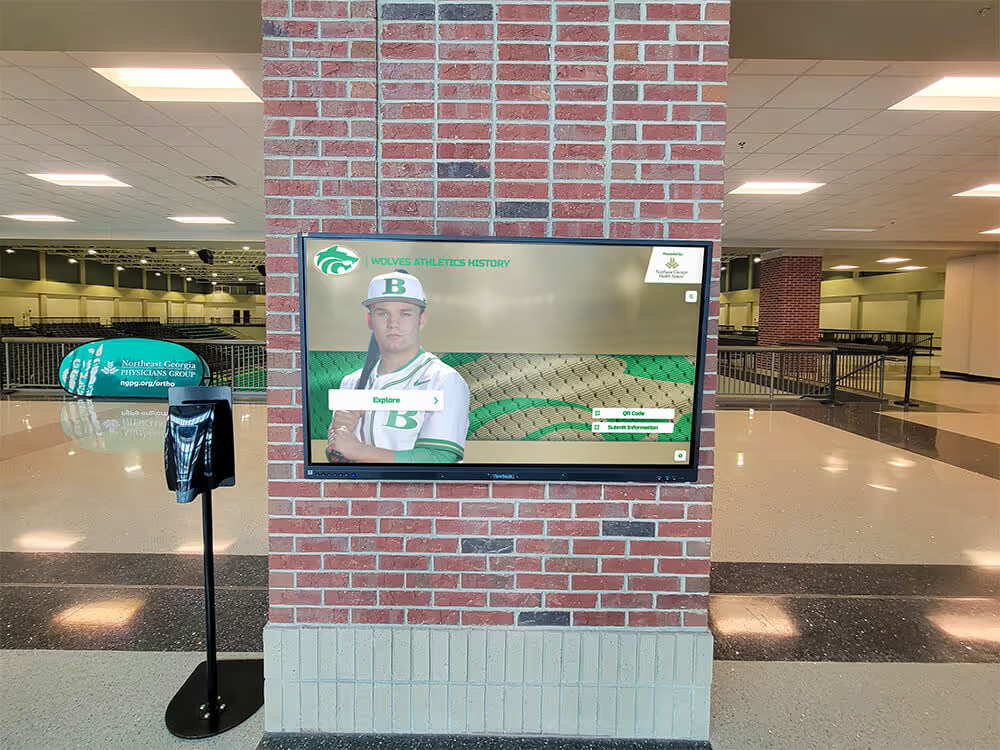
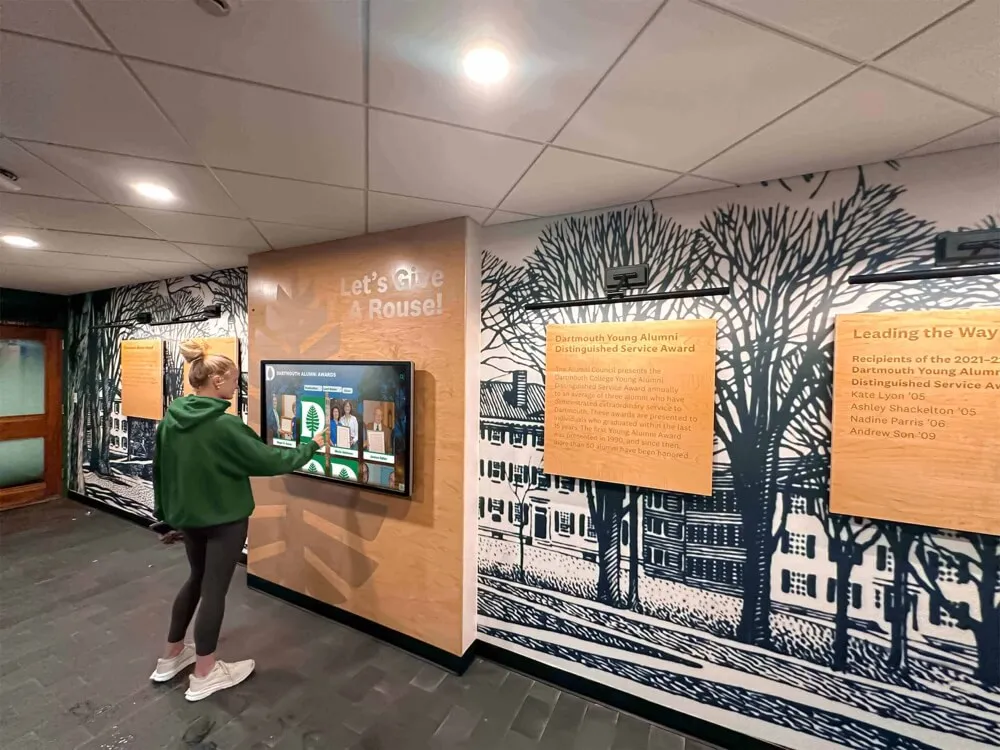
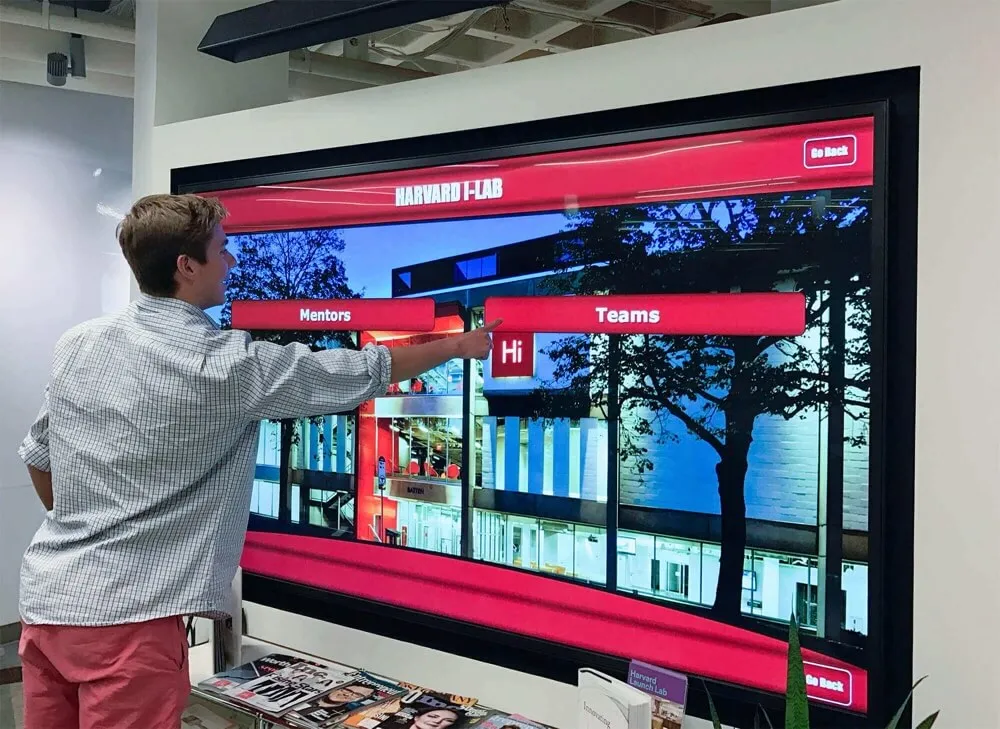
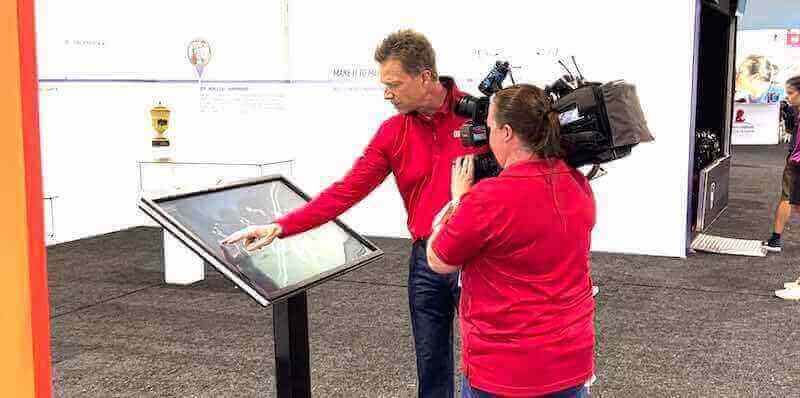
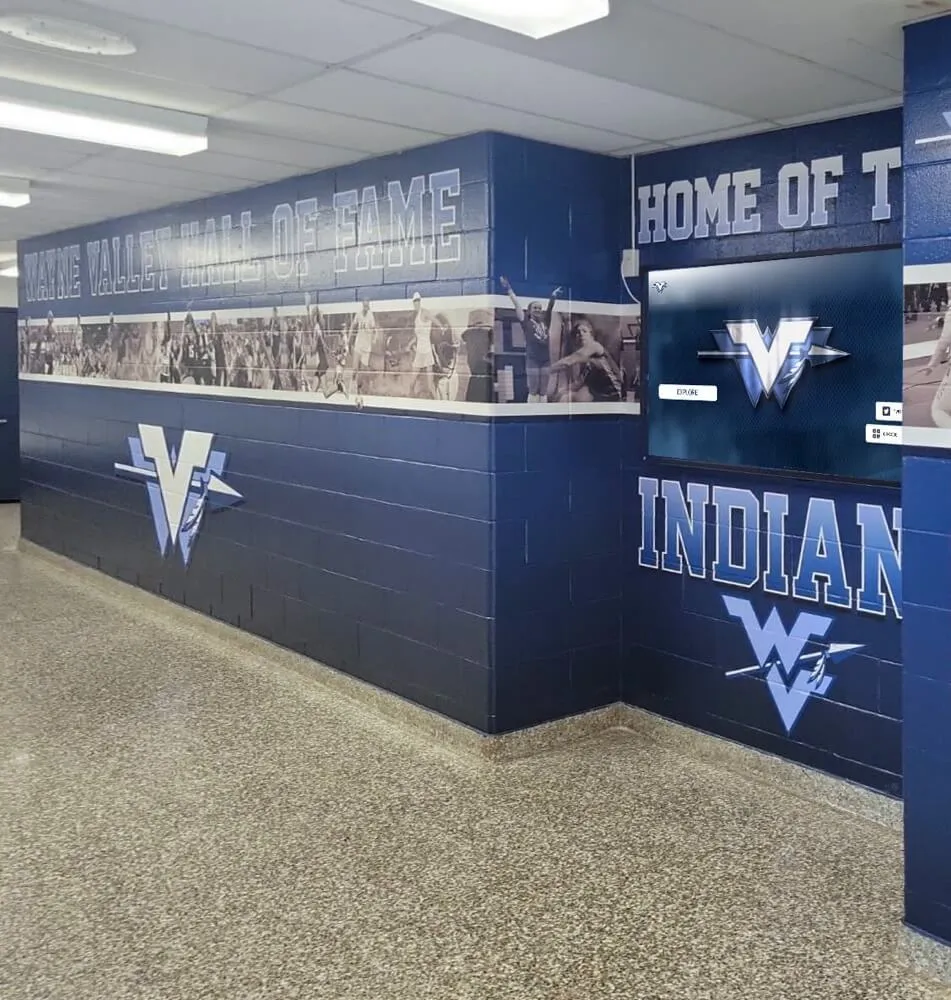
Interactive displays allow programs to showcase defensive statistics and passing achievements alongside traditional offensive recognition
Drill 9: Rapid Fire Passing (Continuous Ball Feed)
Purpose: Develop passing consistency under pressure with minimal recovery time between contacts.
Setup:
- One passer in passing position
- One or two feeders with multiple balls
- Target zone or setter positioned to catch
- Line of players waiting to rotate
Execution:
- Passer assumes ready position
- Feeder 1 tosses ball to passer
- Passer passes ball to target
- Immediately after contact, Feeder 2 tosses second ball
- Passer passes second ball
- Continue for 60 seconds or designated number of balls
- Rotate to next passer
Key Coaching Points:
- Reset to ready position quickly after each pass
- Maintain technical form despite rapid pace
- Breathe consistently preventing breath-holding
- Focus on each ball individually
Progression: Increase feed rate, vary ball placement requiring movement, add third feeder, or require specific number of successful target zone passes.
Conditioning Benefit: Builds volleyball-specific anaerobic endurance simulating defensive rally demands.
Safety Note: Feeders must watch passer carefully to avoid feeding balls before passer is ready.
Drill 10: Back Row Attack Defense Drill
Purpose: Develop passing technique against driven balls simulating back-row attacks.
Setup:
- Coach or advanced player on platform or box with balls
- Passers form line in back row defensive positions
- Target at setter position
- Optional blockers at net for realism
Execution:
- Passer starts in defensive ready position
- Attacker hits or throws ball with downward trajectory to passer’s zone
- Passer digs ball to target using forearm pass technique
- Passer retrieves ball and rotates to end of line
- Next passer steps in
Key Coaching Points:
- Lower posture than serve receive position
- Quick platform formation
- Control hard-driven balls with firm platform
- Adjust angle for upward trajectory to target
Progression: Increase attack speed and power, vary placement requiring defensive movement, add dive and roll technique for balls outside platform range.
Technical Variation: This drill can introduce emergency techniques like pancake hands for balls barely reachable with standard platform.
Learn about facility excellence supporting athletic development in gym floor refinishing for volleyball programs.
Advanced Level Volleyball Passing Drills
Advanced drills replicate game pressure and complexity, challenging players to execute under realistic competitive conditions.
Drill 11: Random Serve Receive Pattern
Purpose: Develop serve receive under game-realistic pressure with unpredictable ball placement.
Setup:
- Full serve receive formation (3-5 passers)
- Multiple servers on opposite side with balls
- Setter or target at appropriate position
- Optional assistant coaches tracking statistics
Execution:
- Passers set up in game serve receive formation
- Servers rotate delivering serves without pattern
- Servers vary serve type (float, topspin, short, deep)
- Passers communicate and execute serve receive
- Setter catches or sets ball (depending on drill focus)
- Rotate passers after designated number of serves
Key Coaching Points:
- Passers communicate clearly calling balls
- Quick recognition of serve trajectory
- Proper passing lanes and court coverage
- Target accuracy under game conditions
Progression: Add consequence for passing errors (conditioning exercise), track individual passing percentages, or incorporate transition to offense after passes.
Game Realism: Most closely simulates actual match serve receive situations.
Drill 12: Out-of-System Passing (Chaos Drill)
Purpose: Develop ball control and composure with imperfect passes and scramble situations.
Setup:
- Small court area (10x10 feet)
- 3-4 players per group
- One ball per group
- Optional target area to keep play alive
Execution:
- Coach initiates with challenging ball (high, short, or off-target)
- Players work cooperatively to keep ball alive using forearm passes
- No catches allowed—continuous play until ball drops
- Goal is maximum touches or time without drop
- Coach introduces new balls randomly to create chaos
Key Coaching Points:
- Move quickly to ball location
- Any team contact counts—collaborate rather than compete
- Use platform for ball control even in emergency situations
- Communicate constantly
Progression: Decrease court area size, require minimum number of touches before ball crosses specific line, or add competition between groups.
Team Building: Emphasizes cooperation and problem-solving under pressure.
Drill 13: Competitive Passing Games
Purpose: Maintain technical execution while adding competitive pressure and motivation.
Setup:
- Various formations depending on specific game
- Scoring system established before starting
- Teams or individuals competing
Game Variations:
King/Queen of the Court Passing
- Winners stay on “championship” side
- Losers rotate to end of line
- Serves or feeds delivered
- Team with better passing percentage wins each round
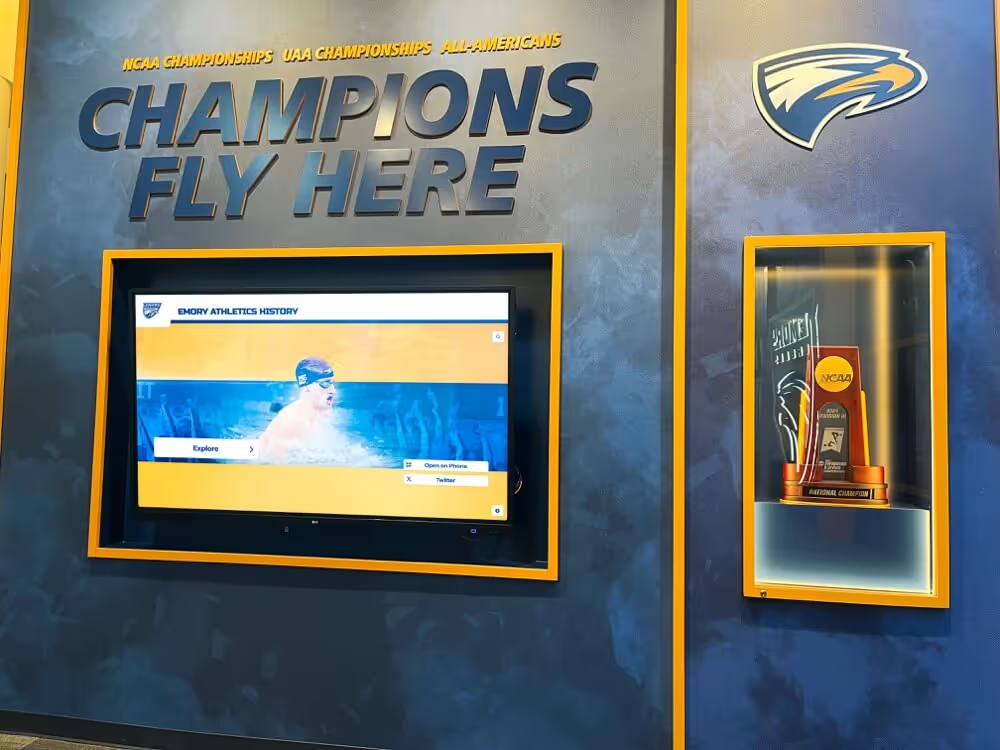
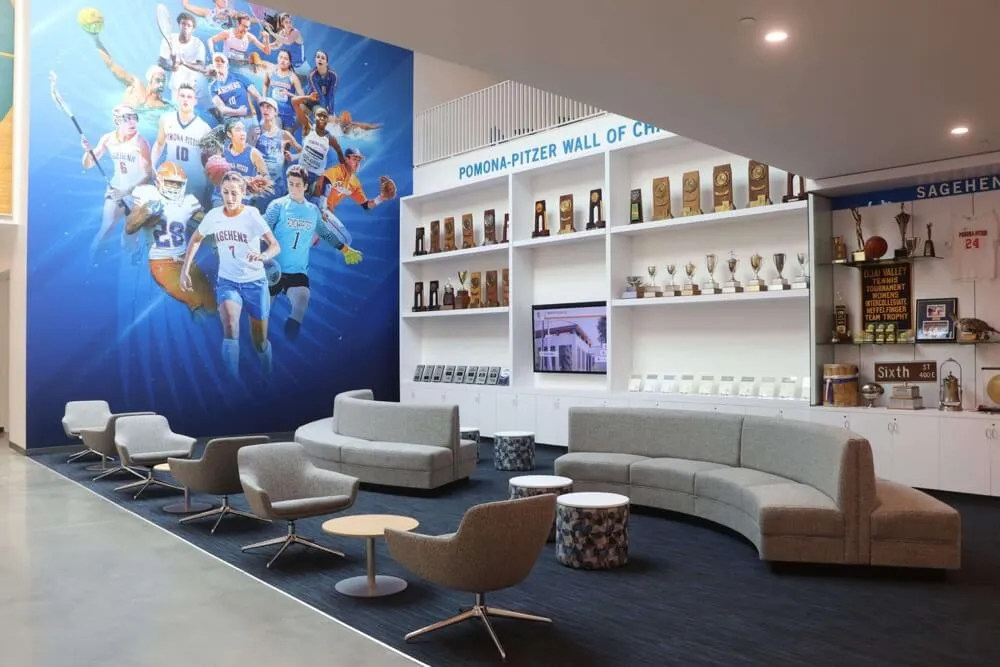
Trophy cases featuring digital elements celebrate complete player development including defensive and passing excellence
Target Zone Points
- Assign point values to different target zones
- Higher points for more difficult passes
- Individual or team accumulates points
- First to designated total wins
Passing Golf
- Set up various passing “holes” around gym
- Each pass attempt is a “stroke”
- Lowest strokes to complete all holes wins
- Includes distance, accuracy, and creativity challenges
Key Coaching Points:
- Maintain technical standards despite competitive element
- Positive communication even under competition
- Learn from errors rather than dwelling on them
- Balance winning desire with skill development focus
Progression: Increase difficulty of competitive requirements, add time pressure, or create tournament-style progression.
Drill 14: Game-Situation Integrated Defense
Purpose: Execute passing within complete defensive system including blocking, coverage, and transition.
Setup:
- Full court with complete teams (6v6)
- Coaches or players initiate attacks from opposite side
- Defensive team in complete defensive positions
- Score kept for motivation
Execution:
- Offensive side initiates with serve or coach-initiated attack
- Defensive team executes complete system:
- Serve receive or defensive positioning
- Blocking at net
- Back row defensive coverage
- Forearm passing to target
- Play continues through transition to offense
- Rotate after designated rallies or points
Key Coaching Points:
- Communication throughout entire defensive sequence
- Proper positioning relative to blockers and attackers
- Platform positioning adjusted for attack angle and power
- Quick transition from defense to offense
Progression: Add specific defensive schemes, increase offensive difficulty, create point-scoring scenarios rewarding excellent passes.
Complete Skill Integration: This drill connects passing technique to complete game context rather than isolated skill practice.
Discover how programs recognize comprehensive athletic development in student athlete recognition beyond statistics.
Progression Strategies for Passing Development
Systematic progression builds skills sequentially rather than randomly selecting drills.
Short-Term Progression Within Single Practice
Warm-Up Phase (10-15 minutes)
- Individual wall passing or partner control drills
- Focus on technical reminders and body awareness
- Low intensity, high repetition
- Perfect environment for teaching new concepts
Skill Development Phase (15-20 minutes)
- Controlled passing drills with specific technical focus
- Partner or small group formations
- Moderate intensity with emphasis on quality
- Coaching feedback and individual correction
Application Phase (15-20 minutes)
- Game-like drills with movement and pressure
- Competitive elements or scoring systems
- Higher intensity simulating match conditions
- Minimal coaching intervention—let players solve problems
Cool-Down/Reflection (5 minutes)
- Light passing activity
- Player self-assessment of technical execution
- Coach highlights and preview next practice focus
Long-Term Progression Across Season
Pre-Season (Weeks 1-3)
- Fundamental technique development
- Individual and partner drills predominate
- Emphasis on platform control and body positioning
- Baseline assessment of individual passing ability
Early Season (Weeks 4-6)
- Team passing systems and formations
- Serve receive patterns with full rotation
- Moderate competitive pressure
- Statistical tracking begins for individual accountability
Mid-Season (Weeks 7-10)
- Game-situation drills simulating actual competition
- High-pressure scenarios and consequence training
- Refinement of technical details under pressure
- Individual skill work addressing specific deficiencies
Late Season/Championship Phase (Weeks 11+)
- Maintenance of skill with reduced volume
- Mental preparation and confidence building
- Match-specific preparation against upcoming opponents
- Celebration of improvement and technical mastery
Individual Progression Pathways
Players develop at different rates requiring individualized attention:
Assessment-Based Grouping
- Regular evaluation of technical proficiency
- Group players by skill level for portions of practice
- Allow advanced players to progress to challenging drills
- Provide additional fundamental work for developing players
- Avoid labeling or permanent tracking that discourages growth
Supplementary Training Opportunities
- Before or after practice skill work for motivated players
- Video analysis of individual passing technique
- Private or small-group coaching sessions
- Connection with club volleyball for year-round development
- Peer mentoring pairing advanced and developing passers
Recognition spaces celebrate complete player development including the fundamental skills that make team success possible
Common Passing Mistakes and Corrections
Understanding typical errors enables more effective coaching interventions.
Technical Errors and Solutions
Swinging Arms Instead of Stable Platform
Error: Players swing arms at ball rather than maintaining stable platform position.
Correction:
- Wall passing drill emphasizing zero arm swing
- Partner stands behind passer holding arms stable during contact
- Focus on moving feet to position platform rather than swinging arms to ball
- Verbal reminder: “Freeze your arms, move your feet”
Improper Platform Angle
Error: Platform angled too high sending balls backward or too low sending balls into net.
Correction:
- Platform angle progression drill (Drill 5)
- Visual feedback using video analysis
- Partner feedback calling “Too high” or “Too low” after each pass
- Emphasis on shoulder shrug creating proper angle
- Drill where passer must pass over barrier (rope or net) to target
Poor Footwork and Body Position
Error: Reaching for balls instead of moving feet to get behind ball’s trajectory.
Correction:
- Cone drills requiring movement before passing
- “Feet first, platform second” verbal reminder
- Shuffle step emphasis during warm-up
- Competitive games rewarding good footwork with points
- Video demonstration of elite passers’ footwork patterns
Bending Elbows at Contact
Error: Elbows bend at contact reducing platform surface area and consistency.
Correction:
- Wall passing with focus on locked arms
- Partner providing resistance against arms before contact
- Strengthening exercises for shoulders and arms
- Emphasis during fundamental drills before advancing to complex scenarios
Tactical and Mental Errors
Hesitation on Responsibility
Error: Multiple players leaving ball or converging creating collision.
Correction:
- Communication drills requiring verbal calls
- Clear assignment of passing zones and court coverage
- Competitive scoring where points lost for missed communication
- Team rule: player who calls ball first takes it, others clear
Poor Target Selection or Awareness
Error: Passing without awareness of target location or setter position.
Correction:
- Passing drills requiring specific target zone accuracy
- Visual scanning practice identifying setter before contact
- Points awarded only for passes that setter can set from
- Development of peripheral vision and court awareness
Lack of Aggression or Initiative
Error: Passive approach allowing balls to drop when reachable.
Correction:
- Competitive drills rewarding aggressive ball pursuit
- Points for “hustle plays” beyond statistical passing success
- Video highlights of elite defensive players pursuing difficult balls
- Team culture celebrating effort and determination
Learn more about celebrating complete player development in recognition beyond statistics and competition results.
Building an Effective Passing Practice Plan
Strategic practice organization maximizes development while maintaining player engagement.
Weekly Practice Structure
Monday (Post-Match Recovery or Weekly Launch)
- Lower intensity passing drills focusing on technique refinement
- Individual or partner work predominates
- Video review of previous match passing performance
- Identification of weekly focus areas
- 30-40% of practice time on passing
Tuesday/Wednesday (Skill Development Days)
- Higher volume of passing repetitions
- Progressive drill difficulty throughout practice
- Mix of individual work and team system practice
- 40-50% of practice time on passing
- Integration with setting and offensive transition
Thursday (Game Preparation)
- Game-situation passing scenarios
- Opponent-specific serve receive preparation
- High-pressure competitive drills
- 30-35% of practice time on passing
- Mental preparation and confidence building
Friday (Match Day or Final Preparation)
- Light passing work maintaining readiness
- Confidence-building drills with high success rate
- Minimal coaching intervention
- 15-20% of practice time on passing
- Emphasis on mental preparation
Balancing Passing Focus with Complete Skill Development
Passing cannot consume entire practices despite its importance:
Time Allocation Guidelines
- Passing: 30-40% of practice time
- Setting: 15-20% of practice time
- Attacking: 20-25% of practice time
- Blocking/Defense: 15-20% of practice time
- Serve: 10-15% of practice time
- Conditioning/Team Building: 10-15% of practice time
Integration Strategies
- Combine passing with transition to offense (pass-set-hit sequences)
- Integrate serve receive with offensive system work
- Use passing as active rest between high-intensity activities
- Include passing in warm-up and cool-down reducing dedicated time
Keeping Passing Practice Engaging
Monotonous passing drills reduce engagement and learning:
Variety Strategies
- Rotate through different drill formats rather than repeating same drill
- Introduce new drills or variations every 2-3 weeks
- Use competitive elements and scoring systems
- Incorporate music or entertainment during certain drills
- Allow player input on drill selection occasionally
- Celebrate improvements and achievements
Competition and Gamification
- Passing leaderboards tracking individual statistics
- Team challenges with rewards for achievement
- Partner or small-group competitions
- King/Queen of the Court variations
- Progressive challenges (Bronze/Silver/Gold standards)
Measuring Passing Improvement and Setting Goals
Systematic tracking enables data-driven coaching decisions and motivates improvement.
Statistical Metrics for Passing Evaluation
Basic Passing Statistics
- Passing attempts (total balls passed)
- Passing errors (balls passed out of bounds or into net)
- Passing percentage (successful passes / attempts)
- Target zone accuracy (passes to specific setter target)
Advanced Passing Metrics
- Passing efficiency rating (3 = perfect pass, 2 = playable, 1 = error)
- Average passing rating per match or practice
- First-ball sideout percentage (points scored when serve receive is successful)
- Passing percentage against different serve types
- Passing accuracy by court zone
Tracking Methods
- Statistical software or apps (various volleyball-specific options available)
- Manual tracking by assistant coaches or statisticians
- Video analysis for detailed technical assessment
- Player self-tracking for practice repetitions
Individual and Team Goal Setting
SMART Goal Framework for Passing Development
Specific: Define exact improvement target (example: “Increase serve receive passing percentage from 75% to 82%”)
Measurable: Use statistics or assessment criteria that can be tracked
Achievable: Set challenging but realistic targets based on current ability
Relevant: Connect to team success or player position requirements
Time-Bound: Establish timeline (by mid-season, by end of season, by specific date)
Sample Individual Passing Goals
- “Complete 100 consecutive wall passes without drop by Week 6”
- “Achieve 80% passing accuracy on serve receive in starting lineup”
- “Reduce passing errors by 50% from first match to mid-season”
- “Master passing technique on all serve types by Week 8”
- “Earn starting serve receive position through challenge match performance”
Sample Team Passing Goals
- “Achieve 75% first-ball sideout percentage as team”
- “Reduce serve receive errors to fewer than 5 per match”
- “Win league championship through defensive consistency and passing excellence”
- “Have all varsity players achieve minimum 70% passing accuracy”
- “Lead conference in serve receive efficiency by season end”
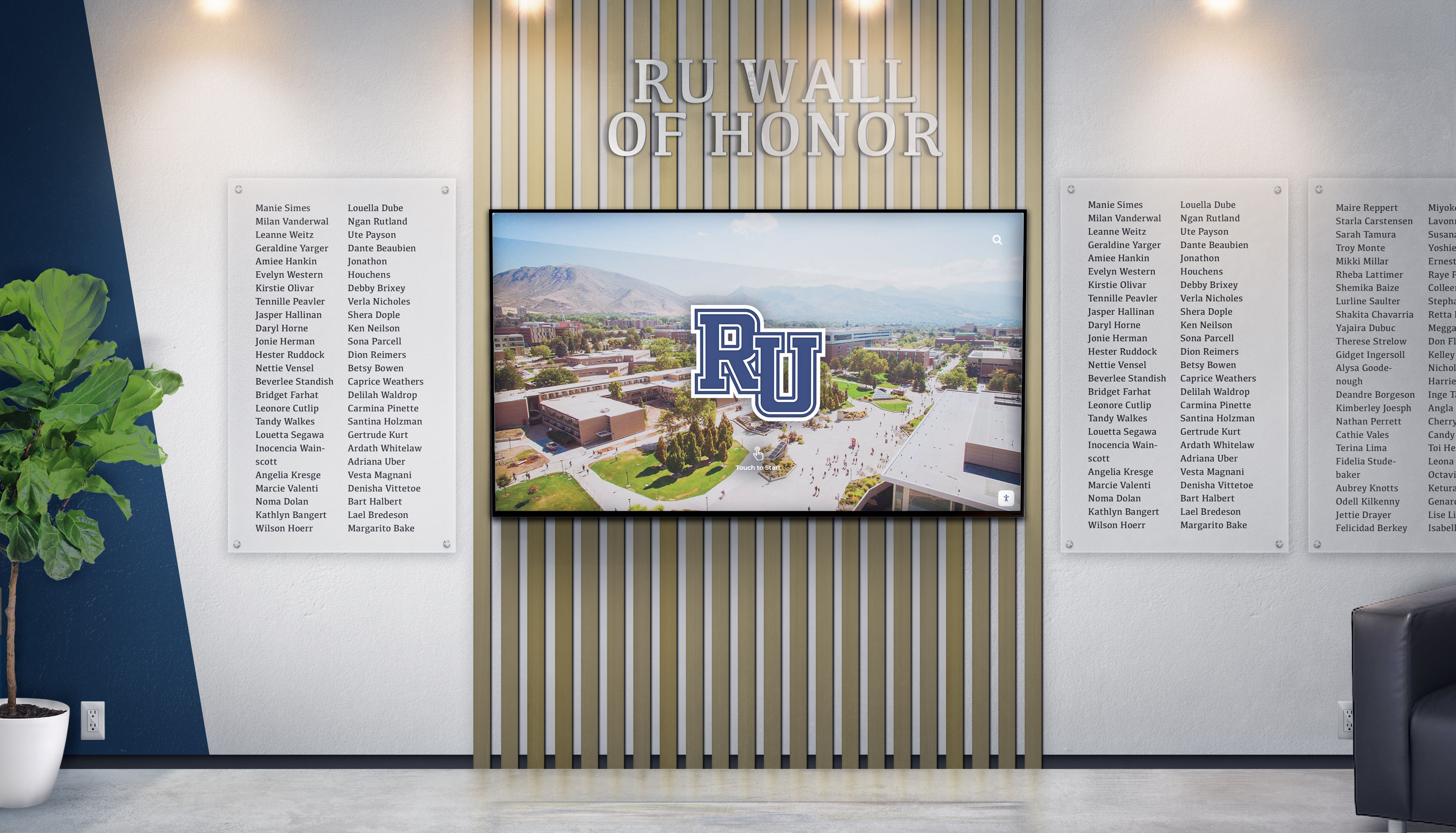
Modern recognition systems celebrate both individual passing statistics and team defensive achievements throughout program history
Celebrating Passing Achievement and Milestones
Recognition motivates continued effort and celebrates often-overlooked defensive excellence:
In-Practice Recognition
- Public acknowledgment of excellent passing performances
- Player-of-practice awards recognizing outstanding passing
- Posting of statistical leaders and improvement highlights
- Peer recognition opportunities where teammates celebrate each other
Formal Season Recognition
- Season-end awards for passing excellence (best passer, most improved, highest efficiency)
- All-conference or all-league defensive recognition
- Statistical achievement certificates (passing percentage thresholds)
- Video highlight compilations celebrating defensive and passing success
Program-Wide Recognition
- Record boards displaying career and season passing statistics
- Hall of fame recognition for exceptional defensive players
- Digital displays showcasing current season leaders
- Social media highlights celebrating passing excellence equally with offensive achievement
Explore comprehensive athletic recognition approaches in volleyball program achievement displays.
Adapting Passing Drills for Different Settings
Coaches face various constraints requiring drill adaptation.
Limited Court Space Solutions
When full court access is unavailable:
Wall-Based Drills
- Wall passing variations using gymnasium walls
- Target zones marked on walls for accuracy training
- Individual work that doesn’t require court space
Small-Group Rotations
- Divide team into small groups rotating through stations
- Partner and triangle drills requiring minimal space
- Use hallways or other available spaces creatively
Outdoor Alternatives
- Parking lot or grass area passing practice
- Beach or sand volleyball variations
- Playground or park court usage
Limited Equipment Adaptations
When balls or other equipment are scarce:
High Repetition Rotations
- Maximize ball contacts per player despite limited balls
- Rapid rotation systems keeping players active
- Retrieval and ball-handling efficiency
Equipment Alternatives
- Lighter balls (beach balls, training balls) for beginners
- Heavier balls for strength and control development
- Tennis balls for hand-eye coordination and reaction training
Large Roster Management
Keeping entire roster engaged during passing practice:
Station-Based Practice
- Multiple passing stations with different focuses
- Small groups rotating every 5-10 minutes
- Mix of competitive and technical focus stations
- Peer coaching opportunities with advanced players helping developing players
Competitive Divisions
- Skill-based grouping for portions of practice
- Competitive leagues or tournaments within team
- Varied drill difficulty matching skill levels
- Clear progression pathway for advancement
Integration with Complete Volleyball Skills Development
Passing excellence connects to every other volleyball skill.
Passing and Setting Connection
Pass-Set Combination Drills
- Serve receive directly to setter who sets to targets
- Defensive passing with immediate setter transition
- Setter feedback to passers about pass quality
- Development of passer-setter communication and chemistry
Understanding Setter Needs
- Passers observe setting practice understanding target requirements
- Setters explain what makes passes “settable” vs. difficult
- Video analysis of elite passer-setter combinations
- Appreciation for how passing quality determines offensive options
Defensive System Integration
Passing within complete defensive framework:
Blocking and Coverage Coordination
- Passing adjusted to blocking schemes
- Coverage responsibilities relative to block positions
- Communication between front row blockers and back row passers
- Understanding of how passing enables defensive transition
Transition to Offense
- Passing drills that continue to full offensive execution
- Quick transition from defensive passing to approach and attack
- Development of complete defensive mindset beyond isolated passing
Mental Skills and Passing Performance
Psychological factors significantly impact passing consistency:
Confidence Building
- Success-oriented drills establishing positive feedback loops
- Visualization of successful passing under pressure
- Positive self-talk and mental reset routines after errors
- Growth mindset about passing development
Pressure Management
- Gradual exposure to competitive pressure situations
- Breathing and relaxation techniques during passing
- Focus on process (technique) rather than outcome (results)
- Perspective on individual passing errors within team context
Learn about supporting complete player development through facility excellence in volleyball programs.
Conclusion: Building Championship-Level Passing Through Systematic Development
Volleyball passing drills executed with proper progression, technical emphasis, and game-situation application transform average programs into defensively dominant teams that consistently convert defensive possessions into offensive opportunities. The 14 drills presented throughout this guide provide comprehensive frameworks spanning fundamental platform control through advanced game-situation execution—enabling coaches to develop elite passing skills regardless of their players’ starting ability levels.
Championship volleyball programs recognize that passing excellence represents the foundation supporting all other aspects of team success. While spectacular attacks capture attention and setters direct offensive systems, consistent serve receive and defensive passing create the first-ball opportunities that make offensive execution possible. Programs that systematically develop passing skills throughout their rosters—through progressive drill sequences, proper technical instruction, and celebration of defensive achievement—gain competitive advantages that compound across entire seasons and program histories.
The most effective volleyball passing development combines technical precision during fundamental drills with game-situation pressure that prepares players for competitive moments when matches are decided. By implementing progressive difficulty sequences that build from wall passing through randomized serve receive, coaches ensure that technical habits developed in controlled environments transfer successfully to match situations where pressure, fatigue, and unpredictability challenge execution.
Beyond individual technical development, successful passing programs emphasize communication systems, court coverage strategies, and team defensive schemes that transform individual passers into cohesive defensive units. The integration of passing drills with complete defensive systems—including blocking coordination, coverage responsibilities, and transition to offense—develops players who understand their roles within larger team contexts rather than executing skills in isolation.
Celebrate Defensive Excellence in Your Volleyball Program
Championship-level passing deserves championship-level recognition. Discover how modern digital recognition systems celebrate defensive statistics, passing achievement, and complete player development alongside traditional offensive honors—creating program cultures that value the fundamental skills making team success possible.
Explore Athletic Recognition SolutionsMeasurement and goal-setting systems provide the accountability and motivation that sustain long-term improvement. Statistical tracking of passing percentage, target zone accuracy, and efficiency ratings enables data-driven coaching decisions while helping players understand their progress. When programs establish clear passing standards, celebrate milestone achievements, and recognize defensive excellence through formal awards and public acknowledgment, they create cultures valuing comprehensive volleyball skills rather than only offensive statistics.
Most importantly, effective passing development requires patience and perspective about skill acquisition timelines. Passing technique develops gradually through thousands of repetitions over months and seasons rather than improving dramatically through single practice sessions or quick fixes. Coaches who maintain consistent technical emphasis, provide supportive feedback that balances correction with encouragement, and celebrate incremental improvements build player confidence and motivation that sustain long-term development trajectories.
The volleyball passing drills and development strategies presented throughout this guide provide starting points rather than rigid prescriptions. Adapt exercises to your specific roster abilities, practice constraints, and competitive levels while maintaining focus on fundamental technical principles that apply universally. Experiment with drill variations that match your players’ interests and learning styles, incorporate competitive elements that motivate your team, and continuously evaluate whether practice approaches produce measurable improvements in passing execution.
Start building passing excellence today through systematic implementation of progressive drill sequences beginning with proper platform mechanics and advancing through game-situation pressure applications. Your commitment to developing elite passing skills—combined with recognition systems that celebrate defensive achievement equally with offensive success—will establish program foundations producing consistent competitiveness regardless of roster turnover or seasonal challenges. Championship volleyball starts with passing excellence, and championship programs celebrate the defensive fundamentals that make team success possible.